

The DOI matches its Crossref record; 87 of the 88 references it cites were found in a registry or an index.
GSK3β and tau protein in Alzheimer's disease and epilepsy
Open accessAbstract
Alzheimer's disease (AD) is the most common form of dementia present in older adults; its etiology involves genetic and environmental factors. In recent years, epidemiological studies have shown a correlation between AD and chronic epilepsy since a considerable number of patients with AD may present seizures later on. Although the pathophysiology of seizures in AD is not completely understood, it could represent the result of several molecular mechanisms linked to amyloid beta-peptide (Aβ) accumulation and the hyperphosphorylation of tau protein, which may induce an imbalance in the release and recapture of excitatory and inhibitory neurotransmitters, structural alterations of the neuronal cytoskeleton, synaptic loss, and neuroinflammation. These changes could favor the recurrent development of hypersynchronous discharges and epileptogenesis, which, in a chronic state, favor the neurodegenerative process and influence the cognitive decline observed in AD. Supporting this correlation, histopathological studies in the brain tissue of temporal lobe epilepsy (TLE) patients have revealed the presence of Aβ deposits and the accumulation of tau protein in the neurofibrillary tangles (NFTs), accompanied by an increase of glycogen synthase kinase-3 beta (GSK3β) activity that may lead to an imminent alteration in posttranslational modifications of some microtubule-associated proteins (MAPs), mainly tau. The present review is focused on understanding the pathological aspects of GSK3β and tau in the development of TLE and AD.
Overview
The claims and statistics of this paper haven’t been checked yet.
Run the check — free, no account needed. It reads the open-access text and checks the sources it cites.
Integrity signals
Registry
Cites
Statistics
Figures
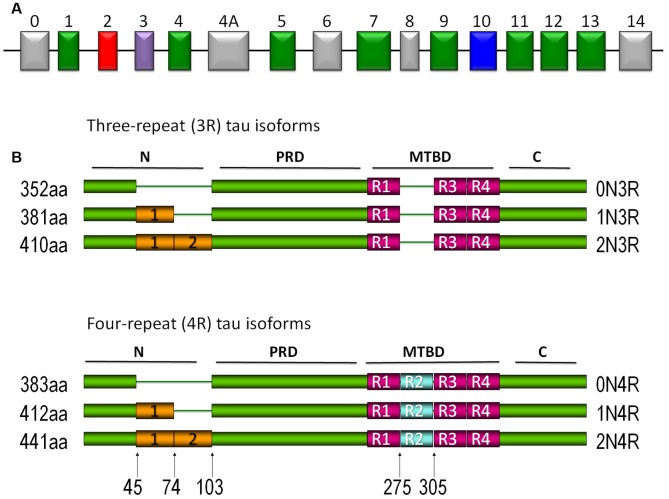
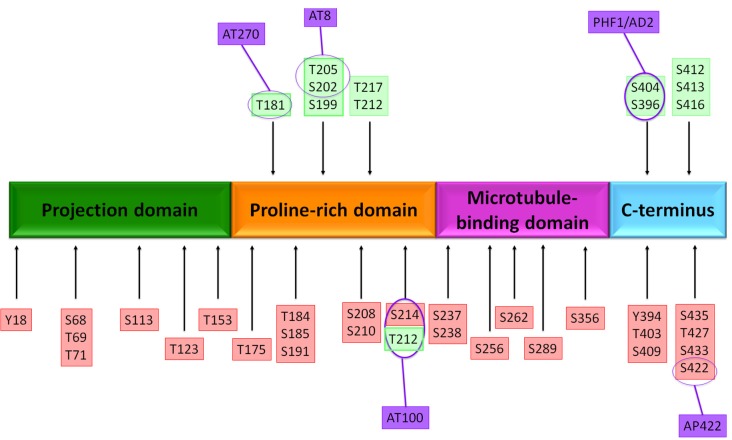
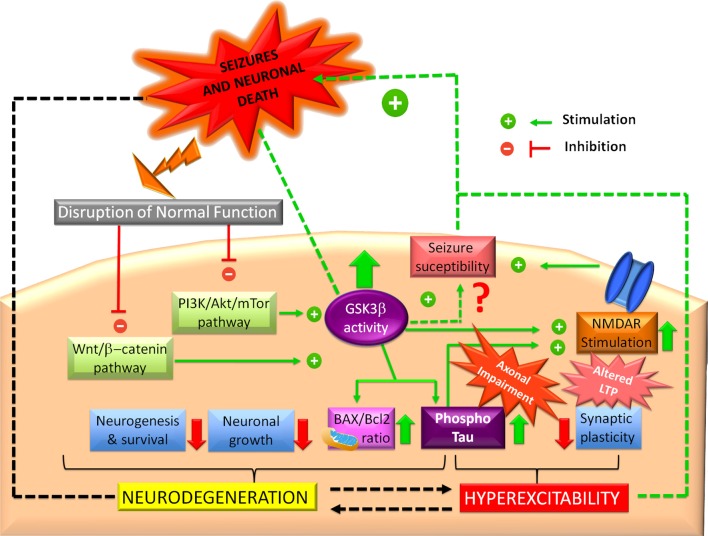
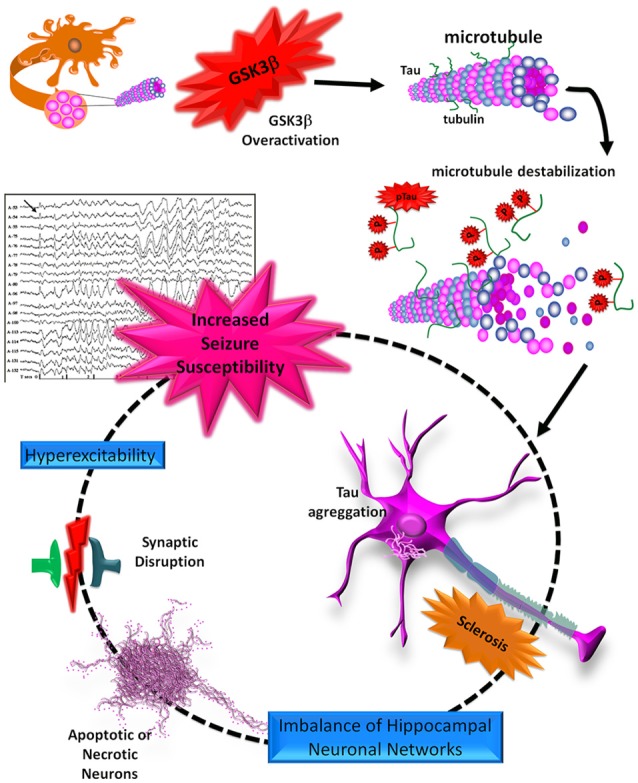
Verification
Claims the paper makes
The claims and statistics of this paper haven’t been checked yet.
Run the check — free, no account needed. It reads the open-access text and checks the sources it cites.
Claims other papers make about this one
Each is checked against this paper’s own text: does it say what the citing paper says it does?
The source backs part of the claim, not all of it — or backs it for a different population, condition or comparison.
In the citing paper
“Both GSK-3β and CDK5 play a role in neuronal excitability through involvement in GABAergic and glutamatergic neurotransmission, and inhibiting their activity can affect network activity through various mechanisms (Sen et al., 2008; Jaworski, 2020; Toral-Rios et al., 2020; Banerjee et al., 2021).”
From Tauopathy and Epilepsy Comorbidities and Underlying Mechanisms (2022) · cites this paper as Toral-Rios et al., 2020
Experimental — accuracy not yet measuredThe cited source says what the claim attributes to it.
In the citing paper
“One relevant kinase responsible for tau phosphorylation is glycogen synthase kinase-3β (GSK-3β) (Toral-Rios et al., 2020).”
From Tauopathy and Epilepsy Comorbidities and Underlying Mechanisms (2022) · cites this paper as Toral-Rios et al., 2020
In the citing paper
“Furthermore, increased GSK-3β activity also induces Aβ deposition extracellularly (Griebel et al., 2019;Toral-Rios et al., 2020).”
From Multi-target neuroprotective effects of herbal medicines for Alzheimer's disease (2022) · cites this paper as Toral-Rios et al., 2020
Self-check
Percentages, sums and reported differences re-computed from the paper’s own numbers.
The self-check needs the paper’s full text.
Citations
Cites
Amyloid oligomers exacerbate tau pathology in a mouse model of tauopathy
Selenica, M.-L. B., Brownlow, M., Jimenez, J. P., Lee, D. C., Pena, G., Dickey, C. A., Gordon, M. N., & Morgan, D. (2013) · Neurodegenerative Diseases · doi:10.1159/000337230 · Cited by 10,359
Buée, L., Bussière, T., Buée‐Scherrer, V., Delacourte, A., & Hof, P. R. (2000) · Brain Research Reviews · doi:10.1016/s0165-0173(00)00019-9 · Cited by 2,142
Reducing Endogenous Tau Ameliorates Amyloid ß-Induced Deficits in an Alzheimer's Disease Mouse Model
Roberson, E. D., Scearce-Levie, K., Palop, J. J., Yan, F., Cheng, I. H., Wu, T., Gerstein, H., Yu, G.-Q., & Mucke, L. (2007) · Science · doi:10.1126/science.1141736 · Cited by 1,892
Microtubule-associated protein tau. A component of Alzheimer paired helical filaments.
Grundke, I., Iqbal, K., Quinlan, M., Tung, Y. C., Zaidi, M. S., & Wisniewski, H. M. (1986) · Journal of Biological Chemistry · doi:10.1016/s0021-9258(17)38495-8 · Cited by 1,780
The GSK3 hypothesis of Alzheimer’s disease
Hooper, C., Killick, R., & Lovestone, S. (2008) · Journal of Neurochemistry · doi:10.1111/j.1471-4159.2007.05194.x · Cited by 1,191
Differential Regulation of Dynein and Kinesin Motor Proteins by Tau
Dixit, R., Ross, J. L., Goldman, Y. E., & Holzbaur, E. L. F. (2008) · Science · doi:10.1126/science.1152993 · Cited by 1,012
Tau phosphorylation: the therapeutic challenge for neurodegenerative disease
Hanger, D. P., Anderton, B. H., & Noble, W. (2009) · Trends in Molecular Medicine · doi:10.1016/j.molmed.2009.01.003 · Cited by 965
Morris, M., Maeda, S., Vossel, K., & Mucke, L. (2011) · Neuron · doi:10.1016/j.neuron.2011.04.009 · Cited by 899
Alonso, A. D. C., Grundke-Iqbal, I., & Iqbal, K. (1996) · Nature Medicine · doi:10.1038/nm0796-783 · Cited by 859
Wood, J. G., Mirra, S. S., Pollock, N. J., & Binder, L. I. (1986) · Proceedings of the National Academy of Sciences · doi:10.1073/pnas.83.11.4040 · Cited by 763
LTP Inhibits LTD in the Hippocampus via Regulation of GSK3β
Peineau, S., Taghibiglou, C., Bradley, C. A., Wong, T. P., Liu, L., Lu, J., Lo, E., Wu, D., Saule, E., Bouschet, T., et al. (2007) · Neuron · doi:10.1016/j.neuron.2007.01.029 · Cited by 709
Post-translational modifications of tau protein: Implications for Alzheimer's disease
Martin, L., Latypova, X., & Terro, F. (2011) · Neurochemistry International · doi:10.1016/j.neuint.2010.12.023 · Cited by 683
Structure and novel exons of the human .tau. gene
Andreadis, A., Brown, W. M., & Kosik, K. S. (1992) · Biochemistry · doi:10.1021/bi00158a027 · Cited by 659
Roberson, E. D., Halabisky, B., Yoo, J. W., Yao, J., Chin, J., Yan, F., Wu, T., Hamto, P., Devidze, N., Yu, G.-Q., et al. (2011) · The Journal of Neuroscience · doi:10.1523/jneurosci.4152-10.2011 · Cited by 654
Tau protein kinases: Involvement in Alzheimer's disease
Martin, L., Latypova, X., Wilson, C. M., Magnaudeix, A., Perrin, M.-L., Yardin, C., & Terro, F. (2013) · Ageing Research Reviews · doi:10.1016/j.arr.2012.06.003 · Cited by 631
Critical role of acetylation in tau-mediated neurodegeneration and cognitive deficits
Min, S.-W., Chen, X., Tracy, T. E., Li, Y., Zhou, Y., Wang, C., Shirakawa, K., Minami, S. S., Defensor, E., Mok, S. A., et al. (2015) · Nature Medicine · doi:10.1038/nm.3951 · Cited by 516
Tau proteins with FTDP‐17 mutations have a reduced ability to promote microtubule assembly
Hasegawa, M., Smith, M. J., & Goedert, M. (1998) · FEBS Letters · doi:10.1016/s0014-5793(98)01217-4 · Cited by 482
Inhibitory Phosphorylation of Glycogen Synthase Kinase-3 (GSK-3) in Response to Lithium
Zhang, F., Phiel, C. J., Spece, L. J., Gurvich, N., & Klein, P. S. (2003) · Journal of Biological Chemistry · doi:10.1074/jbc.m212635200 · Cited by 439
Neuropsychological effects of epilepsy and antiepileptic drugs
Kwan, P., & Brodie, M. J. (2001) · The Lancet · doi:10.1016/s0140-6736(00)03600-x · Cited by 434
Seizures and Epilepsy After Ischemic Stroke
Camilo, O., & Goldstein, L. B. (2004) · Stroke · doi:10.1161/01.str.0000130989.17100.96 · Cited by 429
Inflammatory process in Alzheimer's Disease
Meraz-Ríos, M. A., Toral-Rios, D., Franco-Bocanegra, D., Villeda-Hernández, J., & Campos-Peña, V. (2013) · Frontiers in Integrative Neuroscience · doi:10.3389/fnint.2013.00059 · Cited by 427
Glycogen Synthase Kinase-3 (GSK3) in Psychiatric Diseases and Therapeutic Interventions
Jope, R. S., & Roh, M. (2006) · Current Drug Targets · doi:10.2174/1389450110607011421 · Cited by 389
GWAS of Cerebrospinal Fluid Tau Levels Identifies Risk Variants for Alzheimer’s Disease
Cruchaga, C., Kauwe, J. S. K., Harari, O., Jin, S. C., Cai, Y., Karch, C. M., Benitez, B. A., Jeng, A. T., Skorupa, T., Carrell, D., et al. (2013) · Neuron · doi:10.1016/j.neuron.2013.02.026 · Cited by 383
Linseman, D. A., Butts, B. D., Precht, T. A., Phelps, R. A., Le, S. S., Laessig, T. A., Bouchard, R. J., Florez‐McClure, M. L., & Heidenreich, K. A. (2004) · Journal of Neuroscience · doi:10.1523/jneurosci.2057-04.2004 · Cited by 370
A novel GSK-3β inhibitor reduces Alzheimer's pathology and rescues neuronal loss in vivo
Serenó, L., Coma, M., Rodríguez, M., Sánchez-Ferrer, P., Sánchez, M. B., Gich, I., Agulló, J. M., Pérez, M., Avila, J., Guardia-Laguarta, C., et al. (2009) · Neurobiology of Disease · doi:10.1016/j.nbd.2009.05.025 · Cited by 368
Cognitive impairment in epilepsy: the role of network abnormalities
Holmes, G. L. (2015) · Epileptic Disorders · doi:10.1684/epd.2015.0739 · Cited by 334
Andreadis, A. (2005) · Biochimica et Biophysica Acta (BBA) - Molecular Basis of Disease · doi:10.1016/j.bbadis.2004.08.010 · Cited by 311
Antisense Reduction of Tau in Adult Mice Protects against Seizures
DeVos, S. L., Goncharoff, D. K., Chen, G., Kebodeaux, C. S., Yamada, K., Stewart, F. R., Schuler, D. R., Maloney, S. E., Wozniak, D. F., Rigo, F., et al. (2013) · Journal of Neuroscience · doi:10.1523/jneurosci.2107-13.2013 · Cited by 311
Tau domains, phosphorylation, and interactions with microtubules
Mandelkow, E.-M., Biernat, J., Drewes, G., Gustke, N., Trinczek, B., & Mandelkow, E. (1995) · Neurobiology of Aging · doi:10.1016/0197-4580(95)00025-a · Cited by 308
Microtubule-associated protein tau is essential for long-term depression in the hippocampus
Kimura, T., Whitcomb, D. J., Jo, J., Regan, P., Piers, T., Heo, S., Brown, C., Hashikawa, T., Murayama, M., Seok, H., et al. (2014) · Philosophical Transactions of the Royal Society B: Biological Sciences · doi:10.1098/rstb.2013.0144 · Cited by 307
Tai, X. Y., Koepp, M., Duncan, J. S., Fox, N., Thompson, P., Baxendale, S., Liu, J. Y. W., Reeves, C., Michalak, Z., & Thom, M. (2016) · Brain · doi:10.1093/brain/aww187 · Cited by 291
Mondragón-Rodríguez, S., Trillaud-Doppia, E., Dudilot, A., Bourgeois, C., Lauzon, M., Leclerc, N., & Boehm, J. (2012) · Journal of Biological Chemistry · doi:10.1074/jbc.m112.401240 · Cited by 272
Myers, A., Pittman, A. M., Zhao, A. S., Rohrer, K., Kaleem, M. A., Marlowe, L., Lees, A. J., Leung, D. G., McKeith, I. G., Perry, R. H., et al. (2006) · Neurobiology of Disease · doi:10.1016/j.nbd.2006.10.018 · Cited by 263
Takashima, A., Noguchi, K., Michel, G., Mercken, M., Hoshi, M., Ishiguro, K., & Imahori, K. (1996) · Neuroscience Letters · doi:10.1016/0304-3940(95)12257-5 · Cited by 260
Holth, J. K., Bomben, V. C., Reed, J. G., Inoue, T., Younkin, L., Younkin, S. G., Pautler, R. G., Botas, J., & Noebels, J. L. (2013) · The Journal of Neuroscience · doi:10.1523/jneurosci.3191-12.2013 · Cited by 238
Cumbo, E., & Ligori, L. D. (2010) · Epilepsy & Behavior · doi:10.1016/j.yebeh.2010.01.015 · Cited by 216
The role of Wnt signaling in neuronal dysfunction in Alzheimer's Disease
Inestrosa, N. C., & Toledo, E. M. (2008) · Molecular Neurodegeneration · doi:10.1186/1750-1326-3-9 · Cited by 207
Tau Phosphorylation at Serine 396 Residue Is Required for Hippocampal LTD
Regan, P., Piers, T., Yi, J.-H., Kim, D.-H., Huh, S., Park, S. J., Ryu, J. H., Whitcomb, D. J., & Cho, K. (2015) · The Journal of Neuroscience · doi:10.1523/jneurosci.2842-14.2015 · Cited by 202
Boutajangout, A., Leroy, K., Authelet, M., Anderton, B. H., Brion, J., & Woodgett, J. R. (2002) · Acta Neuropathologica · doi:10.1007/s004010100435 · Cited by 190
Goedert, M. (1999) · Philosophical Transactions of the Royal Society B Biological Sciences · doi:10.1098/rstb.1999.0466 · Cited by 180
GSK3 Function in the Brain during Development, Neuronal Plasticity, and Neurodegeneration
Salcedo‐Tello, P., Ortiz‐Matamoros, A., & Arias, C. (2011) · International Journal of Alzheimer s Disease · doi:10.4061/2011/189728 · Cited by 173
Comparative cognitive effects of phenobarbital, phenytoin, and valproate in healthy adults
Meador, K. J., Loring, D. W., Moore, E. E., Thompson, W. O., Nichols, M., Oberzan, R. L., Durkin, M. W., Gallagher, B. B., & King, D. W. (1995) · Neurology · doi:10.1212/wnl.45.8.1494 · Cited by 172
Thom, M., Liu, J. Y. W., Thompson, P., Phadke, R., Narkiewicz, M., Martinian, L., Marsdon, D., Koepp, M., Caboclo, L., Catarino, C. B., et al. (2011) · Brain · doi:10.1093/brain/awr209 · Cited by 167
Efficacy and cognitive side effects of tiagabine and topiramate in patients with epilepsy
Fritz, N. E., Glogau, S., Hoffmann, J. M., Rademacher, M., Elger, C. E., & Helmstaedter, C. (2005) · Epilepsy & Behavior · doi:10.1016/j.yebeh.2005.01.002 · Cited by 158
An Overview on the Clinical Development of Tau-Based Therapeutics
Medina, M. (2018) · International Journal of Molecular Sciences · doi:10.3390/ijms19041160 · Cited by 156
EVANS, D. B., Rank, K. B., Bhattacharya, K., Thomsen, D. R., Gurney, M. E., & Sharma, S. K. (2000) · Journal of Biological Chemistry · doi:10.1074/jbc.m000808200 · Cited by 155
Novel glycogen synthase kinase 3 and ubiquitination pathways in progressive myoclonus epilepsy
Lohi, H., Ianzano, L., Zhao, X.-C., Chan, E. M., Turnbull, J., Scherer, S. W., Ackerley, C. A., & Minassian, B. A. (2005) · Human Molecular Genetics · doi:10.1093/hmg/ddi306 · Cited by 154
Seizures in Alzheimer Disease: Clinical and Epidemiological Data
Pandis, D., & Scarmeas, N. (2012) · Epiliepsy currents/Epilepsy currents · doi:10.5698/1535-7511-12.5.184 · Cited by 154
Hall, A., Throesch, B. T., Buckingham, S. C., Markwardt, S. J., Peng, Y., Wang, Q., Hoffman, D., & Roberson, E. (2015) · Journal of Neuroscience · doi:10.1523/jneurosci.2552-14.2015 · Cited by 152
Effects of Gabapentin and Carbamazepine on the EEG and Cognition in Healthy Volunteers
Salinsky, M., Binder, L. M., Oken, B., Storzbach, D. M., Aron, C. R., & Dodrill, C. B. (2002) · Epilepsia · doi:10.1046/j.1528-1157.2002.22501.x · Cited by 141
Cognition and hippocampal synaptic plasticity in mice with a homozygous tau deletion
Ahmed, T., Van der Jeugd, A., Blum, D., Galas, M.-C., D’Hooge, R., Buee, L., & Balschun, D. (2014) · Neurobiology of Aging · doi:10.1016/j.neurobiolaging.2014.05.005 · Cited by 137
Differential Cognitive Effects of Carbamazepine and Gabapentin
Meador, K. J., Loring, D. W., Ray, P. G., Murro, A. M., King, D. W., Nichols, M., Deer, E. M., & Goff, W. T. (1999) · Epilepsia · doi:10.1111/j.1528-1157.1999.tb00858.x · Cited by 135
Craig, I. R., & Tallis, R. C. (1994) · Epilepsia · doi:10.1111/j.1528-1157.1994.tb02448.x · Cited by 132
Glycogen synthase kinase‐3β, or a link between amyloid and tau pathology?
Muyllaert, D., Kremer, A., Jaworski, T., Borghgraef, P., Devijver, H., Croes, S., Dewachter, I., & Leuven, F. V. (2008) · Genes Brain & Behavior · doi:10.1111/j.1601-183x.2007.00376.x · Cited by 131
Progress and Developments in Tau Aggregation Inhibitors for Alzheimer Disease
Bulic, B., Pickhardt, M., & Mandelkow�, E. (2013) · Journal of Medicinal Chemistry · doi:10.1021/jm3017317 · Cited by 119
Tau-knockout mice show reduced GSK3-induced hippocampal degeneration and learning deficits
de Barreda, E. G., Pérez, M., Gómez‐Ramos, P., de Cristóbal, J., Martín-Maestro, P., Morán, A., Dawson, H. N., Vitek, M. P., Lucas, J. J., Hernández, F., et al. (2009) · Neurobiology of Disease · doi:10.1016/j.nbd.2009.11.017 · Cited by 113
New Features about Tau Function and Dysfunction
Medina, M., Hernández, F., & Ávila, J. (2016) · Biomolecules · doi:10.3390/biom6020021 · Cited by 103
Busceti, C. L., Biagioni, F., Aronica, E., Riozzi, B., Storto, M., Battaglia, G., Giorgi, F. S., Gradini, R., Fornai, F., Caricasole, A., et al. (2007) · Epilepsia · doi:10.1111/j.1528-1167.2007.01055.x · Cited by 102
Axonal degeneration in tauopathies: disease relevance and underlying mechanisms
Kneynsberg, A., Combs, B., Christensen, K., Morfini, G., & Kanaan, N. M. (2017) · Frontiers in Neuroscience · doi:10.3389/fnins.2017.00572 · Cited by 102
Ahnaou, A., Moechars, D., Raeymaekers, L., Biermans, R., Manyakov, N. V., Bottelbergs, A., Wintmolders, C., Van Kolen, K., Van De Casteele, T., Kemp, J. A., et al. (2017) · Scientific Reports · doi:10.1038/s41598-017-13839-6 · Cited by 98
Kauwe, J. S. K., Cruchaga, C., Mayo, K., Fenoglio, C., Bertelsen, S. E., Nowotny, P., Galimberti, D., Scarpini, E. A., Morris, J. C., Fagan, A. M., et al. (2008) · Proceedings of the National Academy of Sciences · doi:10.1073/pnas.0801227105 · Cited by 90
Regulation of Cell Survival Mechanisms in Alzheimer′s Disease by Glycogen Synthase Kinase‐3
Mines, M. A., Beurel, E., & Jope, R. S. (2011) · International Journal of Alzheimer s Disease · doi:10.4061/2011/861072 · Cited by 88
Ten Years of Tau-Targeted Immunotherapy: The Path Walked and the Roads Ahead
Novak, P., Kontsekova, E., Zilka, N., & Novak, M. (2018) · Frontiers in Neuroscience · doi:10.3389/fnins.2018.00798 · Cited by 87
Flament, S., Delacourte, A., & Mann, D. M. A. (1990) · Brain Research · doi:10.1016/0006-8993(90)90891-e · Cited by 86
Crespo‐Biel, N., Canudas, A. M., Camins, A., & Pallàs, M. (2006) · Neurochemistry International · doi:10.1016/j.neuint.2006.10.002 · Cited by 82
Comparative Cognitive Effects of Carbamazepine and Gabapentin in Healthy Senior Adults
Martin, R. C., Meador, K. J., Turrentine, L., Faught, E., Sinclair, K., Kuzniecky, R., & Gilliam, F. G. (2001) · Epilepsia · doi:10.1046/j.1528-1157.2001.33300.x · Cited by 78
Pathological Tau Tangles Localize to Focal Cortical Dysplasia in Older Patients
Sen, A., Thom, M., Martinian, L., Harding, B. N., Cross, J. H., Nikolić, M., & Sisodiya, S. M. (2007) · Epilepsia · doi:10.1111/j.1528-1167.2007.01107.x · Cited by 72
Memory and psychomotor effects of oxcarbazepine in healthy human volunteers
Curran, H. V., & Java, R. I. (1993) · European Journal of Clinical Pharmacology · doi:10.1007/bf02440853 · Cited by 69
Tau-induced pathology in epilepsy and dementia: notions from patients and animal models.
Sánchez, M., García-Cabrero, A., Sánchez-Elexpuru, G., Burgos, D., & Serratosa, J. (2018) · International Journal of Molecular Sciences · doi:10.3390/ijms19041092 · Cited by 68
Antiglutamatergic therapy in Alzheimer's disease - effects of lamotrigine
Tekin, S., Bingöl, C. A., Tanrıdağ, T., & Aktan, S. (1998) · Journal of Neural Transmission · doi:10.1007/s007020050059 · Cited by 64
Tau Phosphorylation, Aggregation, and Cell Toxicity
Ávila, J., Santa‐María, I., Pérez, M., Hernández, F., & Moreno, F. J. (2006) · BioMed Research International · doi:10.1155/jbb/2006/74539 · Cited by 62
Huang, C. Y., Fu, X., Zhou, D., & Li, J. (2015) · Neurochemical Research · doi:10.1007/s11064-015-1614-1 · Cited by 57
Prospects for strain-specific immunotherapy in Alzheimer’s disease and tauopathies
Bittar, A., Sengupta, U., & Kayed, R. (2018) · npj Vaccines · doi:10.1038/s41541-018-0046-8 · Cited by 50
Identification of GSK-3 as a potential therapeutic entry point for epilepsy.
Aourz, N., Serruys, A.-S. K., Chabwine, J. N., Balegamire, P. B., Afrikanova, T., Edrada-Ebel, R., Grey, A. I., Kamuhabwa, A. R., Walrave, L., Esguerra, C. V., et al. (2019) · ACS Chemical Neuroscience · doi:10.1021/acschemneuro.8b00281 · Cited by 49
Lee, C.-Y., Jaw, T., Tseng, H., Chen, I., & Liou, H. (2012) · PLoS ONE · doi:10.1371/journal.pone.0038789 · Cited by 40
Engel, T., Gómez‐Sintes, R., Alves, M., Jimenez-Mateos, E. M., Fernández‐Nogales, M., Sanz‐Rodriguez, A., Morgan, J., Beamer, E. H., Rodríguez-Matellán, A., Dunleavy, M., et al. (2018) · Cell Death and Disease · doi:10.1038/s41419-018-0963-5 · Cited by 37
Xie, H., Wen, H., Zhang, D., Liu, L., Liu, B., Liu, Q., Jin, Q., Ke, K., Hu, M., & Chen, X. (2017) · Oncotarget · doi:10.18632/oncotarget.15085 · Cited by 32
GSK3β Activity Alleviates Epileptogenesis and Limits GluA1 Phosphorylation
Urbańska, M., Kaźmierska, P., Kowalczyk, T., Caban, B., Nader, K., Pijet, B., Kalita, K. B., Góźdź, A., Devijver, H., Lechat, B., et al. (2018) · EBioMedicine · doi:10.1016/j.ebiom.2018.11.040 · Cited by 31
Liu, X., Ou, S., Yin, M., Xu, T., Wang, T., Liu, Y. M., Ding, X., Yu, X., Yuan, J., Huang, H., et al. (2017) · PubMed · Cited by 30
Kainic acid-induced seizures activate GSK-3β in the hippocampus of D2R−/− mice
Tripathi, P. P., Santorufo, G., Brilli, E., Borrelli, E., & Bozzi, Y. (2010) · Neuroreport · doi:10.1097/wnr.0b013e32833d5891 · Cited by 29
Effect of Divalproex Sodium on Behavioural and Cognitive Problems in Elderly Dementia
Meinhold, J. M., Blake, L. M., Mini, L. J., Welge, J. A., Schwiers, M., & Hughes, A. (2005) · Drugs & Aging · doi:10.2165/00002512-200522070-00007 · Cited by 28
Holzer, M., Schade, N., Opitz, A., Hilbrich, I., Stieler, J., Vogel, T., Neukel, V., Oberstadt, M., Totzke, F., Schächtele, C., et al. (2018) · Molecules · doi:10.3390/molecules23092335 · Cited by 28
Tan, W., Cao, X., Wang, J., Huang-wei, L., Wu, B., & Ma, H. (2010) · Clinical and Experimental Pharmacology and Physiology · doi:10.1111/j.1440-1681.2010.05433.x · Cited by 25
Gangarossa, G., Sakkaki, S., Lory, P., & Valjent, E. (2015) · Neuroscience · doi:10.1016/j.neuroscience.2015.10.051 · Cited by 21
Bhowmik, M., Khanam, R., Saini, N., & Vohora, D. (2014) · NeuroToxicology · doi:10.1016/j.neuro.2014.11.008 · Cited by 21
Predicting the risk of poststroke epilepsy—why and how?
Kwan, J. S. K. (2010) · Nature Reviews Neurology · doi:10.1038/nrneurol.2010.140 · Cited by 17
Tau domains, phosphorylation, and interaction with microtubules
Ingram, V. M. (1995) · Neurobiology of Aging · doi:10.1016/0197-4580(95)00031-9 · Cited by 8
Cited by
Sorted by citations
Mitochondrial Dysfunction and Oxidative Stress in Alzheimer’s Disease
Misrani, A., Tabassum, S., & Yang, L. (2021) · Frontiers in Aging Neuroscience · doi:10.3389/fnagi.2021.617588 · Cited by 654
Apoptosis in Alzheimer’s disease: Insight into the signaling pathways and therapeutic avenues
Kumari, S., Dhapola, R., & Reddy, D. H. (2023) · Apoptosis · doi:10.1007/s10495-023-01848-y · Cited by 324
Jurcău, M. C., Andronie-Cioara, F. L., Jurcău, A., Marcu, F., Ţiț, D. M., Pașcalău, N., & Nistor-Cseppentö, D. C. (2022) · Antioxidants · doi:10.3390/antiox11112167 · Cited by 226
Zebrafish as a model organism for neurodegenerative disease
Chia, K., Klingseisen, A., Sieger, D., & Priller, J. (2022) · Frontiers in Molecular Neuroscience · doi:10.3389/fnmol.2022.940484 · Cited by 138
Wdowiak, K., Walkowiak, J., Pietrzak, R., Bazan‐Wozniak, A., & Cielecka‐Piontek, J. (2022) · Nutrients · doi:10.3390/nu14132647 · Cited by 124
Metadata
- Authors
- Toral-Rios, D., Pichardo-Rojas, P. S., Alonso-Vanegas, M., & Campos-Peña, V.
- Affiliations
- Universidad Autónoma de Baja California (MX)
- Venue
- Frontiers in Cellular Neuroscience
- Publisher
- Frontiers Media SA
- Published
- 2020-03-17
- Volume
- 14
- Pages
- 19-19
- ISSN
- 1662-5102 (ISSN-L)
- PMC
- PMC7089874
- OpenAlex
- W3012558556
- Cited by
- 158
- References
- 88
- Citations by year
- 2026: 18 · 2025: 28 · 2024: 35 · 2023: 31 · 2022: 25 · 2021: 15 · 2020: 6
- FWCI
- 11.73
- Type
- journal article
- Language
- en
- Open access
- gold
- doi.org
- Licence
- Locations
- Frontiers in Cellular Neuroscience (publishedVersion, cc-by)
- Europe PMC (PubMed Central) (publishedVersion, cc-by)
- PubMed Central (publishedVersion, cc-by)
- PubMed (publishedVersion)
- DOAJ (DOAJ: Directory of Open Access Journals) (submittedVersion, cc-by-sa)
- Greater South Information System
- Funders
- Consejo Nacional de Ciencia y Tecnología (S0008)
- Topics
- Life Sciences › Neuroscience › Cellular and Molecular Neuroscience › Alzheimer's disease research and treatments
- Health Sciences › Medicine › Clinical Neurology › Epilepsy research and treatment
- Health Sciences › Medicine › Psychiatry and Mental health › Dementia and Cognitive Impairment Research
- Keywords
- Alzheimer's disease, epilepsy, temporal lobe epilepsy, GSK3β, tau protein, tau hyperphosphorylation, amyloid-beta, neurofibrillary tangles, epileptogenesis, seizures, neuroinflammation, synaptic loss, cognitive decline, microtubule-associated proteins
About these checks
Registry, retraction, Cites and statistics results are computed, not judged, with one exception: a printed reference that no index lists is read once by a model before it counts as a citation error. Claims are extracted by a model and kept only when their quote appears verbatim in the text; each cited source is then checked, with a model’s help, for whether it says what the claim relies on. Those verdicts can be wrong — read the claim’s quote and the cited source before relying on one.
Statistics and arithmetic are recomputed, not judged.
Confidence bands are shown only for fields calibrated on our annotated test set. None is calibrated yet, so no band is shown.
What counts as a claim ›How we measure confidence ›How we check this ›
Are you an author, or do you see a problem with this page? Request a review
