

The DOI matches its Crossref record; 620 of the 625 references it cites were found in a registry or an index.
Neuropeptide and Small Transmitter Coexistence: Fundamental Studies and Relevance to Mental Illness
Open accessAbstract
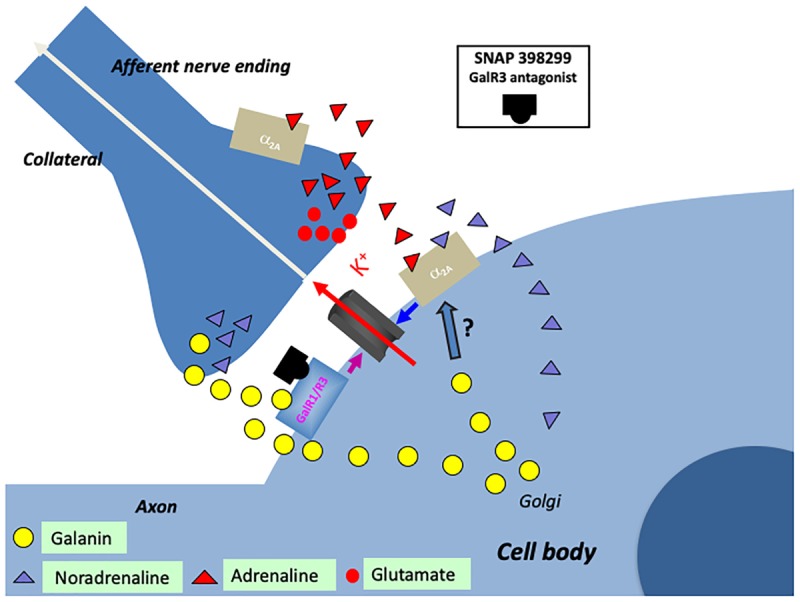
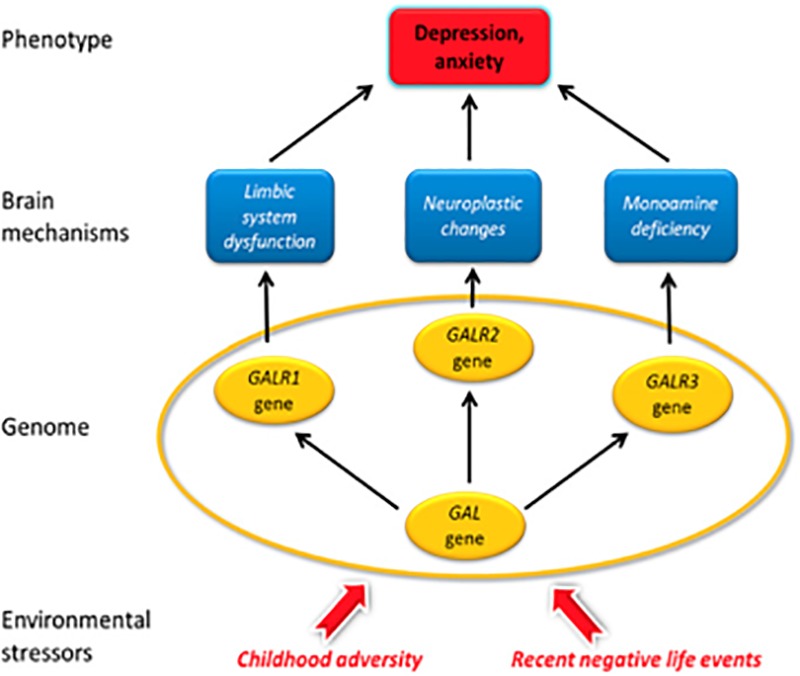
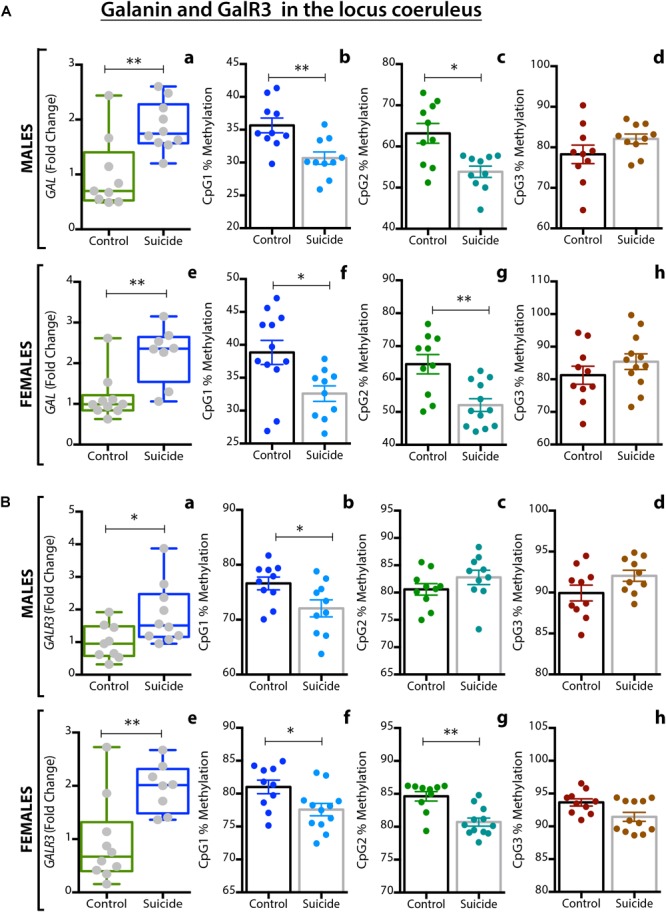
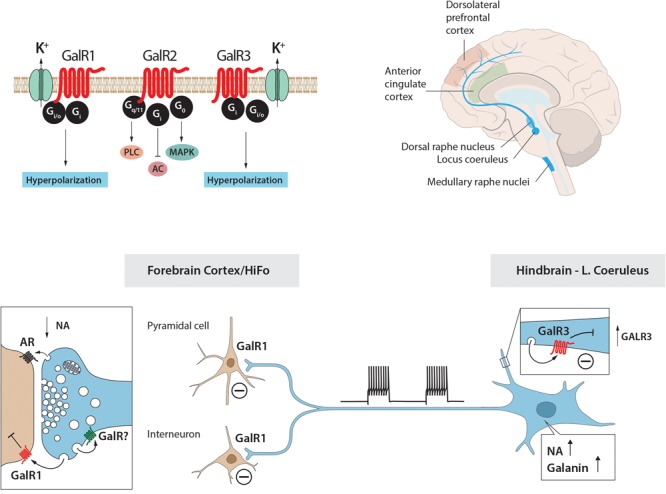
Neuropeptide are auxiliary messenger molecules that always co-exist in nerve cells with one or more small-molecule (classic) neurotransmitters. Neuropeptides act both as transmitters and trophic factors, and play a role especially when the nervous system is challenged, as by injury, pain or stress. Here neuropeptides and coexistence in mammals are reviewed, but with special focus on the 29/30 amino acid galanin and its three receptors GalR1, -R2 and -R3. In particular, galanin’s role as a co-transmitter in both rodent and human noradrenergic locus coeruleus (LC) neurons is addressed. Extensive experimental animal data strongly suggest a role for the galanin system in depression–like behavior. The translational potential of these results was tested by studying the galanin system in human postmortem brains, first normal brains, and then by comparing five regions of brains obtained from depressed people who committed suicide, and from matched controls. It is hypothesized that, when exposed to severe stress, the noradrenergic LC neurons fire in bursts and release galanin from their soma/dendrites. Galanin then acts on somato-dendritic, inhibitory GalR3 autoreceptors, opening potassium channels and inhibiting firing. The purpose of these autoreceptors is to act as a ‘brake’ to prevent overexcitation, a brake that also is part of resilience to stress that protects against depression. Depression then arises when the inhibition is too strong and long lasting - a maladaption, allostatic load, leading to depletion of NA levels in the forebrain. It is suggested that disinhibition by a galanin GalR3 antagonist may have antidepressant activity by restituting forebrain NA levels. A role of galanin in depression is also supported by a recent candidate gene study, showing that variants in genes for galanin and its three receptors confer increased risk of depression and anxiety in people who experienced childhood adversity or recent negative life events. Taken together, the neuropeptide galanin, coexisting in LC neurons, may participate in the mechanism underlying resilience against a serious and common disorder, MDD. These results may lead to an increased understanding of how this illness develops which in turn can provide a basis for its treatment.
Overview
The claims and statistics of this paper haven’t been checked yet.
Run the check — free, no account needed. It reads the open-access text and checks the sources it cites.
Integrity signals
Registry
Cites
Statistics
Figures
Verification
Claims the paper makes
The claims and statistics of this paper haven’t been checked yet.
Run the check — free, no account needed. It reads the open-access text and checks the sources it cites.
Claims other papers make about this one
Each is checked against this paper’s own text: does it say what the citing paper says it does?
In the citing paper
“Diverse neuropeptides are expressed and released in regions of anxiety/fear neurocircuitries, often together with classical transmitters (Hökfelt et al., 2018).”
From Novel pharmacological targets in drug development for the treatment of anxiety and anxiety-related disorders (2019) · cites this paper as Hökfelt et al., 2018
Self-check
Percentages, sums and reported differences re-computed from the paper’s own numbers.
The self-check needs the paper’s full text.
Citations
Cites
Continuous cultures of fused cells secreting antibody of predefined specificity
Köhler, G., & Milstein, C. (1975) · Nature · doi:10.1038/256495a0 · Cited by 17,200
Molecular Mechanisms of Depression: Perspectives on New Treatment Strategies
Lang, U. E., & Borgwardt, S. (2013) · Cellular Physiology and Biochemistry · doi:10.1159/000350094 · Cited by 8,526
Influence of life stress on depression: moderation by a polymorphism in the 5-HTT gene
Caspi, A., Sugden, K., Moffitt, T. E., Taylor, A., Craig, I. W., Harrington, H., McClay, J., Mill, J., Martin, J., Braithwaite, A., et al. (2003) · Science · doi:10.1126/science.1083968 · Cited by 8,120
Kessler, R. C., Berglund, P., Demler, O., Jin, R., Koretz, D., Merikangas, K. R., Rush, A. J., Walters, E. E., & Wang, P. S. (2003) · JAMA · doi:10.1001/jama.289.23.3095 · Cited by 7,988
Genome-wide atlas of gene expression in the adult mouse brain
Lein, E. S., Hawrylycz, M. J., Ao, N., Ayres, M., Bensinger, A., Bernard, A., Boe, A. F., Boguski, M. S., Brockway, K. S., Byrnes, E. J., et al. (2007) · Nature · doi:10.1038/nature05453 · Cited by 5,572
Sakurai, T., Amemiya, A., Ishii, M., Matsuzaki, I., Chemelli, R. M., Tanaka, H., Williams, S. C., Richardson, J. A., Kozlowski, G. P., Wilson, S., et al. (1998) · Cell · doi:10.1016/s0092-8674(00)80949-6 · Cited by 5,501
Physiology and neurobiology of stress and adaptation: central role of the brain
McEwen, B. S. (2007) · Physiological Reviews · doi:10.1152/physrev.00041.2006 · Cited by 5,429 · cited 16×
“A very large GWAS failed to identify risk genes (Major Depressive Disorder Working Group of the Psychiatric Gwas Consortium, 2013), but recent advances in large MDD GWAS studies resulted in several SNPs being associated with MDD (e.g., Hyde et al., 2016; Okbay et al., 2016; Xiao et al., 2017; Wray et al., 2018), and p…”
BackgroundInfluentialLesch, K.-P., Bengel, D., Heils, A., Sabol, S. Z., Greenberg, B. D., Petri, S., Benjamin, J., Müller, C. R., Hamer, D. H., & Murphy, D. L. (1996) · Science · doi:10.1126/science.274.5292.1527 · Cited by 5,162
Dahlstroem, A., & Fuxé, K. (1964) · PubMed · Cited by 5,133
DNA methylation and its basic function
Moore, L. D., Le, T., & Fan, G. (2013) · Neuropsychopharmacology · doi:10.1038/npp.2012.112 · Cited by 4,906
Research works printed but not linked: 10
- Bremner, Noradrenergic mechanisms in stress and anxiety: II. Clinical studies., Synapse, 23, 39, 10.1002/(SICI)1098-2396(199605)23:1<39::AID-SYN5>3.0.CO;2-I · DOI
- Fuxe, 1998, Galanin modulates 5-Hydroxytryptamine functions. Focus on Galanin and Galanin Fragment/
- Hokfelt, 1986, Coexistence of neuronal messengers: a new principle in chemical transmission., Prog. Brain Res., 68, 1
- Hokfelt, 1984, “Central catcholamine neurons as revelaed by immunohistochemistry with special reference to adrenaline neurons,” in, Handbook of Chemical Neuroanatomy. Vol. 2: Classical Transmitters in the CNS, 157
- Maes, 1995, “The serotonin hypothesis of major depression,” in, Psychopharmacology: The Fourth Generation of Progress, 933
- Mutt, 1989, Hormonal Peptides, Fidia Research Foundation Neuroscience Award Lectures., 125
- O’Donnell, 2003, “Localization of galanin receptor subtypes in the rat CNS,” in, Handbook of Chemical Neuroanatomy, 195
- Schatzberg, 1995, “Recent studies on norepinephrine systems im mood disorders,” in, Psychopharmacology: The Fourth Generation of Progress, 911
- Ungerstedt, 1984, Measurement of neurotransmitter release by intracranial dialysis., Methods Neurosci., 6, 81
- 2013, Mental Health and Older Adults.
Cited by
Sorted by citations
Multisensory gamma stimulation promotes glymphatic clearance of amyloid
Murdock, M. H., Yang, C.-Y., Sun, N., Pao, P.-C., Blanco-Duque, C., Kahn, M. C., Kim, T., Lavoie, N. S., Victor, M. B., Islam, M. R., et al. (2024) · Nature · doi:10.1038/s41586-024-07132-6 · Cited by 379
Sartori, S. B., & Singewald, N. (2019) · Pharmacology & Therapeutics · doi:10.1016/j.pharmthera.2019.107402 · Cited by 236
The physiological control of eating: signals, neurons, and networks
Watts, A. G., Kanoski, S. E., Sanchez-Watts, G., & Langhans, W. (2022) · Physiological Reviews · doi:10.1152/physrev.00028.2020 · Cited by 168
Neuropeptide Y Is an Immunomodulatory Factor: Direct and Indirect
Chen, W.-C., Liu, Y., Liu, W.-F., Zhou, Y., He, H., & Lin, S. (2020) · Frontiers in Immunology · doi:10.3389/fimmu.2020.580378 · Cited by 140
VGF as a biomarker and therapeutic target in neurodegenerative and psychiatric diseases
Quinn, J. P., Kandigian, S. E., Trombetta, B. A., Arnold, S. E., & Carlyle, B. C. (2021) · Brain Communications · doi:10.1093/braincomms/fcab261 · Cited by 124
Hormonal axes in Drosophila: regulation of hormone release and multiplicity of actions
Nässel, D. R., & Zandawala, M. (2020) · Cell and Tissue Research · doi:10.1007/s00441-020-03264-z · Cited by 123
A neuropeptidergic circuit gates selective escape behavior of Drosophila larvae
Imambocus, B. N., Zhou, F., Formozov, A., Wittich, A., Tenedini, F. M., Hu, C., Sauter, K., Varela, E. M., Herédia, F., Casimiro, A. P., et al. (2021) · Current Biology · doi:10.1016/j.cub.2021.10.069 · Cited by 102
Endocrine cybernetics: neuropeptides as molecular switches in behavioural decisions
Nässel, D. R., & Zandawala, M. (2022) · Open Biology · doi:10.1098/rsob.220174 · Cited by 85
Prediction of Neuropeptides from Sequence Information Using Ensemble Classifier and Hybrid Features
Bin, Y., We, Z., Tang, W., Dai, R., Li, M., Zhu, Q., & Xia, J. (2020) · Journal of Proteome Research · doi:10.1021/acs.jproteome.0c00276 · Cited by 77
Tillage, R. P., Foster, S. L., Lustberg, D. J., Liles, L. C., McCann, K. E., & Weinshenker, D. (2021) · Neuropsychopharmacology · doi:10.1038/s41386-021-01011-8 · Cited by 69
d-Serine, the Shape-Shifting NMDA Receptor Co-agonist
Coyle, J. T., Balu, D. T., & Wolosker, H. (2020) · Neurochemical Research · doi:10.1007/s11064-020-03014-1 · Cited by 71
Borodovitsyna, O., Duffy, B. C., Pickering, A. E., & Chandler, D. J. (2020) · Neurobiology of Stress · doi:10.1016/j.ynstr.2020.100284 · Cited by 61
Singewald, N., Sartori, S. B., Reif, A., & Holmes, A. (2023) · Neuropharmacology · doi:10.1016/j.neuropharm.2023.109418 · Cited by 64
Unlocking opioid neuropeptide dynamics with genetically encoded biosensors
Dong, C., Gowrishankar, R., Jin, Y., He, X. J., Gupta, A., Wang, H., Sayar, N., Flores, R. J., Mahe, K., Tjahjono, N., et al. (2024) · Nature Neuroscience · doi:10.1038/s41593-024-01697-1 · Cited by 60
Tillage, R. P., Sciolino, N. R., Plummer, N. W., Lustberg, D. J., Liles, L. C., Hsiang, M., Powell, J. M., Smith, K. G., Jensen, P., & Weinshenker, D. (2020) · Brain Structure and Function · doi:10.1007/s00429-020-02035-4 · Cited by 55
Jiang, M., Zhao, B., Luo, S., Wang, Q., Chu, Y., Chen, T., Mao, X., Liu, Y., Wang, Y., Jiang, X., et al. (2021) · Briefings in Bioinformatics · doi:10.1093/bib/bbab310 · Cited by 52
The neuropeptide landscape of human prefrontal cortex
Zhong, W., Barde, S. S., Mitsios, N., Ádori, C., Oksvold, P., von Feilitzen, K., O’Leary, L. A., Csiba, L., Hortobágyi, T., Szocsics, P., et al. (2022) · Proceedings of the National Academy of Sciences · doi:10.1073/pnas.2123146119 · Cited by 52
Distinct neurochemical influences on fMRI response polarity in the striatum
Cerri, D. H., Albaugh, D. L., Walton, L. R., Katz, B. M., Wang, T.-W. W., Chao, T.-H. H., Zhang, W., Nonneman, R. J., Jiang, J., Lee, S., et al. (2024) · Nature Communications · doi:10.1038/s41467-024-46088-z · Cited by 39
Control of lymph node activity by direct local innervation
Virgiliis, F. D., Oliva, V. M., Kizil, B., & Scheiermann, C. (2022) · Trends in Neurosciences · doi:10.1016/j.tins.2022.06.006 · Cited by 40
Neuropeptides and small-molecule amine transmitters: cooperative signaling in the nervous system
Eiden, L. E., Hernández, V. S., Jiang, S. Z., & Zhang, L. (2022) · Cellular and Molecular Life Sciences · doi:10.1007/s00018-022-04451-7 · Cited by 37
Neuronal diversity of neuropeptide signaling, including galanin, in the mouse locus coeruleus
Caramia, M., Romanov, R. A., Sideromenos, S., Hevesi, Z., Zhao, M., Krasniakova, M., Xu, Q., Harkany, T., & Hökfelt, T. G. M. (2023) · Proceedings of the National Academy of Sciences · doi:10.1073/pnas.2222095120 · Cited by 35
Xia, X., & Li, Y. (2025) · Nature Communications · doi:10.1038/s41467-025-56129-w · Cited by 33
Curtis, G. R., Oakes, K., & Barson, J. R. (2021) · Frontiers in Behavioral Neuroscience · doi:10.3389/fnbeh.2020.634163 · Cited by 34
Damonte, V. M., Pomrenze, M. B., Manning, C., Casper, C., Wolfden, A. M., Malenka, R. C., & Kauer, J. A. (2022) · Biological Psychiatry · doi:10.1016/j.biopsych.2022.06.011 · Cited by 31
Peptidergic and functional delineation of the Edinger-Westphal nucleus
Priest, M. F., Freda, S. N., Rieth, I. J., Badong, D., Dumrongprechachan, V., & Kozorovitskiy, Y. (2023) · Cell Reports · doi:10.1016/j.celrep.2023.112992 · Cited by 36
In Memoriam Geoffrey Burnstock: Creator of Purinergic Signaling
Verkhratsky, A., Zimmermann, H., Abbracchio, M. P., Illés, P., & Virgilio, F. D. (2020) · Function · doi:10.1093/function/zqaa006 · Cited by 26
(Neuro) Peptides, Physical Activity, and Cognition
Autio, J., Stenbäck, V., Gagnon, D. D., Leppäluoto, J., & Herzig, K. (2020) · Journal of Clinical Medicine · doi:10.3390/jcm9082592 · Cited by 28
Sharma, A., Muresanu, D. F., Ozkızılcık, A., Tian, Z. R., Lafuente, J. V., Manzhulo, I., Mössler, H., & Sharma, H. S. (2019) · Progress in brain research · doi:10.1016/bs.pbr.2019.03.002 · Cited by 24
Leciejewska, N., Pruszyńska‐Oszmałek, E., Mielnik, K., Głowacki, M., Lehmann, T. P., Sassek, M., Gawęda, B., Szczepankiewicz, D., Nowak, K. W., & Kolodziejski, P. A. (2021) · Genes · doi:10.3390/genes13010081 · Cited by 23
Zahola, P., Hanics, J., Pintér, A., Máté, Z., Gáspárdy, A., Hevesi, Z., Echevarrı́a, D., Ádori, C., Barde, S. S., Törőcsik, B., et al. (2019) · Brain Structure and Function · doi:10.1007/s00429-019-01886-w · Cited by 22
Neuropeptidergic Control of an Internal Brain State Produced by Prolonged Social Isolation StressPreprint
Zelikowsky, M., Ding, K., & Anderson, D. J. (2018) · Cold Spring Harbor Symposia on Quantitative Biology · doi:10.1101/sqb.2018.83.038109 · Cited by 22
A brief history of insect neuropeptide and peptide hormone research
Nässel, D. R. (2024) · Cell and Tissue Research · doi:10.1007/s00441-024-03936-0 · Cited by 23
Baraniuk, J. N. (2022) · Brain Sciences · doi:10.3390/brainsci12020132 · Cited by 20
Neuropathology of the Brainstem to Mechanistically Understand and to Treat Alzheimer’s Disease
Patthy, Á., Murai, J., Hanics, J., Pintér, A., Zahola, P., Hökfelt, T. G. M., Harkany, T., & Alpár, A. (2021) · Journal of Clinical Medicine · doi:10.3390/jcm10081555 · Cited by 17
Hyperexcitability: From Normal Fear to Pathological Anxiety and Trauma
Rosen, J. B., & Schulkin, J. A. (2022) · Frontiers in Systems Neuroscience · doi:10.3389/fnsys.2022.727054 · Cited by 22
Rajkumar, R. P. (2021) · Frontiers in Psychology · doi:10.3389/fpsyg.2021.621853 · Cited by 19
Barde, S. S., Benitez, J. A., Zhong, W., Solarz, A., Mei, I., Prud’homme, J., Palkovits, M., Turecki, G., Mulder, J., Uhlén, M., et al. (2023) · European Neuropsychopharmacology · doi:10.1016/j.euroneuro.2023.09.004 · Cited by 28
Combination therapy with neuropeptides for the treatment of anxiety disorder
Gupta, P. R., & Prabhavalkar, K. S. (2021) · Neuropeptides · doi:10.1016/j.npep.2021.102127 · Cited by 17
Yu, H., Ni, P., Zhao, L., Tian, Y., Li, M., Li, X., Wei, W., Wei, J., Deng, W., Du, X., et al. (2023) · Frontiers in Psychiatry · doi:10.3389/fpsyt.2023.1180720 · Cited by 16
Behl, T., Madaan, P., Sehgal, A., Singh, S., Makeen, H. A., Albratty, M., Alhazmi, H. A., Meraya, A. M., & BUNGAU, S. G. (2022) · International Journal of Molecular Sciences · doi:10.3390/ijms23094565 · Cited by 19
Peptidergic modulation of fear responses by the Edinger-Westphal nucleusPreprint
Priest, M. F., Freda, S. N., Badong, D., Dumrongprechachan, V., & Kozorovitskiy, Y. (2021) · bioRxiv (Cold Spring Harbor Laboratory) · doi:10.1101/2021.08.05.455317 · Cited by 16
Dissel, S., Klose, M. K., van Swinderen, B., Cao, L., Ford, M., Periandri, E. M., Jones, J. D., Li, Z., & Shaw, P. J. (2022) · PLoS Biology · doi:10.1371/journal.pbio.3001797 · Cited by 16
Increasing resolution in stress neurobiology: from single cells to complex group behaviors
Miranda, L., Bordes, J., Gasperoni, S., & López, J. P. (2023) · Stress · doi:10.1080/10253890.2023.2186141 · Cited by 15
A Molecular Landscape of Mouse Hippocampal Neuromodulation
Smith, S. J., & von Zastrow, M. (2022) · Frontiers in Neural Circuits · doi:10.3389/fncir.2022.836930 · Cited by 13
Extrinsic and intrinsic control of striatal cholinergic interneuron activity
Ratna, D., & Francis, T. C. (2025) · Frontiers in Molecular Neuroscience · doi:10.3389/fnmol.2025.1528419 · Cited by 13
Smith, S. J. (2021) · Current Opinion in Neurobiology · doi:10.1016/j.conb.2021.09.011 · Cited by 12
Association between anxiety and non-coding genetic variants of the galanin neuropeptide
Keszler, G., Molnár, Z., Rónai, Z., Sasvári‐Székely, M., Székely, A., & Kótyuk, E. (2019) · PLoS ONE · doi:10.1371/journal.pone.0226228 · Cited by 12
de Assis, S. G., Tavares, P. H., Oliveira, N. C. D. S., Serpeloni, F., & Avanci, J. Q. (2025) · International Journal of Developmental Neuroscience · doi:10.1002/jdn.70042 · Cited by 15
Neuropeptides: The Evergreen Jack‐of‐All‐Trades in Neuronal Circuit Development and Regulation
Hevesi, Z., Hökfelt, T., & Harkany, T. (2024) · BioEssays · doi:10.1002/bies.202400238 · Cited by 12
Ncube, D., Tallafuß, A., Serafin, J., Bruckner, J. J., Farnsworth, D. R., Miller, A. C., Eisen, J. S., & Washbourne, P. (2022) · BMC Genomics · doi:10.1186/s12864-022-08879-w · Cited by 10
Foster, S. L., Galaj, E., Karne, S. L., Ferré, S., & Weinshenker, D. (2021) · Addiction Biology · doi:10.1111/adb.13037 · Cited by 11
Bakalar, D., Sweat, S. C., Drossel, G., Jiang, S. Z., Samal, B. B., Stroth, N., Xu, W., Zhang, L., Zhang, H., & Eiden, L. E. (2021) · Psychoneuroendocrinology · doi:10.1016/j.psyneuen.2021.105447 · Cited by 10
De‐Miguel, F. F., Leon-Pinzon, C., Torres-Platas, S. G., del-Pozo, V., Hernández-Mendoza, G. A., Aguirre-Olivas, D., Méndez, B., Moore, S., Sánchez-Sugía, C., García-Aguilera, M. A., et al. (2021) · Frontiers in Molecular Neuroscience · doi:10.3389/fnmol.2021.638858 · Cited by 10
Jin, S., Maddern, X. J., Campbell, E. J., & Lawrence, A. J. (2022) · Neuroscience Letters · doi:10.1016/j.neulet.2022.136858 · Cited by 10
Yang, K., Liu, T., Wang, Z., Liu, J., Shen, Y., Pan, X., Wen, R., Xie, H., Ruan, Z., Tan, Z., et al. (2021) · iScience · doi:10.1016/j.isci.2022.104180 · Cited by 9
Beneficial effects of galanin system on diabetic peripheral neuropathic pain and its complications
Yu, M., Fang, P., Wang, H., Shen, G., Zhang, Z., & Tang, Z. (2020) · Peptides · doi:10.1016/j.peptides.2020.170404 · Cited by 9
Li, Q., Liu, R., Ma, R., Huang, Y., Zhang, L., Zheng, Z., Zheng, Z., Li, X., Chen, C., Chen, C., et al. (2022) · Aquaculture · doi:10.1016/j.aquaculture.2022.738222 · Cited by 9
Kawa, L., Arborelius, U. P., Hökfelt, T. G. M., & Risling, M. (2020) · Frontiers in Neurology · doi:10.3389/fneur.2020.540144 · Cited by 10
Abboud, C., Brochoire, L., Drouet, A., Hossain, M. A., Hleihel, W., Gundlach, A. L., & Landry, M. (2021) · PAIN Reports · doi:10.1097/pr9.0000000000000937 · Cited by 8
Oxytocinergic neurons, but not oxytocin, are crucial for male penile erection
Wen, Y., Fan, L., Yang, A.-Y., Zhang, Y.-C., Xu, C., Wang, Z.-H., Xie, W.-J., Lu, Y., Zhang, X., Zhu, J., et al. (2023) · Neuropharmacology · doi:10.1016/j.neuropharm.2023.109576 · Cited by 8
Seitz, J., Lahaye, E., Andreani, N. A., Thomas, B. J., Takhlidjt, S., Chartrel, N., Herpertz‐Dahlmann, B., Baines, J. F., & Fetissov, S. O. (2024) · Neuroendocrinology · doi:10.1159/000539316 · Cited by 8
Wiggins, J. W., Kozyrev, N., Sledd, J. E., Wilson, G. G., & Coolen, L. M. (2019) · Journal of Neurotrauma · doi:10.1089/neu.2019.6509 · Cited by 8
Fronto-temporal galanin modulates impulse control
Messanvi, F., Perkins, A., du Hoffmann, J., & Chudasama, Y. (2019) · Psychopharmacology · doi:10.1007/s00213-019-05365-2 · Cited by 8
Yang, Y., Li, Y., Liu, B., Li, C., Liu, Z., Deng, J., Luo, H., Li, X., Wu, J., Li, H., et al. (2021) · Proceedings of the National Academy of Sciences · doi:10.1073/pnas.1922586118 · Cited by 9
Marcoli, M., Agnati, L. F., Franco, R., Cortelli, P., Anderlini, D., Guidolin, D., Cervetto, C., & Maura, G. (2023) · Frontiers in Endocrinology · doi:10.3389/fendo.2022.1038874 · Cited by 7
Rodriguez‐Zas, S. L., Southey, N. L., Rund, L. A., Antonson, A. M., Nowak, R. A., & Johnson, R. W. (2023) · PLoS ONE · doi:10.1371/journal.pone.0292952 · Cited by 7
Sun, J., Xu, S. Q., Li, H., Li, L., & Xu, Q. (2019) · Mediators of Inflammation · doi:10.1155/2019/2716028 · Cited by 7
Pulver, A., Kiive, E., Kanarik, M., & Harro, J. (2020) · Brain Research · doi:10.1016/j.brainres.2020.147013 · Cited by 9
Epigenesis, Synapse Selection, Cultural Imprints, and Human Brain Development
Changeux, J. (2022) · Cambridge University Press eBooks · doi:10.1017/9781108399838.004 · Cited by 7
Neuropeptides as transmitters and regulators of the locus coeruleus noradrenergic system
Becker, L. J., Martin, M. M., Hughes, A. C., Mulvey, B., Kuo, C., Piantadosi, S. C., Bruchas, M. R., Martinowich, K., Meye, F. J., Schwarz, L. A., et al. (2025) · Pharmacological Reviews · doi:10.1016/j.pharmr.2025.100081 · Cited by 5
Gilani, M., Abak, N., & Saberian, M. (2024) · Pharmacology Biochemistry and Behavior · doi:10.1016/j.pbb.2024.173897 · Cited by 6
Kalkan, Ö. F., Şahin, Z., Aktaş, O., Yildirim, A., Aydın-Abidin, S., Özyaşar, A. F., Uzun, İ., & Abidin, İ. (2025) · Neurological Research · doi:10.1080/01616412.2025.2456293 · Cited by 6
Værøy, H., Takhlidjt, S., Cherifi, Y., Lahaye, E., Chartrel, N., & Fetissov, S. O. (2023) · Brain Sciences · doi:10.3390/brainsci13020237 · Cited by 6
McEwan, A. R., Erickson, J. C., Davidson, C., Heijkoop, J., Turnbull, Y. D., Delibegović, M., Murgatroyd, C., & MacKenzie, A. (2020) · Cellular and Molecular Life Sciences · doi:10.1007/s00018-020-03705-6 · Cited by 7
Expression of substance P, NPY and their Receptors Is Altered in Major DepressionPreprint
Barde, S. S., Benitez, J. A., Zhong, W., Solarz, A., Mei, I., Prud’homme, J., Palkovits, M., Turecki, G., Mulder, J., Uhlén, M., et al. (2022) · bioRxiv (Cold Spring Harbor Laboratory) · doi:10.1101/2022.12.14.516867 · Cited by 6
Spatially Mapping Neuropeptide Isomers via MALDI Trapped Ion Mobility MS Imaging
Okyem, S., Trinklein, T. J., Rubakhin, S. S., & Sweedler, J. V. (2025) · Analytical Chemistry · doi:10.1021/acs.analchem.5c04297 · Cited by 5
Evolution of neuropeptides: From diffusing molecules to modulators of synaptic transmission
Leroy, F., Gimenez, P., Krabichler, Q., & Grinevich, V. (2026) · Progress in Neurobiology · doi:10.1016/j.pneurobio.2026.102920 · Cited by 5
Muthu, S., Lakshmanan, G., & Prakash, S. (2022) · Developmental Neuroscience · doi:10.1159/000522201 · Cited by 5
Distinct neurochemical influences on fMRI response polarity in the striatumPreprint
Cerri, D. H., Albaugh, D. L., Walton, L. R., Katz, B. M., Wang, T.-W. W., Chao, T.-H. H., Zhang, W., Nonneman, R. J., Jiang, J., Lee, S., et al. (2023) · bioRxiv (Cold Spring Harbor Laboratory) · doi:10.1101/2023.02.20.529283 · Cited by 5
De‐Miguel, F. F. (2022) · International Journal of Molecular Sciences · doi:10.3390/ijms23031495 · Cited by 4
Lvovs, A., Matrov, D., Kurrikoff, T., Veidebaum, T., & Harro, J. (2021) · Acta Neuropsychiatrica · doi:10.1017/neu.2021.41 · Cited by 5
Ágoston, D. V. (2024) · Frontiers in Neuroanatomy · doi:10.3389/fnana.2024.1374864 · Cited by 4
Li, Y., Gao, M., Zeng, K., Xing, J., Xu, F., Xuan, J., Xia, X., Liu, Y., Yao, J., & Wang, B. (2020) · Neuropsychiatric Disease and Treatment · doi:10.2147/ndt.s256644 · Cited by 4
Review of Fish Neuropeptides: A Novel Perspective on Animal Welfare
Campos‐Sánchez, J. C., Cabrera-Álvarez, M. J., & Saraiva, J. L. (2025) · The Journal of Comparative Neurology · doi:10.1002/cne.70029 · Cited by 3
Molecular aspects of regeneration and neuroprotection in neuropsychiatric diseases
Farooqui, A. A. (2020) · Elsevier eBooks · doi:10.1016/b978-0-12-821711-5.00008-5 · Cited by 2
Chronic Ultrasound Prenatal Stress Altered the Brain’s Neurochemical Systems in Newborn Rats
Abramova, O. V., Zorkina, Y., Ka, P., Ushakova, V. M., Morozova, A. Y., Zubkov, E. A., Pavlova, O., Storozheva, Z. I., Gurina, O. I., & Chekhonin, V. P. (2024) · Neural Plasticity · doi:10.1155/2024/3829941 · Cited by 3
Overview of CNS Organization and Development
Brown, R. E. (2023) · Springer eBooks · doi:10.1007/978-3-031-20792-1_1 · Cited by 3
Piwowarczyk-Nowak, A., Pałasz, A., Suszka‐Świtek, A., Vecchia, A. D., Grajoszek, A., Krzystanek, M., & Worthington, J. J. (2022) · Pharmacological Reports · doi:10.1007/s43440-022-00374-z · Cited by 2
Edmond, K. Z., & Matosin, N. (2025) · Neurobiology of Stress · doi:10.1016/j.ynstr.2025.100739 · Cited by 2
Somatostatin neurons of the bed nucleus of the stria terminalis drive aversive behaviors in mice
Denis, Q., Simbriger, K., Iyer, H., Gasser, E., Bukovac, A., Moser, K. V., Hörtnagl, H., & Tasan, R. O. (2026) · Neuropeptides · doi:10.1016/j.npep.2026.102607 · Cited by 2
Samandari-Bahraseman, M. R., Esmaeilzadeh‐Salestani, K., Dogani, M., Khaleghdoust, B., Hatami, N., Esmaeili‐Mahani, S., Elyasi, L., Loit, E., & Harro, J. (2024) · Brain and Behavior · doi:10.1002/brb3.70171 · Cited by 2
Messanvi, F., Visocky, V., Senneca, C., Berkun, K., Taori, M., Bradley, S. P., Wang, H., Tejeda, H. A., & Chudasama, Y. (2026) · Neuropsychopharmacology · doi:10.1038/s41386-026-02360-y · Cited by 2
Neuropeptide Binding Autoantibodies Regulating Neuroendocrine Communications
Fetissov, S. O., & Mehdi, M. E. (2023) · Masterclass in neuroendocrinology · doi:10.1007/978-3-031-21358-8_8 · Cited by 2
The therapeutic potential of galanin in the management of pain – a review article
Hökfelt, T. G. M., & Wiesenfeld‐Hallin, Z. (2024) · Danish Medical Journal · doi:10.61409/a10230653 · Cited by 1
Spontaneous and evoked angiotensin II sniffer cell activity in the lamina terminalis in vitro
Farmer, G. E., & Cunningham, J. T. (2024) · American Journal of Physiology-Regulatory, Integrative and Comparative Physiology · doi:10.1152/ajpregu.00227.2023 · Cited by 1
Neuronal synchronization in Drosophila
Fernández-Chiappe, F., Wappner, M., Morelli, L. G., & Muraro, N. I. (2025) · iScience · doi:10.1016/j.isci.2025.112942 · Cited by 1
Li, T., Vukojević, V. B., Oasa, S., Bai, Y., Yang, Y., Li, H., Tang, Y., Terenius, L. Y., Hökfelt, T. G. M., Svenningsson, P., et al. (2025) · British Journal of Pharmacology · doi:10.1111/bph.70192 · Cited by 1
Merighi, A., Sbriz, M., & Lossi, L. (2026) · Frontiers in Molecular Neuroscience · doi:10.3389/fnmol.2026.1839947 · Cited by 1
The priming factor, CAPS, mediates somatic exocytosis of serotonin
Laguna, J. A., Saroj, N., Winchell, C. J., Weisblat, D. A., & De‐Miguel, F. F. (2026) · Neuroscience · doi:10.1016/j.neuroscience.2026.07.026 · Cited by 1
Metadata
- Authors
- Hökfelt, T., Barde, S., Xu, Z.-Q. D., Kuteeva, E., Rüegg, J., Le Maitre, E., Risling, M., Kehr, J., Ihnatko, R., Theodorsson, E., Palkovits, M., Deakin, W., Bagdy, G., Juhasz, G., Prud’homme, H. J., Mechawar, N., Diaz-Heijtz, R., & Ögren, S. O.
- Affiliations
- Karolinska Institutet (SE)
- Linköping University (SE)
- Douglas Mental Health University Institute (CA)
- Corresponding author
- Hökfelt, Tomas
- ORCID
- Venue
- Frontiers in Neural Circuits
- Publisher
- Frontiers Media SA
- Published
- 2018-12-21
- Volume
- 12
- Pages
- 106-106
- ISSN
- 1662-5110 (ISSN-L)
- PMC
- PMC6309708
- OpenAlex
- W2906160505
- Cited by
- 139
- References
- 625
- Citations by year
- 2026: 14 · 2025: 16 · 2024: 23 · 2023: 13 · 2022: 24 · 2021: 22 · 2020: 18 · 2019: 8 · 2018: 1
- FWCI
- 1.58
- Type
- journal article
- Language
- en
- Open access
- gold
- doi.org
- Licence
- Locations
- Frontiers in Neural Circuits (publishedVersion, cc-by)
- Europe PMC (PubMed Central) (publishedVersion, cc-by)
- PubMed Central (publishedVersion, cc-by)
- PubMed (publishedVersion)
- Research Explorer (The University of Manchester) (publishedVersion, other-oa)
- Repository of the Academy's Library (Library of the Hungarian Academy of Sciences) (acceptedVersion, other-oa)
- DiVA (Linkoping University) (submittedVersion, other-oa)
- DOAJ (DOAJ: Directory of Open Access Journals) (submittedVersion, cc-by-sa)
- Funders
- Torsten Söderbergs Stiftelse
- National Alliance for Research on Schizophrenia and Depression
- Karolinska Institutet
- Vetenskapsrådet (04X-2887)
- Marcus och Amalia Wallenbergs minnesfond
- Topics
- Life Sciences › Neuroscience › Cellular and Molecular Neuroscience › Neuropeptides and Animal Physiology
- Life Sciences › Neuroscience › Behavioral Neuroscience › Stress Responses and Cortisol
- Life Sciences › Neuroscience › Cellular and Molecular Neuroscience › Neurotransmitter Receptor Influence on Behavior
- Keywords
- neuropeptides, co-transmission, galanin, galanin receptors, locus coeruleus, noradrenergic neurons, depression, major depressive disorder, stress resilience, allostatic load, postmortem brain, suicide, antidepressant mechanism, childhood adversity, anxiety, coexistence of neurotransmitters
- MeSH terms
- Animals, Mental Disorders, Humans, Locus Coeruleus, Neuropeptides, Receptors, Neurotransmitter, Neurotransmitter Agents
About these checks
Registry, retraction, Cites and statistics results are computed, not judged, with one exception: a printed reference that no index lists is read once by a model before it counts as a citation error. Claims are extracted by a model and kept only when their quote appears verbatim in the text; each cited source is then checked, with a model’s help, for whether it says what the claim relies on. Those verdicts can be wrong — read the claim’s quote and the cited source before relying on one.
Statistics and arithmetic are recomputed, not judged.
Confidence bands are shown only for fields calibrated on our annotated test set. None is calibrated yet, so no band is shown.
What counts as a claim ›How we measure confidence ›How we check this ›
Are you an author, or do you see a problem with this page? Request a review
