

The DOI matches its Crossref record; 328 of the 328 references it cites were found in a registry or an index.
Diet in Parkinson’s Disease: Critical Role for the Microbiome
Open accessAbstract
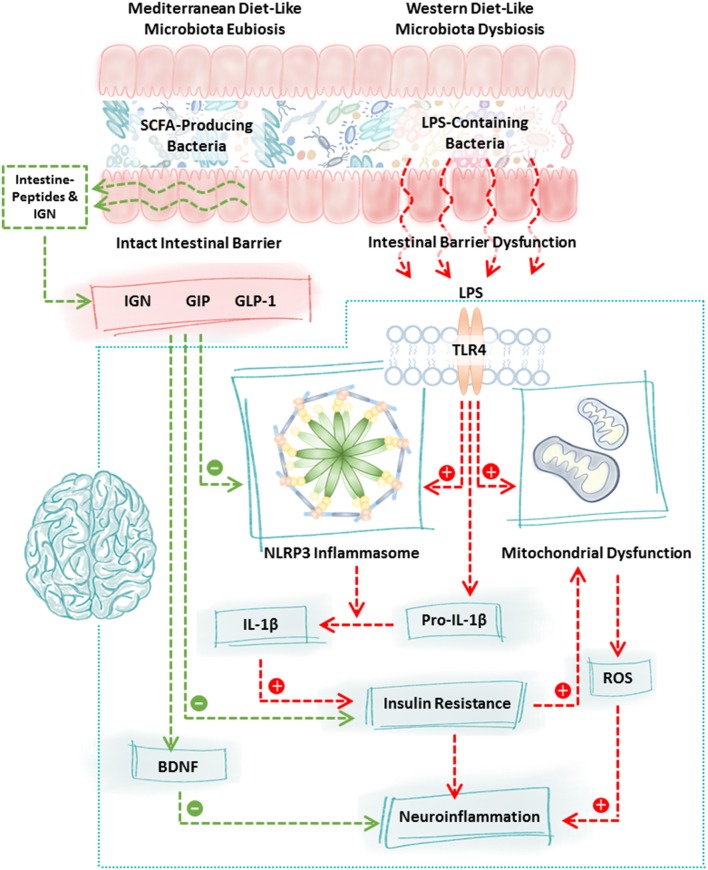
Background. Parkinson’s disease (PD) is the most common movement disorder affecting up to 1% of the population above the age of 60 and 4–5% of those above the age of 85. Little progress has been made on efforts to prevent disease development or halt disease progression. Diet has emerged as a potential factor that may prevent the development or slow the progression of PD. In this review, we discuss evidence for a role for the intestinal microbiome in PD and how diet-associated changes in the microbiome may be a viable approach to prevent or modify disease progression. Methods. We reviewed studies demonstrating that dietary components/foods were related to risk for PD. We reviewed evidence for the dysregulated intestinal microbiome in PD patients including abnormal shifts in the intestinal microbiota composition (i.e., dysbiosis) characterized by a loss of short chain fatty acid (SCFA) bacteria and increased lipopolysaccharide (LPS) bacteria. We also examined several candidate mechanisms by which the microbiota can influence PD including the NLRP3 inflammasome, insulin resistance, mitochondrial function, vagal nerve signaling. Results. The PD-associated microbiome is associated with decreased production of SCFA and increased LPS and it is believed that these changes may contribute to the development or exacerbation of PD. Diet robustly impacts the intestinal microbiome and the Western diet is associated with increased risk for PD whereas the Mediterranean diet (including high intake of dietary fiber) decreases PD risk. Mechanistically this may be the consequence of changes in the relative abundance of SCFA-producing or LPS-containing bacteria in the intestinal microbiome with effects on intestinal barrier function, endotoxemia (i.e., systemic LPS), NLRP3 inflammasome activation, insulin resistance, and mitochondrial dysfunction, and the production of factors such as glucagon like peptide 1 (GLP-1) and brain derived neurotrophic factor (BDNF) as well as intestinal gluconeogenesis. Conclusions. This review summarizes a model of microbiota-gut-brain-axis regulation of neuroinflammation in PD including several new mechanisms. We conclude with the need for clinical trials in PD patients to test this model for beneficial effects of Mediterranean based high fiber diets.
Overview
The claims and statistics of this paper haven’t been checked yet.
Run the check — free, no account needed. It reads the open-access text and checks the sources it cites.
Integrity signals
Registry
Cites
Statistics
Figures
Verification
Claims the paper makes
The claims and statistics of this paper haven’t been checked yet.
Run the check — free, no account needed. It reads the open-access text and checks the sources it cites.
Claims other papers make about this one
Each is checked against this paper’s own text: does it say what the citing paper says it does?
In the citing paper
“The high-fat, low-fiber Western diet has been associated with an increased risk of Parkinson’s disease.”
From Mediterranean Diet as an Antioxidant: The Impact on Metabolic Health and Overall Wellbeing (2021) · cites this paper as [112]
Self-check
Percentages, sums and reported differences re-computed from the paper’s own numbers.
The self-check needs the paper’s full text.
Citations
Cites
Structure, function and diversity of the healthy human microbiome
The Human Microbiome Project Consortium (2012) · Nature · doi:10.1038/nature11234 · Cited by 11,726
A human gut microbial gene catalogue established by metagenomic sequencing
MetaHIT Consortium, Qin, J., Li, R., Raes, J., Arumugam, M., Burgdorf, K. S., Manichanh, C., Nielsen, T., Pons, N., Levenez, F., et al. (2010) · Nature · doi:10.1038/nature08821 · Cited by 11,624
Diet rapidly and reproducibly alters the human gut microbiome
David, L. A., Maurice, C. F., Carmody, R. N., Gootenberg, D. B., Button, J. E., Wolfe, B. E., Ling, A. V., Devlin, A. S., Varma, Y., Fischbach, M. A., et al. (2014) · Nature · doi:10.1038/nature12820 · Cited by 10,100
Predictive functional profiling of microbial communities using 16S rRNA marker gene sequences
Langille, M. G. I., Zaneveld, J., Caporaso, J. G., McDonald, D., Knights, D., Reyes, J. A., Clemente, J. C., Burkepile, D. E., Vega Thurber, R. L., Knight, R., et al. (2013) · Nature Biotechnology · doi:10.1038/nbt.2676 · Cited by 9,116
From Dietary Fiber to Host Physiology: Short-Chain Fatty Acids as Key Bacterial Metabolites
Koh, A., De Vadder, F., Kovatcheva-Datchary, P., & Bäckhed, F. (2016) · Cell · doi:10.1016/j.cell.2016.05.041 · Cited by 7,070
A metagenome-wide association study of gut microbiota in type 2 diabetes
Qin, J., Li, Y., Cai, Z., Li, S., Zhu, J., Zhang, F., Liang, S., Zhang, W., Guan, Y., Shen, D., et al. (2012) · Nature · doi:10.1038/nature11450 · Cited by 6,762
Linking long-term dietary patterns with gut microbial enterotypes
Wu, G. D., Chen, J., Hoffmann, C., Bittinger, K., Chen, Y.-Y., Keilbaugh, S. A., Bewtra, M., Knights, D., Walters, W. A., Knight, R., et al. (2011) · Science · doi:10.1126/science.1208344 · Cited by 6,513
Kalia, L. V., & Lang, A. E. (2015) · The Lancet · doi:10.1016/s0140-6736(14)61393-3 · Cited by 6,184
Diversity, stability and resilience of the human gut microbiota
Lozupone, C. A., Stombaugh, J. I., Gordon, J. I., Jansson, J. K., & Knight, R. (2012) · Nature · doi:10.1038/nature11550 · Cited by 5,533
Chronic Parkinsonism in Humans Due to a Product of Meperidine-Analog Synthesis
Langston, J. W., Ballard, P., Tetrud, J. W., & Irwin, I. (1983) · Science · doi:10.1126/science.6823561 · Cited by 4,914
Cited by
Sorted by citations
Short chain fatty acids: Microbial metabolites for gut-brain axis signalling
O’Riordan, K. J., Collins, M., Moloney, G. M., Knox, E. G., Aburto, M. R., Fülling, C., Morley, S. J., Clarke, G. A., Schellekens, H., & Cryan, J. F. (2022) · Molecular and Cellular Endocrinology · doi:10.1016/j.mce.2022.111572 · Cited by 788
Mediterranean Diet as an Antioxidant: The Impact on Metabolic Health and Overall Wellbeing
Gantenbein, K. V., & Kanaka-Gantenbein, C. (2021) · Nutrients · doi:10.3390/nu13061951 · Cited by 288
Obrenovich, M. E. (2018) · Microorganisms · doi:10.3390/microorganisms6040107 · Cited by 277
Mitrea, L., Nemeș, S. A., Szabo, K., Teleky, B., & Vodnar, D. C. (2022) · Frontiers in Medicine · doi:10.3389/fmed.2022.813204 · Cited by 253
Neuroinflammation and Parkinson’s Disease—From Neurodegeneration to Therapeutic Opportunities
Araújo, B., Caridade-Silva, R., Soares-Guedes, C., Martins‐Macedo, J., Gomes, E. D., Monteiro, S., & Teixeira, F. G. (2022) · Cells · doi:10.3390/cells11182908 · Cited by 209
Metadata
- Authors
- Jackson, A., Forsyth, C. B., Shaikh, M., Voigt, R. M., Engen, P. A., Ramirez, V., & Keshavarzian, A.
- Affiliations
- Rush University Medical Center (US)
- Corresponding author
- Keshavarzian, Ali
- Venue
- Frontiers in Neurology
- Publisher
- Frontiers Media SA
- Published
- 2019-12-10
- Volume
- 10
- Pages
- 1245-1245
- ISSN
- 1664-2295 (ISSN-L)
- PMC
- PMC6915094
- OpenAlex
- W2995752611
- Cited by
- 145
- References
- 328
- Citations by year
- 2026: 16 · 2025: 22 · 2024: 21 · 2023: 17 · 2022: 35 · 2021: 18 · 2020: 13 · 2019: 1
- FWCI
- 1.48
- Type
- journal article
- Language
- en
- Open access
- gold
- doi.org
- Licence
- Locations
- Frontiers in Neurology (publishedVersion, cc-by)
- Europe PMC (PubMed Central) (publishedVersion, cc-by)
- PubMed Central (publishedVersion, cc-by)
- PubMed (publishedVersion)
- DOAJ (DOAJ: Directory of Open Access Journals) (submittedVersion)
- Funders
- U.S. Department of Defense
- Topics
- Life Sciences › Biochemistry, Genetics and Molecular Biology › Molecular Biology › Gut microbiota and health
- Health Sciences › Medicine › Clinical Neurology › Parkinson's Disease Mechanisms and Treatments
- Health Sciences › Medicine › Public Health, Environmental and Occupational Health › Nutritional Studies and Diet
- Keywords
- Parkinson's disease, diet, gut microbiota, dysbiosis, short-chain fatty acids, lipopolysaccharide, Western diet, Mediterranean diet, dietary fiber, NLRP3 inflammasome, insulin resistance, mitochondrial dysfunction, microbiota-gut-brain axis, neuroinflammation, endotoxemia, intestinal barrier function, glucagon-like peptide-1, brain-derived neurotrophic factor, intestinal gluconeogenesis
About these checks
Registry, retraction, Cites and statistics results are computed, not judged, with one exception: a printed reference that no index lists is read once by a model before it counts as a citation error. Claims are extracted by a model and kept only when their quote appears verbatim in the text; each cited source is then checked, with a model’s help, for whether it says what the claim relies on. Those verdicts can be wrong — read the claim’s quote and the cited source before relying on one.
Statistics and arithmetic are recomputed, not judged.
Confidence bands are shown only for fields calibrated on our annotated test set. None is calibrated yet, so no band is shown.
What counts as a claim ›How we measure confidence ›How we check this ›
Are you an author, or do you see a problem with this page? Request a review
