

Modulation of the gut–brain axis via the gut microbiota: a new era in treatment of amyotrophic lateral sclerosis
Open accessThe DOI matches its Crossref record; 126 of the 126 references it cites were found in a registry or an index; 37 of the 150 sources its claims cite were checked for support.
Abstract
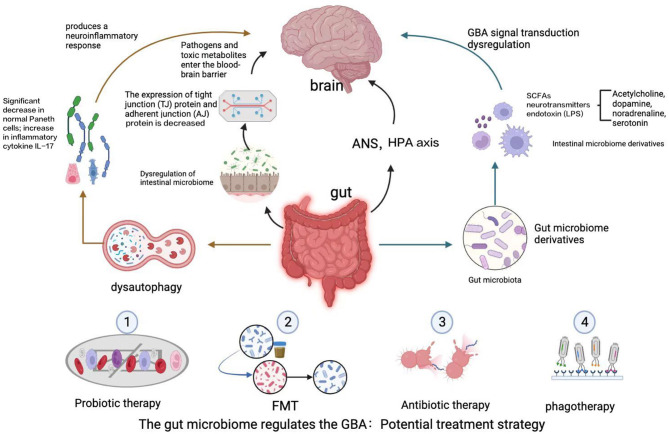
There are trillions of different microorganisms in the human digestive system. These gut microbes are involved in the digestion of food and its conversion into the nutrients required by the body. In addition, the gut microbiota communicates with other parts of the body to maintain overall health. The connection between the gut microbiota and the brain is known as the gut–brain axis (GBA), and involves connections via the central nervous system (CNS), the enteric nervous system (ENS), and endocrine and immune pathways. The gut microbiota regulates the central nervous system bottom-up through the GBA, which has prompted researchers to pay considerable attention to the potential pathways by which the gut microbiota might play a role in the prevention and treatment of amyotrophic lateral sclerosis (ALS). Studies with animal models of ALS have shown that dysregulation of the gut ecology leads to dysregulation of brain–gut signaling. This, in turn, induces changes in the intestinal barrier, endotoxemia, and systemic inflammation, which contribute to the development of ALS. Through the use of antibiotics, probiotic supplementation, phage therapy, and other methods of inducing changes in the intestinal microbiota that can inhibit inflammation and delay neuronal degeneration, the clinical symptoms of ALS can be alleviated, and the progression of the disease can be delayed. Therefore, the gut microbiota may be a key target for effective management and treatment of ALS.
Overview
CoChat Summary
TL;DR
This narrative review argues that gut microbiota dysbiosis contributes to ALS through gut–brain axis mechanisms including intestinal barrier impairment, endotoxemia, neuroinflammation, immune dysregulation, and altered autophagy. It surveys preclinical and human evidence and proposes microbiota-targeted strategies—probiotics, diet, FMT, antibiotics/postbiotics, phage therapy, carbon nanoparticles, and intestinal mucosal resurfacing—as potential ALS treatments.
Key findings
- The review links ALS to gut–brain axis dysfunction: dysbiosis, impaired intestinal barrier, endotoxemia, systemic inflammation, immune activation, and autophagy dysregulation are proposed to promote motor neuron degeneration. In SOD1G93A mice, intestinal permeability analysis showed a two-fold increase in FITC-dextran fluorescence versus wild-type mice, and dysbiosis appeared before neuromuscular symptoms.
- Human and genetic evidence cited includes a GWAS of 20,806 ALS patients and 59,804 controls associating Enterobacteriaceae and unclassified Acidaminococcaceae with higher ALS risk; Blacher et al. found significant gut flora differences in 37 ALS patients versus 29 healthy BMI- and age-matched family members; Fang et al. reported reduced Firmicutes/Bacteroidetes ratio and altered Dorea, Oscillibacter, Anaerostipes, and Lachnospiraceae in six ALS patients.
- Microbial metabolites are central: SCFAs are mainly acetate (40%–60%), propionate (20%–25%), and butyrate (15%–20%); butyrate is said to regulate expression of 5%–20% of human genes. LPS/TLR4 signaling, TDP-43 aggregation, and pro-inflammatory cytokines are implicated in neuroinflammation and ALS pathogenesis.
- Therapeutic modulation in animal models includes oxalate extending ALS mouse lifespan by an average of 38 days, butyrate reducing abnormal Paneth cells and restoring lysozyme 1 and defensin 5α, and Akkermansia muciniphila alleviating ALS symptoms while Ruminococcus torques and Parabacteroides distasonis exacerbated them.
Methods
- Design: narrative review of the gut–brain axis, gut microbiota dysbiosis in ALS, and microbiota-targeted treatment strategies.
- Data/sample: no primary data; synthesizes animal models (e.g., SOD1G93A, C9ORF72, TDP-43 mice), human observational and clinical studies, and prior reviews, including cited samples such as 37 ALS patients/29 controls, six ALS patients, and a 20,806-patient/59,804-control GWAS.
- Analysis: thematic synthesis of mechanistic pathways and potential therapies; no systematic search strategy, inclusion criteria, or meta-analysis is described.
Limitations
- The paper does not state limitations.
- Evident from the text: it is a narrative review without a described systematic search, inclusion criteria, or risk-of-bias assessment.
- Evident from the text: much of the evidence is preclinical or from small human studies, and clinical translation of microbiota-targeted ALS therapies remains speculative.
Model-written summary. Check it against the paper before relying on it.
Integrity signals
Registry
Cites
Statistics
Figures
Verification
Claims the paper makes
20 Valid · 8 Not valid · 92 Not checked · 18 Own results and interpretations
At least one cited source doesn’t support this claim or points to a different paper, and none confirmed it — see the verdicts below.
In the paper
“This demonstrates the effectiveness of oxalate, a natural bacterial product, in restoring microbial and intestinal homeostasis.”
§ Modulation of the gut–brain axis via the gut microbiota: a new era in treatment of amyotrophic lateral sclerosis > 4. Potential strategies for treatment of ALS—How to exploit the GBA? > 4.1. Improvements to intestinal microecology and repair of the intestinal barrier
What the sources say
- Disputedcites [72] Zhang YG Wu S Yi J Xia Y Jin D Zhou J. Target intestinal microbiota to alleviate disease progression in amyotrophic lateral sclerosis. Clin Ther. (2017) 39: 322– 36. 10.1016/j.clinthera.2016.12.014 28129947 PMC5344195 sourceExperimental — accuracy not yet measured
The Introduction and Discussion identify the bacterial product as butyrate, not oxalate. The Discussion reports that oral butyrate restored microbial and intestinal homeostasis in G93A ALS mice. (LLM, conf=0.90)
Checked by a reasoning model — may be wrong.
boostedstates a cause- Asserted: passes — The authors put it forward as true.
- Checkable: passes — It can be checked against evidence.
- Load-bearing: passes — The paper’s conclusions depend on it.
- Based: passes — The paper gives a reason why it holds.
- Disputed
The cited sources support only part of this claim — read each source’s verdict below.
In the paper
“Lack of a “healthy” microbiota is associated with many forms of disease (19–24), such as metabolic diseases (obesity, type 2 diabetes), gastrointestinal cancer, inflammatory bowel disease, and renal disease, as well as neurodegenerative diseases (NDs) associated with aging, in which the activity and composition of the gut microbiota change during the life cycle.”
§ Modulation of the gut–brain axis via the gut microbiota: a new era in treatment of amyotrophic lateral sclerosis > 1. Introduction
What the sources say
- Not checked yetcites [19] Aron-Wisnewsky J Warmbrunn MV Nieuwdorp M Clément K. Metabolism and metabolic disorders and the microbiome: the intestinal microbiota associated with obesity, lipid metabolism, and metabolic health-pathophysiology and therapeutic strategies. Gastroenterology. (2021) 160: 573– 99. 10.1053/j.gastro.2020.10.057 33253685 source
- Partly supportedcites [20] Lee M Chang EB. Inflammatory bowel diseases (IBD) and the microbiome-searching the crime scene for clues. Gastroenterology. (2021) 160: 524– 37. 10.1053/j.gastro.2020.09.056 33253681 PMC8098834 sourceExperimental — accuracy not yet measured
Our copy of Lee, Mirae & Chang (Gastroenterology 2021) is an IBD-specific review: it supports only the IBD element of the claim — 'What defines gut dysbiosis in IBD?' states that gut dysbiosis (disrupted diversity, composition and function, loss of intestinal homeostasis) is associated with IBD, and 'Does the reduction of key commensal gut microbes...' describes loss of healthy commensals such as Bacteroides and Akkermansia muciniphila in IBD. The nearest it comes to metabolic disease is a passing statement that functions such as secondary bile acid conversion and SCFA generation 'are important for immune regulation and metabolic homeostasis' (What defines gut dysbiosis in IBD?), with an obesity/metabolic-syndrome reference (ref 79) cited only in the diet section. It nowhere associates lack of a healthy microbiota with gastrointestinal cancer, renal disease, or aging-related neurodegenerative diseases, nor with the life-cycle changes in microbiota activity/composition beyond early-life IBD risk; those parts of the claim are not in this source. (LLM, conf=0.72)
- Partly supportedcites [21] Tong Y Gao H Qi Q Liu X Li J Gao J. High fat diet, gut microbiome and gastrointestinal cancer. Theranostics. (2021) 11: 5889– 910. 10.7150/thno.56157 33897888 PMC8058730 sourceExperimental — accuracy not yet measured
Our copy of Tong et al. supports only part of the disease list. The 'HFD alters the composition of gut microbes' section states that intestinal microorganisms play a key role in HFD-induced diseases 'such as metabolic disorders and endotoxemia', and the 'Intestinal microbial imbalance promotes gastrointestinal neoplasms' section (with its Colorectal cancer, Pancreatic cancer, Hepatic carcinoma subsections) states that microbial imbalance plays an important pathogenic role in gastrointestinal tumours; IBD appears only incidentally (Others section, host-genetics studies in IBD patients). Nothing in our copy links lack of a healthy microbiota to renal disease or to aging-associated neurodegenerative diseases — searches for 'renal/kidney', 'Alzheimer/Parkinson/gut-brain axis/aging' returned only reference-list entries (e.g. ref 175 on hippocampal development, ref 195 on kidney ischemia/reperfusion, cited for other purposes), not a statement of the claim. So the metabolic-disease and GI-cancer portions are supported while the renal and neurodegenerative portions are not. (LLM, conf=0.72)
- Not checked yetcites [22] Miller AW Penniston KL Fitzpatrick K Agudelo J Tasian G Lange D. Mechanisms of the intestinal and urinary microbiome in kidney stone disease. Nat Rev Urol. (2022) 19: 695– 707. 10.1038/s41585-022-00647-5 36127409 PMC11234243 source
- Partly supportedcites [23] Song M Chan AT Sun J. Influence of the gut microbiome, diet, and environment on risk of colorectal cancer. Gastroenterology. (2020) 158: 322– 40. 10.1053/j.gastro.2019.06.048 31586566 PMC6957737 sourceExperimental — accuracy not yet measured
Song et al. (2020) supports the core of the attribution for three of the five disease groups: the Intestinal Dysbiosis section (p. 1-2) states that 'Alterations in abundance of healthy intestinal microbes can promote chronic inflammatory conditions and production of carcinogenic metabolites, leading to neoplasia', the Overweight/obesity and Red-and-processed-meat sections link depleted SCFA-producing bacteria and TMAO/choline pathways to obesity, metabolic syndrome and type 2 diabetes, and the Mechanisms/Infection section ties dysbiosis to IBD and colitis. However, our copy is scoped to colorectal cancer and contains no passage associating lack of a healthy microbiota with renal disease (the only 'renal' hit is a reference title on TMAO renal excretion, References p. ~14) or with aging-related neurodegenerative diseases (searched: Alzheimer/Parkinson/cognitive/brain, neurodegenerative, aging, kidney/renal disease — no supporting text). The claim's breadth ('many forms of disease, including ... renal disease, and neurodegenerative diseases associated with aging') therefore exceeds what this source says. (LLM, conf=0.78)
- Not checked yetcites [24] Pellegrini C Antonioli L Colucci R Blandizzi C Fornai M. Interplay among gut microbiota, intestinal mucosal barrier and enteric neuro-immune system: a common path to neurodegenerative diseases? Acta Neuropathol. (2018) 136: 345– 61. 10.1007/s00401-018-1856-5 29797112 source
plainstates an association- Asserted: passes — The authors put it forward as true.
- Checkable: passes — It can be checked against evidence.
- Load-bearing: unclear — It is unclear whether the paper’s conclusions depend on it.
- Based: passes — The paper gives a reason why it holds.
The cited sources support only part of this claim — read each source’s verdict below.
In the paper
“A growing number of studies have reported changes in the microbiota among patients with Parkinson's disease (PD), Alzheimer's disease (AD), ALS, and Huntington's disease (HD) (26–28), and although the exact mechanisms underlying these phenomena remain unclear, there is a growing body of evidence to support the concept of a “gut microbiota–brain axis” (29).”
§ Modulation of the gut–brain axis via the gut microbiota: a new era in treatment of amyotrophic lateral sclerosis > 1. Introduction
What the sources say
- Partly supportedcites [26] Mou Y Du Y Zhou L Yue J Hu X Liu Y. Gut microbiota interact with the brain through systemic chronic inflammation: implications on neuroinflammation, neurodegeneration, and aging. Front Immunol. (2022) 13: 796288. 10.3389/fimmu.2022.796288 35464431 PMC9021448 sourceExperimental — accuracy not yet measured
Section 5.5 (GM-SCI Contribution on NF&ND) documents microbiota changes in PD patients (inconsistent taxa alterations, with Faecalibacterium and Ruminococcus most steadily diminished in PD fecal samples, ref 218) and points to AD pathophysiology via immune dysregulation (ref 219); the Abstract likewise frames the axis as precipitating AD, PD and MS. However, our copy nowhere reports microbiota changes in ALS or Huntington's disease — four searches (amyotrophic lateral sclerosis/ALS, motor neuron disease, Huntington, HD) returned no such passage, so the ALS and HD portion of the claim is unsupported by this source. (LLM, conf=0.78)
- Not checked yetcites [27] Sun MF Shen YQ. Dysbiosis of gut microbiota and microbial metabolites in Parkinson's disease. Ageing Res Rev. (2018) 45: 53– 61. 10.1016/j.arr.2018.04.004 29705121 source
- Partly supportedcites [28] Wang Q Luo Y Ray Chaudhuri K Reynolds R Tan EK Pettersson S. The role of gut dysbiosis in Parkinson's disease: mechanistic insights and therapeutic options. Brain. (2021) 144: 2571– 93. 10.1093/brain/awab156 33856024 sourceExperimental — accuracy not yet measured
Our copy of the Wang et al. (2021) Brain review amply supports the Parkinson's disease part: the Conclusion states that 'case control studies show changes in gut microbiota composition in patients with Parkinson's disease compared with healthy individuals', and the Introduction/Clinical correlations sections summarise numerous such studies. Alzheimer's disease is touched on only at the level of association — the 'Composition of the microbiota-gut-brain axis' section lists AD (with irritable bowel syndrome and autism spectrum disorder) among diseases linked to changed bidirectional microbiota-gut-brain interactions, and the Introduction notes microbial intervention as a possible strategy in AD. However, nothing in our copy concerns amyotrophic lateral sclerosis or Huntington's disease: searches for 'amyotrophic lateral sclerosis', 'ALS', 'Huntington' and 'other neurodegenerative diseases' returned no passage mentioning either, so the claim's extension to ALS and HD is not supported by this source. (LLM, conf=0.78)
plainstates an association- Asserted: passes — The authors put it forward as true.
- Checkable: passes — It can be checked against evidence.
- Load-bearing: unclear — It is unclear whether the paper’s conclusions depend on it.
- Based: passes — The paper gives a reason why it holds.
- Partly supported
The cited sources that could be checked couldn’t confirm or dispute this claim.
In the paper
“They can also cross the BBB by upregulating the expression of tight junction proteins in the BBB with the assistance of endothelial cell monocarboxylate transport proteins (56).”
§ Modulation of the gut–brain axis via the gut microbiota: a new era in treatment of amyotrophic lateral sclerosis > 2. Bidirectional communication between the gut microbiome and the brain > 2.3. Neuroactive metabolites derived from the gut microbiota
What the sources say
- Could not verifycites [56] DeJesus-Hernandez M Mackenzie IR Boeve BF Boxer AL Baker M Rutherford NJ. Expanded GGGGCC hexanucleotide repeat in noncoding region of C9ORF72 causes chromosome 9p-linked FTD and ALS. Neuron. (2011) 72: 245– 56. 10.1016/j.neuron.2011.09.011 21944778 PMC3202986 sourceExperimental — accuracy not yet measured
The Introduction and Results passages concern C9ORF72 repeat expansions in FTD and ALS, not short-chain fatty acids or blood–brain barrier transport. Searches for SCFAs, tight junctions, and endothelial monocarboxylate transporters found no passage addressing the attributed mechanism. (LLM, conf=0.78)
plainstates a cause- Asserted: passes — The authors put it forward as true.
- Checkable: passes — It can be checked against evidence.
- Load-bearing: unclear — It is unclear whether the paper’s conclusions depend on it.
- Based: passes — The paper gives a reason why it holds.
- Could not verify
The cited sources that could be checked couldn’t confirm or dispute this claim.
In the paper
“A significant elevation in the number of T cells was observed when germ-free (GF) mice were treated with SCFAs (58).”
§ Modulation of the gut–brain axis via the gut microbiota: a new era in treatment of amyotrophic lateral sclerosis > 2. Bidirectional communication between the gut microbiome and the brain > 2.3. Neuroactive metabolites derived from the gut microbiota
What the sources say
- Could not verifycites [58] Manfredsson FP Luk KC Benskey MJ Gezer A Garcia J Kuhn NC. Induction of alpha-synuclein pathology in the enteric nervous system of the rat and non-human primate results in gastrointestinal dysmotility and transient CNS pathology. Neurobiol Dis. (2018) 112: 106– 18. 10.1016/j.nbd.2018.01.008 29341898 PMC5890443 sourceExperimental — accuracy not yet measured
The Results (§3.1–3.2; page unavailable) describe rats given α-synuclein treatments and their colonic motility and enteric pathology. Searches for germ-free mice, SCFAs or short-chain fatty acids, and T cells found no passage in our copy addressing a T-cell increase after SCFA treatment. (LLM, conf=0.76)
plainstates a cause- Asserted: passes — The authors put it forward as true.
- Checkable: passes — It can be checked against evidence.
- Load-bearing: unclear — It is unclear whether the paper’s conclusions depend on it.
- Based: passes — The paper gives a reason why it holds.
- Could not verify
51 more claims · 8 with their cited sources checked
Create a free account to see all 138 claims and to verify the 113 references still open.
- It may state two separate claims as one. 73
- Probably not a substantial claim. 17
Claims other papers make about this one
Each is checked against this paper’s own text: does it say what the citing paper says it does?
In the citing paper
“Eventually, microbial dysbiosis triggers chronic systemic inflammation, disrupting the BBB and exacerbating neuroinflammation and the progression of neurodegenerative diseases.246–248”
From Antiageing strategy for neurodegenerative diseases: from mechanisms to clinical advances (2025) · cites this paper as [247]
Self-check
Percentages, sums and reported differences re-computed from the paper’s own numbers.
Each contradiction between two passages listed here was confirmed by an independent check.
Rated minor: it would not touch a result — a value no result rests on, a p-value that stays on the same side of the significance level, or a conflict that is clerical, resolved elsewhere in the paper, or outside its own findings.
In the paper
§ Modulation of the gut–brain axis via the gut microbiota: a new era in treatment of amyotrophic lateral sclerosis > 3. Dysbiosis of the gut microbiota in ALS affects the GBA > 3.3. Gut microbiota dysbiosis and autophagy in ALS patients
“Dysregulation of autophagy appears to lead to the elimination of misfolded proteins, such as superoxide dismutase 1, in G93A mice, and this dismutant form accumulates in the motor neurons involved in the pathogenesis of ALS (88).”
§ Modulation of the gut–brain axis via the gut microbiota: a new era in treatment of amyotrophic lateral sclerosis > 3. Dysbiosis of the gut microbiota in ALS affects the GBA > 3.3. Gut microbiota dysbiosis and autophagy in ALS patients
“Dysregulated autophagy leads to impaired clearance of polyubiquitinated protein aggregates in neurons”
Rated minor: it would not touch a result — a value no result rests on, a p-value that stays on the same side of the significance level, or a conflict that is clerical, resolved elsewhere in the paper, or outside its own findings.
In the paper
§ Modulation of the gut–brain axis via the gut microbiota: a new era in treatment of amyotrophic lateral sclerosis > 4. Potential strategies for treatment of ALS—How to exploit the GBA? > 4.1. Improvements to intestinal microecology and repair of the intestinal barrier
“Abraham et al. (10) found that transgenic AD mice treated with probiotics exhibited better cognitive performance and a reduced number of Aβ plaques in the hippocampus compared to untreated AD mice.”
§ Modulation of the gut–brain axis via the gut microbiota: a new era in treatment of amyotrophic lateral sclerosis > References
“10. Abraham A Nefussy B Fainmesser Y Ebrahimi Y Karni A Drory VE. Early post-marketing experience with edaravone in an unselected group of patients with ALS.”
Rated minor: it would not touch a result — a value no result rests on, a p-value that stays on the same side of the significance level, or a conflict that is clerical, resolved elsewhere in the paper, or outside its own findings.
In the paper
§ Modulation of the gut–brain axis via the gut microbiota: a new era in treatment of amyotrophic lateral sclerosis > 4. Potential strategies for treatment of ALS—How to exploit the GBA? > 4.1. Improvements to intestinal microecology and repair of the intestinal barrier
“Zhang et al. (113) transplanted intestinal flora from patients with major depression into the intestine of GF mice and found that the mice developed depression-like behavior.”
§ Modulation of the gut–brain axis via the gut microbiota: a new era in treatment of amyotrophic lateral sclerosis > References
“113. Zhang C Yan J Xiao Y Shen Y Wang J Ge W. Inhibition of autophagic degradation process contributes to claudin-2 expression increase and epithelial tight junction dysfunction in TNF-α treated cell monolayers.”
Rated minor: it would not touch a result — a value no result rests on, a p-value that stays on the same side of the significance level, or a conflict that is clerical, resolved elsewhere in the paper, or outside its own findings.
In the paper
§ Modulation of the gut–brain axis via the gut microbiota: a new era in treatment of amyotrophic lateral sclerosis > Abstract
“There are trillions of different microorganisms in the human digestive system.”
§ Modulation of the gut–brain axis via the gut microbiota: a new era in treatment of amyotrophic lateral sclerosis > 1. Introduction
“The gastrointestinal tract contains hundreds of millions of microorganisms, collectively referred to as the gut microbiota”
Rated minor: it would not touch a result — a value no result rests on, a p-value that stays on the same side of the significance level, or a conflict that is clerical, resolved elsewhere in the paper, or outside its own findings.
In the paper
§ Modulation of the gut–brain axis via the gut microbiota: a new era in treatment of amyotrophic lateral sclerosis > 4. Potential strategies for treatment of ALS—How to exploit the GBA? > 4.3. Targeted therapies
“Intestinal mucosal resurfacing (124) is a technique that targets the duodenal surface in order to improve the intestinal barrier.”
§ Modulation of the gut–brain axis via the gut microbiota: a new era in treatment of amyotrophic lateral sclerosis > References
“124. Federici S Kredo-Russo S Valdés-Mas R Kviatcovsky D Weinstock E Matiuhin Y. Targeted suppression of human IBD-associated gut microbiota commensals by phage consortia for treatment of intestinal inflammation.”
Citations
Cites
Rosen, D. R., Siddique, T., Patterson, D., Figlewicz, D. A., Sapp, P., Hentati, A., Donaldson, D., Goto, J., O'Regan, J. P., Deng, H.-X., et al. (1993) · Nature · doi:10.1038/362059a0 · Cited by 7,062
DeJesus-Hernandez, M., Mackenzie, I. R., Boeve, B. F., Boxer, A. L., Baker, M., Rutherford, N. J., Nicholson, A. M., Finch, N. A., Flynn, H., Adamson, J., et al. (2011) · Neuron · doi:10.1016/j.neuron.2011.09.011 · Cited by 4,936
A Hexanucleotide Repeat Expansion in C9ORF72 Is the Cause of Chromosome 9p21-Linked ALS-FTD
Renton, A. E., Majounie, E., Waite, A., Simón-Sánchez, J., Rollinson, S., Gibbs, J. R., Schymick, J. C., Laaksovirta, H., van Swieten, J. C., Myllykangas, L., et al. (2011) · Neuron · doi:10.1016/j.neuron.2011.09.010 · Cited by 4,409
Gut microbiota regulate motor deficits and neuroinflammation in a model of Parkinson's disease
Sampson, T. R., Debelius, J. W., Thron, T., Janssen, S., Shastri, G. G., Ilhan, Z. E., Challis, C., Schretter, C. E., Rocha, S., Gradinaru, V., et al. (2016) · Cell · doi:10.1016/j.cell.2016.11.018 · Cited by 3,622
Gut microbiota, metabolites and host immunity
Rooks, M. G., & Garrett, W. S. (2016) · Nature reviews. Immunology · doi:10.1038/nri.2016.42 · Cited by 3,409
Gut Microbiota Regulation of Tryptophan Metabolism in Health and Disease
Agus, A., Planchais, J., & Sokol, H. (2018) · Cell Host & Microbe · doi:10.1016/j.chom.2018.05.003 · Cited by 3,180
The gut-liver axis in liver disease: Pathophysiological basis for therapy
Albillos, A., de Gottardi, A., & Rescigno, M. (2020) · Journal of Hepatology · doi:10.1016/j.jhep.2019.10.003 · Cited by 2,166
Neurotransmitter modulation by the gut microbiota
Strandwitz, P. (2018) · Brain Research · doi:10.1016/j.brainres.2018.03.015 · Cited by 1,527
The central nervous system and the gut microbiome
Sharon, G., Sampson, T. R., Geschwind, D. H., & Mazmanian, S. K. (2016) · Cell · doi:10.1016/j.cell.2016.10.027 · Cited by 1,513
Human gut microbiota/microbiome in health and diseases: a review
Gomaa, E. Z. (2020) · Antonie van Leeuwenhoek · doi:10.1007/s10482-020-01474-7 · Cited by 1,294
Cited by
Antiageing strategy for neurodegenerative diseases: from mechanisms to clinical advances
Jiang, Q., Liu, J., Huang, S., Wang, X.-Y., Chen, X., Liu, G.-H., Ye, K., Song, W., Masters, C. L., Wang, J., et al. (2025) · Signal Transduction and Targeted Therapy · doi:10.1038/s41392-025-02145-7 · Cited by 165
Recent Research Trends in Neuroinflammatory and Neurodegenerative Disorders
Cohen, J., Mathew, A., Dourvetakis, K. D., Sanchez-Guerrero, E., Pangeni, R. P., Gurusamy, N., Aenlle, K. K., Ravindran, G., Twahir, A., Isler, D., et al. (2024) · Cells · doi:10.3390/cells13060511 · Cited by 103
“There has recently been renewed efforts in the development of therapeutics for ALS [216] invoking the potential role of mitochondria [217] and the gut–brain axis [218], as well as anti-sense therapies [219] and personalized immunotherapy [220].”
BackgroundToader, C., Tătaru, C. P., Munteanu, O., Șerban, M., Covache-Busuioc, R.-A., Ciurea, A. V., & Enyedi, M. (2024) · International Journal of Molecular Sciences · doi:10.3390/ijms252312613 · Cited by 124
The Role of Bacteriophages in the Gut Microbiota: Implications for Human Health
Emencheta, S. C., Olovo, C. V., Eze, O. C., Kalu, C. F., BEREBON, D. P., Onuigbo, E. B., Vila, M. M. D. C., Balcão, V. M., & Attama, A. A. (2023) · Pharmaceutics · doi:10.3390/pharmaceutics15102416 · Cited by 79
“…For example, Ghadge et al. [158] demonstrated a reduction in motor neuron loss, microgliosis, superoxide dismutase 1 (SOD1) burden and aggregation, and astrocytosis through the use of phage-specific single-chain variable fragment antibodies (scFvs) raised against SOD1 G93A in mice. disorders [157].”
BackgroundPotential of postbiotics for the treatment of metabolic disorders
Mishra, N., Garg, A., Ashique, S., & Bhatt, S. (2024) · Drug Discovery Today · doi:10.1016/j.drudis.2024.103921 · Cited by 50
Probiotics: Bridging the interplay of a healthy gut and psychoneurological well‐being
Meher, A. K., Acharya, B., & Sahu, P. K. (2024) · Food Bioengineering · doi:10.1002/fbe2.12081 · Cited by 43
Uceda, S., Echeverry‐Alzate, V., Reiriz, M., Miguel, E. M., Pérez-Curiel, A., Gómez-Senent, S., & Beltrán-Velasco, A. I. (2023) · International Journal of Molecular Sciences · doi:10.3390/ijms241713294 · Cited by 39
Taj, T., Kaushik, M., Islam, A., Das, J., Kumar, B., Hussain, M. S., Ramzan, M., Ashique, S., Tariq, M., Sridhar, S. B., et al. (2025) · Biomedicine & Pharmacotherapy · doi:10.1016/j.biopha.2025.118861 · Cited by 41
Molecular mechanisms and biomarkers in neurodegenerative disorders: a comprehensive review
Ali, N., Sayeed, U., Shahid, S. M. A., Akhtar, S., & Khan, M. K. A. (2025) · Molecular Biology Reports · doi:10.1007/s11033-025-10463-w · Cited by 31
Phage Interactions with the Nervous System in Health and Disease
Jędrusiak, A., Fortuna, W., Majewska, J., Górski, A., & Jończyk‐Matysiak, E. (2023) · Cells · doi:10.3390/cells12131720 · Cited by 27
“It may also play a role in the pathogenesis, behavioral disturbance, and progression of neurodegenerative disorders, such as multiple sclerosis, Alzheimer’s disease, and Parkinson’s disease [19,111–114], as well as amyotrophic lateral sclerosis (ALS) [115] and epilepsy [116].”
BackgroundGautam, P., Yadav, R., Vishwakarma, R. K., Shekhar, S., Pathak, A., & Singh, C. (2025) · ACS Chemical Neuroscience · doi:10.1021/acschemneuro.5c00254 · Cited by 18
Liu, W., Guo, J., Dong, Y., Li, J., & Wang, Y. (2025) · Journal of Food Science · doi:10.1111/1750-3841.70037 · Cited by 16
The Scientific and Therapeutic Rationale for Off‐Label Treatments in Amyotrophic Lateral Sclerosis
Bedlack, R., Li, X., Evangelista, B., Panzetta, M. E., Kwan, J. Y., Gittings, L. M., & Sattler, R. (2024) · Annals of Neurology · doi:10.1002/ana.27126 · Cited by 10
“74,75 As we consider speci fi c strategies for modifying the microbiome to try and slow down ALS progression, 76 it will be important to elucidate exactly how some of the AOTs discussed below might in fl uence microbiota, and how the microbiota might in fl u-ence the metabolism of the AOTs.”
Nabakhteh, S., Lotfi, A., Afsartaha, A., Khodadadi, E. S., Abdolghaderi, S., Mohammadpour, M., Shokri, Y., Kiani, P., Ehtiati, S., Khakshournia, S., et al. (2025) · Molecular Neurobiology · doi:10.1007/s12035-025-04830-8 · Cited by 11
Zhu, H., He, H., Yang, M., Zhu, H., Hagiwara, A., Shu, L., Xu, J., Miao, Y., Han, X., & Wang, C. (2025) · iScience · doi:10.1016/j.isci.2025.114044 · Cited by 10
“251,260,402 Experimental evidence indicates that dysbiosis can inhibit the expression of key tight junction proteins such as ZO-1 and occludin, leading to the loss of intercellular sealing function in intestinal epithelial cells and increased intestinal mucosal permeability.”
Deciphering the microbial map and its implications in the therapeutics of neurodegenerative disorder
Vashishth, S., Ambasta, R. K., & Kumar, P. (2024) · Ageing Research Reviews · doi:10.1016/j.arr.2024.102466 · Cited by 9
Phage-Microbiota Crosstalk: Implications for Central Nervous System Disorders
Salari, V., Parrella, E., Mengoni, F., Cintra, L., Bertini, G., & Fabene, P. F. (2025) · International Journal of Molecular Sciences · doi:10.3390/ijms26136183 · Cited by 6
“For example, changes in the gut microbiota population have been associated with increased cortisol production, which in turn raises intestinal permeability by disrupting tight junctions [61,81].”
InfluentialPromising approaches to the pathogenetic therapy of amyotrophic lateral sclerosis
Kutlubaev, M. A. (2024) · S S Korsakov Journal of Neurology and Psychiatry · doi:10.17116/jnevro202412404113 · Cited by 6
Exercise and Diet Reshape Athletes’ Gut Microbiota: Countering Health Challenges in Athletes
Zhang, X., Li, Y., Zhang, F., & Zhou, G. (2025) · Life · doi:10.3390/life15121812 · Cited by 6
“Through neuronal signaling, hormones, and gut–brain interactions, a complex network is established between the gut and the brain to monitor gut tissues, microorganisms, and dietary content [79].”
Serotonin and the gut microbiome: Pathways, functions, and health implications
Abubaker, S., Miri, S., & Hammami, R. (2026) · The Microbe · doi:10.1016/j.microb.2026.100668 · Cited by 8
Targeting gut-brain-immune axis in amyotrophic lateral sclerosis
Mudda, N., Zhang, L., & Sampelli, P. (2026) · Frontiers in Immunology · doi:10.3389/fimmu.2025.1637976 · Cited by 5
Self-citationAmyotrophic Lateral Sclerosis (ALS) Genetics and Microbiota: A Comprehensive Review
Kurdi, M. A., Alotaibi, H. M., Alkhuraymi, A. T., Aldahery, L. N., Alhawaj, A. F., & Aldali, H. J. (2026) · International Journal of Molecular Sciences · doi:10.3390/ijms27041978 · Cited by 5
“Experimental models show that probiotics, which can increase SCFA-producing microorganisms like oxalate-producing bacteria, can restore microbial balance, normalize intestinal antimicrobial peptide expression, and extend survival in ALS mice by more than a month [97].”
Recent Insights on the Prospective role of Phytocompounds in Modulating Gut-Brain Axis
Kumari, N., Anand, S., Shah, K., & Chauhan, N. S. (2024) · Current Pharmacology Reports · doi:10.1007/s40495-024-00364-0 · Cited by 3
“ALS, in addition to causing intestinal motor dysfunction [45].”
Veyrat‐Durebex, C., Osman, S., Ojaimi, Y. A., Gosset, P., Dupuy, C., Lefèvre, A., Emond, P., Vourc’h, P., Corcia, P., Méreghetti, L., et al. (2024) · Amyotrophic Lateral Sclerosis and Frontotemporal Degeneration · doi:10.1080/21678421.2024.2433578 · Cited by 3
Xie, Y.-A. N., Kong, J., Li, S. P., & Wei, D.-F. N. (2025) · ALPHA PSYCHIATRY · doi:10.31083/ap39226 · Cited by 5
“The literature reports that the increased abundance of Firmicutes is tightly linked to the occurrence of different neurological diseases, which is particularly vital in patients with depression [68].”
Microbiome-Based Formulations and Products and Their Therapeutic Implications
Sabir, M., Khan, K. A., Haider, I., Nisa, S., Shah, W. H., Sawar, S., & Saleem, A. (2024) · Springer eBooks · doi:10.1007/978-981-97-3790-1_17 · Cited by 6
Wang, S., & Yao, T. (2025) · npj Biofilms and Microbiomes · doi:10.1038/s41522-025-00874-9 · Cited by 3
“The protective effects of Alistipes species and detrimental associations with certain Bacteroides taxa provide mechanistic insights into the gut-brain axis dysfunction increasingly recognized in neurodegenerative diseases 10,11 .”
Gao, Y., Lu, Y., Zhao, S., Chen, R., Liu, J., Zhang, S., Bai, X., & Zhang, J. (2026) · Biochemical and Biophysical Research Communications · doi:10.1016/j.bbrc.2026.153503 · Cited by 2
Pribac, M., Moțățăianu, A., Andone, S. R., Mardale, E., & Nemeth, S. (2024) · Current Issues in Molecular Biology · doi:10.3390/cimb46050271 · Cited by 4
“The modulation of the GBA in ALS through natural therapies shows promise as a valuable tool for understanding and managing the disease [21,22].”
Frąckowiak, J., Komorowicz, I., Sajnóg, A., Skrypnik, K., Suliburska, J., & Hańć, A. (2024) · Talanta · doi:10.1016/j.talanta.2024.127112 · Cited by 4
Exploring the role of fecal microbiota transplantation in amyotrophic lateral sclerosis
Varadharaj, N. K., Fayaz, F. H., Mann, G. S., & Sufiyan, N. (2026) · Discover Neuroscience · doi:10.1186/s13064-026-00246-9 · Cited by 1
“Emerging mechanistic evidence suggests that FMT may influence ALS pathogenesis through several convergent biological pathways linking the gut and the CNS [17, 23].”
InfluentialThe Effect of Probiotics and Microbiota on Nervous System and Mental Illnesses
Hossainpour, H., Khazaei, S., & Mahmoudi, H. (2024) · Central Nervous System Agents in Medicinal Chemistry · doi:10.2174/0118715249315760240905043415
Gut-Brain Axis and Colorectal Cancer: Neuroimmune Interactions
Prasad, A., Acharya, S., Singh, A., Raj, U., & Sharma, A. (2025) · Cancer drug discovery and develogment/Cancer drug discovery and development · doi:10.1007/978-3-031-86065-2_12
Therapeutic Interventions: Modulating the Microbiome to Combat Neurodegeneration
Anandan, A., Unais, A. M., Prabhu, A. V., Saju, M. K., Sonaimuthu, K., Murugesan, H., Danielraj, F., Marimuthu, D., Shibu, M. A., & Viswanadha, V. P. (2026) · Springer eBooks · doi:10.1007/978-981-95-7494-0_8
Zhang, J., Shen, J., & Liu, L. (2026) · European Archives of Psychiatry and Clinical Neuroscience · doi:10.1007/s00406-026-02302-1
Singh, N., Parwe, S., Sawarkar, P. G., & Nisargnadha, M. (2026) · International journal of Nutrition Pharmacology Neurological Diseases · doi:10.4103/ijnpnd.ijnpnd_230_25
Sanchis, E. S., Ortí, J. E. D. L. R., Sancho-Cantus, D., Cunha-Pérez, C., & Mohedo, J. C. (2026) · Pathophysiology · doi:10.3390/pathophysiology33030059
“Regarding the core concept of the study, the evidence consolidates that the disruption of the microbiota–gut–brain axis acts as a primary catalyst for systemic neuroinflammation, which underlies the etiology of the neuropsychiatric symptomatology frequently observed in ALS [63,65].”
Microbiome‐Phytochemical Crosstalk Along the Gut‐Brain Axis in Alzheimer and Parkinson's Disease
Emon, M., Rahaman, M. M., Sarder, D., Shadin, M., Neela, S. A., Wangchuk, P., & Sarker, S. (2026) · MicrobiologyOpen · doi:10.1002/mbo3.70374
Metadata
- Authors
- Hong, D., Zhang, C., Wu, W., Lu, X., & Zhang, L.
- Affiliations
- Zhejiang Chinese Medical University (CN)
- Sir Run Run Shaw Hospital (CN)
- Corresponding author
- Zhang, Liping
- Venue
- Frontiers in Neurology
- Publisher
- Frontiers Media SA
- Published
- 2023-04-20
- Volume
- 14
- Pages
- 1133546-1133546
- ISSN
- 1664-2295 (ISSN-L)
- PMC
- PMC10157060
- OpenAlex
- W4366586821
- Semantic Scholar
- c4aa855a1de62792696a2972eeb0e010181a5fc1
- Cited by
- 38
- References
- 126
- Citations by year
- 2026: 10 · 2025: 12 · 2024: 13 · 2023: 3
- FWCI
- 1.00
- Type
- journal article
- Language
- en
- Open access
- gold
- doi.org
- Licence
- Locations
- Frontiers in Neurology (publishedVersion, cc-by)
- PubMed Central (publishedVersion, cc-by)
- PubMed (publishedVersion)
- DOAJ (DOAJ: Directory of Open Access Journals) (submittedVersion, cc-by-sa)
- Topics
- Life Sciences › Biochemistry, Genetics and Molecular Biology › Molecular Biology › Gut microbiota and health
- Health Sciences › Medicine › Clinical Neurology › Amyotrophic Lateral Sclerosis Research
- Health Sciences › Medicine › Gastroenterology › Gastrointestinal motility and disorders
- Keywords
- gut-brain axis, gut microbiota, amyotrophic lateral sclerosis, dysbiosis, endotoxemia, intestinal barrier, systemic inflammation, probiotics, phage therapy, antibiotics, neurodegeneration, enteric nervous system, animal models of ALS
About these checks
Registry, retraction, Cites and statistics results are computed, not judged, with one exception: a printed reference that no index lists is read once by a model before it counts as a citation error. Claims are extracted by a model and kept only when their quote appears verbatim in the text; each cited source is then checked, with a model’s help, for whether it says what the claim relies on. Those verdicts can be wrong — read the claim’s quote and the cited source before relying on one.
The claim verdicts this report counts are experimental: their accuracy is not yet measured.
A language model drew the claims from the paper on 2026-10-05, under version 3 of the claim definition (model deepseek-v4.1-flash, prompt extract-v3).
A second model labelled each claim on 2026-10-05 (model jev-1.13-20260917, definition revision gold-guideline-v0.2).
Cited sources are checked with a language model’s help (gpt-6-sol and qwen3.8-omni-flash).
Statistics and arithmetic are recomputed, not judged.
Confidence bands are shown only for fields calibrated on our annotated test set. None is calibrated yet, so no band is shown.
What counts as a claim ›How we measure confidence ›How we check this ›
Are you an author, or do you see a problem with this page? Request a review
Data sources
Bibliographic data: Semantic Scholar, OpenAlex, Crossref.
Contains information from the Semantic Scholar Academic Graph Datasets, made available under the ODC Attribution License (ODC-BY 1.0).
Semantic Scholar’s data is described in: Kinney, R., et al. (2023). The Semantic Scholar Open Data Platform. arXiv:2301.10140.
