

The DOI matches its Crossref record; 58 of the 58 references it cites were found in a registry or an index.
What about the “Self” is Processed in the Posterior Cingulate Cortex?
Open accessAbstract
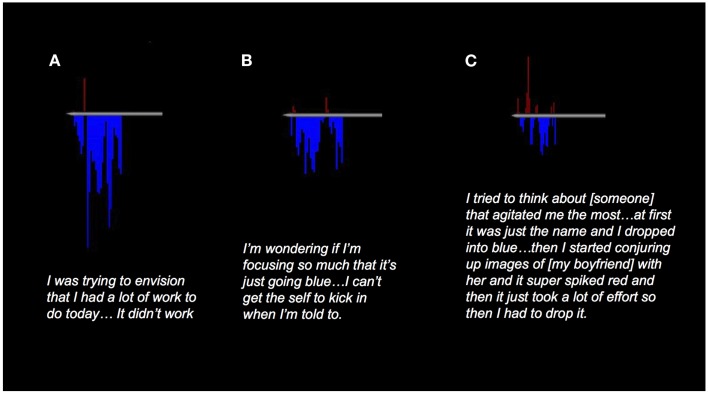
In the past decade, neuroimaging research has begun to identify key brain regions involved in self-referential processing, most consistently midline structures such as the posterior cingulate cortex (PCC). The majority of studies have employed cognitive tasks such as judgment about trait adjectives or mind wandering, that have been associated with increased PCC activity. Conversely, tasks that share an element of present-centered attention (being "on task"), ranging from working memory to meditation, have been associated with decreased PCC activity. Given the complexity of cognitive processes that likely contribute to these tasks, the specific contribution of the PCC to self-related processes still remains unknown. Building on this prior literature, recent studies have employed sampling methods that more precisely link subjective experience to brain activity, such as real-time fMRI neurofeedback. This recent work suggests that PCC activity may represent a sub-component cognitive process of self-reference - "getting caught up in" one's experience. For example, getting caught up in a drug craving or a particular viewpoint. In this paper, we will review evidence across a number of different domains of cognitive neuroscience that converges in activation and deactivation of the PCC including recent neurophenomenological studies of PCC activity using real-time fMRI neurofeedback.
Overview
The claims and statistics of this paper haven’t been checked yet.
Run the check — free, no account needed. It reads the open-access text and checks the sources it cites.
Integrity signals
Registry
Cites
Statistics
Figures
Verification
Claims the paper makes
The claims and statistics of this paper haven’t been checked yet.
Run the check — free, no account needed. It reads the open-access text and checks the sources it cites.
Claims other papers make about this one
Each is checked against this paper’s own text: does it say what the citing paper says it does?
The source backs part of the claim, not all of it — or backs it for a different population, condition or comparison.
In the citing paper
“Worry has been shown to activate brain networks associated with self-referential processing, such as the default-mode network, suggesting that the more one is caught up in perseveration about uncertain events, the more this network is activated [32,33];”
From Clinical Efficacy and Psychological Mechanisms of an App-Based Digital Therapeutic for Generalized Anxiety Disorder: Randomized Controlled Trial (2021) · cites this paper as [33]
Experimental — accuracy not yet measuredThe source backs part of the claim, not all of it — or backs it for a different population, condition or comparison.
In the citing paper
“The DN is anchored by activity in the medial prefrontal cortex (MPFC; narrative and autobiographical self) and the posterior cingulate cortex (PCC; experiential self-reflection; e.g., Buckner et al., 2008; Qin and Northoff, 2011; Brewer et al., 2013).”
From Distinct functional connectivities predict clinical response with emotion regulation therapy (2017) · cites this paper as Brewer et al., 2013
Experimental — accuracy not yet measuredThe cited source says what the claim attributes to it.
In the citing paper
“In particular, self-referentiality is commonly associated with neural activation in the DN, regarded as a network associated with autobiographical, self-monitoring and social cognitive functions.”
From Distinct functional connectivities predict clinical response with emotion regulation therapy (2017) · cites this paper as Brewer et al., 2013
Self-check
Percentages, sums and reported differences re-computed from the paper’s own numbers.
The self-check needs the paper’s full text.
Citations
Cites
Yaşlı Kadınlarda Üreme Sağlığı
Kokanalı, D., & Engin Üstün, Y. (n.d.) · DergiPark (Istanbul University) · Cited by 170,090
A default mode of brain function
Raichle, M. E., MacLeod, A. M., Snyder, A. Z., Powers, W. J., Gusnard, D. A., & Shulman, G. L. (2001) · Proceedings of the National Academy of Sciences · doi:10.1073/pnas.98.2.676 · Cited by 12,190
The human brain is intrinsically organized into dynamic, anticorrelated functional networks
Fox, M. D., Snyder, A. Z., Vincent, J. L., Corbetta, M., Van Essen, D. C., & Raichle, M. E. (2005) · Proceedings of the National Academy of Sciences · doi:10.1073/pnas.0504136102 · Cited by 8,553
Functional connectivity in the resting brain: a network analysis of the default mode hypothesis
Greicius, M. D., Krasnow, B., Reiss, A. L., & Menon, V. (2003) · Proceedings of the National Academy of Sciences · doi:10.1073/pnas.0135058100 · Cited by 6,358
(2023) · doi:10.1126/science · Cited by 6,063
Colman (2022) · doi:10.1073/pnas · Cited by 4,370
Self-referential processing in our brain—A meta-analysis of imaging studies on the self
Northoff, G., Heinzel, A., de Greck, M., Bermpohl, F., Dobrowolny, H., & Panksepp, J. (2006) · NeuroImage · doi:10.1016/j.neuroimage.2005.12.002 · Cited by 2,792
Wandering minds: the default network and stimulus-independent thought
Mason, M. F., Norton, M. I., Van Horn, J. D., Wegner, D. M., Grafton, S. T., & Macrae, C. N. (2007) · Science · doi:10.1126/science.1131295 · Cited by 2,792
Functional-anatomic fractionation of the brain’s default network
Andrews-Hanna, J. R., Reidler, J. S., Sepulcre, J., Poulin, R., & Buckner, R. L. (2010) · Neuron · doi:10.1016/j.neuron.2010.02.005 · Cited by 2,767
Ongur, D. (2000) · Cerebral Cortex · doi:10.1093/cercor/10.3.206 · Cited by 2,627
Cited by
Sorted by citations
Items 101–200 of 264
Huang, S., Faul, L., Sevinc, G., Mwilambwe-Tshilobo, L., Setton, R., Lockrow, A. W., Ebner, N. C., Turner, G. R., Spreng, R. N., & Brigard, F. D. (2021) · Psychology and Aging · doi:10.1037/pag0000633 · Cited by 25
The time course of altered brain activity during 7-day simulated microgravity
Liao, Y., Lei, M., Huang, H., Wang, C., Duan, J., Li, H., & Liu, X. (2015) · Frontiers in Behavioral Neuroscience · doi:10.3389/fnbeh.2015.00124 · Cited by 23
Lorenzetti, V., Gaillard, A., Beyer, E., Kowalczyk, M. A., Kamboj, S. K., Manning, V., & Gleeson, J. (2023) · BMC Psychiatry · doi:10.1186/s12888-023-04789-7 · Cited by 24
Exercise-related changes in between-network connectivity in overweight/obese adults
Legget, K. T., Wylie, K. P., Cornier, M., Melanson, E. L., Paschall, C. J., & Tregellas, J. R. (2016) · Physiology & Behavior · doi:10.1016/j.physbeh.2016.02.031 · Cited by 22
The philosophy of psychedelic transformation
Letheby, C. (2017) · Adelaide Research & Scholarship (AR&S) (University of Adelaide) · doi:10.4225/55/5900324d2ad60 · Cited by 23
Lieberman, J. M., Rabellino, D., Densmore, M., Frewen, P., Steyrl, D., Scharnowski, F., Théberge, J., Hosseini‐Kamkar, N., Neufeld, R. W. J., Jetly, R., et al. (2023) · Frontiers in Neuroscience · doi:10.3389/fnins.2023.1229729 · Cited by 20
BOLD signal variability as potential new biomarker of functional neurological disorders
Schneider, A., Weber, S., Wyss, A., Loukas, S., & Aybek, S. (2024) · NeuroImage Clinical · doi:10.1016/j.nicl.2024.103625 · Cited by 20
McClintock, C. H., Worhunsky, P. D., Xu, J., Balodis, I. M., Sinha, R., Miller, L., & Potenza, M. N. (2019) · Journal of Behavioral Addictions · doi:10.1556/2006.8.2019.71 · Cited by 21
Gan, Q., Ding, N., Bi, G., Liu, R., Zhao, X., Zhong, J., Wu, S., Zeng, Y., Cui, L., Wu, K., et al. (2022) · Frontiers in Human Neuroscience · doi:10.3389/fnhum.2022.838123 · Cited by 18
Webb, E. K., Huggins, A. A., Belleau, E. L., Taubitz, L. E., Hanson, J. L., deRoon‐Cassini, T. A., & Larson, C. L. (2020) · Biological Psychiatry Cognitive Neuroscience and Neuroimaging · doi:10.1016/j.bpsc.2020.03.004 · Cited by 19
Powers, J. M., Ioachim, G., & Stroman, P. W. (2022) · Frontiers in Pain Research · doi:10.3389/fpain.2022.878258 · Cited by 20
Pillai, R. L. I., Malhotra, A., Rupert, D. D., Wechsler, B., Williams, J. C., Zhang, M., Yang, J., Mann, J. J., Oquendo, M. A., Parsey, R. V., et al. (2017) · Human Brain Mapping · doi:10.1002/hbm.23903 · Cited by 17
Unique brain regions involved in positive versus negative emotional modulation of pain
Kornelsen, J., McIver, T. A., & Stroman, P. W. (2019) · Scandinavian Journal of Pain · doi:10.1515/sjpain-2018-0341 · Cited by 19
Resting-state abnormalities of posterior cingulate in autism spectrum disorder
Leung, M.-K., & Lau, W. K. (2020) · Progress in molecular biology and translational science · doi:10.1016/bs.pmbts.2020.04.010 · Cited by 20
Naturalizing psychedelic spirituality
Letheby, C. (2017) · Zygon: Journal of Religion and Science · doi:10.1111/zygo.12353 · Cited by 18
Deming, P., Philippi, C. L., Wolf, R. C., Dargis, M. A., Kiehl, K. A., & Koenigs, M. R. (2018) · NeuroImage Clinical · doi:10.1016/j.nicl.2018.02.029 · Cited by 18
What’s in a Hub?—Representing Identity in Language and Mathematics
Arora, A., Pletzer, B. A., Aichhorn, M., & Perner, J. (2020) · Neuroscience · doi:10.1016/j.neuroscience.2020.02.032 · Cited by 17
Bradley, C., Bastuji, H., & García-Larrea, L. (2017) · Human Brain Mapping · doi:10.1002/hbm.23812 · Cited by 17
Zhang, X., Wang, S., Liu, Y., & Chen, H. (2020) · Brain Imaging and Behavior · doi:10.1007/s11682-020-00401-8 · Cited by 18
Young, K. D., Preskorn, S., Victor, T. A., Misaki, M., Bodurka, J., & Drevets, W. C. (2016) · The International Journal of Neuropsychopharmacology · doi:10.1093/ijnp/pyw036 · Cited by 18
Mindfulness and Nondual Well-Being – What is the Evidence that We Can Stay Happy?
Jones, P. M. (2022) · Review of General Psychology · doi:10.1177/10892680221093013 · Cited by 24
Fruits of the Buddhism-science dialogue in contemplative research
Hasenkamp, W. M. (2018) · Current Opinion in Psychology · doi:10.1016/j.copsyc.2018.12.003 · Cited by 16
Meditation and interoception: a conceptual framework for the narrative and experiential self
Gibson, J. (2024) · Frontiers in Psychology · doi:10.3389/fpsyg.2024.1393969 · Cited by 19
Kyeong, S.-H., Kim, J., Kim, J., Kim, E. J., Kim, H. E., & Kim, J.-J. (2020) · NeuroImage · doi:10.1016/j.neuroimage.2020.116929 · Cited by 18
Gaiseanu, F. (2020) · International Journal of Psychological and Brain Sciences · doi:10.11648/j.ijpbs.20200504.12 · Cited by 15
Studying the precuneus reveals structure–function–affect correlation in long-term meditators
Berkovich‐Ohana, A., Furman‐Haran, E., Malach, R., Arieli, A., Harel, M., & Gilaie‐Dotan, S. (2020) · Social Cognitive and Affective Neuroscience · doi:10.1093/scan/nsaa137 · Cited by 14
Self-Regulation, Mind Wandering, and Cognitive Absorption During Technology Use
Sullivan, Y. W., & Davis, F. D. (2020) · Hawaii International Conference on System Sciences (HICSS) · doi:10.24251/hicss.2020.548 · Cited by 15
Mantra Meditation Suppression of Default Mode Beyond an Active Task: a Pilot Study
Simon, R. A., Pihlsgård, J., Berglind, U., Söderfeldt, B. A., & Engström, M. (2017) · Journal of Cognitive Enhancement · doi:10.1007/s41465-017-0028-1 · Cited by 16
Jensen, C. D., Zaugg, K. K., Muncy, N. M., Allen, W., Blackburn, R. C., Duraccio, K. M., Barnett, K. A., Kirwan, C. B., & Jarcho, J. M. (2021) · SLEEP · doi:10.1093/sleep/zsab263 · Cited by 14
Facco, E., Mendozzi, L., Bona, A., Motta, A., Garegnani, M., Costantini, I., Dipasquale, O., Cecconi, P., Menotti, R., Coscioli, E., et al. (2019) · Medical Hypotheses · doi:10.1016/j.mehy.2019.109274 · Cited by 16
Kennedy, J. T., Astafiev, S. V., Golosheykin, S., Korucuoglu, O., & Anokhin, A. P. (2019) · NeuroImage · doi:10.1016/j.neuroimage.2019.05.053 · Cited by 14
Fronto-parietal contributions to episodic retrieval—evidence from neurodegenerative disordersPreprint
Ramanan, S., Strikwerda‐Brown, C., Mothakunnel, A., Hodges, J. R., Piguet, O., & Irish, M. (2019) · Learning & Memory · doi:10.1101/lm.048454.118 · Cited by 16
The emotional face of anorexia nervosa: The neural correlates of emotional processing
Halls, D., Leslie, M. R., Leppänen, J., Sedgewick, F., Surguladze, S., Fonville, L., Lang, K., Simic, M., Nicholls, D., Williams, S., et al. (2021) · Human Brain Mapping · doi:10.1002/hbm.25417 · Cited by 13
Olivo, G., Zhukovsky, C., Salonen‐Ros, H., Larsson, E., Brooks, S. J., & Schiöth, H. B. (2019) · Translational Psychiatry · doi:10.1038/s41398-019-0617-0 · Cited by 14
Parelman, J. M., Doré, B., Cooper, N., O'Donnell, M., Chan, H.-Y., & Falk, E. (2021) · Cerebral Cortex · doi:10.1093/cercor/bhab272 · Cited by 10
Synchrony and subjective experience: the neural correlates of the stream of consciousness
Lieberman, M. D. (2025) · Trends in Cognitive Sciences · doi:10.1016/j.tics.2025.04.007 · Cited by 13
Neuroimaging in cockroach phobia: An experimental study
Rivero, F., Herrero, M., Viña, C. M., Álvarez‐Pérez, Y., & Peñate, W. (2017) · International Journal of Clinical and Health Psychology · doi:10.1016/j.ijchp.2017.06.002 · Cited by 12
Wolff, S., Kohrs, C., Angenstein, N., & Brechmann, A. (2020) · Scientific Reports · doi:10.1038/s41598-020-68300-y · Cited by 12
Goal setting and attaining: Neural correlates of positive coping style and hope
Xiang, G., Li, Q., Xiao, M., He, L., Chen, X., Du, X., Liu, X., Song, S., Wu, Y., & Chen, H. (2021) · Psychophysiology · doi:10.1111/psyp.13887 · Cited by 13
Failure in Cognitive Suppression of Negative Affect in Adolescents with Generalized Anxiety Disorder
Yin, D., Liu, W., Zeljic, K., Lv, Q., Wang, Z., You, M., Men, W., Fan, M., Cheng, W., & Wang, Z. (2017) · Scientific Reports · doi:10.1038/s41598-017-07063-5 · Cited by 13
Perceived Gaze Direction Modulates Neural Processing of Prosocial Decision Making
Sun, D., Shao, R., Wang, Z., & Lee, T. M. C. (2018) · Frontiers in Human Neuroscience · doi:10.3389/fnhum.2018.00052 · Cited by 16
Wade-Bohleber, L., Boeker, H., Ernst, J., Grimm, S., Brugger, N., Berwian, I. M., Vetter, J., Preller, K. H., Himmighoffen, H., Kleim, B., et al. (2018) · Behavioural Brain Research · doi:10.1016/j.bbr.2018.08.001 · Cited by 12
Liu, P., Vandemeer, M. R. J., Joanisse, M. F., Barch, D. M., Dozois, D. J. A., & Hayden, E. P. (2020) · NeuroImage Clinical · doi:10.1016/j.nicl.2020.102422 · Cited by 11
Spatola, N., & Chaminade, T. (2022) · Scientific Reports · doi:10.1038/s41598-022-14207-9 · Cited by 12
Nonlinear brain correlates of trait self-boundarylessness
Lindström, L., Goldin, P. R., Mårtensson, J., & Cardeña, E. (2023) · Neuroscience of Consciousness · doi:10.1093/nc/niad006 · Cited by 12
The Psychological Benefits from Reconceptualizing Music-Making as Mindfulness Practice
Steinfeld, M., & Brewer, J. A. (2015) · Medical Problems of Performing Artists · doi:10.21091/mppa.2015.2014 · Cited by 11
Self-citationNeural correlates of affective empathy in aging: A multimodal imaging and multivariate approach
Ziaei, M., Oestreich, L., Persson, J., Reutens, D. C., & Ebner, N. C. (2022) · Aging Neuropsychology and Cognition · doi:10.1080/13825585.2022.2036684 · Cited by 12
Bursky, M., Egglefield, D. A., Schiff, S., Premnath, P. Y., & Sneed, J. R. (2022) · Brain Sciences · doi:10.3390/brainsci12050663 · Cited by 14
Planet earth calling: unveiling the brain’s response to awe and driving eco-friendly consumption
Yin, M., & Lee, E. (2023) · Frontiers in Neuroscience · doi:10.3389/fnins.2023.1251685 · Cited by 10
Hempel, M., Barnhofer, T., Domke, A., Hartling, C., Stippl, A., Carstens, L., Gärtner, M., & Grimm, S. (2024) · Molecular Psychiatry · doi:10.1038/s41380-024-02647-w · Cited by 11
Andrade, K. S., & Pacella, V. (2024) · Communications Biology · doi:10.1038/s42003-024-07076-7 · Cited by 14
Self-compassion and neural activity during self-appraisals in depressed and healthy adolescents
Liu, G., Santana‐Gonzalez, C., Zeffiro, T. A., Zhang, N., Engstrom, M., & Quevedo, K. M. (2023) · Journal of Affective Disorders · doi:10.1016/j.jad.2023.07.012 · Cited by 10
Different Food Odors Control Brain Connectivity in Impulsive Children
Alonso, B. D. C., Hidalgo-Tobón, S., Barragán-Pérez, E., Castro-Sierra, E., Dies-Suárez, P., García, J., Moreno-Barbosa, E., & Arias-Carrión, Ó. (2018) · CNS & Neurological Disorders - Drug Targets · doi:10.2174/1871527317666181105105113 · Cited by 10
Liu, P., Vandermeer, M. R. J., Ali, O. M., Daoust, A. R., Joanisse, M. F., Barch, D. M., & Hayden, E. P. (2021) · Clinical Psychological Science · doi:10.1177/21677026211016419 · Cited by 9
Brain Activation and Functional Connectivity of Reappraisal and Acceptance for Anxious Events
Tsujimoto, M., Matsuzaki, Y., Yamaya, N., & Kawashima, R. (2023) · eNeuro · doi:10.1523/eneuro.0033-23.2023 · Cited by 8
Quevedo, K. M., Teoh, J. Y., Liu, G., Santana‐Gonzalez, C., Forbes, E. E., & Engstrom, M. (2022) · Journal of Psychiatric Research · doi:10.1016/j.jpsychires.2022.01.037 · Cited by 9
Altered SPECT 123I-iomazenil Binding in the Cingulate Cortex of Children with Anorexia Nervosa
Nagamitsu, S., Sakurai, R., Matsuoka, M., Chiba, H., Ozono, S., Tanigawa, H., Yamashita, Y., Kaida, H., Ishibashi, M., Kakuma, T., et al. (2016) · Frontiers in Psychiatry · doi:10.3389/fpsyt.2016.00016 · Cited by 9
Neuroimaging in insomnia: Review and reconsiderations
Aquino, G., & Schiel, J. E. (2023) · Journal of Sleep Research · doi:10.1111/jsr.14030 · Cited by 8
Meditation-Induced Self-Boundary Flexibility and Prosociality: A MEG and Behavioral Measures Study
Schweitzer, Y., Trautwein, F., Dor‐Ziderman, Y., Nave, O., David, J., Fulder, S. J., & Berkovich‐Ohana, A. (2024) · Brain Sciences · doi:10.3390/brainsci14121181 · Cited by 12
Neural correlates of product attachment to cosmetics
Kikuchi, Y., Noriuchi, M., Isobe, H., Shirato, M., & Hirao, N. (2021) · Scientific Reports · doi:10.1038/s41598-021-03576-2 · Cited by 10
The Self‐Generative Mind in Education: Review and Future Directions
Ergas, O., & Berkovich‐Ohana, A. (2017) · Mind Brain and Education · doi:10.1111/mbe.12156 · Cited by 9
Brain, behavioral, affective, and sex correlates of recovery from alcohol use disorders
Thompson, B. L., Maleki, N., Kelly, J. F., Sy, K. T. L., & Oscar‐Berman, M. (2021) · Alcoholism Clinical and Experimental Research · doi:10.1111/acer.14658 · Cited by 9
Changes of cerebral functional connectivity induced by foot reflexology in a RCT
Descamps, É., Boussac, M., Joineau, K., & Payoux, P. (2023) · Scientific Reports · doi:10.1038/s41598-023-44325-x · Cited by 11
Lu, F., Zhang, J., Zhong, Y., Hong, L., Wang, J., Du, H., Fang, J., Fan, Y., Wang, X., Yang, Y., et al. (2024) · Brain Communications · doi:10.1093/braincomms/fcae263 · Cited by 8
Chen, Y., Huang, Y., & Yen, N. (2022) · Human Brain Mapping · doi:10.1002/hbm.25793 · Cited by 6
Seeing oneself through the eyes of another: A look at psychedelic insight
Fischman, L. G. (2022) · Neuropsychoanalysis · doi:10.1080/15294145.2022.2052163 · Cited by 7
Günther, V., Strukova, M., Pecher, J., Webelhorst, C., Engelmann, S., Kersting, A., Hoffmann, K., Egloff, B., Okon‐Singer, H., Lobsien, D., et al. (2023) · Brain Sciences · doi:10.3390/brainsci13040618 · Cited by 6
Chester, S. C., Ogawa, T., Terao, M., Nakai, R., Abe, N., & Brito, S. A. D. (2022) · Cerebral Cortex · doi:10.1093/cercor/bhac397 · Cited by 7
Yang, Y., Wang, C., Shi, J., & Zou, Z. (2024) · Neuropsychologia · doi:10.1016/j.neuropsychologia.2024.109003 · Cited by 6
Cortical-Subcortical morphometric signature of hot water epilepsy patients
Kenchaiah, R., Satishchandra, P., Goutham, K. B., Bharath, R. D., Sain, J., Kulanthaivelu, K., Mundlamuri, R. C., Asranna, A., & Sinha, S. (2020) · Epilepsy Research · doi:10.1016/j.eplepsyres.2020.106436 · Cited by 6
Involvement of the intrinsic functional network of the red nucleus in complex behavioral processing
Sung, Y., Kiyama, S., Choi, U.-S., & Ogawa, S. (2022) · Cerebral Cortex Communications · doi:10.1093/texcom/tgac037 · Cited by 6
Frequency dependent whole-brain coactivation patterns analysis in Alzheimer’s disease
Zhang, S., Mao, B., Zhou, T., Su, C.-W., Li, C., Jiang, J., An, S., Yao, N., Li, Y., Huang, Z., et al. (2023) · Frontiers in Neuroscience · doi:10.3389/fnins.2023.1198839 · Cited by 6
Lower [3H]Citalopram Binding in Brain Areas Related to Social Cognition in Alcoholics
Kärkkäinen, O. K., Laukkanen, V., Haukijärvi, T., Kautiainen, H., Tiihonen, J., & Storvik, M. (2014) · Alcohol and Alcoholism · doi:10.1093/alcalc/agu074 · Cited by 6
Brewer, J. A. (2018) · Contemporary Buddhism · doi:10.1080/14639947.2018.1443553 · Cited by 6
Self-citationThe Varieties of Psychedelic Epistemology
Letheby, C. (2019) · UWA Profiles and Research Repository (UWA) · Cited by 6
Malik, M. A., Weber, A. M., Lang, D. J., Vanderwal, T., & Zwicker, J. G. (2024) · Frontiers in Human Neuroscience · doi:10.3389/fnhum.2024.1316117 · Cited by 5
Yuan, Y., Duan, Y., Li, W., Ren, J., Li, Z., & Yang, C. (2023) · Brain Topography · doi:10.1007/s10548-023-00966-9 · Cited by 5
Lord, B., Allen, J. J. B., Young, S., & Sanguinetti, J. L. (2024) · Biological Psychiatry Cognitive Neuroscience and Neuroimaging · doi:10.1016/j.bpsc.2024.12.005 · Cited by 9
Donarelli, E., Civilotti, C., Fini, G. D., Gandino, G., & Celeghin, A. (2025) · Brain Sciences · doi:10.3390/brainsci15050515 · Cited by 10
Long, E. U., Wheeler, N., & Cunningham, W. A. (2020) · Cortex · doi:10.1016/j.cortex.2020.02.025 · Cited by 7
Learning, epigenetics, and computation: An extension on Fitch's proposal
Okanoya, K. (2014) · Physics of Life Reviews · doi:10.1016/j.plrev.2014.07.004 · Cited by 5
Ciaunica, A., & Safron, A. (2022) · doi:10.31234/osf.io/mah78 · Cited by 5
van den Engh, M. (2024) · Neuropsychoanalysis · doi:10.1080/15294145.2024.2335655 · Cited by 4
Neurophysiological mechanisms of perspective-taking: An MEG investigation of agency
Niccolai, V., Klepp, A., Schnitzler, A., & Biermann‐Ruben, K. (2021) · Social Neuroscience · doi:10.1080/17470919.2021.1974546 · Cited by 5
Effects of gastric bypass surgery on brain connectivity responses to hypoglycemia
Fanni, G., Kagios, C., Roman, E., Sundbom, M., Wikström, J., Haller, S., & Eriksson, J. W. (2022) · Endocrine · doi:10.1007/s12020-022-03253-y · Cited by 5
Antezana, L., Coffman, M. C., DiCriscio, A. S., & Richey, J. A. (2022) · Frontiers in Behavioral Neuroscience · doi:10.3389/fnbeh.2022.1057736 · Cited by 5
Altered single-subject gray matter structural networks in social anxiety disorder
Chen, Y., Yang, X., Zhang, X., Cao, H., & Gong, Q. (2022) · Cerebral Cortex · doi:10.1093/cercor/bhac498 · Cited by 4
A Reproducible Neurobiology of Depressive RuminationPreprint
Pisner, D. A., Shumake, J., Beevers, C. G., & Schnyer, D. M. (2018) · bioRxiv (Cold Spring Harbor Laboratory) · doi:10.1101/365759 · Cited by 4
Gold, P. W., & Wong, M. (2024) · Molecular Psychiatry · doi:10.1038/s41380-024-02686-3 · Cited by 4
Neural correlates of interoception and mindful attention on stressful events
Coninck, S. D., Aben, B., den Bussche, E. V., Overwalle, F. V., & Mariën, P. (2025) · Cognitive Affective & Behavioral Neuroscience · doi:10.3758/s13415-025-01339-4 · Cited by 3
Distinct information flows for different whole-body actions across LOTC subdivisions
Li, B., Marrazzo, G., Solanas, M. P., & de Gelder, B. (2025) · Communications Biology · doi:10.1038/s42003-025-09339-3 · Cited by 3
Pierce, Z. P., & Black, J. M. (2023) · Journal of Affective Disorders Reports · doi:10.1016/j.jadr.2023.100674 · Cited by 4
RetractedSiemann, J., Kroeger, A., Bender, S., Muthuraman, M., & Siniatchkin, M. (2024) · Diagnostics · doi:10.3390/diagnostics14040408 · Cited by 3
Vaccaro, A. G., Lacadie, C., & Potenza, M. N. (2024) · Addictive Behaviors · doi:10.1016/j.addbeh.2024.108027 · Cited by 5
Gönül, A. S., Erata, M. C., Eroglu-Koc, S., Özkul, B., Uslu, Ö., Erdoğan, Y., & Kitiş, Ö. (2022) · Nöro Psikiyatri Arşivi · doi:10.29399/npa.28318 · Cited by 3
Common neural correlates of disgust processing in childhood maltreatment and peer victimisation
Lim, L. L., Rubia, K., & Lukito, S. (2024) · BJPsych Open · doi:10.1192/bjo.2024.767 · Cited by 3
Towards the Mind of a Humanoid: Does a Cognitive Robot Need a Self? - Lessons from Neuroscience
Antonova, E., & Nehaniv, C. L. (2018) · Conference on Artificial Life (ALIFE) · doi:10.1162/isal_a_00079 · Cited by 3
Goodman, R. J., Plonski, P. E., & Savery, L. (2018) · Elsevier eBooks · doi:10.1016/b978-0-12-809837-0.00009-x · Cited by 4
Wantzen, P., Clochon, P., Doidy, F., Wallois, F., Mahmoudzadeh, M., Desaunay, P., Mille, C., Guilé, J.-M., Guenolé, F., Eustache, F., et al. (2021) · Research Square · doi:10.21203/rs.3.rs-1107850/v1 · Cited by 3
Touching and being touched: where knowing and feeling meet
Fischman, L. G. (2023) · Frontiers in Psychology · doi:10.3389/fpsyg.2023.1097402 · Cited by 2
Metadata
- Authors
- Brewer, J. A., Garrison, K. A., & Whitfield-Gabrieli, S.
- Affiliations
- Yale University (US)
- Corresponding author
- Brewer, Judson A.
- Venue
- Frontiers in Human Neuroscience
- Publisher
- Frontiers Media SA
- Published
- 2013
- Volume
- 7
- Pages
- 647-647
- ISSN
- 1662-5161 (ISSN-L)
- PMC
- PMC3788347
- OpenAlex
- W1993134051
- Cited by
- 263
- References
- 58
- Citations by year
- 2026: 9 · 2025: 21 · 2024: 27 · 2023: 26 · 2022: 30 · 2021: 17 · 2020: 21 · 2019: 26 · 2018: 15 · 2017: 23 · 2016: 21 · 2015: 16 · 2014: 9 · 2013: 2
- FWCI
- 1.37
- Type
- journal article
- Language
- en
- Open access
- gold
- doi.org
- Licence
- cc-by
- Locations
- Frontiers in Human Neuroscience (publishedVersion, cc-by)
- Europe PMC (PubMed Central) (publishedVersion, cc-by)
- PubMed Central (publishedVersion, cc-by)
- PubMed (publishedVersion)
- DSpace@MIT (Massachusetts Institute of Technology) (submittedVersion)
- DOAJ (DOAJ: Directory of Open Access Journals) (submittedVersion, cc-by-sa)
- Frontiers Research Foundation
- Topics
- Life Sciences › Neuroscience › Cognitive Neuroscience › Mind wandering and attention
- Life Sciences › Neuroscience › Cognitive Neuroscience › Functional Brain Connectivity Studies
- Social Sciences › Arts and Humanities › Philosophy › Philosophy and Theoretical Science
- Keywords
- posterior cingulate cortex, self-referential processing, self, real-time fMRI neurofeedback, neurophenomenology, mind wandering, trait judgments, working memory, meditation, drug craving
About these checks
Registry, retraction, Cites and statistics results are computed, not judged, with one exception: a printed reference that no index lists is read once by a model before it counts as a citation error. Claims are extracted by a model and kept only when their quote appears verbatim in the text; each cited source is then checked, with a model’s help, for whether it says what the claim relies on. Those verdicts can be wrong — read the claim’s quote and the cited source before relying on one.
Statistics and arithmetic are recomputed, not judged.
Confidence bands are shown only for fields calibrated on our annotated test set. None is calibrated yet, so no band is shown.
What counts as a claim ›How we measure confidence ›How we check this ›
Are you an author, or do you see a problem with this page? Request a review
