

The DOI matches its Crossref record; 58 of the 58 references it cites were found in a registry or an index.
What about the “Self” is Processed in the Posterior Cingulate Cortex?
Open accessAbstract
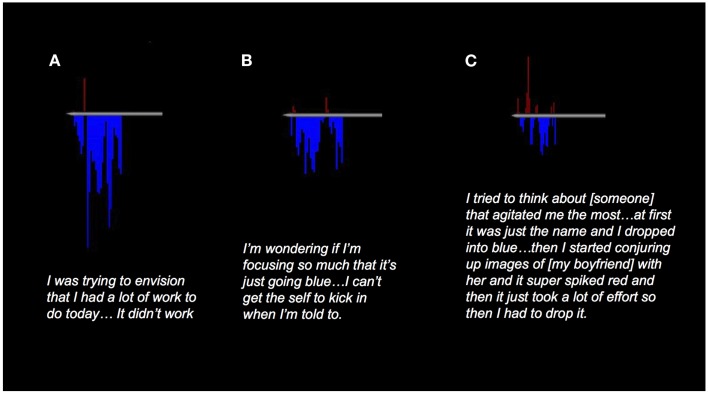
In the past decade, neuroimaging research has begun to identify key brain regions involved in self-referential processing, most consistently midline structures such as the posterior cingulate cortex (PCC). The majority of studies have employed cognitive tasks such as judgment about trait adjectives or mind wandering, that have been associated with increased PCC activity. Conversely, tasks that share an element of present-centered attention (being "on task"), ranging from working memory to meditation, have been associated with decreased PCC activity. Given the complexity of cognitive processes that likely contribute to these tasks, the specific contribution of the PCC to self-related processes still remains unknown. Building on this prior literature, recent studies have employed sampling methods that more precisely link subjective experience to brain activity, such as real-time fMRI neurofeedback. This recent work suggests that PCC activity may represent a sub-component cognitive process of self-reference - "getting caught up in" one's experience. For example, getting caught up in a drug craving or a particular viewpoint. In this paper, we will review evidence across a number of different domains of cognitive neuroscience that converges in activation and deactivation of the PCC including recent neurophenomenological studies of PCC activity using real-time fMRI neurofeedback.
Overview
The claims and statistics of this paper haven’t been checked yet.
Run the check — free, no account needed. It reads the open-access text and checks the sources it cites.
Integrity signals
Registry
Cites
Statistics
Figures
Verification
Claims the paper makes
The claims and statistics of this paper haven’t been checked yet.
Run the check — free, no account needed. It reads the open-access text and checks the sources it cites.
Claims other papers make about this one
Each is checked against this paper’s own text: does it say what the citing paper says it does?
The source backs part of the claim, not all of it — or backs it for a different population, condition or comparison.
In the citing paper
“Worry has been shown to activate brain networks associated with self-referential processing, such as the default-mode network, suggesting that the more one is caught up in perseveration about uncertain events, the more this network is activated [32,33];”
From Clinical Efficacy and Psychological Mechanisms of an App-Based Digital Therapeutic for Generalized Anxiety Disorder: Randomized Controlled Trial (2021) · cites this paper as [33]
Experimental — accuracy not yet measuredThe source backs part of the claim, not all of it — or backs it for a different population, condition or comparison.
In the citing paper
“The DN is anchored by activity in the medial prefrontal cortex (MPFC; narrative and autobiographical self) and the posterior cingulate cortex (PCC; experiential self-reflection; e.g., Buckner et al., 2008; Qin and Northoff, 2011; Brewer et al., 2013).”
From Distinct functional connectivities predict clinical response with emotion regulation therapy (2017) · cites this paper as Brewer et al., 2013
Experimental — accuracy not yet measuredThe cited source says what the claim attributes to it.
In the citing paper
“In particular, self-referentiality is commonly associated with neural activation in the DN, regarded as a network associated with autobiographical, self-monitoring and social cognitive functions.”
From Distinct functional connectivities predict clinical response with emotion regulation therapy (2017) · cites this paper as Brewer et al., 2013
Self-check
Percentages, sums and reported differences re-computed from the paper’s own numbers.
The self-check needs the paper’s full text.
Citations
Cites
Yaşlı Kadınlarda Üreme Sağlığı
Kokanalı, D., & Engin Üstün, Y. (n.d.) · DergiPark (Istanbul University) · Cited by 170,090
A default mode of brain function
Raichle, M. E., MacLeod, A. M., Snyder, A. Z., Powers, W. J., Gusnard, D. A., & Shulman, G. L. (2001) · Proceedings of the National Academy of Sciences · doi:10.1073/pnas.98.2.676 · Cited by 12,190
The human brain is intrinsically organized into dynamic, anticorrelated functional networks
Fox, M. D., Snyder, A. Z., Vincent, J. L., Corbetta, M., Van Essen, D. C., & Raichle, M. E. (2005) · Proceedings of the National Academy of Sciences · doi:10.1073/pnas.0504136102 · Cited by 8,553
Functional connectivity in the resting brain: a network analysis of the default mode hypothesis
Greicius, M. D., Krasnow, B., Reiss, A. L., & Menon, V. (2003) · Proceedings of the National Academy of Sciences · doi:10.1073/pnas.0135058100 · Cited by 6,358
(2023) · doi:10.1126/science · Cited by 6,063
Colman (2022) · doi:10.1073/pnas · Cited by 4,370
Self-referential processing in our brain—A meta-analysis of imaging studies on the self
Northoff, G., Heinzel, A., de Greck, M., Bermpohl, F., Dobrowolny, H., & Panksepp, J. (2006) · NeuroImage · doi:10.1016/j.neuroimage.2005.12.002 · Cited by 2,792
Wandering minds: the default network and stimulus-independent thought
Mason, M. F., Norton, M. I., Van Horn, J. D., Wegner, D. M., Grafton, S. T., & Macrae, C. N. (2007) · Science · doi:10.1126/science.1131295 · Cited by 2,792
Functional-anatomic fractionation of the brain’s default network
Andrews-Hanna, J. R., Reidler, J. S., Sepulcre, J., Poulin, R., & Buckner, R. L. (2010) · Neuron · doi:10.1016/j.neuron.2010.02.005 · Cited by 2,767
Ongur, D. (2000) · Cerebral Cortex · doi:10.1093/cercor/10.3.206 · Cited by 2,627
Cited by
Sorted by citations
Items 201–264 of 264
Haverkamp, E., Olsman, E., Ćurĉić‐Blake, B., Ramírez, V. V., Aleman, A., Ket, J. C. F., & Schaap‐Jonker, H. (2025) · Frontiers in Psychology · doi:10.3389/fpsyg.2025.1569514 · Cited by 6
Altered cortical alpha modulations and connectivity in complex regional pain syndrome
Malan, N. S., Baillet, S., Tankha, P., Roy, M., & Gopalakrishnan, R. (2025) · Journal of Pain · doi:10.1016/j.jpain.2025.105595 · Cited by 2
Gambazza, S., Nobili, R., Biffi, R., Summers, P. E., Colombo, C., & Costa, A. (2021) · Diagnostics · doi:10.3390/diagnostics11061001 · Cited by 2
The Interplay of Oxytocin and Attachment in Schizophrenic Patients: An fMRI Study
Hennig-Fast, K., Meissner, D., Steuwe, C., Dehning, S., Blautzik, J., Eilert, D. W., Zill, P., Müller, N., Meindl, T., Reiser, M., et al. (2023) · Brain Science · doi:10.3390/brainsci13081125 · Cited by 2
A Magnetic Resonance Spectroscopy Study on Polarity Subphenotypes in Bipolar Disorder
Argyropoulos, G. D., Christidi, F., Karavasilis, E., Bede, P., Velonakis, G., Antoniou, A., Seimenis, I., Kelekis, N., Smyrnis, N., Papakonstantinou, O., et al. (2024) · Diagnostics · doi:10.3390/diagnostics14111170 · Cited by 2
Meditation-Based Therapies for Chronic Neuropathy: A Systematic Review and Meta-Analysis
Babos, C. I., Leucuta, D., & Dumitrascu, D. L. (2024) · Cureus · doi:10.7759/cureus.68226 · Cited by 3
Law, K. S., Jiang, J. Y., & Li, N. (2024) · Asia Pacific Journal of Management · doi:10.1007/s10490-024-10000-6 · Cited by 3
Lawn, W., Hao, X., Konova, A. B., Haney, M., Cooper, Z. D., Dam, N. T. V., Glimcher, P. W., & Bedi, G. (2025) · Psychopharmacology · doi:10.1007/s00213-025-06746-6 · Cited by 2
Diedrich, A., Arif, Y., Taylor, B. K., Shen, Z., Astorino, P. M., Lee, W. H., McCreery, R. W., & Heinrichs‐Graham, E. (2025) · The Journal of Physiology · doi:10.1113/jp287372 · Cited by 2
Lieberman, J. M., Lanius, R. A., Théberge, J., Frey, B. N., Frewen, P., Scharnowski, F., Steyrl, D., Ros, T., Densmore, M., Tassinari, E., et al. (2025) · BMC Psychiatry · doi:10.1186/s12888-025-07050-5 · Cited by 2
Neurofeedback from the Posterior Cingulate Cortex as a Mental Mirror for Meditation
van Lutterveld, R., & Brewer, J. A. (2015) · Biofeedback · doi:10.5298/1081-5937-43.3.05 · Cited by 2
Self-citationWhy and How is the self related to the brain midline regions?
(2014) · Frontiers research topics · doi:10.3389/978-2-88919-265-6 · Cited by 2
Sincere praise and flattery: reward value and association with the praise-seeking trait
Fujiwara, S., Ishibashi, R., Tanabe-Ishibashi, A., Kawashima, R., & Sugiura, M. (2023) · Frontiers in Human Neuroscience · doi:10.3389/fnhum.2023.985047 · Cited by 5
Art performances and religious rituals: How transformative experiences can foster knowledgePreprint
van Mulukom, V., Geertz, A. W., Clark, R., & Farias, M. (2021) · doi:10.31234/osf.io/7y6w8 · Cited by 2
Sultana, T., Hasan, M. A., & Razi, A. (2023) · bioRxiv (Cold Spring Harbor Laboratory) · doi:10.1101/2023.04.21.537808 · Cited by 2
Panitz, D. Y., Mendelsohn, A., Cabral, J., & Berkovich‐Ohana, A. (2023) · Research Square · doi:10.21203/rs.3.rs-3038477/v1 · Cited by 2
Sutherland, B. D., Hill-Bowen, L. D., Trucco, E. M., Laird, A. R., & Sutherland, M. T. (2025) · Developmental Cognitive Neuroscience · doi:10.1016/j.dcn.2025.101634 · Cited by 3
Holland, C. M., Sun, H., Rodriguez, R. X., Bennett, M., Cheng, B., Peterson, B. S., Scheinost, D., & Spann, M. N. (2025) · Brain and Behavior · doi:10.1002/brb3.71059 · Cited by 1
Meditation and neurofeedback: A systematic scoping review, synthesis, and future directions
Tal, H., Yang, W. F. Z., & Sacchet, M. D. (2026) · Imaging Neuroscience · doi:10.1162/imag.a.1284 · Cited by 1
Facilitating Mindfulness Training with Ultrasonic Neuromodulation
Lord, B., Lord, E. N., Schachtner, J. N., Beaman, L., Young, S., Allen, J. J. B., & Sanguinetti, J. L. (2026) · Mindfulness · doi:10.1007/s12671-026-02994-5 · Cited by 1
IN PURSUIT OF A FUNCTIONAL PERSONALITY MODEL
Roxby, J., Chaundhry, N., Nolan, J., Fletcher, T. R., & Omelchenko-Comer, N. (2017) · Proceedings of the West Virginia Academy of Science · doi:10.55632/pwvas.v89i2.143 · Cited by 1
Taking tests in the magnet: Brain mapping standardized tests
Rubin, D. C., Li, D., Hall, S. A., Kragel, P. A., & Berntsen, D. (2017) · Human Brain Mapping · doi:10.1002/hbm.23761 · Cited by 1
Pang, Y., Cui, Q., Wang, Y., Chen, Y., Yang, Q., & Chen, H. (2019) · International Conference on Medical and Health Informatics (ICMHI) · doi:10.1145/3340037.3340051 · Cited by 1
Retrograde amnesia abolishes the self-reference effect in anterograde memory
Stendardi, D., Luca, F. D., Gambino, S., & Ciaramelli, E. (2023) · Experimental Brain Research · doi:10.1007/s00221-023-06661-2 · Cited by 1
Positive Neuroscience: Comparing the Neural Correlates of Meditation and Creative Flow
Ordóñez, L. D. (2023) · Journal of Student Research · doi:10.47611/jsrhs.v12i4.5264 · Cited by 1
Brewer, J. A. (2024) · Mindfulness · doi:10.1007/s12671-024-02361-2 · Cited by 1
Self-citationŠumec, R., Filip, P., Vyhnálek, M., Katina, S., Dorjee, D., Hort, J., & Sheardová, K. (2025) · Mindfulness · doi:10.1007/s12671-024-02500-9 · Cited by 1
Neurobiology of Consciousness: Current Research and Perspectives
Płonka, B. K. (2015) · Studia Humana · doi:10.1515/sh-2015-0023 · Cited by 2
Learned Mindfulness—An Emotional Intelligence Perspective
Ninivaggi, F. J. (2019) · Elsevier eBooks · doi:10.1016/b978-0-12-816484-6.00004-x · Cited by 1
Can mindfulness meditation alter consciousness? An integrative interpretationPreprint
Manuello, J., Vercelli, U., Nani, A., Costa, T., & Cauda, F. (2015) · bioRxiv (Cold Spring Harbor Laboratory) · doi:10.1101/024174 · Cited by 1
Emergence of Goal‐Directed Behaviors via Active Inference With Self‐Prior
Kim, D., Kanazawa, H., Yoshida, N., & Kuniyoshi, Y. (2026) · Developmental Science · doi:10.1111/desc.70286
Aggression and Impulsitivity: Two of a kind ?
Tonnaer (2018) · Research Publications (Maastricht University) · doi:10.26481/dis.20181220ft
Focusing on Those Who Cannot Focus
Vance, J. A. (2021) · ThinkTech (Texas Tech University)
Brewer, J. (2015) · Elsevier eBooks · doi:10.1016/b978-0-12-397045-9.00134-8
Self-citationNinivaggi, F. J. (2019) · Elsevier eBooks · doi:10.1016/b978-0-12-816484-6.00002-6
The promises and pitfalls of facilitated spiritual experiences for the study of religion
Morgan, J. (2022) · Religion Brain & Behavior · doi:10.1080/2153599x.2022.2091008 · Cited by 1
Meditação Vipassana: Estados de Consciência Corpo e Mente
Silva, E. M. M., & Nogueira, M. I. (2022) · Revista Neurociências · doi:10.34024/rnc.2022.v30.13777
Value Signals Guiding Choices for Cannabis Versus Non-Drug Rewards in Regular Cannabis UsersPreprint
Lawn, W., Hao, X., Konova, A. B., Haney, M., Cooper, Z. D., Dam, N. T. V., Glimcher, P. W., & Bedi, G. (2023) · doi:10.31234/osf.io/6dvhs
F = ma. Is the macaque brain Newtonian?
Marciniak, K., & Agra, P. D. (2022) · Cognitive Neuropsychology · doi:10.1080/02643294.2023.2191843
Özkul, B., Candemir, C., Oğuz, K., Eroglu-Koc, S., Kizilates-Evin, G., Uğurlu, O., Erdoğan, Y., Mull, D. D., Eker, M. C., Kitiş, Ö., et al. (2023) · Brain Sciences · doi:10.3390/brainsci13111509
Topographic reorganization of the self during meditation
Northoff, G. (2024) · Elsevier eBooks · doi:10.1016/b978-0-12-821935-5.00008-9
Topographic reorganization model of meditation
Northoff, G. (2024) · Elsevier eBooks · doi:10.1016/b978-0-12-821935-5.00015-6
Ego dissolution in psychedelic experience
Gerrans, P. (2024) · Oxford University Press eBooks · doi:10.1093/9780191994395.003.0007
Ciaunica, A., & Safron, A. (2024) · Oxford University Press eBooks · doi:10.1093/oso/9780192898371.003.0004 · Cited by 8
Psychological Stages of Enlightenment
Jones, P. M. (2025) · IntechOpen eBooks · doi:10.5772/intechopen.1010343
Shi, L. (2025) · International Journal of Psychophysiology · doi:10.1016/j.ijpsycho.2025.112584
HEILNER, E. A., Sinha, R., Eringros, N., Constable, R. T., & Seo, D. (2025) · Journal of Neural Transmission · doi:10.1007/s00702-025-02961-9
Ben‐Soussan, T. D., Glicksohn, J., & Paoletti, P. (2025) · Personality and Individual Differences · doi:10.1016/j.paid.2025.113397 · Cited by 1
Lee, S., Fitzpatrick‐Schmidt, T., Bookman, D., & Edwards, S. (2025) · Elsevier eBooks · doi:10.1016/b978-0-443-34258-5.00008-6
Tsujimoto, M., Matsuzaki, Y., Yamaya, N., Saito, T. I., & Kawashima, R. (2025) · NeuroImage · doi:10.1016/j.neuroimage.2025.121624
Greguš, D., Hlinka, J., Tylš, F., Viktorin, V., Viktorinová, M., Bravermanová, A., Androvičová, R., Andrashko, V., Korčák, J., Nikolič, M., et al. (2025) · Psychopharmacology · doi:10.1007/s00213-025-06983-9
Lorenzetti, V., Gaillard, A., Beyer, E., Kowalczyk, M. A., Kamboj, S. K., Manning, V., & Gleeson, J. (2024) · Figshare · doi:10.6084/m9.figshare.26594987
Mindfulness and the Addictive Process: Psychological Models and Neurobiological Mechanisms
Brewer, J. A., Houlihan, S. D., Yetter, K. M., & Davis, J. H. (2025) · Springer eBooks · doi:10.1007/978-3-031-91451-5_17
Self-citationVento, C., Hatfield-King, J., Gopinath, K., Nishitani, S., Morrier, M. J., Ousley, O., Cubells, J. F., Young, L. J., & Andari, E. (2026) · medRxiv · doi:10.64898/2026.02.10.26346006
Cannon, R. L. (2026) · NeuroRegulation · doi:10.15540/nr.13.1.91
Zhao, N., Zhang, B., Wang, X., He, H., Xian-Wei, C. H. E., Cash, R. F. H., Laureys, S., Li, P., Sun, L. S., Zang, Y., et al. (2026) · Research Square · doi:10.21203/rs.3.rs-10654040/v1
The Neuropharmacology of Psychedelics
Pavăl, D. (2026) · SpringerBriefs in religious studies · doi:10.1007/978-3-032-20214-7_3
Shared and unique neural correlates of reappraisal generation and implementation
Liu, Y. R., Leo, M. B., McRae, K., & Waugh, C. E. (2026) · Cognitive Affective & Behavioral Neuroscience · doi:10.3758/s13415-026-01477-3
Neural Dynamics of Self-Control: Pre-Choice EEG Signals Predict Yielding to TemptationPreprint
Leong, A. W. I., & Stuphorn, V. (2026) · bioRxiv (Cold Spring Harbor Laboratory) · doi:10.64898/2026.09.15.751887
Reduced social brain coupling to others’ face threats in narcissism
Piispanen, M., Tuominen, J., Wuolio, M. P., Henttonen, P., Harjunen, V. J., Koskinen, E., Krusemark, E. A., Glerean, E., Rinne, P., Sams, M. E., et al. (2026) · Cerebral Cortex · doi:10.1093/cercor/bhag175
Bradstreet, L. E. (2022) · Digital Archive @ GSU · doi:10.57709/6416202
Metadata
- Authors
- Brewer, J. A., Garrison, K. A., & Whitfield-Gabrieli, S.
- Affiliations
- Yale University (US)
- Corresponding author
- Brewer, Judson A.
- Venue
- Frontiers in Human Neuroscience
- Publisher
- Frontiers Media SA
- Published
- 2013
- Volume
- 7
- Pages
- 647-647
- ISSN
- 1662-5161 (ISSN-L)
- PMC
- PMC3788347
- OpenAlex
- W1993134051
- Cited by
- 263
- References
- 58
- Citations by year
- 2026: 9 · 2025: 21 · 2024: 27 · 2023: 26 · 2022: 30 · 2021: 17 · 2020: 21 · 2019: 26 · 2018: 15 · 2017: 23 · 2016: 21 · 2015: 16 · 2014: 9 · 2013: 2
- FWCI
- 1.37
- Type
- journal article
- Language
- en
- Open access
- gold
- doi.org
- Licence
- cc-by
- Locations
- Frontiers in Human Neuroscience (publishedVersion, cc-by)
- Europe PMC (PubMed Central) (publishedVersion, cc-by)
- PubMed Central (publishedVersion, cc-by)
- PubMed (publishedVersion)
- DSpace@MIT (Massachusetts Institute of Technology) (submittedVersion)
- DOAJ (DOAJ: Directory of Open Access Journals) (submittedVersion, cc-by-sa)
- Frontiers Research Foundation
- Topics
- Life Sciences › Neuroscience › Cognitive Neuroscience › Mind wandering and attention
- Life Sciences › Neuroscience › Cognitive Neuroscience › Functional Brain Connectivity Studies
- Social Sciences › Arts and Humanities › Philosophy › Philosophy and Theoretical Science
- Keywords
- posterior cingulate cortex, self-referential processing, self, real-time fMRI neurofeedback, neurophenomenology, mind wandering, trait judgments, working memory, meditation, drug craving
About these checks
Registry, retraction, Cites and statistics results are computed, not judged, with one exception: a printed reference that no index lists is read once by a model before it counts as a citation error. Claims are extracted by a model and kept only when their quote appears verbatim in the text; each cited source is then checked, with a model’s help, for whether it says what the claim relies on. Those verdicts can be wrong — read the claim’s quote and the cited source before relying on one.
Statistics and arithmetic are recomputed, not judged.
Confidence bands are shown only for fields calibrated on our annotated test set. None is calibrated yet, so no band is shown.
What counts as a claim ›How we measure confidence ›How we check this ›
Are you an author, or do you see a problem with this page? Request a review
