

The DOI matches its Crossref record; 58 of the 58 references it cites were found in a registry or an index.
What about the “Self” is Processed in the Posterior Cingulate Cortex?
Open accessAbstract
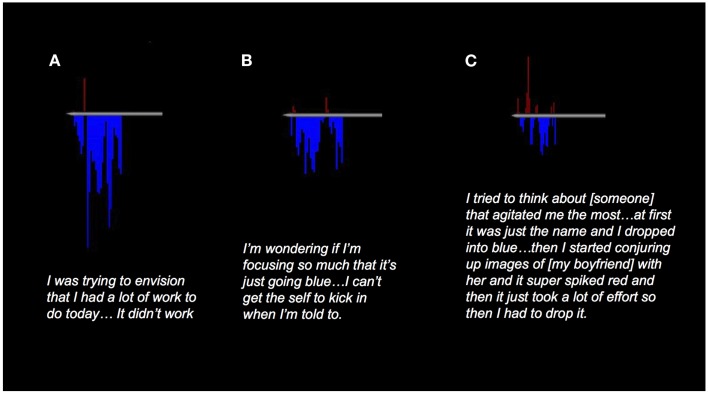
In the past decade, neuroimaging research has begun to identify key brain regions involved in self-referential processing, most consistently midline structures such as the posterior cingulate cortex (PCC). The majority of studies have employed cognitive tasks such as judgment about trait adjectives or mind wandering, that have been associated with increased PCC activity. Conversely, tasks that share an element of present-centered attention (being "on task"), ranging from working memory to meditation, have been associated with decreased PCC activity. Given the complexity of cognitive processes that likely contribute to these tasks, the specific contribution of the PCC to self-related processes still remains unknown. Building on this prior literature, recent studies have employed sampling methods that more precisely link subjective experience to brain activity, such as real-time fMRI neurofeedback. This recent work suggests that PCC activity may represent a sub-component cognitive process of self-reference - "getting caught up in" one's experience. For example, getting caught up in a drug craving or a particular viewpoint. In this paper, we will review evidence across a number of different domains of cognitive neuroscience that converges in activation and deactivation of the PCC including recent neurophenomenological studies of PCC activity using real-time fMRI neurofeedback.
Overview
The claims and statistics of this paper haven’t been checked yet.
Run the check — free, no account needed. It reads the open-access text and checks the sources it cites.
Integrity signals
Registry
Cites
Statistics
Figures
Verification
Claims the paper makes
The claims and statistics of this paper haven’t been checked yet.
Run the check — free, no account needed. It reads the open-access text and checks the sources it cites.
Claims other papers make about this one
Each is checked against this paper’s own text: does it say what the citing paper says it does?
The source backs part of the claim, not all of it — or backs it for a different population, condition or comparison.
In the citing paper
“Worry has been shown to activate brain networks associated with self-referential processing, such as the default-mode network, suggesting that the more one is caught up in perseveration about uncertain events, the more this network is activated [32,33];”
From Clinical Efficacy and Psychological Mechanisms of an App-Based Digital Therapeutic for Generalized Anxiety Disorder: Randomized Controlled Trial (2021) · cites this paper as [33]
Experimental — accuracy not yet measuredThe source backs part of the claim, not all of it — or backs it for a different population, condition or comparison.
In the citing paper
“The DN is anchored by activity in the medial prefrontal cortex (MPFC; narrative and autobiographical self) and the posterior cingulate cortex (PCC; experiential self-reflection; e.g., Buckner et al., 2008; Qin and Northoff, 2011; Brewer et al., 2013).”
From Distinct functional connectivities predict clinical response with emotion regulation therapy (2017) · cites this paper as Brewer et al., 2013
Experimental — accuracy not yet measuredThe cited source says what the claim attributes to it.
In the citing paper
“In particular, self-referentiality is commonly associated with neural activation in the DN, regarded as a network associated with autobiographical, self-monitoring and social cognitive functions.”
From Distinct functional connectivities predict clinical response with emotion regulation therapy (2017) · cites this paper as Brewer et al., 2013
Self-check
Percentages, sums and reported differences re-computed from the paper’s own numbers.
The self-check needs the paper’s full text.
Citations
Cites
Yaşlı Kadınlarda Üreme Sağlığı
Kokanalı, D., & Engin Üstün, Y. (n.d.) · DergiPark (Istanbul University) · Cited by 170,090
A default mode of brain function
Raichle, M. E., MacLeod, A. M., Snyder, A. Z., Powers, W. J., Gusnard, D. A., & Shulman, G. L. (2001) · Proceedings of the National Academy of Sciences · doi:10.1073/pnas.98.2.676 · Cited by 12,190
The human brain is intrinsically organized into dynamic, anticorrelated functional networks
Fox, M. D., Snyder, A. Z., Vincent, J. L., Corbetta, M., Van Essen, D. C., & Raichle, M. E. (2005) · Proceedings of the National Academy of Sciences · doi:10.1073/pnas.0504136102 · Cited by 8,553
Functional connectivity in the resting brain: a network analysis of the default mode hypothesis
Greicius, M. D., Krasnow, B., Reiss, A. L., & Menon, V. (2003) · Proceedings of the National Academy of Sciences · doi:10.1073/pnas.0135058100 · Cited by 6,358
(2023) · doi:10.1126/science · Cited by 6,063
Colman (2022) · doi:10.1073/pnas · Cited by 4,370
Self-referential processing in our brain—A meta-analysis of imaging studies on the self
Northoff, G., Heinzel, A., de Greck, M., Bermpohl, F., Dobrowolny, H., & Panksepp, J. (2006) · NeuroImage · doi:10.1016/j.neuroimage.2005.12.002 · Cited by 2,792
Wandering minds: the default network and stimulus-independent thought
Mason, M. F., Norton, M. I., Van Horn, J. D., Wegner, D. M., Grafton, S. T., & Macrae, C. N. (2007) · Science · doi:10.1126/science.1131295 · Cited by 2,792
Functional-anatomic fractionation of the brain’s default network
Andrews-Hanna, J. R., Reidler, J. S., Sepulcre, J., Poulin, R., & Buckner, R. L. (2010) · Neuron · doi:10.1016/j.neuron.2010.02.005 · Cited by 2,767
Ongur, D. (2000) · Cerebral Cortex · doi:10.1093/cercor/10.3.206 · Cited by 2,627
Cited by
Sorted by citations
Andrews‐Hanna, J. R., Smallwood, J., & Spreng, R. N. (2014) · Annals of the New York Academy of Sciences · doi:10.1111/nyas.12360 · Cited by 2,102
Reconstructing and deconstructing the self: cognitive mechanisms in meditation practice
Dahl, C. J., Lutz, A., & Davidson, R. J. (2015) · Trends in Cognitive Sciences · doi:10.1016/j.tics.2015.07.001 · Cited by 809
Mindfulness and Behavior Change
Schuman-Olivier, Z., Trombka, M., Lovas, D. A., Brewer, J. A., Vago, D. R., Gawande, R., Dunne, J. P., Lazar, S. W., Loucks, E. B., & Fulwiler, C. (2020) · Harvard Review of Psychiatry · doi:10.1097/hrp.0000000000000277 · Cited by 435
Self-citationOldham, S., Murawski, C., Fornito, A., Youssef, G. J., Yücel, M., & Lorenzetti, V. (2018) · Human Brain Mapping · doi:10.1002/hbm.24184 · Cited by 449
Self unbound: ego dissolution in psychedelic experience
Letheby, C., & Gerrans, P. (2017) · Neuroscience of Consciousness · doi:10.1093/nc/nix016 · Cited by 293
Classic Hallucinogens and Mystical Experiences: Phenomenology and Neural Correlates
Barrett, F. S., & Griffiths, R. R. (2017) · Current Topics in Behavioral Neurosciences · doi:10.1007/7854_2017_474 · Cited by 273
Meng, Y., Deng, W., Wang, H., Guo, W., & Li, T. (2015) · Addiction Biology · doi:10.1111/adb.12154 · Cited by 197
Loucks, E. B., Schuman-Olivier, Z., Britton, W. B., Fresco, D. M., Desbordes, G., Brewer, J. A., & Fulwiler, C. (2015) · Current Cardiology Reports · doi:10.1007/s11886-015-0668-7 · Cited by 158
Self-citationBeyond emotions: A meta-analysis of neural response within face processing system in social anxiety
Gentili, C., Cristea, I. A., Angstadt, M., Klumpp, H., Tozzi, L., Phan, K. L., & Pietrini, P. (2015) · Experimental Biology and Medicine · doi:10.1177/1535370215603514 · Cited by 161
The brain on silent: mind wandering, mindful awareness, and states of mental tranquility
Vago, D. R., & Zeidan, F. Z. (2016) · Annals of the New York Academy of Sciences · doi:10.1111/nyas.13171 · Cited by 175
Millière, R. (2017) · Frontiers in Human Neuroscience · doi:10.3389/fnhum.2017.00245 · Cited by 206
Bastuji, H., Frot, M., Perchet, C., Magnin, M., & García-Larrea, L. (2016) · Human Brain Mapping · doi:10.1002/hbm.23310 · Cited by 168
Safron, A. (2020) · Frontiers in Artificial Intelligence · doi:10.3389/frai.2020.00030 · Cited by 133
Brewer, J. A., & Garrison, K. A. (2014) · Annals of the New York Academy of Sciences · doi:10.1111/nyas.12246 · Cited by 134
Self-citationGarcı́a-Larrea, L., & Bastuji, H. (2017) · Progress in Neuro-Psychopharmacology and Biological Psychiatry · doi:10.1016/j.pnpbp.2017.10.007 · Cited by 150
Self‐other resonance, its control and prosocial inclinations: Brain–behavior relationships
Christov‐Moore, L., & Iacoboni, M. (2016) · Human Brain Mapping · doi:10.1002/hbm.23119 · Cited by 136
Landin-Romero, R., Kumfor, F., Leyton, C. E., Irish, M., Hodges, J. R., & Piguet, O. (2017) · NeuroImage · doi:10.1016/j.neuroimage.2016.03.032 · Cited by 116
Mindfulness-based training attenuates insula response to an aversive interoceptive challenge.
Haase, L., Thom, N. J., Shukla, A., Davenport, P. W., Simmons, A. N., Stanley, E. A., Paulus, M. P., & Johnson, D. C. (2016) · Social Cognitive and Affective Neuroscience · doi:10.1093/scan/nsu042 · Cited by 124
van Elk, M., Gomez, M. A. A., van der Zwaag, W., van Schie, H. T., & Sauter, D. A. (2019) · Human Brain Mapping · doi:10.1002/hbm.24616 · Cited by 134
Angular default mode network connectivity across working memory load
Vatansever, D., Manktelow, A. E., Sahakian, B. J., Menon, D. K., & Stamatakis, E. A. (2016) · Human Brain Mapping · doi:10.1002/hbm.23341 · Cited by 120
Subacute effects of the psychedelic ayahuasca on the salience and default mode networks
Pasquini, L., Palhano-Fontes, F., & de Araújo, D. B. (2020) · Journal of Psychopharmacology · doi:10.1177/0269881120909409 · Cited by 120
The Default Network and Social Cognition
Spreng, R. N., & Andrews‐Hanna, J. R. (2015) · Elsevier eBooks · doi:10.1016/b978-0-12-397025-1.00173-1 · Cited by 127
Nguyen, T. T., Kovacevic, S., Dev, S. I., Lu, K., Liu, T. T., & Eyler, L. T. (2017) · Neuropsychology · doi:10.1037/neu0000317 · Cited by 109
The neurophysiological correlates of religious chanting
Gao, J., Leung, H. K., Wu, B. W. Y., Skouras, S., & Sik, H. H. (2019) · Scientific Reports · doi:10.1038/s41598-019-40200-w · Cited by 110
Resting-state abnormalities in Autism Spectrum Disorders: A meta-analysis
Lau, W. K., Leung, M.-K., & Lau, B. W.-M. (2019) · Scientific Reports · doi:10.1038/s41598-019-40427-7 · Cited by 111
Self-specific processing in the meditating brain: a MEG neurophenomenology study
Dor‐Ziderman, Y., Ataria, Y., Fulder, S. J., Goldstein, A., & Berkovich‐Ohana, A. (2016) · Neuroscience of Consciousness · doi:10.1093/nc/niw019 · Cited by 100
Network analysis reveals disrupted functional brain circuitry in drug-naive social anxiety disorder
Yang, X., Liu, J., Meng, Y., Xia, M., Cui, Z., Wu, X., Hu, X., Zhang, W., Gong, G., Gong, Q., et al. (2019) · NeuroImage · doi:10.1016/j.neuroimage.2017.12.011 · Cited by 91
van Lutterveld, R., Houlihan, S. D., Pal, P., Sacchet, M. D., McFarlane-Blake, C., Patel, P. R., Sullivan, J. S., Ossadtchi, A. E., Druker, S. K., Bauer, C. C. C., et al. (2016) · NeuroImage · doi:10.1016/j.neuroimage.2016.02.047 · Cited by 94
Self-citationHaase, L., May, A. C., Falahpour, M., Isakovic, S., Simmons, A. N., Hickman, S. D., Liu, T. T., & Paulus, M. P. (2015) · Frontiers in Behavioral Neuroscience · doi:10.3389/fnbeh.2015.00229 · Cited by 93
Shapiro, S. L., Siegel, R., & Neff, K. D. (2018) · Mindfulness · doi:10.1007/s12671-018-0957-5 · Cited by 78
O’Callaghan, C., Shine, J. M., Lewis, S. J. G., Andrews‐Hanna, J. R., & Irish, M. (2014) · Brain and Cognition · doi:10.1016/j.bandc.2014.11.001 · Cited by 77
Motoki, K., Suzuki, S., Kawashima, R., & Sugiura, M. (2020) · Journal of Interactive Marketing · doi:10.1016/j.intmar.2020.06.003 · Cited by 85
The neurobiology of self-face recognition in depressed adolescents with low or high suicidality
Quevedo, K., Ng, R., Scott, H., Martin, J., Smyda, G., Keener, M., & Oppenheimer, C. W. (2016) · Journal of Abnormal Psychology · doi:10.1037/abn0000200 · Cited by 70
Simon, J. J., Skunde, M., Wu, M., Schnell, K., Herpertz, S. C., Bendszus, M., Herzog, W., & Friederich, H. (2014) · Social Cognitive and Affective Neuroscience · doi:10.1093/scan/nsu162 · Cited by 66
The epistemic innocence of psychedelic states
Letheby, C. (2016) · Consciousness and Cognition · doi:10.1016/j.concog.2015.11.012 · Cited by 67
Encoding of Self‐Referential Pain Catastrophizing in the Posterior Cingulate Cortex in Fibromyalgia
Lee, J., Protsenko, E., Lazaridou, A., Franceschelli, O., Ellingsen, D., Mawla, I., Isenburg, K., Berry, M. P., Galenkamp, L., Loggia, M. L., et al. (2018) · Arthritis & Rheumatology · doi:10.1002/art.40507 · Cited by 66
Klussman, K., Curtin, N., Langer, J., & Nichols, A. (2022) · Europe’s Journal of Psychology · doi:10.5964/ejop.3707 · Cited by 97
Smausz, R., Neill, J. C., & Gigg, J. (2022) · Journal of Psychopharmacology · doi:10.1177/02698811221092508 · Cited by 65
Mindfulness meditation and consciousness: An integrative neuroscientific perspective
Manuello, J., Vercelli, U., Nani, A., Costa, T., & Cauda, F. (2016) · Consciousness and Cognition · doi:10.1016/j.concog.2015.12.005 · Cited by 66
Brewer, J. (2019) · Current Opinion in Psychology · doi:10.1016/j.copsyc.2019.01.014 · Cited by 58
Self-citationPapez’s Forgotten Tract: 80 Years of Unreconciled Findings Concerning the Thalamocingulate Tract
Weininger, J., Roman, E., Tierney, P., Barry, D., Gallagher, H., Murphy, P., Levins, K. J., O’Keane, V., O’Hanlon, E., & Roddy, D. W. (2019) · Frontiers in Neuroanatomy · doi:10.3389/fnana.2019.00014 · Cited by 57
Janes, A. C., Datko, M., Roy, A., Barton, B., Druker, S., Neal, C., Ohashi, K., Benoit, H., van Lutterveld, R., & Brewer, J. A. (2019) · Neuropsychopharmacology · doi:10.1038/s41386-019-0403-y · Cited by 55
Self-citationBeyond the veil of duality—topographic reorganization model of meditation
Cooper, A. C., Ventura, B., & Northoff, G. (2022) · Neuroscience of Consciousness · doi:10.1093/nc/niac013 · Cited by 60
Towards the neurobiology of insomnia: A systematic review of neuroimaging studies
Aquino, G., Benz, F., Dressle, R. J., Gemignani, A., Alfì, G., Palagini, L., Spiegelhalder, K., Riemann, D. W., & Feige, B. (2023) · Sleep Medicine Reviews · doi:10.1016/j.smrv.2023.101878 · Cited by 63
On the varieties of conscious experiences: Altered Beliefs Under Psychedelics (ALBUS)
Safron, A., Juliani, A., Reggente, N., Klimaj, V., & Johnson, M. W. (2025) · Neuroscience of Consciousness · doi:10.1093/nc/niae038 · Cited by 57
The Impact of Emotional States on Cognitive Control Circuitry and Function
Cohen, A. O., Dellarco, D. V., Breiner, K., Helion, C., Heller, A. S., Rahdar, A., Pedersen, G., Chein, J., Dyke, J. P., Galvan, A., et al. (2016) · Journal of Cognitive Neuroscience · doi:10.1162/jocn_a_00906 · Cited by 54
Effective Connectivity of Functionally Anticorrelated Networks Under Lysergic Acid Diethylamide
Stoliker, D., Novelli, L., Vollenweider, F. X., Egan, G. F., Preller, K. H., & Razi, A. (2022) · Biological Psychiatry · doi:10.1016/j.biopsych.2022.07.013 · Cited by 57
Zazen meditation and no-task resting EEG compared with LORETA intracortical source localization
Faber, P. L., Lehmann, D., Gianotti, L. R. R., Milz, P., Pascual-Marqui, R. D., Held, M., & Kochi, K. (2014) · Cognitive Processing · doi:10.1007/s10339-014-0637-x · Cited by 57
Reduced Default Mode Connectivity in Adolescents With Conduct Disorder
Broulidakis, J., Fairchild, G. F., Sully, K., Blumensath, T., Darekar, A., & Sonuga-Barke, E. J. S. (2016) · Journal of the American Academy of Child & Adolescent Psychiatry · doi:10.1016/j.jaac.2016.05.021 · Cited by 53
Kim, H., Tegethoff, M., Meinlschmidt, G., Stalujanis, E., Belardi, A., Jo, S., Lee, J., Kim, D., Yoo, S., & Lee, J. (2019) · NeuroImage · doi:10.1016/j.neuroimage.2019.03.066 · Cited by 54
The neurobiology of self-knowledge in depressed and self-injurious youth
Quevedo, K., Martin, J., Scott, H., Smyda, G., & Pfeifer, J. H. (2016) · Psychiatry Research Neuroimaging · doi:10.1016/j.pscychresns.2016.06.015 · Cited by 50
Lutz, J. G., Brühl, A. B., Scheerer, H., Jäncke, L., & Herwig, U. (2016) · Biological Psychology · doi:10.1016/j.biopsycho.2016.06.010 · Cited by 56
Distinct functional connectivities predict clinical response with emotion regulation therapy
Fresco, D. M., Roy, A. K., Adelsberg, S., Seeley, S., García-Lesy, E., Liston, C., & Mennin, D. S. (2017) · Frontiers in Human Neuroscience · doi:10.3389/fnhum.2017.00086 · Cited by 43
Comparative connectomics of the primate social brain
Yokoyama, C., Autio, J. A., Ikeda, T., Sallet, J., Mars, R. B., Essen, D. C. V., Glasser, M. F., Sadato, N., & Hayashi, T. (2021) · NeuroImage · doi:10.1016/j.neuroimage.2021.118693 · Cited by 44
Vanneste, S., Joos, K., Ost, J., & De Ridder, D. (2018) · Neurobiology of Stress · doi:10.1016/j.ynstr.2016.11.003 · Cited by 45
Psychedelic unselfing: self-transcendence and change of values in psychedelic experiences
Kähönen, J. (2023) · Frontiers in Psychology · doi:10.3389/fpsyg.2023.1104627 · Cited by 50
Stoliker, D., Novelli, L., Vollenweider, F. X., Egan, G. F., Preller, K. H., & Razi, A. (2024) · Biological Psychiatry · doi:10.1016/j.biopsych.2024.01.002 · Cited by 51
Wagner, D. D., Chavez, R. S., & Broom, T. W. (2018) · Wiley Interdisciplinary Reviews Cognitive Science · doi:10.1002/wcs.1482 · Cited by 46
Zhuang, K., Bi, M., Li, Y., Xia, Y., Guo, X., Chen, Q., Du, X., Wang, K., Wei, D., Yin, H., et al. (2017) · Scientific Reports · doi:10.1038/s41598-017-06599-w · Cited by 44
Gentili, C., Vanello, N., Cristea, I. A., David, D., Ricciardi, E., & Pietrini, P. (2015) · Psychiatry Research Neuroimaging · doi:10.1016/j.pscychresns.2015.03.005 · Cited by 42
Age-related differences in negative cognitive empathy but similarities in positive affective empathy
Ziaei, M., Oestreich, L., Reutens, D. C., & Ebner, N. C. (2021) · Brain Structure and Function · doi:10.1007/s00429-021-02291-y · Cited by 48
Roy, A., Hoge, E. A., Abrante, P., Druker, S., Liu, T., & Brewer, J. A. (2021) · Journal of Medical Internet Research · doi:10.2196/26987 · Cited by 41
Self-citationPinto, J., Cera, N., & Pignatelli, D. (2024) · Journal of Endocrinological Investigation · doi:10.1007/s40618-024-02329-y · Cited by 53
Anger provocation in violent offenders leads to emotion dysregulation
Tonnaer, F., Siep, N., van Zutphen, L., Arntz, A. R., & Cima, M. (2017) · Scientific Reports · doi:10.1038/s41598-017-03870-y · Cited by 42
The Hippocampus and Social Cognition
Laurita, A. C., & Spreng, R. N. (2017) · Springer eBooks · doi:10.1007/978-3-319-50406-3_17 · Cited by 42
Liu, G., Zhang, N., Teoh, J. Y., Egan, C., Zeffiro, T. A., Davidson, R. J., & Quevedo, K. (2020) · Psychological Medicine · doi:10.1017/s0033291720002482 · Cited by 45
Evolution of cortical geometry and its link to function, behaviour and ecology
Schwartz, E., Nenning, K., Heuer, K., Jeffery, N. S., Bertrand, O., Toro, R., Kasprian, G. J., Prayer, D., & Langs, G. (2023) · Nature Communications · doi:10.1038/s41467-023-37574-x · Cited by 40
Resting-state neural activity and connectivity associated with subjective happiness
Sato, W., Kochiyama, T., Uono, S., Sawada, R., Kubota, Y., Yoshimura, S., & Toichi, M. (2019) · Scientific Reports · doi:10.1038/s41598-019-48510-9 · Cited by 40
Zoubi, O. A., Misaki, M., Bodurka, J., Kuplicki, R., Wohlrab, C., Schoenhals, W. A., Refai, H. H., Khalsa, S. S., Stein, M. B., Paulus, M. P., et al. (2021) · Human Brain Mapping · doi:10.1002/hbm.25429 · Cited by 41
Janes, A. C., Betts, J. M., Jensen, J. E., & Lukas, S. E. (2016) · Drug and Alcohol Dependence · doi:10.1016/j.drugalcdep.2016.07.021 · Cited by 37
Mindfulness Reduces Reactivity to Food Cues: Underlying Mechanisms and Applications in Daily Life
Keesman, M., Aarts, H., Häfner, M., & Papies, E. K. (2017) · Current Addiction Reports · doi:10.1007/s40429-017-0134-2 · Cited by 41
Li, X.-M., Ma, R., Pang, L., Lv, W., Xie, Y., Chen, Y., Zhang, P., Chen, J., Wu, Q., Cui, G.-B., et al. (2017) · Scientific Reports · doi:10.1038/s41598-017-01373-4 · Cited by 34
McClintock, C. H., Worhunsky, P. D., Balodis, I. M., Sinha, R., Miller, L., & Potenza, M. N. (2019) · Current Behavioral Neuroscience Reports · doi:10.1007/s40473-019-00195-0 · Cited by 44
Wantzen, P., Clochon, P., Doidy, F., Wallois, F., Mahmoudzadeh, M., Desaunay, P., Christian, M., Guilé, J.-M., Guenolé, F., Eustache, F., et al. (2022) · Journal of Neurodevelopmental Disorders · doi:10.1186/s11689-022-09456-8 · Cited by 38
Dourron, H. M., Strauss, C. K., & Hendricks, P. S. (2022) · Pharmacological Reviews · doi:10.1124/pharmrev.121.000514 · Cited by 35
Mindfulness Training: Can It Create Superheroes?
Jones, P. M. (2019) · Frontiers in Psychology · doi:10.3389/fpsyg.2019.00613 · Cited by 37
Brain activity sustaining the modulation of pain by empathetic comments
Fauchon, C., Faillenot, I., Quesada, C., David Meunier, A., Chouchou, F., Garcı́a-Larrea, L., & Peyron, R. (2019) · Scientific Reports · doi:10.1038/s41598-019-44879-9 · Cited by 43
Loizzo, J. J. (2016) · Annals of the New York Academy of Sciences · doi:10.1111/nyas.13065 · Cited by 36
Why and How is the Self-Related to the Brain Midline Regions?
Qin, P., Duncan, N. W., & Northoff, G. (2013) · Frontiers in Human Neuroscience · doi:10.3389/fnhum.2013.00909 · Cited by 33
Kang, Y. (2018) · Current Opinion in Psychology · doi:10.1016/j.copsyc.2018.12.007 · Cited by 35
Suffel, A., Nagels, A., Steines, M., Kircher, T. T. J., & Straube, B. (2020) · Human Brain Mapping · doi:10.1002/hbm.25027 · Cited by 30
Xiao, Q., Zhao, X., Bi, G., Wu, L., Zhang, H., Liu, R., Zhong, J., Wu, S., Zeng, Y., Cui, L., et al. (2019) · Frontiers in Human Neuroscience · doi:10.3389/fnhum.2019.00376 · Cited by 31
Lord, B., Sanguinetti, J. L., Ruiz, L., Miskovic, V., Segre, J., Young, S., Fini, M. E., & Allen, J. J. B. (2024) · Frontiers in Human Neuroscience · doi:10.3389/fnhum.2024.1392199 · Cited by 36
Parvizi-Wayne, D., Sandved-Smith, L., Pitliya, R. J., Limanowski, J., Tufft, M. R. A., & Friston, K. J. (2024) · Frontiers in Psychology · doi:10.3389/fpsyg.2024.1354719 · Cited by 37
Chen, Y., Bo, F., Xia, W., Liu, S., Wang, P., Su, W., Xǔ, J., Xiong, Z., & Yin, X. (2017) · Progress in Neuro-Psychopharmacology and Biological Psychiatry · doi:10.1016/j.pnpbp.2017.07.001 · Cited by 31
Nakano, H., Kodama, T., Ueda, T., Mori, I., Tani, T., & Murata, S. (2019) · Brain Sciences · doi:10.3390/brainsci9030054 · Cited by 32
Wong, W. P., Camfield, D., Woods, W., Sarris, J. J., & Pipingas, A. (2015) · International Journal of Psychophysiology · doi:10.1016/j.ijpsycho.2015.07.006 · Cited by 31
Functional Connectivity of Prefrontal Cortex in Various Meditation Techniques – A Mini-Review
Rathore, M., Verma, M., Nirwan, M., Trivedi, S., & Pai, V. (2022) · International Journal of Yoga · doi:10.4103/ijoy.ijoy_88_22 · Cited by 38
Nicolardi, V., Simione, L., Scaringi, D., Malinowski, P., Yordanova, J., Kolev, V., Mauro, F., Giommi, F., Barendregt, H. P., Aglioti, S. M., et al. (2022) · Mindfulness · doi:10.1007/s12671-021-01797-0 · Cited by 29
Neural Correlates of Self and Its Interaction With Memory in Healthy Adolescents
Dégeilh, F., Guillery‐Girard, B., Dayan, J., Gaubert, M., Chételat, G., Egler, P., Baleyte, J., Eustache, F., & Viard, A. (2015) · Child Development · doi:10.1111/cdev.12440 · Cited by 29
Recognition of personally familiar faces and functional connectivity in Alzheimer's disease
Kurth, S., Moyse, E. V., Bahri, M. A., Salmon, É., & Bastin, C. (2015) · Cortex · doi:10.1016/j.cortex.2015.03.013 · Cited by 29
Wang, X., Zhang, Y., Huang, J., Wang, Y., Niu, Y., Lui, S. S. Y., Hui, L., & Chan, R. C. K. (2023) · Psychological Medicine · doi:10.1017/s0033291723000703 · Cited by 30
Connectome-based prediction of craving in gambling disorder and cocaine use disorder
Antons, S., Yip, S. W., Lacadie, C., Dadashkarimi, J., Scheinost, D., Brand, M., & Potenza, M. N. (2023) · Dialogues in Clinical Neuroscience · doi:10.1080/19585969.2023.2208586 · Cited by 26
Malejko, K., Neff, D., Brown, R. C., Plener, P. L., Bonenberger, M., Abler, B., & Graf, H. (2019) · Brain Topography · doi:10.1007/s10548-019-00712-0 · Cited by 31
Cingulate-mediated approaches to treating chronic pain
Peyron, R., Quesada, C., & Fauchon, C. (2019) · Handbook of clinical neurology · doi:10.1016/b978-0-444-64196-0.00017-0 · Cited by 26
Williams, K., Elliott, R., McKie, S., Zahn, R., Barnhofer, T., & Anderson, I. M. (2020) · Psychiatry Research Neuroimaging · doi:10.1016/j.pscychresns.2020.111152 · Cited by 26
Vollstädt‐Klein, S., Gerhardt, S., Lee, A. R. X. E., Strosche, A., Sharafi, G., Nuriyeva, R., Seidt, J., Hennig, O., Alm, B., Hermann, D., et al. (2020) · Psychopharmacology · doi:10.1007/s00213-020-05492-1 · Cited by 30
Brain Mechanisms of Change in Addiction Treatment: Models, Methods, and Emerging Findings
Chung, T. A., Noronha, A., Carroll, K. M., Potenza, M. N., Hutchison, K. E., Calhoun, V. D., Gabrieli, J. D. E., Morgenstern, J., Nixon, S. J., Wexler, B. E., et al. (2016) · Current Addiction Reports · doi:10.1007/s40429-016-0113-z · Cited by 26
Self-citationDotterer, H. L., Hyde, L. W., Shaw, D. S., Rodgers, E. L., Forbes, E. E., & Beltz, A. M. (2020) · NeuroImage Clinical · doi:10.1016/j.nicl.2020.102402 · Cited by 24
Bono, M. G. D., Begliomini, C., Budisavljević, S., Sartori, L., Miotto, D., Motta, R., & Castiello, U. (2017) · PLoS ONE · doi:10.1371/journal.pone.0184008 · Cited by 25
Metadata
- Authors
- Brewer, J. A., Garrison, K. A., & Whitfield-Gabrieli, S.
- Affiliations
- Yale University (US)
- Corresponding author
- Brewer, Judson A.
- Venue
- Frontiers in Human Neuroscience
- Publisher
- Frontiers Media SA
- Published
- 2013
- Volume
- 7
- Pages
- 647-647
- ISSN
- 1662-5161 (ISSN-L)
- PMC
- PMC3788347
- OpenAlex
- W1993134051
- Cited by
- 263
- References
- 58
- Citations by year
- 2026: 9 · 2025: 21 · 2024: 27 · 2023: 26 · 2022: 30 · 2021: 17 · 2020: 21 · 2019: 26 · 2018: 15 · 2017: 23 · 2016: 21 · 2015: 16 · 2014: 9 · 2013: 2
- FWCI
- 1.37
- Type
- journal article
- Language
- en
- Open access
- gold
- doi.org
- Licence
- cc-by
- Locations
- Frontiers in Human Neuroscience (publishedVersion, cc-by)
- Europe PMC (PubMed Central) (publishedVersion, cc-by)
- PubMed Central (publishedVersion, cc-by)
- PubMed (publishedVersion)
- DSpace@MIT (Massachusetts Institute of Technology) (submittedVersion)
- DOAJ (DOAJ: Directory of Open Access Journals) (submittedVersion, cc-by-sa)
- Frontiers Research Foundation
- Topics
- Life Sciences › Neuroscience › Cognitive Neuroscience › Mind wandering and attention
- Life Sciences › Neuroscience › Cognitive Neuroscience › Functional Brain Connectivity Studies
- Social Sciences › Arts and Humanities › Philosophy › Philosophy and Theoretical Science
- Keywords
- posterior cingulate cortex, self-referential processing, self, real-time fMRI neurofeedback, neurophenomenology, mind wandering, trait judgments, working memory, meditation, drug craving
About these checks
Registry, retraction, Cites and statistics results are computed, not judged, with one exception: a printed reference that no index lists is read once by a model before it counts as a citation error. Claims are extracted by a model and kept only when their quote appears verbatim in the text; each cited source is then checked, with a model’s help, for whether it says what the claim relies on. Those verdicts can be wrong — read the claim’s quote and the cited source before relying on one.
Statistics and arithmetic are recomputed, not judged.
Confidence bands are shown only for fields calibrated on our annotated test set. None is calibrated yet, so no band is shown.
What counts as a claim ›How we measure confidence ›How we check this ›
Are you an author, or do you see a problem with this page? Request a review
