

The DOI matches its Crossref record; 58 of the 58 references it cites were found in a registry or an index.
What about the “Self” is Processed in the Posterior Cingulate Cortex?
Open accessAbstract
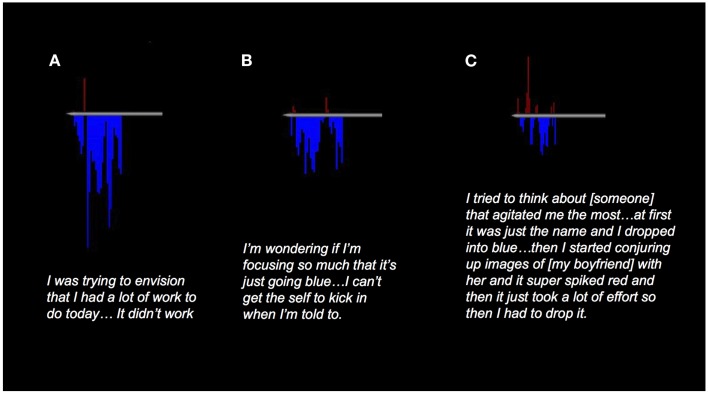
In the past decade, neuroimaging research has begun to identify key brain regions involved in self-referential processing, most consistently midline structures such as the posterior cingulate cortex (PCC). The majority of studies have employed cognitive tasks such as judgment about trait adjectives or mind wandering, that have been associated with increased PCC activity. Conversely, tasks that share an element of present-centered attention (being "on task"), ranging from working memory to meditation, have been associated with decreased PCC activity. Given the complexity of cognitive processes that likely contribute to these tasks, the specific contribution of the PCC to self-related processes still remains unknown. Building on this prior literature, recent studies have employed sampling methods that more precisely link subjective experience to brain activity, such as real-time fMRI neurofeedback. This recent work suggests that PCC activity may represent a sub-component cognitive process of self-reference - "getting caught up in" one's experience. For example, getting caught up in a drug craving or a particular viewpoint. In this paper, we will review evidence across a number of different domains of cognitive neuroscience that converges in activation and deactivation of the PCC including recent neurophenomenological studies of PCC activity using real-time fMRI neurofeedback.
Overview
The claims and statistics of this paper haven’t been checked yet.
Run the check — free, no account needed. It reads the open-access text and checks the sources it cites.
Integrity signals
Registry
Cites
Statistics
Figures
Verification
Claims the paper makes
The claims and statistics of this paper haven’t been checked yet.
Run the check — free, no account needed. It reads the open-access text and checks the sources it cites.
Claims other papers make about this one
Each is checked against this paper’s own text: does it say what the citing paper says it does?
The source backs part of the claim, not all of it — or backs it for a different population, condition or comparison.
In the citing paper
“Worry has been shown to activate brain networks associated with self-referential processing, such as the default-mode network, suggesting that the more one is caught up in perseveration about uncertain events, the more this network is activated [32,33];”
From Clinical Efficacy and Psychological Mechanisms of an App-Based Digital Therapeutic for Generalized Anxiety Disorder: Randomized Controlled Trial (2021) · cites this paper as [33]
Experimental — accuracy not yet measuredThe source backs part of the claim, not all of it — or backs it for a different population, condition or comparison.
In the citing paper
“The DN is anchored by activity in the medial prefrontal cortex (MPFC; narrative and autobiographical self) and the posterior cingulate cortex (PCC; experiential self-reflection; e.g., Buckner et al., 2008; Qin and Northoff, 2011; Brewer et al., 2013).”
From Distinct functional connectivities predict clinical response with emotion regulation therapy (2017) · cites this paper as Brewer et al., 2013
Experimental — accuracy not yet measuredThe cited source says what the claim attributes to it.
In the citing paper
“In particular, self-referentiality is commonly associated with neural activation in the DN, regarded as a network associated with autobiographical, self-monitoring and social cognitive functions.”
From Distinct functional connectivities predict clinical response with emotion regulation therapy (2017) · cites this paper as Brewer et al., 2013
Self-check
Percentages, sums and reported differences re-computed from the paper’s own numbers.
The self-check needs the paper’s full text.
Citations
Cites
Yaşlı Kadınlarda Üreme Sağlığı
Kokanalı, D., & Engin Üstün, Y. (n.d.) · DergiPark (Istanbul University) · Cited by 170,090
A default mode of brain function
Raichle, M. E., MacLeod, A. M., Snyder, A. Z., Powers, W. J., Gusnard, D. A., & Shulman, G. L. (2001) · Proceedings of the National Academy of Sciences · doi:10.1073/pnas.98.2.676 · Cited by 12,190
The human brain is intrinsically organized into dynamic, anticorrelated functional networks
Fox, M. D., Snyder, A. Z., Vincent, J. L., Corbetta, M., Van Essen, D. C., & Raichle, M. E. (2005) · Proceedings of the National Academy of Sciences · doi:10.1073/pnas.0504136102 · Cited by 8,553
Functional connectivity in the resting brain: a network analysis of the default mode hypothesis
Greicius, M. D., Krasnow, B., Reiss, A. L., & Menon, V. (2003) · Proceedings of the National Academy of Sciences · doi:10.1073/pnas.0135058100 · Cited by 6,358
(2023) · doi:10.1126/science · Cited by 6,063
Colman (2022) · doi:10.1073/pnas · Cited by 4,370
Self-referential processing in our brain—A meta-analysis of imaging studies on the self
Northoff, G., Heinzel, A., de Greck, M., Bermpohl, F., Dobrowolny, H., & Panksepp, J. (2006) · NeuroImage · doi:10.1016/j.neuroimage.2005.12.002 · Cited by 2,792
Wandering minds: the default network and stimulus-independent thought
Mason, M. F., Norton, M. I., Van Horn, J. D., Wegner, D. M., Grafton, S. T., & Macrae, C. N. (2007) · Science · doi:10.1126/science.1131295 · Cited by 2,792
Functional-anatomic fractionation of the brain’s default network
Andrews-Hanna, J. R., Reidler, J. S., Sepulcre, J., Poulin, R., & Buckner, R. L. (2010) · Neuron · doi:10.1016/j.neuron.2010.02.005 · Cited by 2,767
Ongur, D. (2000) · Cerebral Cortex · doi:10.1093/cercor/10.3.206 · Cited by 2,627
A wandering mind is an unhappy mind
Killingsworth, M. A., & Gilbert, D. T. (2010) · Science · doi:10.1126/science.1192439 · Cited by 2,575
Finding the self? An event-related fMRI study
Kelley, W. M., Macrae, C. N., Wyland, C. L., Caglar, S., Inati, S., & Heatherton, T. F. (2002) · Journal of Cognitive Neuroscience · doi:10.1162/08989290260138672 · Cited by 1,606
The neural bases of momentary lapses in attention
Weissman, D. H., Roberts, K. C., Visscher, K. M., & Woldorff, M. G. (2006) · Nature Neuroscience · doi:10.1038/nn1727 · Cited by 1,566
Default Mode Network Activity and Connectivity in Psychopathology
Whitfield-Gabrieli, S., & Ford, J. M. (2012) · Annual Review of Clinical Psychology · doi:10.1146/annurev-clinpsy-032511-143049 · Cited by 1,465
Brewer, J. A., Worhunsky, P. D., Gray, J. R., Tang, Y.-Y., Weber, J., & Kober, H. (2011) · Proceedings of the National Academy of Sciences · doi:10.1073/pnas.1112029108 · Cited by 1,409
Self-citationDamage to the insula disrupts addiction to cigarette smoking
Naqvi, N. H., Rudrauf, D., Damasio, H., & Bechara, A. (2007) · Science · doi:10.1126/science.1135926 · Cited by 1,245
Neural correlates of the psychedelic state as determined by fMRI studies with psilocybin
Carhart-Harris, R. L., Erritzoe, D., Williams, T., Stone, J. M., Reed, L. J., Colasanti, A., Tyacke, R. J., Leech, R., Malizia, A. L., Murphy, K., et al. (2012) · Proceedings of the National Academy of Sciences · doi:10.1073/pnas.1119598109 · Cited by 1,172
A Parametric Manipulation of Factors Affecting Task-induced Deactivation in Functional Neuroimaging
McKiernan, K. A., Kaufman, J. N., Kucera-Thompson, J., & Binder, J. R. (2003) · Journal of Cognitive Neuroscience · doi:10.1162/089892903321593117 · Cited by 1,080
Architectonic subdivision of the human orbital and medial prefrontal cortex
Öngür, D., Ferry, A. T., & Price, J. L. (2003) · Journal of Comparative Neurology · doi:10.1002/cne.10609 · Cited by 944
Cue-induced cocaine craving: neuroanatomical specificity for drug users and drug stimuli
Garavan, H., Pankiewicz, J., Bloom, A., Cho, J.-K., Sperry, L., Ross, T. J., Salmeron, B. J., Risinger, R., Kelley, D., & Stein, E. A. (2000) · American Journal of Psychiatry · doi:10.1176/appi.ajp.157.11.1789 · Cited by 931
Neural correlates of self-reflection
Johnson, S. C. (2002) · Brain · doi:10.1093/brain/awf181 · Cited by 930
How is our self related to midline regions and the default-mode network?
Qin, P., & Northoff, G. (2011) · NeuroImage · doi:10.1016/j.neuroimage.2011.05.028 · Cited by 909
Echoes of the brain within the posterior cingulate cortex
Leech, R., Braga, R., & Sharp, D. J. (2012) · The Journal of Neuroscience · doi:10.1523/jneurosci.3689-11.2012 · Cited by 595
Biological substrates of reward and aversion: A nucleus accumbens activity hypothesis
Carlezon, W. A., & Thomas, M. J. (2009) · Neuropharmacology · doi:10.1016/j.neuropharm.2008.06.075 · Cited by 561
The clinical significance of drug craving
Tiffany, S. T., & Wray, J. M. (2012) · Annals of the New York Academy of Sciences · doi:10.1111/j.1749-6632.2011.06298.x · Cited by 556
Prediction of human errors by maladaptive changes in event-related brain networks
Eichele, T., Debener, S., Calhoun, V. D., Specht, K., Engel, A. K., Hugdahl, K., von Cramon, D. Y., & Ullsperger, M. (2008) · Proceedings of the National Academy of Sciences · doi:10.1073/pnas.0708965105 · Cited by 472
What is self-specific? Theoretical investigation and critical review of neuroimaging results
Legrand, D., & Ruby, P. (2009) · Psychological Review · doi:10.1037/a0014172 · Cited by 470
Increased dopamine tone during meditation-induced change of consciousness
Kjaer, T. W., Bertelsen, C., Piccini, P., Brooks, D., Alving, J., & Lou, H. C. (2002) · Cognitive Brain Research · doi:10.1016/s0926-6410(01)00106-9 · Cited by 455
Associations and dissociations between default and self-reference networks in the human brain
Whitfield-Gabrieli, S., Moran, J. M., Nieto-Castañón, A., Triantafyllou, C., Saxe, R., & Gabrieli, J. D. E. (2011) · NeuroImage · doi:10.1016/j.neuroimage.2010.11.048 · Cited by 394
Medial prefrontal activity differentiates self from close others
Heatherton, T. F., Wyland, C. L., Macrae, C. N., Demos, K. E., Denny, B. T., & Kelley, W. M. (2006) · Social Cognitive and Affective Neuroscience · doi:10.1093/scan/nsl001 · Cited by 380
Taylor, V. A., Grant, J., Daneault, V., Scavone, G., Breton, E., Roffe-Vidal, S., Courtemanche, J., Lavarenne, A. S., & Beauregard, M. (2011) · NeuroImage · doi:10.1016/j.neuroimage.2011.06.001 · Cited by 362
Dissociating medial frontal and posterior cingulate activity during self-reflection
Johnson, M. K., Raye, C. L., Mitchell, K., Touryan, S. R., Greene, E. J., & Nolen–Hoeksema, S. (2006) · Social Cognitive and Affective Neuroscience · doi:10.1093/scan/nsl004 · Cited by 332
Neural Substrates of Resisting Craving During Cigarette Cue Exposure
Brody, A. L., Mandelkern, M. A., Olmstead, R. E., Jou, J., Tiongson, E., Allen, V., Scheibal, D., London, E. D., Monterosso, J. R., Tiffany, S. T., et al. (2007) · Biological Psychiatry · doi:10.1016/j.biopsych.2006.10.026 · Cited by 321
Neural activity predicts attitude change in cognitive dissonance
van Veen, V., Krug, M. K., Schooler, J. W., & Carter, C. S. (2009) · Nature Neuroscience · doi:10.1038/nn.2413 · Cited by 292
Esposito, F., Bertolino, A., Scarabino, T., Latorre, V., Blasi, G., Popolizio, T., Tedeschi, G., Cirillo, S., Goebel, R., & Salle, F. D. (2006) · Brain Research Bulletin · doi:10.1016/j.brainresbull.2006.06.012 · Cited by 235
Ossandón, T., Jerbi, K., Vidal, J. R., Bayle, D. J., Hénaff, M., Jung, J., Minotti, L., Bertrand, O., Kahane, P., & Lachaux, J.-P. (2011) · Journal of Neuroscience · doi:10.1523/jneurosci.2483-11.2011 · Cited by 222
Garrison, K. A., Santoyo, J. F., Davis, J. H., Thornhill, T. A., Kerr, C. E., & Brewer, J. A. (2013) · Frontiers in Human Neuroscience · doi:10.3389/fnhum.2013.00440 · Cited by 219
Self-citationOtten, L. J., & Rugg, M. D. (2001) · Current Biology · doi:10.1016/s0960-9822(01)00454-7 · Cited by 190
Neural Correlates of Impulse Control During Stop Signal Inhibition in Cocaine-Dependent Men
Li, C. R., Huang, C. X., Yan, P., Bhagwagar, Z., Milivojevic, V., & Sinha, R. (2007) · Neuropsychopharmacology · doi:10.1038/sj.npp.1301568 · Cited by 185
Real-time fMRI links subjective experience with brain activity during focused attention
Garrison, K. A., Scheinost, D., Worhunsky, P. D., Elwafi, H. M., Thornhill, T. A., Thompson, E., Saron, C., Desbordes, G., Kober, H., Hampson, M., et al. (2013) · NeuroImage · doi:10.1016/j.neuroimage.2013.05.030 · Cited by 154
Self-citationTop-down regulation of default mode activity in spatial visual attention
Wen, X., Liu, Y., Yao, L., & Ding, M. (2013) · The Journal of Neuroscience · doi:10.1523/jneurosci.4939-12.2013 · Cited by 150
Yokum, S., & Stice, E. M. (2013) · International Journal of Obesity · doi:10.1038/ijo.2013.39 · Cited by 148
Dastjerdi, M., Foster, B. L., Nasrullah, S., Rauschecker, A. M., Dougherty, R. F., Townsend, J. D., Chang, C., Greicius, M. D., Menon, V., Kennedy, D. P., et al. (2011) · Proceedings of the National Academy of Sciences · doi:10.1073/pnas.1017098108 · Cited by 137
Exploring the electrophysiological correlates of the default-mode network with intracerebral EEG
Jerbi (2010) · Frontiers in Systems Neuroscience · doi:10.3389/fnsys.2010.00027 · Cited by 133
Dopaminergic Reward Signals Selectively Decrease fMRI Activity in Primate Visual Cortex
Arsenault, J. T., Nelissen, K., Jarraya, B., & Vanduffel, W. (2013) · Neuron · doi:10.1016/j.neuron.2013.01.008 · Cited by 122
Pagnoni, G. (2012) · The Journal of Neuroscience · doi:10.1523/jneurosci.4135-11.2012 · Cited by 107
Foster, B. L., Dastjerdi, M., & Parvizi, J. (2012) · Proceedings of the National Academy of Sciences · doi:10.1073/pnas.1206580109 · Cited by 105
Neural Correlates of Message Tailoring and Self-Relatedness in Smoking Cessation Programming
Chua, H. F., Liberzon, I., Welsh, R. C., & Strecher, V. J. (2008) · Biological Psychiatry · doi:10.1016/j.biopsych.2008.08.030 · Cited by 101
A neurocognitive model of meditation based on activation likelihood estimation (ALE) meta-analysis
Sperduti, M., Martinelli, P., & Piolino, P. (2012) · Consciousness and Cognition · doi:10.1016/j.concog.2011.09.019 · Cited by 87
Carim-Todd, L., Mitchell, S. H., & Oken, B. S. (2013) · Drug and Alcohol Dependence · doi:10.1016/j.drugalcdep.2013.04.014 · Cited by 82
Hinds, O., Thompson, T. W., Ghosh, S., Yoo, J. J., Whitfield, S., Triantafyllou, C., & Gabrieli, J. D. E. (2012) · Journal of Neurophysiology · doi:10.1152/jn.00533.2011 · Cited by 74
Finding the self: A behavioral measure and its clinical implications.
Kanter, J. W., Parker, C. R., & Kohlenberg, R. J. (2001) · Psychotherapy: Theory, Research, Practice, Training · doi:10.1037/0033-3204.38.2.198 · Cited by 71
Finding the self: A behavioral measure and its clinical implications.
Kanter, J. W., Parker, C. R., & Kohlenberg, R. J. (2001) · Psychotherapy · doi:10.1037//0033-3204.38.2.198 · Cited by 69
Neural systems for guilt from actions affecting self versus others
Morey, R. A., McCarthy, G., Selgrade, E. S., Seth, S., Nasser, J. D., & LaBar, K. S. (2012) · NeuroImage · doi:10.1016/j.neuroimage.2011.12.069 · Cited by 67
What shall I be, what must I be: neural correlates of personal goal activation
Strauman, T. J., Detloff, A. M., Sestokas, R., Smith, D. V., Davis, E., Rivera, C., & Kwapil, L. (2013) · Frontiers in Integrative Neuroscience · doi:10.3389/fnint.2012.00123 · Cited by 40
Salmoirago‐Blotcher, E., Crawford, S. L., Carmody, J., ROSENTHAL, L. S., Yeh, G. Y., Stanley, M. G., Rose, K., Browning, C., & Ockene, I. S. (2013) · Annals of Behavioral Medicine · doi:10.1007/s12160-013-9505-7 · Cited by 34
Disruption of cigarette smoking addiction after posterior cingulate damage
Jarraya, B., Brugières, P., Tani, N., Hodel, J., Grandjacques, B., Fénelon, G., Decq, P., & Palfi, S. (2010) · Journal of neurosurgery · doi:10.3171/2010.6.jns10346 · Cited by 33
Cáceda, R., James, G. A., Ely, T. D., Snarey, J., & Kilts, C. D. (2011) · PLoS ONE · doi:10.1371/journal.pone.0014730 · Cited by 24
Cited by
Sorted by citations
Andrews‐Hanna, J. R., Smallwood, J., & Spreng, R. N. (2014) · Annals of the New York Academy of Sciences · doi:10.1111/nyas.12360 · Cited by 2,102
Reconstructing and deconstructing the self: cognitive mechanisms in meditation practice
Dahl, C. J., Lutz, A., & Davidson, R. J. (2015) · Trends in Cognitive Sciences · doi:10.1016/j.tics.2015.07.001 · Cited by 809
Mindfulness and Behavior Change
Schuman-Olivier, Z., Trombka, M., Lovas, D. A., Brewer, J. A., Vago, D. R., Gawande, R., Dunne, J. P., Lazar, S. W., Loucks, E. B., & Fulwiler, C. (2020) · Harvard Review of Psychiatry · doi:10.1097/hrp.0000000000000277 · Cited by 435
Self-citationOldham, S., Murawski, C., Fornito, A., Youssef, G. J., Yücel, M., & Lorenzetti, V. (2018) · Human Brain Mapping · doi:10.1002/hbm.24184 · Cited by 449
Self unbound: ego dissolution in psychedelic experience
Letheby, C., & Gerrans, P. (2017) · Neuroscience of Consciousness · doi:10.1093/nc/nix016 · Cited by 293
Metadata
- Authors
- Brewer, J. A., Garrison, K. A., & Whitfield-Gabrieli, S.
- Affiliations
- Yale University (US)
- Corresponding author
- Brewer, Judson A.
- Venue
- Frontiers in Human Neuroscience
- Publisher
- Frontiers Media SA
- Published
- 2013
- Volume
- 7
- Pages
- 647-647
- ISSN
- 1662-5161 (ISSN-L)
- PMC
- PMC3788347
- OpenAlex
- W1993134051
- Cited by
- 263
- References
- 58
- Citations by year
- 2026: 9 · 2025: 21 · 2024: 27 · 2023: 26 · 2022: 30 · 2021: 17 · 2020: 21 · 2019: 26 · 2018: 15 · 2017: 23 · 2016: 21 · 2015: 16 · 2014: 9 · 2013: 2
- FWCI
- 1.37
- Type
- journal article
- Language
- en
- Open access
- gold
- doi.org
- Licence
- cc-by
- Locations
- Frontiers in Human Neuroscience (publishedVersion, cc-by)
- Europe PMC (PubMed Central) (publishedVersion, cc-by)
- PubMed Central (publishedVersion, cc-by)
- PubMed (publishedVersion)
- DSpace@MIT (Massachusetts Institute of Technology) (submittedVersion)
- DOAJ (DOAJ: Directory of Open Access Journals) (submittedVersion, cc-by-sa)
- Frontiers Research Foundation
- Topics
- Life Sciences › Neuroscience › Cognitive Neuroscience › Mind wandering and attention
- Life Sciences › Neuroscience › Cognitive Neuroscience › Functional Brain Connectivity Studies
- Social Sciences › Arts and Humanities › Philosophy › Philosophy and Theoretical Science
- Keywords
- posterior cingulate cortex, self-referential processing, self, real-time fMRI neurofeedback, neurophenomenology, mind wandering, trait judgments, working memory, meditation, drug craving
About these checks
Registry, retraction, Cites and statistics results are computed, not judged, with one exception: a printed reference that no index lists is read once by a model before it counts as a citation error. Claims are extracted by a model and kept only when their quote appears verbatim in the text; each cited source is then checked, with a model’s help, for whether it says what the claim relies on. Those verdicts can be wrong — read the claim’s quote and the cited source before relying on one.
Statistics and arithmetic are recomputed, not judged.
Confidence bands are shown only for fields calibrated on our annotated test set. None is calibrated yet, so no band is shown.
What counts as a claim ›How we measure confidence ›How we check this ›
Are you an author, or do you see a problem with this page? Request a review
