

The DOI matches its Crossref record; 255 of the 255 references it cites were found in a registry or an index.
Alzheimer's Disease and Type 2 Diabetes: A Critical Assessment of the Shared Pathological Traits
Open accessAbstract
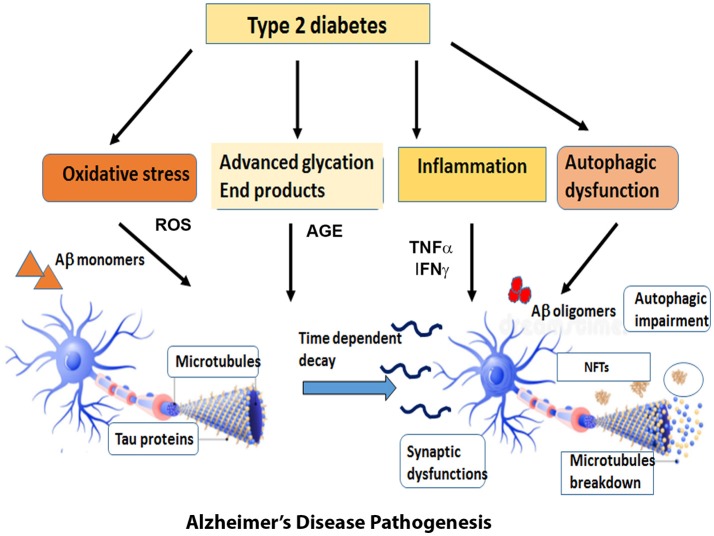
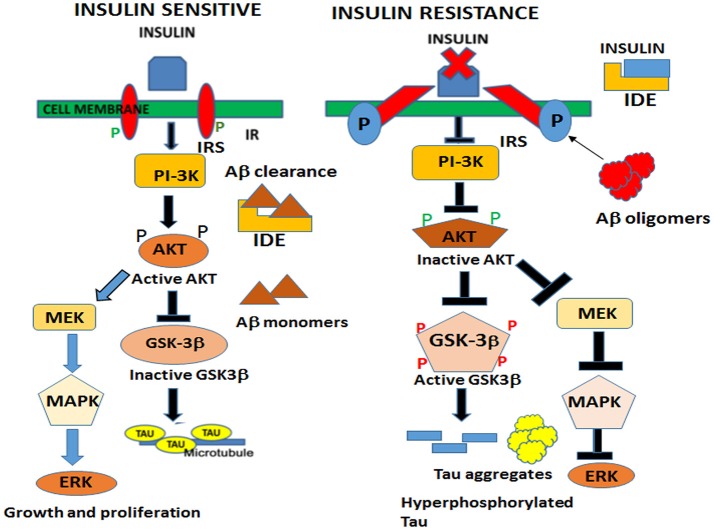
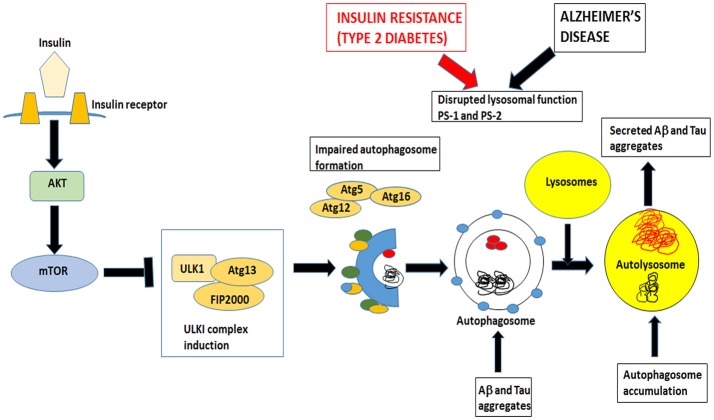
Alzheimer's disease (AD) and Type 2 Diabetes Mellitus (T2DM) are two of the most prevalent diseases in the elderly population worldwide. A growing body of epidemiological studies suggest that people with T2DM are at a higher risk of developing AD. Likewise, AD brains are less capable of glucose uptake from the surroundings resembling a condition of brain insulin resistance. Pathologically AD is characterized by extracellular plaques of Aβ and intracellular neurofibrillary tangles of hyperphosphorylated tau. T2DM, on the other hand is a metabolic disorder characterized by hyperglycemia and insulin resistance. In this review we have discussed how Insulin resistance in T2DM directly exacerbates Aβ and tau pathologies and elucidated the pathophysiological traits of synaptic dysfunction, inflammation, and autophagic impairments that are common to both diseases and indirectly impact Aβ and tau functions in the neurons. Elucidation of the underlying pathways that connect these two diseases will be immensely valuable for designing novel drug targets for Alzheimer's disease.
Overview
The claims and statistics of this paper haven’t been checked yet.
Run the check — free, no account needed. It reads the open-access text and checks the sources it cites.
Integrity signals
Registry
Cites
Statistics
Figures
Verification
Claims the paper makes
The claims and statistics of this paper haven’t been checked yet.
Run the check — free, no account needed. It reads the open-access text and checks the sources it cites.
Claims other papers make about this one
Each is checked against this paper’s own text: does it say what the citing paper says it does?
The source backs part of the claim, not all of it — or backs it for a different population, condition or comparison.
In the citing paper
“Although CA1 and CA2 did not show the largest changes in PIK3CA transcriptionally, each exhibited pronounced proteomic evidence of downstream pathway remodeling, suggesting that reduced insulin/PI3K signaling contributes to widespread proteomic synaptic and metabolic compromise in CA1/CA2, 42 , 66 , 67 even when transcriptional changes in PI3K components are modest.”
From Disruption of hippocampal upstream regulators of mTOR and insulin pathways in Down syndrome with Alzheimer's disease neuropathology: Preliminary observations (2026) · cites this paper as [66]
Experimental — accuracy not yet measured
Self-check
Percentages, sums and reported differences re-computed from the paper’s own numbers.
The self-check needs the paper’s full text.
Citations
Cites
Diagnosis and Classification of Diabetes Mellitus
American Diabetes Association (2010) · Diabetes Care · doi:10.2337/dc11-s062 · Cited by 14,094
Amyloid oligomers exacerbate tau pathology in a mouse model of tauopathy
Selenica, M.-L. B., Brownlow, M., Jimenez, J. P., Lee, D. C., Pena, G., Dickey, C. A., Gordon, M. N., & Morgan, D. (2013) · Neurodegenerative Diseases · doi:10.1159/000337230 · Cited by 10,359
Inflammation, stress, and diabetes
Wellen, K. E., & Hotamisligil, G. S. (2005) · Journal of Clinical Investigation · doi:10.1172/jci25102 · Cited by 4,143
Endoplasmic Reticulum Stress Links Obesity, Insulin Action, and Type 2 Diabetes
Özcan, U., Cao, Q., Yilmaz, E., Lee, A.-H., Iwakoshi, N. N., Özdelen, E., Tuncman, G., Görgün, C., Glimcher, L. H., & Hotamisligil, G. S. (2004) · Science · doi:10.1126/science.1103160 · Cited by 3,844
Neuropathological alterations in Alzheimer disease
Serrano-Pozo, A., Frosch, M. P., Masliah, E., & Hyman, B. T. (2011) · Cold Spring Harbor Perspectives in Medicine · doi:10.1101/cshperspect.a006189 · Cited by 3,345
Synapse Loss and Microglial Activation Precede Tangles in a P301S Tauopathy Mouse Model
Yoshiyama, Y., Higuchi, M., Zhang, B., Huang, S.-M., Iwata, N., Saido, T. C., Maeda, J., Suhara, T., Trojanowski, J. Q., & Lee, V. M.-Y. (2007) · Neuron · doi:10.1016/j.neuron.2007.01.010 · Cited by 2,208
Oxidative stress and the amyloid beta peptide in Alzheimer’s disease
Cheignon, C., Tomas, M., Bonnefont-Rousselot, D., Faller, P., Hureau, C., & Collin, F. (2018) · Redox Biology · doi:10.1016/j.redox.2017.10.014 · Cited by 2,185
Nelson, P. T., Alafuzoff, I., Bigio, E. H., Bouras, C., Braak, H., Cairns, N. J., Castellani, R. J., Crain, B. J., Davies, P., Tredici, K. D., et al. (2012) · Journal of Neuropathology & Experimental Neurology · doi:10.1097/nen.0b013e31825018f7 · Cited by 2,050 · cited 2×
“A wealth of emerging studies in recent years indicate that the density of the neurofibrillary tau tangles deposited at the neocortex of the brains of MCI patients correlated more strongly with the severity of the disease (Bierer et al., 1995; Nelson et al., 2012).”
BackgroundTalbot, K., Wang, H.-Y., Kazi, H., Han, L.-Y., Bakshi, K. P., Stucky, A., Fuino, R. L., Kawaguchi, K. R., Samoyedny, A. J., Wilson, R. S., et al. (2012) · Journal of Clinical Investigation · doi:10.1172/jci59903 · Cited by 1,871
Diagnosis and classification of diabetes mellitus
American Diabetes Association (2009) · Diabetes Care · doi:10.2337/dc09-s062 · Cited by 1,817
Cited by
Sorted by citations
Amyloid Beta in Aging and Alzheimer’s Disease
Sehar, U., Rawat, P., Reddy, A. P., Kopel, J. J., & Reddy, P. H. (2022) · International Journal of Molecular Sciences · doi:10.3390/ijms232112924 · Cited by 409
Degradation of proteins by PROTACs and other strategies
Wang, Y., Jiang, X., Feng, F., Liu, W., & Sun, H. (2020) · Acta Pharmaceutica Sinica B · doi:10.1016/j.apsb.2019.08.001 · Cited by 335
Fernández-Calle, R., Konings, S. C., Frontiñán-Rubio, J., García-Revilla, J., Camprubí-Ferrer, L., Svensson, M., Martinson, I., Boza-Serrano, A., Venero, J. L., Nielsen, H. M., et al. (2022) · Molecular Neurodegeneration · doi:10.1186/s13024-022-00566-4 · Cited by 278
The Impact of Disease Comorbidities in Alzheimer’s Disease
Santiago, J. A., & Potashkin, J. A. (2021) · Frontiers in Aging Neuroscience · doi:10.3389/fnagi.2021.631770 · Cited by 259
Lima, J. E. B. F., Moreira, N. C. S., & Sakamoto-Hojo, E. T. (2022) · Mutation Research/Genetic Toxicology and Environmental Mutagenesis · doi:10.1016/j.mrgentox.2021.503437 · Cited by 203
Glucose, glycolysis, and neurodegenerative diseases
Tang, B. L. (2020) · Journal of Cellular Physiology · doi:10.1002/jcp.29682 · Cited by 197
Diagnostic and therapeutic potential of exosomes in Alzheimer’s disease
Martins, T. S., Trindade, D., Vaz, M., Campelo, I., Almeida, M., Trigo, G., Silva, O. A. B. D. C. E., & Henriques, A. G. (2020) · Journal of Neurochemistry · doi:10.1111/jnc.15112 · Cited by 177
Singh, A. P., Shadangi, S., Gupta, P. K., & Rana, S. (2025) · Comprehensive physiology · doi:10.1002/cph4.70003 · Cited by 201
Insulin action in the brain regulates both central and peripheral functions
Agrawal, R., Reno, C. M., Sharma, S., CHRISTENSEN, C. G., Huang, Y., & Fisher, S. J. (2021) · American Journal of Physiology-Endocrinology and Metabolism · doi:10.1152/ajpendo.00642.2020 · Cited by 153
Quercetin: an effective polyphenol in alleviating diabetes and diabetic complications
Yan, L., Vaghari‐Tabari, M., Malakoti, F., Moein, S., Qujeq, D., Yousefi, B., & Asemi, Z. (2022) · Critical Reviews in Food Science and Nutrition · doi:10.1080/10408398.2022.2067825 · Cited by 137
Amyloid-beta and tau protein beyond Alzheimer’s disease
Abyadeh, M., Gupta, V., Paulo, J. A., Mahmoudabad, A. G., Shadfar, S., Mirshahvaladi, S., Gupta, V. B., Nguyen, C. T. O., Finkelstein, D. I., You, Y., et al. (2023) · Neural Regeneration Research · doi:10.4103/1673-5374.386406 · Cited by 126
Xie, J., Gonzalez‐Carter, D., Tockary, T. A., Nakamura, N., Xue, Y., Nakakido, M., Akiba, H., Dirisala, A., Liu, X., Toh, K., et al. (2020) · ACS Nano · doi:10.1021/acsnano.9b09991 · Cited by 117
Kumar, V., Kim, S.-H., & Bishayee, K. (2022) · International Journal of Molecular Sciences · doi:10.3390/ijms23179540 · Cited by 116
López-Gambero, A. J., Sanjuan, C., Serrano-Castro, P. J., Suárez, J., & de Fonseca, F. R. (2020) · Biomedicines · doi:10.3390/biomedicines8090295 · Cited by 114
Early Biomarkers of Neurodegenerative and Neurovascular Disorders in Diabetes
Gąsecka, A., Siwik, D., Gajewska, M., Jaguszewski, M. J., Mazurek, T., Filipiak, K. J., Postula, M. A., & Eyileten, C. (2020) · Journal of Clinical Medicine · doi:10.3390/jcm9092807 · Cited by 103
Benwell, C., Davila-Pérez, P., Fried, P. J., Jones, R. N., Travison, T. G., Santarnecchi, E., Pascual‐Leone, Á., & Shafi, M. M. (2019) · Neurobiology of Aging · doi:10.1016/j.neurobiolaging.2019.10.004 · Cited by 108
Alzheimer’s disease as type 3 diabetes: understanding the link and implications
Kciuk, M., Kruczkowska, W., Gałęziewska, J., Wanke, K., Kałuzińska-Kołat, Ż., Aleksandrowicz, M., & Kontek, R. (2024) · International Journal of Molecular Sciences · doi:10.3390/ijms252211955 · Cited by 98
Mitophagy in Diabetic Cardiomyopathy: Roles and Mechanisms
Zheng, H., Zhu, H., Liu, X., Huang, X., Huang, A., & Huang, Y. (2021) · Frontiers in Cell and Developmental Biology · doi:10.3389/fcell.2021.750382 · Cited by 101
Type 2 Diabetes Mellitus as a Risk Factor for Alzheimer’s Disease: Review and Meta-Analysis
Athanasaki, A., Melanis, K., Tsantzali, I., Stefanou, M., Ntymenou, S., Paraskevas, S. G., Κalamatianos, T., Boutati, E. I., Lambadiari, V., Voumvourakis, K. I., et al. (2022) · Biomedicines · doi:10.3390/biomedicines10040778 · Cited by 111
Krohn, L., Heilbron, K., Blauwendraat, C., Reynolds, R. H., Yu, E., Senkevich, K. A., Rudakou, U., Estiar, M. A., Gustavsson, E. K., Brolin, K. A., et al. (2022) · Nature Communications · doi:10.1038/s41467-022-34732-5 · Cited by 104
Zheng, M., & Wang, P. (2021) · 3 Biotech · doi:10.1007/s13205-021-02738-3 · Cited by 110
Hayden, M. R. (2019) · Brain Sciences · doi:10.3390/brainsci9100262 · Cited by 95
Cognitive disorder and dementia in type 2 diabetes mellitus
Ortíz, G. G., Huerta, M., González-Usigli, H., Torres-Sánchez, E. D., Delgado-Lara, D. L. C., Pacheco-Moisés, F. P., Mireles-Ramírez, M. A., Torres-Mendoza, B. M., Moreno-Cih, R. I., & Velázquez-Brizuela, I. E. (2022) · World Journal of Diabetes · doi:10.4239/wjd.v13.i4.319 · Cited by 93
Komleva, Y. K., Chernykh, A., Lopatina, O. L., Gorina, Y. V., Lokteva, I., Salmina, A. B., & Gollasch, M. (2021) · Frontiers in Neuroscience · doi:10.3389/fnins.2020.618395 · Cited by 83
Amyloid-β and Phosphorylated Tau are the Key Biomarkers and Predictors of Alzheimer’s Disease
Pradeepkiran, J. A., Baig, J., Islam, M. A., Kshirsagar, S., & Reddy, P. H. (2024) · Aging and Disease · doi:10.14336/ad.2024.0286 · Cited by 87
Insulin resistance as the molecular link between diabetes and Alzheimer's disease
Abdalla, M. M. I. (2024) · World Journal of Diabetes · doi:10.4239/wjd.v15.i7.1430 · Cited by 83
Rahman, M. H., Peng, S., Hu, X., Chen, C., Rahman, M. R., Uddin, S., Quinn, J. M. W., & Moni, M. A. (2020) · International Journal of Environmental Research and Public Health · doi:10.3390/ijerph17031035 · Cited by 75
Chandrasekaran, S., Anusuya, S., & Anbazhagan, V. (2022) · Journal of Molecular Structure · doi:10.1016/j.molstruc.2022.133139 · Cited by 75
Galizzi, G., & Carlo, M. D. (2022) · Biology · doi:10.3390/biology11060943 · Cited by 77
Blanco, K., Salcidua, S., Orellana, P., Sauma-Pérez, T., León, T., Steinmetz, L. C. L., Ibañez, A., Duran-Aniotz, C., & de la Cruz, R. (2023) · Alzheimer's Research & Therapy · doi:10.1186/s13195-023-01304-8 · Cited by 73
Yang, A. J. T., Bagit, A., & MacPherson, R. E. K. (2021) · International Journal of Molecular Sciences · doi:10.3390/ijms22094628 · Cited by 77
Alzheimer’s Disease and Diabetes: Role of Diet, Microbiota and Inflammation in Preclinical Models
Carranza-Naval, M. J., Vargas-Soria, M., Hierro‐Bujalance, C., Baena‐Nieto, G., García-Alloza, M., Infante‐Garcia, C., & del Marco, À. (2021) · Biomolecules · doi:10.3390/biom11020262 · Cited by 77
Role of DPP-4 and SGLT2 Inhibitors Connected to Alzheimer Disease in Type 2 Diabetes Mellitus
Sim, A. Y., Barua, S., Kim, J. Y., Lee, Y.-H., & Lee, J. E. (2021) · Frontiers in Neuroscience · doi:10.3389/fnins.2021.708547 · Cited by 62
Aberrant energy metabolism in Alzheimer’s disease
Yu, L., Jin, J., Xu, Y., & Zhu, X. (2022) · Journal of Translational Internal Medicine · doi:10.2478/jtim-2022-0024 · Cited by 65
Associations Between Diabetes Mellitus and Neurodegenerative Diseases
Szablewski, L. (2025) · International Journal of Molecular Sciences · doi:10.3390/ijms26020542 · Cited by 80
Reassessment of Pioglitazone for Alzheimer’s Disease
Saunders, A. M., Burns, D. K., & Gottschalk, W. K. (2021) · Frontiers in Neuroscience · doi:10.3389/fnins.2021.666958 · Cited by 71
A Comprehensive Review of Neuronal Changes in Diabetics
Luna, R., Manjunatha, R. T., Bollu, B., Jhaveri, S., Avanthika, C., Reddy, N., Saha, T., & Gandhi, F. R. (2021) · Cureus · doi:10.7759/cureus.19142 · Cited by 71
Krishaa, L., Ng, T. K. S., Wee, H. N., & Ching, J. (2023) · Mechanisms of Ageing and Development · doi:10.1016/j.mad.2023.111787 · Cited by 65
Statins and cognition: Modifying factors and possible underlying mechanisms
Jamshidnejad-Tosaramandani, T., Kashanian, S., Al-Sabri, M. H., Kročianová, D., Clemensson, L. E., Gentreau, M., & Schiöth, H. B. (2022) · Frontiers in Aging Neuroscience · doi:10.3389/fnagi.2022.968039 · Cited by 60
Sidorkiewicz, I., Niemira, M., Maliszewska, K., Erol, A., Bielska, A., Szalkowska, A., Adamska-Patruno, E., Szczerbiński, Ł., Górska, M., & Kretowski, A. J. (2020) · Journal of Clinical Medicine · doi:10.3390/jcm9072184 · Cited by 58
Mechanistic insights and emerging therapeutic stratagems for Alzheimer’s disease
Rajendran, K., & Krishnan, U. M. (2024) · Ageing Research Reviews · doi:10.1016/j.arr.2024.102309 · Cited by 59
Loss of biliverdin reductase-A favors Tau hyper-phosphorylation in Alzheimer's disease
Sharma, N. K., Tramutola, A., Lanzillotta, C., Arena, A., Blarzino, C., Cassano, T., Butterfield, D. A., Domenico, F. D., Marzia Perluigi, A., & Barone, E. (2019) · Neurobiology of Disease · doi:10.1016/j.nbd.2019.02.003 · Cited by 59
Carranza-Naval, M. J., del Marco, À., Hierro‐Bujalance, C., Alves-Martínez, P., Infante‐Garcia, C., Vargas-Soria, M., Herrera, M., Barba-Cordoba, B., Atienza‐Navarro, I., Lubián‐López, S. P., et al. (2021) · Frontiers in Aging Neuroscience · doi:10.3389/fnagi.2021.741923 · Cited by 56
Inflammation: major denominator of obesity, Type 2 diabetes and Alzheimer’s disease-like pathology?
Kacířová, M., Zmeškalová, A., Kořínková, L., Železná, B., Kuneš, J., & Maletı́nská, L. (2020) · Clinical Science · doi:10.1042/cs20191313 · Cited by 56
Is the Brain a Key Player in Glucose Regulation and Development of Type 2 Diabetes?
Lundqvist, M., Almby, K. E., Abrahamsson, N., & Eriksson, J. W. (2019) · Frontiers in Physiology · doi:10.3389/fphys.2019.00457 · Cited by 55
Gao, S., Chen, Y., Sang, F., Yang, Y., Xia, J., Li, X., Zhang, J., Chen, K., & Zhang, Z. (2019) · Diabetes · doi:10.2337/db19-0233 · Cited by 46
A neural signature of metabolic syndrome
Kotkowski, E., Price, L. R., Franklin, C. G., Salazar, M., Woolsey, M. D., DeFronzo, R. A., Blangero, J., Glahn, D. C., & Fox, P. T. (2019) · Human Brain Mapping · doi:10.1002/hbm.24617 · Cited by 44
Overview of Metformin and Neurodegeneration: A Comprehensive Review
Kruczkowska, W., Gałęziewska, J., Buczek, P., Płuciennik, E., Kciuk, M., & Śliwińska, A. (2025) · Pharmaceuticals · doi:10.3390/ph18040486 · Cited by 52
Crucial players in Alzheimer’s disease and diabetes mellitus: Friends or foes?
Kubis-Kubiak, A., Rorbach-Dolata, A., & Piwowar, A. (2019) · Mechanisms of Ageing and Development · doi:10.1016/j.mad.2019.03.008 · Cited by 47
Dysfunction of the neurovascular unit in diabetes-related neurodegeneration
Yan, C., Zhou, Y., Chen, Q., Luo, Y., Zhang, J. H., Huang, H., & Shao, A. (2020) · Biomedicine & Pharmacotherapy · doi:10.1016/j.biopha.2020.110656 · Cited by 47
Cerasuolo, M., Meo, I. D., Auriemma, M. C., Trojsi, F., Maiorino, M. I., Cirillo, M., Esposito, F., Polito, R., Colangelo, A. M., Paolisso, G., et al. (2023) · International Journal of Molecular Sciences · doi:10.3390/ijms24119637 · Cited by 47
A Tale of Two Diseases: Exploring Mechanisms Linking Diabetes Mellitus with Alzheimer’s Disease
Lynn, J., Park, M., Ogunwale, C., & Acquaah-Mensah, G. K. (2021) · Journal of Alzheimer s Disease · doi:10.3233/jad-210612 · Cited by 44
Protective effect of hydrogen sulfide on oxidative stress-induced neurodegenerative diseases
Jeong, N., Jung, J., & Tabassum, R. (2019) · Neural Regeneration Research · doi:10.4103/1673-5374.265543 · Cited by 40
The Expression of Insulin in the Central Nervous System: What Have We Learned So Far?
Dakic, T. B., Jevdjovic, T. V., Lakic, I. V., Ružičić, A., Jasnic, N. I., Djurasevic, S. F., Djordjevic, J. D., & Vujovic, P. Z. (2023) · International Journal of Molecular Sciences · doi:10.3390/ijms24076586 · Cited by 39
Role of liraglutide in Alzheimer’s disease pathology
Vargas-Soria, M., Carranza-Naval, M. J., del Marco, A., & Garcia-Alloza, M. (2021) · Alzheimer's Research & Therapy · doi:10.1186/s13195-021-00853-0 · Cited by 44
A geroscience motivated approach to treat Alzheimer’s disease: Senolytics move to clinical trials
Gonzales, M. M., Krishnamurthy, S., Garbarino, V. R., Daeihagh, A. S., Gillispie, G. J., Deep, G., Craft, S., & Orr, M. E. (2021) · Mechanisms of Ageing and Development · doi:10.1016/j.mad.2021.111589 · Cited by 37
Chen, K.-C., Chung, C., Lu, C., Tzeng, N., Lee, C.-H., Su, S., Kuo, F.-C., Liu, J., Hsieh, C., & Chien, W. (2020) · Journal of Clinical Medicine · doi:10.3390/jcm9030660 · Cited by 36
Patel, V. N., Chorawala, M. R., Shah, M. B., Shah, K. C., Dave, B. P., Shah, M. P., & Patel, T. M. (2022) · Journal of Alzheimer s Disease Reports · doi:10.3233/adr-220021 · Cited by 39
Amyloid-β and heart failure in Alzheimer’s disease: the new vistas
Al-Kuraishy, H. M., Sulaiman, G. M., Mohammed, H. A., Mohammed, S. G., Al-Gareeb, A. I., Albuhadily, A. K., Dawood, R. A., Ali, A. A., & Abu-Alghayth, M. H. (2025) · Frontiers in Medicine · doi:10.3389/fmed.2025.1494101 · Cited by 37
López-Gambero, A. J., Rosell‐Valle, C., Vera, D. M., Navarro, J. A., Vargas, A., Rivera, P., Sanjuan, C., de Fonseca, F. R., & Suárez, J. (2021) · International Journal of Molecular Sciences · doi:10.3390/ijms22105365 · Cited by 37
Potential roles of branched-chain amino acids in neurodegeneration
Yoo, H.-S., Shanmugalingam, U., & Smith, P. D. (2022) · Nutrition · doi:10.1016/j.nut.2022.111762 · Cited by 37
Ahmed, H. A., & Ishrat, T. (2020) · Molecular Neurobiology · doi:10.1007/s12035-020-01964-9 · Cited by 33
Potential mechanisms to modify impaired glucose metabolism in neurodegenerative disorders
McDonald, T. S., Lerskiatiphanich, T., Woodruff, T. M., McCombe, P., & Lee, J. D. (2022) · Journal of Cerebral Blood Flow & Metabolism · doi:10.1177/0271678x221135061 · Cited by 36
Sleep Disturbances and Cognitive Impairment in the Course of Type 2 Diabetes-A Possible Link
Brzecka, A., Madetko‐Alster, N., Nikolenko, V. N., Ashraf, G. M., Ejma, M., Leszek, J., Daroszewski, C., Sarul, K., Михалева, Л. М., Somasundaram, S. G., et al. (2020) · Current Neuropharmacology · doi:10.2174/1570159x18666200309101750 · Cited by 35
Obafemi, T. O., Olasehinde, O. R., Olaoye, O. A., Jaiyesimi, K. F., Adewumi, F. D., Adewale, O. B., & Afolabi, B. A. (2020) · Journal of Diabetes & Metabolic Disorders · doi:10.1007/s40200-020-00541-0 · Cited by 32
Glucose metabolism in the brain: An update
Nimgampalle, M., Chakravarthy, H., & Devanathan, V. (2020) · Elsevier eBooks · doi:10.1016/b978-0-12-821406-0.00008-4 · Cited by 33
Metformin in the Prevention of Alzheimer's Disease and Alzheimer's Disease Related Dementias
Tahmi, M., & Luchsinger, J. A. (2023) · The Journal of Prevention of Alzheimer s Disease · doi:10.14283/jpad.2023.113 · Cited by 32
Brain insulin resistance and Alzheimer’s disease: a systematic review
Andrade, L. J. D. O., de Oliveira, L. M., Bittencourt, A. M. V., Lourenço, L. G. D. C., & de Oliveira, G. C. M. (2024) · Dementia & Neuropsychologia · doi:10.1590/1980-5764-dn-2023-0032 · Cited by 35
Comorbidity-based framework for Alzheimer’s disease classification using graph neural networks
Abuhantash, F., Hantash, M. K. A., & Shehhi, A. A. (2024) · Scientific Reports · doi:10.1038/s41598-024-72321-2 · Cited by 31
Diabetes mellitus type 2 as an underlying, comorbid or consequent state of mental disorders
Borovčanin, M., Vesić, K., Petrović, I., Jovanović, I., & Mijailović, N. R. (2023) · World Journal of Diabetes · doi:10.4239/wjd.v14.i5.481 · Cited by 34
Prioritizing target-disease associations with novel safety and efficacy scoring methods
Failli, M., Paananen, J., & Fortino, V. (2019) · Scientific Reports · doi:10.1038/s41598-019-46293-7 · Cited by 32
The Interplay between Diabetes and Alzheimer’s Disease—In the Hunt for Biomarkers
Kubis-Kubiak, A., Dyba, A. J., & Piwowar, A. (2020) · International Journal of Molecular Sciences · doi:10.3390/ijms21082744 · Cited by 33
Bazrgar, M., Khodabakhsh, P., Dargahi, L., Mohagheghi, F., & Ahmadiani, A. (2022) · Experimental Gerontology · doi:10.1016/j.exger.2022.111812 · Cited by 32
Rajendran, R., Raghavan, R. P., Al-Sehemi, A. G., Uddin, M. S., Aleya, L., & Mathew, B. (2022) · Environmental Science and Pollution Research · doi:10.1007/s11356-021-17931-3 · Cited by 29
Kumar, H., Chakrabarti, A., Sarma, P., Modi, M., Banerjee, D., Radotra, B. D., Bhatia, A., & Medhi, B. (2022) · European Journal of Pharmaceutical Sciences · doi:10.1016/j.ejps.2022.106348 · Cited by 32
Alzheimer’s Disease: From Amyloid to Autoimmune Hypothesis
Arshavsky, Y. I. (2020) · The Neuroscientist · doi:10.1177/1073858420908189 · Cited by 28
Lorenzo, P. I., Vázquez, E. M., López–Noriega, L., Fuente-Martín, E., Mellado‐Gil, J. M., Franco, J. M., Cobo‐Vuilleumier, N., Guerrero-Martinez, J. A., Romero‐Zerbo, S., Pérez-Cabello, J. A., et al. (2021) · Theranostics · doi:10.7150/thno.57237 · Cited by 27
Alzheimer’s Disease Treatment: The Search for a Breakthrough
Reiss, A. B., Muhieddine, D., Jacob, B., Mesbah, M., Pinkhasov, A., Gomolin, I. H., Stecker, M. M., Wısnıewskı, T., & Leon, J. D. (2023) · Medicina · doi:10.3390/medicina59061084 · Cited by 31
Martínez‐Cué, C., & Rueda, N. (2020) · International Journal of Molecular Sciences · doi:10.3390/ijms21186906 · Cited by 26
Ahmed, H. A., Ismael, S., Mirzahosseini, G., & Ishrat, T. (2021) · Molecular Neurobiology · doi:10.1007/s12035-021-02350-9 · Cited by 27
Ali, S. K., & Ali, R. (2022) · PLoS ONE · doi:10.1371/journal.pone.0271138 · Cited by 29
Confettura, A. D., Cuboni, E., Ammar, M. R., Jia, S., Gomes, G. M., Yuanxiang, P., Raman, R., Li, T., Grochowska, K. M., Ahrends, R., et al. (2022) · Translational Neurodegeneration · doi:10.1186/s40035-021-00277-8 · Cited by 25
Uddin, M. S., Kabir, M. T., Tewari, D., Mamun, A. A., Barreto, G. E., BUNGAU, S. G., Bin-Jumah, M. N., Abdel‐Daim, M. M., & Ashraf, G. M. (2020) · Molecular Neurobiology · doi:10.1007/s12035-020-02065-3 · Cited by 27
Bypassing TBI: Metabolic Surgery and the Link between Obesity and Traumatic Brain Injury—a Review
McGlennon, T. W., Buchwald, J. N., Pories, W. J., Yu, F., Roberts, A. J., Ahnfeldt, E. P., Menon, R., & Buchwald, H. (2020) · Obesity Surgery · doi:10.1007/s11695-020-05065-3 · Cited by 25
Ko, C., Xu, J., Lo, Y.-M. M., Tu, R.-S., Wu, J. S., Huang, W., & Shen, S. (2021) · Frontiers in Aging Neuroscience · doi:10.3389/fnagi.2021.774477 · Cited by 27
Kim, J., Park, J.-H., Shah, K., Mitchell, S. J., Cho, K., & Hoe, H. (2021) · Frontiers in Aging Neuroscience · doi:10.3389/fnagi.2021.754123 · Cited by 24
Ghosh, R., Sil, S., Gupta, P., & Ghosh, T. (2020) · Metabolic Brain Disease · doi:10.1007/s11011-020-00588-1 · Cited by 24
Individual bioenergetic capacity as a potential source of resilience to Alzheimer’s disease
Arnold, M., Büyüközkan, M., Doraiswamy, P. M., Nho, K. T., Wu, T., Gudnason, V. G., Launer, L. J., Wang‐Sattler, R., Adamski, J., Initiative, T. A. D. N., et al. (2025) · Nature Communications · doi:10.1038/s41467-025-57032-0 · Cited by 24
Brain insulin responsiveness is linked to age and peripheral insulin sensitivity
Wagner, L., Veit, R., Kübler, C., Fritsche, A., Häring, H., Birkenfeld, A. L., Heni, M., Preissl, H., & Kullmann, S. (2023) · Diabetes, Obesity and Metabolism · doi:10.1111/dom.15094 · Cited by 22
Chronic stress and Alzheimer's disease
Mohammadi, S., Zandi, M., Kataj, P. D., & Karimi‐Zandi, L. (2021) · Biotechnology and Applied Biochemistry · doi:10.1002/bab.2216 · Cited by 22
Wadhwa, G., Krishna, K. V., Dubey, S. K., & Taliyan, R. (2023) · ACS Applied Nano Materials · doi:10.1021/acsanm.2c05272 · Cited by 22
Han, Y., Zeng, X., Hua, L., Quan, X., Chen, Y., Zhou, M., Chuang, Y. C., Li, Y., Wang, S., Shen, X., et al. (2024) · Microbiome · doi:10.1186/s40168-023-01717-5 · Cited by 23
Levels of serum S100B are associated with cognitive dysfunction in patients with type 2 diabetes
Yu, H., Li, H., Liu, X., Du, X., & Deng, B. (2020) · Aging · doi:10.18632/aging.102873 · Cited by 21
Cerebral Pericytes and Endothelial Cells Communicate through Inflammasome-Dependent Signals
Kozma, M., Mészáros, Á., Nyúl-Tóth, Á., Molnár, K., Costea, L., Hernádi, Z., Fazakas, C., Farkas, A. E., Wilhelm, I., & Krizbai, I. A. (2021) · International Journal of Molecular Sciences · doi:10.3390/ijms22116122 · Cited by 21
Li, Z., Zhang, Y., Zheng, Y., Liu, W., Zhang, X., Li, W., Zhang, D., Cai, Q., Wang, S., Meng, X., et al. (2021) · Neuropharmacology · doi:10.1016/j.neuropharm.2021.108685 · Cited by 19
The BACE1 inhibitor LY2886721 improves diabetic phenotypes of BACE1 knock-in mice.
Dekeryte, R., Franklin, Z., Hull, C., Croce, L., Kamli-Salino, S., Helk, O., Hoffmann, P. A., Yang, Z.-X., Riedel, G., Delibegović, M., et al. (2021) · Biochimica et Biophysica Acta - Molecular Basis of Disease · doi:10.1016/j.bbadis.2021.166149 · Cited by 17
Ball, R. L., Bogue, M. A., Liang, H., Srivastava, A., Ashbrook, D. G., Lamoureux, A., Gerring, M. W., Hatoum, A. S., Kim, M. J., He, H., et al. (2024) · Genome Research · doi:10.1101/gr.278157.123 · Cited by 18
Cerasuolo, M., Auriemma, M. C., Meo, I. D., Lenti, C., Papa, M., Paolisso, G., & Rizzo, M. R. (2025) · International Journal of Molecular Sciences · doi:10.3390/ijms26146693 · Cited by 18
Muneeb, M., Mansou, S. M., Saleh, S., & Mohammed, R. A. (2022) · PLoS ONE · doi:10.1371/journal.pone.0277457 · Cited by 19
Yuan, X., Yan, F., Gao, L., Ma, Q., & Wang, J. (2023) · CNS Neuroscience & Therapeutics · doi:10.1111/cns.14260 · Cited by 17
Metadata
- Authors
- Chatterjee, S., & Mudher, A.
- Affiliations
- University of Southampton (GB)
- Corresponding author
- Chatterjee, Shreyasi
- Venue
- Frontiers in Neuroscience
- Publisher
- Frontiers Media SA
- Published
- 2018-06-08
- Volume
- 12
- Pages
- 383-383
- ISSN
- 1662-453X (ISSN-L)
- PMC
- PMC6008657
- OpenAlex
- W2804519474
- Cited by
- 270
- References
- 255
- Citations by year
- 2026: 27 · 2025: 41 · 2024: 29 · 2023: 44 · 2022: 39 · 2021: 43 · 2020: 33 · 2019: 13 · 2018: 1
- FWCI
- 2.95
- Type
- journal article
- Language
- en
- Open access
- gold
- doi.org
- Locations
- Frontiers in Neuroscience (publishedVersion, cc-by)
- Europe PMC (PubMed Central) (publishedVersion, cc-by)
- PubMed Central (publishedVersion, cc-by)
- PubMed (publishedVersion)
- Nottingham Trent University's Institutional Repository (Nottingham Trent Repository) (acceptedVersion)
- DOAJ (DOAJ: Directory of Open Access Journals) (submittedVersion, cc-by-sa)
- ePrints Soton (University of Southampton) (submittedVersion)
- Funders
- University of Southampton
- Topics
- Life Sciences › Neuroscience › Cellular and Molecular Neuroscience › Alzheimer's disease research and treatments
- Health Sciences › Medicine › Psychiatry and Mental health › Dementia and Cognitive Impairment Research
- Life Sciences › Neuroscience › Neurology › Neuroinflammation and Neurodegeneration Mechanisms
- Keywords
- Alzheimer's disease, type 2 diabetes, insulin resistance, amyloid-beta, tau hyperphosphorylation, synaptic dysfunction, neuroinflammation, autophagy dysfunction, shared pathophysiology, therapeutic target
About these checks
Registry, retraction, Cites and statistics results are computed, not judged, with one exception: a printed reference that no index lists is read once by a model before it counts as a citation error. Claims are extracted by a model and kept only when their quote appears verbatim in the text; each cited source is then checked, with a model’s help, for whether it says what the claim relies on. Those verdicts can be wrong — read the claim’s quote and the cited source before relying on one.
Statistics and arithmetic are recomputed, not judged.
Confidence bands are shown only for fields calibrated on our annotated test set. None is calibrated yet, so no band is shown.
What counts as a claim ›How we measure confidence ›How we check this ›
Are you an author, or do you see a problem with this page? Request a review
