

The DOI matches its Crossref record; 76 of the 76 references it cites were found in a registry or an index.
Altered Gut Microbiome in Parkinson’s Disease and the Influence of Lipopolysaccharide in a Human α-Synuclein Over-Expressing Mouse Model
Open accessAbstract
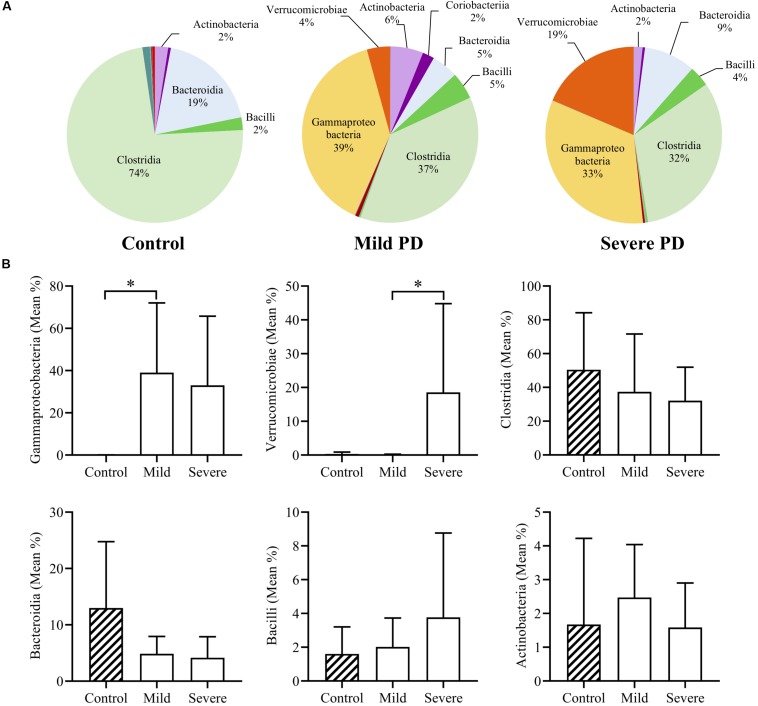
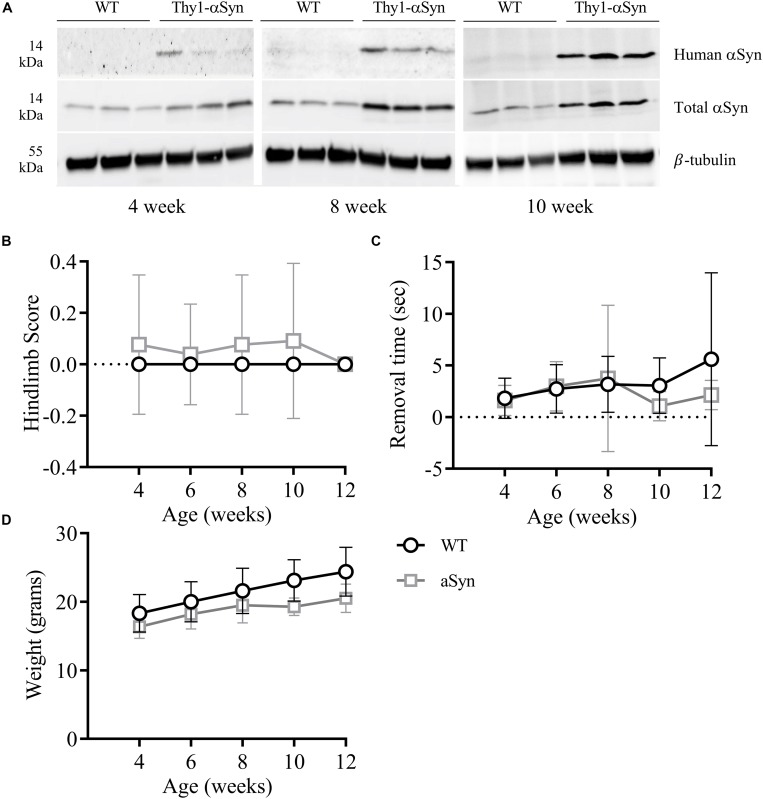
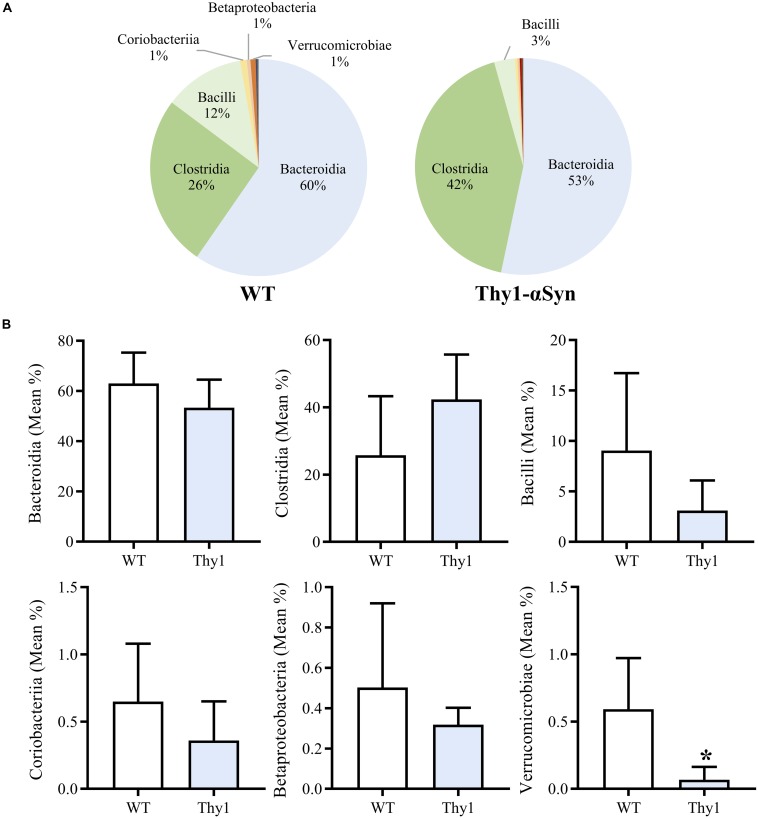
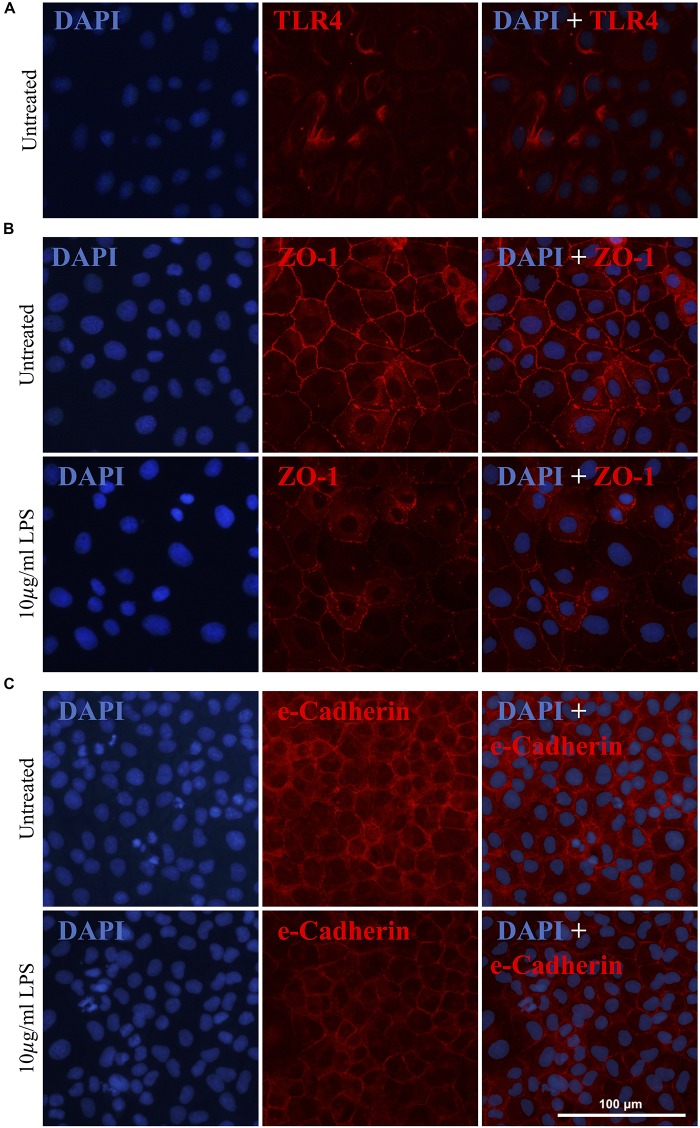
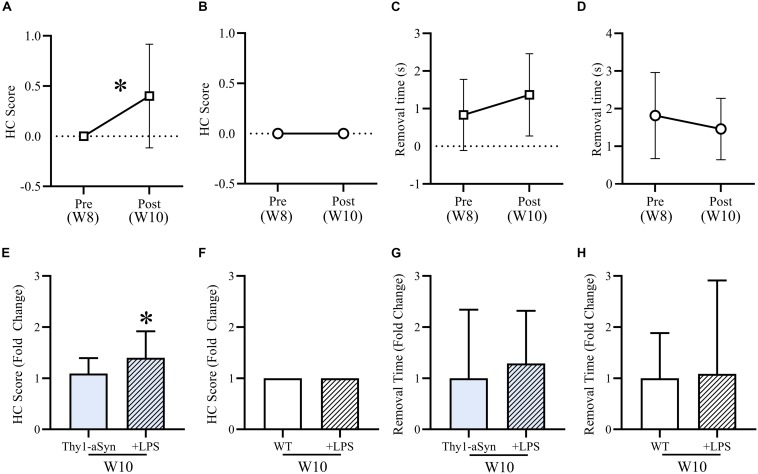
The interaction between the gut microbiota and alpha-synuclein (Syn) aggregation in Parkinson’s disease (PD) is receiving increasing attention. The objective of this study was to investigate gut microbiota, and effects of an inflammatory lipopolysaccharide (LPS) trigger in a human Syn over-expressing mouse model of PD (Thy1-αSyn). Stool samples from patients with confirmed PD and Thy1-Syn mice were analysed using 16S ribosomal RNA sequencing. Compared to healthy controls, the relative abundance of mucin-degrading Verrucomicrobiae and LPS-producing Gammaproteobacteria were greater in PD patients. In mice, the abundance of Gammaproteobacteria was negligible in both Thy1-αSyn and wild-type (WT) animals, while Verrucomicrobiae were reduced in Thy1-αSyn mice. The effect of LPS on intestinal barrier function was investigated in vitro using intestinal epithelial (IEC-6) cells, and in vivo via administration of LPS in drinking water to Thy1-Syn mice. Acute exposure to LPS in vitro resulted in a reduction and altered distribution of the tight junction markers ZO-1 and e-Cadherin around the cell membrane in IEC-6 cells, as shown by immunohistochemistry. LPS administration in Thy1-Syn mice resulted in the emergence of early motor manifestations at 10 weeks, compared to untreated mice who were still asymptomatic at this age. This study reaffirms that an altered microbiome exists in patients with PD, and supports the notion of a proinflammatory gut microbiome environment as a trigger for PD pathogenesis.
Overview
The claims and statistics of this paper haven’t been checked yet.
Run the check — free, no account needed. It reads the open-access text and checks the sources it cites.
Integrity signals
Registry
Cites
Statistics
Figures
Verification
Claims the paper makes
The claims and statistics of this paper haven’t been checked yet.
Run the check — free, no account needed. It reads the open-access text and checks the sources it cites.
Claims other papers make about this one
Each is checked against this paper’s own text: does it say what the citing paper says it does?
The source backs part of the claim, not all of it — or backs it for a different population, condition or comparison.
In the citing paper
“Moreover, LPS intervention resulted in a significant decrease in the tight junction proteins zona occludens 1 (ZO-1) and e-cadherin in intestinal epithelial cells of Thy1-a-synuclein mice”
From The role of gut dysbiosis in Parkinson’s disease: mechanistic insights and therapeutic options (2021) · cites this paper as [36]
Experimental — accuracy not yet measuredThe cited source says what the claim attributes to it.
In the citing paper
“A decreased abundance of mucin-degrading Verrucomicrobiae was found in a human a-synuclein overexpressing mouse model.36”
From The role of gut dysbiosis in Parkinson’s disease: mechanistic insights and therapeutic options (2021) · cites this paper as [36]
The cited source says what the claim attributes to it.
In the citing paper
“indicating that there is a relationship between gut microbiota and the pathogenesis of Parkinson's disease”
From The role of gut dysbiosis in Parkinson’s disease: mechanistic insights and therapeutic options (2021) · cites this paper as [36]
The cited source says what the claim attributes to it.
In the citing paper
“thus supporting the hypothesis that a-synuclein spreads from the intestine to the CNS in the pathogenesis of Parkinson's disease.36”
From The role of gut dysbiosis in Parkinson’s disease: mechanistic insights and therapeutic options (2021) · cites this paper as [36]
The cited source says what the claim attributes to it.
In the citing paper
“An increase in Gammaproteobacteria, an LPS-producing Gram-negative bacterium, was found in the faeces of patients with Parkinson's disease.36”
From The role of gut dysbiosis in Parkinson’s disease: mechanistic insights and therapeutic options (2021) · cites this paper as [36]
In the citing paper
“There is growing evidence that age-related changes in the microbiota may contribute to cognitive decline and other neurodegenerative disorders (102, 103).”
From Signalling cognition: The gut microbiota and hypothalamic-pituitary-adrenal axis (2023) · cites this paper as [103]
Self-check
Percentages, sums and reported differences re-computed from the paper’s own numbers.
The self-check needs the paper’s full text.
Citations
Cites
Human gut microbes associated with obesity
Ley, R. E., Turnbaugh, P. J., Klein, S., & Gordon, J. I. (2006) · Nature · doi:10.1038/4441022a · Cited by 8,785
Diversity of the Human Intestinal Microbial Flora
Eckburg, P. B., Bik, E. M., Bernstein, C. N., Purdom, E., Dethlefsen, L., Sargent, M., Gill, S. R., Nelson, K. E., & Relman, D. A. (2005) · Science · doi:10.1126/science.1110591 · Cited by 7,913
Cani, P. D., Bibiloni, R., Knauf, C., Waget, A., Neyrinck, A. M., Delzenne, N. M., & Burcelin, R. (2008) · Diabetes · doi:10.2337/db07-1403 · Cited by 4,819
Frank, D. N., St. Amand, A. L., Feldman, R. A., Boedeker, E. C., Harpaz, N., & Pace, N. R. (2007) · Proceedings of the National Academy of Sciences · doi:10.1073/pnas.0706625104 · Cited by 4,611
Sokol, H., Pigneur, B., Watterlot, L., Lakhdari, O., Bermúdez-Humarán, L. G., Gratadoux, J.-J., Blugeon, S., Bridonneau, C., Furet, J.-P., Corthier, G., et al. (2008) · Proceedings of the National Academy of Sciences · doi:10.1073/pnas.0804812105 · Cited by 4,413
Proteobacteria: Microbial signature of dysbiosis in gut microbiota
Shin, N.-R., Whon, T. W., & Bae, J.-W. (2015) · Trends in Biotechnology · doi:10.1016/j.tibtech.2015.06.011 · Cited by 3,954
Gut microbiota regulate motor deficits and neuroinflammation in a model of Parkinson's disease
Sampson, T. R., Debelius, J. W., Thron, T., Janssen, S., Shastri, G. G., Ilhan, Z. E., Challis, C., Schretter, C. E., Rocha, S., Gradinaru, V., et al. (2016) · Cell · doi:10.1016/j.cell.2016.11.018 · Cited by 3,622
Non-motor symptoms of Parkinson's disease: diagnosis and management
Chaudhuri, K. R., Healy, D. G., & Schapira, A. H. (2006) · The Lancet Neurology · doi:10.1016/s1474-4422(06)70373-8 · Cited by 2,807
Reduced diversity of faecal microbiota in Crohn’s disease revealed by a metagenomic approach
Manichanh, C., Rigottier-Gois, L., Bonnaud, E., Gloux, K., Pelletier, E., Frangeul, L., Nalin, R., Jarrin, C., Chardon, P., Marteau, P., et al. (2006) · Gut · doi:10.1136/gut.2005.073817 · Cited by 2,277
Gut microbiota are related to Parkinson's disease and clinical phenotype
Scheperjans, F., Aho, V., Pereira, P. A. B., Koskinen, K., Paulin, L., Pekkonen, E., Haapaniemi, E., Kaakkola, S., Eerola‐Rautio, J., Pohja, M., et al. (2015) · Movement Disorders · doi:10.1002/mds.26069 · Cited by 1,968
Research works printed but not linked: 1
- Ouyang, 2012, Direct Data Submission 2012/03/09., MGI Dir. Data Submission.
Cited by
Sorted by citations
Romano, S., Savva, G. M., Bedarf, J. R., Charles, I. G., Hildebrand, F., & Narbad, A. (2021) · npj Parkinson's Disease · doi:10.1038/s41531-021-00156-z · Cited by 707
Signaling pathways in Parkinson’s disease: molecular mechanisms and therapeutic interventions
Xu, D.-C., Yong, C., Xu, Y., Chen-Yu, S., & Peng, L. (2023) · Signal Transduction and Targeted Therapy · doi:10.1038/s41392-023-01353-3 · Cited by 528
Signalling cognition: The gut microbiota and hypothalamic-pituitary-adrenal axis
Rusch, J. A., Layden, B. T., & Dugas, L. R. (2023) · Frontiers in Endocrinology · doi:10.3389/fendo.2023.1130689 · Cited by 415
Kanmani, S., & Koo, B. (2020) · International Journal of Molecular Sciences · doi:10.3390/ijms21207551 · Cited by 392
Role of Microbiota-Gut-Brain Axis in Regulating Dopaminergic Signaling
Hamamah, S., Aghazarian, A., Nazaryan, A., Hajnal, A. S., & Covașă, M. (2022) · Biomedicines · doi:10.3390/biomedicines10020436 · Cited by 327
Metadata
- Authors
- Gorecki, A. M., Preskey, L., Bakeberg, M. C., Kenna, J. E., Gildenhuys, C., MacDougall, G., Dunlop, S. A., Mastaglia, F. L., Akkari, P. A., Koengten, F., & Anderton, R. S.
- Affiliations
- The University of Western Australia (AU)
- The University of Notre Dame Australia (AU)
- Perron Institute for Neurological and Translational Science (AU)
- Murdoch University (AU)
- Corresponding author
- Anderton, Ryan S.
- ORCID
- Venue
- Frontiers in Neuroscience
- Publisher
- Frontiers Media SA
- Published
- 2019-08-07
- Volume
- 13
- Pages
- 839-839
- ISSN
- 1662-453X (ISSN-L)
- PMC
- PMC6693556
- OpenAlex
- W2965437143
- Cited by
- 184
- References
- 76
- Citations by year
- 2026: 7 · 2025: 22 · 2024: 35 · 2023: 28 · 2022: 30 · 2021: 43 · 2020: 19
- FWCI
- 15.56
- Type
- journal article
- Language
- en
- Open access
- gold
- doi.org
- Licence
- Locations
- Frontiers in Neuroscience (publishedVersion, cc-by)
- PubMed Central (publishedVersion, cc-by)
- PubMed (publishedVersion)
- Murdoch University Research Portal (submittedVersion)
- UWA Profiles and Research Repository (UWA) (submittedVersion, cc-by)
- ResearchOnline@ND (The University of Notre Dame) (submittedVersion)
- DOAJ (DOAJ: Directory of Open Access Journals) (submittedVersion, cc-by-sa)
- Funders
- Armstrong Foundation
- Topics
- Health Sciences › Medicine › Clinical Neurology › Parkinson's Disease Mechanisms and Treatments
- Life Sciences › Biochemistry, Genetics and Molecular Biology › Molecular Biology › Gut microbiota and health
- Life Sciences › Neuroscience › Neurology › Neuroinflammation and Neurodegeneration Mechanisms
- Keywords
- Parkinson's disease, gut microbiota, alpha-synuclein, lipopolysaccharide, Gammaproteobacteria, intestinal barrier function, tight junctions, ZO-1, E-cadherin, motor symptoms, neuroinflammation, microbiome-gut-brain axis
About these checks
Registry, retraction, Cites and statistics results are computed, not judged, with one exception: a printed reference that no index lists is read once by a model before it counts as a citation error. Claims are extracted by a model and kept only when their quote appears verbatim in the text; each cited source is then checked, with a model’s help, for whether it says what the claim relies on. Those verdicts can be wrong — read the claim’s quote and the cited source before relying on one.
Statistics and arithmetic are recomputed, not judged.
Confidence bands are shown only for fields calibrated on our annotated test set. None is calibrated yet, so no band is shown.
What counts as a claim ›How we measure confidence ›How we check this ›
Are you an author, or do you see a problem with this page? Request a review
