

The DOI matches its Crossref record; 260 of the 261 references it cites were found in a registry or an index, and 1 are not checked yet.
Neurobiological and Hormonal Mechanisms Regulating Women’s Sleep
Open accessAbstract
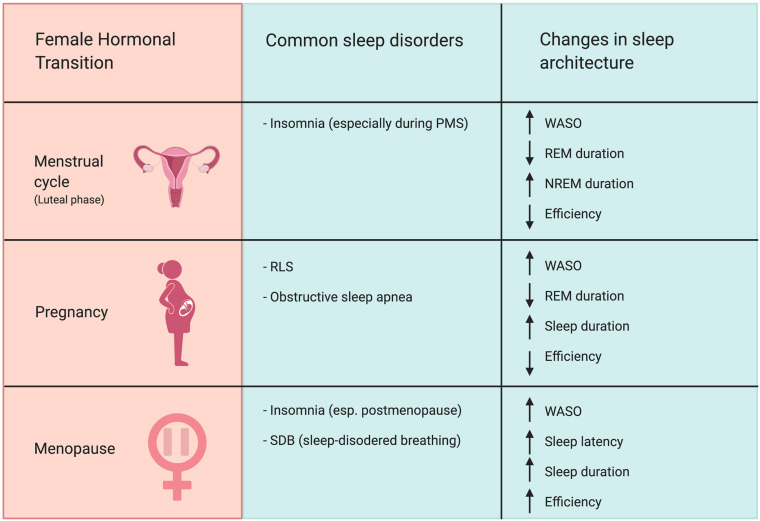
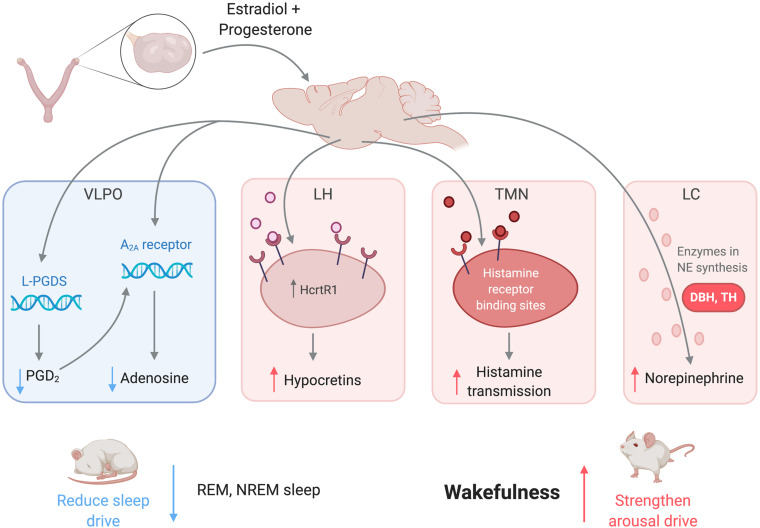
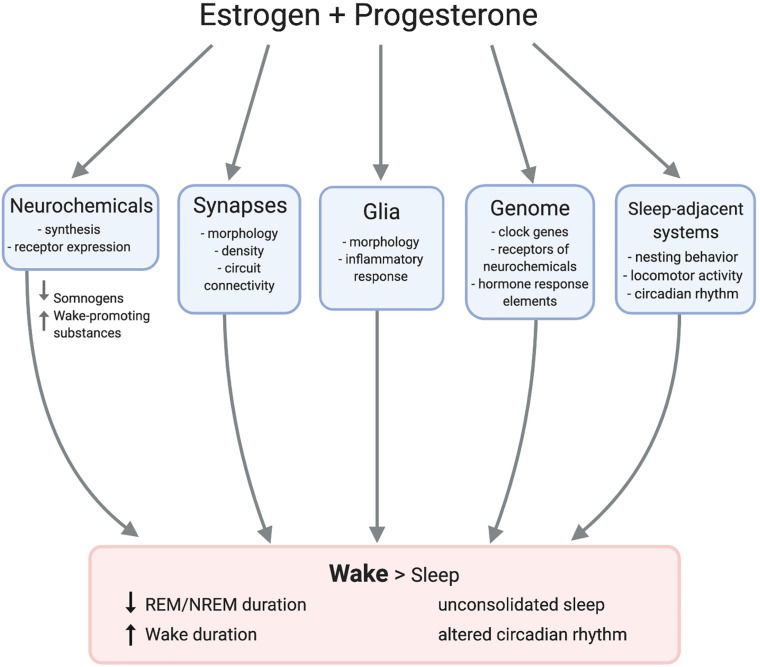
Sleep is crucial for optimal well-being, and sex differences in sleep quality have significant implications for women’s health. We review the current literature on sex differences in sleep, such as differences in objective and subjective sleep measures and their relationship with aging. We then discuss the convincing evidence for the role of ovarian hormones in regulating female sleep, and survey how these hormones act on a multitude of brain regions and neurochemicals to impact sleep. Lastly, we identify several important areas in need of future research to narrow the knowledge gap and improve the health of women and other understudied populations.
Overview
The claims and statistics of this paper haven’t been checked yet.
Run the check — free, no account needed. It reads the open-access text and checks the sources it cites.
Integrity signals
Registry
Cites
Statistics
Figures
Verification
Claims the paper makes
The claims and statistics of this paper haven’t been checked yet.
Run the check — free, no account needed. It reads the open-access text and checks the sources it cites.
Claims other papers make about this one
Each is checked against this paper’s own text: does it say what the citing paper says it does?
The source backs part of the claim, not all of it — or backs it for a different population, condition or comparison.
In the citing paper
“Interestingly, while women normally have longer and better sleep, they also report a higher incidence of sleep disorders.99–102”
From Effects of Traumatic Brain Injury on the Orexin/Hypocretin System (2025) · cites this paper as [100]
Experimental — accuracy not yet measured
Self-check
Percentages, sums and reported differences re-computed from the paper’s own numbers.
The self-check needs the paper’s full text.
Citations
Cites
Kessler, R. C., Berglund, P., Demler, O., Jin, R., Merikangas, K. R., & Walters, E. E. (2005) · Archives of General Psychiatry · doi:10.1001/archpsyc.62.6.593 · Cited by 20,391
Sakurai, T., Amemiya, A., Ishii, M., Matsuzaki, I., Chemelli, R. M., Tanaka, H., Williams, S. C., Richardson, J. A., Kozlowski, G. P., Wilson, S., et al. (1998) · Cell · doi:10.1016/s0092-8674(00)80949-6 · Cited by 5,501
Vale, W., Spiess, J., Rivier, C., & Rivier, J. (1981) · Science · doi:10.1126/science.6267699 · Cited by 3,965
Vale, W., Spiess, J., RIVIER, C. L., & Rivier, J. (1982) · Obstetrical & Gynecological Survey · doi:10.1097/00006254-198205000-00013 · Cited by 3,904
The hypocretins: hypothalamus-specific peptides with neuroexcitatory activity
de Lecea, L., Kilduff, T. S., Peyron, C., Gao, X.-B., Foye, P. E., Danielson, P. E., Fukuhara, C., Battenberg, E. L. F., Gautvik, V. T., Bartlett, F. S., et al. (1998) · Proceedings of the National Academy of Sciences · doi:10.1073/pnas.95.1.322 · Cited by 3,878
Neurons containing hypocretin (orexin) project to multiple neuronal systems
Peyron, C., Tighe, D. K., van den Pol, A. N., de Lecea, L., Heller, H. C., Sutcliffe, J. G., & Kilduff, T. S. (1998) · The Journal of Neuroscience · doi:10.1523/jneurosci.18-23-09996.1998 · Cited by 3,466
Dopamine, learning and motivation.
Wise, R. A. (2004) · Nature Reviews Neuroscience · doi:10.1038/nrn1406 · Cited by 3,379 · cited 1×
“Dopaminergic neurons in the ventral tegmental area (VTA) are well known for their role in motivation, learning, and reward (Wise, 2004; Bromberg-Martin et al., 2010).”
BackgroundNarcolepsy in orexin Knockout Mice
Chemelli, R. M., Willie, J. T., Sinton, C. M., Elmquist, J. K., Scammell, T., Lee, C., Richardson, J. A., Williams, S. C., Xiong, Y., Kisanuki, Y., et al. (1999) · Cell · doi:10.1016/s0092-8674(00)81973-x · Cited by 3,095
Lin, L., Faraco, J., Li, R., Kadotani, H., Rogers, W., Lin, X., Qiu, X., de Jong, P. J., Nishino, S., & Mignot, E. (1999) · Cell · doi:10.1016/s0092-8674(00)81965-0 · Cited by 2,613
Dopamine in motivational control: rewarding, aversive, and alerting
Bromberg-Martin, E. S., Matsumoto, M., & Hikosaka, O. (2010) · Neuron · doi:10.1016/j.neuron.2010.11.022 · Cited by 2,396
Research works printed but not linked: 1
- 2014, FDA approves new label changes and dosing for zolpidem products and a recommendation to avoid driving the day after using Ambien CR., Food Drug Adm. Drug Saf. Commun.
Cited by
Sorted by citations
Adolescent sleep and the foundations of prefrontal cortical development and dysfunction
Anastasiades, P. G., de Vivo, L., Bellesi, M., & Jones, M. W. (2022) · Progress in Neurobiology · doi:10.1016/j.pneurobio.2022.102338 · Cited by 89
Alshammari, B., Alkubati, S. A., Pasay-an, E. A., Alrasheeday, A., Alshammari, H. B., Asiri, S. M., Alshammari, S. B., Sayed, F., Madkhali, N. A. B., Laput, V., et al. (2023) · Healthcare · doi:10.3390/healthcare11182536 · Cited by 67
Sleep in women: a narrative review of hormonal influences, sex differences and health implications
Andersen, M. L., Hachul, H., Ishikura, I. A., & Tufik, S. (2023) · Frontiers in Sleep · doi:10.3389/frsle.2023.1271827 · Cited by 44
Coborn, J. E., de Wit, A. E., Crawford, S. L., Nathan, M., Rahman, S. A., Finkelstein, L. B., Wiley, A., & Joffe, H. (2022) · The Journal of Clinical Endocrinology & Metabolism · doi:10.1210/clinem/dgac447 · Cited by 33
Sleep Across the Lifespan: A Neurobehavioral Perspective
Simon, K. C. N. S., Cadle, C. E., Shuster, A. E., & Malerba, P. (2025) · Current Sleep Medicine Reports · doi:10.1007/s40675-025-00322-2 · Cited by 33
Marciante, A. B., Seven, Y. B., Kelly, M. N., Perim, R. R., & Mitchell, G. S. (2023) · Function · doi:10.1093/function/zqad041 · Cited by 26
Influence of sex hormone use on sleep architecture in a transgender cohort
Morssinkhof, M. W. L., van der Werf, Y. D., van den Heuvel, O. A., van den Ende, D., van der Tuuk, K., den Heijer, M., & Broekman, B. F. P. (2023) · SLEEP · doi:10.1093/sleep/zsad249 · Cited by 24
Insomnia Disorder: Gender Issues Over the Lifespan
Baldi, E., Cerolini, S., Meneo, D., Baglioni, C., & Palagini, L. (2025) · Journal of Sleep Research · doi:10.1111/jsr.70110 · Cited by 21
Moon, C., Schneider, A. C., Cho, Y.-E., Zhang, M., Dang, H., & Vu, K. (2024) · BMC Geriatrics · doi:10.1186/s12877-024-05010-4 · Cited by 22
Sleep disorders in rheumatoid arthritis, axial spondyloarthritis and psoriatic arthritis
Polak, D., Korkosz, M., & Guła, Z. (2025) · Rheumatology International · doi:10.1007/s00296-024-05780-5 · Cited by 18
Fang, J., Wen, Z., Ouyang, J., & Wang, H.-H. (2021) · BMC Public Health · doi:10.1186/s12889-021-12017-8 · Cited by 17
The circadian variation of sleep and alertness of postmenopausal women
Pérez‐Medina‐Carballo, R., Kosmadopoulos, A., Boudreau, P., Robert, M., Walker, C., & Boivin, D. B. (2022) · SLEEP · doi:10.1093/sleep/zsac272 · Cited by 20
Giannos, P., Prokopidis, K., Candow, D. G., Forbes, S. C., Celoch, K., Isanejad, M., Pekovic‐Vaughan, V., Witard, O. C., Gabriel, B. M., & Scott, D. S. (2023) · Sleep Medicine · doi:10.1016/j.sleep.2023.03.013 · Cited by 23
Topranin, V. D. M., Engseth, T. P., Hrozanova, M., Taylor, M., Sandbakk, Ø. B., & Noordhof, D. A. (2023) · International Journal of Sports Physiology and Performance · doi:10.1123/ijspp.2022-0325 · Cited by 18
From Molecule to Behavior: Hypocretin/orexin Revisited From a Sex-dependent Perspective
Gao, X., & Horváth, T. L. (2021) · Endocrine Reviews · doi:10.1210/endrev/bnab042 · Cited by 18
Optimizing sleep across the menopausal transition
Baker, F. C. (2023) · Climacteric · doi:10.1080/13697137.2023.2173569 · Cited by 19
Engseth, T. P., Osborne, J. O., Solli, G. S., Morseth, B., Andersson, E. P., Topranin, V. D. M., Taylor, M., Noordhof, D. A., Sandbakk, Ø. B., & Welde, B. (2024) · Journal of Sports Sciences · doi:10.1080/02640414.2024.2434347 · Cited by 22
Taylor, M., Hrozanova, M., Nordengen, L., Sandbakk, Ø. B., Osborne, J. O., & Noordhof, D. A. (2024) · International Journal of Sports Physiology and Performance · doi:10.1123/ijspp.2024-0201 · Cited by 16
Sleep and Neuroaffective Development from Early to Late Adolescence
Baker, A. E., & McMakin, D. L. (2024) · Annual Review of Developmental Psychology · doi:10.1146/annurev-devpsych-010923-093914 · Cited by 13
Quantitative Hormone Analysis Reveals Sources of Variability in the Menstrual Cycle
Francis, G., & Keay, N. (2024) · Women in Sport and Physical Activity Journal · doi:10.1123/wspaj.2023-0062 · Cited by 11
Yang, W., Yu, X., Zhao, N., Xie, C., Li, J., Gao, X., Fu, C., & Chen, Y.-F. (2023) · Journal of Acupuncture and Tuina Science · doi:10.1007/s11726-023-1415-z · Cited by 10
Ferrazzini, L., Schmidt, M. H., Zhang, Z., Khatami, R., Dauvilliers, Y. A., Barateau, L., Mayer, G., Pizza, F., Plazzi, G., Gool, J. K., et al. (2024) · Journal of Sleep Research · doi:10.1111/jsr.14365 · Cited by 10
Xu, Q., Lin, Z., chen, Y., & huang, M. (2025) · BMC Public Health · doi:10.1186/s12889-025-22433-9 · Cited by 13
Association of Pyridoxal 5′-Phosphate with Sleep-Related Problems in a General Population
Lin, G., Luo, J., Zhang, L., Kang, X., & Zhang, D. (2022) · Nutrients · doi:10.3390/nu14173516 · Cited by 10
Gamble, M. C., Katsuki, F., McCoy, J. G., Strecker, R. E., & McKenna, J. T. (2021) · Neuroscience · doi:10.1016/j.neuroscience.2021.03.003 · Cited by 8
A prospective study to investigate circadian rhythms as health indicator in women’s aging
Malhan, D., Yalçın, M., Liedtke, S., Grötsch, R., Enzmann, C., Rau, M., & Relógio, A. (2025) · npj Women s Health · doi:10.1038/s44294-025-00057-z · Cited by 7
Howell, S., & Griesbach, G. S. (2024) · Neurotrauma Reports · doi:10.1089/neur.2023.0093 · Cited by 8
Sleep-Disordered Breathing in Pregnancy
Konstanty-Kurkiewicz, V., Dzięciołowska-Baran, E., Szczurowski, J., & Gawlikowska-Sroka, A. K. (2021) · Advances in experimental medicine and biology · doi:10.1007/5584_2021_691 · Cited by 7
Sleep Health Patterns in Romania: Insights from a Nationwide Cross-Sectional Online Survey
Strilciuc, Ș., Chira, D., Verișezan-Roșu, O., Man-Kesselheim, O., Stan, O., & Mureșanu, F. D. (2024) · Brain Sciences · doi:10.3390/brainsci14111086 · Cited by 6
Alghamdi, N. A., & Almasaudi, A. S. (2025) · Frontiers in Nutrition · doi:10.3389/fnut.2025.1664739 · Cited by 7
Foroughi, E., Moradmand, Z., Rashki, A., Shahdadian, F., Rouhani, P., & Saneei, P. (2025) · Journal of Translational Medicine · doi:10.1186/s12967-025-07375-5 · Cited by 5
Novel Therapeutics for Treating Sleep Disorders: New Perspectives on Maydis stigma
Kim, R.-E., Mabunga, D. F. N., Kim, H. J., Han, S., Kim, H. Y., Shin, C. Y., & Kwon, K. J. (2022) · International Journal of Molecular Sciences · doi:10.3390/ijms232314612 · Cited by 7
Zhang, Y., Chen, F., Yu, M., Li, Y., Chen, S., Choudhary, M. I., Liu, X., & Jiang, N. (2025) · Behavioral and Brain Functions · doi:10.1186/s12993-025-00268-z · Cited by 5
Ma, D., & Zhang, T. (2025) · Sexual Medicine · doi:10.1093/sexmed/qfaf009 · Cited by 5
Yao, C., Chen, I., Chen, C. O., Torng, P., & Su, T. (2022) · Journal of Atherosclerosis and Thrombosis · doi:10.5551/jat.63254 · Cited by 6
Zare, M., Masoumi, S. J., & Zare, M. (2024) · BMC Nutrition · doi:10.1186/s40795-024-00834-0 · Cited by 5
Sleep pathology and use of anabolic androgen steroids among male weightlifters in Norway
Klonteig, S., Scarth, M., & Bjørnebekk, A. (2024) · BMC Psychiatry · doi:10.1186/s12888-024-05516-6 · Cited by 7
Cavalcante‐Silva, V., Vallim, J. R. D. S., de Oliveira, A. C., D’Almeida, V., Tufik, S., & Andersen, M. L. (2025) · Journal of Affective Disorders · doi:10.1016/j.jad.2025.119968 · Cited by 4
Sex shapes the systemic response to light-induced sleep disruption in Drosophila melanogaster
Duarte, T., Loreto, J. S., Michelotti, P., Rieder, G. S., Senger, L. R., Santos, E. L. D., Barbosa, N. V., da Rocha, J. B. T., & Corte, C. L. D. (2025) · Journal of Experimental Biology · doi:10.1242/jeb.250079 · Cited by 4
Meneo, D., Baldi, E., Benz, F., & Fabris, M. A. (2025) · Cogent Mental Health · doi:10.1080/28324765.2025.2541697 · Cited by 6
Fu, B., Zhang, S., Xiang, L., Cai, M., Ou, M., Tang, G., Huang, R., Lei, J., & Lu, X. (2026) · Frontiers in Public Health · doi:10.3389/fpubh.2025.1692231 · Cited by 5
Swisher, V. S., Tooker, M. S., Qu, C., Burgess, H. J., Coles, M. E., Bennett, S. M., Piacentini, J. C., Colwell, C. S., & Ricketts, E. J. (2023) · Children s Health Care · doi:10.1080/02739615.2023.2175682 · Cited by 4
The Art of Psychoneuroimmunology in Menopause Management
Anurogo, D. (2023) · Journal of Biomedical Research & Environmental Sciences · doi:10.37871/jbres1758 · Cited by 3
Sleep and Brain Function at Menopause
Garg, R., & Munshi, A. (2024) · Journal of Mid-life Health · doi:10.4103/jmh.jmh_201_24 · Cited by 6
Sleep oscillations related to memory consolidation during aromatases inhibitors for breast cancer
Rehel, S., Duivon, M., Doidy, F., Champetier, P., Clochon, P., Grellard, J., Ségura, C., Geffrelot, J., Emile, G., Allouache, D., et al. (2024) · Sleep Medicine · doi:10.1016/j.sleep.2024.07.002 · Cited by 3
Mendes, G. L., Oliveira, H. A., dos Reis, A. S., Nakamoto, F. P., Staibano, A., Alvares, L. A. M., Ferreira, R. E. S., dos Santos, R. V. T., & Quaresma, M. V. L. D. S. (2025) · Nutrition and Health · doi:10.1177/02601060241307981 · Cited by 4
Tracy, E. L., Lehrer, H. M., Chao, P.-S., So, C. J., Hasler, B. P., Kanaley, J. A., Manrique‐Acevedo, C., Kim, E., Chin, B. N., & Buysse, D. J. (2025) · Behavioral Sleep Medicine · doi:10.1080/15402002.2025.2493651 · Cited by 3
Asokan, M. M., & Falkner, A. L. (2025) · Neurobiology of Learning and Memory · doi:10.1016/j.nlm.2025.108064 · Cited by 3
Shafer, B. M., McAuliffe, K., Kogan, S. A., Davis, M. C., Shea, S. A., Olson, R., & McHill, A. W. (2025) · American Journal of Physiology-Heart and Circulatory Physiology · doi:10.1152/ajpheart.00735.2025 · Cited by 3
Effect of Restricted Feeding on Metabolic Health and Sleep-Wake Rhythms in Aging Mice
Xu, Y., Liu, G., Jiang, Q., Bi, H.-Q., Wang, S.-C., Zhang, P.-P., Gao, C., Chen, G.-H., Cheng, W., Chen, G., et al. (2021) · Frontiers in Neuroscience · doi:10.3389/fnins.2021.745227 · Cited by 3
Baral, G., & Sharma, R. (2024) · Springer eBooks · doi:10.1007/978-981-96-0239-1_4 · Cited by 3
Wang, L., Xiao, Y., Luo, M., & Huang, R. (2025) · Climacteric · doi:10.1080/13697137.2025.2470450 · Cited by 3
Mohamed, N. A., Mohamud, R. Y. H., Hilowle, F., Ali, T., Mohamed, Y. A., Gabow, A. A., Mohamed, H., Sidow, N. O., Hassan, M. S., & Waberi, M. (2025) · Diabetes, Metabolic Syndrome and Obesity : Targets and Therapy · doi:10.2147/dmso.s533810 · Cited by 3
Effects of Traumatic Brain Injury on the Orexin/Hypocretin System
Somach, R. T., Lim, M. M., & Cohen, A. S. (2025) · Neurotrauma Reports · doi:10.1089/neur.2024.0111 · Cited by 2
Arnison, T., Evans, B. E., Schrooten, M. G. S., Persson, J., & Palermo, T. M. (2024) · Journal of Pain · doi:10.1016/j.jpain.2024.104571 · Cited by 2
Lee, H., Kim, H., Suh, H. J., & Choi, H. (2025) · Food & Function · doi:10.1039/d5fo03393d · Cited by 2
REM obstructive sleep apnea: prevalence and clinical associations in a high-altitude population
Severiche-Bueno, D. F., Gonzalez, A. M., León, D. P. R., Vargas-Cuervo, M. T., Mateus-Palacios, J. M., Agudelo-Agudelo, J., Casas, D. P., Enciso-B, L. F., Proaños, N. J., Fernández-Bernal, F., et al. (2025) · Journal of Clinical Sleep Medicine · doi:10.5664/jcsm.11556 · Cited by 2
Prevalence and correlates of restless leg syndrome in psychiatric outpatients in Lebanon
Ammar, L., Antoun, C., Nassar, J. E., Ismail, R., & Talih, F. R. (2025) · Scientific Reports · doi:10.1038/s41598-025-15036-2 · Cited by 1
Polysomnographic Evidence of Enhanced Sleep Quality with Adaptive Thermal Regulation
Kim, J. W., Heo, S. J., Hong, J., Moon, S., Lee, D., & Yang, D. (2025) · Healthcare · doi:10.3390/healthcare13192521 · Cited by 2
Overview of Sleep and Gender Differences
Cherukuri, C. M., Padia, H., & Hassan, F. (2026) · Sleep Medicine Clinics · doi:10.1016/j.jsmc.2026.02.001 · Cited by 1
Ketogenic interventions enhance REM sleep in females and support memory in aged rats
Lark, A. R. S., Mir, F. A., Ambareen, N., Tian, F., Carpenter, A. H., Crowley, E. A., Toro, B. A., Syme, C. E., Aygar, S., Thendral, A., et al. (2026) · Frontiers in Aging Neuroscience · doi:10.3389/fnagi.2026.1797686 · Cited by 1
Omar, S. M., Al-Nafeesah, A., Alwabili, A. A., AlEed, A., & Adam, I. (2026) · International Journal of General Medicine · doi:10.2147/ijgm.s600482
Wireless Sensors Measure the Neural Effects of Sleep Debt on Prospective Memory for Pilots
Guirguis, M., Benthem, K. V., & Herdman, C. M. (2023) · IEEE Sensors Applications Symposium (SAS) · doi:10.1109/sas58821.2023.10254049 · Cited by 1
Trevisan, C., Vincentis, A. D., Noale, M., Maggi, S., Incalzi, R. A., Pedone, C., Prinelli, F., Giacomelli, A., Fortunato, L., Molinaro, S., et al. (2024) · Stress and Health · doi:10.1002/smi.3369 · Cited by 1
Zhu, Z., Wu, S., Lin, X., Wang, C., & Zhou, X. (2025) · International Journal of Endocrinology · doi:10.1155/ije/7863420 · Cited by 1
Morssinkhof, M. W. L., van der Werf, Y. D., van den Heuvel, O. A., van den Ende, D., van der Tuuk, K., den Heijer, M., & Broekman, B. F. P. (2023) · medRxiv · doi:10.1101/2023.06.22.23291701 · Cited by 1
Conclusion and Recommendations for Research
Sharma, V., Palagini, L., & Mazmanian, D. S. (2025) · Springer eBooks · doi:10.1007/978-3-031-95948-6_16 · Cited by 1
Schlafbezogene Atmungsstörungen und Gynäkologie
Orth, M., & Rasche, K. (2022) · Somnologie - Schlafforschung und Schlafmedizin · doi:10.1007/s11818-022-00377-1
The Role of Sociodemographic Factors on Menopause Symptoms and Quality of Life : A Literature Review
Permana, N. Z. M., Lestari, P., Akbar, M. I. A., & Yuliati, I. (2022) · International Journal of Research Publications · doi:10.47119/ijrp10011211120224079
Sleep pathology and use of anabolic androgen steroids among male weightlifters in NorwayPreprint
Klonteig, S., Scarth, M., & Bjørnebekk, A. (2023) · doi:10.31234/osf.io/ntdsu
Olkowski, B., Marczak, Z., Rostkowska, O. M., Miszewska‐Szyszkowska, D., Kozińska-Przybył, O., Durlik, M., & Żak, J. (2024) · Transplantation Proceedings · doi:10.1016/j.transproceed.2024.02.016
Waves of Change: Sex Hormones, Depression and Sleep
Morssinkhof, M. W. L. (2024) · doi:10.5463/thesis.676
Sleep Medicine for Women: Much Needed Progress in Incremental Steps
Yeh, J. (2024) · Current Women s Health Reviews · doi:10.2174/157340482005240625095009
Silva-Cardoso, G. K., & N’Gouemo, P. (2025) · Neuropharmacology · doi:10.1016/j.neuropharm.2025.110498
Insomnia, unspecified managed with homoeopathy - A case report
Rathod, K. (2025) · International Journal of Homoeopathic Sciences · doi:10.33545/26164485.2025.v9.i2.k.1572
Torales, J. C., Canata, C. M., Morínigo, M., Falloon, K., Cantero, M., Gauto, S., López, N., Vargas, M., O’Higgins, M. G., Caycho‐Rodríguez, T., et al. (2025) · Sleep Science · doi:10.1055/s-0045-1805060
Zheng, C. Y., Zhao, C., Zhang, R., & Xiong, L. (2025) · Research Square · doi:10.21203/rs.3.rs-7079101/v1
Sohn, Y. J., Bae, H., Park, H. R., & Joo, E. Y. (2025) · Journal of Sleep Medicine · doi:10.13078/jsm.250009
Xiao, X., Wang, Y., Dong, D., Wang, W., Li, Z., & Guo, Y. (2025) · Nature and Science of Sleep · doi:10.2147/nss.s550127
Vaquero, C., González‐Sánchez, J., Alonso‐Domínguez, R., Garcia-Yu, I. A., Sánchez‐Aguadero, N., Sedano, A. C., Rihuete-Galve, M. I., & Recio-Rodriguez, J. I. (2025) · BMJ Open · doi:10.1136/bmjopen-2025-103094 · Cited by 2
Klonteig, S., Scarth, M., & Bjørnebekk, A. (2024) · Figshare · doi:10.6084/m9.figshare.25045436
Moon, C., Schneider, A. C., Cho, Y.-E., Zhang, M., Dang, H., & Vu, K. (2024) · Figshare · doi:10.6084/m9.figshare.26717538
Moon, C., Schneider, A. C., Cho, Y.-E., Zhang, M., Dang, H., & Vu, K. (2024) · Figshare · doi:10.6084/m9.figshare.26717529
Medicinal herbs in maintenance of menopause
POPOVIC, V. M. (2025) · Elsevier eBooks · doi:10.1016/b978-0-443-33152-7.00023-5
Tang, P., Liu, L., Liu, Y., Xue, J., Liu, Z., Wang, J., Chen, C., Geng, F., Li, W., Luo, X., et al. (2026) · Research Square · doi:10.21203/rs.3.rs-8417622/v1
Marino, L. F., Galli, A. P., & Vitale, M. L. (2023) · Journal of Medical Sciences and Interdisciplinary Research · doi:10.51847/phllkwgyf3
Hartley, S., Fernández-Bolaños, M., & Dagneaux, S. (2026) · Médecine du Sommeil · doi:10.1016/j.msom.2026.02.003
Olasore, H. S. A., Olawale, M. O., Lamina, M. A., Oluwole, A. A., Ogunsowo, K., & Faleti, J. O. (2026) · F&S Reviews · doi:10.1016/j.xfnr.2026.100110
Insomnia and women: exploring vulnerability, impact, and intervention
Kim, H. R., Kim, S. I., Jeong, S., Jeong, S., Ahn, S. H., Jeong, E., & Kim, S. (2026) · Sleep And Breathing · doi:10.1007/s11325-026-03704-0
Beyond the Bedroom: Environmental, Relational, and Spatial Influences on Women’s Sleep HealthPreprint
Dinçer, D., Demirbilek, R. O., Gordon, C. J., Wassing, R., & Paolini, R. (2026) · SSRN Electronic Journal · doi:10.2139/ssrn.6828210
Management of Central Disorders of Hypersomnolence in Pregnancy and Lactation
Abideen, Z. U., Kolla, B. P., Bernard, M. E., Jegen, D. A., Furst, J. W., & Mansukhani, M. P. (2026) · Journal of Primary Care & Community Health · doi:10.1177/21501319261456031
Bai, M., Shen, S., & Chen, J.-Y. (2026) · Frontiers in Pharmacology · doi:10.3389/fphar.2026.1860816 · Cited by 1
Cowie, K. D., Scott, A. M., Sadek, M., & Rowa, K. (2026) · Bulletin of the Menninger Clinic · doi:10.1521/bumc.2026.90.2.87
Is Night Shift Work Associated With Depression and Suicidal Ideation? A 17-Year Follow-Up Study
Romero-Parra, M., García‐Hermoso, A., Yáñez-Sepúlveda, R., Recabarren-Dueñas, C., Páez‐Herrera, J., López-Gil, J. F., & Ezzatvar, Y. (2026) · Workplace Health & Safety · doi:10.1177/21650799261447539
Muthaiah, V. P. K., Balakrishnan, B., Muthukumaraswamy, K., Lefebvre, C., Peters-Brinkerhoff, C., & Ganesan, M. (2026) · Psychology Health & Medicine · doi:10.1080/13548506.2026.2691401
Tithi, T. A., & Talukder, A. (2026) · Journal of Affective Disorders Reports · doi:10.1016/j.jadr.2026.101115
Sleep, mood, and the menstrual cycle: advancing precision care in women’s health
Carey, M., & Blattner, M. (2026) · SLEEP · doi:10.1093/sleep/zsag223
Better sleep, better minds: Sleep as a key to cognitive performance and quality of life in aging
Aliño, M., Molins, F., Molins, M., González, L., Duque, A., & Mesa‐Gresa, P. (2026) · Acta Psychologica · doi:10.1016/j.actpsy.2026.107790 · Cited by 1
Sun, X., Miyaguchi, H., Ishizuki, C., & Okamura, H. (2026) · Behavioural Neurology · doi:10.1155/bn/6132707
Women’s Health Research During Ramadan: A Narrative Review
Attia, M. H., Maaz, I. B., Swanberg, S. M., & Franks, A. S. (2026) · Women · doi:10.3390/women6040068
Metadata
- Authors
- Dorsey, A., de Lecea, L., & Jennings, K. J.
- Affiliations
- Stanford Medicine (US)
- Corresponding author
- Jennings, Kimberly J.
- Venue
- Frontiers in Neuroscience
- Publisher
- Frontiers Media SA
- Published
- 2021-01-14
- Volume
- 14
- Pages
- 625397-625397
- ISSN
- 1662-453X (ISSN-L)
- PMC
- PMC7840832
- OpenAlex
- W3120986069
- Cited by
- 100
- References
- 261
- Citations by year
- 2026: 19 · 2025: 33 · 2024: 21 · 2023: 14 · 2022: 8 · 2021: 5
- FWCI
- 1.76
- Type
- journal article
- Language
- en
- Open access
- gold
- doi.org
- Licence
- Locations
- Frontiers in Neuroscience (publishedVersion, cc-by)
- PubMed Central (publishedVersion, cc-by)
- PubMed (publishedVersion)
- DOAJ (DOAJ: Directory of Open Access Journals) (submittedVersion, cc-by-sa)
- Funders
- Stanford Bio-X
- National Institute of Mental Health
- Eunice Kennedy Shriver National Institute of Child Health and Human Development
- Rose Hills Foundation
- Topics
- Life Sciences › Neuroscience › Cognitive Neuroscience › Sleep and Wakefulness Research
- Social Sciences › Psychology › Experimental and Cognitive Psychology › Sleep and related disorders
- Life Sciences › Neuroscience › Endocrine and Autonomic Systems › Circadian rhythm and melatonin
- Keywords
- sex differences in sleep, women's sleep, ovarian hormones, sleep regulation, aging, sleep quality, neurochemicals, brain regions
About these checks
Registry, retraction, Cites and statistics results are computed, not judged, with one exception: a printed reference that no index lists is read once by a model before it counts as a citation error. Claims are extracted by a model and kept only when their quote appears verbatim in the text; each cited source is then checked, with a model’s help, for whether it says what the claim relies on. Those verdicts can be wrong — read the claim’s quote and the cited source before relying on one.
Statistics and arithmetic are recomputed, not judged.
Confidence bands are shown only for fields calibrated on our annotated test set. None is calibrated yet, so no band is shown.
What counts as a claim ›How we measure confidence ›How we check this ›
Are you an author, or do you see a problem with this page? Request a review
