

The brain-body disconnect: A somatic sensory basis for trauma-related disorders
Open accessThe DOI matches its Crossref record; 460 of the 480 references it cites were found in a registry or an index, and 1 are not checked yet; 6 of the 290 sources its claims cite were checked for support.
Abstract
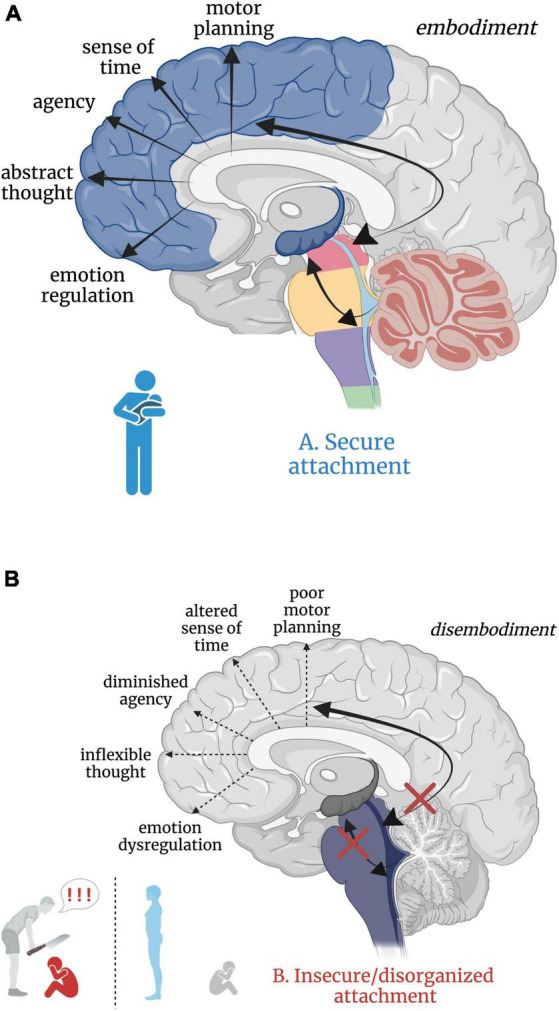
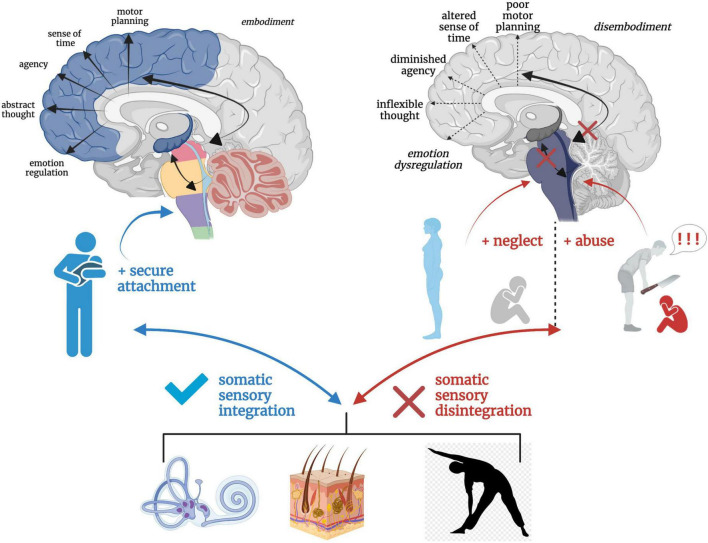
Although the manifestation of trauma in the body is a phenomenon well-endorsed by clinicians and traumatized individuals, the neurobiological underpinnings of this manifestation remain unclear. The notion of somatic sensory processing, which encompasses vestibular and somatosensory processing and relates to the sensory systems concerned with how the physical body exists in and relates to physical space, is introduced as a major contributor to overall regulatory, social-emotional, and self-referential functioning. From a phylogenetically and ontogenetically informed perspective, trauma-related symptomology is conceptualized to be grounded in brainstem-level somatic sensory processing dysfunction and its cascading influences on physiological arousal modulation, affect regulation, and higher-order capacities. Lastly, we introduce a novel hierarchical model bridging somatic sensory processes with limbic and neocortical mechanisms regulating an individual’s emotional experience and sense of a relational, agentive self. This model provides a working framework for the neurobiologically informed assessment and treatment of trauma-related conditions from a somatic sensory processing perspective.
Verified 2026-10-11 · 1 reference not checked yet
Overview
CoChat Summary
## TL;DR
This is a narrative review arguing that trauma-related disorders, especially PTSD and PTSD with dissociative subtype, can be understood through disrupted somatic sensory processing—especially vestibular and somatosensory pathways that shape arousal, defense, and embodiment. The authors propose that therapy should target these brain-body pathways with somatic and multisensory interventions alongside top-down approaches.
## Key findings
- PTSD + dissociative subtype (PTSD + DS) occurs in up to 44% of individuals with PTSD, and is characterized by derealization and depersonalization.
- The paper argues that PTSD is associated with sensory hyper-responsivity, while dissociative symptoms are associated with sensory hypo-sensitivity and altered thresholds for sensory registration.
- The authors cite findings that in PTSD + DS there is significantly decreased vestibular nuclei connectivity with the TPJ and cortical regions (Harricharan et al., 2017), and that PTSD + DS shows altered resting-state functional connectivity between the PPN and amygdala/vmPFC, with negative correlations between PPN-anterior thalamus connectivity and derealization/depersonalization symptoms (Thome et al., 2019).
- They also note that two randomized controlled trials of trauma-sensitive yoga in women with treatment-resistant PTSD showed reductions in PTSD symptoms and dissociation, with the 10-week study yielding decreases comparable to psychopharmaceutical and psychotherapeutic interventions, and the 20-week study producing even greater improvements.
## Methods
- This is a transdisciplinary narrative review; it synthesizes neuroscience, developmental, attachment, and trauma literature rather than presenting a new empirical sample.
- The review focuses on the vestibular system, somatosensory system, brainstem/midbrain circuitry (including the PAG and RAS), attachment development, and implications for PTSD/PTSD + DS.
- Main analysis is conceptual and integrative, building a neurobiological framework from cited studies, including reports of functional connectivity, symptom associations, and treatment findings.
## Limitations
- The authors explicitly note that the neural pathway for affective touch “remains speculative.”
- They state that discussion of pain-related trauma disorders is beyond the scope of the paper.
- Evident from the text: this is a review and hypothesis-building paper, so it does not provide new primary data or causal tests of the proposed brain-body model.
Model-written summary. Check it against the paper before relying on it.
Integrity signals
Registry
Cites
Statistics
Figures
Verification
Claims the paper makes
6 Valid · 0 Not valid · 135 Not checked · 47 Own results and interpretations
The cited sources support only part of this claim — read each source’s verdict below.
In the paper
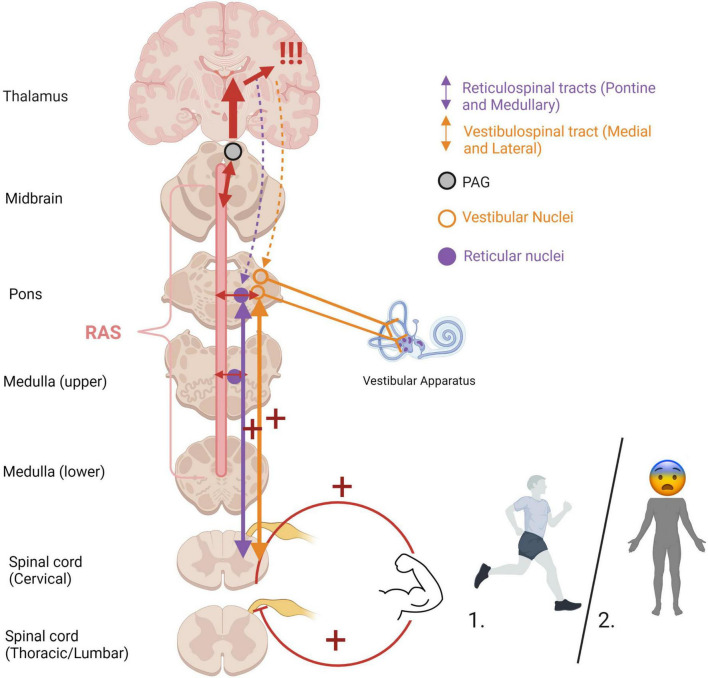
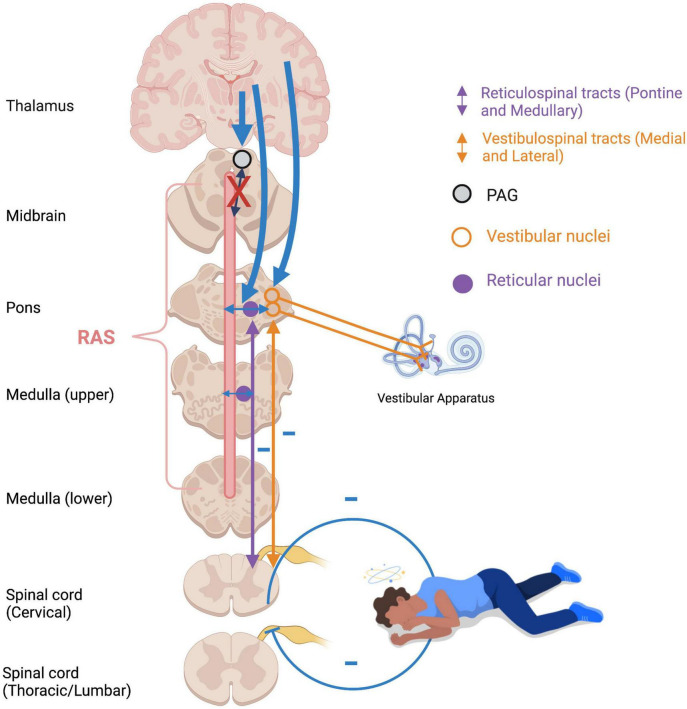
“Alternatively, hypo-arousal and decreased muscle tone occur during emotional shut-down or feign death as a passive defensive response to inescapable or prolonged threat ( Hofer, 1970 ; Depaulis et al., 1994 ; Bracha, 2004 ).”
What the sources say
- Not checked yetcites Hofer, 1970
- Not checked yetcites Depaulis et al., 1994 matched to “Quiescence and hyporeactivity evoked by activation of cell bodies in the ventrolateral midbrain periaqueductal gray of the rat.” (1994) source
- Partly supportedcites Bracha, 2004 matched to “Freeze, Flight, Fight, Fright, Faint: Adaptationist Perspectives on the Acute Stress Response Spectrum” (2004) sourceExperimental — accuracy not yet measured
The Abstract (p. 2) describes ‘playing dead’ as a defensive response when escape or fighting is not possible, and the faintness proposal (p. 4) describes a flaccid collapse. But ‘Atypical Form of Fright’ (p. 4) distinguishes the two: playing dead (tonic immobility) involves tachycardia and hyperalertness, not hypo-arousal. The paper also does not identify emotional shut-down as the response described here. (LLM, conf=0.86)
plainstates a cause- Asserted: passes — The authors put it forward as true.
- Checkable: passes — It can be checked against evidence.
- Load-bearing: passes — The paper’s conclusions depend on it.
- Based: passes — The paper gives a reason why it holds.
The cited sources support only part of this claim — read each source’s verdict below.
In the paper
“These individuals may seek to engage the SN and thus gain access to the DMN through intense or primally threatening somatic sensory experiences, such as car racing, extreme sports, and promiscuous sex ( van der Kolk, 1989 , 2015 ; Lanius et al., 2020 ).”
What the sources say
- Not checked yetcites van der Kolk, 1989, 2015
- Partly supportedcites Lanius et al., 2020 matched to “The sense of self in the aftermath of trauma: lessons from the default mode network in posttraumatic stress disorder” (2020) sourceExperimental — accuracy not yet measured
In “The DMN under threat: how might DMN-related alterations present clinically?” (page not provided), the authors suggest that some people with PTSD may seek threat or terror to engage the DMN, and link sensory seeking and reckless behaviour to that possibility. The passage does not describe engaging the SN as a route to the DMN or give car racing, extreme sports, and promiscuous sex as examples. (LLM, conf=0.85)
hedgedstates a possible cause- Asserted: passes — The authors put it forward as true.
- Checkable: passes — It can be checked against evidence.
- Load-bearing: unclear — It is unclear whether the paper’s conclusions depend on it.
- Based: passes — The paper gives a reason why it holds.
The cited sources support only part of this claim — read each source’s verdict below.
In the paper
“Severe early life neurodevelopmental disruptions may also give rise to the experience of multiple fragmented, discontinuous, and disembodied selves, such as those experienced in dissociative identity disorder (DID), a condition highly co-existent with early and severe traumatization ( Reinders et al., 2003 ; Dorahy et al., 2014 ; Schlumpf et al., 2014 ; Reinders and Veltman, 2021 ).”
What the sources say
- Not checked yetcites Reinders et al., 2003
- Partly supportedcites Dorahy et al., 2014 matched to “Dissociative identity disorder: An empirical overview” (2014) sourceExperimental — accuracy not yet measured
Split into 2 atoms — 1 confirmed, 1 partially supported, 0 disputed, 0 misattributed, 0 unverifiable. Expand the claim to see per-atom verdicts.
- Not checked yetcites Schlumpf et al., 2014
hedgedstates a possible cause- Asserted: passes — The authors put it forward as true.
- Checkable: passes — It can be checked against evidence.
- Load-bearing: passes — The paper’s conclusions depend on it.
- Based: passes — The paper gives a reason why it holds.
None of the sources cited for this claim have been checked yet.
In the paper
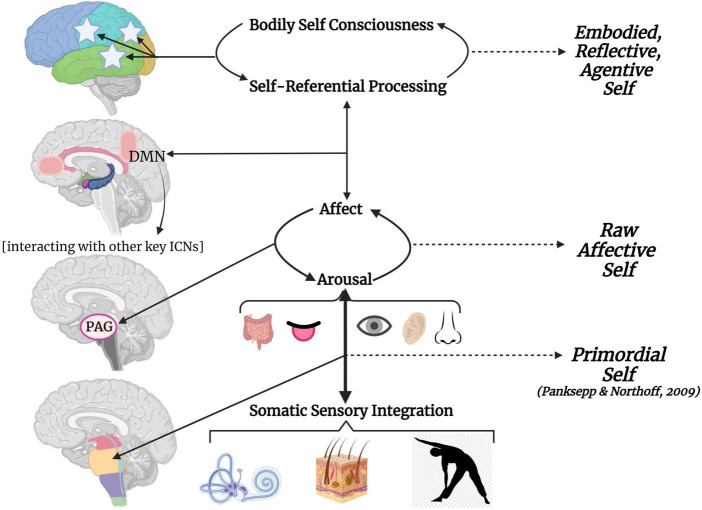
“Alterations to multisensory processing have been shown to mediate higher-order cognition ( Alais et al., 2010 ; Wallace et al., 2020 ), emotion ( Klasen et al., 2012 ), social capacities ( Baranek et al., 2018 ; Stevenson et al., 2018 ; Thye et al., 2018 ), and sense of self ( Panksepp and Northoff, 2009 ;”
What the sources say
- Not checked yetcites Alais et al., 2010
- Not checked yetcites Wallace et al., 2020
- Not checked yetcites Klasen et al., 2012
boostedstates a cause- Asserted: passes — The authors put it forward as true.
- Checkable: passes — It can be checked against evidence.
- Load-bearing: passes — The paper’s conclusions depend on it.
- Based: passes — The paper gives a reason why it holds.
None of the sources cited for this claim have been checked yet.
In the paper
“Additionally, PTSD + DS occurs in up to 44% of individuals with PTSD and is characterized by additional symptoms of derealization and depersonalization ( Lanius et al., 2010b ; Steuwe et al., 2012 ; Wolf et al., 2012b ; Stein et al., 2013 ; Armour et al., 2014 ; Blevins et al., 2014 ; for a review, see Hansen et al., 2017 ; White et al., 2022 ).”
What the sources say
- Not checked yetcites Lanius et al., 2010b
- Not checked yetcites Steuwe et al., 2012
- Not checked yetcites Wolf et al., 2012b
plainstates an association- Asserted: passes — The authors put it forward as true.
- Checkable: passes — It can be checked against evidence.
- Load-bearing: unclear — It is unclear whether the paper’s conclusions depend on it.
- Based: passes — The paper gives a reason why it holds.
87 more claims
Create a free account to see all 188 claims and to verify the 282 references still open.
- It may state two separate claims as one. 77
- Probably not a substantial claim. 30
Claims other papers make about this one
Each is checked against this paper’s own text: does it say what the citing paper says it does?
The source backs part of the claim, not all of it — or backs it for a different population, condition or comparison.
In the citing paper
“PVT introduced the notion of somatic sensory processing, which encompasses vestibular and somatosensory processing and relates to the sensory systems concerned with how the physical body exists in and relates to physical space, as a major contributor to overall regulatory, social–emotional, and self-referential functioning (Kearney and Lanius, 2022).”
From A theoretical exploration of polyvagal theory in creative arts and psychomotor therapies for emotion regulation in stress and trauma (2024) · cites this paper as Kearney and Lanius, 2022
Experimental — accuracy not yet measuredThe cited source says what the claim attributes to it.
In the citing paper
“The non-verbal rhythmicity inherent in music therapy may provide vibratory stimulation and an external source of rhythm when internal rhythms and sensorimotor synchrony is disrupted due to somatic sensory disintegration (Kearney and Lanius, 2022).”
From A theoretical exploration of polyvagal theory in creative arts and psychomotor therapies for emotion regulation in stress and trauma (2024) · cites this paper as Kearney and Lanius, 2022
The cited source says what the claim attributes to it.
In the citing paper
“Healing from trauma is indicated by one’s ability to be in an optimal state of arousal while experiencing affective sensations/emotions in the body (Kearney and Lanius, 2022).”
From A theoretical exploration of polyvagal theory in creative arts and psychomotor therapies for emotion regulation in stress and trauma (2024) · cites this paper as Kearney and Lanius, 2022
In the citing paper
“b) previous life experiences, including lower intensity adversities, shape PTSD presentations;”
From Evolving Psychotherapeutic Approaches for PTSD: Beyond the Fear-Based Model (2025) · doi:10.5152/pcp.2025.241019 · cites this paper as [7]
In the citing paper
“d) exposure may overwhelm information processing capacities in some people, especially those with severe early trauma or attachment disruption.”
From Evolving Psychotherapeutic Approaches for PTSD: Beyond the Fear-Based Model (2025) · doi:10.5152/pcp.2025.241019 · cites this paper as [7]
Citations
Cites
Items 401–461 of 461
Reticular formation control of vestibular system
Yules, R. B., Krebs, C. Q., & Gault, F. P. (1966) · Experimental Neurology · doi:10.1016/0014-4886(66)90103-8 · Cited by 30 · cited 1×
“, 2012) and has reciprocal interactions with the brainstem vestibular nuclei (Yules et al., 1966; Pompeiano et al., 1984; Manzoni et al., 1989; de Cicco et al., 2018) and somatosensory dorsal column (gracile and cuneate) nuclei (Guzmán-Flores et al.”
BackgroundRegulating posttraumatic stress disorder symptoms with neurofeedback: Regaining control of the mind
Nicholson, A. A., Ros, T., Jetly, R., & Lanius, R. A. (2020) · Journal of Military Veteran and Family Health · doi:10.3138/jmvfh.2019-0032 · Cited by 30 · cited 1×
“Electroencephalographic (EEG) neurofeedback (NFB) training is a non-invasive technique based on the premise that cognitive and motor function depend upon proper communication of neuronal assemblies organized into constellatory networks (Neuper and Pfurtscheller, 2001; Nicholson et al., 2020b).”
BackgroundSelf-citationThe Boy Who Was Hit in the Face: Somatic Regulation and Processing of Preverbal Complex Trauma
Finn, H. E., Warner, E., Price, M. A., & Spinazzola, J. (2017) · Journal of Child & Adolescent Trauma · doi:10.1007/s40653-017-0165-9 · Cited by 29 · cited 3×
“Sensorimotor approaches to psychotherapy, such as Sensorimotor Psychotherapy (SP; Ogden et al., 2006), Somatic Experiencing (Levine, 2010), and Sensory Motor Arousal Regulation Therapy (SMART; Warner et al., 2013), emphasize mindful attention to touch, postures, and movement.”
BackgroundTerpou, B. A., Densmore, M., Théberge, J., Frewen, P., McKinnon, M. C., Nicholson, A. A., & Lanius, R. A. (2020) · NeuroImage: Clinical · doi:10.1016/j.nicl.2020.102345 · Cited by 29 · cited 1×
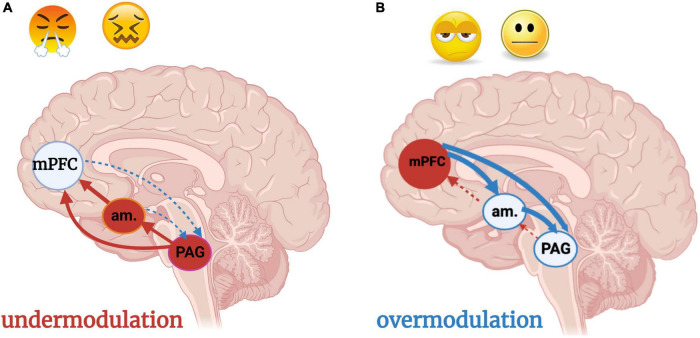
“Accordingly, those with trauma-related dissociative disorders are thought to exhibit top-down overmodulation of subcortical brain activity (Lanius et al., 2010b; Nicholson et al., 2017; Terpou et al., 2020), which putatively suppresses somatic sensory information from reaching higher-order regions involved in its inte…”
BackgroundSelf-citationNevins, R., Finch, S., Hickling, E. J., & Barnett, S. D. (2013) · PubMed · Cited by 28
Convergence of Vestibular and Neck Proprioceptive Sensory Signals in the Cerebellar Interpositus
Luan, H., Gdowski, M., Newlands, S. D., & Gdowski, G. T. (2013) · Journal of Neuroscience · doi:10.1523/jneurosci.3460-12.2013 · Cited by 28 · cited 1×
“Proprioceptive input from the head, neck and trunk integrates with vestibular input at the vestibular nuclei, thalamus, and cerebellum, contextualizing the motion as self- or otherinitiated (Deecke et al., 1977; Gdowski and McCrea, 2000; Luan et al., 2013).”
BackgroundPost-stroke tactile allodynia and its modulation by vestibular stimulation: a MEG case study
McGeoch, P. D., Williams, L. E., Song, T., Lee, R. R., Huang, M., & Ramachandran, V. S. (2008) · Acta Neurologica Scandinavica · doi:10.1111/j.1600-0404.2008.01106.x · Cited by 28 · cited 1×
“, 2021), tactile, nociceptive (McGeoch et al., 2009; Ferrè et al., 2013), and visualproprioceptive cues (Ponzo et al.”
BackgroundAltered connectivity within the salience network during direct eye gaze in PTSD
Thome, J., Frewen, P., Daniels, J. K., Densmore, M., & Lanius, R. A. (2014) · Borderline Personality Disorder and Emotion Dysregulation · doi:10.1186/2051-6673-1-17 · Cited by 28 · cited 1×
“Individuals with PTSD have shown hyperactivation and hyperconnectivity of the SN (Thome et al., 2014; Abdallah et al., 2019; for a review, see Akiki et al., 2017), as well as diminished coherence across the DMN (Bluhm et al.”
BackgroundSelf-citationTonic immobility during re-experiencing the traumatic event in posttraumatic stress disorder
de Kleine, R. A., Hagenaars, M. A., & van Minnen, A. (2018) · Psychiatry Research · doi:10.1016/j.psychres.2018.06.051 · Cited by 28
Schäflein, E., Sattel, H., Schmidt, U., & Sack, M. (2018) · European Journal of Psychotraumatology · doi:10.1080/20008198.2018.1472991 · Cited by 28 · cited 1×
“, 2022), as well as in individuals with psychiatric conditions highly associated with severe early life traumatization including dissociative disorder (DD) (Schäflein et al., 2018), borderline personality disorder (BPD) (Ebner-Priemer et al.”
BackgroundCortical and reticular influences upon evoked responses in dorsal column nuclei
Guzman-Flores, C., Buendía, N., Anderson, C., et al. (1962) · Experimental Neurology · doi:10.1016/0014-4886(62)90068-7 · Cited by 27 · cited 1×
“, 2018) and somatosensory dorsal column (gracile and cuneate) nuclei (Guzmán-Flores et al., 1962; Odutola, 1977).”
BackgroundSensorimotor approaches to trauma treatment
Fisher, J. (2011) · Advances in Psychiatric Treatment · doi:10.1192/apt.bp.109.007054 · Cited by 27 · cited 1×
“These approaches exploit subcortical processes by means of somatic sensory feedback and facilitate awareness and experience of somatic sensations in the present moment of safety as opposed to a past trauma (Fisher, 2011, 2019).”
BackgroundLonga, L. D., Carnevali, L., Patron, E., Dragovic, D., & Farroni, T. (2020) · Neuroscience · doi:10.1016/j.neuroscience.2020.07.053 · Cited by 27
Where is my hand in space? The internal model of gravity influences proprioception
Gallagher, M., Kearney, B. E., & Ferrè, E. R. (2021) · Biology Letters · doi:10.1098/rsbl.2021.0115 · Cited by 27 · cited 1×
“Vestibular stimulation has a modulating effect on proprioceptive (Gallagher et al., 2021), tactile, nociceptive (McGeoch et al.”
BackgroundSelf-citationChatzittofis, A., Nordström, P., Uvnäs‐Moberg, K., Åsberg, M., & Jokinen, J. (2014) · PubMed · Cited by 26
Terpou, B. A., Densmore, M., Théberge, J., Thome, J., Frewen, P., McKinnon, M. C., & Lanius, R. A. (2019) · Chronic Stress · doi:10.1177/2470547019871369 · Cited by 26
Self-citationThe organization of the midbrain periaqueductal grey and the integration of pain behaviours
Lovick, T. A., & Bandler, R. J. (2005) · Oxford University Press eBooks · doi:10.1093/acprof:oso/9780198515616.003.0011 · Cited by 25
Tonic immobility differentiates stress responses in PTSD
Fragkaki, I., Stins, J. F., Roelofs, K., Jongedijk, R. A., & Hagenaars, M. A. (2016) · Brain and Behavior · doi:10.1002/brb3.546 · Cited by 25 · cited 1×
“Tonic immobility has been reported by study participants with PTSD under traumatic memory recall (Volchan et al., 2011; Fragkaki et al., 2016; de Kleine et al., 2018), suggesting that traumatic memories remain connected to subconscious postural responses.”
BackgroundSensory Modulation Dysfunction in Child Victims of Trauma: a Scoping Review
Joseph, R. Y., Casteleijn, D., der Linde, J. V., & Franzsen, D. (2021) · Journal of Child & Adolescent Trauma · doi:10.1007/s40653-020-00333-x · Cited by 25 · cited 1×
“Post-traumatic stress disorder (PTSD) has been broadly associated with sensory modulation difficulties, manifested as either hyper- or hypo-responsivity to sensory input (Shalev et al., 2000; Engel-Yeger et al., 2013; Devine et al., 2020; Yochman and Pat-Horenczyk, 2020; Joseph et al., 2021).”
BackgroundBiological framework for traumatic dissociation related to early life trauma
Christian, S., Lanius, R. A., Pain, C. C., & Vermetten, E. H. G. J. M. (2010) · Cambridge University Press eBooks · doi:10.1017/cbo9780511777042.021 · Cited by 24
Self-citationThome, J., Densmore, M., Koppe, G., Terpou, B. A., Théberge, J., McKinnon, M. C., & Lanius, R. A. (2019) · Chronic Stress · doi:10.1177/2470547019873663 · Cited by 24 · cited 16×
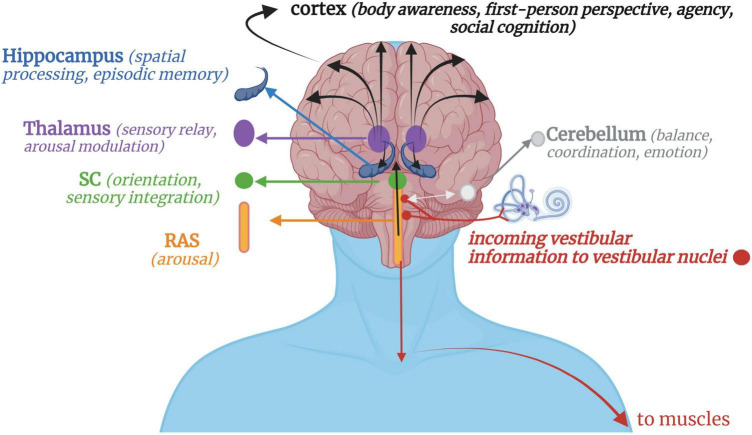
“LC, locus coeruleus; PAG, periaqueductal gray; PI, posterior insula; RAS, reticular activating system. body from impact (Shinoda et al., 2006; McCall et al., 2017).”
BackgroundInfluentialSelf-citationVancappel, A., Suzan, L., Bailly, S., Fraigneau, M., Réveillère, C., & El‐Hage, W. (2021) · European Journal of Trauma & Dissociation · doi:10.1016/j.ejtd.2021.100235 · Cited by 24
The soothing effect of rocking as determined by the direction and frequency of movement.
Pederson, D. R. (1975) · Canadian Journal of Behavioural Science/Revue canadienne des sciences du comportement · doi:10.1037/h0081911 · Cited by 23 · cited 2×
“Arousal can be attenuated through rhythmical linear vestibular stimulation (Vrugt and Pederson, 1973; Pederson, 1975; Lubeck et al., 2020; for a review, see Sandler and Coren, 1981), deep touch pressure (Diego and Field, 2009; Reynolds et al., 2015), and light touch (López-Solà et al., 2019; Reddan…”
BackgroundConnections of the superior colliculus to shoulder muscles of the rat: a dual tracing study
Rubelowski, J. M., Menge, M., Distler, C., Rothermel, M., & Hoffmann, K.-P. (2013) · Frontiers in Neuroanatomy · doi:10.3389/fnana.2013.00017 · Cited by 23 · cited 1×
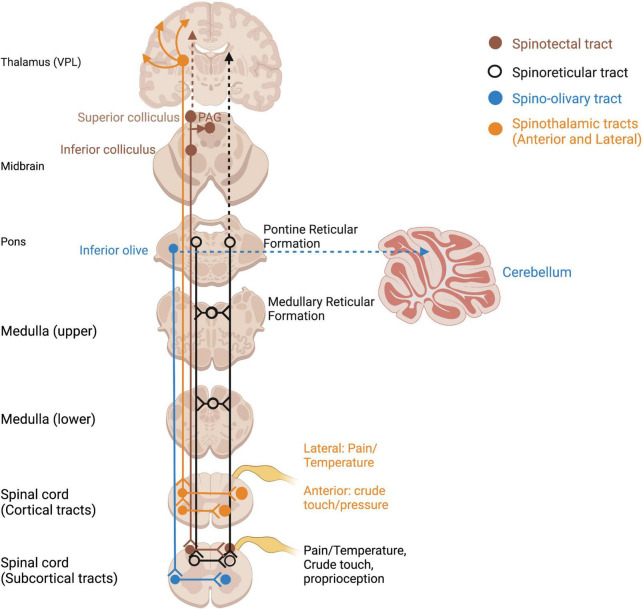
“Importantly, the SC receive ascending somatosensory feedback from the spinotectal (spinomesencephalic) tract (refer back to Figure 3) and have reciprocal connections with the vestibular nuclei innervating head and neck musculature (Rubelowski et al., 2013; Leong et al., 2019).”
BackgroundManzoni, D., Pompeiano, O., Barnes, C. D., Stampacchia, G., & D’Ascanio, P. (1989) · Pflügers Archiv - European Journal of Physiology · doi:10.1007/bf00581807 · Cited by 23 · cited 1×
“, 2012) and has reciprocal interactions with the brainstem vestibular nuclei (Yules et al., 1966; Pompeiano et al., 1984; Manzoni et al., 1989; de Cicco et al., 2018) and somatosensory dorsal column (gracile and cuneate) nuclei (Guzmán-Flores et al.”
BackgroundWired for social touch: the sense that binds us to others
Bohic, M., & Abraira, V. E. (2021) · Current Opinion in Behavioral Sciences · doi:10.1016/j.cobeha.2021.10.009 · Cited by 23 · cited 1×
“Therefore, affective touch is a medium through which we display social concern and attenuate stress, non-verbally communicating our presence in real time and space with another (Gallace and Spence, 2010; Cascio et al., 2019; Ciaunica et al., 2021a; Bohic and Abraira, 2022).”
BackgroundRabellino, D., Thome, J., Densmore, M., Théberge, J., McKinnon, M. C., & Lanius, R. A. (2022) · The Cerebellum · doi:10.1007/s12311-022-01467-4 · Cited by 21 · cited 1×
“Neurons from the vestibular nuclei project down the lateral vestibulospinal tract to influence muscle tone and postural control (Yoo and Mihaila, 2020), down to innervate vestibulo-sympathetic reflexes of the heart and lungs (Hernandez and Das, 2020), across to the flocculonodular lobe in the cerebellum for balance, c…”
BackgroundSelf-citationVestibular–Somatosensory Interactions: A Mechanism in Search of a Function?
Ferrè, E. R., & Haggard, P. (2015) · Multisensory Research · doi:10.1163/22134808-00002487 · Cited by 20
Kosinski, R. J., Lee, H. S., & Mihailoff, G. A. (1988) · Neuroscience Letters · doi:10.1016/0304-3940(88)90425-9 · Cited by 20 · cited 1×
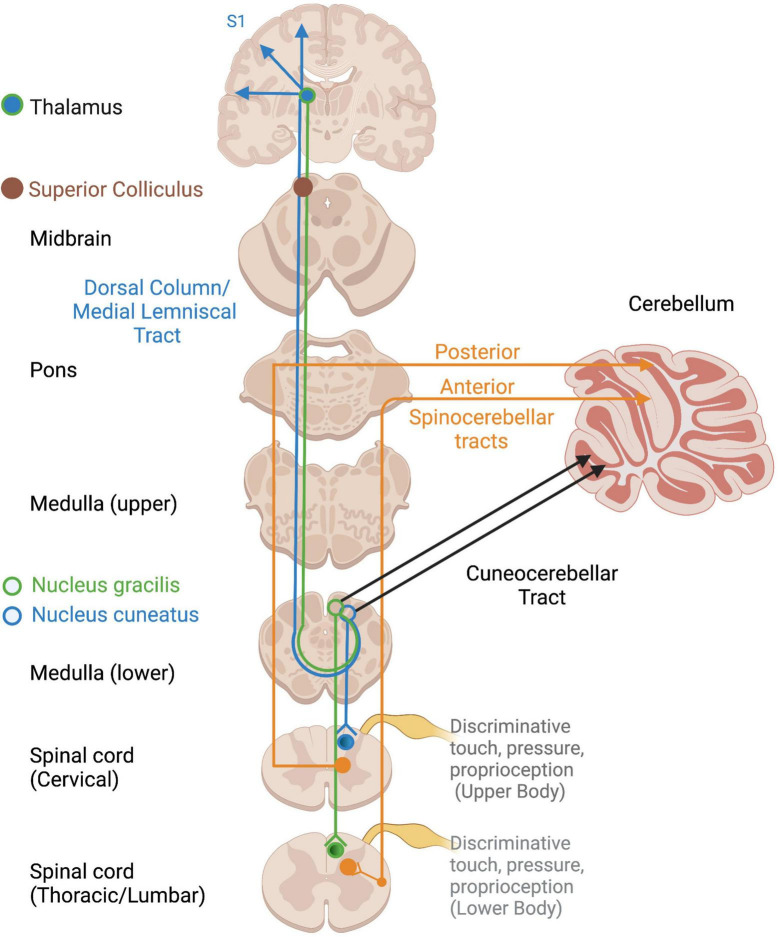
“Non-affective tactile and proprioceptive input project along the dorsal columnmedial lemniscal pathway to the superior colliculus, thalamus, and S1, where a representation of the physical body is constructed (Edwards et al., 1979; Kosinski et al., 1988; Taylor, 2009).”
BackgroundChapter 10 – Periaqueductal Gray
Carrive, P., & Morgan, M. (2012) · Elsevier eBooks · doi:10.1016/b978-0-12-374236-0.10010-0 · Cited by 20
Horse Play: A Brief Psychological Intervention for Disengaged Youths
Kendall, E. A., & Maujean, A. (2015) · Journal of Creativity in Mental Health · doi:10.1080/15401383.2014.962720 · Cited by 19 · cited 1×
“A sense of mastery is built through clientdirected touch, balance, and bodily control within the context of a safe, co-regulatory dynamic (Kendall and Maujean, 2015).”
BackgroundOn the location of reticular neurons projecting to the cuneo-gracile nuclei in the rat
Odutola, A. B. (1977) · Experimental Neurology · doi:10.1016/0014-4886(77)90234-5 · Cited by 19 · cited 1×
“…Adamzyk, 2012; Pfaff et al., 2012) and has reciprocal interactions with the brainstem vestibular nuclei (Yules et al., 1966; Pompeiano et al., 1984; Manzoni et al., 1989; de Cicco et al., 2018) and somatosensory dorsal column (gracile and cuneate) nuclei (Guzmán-Flores et al., 1962; Odutola, 1977).”
BackgroundClip-induced analgesia and immobility in the mouse: Pharmacological characterization
Fleischmann, A. (1988) · Neuropharmacology · doi:10.1016/0028-3908(88)90187-6 · Cited by 19 · cited 3×
“This response is mediated by somatosensory and vestibular feedback (Klemm, 1971; Gallup, 1977; Fleischmann and Urca, 1988), and is hypothesized to deter predators who are wired to detect motion in their prey and enable the animal to monitor its environment and flee if necessary (Kozlowska et al.”
BackgroundWilliams, C. L., Haines, J., & Sale, I. M. (2003) · Journal of Trauma & Dissociation · doi:10.1300/j229v04n01_07 · Cited by 19
Neuroanatomy, Vestibular Pathways
Yoo, H., & Mihaila, D. M. (2020) · StatPearls · Cited by 19
Bogaerts, S., Kunst, M. J. J., & Winkel, F. W. (2009) · Psychological Reports · doi:10.2466/pr0.105.3.889-899 · Cited by 18 · cited 1×
“Individuals with insecure attachment styles exhibit increased severity of psychiatric and PTSD symptoms (Mikulincer et al., 1993, 1999; Solomon et al., 1998; Dieperink et al., 2001; Zakin et al., 2003; Declercq and Willemsen, 2006; Fraley et al., 2006; Ghafoori et al., 2008; Bogaerts et al., 2009; Midolo et al., 2020)…”
BackgroundHarricharan, S., McKinnon, M. C., Tursich, M., Densmore, M., Frewen, P., Théberge, J., van der Kolk, B., & Lanius, R. A. (2019) · European Journal of Psychotraumatology · doi:10.1080/20008198.2019.1586265 · Cited by 18 · cited 1×
“Although the mechanism behind EMDR’s therapeutic benefits remains unclear, oculomotor muscles have extensive reciprocal connections with the brainstem reticular formation, vestibular nuclei, and superior colliculi (Horn and Adamzyk, 2012; Harricharan et al., 2019) influencing arousal and multisensory integration.”
BackgroundSelf-citationAnimal Models of Vestibular Evoked Myogenic Potentials: The Past, Present, and Future
Corneil, B. D., & Camp, A. J. (2018) · Frontiers in Neurology · doi:10.3389/fneur.2018.00489 · Cited by 18 · cited 1×
“While trauma results in overwhelming alarm (at the level of the LC and SC) and/or affect (at the level of the PAG), therapeutic attention to the muscular tension in the neck, indicative of SC activation (Corneil and Camp, 2018) elicited in response to a traumatic memory provides information on its pre-affective compon…”
BackgroundCorrigan, F. M., & Christie-Sands, J. (2020) · Medical Hypotheses · doi:10.1016/j.mehy.2019.109502 · Cited by 17 · cited 5×
“Cortico-thalamo-cortical circuits may result in self-perpetuating cycles of rumination, obsessive thoughts, and a hollow sense of bodily self (Corrigan and Christie-Sands, 2020).”
BackgroundInfluentialSaj̈, A., Pierce, J. E., Ronchi, R., Ros, T., Thomasson, M., Bernati, T., Ville, D. V. D., Serino, A., & Vuilleumier, P. O. (2021) · Annals of Physical and Rehabilitation Medicine · doi:10.1016/j.rehab.2021.101561 · Cited by 16
Neck muscle vibration in full cues affects pointing
McIntyre, S., & Seizova-Cajić, T. (2007) · Journal of Vision · doi:10.1167/7.5.9 · Cited by 14 · cited 1×
“Vibration applied to tendons elicits illusory limb motion and dimensionality, impacting body schema and balance (Eklund, 1972; Goodwin et al., 1972; Lackner, 1988; McGlone et al., 2002; Romaiguère et al., 2003; McIntyre and Seizova-Cajic, 2007; Seizova-Cajic and Sachtler, 2007; Fasold et al., 2008; Palluel et al., 201…”
BackgroundVestibular Rehabilitation: Ready for the Mainstream
Hoffer, M. E., & Balaban, C. D. (2011) · Neurorehabilitation · doi:10.3233/nre-2011-0686 · Cited by 13 · cited 1×
“Although the vestibular system’s unusually widespread influences on the brain support the notion that it contributes toward cognitive and emotional processes in health and disease (Balaban et al., 2011; Hoffe and Balaban, 2011; Ferrè and Haggard, 2020), its consideration in trauma-related conditions is relatively nove…”
BackgroundDevelopment of the Peripheral Nervous System
Ashwell, K. W. S., & Waite, P. M. E. (2012) · Elsevier eBooks · doi:10.1016/b978-0-12-374236-0.10002-1 · Cited by 13
Seizova-Cajić, T., & Sachtler, W. L. (2007) · Experimental Brain Research · doi:10.1007/s00221-007-0910-7 · Cited by 12 · cited 2×
“Vibration applied to tendons elicits illusory limb motion and dimensionality, impacting body schema and balance (Eklund, 1972; Goodwin et al., 1972; Lackner, 1988; McGlone et al., 2002; Romaiguère et al., 2003; McIntyre and Seizova-Cajic, 2007; Seizova-Cajic and Sachtler, 2007; Fasold et al., 2008; Palluel et al., 201…”
BackgroundDevelopment of the Mammalian ‘Vestibular’ System
Fritzsch, B., Kopecky, B. J., & Duncan, J. S. (2014) · Elsevier eBooks · doi:10.1016/b978-0-12-408088-1.00012-9 · Cited by 12
Huber, J., Rühl, R. M., Flanagin, V. L., & zu Eulenburg, P. (2021) · Brain Structure and Function · doi:10.1007/s00429-021-02394-6 · Cited by 12 · cited 4×
“Alternatively, individuals with PTSD + DS exhibited increased v/l PAG functional connectivity with OP2 and TPJ, primary vestibular-multisensory processing regions (Ibitoye et al., 2022) associated with depersonalization symptoms (Lanius et al., 2005; Harricharan et al., 2017).”
BackgroundInfluentialGentle Handling Attenuates Innate Defensive Responses to Visual Threats
Liu, X., Chen, C., Liu, Y., Wang, Z., Huang, K., Wang, F., & Wang, L. (2018) · Frontiers in Behavioral Neuroscience · doi:10.3389/fnbeh.2018.00239 · Cited by 10 · cited 1×
“, 2018; Crucianelli and Ehrsson, 2022), attenuation of anxiety/defensive responses (Liu et al., 2018; Walker et al., 2020; Wang et al., 2020), and seeking of social contact as mediated by oxytocin release (Olausson et al.”
BackgroundChapter 8 Fear and anxiety mechanisms of the brain
Panksepp, J. (2000) · Principles of medical biology · doi:10.1016/s1569-2582(00)80010-0 · Cited by 9 · cited 1×
“In particular, the amygdala participates in conditioned fear responses via a descending amygdalo-hypothalamo-PAG circuit, which Panksepp (2000) defined as the FEAR system, one of the basic raw affective systems engendered at the PAG.”
Bichescu-Burian, D. M., Grieb, B., Steinert, T., Uhlmann, C., & Steyer, J. (2018) · Journal of Visualized Experiments · doi:10.3791/56111 · Cited by 9 · cited 2×
“Stress or trauma recall-induced dissociation has been linked to blunted psychophysiological arousal responses in traumatized individuals with high dissociative symptoms (Griffin et al., 1997; Koopman et al., 2004; Sack et al., 2012; D’Andrea et al., 2013; for a review, see Boulet et al., 2022), as well as in individua…”
BackgroundJones, S. R., & Sliva, D. D. (2020) · Neuron · doi:10.1016/j.neuron.2019.12.033 · Cited by 9
Neurofeedback Therapy for Sensory Over-Responsiveness—A Feasibility Study
Hamed, R., Mizrachi, L., Granovsky, Y., Issachar, G., Yuval‐Greenberg, S., & Bar‐Shalita, T. (2022) · Sensors · doi:10.3390/s22051845 · Cited by 9 · cited 1×
“, 2020) and relieve sensory hyper-sensitivities (Hamed et al., 2022).”
Balance through the ages of man
Sidebotham, P. D. (1988) · The Journal of Laryngology & Otology · doi:10.1017/s0022215100104530 · Cited by 8 · cited 2×
“The vestibular system is the first sensory system to begin development in utero (Sidebotham, 1988; Blayney, 1997), and the morphology of the vestibular apparatus is mature within the first month of gestation (Nandi and Luxon, 2008; Jamon, 2014).”
BackgroundMora, C., Velásquez, C., & Martino, J. (2019) · Neurosurgical FOCUS · doi:10.3171/2019.6.focus19341 · Cited by 6 · cited 1×
“The ipsilateral vestibulospinal and reticulospinal tracts are the most ancient motor tracts in the human body, dating back to a time before forebrain lateralization (Vulliemoz et al., 2005; Mora et al., 2019).”
BackgroundThe role of the skin in interoception: A neglected organ?Preprint
Crucianelli, L., & Ehrsson, H. H. (2022) · doi:10.31234/osf.io/qfu87 · Cited by 6
Brzozowska, A., Longo, M. R., Mareschal, D., Wiesemann, F., & Gliga, T. (2022) · Developmental Psychobiology · doi:10.1002/dev.22290 · Cited by 6 · cited 1×
“, 2020), and seeking of social contact as mediated by oxytocin release (Olausson et al., 2002; Morrison et al., 2010; Brzozowska et al., 2022).”
BackgroundMarks, I., Lovell, K., Noshirvani, H., Livanou, M., & Thrasher, S. (1998) · Archives of General Psychiatry · doi:10.1001/archpsyc.55.4.317 · Cited by 5 · cited 1×
“, 2018), lower than 50% efficacy in PTSD patients has been reported (Marks et al., 1998; Bradley et al., 2005; Mendes et al., 2008; Kar, 2011), and they can be less beneficial during states of stress (van der Kolk and Fisler, 1995; Raio et al.”
BackgroundVestibular Stimulation in Early Childhood: A Review
Sandler, A. G., & Coren, A. (1981) · Journal of the Division for Early Childhood · doi:10.1177/105381518100300108 · Cited by 4
Bourinet, E., Martín, M., Huzard, D., et al. (2021) · bioRxiv (Cold Spring Harbor Laboratory) · doi:10.1101/2021.01.13.426492 · Cited by 4 · cited 1×
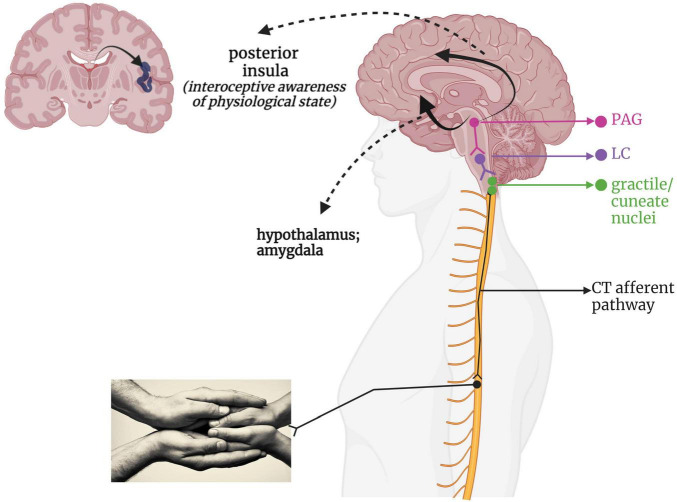
“Importantly, CT-afferent pathway stimulation simulating maternal grooming is sufficient for enhancing oxytocin neuronal firing and promoting prosocial behaviors when rats reached adulthood, while touch deprivation leads to social isolation and diminished preference for social contexts (Bourinet et al., 2021; Yu et al.…”
BackgroundNeuroanatomy, Nucleus Vestibular
Hernandez, E., & Das, J. M. (2020) · StatPearls · Cited by 2
Effects of Rocking on Attention and Arousal
Lubeck, J., Schaaf, O., & Dumont, M. (2020) · The Medicine Forum · Cited by 1
Schore, A. N. (2001) · Infant Mental Health Journal · doi:10.1002/1097-0355(200101/04)22:1<7::aid-imhj2>3.0.co;2-n
Research works printed but not linked: 14
- 2013, Diagnostic and statistical manual of mental disorders
- Blayney, 1997, Vestibular disorders, Scott-Brown’s Otolaryngology: Paediatric otolaryngology, 1
- Bowlby, 1973, Attachment and loss: Volume II: Separation, anxiety and anger.
- Fischer, 1999, Lehrbuch der psychotraumatologie (Textbook of psychotraumatology).
- Gene-Cos, 2016, Sensorimotor psychotherapy group therapy in the treatment of complex PTSD., Ann. Psychiatry Ment. Health, 4, 156
- Herman, 1992, Trauma and recovery.
- Janet, 1889, L’automatisme psychologique: Essay de psychologie experimentale sur les formes inferieures de l’activite humaine
- Kolb, 1990, The cerebral cortex of the rat.
- Lenggenhager, 2015, Vestibular contributions to the sense of body, self, and others, Open MIND, 1, 10.5167/uzh-139675 · DOI
- Llinás, 1970, Neuronal operations in cerebellar transactions, The neurosciences: Second study program, 409
- Lowenstein, 2018, Shutting down the trauma to prison pipeline: Early, appropriate care for child-welfare involved youth.
- Malchiodi, 2020, Trauma and expressive arts therapy: Brain, body, and imagination in the healing process.
- Siegel, 2001, Toward an interpersonal neurobiology of the developing mind: Attachment relationships, “mindsight,” and neural integration., Infant Ment. Health J., 22, 67, 10.1002/1097-0355(200101/04)22:1 · doi:10.1002/1097-0355(200101/04)22:1
- van der Kolk, 1987, Psychological trauma.
Cited by
Brewin, C. R., Atwoli, L., Bisson, J. I., Galea, S., Koenen, K. C., & Lewis‐Fernández, R. (2025) · World Psychiatry · doi:10.1002/wps.21269 · Cited by 142
Hall, K. J., Ooteghem, K. V., & McIlroy, W. E. (2023) · Frontiers in Neurology · doi:10.3389/fneur.2023.1188799 · Cited by 72
“Examples include Parkinson’s diseases (134), Alzheimer’s disease (135), post-traumatic stress (136) and traumatic brain injury (137).”
BackgroundSensory alterations in post-traumatic stress disorder
Fleming, L. L., Harnett, N. G., & Ressler, K. J. (2023) · Current Opinion in Neurobiology · doi:10.1016/j.conb.2023.102821 · Cited by 59
van de Kamp, M. M., Scheffers, M., Emck, C., Fokker, T. J., Hatzmann, J., Cuijpers, P. J., & Beek, P. J. (2023) · Journal of Traumatic Stress · doi:10.1002/jts.22968 · Cited by 52
Crosswell, A. D., Mayer, S. E., Whitehurst, L. N., Picard, M. A., Zebarjadian, S., & Epel, E. S. (2024) · Psychological Review · doi:10.1037/rev0000453 · Cited by 59
“This movement may activate speci fi c sensory receptors that respond to gentle and slow stroking touch (Eckstein et al., 2020; Kearney & Lanius, 2022).”
Background
Metadata
- Authors
- Kearney, B. E., & Lanius, R. A.
- Affiliations
- Western University (CA)
- Corresponding author
- Kearney, Breanne E.
- Lanius, Ruth A.
- Venue
- Frontiers in Neuroscience
- Publisher
- Frontiers Media SA
- Published
- 2022-11-21
- Volume
- 16
- Pages
- 1015749-1015749
- ISSN
- 1662-453X (ISSN-L)
- PMC
- PMC9720153
- OpenAlex
- W4309788328
- Semantic Scholar
- 3d6cae50235bbdbe35c56004a0683edb2852d9bb
- Cited by
- 154
- References
- 480
- Citations by year
- 2026: 53 · 2025: 50 · 2024: 35 · 2023: 15
- FWCI
- 4.18
- Type
- journal article
- Language
- en
- Open access
- gold
- doi.org
- Licence
- Locations
- Frontiers in Neuroscience (publishedVersion, cc-by)
- PubMed Central (publishedVersion, cc-by)
- PubMed (publishedVersion)
- DOAJ (DOAJ: Directory of Open Access Journals) (submittedVersion, cc-by-sa)
- Funders
- Canadian Institutes of Health Research
- Topics
- Social Sciences › Psychology › Clinical Psychology › Posttraumatic Stress Disorder Research
- Health Sciences › Medicine › Psychiatry and Mental health › Psychosomatic Disorders and Their Treatments
- Social Sciences › Psychology › Clinical Psychology › Psychoanalysis and Psychopathology Research
- Keywords
- trauma-related disorders, vestibular processing, somatosensory processing, brainstem dysfunction, physiological arousal, emotion regulation, limbic system, neocortex, selfhood, body awareness
About these checks
Registry, retraction, Cites and statistics results are computed, not judged, with one exception: a printed reference that no index lists is read once by a model before it counts as a citation error. Claims are extracted by a model and kept only when their quote appears verbatim in the text; each cited source is then checked, with a model’s help, for whether it says what the claim relies on. Those verdicts can be wrong — read the claim’s quote and the cited source before relying on one.
The claim verdicts this report counts are experimental: their accuracy is not yet measured.
A language model drew the claims from the paper on 2026-10-11, under version 3 of the claim definition (model deepseek-v4.1-flash, prompt extract-v3).
A second model labelled each claim on 2026-10-11 (model jev-1.13-20260917, definition revision gold-guideline-v0.2).
Cited sources are checked with a language model’s help (gpt-6-sol).
Statistics and arithmetic are recomputed, not judged.
Confidence bands are shown only for fields calibrated on our annotated test set. None is calibrated yet, so no band is shown.
What counts as a claim ›How we measure confidence ›How we check this ›
Are you an author, or do you see a problem with this page? Request a review
Data sources
Bibliographic data: Semantic Scholar, OpenAlex, Crossref.
Contains information from the Semantic Scholar Academic Graph Datasets, made available under the ODC Attribution License (ODC-BY 1.0).
Semantic Scholar’s data is described in: Kinney, R., et al. (2023). The Semantic Scholar Open Data Platform. arXiv:2301.10140.
