

The brain-body disconnect: A somatic sensory basis for trauma-related disorders
Open accessThe DOI matches its Crossref record; 460 of the 480 references it cites were found in a registry or an index, and 1 are not checked yet; 6 of the 290 sources its claims cite were checked for support.
Abstract
Although the manifestation of trauma in the body is a phenomenon well-endorsed by clinicians and traumatized individuals, the neurobiological underpinnings of this manifestation remain unclear. The notion of somatic sensory processing, which encompasses vestibular and somatosensory processing and relates to the sensory systems concerned with how the physical body exists in and relates to physical space, is introduced as a major contributor to overall regulatory, social-emotional, and self-referential functioning. From a phylogenetically and ontogenetically informed perspective, trauma-related symptomology is conceptualized to be grounded in brainstem-level somatic sensory processing dysfunction and its cascading influences on physiological arousal modulation, affect regulation, and higher-order capacities. Lastly, we introduce a novel hierarchical model bridging somatic sensory processes with limbic and neocortical mechanisms regulating an individual’s emotional experience and sense of a relational, agentive self. This model provides a working framework for the neurobiologically informed assessment and treatment of trauma-related conditions from a somatic sensory processing perspective.
Verified 2026-10-11 · 1 reference not checked yet
Overview
CoChat Summary
## TL;DR
This is a narrative review arguing that trauma-related disorders, especially PTSD and PTSD with dissociative subtype, can be understood through disrupted somatic sensory processing—especially vestibular and somatosensory pathways that shape arousal, defense, and embodiment. The authors propose that therapy should target these brain-body pathways with somatic and multisensory interventions alongside top-down approaches.
## Key findings
- PTSD + dissociative subtype (PTSD + DS) occurs in up to 44% of individuals with PTSD, and is characterized by derealization and depersonalization.
- The paper argues that PTSD is associated with sensory hyper-responsivity, while dissociative symptoms are associated with sensory hypo-sensitivity and altered thresholds for sensory registration.
- The authors cite findings that in PTSD + DS there is significantly decreased vestibular nuclei connectivity with the TPJ and cortical regions (Harricharan et al., 2017), and that PTSD + DS shows altered resting-state functional connectivity between the PPN and amygdala/vmPFC, with negative correlations between PPN-anterior thalamus connectivity and derealization/depersonalization symptoms (Thome et al., 2019).
- They also note that two randomized controlled trials of trauma-sensitive yoga in women with treatment-resistant PTSD showed reductions in PTSD symptoms and dissociation, with the 10-week study yielding decreases comparable to psychopharmaceutical and psychotherapeutic interventions, and the 20-week study producing even greater improvements.
## Methods
- This is a transdisciplinary narrative review; it synthesizes neuroscience, developmental, attachment, and trauma literature rather than presenting a new empirical sample.
- The review focuses on the vestibular system, somatosensory system, brainstem/midbrain circuitry (including the PAG and RAS), attachment development, and implications for PTSD/PTSD + DS.
- Main analysis is conceptual and integrative, building a neurobiological framework from cited studies, including reports of functional connectivity, symptom associations, and treatment findings.
## Limitations
- The authors explicitly note that the neural pathway for affective touch “remains speculative.”
- They state that discussion of pain-related trauma disorders is beyond the scope of the paper.
- Evident from the text: this is a review and hypothesis-building paper, so it does not provide new primary data or causal tests of the proposed brain-body model.
Model-written summary. Check it against the paper before relying on it.
Integrity signals
Registry
Cites
Statistics
Figures
Verification
Claims the paper makes
6 Valid · 0 Not valid · 135 Not checked · 47 Own results and interpretations
The cited sources support only part of this claim — read each source’s verdict below.
In the paper
“Alternatively, hypo-arousal and decreased muscle tone occur during emotional shut-down or feign death as a passive defensive response to inescapable or prolonged threat ( Hofer, 1970 ; Depaulis et al., 1994 ; Bracha, 2004 ).”
What the sources say
- Not checked yetcites Hofer, 1970
- Not checked yetcites Depaulis et al., 1994 matched to “Quiescence and hyporeactivity evoked by activation of cell bodies in the ventrolateral midbrain periaqueductal gray of the rat.” (1994) source
- Partly supportedcites Bracha, 2004 matched to “Freeze, Flight, Fight, Fright, Faint: Adaptationist Perspectives on the Acute Stress Response Spectrum” (2004) sourceExperimental — accuracy not yet measured
The Abstract (p. 2) describes ‘playing dead’ as a defensive response when escape or fighting is not possible, and the faintness proposal (p. 4) describes a flaccid collapse. But ‘Atypical Form of Fright’ (p. 4) distinguishes the two: playing dead (tonic immobility) involves tachycardia and hyperalertness, not hypo-arousal. The paper also does not identify emotional shut-down as the response described here. (LLM, conf=0.86)
plainstates a cause- Asserted: passes — The authors put it forward as true.
- Checkable: passes — It can be checked against evidence.
- Load-bearing: passes — The paper’s conclusions depend on it.
- Based: passes — The paper gives a reason why it holds.
The cited sources support only part of this claim — read each source’s verdict below.
In the paper
“These individuals may seek to engage the SN and thus gain access to the DMN through intense or primally threatening somatic sensory experiences, such as car racing, extreme sports, and promiscuous sex ( van der Kolk, 1989 , 2015 ; Lanius et al., 2020 ).”
What the sources say
- Not checked yetcites van der Kolk, 1989, 2015
- Partly supportedcites Lanius et al., 2020 matched to “The sense of self in the aftermath of trauma: lessons from the default mode network in posttraumatic stress disorder” (2020) sourceExperimental — accuracy not yet measured
In “The DMN under threat: how might DMN-related alterations present clinically?” (page not provided), the authors suggest that some people with PTSD may seek threat or terror to engage the DMN, and link sensory seeking and reckless behaviour to that possibility. The passage does not describe engaging the SN as a route to the DMN or give car racing, extreme sports, and promiscuous sex as examples. (LLM, conf=0.85)
hedgedstates a possible cause- Asserted: passes — The authors put it forward as true.
- Checkable: passes — It can be checked against evidence.
- Load-bearing: unclear — It is unclear whether the paper’s conclusions depend on it.
- Based: passes — The paper gives a reason why it holds.
The cited sources support only part of this claim — read each source’s verdict below.
In the paper
“Severe early life neurodevelopmental disruptions may also give rise to the experience of multiple fragmented, discontinuous, and disembodied selves, such as those experienced in dissociative identity disorder (DID), a condition highly co-existent with early and severe traumatization ( Reinders et al., 2003 ; Dorahy et al., 2014 ; Schlumpf et al., 2014 ; Reinders and Veltman, 2021 ).”
What the sources say
- Not checked yetcites Reinders et al., 2003
- Partly supportedcites Dorahy et al., 2014 matched to “Dissociative identity disorder: An empirical overview” (2014) sourceExperimental — accuracy not yet measured
Split into 2 atoms — 1 confirmed, 1 partially supported, 0 disputed, 0 misattributed, 0 unverifiable. Expand the claim to see per-atom verdicts.
- Not checked yetcites Schlumpf et al., 2014
hedgedstates a possible cause- Asserted: passes — The authors put it forward as true.
- Checkable: passes — It can be checked against evidence.
- Load-bearing: passes — The paper’s conclusions depend on it.
- Based: passes — The paper gives a reason why it holds.
None of the sources cited for this claim have been checked yet.
In the paper
“Alterations to multisensory processing have been shown to mediate higher-order cognition ( Alais et al., 2010 ; Wallace et al., 2020 ), emotion ( Klasen et al., 2012 ), social capacities ( Baranek et al., 2018 ; Stevenson et al., 2018 ; Thye et al., 2018 ), and sense of self ( Panksepp and Northoff, 2009 ;”
What the sources say
- Not checked yetcites Alais et al., 2010
- Not checked yetcites Wallace et al., 2020
- Not checked yetcites Klasen et al., 2012
boostedstates a cause- Asserted: passes — The authors put it forward as true.
- Checkable: passes — It can be checked against evidence.
- Load-bearing: passes — The paper’s conclusions depend on it.
- Based: passes — The paper gives a reason why it holds.
None of the sources cited for this claim have been checked yet.
In the paper
“Additionally, PTSD + DS occurs in up to 44% of individuals with PTSD and is characterized by additional symptoms of derealization and depersonalization ( Lanius et al., 2010b ; Steuwe et al., 2012 ; Wolf et al., 2012b ; Stein et al., 2013 ; Armour et al., 2014 ; Blevins et al., 2014 ; for a review, see Hansen et al., 2017 ; White et al., 2022 ).”
What the sources say
- Not checked yetcites Lanius et al., 2010b
- Not checked yetcites Steuwe et al., 2012
- Not checked yetcites Wolf et al., 2012b
plainstates an association- Asserted: passes — The authors put it forward as true.
- Checkable: passes — It can be checked against evidence.
- Load-bearing: unclear — It is unclear whether the paper’s conclusions depend on it.
- Based: passes — The paper gives a reason why it holds.
87 more claims
Create a free account to see all 188 claims and to verify the 282 references still open.
- It may state two separate claims as one. 77
- Probably not a substantial claim. 30
Claims other papers make about this one
Each is checked against this paper’s own text: does it say what the citing paper says it does?
The source backs part of the claim, not all of it — or backs it for a different population, condition or comparison.
In the citing paper
“PVT introduced the notion of somatic sensory processing, which encompasses vestibular and somatosensory processing and relates to the sensory systems concerned with how the physical body exists in and relates to physical space, as a major contributor to overall regulatory, social–emotional, and self-referential functioning (Kearney and Lanius, 2022).”
From A theoretical exploration of polyvagal theory in creative arts and psychomotor therapies for emotion regulation in stress and trauma (2024) · cites this paper as Kearney and Lanius, 2022
Experimental — accuracy not yet measuredThe cited source says what the claim attributes to it.
In the citing paper
“The non-verbal rhythmicity inherent in music therapy may provide vibratory stimulation and an external source of rhythm when internal rhythms and sensorimotor synchrony is disrupted due to somatic sensory disintegration (Kearney and Lanius, 2022).”
From A theoretical exploration of polyvagal theory in creative arts and psychomotor therapies for emotion regulation in stress and trauma (2024) · cites this paper as Kearney and Lanius, 2022
The cited source says what the claim attributes to it.
In the citing paper
“Healing from trauma is indicated by one’s ability to be in an optimal state of arousal while experiencing affective sensations/emotions in the body (Kearney and Lanius, 2022).”
From A theoretical exploration of polyvagal theory in creative arts and psychomotor therapies for emotion regulation in stress and trauma (2024) · cites this paper as Kearney and Lanius, 2022
In the citing paper
“b) previous life experiences, including lower intensity adversities, shape PTSD presentations;”
From Evolving Psychotherapeutic Approaches for PTSD: Beyond the Fear-Based Model (2025) · doi:10.5152/pcp.2025.241019 · cites this paper as [7]
In the citing paper
“d) exposure may overwhelm information processing capacities in some people, especially those with severe early trauma or attachment disruption.”
From Evolving Psychotherapeutic Approaches for PTSD: Beyond the Fear-Based Model (2025) · doi:10.5152/pcp.2025.241019 · cites this paper as [7]
Citations
Cites
Items 201–400 of 461
Trauma-Sensitive Yoga: Principles, Practice, and Research
Emerson, D., Sharma, R., Chaudhry, S., & Turner, J. (2009) · International Journal of Yoga Therapy · doi:10.17761/ijyt.19.1.h6476p8084l22160 · Cited by 156 · cited 1×
“Trauma-Sensitive Yoga (TSY; Emerson et al., 2009; Emerson and Hopper, 2011) is one such example of the utilization of trauma-informed yoga within a therapeutic group setting.”
BackgroundFetal Behavioural Responses to Maternal Voice and Touch
Marx, V., & Nagy, E. (2015) · PLOS ONE · doi:10.1371/journal.pone.0129118 · Cited by 155 · cited 1×
“, 2013), as well as through selftouch (Piontelli, 2015) and self-motion within the confined space of the womb (Marx and Nagy, 2015).”
BackgroundMultisensory emotions: perception, combination and underlying neural processes
Klasen, M., Chen, Y.-H., & Mathiak, K. (2012) · Reviews in the Neurosciences · doi:10.1515/revneuro-2012-0040 · Cited by 154 · cited 1×
“, 2020), emotion (Klasen et al., 2012), social capacities (Baranek et al.”
BackgroundNeurophysiologic studies of the immobility reflex (animal hypnosis).
Klemm, W. R. (1971) · Neurosciences Research · doi:10.1016/b978-0-12-512504-8.50011-1 · Cited by 154 · cited 3×
“This response is mediated by somatosensory and vestibular feedback (Klemm, 1971; Gallup, 1977; Fleischmann and Urca, 1988), and is hypothesized to deter predators who are wired to detect motion in their prey and enable the animal to monitor its environment and flee if necessary (Kozlowska et al.”
BackgroundTransition from Acute to Chronic Pain: Evaluating Risk for Chronic Postsurgical Pain
Wang, J. (2019) · Pain Physician · doi:10.36076/ppj/2019.22.479 · Cited by 150 · cited 1×
“The spinothalamic tract travels from the body to the thalamus via the reticular formation, influencing arousal and behavior in response to potential harm or danger (Fregoso et al., 2019).”
BackgroundMultisensory Integration as a Window into Orderly and Disrupted Cognition and Communication
Wallace, M. T., Woynaroski, T. G., & Stevenson, R. A. (2020) · Annual Review of Psychology · doi:10.1146/annurev-psych-010419-051112 · Cited by 149
Depaulis, A., Keay, K., & Bandler, R. (1994) · Experimental Brain Research · doi:10.1007/bf00241413 · Cited by 148 · cited 1×
“Alternatively, hypo-arousal and decreased muscle tone occur during emotional shut-down or feign death as a passive defensive response to inescapable or prolonged threat (Hofer, 1970; Depaulis et al., 1994; Bracha, 2004).”
BackgroundChapman, L., Morabito, D., Ladakakos, C., Schreier, H., & Knudson, M. M. (2001) · Art Therapy · doi:10.1080/07421656.2001.10129750 · Cited by 147 · cited 1×
“Moderately reduced traumarelated symptoms have been reported in individuals receiving art therapy (Chapman et al., 2001; Curry and Kasser, 2005; Henderson et al., 2007; for a review, see Schouten et al., 2015) and music therapy (Carr et al.”
BackgroundNeck proprioceptive inputs to primate vestibular nucleus neurons
Gdowski, G. T., & McCREA, R. A. (2000) · Experimental Brain Research · doi:10.1007/s002210000542 · Cited by 146 · cited 1×
“Proprioceptive input from the head, neck and trunk integrates with vestibular input at the vestibular nuclei, thalamus, and cerebellum, contextualizing the motion as self- or otherinitiated (Deecke et al., 1977; Gdowski and McCrea, 2000; Luan et al., 2013).”
BackgroundThe Interaction Between Chronic Pain and PTSD
Kind, S., & Otis, J. D. (2019) · Current Pain and Headache Reports · doi:10.1007/s11916-019-0828-3 · Cited by 146 · cited 1×
“Given the vast literature in pain processing and our focus on somatosensory contributions to embodiment and self, it is beyond the scope of this paper and will not be covered in this review (for a review of trauma-related pain disorders, see Brennstuhl et al., 2015; Kind and Otis, 2019).”
BackgroundReaching beyond the midline: why are human brains cross wired?
Vulliémoz, S., Raineteau, O., & Jabaudon, D. (2005) · The Lancet Neurology · doi:10.1016/s1474-4422(05)00990-7 · Cited by 145
Yu, H., Miao, W., Ji, E., Huang, S., Jin, S., Zhu, X., Liu, M.-Z., Sun, Y.-G., Xu, F., & Yu, X. (2022) · Neuron · doi:10.1016/j.neuron.2021.12.022 · Cited by 144 · cited 3×
“mediated social behaviors in mice (Yu et al., 2022).”
BackgroundAffective and non-affective touch evoke differential brain responses in 2-month-old infants
Jönsson, E. H., Kotilahti, K., Heiskala, J., Wasling, H. B., Olausson, H., Croy, I., Mustaniemi, H., Hiltunen, P., Tuulari, J. J., Scheinin, N. M., et al. (2018) · NeuroImage · doi:10.1016/j.neuroimage.2017.12.024 · Cited by 143 · cited 1×
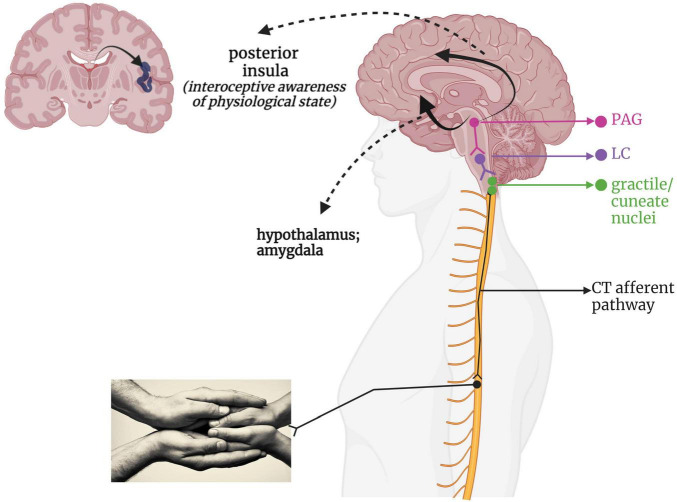
“Figure 4 presents a hypothetical CTafferent pathway based on its innervation of the posterior insula in humans (Olausson et al., 2002, 2008; Björnsdotter et al., 2009; McGlone et al., 2014; Jönsson et al., 2018; Tuulari et al., 2019) and the periaqueductal gray (PAG) and hypothalamus in mice (Yu et al.”
BackgroundMast, F. W., Preuss, N., Hartmann, M., & Grabherr, L. (2014) · Frontiers in Integrative Neuroscience · doi:10.3389/fnint.2014.00044 · Cited by 142 · cited 3×
“, 2015), and maintenance of a coherent representation of the body (Mast et al., 2014; Ferrè and Haggard, 2016).”
BackgroundChronic pain and PTSD: evolving views on their comorbidity
Brennstuhl, M.-J., Tarquinio, C., & Montel, S. (2015) · Perspectives in Psychiatric Care · doi:10.1111/ppc.12093 · Cited by 140
The parieto-insular vestibular cortex in humans: more than a single area?
Frank, S. M., & Greenlee, M. W. (2018) · Journal of Neurophysiology · doi:10.1152/jn.00907.2017 · Cited by 140
Baranek, G. T., Woynaroski, T. G., Nowell, S. W., Turner‐Brown, L., DuBay, M. F., Crais, E. R., & Watson, L. R. (2017) · Developmental Cognitive Neuroscience · doi:10.1016/j.dcn.2017.08.006 · Cited by 139 · cited 1×
“, 2012), social capacities (Baranek et al., 2018; Stevenson et al., 2018; Thye et al., 2018), and sense of self (Panksepp and Northoff, 2009; Tsakiris, 2017), which are globally impacted in trauma-related disorders.”
BackgroundFraley, R. C., Fazzari, D. A., Bonanno, G. A., & Dekel, S. (2006) · Personality and Social Psychology Bulletin · doi:10.1177/0146167205282741 · Cited by 138 · cited 1×
“Individuals with insecure attachment styles exhibit increased severity of psychiatric and PTSD symptoms (Mikulincer et al., 1993, 1999; Solomon et al., 1998; Dieperink et al., 2001; Zakin et al., 2003; Declercq and Willemsen, 2006; Fraley et al., 2006; Ghafoori et al., 2008; Bogaerts et al., 2009; Midolo et al., 2020)…”
BackgroundMendes, D. D., Mello, M. F., Ventura, P., De Medeiros Passarela, C., & De Jesus Mari, J. (2008) · The International Journal of Psychiatry in Medicine · doi:10.2190/pm.38.3.b · Cited by 138 · cited 1×
“, 2018), lower than 50% efficacy in PTSD patients has been reported (Marks et al., 1998; Bradley et al., 2005; Mendes et al., 2008; Kar, 2011), and they can be less beneficial during states of stress (van der Kolk and Fisler, 1995; Raio et al.”
BackgroundNeural correlates of gentle skin stroking in early infancy
Tuulari, J. J., Scheinin, N. M., Lehtola, S., Merisaari, H., Saunavaara, J., Parkkola, R., Sehlstedt, I., Karlsson, L., Karlsson, H., & Björnsdotter, M. (2019) · Developmental Cognitive Neuroscience · doi:10.1016/j.dcn.2017.10.004 · Cited by 137
Rufer, M., Held, D., Cremer, J., Fricke, S., Moritz, S., Peter, H., & Hand, I. (2006) · Psychotherapy and Psychosomatics · doi:10.1159/000089225 · Cited by 134
Twaite, J. A., & Rodriguez-Srednicki, O. (2004) · Journal of Child Sexual Abuse · doi:10.1300/j070v13n01_02 · Cited by 132 · cited 1×
“, 2020), and attachment style has shown to be a mediating (Roche et al., 1999; Shapiro and Levendosky, 1999; Twaite and Rodriguez-Srednicki, 2004; Sandberg et al., 2010) and moderating (Sandberg, 2010; Scott and Babcock, 2010) variable between childhood exposure to trauma and psychiatric distress.”
BackgroundScudder, C. A., Moschovakis, A. K., Karabelas, A. B., & Highstein, S. M. (1996) · Journal of Neurophysiology · doi:10.1152/jn.1996.76.1.332 · Cited by 132
Vestibular Interactions in the Thalamus
Wijesinghe, R., Protti, D. A., & Camp, A. J. (2015) · Frontiers in Neural Circuits · doi:10.3389/fncir.2015.00079 · Cited by 131
Dissociation Predicts Symptom-Related Treatment Outcome in Short-Term Inpatient Psychotherapy
Spitzer, C., Barnow, S., Freyberger, H. J., & Joergen Grabe, H. (2007) · Australian & New Zealand Journal of Psychiatry · doi:10.1080/00048670701449146 · Cited by 129
The development of vestibular system and related functions in mammals: impact of gravity
Jamon, M. (2014) · Frontiers in Integrative Neuroscience · doi:10.3389/fnint.2014.00011 · Cited by 129 · cited 5×
“Vestibular system The vestibular system is the first sensory system to begin development in utero (Sidebotham, 1988; Blayney, 1997), and the morphology of the vestibular apparatus is mature within the first month of gestation (Nandi and Luxon, 2008; Jamon, 2014).”
BackgroundInfluentialfMRI functional connectivity of the periaqueductal gray in PTSD and its dissociative subtype
Harricharan, S., Rabellino, D., Frewen, P. A., Densmore, M., Théberge, J., McKinnon, M. C., Schore, A. N., & Lanius, R. A. (2016) · Brain and Behavior · doi:10.1002/brb3.579 · Cited by 127 · cited 2×
“Individuals with PTSD show increased rsFC of the PAG with the anterior insula and anterior cingulate, major nodes of the SN (Harricharan et al., 2016).”
BackgroundSelf-citationOvercoming Trauma through Yoga: Reclaiming Your Body
Emerson, D. J., & Hopper, E. K. (2011) · Cited by 127
Paetzold, R. L., Rholes, W. S., & Kohn, J. L. (2015) · Review of General Psychology · doi:10.1037/gpr0000042 · Cited by 125
Attachment style classification and posttraumatic stress disorder in former prisoners of war.
Dieperink, M., Leskela, J., Thuras, P., & Engdahl, B. (2001) · American Journal of Orthopsychiatry · doi:10.1037//0002-9432.71.3.374 · Cited by 124 · cited 2×
“Individuals with insecure attachment styles exhibit increased severity of psychiatric and PTSD symptoms (Mikulincer et al., 1993, 1999; Solomon et al., 1998; Dieperink et al., 2001; Zakin et al., 2003; Declercq and Willemsen, 2006; Fraley et al., 2006; Ghafoori et al., 2008; Bogaerts et al., 2009; Midolo et al., 2020)…”
BackgroundFunctional neuroimaging studies of human somatosensory cortex
McGlone, F. P., Kelly, E. F., Trulsson, M., Francis, S., Westling, G., & Bowtell, R. W. (2002) · Behavioural Brain Research · doi:10.1016/s0166-4328(02)00144-4 · Cited by 123 · cited 1×
“Vibration applied to tendons elicits illusory limb motion and dimensionality, impacting body schema and balance (Eklund, 1972; Goodwin et al., 1972; Lackner, 1988; McGlone et al., 2002; Romaiguère et al., 2003; McIntyre and Seizova-Cajic, 2007; Seizova-Cajic and Sachtler, 2007; Fasold et al., 2008; Palluel et al., 201…”
BackgroundThalamic connections of the vestibular cortical fields in the squirrel monkey (Saimiri sciureus)
Akbarian, S., Grüsser, O. ‐., & Guldin, W. O. (1992) · Journal of Comparative Neurology · doi:10.1002/cne.903260308 · Cited by 121 · cited 1×
“A “vestibular cortex” has been delineated in the primate and other mammals (Akbarian et al., 1992; Guldin et al., 1992; for a review, see Guldin and Grüsser, 1998) but remains to be definitively mapped in the human brain largely due to the confounds presented by its integration with other sensory stimuli (zu Eulenburg…”
BackgroundEMDR therapy: An overview of its development and mechanisms of action
Oren, E., & Solomon, R. M. (2012) · European Review of Applied Psychology · doi:10.1016/j.erap.2012.08.005 · Cited by 120
Immobilization and restraint effects on pain reactions in animals
Porro, C. A., & Carli, G. (1988) · Pain · doi:10.1016/0304-3959(88)90041-3 · Cited by 120 · cited 2×
“Tonic immobility can be elicited in animals using species-specific forms of repetitive tactile or vestibular stimulation, including inversion and somatosensory restraint (Klemm, 1971; Webster et al., 1981; Fleischmann and Urca, 1988; Porro and Carli, 1988; for a review, see Kozlowska et al., 2015).”
BackgroundThe innate alarm system in PTSD: conscious and subconscious processing of threat.
Lanius, R. A., Rabellino, D., Boyd, J. E., Harricharan, S., Frewen, P. A., & McKinnon, M. C. (2017) · Current Opinion in Psychology · doi:10.1016/j.copsyc.2016.11.006 · Cited by 120 · cited 2×
“A subcortical loop from the body to the midbrain and back again short-circuits the frontal regions for efficiency, priming the traumatized individual for rapid defensive responding (Lanius et al., 2017).”
BackgroundSelf-citationOpacka-Juffry, J., & Mohiyeddini, C. (2012) · Stress · doi:10.3109/10253890.2011.560309 · Cited by 119
The Neural Correlates of the Noradrenergic Modulation of Human Attention, Arousal and Learning
Coull, J. T., Frith, C. D., Dolan, R. J., Frackowiak, R. S. J., & Grasby, P. M. (1997) · European Journal of Neuroscience · doi:10.1111/j.1460-9568.1997.tb01635.x · Cited by 116 · cited 1×
“The appropriate level of attention and alertness required for higher order emotional and cognitive processes is then mediated by the thalamus (LaBerge et al., 1992; Coull, 1997; Portas et al., 1998).”
BackgroundPhysiological Evidence that the Vestibular System Participates in Autonomic and Respiratory Control
Yates, B. J., & Miller, A. D. (1998) · Journal of Vestibular Research · doi:10.3233/ves-1998-8103 · Cited by 115 · cited 2×
“Here, somatic sensory input is embedded in the manipulation and regulation of arousal (Balaban and Porter, 1998; Yates and Miller, 1998; Manzotti et al., 2019) given its connections with and integration at the RAS.”
BackgroundThe Associations Between Oxytocin and Trauma in Humans: A Systematic Review
Donadon, M. F., Martin-Santos, R., & Osório, F. D. L. (2018) · Frontiers in Pharmacology · doi:10.3389/fphar.2018.00154 · Cited by 115 · cited 1×
“, 2020) and lower blood plasma oxytocin levels (Heim et al., 2009; Donadon et al., 2018), which may be tied to disruptions in CT-afferent driven neurodevelopment.”
BackgroundThe social buffering of pain by affective touch: a laser-evoked potential study in romantic couples
von Mohr, M., Krahé, C., Beck, B., & Fotopoulou, A. (2018) · Social Cognitive and Affective Neuroscience · doi:10.1093/scan/nsy085 · Cited by 114
Dynamic touch reduces physiological arousal in preterm infants: A role for c-tactile afferents?
Manzotti, A., Cerritelli, F., Esteves, J. E., Lista, G., Lombardi, E., La Rocca, S., Gallace, A., McGlone, F. P., & Walker, S. C. (2019) · Developmental Cognitive Neuroscience · doi:10.1016/j.dcn.2019.100703 · Cited by 114 · cited 3×
“Discriminative or non-affective touch travels via myelinated A-beta afferents projecting to the primary somatosensory cortex (S1) (Olausson et al., 2010; Manzotti et al., 2019).”
BackgroundNeural substrates underlying fear‐evoked freezing: the periaqueductal grey–cerebellar link
Koutsikou, S., Crook, J. J., Earl, E. V., Leith, J. L., Watson, T. C., Lumb, B. M., & Apps, R. (2014) · The Journal of Physiology · doi:10.1113/jphysiol.2013.268714 · Cited by 111 · cited 1×
“shutdown/collapse (Keay and Bandler, 2001; Lovick and Bandler, 2005; Koutsikou et al., 2014) as well as affective touch-”
D'Andrea, W., Pole, N., DePierro, J., Freed, S., & Wallace, D. B. (2013) · International Journal of Psychophysiology · doi:10.1016/j.ijpsycho.2013.07.008 · Cited by 111 · cited 2×
“Alternatively, decreased arousal may contribute toward the dampened emotionality and hypo-responsivity to stimuli evident in the dissociative subtype (Frewen and Lanius, 2006; Ludäscher et al., 2007; Sack et al., 2012; D’Andrea et al., 2013; Thome et al., 2019).”
BackgroundHarricharan, S., McKinnon, M. C., & Lanius, R. A. (2021) · Frontiers in Neuroscience · doi:10.3389/fnins.2021.625490 · Cited by 110 · cited 3×
“Here, we introduce a neurobiologically informed perspective from which to view trauma-based conditions considering how sensory processing contributes to an organism’s ability to regulate physiological arousal, emotions, and actions (Harricharan et al., 2021).”
BackgroundInfluentialSelf-citationPuyvelde, M. V., Gorissen, A.-S., Pattyn, N., & McGlone, F. (2019) · Physiology & Behavior · doi:10.1016/j.physbeh.2019.04.024 · Cited by 110
Brain mechanisms of social touch-induced analgesia in females
López-Solà, M., Geuter, S., Koban, L., Coan, J. A., & Wager, T. D. (2019) · Pain · doi:10.1097/j.pain.0000000000001599 · Cited by 110 · cited 1×
“, 2015), and light touch (López-Solà et al., 2019; Reddan et al., 2020) within the context of safety.”
BackgroundDevelopment of brain mechanisms for processing affective touch
Björnsdotter, M., Gordon, I., Pelphrey, K. A., Olausson, H., & Kaiser, M. D. (2014) · Frontiers in Behavioral Neuroscience · doi:10.3389/fnbeh.2014.00024 · Cited by 109 · cited 2×
“Some researchers have categorized affective touch as an interoceptive sensation as it conveys information about the body’s internal state and contributes to experiences of emotion and physiological state (Björnsdotter et al., 2014; Marshall and McGlone, 2020); however, it should be noted that others regard any externa…”
BackgroundPfeiffer, C., Lopez, C., Schmutz, V., Duenas, J. A., Martuzzi, R., & Blanke, O. (2013) · PLoS ONE · doi:10.1371/journal.pone.0061751 · Cited by 109 · cited 1×
“These multimodal processing regions are inclusive of auditory, visual, and somatosensory input, suggesting a multisensory binding role played by the vestibular system (Pfeiffer et al., 2013; Shayman et al., 2018).”
BackgroundEvolutionary psychiatry and the triune brain
Maclean, P. D. (1985) · Psychological Medicine · doi:10.1017/s0033291700023485 · Cited by 109 · cited 2×
“cognitive capacities and behavioral flexibility (Maclean, 1985).”
BackgroundNeuroanatomic Substrates for Vestibulo-Autonomic Interactions
Balaban, C. D., & Porter, J. D. (1998) · Journal of Vestibular Research · doi:10.3233/ves-1998-8102 · Cited by 107
Steuwe, C., Daniels, J. K., Frewen, P. A., Densmore, M., Pannasch, S., Beblo, T., Reiss, J., & Lanius, R. A. (2014) · Social Cognitive and Affective Neuroscience · doi:10.1093/scan/nss105 · Cited by 107 · cited 1×
“Individuals with PTSD have shown hyperactivation of the PAG in response to direct eyecontact (Steuwe et al., 2014) as well as to subliminal threat stimuli (Terpou et al.”
BackgroundSelf-citationCardiac and Respiratory Function During Sudden Prolonged Immobility in Wild Rodents
Hofer, M. A. (1970) · Psychosomatic Medicine · doi:10.1097/00006842-197011000-00008 · Cited by 107 · cited 1×
“Alternatively, hypo-arousal and decreased muscle tone occur during emotional shut-down or feign death as a passive defensive response to inescapable or prolonged threat (Hofer, 1970; Depaulis et al., 1994; Bracha, 2004).”
BackgroundOrigins of arousal: roles for medullary reticular neurons
Pfaff, D. W., Martin, E. M., & Faber, D. S. (2012) · Trends in Neurosciences · doi:10.1016/j.tins.2012.04.008 · Cited by 105 · cited 4×
“The RAS, comprised of numerous nuclei, generates raw arousal and “alarm” mainly within the locus coeruleus (LC) and pedunculopontine nuclei (PPN) (Berridge and Waterhouse, 2003; Aston-Jones and Cohen, 2005; Horn and Adamzyk, 2012; Pfaff et al., 2012) and has reciprocal interactions with the brainstem vestibular nuclei…”
BackgroundInfluentialThe first prior: From co-embodiment to co-homeostasis in early life
Ciaunica, A., Constant, A., Preissl, H., & Fotopoulou, K. (2021) · Consciousness and Cognition · doi:10.1016/j.concog.2021.103117 · Cited by 105
Zakin, G., Solomon, Z., & Neria, Y. (2003) · Personality and Individual Differences · doi:10.1016/s0191-8869(02)00073-9 · Cited by 104 · cited 1×
“Individuals with insecure attachment styles exhibit increased severity of psychiatric and PTSD symptoms (Mikulincer et al., 1993, 1999; Solomon et al., 1998; Dieperink et al., 2001; Zakin et al., 2003; Declercq and Willemsen, 2006; Fraley et al., 2006; Ghafoori et al., 2008; Bogaerts et al., 2009; Midolo et al., 2020)…”
BackgroundMikulincer, M., Horesh, N., Eilati, I., & Kotler, M. (1999) · Personality and Individual Differences · doi:10.1016/s0191-8869(99)00032-x · Cited by 104
Cicco, V. D., Fantozzi, M. P. T., Cataldo, E., Barresi, M., Bruschini, L., Faraguna, U., & Manzoni, D. (2018) · Frontiers in Neuroanatomy · doi:10.3389/fnana.2017.00130 · Cited by 103
Touch and social support influence interpersonal synchrony and pain
Reddan, M. C., Young, H. E., Falkner, J., López‐Solà, M., & Wager, T. D. (2020) · Social Cognitive and Affective Neuroscience · doi:10.1093/scan/nsaa048 · Cited by 103 · cited 1×
“, 2015), and light touch (López-Solà et al., 2019; Reddan et al., 2020) within the context of safety.”
BackgroundLong descending motor tract axons and their control of neck and axial muscles
Shinoda, Y., Sugiuchi, Y., Izawa, Y., & Hata, Y. (2005) · Progress in brain research · doi:10.1016/s0079-6123(05)51017-3 · Cited by 101
Is there tonic immobility in humans? Biological evidence from victims of traumatic stress
Volchan, E., Souza, G. G., Franklin, C. M., Norte, C. E., Rocha-Rego, V., Oliveira, J. M., David, I. A., Mendlowicz, M. V., Coutinho, E. S. F., Fiszman, A., et al. (2011) · Biological Psychology · doi:10.1016/j.biopsycho.2011.06.002 · Cited by 101
Warner, E., Koomar, J. A., Lary, B., & Cook, A. (2013) · Journal of Family Violence · doi:10.1007/s10896-013-9535-8 · Cited by 101
Ciaunica, A., Seth, A. K., Limanowski, J., Hesp, C., & Friston, K. J. (2022) · Consciousness and Cognition · doi:10.1016/j.concog.2022.103320 · Cited by 100
Nijenhuis, E. R. S., Spinhoven, P., Vanderlinden, J., van Dyck, R., & van der Hart, O. (1998) · Journal of Abnormal Psychology · doi:10.1037/0021-843x.107.1.63 · Cited by 100
Besser, A., & Neria, Y. (2012) · Psychological Trauma: Theory, Research, Practice, and Policy · doi:10.1037/a0017835 · Cited by 99 · cited 1×
“Though speculative, aberrant somatic sensory integration correlated with insecure attachment patterning may set the stage for later psychiatric dysfunction, providing insight into the high correspondence between early life traumatization with insecure attachment and the later development of psychopathology and/or PTSD…”
BackgroundMichelson, L., June, K., Vives, A., Testa, S., & Marchione, N. (1998) · Behaviour Research and Therapy · doi:10.1016/s0005-7967(98)00073-4 · Cited by 98
Malejko, K., Abler, B., Plener, P. L., & Straub, J. (2017) · Frontiers in Psychiatry · doi:10.3389/fpsyt.2017.00085 · Cited by 98 · cited 1×
“Although cognitivebehavioral therapies are considered a first line of treatment for traumatized individuals (Malejko et al., 2017; Yang et al., 2018), lower than 50% efficacy in PTSD patients has been reported (Marks et al.”
BackgroundChurch, A. T., Katigbak, M. S., & Reyes, J. A. S. (1998) · European Journal of Personality · doi:10.1002/(sici)1099-0984(199807/08)12:4<249::aid-per312>3.0.co;2-t · Cited by 98
The Sense of the Body in Individuals with Spinal Cord Injury
Lenggenhager, B., Pazzaglia, M., Scivoletto, G., Molinari, M., & Aglioti, S. M. (2012) · PLoS ONE · doi:10.1371/journal.pone.0050757 · Cited by 97
Kemp, K., Signal, T., Botros, H., Taylor, N., & Prentice, K. (2014) · Journal of Child and Family Studies · doi:10.1007/s10826-013-9718-1 · Cited by 96 · cited 3×
“Equine-facilitated psychotherapy (EFP) facilitates attunement to horses (Lentini and Knox, 2015), where individuals learn how to read non-verbal cues and be within a non-threatening, attuned, co-regulatory relationship.”
BackgroundMyers, A. J., Williams, L., Gatt, J. M., McAuley-Clark, E. Z., Dobson-Stone, C., Schofield, P. R., & Nemeroff, C. B. (2014) · Journal of Psychiatric Research · doi:10.1016/j.jpsychires.2014.08.021 · Cited by 95 · cited 1×
“However, the relationship between severity of early life trauma, genetics, and oxytocin has proved complicated, warranting further investigation (Chatzittofis et al., 2014; Myers et al., 2014; for a review, see Donadon et al., 2018).”
BackgroundWarner, E., Spinazzola, J., Westcott, A., Gunn, C., & Hodgdon, H. (2014) · Journal of Child & Adolescent Trauma · doi:10.1007/s40653-014-0030-z · Cited by 93
Ogle, C. M., Rubin, D. C., & Siegler, I. C. (2015) · Psychological Trauma: Theory, Research, Practice, and Policy · doi:10.1037/tra0000015 · Cited by 93
Vestibular cognition: State-of-the-art and future directions
Ferrè, E. R., & Haggard, P. (2020) · Cognitive Neuropsychology · doi:10.1080/02643294.2020.1736018 · Cited by 93 · cited 2×
“Neurons from the vestibular nuclei project down the lateral vestibulospinal tract to influence muscle tone and postural control (Yoo and Mihaila, 2020), down to innervate vestibulo-sympathetic reflexes of the heart and lungs (Hernandez and Das, 2020), across to the flocculonodular lobe in the cerebellum for balance, c…”
BackgroundNicholson, A. A., Ros, T., Densmore, M., Frewen, P., Neufeld, R. W. J., Théberge, J., Jetly, R., & Lanius, R. A. (2020) · NeuroImage Clinical · doi:10.1016/j.nicl.2020.102490 · Cited by 92
Self-citationNeurofeedback Tunes Scale-Free Dynamics in Spontaneous Brain Activity
Ros, T., Frewen, P., Théberge, J., Michela, A., Kluetsch, R., Mueller, A., Candrian, G., Jetly, R., Vuilleumier, P. O., & Lanius, R. A. (2016) · Cerebral Cortex · doi:10.1093/cercor/bhw285 · Cited by 91 · cited 1×
“Alpha-targeted neurofeedback has been shown to normalize SN and DMN connectivity and diminish symptom severity in PTSD (Kluetsch et al., 2014; Nicholson et al., 2016, 2020a; van der Kolk et al., 2016; Ros et al., 2017; Rogel et al., 2020) and relieve sensory hyper-sensitivities (Hamed et al.”
BackgroundSelf-citationDisorganized attachment and personality functioning in adults: A latent class analysis.
Beeney, J. E., Wright, A. G. C., Stepp, S. D., Hallquist, M. N., Lazarus, S. A., Beeney, J. R. S., Scott, L. N., & Pilkonis, P. A. (2017) · Personality Disorders: Theory, Research, and Treatment · doi:10.1037/per0000184 · Cited by 91 · cited 1×
“Though there are distinct differences between anxious-insecure, avoidantinsecure, and disorganized attachment patterns, it is beyond the scope of this paper (instead see Bowlby, 1973; Ainsworth et al., 1978; Paetzold et al., 2015; Beeney et al., 2017) and thus we consider all non-secure attachment patterns here as ‘in…”
BackgroundThe co-occurrence of PTSD and dissociation: differentiating severe PTSD from dissociative-PTSD
Armour, C., Karstoft, K.-I., & Richardson, J. D. (2014) · Social Psychiatry and Psychiatric Epidemiology · doi:10.1007/s00127-014-0819-y · Cited by 90 · cited 1×
“Additionally, PTSD + DS occurs in up to 44% of individuals with PTSD and is characterized by additional symptoms of derealization and depersonalization (Lanius et al., 2010b; Steuwe et al., 2012; Wolf et al., 2012b; Stein et al., 2013; Armour et al., 2014; Blevins et al., 2014; for a review, see Hansen et al., 2017; W…”
BackgroundZoet, H. A., Wagenmans, A., van Minnen, A., & de Jongh, A. (2018) · European Journal of Psychotraumatology · doi:10.1080/20008198.2018.1468707 · Cited by 90
Langmuir, J. I., Kirsh, S. G., & Classen, C. C. (2012) · Psychological Trauma Theory Research Practice and Policy · doi:10.1037/a0025588 · Cited by 89
Britton, Z., & Arshad, Q. (2019) · Frontiers in Neurology · doi:10.3389/fneur.2019.00063 · Cited by 88 · cited 1×
“Neurons from the vestibular nuclei project down the lateral vestibulospinal tract to influence muscle tone and postural control (Yoo and Mihaila, 2020), down to innervate vestibulo-sympathetic reflexes of the heart and lungs (Hernandez and Das, 2020), across to the flocculonodular lobe in the cerebellum for balance, c…”
BackgroundSchlumpf, Y. R., Reinders, A. A. T. S., Nijenhuis, E. R. S., Luechinger, R., van Osch, M. J. P., & Jäncke, L. (2014) · PLoS ONE · doi:10.1371/journal.pone.0098795 · Cited by 87 · cited 1×
“Severe early life neurodevelopmental disruptions may also give rise to the experience of multiple fragmented, discontinuous, and disembodied selves, such as those experienced in dissociative identity disorder (DID), a condition highly co-existent with early and severe traumatization (Reinders et al., 2003; Dorahy et a…”
BackgroundHalvorsen, J. Ø., Stenmark, H. I., Neuner, F., & Nordahl, H. M. (2014) · Behaviour Research and Therapy · doi:10.1016/j.brat.2014.03.010 · Cited by 87
Tonic Immobility as a Response to Rape in Humans a Theoretical Note
Suarez, S. D., & Gallup, G. G. (1979) · The Psychological Record · doi:10.1007/bf03394619 · Cited by 87 · cited 2×
“Likewise, tonic immobility in humans is more common under fearinducing conditions of somatosensory restraint, such as rape (Suarez and Gallup, 1979; Heidt et al., 2005; Marx et al., 2008).”
BackgroundHealing the traumatized self: consciousness, neuroscience, treatment
(2015) · Choice Reviews Online · doi:10.5860/choice.190852 · Cited by 86
Dissociation and posttraumatic stress disorder: a latent profile analysis
Blevins, C. A., Weathers, F. W., & Witte, T. K. (2014) · Journal of Traumatic Stress · doi:10.1002/jts.21933 · Cited by 85 · cited 1×
“Additionally, PTSD + DS occurs in up to 44% of individuals with PTSD and is characterized by additional symptoms of derealization and depersonalization (Lanius et al., 2010b; Steuwe et al., 2012; Wolf et al., 2012b; Stein et al., 2013; Armour et al., 2014; Blevins et al., 2014; for a review, see Hansen et al., 2017; W…”
BackgroundDevelopment and assessment of the vestibular system
Nandi, R., & LUXON, L. M. (2008) · International Journal of Audiology · doi:10.1080/14992020802324540 · Cited by 85 · cited 3×
“The vestibulocochlear nerve is the first cranial nerve to complete myelination and the system is fully developed by the eighth month of intrauterine life (Blayney, 1997; Nandi and Luxon, 2008).”
BackgroundWhite, W. F., Burgess, A., Dalgleish, T., Halligan, S., Hiller, R., Oxley, A., Smith, P., & Meiser-Stedman, R. (2022) · Psychological Medicine · doi:10.1017/s0033291722001647 · Cited by 85
Gravity in the Brain as a Reference for Space and Time Perception
Lacquaniti, F., Bosco, G., Gravano, S., Indovina, I., Scaleia, B. L., Maffei, V., & Zago, M. (2015) · Multisensory Research · doi:10.1163/22134808-00002471 · Cited by 84 · cited 1×
“As such, developing a reference to gravity is critical in orienting our bodies in space, navigating through the environment, maintaining an upright and vertical orientation as bipeds, and sensing the passage of time as a function of terrestrial motion (Brandt et al., 1994; Lacquaniti et al., 2015; Ferrè and Haggard, 2…”
BackgroundThe sensory profile of people with post-traumatic stress symptoms.
Engel-Yeger, B., Palgy-Levin, D., & Lev-Wiesel, R. (2013) · Occupational Therapy in Mental Health · doi:10.1080/0164212x.2013.819466 · Cited by 84 · cited 1×
“Post-traumatic stress disorder (PTSD) has been broadly associated with sensory modulation difficulties, manifested as either hyper- or hypo-responsivity to sensory input (Shalev et al., 2000; Engel-Yeger et al., 2013; Devine et al., 2020; Yochman and Pat-Horenczyk, 2020; Joseph et al., 2021).”
BackgroundMetzinger, T. (2013) · Frontiers in Psychology · doi:10.3389/fpsyg.2013.00746 · Cited by 84 · cited 2×
“The somatic sensory systems are deemed foundational for the simplest or “minimal” self as it relates to physical world (Panksepp and Northoff, 2009; Metzinger, 2013).”
BackgroundThe Role of the Skin in Interoception: A Neglected Organ?
Crucianelli, L., & Ehrsson, H. H. (2023) · Perspectives on Psychological Science · doi:10.1177/17456916221094509 · Cited by 84
Maier, A., Gieling, C., Heinen-Ludwig, L., Stefan, V., Schultz, J., Güntürkün, O., Becker, B., Hurlemann, R., & Scheele, D. (2020) · American Journal of Psychiatry · doi:10.1176/appi.ajp.2019.19020212 · Cited by 84 · cited 1×
“, 2009), individuals with PTSD and/or history of trauma can report it as feeling unpleasant and intense (Badura-Brack et al., 2015; Strauss et al., 2019; Maier et al., 2020).”
BackgroundAn Attachment Perspective on Traumatic and Posttraumatic Reactions
Mikulincer, M., Shaver, P. R., & Solomon, Z. (2015) · Future Directions in Post-Traumatic Stress Disorder · doi:10.1007/978-1-4899-7522-5_4 · Cited by 83
Effects of Deep Pressure Stimulation on Physiological Arousal
Reynolds, S., Lane, S. J., & Mullen, B. (2015) · American Journal of Occupational Therapy · doi:10.5014/ajot.2015.015560 · Cited by 83 · cited 2×
“, 2020; for a review, see Sandler and Coren, 1981), deep touch pressure (Diego and Field, 2009; Reynolds et al., 2015), and light touch (López-Solà et al.”
BackgroundNicholson, A. A., Ros, T., Frewen, P. A., Densmore, M., Théberge, J., Kluetsch, R. C., Jetly, R., & Lanius, R. A. (2016) · NeuroImage: Clinical · doi:10.1016/j.nicl.2016.07.006 · Cited by 83
Self-citationYang, Z., Oathes, D. J., Linn, K. A., Bruce, S. E., Satterthwaite, T. D., Cook, P. A., Satchell, E. K., Shou, H., & Sheline, Y. I. (2018) · Biological Psychiatry: Cognitive Neuroscience and Neuroimaging · doi:10.1016/j.bpsc.2017.12.006 · Cited by 83 · cited 1×
“Although cognitivebehavioral therapies are considered a first line of treatment for traumatized individuals (Malejko et al., 2017; Yang et al., 2018), lower than 50% efficacy in PTSD patients has been reported (Marks et al.”
BackgroundOptogenetic fMRI interrogation of brain-wide central vestibular pathways
Leong, A. T. L., Gu, Y., Chan, Y., Zheng, H., Dong, C. M., Chan, R. W., Wang, X., Liu, Y., Tan, L. H., & Wu, E. X. (2019) · Proceedings of the National Academy of Sciences · doi:10.1073/pnas.1812453116 · Cited by 83 · cited 2×
“Importantly, the SC receive ascending somatosensory feedback from the spinotectal (spinomesencephalic) tract (refer back to Figure 3) and have reciprocal connections with the vestibular nuclei innervating head and neck musculature (Rubelowski et al., 2013; Leong et al., 2019).”
BackgroundSandberg, D. A., Suess, E. A., & Heaton, J. L. (2010) · Journal of Interpersonal Violence · doi:10.1177/0886260508329126 · Cited by 82 · cited 1×
“…2020), and attachment style has shown to be a mediating (Roche et al., 1999; Shapiro and Levendosky, 1999; Twaite and Rodriguez-Srednicki, 2004; Sandberg et al., 2010) and moderating (Sandberg, 2010; Scott and Babcock, 2010) variable between childhood exposure to trauma and psychiatric distress.”
BackgroundThe effects of trauma on brain and body: A unifying role for the midbrain periaqueductal gray
Terpou, B. A., Harricharan, S., McKinnon, M. C., Frewen, P., Jetly, R., & Lanius, R. A. (2019) · Journal of Neuroscience Research · doi:10.1002/jnr.24447 · Cited by 82
Self-citationToo Scared to Cry: Psychic Trauma in Childhood
Huszonek, J. J. (1991) · American Journal of Psychotherapy · doi:10.1176/appi.psychotherapy.1991.45.4.619 · Cited by 81
Three- and 6-Month Follow-Up of EMDR Treatment of PTSD in an HMO Setting.
Marcus, S. V., Marquis, P., & Sakai, C. (2004) · International Journal of Stress Management · doi:10.1037/1072-5245.11.3.195 · Cited by 80 · cited 1×
“Significant reductions in PTSD symptoms have been found in as few as three to eight sessions (Rothbaum, 1997; Wilson et al., 1997; Marcus et al., 2004) although longer durations are recommended for severe and chronic early life traumatization (van der Kolk et al.”
BackgroundThe Evolution of Human Nature.
Kurtz, P. W., & Herrick, C. J. (1957) · The Journal of Philosophy · doi:10.2307/2022332 · Cited by 79
The assessment of fetal neurobehavior by three-dimensional and four-dimensional ultrasound
Kurjak, A., Tikvica, A., Stanojević, M., Mišković, B., Ahmed, B. H., Azumendi, G., & Renzo, G. C. D. (2008) · The Journal of Maternal-Fetal & Neonatal Medicine · doi:10.1080/14767050802212166 · Cited by 78 · cited 1×
“The fetus responds to touch as early as 8 weeks (Lecanuet and Schaal, 2002; Hadders-Algra, 2007) and elicits self-initiated movements by 12 weeks (Kurjak et al., 2008).”
BackgroundDissociative identity disorder: out of the shadows at last?
Reinders, A. A. T. S., & Veltman, D. J. (2021) · The British Journal of Psychiatry · doi:10.1192/bjp.2020.168 · Cited by 78
The balance of feelings: Vestibular modulation of bodily sensations
Ferrè, E. R., Bottini, G., Iannetti, G. D., & Haggard, P. (2012) · Cortex · doi:10.1016/j.cortex.2012.01.012 · Cited by 77 · cited 1×
“, 2021), tactile, nociceptive (McGeoch et al., 2009; Ferrè et al., 2013), and visualproprioceptive cues (Ponzo et al.”
BackgroundCox, K. S., Resnick, H. S., & Kilpatrick, D. G. (2014) · Journal of Traumatic Stress · doi:10.1002/jts.21925 · Cited by 76
What Is Trauma and Dissociation?
Şar, V., & Öztürk, E. (2006) · Journal of Trauma Practice · doi:10.1300/j189v04n01_02 · Cited by 76
Yorke, J., Nugent, W., Strand, E., Bolen, R., New, J., & Davis, C. (2013) · Early Child Development and Care · doi:10.1080/03004430.2012.693486 · Cited by 76 · cited 3×
“Equine-facilitated psychotherapy (EFP) facilitates attunement to horses (Lentini and Knox, 2015), where individuals learn how to read non-verbal cues and be within a non-threatening, attuned, co-regulatory relationship.”
BackgroundThe laminar distribution of macaque tectobulbar and tectospinal neurons
May, P. J., & Porter, J. D. (1992) · Visual Neuroscience · doi:10.1017/s0952523800002911 · Cited by 76 · cited 1×
“They send afferents to oculomotor neurons, the pontine and medullary reticular formation, and cervical and upper thoracic motor neurons to orient the eyes, head and neck toward or away from stimuli (May and Porter, 1992; Scudder et al., 1996; May, 2006).”
BackgroundEquine-Facilitated Psychotherapy With Children and Adolescents: An Update and Literature Review
Lentini, J. A., & Knox, M. S. (2015) · Journal of Creativity in Mental Health · doi:10.1080/15401383.2015.1023916 · Cited by 76 · cited 1×
“Equine-facilitated psychotherapy (EFP) facilitates attunement to horses (Lentini and Knox, 2015), where individuals learn how to read non-verbal cues and be within a non-threatening, attuned, co-regulatory relationship.”
BackgroundCarmona, J. E., Holland, A. K., & Harrison, D. W. (2009) · Psychological Bulletin · doi:10.1037/a0014825 · Cited by 75 · cited 2×
“Vestibular stimulation occurs when crystals and fluid are displaced in the otoliths and semicircular canals, respectively, sending signals to the vestibular nuclei via the pontomedullary junction (Carmona et al., 2009; Jamon, 2014) or the flocculonodular lobes of the cerebellum via the inferior cerebellar peduncle (Hi…”
BackgroundDamage to the right insula disrupts the perception of affective touch
Kirsch, L. P., Besharati, S., Papadaki, C., Crucianelli, L., Bertagnoli, S., Ward, N., Moro, V., Jenkinson, P. M., & Fotopoulou, A. (2020) · eLife · doi:10.7554/elife.47895 · Cited by 74 · cited 1×
“Indeed, damage to the right insula reduces pleasantness ratings of CT-optimized touch (Kirsch et al., 2020).”
BackgroundEffectiveness of an extended yoga treatment for women with chronic posttraumatic stress disorder
Price, M., Spinazzola, J., Musicaro, R., Turner, J., Suvak, M., Emerson, D., & van der Kolk, B. (2017) · The Journal of Alternative and Complementary Medicine · doi:10.1089/acm.2015.0266 · Cited by 73 · cited 1×
“, 2014) while extended yoga practice (20-weeks) drove even greater improvements (Price et al., 2017).”
BackgroundPonzo, S., Kirsch, L. P., Fotopoulou, A., & Jenkinson, P. M. (2018) · Neuropsychologia · doi:10.1016/j.neuropsychologia.2018.06.020 · Cited by 72 · cited 2×
“During uterine development, the fetus experiences co-embodiment on a sensory level in that the fetus’ physical and regulatory developmental needs are dependent upon the mother and intrauterine sensory experiences during prenatal development (Ponzo et al., 2018; Ciaunica et al., 2021a).”
BackgroundSensory performances in the human foetus : a brief summary of research
Lecanuet, J., & Schaal, B. (2002) · Intellectica Revue de l Association pour la Recherche Cognitive · doi:10.3406/intel.2002.1072 · Cited by 71 · cited 1×
“The fetus responds to touch as early as 8 weeks (Lecanuet and Schaal, 2002; Hadders-Algra, 2007) and elicits self-initiated movements by 12 weeks (Kurjak et al.”
BackgroundUnravelling the neurobiology of interoceptive inference
Allen, M. (2020) · Trends in Cognitive Sciences · doi:10.1016/j.tics.2020.02.002 · Cited by 71 · cited 1×
“…al., 2014; Marshall and McGlone, 2020); however, it should be noted that others regard any externally applied stimulus as exteroceptive, reserving the term interoception for internally generated feedback informing upon the state of the body (Craig, 2002; Critchley and Garfinkel, 2017; Allen, 2020).”
BackgroundDevine, S. L., Walker, S. C., Makdani, A. D., Stockton, E. R., McFarquhar, M., McGlone, F. P., & Trotter, P. D. (2020) · Frontiers in Psychology · doi:10.3389/fpsyg.2020.557171 · Cited by 70 · cited 2×
“Individuals who experienced a lack of positively valenced, affectionate touch in childhood, such as in cases of neglect and abuse, present with blunted sensitivity to the social value of touch (Devine et al., 2020) and lower blood plasma oxytocin levels (Heim et al.”
BackgroundTaylor, J. L. (2009) · Elsevier eBooks · doi:10.1016/b978-008045046-9.01907-0 · Cited by 70
Anchoring the Self to the Body: Vestibular Contribution to the Sense of Self
Ferrè, E. R., Lopez, C., & Haggard, P. (2014) · Psychological Science · doi:10.1177/0956797614547917 · Cited by 69 · cited 4×
“This spatial union of the mind with the physical body (Ferrè et al., 2014) provides a fundamental reference point for higher-order cortical function as it directs our attention and intentions in volitional thought and action (Panksepp, 1998).”
BackgroundInfluentialLenggenhager, B., Smith, S. T., & Blanke, O. (2006) · Reviews in the Neurosciences · doi:10.1515/revneuro.2006.17.6.643 · Cited by 69
Complex Trauma in Children and Youth: A Scoping Review of Sensory-Based Interventions
Fraser, K., MacKenzie, D. E., & Versnel, J. (2017) · Occupational Therapy in Mental Health · doi:10.1080/0164212x.2016.1265475 · Cited by 69 · cited 1×
“Sensory-based interventions are increasing in utility (Fraser et al., 2017; McGreevy and Boland, 2020) and several approaches are discussed in turn.”
BackgroundNeurofeedback Tunes Scale-Free Dynamics in Spontaneous Brain Activity
Ros, T., Frewen, P., Théberge, J., Michela, A., Kluetsch, R. C., Mueller, A., Candrian, G., Jetly, R., Vuilleumier, P. O., & Lanius, R. A. (2016) · Archive ouverte UNIGE (University of Geneva) · Cited by 69
Self-citationDeecke, L., Schwarz, D. W. F., & Fredrickson, J. M. (1977) · Experimental Brain Research · doi:10.1007/bf00237252 · Cited by 68
Understanding posttrauma reactions within an attachment theory framework
Marshall, E. M., & Frazier, P. A. (2018) · Current Opinion in Psychology · doi:10.1016/j.copsyc.2018.08.001 · Cited by 68
Recognizing early childhood as a critical time for developing and supporting self-regulation
Perry, N. E. (2019) · Metacognition and Learning · doi:10.1007/s11409-019-09213-8 · Cited by 67 · cited 1×
“This pre-reflective, multisensory integrative region may be most impacted by threats to survival, giving rise to deficits in regulatory capacities and post-traumatic symptoms (Perry and Hambrick, 2008; Perry, 2019).”
BackgroundThe Effects of Vertical Rocking Frequencies on the Arousal Level in Two-Month-Old Infants
Vrugt, D. T., & Pederson, D. R. (1973) · Child Development · doi:10.1111/j.1467-8624.1973.tb02139.x · Cited by 66
Equine Facilitated Therapy for Complex Trauma (EFT-CT)
Naste, T. M., Price, M. A., Karol, J., Martin, L., Murphy, K., Miguel, J. L., & Spinazzola, J. (2017) · Journal of Child & Adolescent Trauma · doi:10.1007/s40653-017-0187-3 · Cited by 65 · cited 1×
“EFP involves grooming and caring for the horse to build trust through somatosensory means, as well as mounting (riding the horse with or without a saddle, maintaining postural control, riding with eyes closed) with the guidance of a trained therapist (Naste et al., 2018).”
BackgroundMontonen, O., Ezer, S., Saarialho-Kere, U. K., Herva, R., Karjalainen-Lindsberg, M.-L., Kaitila, I., Schlessinger, D., Srivastava, A. K., Thesleff, I., & Kere, J. (1998) · Journal of Histochemistry & Cytochemistry · doi:10.1177/002215549804600301 · Cited by 64 · cited 1×
“Somatosensory system The source of both the skin and the nervous system is the embryonic ectoderm, which differentiates into the surface ectoderm and neuroectoderm, respectively (Montonen et al., 1998; Bond et al., 2012).”
BackgroundHarricharan, S., Nicholson, A. A., Densmore, M., Théberge, J., McKinnon, M. C., Neufeld, R. W. J., & Lanius, R. A. (2017) · Neuropsychologia · doi:10.1016/j.neuropsychologia.2017.09.010 · Cited by 64 · cited 4×
“Indeed, upstream alterations in functional connectivity have been found at the level of the vestibular nuclei (Harricharan et al., 2017), PAG (Harricharan et al.”
BackgroundInfluentialSelf-citationThe Brainstem: Anatomy, Assessment, and Clinical Syndromes
Hurley, R. A., Flashman, L. A., Chow, T. W., & Taber, K. H. (2010) · Journal of Neuropsychiatry · doi:10.1176/jnp.2010.22.1.iv · Cited by 62
Bystrova, K. (2008) · Medical Hypotheses · doi:10.1016/j.mehy.2008.09.033 · Cited by 62 · cited 1×
“The fetal somatosensory system is directly and frequently stimulated by movement of the amniotic fluid over fetal lanugo hairs (Bystrova, 2009; Sasaki et al., 2013), as well as through selftouch (Piontelli, 2015) and self-motion within the confined space of the womb (Marx and Nagy, 2015).”
BackgroundHuzard, D., Martin, M., Maingret, F., Chemin, J., Jeanneteau, F., Mery, P.-F., Fossat, P., Bourinet, E., & François, A. (2022) · Science Advances · doi:10.1126/sciadv.abo7566 · Cited by 62
Attachment as a Moderator Between Intimate Partner Violence and PTSD Symptoms
Scott, S., & Babcock, J. C. (2010) · Journal of Family Violence · doi:10.1007/s10896-009-9264-1 · Cited by 61 · cited 1×
“, 2010) and moderating (Sandberg, 2010; Scott and Babcock, 2010) variable between childhood exposure to trauma and psychiatric distress.”
BackgroundProprioceptive head posture-related processing in human polysensory cortical areas
Fasold, O., Heinau, J., Trenner, M., Villringer, A., & Wenzel, R. (2008) · NeuroImage · doi:10.1016/j.neuroimage.2007.12.060 · Cited by 60 · cited 1×
“Vibration applied to tendons elicits illusory limb motion and dimensionality, impacting body schema and balance (Eklund, 1972; Goodwin et al., 1972; Lackner, 1988; McGlone et al., 2002; Romaiguère et al., 2003; McIntyre and Seizova-Cajic, 2007; Seizova-Cajic and Sachtler, 2007; Fasold et al., 2008; Palluel et al., 201…”
BackgroundPersistent Dissociation and Its Neural Correlates in Predicting Outcomes After Trauma Exposure
Lebois, L. A. M., Harnett, N. G., van Rooij, S. J. H., Ely, T. D., Jovanovic, T., Bruce, S. E., House, S. L., Ravichandran, C., Dumornay, N. M., Finegold, K. E., et al. (2022) · American Journal of Psychiatry · doi:10.1176/appi.ajp.21090911 · Cited by 60
Processing of affective and emotionally neutral tactile stimuli in the insular cortex
Davidovic, M., Starck, G., & Olausson, H. (2017) · Developmental Cognitive Neuroscience · doi:10.1016/j.dcn.2017.12.006 · Cited by 59 · cited 1×
“, 2014) transmit affective touch and selectively activate the posterior insula (PI) (Olausson et al., 2002, 2008; Davidovic et al., 2019; Tuulari et al., 2019), a cortical region involved in awareness of the body’s physiological status (Craig, 2002; Olausson et al.”
BackgroundTouch aversion in patients with interpersonal traumatization
Strauß, T., Rottstädt, F., Sailer, U., Schellong, J., Hamilton, J. P., Raue, C., Weidner, K., & Croy, I. (2019) · Depression and Anxiety · doi:10.1002/da.22914 · Cited by 58 · cited 1×
“, 2009), individuals with PTSD and/or history of trauma can report it as feeling unpleasant and intense (Badura-Brack et al., 2015; Strauss et al., 2019; Maier et al., 2020).”
BackgroundChildhood trauma, attachment and psychopathology: A correlation network approach
Midolo, L. R., Santoro, G., Ferrante, E., Pellegriti, P., Russo, S., Costanzo, A., & Schimmenti, A. (2020) · Mediterranean Journal of Clinical Psychology · doi:10.6092/2282-1619/mjcp-2418 · Cited by 58 · cited 1×
“Individuals with insecure attachment styles exhibit increased severity of psychiatric and PTSD symptoms (Mikulincer et al., 1993, 1999; Solomon et al., 1998; Dieperink et al., 2001; Zakin et al., 2003; Declercq and Willemsen, 2006; Fraley et al., 2006; Ghafoori et al., 2008; Bogaerts et al., 2009; Midolo et al., 2020)…”
BackgroundVestibular Influences on Autonomic Cardiovascular Control in Humans
Biaggioni, I., Costa, F., & Kaufmann, H. (1998) · Journal of Vestibular Research · doi:10.3233/ves-1998-8105 · Cited by 57 · cited 1×
“Functionally, vestibular input has been shown to be involved in motor control (Nandi and Luxon, 2008; Takakusaki, 2017), autonomic arousal regulation of respiration and blood pressure (Balaban and Porter, 1998; Biaggioni et al., 1998; Furman et al., 1998; Yates and Miller, 1998; Murakami et al., 2002), emotion regulat…”
BackgroundTonic immobility and the dorsal immobility response in twelve species of muroid rodents
Webster, D. G., Lanthorn, T. H., Dewsbury, D. A., & Meyer, M. E. (1981) · Behavioral and Neural Biology · doi:10.1016/s0163-1047(81)91034-7 · Cited by 57
Schmied, C., Boivin, X., Scala, S., & Waiblinger, S. (2010) · Interaction Studies Social Behaviour and Communication in Biological and Artificial Systems · doi:10.1075/is.11.3.08sch · Cited by 57 · cited 1×
“Ubiquitously, tactile stimuli functions to relieve stress and enhance health in mammals and non-mammals alike (Caldji et al., 1998; Liu et al., 2000; Meaney, 2001; Raussi et al., 2003; Schmied et al., 2010; Soares et al., 2011) to the extent that evolution has provided specialized receptors and pathways.”
BackgroundBinding body and self in visuo‐vestibular conflicts
Macauda, G., Bertolini, G., Palla, A., Straumann, D., Brugger, P., & Lenggenhager, B. (2014) · European Journal of Neuroscience · doi:10.1111/ejn.12809 · Cited by 57 · cited 1×
“, 2012; Lenggenhager and Lopez, 2015), embodiment (Schwabe and Blanke, 2008; Ferrè et al., 2014; Macauda et al., 2015; Lopez, 2016; Lopez et al., 2018), self-other distinction and first person perspective (Ferrè et al.”
BackgroundKratzer, L., Heinz, P., Pfitzer, F., Padberg, F., Jobst, A., & Schennach, R. (2017) · European Journal of Trauma & Dissociation · doi:10.1016/j.ejtd.2017.06.004 · Cited by 56 · cited 1×
“These passive responses are likely when traumatization is chronic, or during childhood where the victim is ill-equipped for selfdefense and the perceived potential of escape is low (Nijenhuis et al., 1998b; van der Kolk, 2003; Schauer and Elbert, 2010; Krammer et al., 2016; Kratzer et al., 2018; for a review, see Foa…”
BackgroundDevelopmental perspectives on interpersonal affective touch
Crucianelli, L., & Filippetti, M. L. (2020) · Topoi · doi:10.1007/s11245-018-9565-1 · Cited by 56 · cited 1×
“The infantile co-embodied self is relational to gravity and interpersonal touch, forming the basis for an agentive, separate self grounded in the physical body (what is happening to “me”- I am moving, I am being touched) (Fotopoulou and Tsakiris, 2017; Crucianelli and Filippetti, 2020; Ciaunica et al., 2021a).”
BackgroundChanging perspective: The role of vestibular signals
Deroualle, D., Borel, L., Devèze, A., & Lopez, C. (2015) · Neuropsychologia · doi:10.1016/j.neuropsychologia.2015.08.022 · Cited by 55 · cited 1×
“, 2002), emotion regulation (Balaban and Thayer, 2001), social cognition (Mast et al., 2014; Deroualle et al., 2015), and maintenance of a coherent representation of the body (Mast et al.”
BackgroundDeclercq, F., & Willemsen, J. (2006) · Clinical Psychology & Psychotherapy · doi:10.1002/cpp.492 · Cited by 55 · cited 1×
“Individuals with insecure attachment styles exhibit increased severity of psychiatric and PTSD symptoms (Mikulincer et al., 1993, 1999; Solomon et al., 1998; Dieperink et al., 2001; Zakin et al., 2003; Declercq and Willemsen, 2006; Fraley et al., 2006; Ghafoori et al., 2008; Bogaerts et al., 2009; Midolo et al., 2020)…”
BackgroundMechanosensory neurons, cutaneous mechanoreceptors, and putative mechanoproteins
Soto, M. D. V., Cobo, T., Cobo, J. L., & Vega, J. A. (2012) · Microscopy Research and Technique · doi:10.1002/jemt.22028 · Cited by 55
Koopman, C., Carrion, V., Butler, L. D., Sudhakar, S., Palmer, L., & Steiner, H. (2004) · Journal of Traumatic Stress · doi:10.1023/b:jots.0000014676.83722.35 · Cited by 55 · cited 1×
“Stress or trauma recall-induced dissociation has been linked to blunted psychophysiological arousal responses in traumatized individuals with high dissociative symptoms (Griffin et al., 1997; Koopman et al., 2004; Sack et al., 2012; D’Andrea et al., 2013; for a review, see Boulet et al., 2022), as well as in individua…”
BackgroundThe human corticocortical vestibular network
Raiser, T. M., Flanagin, V. L., Duering, M., van Ombergen, A., Ruehl, R. M., & zu Eulenburg, P. (2020) · NeuroImage · doi:10.1016/j.neuroimage.2020.117362 · Cited by 55
The neuroscience of emotion in music
Panksepp, J., & Trevarthen, C. (2008) · Communicative Musicality · doi:10.1093/oso/9780198566281.003.0007 · Cited by 55
A Network Simulation of Thalamic Circuit Operations in Selective Attention
LaBerge, D., Carter, M., & Brown, V. (1992) · Neural Computation · doi:10.1162/neco.1992.4.3.318 · Cited by 54 · cited 1×
“The appropriate level of attention and alertness required for higher order emotional and cognitive processes is then mediated by the thalamus (LaBerge et al., 1992; Coull, 1997; Portas et al., 1998).”
BackgroundChildhood emotional abuse and dissociation in patients with conversion symptoms
Sar, V., Islam, S., & Öztürk, E. (2009) · Psychiatry and Clinical Neurosciences · doi:10.1111/j.1440-1819.2009.02012.x · Cited by 53 · cited 1×
“, 2006), where emotional abuse or neglect is most predictive of dissociation (Sar et al., 2009).”
BackgroundEvidence for vestibular regulation of autonomic functions in a mouse genetic model
Murakami, D. M., Erkman, L., Hermanson, O., Rosenfeld, M. G., & Fuller, C. A. (2002) · Proceedings of the National Academy of Sciences · doi:10.1073/pnas.252652299 · Cited by 53 · cited 1×
“Functionally, vestibular input has been shown to be involved in motor control (Nandi and Luxon, 2008; Takakusaki, 2017), autonomic arousal regulation of respiration and blood pressure (Balaban and Porter, 1998; Biaggioni et al., 1998; Furman et al., 1998; Yates and Miller, 1998; Murakami et al., 2002), emotion regulat…”
BackgroundSignal, T. D., Taylor, N., Botros, H., Prentice, K., & Lazarus, K. (2013) · Acquire (CQUniversity) · Cited by 53
Muller, R. T., & Rosenkranz, S. E. (2009) · Psychotherapy: Theory, Research, Practice, Training · doi:10.1037/a0015137 · Cited by 52 · cited 1×
“Further, traumatic experiences may exacerbate attachment-related insecurities and tendencies toward defensive (as opposed to connection-seeking) responding (Alexander, 1993; Muller and Rosenkranz, 2009; Mikulincer et al., 2015).”
BackgroundKhalfa, S., Roques, J., & Blin, O. (2008) · Journal of EMDR Practice and Research · doi:10.1891/1933-3196.2.1.51 · Cited by 52 · cited 1×
“Reduced physiological arousal is reported during EMDR sessions (Aubert-Khalfa et al., 2008; Sack et al., 2008; Söndergaard and Elofsson, 2008), which then attenuates the intensity of negative affect (Oren and Solomon, 2012).”
BackgroundRogel, A., Loomis, A. M., Hamlin, E., Hodgdon, H., Spinazzola, J., & van der Kolk, B. (2020) · Psychological Trauma Theory Research Practice and Policy · doi:10.1037/tra0000648 · Cited by 52 · cited 1×
“Alpha-targeted neurofeedback has been shown to normalize SN and DMN connectivity and diminish symptom severity in PTSD (Kluetsch et al., 2014; Nicholson et al., 2016, 2020a; van der Kolk et al., 2016; Ros et al., 2017; Rogel et al., 2020) and relieve sensory hyper-sensitivities (Hamed et al.”
BackgroundTactile modulation of memory and anxiety requires dentate granule cells along the dorsoventral axis
Wang, C., Liu, H., Li, K., Wu, Z.-Z., Wu, C., Yu, J.-Y., Gong, Q., Fang, P., Wang, X.-X., Duan, S.-M., et al. (2020) · Nature Communications · doi:10.1038/s41467-020-19874-8 · Cited by 52
Walker, S. C., Cavieres, A., Peñaloza‐Sancho, V., El‐Deredy, W., McGlone, F. P., & Dagnino‐Subiabre, A. (2020) · European Journal of Neuroscience · doi:10.1111/ejn.14951 · Cited by 51
Brandão, M. L., & Lovick, T. A. (2019) · Translational Psychiatry · doi:10.1038/s41398-019-0565-8 · Cited by 50
Psychophysiological Changes During EMDR and Treatment Outcome
Sack, M., Hofmann, A., Wizelman, L., & Lempa, W. (2008) · Journal of EMDR Practice and Research · doi:10.1891/1933-3196.2.4.239 · Cited by 49 · cited 1×
“Reduced physiological arousal is reported during EMDR sessions (Aubert-Khalfa et al., 2008; Sack et al., 2008; Söndergaard and Elofsson, 2008), which then attenuates the intensity of negative affect (Oren and Solomon, 2012).”
BackgroundKrammer, S., Kleim, B., Simmen-Janevska, K., & Maercker, A. (2016) · Journal of Trauma & Dissociation · doi:10.1080/15299732.2014.991861 · Cited by 49 · cited 1×
“These passive responses are likely when traumatization is chronic, or during childhood where the victim is ill-equipped for selfdefense and the perceived potential of escape is low (Nijenhuis et al., 1998b; van der Kolk, 2003; Schauer and Elbert, 2010; Krammer et al., 2016; Kratzer et al., 2018; for a review, see Foa…”
BackgroundFarroni, T., Longa, L. D., & Valori, I. (2021) · Current Opinion in Behavioral Sciences · doi:10.1016/j.cobeha.2021.10.007 · Cited by 49 · cited 2×
“Lastly, affective tactile interactions create a perceptual and physical boundary between self and other within the first months of extrauterine life and beyond (Farroni et al., 2022).”
BackgroundIbitoye, R. T., Mallas, E., Bourke, N., Kaski, D. N., Bronstein, A. M., & Sharp, D. J. (2022) · Cerebral Cortex · doi:10.1093/cercor/bhac085 · Cited by 49 · cited 4×
“Alternatively, individuals with PTSD + DS exhibited increased v/l PAG functional connectivity with OP2 and TPJ, primary vestibular-multisensory processing regions (Ibitoye et al., 2022) associated with depersonalization symptoms (Lanius et al., 2005; Harricharan et al., 2017).”
BackgroundInfluentialMcGreevy, S., & Boland, P. (2020) · Irish Journal of Occupational Therapy · doi:10.1108/ijot-10-2019-0014 · Cited by 48 · cited 1×
“Sensory-based interventions are increasing in utility (Fraser et al., 2017; McGreevy and Boland, 2020) and several approaches are discussed in turn.”
BackgroundCiaunica, A., Roepstorff, A., Fotopoulou, A., & Petreca, B. B. (2021) · Frontiers in Psychology · doi:10.3389/fpsyg.2021.613587 · Cited by 47
Psychophysiological Studies of EMDR
Söndergaard, H. P., & Elofsson, U. (2008) · Journal of EMDR Practice and Research · doi:10.1891/1933-3196.2.4.282 · Cited by 46 · cited 1×
“Reduced physiological arousal is reported during EMDR sessions (Aubert-Khalfa et al., 2008; Sack et al., 2008; Söndergaard and Elofsson, 2008), which then attenuates the intensity of negative affect (Oren and Solomon, 2012).”
BackgroundAdult Attachment as a Predictor of Posttraumatic Stress and Dissociation
Sandberg, D. A. (2010) · Journal of Trauma & Dissociation · doi:10.1080/15299731003780937 · Cited by 46 · cited 2×
“, 2010) and moderating (Sandberg, 2010; Scott and Babcock, 2010) variable between childhood exposure to trauma and psychiatric distress.”
BackgroundAcute dissociation and cardiac reactivity to script-driven imagery in trauma-related disorders
Sack, M., Cillien, M., & Hopper, J. W. (2012) · European Journal of Psychotraumatology · doi:10.3402/ejpt.v3i0.17419 · Cited by 46 · cited 2×
“Alternatively, decreased arousal may contribute toward the dampened emotionality and hypo-responsivity to stimuli evident in the dissociative subtype (Frewen and Lanius, 2006; Ludäscher et al., 2007; Sack et al., 2012; D’Andrea et al., 2013; Thome et al., 2019).”
BackgroundThe vestibular body: Vestibular contributions to bodily representations
Ferrè, E. R., & Haggard, P. (2016) · Cognitive Neuropsychology · doi:10.1080/02643294.2016.1168390 · Cited by 46 · cited 4×
“Vestibular input purportedly modulates and manages sensory integrative processes by balancing sensory signals in response to internal and external environmental demands (Bense et al., 2001; Ferrè and Haggard, 2016).”
BackgroundInfluentialMcCullough, L., Risley-Curtiss, C., & Rorke, J. (2015) · Journal of Infant Child and Adolescent Psychotherapy · doi:10.1080/15289168.2015.1021658 · Cited by 45 · cited 3×
“Equine-facilitated psychotherapy (EFP) facilitates attunement to horses (Lentini and Knox, 2015), where individuals learn how to read non-verbal cues and be within a non-threatening, attuned, co-regulatory relationship.”
BackgroundGhafoori, B., Hierholzer, R. W., Howsepian, B., & Boardman, A. (2008) · Journal of Trauma & Dissociation · doi:10.1080/15299730802073726 · Cited by 45 · cited 1×
“Individuals with insecure attachment styles exhibit increased severity of psychiatric and PTSD symptoms (Mikulincer et al., 1993, 1999; Solomon et al., 1998; Dieperink et al., 2001; Zakin et al., 2003; Declercq and Willemsen, 2006; Fraley et al., 2006; Ghafoori et al., 2008; Bogaerts et al., 2009; Midolo et al., 2020)…”
BackgroundTactile stimulation reduces fear in fish
Schirmer, A., Jesuthasan, S. J., & Mathuru, A. S. (2013) · Frontiers in Behavioral Neuroscience · doi:10.3389/fnbeh.2013.00167 · Cited by 45 · cited 1×
“A phylogenetically older, aquatic touch system may have been co-opted by social mammals in keeping with evolutionary continuity to preserve a tactile-mediated sense of safety and security (Schirmer et al., 2013).”
BackgroundConserved and divergent development of brainstem vestibular and auditory nuclei
Lipovsek, M., & Wingate, R. J. T. (2018) · eLife · doi:10.7554/elife.40232 · Cited by 45 · cited 1×
“Vestibular function was established in ancient vertebrates and has remained largely unchanged from fish to humans, as opposed to auditory structures and networks which adapted to terrestrial life and mammalian dynamics (Fritzsch et al., 2014; Lipovsek and Wingate, 2018).”
BackgroundClinical Evidence That the Vestibular System Participates in Autonomic Control
Furman, J. M., Jacob, R. G., & Redfern, M. S. (1998) · Journal of Vestibular Research · doi:10.3233/ves-1998-8104 · Cited by 43 · cited 1×
“Functionally, vestibular input has been shown to be involved in motor control (Nandi and Luxon, 2008; Takakusaki, 2017), autonomic arousal regulation of respiration and blood pressure (Balaban and Porter, 1998; Biaggioni et al., 1998; Furman et al., 1998; Yates and Miller, 1998; Murakami et al., 2002), emotion regulat…”
BackgroundAscending and Descending Pathways in the Spinal Cord
Şengül, G., & WATSON, C. R. R. (2014) · Elsevier eBooks · doi:10.1016/b978-0-12-374245-2.00008-5 · Cited by 43
Classen, C. C., Hughes, L., Clark, C., Hill Mohammed, B., Woods, P., & Beckett, B. (2021) · Journal of Trauma & Dissociation · doi:10.1080/15299732.2020.1760173 · Cited by 43 · cited 1×
“Small-scale clinical trials of SP-informed group therapy (Langmuir et al., 2012; Gene-Cos et al., 2016; Classen et al., 2021) and case-studies of SMART (Warner et al.”
BackgroundPereyra‐Elías, R., QUIGLEY, M. A., & Carson, C. (2022) · PLoS ONE · doi:10.1371/journal.pone.0267326 · Cited by 43
Badura-Brack, A. S., Becker, K. M., McDermott, T. J., Ryan, T. J., Becker, M. M., Hearley, A. R., Heinrichs‐Graham, E., & Wilson, T. W. (2015) · Psychiatry Research Neuroimaging · doi:10.1016/j.pscychresns.2015.06.012 · Cited by 42 · cited 1×
“, 2009), individuals with PTSD and/or history of trauma can report it as feeling unpleasant and intense (Badura-Brack et al., 2015; Strauss et al., 2019; Maier et al., 2020).”
BackgroundOlivé, I., Densmore, M., Harricharan, S., Théberge, J., McKinnon, M. C., & Lanius, R. (2018) · Human Brain Mapping · doi:10.1002/hbm.23865 · Cited by 42
Self-citationThe Effect of Contact with Conspecifics and Humans on Calves' Behaviour and Stress Responses
Raussi, S., Lensink, B. J., Boissy, A., Pyykkönen, M., & Veissier, I. (2003) · Animal Welfare · doi:10.1017/s096272860002563x · Cited by 42 · cited 1×
“Ubiquitously, tactile stimuli functions to relieve stress and enhance health in mammals and non-mammals alike (Caldji et al., 1998; Liu et al., 2000; Meaney, 2001; Raussi et al., 2003; Schmied et al., 2010; Soares et al., 2011) to the extent that evolution has provided specialized receptors and pathways.”
BackgroundApplying saccade models to account for oscillations
Ramat, S., Leigh, R. J., Zee, D. S., et al. (2008) · Progress in brain research · doi:10.1016/s0079-6123(08)00616-x · Cited by 40
The vestibular component in out-of-body experiences: a computational approach
Schwabe, L. (2008) · Frontiers in Human Neuroscience · doi:10.3389/neuro.09.017.2008 · Cited by 40 · cited 1×
“, 2012; Lenggenhager and Lopez, 2015), embodiment (Schwabe and Blanke, 2008; Ferrè et al., 2014; Macauda et al., 2015; Lopez, 2016; Lopez et al., 2018), self-other distinction and first person perspective (Ferrè et al.”
BackgroundThe Ascending Reticular Activating System
Wijdicks, E. F. M. (2019) · Neurocritical Care · doi:10.1007/s12028-019-00687-7 · Cited by 40 · cited 1×
“…tracts for motor coordination, motoric adaptations to environmental demands, and arousal regulation via connections with the RAS (Ayres, 1972), a structure within the reticular formation which spans the brainstem from the medulla to the mesencephalon (French and Magoun, 1952; Wijdicks, 2019).”
BackgroundStress response in dissociation and conversion disorders: A systematic review
Boulet, C., López‐Castromán, J., Mouchabac, S., Olié, É., Courtet, P., Thouvenot, É., Abbar, M., & Conejero, I. (2021) · Neuroscience & Biobehavioral Reviews · doi:10.1016/j.neubiorev.2021.10.049 · Cited by 39
Salience Network Disruption in U.S. Army Soldiers With Posttraumatic Stress Disorder
Abdallah, C. G., Averill, C. L., Ramage, A. E., Averill, L. A., Goktas, S., Nemati, S., Krystal, J. H., Roache, J. D., Resick, P. A., Young-McCaughan, S., et al. (2019) · Chronic Stress · doi:10.1177/2470547019850467 · Cited by 38 · cited 1×
“Individuals with PTSD have shown hyperactivation and hyperconnectivity of the SN (Thome et al., 2014; Abdallah et al., 2019; for a review, see Akiki et al., 2017), as well as diminished coherence across the DMN (Bluhm et al.”
BackgroundSasaki, R., Yamada, Y., Tsukahara, Y., et al. (2013) · doi:10.1109/devlrn.2013.6652530 · Cited by 37
Development of Normal Fetal Movements
Piontelli, A. (2015) · Springer eBooks · doi:10.1007/978-88-470-5373-1 · Cited by 37
Resting‐state pulvinar‐posterior parietal decoupling in PTSD and its dissociative subtype
Terpou, B. A., Densmore, M., Théberge, J., Frewen, P., McKinnon, M. C., & Lanius, R. A. (2018) · Human Brain Mapping · doi:10.1002/hbm.24242 · Cited by 36 · cited 1×
“, 2019), and thalamus (Terpou et al., 2018) reflecting trauma’s widespread, cascading impact on vertical and thus horizontal connectivity in the brain.”
BackgroundSelf-citationDevelopment of the Mechanisms Governing Midbrain Multisensory Integration
Cuppini, C., Stein, B. E., & Rowland, B. A. (2018) · Journal of Neuroscience · doi:10.1523/jneurosci.2631-17.2018 · Cited by 36 · cited 1×
“The superior colliculi (SC) of the midbrain tectum (mesencephalon) are powerful multisensory integrative centers containing layered topographical maps of the visual, auditory, and somatosensory systems (Meredith et al., 1992; Cuppini et al., 2018; Basso et al., 2021).”
BackgroundRelationship between vestibular sensitivity and multisensory temporal integration
Shayman, C. S., Seo, J., Oh, Y., Lewis, R. F., Peterka, R. J., & Hullar, T. E. (2018) · Journal of Neurophysiology · doi:10.1152/jn.00379.2018 · Cited by 36 · cited 2×
“This has been evidenced by lengthened multisensory temporal binding windows in individuals with vestibular hypofunction, such that multisensory inputs take longer for transmission and processing resulting in disjointed arrivals at multisensory integrative brain regions (Shayman et al., 2018).”
BackgroundPalluel, E., Aspell, J. E., & Blanke, O. (2011) · Journal of Neurophysiology · doi:10.1152/jn.00744.2010 · Cited by 35
The Amplification of Common Somatic Symptoms by Posttraumatic Stress Disorder in Firefighters
Milligan‐Saville, J. S., Paterson, H. M., Harkness, E. L., Marsh, A. M., Dobson, M., Kemp, R. I., Bryant, R. A., & Harvey, S. B. (2017) · Journal of Traumatic Stress · doi:10.1002/jts.22166 · Cited by 35 · cited 1×
“Taken together, sensitization may occur where a stimulus or constellation of stimuli experienced during a previous event re-invokes a somatic and emotional response, facilitating either defensive or palliative, pro-social behavior (Anagnostaras and Robinson, 1996; Yehuda et al., 1998; Milligan-Saville et al., 2017; fo…”
BackgroundSensorimotor psychotherapy in the treatment of trauma.
Fisher, J. (2019) · Practice Innovations · doi:10.1037/pri0000096 · Cited by 35 · cited 1×
“These approaches exploit subcortical processes by means of somatic sensory feedback and facilitate awareness and experience of somatic sensations in the present moment of safety as opposed to a past trauma (Fisher, 2011, 2019).”
BackgroundSensory Modulation in Children Exposed to Continuous Traumatic Stress
Yochman, A., & Pat‐Horenczyk, R. (2019) · Journal of Child & Adolescent Trauma · doi:10.1007/s40653-019-00254-4 · Cited by 33 · cited 1×
“Post-traumatic stress disorder (PTSD) has been broadly associated with sensory modulation difficulties, manifested as either hyper- or hypo-responsivity to sensory input (Shalev et al., 2000; Engel-Yeger et al., 2013; Devine et al., 2020; Yochman and Pat-Horenczyk, 2020; Joseph et al., 2021).”
BackgroundTherapeutic presence in play therapy.
Crenshaw, D. A., & Kenney-Noziska, S. (2014) · International Journal of Play Therapy · doi:10.1037/a0035480 · Cited by 32 · cited 1×
“By further exploiting the power of a basic affective motivational (PLAY) system at the level of the PAG (Panksepp, 1998), movement play-based therapy restores the intrinsic capacity for orienting to others, enriches the child’s capacity for positive affective responding, and restores the primal urge to seek relational…”
BackgroundLopez, C., Nakul, E., Preuss, N., Elzière, M., & Mast, F. W. (2018) · Journal of Neurology · doi:10.1007/s00415-018-8906-8 · Cited by 32 · cited 1×
“, 2012; Lenggenhager and Lopez, 2015), embodiment (Schwabe and Blanke, 2008; Ferrè et al., 2014; Macauda et al., 2015; Lopez, 2016; Lopez et al., 2018), self-other distinction and first person perspective (Ferrè et al.”
BackgroundAffective Touch: The Enigmatic Spinal Pathway of the C-Tactile Afferent
Marshall, A. G., & McGlone, F. P. (2020) · Neuroscience Insights · doi:10.1177/2633105520925072 · Cited by 32 · cited 2×
“Some researchers have categorized affective touch as an interoceptive sensation as it conveys information about the body’s internal state and contributes to experiences of emotion and physiological state (Björnsdotter et al., 2014; Marshall and McGlone, 2020); however, it should be noted that others regard any externa…”
BackgroundControl of orienting movements: role of multiple tectal projections to the lower brainstem
Grantyn, A. A., Moschovakis, A. K., & Kitama, T. (2004) · Progress in brain research · doi:10.1016/s0079-6123(03)43040-9 · Cited by 31 · cited 1×
“The SC are best known for their involvement in subconscious orienting responses to salient visual stimuli (Dean et al., 1989; Grantyn et al., 2005; May, 2006; Horn and Adamzyk, 2012).”
BackgroundHolstein, G. R. (2012) · Elsevier eBooks · doi:10.1016/b978-0-12-374236-0.10035-5 · Cited by 31
Research works printed but not linked: 14
- 2013, Diagnostic and statistical manual of mental disorders
- Blayney, 1997, Vestibular disorders, Scott-Brown’s Otolaryngology: Paediatric otolaryngology, 1
- Bowlby, 1973, Attachment and loss: Volume II: Separation, anxiety and anger.
- Fischer, 1999, Lehrbuch der psychotraumatologie (Textbook of psychotraumatology).
- Gene-Cos, 2016, Sensorimotor psychotherapy group therapy in the treatment of complex PTSD., Ann. Psychiatry Ment. Health, 4, 156
- Herman, 1992, Trauma and recovery.
- Janet, 1889, L’automatisme psychologique: Essay de psychologie experimentale sur les formes inferieures de l’activite humaine
- Kolb, 1990, The cerebral cortex of the rat.
- Lenggenhager, 2015, Vestibular contributions to the sense of body, self, and others, Open MIND, 1, 10.5167/uzh-139675 · DOI
- Llinás, 1970, Neuronal operations in cerebellar transactions, The neurosciences: Second study program, 409
- Lowenstein, 2018, Shutting down the trauma to prison pipeline: Early, appropriate care for child-welfare involved youth.
- Malchiodi, 2020, Trauma and expressive arts therapy: Brain, body, and imagination in the healing process.
- Siegel, 2001, Toward an interpersonal neurobiology of the developing mind: Attachment relationships, “mindsight,” and neural integration., Infant Ment. Health J., 22, 67, 10.1002/1097-0355(200101/04)22:1 · doi:10.1002/1097-0355(200101/04)22:1
- van der Kolk, 1987, Psychological trauma.
Cited by
Brewin, C. R., Atwoli, L., Bisson, J. I., Galea, S., Koenen, K. C., & Lewis‐Fernández, R. (2025) · World Psychiatry · doi:10.1002/wps.21269 · Cited by 142
Hall, K. J., Ooteghem, K. V., & McIlroy, W. E. (2023) · Frontiers in Neurology · doi:10.3389/fneur.2023.1188799 · Cited by 72
“Examples include Parkinson’s diseases (134), Alzheimer’s disease (135), post-traumatic stress (136) and traumatic brain injury (137).”
BackgroundSensory alterations in post-traumatic stress disorder
Fleming, L. L., Harnett, N. G., & Ressler, K. J. (2023) · Current Opinion in Neurobiology · doi:10.1016/j.conb.2023.102821 · Cited by 59
van de Kamp, M. M., Scheffers, M., Emck, C., Fokker, T. J., Hatzmann, J., Cuijpers, P. J., & Beek, P. J. (2023) · Journal of Traumatic Stress · doi:10.1002/jts.22968 · Cited by 52
Crosswell, A. D., Mayer, S. E., Whitehurst, L. N., Picard, M. A., Zebarjadian, S., & Epel, E. S. (2024) · Psychological Review · doi:10.1037/rev0000453 · Cited by 59
“This movement may activate speci fi c sensory receptors that respond to gentle and slow stroking touch (Eckstein et al., 2020; Kearney & Lanius, 2022).”
Background
Metadata
- Authors
- Kearney, B. E., & Lanius, R. A.
- Affiliations
- Western University (CA)
- Corresponding author
- Kearney, Breanne E.
- Lanius, Ruth A.
- Venue
- Frontiers in Neuroscience
- Publisher
- Frontiers Media SA
- Published
- 2022-11-21
- Volume
- 16
- Pages
- 1015749-1015749
- ISSN
- 1662-453X (ISSN-L)
- PMC
- PMC9720153
- OpenAlex
- W4309788328
- Semantic Scholar
- 3d6cae50235bbdbe35c56004a0683edb2852d9bb
- Cited by
- 154
- References
- 480
- Citations by year
- 2026: 53 · 2025: 50 · 2024: 35 · 2023: 15
- FWCI
- 4.18
- Type
- journal article
- Language
- en
- Open access
- gold
- doi.org
- Licence
- Locations
- Frontiers in Neuroscience (publishedVersion, cc-by)
- PubMed Central (publishedVersion, cc-by)
- PubMed (publishedVersion)
- DOAJ (DOAJ: Directory of Open Access Journals) (submittedVersion, cc-by-sa)
- Funders
- Canadian Institutes of Health Research
- Topics
- Social Sciences › Psychology › Clinical Psychology › Posttraumatic Stress Disorder Research
- Health Sciences › Medicine › Psychiatry and Mental health › Psychosomatic Disorders and Their Treatments
- Social Sciences › Psychology › Clinical Psychology › Psychoanalysis and Psychopathology Research
- Keywords
- trauma-related disorders, vestibular processing, somatosensory processing, brainstem dysfunction, physiological arousal, emotion regulation, limbic system, neocortex, selfhood, body awareness
About these checks
Registry, retraction, Cites and statistics results are computed, not judged, with one exception: a printed reference that no index lists is read once by a model before it counts as a citation error. Claims are extracted by a model and kept only when their quote appears verbatim in the text; each cited source is then checked, with a model’s help, for whether it says what the claim relies on. Those verdicts can be wrong — read the claim’s quote and the cited source before relying on one.
The claim verdicts this report counts are experimental: their accuracy is not yet measured.
A language model drew the claims from the paper on 2026-10-11, under version 3 of the claim definition (model deepseek-v4.1-flash, prompt extract-v3).
A second model labelled each claim on 2026-10-11 (model jev-1.13-20260917, definition revision gold-guideline-v0.2).
Cited sources are checked with a language model’s help (gpt-6-sol).
Statistics and arithmetic are recomputed, not judged.
Confidence bands are shown only for fields calibrated on our annotated test set. None is calibrated yet, so no band is shown.
What counts as a claim ›How we measure confidence ›How we check this ›
Are you an author, or do you see a problem with this page? Request a review
Data sources
Bibliographic data: Semantic Scholar, OpenAlex, Crossref.
Contains information from the Semantic Scholar Academic Graph Datasets, made available under the ODC Attribution License (ODC-BY 1.0).
Semantic Scholar’s data is described in: Kinney, R., et al. (2023). The Semantic Scholar Open Data Platform. arXiv:2301.10140.
