

Optimizing NV magnetometry for Magnetoneurography and Magnetomyography applications
Open accessThe DOI matches its Crossref record; 66 of the 66 references it cites were found in a registry or an index.
Abstract
Magnetometers based on color centers in diamond are setting new frontiers for sensing capabilities due to their combined extraordinary performances in sensitivity, bandwidth, dynamic range, and spatial resolution, with stable operability in a wide range of conditions ranging from room to low temperatures. This has allowed for its wide range of applications, from biology and chemical studies to industrial applications. Among the many, sensing of bio-magnetic fields from muscular and neurophysiology has been one of the most attractive applications for NV magnetometry due to its compact and proximal sensing capability. Although SQUID magnetometers and optically pumped magnetometers (OPM) have made huge progress in Magnetomyography (MMG) and Magnetoneurography (MNG), exploring the same with NV magnetometry is scant at best. Given the room temperature operability and gradiometric applications of the NV magnetometer, it could be highly sensitive in the pT/Hz-range even without magnetic shielding, bringing it close to industrial applications. The presented work here elaborates on the performance metrics of these magnetometers to the state-of-the-art techniques by analyzing the sensitivity, dynamic range, and bandwidth, and discusses the potential benefits of using NV magnetometers for MMG and MNG applications.
Overview
The claims and statistics of this paper haven’t been checked yet.
Free: it reads the open-access text and checks the first 5 claims that cite a source we can check. Create a free account to check every claim.
Integrity signals
Registry
Cites
Statistics
Figures
Verification
Claims the paper makes
The claims and statistics of this paper haven’t been checked yet.
Free: it reads the open-access text and checks the first 5 claims that cite a source we can check. Create a free account to check every claim.
Self-check
Percentages, sums and reported differences re-computed from the paper’s own numbers.
The self-check needs the paper’s full text.
Citations
Cites
The Use of Surface Electromyography in Biomechanics
De Luca, C. J. (1997) · Journal of Applied Biomechanics · doi:10.1123/jab.13.2.135 · Cited by 3,268 · cited 1×
“Thereby, one distinguishes electromyography (EMG) (cf. e.g., De Luca, 1997; Merletti and Farina, 2016), which measures muscleinduced electrical potential, and MMG, i.e., recording the muscle-induced magnetic field.”
BackgroundHigh-sensitivity diamond magnetometer with nanoscale resolution
Taylor, J. M., Cappellaro, P., Childress, L., Jiang, L., Budker, D., Hemmer, P. R., Yacoby, A., Walsworth, R., & Lukin, M. D. (2008) · Nature Physics · doi:10.1038/nphys1075 · Cited by 1,959 · cited 2×
“One of the most attractive advantages of the NV magnetometers is the high sensitivity per volume at room temperature, which indicates that the sensors can achieve high sensitivity with a very small sensing volume (Taylor et al., 2008).”
BackgroundBioelectromagnetismPrinciples and Applications of Bioelectric and Biomagnetic Fields
Malmivuo, J., & Plonsey, R. (1995) · doi:10.1093/acprof:oso/9780195058239.001.0001 · Cited by 1,834
Sensitivity optimization for NV-diamond magnetometry
Barry, J. F., Schloss, J. M., Bauch, E., Turner, M. J., Hart, C. A., Pham, L. M., & Walsworth, R. L. (2020) · Reviews of Modern Physics · doi:10.1103/revmodphys.92.015004 · Cited by 1,247 · cited 2×
“accumulated from the interaction between the spins and the external fields is measured to interpret the magnetic fields (Taylor et al., 2008; Barry et al., 2020).”
BackgroundMethodNuclear Magnetic Resonance Spectroscopy on a (5-Nanometer) 3 Sample Volume
Staudacher, T., Shi, F., Pezzagna, S., Meijer, J., Du, J., Meriles, C. A., Reinhard, F., & Wrachtrup, J. (2013) · Science · doi:10.1126/science.1231675 · Cited by 754 · cited 1×
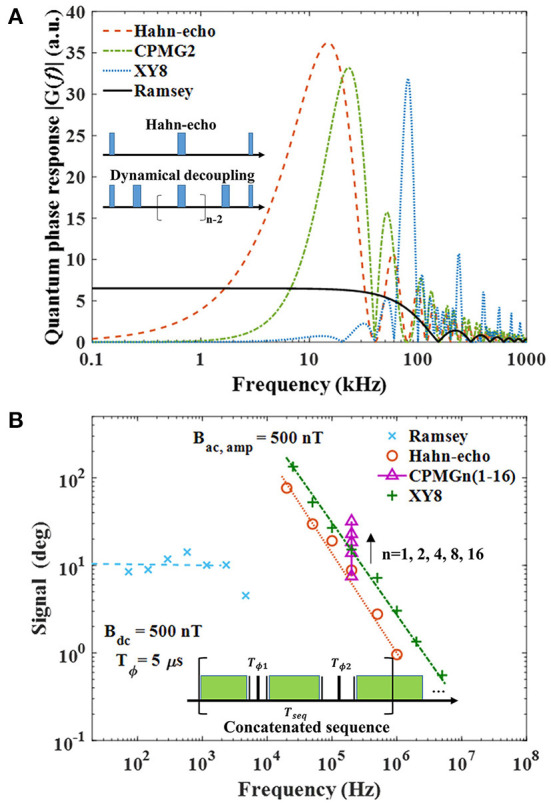
“For most sequences, switching functions can be applied to describe the effects in which a π pulse switches the constant value between +1 and −1 (Staudacher et al., 2013).”
BackgroundSelf-citationMultichannel Blind Source Separation Using Convolution Kernel Compensation
Holobar, A., & Zazula, D. (2007) · IEEE Transactions on Signal Processing · doi:10.1109/tsp.2007.896108 · Cited by 648
Multi-channel intramuscular and surface EMG decomposition by convolutive blind source separation
Negro, F., Muceli, S., Castronovo, A. M., Holobar, A., & Farina, D. (2016) · Journal of Neural Engineering · doi:10.1088/1741-2560/13/2/026027 · Cited by 647 · cited 1×
“Accordingly, non-invasive MMG is superior to EMG for distinguishing spatially shifted muscle fiber sources; something highly desirable, for example, for decomposing an interference signal into the spike trains of individual motor units (e.g., Holobar and Zazula, 2007; De Luca et al., 2015; Negro et al., 2016) and for…”
BackgroundOptical magnetic detection of single-neuron action potentials using quantum defects in diamond
Barry, J. F., Turner, M. J., Schloss, J. M., Glenn, D. R., Song, Y., Lukin, M. D., Park, H., & Walsworth, R. L. (2016) · Proceedings of the National Academy of Sciences · doi:10.1073/pnas.1601513113 · Cited by 637
The extraction of neural strategies from the surface EMG: an update
Farina, D., Merletti, R., & Enoka, R. M. (2014) · Journal of Applied Physiology · doi:10.1152/japplphysiol.00162.2014 · Cited by 589 · cited 1×
“Considering well-established EMG measurements, signals can be measured invasively via needle or fine-wire electrodes (Merletti and Farina, 2009) or by means of noninvasive surface electrodes (Farina et al., 2014).”
BackgroundAdvances in Magnetic Field Sensors
Ripka, P., & Janosek, M. (2010) · IEEE Sensors Journal · doi:10.1109/jsen.2010.2043429 · Cited by 546 · cited 1×
“However, these sensors have a trade-off between the sensitivity and the sensor volume, and the miniaturized sensors usually have a sensitivity in the range of a few nT—50 pT (Chaves et al., 2007; Ripka and Janosek, 2010; Liou et al., 2011; Cubells-Beltrán et al., 2016; Zuo et al., 2020).”
Background
Research works printed but not linked: 2
- Kandel E. R. Schwartz J. H. Jessell T. M. Siegelbaum S. Hudspeth A. J. Mack S.. (2000). Principles of Neural Science, Vol. 4. New York, NY: McGraw-Hill.
- Wolf T. (2018). On magnetometry using ensembles of NV defect centers in diamond [Dissertation]. Universität Stuttgart, Stuttgart, Germany.
Cited by
Clinical magnetocardiography: the unshielded bet—past, present, and future
Brisinda, D., Fenici, P., & Fenici, R. (2023) · Frontiers in Cardiovascular Medicine · doi:10.3389/fcvm.2023.1232882 · Cited by 80
Yu, Y.-H., Zhang, R., Xu, Y., Chen, X.-Q., Zheng, H., Li, Q., Liu, R., Pan, X., Budker, D., & Liu, G. (2024) · Physical Review Applied · doi:10.1103/physrevapplied.21.044051 · Cited by 26
Klotz, T., Lehmann, L., Negro, F., & Röhrle, O. (2023) · Journal of Neural Engineering · doi:10.1088/1741-2552/ace7f7 · Cited by 24
Self-citationRoth, B. J. (2024) · Biophysics Reviews · doi:10.1063/5.0201950 · Cited by 24
Bright Quantum-Grade Fluorescent Nanodiamonds
Oshimi, K., Ishiwata, H., Nakashima, H., Mandić, S., Kobayashi, H., Teramoto, M., Tsuji, H., Nishibayashi, Y., Shikano, Y., An, T., et al. (2024) · ACS Nano · doi:10.1021/acsnano.4c03424 · Cited by 23
“These bulk diamonds exhibited high NV spin qualities and demonstrated fascinating applications, including nanoscale nuclear magnetic resonance [30, 31] and neural monitoring [7, 32].”
Metadata
- Authors
- Zhang, C., Zhang, J., Widmann, M., Benke, M., Kübler, M., Dasari, D., Klotz, T., Gizzi, L., Röhrle, O., Brenner, P., & Wrachtrup, J.
- Affiliations
- University of Stuttgart (DE)
- Corresponding author
- Zhang, Chen
- Wrachtrup, Jörg
- ORCID
- Venue
- Frontiers in Neuroscience
- Publisher
- Frontiers Media SA
- Published
- 2023-01-12
- Volume
- 16
- Pages
- 1034391-1034391
- ISSN
- 1662-453X (ISSN-L)
- PMC
- PMC9885266
- OpenAlex
- W4315640927
- Semantic Scholar
- 9299a876cd56e1aebff0cce7d928e95719c679aa
- Cited by
- 34
- References
- 66
- Citations by year
- 2026: 15 · 2025: 7 · 2024: 9 · 2023: 3
- FWCI
- 2.51
- Type
- journal article
- Language
- en
- Open access
- gold
- doi.org
- Licence
- Locations
- Frontiers in Neuroscience (publishedVersion, cc-by)
- PubMed Central (publishedVersion, cc-by)
- PubMed (publishedVersion)
- DOAJ (DOAJ: Directory of Open Access Journals) (submittedVersion, cc-by-sa)
- OPUS Publication Server of the University of Stuttgart (University of Stuttgart) (submittedVersion, cc-by)
- Fraunhofer-Publica (Fraunhofer-Gesellschaft) (submittedVersion)
- Universitätsbibliothek Stuttgart (cc-by)
- Funders
- European Commission (742610, 820394, HORIZON2020)
- Bundesministerium für Bildung und Forschung
- H2020 European Research Council (742610)
- HORIZON EUROPE European Research Council (101055186)
- Topics
- Physical Sciences › Materials Science › Materials Chemistry › Diamond and Carbon-based Materials Research
- Physical Sciences › Physics and Astronomy › Atomic and Molecular Physics, and Optics › Atomic and Subatomic Physics Research
- Physical Sciences › Engineering › Electrical and Electronic Engineering › Magnetic Field Sensors Techniques
- Keywords
- diamond color centers, magnetomyography, magnetometer sensitivity, dynamic range, bandwidth, room-temperature operation
About these checks
Registry, retraction, Cites and statistics results are computed, not judged, with one exception: a printed reference that no index lists is read once by a model before it counts as a citation error. Claims are extracted by a model and kept only when their quote appears verbatim in the text; each cited source is then checked, with a model’s help, for whether it says what the claim relies on. Those verdicts can be wrong — read the claim’s quote and the cited source before relying on one.
Statistics and arithmetic are recomputed, not judged.
Confidence bands are shown only for fields calibrated on our annotated test set. None is calibrated yet, so no band is shown.
What counts as a claim ›How we measure confidence ›How we check this ›
Are you an author, or do you see a problem with this page? Request a review
Data sources
Bibliographic data: Semantic Scholar, OpenAlex, Crossref.
Contains information from the Semantic Scholar Academic Graph Datasets, made available under the ODC Attribution License (ODC-BY 1.0).
Semantic Scholar’s data is described in: Kinney, R., et al. (2023). The Semantic Scholar Open Data Platform. arXiv:2301.10140.
