

The GLP-1 receptor agonist exenatide improves recovery from spinal cord injury by inducing macrophage polarization toward the M2 phenotype
Open accessThe DOI matches its Crossref record; 93 of the 94 references it cites were found in a registry or an index, and 1 are not checked yet.
Abstract
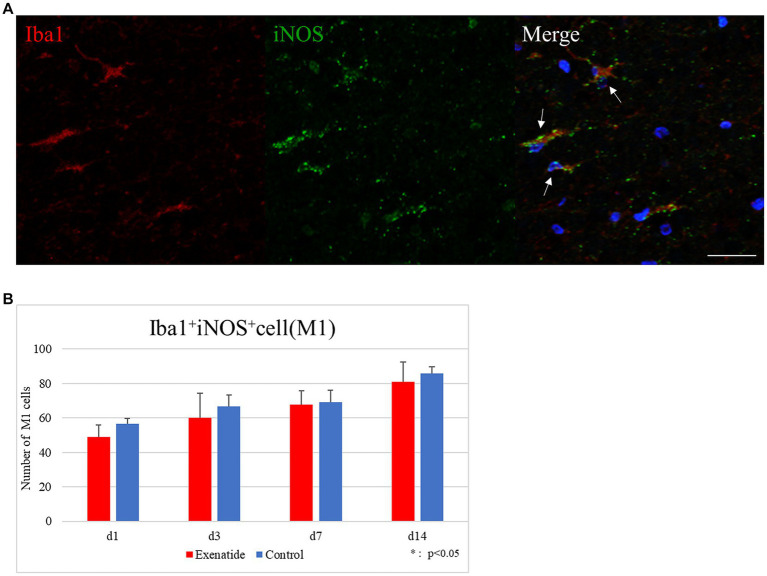
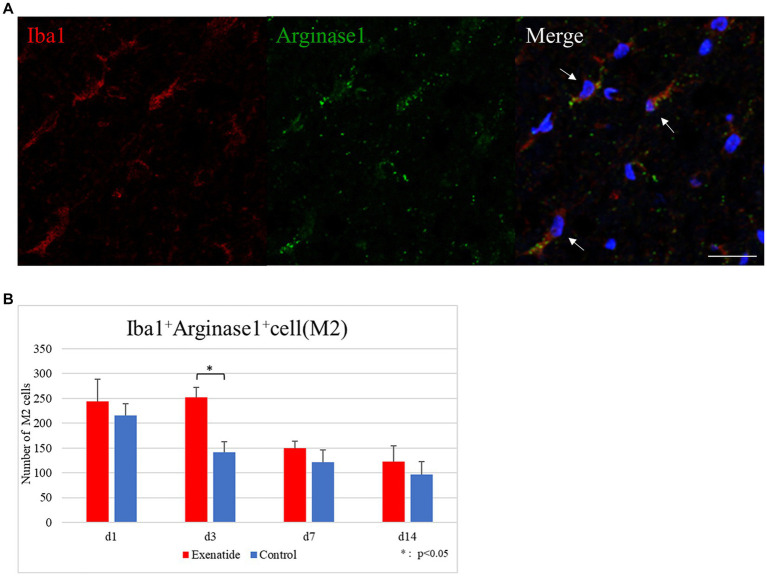
Although a wide variety of mechanisms take part in the secondary injury phase of spinal cord injury (SCI), inflammation is the most important factor implicated in the sequelae after SCI. Being central to the inflammation reaction, macrophages and their polarization are a topic that has garnered wide interest in the studies of SCI secondary injury. The glucagon-like peptide 1 (GLP-1) receptor agonist exenatide has been shown to enhance the endoplasmic reticulum stress response and improve motor function recovery after spinal cord injury (SCI). Since exenatide has also been reported to induce the production of M2 cells in models of cerebral infarction and neurodegenerative diseases, this study was conducted to examine the effects of exenatide administration on the inflammation process that ensues after spinal cord injury. In a rat contusion model of spinal cord injury, the exenatide group received a subcutaneous injection of 10 μg exenatide immediately after injury while those in the control group received 1 mL of phosphate-buffered saline. Quantitative RT-PCR and immunohistochemical staining were used to evaluate the effects of exenatide administration on the macrophages infiltrating the injured spinal cord, especially with regard to macrophage M1 and M2 profiles. The changes in hind limb motor function were assessed based on Basso, Beattie, Bresnahan locomotor rating scale (BBB scale) scores. The improvement in BBB scale scores was significantly higher in the exenatide group from day 7 after injury and onwards. Quantitative RT-PCR revealed an increase in the expression of M2 markers and anti-inflammatory interleukins in the exenatide group that was accompanied by a decrease in the expression of M1 markers and inflammatory cytokines. Immunohistochemical staining showed no significant difference in M1 macrophage numbers between the two groups, but a significantly higher number of M2 macrophages was observed in the exenatide group on day 3 after injury. Our findings suggest that exenatide administration promoted the number of M2-phenotype macrophages after SCI, which may have led to the observed improvement in hind limb motor function in a rat model of SCI.
Overview
The claims and statistics of this paper haven’t been checked yet.
Free: it reads the open-access text and checks the first 5 claims that cite a source we can check. Create a free account to check every claim.
Integrity signals
Registry
Cites
Statistics
Figures
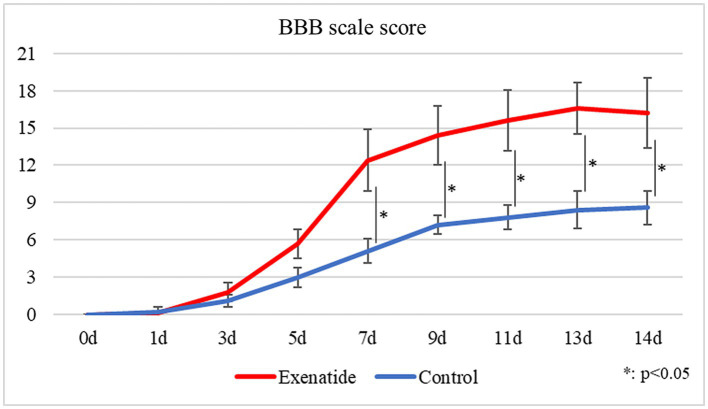
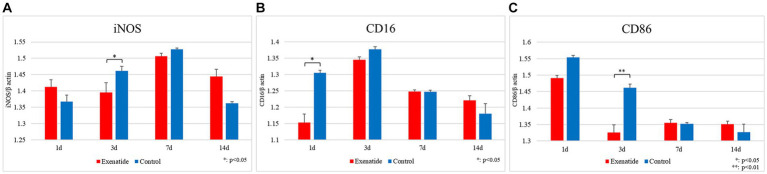
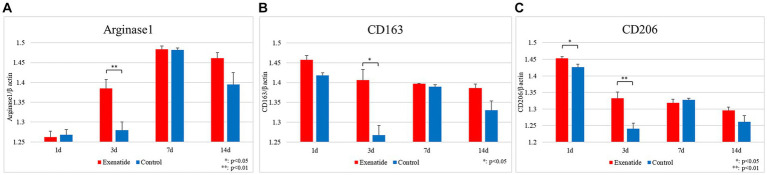
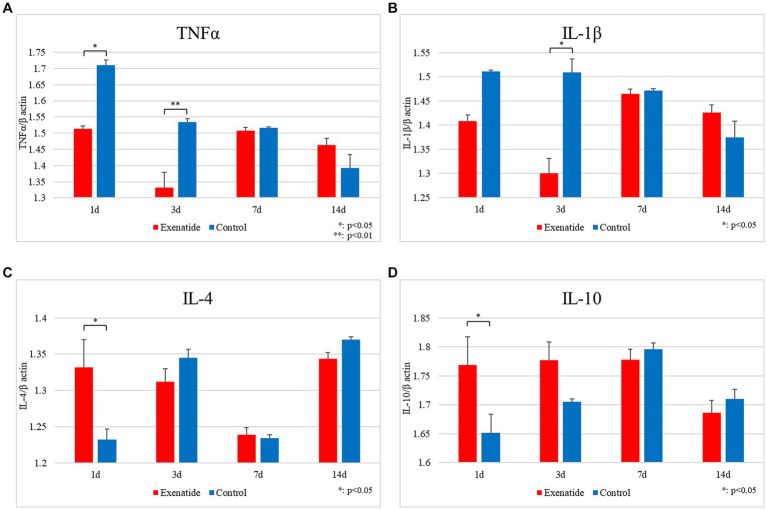
Verification
Claims the paper makes
The claims and statistics of this paper haven’t been checked yet.
Free: it reads the open-access text and checks the first 5 claims that cite a source we can check. Create a free account to check every claim.
Claims other papers make about this one
Each is checked against this paper’s own text: does it say what the citing paper says it does?
The source backs part of the claim, not all of it — or backs it for a different population, condition or comparison.
In the citing paper
“Treatment with GLP-1RAs can effectively mitigate chondrocyte apoptosis caused by endoplasmic reticulum stress and alleviate the associated inflammatory response.277–280”
From Glucagon-like peptide-1 receptor: mechanisms and advances in therapy (2024) · cites this paper as [280]
Experimental — accuracy not yet measured
Self-check
Percentages, sums and reported differences re-computed from the paper’s own numbers.
The self-check needs the paper’s full text.
Citations
Cites
Exploring the full spectrum of macrophage activation
Mosser, D. M., & Edwards, J. P. (2008) · Nature Reviews Immunology · doi:10.1038/nri2448 · Cited by 9,144
MANTOVANI, A., SOZZANI, S., LOCATI, M., ALLAVENA, P., & SICA, A. (2002) · Trends in Immunology · doi:10.1016/s1471-4906(02)02302-5 · Cited by 5,528
A Sensitive and Reliable Locomotor Rating Scale for Open Field Testing in Rats
BASSO, D. M., BEATTIE, M. S., & BRESNAHAN, J. C. (1995) · Journal of Neurotrauma · doi:10.1089/neu.1995.12.1 · Cited by 3,963
Biology of Incretins: GLP-1 and GIP
Baggio, L. L., & Drucker, D. J. (2007) · Gastroenterology · doi:10.1053/j.gastro.2007.03.054 · Cited by 3,639
Gerstein, H. C., Colhoun, H. M., Dagenais, G. R., Diaz, R., Lakshmanan, M., Pais, P., Probstfield, J., Riesmeyer, J. S., Riddle, M. C., Rydén, L., et al. (2019) · The Lancet · doi:10.1016/s0140-6736(19)31149-3 · Cited by 3,163
Kigerl, K. A., Gensel, J. C., Ankeny, D. P., Alexander, J. K., Donnelly, D. J., & Popovich, P. G. (2009) · The Journal of Neuroscience · doi:10.1523/jneurosci.3257-09.2009 · Cited by 2,130 · cited 3×
“…GLP-1 receptors in neural cells (Lee et al., 2011), stimulating the ß-endorphin pathway (Jia et al., 2015), enhancing DNA repair efficiency (Yang et al., 2016), and promoting macrophage polarization toward the anti-inflammatory M2 phenotype among others (Kigerl et al., 2009; Darsalia et al., 2014).”
BackgroundInfluentialGLP-1 receptor agonists in the treatment of type 2 diabetes - state-of-the-art
Nauck, M. A., Quast, D. R., Wefers, J., & Meier, J. J. (2021) · Molecular Metabolism · doi:10.1016/j.molmet.2020.101102 · Cited by 1,647 · cited 1×
“…declines due to chronic nonspecific inflammatory reactions including oxidative stress, endoplasmic reticulum stress, and mitochondrial dysfunction (Böni-Schnetzler and Meier, 2019), and the anti-inflammatory properties of GLP-1 receptor agonists improve islet cell function (Nauck et al., 2021).”
BackgroundDonnelly, D. J., & Popovich, P. G. (2008) · Experimental Neurology · doi:10.1016/j.expneurol.2007.06.009 · Cited by 995
Athauda, D., Maclagan, K., Skene, S. S., Bajwa-Joseph, M., Letchford, D., Chowdhury, K., Hibbert, S., Budnik, N., Zampedri, L., Dickson, J., et al. (2017) · The Lancet · doi:10.1016/s0140-6736(17)31585-4 · Cited by 889
Secondary injury mechanisms in traumatic spinal cord injury: a nugget of this multiply cascade
Oyinbo, C. (2011) · Acta Neurobiologiae Experimentalis · doi:10.55782/ane-2011-1848 · Cited by 786 · cited 3×
“…injury directly caused by a traumatic external force, and the secondary injury that involves a complex vascular, cellular, and biochemical cascade that leads to necrosis and apoptosis of surrounding cells affecting a wider area (Beattie et al., 2000; Oyinbo, 2011; Borgens and Liu-Snyder, 2012).”
Background
Cited by
Glucagon-like peptide-1 receptor: mechanisms and advances in therapy
Zheng, Z., Zong, Y., Ma, Y., Tian, Y., Pang, Y., Zhang, C., & Gao, J. (2024) · Signal Transduction and Targeted Therapy · doi:10.1038/s41392-024-01931-z · Cited by 1,036
Halabitska, I., Бабинец, Л. С., Oksenych, V., & Kamyshnyi, O. (2024) · Biomedicines · doi:10.3390/biomedicines12081630 · Cited by 61
“GLP-1R activation modulates macrophage polarization through PKA/CREB signaling, reducing JNK phosphorylation and enhancing STAT3 phosphorylation, influencing immune responses [221,224,225].”
BackgroundAdvances in GLP-1 receptor agonists for pain treatment and their future potential
He, Y., Xu, B., Zhang, M., Chen, D., Wu, S., Gao, J., Liu, Y., Zhang, Z., Kuang, J., & Fang, Q. (2025) · The Journal of Headache and Pain · doi:10.1186/s10194-025-01979-4 · Cited by 48
“They also found that treatment with exenatide resulted in a marked increase in anti-inflammatory cytokines (IL-4 and IL-10) alongside a reduction in pro-inflammatory cytokines (TNFα and IL-1β) [65].”
InfluentialKuthati, Y., Davuluri, V. N. G., & Wong, C. (2025) · Biomolecules · doi:10.3390/biom15050622 · Cited by 32
Spezani, R., & Mandarim‐de‐Lacerda, C. A. (2025) · Diabetes Obesity and Metabolism · doi:10.1111/dom.70400 · Cited by 25
“105,106 Liraglutide and lixisenatide have the strongest CNS evidence: 113 While these studies primarily address mechanisms relevant to progressive neurodegenerative processes, additional evidence comes from ischemia – reperfusion models, which reveal a mechanistically distinct, acute form of GLP-1…”
GLP-1R agonist therapy and vaccine response: Neglected implications
van Niekerk, G., Coelmont, L., Alpizar, Y. A., Kelchtermans, L., Broeckhoven, E., & Dallmeier, K. (2024) · Cytokine & Growth Factor Reviews · doi:10.1016/j.cytogfr.2024.07.006 · Cited by 11
“Recent studies have similarly implicated M2 polarization as a pivotal mechanism underlying enhanced spinal cord recovery following GLP-1 treatment in rats [12].”
Neuroimmune Mechanisms in Alcohol Use Disorder: Microglial Modulation and Therapeutic Horizons
Ye, J.-H., Zuo, W., Chaudhry, F. A., & Chinn, L. (2025) · Psychoactives · doi:10.3390/psychoactives4030033 · Cited by 12
“In vivo administration of GLP-1RAs in models such as spinal cord injury shows reductions in brain and spinal cord levels of TNF-α , IL-1 β , and IL-6, consistent with attenuation of neuroinflammation via microglial modulation [3,82,83].”
GLP-1 signaling in tumor metabolism and immunity: mechanisms and strategies
Luo, Y., Xu, H., Zhao, Y., Yang, B., & Zhang, Y. (2025) · Food & Function · doi:10.1039/d5fo03273c · Cited by 12
Glucagon-like peptide and its receptor agonists for the treatment of rheumatic diseases
Chamchoum, E., Katrib, N., Nassif, N., Ratel, Y., & Rida, M. A. (2025) · World Journal of Experimental Medicine · doi:10.5493/wjem.v15.i3.107020 · Cited by 7
A new paradigm of bidirectional regulation of the gut–spinal cord axis
Ni, S., Chen, K., Wang, H., Chen, S., Qiu, Y., Wang, T., Mo, F., Wang, S., Li, B., Bai, Y., et al. (2025) · Neural Regeneration Research · doi:10.4103/nrr.nrr-d-25-01016 · Cited by 2
“Previous studies have shown that the administration of GLP-1 or its analogs can effectively improve neurological function in animal models of SCI (Han et al., 2020; Noguchi et al., 2024).”
Effects of Metabolic Dysregulation on Macrophage Polarization in Rheumatoid Arthritis
Zhang, X., Deng, X., Wei, S., Li, M., & Zeng, X. (2026) · Arthritis & Rheumatology · doi:10.1002/art.70253 · Cited by 4
“113,114 the preventive potential of the Mediterranean diet.”
Zhu, B., Ding, Y., Yu, S., Cai, J., Pan, T., Li, D., Liu, X., Wan, Y., Zhang, W., Qin, Z., et al. (2026) · International Immunopharmacology · doi:10.1016/j.intimp.2026.116177 · Cited by 1
Glucagon-like peptide-1 receptor agonists across anti-inflammation
Chen, D. (2026) · Molecular Aspects of Medicine · doi:10.1016/j.mam.2026.101474 · Cited by 1
GLP-1 Receptor Agonists in Neurological Disorders: From Mechanisms to Clinical Translation
Li, P., Gao, Y., & (20030), W. L. (2026) · Drug Design Development and Therapy · doi:10.2147/dddt.s613616 · Cited by 2
“119 These effects fit with the broader anti-inflammatory and cell protective actions of GLP-1 receptor agonists described throughout this review.”
Thome, A. D., Wang, J., Faridar, A., Zhao, W., Saetzler, V., Beers, D. R., & Appel, S. H. (2026) · International Journal of Molecular Sciences · doi:10.3390/ijms27177855 · Cited by 2
“…production of IL-6, IL-1 β , and TNF and promoting transcriptional and metabolic programs associated with less inflammatory myeloid states [21–23 , 34– LD-IL2 acts primarily through preferential engagement of the high-affinity IL-2 receptor expressed by Tregs, with downstream JAK1/JAK3-STAT5…”
Taste Changes in a Rat Model of Spinal Cord Injury: Impact of High-Fat Diet and Weight Loss Surgery
Snyder, J., Tang, T., Holmes, G. M., & Hajnal, A. S. (2026) · Nutrients · doi:10.3390/nu18030503
“While GLP-1 receptor agonists have promise in SCI for neuroimmune/metabolic benefits [10], gastrointestinal dysmotility is a recognized concern [12], and broader GI dysfunction is common after SCI [13].”
The effect of semaglutide on the progression of murine breast cancer
Stanisavljević, I. (2025) · National Repository of Dissertations in Serbia
Effects of GLP-1 Receptor Agonist Exenatide on Mitochondrial Dysfunction After Spinal Cord Injury
Kishi, T., Katoh, H., Suyama, K., Hattori, N., Okada, K., & Watanabe, M. (2026) · Neurotrauma Reports · doi:10.1177/2689288x261454812
“10,11 Mitochondria serve as the principal bioenergetic organelles in most cells; however, secondary injury after SCI impairs mitochondrial function, leading to reduced adenosine triphosphate (ATP) production, increased ROS generation, and activation of mitochondria-mediated apoptotic signaling…”
Self-citationZhang, S., Liu, S., Zhou, M., Wang, J., Zhang, Y., Zhong, H., & Ning, G. (2026) · Molecular Neurobiology · doi:10.1007/s12035-026-06090-6
Papastathopoulou, N. S., Neri, S., Assirelli, E., D’Amuri, A., Greco, S., Ciaffi, J., & Ursini, F. (2026) · Rheumatology Advances in Practice · doi:10.1093/rap/rkag105
Wang, Z., Xue, S., Zhou, X., Yuan, M., & Sun, X. (2026) · Expert Review of Clinical Immunology · doi:10.1080/1744666x.2026.2747225
Metadata
- Authors
- Noguchi, T., Katoh, H., Nomura, S., Okada, K., & Watanabe, M.
- Affiliations
- Tokai University (JP)
- Corresponding author
- Katoh, Hiroyuki
- Venue
- Frontiers in Neuroscience
- Publisher
- Frontiers Media SA
- Published
- 2024-02-15
- Volume
- 18
- Pages
- 1342944-1342944
- ISSN
- 1662-453X (ISSN-L)
- PMC
- PMC10902060
- OpenAlex
- W4391838285
- Cited by
- 20
- References
- 93
- Citations by year
- 2026: 10 · 2025: 7 · 2024: 3
- FWCI
- 6.04
- Type
- journal article
- Language
- en
- Open access
- gold
- doi.org
- Licence
- Locations
- Frontiers in Neuroscience (publishedVersion, cc-by)
- PubMed Central (publishedVersion, cc-by)
- PubMed (publishedVersion)
- DOAJ (DOAJ: Directory of Open Access Journals) (submittedVersion)
- Funders
- JSPS
- Topics
- Health Sciences › Medicine › Clinical Neurology › Spinal Cord Injury Research
- Life Sciences › Neuroscience › Cellular and Molecular Neuroscience › Nerve injury and regeneration
- Health Sciences › Medicine › Clinical Neurology › Traumatic Brain Injury and Neurovascular Disturbances
- Keywords
- exenatide, spinal cord injury, macrophage polarization, M2 macrophages, M1 macrophages, GLP-1 receptor agonists, neuroinflammation, secondary injury, bruising, anti-inflammatory cytokines, endoplasmic reticulum stress
About these checks
Registry, retraction, Cites and statistics results are computed, not judged, with one exception: a printed reference that no index lists is read once by a model before it counts as a citation error. Claims are extracted by a model and kept only when their quote appears verbatim in the text; each cited source is then checked, with a model’s help, for whether it says what the claim relies on. Those verdicts can be wrong — read the claim’s quote and the cited source before relying on one.
Statistics and arithmetic are recomputed, not judged.
Confidence bands are shown only for fields calibrated on our annotated test set. None is calibrated yet, so no band is shown.
What counts as a claim ›How we measure confidence ›How we check this ›
Are you an author, or do you see a problem with this page? Request a review
Data sources
Bibliographic data: Semantic Scholar, OpenAlex, Crossref.
Contains information from the Semantic Scholar Academic Graph Datasets, made available under the ODC Attribution License (ODC-BY 1.0).
Semantic Scholar’s data is described in: Kinney, R., et al. (2023). The Semantic Scholar Open Data Platform. arXiv:2301.10140.
