

Immunogenic sonodynamic therapy for inducing immunogenic cell death and activating antitumor immunity
Open accessThe DOI matches its Crossref record; 66 of the 66 references it cites were found in a registry or an index.
Abstract
Immunotherapy is widely regarded as a promising treatment for cancer. However, the immune effector phase suppression of tumor microenvironment (TME) and the generation of immune-related adverse events limit its application. Research indicates that sonodynamic therapy (SDT) can effectively activate antitumor immunity while killing tumor cells. SDT produces cytotoxic substances of tumors, and then cell apoptosis and immunogenic death occur by selectively activating the sonosensitizer under ultrasound. In recent years, various SDT alone as well as SDT in combination with other therapies have been developed to induce immunogenic cell death (ICD) and enhance immunotherapy. This paper overviews the research progress of SDT and nanotechnology in recent years, including the strategies involving SDT alone, SDT-based synergistic induction of antitumor immunity, and immunotherapy based on SDT for multimodal immunotherapy. Finally, the prospects and challenges of these SDT-based therapies in cancer immunotherapy are discussed.
Overview
The claims and statistics of this paper haven’t been checked yet.
Free: it reads the open-access text and checks the first 5 claims that cite a source we can check. Create a free account to check every claim.
Integrity signals
Registry
Cites
Statistics
Figures
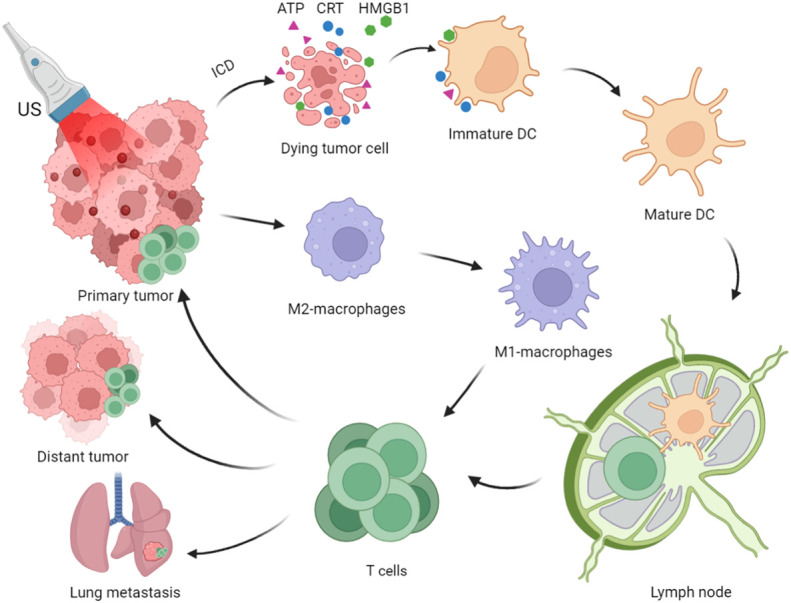
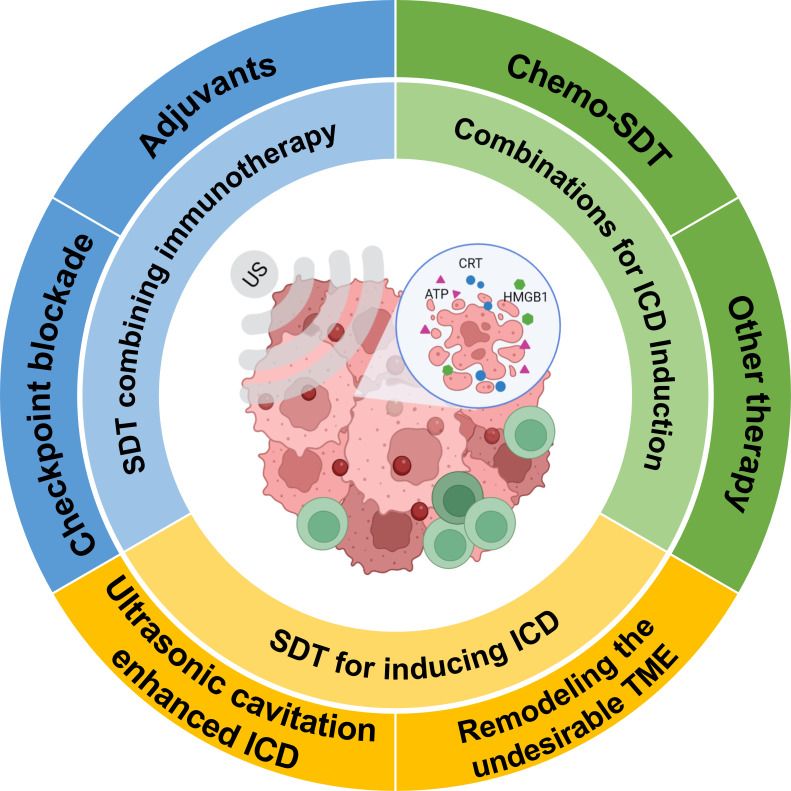
Verification
Claims the paper makes
The claims and statistics of this paper haven’t been checked yet.
Free: it reads the open-access text and checks the first 5 claims that cite a source we can check. Create a free account to check every claim.
Claims other papers make about this one
Each is checked against this paper’s own text: does it say what the citing paper says it does?
The source backs part of the claim, not all of it — or backs it for a different population, condition or comparison.
In the citing paper
“Localizing sonosensitizers to subcellular organelles is important because the lifespan and diffusion length of certain free radical products produced by sonosensitizers during SDT is relatively short [39, 44].”
From Nanosensitizer-assisted sonodynamic therapy for breast cancer (2025) · cites this paper as [44]
Experimental — accuracy not yet measured
Self-check
Percentages, sums and reported differences re-computed from the paper’s own numbers.
The self-check needs the paper’s full text.
Citations
Cites
PD-1 and PD-L1 Immune Checkpoint Blockade to Treat Breast Cancer
Hartkopf, A. D., Taran, F.-A., Wallwiener, M., Walter, C. B., Krämer, B., Grischke, E.-M., & Brucker, S. Y. (2016) · Breast Care · doi:10.1159/000453569 · Cited by 30,845
The blockade of immune checkpoints in cancer immunotherapy
Pardoll, D. M. (2012) · Nature Reviews Cancer · doi:10.1038/nrc3239 · Cited by 13,838 · cited 1×
“approach to regulate T-cell activity to kill tumor cells through pathways such as co-inhibition or co-stimulatory signaling (63).”
BackgroundSiddiqui, I., Schaeuble, K., Chennupati, V., Fuertes Marraco, S. A., Calderon-Copete, S., Pais Ferreira, D., Carmona, S. J., Scarpellino, L., Gfeller, D., Pradervand, S., et al. (2019) · Immunity · doi:10.1016/j.immuni.2018.12.021 · Cited by 1,679 · cited 1×
“In recent years, immunotherapy, as a new generation of anticancer therapy, has developed rapidly in clinical application, especially checkpoint blockade immunotherapy and chimeric antigen receptor T-cell immunotherapy, which has led to the significant development of clinical research direction (1, 2).”
BackgroundMultifunctional sonosensitizers in sonodynamic cancer therapy
Son, S., Kim, J. H., Wang, X., Zhang, C., Yoon, S. A., Shin, J., Sharma, A., Lee, M. H., Cheng, L., Wu, J., et al. (2020) · Chemical Society Reviews · doi:10.1039/c9cs00648f · Cited by 1,150 · cited 1×
“Conventional mechanisms have been accredited that reactive oxygen species produced by sonosensitizers and the cavitation effect induced by ultrasound irradiation act mainly during SDT (25).”
BackgroundDetection of immunogenic cell death and its relevance for cancer therapy
Fucikova, J., Kepp, O., Kasikova, L., Petroni, G., Yamazaki, T., Liu, P., Zhao, L., Spisek, R., Kroemer, G., & Galluzzi, L. (2020) · Cell Death & Disease · doi:10.1038/s41419-020-03221-2 · Cited by 1,138 · cited 1×
“However, with the tumor progressed and an immunosuppressive tumor microenvironment (TME) established, immunotherapy failed to drive an efficient immune response (3).”
BackgroundQian, X., Zheng, Y., & Chen, Y. (2016) · Advanced Materials · doi:10.1002/adma.201602012 · Cited by 882
Immunogenic cell death in cancer therapy: Present and emerging inducers
Zhou, J., Wang, G., Chen, Y., Wang, H., Hua, Y., & Cai, Z. (2019) · Journal of Cellular and Molecular Medicine · doi:10.1111/jcmm.14356 · Cited by 719
Lan, G., Ni, K., Xu, Z., Veroneau, S. S., Song, Y., & Lin, W. (2018) · Journal of the American Chemical Society · doi:10.1021/jacs.8b01072 · Cited by 662 · cited 1×
“Peptides targeting ER, such as pardaxin peptides, and decorated nanomaterials are expected to solve the problem (65).”
BackgroundEngineering CAR-T Cells for Next-Generation Cancer Therapy
Hong, M., Clubb, J. D., & Chen, Y. Y. (2020) · Cancer Cell · doi:10.1016/j.ccell.2020.07.005 · Cited by 639 · cited 1×
“In recent years, immunotherapy, as a new generation of anticancer therapy, has developed rapidly in clinical application, especially checkpoint blockade immunotherapy and chimeric antigen receptor T-cell immunotherapy, which has led to the significant development of clinical research direction (1, 2).”
BackgroundHuang, L., Li, Y., Du, Y., Zhang, Y., Wang, X., Ding, Y., Yang, X., Meng, F., Tu, J., Luo, L., et al. (2019) · Nature Communications · doi:10.1038/s41467-019-12771-9 · Cited by 596
Cited by
Nanomaterials Enhanced Sonodynamic Therapy for Multiple Tumor Treatment
Yang, M., Wang, X., Peng, M., Wang, F., Hou, S., Xing, R., & Chen, A. (2025) · Nano-Micro Letters · doi:10.1007/s40820-025-01666-8 · Cited by 114
Small molecule sonosensitizers in cancer therapy: recent advances and clinical prospects
Li, D., Zhu, Y., Yin, W., Lin, X., Kim, G., Liu, Z., Jung, S., Seo, J., Kim, S., Kim, J. S., et al. (2025) · Chemical Society Reviews · doi:10.1039/d5cs00088b · Cited by 85
Elzoghby, A. O., Samir, O., Emam, H. E., Soliman, A., Abdelgalil, R. M., Elmorshedy, Y. M., Elkhodairy, K. A., & Nasr, M. L. (2024) · Acta Pharmaceutica Sinica B · doi:10.1016/j.apsb.2024.03.022 · Cited by 59
“PDT and PTT can be combined together to enable synergistic phototherapy for enhancing ICD efficacy.”
BackgroundExosomes as drug delivery systems in glioma immunotherapy
Hao, X., Wang, S., Wang, L., Li, J., Li, Y., & Liu, J. (2024) · Journal of Nanobiotechnology · doi:10.1186/s12951-024-02611-4 · Cited by 50
“Therapies such as radiotherapy, photodynamic therapy, photodynamic therapy (PDT), and oncolytic viruses can also cause apoptosis in tumor cells, resulting in the release of antigens and triggering ICD [163, 164].”
BackgroundNanosensitizer-assisted sonodynamic therapy for breast cancer
Yu, J., Hu, J.-R., Tian, Y., Lei, Y.-M., Hu, H.-M., Lei, B.-S., Zhang, G., Sun, Y., & Ye, H.-R. (2025) · Journal of Nanobiotechnology · doi:10.1186/s12951-025-03311-3 · Cited by 43
“Localizing sonosensitizers to subcellular organelles is important because the lifespan and diffusion length of certain free radical products produced by sonosensitizers during SDT is relatively short [39, 44].”
Lipid bilayer-based biological nanoplatforms for sonodynamic cancer therapy
Li, S., Mok, G. S. P., & Dai, Y. (2023) · Advanced Drug Delivery Reviews · doi:10.1016/j.addr.2023.115110 · Cited by 42
Application of Nanomaterial-Based Sonodynamic Therapy in Tumor Therapy
Yang, N., Li, J., Yu, S., Xia, G., Li, D., Yuan, L., Wang, Q., Ding, L., Fan, Z., & Li, J. (2024) · Pharmaceutics · doi:10.3390/pharmaceutics16050603 · Cited by 44
“These DAMPs include calreticulin (CRT) exposed on the cell surface, high-mobility group protein 1 (HMGB1) secreted from the tumor cells, and ATP and heat shock proteins (HSP70, HSP90) released by the cells [29].”
BackgroundSonodynamic and Acoustically Responsive Nanodrug Delivery System: Cancer Application
Jeong, Y., Park, J., & Khang, D. (2024) · International Journal of Nanomedicine · doi:10.2147/ijn.s496028 · Cited by 43
“137–139 These mechanisms primarily boost the immune system of the patients, aiding in the fight against cancer cells.”
BackgroundImmunogenic cell stress and death in the treatment of cancer
Pan, H., Liu, P., Zhao, L., Pan, Y., Mao, M., Kroemer, G., & Kepp, O. (2023) · Seminars in Cell and Developmental Biology · doi:10.1016/j.semcdb.2023.10.007 · Cited by 40
Wang, M., Guo, J., Yuan, S.-J., Li, K., Zhang, Q., Lei, H.-M., Wu, J.-L., Zhao, L., Xu, Y., & Chen, X. (2024) · Biomaterials · doi:10.1016/j.biomaterials.2024.122913 · Cited by 37
Tang, Y., Ge, L., Zhu, D. Y., Hu, R., Chen, W., Xu, Z. C., & Jiang, X. (2025) · ACS Nano · doi:10.1021/acsnano.5c12847 · Cited by 30
Wang, L., Cao, L., Shao, K., Su, J., Li, G., Wang, C., Li, Q., Sun, J., Zhang, H., Liu, K., et al. (2025) · Advanced Materials · doi:10.1002/adma.202410559 · Cited by 24
Nanotechnology‐Empowered Combination Cancer Immunotherapies: Mechanisms, Synergies, and Perspectives
Pan, Y., Xue, X., & Liang, X. (2024) · Advanced NanoBiomed Research · doi:10.1002/anbr.202300129 · Cited by 26
Immunogenic cell death inducers for cancer therapy: An emerging focus on natural products
Zhang, L., Zhang, D.-J., Shi, J.-X., Huang, M., Yu, J.-M., Chen, X.-J., Xiao, W., Zou, L., & Lu, J. (2024) · Phytomedicine · doi:10.1016/j.phymed.2024.155828 · Cited by 23
Manipulation of protein corona for nanomedicines
Li, T., Wang, Y., & Zhou, D. (2024) · Wiley Interdisciplinary Reviews Nanomedicine and Nanobiotechnology · doi:10.1002/wnan.1982 · Cited by 22
Ding, R., Yang, H., Wang, J., Liu, Y., Mu, S., Wang, D., & Li, J. (2025) · Advanced Healthcare Materials · doi:10.1002/adhm.202502183 · Cited by 21
Wysocki, M., Ziental, D., Józkowiak, M., Długaszewska, J., Piotrowska‐Kempisty, H., Güzel, E., & Sobotta, Ł. (2023) · Synthetic Metals · doi:10.1016/j.synthmet.2023.117474 · Cited by 19
Wang, Y., Li, G., Su, J., Liu, Y., Zhang, X., Zhang, G., Wu, Z., Li, J., Zhang, Y., Wang, X., et al. (2024) · Advanced Science · doi:10.1002/advs.202307920 · Cited by 19
Pellegatta, S., Corradino, N., Zingarelli, M., Porto, E., Gionso, M., Berlendis, A., Durando, G., Maffezzini, M., Musio, S., Aquino, D., et al. (2024) · Cancers · doi:10.3390/cancers16040792 · Cited by 16
Advances in the applications of stimulus-responsive nanomedicines for anti-cancer therapy
Tan, X., Wang, S., Zhou, X., & Yang, M. (2025) · Nanomedicine · doi:10.1080/17435889.2025.2598331 · Cited by 17
“…responses in TME and draining lymph nodes, inducing systemic antitumor immunity and immune memory, and inhibiting tumor growth and recurrence [149], as explored in Xue and colleagues’ work [150], which underscores SDT’s potential to activate innate immunity (M2-to-M1 macrophage…”
Xue, Y., Wang, Q., Chen, Y., Zhang, X., Tang, J., Liu, Y., & Liu, J. (2025) · Advanced Healthcare Materials · doi:10.1002/adhm.202403998 · Cited by 14
Zhao, S., Qu, R., Dai, Z., Jiang, X., & Zhen, X. (2026) · BMEMat · doi:10.1002/bmm2.70062 · Cited by 13
Nanomedicines as enhancers of tumor immunogenicity to augment cancer immunotherapy
Dogheim, G. M., Feel, N. E. E., El-Maksod, E. A. A., Amer, S. S., El‐Gizawy, S. A., Elhamid, A. S. A., & Elzoghby, A. O. (2024) · Drug Discovery Today · doi:10.1016/j.drudis.2024.103905 · Cited by 15
Acoustically Driven Hybrid Nanocrystals for In Vivo Pancreatic Cancer Treatment
Conte, M., Carofiglio, M., Pol, R. V., Wood, A., Hernandez, N., Joubert, A. L., Caffey, C. A., Chua, C. Y. X., Grattoni, A., & Cauda, V. (2025) · ACS Applied Materials & Interfaces · doi:10.1021/acsami.4c21975 · Cited by 13
Zhang, Y., & Zhou, X. (2024) · Biomedicine & Pharmacotherapy · doi:10.1016/j.biopha.2024.116667 · Cited by 13
Cao, J., Sun, Z., Qian, C., Wang, H., Bi, J., Qi, X., & Shen, S. (2024) · Chemical Engineering Journal · doi:10.1016/j.cej.2024.155021 · Cited by 10
Fang, J., Xu, R., Cao, Y., Zhao, Z., Li, W., Li, L., Hou, J., Xu, X., & Saw, P. E. (2025) · Theranostics · doi:10.7150/thno.112649 · Cited by 11
“ROS can trigger the release of damage-associated molecular patterns (DAMPs), such as ATP, calreticulin (CRT), and HMGB1, which promote dendritic cells (DCs) maturation and enhance antigen presentation to cytotoxic T lymphocytes (CTLs) [10, 11].”
The Immune Microenvironment in Liver Cancer: From Analysis to Targeting
Lan, J., Li, H., Xue, J., Duan, Y., Sun, J., & Niu, M. (2025) · Advanced Science · doi:10.1002/advs.202518487 · Cited by 11
Du, Y., Yang, J., Xu, A., Chen, S., & Fu, D. (2025) · Frontiers in Immunology · doi:10.3389/fimmu.2025.1681773 · Cited by 10
Trends of mapping knowledge structure and themes of cancer sonodynamic therapy: a text-mining study
Wu, H., Cheng, K., Sun, Z., Lu, Y., Guo, Q., & Li, C. (2024) · Quantitative Imaging in Medicine and Surgery · doi:10.21037/qims-24-128 · Cited by 9
“Certain nanocarriers have been employed for the direct transportation of ROS-generating agents to the mitochondria, which are susceptible to ROS, through the modification of surface molecules targeting mitochondria (112,113).”
Yang, Y., Yan, F., & Shi, Z. (2024) · Chemical Research in Chinese Universities · doi:10.1007/s40242-024-4108-3 · Cited by 8
Raziq, K., Xue, T., & Sun, D. (2025) · International Immunopharmacology · doi:10.1016/j.intimp.2025.115090 · Cited by 6
Wang, Y., Liu, C., Lyu, R., & Zhang, Y. (2025) · Frontiers in Immunology · doi:10.3389/fimmu.2025.1670527 · Cited by 9
Targeting Lysosomes for Enhanced Anti-Cancer Therapeutics and Immune Response
Stark, M., & Assaraf, Y. G. (2026) · International Journal of Biological Sciences · doi:10.7150/ijbs.127929 · Cited by 6
Yi, J., Huang, J., Liu, L., Tang, Y., Pang, E.-N., Chen, H., Zeng, J., Liu, L., Lan, M., & Chen, L. (2026) · Coordination Chemistry Reviews · doi:10.1016/j.ccr.2026.217789 · Cited by 6
Lin, J., Chen, W., Hou, X., Wang, K., Liu, F., Zhang, R., Cao, Z., & Zheng, J. (2026) · BMEMat · doi:10.1002/bmm2.70061 · Cited by 5
Tang, Z., Shen, S., Gu, C., Li, S., Ni, J., Yang, D., & Mi, Y. (2026) · International Journal of Nanomedicine · doi:10.2147/ijn.s579436 · Cited by 6
“82 However, this therapy is still limited by low tumor immunogenicity, the immunosuppressive TME, and insufficient targeting efficiency.”
Tatiparthi, R., Panda, A., Chaitanya, M., Gashe, F., Hasan, G., & Yarlagadda, R. (2026) · Molecular Imaging and Biology · doi:10.1007/s11307-026-02090-z · Cited by 3
“The induction of reactive oxygen species (ROS) promotes non-apoptotic immunogenic cell death (ICD) [9].”
Research Progress in Sonochemistry for Biomedical Applications★
Luo, C., Kong, C., & Tang, Z. (2023) · 化学学报 · doi:10.6023/a23040129 · Cited by 3
Su, W., Wang, H., Pan, J., Pu, H., Gui, B., Liu, Q., Cao, S. M., & Zhou, Q. S. (2025) · Ultrasound in Medicine & Biology · doi:10.1016/j.ultrasmedbio.2025.05.010 · Cited by 3
Recent advances in acoustic cavitation-inducible materials for cancer sonotheranostics
Park, J. Y., Kang, J., Kwon, M., Jeong, Y. J., Ju, H., Heo, E.-J., Lee, C., Lee, J. H., Byun, H., Shin, H., et al. (2026) · Nanoscale · doi:10.1039/d5nr05210f · Cited by 2
Nanodynamic Therapy in Colorectal Cancer: Engineering Precision Immunotherapy and Multimodal Synergy
Wang, F., Zhang, Z., Chen, J., Qian, L., Chen, B., Zhai, L., Zhao, J., Chen, T., Zhou, J., Gou, K., et al. (2026) · International Journal of Nanomedicine · doi:10.2147/ijn.s598076 · Cited by 4
Wang, Y., Wang, Y.-J., Yang, Y., & Leng, L. (2025) · Materials Today Bio · doi:10.1016/j.mtbio.2025.102262 · Cited by 2
“Compared with photodynamic therapy, SDT has a greater penetration capability with lower phototoxicity and better patient compliance [35].”
PVP-Ag-NaNbO3 biomimetic nanozymes for enhancing sonodynamic tumor therapy
Tang, S., Lu, Y., Ma, W., Gu, H., Sun, Y., & Sun, T. (2025) · Materials Research Express · doi:10.1088/2053-1591/add4cc · Cited by 1
Chiabotto, G., Conte, M., & Cauda, V. (2025) · Cancers · doi:10.3390/cancers18010118 · Cited by 2
“Cancer cells also release tumor-associated antigens that together with DAMPs can activate the immune system and generate an innate immune response [72,73].”
Pei, Y., Huan, Y., Chen, L., Zheng, X., & Liu, B. (2026) · Journal of Materials Chemistry B · doi:10.1039/d5tb02928g · Cited by 1
Focused ultrasound for enhancing cell-based immunotherapies in neuro-oncology
Sherlock, T., Thede, A. T., & Sheybani, N. (2026) · Neuro-Oncology Advances · doi:10.1093/noajnl/vdag080 · Cited by 1
Zhang, C., Shu, B., Wang, X., Shen, X., Du, Y., Yang, J., & Miao, Z. (2026) · Frontiers in Immunology · doi:10.3389/fimmu.2026.1845672 · Cited by 1
Emerging Nanoplatforms are Effective Against Tumor Hypoxia
Yu, Z., Shang, Y., He, W., Xia, X., & Zhou, L. (2026) · International Journal of Nanomedicine · doi:10.2147/ijn.s615263 · Cited by 1
“81,82 To address the challenges posed by tumor hypoxia in SDT and immunotherapy, Zhang et al developed a targeted nanosystem, DPPM@HA, by encapsulating oxygen-carrying PFCs and the STING agonist DMXAA within PCN-222-Mn metal-organic frameworks (MOFs), followed by surface modification with HA.”
O’Rourke, S., Xu, N., Wang, H., & Chen, H. (2026) · Small Science · doi:10.1002/smsc.202500596
Ding, X., Zhang, L., Guo, F., Pan, X., Wei, X., Su, L., Wu, L., Min, L., Zhang, M., & Han, L. (2026) · BioMedical Engineering OnLine · doi:10.1186/s12938-026-01571-0
“Collectively, evidence supports that such multimodal nanotechnology-enabled com - bination strategies enhance treatment specificity, mitigate systemic toxicity, and can lead to improved therapeutic outcomes by addressing disease pathophysiology through multiple concurrent mechanisms [35].”
Microbial reprogramming of immunogenic cell death: a new paradigm in tumor immunotherapy
Li, Y. C., Zhang, H. F., Feng, Y., Fang, K., Wang, Y., Zhou, Y., Sun, T., & Xu, J. (2026) · Cancer Biology and Medicine · doi:10.20892/j.issn.2095-3941.2025.0769
“Concurrently, large amounts of ATP are released into the extracellular milieu, serving as a “find-me” signal that binds to ionotropic purinergic receptor 7 on DCs, thereby activating the inflammasome and promoting interleukin (IL)-1 β secretion 39 .”
Global research trends in the tumor microenvironment of glioma: insights from bibliometric analysis
Huang, X., Tu, S., Fan, X., Zhang, Y., Huang, L., Liu, X., Feng, Y., Liu, Y., Wang, X., Gao, Y., et al. (2026) · The Egyptian Journal of Neurology Psychiatry and Neurosurgery · doi:10.1186/s41983-026-01177-2
“This remodeling can synergize with immune checkpoint blockade (e.g., PD-1 inhibitors) to significantly enhance anti-tumor immune responses and delay recurrence [25].”
Self-citationImmunogenicity remodeling in hepatocellular carcinoma: mechanisms and translational strategies
Li, Y., Yan, Y., Ma, J. H., Liao, L., Liu, J., Ma, J. H., Qi, Y., Han, Z., & Chen, H. (2026) · Therapeutic Advances in Medical Oncology · doi:10.1177/17588359261461753
“85,86 Xu et al. 86 reviewed the recent advances in SDT-based cancer treat-ment, highlighting that the combination of SDT with multiple therapeutic modalities, including ICI and chemotherapy, can synergistically enhance antitumor efficacy, while emphasizing that further research is needed to…”
Li, J., Shao, K., Cheng, L., Zhang, G., Su, J., Liu, Y., Wang, Y., Wang, C., Wu, Z., Wang, X., et al. (2026) · Angewandte Chemie · doi:10.1002/ange.8129050
Li, J., Shao, K., Cheng, L., Zhang, G., Su, J., Liu, Y., Wang, Y., Wang, C., Wu, Z., Wang, X., et al. (2026) · Angewandte Chemie International Edition · doi:10.1002/anie.8129050
Tian, Z., Yang, J., Zhu, Y., Lin, H., & Shi, J. (2026) · Nano Letters · doi:10.1021/acs.nanolett.6c01736
Zhang, Y., Liu, X., Chen, J., Xiao, C., Chen, X., & Sun, J. (2026) · Advanced Materials · doi:10.1002/adma.75117
Ultrasound-induced luminescence imaging for deep tissues
Cheng, Q., Luo, J., Tan, Y., Xu, T., Sun, Y., Geng, R., Xu, H., Zhang, X., Ding, L., Wu, G., et al. (2026) · Theranostics · doi:10.7150/thno.133393
“ROS generated during ultrasound can also be coupled to SDT-inspired immunomodulatory strategies, including the induction of immunogenic cell death and combination immunotherapy [167, 168].”
He, T., Cryer, A. M., Lopez, D. S., Han, Z., O'Brien, E., Park, Y., Franyuti, S. V., Amar‐Lewis, E., & Artzi, N. (2026) · Advanced Materials · doi:10.1002/adma.74918
Multifunctional Acoustic Nanoplatforms based on Sonodynamic Therapy for Solid Tumor: A review
Ren, B., & Wong, C. (2026) · International Journal of Public Health and Medical Research · doi:10.62051/ijphmr.v6n8.01
“These DAMPs ignite the “immune spark” in TME to awaken the antitumor immune response, inducing immunogenic cell death (ICD) [29].”
Zhang, Q., Wei, T., Lan, Z., Lin, G., Xu, M., Li, X., & Bao, Y. (2026) · Frontiers in Immunology · doi:10.3389/fimmu.2026.1988247
Naik, S. B. T., Sunku, S., & Vanga, L. V. S. R. (2026) · Pharmaceutics · doi:10.3390/pharmaceutics18111368
Zhang, Q., Lan, Z., Wei, T., Lin, G., Xu, M., Li, X., & Bao, Y. (2026) · Frontiers in Immunology · doi:10.3389/fimmu.2026.1975744
Metadata
- Authors
- Wang, T., Peng, W., Du, M., & Chen, Z.
- Affiliations
- First Affiliated Hospital of University of South China (CN)
- University of South China (CN)
- Corresponding author
- Du, Meng
- Chen, Zhiyi
- Venue
- Frontiers in Oncology
- Publisher
- Frontiers Media SA
- Published
- 2023-04-24
- Volume
- 13
- Pages
- 1167105-1167105
- ISSN
- 2234-943X (ISSN-L)
- PMC
- PMC10166230
- OpenAlex
- W4366827754
- Cited by
- 58
- References
- 66
- Citations by year
- 2026: 22 · 2025: 18 · 2024: 14 · 2023: 4
- FWCI
- 1.30
- Type
- journal article
- Language
- en
- Open access
- gold
- doi.org
- Licence
- Locations
- Frontiers in Oncology (publishedVersion, cc-by)
- PubMed Central (publishedVersion, cc-by)
- PubMed (publishedVersion)
- DOAJ (DOAJ: Directory of Open Access Journals) (submittedVersion, cc-by-sa)
- Funders
- National Natural Science Foundation of China (82102087, 82272028, 82272028, 81971621, 82102087, 81971621)
- Natural Science Foundation of Guangdong Province (81971621, 2020A1515110628, 2021A1515011177)
- Topics
- Physical Sciences › Engineering › Biomedical Engineering › Nanoplatforms for cancer theranostics
- Life Sciences › Biochemistry, Genetics and Molecular Biology › Cancer Research › Photodynamic Therapy Research Studies
- Health Sciences › Medicine › Oncology › Cancer Immunotherapy and Biomarkers
- Keywords
- sonodynamic therapy, immunogenic cell death, antitumor immunity, tumor microenvironment, sonosensitizer, ultrasound, cancer immunotherapy, combination therapy, nanotechnology, immune-related adverse events
About these checks
Registry, retraction, Cites and statistics results are computed, not judged, with one exception: a printed reference that no index lists is read once by a model before it counts as a citation error. Claims are extracted by a model and kept only when their quote appears verbatim in the text; each cited source is then checked, with a model’s help, for whether it says what the claim relies on. Those verdicts can be wrong — read the claim’s quote and the cited source before relying on one.
Statistics and arithmetic are recomputed, not judged.
Confidence bands are shown only for fields calibrated on our annotated test set. None is calibrated yet, so no band is shown.
What counts as a claim ›How we measure confidence ›How we check this ›
Are you an author, or do you see a problem with this page? Request a review
Data sources
Bibliographic data: Semantic Scholar, OpenAlex, Crossref.
Contains information from the Semantic Scholar Academic Graph Datasets, made available under the ODC Attribution License (ODC-BY 1.0).
Semantic Scholar’s data is described in: Kinney, R., et al. (2023). The Semantic Scholar Open Data Platform. arXiv:2301.10140.
