

The DOI matches its Crossref record; 136 of the 140 references it cites were found in a registry or an index.
DNA Repair Pathways in Cancer Therapy and Resistance
Open accessAbstract
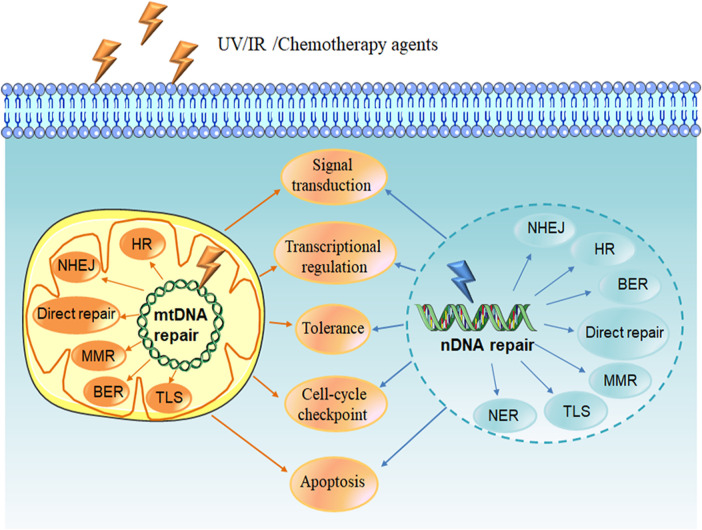
DNA repair pathways are triggered to maintain genetic stability and integrity when mammalian cells are exposed to endogenous or exogenous DNA-damaging agents. The deregulation of DNA repair pathways is associated with the initiation and progression of cancer. As the primary anti-cancer therapies, ionizing radiation and chemotherapeutic agents induce cell death by directly or indirectly causing DNA damage, dysregulation of the DNA damage response may contribute to hypersensitivity or resistance of cancer cells to genotoxic agents and targeting DNA repair pathway can increase the tumor sensitivity to cancer therapies. Therefore, targeting DNA repair pathways may be a potential therapeutic approach for cancer treatment. A better understanding of the biology and the regulatory mechanisms of DNA repair pathways has the potential to facilitate the development of inhibitors of nuclear and mitochondria DNA repair pathways for enhancing anticancer effect of DNA damage-based therapy.
Overview
The claims and statistics of this paper haven’t been checked yet.
Run the check — free, no account needed. It reads the open-access text and checks the sources it cites.
Integrity signals
Registry
Cites
Statistics
Figures
Verification
Claims the paper makes
The claims and statistics of this paper haven’t been checked yet.
Run the check — free, no account needed. It reads the open-access text and checks the sources it cites.
Claims other papers make about this one
Each is checked against this paper’s own text: does it say what the citing paper says it does?
The source backs part of the claim, not all of it — or backs it for a different population, condition or comparison.
In the citing paper
“One possible explanation for the observed difference between cSNVs and dbSNVs could be system-wide alterations in cancer cells, which are often characterized by increased replication stress, altered DNA repair mechanisms or changes in chromatin structure (85,86).”
From G-quadruplex-mediated genomic instability drives SNVs in cancer (2024) · cites this paper as [86]
Experimental — accuracy not yet measured
Self-check
Percentages, sums and reported differences re-computed from the paper’s own numbers.
The self-check needs the paper’s full text.
Citations
Cites
Hallmarks of Cancer: The Next Generation
Hanahan, D., & Weinberg, R. A. (2011) · Cell · doi:10.1016/j.cell.2011.02.013 · Cited by 66,590 · cited 1×
“If the damage is not corrected, it will cause genomic instability and mutation, which is one of the cancer hallmarks (Hanahan and Weinberg, 2011).”
BackgroundMGMT Gene Silencing and Benefit from Temozolomide in Glioblastoma
Hegi, M. E., Diserens, A.-C., Gorlia, T., Hamou, M.-F., de Tribolet, N., Weller, M., Kros, J. M., Hainfellner, J. A., Mason, W., Mariani, L., et al. (2005) · New England Journal of Medicine · doi:10.1056/nejmoa043331 · Cited by 7,405 · cited 1×
“Clinical study indicated that patients with glioblastoma containing a methylated MGMT promoter obtained more benefits from TMZ than those who did not have a methylated MGMT promoter (Hegi et al., 2005).”
BackgroundTargeting the DNA repair defect in BRCA mutant cells as a therapeutic strategy
Farmer, H., McCabe, N., Lord, C. J., Tutt, A. N. J., Johnson, D. A., Richardson, T. B., Santarosa, M., Dillon, K. J., Hickson, I., Knights, C., et al. (2005) · Nature · doi:10.1038/nature03445 · Cited by 6,683 · cited 1×
“In 2005, two pre-clinical researches published in nature indicated that BRCA1 or BRCA2 deficient cells highly sensitized to PARP inhibition (Farmer et al., 2005; Bryant et al., 2005).”
BackgroundMismatch repair deficiency predicts response of solid tumors to PD-1 blockade
Le, D. T., Durham, J. N., Smith, K. N., Wang, H., Bartlett, B. R., Aulakh, L. K., Lu, S., Kemberling, H., Wilt, C., Luber, B. S., et al. (2017) · Science · doi:10.1126/science.aan6733 · Cited by 6,645 · cited 1×
“For example,MMRhas been reported as a critical biomarker of response to immune checkpoint inhibitors in cancer (Le et al., 2017).”
BackgroundThe DNA-damage response in human biology and disease
Jackson, S. P., & Bartek, J. (2009) · Nature · doi:10.1038/nature08467 · Cited by 6,092
Specific killing of BRCA2-deficient tumours with inhibitors of poly(ADP-ribose) polymerase
Bryant, H. E., Schultz, N., Thomas, H. D., Parker, K. M., Flower, D., Lopez, E., Kyle, S., Meuth, M., Curtin, N. J., & Helleday, T. (2005) · Nature · doi:10.1038/nature03443 · Cited by 5,198
Olaparib for Metastatic Breast Cancer in Patients with a Germline BRCA Mutation
Robson, M., Im, S.-A., Senkus, E., Xu, B., Domchek, S. M., Masuda, N., Delaloge, S., Li, W., Tung, N., Armstrong, A., et al. (2017) · New England Journal of Medicine · doi:10.1056/nejmoa1706450 · Cited by 3,294 · cited 1×
“Several clinical trials using PARPi including Olaparib, Veliparib, Rucaparib (Table 1) as monotherapy for the treatment of patients with germline BRCA1/2 mutation tumors including advanced breast cancer, ovarian cancer, pancreatic cancer and prostate cancer presented significantly antitumor effect (Kaufman et al., 201…”
PARP inhibitors: Synthetic lethality in the clinic
Lord, C. J., & Ashworth, A. (2017) · Science · doi:10.1126/science.aam7344 · Cited by 3,013 · cited 1×
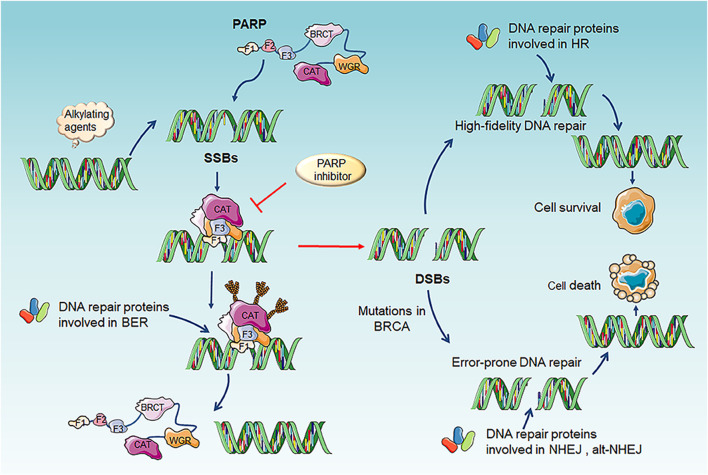
“Finally, it converted SSBs into DSBs and impelled cell death in HR-deficiency tumor, for example BRCA1/2 mutations, RAD51 deficiency (Figure 2) (Konecny and Kristeleit, 2016; Brown et al., 2017; Lord and Ashworth, 2017; Oplustil O’Connor et al., 2016).”
BackgroundMaintenance Olaparib in Patients with Newly Diagnosed Advanced Ovarian Cancer
Moore, K., Colombo, N., Scambia, G., Kim, B.-G., Oaknin, A., Friedlander, M., Lisyanskaya, A., Floquet, A., Leary, A., Sonke, G. S., et al. (2018) · New England Journal of Medicine · doi:10.1056/nejmoa1810858 · Cited by 2,870
Maintenance Olaparib for Germline BRCA -Mutated Metastatic Pancreatic Cancer
Golan, T., Hammel, P., Reni, M., Van Cutsem, E., Macarulla, T., Hall, M. J., Park, J.-O., Hochhauser, D., Arnold, D., Oh, D.-Y., et al. (2019) · New England Journal of Medicine · doi:10.1056/nejmoa1903387 · Cited by 2,302 · cited 1×
“Several clinical trials using PARPi including Olaparib, Veliparib, Rucaparib (Table 1) as monotherapy for the treatment of patients with germline BRCA1/2 mutation tumors including advanced breast cancer, ovarian cancer, pancreatic cancer and prostate cancer presented significantly antitumor effect (Kaufman et al., 201…”
Research works printed but not linked: 3
- Anderson, 1980, The presence of nuclear and mitochondrial uracil-DNA glycosylase in extracts of human KB cells, Nucleic Acids Res, 4, 875
- Liu, 2003, Blockage of abasic site repair enhances antitumor efficacy of 1,3-bis-(2-chloroethyl)-1-nitrosourea in colon tumor xenografts, Mol. Cancer Ther, 10, 1061
- Luo, 2004, Inhibition of the human apurinic/apyrimidinic endonuclease (APE1) repair activity and sensitization of breast cancer cells to DNA alkylating agents with lucanthone, Anticancer Res, 4, 2127
Cited by
Sorted by citations
Items 201–300 of 340
Farhana, A., Koh, A. E.-H., Tong, J., Alsrhani, A., Kumar, S. S., & Mok, P. L. (2021) · Molecules · doi:10.3390/molecules26175414 · Cited by 5
“It is worth noting that DNA repair mechanisms are also the responsible culprit for tumoral cell resistance to many cancer therapies [30].”
BackgroundBalasubramanian, K., Fung, K., McNall-Knapp, R., & Balsara, K. (2025) · CNS Oncology · doi:10.1080/20450907.2025.2558455 · Cited by 4
“In addition to the favorable safety profile of NTRK inhibitors, preclinical models suggest prior alkylator therapy may accelerate resistance through mutagenic stress [25].”
Zhang, F., Yang, J., Qiu, X.-L., He, J., Zou, W., Sang, Y., & Chen, C. (2025) · Scientific Reports · doi:10.1038/s41598-025-01001-6 · Cited by 5
“DSBs are the most harmful type of DNA damage, and, if not repaired, can cause chromosomal aberrations, genomic instability, or cell death 29 .”
Self-citationAn update understanding of stemness and chemoresistance of prostate cancer
Wahab, A., & Siddique, H. R. (2025) · Expert Review of Anticancer Therapy · doi:10.1080/14737140.2025.2466680 · Cited by 2
Babaei, S., Nikbakht, M., Majd, A., & Mousavi, S. A. (2025) · Molecular Biology Reports · doi:10.1007/s11033-025-10313-9 · Cited by 4
“Although these agents are initially efficacious, many cancer cells rapidly develop sophisticated DNA repair mechanisms, allowing them to survive and proliferate despite the genotoxic insult [ 9, 10 ].”
Bareja, C., Dwivedi, K., Uboveja, A., Mathur, A., Kumar, N., V, & Saluja, D. (2024) · Scientific Reports · doi:10.1038/s41598-024-60715-1 · Cited by 3
“Evidence suggests that mismatched repair genes (MMR) involved in homologous recombination (HR) repair play an essential role in CRCs 52,53 .”
BackgroundKinnunen, P. C., Ho, K. K. Y., Srivastava, S., Huang, C., Shen, W., Garikipati, K., Luker, G. D., Banović, N., Huan, X., Linderman, J. J., et al. (2024) · Frontiers in Systems Biology · doi:10.3389/fsysb.2024.1333760 · Cited by 3
“Single cancer cells may upregulate drug ef fl ux transporters and DNA damage repair processes to resist therapy, while soluble and contact-mediated interactions among cancer and benign stromal cells promote survival of the tumor overall (Lim et al., 2011; Li et al., 2021; Xiao et al., 2021).”
The evolution and convergence of mutation spectra across mammals
Talenti, A., Wilkinson, T., Morrison, L. J., & Prendergast, J. G. D. (2025) · Communications Biology · doi:10.1038/s42003-025-08181-x · Cited by 3
“Owing to the importance of DNA fi delity in mammals, there are several hundred genes 1 involved in DNA repair, spanning at least seven different repair pathways 2 , from mismatch repair to non-homologous end joining.”
2,4-dinitrophenol enhances cisplatin and etoposide cytotoxic activity on prostate cancer cell line.
Adamczuk, G., Humeniuk, E., Adamczuk, K., Grabarska, A., Madej-Czerwonka, B., Michalczuk, M., Korga-Plewko, A., & Dudka, J. (2023) · Annals of Agricultural and Environmental Medicine · doi:10.26444/aaem/174919 · Cited by 4
“The resistance of cancers to chemotherapeutics is due to the high oxidative defence potential of cancer cells and the large amount of energy they produce, which is necessary for complex DNA repair processes, including DNA ligation [17, 18].”
BackgroundAn Exploration of Small Molecules That Bind Human Single-Stranded DNA Binding Protein 1
Schuurs, Z. P., Martyn, A. P., Soltau, C. P., Beard, S., Shah, E. T., Adams, M. N., Croft, L. V., O'Byrne, K. J., Richard, D. J., & Gandhi, N. S. (2023) · Biology · doi:10.3390/biology12111405 · Cited by 4
“DNA damage and repair (DDR) pathways repair mutations, but the dysregulation of the DDR pathway is associated with cancer, regularly introducing mutations that induce resistance to cancer treatments [3,4].”
BackgroundPaz-Sabillón, M., Montes-Castro, N., Torres‐Sánchez, L., Razo, L. M. D., Córdova, E. J., & Quintanilla‐Vega, B. (2023) · Environmental Research · doi:10.1016/j.envres.2023.117631 · Cited by 5
Chankova, S. G., Yurina, N. P., Todorova, T. I., & Parvanova, P. N. (2023) · BIORISK – Biodiversity and Ecosystem Risk Assessment · doi:10.3897/biorisk.20.97569 · Cited by 4
Nouri, M., Pirmohammadi, N., Dilmaghani, K. A., & Pazhang, Y. (2023) · Polycyclic aromatic compounds (Print) · doi:10.1080/10406638.2023.2206670 · Cited by 4
“26 The 2-mercapto-3-aryl-4(3H)-quinazolinone derivatives have been reported as monoamine oxi-dases (MAO) inhibitors.”
BackgroundJama, M., Zhang, M., Poile, C., Nakas, A., Sharkey, A. J., Działo, J., Dawson, A. G., Kutywayo, K. H., Fennell, D. A., & Hollox, E. J. (2023) · Genes Chromosomes and Cancer · doi:10.1002/gcc.23189 · Cited by 5
Chandra, F., Tania, T. F., & Nurcahyanti, A. D. R. (2023) · Journal of Pharmacy And Bioallied Sciences · doi:10.4103/jpbs.jpbs_50_23 · Cited by 5
“[23,24] The overexpression of MDR1 in response to chemotherapeutics is due to changes in mRNA stabilization and translational initiation in several leukemia cell lines, suggesting that multiple mechanisms exist in different cell types, either cooperatively or exclusively regulate the transcription…”
Gulliver, C., Hoffmann, R., & Baillie, G. S. (2022) · The International Journal of Biochemistry & Cell Biology · doi:10.1016/j.biocel.2022.106230 · Cited by 7
Epigenetic Modifications in Cancer Etiology, Diagnosis and Therapy
Yahaya, T., John, E., Hewage, A. S., Liman, U. U., & Caleb, O. (2025) · Asian Journal of Biological Sciences · doi:10.3923/ajbs.2025.516.532 · Cited by 4
Sharma, P., Thuy, N. P., Ansari, I. H., Tripathi, R. M., Kala, M., Elberry, M. H., Sharma, N., & Lee, S. (2026) · Journal of Experimental & Clinical Cancer Research · doi:10.1186/s13046-026-03720-8 · Cited by 3
“MGMT (O6-methylguanine-DNA methyltransferase) is demethylated in resistant gliomas, conferring temozolomide resistance [119, 120].”
Acquired resistance of cancer therapies: Mechanisms and perspectives
Wang, M., Zhai, X., Li, J., Chen, J., Gai, X., Liu, X., Liu, Y., Zhou, Q., & Chen, C. (2026) · Chinese Medical Journal · doi:10.1097/cm9.0000000000004048 · Cited by 5
“[19, 20] In prostate cancer, NSCLC, and hepatocellular carcinoma, overactivation of DNA-PKcs can promote tumor cell survival after radiotherapy or DNA double-strand break inducer treatment, leading to treatment resistance.”
da Silva, S. P., Santos, L. L., Xavier, C., & Vasconcelos, M. H. (2026) · Life Science · doi:10.1016/j.lfs.2026.124273 · Cited by 3
Medicinal Plants for Overcoming Drug Resistance in Cervical Cancer
Marema, T. P., Laka, K., & Mbita, Z. (2026) · Biology · doi:10.3390/biology15020191 · Cited by 3
“Overexpression of these DNA damage response mechanisms allows cells to resist doxorubicin treatment by successfully repairing the generated damage [118].”
Micallef, I., & Baron, B. (2025) · International Journal of Molecular Sciences · doi:10.3390/ijms26189038 · Cited by 3
“Other mechanisms include enhanced DNA repair capabilities [26–28], activation of other signalling pathways to bypass drug effects [29,30], and alterations in apoptotic pathways to evade cell death [30,31].”
Resistance signatures manifested in early drug response across cancer types and species
Ruoff, C., Mitchell, A. V., Mondal, P., Gopalan, V., Singh, A., Gottesman, M. M., & Hannenhalli, S. S. (2025) · Cancer Drug Resistance · doi:10.20517/cdr.2025.112 · Cited by 2
PARP Inhibition in Colorectal Cancer—A Comparison of Potential Predictive Biomarkers for Therapy
Alfahed, A. (2025) · Pharmaceuticals · doi:10.3390/ph18060905 · Cited by 3
“This is in contrast with the LST-PARPi response relationship applied clinically for HRD-PARPi synthetic lethality in prostate, ovarian, breast and pancreatic cancers [31].”
InfluentialLi, Y., & Wang, F. (2025) · Cancer Biotherapy and Radiopharmaceuticals · doi:10.1089/cbr.2025.0078
Kobyakova, M., Krasnov, K., Krestinina, O., Baburina, Y. L., Senotov, A., Lomovskaya, Y. V., Meshcheriakova, E., Lomovsky, A., Zvyagina, A., Pyatina, K., et al. (2025) · Biochemistry (Moscow) · doi:10.1134/s000629792560019x · Cited by 3
“X histone and Brca1 protein [38-42].”
Metachromin C, a marine-derived natural compound, shows potential in antitumor activity
Chen, P.-H., Lee, C.-H., Liaw, C.-C., Liang, R.-T., Khan, M., Tsai, J.-N., Huang, S.-Y., Liu, W., & Tsai, W.-C. (2024) · International Journal of Medical Sciences · doi:10.7150/ijms.101037 · Cited by 3
“Therefore, the combination of DNA repair pathway inhibitors and chemotherapeutic agents may improve the efficacy of chemotherapeutic agents on cancer cells [53, 54].”
BackgroundNascimento, T. G. F. D. C. D., Poloni, J. D. F., Thomazini, M. E. D. O., Cavalli, L., Elifio-Esposito, S., & Feltes, B. C. (2024) · Genetics and Molecular Biology · doi:10.1590/1678-4685-gmb-2024-0007 · Cited by 3
“Furthermore, a hypoxic microenvironment, a GO term observed in Cases 2 and 3 pre-CT (Figure 1D), with low pH and nutrient deficiency, may exacerbate this characteristic (Li et al., 2021).”
Albaqami, W. F., Alshamrani, A. A., Almubarak, A. A., Alotaibi, F., Alotaibi, B., Alanazi, A. M., Alotaibi, M., Alhoshani, A. R., & Sobeai, H. M. A. (2024) · Biomedicines · doi:10.3390/biomedicines12081766 · Cited by 3
“…innate forti fi cation against cytotoxic insults could develop despite the presence of chemotherapeutic treatment, increasing the chances of developing early relapse to these therapies [13,47]. chemotherapeutic treatment, increasing the chances of developing early relapse to these therapies [13,47].”
BackgroundFujita, H., Wakiya, T., Tatara, Y., Ishido, K., Sakamoto, Y., Kimura, N., Morohashi, H., Miura, T., Muroya, T., Akasaka, H., et al. (2024) · Scientific Reports · doi:10.1038/s41598-024-66004-1 · Cited by 3
Gold Complexes and Their Molecular Targets in Colorectal Cancer
Essa, R. Z., Brianna, Yeo, C. I., & Teow, S.-Y. (2024) · Journal of Organometallic Chemistry · doi:10.1016/j.jorganchem.2024.123097 · Cited by 3
Salomatina, O. V., Kornienko, T. E., Zakharenko, A. L., Комарова, Н. И., Achara, C., Reynisson, J., Salakhutdinov, N. F., Lavrik, O. I., & Volcho, K. P. (2024) · Molecules · doi:10.3390/molecules29030581 · Cited by 5
Dong, Y.-M., Ye, S., Li, H.-Z., Li, J., Liu, R.-R., & Zhu, Y.-Y. (2024) · Journal of Personalized Medicine · doi:10.3390/jpm14020131 · Cited by 3
Abbasi, S. F., Mahjabeen, I., Parveen, N., Qamar, I., Haq, M. F. U., Shafique, R., Saeed, N., Ashraf, N. S., & Kayani, M. A. (2023) · Molecular Genetics and Genomics · doi:10.1007/s00438-023-02078-2 · Cited by 4
“The deregulation expression of DNA repair pathways is associated with the development and progression of various forms of malignancies (Li et al. 2021).”
BackgroundA SAM-key domain required for enzymatic activity of the Fun30 nucleosome remodeler
Karl, L., Galanti, L., Bantele, S. C. S., Metzner, F. J., Šafarić, B., Rajappa, L., Foster, B. M., Pires, V. B., Bansal, P., Chacin, E., et al. (2023) · Life Science Alliance · doi:10.26508/lsa.202201790 · Cited by 3
“Drugs targeting the DNA damage response are becoming increasingly important in cancer therapy (Li et al, 2020) as are those targeting chromatin factors (Kaur et al, 2019).”
Lai, J.-Z., Chen, W., Zhao, A., & Huang, J. (2022) · Frontiers in Oncology · doi:10.3389/fonc.2022.939891 · Cited by 3
“DNA damage repair pathways are triggered to conserve genomic integrity and stability when cells are exposed to various types of DNA lesions (36).”
BackgroundKrul, S. E., Costa, G. J., Hoehn, S. J., Valverde, D., Oliveira, L. M. F., Borin, A. C., & Crespo‐Hernández, C. E. (2022) · Photochemistry and Photobiology · doi:10.1111/php.13688 · Cited by 8
Potential Therapeutics Targeting Upstream Regulators and Interactors of EHMT1/2
Ang, G. C. K., Gupta, A., Yap, S. X. L., Surana, U., & Taneja, R. (2022) · Cancers · doi:10.3390/cancers14122855 · Cited by 5
“DSB repair occurs via homologous recombination (HR) or non-homologous end joining (NHEJ) and is a common pathway that enables cancer cell resistance to chemotherapy or radiotherapy [156].”
BackgroundREV1 Loss Triggers a G2/M Cell-Cycle Arrest Through Dysregulation of Mitotic Regulators
Buntin, B., Guyette, M., Gupta, V., Ikeh, K., Bhattacharya, S., Lamkin, E. N., Lafuze, A., del Río, R., Hong, J., Zhou, P., et al. (2025) · Genes · doi:10.3390/genes17010044 · Cited by 2
“Remarkably, cancer cells are adept at manipulating specific repair pathways by over-expressing or suppressing key DNA repair genes to fix their own damage and support unchecked growth [26].”
Noguchi, C., Horne, K. I., Brewster, T. L., Duffy, A. M., Shah, J. P., Theriault, A., Naggar, O. S. E., Vavilala, S., Sheth, S., & Noguchi, E. (2025) · Experimental Cell Research · doi:10.1016/j.yexcr.2025.114828 · Cited by 1
Cancer Metabolism Meets DNA Repair: The Hidden Link to Therapy Resistance
Yang, C. (2025) · BioEssays · doi:10.1002/bies.70073 · Cited by 2
“Cancer cells often exploit DNA repair pathways to counteract the impact of DNA-targeting agents, such as alkylating agents and platinum compounds, hence reducing their therapeutic efficacy [5].”
Chakraborty, S., Basak, U., Mukherjee, S., Dutta, A., Mukherjee, S., Sa, G., Dastidar, S. G., & Das, T. (2025) · In Silico Research in Biomedicine · doi:10.1016/j.insi.2025.100071 · Cited by 2
Augustinsson, A., Godina, C., Nilsson, L., de Oliveira, K. G., Isaksson, K., & Jernström, H. (2025) · BJC Reports · doi:10.1038/s44276-025-00167-w · Cited by 2
Evans, J. R., Wang, J., Reed, C. N., Creighton, J. H., Garrison, K. B., Robertson, A. N., Lira-Rivera, A., Baisden, D. D., Tansey, W. P., Al-Tobasei, R., et al. (2025) · Cancers · doi:10.3390/cancers17132255 · Cited by 1
Rezagholizadeh, F., Salimi, A., Sharifi‐Zarchi, A., Azmoudeh-Ardalan, F., Mousavizadeh, K., Tajik, F., Panahi, M., Khorramdelazad, H., Wadji, M. B., Kashanizadeh, A., et al. (2025) · Cancer Cell International · doi:10.1186/s12935-025-03810-1 · Cited by 3
“Based on the well-established role of DNA repair pathways in cancer progression, particularly in pancreatic cancer, as high-lighted in several references [58–60], and their frequent identification in enriched gene sets, we focused our analysis on the DNA repair cluster of pathways.”
Unnikrishnan, K., Chandrika, S. K., Kumar, R. M. R., & Srinivas, P. (2025) · Asian Pacific Journal of Cancer Prevention · doi:10.31557/apjcp.2025.26.6.2087 · Cited by 2
“Static cancer cells hinder cancer therapy by halting transcription and RNA polymerase II, leading to DNA double-strand breaks and chromosomal aberrations, which drive cancer progression [40, 41].”
Ma, F., Zheng, Y., Cui, J., Li, Z., Shi, J., Ma, T., Cao, X., Yu, T., Guoju, W., Zhao, G., et al. (2025) · Discover Oncology · doi:10.1007/s12672-025-02375-9 · Cited by 2
“Transcriptomic analyses indicated that the processes related to resistance to chemotherapy with DNA-damaging drugs, including those involved in DNA repair and the p53 system, were altered in older adults with GC [21].”
Diab, M., Hamdi, A., Al-Obeidat, F. N., Hafez, W., Chérrez-Ojeda, I., Gador, M., Rashid, G., Elkhazin, S. F., Ibrahim, M. A., Ismail, T. F., et al. (2025) · Frontiers in Immunology · doi:10.3389/fimmu.2025.1511029 · Cited by 3
Feng, J., Zuo, X.-L., Gao, X., Sun, R.-L., Pu, Y.-P., & Zhang, J. (2025) · Food Bioscience · doi:10.1016/j.fbio.2025.106593 · Cited by 2
Alvero, A., Wu, S., Farrell, A., Kim, S., Wallbillich, J., Winer, I., Morris, R., Spetzler, D., Anderson, M. L., Puccini, A., et al. (2025) · Gynecologic Oncology · doi:10.1016/j.ygyno.2025.02.010 · Cited by 2
Khilwani, R., & Singh, S. (2024) · ACS Pharmacology & Translational Science · doi:10.1021/acsptsci.4c00412 · Cited by 2
Crosstalk between BER and NHEJ in XRCC4-Deficient Cells Depending on hTERT Overexpression
Sergeeva, S. V., Loshchenova, P. S., Oshchepkov, D. Y., & Orishchenko, К. E. (2024) · International Journal of Molecular Sciences · doi:10.3390/ijms251910405 · Cited by 2
“DNA repair systems play a major role in maintaining genome stability; therefore, the proteins of these systems are used as targets for anticancer therapy [5–9].”
BackgroundExogenous Metabolic Modulators Improve Response to Carboplatin in Triple-Negative Breast Cancer
Ho, A. N., Kiesel, V. A., Gates, C. E., Brosnan, B. H., Connelly, S. P., Glenny, E. M., Cozzo, A. J., Hursting, S. D., & Coleman, M. F. (2024) · Cells · doi:10.3390/cells13100806 · Cited by 2
“In contrast, cancer cells have a dysregulated DNA damage response; thus, CP-induced DSBs inhibit DNA replication and transcription, ultimately resulting in cancer cell apoptosis and tumor shrinkage [8–10].”
BackgroundChen, W. A., Williams, T. G., So, L., Drew, N., Fang, J., Ochoa, P., Nguyen, N., Jawhar, Y., Otiji, J., Duerksen-Hughes, P., et al. (2024) · International Journal of Molecular Sciences · doi:10.3390/ijms25084342 · Cited by 2
“Log2FC (HL‑60) Log2FC (Molm‑14)”
Self-citationDandesena, D., Suresh, A., Budhwar, R., Godwin, J., Singh, S., Subudhi, M., Amruthanjali, T., Roy, S., Vengatachala Moorthy, A., Bhandari, V., et al. (2024) · bioRxiv (Cold Spring Harbor Laboratory) · doi:10.1101/2024.02.20.581323 · Cited by 4
Koh, Y., Kim, H. M., Joo, S. Y., Song, S., Choi, Y. H., Kim, H. R., Moon, B., Byun, J., Hong, J., Shin, D., et al. (2023) · Journal of Translational Medicine · doi:10.1186/s12967-023-04549-x · Cited by 3
“Moreover, autophagy actively participates in maintaining genomic integrity, as well as in repair processes [62], and the deregulation of DNA repair pathways is associated with the initiation, progression and resistance of cancer cells by promoting genomic instability and mutation [63].”
BackgroundRadiation-induced rescue effect on human breast carcinoma cells is regulated by macrophages
Pathikonda, S., Tian, L., Arava, C. M., Cheng, S. H., & Lam, Y. W. (2025) · Biochemistry and Biophysics Reports · doi:10.1016/j.bbrep.2025.101936 · Cited by 1
“DNA damage response (DDR) is activated when cells are exposed to DNA damaging agents such as ionizing or non-ionizing radiation and chemotherapeutic drugs [1].”
Kulkarni, A. S., Dash, A., Shingare, R., Chand, J., Manhas, D., Singh, A., Nandi, U., Goswami, A., & Reddy, D. S. (2023) · Bioorganic & Medicinal Chemistry · doi:10.1016/j.bmc.2023.117365 · Cited by 2
Treatment failure shortcomings, possible causes and upcoming phyto-optimism in oral cancer
Mishra, R. (2023) · The Applied Biology & Chemistry Journal · doi:10.52679/tabcj.2023.0002 · Cited by 2
Jeon, S. H., & Chie, E. (2023) · Cancer Medicine · doi:10.1002/cam4.5586 · Cited by 2
Le, H., Steenwyk, J. L., Manske, N., Smolin, M., Abdulali, A., Kamat, A., Kanchana, R., Giffin, K., Andere, A., & Workman, K. (2022) · bioRxiv (Cold Spring Harbor Laboratory) · doi:10.1101/2022.11.10.516016 · Cited by 2
“Interestingly, DNA damage response genes are known to be down-regulated in colorectal cancer cells, which can be exploited for cancer therapies [29, 30].”
BackgroundA Perspective on Studies of Phage DNA Packaging Dynamics
Serwer, P. (2022) · International Journal of Molecular Sciences · doi:10.3390/ijms23147854 · Cited by 2
Singh, S., Singh, N., Baranwal, M., & Sharma, S. (2022) · American Journal of the Medical Sciences · doi:10.1016/j.amjms.2022.07.005 · Cited by 2
The Role p53 Protein in DNA Repair
Bakhanashvili, M. (2021) · IntechOpen eBooks · doi:10.5772/intechopen.99051 · Cited by 2
Ji, T.-T., Xu, Z., Zhou, Y., Yu, W., Li, T., Yang, Y., & Hong, B. (2025) · Radiation Physics and Chemistry · doi:10.1016/j.radphyschem.2024.112415 · Cited by 2
Dynamic monitoring of chemoresistant tumor cells enabled by an adaptive DNA nanoclassifier
Zhou, X.-M., Tao, X.-L., Lei, Y.-M., Yang, X., & Zhuo, Y. (2026) · Science China Chemistry · doi:10.1007/s11426-026-3541-7 · Cited by 1
Nagappan, A., Sethuraman, V., Parthiban, P., Nedunchezhian, J., & Shukla, A. K. (2026) · International Journal of Molecular Sciences · doi:10.3390/ijms27135937 · Cited by 1
“Several major pathways responsible for DNA repair, such as homologous recombination (HR), nucleotide excision repair (NER), and base excision repair (BER), are all typically increased in tumors that show resistance to clinical chemotherapy [81,82].”
Kaczmarek, I., Mokra, K., & Michałowicz, J. (2026) · International Journal of Molecular Sciences · doi:10.3390/ijms27146221 · Cited by 1
“These characteristics embrace: metabolic activation, induction of oxidative stress, inflammation, immunosuppressive influence, and the ability to transform cells, making them “immortal” [148,151].”
Valaei, A., Zahmatkesh, N., Aghaei, R., Maleki, M., Meskini, M., & Siadat, S. D. (2026) · New Microbes and New Infections · doi:10.1016/j.nmni.2026.101805 · Cited by 2
Li, Q.-L., Li, Z., Lin, Y., Xu, Q., Lu, X., Zhou, J., Yi, J., Chen, J., & Yang, C.-K. (2026) · World Journal of Surgical Oncology · doi:10.1186/s12957-026-04362-y · Cited by 1
“This relationship between FAM110A expression and DNA repair capacity could be pivotal for understanding therapeutic responses since chemotherapeutic agents often target these pathways [39].”
Oncofetal Biology: From Fundamental Mechanisms to Emerging Therapeutic Opportunities
Liu, Y., Niu, K., Kong, Q., & Gao, S. (2026) · MedComm – Oncology · doi:10.1002/mog2.70071
Microbiome-Driven Diagnostic and Therapeutic Strategies in Cancer
Dilawari, R., Sharma, A., Verma, J., Thakur, R., Das, D., & Priyadarshi, N. (2026) · Onco · doi:10.3390/onco6020021 · Cited by 1
“Additionally, host DNA repair pathways can be altered by the microbiota to improve the efficacy of chemotherapy-induced damage in cancer cells [70].”
Sandhya, S., Singh, M., Jana, B. K., Talukdar, J., Baishya, D., Gogoi, G., Das, B., & Mazumder, B. (2026) · Frontiers in Cell and Developmental Biology · doi:10.3389/fcell.2026.1800786 · Cited by 1
“This resistance allows CSCs to survive therapy that kills the majority of tumor cells, leading to tumor relapse and metastasis (Dean et al., 2005; Phi et al., 2018; Li et al., 2020a; Begicevic and Falasca, 2017; Li and Bhatia, 2011).”
Kativa, M., Balupillai, A., Jayakumar, T., & Sheu, J. (2026) · Cell Biochemistry and Biophysics · doi:10.1007/s12013-026-02055-7 · Cited by 1
“Numerous scientific studies have documented that base excision repair (BER) proteins, such as FEN-1, APE1, PARP-1, and PCNA, otherwise known as DNA replication proteins, are highly expressed and contribute to the acquisi - tion of drug resistance in BC [49, 50 ].”
Bielesch, S., Vogel, I., Nokodian, S., Moeller, J., Blechschmidt, A., Hecht, V., Kuentzel, V., Thiedig, K., Schwab, M., Schilling, O., et al. (2026) · Molecular Oncology · doi:10.1002/1878-0261.70227 · Cited by 1
“…mechanisms fostering the tolerability of chemotherapy comprise (1) cytoskeletal remodelling resulting in a reinforced cytoskeletal framework [47], (2) EMP [48], (3) induction of survival pathways to overcome DNA damage [49], and (4) stem cell-like features promoting relapse after treatment [50].”
Guedes, A. R., Martins‐Gomes, C., Cunha, R., Silva, A. M., & Gaivão, I. (2026) · Mutation Research/Genetic Toxicology and Environmental Mutagenesis · doi:10.1016/j.mrgentox.2026.503923 · Cited by 1
The mechanism and research progress of the protective effects of plant polysaccharides on DNA damage
Feng, J., & Zhang, J. (2025) · Critical reviews in food science and nutrition · doi:10.1080/10408398.2025.2592273 · Cited by 1
Tsoi, H., So, Z.-Q., Man, E., You, C., Cheung, K. H.-L., Tse, Y.-S., Chan, W.-L., & Khoo, U. (2025) · Cells · doi:10.3390/cells14171341 · Cited by 1
“Similarly, in breast cancer, AR signaling may modulate DNA repair, particularly in response to DNA-damaging agents like DOX, which induces lethal double-strand breaks (DSBs) if unrepaired [18,19].”
Arefnezhd, R., Chahardehi, A. M., Asadi, A., Shadravan, M. M., Shariati, A., Rezaee, A., Radmanesh, M., Nazarian, M., Helfi, M., Meigoli, M. S. S., et al. (2025) · Brain Tumor Pathology · doi:10.1007/s10014-025-00501-7 · Cited by 1
Tarapara, B. V., & Shah, F. D. (2025) · BMC Cancer · doi:10.1186/s12885-025-14082-3 · Cited by 3
“It is important for regulating checkpoints properly and activation of DNA repair mechanism [6, 11, 12] .”
Laithy, Y. E., de Oliveira, W. A. A., Pabba, A., Qualizza, A., Richard, F., Athanasouli, P., Luci, C., Wispelaere, W. D., Mourão, L., Hamer, S., et al. (2024) · bioRxiv · doi:10.1101/2024.03.08.584051 · Cited by 1
“Conversely, Hallmarks associated with cell cycle regulation, such as G2M checkpoint, DNA Repair, MYC targets, and E2F targets were significantly downregulated in DOC-and CAR-treatment 31,32 (Fig.”
BackgroundSahay, O., Barik, G. K., Dey, S., Islam, S., Paul, D., Bhavsar, P. P., Nath, S., Rapole, S., & Santra, M. (2024) · bioRxiv · doi:10.1101/2024.06.03.596644 · Cited by 1
Profiling DNA damage in 3D Histology Samples
Peñas, K. E. D., Haeusler, R., Feng, S., Magidson, V., Dmitrieva, M., Wink, D., Lockett, S. J., Kinders, R., & Rittscher, J. (2022) · MOVI@MICCAI · doi:10.1007/978-3-031-16961-8_9 · Cited by 1
“Inhibiting such pathways and specific targeting of tumor cells can therefore enhance the anticancer effect of DNA damage-based therapy [17].”
Unblinding the watchmaker: cancer treatment and drug design in the face of evolutionary pressure
Konig, S., Strobel, H., Grunert, M., Łyszkiewicz, M., Brühl, O., Karpel‐Massler, G., Ziętara, N., Ferla-Brühl, K. L., Siegelin, M. D., Debatin, K., et al. (2022) · Expert Opinion on Drug Discovery · doi:10.1080/17460441.2022.2114454 · Cited by 1
“by upregulation of multidrug resistance pumps [18], adapt DNA repair mechanisms [17], or tolerate the damage, e.”
BackgroundHarrison, V. C., Khan, S. F., Damerell, V., Bleloch, J., ArulJothi, K. N., Sinkala, M., Lennard, K. S., Mulder, N., Calder, B., Blackburn, J. M., et al. (2022) · In Vitro Cellular & Developmental Biology - Animal · doi:10.1007/s11626-022-00714-6 · Cited by 1
“These results are important because one mechanism by which cancer cells confer drug resistance is the activation of DNA repair pathways which leads to cell survival, increased mutagenic lesions, and potentially the development of secondary tumors (Li et al. 2021).”
BackgroundAlao, J. P. (2026) · Applied Sciences · doi:10.3390/app162110611
Therapy resistance-related ncRNAs in cervical cancer: biomarkers and therapeutic targets
Liu, L., Zhang, L., & Ma, Z. (2026) · DARU Journal of Pharmaceutical Sciences · doi:10.1007/s40199-026-00660-8
“A central mechanism of therapy resistance involves dysregulation of the DNA damage response and repair machinery, which determines how CC cells respond to genotoxic stress induced by radiotherapy and DNA-damaging drugs [ 17, 55, 56 ].”
Timing of DNA damage checkpoint adaptation predicts post-mitotic proliferative competence
Dondi, A., Calabrese, E., Visintin, C., Spreafico, S., & Visintin, R. (2026) · bioRxiv · doi:10.64898/2026.09.15.751746
Xu, R., Xiao, X., Yang, J., Wang, T., Yu, Y., & Zhang, H. (2026) · Frontiers in Oncology · doi:10.3389/fonc.2026.1918117
“DNA repair systems maintain genomic integrity and restrain malignant alterations and heterogeneity in tumors, but on the other hand they promote tumor cells survive after radiotherapy and chemotherapy (29).”
Self-citationBisht, A., Jaiswal, A., Singh, R. P., Dey, S., & Kulshreshtha, R. (2026) · Apoptosis · doi:10.1007/s10495-026-02423-x
“Although DNA repair pathways are essential for preserving genomic stability and preventing tumour formation, their abnormal regulation can promote cancer initiation, resistance and progression [84, 85].”
Natural product derived phytochemicals as modulators of cancer stemness and drug resistance
Qazi, A. K., Parray, M. O., & Syed, S. H. (2026) · Frontiers in Oncology · doi:10.3389/fonc.2026.1940814
Canbek, S., Karaağaç, M., Ermiş, A., Türkan, Ş., Topal, C., Ilhan, N., Yalçınkaya, C., & Ezberci, F. (2026) · Molecular Biology Reports · doi:10.1007/s11033-026-12640-x
“The pathways have an influence on repairing damaged DNA, thus aiding to prevent the development and progression of cancer [ 4 ].”
RAD51 stabilizes neutrophil extracellular traps to compartmentalize inflammation
Tsansizi, L. I., Guan, S. Y., Aramburu, I. V., Punatar, R. S., Williams, T. J., Qiao, Y. E., Reed, A. K., Armstrong-James, D. P. H., West, S. C., & Papayannopoulos, V. (2026) · Science · doi:10.1126/science.aed9286
“DNA repair pathway inhibitors are used in the treatment of many cancers to promote genomic instability in tumours and boost antigen presentation (49, 50).”
Garg, P., & Singhal, S. S. (2026) · Frontiers in Oncology · doi:10.3389/fonc.2026.1904492
“Understanding these resistance mechanisms is essential for optimizing ADC design, improving biomarker-guided patient selection, and developing effective combination therapeutic strategies (21).”
Chakraborty, S., Shenoy, P. S., Nath, S., Panda, T. R., Bhat, A., Sakpal, A., Mehrotra, M., Singh, P., Patra, M., & Ray, P. (2026) · Medical Oncology · doi:10.1007/s12032-026-03348-w
Maćkowiak, B., Ostrowska, K., Kozikowska, J., Kulcenty, K., Golusiński, W., & Suchorska, W. (2026) · Journal of Cancer Research and Clinical Oncology · doi:10.1007/s00432-026-06563-0
“(Tor-govnick and Schumacher 2015), treatment sensitivity and resistance (Li et al. 2021), and post-treatment regeneration processes (Chen et al. 2024).”
Dissecting cancer in a non-mammalian model: genomic insights from lemon frost geckos
Hastings, B. T., Gamble, T., Ossiboff, R., Gazziero, V., Caravagna, G., Glaberman, S., & Chiari, Y. (2026) · BMC Biology · doi:10.1186/s12915-026-02661-0
“Fur - thermore, the detected copy-number LOH alterations may contribute to the early establishment and persistence of tumors, particularly through effects on DNA repair and apoptosis pathways [96].”
Strategies to Improve Sensitivity to Radiotherapy in Pediatric Solid Tumors
Shaikh, M. G., Brown, M. L., Aye, J. M., & Beierle, E. A. (2026) · Cancers · doi:10.3390/cancers18132103 · Cited by 1
“If the DNA damage is too extensive or repair mechanisms fail, cells will not replicate properly, leading to mitotic catastrophe, senescence, or apoptosis [25].”
Targeting mitochondria as a potential therapeutic strategy against radioresistance in cancer
Nazam, N., Sadiya, S., Khan, S., Misra, A., Sureka, N., Panwar, K., Sahani, N., & Zaheer, S. (2026) · Frontiers in Oncology · doi:10.3389/fonc.2026.1849057
Therapeutic targeting of DNA repair pathway dysregulation in aging, cancer, and neurodegeneration
Kumar, V., Kashif, M., Singh, V., Rawat, R. S., Khan, A., Sarkar, G. C., & Majood, M. (2026) · Expert Opinion on Therapeutic Targets · doi:10.1080/14728222.2026.2683686
Metadata
- Authors
- Li, L.-Y., Guan, Y.-D., Chen, X.-S., Yang, J.-M., & Cheng, Y.
- Affiliations
- Central South University (CN)
- Corresponding author
- Cheng, Yan
- ORCID
- Cheng, Yan
- Venue
- Frontiers in Pharmacology
- Publisher
- Frontiers Media SA
- Published
- 2021-02-08
- Volume
- 11
- Pages
- 629266-629266
- ISSN
- 1663-9812 (ISSN-L)
- PMC
- PMC7898236
- OpenAlex
- W3127551105
- Cited by
- 383
- References
- 140
- Citations by year
- 2026: 40 · 2025: 81 · 2024: 86 · 2023: 93 · 2022: 69 · 2021: 14
- FWCI
- 7.08
- Type
- journal article
- Language
- en
- Open access
- gold
- doi.org
- Licence
- Locations
- Frontiers in Pharmacology (publishedVersion, cc-by)
- PubMed Central (publishedVersion, cc-by)
- PubMed (publishedVersion)
- UKnowledge (University of Kentucky) (submittedVersion, cc-by)
- DOAJ (DOAJ: Directory of Open Access Journals) (submittedVersion)
- Funders
- National Natural Science Foundation of China (81422051 81472593 31401208)
- Topics
- Life Sciences › Biochemistry, Genetics and Molecular Biology › Molecular Biology › DNA Repair Mechanisms
- Health Sciences › Medicine › Oncology › PARP inhibition in cancer therapy
- Health Sciences › Medicine › Oncology › Cancer-related Molecular Pathways
- Keywords
- DNA repair pathways, DNA damage response, cancer therapy, chemoresistance, ionizing radiation, DNA-damaging agents, DNA repair inhibitors, mitochondrial DNA repair, tumor sensitivity
About these checks
Registry, retraction, Cites and statistics results are computed, not judged, with one exception: a printed reference that no index lists is read once by a model before it counts as a citation error. Claims are extracted by a model and kept only when their quote appears verbatim in the text; each cited source is then checked, with a model’s help, for whether it says what the claim relies on. Those verdicts can be wrong — read the claim’s quote and the cited source before relying on one.
Statistics and arithmetic are recomputed, not judged.
Confidence bands are shown only for fields calibrated on our annotated test set. None is calibrated yet, so no band is shown.
What counts as a claim ›How we measure confidence ›How we check this ›
Are you an author, or do you see a problem with this page? Request a review
