

The DOI matches its Crossref record; 136 of the 140 references it cites were found in a registry or an index.
DNA Repair Pathways in Cancer Therapy and Resistance
Open accessAbstract
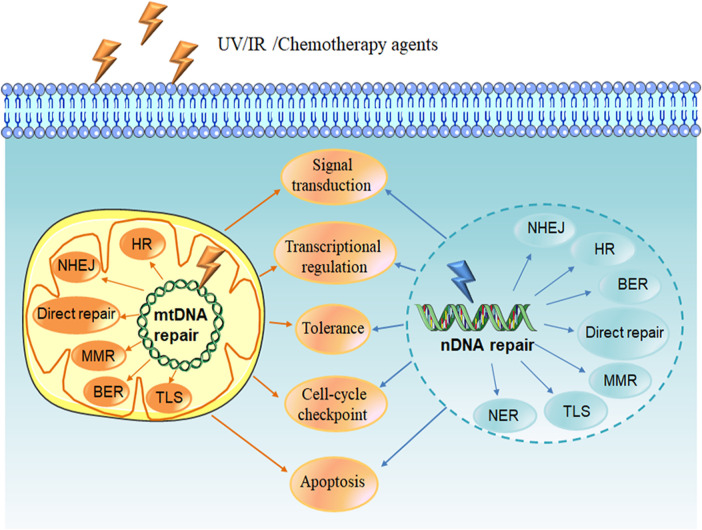
DNA repair pathways are triggered to maintain genetic stability and integrity when mammalian cells are exposed to endogenous or exogenous DNA-damaging agents. The deregulation of DNA repair pathways is associated with the initiation and progression of cancer. As the primary anti-cancer therapies, ionizing radiation and chemotherapeutic agents induce cell death by directly or indirectly causing DNA damage, dysregulation of the DNA damage response may contribute to hypersensitivity or resistance of cancer cells to genotoxic agents and targeting DNA repair pathway can increase the tumor sensitivity to cancer therapies. Therefore, targeting DNA repair pathways may be a potential therapeutic approach for cancer treatment. A better understanding of the biology and the regulatory mechanisms of DNA repair pathways has the potential to facilitate the development of inhibitors of nuclear and mitochondria DNA repair pathways for enhancing anticancer effect of DNA damage-based therapy.
Overview
The claims and statistics of this paper haven’t been checked yet.
Run the check — free, no account needed. It reads the open-access text and checks the sources it cites.
Integrity signals
Registry
Cites
Statistics
Figures
Verification
Claims the paper makes
The claims and statistics of this paper haven’t been checked yet.
Run the check — free, no account needed. It reads the open-access text and checks the sources it cites.
Claims other papers make about this one
Each is checked against this paper’s own text: does it say what the citing paper says it does?
The source backs part of the claim, not all of it — or backs it for a different population, condition or comparison.
In the citing paper
“One possible explanation for the observed difference between cSNVs and dbSNVs could be system-wide alterations in cancer cells, which are often characterized by increased replication stress, altered DNA repair mechanisms or changes in chromatin structure (85,86).”
From G-quadruplex-mediated genomic instability drives SNVs in cancer (2024) · cites this paper as [86]
Experimental — accuracy not yet measured
Self-check
Percentages, sums and reported differences re-computed from the paper’s own numbers.
The self-check needs the paper’s full text.
Citations
Cites
Hallmarks of Cancer: The Next Generation
Hanahan, D., & Weinberg, R. A. (2011) · Cell · doi:10.1016/j.cell.2011.02.013 · Cited by 66,590 · cited 1×
“If the damage is not corrected, it will cause genomic instability and mutation, which is one of the cancer hallmarks (Hanahan and Weinberg, 2011).”
BackgroundMGMT Gene Silencing and Benefit from Temozolomide in Glioblastoma
Hegi, M. E., Diserens, A.-C., Gorlia, T., Hamou, M.-F., de Tribolet, N., Weller, M., Kros, J. M., Hainfellner, J. A., Mason, W., Mariani, L., et al. (2005) · New England Journal of Medicine · doi:10.1056/nejmoa043331 · Cited by 7,405 · cited 1×
“Clinical study indicated that patients with glioblastoma containing a methylated MGMT promoter obtained more benefits from TMZ than those who did not have a methylated MGMT promoter (Hegi et al., 2005).”
BackgroundTargeting the DNA repair defect in BRCA mutant cells as a therapeutic strategy
Farmer, H., McCabe, N., Lord, C. J., Tutt, A. N. J., Johnson, D. A., Richardson, T. B., Santarosa, M., Dillon, K. J., Hickson, I., Knights, C., et al. (2005) · Nature · doi:10.1038/nature03445 · Cited by 6,683 · cited 1×
“In 2005, two pre-clinical researches published in nature indicated that BRCA1 or BRCA2 deficient cells highly sensitized to PARP inhibition (Farmer et al., 2005; Bryant et al., 2005).”
BackgroundMismatch repair deficiency predicts response of solid tumors to PD-1 blockade
Le, D. T., Durham, J. N., Smith, K. N., Wang, H., Bartlett, B. R., Aulakh, L. K., Lu, S., Kemberling, H., Wilt, C., Luber, B. S., et al. (2017) · Science · doi:10.1126/science.aan6733 · Cited by 6,645 · cited 1×
“For example,MMRhas been reported as a critical biomarker of response to immune checkpoint inhibitors in cancer (Le et al., 2017).”
BackgroundThe DNA-damage response in human biology and disease
Jackson, S. P., & Bartek, J. (2009) · Nature · doi:10.1038/nature08467 · Cited by 6,092
Specific killing of BRCA2-deficient tumours with inhibitors of poly(ADP-ribose) polymerase
Bryant, H. E., Schultz, N., Thomas, H. D., Parker, K. M., Flower, D., Lopez, E., Kyle, S., Meuth, M., Curtin, N. J., & Helleday, T. (2005) · Nature · doi:10.1038/nature03443 · Cited by 5,198
Olaparib for Metastatic Breast Cancer in Patients with a Germline BRCA Mutation
Robson, M., Im, S.-A., Senkus, E., Xu, B., Domchek, S. M., Masuda, N., Delaloge, S., Li, W., Tung, N., Armstrong, A., et al. (2017) · New England Journal of Medicine · doi:10.1056/nejmoa1706450 · Cited by 3,294 · cited 1×
“Several clinical trials using PARPi including Olaparib, Veliparib, Rucaparib (Table 1) as monotherapy for the treatment of patients with germline BRCA1/2 mutation tumors including advanced breast cancer, ovarian cancer, pancreatic cancer and prostate cancer presented significantly antitumor effect (Kaufman et al., 201…”
PARP inhibitors: Synthetic lethality in the clinic
Lord, C. J., & Ashworth, A. (2017) · Science · doi:10.1126/science.aam7344 · Cited by 3,013 · cited 1×
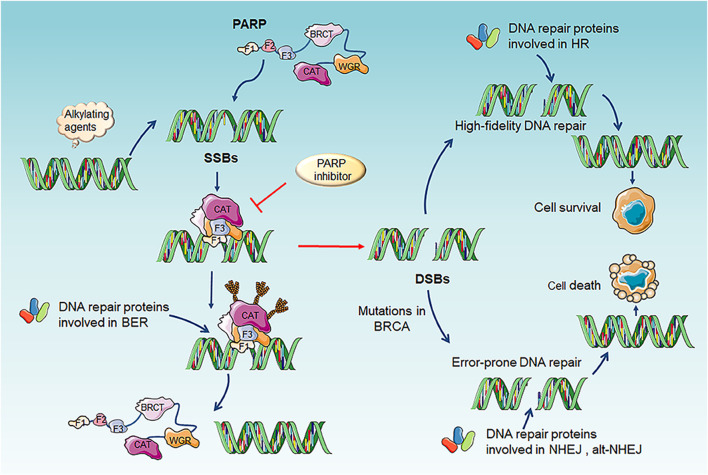
“Finally, it converted SSBs into DSBs and impelled cell death in HR-deficiency tumor, for example BRCA1/2 mutations, RAD51 deficiency (Figure 2) (Konecny and Kristeleit, 2016; Brown et al., 2017; Lord and Ashworth, 2017; Oplustil O’Connor et al., 2016).”
BackgroundMaintenance Olaparib in Patients with Newly Diagnosed Advanced Ovarian Cancer
Moore, K., Colombo, N., Scambia, G., Kim, B.-G., Oaknin, A., Friedlander, M., Lisyanskaya, A., Floquet, A., Leary, A., Sonke, G. S., et al. (2018) · New England Journal of Medicine · doi:10.1056/nejmoa1810858 · Cited by 2,870
Maintenance Olaparib for Germline BRCA -Mutated Metastatic Pancreatic Cancer
Golan, T., Hammel, P., Reni, M., Van Cutsem, E., Macarulla, T., Hall, M. J., Park, J.-O., Hochhauser, D., Arnold, D., Oh, D.-Y., et al. (2019) · New England Journal of Medicine · doi:10.1056/nejmoa1903387 · Cited by 2,302 · cited 1×
“Several clinical trials using PARPi including Olaparib, Veliparib, Rucaparib (Table 1) as monotherapy for the treatment of patients with germline BRCA1/2 mutation tumors including advanced breast cancer, ovarian cancer, pancreatic cancer and prostate cancer presented significantly antitumor effect (Kaufman et al., 201…”
Research works printed but not linked: 3
- Anderson, 1980, The presence of nuclear and mitochondrial uracil-DNA glycosylase in extracts of human KB cells, Nucleic Acids Res, 4, 875
- Liu, 2003, Blockage of abasic site repair enhances antitumor efficacy of 1,3-bis-(2-chloroethyl)-1-nitrosourea in colon tumor xenografts, Mol. Cancer Ther, 10, 1061
- Luo, 2004, Inhibition of the human apurinic/apyrimidinic endonuclease (APE1) repair activity and sensitization of breast cancer cells to DNA alkylating agents with lucanthone, Anticancer Res, 4, 2127
Cited by
Sorted by citations
Items 301–340 of 340
From Virtual Screening to Cell Phenotype: 4‐Thiazolidone Scaffolds Targeting LOXL2 in Breast Cancer
Ferreira, S., Santos, B., Tavares, M., Holota, S., Khylyuk, D., Lesyk, R., Finyuk, N., dos Santos, D. J. V. A., Díaz-Lanza, A., Costa, J., et al. (2026) · Chemical Biology and Drug Design · doi:10.1111/cbdd.70320
“The first method was an in-chemico approach using the Methyl green assay (Li et al. 2021).”
Kaempferol-based nanocarriers as a potential therapeutic strategy against drug-resistant lung cancer
Goleij, P., Tabari, M. A. K., Larsen, D. S., Hadipour, M., Rezaee, A., Poudineh, M., Daglia, M., Li, T., Khan, H., & Liu, L. (2026) · Cancer Cell International · doi:10.1186/s12935-025-03935-3
A Possibility of Synthetic Lethality: Wee1 Kinase as a Promising Treating Target for Cancer
Xue, X., Chen, X., Jiang, Y.-T., Wang, X., Xu, Z., Bei, C.-Q., Shi, G., Zhu, Y., Wei, Y.-Q., Chen, Y., et al. (2026) · Medicinal research reviews (Print) · doi:10.1002/med.70057
Self-citationXu, X., Bai, C., Qu, J., Wang, Y., Yan, Q., Ran, X., Zhang, J., Liu, Y., Li, J., Peng, L., et al. (2026) · Acta Pharmaceutica Sinica B · doi:10.1016/j.apsb.2026.05.011
Motshudi, M. C., Naidoo, C. M., Obi, C. L., Iweriebor, B. C., Prinsloo, E., Zubair, M. S., & Mkolo, N. M. (2026) · International Journal of Molecular Sciences · doi:10.3390/ijms27093739
“…across various therapy-resistant cancer malignancies, whereby surviving cells achieve homeostatic stability through the coordination of DNA repair, mitochondrial redox regulation, and pro-survival signalling cascades, thereby maintaining cell viability in spite of prolonged drug exposure [27,28].”
Kopoleva, E., Tsymbal, S. A., Kuchur, O. A., Kulchanovskaya, D. S., Grishina, A. Y., Pinova, A. A., Doroshenko, I. V., Romanov, R. I., Muslimov, A. R., Syuy, A. V., et al. (2026) · Drug Delivery and Translational Research · doi:10.1007/s13346-026-02112-x
Bardaweel, S., Hajjo, R., Sabbah, D., & Qasem, D. A. (2026) · Eurasian Journal of Medicine · doi:10.5152/eurasianjmed.2026.251350
“27 By enhancing the capacity and speed of these DDR pathways, tumor cells minimize the lethal accumulation of genetic damage, allowing them to withstand doses of chemotherapy that should be curative and resume proliferation.”
InfluentialDNA-PKcs promotes therapy resistance and metastatic recurrence in neuroblastoma
Norouzi, M., Kim, S., Zhu, B., Wang, C., Wu, N., Somers, K., Yang, E. S., Evers, B. M., Rellinger, E. J., & Rychahou, P. (2026) · Cancer Letters · doi:10.1016/j.canlet.2026.218383
Harnessing Nanotechnology to Rewire Lipid Metabolism: A Novel Therapeutic Avenue for Brain Cancer.
Dash, S. R., Hembram, K. C., Chateerjee, S., Das, C., & Das, B. (2025) · Molecular Pharmaceutics · doi:10.1021/acs.molpharmaceut.5c01091
Genomic characterization of host gene alterations in Theileria annulata-transformed leukocytes
Dandasena, D., Suresh, A., Budhwar, R., Godwin, J., Singh, S., Subudhi, M., Vengatachala Moorthy, A., Amruthanjali, T., Roy, S., Bhandari, V., et al. (2025) · Communications Biology · doi:10.1038/s42003-025-09005-8
“Genomic deletions, duplications, and rearrangements may affect anything fromafewkilobasestoanentirechromosome,knownasstructuralvariation (SVs), which plays a critical role in the development of cancer 29 .”
Karagama, M., Siam, F. M., Alias, N., & Alzahrani, D. (2025) · MATEMATIKA · doi:10.11113/matematika.v41.n3.1668
“Furthermore, advancing cancer treatment and radiotherapy requires a crucial understanding of these mechanisms [5].”
Althubyani, M. A., Alrefaei, A., Qari, S. H., Alharbi, R. S., & Alqathama, A. (2025) · Frontiers in Toxicology · doi:10.3389/ftox.2025.1674822
“Cells initiate intricate DNA damage response (DDR) pathways to mitigate these consequences, encompassing damage identi fi cation, cell cycle arrest, and DNA repair mechanisms, including base excision repair (BER) (Li et al., 2021).”
Banerjee, S., Banerjee, A., Singhvi, G., Taliyan, R., & Dhar, P. (2025) · Beni-Suef University Journal of Basic and Applied Sciences · doi:10.1186/s43088-025-00706-x
“The DNA repair capacity can manifest in multiple ways: through bolstering/inhibiting various DNA repair pathways, mutation, or overexpression of factors responsible for DNA repair activity [83, 105, 106].”
Katare, K., Shetty, R., & Ghosh, A. (2025) · Mutation Research/Genetic Toxicology and Environmental Mutagenesis · doi:10.1016/j.mrgentox.2025.503903
Peptide-Based Therapeutic Platforms for Addressing Drug Resistance in Breast Cancer
Meur, S., & Karati, D. (2025) · International Journal of Peptide Research and Therapeutics · doi:10.1007/s10989-025-10770-7 · Cited by 1
“The expression of survivin is enhanced by ROCK (Rho-associated protein kinase) pathways being activated (Li et al. 2021).”
InfluentialIFI16 Enhances Chemosensitivity of Breast Cancer Cells by Inhibiting DNA Damage Response
Ka, N.-L., Lim, G.-Y., Kim, S.-S., & Lee, M.-O. (2025) · Biomolecules & Therapeutics · doi:10.4062/biomolther.2025.085
“While impairment of DNA repair can enhance tumor immunogenicity, it may also independently sensitize tumor cells to apoptosis induced by DNA-damaging chemotherapeutic agents (Concan-non et al ., 2023; Li et al ., 2021).”
Evolutionary Dynamics of Oncosuppression Under Selection Pressure
Potievskiy, M., Shatalov, P., Klabukov, I., Atiakshin, D., Yakimova, A., Baranovskii, D., Shegai, P., & Kaprin, A. (2025) · Life · doi:10.3390/life15101556
Artemis (DCLRE1C) Acts as a Target to Enhance Radiotherapy Response in Triple-Negative Breast Cancer
Bhat, V., Thu, K. L., Santiago, A. D. F. G., Bonvissuto, A. C., Ghasemi, F., Goodale, D., Roes, M. V., Passos, D. T., Dick, F. A., Cescon, D., et al. (2025) · Cancers · doi:10.3390/cancers17203279
“Although the molecular mechanisms driving radioresistance in TNBC are not fully understood, recent studies point to DNA repair pathways [11], cell cycle redistribution [12], epithelial-to-mesenchymal transition (EMT) [13], and the tumor microenvironment [14] as potential contributors.”
Ivanov, S. M., Sukhachev, V. S., Tarasova, O. A., Lagunin, A. A., & Poroikov, V. (2025) · International Journal of Molecular Sciences · doi:10.3390/ijms26199557
“In particular, the deregulation of DNA repair pathways is associated with the initiation and progression of cancer [113,114] and may contribute to the development of MDD [63,64].”
Disrupting DDB2-DNA Interaction by Lapatinib Enhances Chemotherapy Sensitivity
Hsu, S., He, Y.-H., Chen, Y.-J., Le, U., Liu, P.-T., Huynh, T., Chen, Y.-L., Wei, Y.-L., Chou, H.-C., Huang, W.-C., et al. (2025) · International Journal on Biological Sciences · doi:10.7150/ijbs.116148
“…mechanisms, such as base excision repair (BER), which handles small oxidative lesions, or homologous recombination (HR), which repairs double-strand breaks, NER addresses a broader range of helix-distorting damage that is directly relevant to the action of many front-line chemotherapeutics [8].”
A-LAVA: Detecting impact of germline variants on metabolic pathways in cancer genomes
Jalilkhany, M., Gallagher, K., Wehner, I., Hamilton, P., McPherson, S., McPhedran, S. J., Nathoo, F., Lum, J., & Numanagić, I. (2025) · bioRxiv · doi:10.1101/2025.08.30.673276
“Additionally, MSH3 was linked to DNA repair and base excision repair pathways, known to influence cancer progression [23, 31].”
Zulfiqri, A. M., Astuti, R., & Prastya, M. E. (2025) · Hayati Journal of Biosciences · doi:10.4308/hjb.32.6.1538-1550
Datkhile, K., Gudur, R., Patil, M., & Gudur, A. K. (2025) · Asian Pacific Journal of Cancer Prevention · doi:10.31557/apjcp.2025.26.8.2909
“Among various mechanisms concerned with cancer development, DNA repair pathways play a pivotal role in maintaining genomic stability and integrity thereby preventing the onset of malignancy [1-2].”
Breaking barriers: Deciphering the mechanisms of Olaparib resistance in prostate cancer
El‐Sehrawy, A. A. M. A., Mukhlif, M. Y., Khalaf, A. A., Uthirapathy, S., Ballal, S., Singh, A., Kavitha, V. S. N. P., Maharana, L., Ridha‐Salman, H., & Al-Altememe, A. R. H. (2025) · Seminars in Oncology · doi:10.1016/j.seminoncol.2025.152375 · Cited by 2
Resistance Signatures Manifested in Early Drug Response in Cancer and Across Species
Ruoff, C., Mitchell, A., Mondal, P., Gopalan, V., Singh, A., Gottesman, M., & Hannenhalli, S. (2025) · bioRxiv · doi:10.1101/2024.07.05.602281
“This finding is consistent with previous literature as enhanced DNA repair mechanisms have been noted to contribute to resistance in both E. coli and human cancers 41,42 .”
Oncogenic properties of wild-type DNA repair gene FANCA in breast cancer
Luo, L., Yuan, F., Palovcak, A., Li, F., Yuan, Q., Calkins, D., Manalo, Z., Li, Y., Wang, D.-Z., Zhou, M., et al. (2025) · Cell Reports · doi:10.1016/j.celrep.2025.115480
“18,19 As an example, inhibitors of the base excision repair protein poly (ADP-ribose) polymerase have been used to treat BRCA1/2-deficient breast cancer patients.”
Precision radiotherapy with molecular-profiling of CNS tumours
Dinakaran, D., Moore-Palhares, D., Yang, F., & Hill, J. B. (2024) · Journal of Neuro-Oncology · doi:10.1007/s11060-024-04911-z
Mhlanga, R., Mbaba, M., Tonui, R., Edkins, A. L., Khanye, S., & de la Mare, J.-A. (2024) · ChemistrySelect · doi:10.1002/slct.202403731
Liu, Y., Yalavarthi, S., Yang, F., Abdul‐Rashid, Y., Tang, S., Long, Z., Qin, Y., Wu, K., & Wang, Z. (2024) · BMC Pulmonary Medicine · doi:10.1186/s12890-024-03124-4
“However, concerns have been raised regarding the use of DNA repair inhibitors, as they may increase mutagenic lesions and contribute to tumor development [48].”
BackgroundIncreasing DNA damage sensitivity through corylin-mediated inhibition of homologous recombination.
Leu, Y.-L., Cheng, S.-F., Wang, T.-H., Feng, C.-H., Chen, Y.-J., Hsieh, Y.-C., Lan, Y.-H., & Chen, C.-C. (2024) · Biomedicine & pharmacotherapy = Biomedecine & pharmacotherapie · doi:10.1016/j.biopha.2024.116864
Chalco–Torres, L. E., Aranguren–Méndez, J. A., Guerrero–López, A., & Nirchio-Tursellino, M. (2024) · Revista Científica de la Facultad de Ciencias Veterinarias · doi:10.52973/rcfcv-e34336
Zarei, E., & Saadat, I. (2023) · Egyptian Journal of Medical Human Genetics · doi:10.1186/s43042-023-00445-7
Hashemi, S. R., Matin, M., Avan, A., Farrokhi, S., Rigi, F., Khayami, R., Azghandi, M., Esmaeilnia, M., & Kerachian, M. (2023) · Human Gene · doi:10.1016/j.humgen.2023.201226
Interaction of the platinum complex of tyrosine-β-cyclodextrin with G-quadruplex DNA
Sahayam, A. N. D., Muruganantham, A., Soundarapandian, S., Alexander, A., Pillai, A. S., & Enoch, I. V. (2023) · Nucleosides, Nucleotides & Nucleic Acids · doi:10.1080/15257770.2023.2194338
“[28] The KSV value (6.0 × 10⁶ mol−1 dm3) is about 35 times greater than that observed for binding to CT-DNA.”
BackgroundInfluentialThe double-edged sword of tumor-targeted treatment: the influence of targeted therapy on the heart
Huang, Y., Chen, L.-W., Ding, C., Zou, C.-T., Su, Z., Shu, X., & Wu, Y. (2023) · Translational Cancer Research · doi:10.21037/tcr-2025-1494
“DNA damage repair mechanism, also known as DNA damage response (DDR) mechanism, includes nucleotide excision repair, mismatch repair, homologous recombination repair, base excision repair and non-homologous end-joining, jointly maintaining stability of the genome (64).”
PARP inhibitors in metastatic prostate cancer: When, who, and how?
Pandey, P., & Sahoo, R. K. (2022) · International Journal of Molecular and Immuno Oncology · doi:10.25259/ijmio_19_2022
Cellular DNA effects of radiation and cancer risk assessment in cells with mitochondrial defects
Chen, J., Sridharan, D., Cross, C. L., & Pluth, J. M. (2022) · Journal of Radiation Research and Applied Sciences · doi:10.1016/j.jrras.2022.01.005
Carraro, C., Bonaguro, L., Schulte-Schrepping, J., Horne, A., Oestreich, M., Warnat-Herresthal, S., Helbing, T., Franco, M. D., Händler, K., Mukherjee, S., et al. (2022) · bioRxiv · doi:10.1101/2022.02.21.481294
Ilmiyah, S. Z., Mamamia, A., Permana, S., Widodo, E., Norahmawati, E., Fakurazi, S., Malek, N. A. N. N., & Endharti, A. A. (2025) · Journal of Pharmacy & Pharmacognosy Research · doi:10.56499/jppres24.2044_13.2.369
“Therefore, 5-FU therapy is monitored and combined with other drugs to reduce side effects and increase the effectiveness of treatment (Li et al., 2021).”
BackgroundChromatin dynamics orchestrates DNA repair mechanisms in glioblastoma
Dutt, S., Mahaddalkar, T., & Singh, B. M. (2021) · International Journal of Neurooncology · doi:10.4103/ijno.ijno_20_21
Metadata
- Authors
- Li, L.-Y., Guan, Y.-D., Chen, X.-S., Yang, J.-M., & Cheng, Y.
- Affiliations
- Central South University (CN)
- Corresponding author
- Cheng, Yan
- ORCID
- Cheng, Yan
- Venue
- Frontiers in Pharmacology
- Publisher
- Frontiers Media SA
- Published
- 2021-02-08
- Volume
- 11
- Pages
- 629266-629266
- ISSN
- 1663-9812 (ISSN-L)
- PMC
- PMC7898236
- OpenAlex
- W3127551105
- Cited by
- 383
- References
- 140
- Citations by year
- 2026: 40 · 2025: 81 · 2024: 86 · 2023: 93 · 2022: 69 · 2021: 14
- FWCI
- 7.08
- Type
- journal article
- Language
- en
- Open access
- gold
- doi.org
- Licence
- Locations
- Frontiers in Pharmacology (publishedVersion, cc-by)
- PubMed Central (publishedVersion, cc-by)
- PubMed (publishedVersion)
- UKnowledge (University of Kentucky) (submittedVersion, cc-by)
- DOAJ (DOAJ: Directory of Open Access Journals) (submittedVersion)
- Funders
- National Natural Science Foundation of China (81422051 81472593 31401208)
- Topics
- Life Sciences › Biochemistry, Genetics and Molecular Biology › Molecular Biology › DNA Repair Mechanisms
- Health Sciences › Medicine › Oncology › PARP inhibition in cancer therapy
- Health Sciences › Medicine › Oncology › Cancer-related Molecular Pathways
- Keywords
- DNA repair pathways, DNA damage response, cancer therapy, chemoresistance, ionizing radiation, DNA-damaging agents, DNA repair inhibitors, mitochondrial DNA repair, tumor sensitivity
About these checks
Registry, retraction, Cites and statistics results are computed, not judged, with one exception: a printed reference that no index lists is read once by a model before it counts as a citation error. Claims are extracted by a model and kept only when their quote appears verbatim in the text; each cited source is then checked, with a model’s help, for whether it says what the claim relies on. Those verdicts can be wrong — read the claim’s quote and the cited source before relying on one.
Statistics and arithmetic are recomputed, not judged.
Confidence bands are shown only for fields calibrated on our annotated test set. None is calibrated yet, so no band is shown.
What counts as a claim ›How we measure confidence ›How we check this ›
Are you an author, or do you see a problem with this page? Request a review
