

The therapeutic potential of glucagon-like peptide-1 for persons with addictions based on findings from preclinical and clinical studies
Open accessThe DOI matches its Crossref record; 80 of the 80 references it cites were found in a registry or an index.
Abstract
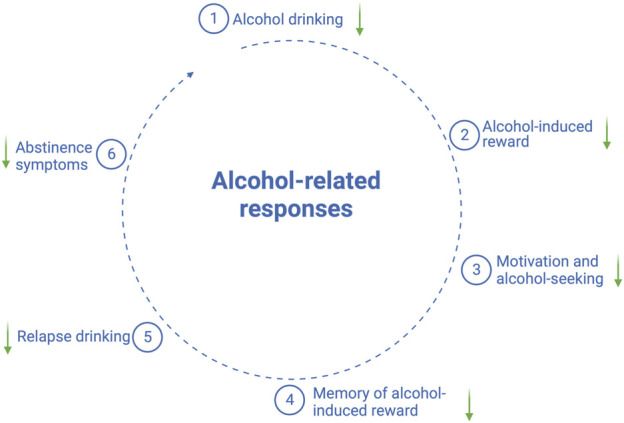
Although the multifaceted mechanisms underlying alcohol use disorder (AUD) have been partially defined, the neurobiological complexity of this disorder is yet to be unraveled. One of the systems that have gained attention in recent times is the gut–brain axis. Although numerous peptides participate in this axis, glucagon-like peptide-1 (GLP-1) plays a central role. GLP-1 is a crucial anorexigenic peptide, with potent abilities to reduce food intake and body weight. The physiological complexity of GLP-1 entails glucose homeostasis, gastrointestinal motility, and the release of insulin and glucagon. As reviewed in this study, acute or repeated treatment with GLP-1 receptor (GLP-1R) agonists decreases alcohol consumption in rodents. Moreover, the abilities of alcohol to promote hyperlocomotion, dopamine release in the nucleus accumbens, and reward in the conditioned place preference paradigm are all suppressed by GLP-1R ligands. Moreover, activation of GLP-1R suppresses the motivation to consume alcohol, alcohol-seeking behaviors, and relapse drinking in male rodents. Similarly, abstinence symptoms experienced during alcohol withdrawal are attenuated by activation of the GLP-1 pathway. On a similar note, the activation of GLP-1 receptors within areas of the brain that are processing reward modulates these alcohol-related responses. Another area that is crucial for this ability is the nucleus of the solitary tract, which is where GLP-1 is produced and from which GLP-1-containing neurons project to areas of reward. These findings may have clinical relevance as AUD is associated with polymorphisms in GLP-1-related genes. Although a GLP-1R agonist does not alter alcohol intake in AUD patients, it reduces this consumption in a sub-population of obese AUD individuals. Given the uncertainty of this outcome, additional clinical studies of obese AUD patients should explore the effects of the GLP-1R agonists on alcohol intake and body weight. Furthermore, GLP-1 receptors modulate the behavioral and neurochemical responses to addictive drugs. Taken together, these preclinical and clinical findings imply that the GLP-1 pathway plays a role in the complex mechanisms regulating alcohol and drug consumption patterns, unveiling a novel aspect of addiction medicine.
Overview
The claims and statistics of this paper haven’t been checked yet.
Free: it reads the open-access text and checks the first 5 claims that cite a source we can check. Create a free account to check every claim.
Integrity signals
Registry
Cites
Statistics
Figures
Verification
Claims the paper makes
The claims and statistics of this paper haven’t been checked yet.
Free: it reads the open-access text and checks the first 5 claims that cite a source we can check. Create a free account to check every claim.
Claims other papers make about this one
Each is checked against this paper’s own text: does it say what the citing paper says it does?
The source backs part of the claim, not all of it — or backs it for a different population, condition or comparison.
In the citing paper
“Animal models support that GLP-1RA treatment causally reduces alcohol intake, and GLP-1RAs may dampen the release of dopamine in the nucleus accumbens in response to alcohol intake as well as increase the breakdown of dopamine [17,84,85,86].”
From What Is Food Noise? A Conceptual Model of Food Cue Reactivity (2023) · cites this paper as [84]
Experimental — accuracy not yet measured
Self-check
Percentages, sums and reported differences re-computed from the paper’s own numbers.
The self-check needs the paper’s full text.
Citations
Cites
The Physiology of Glucagon-like Peptide 1
Holst, J. J. (2007) · Physiological Reviews · doi:10.1152/physrev.00034.2006 · Cited by 3,371 · cited 7×
“Moreover, GLP-1 production has been shown in some neurons of the nucleus of the solitary tract (NTS) in the brain stem [for a review, see Holst (2007)].”
BackgroundInfluentialA role for glucagon-like peptide-1 in the central regulation of feeding
Turton, M. D., O'Shea, D., Gunn, I., Beak, S. A., Edwards, C. M. B., Meeran, K., Choi, S. J., Taylor, G. M., Heath, M. M., Lambert, P. D., et al. (1996) · Nature · doi:10.1038/379069a0 · Cited by 1,950 · cited 1×
“Indeed, activation of GLP-1R reduces both homeostatic and hedonic feeding, and it decreases appetite (Tang-Christensen et al., 1996; Turton et al., 1996; Langhans, 2000; Naslund et al., 2005; Hayes et al., 2008; Alhadeff et al., 2012; Mietlicki-Baase et al., 2013; Wang et al., 2015).”
BackgroundGlucagon-like peptide-1 7–36: a physiological incretin in man
Kreymann, B., Ghatei, M. A., Williams, G., & Bloom, S. R. (1987) · The Lancet · doi:10.1016/s0140-6736(87)91194-9 · Cited by 1,928 · cited 1×
“These incretin functions have led to the approval of GLP-1R agonists for the treatment of type II diabetes (Kreymann et al., 1987).”
BackgroundAlcohol, liver disease and the gut microbiota
Bajaj, J. S. (2019) · Nature Reviews Gastroenterology & Hepatology · doi:10.1038/s41575-018-0099-1 · Cited by 697 · cited 1×
“Indeed, alcohol and GLP-1R agonists modify the gut microbiota composition [for reviews, see Bajaj (2019); Sayehmiri et al. (2022)].”
BackgroundREVIEW: Behavioural assessment of drug reinforcement and addictive features in rodents: an overview
Sanchis‐Segura, C., & Spanagel, R. (2006) · Addiction Biology · doi:10.1111/j.1369-1600.2006.00012.x · Cited by 629 · cited 3×
“Later on, in the addiction cycle, relapse drinking after alcohol withdrawal is an important aspect of AUD, and this can be modeled using the alcohol deprivation test in rats (Sanchis-Segura and Spanagel, 2006).”
BackgroundCentral administration of GLP-1-(7-36) amide inhibits food and water intake in rats
Tang-Christensen, M., Larsen, P. J., Goke, R., Fink-Jensen, A., Jessop, D. S., Moller, M., & Sheikh, S. P. (1996) · American Journal of Physiology-Regulatory, Integrative and Comparative Physiology · doi:10.1152/ajpregu.1996.271.4.r848 · Cited by 597 · cited 1×
“Indeed, activation of GLP-1R reduces both homeostatic and hedonic feeding, and it decreases appetite (Tang-Christensen et al., 1996; Turton et al., 1996; Langhans, 2000; Naslund et al., 2005; Hayes et al., 2008; Alhadeff et al., 2012; Mietlicki-Baase et al., 2013; Wang et al., 2015).”
BackgroundAlhadeff, A. L., Rupprecht, L. E., & Hayes, M. R. (2012) · Endocrinology · doi:10.1210/en.2011-1443 · Cited by 515 · cited 2×
“Indeed, activation of GLP-1R reduces both homeostatic and hedonic feeding, and it decreases appetite (Tang-Christensen et al., 1996; Turton et al., 1996; Langhans, 2000; Naslund et al., 2005; Hayes et al., 2008; Alhadeff et al., 2012; Mietlicki-Baase et al., 2013; Wang et al., 2015).”
BackgroundRinaman, L. (2010) · Brain Research · doi:10.1016/j.brainres.2010.03.059 · Cited by 311 · cited 1×
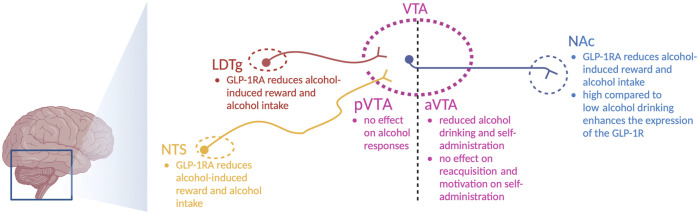
“One circuit of interest is the GLP-1-producing neurons from the NTS that target the LDTg, VTA, and NAc (Figure 2) (Rinaman, 2010).”
BackgroundKanoski, S. E., Rupprecht, L. E., Fortin, S. M., De Jonghe, B. C., & Hayes, M. R. (2012) · Neuropharmacology · doi:10.1016/j.neuropharm.2011.12.022 · Cited by 273 · cited 3×
“Although indirectly excluding this factor, the tested GLP-1R agonists act as follows: 1) they do not cause a CPP per se as an indication of conditioned aversion (Cagniard and Murphy, 2012), 2) they are used in dosages that are not associated with malaise (Cagniard and Murphy, 2012; Kanoski et al., 2012; Mietlicki-Baas…”
BackgroundKlausen, M. K., Jensen, M. E., Møller, M., Le Dous, N., Jensen, A.-M. Ø., Zeeman, V. A., Johannsen, C.-F., Lee, A., Thomsen, G. K., Macoveanu, J., et al. (2022) · JCI Insight · doi:10.1172/jci.insight.159863 · Cited by 262 · cited 2×
“In this study, exenatide does not alter alcohol intake in AUD patients who were of regular weight (Klausen et al., 2022).”
Background
Research works printed but not linked: 1
- Kalra, S. (2011). Change in alcohol consumption following liraglutide initiation: A real life experience. California, USA: 71st Anerican Diabetes Association confernace, 2019.
Cited by
Once-Weekly Semaglutide in Adults With Alcohol Use Disorder: A Randomized Clinical Trial
Hendershot, C. S., Bremmer, M. P., Paladino, M. B., Kostantinis, G., Gilmore, T. A., Sullivan, N. R., Tow, A. C., Dermody, S. S., Prince, M. A., Jordan, R., et al. (2025) · JAMA Psychiatry · doi:10.1001/jamapsychiatry.2024.4789 · Cited by 287
McIntyre, R. S., Mansur, R. B., Rosenblat, J. D., & Kwan, A. T. H. (2024) · Expert Opinion on Drug Safety · doi:10.1080/14740338.2023.2295397 · Cited by 126
GLP-1 physiology in obesity and development of incretin-based drugs for chronic weight management
Holst, J. J. (2024) · Nature Metabolism · doi:10.1038/s42255-024-01113-9 · Cited by 125
“One of the important aspects of the anorectic effects of GLP-1RAs is their effect on the reward system 225,226 .”
Nauck, M. A., Tuttle, K. R., Tschöp, M. H., & Blüher, M. (2026) · The Lancet · doi:10.1016/s0140-6736(25)02105-1 · Cited by 123
De Giorgi, R., Ghenciulescu, A., Dziwisz, O., Taquet, M., Adler, A. I., Koychev, I., Upthegrove, R., Solmi, M., McCutcheon, R., Pillinger, T., et al. (2025) · Nature Mental Health · doi:10.1038/s44220-025-00390-x · Cited by 77
Bruns VI, N., Tressler, E. H., Vendruscolo, L. F., Leggio, L., & Farokhnia, M. (2024) · Pharmacological Research · doi:10.1016/j.phrs.2024.107312 · Cited by 89
What Is Food Noise? A Conceptual Model of Food Cue Reactivity
Hayashi, D., Edwards, C., Emond, J. A., Gilbert-Diamond, D., Butt, M., Rigby, A., & Masterson, T. D. (2023) · Nutrients · doi:10.3390/nu15224809 · Cited by 80
“Animal models support that GLP-1RA treatment causally reduces alcohol intake, and GLP-1RAs may dampen the release of dopamine in the nucleus accumbens in response to alcohol intake as well as increase the breakdown of dopamine [17,84–86].”
BackgroundChiappini, S., Vickers-Smith, R., Harris, D., Papanti Pelletier, G. D., Corkery, J. M., Guirguis, A., Martinotti, G., Sensi, S. L., & Schifano, F. (2023) · Pharmaceuticals · doi:10.3390/ph16070994 · Cited by 78
“rewarding effects of palatable food intake (for a review, see also [59]) and the food-related brain responses in both T2DM and obese subjects in insula, amygdala, putamen, and orbitofrontal cortex [62].”
BackgroundMerkel, R., Hernandez, N. S., Weir, V. R., Zhang, Y., Caffrey, A., Rich, M. T., Crist, R. C., Reiner, B. C., & Schmidt, H. D. (2025) · Science Advances · doi:10.1126/sciadv.adr5051 · Cited by 79
Arillotta, D., Floresta, G., Papanti Pelletier, G. D., Guirguis, A., Corkery, J. M., Martinotti, G., & Schifano, F. (2024) · Brain Sciences · doi:10.3390/brainsci14060617 · Cited by 64
“Preclinical findings showed promising results supporting GLP-1 RAs as potential cocaine use disorder medications [6,68].”
BackgroundResultInfluentialFarokhnia, M., Tazare, J., Pince, C. L., Bruns, N., Gray, J. C., Re, V. L., Fiellin, D. A., Kranzler, H. R., Koob, G. F., Justice, A. C., et al. (2025) · Journal of Clinical Investigation · doi:10.1172/jci188314 · Cited by 72
Martinelli, S., Mazzotta, A. D., Longaroni, M., & Petrucciani, N. (2024) · Drug and Alcohol Dependence · doi:10.1016/j.drugalcdep.2024.112424 · Cited by 70
Targeting GLP-1 receptors to reduce nicotine use disorder: Preclinical and clinical evidence
Herman, R. J., & Schmidt, H. D. (2024) · Physiology & Behavior · doi:10.1016/j.physbeh.2024.114565 · Cited by 62
GLP-1 Receptor Agonists: Promising Therapeutic Targets for Alcohol Use Disorder
Jerlhag, E. (2025) · Endocrinology · doi:10.1210/endocr/bqaf028 · Cited by 66
Self-citationSubhani, M., Dhanda, A., King, J. A., Warren, F. C., Creanor, S., Davies, M. J., Eldeghaidy, S., Bawden, S., Gowland, P. A., Bataller, R. A., et al. (2024) · EClinicalMedicine · doi:10.1016/j.eclinm.2024.102920 · Cited by 58
Dermatologic Implications of Glucagon-Like Peptide-1 Receptor Agonist Medications
Burke, O. M., Sa, B., Cespedes, D. A., & Tosti, A. (2025) · Skin Appendage Disorders · doi:10.1159/000544023 · Cited by 55
Zafer, M., Tavaglione, F., Romero‐Gómez, M., & Loomba, R. (2025) · Alimentary Pharmacology & Therapeutics · doi:10.1111/apt.70196 · Cited by 47
“In pre-clinical models, GLP-1 receptor agonists modulate alcohol consumption and related behaviours, including reducing alcohol intake, suppressing alcohol-seeking behaviours, and alleviating withdrawal symptoms in rodents [133].”
Alkhouri, N., Charlton, M., Gray, M. E., & Noureddin, M. (2025) · Expert Opinion on Investigational Drugs · doi:10.1080/13543784.2025.2473062 · Cited by 34
“No decrease in alcohol intake was observed in individuals with AUD without obesity [144]; thus, additional data are needed to clarify the effects of GLP-1RAs on alcohol consumption and to define appropriate recipients.”
Rehm, J. T., Assanangkornchai, S., Hendershot, C. S., Franklin, A., Neufeld, M., Hassan, A. S., & Shield, K. D. (2025) · The Lancet · doi:10.1016/s0140-6736(25)01496-5 · Cited by 34
Novel medications for problematic alcohol use
Heilig, M. A., Witkiewitz, K. A., Ray, L. A., & Leggio, L. (2024) · Journal of Clinical Investigation · doi:10.1172/jci172889 · Cited by 29
“Furthermore, administration of GLP-1 itself or GLP-1R agonists (GLP-1RAs), such as exenatide and liraglutide, reduced alcohol drinking and other alcohol-related behaviors in rodents (109) and nonhuman primate models (110).”
Glucagon-Like Peptide 1: An Introduction and Possible Implications for Neuropsychiatry
López-Ojeda, W., & Hurley, R. A. (2024) · Journal of Neuropsychiatry · doi:10.1176/appi.neuropsych.20230226 · Cited by 31
Scheen, A. J. (2025) · Diabetes Obesity and Metabolism · doi:10.1111/dom.16453 · Cited by 25
“Other plausible neurobiological mechanisms underlying GLP-1RA positive effects on AUD can be invoked: 14,25,29,78 for instance, protection against the negative emotional state that drives alcohol ingestion, 79 reduction of stress-induced compulsive alcohol consumption, 80 cerebral anti-inflammatory…”
Crosstalk between alcohol use disorder and obesity: two sides of the same coin?
Leggio, L., Farokhnia, M., Kenny, P. J., Pepino, M. Y., & Simmons, W. K. (2025) · Molecular Psychiatry · doi:10.1038/s41380-025-03259-8 · Cited by 18
Alcohol and the dopamine system
Söderpalm, B., & Ericson, M. (2024) · International review of neurobiology · doi:10.1016/bs.irn.2024.02.003 · Cited by 22
Sharafshah, A., Lewandrowski, K.-U., Gold, M. S., Fuehrlein, B., Ashford, J. W., Thanos, P. K., Wang, G. J., Hanna, C., Cadet, J. L., Gardner, E. L., et al. (2025) · Current Neuropharmacology · doi:10.2174/011570159x349579241231080602 · Cited by 23
“Therefore, stimulation of GLP-1 receptor agonists, especially chronically, can lead to the dysregulation of the dopaminergic pathway, which in turn can cause depression, suicidality, and other mood disturbances [9, 16, 32-40].”
Poly-Agonist Pharmacotherapies for Metabolic Diseases: Hopes and New Challenges
Allard, C., Cota, D., & Quarta, C. (2023) · Drugs · doi:10.1007/s40265-023-01982-6 · Cited by 17
“Over the past decade, studies have reported that GLP-1R agonists lead to reductions in alcohol and substance abuse, effects that may be centrally mediated, although the precise mechanisms remain to be elucidated [233, 234].”
Scheen, A. J. (2025) · Diabetes & Metabolism · doi:10.1016/j.diabet.2025.101612 · Cited by 17
Yammine, L., Grigson, P. S., Schmitz, J. M., Evans, B., & Hendershot, C. S. (2025) · Current Addiction Reports · doi:10.1007/s40429-025-00657-4 · Cited by 15
“The earliest formal human report was a 2011 conference abstract [37] that described reduced alcohol consumption in a small cohort of patients with T2D receiving liraglutide [ 48 , 49 ].”
Treatment of gaming disorder: A systematic review and meta-analysis
Harpas, I., Stevens, M., Radünz, M., Williamson, P., Hamamura, T., Svendsen, O., & King, D. L. (2025) · Psychiatry Research · doi:10.1016/j.psychres.2025.116783 · Cited by 14
Arefin, T. M., Börchers, S., Olekanma, D. I., Cramer, S. R., Sotzen, M. R., Zhang, N., & Skibicka, K. P. (2025) · Neuropharmacology · doi:10.1016/j.neuropharm.2025.110348 · Cited by 13
Knowles, L. G., Armanious, A. J., Peng, Y., Welsh, W. J., & James, M. H. (2023) · Addiction Neuroscience · doi:10.1016/j.addicn.2023.100126 · Cited by 12
“Although there is an emerging literature to indicate that GLP-1 agonists might have some efficacy for treating SUDs and AUD, this possibility requires further investigation before a label extension for these compounds can be considered [24].”
BackgroundGlucagon-Like Peptide 1 Receptor Agonists in Psychiatry
Himmerich, H., & McElroy, S. L. (2024) · Journal of Clinical Psychopharmacology · doi:10.1097/jcp.0000000000001869 · Cited by 13
Moraes, B. D. F., Leite, G. A. P. D., Leite, G. A. P. D., Silveira, I. B., Lana, N. V., & Cançado, G. G. L. (2025) · Drug and Alcohol Dependence · doi:10.1016/j.drugalcdep.2025.112840 · Cited by 12
Shevchouk, O. T., Edvardsson, C. E., Ericson, M., Sköldheden, S. B., Zhang, Q., Nabinger, D. D., Snoeren, E. M. S., Westberg, L., & Jerlhag, E. (2026) · Behavioural Brain Research · doi:10.1016/j.bbr.2026.116085 · Cited by 9
Self-citationEdvardsson, C. E., Vestlund, J., Ericson, M., & Jerlhag, E. (2024) · Frontiers in Pharmacology · doi:10.3389/fphar.2024.1439203 · Cited by 7
“Additional physiological functions have been identi fi ed using Ex4, which has been found to reduce the intake of natural and arti fi cial rewards [for review see (Eren-Yazicioglu et al., 2020; Jerlhag, 2023)].”
BackgroundInfluentialSelf-citationAbstinence-based treatment of comorbid eating disorders and ultra-processed food addiction
Thompson, S. P., Jacobs, M. J., & Wiss, D. A. (2025) · Frontiers in Psychiatry · doi:10.3389/fpsyt.2025.1586490 · Cited by 6
Therapeutic Potential of Glucagon-Like Peptide-1 Receptor Agonists for Smoking Cessation
Hendershot, C. S., Simmons, W. K., Jha, M. K., McKee, S. A., & Yammine, L. (2026) · Biological Psychiatry · doi:10.1016/j.biopsych.2026.04.002 · Cited by 6
Adeniran, O. F., Nieto, L. M., Amadi, C., Shepherd, K., Kirkpatrick, J., Farah, K., Marwizi, F. M., Alqinai, B., Narvaez, S. I., Mensah, S., et al. (2025) · Obesity · doi:10.1002/oby.70001 · Cited by 6
“…include modulation of the gut-brain neurohumoral signaling and mesolimbic reward pathways, thereby reducing alcohol-seeking behavior, reducing alcohol intake, and mitigating withdrawal symptoms via modulation of neurotransmitter release and neuronal activity within the mesolimbic circuitry [9].”
InfluentialThe Contribution of the Brain–Gut Axis to the Human Reward System
Karaivazoglou, K., Aggeletopoulou, I., & Triantos, C. K. (2024) · Biomedicines · doi:10.3390/biomedicines12081861 · Cited by 6
“Most of these findings originate from preclinical studies; however, there is a small but significant number of relevant research on human subjects too [30,31].”
BackgroundMetabolic bariatric surgery, alcohol misuse and liver cirrhosis: a narrative review
Basa, M. L., Cha, D. S., Mitchell, D. P., & Chan, D. L. (2024) · Metabolism and Target Organ Damage · doi:10.20517/mtod.2024.22 · Cited by 6
Peregud, D., & Gulyaeva, N. V. (2024) · Biochemistry (Moscow) · doi:10.1134/s0006297924110026 · Cited by 6
Legan, J. A., Gentry, J., Shugoll, J., Zhong, Q., & Ait‐Daoud, N. (2025) · Medical Research Archives · doi:10.18103/mra.v13i2.6328 · Cited by 5
Windram, M., Lovelock, D. F., Carew, J. M., Krieman, C. G., Hendershot, C. S., & Besheer, J. (2025) · Psychopharmacology · doi:10.1007/s00213-025-06854-3 · Cited by 8
“…particularly glucagon-like peptide-1 (GLP-1) receptor agonists, which have shown potential in preclinical and clinical studies (Fink-Jensen and Vilsbøll 2016; Hayes and Schmidt 2016; Brunchmann et al. 2019; Klausen et al. 2022; Jerlhag 2023 , 2025; Leggio et al. 2023; Bruns et al. 2024).”
Palzes, V. A., Costales, B., Sterling, S., Kline‐Simon, A. H., Leggio, L., & Farokhnia, M. (2025) · Biological Psychiatry Global Open Science · doi:10.1016/j.bpsgos.2025.100659 · Cited by 8
Incretin-Based Therapies and Post–Bariatric Surgery Alcohol Use Disorder
Fakhoury, B., Sierra, L., Rama, K., Jahagirdar, V., Díaz, L. A., & Arab, J. P. (2025) · JAMA Network Open · doi:10.1001/jamanetworkopen.2025.49086 · Cited by 6
Therapeutic Potential of the Novel GLP-1 Receptor Agonist Semaglutide in Alcohol Use Disorder
Liu, T., Shi, F., Guo, Z., Li, H., & Qin, D. (2025) · Pharmacopsychiatry · doi:10.1055/a-2550-6470 · Cited by 4
“1 , preclinical research suggests that the GLP-1 pathway modulates alcohol-mediated reactions to alcohol use, alcohol-related behaviors and neurochemistry, motivation to consume and seek alcohol, and relapse drinking [23].”
Semaglutide for Craving Reduction in a Cocaine Dependent Patient: A Case Report
Sileoni, A. M., Turco, E. T., Semeraro, F., Cavallotto, C., Mosca, A., Chiappini, S., & Martinotti, G. (2025) · Clinical Neuropsychopharmacology and Addiction · doi:10.53941/cna.2025.100003 · Cited by 4
GLP-1 Receptor Agonists: Beyond Diabetes—What the Neurosurgeon Needs to Know
Abdulrazeq, H., Taman, M., Ali, R., Doberstein, C., Sullivan, P. Z., Sampath, P., Telfeian, A. E., Gokaslan, Z. L., Fridley, J., & Asaad, W. F. (2024) · Neurosurgery Open · doi:10.1227/neuprac.0000000000000098 · Cited by 7
The gut and heart’s role in reward processing
Arinel, M., & Abdelaal, K. (2025) · Frontiers in Integrative Neuroscience · doi:10.3389/fnint.2025.1479923 · Cited by 3
“Conversely, GLP-1R activation in rodent VTA decreases the motivation to consume cocaine (Schmidt et al., 2016), alcohol (Shirazi et al., 2013), and nicotine (Tuesta et al., 2017), suggesting a conserved role for modulating non-food rewards and holding clinical therapeutic potential (Jerlhag, 2023).”
Assessment of the Potential of GLP-1 Analogs in the Treatment of Addictions: A Literature Review
Torres, I. N., & Alverde, M. J. B. (2025) · Substance Use & Addiction Journal · doi:10.1177/29767342251351111 · Cited by 3
Wallach, J. D., O’Malley, S. S., Lipska, K. J., Ross, J. S., Jeffery, M. M., & Savitz, S. T. (2025) · Journal of Addiction Medicine · doi:10.1097/adm.0000000000001575 · Cited by 3
Y, S. S. T., Sree, K. S. K. S. B., & Mahato, S. K. (2025) · Journal of Clinical Psychopharmacology · doi:10.1097/jcp.0000000000002010 · Cited by 3
Marcus, M. M., & Banks, M. L. (2025) · Neuroscience & Biobehavioral Reviews · doi:10.1016/j.neubiorev.2025.106217 · Cited by 3
Navigating the Evolving Roles of GLP-1 Agonists Safely and Effectively
Ockerman, K. M., Furnas, H. J., Sheer, A., & Sorice-Virk, S. C. (2024) · Aesthetic Surgery Journal · doi:10.1093/asj/sjae166 · Cited by 3
Budzyński, J., Czarnecki, D., Kruszewski, M. K., Długosz, A., & Ziółkowski, M. (2024) · Medical Research Journal · doi:10.5603/mrj.101513 · Cited by 2
Incretin Mimetics (GLP-1 Agonists) as an Addition to the Psychopharmacology Armamentarium
Alenezi, H. F. F., & Naguy, A. (2025) · Psychopharmacology Bulletin · doi:10.64719/pb.4531 · Cited by 2
King, A. C., Wellendorf, C. E., Atkinson, E. A., de Carvalho, M. E. A., Fridberg, D. J., & Pannain, S. (2025) · Journal of Addiction Medicine · doi:10.1097/adm.0000000000001565 · Cited by 2
Bronson, S., Groves, K. D., Noorani, S., Boothe, D., Gopal, M., & Quinonez, J. (2025) · Addiction and Health · doi:10.34172/ahj.1682 · Cited by 2
“33 Future studies should prioritize randomized controlled trial (RCT) designs with well-defined primary endpoints such as craving reduction, relapse rates, and retention in treatment.”
InfluentialFrom the Discovery of GLP-1 to Today’s Diabetes/Obesity Therapy and Beyond
Holst, J. J. (2026) · Biological Psychiatry · doi:10.1016/j.biopsych.2026.04.010 · Cited by 3
Glucagon‐like peptide‐1 receptor agonist use and violent crime among US adults
Semenza, D. C., & Thomas, C. (2026) · Criminology · doi:10.1111/1745-9125.70058 · Cited by 3
Bach, P., Franck, J., Hällgren, J., Widing, H., Gissler, M., & Westman, J. (2026) · The Lancet Psychiatry · doi:10.1016/s2215-0366(26)00172-0 · Cited by 2
Modestino, E. J., Bowirrat, A., Baron, D. A., Thanos, P. K., Hanna, C., Bagchi, D., Braverman, E. R., Dennen, C. A., Badgaiyan, R. D., Pollack, A. R., et al. (2024) · Journal of Addiction Psychiatry · doi:10.17756/jap.2024-044 · Cited by 4
GLP-1 receptor agonists in delirium and encephalopathies: a neuroprotective scoping review
Mercado, F., Kop, M. M., & Trinh, M. (2025) · Discover Medicine · doi:10.1007/s44337-025-00428-0 · Cited by 2
Burr, E. F., Roytman, M., Poirier, É., Kolbuszewska, M. T., Pfaus, J. G., Komisaruk, B. R., Goldstein, I., & Rubin, R. S. (2025) · Sexual Medicine · doi:10.1093/sexmed/qfaf073 · Cited by 3
A current grasp of GLP-1 receptor agonists for addiction: emerging therapeutic potential
Moosa-Battey, R. (2025) · SA pharmaceutical journal. · doi:10.36303/sapj.2615 · Cited by 1
Glucagon-Like Peptide-1 Receptor Agonists: A Novel Indication for Substance Use Disorders?
Ftiha, F., Ftiha, J., Parikh, M. A., Frishman, W. H., & Peterson, S. J. (2025) · Cardiology in Review · doi:10.1097/crd.0000000000001145 · Cited by 1
Edwiges, M., Sá, S. I., Lopes, R., Portela, C., Andrade, J. P., & Rocha-Neves, J. P. (2026) · Frontiers in Neuroanatomy · doi:10.3389/fnana.2026.1880560 · Cited by 1
“The NAc GLP-1 system is considered a critical interface between energy homeostasis and reward circuitry, offering potential targets for the treatment of obesity and addictive behaviours (Jerlhag, 2023).”
Management of alcohol use disorder in alcohol-related liver disease
Abusuliman, M., Milgrom, Y., Mellinger, J. L., & Parker, R. (2025) · Frontline Gastroenterology · doi:10.1136/flgastro-2025-103095 · Cited by 2
“41 Research is ongoing and will be necessary to establish the safety, efficacy and mechanisms of ketamine and GLP-1RAs in treating AUD, particularly among patients with ArLD.”
Chiappini, S., Vickers‐Smith, R., Harris, D. R., Papanti, D., Corkery, J., Guirguis, A., Martinotti, G., Sensi, S. L., & Schifano, F. (2023) · Preprints.org · doi:10.20944/preprints202309.1300.v1
Adipositaschirurgie (Bariatrische Chirurgie)
Kapfhammer, H. (2023) · Springer eBooks · doi:10.1007/978-3-662-68309-5_6
Sommer, L., Weber, S., Díaz, L. A., Trojer, A., Listabarth, S., Groemer, M., Arab, J. P., & König, D. (2024) · psychopraxis neuropraxis · doi:10.1007/s00739-024-01001-7
“Weitere Optionen werden derzeit un-tersucht, darunter Ondansetron [58–60], N-Acetylcystein [61], Spironolacton [62], Memantin [63], Ghrelin-Rezeptorblockade [64], GLP-1-Analoga [65] und die Psy-chedelika Ketamin [66] und Psilocybin [67].”
Der Stoffwechsel und die Motivation: Ein Teufelskreis?
Kretschmer, A. C., Arjune, S., Thanarajah, S. E., & Hanßen, R. (2024) · Adipositas - Ursachen Folgeerkrankungen Therapie · doi:10.1055/a-2339-9667
King, J. A., Aithal, G. P., Herring, L. Y., Willis, S. A., Papamargaritis, D., Hulley, K., & Davies, M. J. (2024) · NIHR Open Research · doi:10.3310/nihropenres.13784.1
“An expanding body of observational data has also identified associations between GLP-1RA use and reduced alcohol consumption 22 .”
Wang, A., Yang, H., & Zhu, Y. (2025) · Current Medicinal Chemistry · doi:10.2174/0109298673367232250102015441
Glucagon-like-peptide-1 and Mental Health
O’Connor, M. A., Peters, A., & Reddin, C. J. (2025) · Nursing Clinics of North America · doi:10.1016/j.cnur.2025.09.005
Martinelli, S., & Petrucciani, N. (2025) · Epidemiology Biostatistics and Public Health · doi:10.54103/2282-0930/29800
(2026) · Frontiers research topics · doi:10.3389/978-2-8325-7767-7
Tarman, V. I., & Wiss, D. A. (2026) · Frontiers in Psychiatry · doi:10.3389/fpsyt.2026.1848242
GLP-1 RAs in Substance Use Disorders: Emerging Evidence and Future Directions
Macanian, J., & Frishman, W. H. (2026) · Cardiology in Review · doi:10.1097/crd.0000000000001319
Caplin, A., & Fraser, R. I. (2026) · The Canadian Journal of Addiction · doi:10.1097/cxa.0000000000000268 · Cited by 1
Polek, N., Sikorska, M., Mularczyk, P., Łysoniewski, W., Marcysiak, A., Mruzek, T., Kiełbasiewicz, M., & Zawadzka, K. (2026) · International Journal of Innovative Technologies in Social Science · doi:10.31435/ijitss.2(50).2026.5584
“Converging preclinical and early clinical findings suggest that GLP-1 receptor activation attenuates alcohol reward, reduces intake, and suppresses motivational and relapse-related behaviours (Jerlhag, 2023).”
InfluentialRole of incretins in Alzheimer’s disease and their impact on behavioral aspects
Yang, J., Mao, T., & Gao, L. (2026) · Chinese Medical Journal · doi:10.1097/cm9.0000000000004195
Optimizing GLP-1 Receptor Agonist Use: Mechanisms, Clinical Applications, and Safety Profiles
(2026) · Frontiers research topics · doi:10.3389/978-2-8325-8391-3
Heshmati, J., Mahmoodianfard, S., Raizman, E., Abraham, A., & Mir, H. R. (2026) · Tobacco Induced Diseases · doi:10.18332/tid/219815
“Additionally, these drugs appear to influence addictive behaviors more broadly, potentially decreasing voluntary nicotine intake and seeking behaviors 47,48 .”
Herlinger, K., Ling, Y. Y., Nestor, L. J., Pannekoek, J. N., Lababidi, M. A., Ertl, N., Vanelli, F., Alabdulkader, S., Chhibbar, P., Guerrero, E., et al. (2026) · Frontiers in Psychiatry · doi:10.3389/fpsyt.2026.1830228
Der Stoffwechsel und die Motivation: Ein Teufelskreis?
Kretschmer, A. C., Arjune, S., Thanarajah, S. E., & Hanßen, R. (2026) · Nervenheilkunde · doi:10.1055/a-2939-8125
Untangling the gut-brain axis: the relevance of gut microbiota in alcohol use disorder
Letizia, C. (2024) · Nutrimentum et Curae
Incretin Mimetics and Alcohol‐Related Outcomes: A Structured Narrative Review
Goodyear, C., Mensah, E., Stewart-Lynch, A. L., & Covvey, J. R. (2026) · Pharmacotherapy The Journal of Human Pharmacology and Drug Therapy · doi:10.1002/phar.70206
“This mechanism provides a potential therapeutic target in addition to dampening of reward circuitry, offering a restorative intervention that repairs a dysregulated system [17, 29].”
Tang, H., Zhang, B., Lu, Y., Lu, Y., Wang, H., Davis, C. N., Kranzler, H. R., & Chen, Y. (2026) · Diabetes Obesity and Metabolism · doi:10.1111/dom.71470
Metadata
- Authors
- Jerlhag, E.
- Affiliations
- University of Gothenburg (SE)
- Corresponding author
- Jerlhag, Elisabet
- ORCID
- Jerlhag, Elisabet
- Venue
- Frontiers in Pharmacology
- Publisher
- Frontiers Media SA
- Published
- 2023-03-30
- Volume
- 14
- Pages
- 1063033-1063033
- ISSN
- 1663-9812 (ISSN-L)
- PMC
- PMC10097922
- OpenAlex
- W4361280631
- Cited by
- 80
- References
- 80
- Citations by year
- 2026: 17 · 2025: 36 · 2024: 20 · 2023: 7
- FWCI
- 3.08
- Type
- journal article
- Language
- en
- Open access
- gold
- doi.org
- Licence
- Locations
- Frontiers in Pharmacology (publishedVersion, cc-by)
- PubMed Central (publishedVersion, cc-by)
- PubMed (publishedVersion)
- DOAJ (DOAJ: Directory of Open Access Journals) (submittedVersion, cc-by-sa)
- Funders
- Vetenskapsrådet
- Hjärnfonden
- Topics
- Life Sciences › Neuroscience › Cellular and Molecular Neuroscience › Neurotransmitter Receptor Influence on Behavior
- Life Sciences › Neuroscience › Endocrine and Autonomic Systems › Regulation of Appetite and Obesity
- Health Sciences › Medicine › Epidemiology › Substance Abuse Treatment and Outcomes
- Keywords
- glucagon-like peptide-1, GLP-1 receptor agonists, alcoholism, addiction, gut-brain axis, alcohol withdrawal, nucleus tractus solitarius, nucleus accumbens dopamine, conditioned place preference, alcohol relapse, obesity, genetic polymorphism, drug addiction, anorexigenic peptides
About these checks
Registry, retraction, Cites and statistics results are computed, not judged, with one exception: a printed reference that no index lists is read once by a model before it counts as a citation error. Claims are extracted by a model and kept only when their quote appears verbatim in the text; each cited source is then checked, with a model’s help, for whether it says what the claim relies on. Those verdicts can be wrong — read the claim’s quote and the cited source before relying on one.
Statistics and arithmetic are recomputed, not judged.
Confidence bands are shown only for fields calibrated on our annotated test set. None is calibrated yet, so no band is shown.
What counts as a claim ›How we measure confidence ›How we check this ›
Are you an author, or do you see a problem with this page? Request a review
Data sources
Bibliographic data: Semantic Scholar, OpenAlex, Crossref.
Contains information from the Semantic Scholar Academic Graph Datasets, made available under the ODC Attribution License (ODC-BY 1.0).
Semantic Scholar’s data is described in: Kinney, R., et al. (2023). The Semantic Scholar Open Data Platform. arXiv:2301.10140.
