

The DOI matches its Crossref record; 78 of the 78 references it cites were found in a registry or an index.
What is working memory capacity, and how can we measure it?
Open accessAbstract
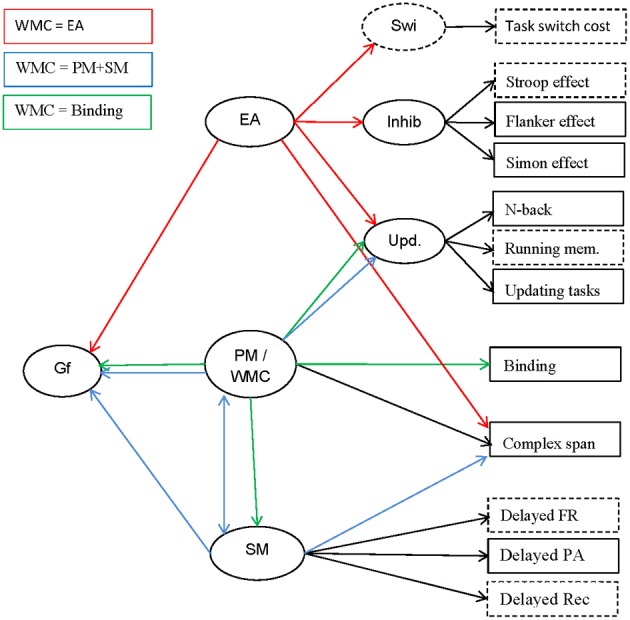
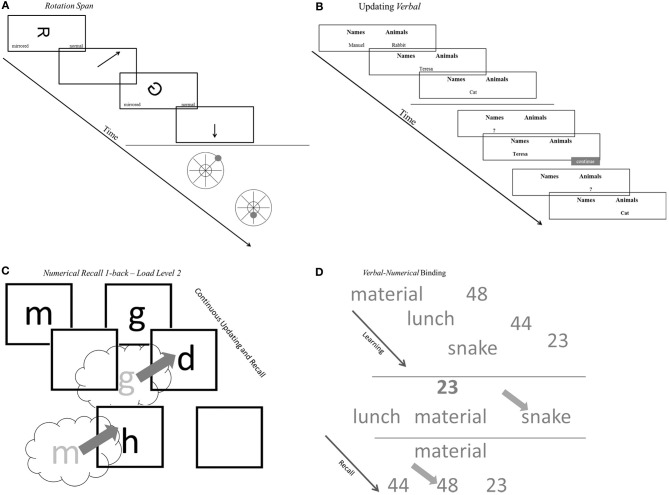
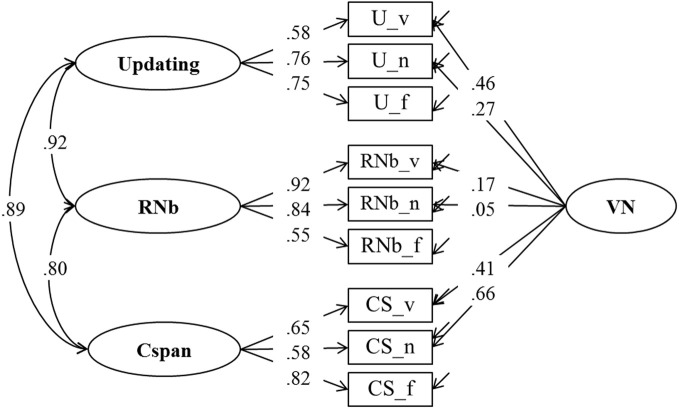
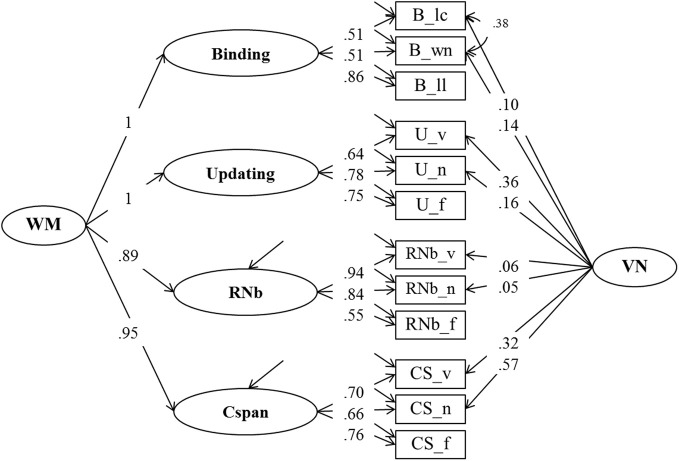
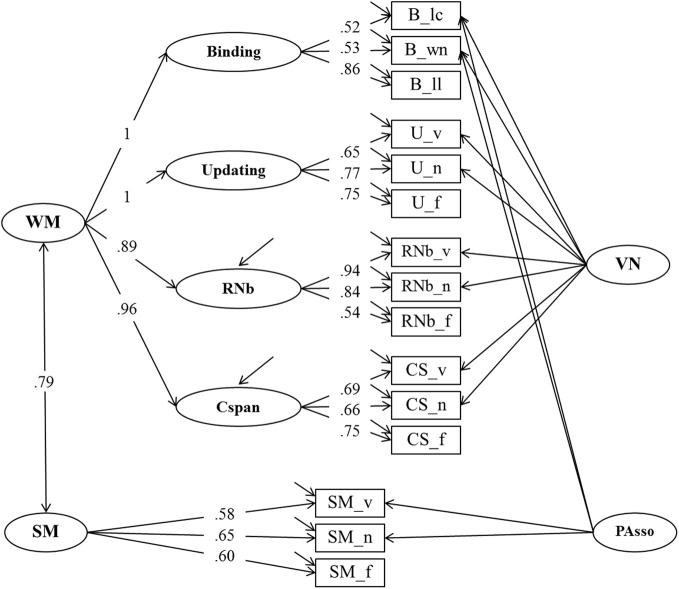
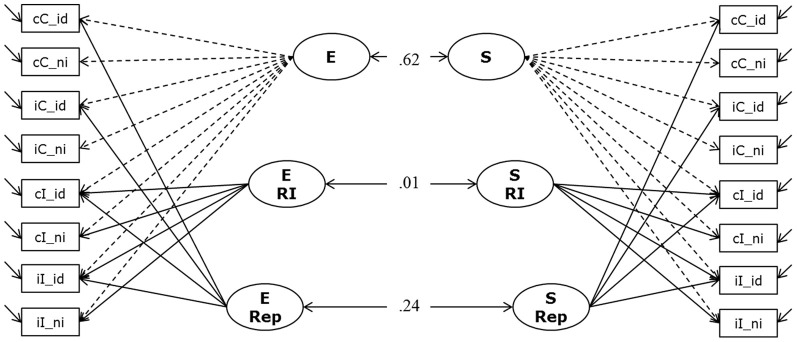
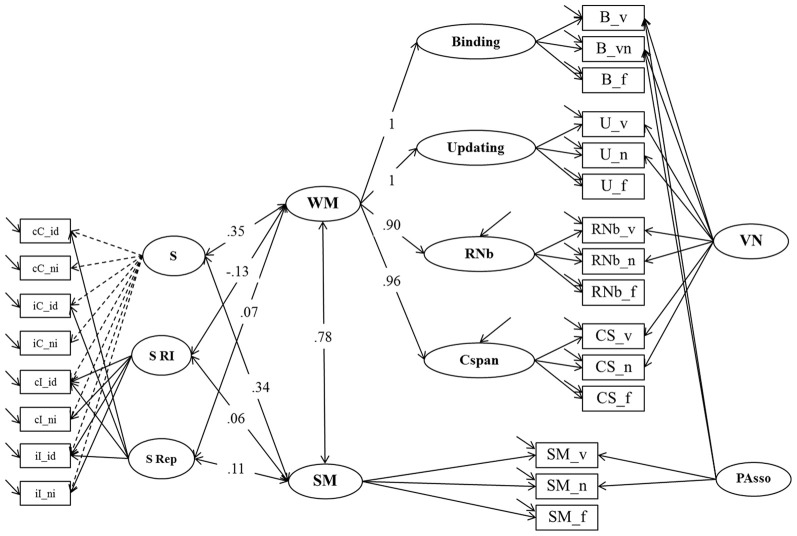
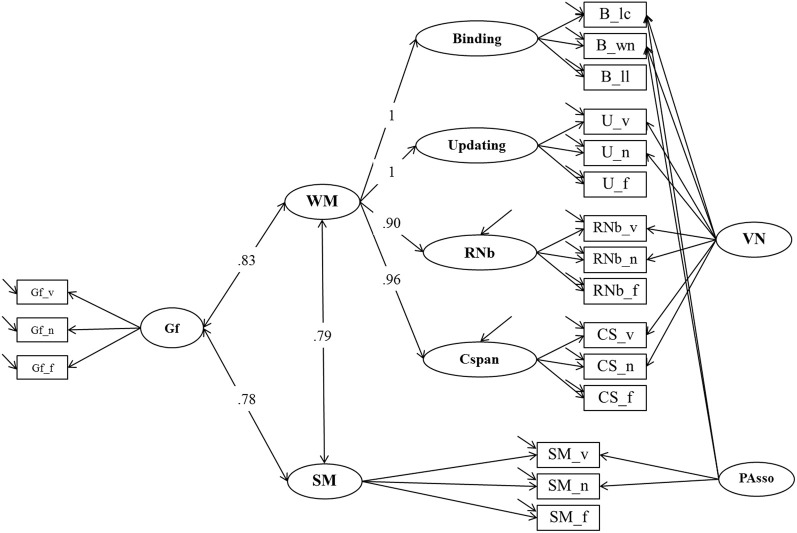
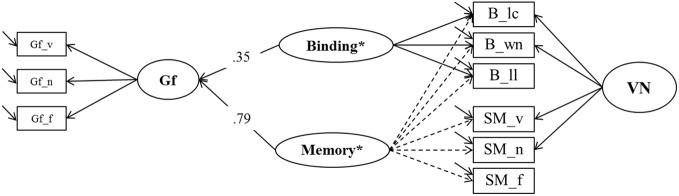
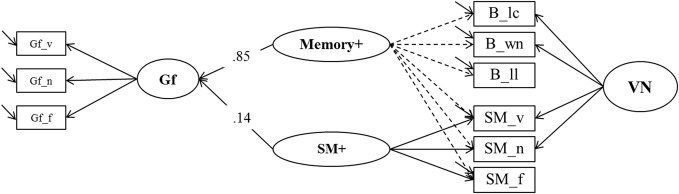
A latent variable study examined whether different classes of working-memory tasks measure the same general construct of working-memory capacity (WMC). Data from 270 subjects were used to examine the relationship between Binding, Updating, Recall-N-back, and Complex Span tasks, and the relations of WMC with secondary memory measures, indicators of cognitive control from two response-conflict paradigms (Simon task and Eriksen flanker task), and fluid intelligence. Confirmatory factor analyses support the concept of a general WMC factor. Results from structural-equation modeling show negligible relations of WMC with response-conflict resolution, and very strong relations of WMC with secondary memory and fluid intelligence. The findings support the hypothesis that individual differences in WMC reflect the ability to build, maintain and update arbitrary bindings.
Overview
The claims and statistics of this paper haven’t been checked yet.
Run the check — free, no account needed. It reads the open-access text and checks the sources it cites.
Integrity signals
Registry
Cites
Statistics
Figures
Verification
Claims the paper makes
The claims and statistics of this paper haven’t been checked yet.
Run the check — free, no account needed. It reads the open-access text and checks the sources it cites.
Claims other papers make about this one
Each is checked against this paper’s own text: does it say what the citing paper says it does?
The cited source says what the claim attributes to it.
In the citing paper
“the “binding hypothesis” (e.g., Wilhelm et al., 2013) views the working memory system as reflecting the ability to rapidly build, maintain, and update bindings or relations between memory items.”
From Which “working memory” are we talking about? Complex span tasks versus N-back (2025) · cites this paper as Wilhelm et al., 2013
In the citing paper
“Wilhelm et al. [48] reported a very high correlation (r = .92) between a latent factor consisting of n-back tasks and another factor comprising tasks similar to the arithmetical updating task, and they argued that both types of task measure the same updating construct.”
From Nearest transfer effects of working memory training: A comparison of two programs focused on working memory updating (2019) · cites this paper as [48]
In the citing paper
“The n-back and arithmetical updating tasks were chosen as training tasks because they tap the same process, i.e., WMU. Both types of updating task have been considered as indicators of the same latent factor [47].”
From Nearest transfer effects of working memory training: A comparison of two programs focused on working memory updating (2019) · cites this paper as [48]
In the citing paper
“Our findings thus indicate that transfer to another, structurally similar updating task tapping the same process as the trained one [48] may sometimes prove unsuccessful.”
From Nearest transfer effects of working memory training: A comparison of two programs focused on working memory updating (2019) · cites this paper as [48]
Self-check
Percentages, sums and reported differences re-computed from the paper’s own numbers.
The self-check needs the paper’s full text.
Citations
Cites
Multiple Imputation for Nonresponse in Surveys
Rubin, D. B. (1987) · Wiley Series in Probability and Statistics · doi:10.1002/9780470316696 · Cited by 20,701
Miyake, A., Friedman, N. P., Emerson, M. J., Witzki, A. H., Howerter, A., & Wager, T. D. (2000) · Cognitive Psychology · doi:10.1006/cogp.1999.0734 · Cited by 15,798
Testing Structural Equation Models.
Mueller, C. W., Bollen, K. A., & Long, J. S. (1994) · Contemporary Sociology A Journal of Reviews · doi:10.2307/2074955 · Cited by 14,211
mice: Multivariate Imputation by Chained Equations in R
Buuren, S. V., & Groothuis-Oudshoorn, K. (2011) · Journal of Statistical Software · doi:10.18637/jss.v045.i03 · Cited by 13,870
David, F. N., & Tukey, J. W. (1977) · Biometrics · doi:10.2307/2529486 · Cited by 12,707
Testing Structural Equation Models.
Clogg, C. C., Bollen, K. A., & Long, J. S. (1995) · Social Forces · doi:10.2307/2580595 · Cited by 8,246
Individual differences in working memory and reading
Daneman, M., & Carpenter, P. A. (1980) · Journal of Verbal Learning and Verbal Behavior · doi:10.1016/s0022-5371(80)90312-6 · Cited by 6,336
(2010) · University of Twente Research Information · Cited by 6,037
Analysis of Incomplete Multivariate Data
Schafer, J. L. (1997) · doi:10.1201/9781439821862 · Cited by 6,012
Analysis of Incomplete Multivariate Data
Booth, D. E., & Schafer, J. L. (2000) · Technometrics · doi:10.2307/1271466 · Cited by 5,627
Research works printed but not linked: 2
- Allison P. D. (2001). Missing Data. Thousand Oaks, CA: Sage Publications
- Keye D. Wilhelm O. Oberauer K. van Ravenzwaaij D. (2010). Erratum. Individual differences in conflict-monitoring: testing means and covariance hypothesis about the Simon and the Eriksen Flanker task. Psychol. Res. 74, 237– 238 10.1007/s00426-008-0188-9 19034502 · DOI
Cited by
Sorted by citations
Working memory and attention - a conceptual analysis and review
Oberauer, K. (2019) · Journal of Cognition · doi:10.5334/joc.58 · Cited by 634
Self-citationExecutive Functioning and Mathematics Achievement
Bull, R., & Lee, K. (2014) · Child Development Perspectives · doi:10.1111/cdep.12059 · Cited by 552
Cortés Pascual, A., Moyano Muñoz, N., & Quílez Robres, A. (2019) · Frontiers in Psychology · doi:10.3389/fpsyg.2019.01582 · Cited by 540
Benchmarks for models of short-term and working memory.
Oberauer, K., Lewandowsky, S., Awh, E., Brown, G. D. A., Conway, A. R. A., Cowan, N., Donkin, C., Farrell, S., Hitch, G. J., Hurlstone, M. J., et al. (2018) · Psychological Bulletin · doi:10.1037/bul0000153 · Cited by 477
Self-citationWhat limits working memory capacity?
Oberauer, K., Farrell, S., Jarrold, C., & Lewandowsky, S. (2016) · Psychological Bulletin · doi:10.1037/bul0000046 · Cited by 416
Self-citation
Metadata
- Authors
- Wilhelm, O., Hildebrandt, A., & Oberauer, K.
- Affiliations
- Universität Ulm (DE)
- Humboldt-Universität zu Berlin (DE)
- University of Zurich (CH)
- Corresponding author
- Wilhelm, Oliver
- Venue
- Frontiers in Psychology
- Publisher
- Frontiers Media SA
- Published
- 2013
- Volume
- 4
- Pages
- 433-433
- ISSN
- 1664-1078 (ISSN-L)
- PMC
- PMC3721021
- OpenAlex
- W2115768836
- Cited by
- 468
- References
- 78
- Citations by year
- 2026: 23 · 2025: 38 · 2024: 46 · 2023: 40 · 2022: 46 · 2021: 56 · 2020: 47 · 2019: 43 · 2018: 50 · 2017: 33 · 2016: 22 · 2015: 11 · 2014: 11 · 2013: 2
- FWCI
- 20.77
- Type
- journal article
- Language
- en
- Open access
- gold
- doi.org
- Licence
- cc-by
- Locations
- Frontiers in Psychology (publishedVersion, cc-by)
- Europe PMC (PubMed Central) (publishedVersion, cc-by)
- PubMed Central (publishedVersion, cc-by)
- PubMed (publishedVersion)
- Zurich Open Repository and Archive (University of Zurich) (acceptedVersion, cc-by)
- OPen Access Repositorium der Universität Ulm (OPARU) (Ulm University) (submittedVersion, other-oa)
- DOAJ (DOAJ: Directory of Open Access Journals) (submittedVersion, cc-by-sa)
- edoc Publication server (Humboldt University of Berlin) (submittedVersion, cc-by)
- Zurich Open Repository and Archive (University of Zurich) (submittedVersion, cc-by)
- Universität Ulm, Kommunikations- und Informationszentrum (kiz) (cc-by)
- Zurich Open Repository and Archive (University of Zurich)
- Funders
- Deutsche Forschungsgemeinschaft
- Topics
- Social Sciences › Psychology › Experimental and Cognitive Psychology › Cognitive Abilities and Testing
- Life Sciences › Neuroscience › Cognitive Neuroscience › Neural and Behavioral Psychology Studies
- Social Sciences › Psychology › Experimental and Cognitive Psychology › Cognitive Functions and Memory
- Keywords
- working memory capacity, latent constructs, binding, updating, complex span, secondary memory, cognitive control, response conflict, Simon task, flanker task, fluid intelligence, individual differences
About these checks
Registry, retraction, Cites and statistics results are computed, not judged, with one exception: a printed reference that no index lists is read once by a model before it counts as a citation error. Claims are extracted by a model and kept only when their quote appears verbatim in the text; each cited source is then checked, with a model’s help, for whether it says what the claim relies on. Those verdicts can be wrong — read the claim’s quote and the cited source before relying on one.
Statistics and arithmetic are recomputed, not judged.
Confidence bands are shown only for fields calibrated on our annotated test set. None is calibrated yet, so no band is shown.
What counts as a claim ›How we measure confidence ›How we check this ›
Are you an author, or do you see a problem with this page? Request a review
