

The DOI matches its Crossref record; 78 of the 78 references it cites were found in a registry or an index.
What is working memory capacity, and how can we measure it?
Open accessAbstract
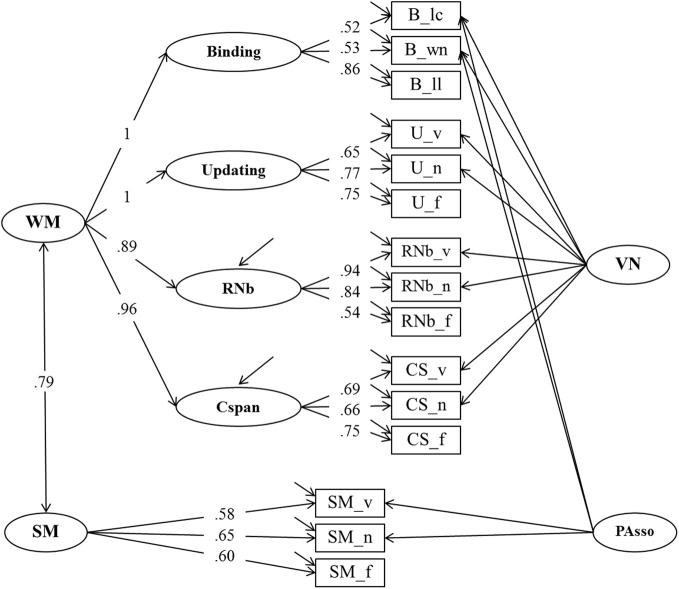
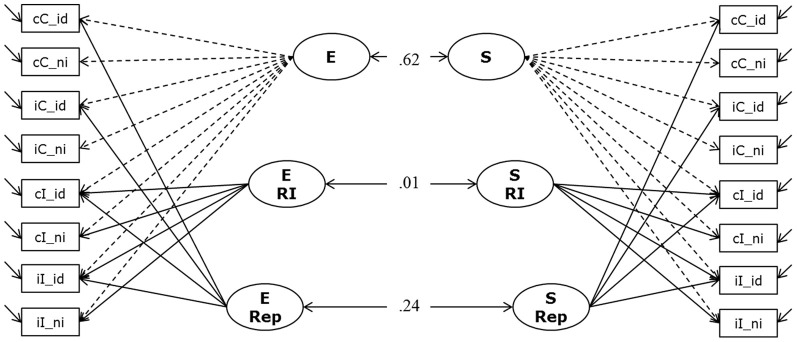
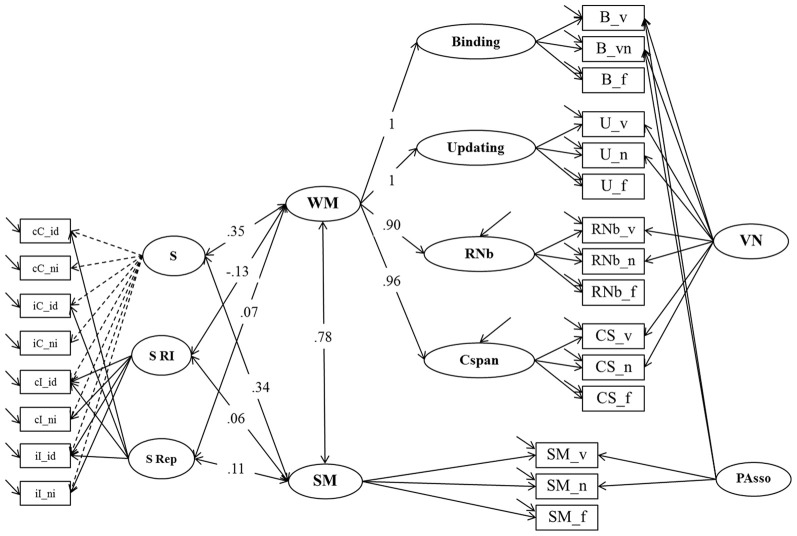
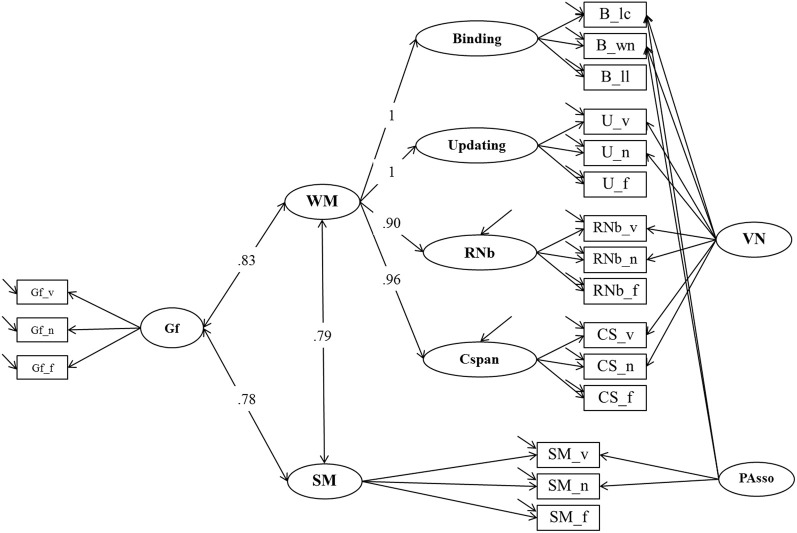
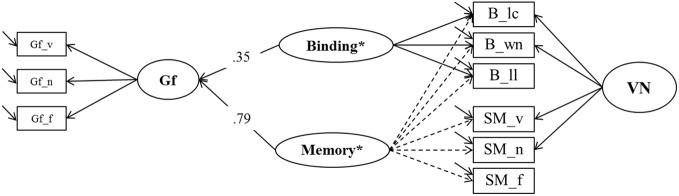
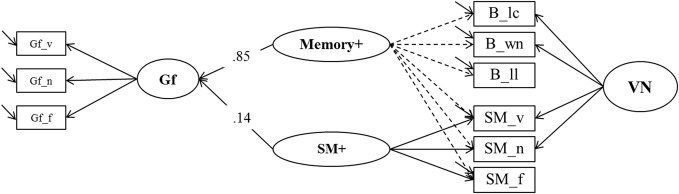
A latent variable study examined whether different classes of working-memory tasks measure the same general construct of working-memory capacity (WMC). Data from 270 subjects were used to examine the relationship between Binding, Updating, Recall-N-back, and Complex Span tasks, and the relations of WMC with secondary memory measures, indicators of cognitive control from two response-conflict paradigms (Simon task and Eriksen flanker task), and fluid intelligence. Confirmatory factor analyses support the concept of a general WMC factor. Results from structural-equation modeling show negligible relations of WMC with response-conflict resolution, and very strong relations of WMC with secondary memory and fluid intelligence. The findings support the hypothesis that individual differences in WMC reflect the ability to build, maintain and update arbitrary bindings.
Overview
The claims and statistics of this paper haven’t been checked yet.
Run the check — free, no account needed. It reads the open-access text and checks the sources it cites.
Integrity signals
Registry
Cites
Statistics
Figures
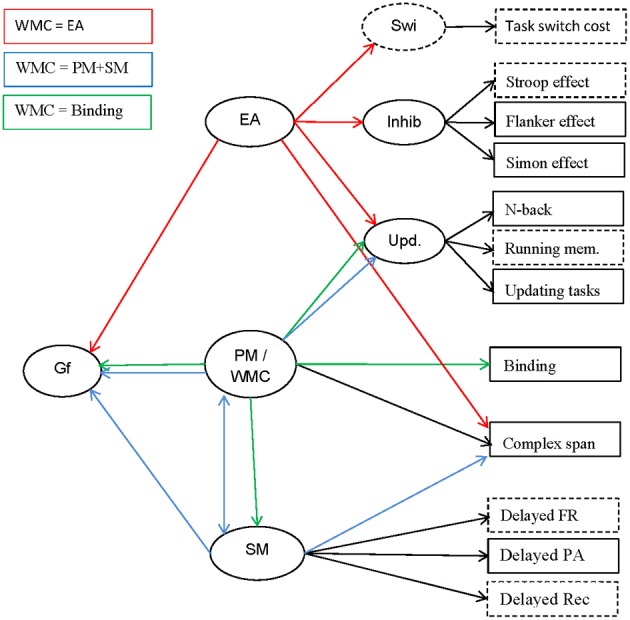
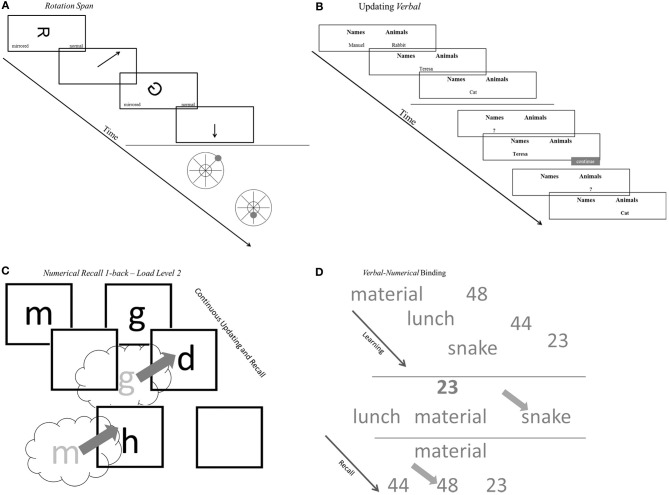
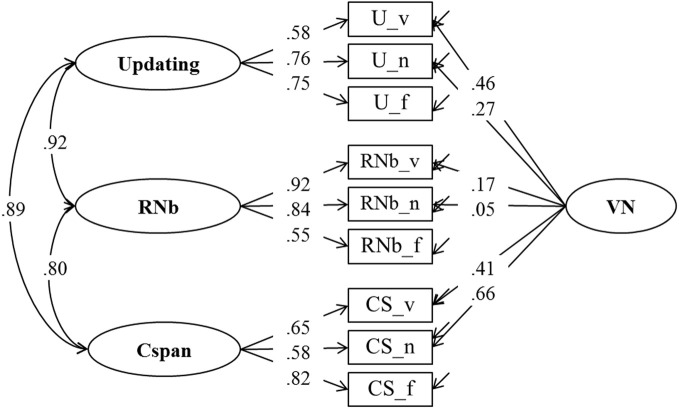
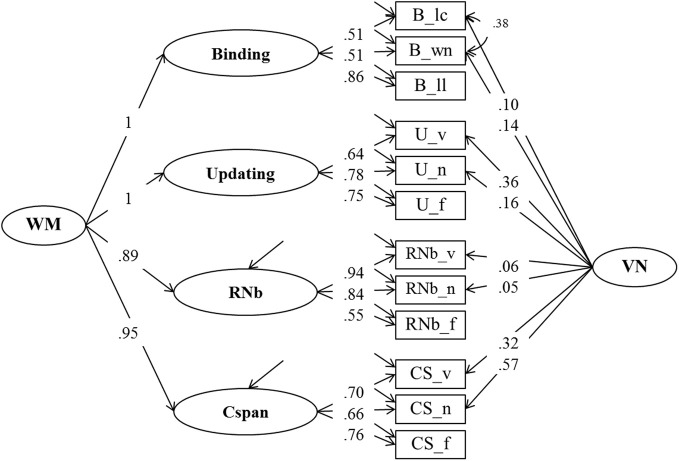
Verification
Claims the paper makes
The claims and statistics of this paper haven’t been checked yet.
Run the check — free, no account needed. It reads the open-access text and checks the sources it cites.
Claims other papers make about this one
Each is checked against this paper’s own text: does it say what the citing paper says it does?
The cited source says what the claim attributes to it.
In the citing paper
“the “binding hypothesis” (e.g., Wilhelm et al., 2013) views the working memory system as reflecting the ability to rapidly build, maintain, and update bindings or relations between memory items.”
From Which “working memory” are we talking about? Complex span tasks versus N-back (2025) · cites this paper as Wilhelm et al., 2013
In the citing paper
“Wilhelm et al. [48] reported a very high correlation (r = .92) between a latent factor consisting of n-back tasks and another factor comprising tasks similar to the arithmetical updating task, and they argued that both types of task measure the same updating construct.”
From Nearest transfer effects of working memory training: A comparison of two programs focused on working memory updating (2019) · cites this paper as [48]
In the citing paper
“The n-back and arithmetical updating tasks were chosen as training tasks because they tap the same process, i.e., WMU. Both types of updating task have been considered as indicators of the same latent factor [47].”
From Nearest transfer effects of working memory training: A comparison of two programs focused on working memory updating (2019) · cites this paper as [48]
In the citing paper
“Our findings thus indicate that transfer to another, structurally similar updating task tapping the same process as the trained one [48] may sometimes prove unsuccessful.”
From Nearest transfer effects of working memory training: A comparison of two programs focused on working memory updating (2019) · cites this paper as [48]
Self-check
Percentages, sums and reported differences re-computed from the paper’s own numbers.
The self-check needs the paper’s full text.
Citations
Cites
Multiple Imputation for Nonresponse in Surveys
Rubin, D. B. (1987) · Wiley Series in Probability and Statistics · doi:10.1002/9780470316696 · Cited by 20,701
Miyake, A., Friedman, N. P., Emerson, M. J., Witzki, A. H., Howerter, A., & Wager, T. D. (2000) · Cognitive Psychology · doi:10.1006/cogp.1999.0734 · Cited by 15,798
Testing Structural Equation Models.
Mueller, C. W., Bollen, K. A., & Long, J. S. (1994) · Contemporary Sociology A Journal of Reviews · doi:10.2307/2074955 · Cited by 14,211
mice: Multivariate Imputation by Chained Equations in R
Buuren, S. V., & Groothuis-Oudshoorn, K. (2011) · Journal of Statistical Software · doi:10.18637/jss.v045.i03 · Cited by 13,870
David, F. N., & Tukey, J. W. (1977) · Biometrics · doi:10.2307/2529486 · Cited by 12,707
Testing Structural Equation Models.
Clogg, C. C., Bollen, K. A., & Long, J. S. (1995) · Social Forces · doi:10.2307/2580595 · Cited by 8,246
Individual differences in working memory and reading
Daneman, M., & Carpenter, P. A. (1980) · Journal of Verbal Learning and Verbal Behavior · doi:10.1016/s0022-5371(80)90312-6 · Cited by 6,336
(2010) · University of Twente Research Information · Cited by 6,037
Analysis of Incomplete Multivariate Data
Schafer, J. L. (1997) · doi:10.1201/9781439821862 · Cited by 6,012
Analysis of Incomplete Multivariate Data
Booth, D. E., & Schafer, J. L. (2000) · Technometrics · doi:10.2307/1271466 · Cited by 5,627
Research works printed but not linked: 2
- Allison P. D. (2001). Missing Data. Thousand Oaks, CA: Sage Publications
- Keye D. Wilhelm O. Oberauer K. van Ravenzwaaij D. (2010). Erratum. Individual differences in conflict-monitoring: testing means and covariance hypothesis about the Simon and the Eriksen Flanker task. Psychol. Res. 74, 237– 238 10.1007/s00426-008-0188-9 19034502 · DOI
Cited by
Sorted by citations
Working memory and attention - a conceptual analysis and review
Oberauer, K. (2019) · Journal of Cognition · doi:10.5334/joc.58 · Cited by 634
Self-citationExecutive Functioning and Mathematics Achievement
Bull, R., & Lee, K. (2014) · Child Development Perspectives · doi:10.1111/cdep.12059 · Cited by 552
Cortés Pascual, A., Moyano Muñoz, N., & Quílez Robres, A. (2019) · Frontiers in Psychology · doi:10.3389/fpsyg.2019.01582 · Cited by 540
Benchmarks for models of short-term and working memory.
Oberauer, K., Lewandowsky, S., Awh, E., Brown, G. D. A., Conway, A. R. A., Cowan, N., Donkin, C., Farrell, S., Hitch, G. J., Hurlstone, M. J., et al. (2018) · Psychological Bulletin · doi:10.1037/bul0000153 · Cited by 477
Self-citationWhat limits working memory capacity?
Oberauer, K., Farrell, S., Jarrold, C., & Lewandowsky, S. (2016) · Psychological Bulletin · doi:10.1037/bul0000046 · Cited by 416
Self-citationFrom Brain Maps to Cognitive Ontologies: Informatics and the Search for Mental Structure
Poldrack, R. A., & Yarkoni, T. (2015) · Annual Review of Psychology · doi:10.1146/annurev-psych-122414-033729 · Cited by 358
Shortened complex span tasks can reliably measure working memory capacity
Foster, J. L., Shipstead, Z., Harrison, T. L., Hicks, K. L., Redick, T. S., & Engle, R. W. (2014) · Memory & Cognition · doi:10.3758/s13421-014-0461-7 · Cited by 330
Rey-Mermet, A., Gade, M., & Oberauer, K. (2017) · Journal of Experimental Psychology Learning Memory and Cognition · doi:10.1037/xlm0000450 · Cited by 339
Self-citationWang, R., Liu, M., Cheng, X., Wu, Y., Hildebrandt, A., & Zhou, C. (2021) · Proceedings of the National Academy of Sciences · doi:10.1073/pnas.2022288118 · Cited by 299
Self-citationAI and the Future of Skills, Volume 1
OECD (2021) · Educational research and innovation · doi:10.1787/5ee71f34-en · Cited by 233
Identification of personal traits in adaptive learning environment: Systematic literature review
Afini Normadhi, N. B., Shuib, L., Md Nasir, H. N., Bimba, A., Idris, N., & Balakrishnan, V. (2019) · Computers & Education · doi:10.1016/j.compedu.2018.11.005 · Cited by 204
Schmiedek, F., Lövdén, M., & Lindenberger, U. (2014) · Frontiers in Psychology · doi:10.3389/fpsyg.2014.01475 · Cited by 173
Integrated Intelligence from Distributed Brain Activity
Duncan, J., Assem, M., & Shashidhara, S. (2020) · Trends in Cognitive Sciences · doi:10.1016/j.tics.2020.06.012 · Cited by 183
Gajewski, P. D., Hanisch, E., Falkenstein, M., Thönes, S., & Wascher, E. (2018) · Frontiers in Psychology · doi:10.3389/fpsyg.2018.02208 · Cited by 191
Yan, A. F., Nicholson, L. L., Ward, R. E., Hiller, C. E., Dovey, K., Parker, H. M., Low, L., Moyle, G., & Chan, C. L. (2024) · Sports Medicine · doi:10.1007/s40279-023-01990-2 · Cited by 159
Developmental changes in working memory, updating, and math achievement.
Lee, K. L., & Bull, R. (2015) · Journal of Educational Psychology · doi:10.1037/edu0000090 · Cited by 157
Wallace, M. P. (2020) · Language Learning · doi:10.1111/lang.12424 · Cited by 167
Young, E. S., Griskevicius, V., Simpson, J. A., Waters, T. E. A., & Mittal, C. (2018) · Journal of Personality and Social Psychology · doi:10.1037/pspi0000124 · Cited by 144
Evolution of Models of Working Memory and Cognitive Resources
Wingfield, A. (2016) · Ear & Hearing · doi:10.1097/aud.0000000000000310 · Cited by 123
Kaushanskaya, M., Park, J. S., Gangopadhyay, I., Davidson, M. M., & Weismer, S. E. (2017) · Journal of Speech Language and Hearing Research · doi:10.1044/2016_jslhr-l-15-0310 · Cited by 139
Könen, T., Dirk, J., & Schmiedek, F. (2014) · Journal of Child Psychology and Psychiatry · doi:10.1111/jcpp.12296 · Cited by 125
Working memory updating involves item-specific removal
Ecker, U. K. H., Oberauer, K., & Lewandowsky, S. (2014) · Journal of Memory and Language · doi:10.1016/j.jml.2014.03.006 · Cited by 110
Self-citationGulbinaite, R., van Rijn, H., & Cohen, M. X. (2014) · Frontiers in Human Neuroscience · doi:10.3389/fnhum.2014.00761 · Cited by 124
von Bastian, C. C., Blais, C., Brewer, G. A., Gyurkovics, M., Hedge, C., Kałamała, P., Meier, M. E., Oberauer, K., Rey-Mermet, A., Rouder, J. N., et al. (2020) · PsyArXiv (OSF Preprints) · doi:10.31234/osf.io/x3b9k · Cited by 116
Self-citationRetest effects in working memory capacity tests: A meta-analysis
Scharfen, J., Jansen, K., & Holling, H. (2018) · Psychonomic Bulletin & Review · doi:10.3758/s13423-018-1461-6 · Cited by 113
On the Binding Problem in Artificial Neural Networks
Greff, K., van Steenkiste, S., & Schmidhuber, J. (2020) · arXiv · doi:10.48550/arxiv.2012.05208 · Cited by 102
Individual differences in long-term memory.
Unsworth, N. (2019) · Psychological Bulletin · doi:10.1037/bul0000176 · Cited by 99
Bilingualism and domain-general cognitive functions from a neural perspective: A systematic review
Tao, L., Wang, G., Zhu, M., & Cai, Q. (2021) · Neuroscience & Biobehavioral Reviews · doi:10.1016/j.neubiorev.2021.02.029 · Cited by 105
Working memory updating and binding training: Bayesian evidence supporting the absence of transfer.
De Simoni, C., & von Bastian, C. C. (2018) · Journal of Experimental Psychology: General · doi:10.1037/xge0000453 · Cited by 84
Weiss, S., Steger, D., Kaur, Y., Hildebrandt, A., Schroeders, U., & Wilhelm, O. (2020) · European Journal of Personality · doi:10.1002/per.2288 · Cited by 94
Self-citationHow common are WM deficits in children with difficulties in reading and mathematics?
Gathercole, S. E., CALM Team, Woolgar, F., Kievit, R., Astle, D. E., Manly, T., & Holmes, J. (2016) · Journal of Applied Research in Memory and Cognition · doi:10.1016/j.jarmac.2016.07.013 · Cited by 84
Does working memory training have to be adaptive?
von Bastian, C. C., & Eschen, A. (2016) · Psychological Research · doi:10.1007/s00426-015-0655-z · Cited by 83
Weismer, S. E., Kaushanskaya, M., Larson, C., Mathée‐Scott, J., & Bolt, D. M. (2018) · Journal of Speech Language and Hearing Research · doi:10.1044/2018_jslhr-l-rsaut-18-0026 · Cited by 88
Mahjoory, K., Čėsnaitė, E., Hohlefeld, F. U., Villringer, A., & Nikulin, V. V. (2018) · NeuroImage · doi:10.1016/j.neuroimage.2018.12.001 · Cited by 76
Working memory training in older adults: Bayesian evidence supporting the absence of transfer.
Guye, S., & von Bastian, C. C. (2017) · Psychology and Aging · doi:10.1037/pag0000206 · Cited by 91
Affective Working Memory: An Integrative Psychological Construct
Mikels, J. A., & Reuter‐Lorenz, P. A. (2019) · Perspectives on Psychological Science · doi:10.1177/1745691619837597 · Cited by 91
Guye, S., Simoni, C. D., & von Bastian, C. C. (2017) · Journal of Cognitive Enhancement · doi:10.1007/s41465-017-0049-9 · Cited by 81
Webb, S. L., Loh, V., Lampit, A., Bateman, J. E., & Birney, D. P. (2018) · Neuropsychology Review · doi:10.1007/s11065-018-9374-8 · Cited by 86
Grissmann, S., Faller, J., Scharinger, C., Spüler, M., & Gerjets, P. H. (2017) · Frontiers in Human Neuroscience · doi:10.3389/fnhum.2017.00616 · Cited by 84
Clarke, N. A., Henshaw, H., Akeroyd, M. A., Adams, B., & Hoare, D. J. (2020) · Trends in Hearing · doi:10.1177/2331216520918416 · Cited by 77
Frischkorn, G. T., Schubert, A., & Hagemann, D. (2019) · Intelligence · doi:10.1016/j.intell.2019.05.003 · Cited by 77
The relational integration task explains fluid reasoning above and beyond other working memory tasks
Chuderski, A. (2013) · Memory & Cognition · doi:10.3758/s13421-013-0366-x · Cited by 71
Working Memory Capacity Limits Memory for Bindings
Oberauer, K. (2019) · Journal of Cognition · doi:10.5334/joc.86 · Cited by 71
Self-citationDunning, D. L., Westgate, B., & Adlam, A. (2016) · Neuropsychology · doi:10.1037/neu0000285 · Cited by 74
Schmitter‐Edgecombe, M., Sumida, C. A., & Cook, D. J. (2020) · The Clinical Neuropsychologist · doi:10.1080/13854046.2020.1733097 · Cited by 68
Chronic exercise keeps working memory and inhibitory capacities fit
Padilla, C., Pérez, L., & Andrés, P. (2014) · Frontiers in Behavioral Neuroscience · doi:10.3389/fnbeh.2014.00049 · Cited by 80
Fluctuations in elementary school children’s working memory performance in the school context.
Dirk, J., & Schmiedek, F. (2015) · Journal of Educational Psychology · doi:10.1037/edu0000076 · Cited by 66
Explanation as a Cognitive Process
Horne, Z., Muradoglu, M., & Cimpian, A. (2019) · Trends in Cognitive Sciences · doi:10.1016/j.tics.2018.12.004 · Cited by 65
The Effect of Gender Body-Swap Illusions on Working Memory and Stereotype Threat
Peck, T. C., Doan, M., Bourne, K. A., & Good, J. J. (2018) · IEEE Transactions on Visualization and Computer Graphics · doi:10.1109/tvcg.2018.2793598 · Cited by 68
The common factor of executive functions measures nothing but speed of information uptake
Löffler, C., Frischkorn, G. T., Hagemann, D., Sadus, K., & Schubert, A. (2024) · Psychological Research · doi:10.1007/s00426-023-01924-7 · Cited by 69
Körner, U., Röer, J. P., Buchner, A., & Bell, R. (2017) · Journal of Memory and Language · doi:10.1016/j.jml.2017.05.005 · Cited by 62
Yang, X., Chung, K. K. H., & McBride, C. A. (2019) · Educational Psychology · doi:10.1080/01443410.2018.1546831 · Cited by 60
Tiego, J., Bellgrove, M. A., Whittle, S., Pantelis, C., & Testa, R. (2019) · Developmental Science · doi:10.1111/desc.12918 · Cited by 68
Davidson, M. M., Kaushanskaya, M., & Weismer, S. E. (2018) · Journal of Autism and Developmental Disorders · doi:10.1007/s10803-018-3617-7 · Cited by 69
Dissociable mechanisms underlying individual differences in visual working memory capacity
Gulbinaite, R., Johnson, A., de Jong, R., Morey, C. C., & van Rijn, H. (2014) · NeuroImage · doi:10.1016/j.neuroimage.2014.05.060 · Cited by 61
Representation of different exact numbers of prey by a spider-eating predator
Cross, F. R., & Jackson, R. R. (2017) · Interface Focus · doi:10.1098/rsfs.2016.0035 · Cited by 56
Aminihajibashi, S., Hagen, T., Foldal, M. D., Laeng, B., & Espeseth, T. (2019) · International Journal of Psychophysiology · doi:10.1016/j.ijpsycho.2019.03.007 · Cited by 63
Himi, S. A., Bühner, M., Schwaighofer, M., Klapetek, A., & Hilbert, S. (2019) · Cognition · doi:10.1016/j.cognition.2019.04.010 · Cited by 66
The role of working memory in processing L2 input: Insights from eye-tracking
Indrarathne, B., & Kormos, J. (2017) · Bilingualism Language and Cognition · doi:10.1017/s1366728917000098 · Cited by 58
Schmitz, F., & Wilhelm, O. (2016) · Journal of Intelligence · doi:10.3390/jintelligence4040013 · Cited by 59
Self-citationWorking memory, executive functions, and emotional intelligence in second language writing
Mavrou, I. (2020) · Journal of Second Language Writing · doi:10.1016/j.jslw.2020.100758 · Cited by 61
Is there such a thing as a ‘good statistical learner’?
Bogaerts, L., Siegelman, N., Christiansen, M. H., & Frost, R. (2021) · Trends in Cognitive Sciences · doi:10.1016/j.tics.2021.10.012 · Cited by 54
A Latent Factor Analysis of Working Memory Measures Using Large-Scale Data
Waris, O., Soveri, A., Ahti, M., Hoffing, R. C., Ventus, D., Jaeggi, S. M., Seitz, A. R., & Laine, M. (2017) · Frontiers in Psychology · doi:10.3389/fpsyg.2017.01062 · Cited by 51
Inducing and Mitigating Stereotype Threat Through Gendered Virtual Body-Swap Illusions
Peck, T. C., Good, J. J., & Bourne, K. A. (2020) · CHI Conference on Human Factors in Computing Systems · doi:10.1145/3313831.3376419 · Cited by 51
Montgomery, J. W., Evans, J. L., Fargo, J. D., Schwartz, S., & Gillam, R. B. (2018) · Journal of Speech Language and Hearing Research · doi:10.1044/2018_jslhr-l-17-0421 · Cited by 49
Aryadoust, V., Foo, S. W. L., & Ng, L. Y. (2021) · Language Testing · doi:10.1177/02655322211026876 · Cited by 51
Does limited working memory capacity underlie age differences in associative long-term memory?
Bartsch, L. M., Loaiza, V. M., & Oberauer, K. (2018) · Psychology and Aging · doi:10.1037/pag0000317 · Cited by 53
Self-citationWorking memory capacity predicts effective multitasking
Pollard, M. A., & Courage, M. L. (2017) · Computers in Human Behavior · doi:10.1016/j.chb.2017.08.008 · Cited by 52
Aubry, A., Gonthier, C., & Bourdin, B. (2021) · Acta Psychologica · doi:10.1016/j.actpsy.2021.103358 · Cited by 47
Murphy, K., & Creux, O. (2021) · Computers in Human Behavior · doi:10.1016/j.chb.2020.106532 · Cited by 68
How the design and complexity of concept maps influence cognitive learning processes
Krieglstein, F., Schneider, S., Beege, M., & Rey, G. D. (2022) · Educational Technology Research and Development · doi:10.1007/s11423-022-10083-2 · Cited by 55
On the encapsulation of bilingual language control
Paap, K. R., Anders-Jefferson, R. T., Mikulinsky, R., Masuda, S., & Mason, L. (2018) · Journal of Memory and Language · doi:10.1016/j.jml.2018.12.001 · Cited by 49
Gillam, R. B., Montgomery, J. W., Evans, J. L., & Gillam, S. L. (2019) · International Journal of Speech-Language Pathology · doi:10.1080/17549507.2018.1559883 · Cited by 46
Towards Intelligent Data Analytics: A Case Study in Driver Cognitive Load Classification
Barua, S., Ahmed, M. U., & Begum, S. (2020) · Brain Sciences · doi:10.3390/brainsci10080526 · Cited by 49
Is Flexibility More than Fluency and Originality?
Weiss, S., & Wilhelm, O. (2022) · Journal of Intelligence · doi:10.3390/jintelligence10040096 · Cited by 45
Self-citationCespón, J., Rodella, C., Miniussi, C., & Pellicciari, M. C. (2019) · Clinical Neurophysiology · doi:10.1016/j.clinph.2019.08.016 · Cited by 45
Gajewski, P. D., & Falkenstein, M. (2018) · Neural Plasticity · doi:10.1155/2018/3454835 · Cited by 44
Živanović, M., Paunović, D., Konstantinović, U., Vulić, K., Bjekić, J., & Filipović, S. R. (2021) · Neurobiology of Learning and Memory · doi:10.1016/j.nlm.2021.107398 · Cited by 44
The Effects of Noise on Children’s Cognitive Performance: A Systematic Review
Gheller, F., Spicciarelli, G., Scimemi, P., & Arfé, B. (2023) · Environment and Behavior · doi:10.1177/00139165241245823 · Cited by 48
Walshe, E. A., Patterson, M., Commins, S., & Roche, R. A. P. (2015) · Frontiers in Human Neuroscience · doi:10.3389/fnhum.2015.00200 · Cited by 46
Limitations of working memory capacity: The cognitive and social consequences
Gruszka, A., & Nȩcka, E. (2017) · European Management Journal · doi:10.1016/j.emj.2017.07.001 · Cited by 43
Sleep and Cognitive Performance From Teens To Old Age: More Is Not Better
Richards, A. L., Inslicht, S. S., Metzler, T. J., Mohlenhoff, B. S., Rao, M. N., O’Donovan, A., & Neylan, T. C. (2017) · SLEEP · doi:10.1093/sleep/zsw029 · Cited by 44
Disentangling Working Memory Functioning in Mood States of Bipolar Disorder: A Systematic Review
Soraggi-Frez, C., Santos, F. H., Albuquerque, P. B., & Malloy‐Diniz, L. F. (2017) · Frontiers in Psychology · doi:10.3389/fpsyg.2017.00574 · Cited by 50
von Bastian, C. C., & Druey, M. D. (2017) · Journal of Experimental Psychology General · doi:10.1037/xge0000333 · Cited by 43
Parietal low beta rhythm provides a dynamical substrate for a working memory buffer
Gelastopoulos, A., Whittington, M. A., & Kopell, N. (2019) · Proceedings of the National Academy of Sciences · doi:10.1073/pnas.1902305116 · Cited by 45
Juniati, D., & Budayasa, I. K. (2020) · Journal for the Education of Gifted Young Scientists · doi:10.17478/jegys.653518 · Cited by 42
Evaluating the Effectiveness of Commercial Brain Game Training with Working-Memory Tasks
Strobach, T., & Huestegge, L. (2017) · Journal of Cognitive Enhancement · doi:10.1007/s41465-017-0053-0 · Cited by 44
The contribution of episodic long-term memory to working memory for bindings
Bartsch, L. M., & Oberauer, K. (2022) · Cognition · doi:10.1016/j.cognition.2022.105330 · Cited by 41
Self-citationThe Hebb repetition effect in simple and complex memory span
Oberauer, K., Jones, T., & Lewandowsky, S. (2015) · Memory & Cognition · doi:10.3758/s13421-015-0512-8 · Cited by 41
Self-citationPe, M. L., Brose, A., Gotlib, I. H., & Kuppens, P. (2015) · Emotion · doi:10.1037/emo0000097 · Cited by 41
Assessment of mental fatigue and stress on electronic sport players with data fusion
Gündoğdu, S., Çolak, Ö. H., Doğan, E. A., Gülbetekin, E., & Polat, Ö. (2021) · Medical & Biological Engineering & Computing · doi:10.1007/s11517-021-02389-9 · Cited by 40
Fischer, M., & Sliwka, D. (2018) · Games and Economic Behavior · doi:10.1016/j.geb.2018.02.005 · Cited by 45
Diningrat, S. W. M., Setyosarı, P., Ulfa, S. U., & Widiati, U. (2023) · Journal of New Approaches in Educational Research · doi:10.7821/naer.2023.1.1073 · Cited by 40
Associating working memory capacity and code change ordering with code review performance
Baum, T., Schneider, K. A., & Bacchelli, A. (2019) · Empirical Software Engineering · doi:10.1007/s10664-018-9676-8 · Cited by 39
The effects of cognitive abilities and task demands on tonic and phasic pupil sizes
Aminihajibashi, S., Hagen, T., Andreassen, O. A., Laeng, B., & Espeseth, T. (2020) · Biological Psychology · doi:10.1016/j.biopsycho.2020.107945 · Cited by 42
Noise, Cognitive Function, and Worker Productivity
Dean, J. T. (2024) · American Economic Journal: Applied Economics · doi:10.1257/app.20220532 · Cited by 20
Linares, R., Borella, E., Lechuga, M. T., Carretti, B., & Pelegrina, S. (2019) · PLOS ONE · doi:10.1371/journal.pone.0211321 · Cited by 38
The Multiple Faces of Risk-Taking
Schmitz, F., Manske, K., Preckel, F., & Wilhelm, O. (2016) · European Journal of Psychological Assessment · doi:10.1027/1015-5759/a000335 · Cited by 40
Self-citationSchmiedek, F., Lövdén, M., von Oertzen, T., & Lindenberger, U. (2020) · PeerJ · doi:10.7717/peerj.9290 · Cited by 38
Doyle, C., Smeaton, A. F., Roche, R. A. P., & Boran, L. (2018) · Frontiers in Psychology · doi:10.3389/fpsyg.2018.00795 · Cited by 42
Metadata
- Authors
- Wilhelm, O., Hildebrandt, A., & Oberauer, K.
- Affiliations
- Universität Ulm (DE)
- Humboldt-Universität zu Berlin (DE)
- University of Zurich (CH)
- Corresponding author
- Wilhelm, Oliver
- Venue
- Frontiers in Psychology
- Publisher
- Frontiers Media SA
- Published
- 2013
- Volume
- 4
- Pages
- 433-433
- ISSN
- 1664-1078 (ISSN-L)
- PMC
- PMC3721021
- OpenAlex
- W2115768836
- Cited by
- 468
- References
- 78
- Citations by year
- 2026: 23 · 2025: 38 · 2024: 46 · 2023: 40 · 2022: 46 · 2021: 56 · 2020: 47 · 2019: 43 · 2018: 50 · 2017: 33 · 2016: 22 · 2015: 11 · 2014: 11 · 2013: 2
- FWCI
- 20.77
- Type
- journal article
- Language
- en
- Open access
- gold
- doi.org
- Licence
- cc-by
- Locations
- Frontiers in Psychology (publishedVersion, cc-by)
- Europe PMC (PubMed Central) (publishedVersion, cc-by)
- PubMed Central (publishedVersion, cc-by)
- PubMed (publishedVersion)
- Zurich Open Repository and Archive (University of Zurich) (acceptedVersion, cc-by)
- OPen Access Repositorium der Universität Ulm (OPARU) (Ulm University) (submittedVersion, other-oa)
- DOAJ (DOAJ: Directory of Open Access Journals) (submittedVersion, cc-by-sa)
- edoc Publication server (Humboldt University of Berlin) (submittedVersion, cc-by)
- Zurich Open Repository and Archive (University of Zurich) (submittedVersion, cc-by)
- Universität Ulm, Kommunikations- und Informationszentrum (kiz) (cc-by)
- Zurich Open Repository and Archive (University of Zurich)
- Funders
- Deutsche Forschungsgemeinschaft
- Topics
- Social Sciences › Psychology › Experimental and Cognitive Psychology › Cognitive Abilities and Testing
- Life Sciences › Neuroscience › Cognitive Neuroscience › Neural and Behavioral Psychology Studies
- Social Sciences › Psychology › Experimental and Cognitive Psychology › Cognitive Functions and Memory
- Keywords
- working memory capacity, latent constructs, binding, updating, complex span, secondary memory, cognitive control, response conflict, Simon task, flanker task, fluid intelligence, individual differences
About these checks
Registry, retraction, Cites and statistics results are computed, not judged, with one exception: a printed reference that no index lists is read once by a model before it counts as a citation error. Claims are extracted by a model and kept only when their quote appears verbatim in the text; each cited source is then checked, with a model’s help, for whether it says what the claim relies on. Those verdicts can be wrong — read the claim’s quote and the cited source before relying on one.
Statistics and arithmetic are recomputed, not judged.
Confidence bands are shown only for fields calibrated on our annotated test set. None is calibrated yet, so no band is shown.
What counts as a claim ›How we measure confidence ›How we check this ›
Are you an author, or do you see a problem with this page? Request a review
