

The DOI matches its Crossref record; 47 of the 47 references it cites were found in a registry or an index; none of the 72 sources its claims cite is checked for support yet.
Exploring relationships between self-compassion, impostor phenomenon, and mental health among doctoral students
Open accessAbstract
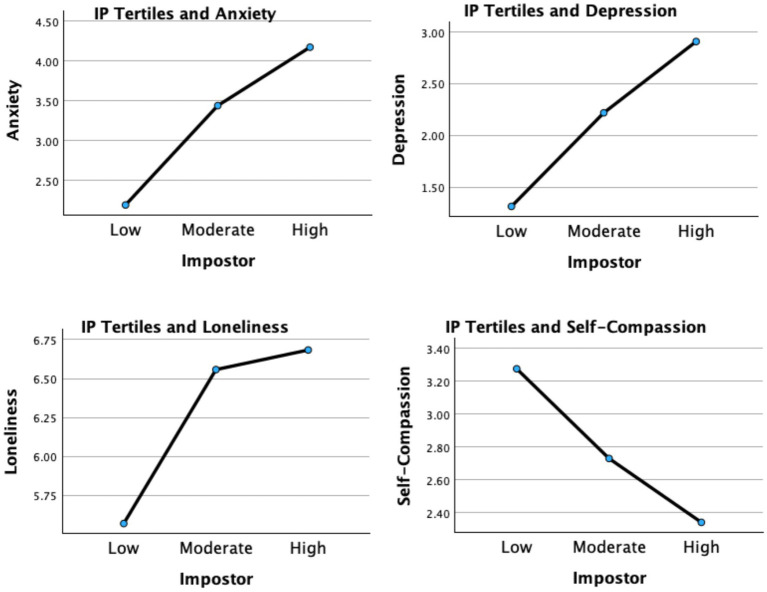
Introduction: Impostor phenomenon (IP) is widespread in doctoral education and is strongly linked to mental distress. Self-compassion is theoretically and empirically positioned as a counterbalance to the harsh self-evaluation embedded in IP, yet large-scale evidence in doctoral populations is limited. Methods: A national sample of 1,225 U.S. doctoral students completed validated measures of IP, self-compassion, anxiety, depression, and loneliness. Data were collected via online survey. Analyses included descriptive statistics, correlations, MANOVA tests comparing mental health across IP tertiles, and three hierarchical regression models testing whether self-compassion explained additional variance in distress beyond IP. Results: IP scores were skewed high; women and non-binary students reported the highest IP. Anxiety, depression, and loneliness rose as IP increased. Across all three outcomes, self-compassion explained substantial additional variance beyond IP (ΔR² = 0.08–0.10) and meaningfully reduced IP’s standardized coefficients (47%–75%). When self-compassion was added, IP was no longer associated with loneliness, and its associations with depression and anxiety were weakened. MANOVA showed large-effect, stepwise increases in distress from low to moderate IP, while self-compassion declined at each IP level. Discussion: IP was widespread in this sample and was associated with substantially elevated levels of distress, including at low to moderate IP levels. Self-compassion demonstrated robust inverse associations with loneliness, anxiety, and depression even when IP was considered in the models. The pattern of results indicates that self-compassion is a salient correlate of mental health in the context of IP among doctoral students.
Overview
AI snapshot
Written from the paper’s full text.
TL;DR
In a national sample of 1,225 U.S. doctoral students, impostor phenomenon (IP) was common and associated with elevated anxiety, depression, and loneliness. Self-compassion explained additional variance in all three distress outcomes beyond IP and weakened IP’s associations with them.
Key findings
- IP scores were skewed high (CIPS-10 M = 3.43, SD = 0.86); women (M = 3.55) and non-binary students (M = 3.63) reported higher IP than men (M = 3.23), and students aged 20–29 (M = 3.57) and 30–39 (M = 3.37) reported higher IP than those aged 40+ (M = 3.16).
- Mental distress was elevated: loneliness M = 6.23, depression M = 2.09, anxiety M = 3.20; 57.31% exceeded the moderate-to-severe depression cutoff and 33.80% exceeded the moderate-to-severe anxiety cutoff. IP correlated with loneliness (r = .29), depression (r = .39), and anxiety (r = .47); self-compassion correlated negatively with IP (r = −.58), loneliness (r = −.42), depression (r = −.46), and anxiety (r = −.53).
- In hierarchical regressions, self-compassion added ΔR² = .098 for loneliness, .102 for anxiety, and .080 for depression beyond IP; IP’s standardized coefficients were reduced by 47%–75%. With self-compassion included, IP was no longer associated with loneliness at the study’s p < .001 benchmark (β = .071, p = .025), while its associations with anxiety (β = .246) and depression (β = .193) remained but were weaker.
- MANOVA showed distress varied by IP tertile with a large effect (ηp² = .168); self-compassion decreased from low to moderate IP (d = 0.821) and from moderate to high IP (d = 0.645).
Methods
- Cross-sectional online Qualtrics survey conducted May 8–June 5, 2023, with 1,225 U.S. doctoral students recruited via university listservs; average age was 30.3 years, 57.3% identified as women, and 58.7% identified as White.
- Measures included the CIPS-10 for IP, SCS-SF for self-compassion, PHQ-4 for anxiety and depression, and the 3-item Loneliness Scale.
- Analyses used SPSS v30 with p < .001, including descriptive statistics, bivariate correlations, MANOVA across sample-specific IP tertiles, and three hierarchical regressions entering IP first and self-compassion second.
Limitations
- The authors state the cross-sectional design precludes causal conclusions; other protective factors such as social belonging, resilience, and peer/faculty support were not examined; IP was measured with a single-factor approach; and the sample was predominantly White, cisgender, and female, limiting generalizability.
- The authors also note possible self-selection bias, since students with higher IP or mental health concerns may have been more motivated to participate.
- Evident from the text: the CIPS-10 has no validated cutoff scores, so IP tertiles were sample-specific; all measures were self-report, and the study is correlational.
Model-written summary. Check it against the paper before relying on it.
Integrity signals
Registry
Cites
Statistics
Figures
Verification
Claims the paper makes
66 Own result · 21 Check pending · 17 Own interpretation · 11 Own method · 9 Not checked yet · 8 No full text of the sources · 6 Sources not found · 1 No basis given
A result the paper reports from its own data — it cites no other source for it, so there is none to check. The quote shows it is in the paper.
In the paper
“The mean score on the CIPS-10 (M = 3.43, SD = 0.86) were consistent with recent samples of graduate students (Clarke et al., 2024; Sverdlik et al., 2020).”
§ Exploring relationships between self-compassion, impostor phenomenon, and mental health among doctoral students > Results > Descriptive statistics
plain- Asserted: passes — The authors put it forward as true.
- Checkable: passes — It can be checked against evidence.
- Load-bearing: unclear — It is unclear whether the paper’s conclusions depend on it.
- Based: passes — The paper gives a reason why it holds.
A result the paper reports from its own data — it cites no other source for it, so there is none to check. The quote shows it is in the paper.
In the paper
“MANOVA revealed that the IP scores did not differ based upon race (p = 0.41), area of study (p = 0.34), or matriculation (p = 0.49).”
§ Exploring relationships between self-compassion, impostor phenomenon, and mental health among doctoral students > Results > Descriptive statistics
plain- Asserted: passes — The authors put it forward as true.
- Checkable: passes — It can be checked against evidence.
- Load-bearing: unclear — It is unclear whether the paper’s conclusions depend on it.
- Based: passes — The paper gives a reason why it holds.
A result the paper reports from its own data — it cites no other source for it, so there is none to check. The quote shows it is in the paper.
In the paper
“Those who identified as women (M = 3.55, d = −0.353, p < 0.001) and non-binary (M = 3.63, d = −0.455, p < 0.001) had higher IP scores than those who identified as men (M = 3.23).”
§ Exploring relationships between self-compassion, impostor phenomenon, and mental health among doctoral students > Results > Descriptive statistics
plain- Asserted: passes — The authors put it forward as true.
- Checkable: passes — It can be checked against evidence.
- Load-bearing: unclear — It is unclear whether the paper’s conclusions depend on it.
- Based: passes — The paper gives a reason why it holds.
A result the paper reports from its own data — it cites no other source for it, so there is none to check. The quote shows it is in the paper.
In the paper
“MANOVA revealed that the IP scores did not differ based upon race (p = 0.41), area of study (p = 0.34), or matriculation (p = 0.49).”
§ Exploring relationships between self-compassion, impostor phenomenon, and mental health among doctoral students > Results > Descriptive statistics
plain- Asserted: passes — The authors put it forward as true.
- Checkable: passes — It can be checked against evidence.
- Load-bearing: unclear — It is unclear whether the paper’s conclusions depend on it.
- Based: passes — The paper gives a reason why it holds.
A result the paper reports from its own data — it cites no other source for it, so there is none to check. The quote shows it is in the paper.
In the paper
“Depression scores rose significantly as IP rose from low to moderate with a medium effect (d = −0.531, p < 0.001), from moderate to high with a small effect (d = −0.361, p < 0.001).”
§ Exploring relationships between self-compassion, impostor phenomenon, and mental health among doctoral students > Results > MANOVA analysis
plaindirect- Asserted: passes — The authors put it forward as true.
- Checkable: passes — It can be checked against evidence.
- Load-bearing: passes — The paper’s conclusions depend on it.
- Based: passes — The paper gives a reason why it holds.
- Rests on an assumption: No validated cutoff scores exist for the CIPS-10.
A result the paper reports from its own data — it cites no other source for it, so there is none to check. The quote shows it is in the paper.
In the paper
“When self-compassion was included, the association between IP and anxiety remained significant but was substantially weaker (β = 0.246, p < 0.001), while self-compassion was associated with lower anxiety (β = −0.388, p < 0.001).”
§ Exploring relationships between self-compassion, impostor phenomenon, and mental health among doctoral students > Results > Hierarchical regression analyses
plaincorrelational- Asserted: passes — The authors put it forward as true.
- Checkable: passes — It can be checked against evidence.
- Load-bearing: passes — The paper’s conclusions depend on it.
- Based: passes — The paper gives a reason why it holds.
A result the paper reports from its own data — it cites no other source for it, so there is none to check. The quote shows it is in the paper.
In the paper
“| 5. Impostor | 3.43 | 0.86 | −0.58* | 0.29* | 0.39* | 0.47* | – |”
§ Exploring relationships between self-compassion, impostor phenomenon, and mental health among doctoral students > Results > Descriptive statistics
plaincorrelational- Asserted: passes — The authors put it forward as true.
- Checkable: passes — It can be checked against evidence.
- Load-bearing: unclear — It is unclear whether the paper’s conclusions depend on it.
- Based: passes — The paper gives a reason why it holds.
A result the paper reports from its own data — it cites no other source for it, so there is none to check. The quote shows it is in the paper.
In the paper
“Consistent with our theoretical framework, each of the regression models in this study were statistically significant, and the effect sizes suggest that the results are also practically meaningful.”
§ Exploring relationships between self-compassion, impostor phenomenon, and mental health among doctoral students > Discussion > Benefits of self-compassion
plain- Asserted: passes — The authors put it forward as true.
- Checkable: passes — It can be checked against evidence.
- Load-bearing: passes — The paper’s conclusions depend on it.
- Based: passes — The paper gives a reason why it holds.
A result the paper reports from its own data — it cites no other source for it, so there is none to check. The quote shows it is in the paper.
In the paper
“Self-compassion diminished as IP rose from low to moderate with a large effect (d = 0.821, p < 0.001), and from moderate to high with a moderate effect size (d = 0.645, p < 0.001).”
§ Exploring relationships between self-compassion, impostor phenomenon, and mental health among doctoral students > Results > MANOVA analysis
plaindirect- Asserted: passes — The authors put it forward as true.
- Checkable: passes — It can be checked against evidence.
- Load-bearing: passes — The paper’s conclusions depend on it.
- Based: passes — The paper gives a reason why it holds.
- Rests on an assumption: No validated cutoff scores exist for the CIPS-10.
- Probably not a substantial claim. 23
- It may state two separate claims as one. 35
A result the paper reports from its own data — it cites no other source for it, so there is none to check. The quote shows it is in the paper.
In the paper
“IP scores were skewed high; women and non-binary students reported the highest IP.”
- Also stated in: § Descriptive statistics · plain
“The results revealed impostor phenomenon (IP) and mental distress mean scores were skewed to the higher end of the respective scales.”
§ Exploring relationships between self-compassion, impostor phenomenon, and mental health among doctoral students > Abstract > Results
plain- Asserted: passes — The authors put it forward as true.
- Checkable: passes — It can be checked against evidence.
- Load-bearing: fails — The paper’s conclusions may not depend on it.
- Based: passes — The paper gives a reason why it holds.
Probably not a substantial claim. The paper’s conclusions may not depend on it.
- Also stated in: § Descriptive statistics · plain
The paper states this without a source or data behind it here, so there is nothing to check it against. The quote shows it is in the paper.
In the paper
“The sample of 1,225 doctoral students represented universities from all 50 states in the U. S.”
§ Exploring relationships between self-compassion, impostor phenomenon, and mental health among doctoral students > Methods > Participants
plain- Asserted: passes — The authors put it forward as true.
- Checkable: passes — It can be checked against evidence.
- Load-bearing: fails — The paper’s conclusions may not depend on it.
- Based: passes — The paper gives a reason why it holds.
Probably not a substantial claim. The paper’s conclusions may not depend on it. It may state two separate claims as one.
A result the paper reports from its own data — it cites no other source for it, so there is none to check. The quote shows it is in the paper.
In the paper
“Of the 1,225 participants, 702 (57.3%) identified as women, 338 (27.6%) as men, and 71 (5.8%) as non-binary.”
§ Exploring relationships between self-compassion, impostor phenomenon, and mental health among doctoral students > Methods > Participants
plainn = 1,225- Asserted: passes — The authors put it forward as true.
- Checkable: passes — It can be checked against evidence.
- Load-bearing: fails — The paper’s conclusions may not depend on it.
- Based: passes — The paper gives a reason why it holds.
Probably not a substantial claim. The paper’s conclusions may not depend on it. It may state two separate claims as one.
A result the paper reports from its own data — it cites no other source for it, so there is none to check. The quote shows it is in the paper.
In the paper
“Interestingly, there were no significant differences in self-compassion based on demographics in the sample.”
§ Exploring relationships between self-compassion, impostor phenomenon, and mental health among doctoral students > Discussion > The role of self-compassion and IP on mental distress
plain- Asserted: passes — The authors put it forward as true.
- Checkable: passes — It can be checked against evidence.
- Load-bearing: fails — The paper’s conclusions may not depend on it.
- Based: passes — The paper gives a reason why it holds.
Probably not a substantial claim. The paper’s conclusions may not depend on it.
A result the paper reports from its own data — it cites no other source for it, so there is none to check. The quote shows it is in the paper.
In the paper
“IP scores also differed by gender F(2, 1,108) = 15.892, p < 0.001; Wilk’s Λ = 0.946, ηp2 = 0.028 with a small effect size.”
§ Exploring relationships between self-compassion, impostor phenomenon, and mental health among doctoral students > Results > Descriptive statistics
plaincorrelational- Asserted: passes — The authors put it forward as true.
- Checkable: passes — It can be checked against evidence.
- Load-bearing: unclear — It is unclear whether the paper’s conclusions depend on it.
- Based: passes — The paper gives a reason why it holds.
It may state two separate claims as one.
A result the paper reports from its own data — it cites no other source for it, so there is none to check. The quote shows it is in the paper.
In the paper
“Loneliness, depression, and anxiety did not differ across race, age, discipline, and matriculation.”
§ Exploring relationships between self-compassion, impostor phenomenon, and mental health among doctoral students > Results > Descriptive statistics
plain- Asserted: passes — The authors put it forward as true.
- Checkable: passes — It can be checked against evidence.
- Load-bearing: unclear — It is unclear whether the paper’s conclusions depend on it.
- Based: passes — The paper gives a reason why it holds.
It may state two separate claims as one.
A result the paper reports from its own data — it cites no other source for it, so there is none to check. The quote shows it is in the paper.
In the paper
“In the final regression model, self-compassion accounted for 34.4% of the variance in depression and weakened the relationship between IP and depression.”
§ Exploring relationships between self-compassion, impostor phenomenon, and mental health among doctoral students > Discussion > The role of self-compassion and IP on mental distress
plaindirect- Asserted: passes — The authors put it forward as true.
- Checkable: passes — It can be checked against evidence.
- Load-bearing: passes — The paper’s conclusions depend on it.
- Based: passes — The paper gives a reason why it holds.
It may state two separate claims as one.
A result the paper reports from its own data — it cites no other source for it, so there is none to check. The quote shows it is in the paper.
In the paper
“With self-compassion in the model, the relationship between IP and depression remained significant but was meaningfully lower (β = 0.193, p < 0.001), and self-compassion demonstrated a strong negative association with depression (β = −0.344, p < 0.001).”
§ Exploring relationships between self-compassion, impostor phenomenon, and mental health among doctoral students > Results > Hierarchical regression analyses
plaincorrelational- Asserted: passes — The authors put it forward as true.
- Checkable: passes — It can be checked against evidence.
- Load-bearing: passes — The paper’s conclusions depend on it.
- Based: passes — The paper gives a reason why it holds.
It may state two separate claims as one.
In the paper
“The mean score for self-compassion in our sample fell in the low-moderate range, which is slightly lower than recent doctoral student samples (Richardson et al., 2020; Solms et al., 2024; Tigranyan et al., 2021).”
§ Exploring relationships between self-compassion, impostor phenomenon, and mental health among doctoral students > Discussion > The role of self-compassion and IP on mental distress
What the sources say
plain- Asserted: passes — The authors put it forward as true.
- Checkable: passes — It can be checked against evidence.
- Load-bearing: unclear — It is unclear whether the paper’s conclusions depend on it.
- Based: passes — The paper gives a reason why it holds.
It may state two separate claims as one.
A result the paper reports from its own data — it cites no other source for it, so there is none to check. The quote shows it is in the paper.
In the paper
“While IP’s relationship with anxiety remained significant, it was reduced by nearly half.”
§ Exploring relationships between self-compassion, impostor phenomenon, and mental health among doctoral students > Discussion > The role of self-compassion and IP on mental distress
plaindirect- Asserted: passes — The authors put it forward as true.
- Checkable: passes — It can be checked against evidence.
- Load-bearing: passes — The paper’s conclusions depend on it.
- Based: passes — The paper gives a reason why it holds.
It may state two separate claims as one.
A result the paper reports from its own data — it cites no other source for it, so there is none to check. The quote shows it is in the paper.
In the paper
“In contrast to distress, self-compassion scores decreased as IP increased, with the most significant reduction as IP rose from low to moderate.”
§ Exploring relationships between self-compassion, impostor phenomenon, and mental health among doctoral students > Discussion > Relationship between impostor phenomenon and mental distress
plaincorrelational- Asserted: passes — The authors put it forward as true.
- Checkable: passes — It can be checked against evidence.
- Load-bearing: passes — The paper’s conclusions depend on it.
- Based: passes — The paper gives a reason why it holds.
It may state two separate claims as one.
A result the paper reports from its own data — it cites no other source for it, so there is none to check. The quote shows it is in the paper.
In the paper
“The self-compassion mean (M = 2.81; SD = 0.75) fell in the low-moderate range (Raes et al., 2011), and did not differ based on race, gender, age, or matriculation.”
§ Exploring relationships between self-compassion, impostor phenomenon, and mental health among doctoral students > Results > Descriptive statistics
plain- Asserted: passes — The authors put it forward as true.
- Checkable: passes — It can be checked against evidence.
- Load-bearing: unclear — It is unclear whether the paper’s conclusions depend on it.
- Based: passes — The paper gives a reason why it holds.
It may state two separate claims as one.
None of the sources cited for this claim have been checked yet.
In the paper
“The IP scores did not differ by race, area of study, or matriculation (Cokley et al., 2024).”
§ Exploring relationships between self-compassion, impostor phenomenon, and mental health among doctoral students > Discussion > Impostor phenomenon among doctoral students
plain- Asserted: passes — The authors put it forward as true.
- Checkable: passes — It can be checked against evidence.
- Load-bearing: unclear — It is unclear whether the paper’s conclusions depend on it.
- Based: passes — The paper gives a reason why it holds.
It may state two separate claims as one.
A result the paper reports from its own data — it cites no other source for it, so there is none to check. The quote shows it is in the paper.
In the paper
“Anxiety, depression, and loneliness each increased most significantly as IP increased from the low to moderate level.”
§ Exploring relationships between self-compassion, impostor phenomenon, and mental health among doctoral students > Results > MANOVA analysis
plaindirect- Asserted: passes — The authors put it forward as true.
- Checkable: passes — It can be checked against evidence.
- Load-bearing: passes — The paper’s conclusions depend on it.
- Based: passes — The paper gives a reason why it holds.
It may state two separate claims as one.
- Rests on an assumption: No validated cutoff scores exist for the CIPS-10.
A result the paper reports from its own data — it cites no other source for it, so there is none to check. The quote shows it is in the paper.
In the paper
“In terms of demographic comparisons, there was no difference in anxiety, depression, and loneliness scores across ethnicity/race, age, discipline, or matriculation.”
§ Exploring relationships between self-compassion, impostor phenomenon, and mental health among doctoral students > Discussion > Relationship between impostor phenomenon and mental distress
plain- Asserted: passes — The authors put it forward as true.
- Checkable: passes — It can be checked against evidence.
- Load-bearing: unclear — It is unclear whether the paper’s conclusions depend on it.
- Based: passes — The paper gives a reason why it holds.
It may state two separate claims as one.
A result the paper reports from its own data — it cites no other source for it, so there is none to check. The quote shows it is in the paper.
In the paper
“However, IP did vary across age F(2, 1,114) = 9.694, p < 0.001, Wilk’s Λ = 0.995, ηp2 = 0.017, with a small effect size.”
§ Exploring relationships between self-compassion, impostor phenomenon, and mental health among doctoral students > Results > Descriptive statistics
plaincorrelational- Asserted: passes — The authors put it forward as true.
- Checkable: passes — It can be checked against evidence.
- Load-bearing: unclear — It is unclear whether the paper’s conclusions depend on it.
- Based: passes — The paper gives a reason why it holds.
It may state two separate claims as one.
In the paper
“While there is no particular cutoff score, the mean loneliness score is consistent with a recent doctoral study (Anderson, 2017).”
§ Exploring relationships between self-compassion, impostor phenomenon, and mental health among doctoral students > Discussion > Relationship between impostor phenomenon and mental distress
What the sources say
- Not matchedcites Anderson, 2017
Couldn’t be matched to a paper in Crossref, so it can’t be checked.
plain- Asserted: passes — The authors put it forward as true.
- Checkable: passes — It can be checked against evidence.
- Load-bearing: fails — The paper’s conclusions may not depend on it.
- Based: passes — The paper gives a reason why it holds.
Probably not a substantial claim. The paper’s conclusions may not depend on it.
- Not matched
A result the paper reports from its own data — it cites no other source for it, so there is none to check. The quote shows it is in the paper.
In the paper
“When self-compassion was included, the association between IP and anxiety remained significant but was substantially weaker (β = 0.246, p < 0.001), while self-compassion was associated with lower anxiety (β = −0.388, p < 0.001).”
§ Exploring relationships between self-compassion, impostor phenomenon, and mental health among doctoral students > Results > Hierarchical regression analyses
plaincorrelational- Asserted: passes — The authors put it forward as true.
- Checkable: passes — It can be checked against evidence.
- Load-bearing: passes — The paper’s conclusions depend on it.
- Based: passes — The paper gives a reason why it holds.
It may state two separate claims as one.
In the paper
“Self-compassion is associated with positive mental health, resilience, and decreased self-criticism and shame (Clarke and Hartley, 2024; Neff, 2023).”
§ Exploring relationships between self-compassion, impostor phenomenon, and mental health among doctoral students > Introduction
What the sources say
- Not matchedcites Clarke and Hartley, 2024
Couldn’t be matched to a paper in Crossref, so it can’t be checked.
- Check pendingcites Neff, 2023 source
plaincorrelational- Asserted: passes — The authors put it forward as true.
- Checkable: passes — It can be checked against evidence.
- Load-bearing: passes — The paper’s conclusions depend on it.
- Based: passes — The paper gives a reason why it holds.
It may state two separate claims as one.
- Not matched
In the paper
“With strong theoretical links between IP, self-compassion, and mental health, there is a need for more research on the utility of a self-compassion framework to counteract the mental distress associated with IP among doctoral students (Patzak et al., 2017; Liu et al., 2023).”
§ Exploring relationships between self-compassion, impostor phenomenon, and mental health among doctoral students > Introduction
What the sources say
boosted- Asserted: passes — The authors put it forward as true.
- Checkable: fails — It may be too vague to check against evidence.
- Load-bearing: passes — The paper’s conclusions depend on it.
- Based: passes — The paper gives a reason why it holds.
Probably not a substantial claim. It may be too vague to check against evidence.
In the paper
“A national sample of 1,225 U.S. doctoral students completed validated measures of IP, self-compassion, anxiety, depression, and loneliness.”
§ Exploring relationships between self-compassion, impostor phenomenon, and mental health among doctoral students > Abstract > Methods
What the sources say
plain- Asserted: passes — The authors put it forward as true.
- Checkable: passes — It can be checked against evidence.
- Load-bearing: passes — The paper’s conclusions depend on it.
- Based: passes — The paper gives a reason why it holds.
Probably not a substantial claim.
In the paper
“As a potential antidote to the self-doubt associated with negative self-assessments, self-compassion is associated with lower mental distress due to IP and may help doctoral students navigate the challenges of doctoral education more effectively (Patzak et al., 2017; Richardson et al., 2020).”
§ Exploring relationships between self-compassion, impostor phenomenon, and mental health among doctoral students > Introduction
What the sources say
hedgedcorrelational- Asserted: passes — The authors put it forward as true.
- Checkable: passes — It can be checked against evidence.
- Load-bearing: passes — The paper’s conclusions depend on it.
- Based: passes — The paper gives a reason why it holds.
It may state two separate claims as one.
What the paper did — it cites no source for this, so there is none to check. The quote shows it is in the paper.
In the paper
“After approval from an Institutional Review Board, data collection occurred via an online Qualtrics survey that participants completed between May 8 and June 5, 2023.”
§ Exploring relationships between self-compassion, impostor phenomenon, and mental health among doctoral students > Methods > Procedures
plain- Asserted: passes — The authors put it forward as true.
- Checkable: passes — It can be checked against evidence.
- Load-bearing: fails — The paper’s conclusions may not depend on it.
- Based: passes — The paper gives a reason why it holds.
Probably not a substantial claim. The paper’s conclusions may not depend on it.
In the paper
“Graduate students are at least six times more likely than the general population to suffer from depression and anxiety (Evans et al., 2018).”
§ Exploring relationships between self-compassion, impostor phenomenon, and mental health among doctoral students > Introduction
What the sources say
- Not checked — no full text of the sourcecites Evans et al., 2018 source
plaincorrelational- Asserted: passes — The authors put it forward as true.
- Checkable: passes — It can be checked against evidence.
- Load-bearing: fails — The paper’s conclusions may not depend on it.
- Based: passes — The paper gives a reason why it holds.
Probably not a substantial claim. The paper’s conclusions may not depend on it.
In the paper
“The mean score on the CIPS-10 (M = 3.43, SD = 0.86) were consistent with recent samples of graduate students (Clarke et al., 2024; Sverdlik et al., 2020).”
§ Exploring relationships between self-compassion, impostor phenomenon, and mental health among doctoral students > Results > Descriptive statistics
What the sources say
- Not matchedcites Clarke et al., 2024
Couldn’t be matched to a paper in Crossref, so it can’t be checked.
- Check pendingcites Sverdlik et al., 2020 source
plain- Asserted: passes — The authors put it forward as true.
- Checkable: passes — It can be checked against evidence.
- Load-bearing: fails — The paper’s conclusions may not depend on it.
- Based: passes — The paper gives a reason why it holds.
Probably not a substantial claim. The paper’s conclusions may not depend on it.
- Not matched
What the paper did — it cites no source for this, so there is none to check. The quote shows it is in the paper.
In the paper
“In the current study, the SCS-SF demonstrated good internal consistency (α = 0.88).”
§ Exploring relationships between self-compassion, impostor phenomenon, and mental health among doctoral students > Methods > Measures
boosted- Asserted: passes — The authors put it forward as true.
- Checkable: passes — It can be checked against evidence.
- Load-bearing: fails — The paper’s conclusions may not depend on it.
- Based: passes — The paper gives a reason why it holds.
Probably not a substantial claim. The paper’s conclusions may not depend on it.
None of the sources cited for this claim have been checked yet.
In the paper
“Numerous studies have reported strong relationships between IP and depression, anxiety, and loneliness (Clarke et al., 2024; Bravata et al., 2020; Pervez et al., 2020).”
§ Exploring relationships between self-compassion, impostor phenomenon, and mental health among doctoral students > Introduction
What the sources say
boostedcorrelational- Asserted: passes — The authors put it forward as true.
- Checkable: passes — It can be checked against evidence.
- Load-bearing: fails — The paper’s conclusions may not depend on it.
- Based: passes — The paper gives a reason why it holds.
Probably not a substantial claim. The paper’s conclusions may not depend on it.
What the paper did — it cites no source for this, so there is none to check. The quote shows it is in the paper.
In the paper
“The authors screened the data and found it met the criteria for regression analysis and MANOVA including verifying the data was normally distributed, homoscedastic, without outliers, and that the relationships among the variables were linear.”
§ Exploring relationships between self-compassion, impostor phenomenon, and mental health among doctoral students > Methods > Data analysis
plain- Asserted: passes — The authors put it forward as true.
- Checkable: passes — It can be checked against evidence.
- Load-bearing: passes — The paper’s conclusions depend on it.
- Based: passes — The paper gives a reason why it holds.
It may state two separate claims as one.
In the paper
“A recent study of graduate students found that self-compassion reduced the negative impact of IP on professional development and was related to improved mental health (Clarke et al., 2024).”
§ Exploring relationships between self-compassion, impostor phenomenon, and mental health among doctoral students > Introduction
What the sources say
- Not matchedcites Clarke et al., 2024
Couldn’t be matched to a paper in Crossref, so it can’t be checked.
plaindirect- Asserted: passes — The authors put it forward as true.
- Checkable: passes — It can be checked against evidence.
- Load-bearing: passes — The paper’s conclusions depend on it.
- Based: passes — The paper gives a reason why it holds.
Probably not a substantial claim. It may state two separate claims as one.
- Not matched
What the paper did — it cites no source for this, so there is none to check. The quote shows it is in the paper.
In the paper
“In the current study, the scale showed acceptable internal consistency (α = 0.82).”
§ Exploring relationships between self-compassion, impostor phenomenon, and mental health among doctoral students > Methods > Measures
plain- Asserted: passes — The authors put it forward as true.
- Checkable: passes — It can be checked against evidence.
- Load-bearing: fails — The paper’s conclusions may not depend on it.
- Based: passes — The paper gives a reason why it holds.
Probably not a substantial claim. The paper’s conclusions may not depend on it.
In the paper
“In applied graduate degrees like psychology and counseling, Clarke et al. (2024) noted that 65.1% of students experienced elevated IP, a finding that supported Roskowski (2010) and Tigranyan et al. (2021).”
§ Exploring relationships between self-compassion, impostor phenomenon, and mental health among doctoral students > Introduction
What the sources say
- Not matchedcites Clarke et al., 2024
Couldn’t be matched to a paper in Crossref, so it can’t be checked.
plain- Asserted: passes — The authors put it forward as true.
- Checkable: passes — It can be checked against evidence.
- Load-bearing: fails — The paper’s conclusions may not depend on it.
- Based: passes — The paper gives a reason why it holds.
Probably not a substantial claim. The paper’s conclusions may not depend on it.
- Not matched
In the paper
“Connected with IP, persistent self-doubt and school-related stressors are among the most significant contributors to mental distress among doctoral students (Evans et al., 2018; Solms et al., 2024).”
§ Exploring relationships between self-compassion, impostor phenomenon, and mental health among doctoral students > Introduction
What the sources say
plaindirect- Asserted: passes — The authors put it forward as true.
- Checkable: passes — It can be checked against evidence.
- Load-bearing: passes — The paper’s conclusions depend on it.
- Based: passes — The paper gives a reason why it holds.
It may state two separate claims as one.
None of the sources cited for this claim have been checked yet.
In the paper
“In another review, Wang and Li (2023) found that 50–75% of doctoral students experienced elevated IP (Pervez et al., 2020; Lee et al., 2020).”
§ Exploring relationships between self-compassion, impostor phenomenon, and mental health among doctoral students > Introduction
What the sources say
plain- Asserted: passes — The authors put it forward as true.
- Checkable: passes — It can be checked against evidence.
- Load-bearing: fails — The paper’s conclusions may not depend on it.
- Based: passes — The paper gives a reason why it holds.
Probably not a substantial claim. The paper’s conclusions may not depend on it.
A conclusion the paper draws from its own results — it cites no other source for it, so there is none to check. The quote shows it is in the paper.
In the paper
“Overall, these results suggest IP is associated with mental distress even at lower levels and with lower self-compassion.”
§ Exploring relationships between self-compassion, impostor phenomenon, and mental health among doctoral students > Discussion > Relationship between impostor phenomenon and mental distress
hedgedcorrelational- Asserted: passes — The authors put it forward as true.
- Checkable: passes — It can be checked against evidence.
- Load-bearing: passes — The paper’s conclusions depend on it.
- Based: passes — The paper gives a reason why it holds.
It may state two separate claims as one.
A conclusion the paper draws from its own results — it cites no other source for it, so there is none to check. The quote shows it is in the paper.
In the paper
“These results support the hypothesis that even low and moderate levels of IP were significantly associated with poorer mental health and lower self-compassion.”
§ Exploring relationships between self-compassion, impostor phenomenon, and mental health among doctoral students > Results > MANOVA analysis
plaincorrelational- Asserted: passes — The authors put it forward as true.
- Checkable: passes — It can be checked against evidence.
- Load-bearing: passes — The paper’s conclusions depend on it.
- Based: passes — The paper gives a reason why it holds.
It may state two separate claims as one.
- Rests on an assumption: No validated cutoff scores exist for the CIPS-10.
What the paper did — it cites no source for this, so there is none to check. The quote shows it is in the paper.
In the paper
“While this study focused on self-compassion, other salient protective factors, such as social belonging, resilience, and perceived support from peers and faculty, were not examined.”
§ Exploring relationships between self-compassion, impostor phenomenon, and mental health among doctoral students > Discussion > Limitations and future directions
plain- Asserted: passes — The authors put it forward as true.
- Checkable: passes — It can be checked against evidence.
- Load-bearing: fails — The paper’s conclusions may not depend on it.
- Based: passes — The paper gives a reason why it holds.
Probably not a substantial claim. The paper’s conclusions may not depend on it.
In the paper
“This suggests that experiencing IP may increase loneliness in doctoral students, increasing the risk for mental distress and dropout (Janta et al., 2014).”
§ Exploring relationships between self-compassion, impostor phenomenon, and mental health among doctoral students > Discussion > Relationship between impostor phenomenon and mental distress
What the sources say
- Not checked — no full text of the sourcecites Janta et al., 2014 source
hedgedconditional- Asserted: passes — The authors put it forward as true.
- Checkable: passes — It can be checked against evidence.
- Load-bearing: passes — The paper’s conclusions depend on it.
- Based: passes — The paper gives a reason why it holds.
It may state two separate claims as one.
None of the sources cited for this claim could be matched to a paper in Crossref, so there is nothing to check it against.
In the paper
“IP is strongly linked to loneliness and isolation, which often leads to mental distress, burnout, and poor academic outcomes (Blondeau, 2024; Ojeda, 2024).”
§ Exploring relationships between self-compassion, impostor phenomenon, and mental health among doctoral students > Discussion > The role of self-compassion and IP on mental distress
What the sources say
- Not matchedcites Blondeau, 2024
Couldn’t be matched to a paper in Crossref, so it can’t be checked.
- Not matchedcites Ojeda, 2024
Couldn’t be matched to a paper in Crossref, so it can’t be checked.
boosteddirect- Asserted: passes — The authors put it forward as true.
- Checkable: passes — It can be checked against evidence.
- Load-bearing: fails — The paper’s conclusions may not depend on it.
- Based: passes — The paper gives a reason why it holds.
Probably not a substantial claim. The paper’s conclusions may not depend on it. It may state two separate claims as one.
- Not matched
In the paper
“Female and non-binary students may also face additional pressures academically, have less representation in academia, and potentially be more at risk for IP (Mills et al., 2024).”
§ Exploring relationships between self-compassion, impostor phenomenon, and mental health among doctoral students > Discussion > Relationship between impostor phenomenon and mental distress
What the sources say
- Not checked yetcites Mills et al., 2024 source
hedgedconditional- Asserted: passes — The authors put it forward as true.
- Checkable: passes — It can be checked against evidence.
- Load-bearing: fails — The paper’s conclusions may not depend on it.
- Based: passes — The paper gives a reason why it holds.
Probably not a substantial claim. The paper’s conclusions may not depend on it. It may state two separate claims as one.
A conclusion the paper draws from its own results — it cites no other source for it, so there is none to check. The quote shows it is in the paper.
In the paper
“While IP and mental distress are ongoing concerns among doctoral students, our results indicate that self-compassion is a protective factor that is associated with lower IP and mental distress.”
§ Exploring relationships between self-compassion, impostor phenomenon, and mental health among doctoral students > Discussion > Implications
hedgedcorrelational- Asserted: passes — The authors put it forward as true.
- Checkable: passes — It can be checked against evidence.
- Load-bearing: passes — The paper’s conclusions depend on it.
- Based: passes — The paper gives a reason why it holds.
It may state two separate claims as one.
A conclusion the paper draws from its own results — it cites no other source for it, so there is none to check. The quote shows it is in the paper.
In the paper
“In addition, our findings indicated an age effect with lower levels of IP reported by participants aged 40 or older, suggesting that students returning for a doctoral degree later in life may have less IP.”
§ Exploring relationships between self-compassion, impostor phenomenon, and mental health among doctoral students > Discussion > Impostor phenomenon among doctoral students
hedgedconditional- Asserted: passes — The authors put it forward as true.
- Checkable: passes — It can be checked against evidence.
- Load-bearing: unclear — It is unclear whether the paper’s conclusions depend on it.
- Based: passes — The paper gives a reason why it holds.
It may state two separate claims as one.
- Rests on an assumption: The sample of 1,225 doctoral students is representative of U.S. doctoral students.
In the paper
“Self-compassion, which is associated with lower anxiety, may help relieve distress while disrupting the IP cycle (Rosenscruggs and Schram, 2024).”
§ Exploring relationships between self-compassion, impostor phenomenon, and mental health among doctoral students > Discussion > The role of self-compassion and IP on mental distress
What the sources say
- Not matchedcites Rosenscruggs and Schram, 2024
Couldn’t be matched to a paper in Crossref, so it can’t be checked.
hedgedconditional- Asserted: passes — The authors put it forward as true.
- Checkable: passes — It can be checked against evidence.
- Load-bearing: passes — The paper’s conclusions depend on it.
- Based: passes — The paper gives a reason why it holds.
It may state two separate claims as one.
- Not matched
In the paper
“This suggests that IP is common among doctoral students which may contribute to the graduate student mental health crisis (Evans et al., 2018).”
§ Exploring relationships between self-compassion, impostor phenomenon, and mental health among doctoral students > Discussion > Impostor phenomenon among doctoral students
What the sources say
- Not checked — no full text of the sourcecites Evans et al., 2018 source
hedgedconditional- Asserted: passes — The authors put it forward as true.
- Checkable: passes — It can be checked against evidence.
- Load-bearing: passes — The paper’s conclusions depend on it.
- Based: passes — The paper gives a reason why it holds.
It may state two separate claims as one.
- Rests on an assumption: The sample of 1,225 doctoral students is representative of U.S. doctoral students.
In the paper
“However, through normalizing struggle, self-compassionate doctoral students may be more likely to seek support and foster a sense of connectedness with peers and faculty (Neff, 2023; Posselt, 2018).”
§ Exploring relationships between self-compassion, impostor phenomenon, and mental health among doctoral students > Discussion > The role of self-compassion and IP on mental distress
What the sources say
hedgedconditional- Asserted: passes — The authors put it forward as true.
- Checkable: passes — It can be checked against evidence.
- Load-bearing: unclear — It is unclear whether the paper’s conclusions depend on it.
- Based: passes — The paper gives a reason why it holds.
It may state two separate claims as one.
In the paper
“Inaccurately negative self-perceptions are a hallmark of IP, which can lead to depression, particularly when combined with the underlying anxiety common to IP (Gadsby and Hohwy, 2024).”
§ Exploring relationships between self-compassion, impostor phenomenon, and mental health among doctoral students > Discussion > The role of self-compassion and IP on mental distress
What the sources say
- Check pendingcites Gadsby and Hohwy, 2024 source
plaindirect- Asserted: passes — The authors put it forward as true.
- Checkable: passes — It can be checked against evidence.
- Load-bearing: unclear — It is unclear whether the paper’s conclusions depend on it.
- Based: passes — The paper gives a reason why it holds.
It may state two separate claims as one.
None of the sources cited for this claim have been checked yet.
In the paper
“The overall connection between IP and mental distress is not surprising, as feelings of self-doubt and the isolating fear of being discovered as an intellectual fraud are core components of IP (Bravata et al., 2020; Liu et al., 2023).”
§ Exploring relationships between self-compassion, impostor phenomenon, and mental health among doctoral students > Discussion > Relationship between impostor phenomenon and mental distress
What the sources say
plain- Asserted: passes — The authors put it forward as true.
- Checkable: passes — It can be checked against evidence.
- Load-bearing: fails — The paper’s conclusions may not depend on it.
- Based: passes — The paper gives a reason why it holds.
Probably not a substantial claim. The paper’s conclusions may not depend on it. It may state two separate claims as one.
In the paper
“This context renders doctoral students particularly vulnerable to IP, which increases the challenges in navigating academia and creates barriers to addressing IP-related mental distress (Bano and O'Shea, 2023; Pervez et al., 2020).”
§ Exploring relationships between self-compassion, impostor phenomenon, and mental health among doctoral students > Discussion > Implications
What the sources say
plaindirect- Asserted: passes — The authors put it forward as true.
- Checkable: passes — It can be checked against evidence.
- Load-bearing: unclear — It is unclear whether the paper’s conclusions depend on it.
- Based: passes — The paper gives a reason why it holds.
It may state two separate claims as one.
In the paper
“Through increasing self-compassion, it may be possible to mitigate IP while supporting doctoral student retention (Waight and Giordano, 2018).”
§ Exploring relationships between self-compassion, impostor phenomenon, and mental health among doctoral students > Discussion > Implications
What the sources say
- Not checked — no full text of the sourcecites Waight and Giordano, 2018 source
hedgedconditional- Asserted: passes — The authors put it forward as true.
- Checkable: fails — It may be too vague to check against evidence.
- Load-bearing: passes — The paper’s conclusions depend on it.
- Based: passes — The paper gives a reason why it holds.
Probably not a substantial claim. It may be too vague to check against evidence. It may state two separate claims as one.
A conclusion the paper draws from its own results — it cites no other source for it, so there is none to check. The quote shows it is in the paper.
In the paper
“This study underscores how IP exacerbates the severity of the mental health crisis, particularly due to the finding that even lower levels of IP are related to elevated anxiety, depression, and loneliness.”
§ Exploring relationships between self-compassion, impostor phenomenon, and mental health among doctoral students > Conclusion
boosteddirect- Asserted: passes — The authors put it forward as true.
- Checkable: passes — It can be checked against evidence.
- Load-bearing: passes — The paper’s conclusions depend on it.
- Based: passes — The paper gives a reason why it holds.
It may state two separate claims as one.
In the paper
“Furthermore, participants who experienced heightened levels of IP or mental health concerns may have been more motivated to engage with the study, potentially introducing bias (Bano and O'Shea, 2023).”
§ Exploring relationships between self-compassion, impostor phenomenon, and mental health among doctoral students > Discussion > Limitations and future directions
What the sources say
- Check pendingcites Bano and O'Shea, 2023 source
hedgedconditional- Asserted: passes — The authors put it forward as true.
- Checkable: passes — It can be checked against evidence.
- Load-bearing: fails — The paper’s conclusions may not depend on it.
- Based: passes — The paper gives a reason why it holds.
Probably not a substantial claim. The paper’s conclusions may not depend on it.
What the paper did — it cites no source for this, so there is none to check. The quote shows it is in the paper.
In the paper
“Additionally, this study used a single factor approach to IP, limiting the depth of interpretation.”
§ Exploring relationships between self-compassion, impostor phenomenon, and mental health among doctoral students > Discussion > Limitations and future directions
plain- Asserted: passes — The authors put it forward as true.
- Checkable: passes — It can be checked against evidence.
- Load-bearing: fails — The paper’s conclusions may not depend on it.
- Based: passes — The paper gives a reason why it holds.
Probably not a substantial claim. The paper’s conclusions may not depend on it.
The paper relies on this without support.
No validated cutoff scores exist for the CIPS-10.
“Because no validated cutoff scores exist for the CIPS-10, participants were divided into tertile groups based on sample distribution: low (≤33rd percentile), moderate (34th–66th percentile), and high (≥67th percentile).”
The paper relies on this without support.
The sample of 1,225 doctoral students is representative of U.S. doctoral students.
“The sample of 1,225 doctoral students represented universities from all 50 states in the U. S.”
Self-check
Percentages, sums and reported differences re-computed from the paper’s own numbers.
Each contradiction between two passages listed here was confirmed by an independent check.
Rated minor: it would not touch a result — a value no result rests on, a p-value that stays on the same side of the significance level, or a conflict that is clerical, resolved elsewhere in the paper, or outside its own findings.
In the paper
§ Exploring relationships between self-compassion, impostor phenomenon, and mental health among doctoral students > Discussion > The role of self-compassion and IP on mental distress
“The reduction in IP’s standardized coefficients when self-compassion was added to each model ranged from 47% (depression) to 75% (loneliness)”
§ Exploring relationships between self-compassion, impostor phenomenon, and mental health among doctoral students > Results > Hierarchical regression analyses
“| Impostor | 0.87 | 0.06 | 0.39* | 14.67 | <0.001 | [0.75, 0.98] | | Step 2 | Step 2 | Step 2 | Step 2 | Step 2 | Step 2 | Step 2 | | Constant | 3.10 | 0.41 | | 7.63 | <0.001 | [2.30, 3.91] | | Impostor | 0.43 | 0.07 | 0.19* | 6.30 | <0.001 | [0.30, 0.56] |”
Rated minor: it would not touch a result — a value no result rests on, a p-value that stays on the same side of the significance level, or a conflict that is clerical, resolved elsewhere in the paper, or outside its own findings.
In the paper
§ Exploring relationships between self-compassion, impostor phenomenon, and mental health among doctoral students > Discussion > The role of self-compassion and IP on mental distress
“In the final regression model, self-compassion accounted for 34.4% of the variance in depression and weakened the relationship between IP and depression.”
§ Exploring relationships between self-compassion, impostor phenomenon, and mental health among doctoral students > Results > Hierarchical regression analyses
“This model accounted for 23.2% of the variance in depression, representing a significant increase of 8.0%, ΔR2 = 0.080, F(1, 1,205) = 125.73, p < 0.001.”
Rated minor: it would not touch a result — a value no result rests on, a p-value that stays on the same side of the significance level, or a conflict that is clerical, resolved elsewhere in the paper, or outside its own findings.
In the paper
§ Exploring relationships between self-compassion, impostor phenomenon, and mental health among doctoral students > Discussion > The role of self-compassion and IP on mental distress
“Self-compassion was associated with lower anxiety, accounting for 38.8% of the variance when considering IP in the model.”
§ Exploring relationships between self-compassion, impostor phenomenon, and mental health among doctoral students > Results > Hierarchical regression analyses
“This represented a significant increase of 10.2%, ΔR2 = 0.102, F(1, 1,205) = 180.61, p < 0.001.”
Rated minor: it would not touch a result — a value no result rests on, a p-value that stays on the same side of the significance level, or a conflict that is clerical, resolved elsewhere in the paper, or outside its own findings.
In the paper
§ Exploring relationships between self-compassion, impostor phenomenon, and mental health among doctoral students > Results > Descriptive statistics
“Compared to male students, anxiety was significantly higher F(2, 1,108) = 9.151, p < 0.001, Wilk’s Λ = 0.946, ηp2 = 0.027 in both female (M = 3.36 d = −0.274, p < 0.001) and non-binary (M = 3.41 d = −0.302, p = 0.01) participants, with a small effect size.”
§ Exploring relationships between self-compassion, impostor phenomenon, and mental health among doctoral students > Methods > Data analysis
“All analyses were conducted using SPSS (v30) with a conservative benchmark (p < 0.001) to reduce the likelihood of Type I error and emphasize practically meaningful effects.”
Rated minor: it would not touch a result — a value no result rests on, a p-value that stays on the same side of the significance level, or a conflict that is clerical, resolved elsewhere in the paper, or outside its own findings.
In the paper
§ Exploring relationships between self-compassion, impostor phenomenon, and mental health among doctoral students > Results > MANOVA analysis
“Loneliness was elevated at the low IP level and increased significantly at each IP level; however, there was no statistical difference in loneliness between moderate and high IP.”
§ Exploring relationships between self-compassion, impostor phenomenon, and mental health among doctoral students > Results > MANOVA analysis
“from moderate to high (d = −0.072, p = 0.320).”
Citations
Cites
The Development and Validation of a Scale to Measure Self-Compassion
NEFF, K. D. (2003) · Self and Identity · doi:10.1080/15298860309027 · Cited by 6,436
A Short Scale for Measuring Loneliness in Large Surveys: Results From Two Population-Based Studies
Hughes, M. E., Waite, L. J., Hawkley, L. C., & Cacioppo, J. T. (2004) · Research on Aging · doi:10.1177/0164027504268574 · Cited by 4,781
An Ultra-Brief Screening Scale for Anxiety and Depression: The PHQ–4
Kroenke, K., Spitzer, R. L., Williams, J. B. W., & Löwe, B. (2009) · Psychosomatics · doi:10.1016/s0033-3182(09)70864-3 · Cited by 4,261
Eta squared and partial eta squared as measures of effect size in educational research
Richardson, J. T. E. (2011) · Educational Research Review · doi:10.1016/j.edurev.2010.12.001 · Cited by 3,498
Roberts, B. W., Walton, K. E., & Viechtbauer, W. (2006) · Psychological Bulletin · doi:10.1037/0033-2909.132.1.1 · Cited by 3,318
Construction and factorial validation of a short form of the Self-Compassion Scale
Raes, F., Pommier, E., Neff, K. D., & Van Gucht, D. (2011) · Clinical Psychology & Psychotherapy · doi:10.1002/cpp.702 · Cited by 2,997
Effect size guidelines for individual differences researchers
Gignac, G. E., & Szodorai, E. T. (2016) · Personality and Individual Differences · doi:10.1016/j.paid.2016.06.069 · Cited by 2,860
The imposter phenomenon in high achieving women: Dynamics and therapeutic intervention.
Clance, P. R., & Imes, S. A. (1978) · Psychotherapy: Theory, Research & Practice · doi:10.1037/h0086006 · Cited by 2,212
Evidence for a mental health crisis in graduate education
Evans, T. M., Bira, L., Gastelum, J. B., Weiss, L. T., & Vanderford, N. L. (2018) · Nature Biotechnology · doi:10.1038/nbt.4089 · Cited by 1,441
Self-compassion, Achievement Goals, and Coping with Academic Failure
Neff, K. D., Hsieh, Y.-P., & Dejitterat, K. (2005) · Self and Identity · doi:10.1080/13576500444000317 · Cited by 1,221
Research works printed but not linked: 11
- Anderson, 2017, Understanding the role of social support in the association between loneliness and well-being for STEM graduate students
- Blondeau, 2024, The impostor phenomenon’s relation to achievement at school and work, 111
- Clance, 2024, Impostor phenomenon, 17
- Clance, 1985, The impostor phenomenon: When success makes you feel like a fake
- Garba, 2024, The impostor phenomenon and mental health, 61
- Germer, 2009, The mindful path to self-compassion: Freeing yourself from destructive thoughts and emotions
- Neff, 2021, Fierce self-compassion: How women can harness kindness to speak up, claim their power, and thrive
- Ojeda, 2024, Impostor phenomenon and burnout, 81
- Parkman, 2016, The impostor phenomenon in higher education: incidence and impact, J. High. Educ. Theory Pract., 16, 51
- Rosenscruggs, 2024, Research based strategies for combating the impostor phenomenon in higher education, 309
- Roskowski, 2010, Impostor phenomenon and counseling self-efficacy: The impact of impostor feelings (doctoral dissertation, Ball State University)
Cited by
Sorted by citations
Integrating Self-Compassion into Islamic Counseling: Evidence from a Systematic Literature Review
Hardi, E., & Ahmad, M. (2026) · Indonesian Journal of Counseling & Development · doi:10.32939/ijcd.v8i1.7294 · Cited by 1
Yang, X., Zhang, C., Min, X., Yeo, K. J., & Liu, Y. (2026) · Frontiers in Psychiatry · doi:10.3389/fpsyt.2026.1881973
Pandey, L., Yasmin, F., Gibin, R., Fathima, M., jabeen, S., Sharieff, A., Junaid, K. T. K., & Das, R. (2026) · Frontiers in Public Health · doi:10.3389/fpubh.2026.1975155
Metadata
- Authors
- Clarke, B. J., & Hartley, M. T.
- Affiliations
- University of Arizona (US)
- Corresponding author
- Clarke, Brian J.
- Venue
- Frontiers in Psychology
- Publisher
- Frontiers Media SA
- Published
- 2025-11-25
- Volume
- 16
- Pages
- 1669075-1669075
- ISSN
- 1664-1078 (ISSN-L)
- PMC
- PMC12685627
- OpenAlex
- W4416605317
- Cited by
- 3
- References
- 47
- Citations by year
- 2026: 3
- FWCI
- 2.40
- Type
- journal article
- Language
- en
- Open access
- gold
- doi.org
- Licence
- Locations
- Frontiers in Psychology (publishedVersion, cc-by)
- PubMed (publishedVersion)
- PubMed Central (publishedVersion, cc-by)
- DOAJ (DOAJ: Directory of Open Access Journals) (submittedVersion, cc-by-sa)
- Topics
- Social Sciences › Psychology › Clinical Psychology › Perfectionism, Procrastination, Anxiety Studies
- Social Sciences › Psychology › Developmental and Educational Psychology › Student Stress and Coping
- Social Sciences › Education › Doctoral Education Challenges and Solutions
- Keywords
- impostor syndrome, self-compassion, doctoral students, mental health, anxiety, depression, loneliness, psychological distress, gender differences, non-binary students
About these checks
Registry, retraction, Cites and statistics results are computed, not judged, with one exception: a printed reference that no index lists is read once by a model before it counts as a citation error. Claims are extracted by a model and kept only when their quote appears verbatim in the text; each cited source is then checked, with a model’s help, for whether it says what the claim relies on. Those verdicts can be wrong — read the claim’s quote and the cited source before relying on one.
A language model drew the claims from the paper on 2026-11-11, under version 3 of the claim definition (model deepseek-v4.1-flash, prompt extract-v3).
A second model labelled each claim on 2026-11-11 (model jev-1.13-20260917, definition revision gold-guideline-v0.2).
Statistics and arithmetic are recomputed, not judged.
Confidence bands are shown only for fields calibrated on our annotated test set. None is calibrated yet, so no band is shown.
What counts as a claim ›How we measure confidence ›How we check this ›
Are you an author, or do you see a problem with this page? Request a review
How to cite
Cite CoChat for the checks on this page, and the paper for its own findings.
- This page
- CoChat. (2026). Citation check: Exploring relationships between self-compassion, impostor phenomenon, and mental health among doctoral students. https://app.cochat.ai/papers/10.3389/fpsyg.2025.1669075
- The paper
- Clarke, B. J., & Hartley, M. T. (2025). Exploring relationships between self-compassion, impostor phenomenon, and mental health among doctoral students. Frontiers in Psychology. https://doi.org/10.3389/fpsyg.2025.1669075
