

The DOI matches its Crossref record; 48 of the 49 references it cites were found in a registry or an index; none of the 20 sources its claims cite is checked for support yet.
Retraining and Nutritional Strategy of an Endurance Master Athlete Following Hip Arthroplasty: A Case Study
Open accessAbstract
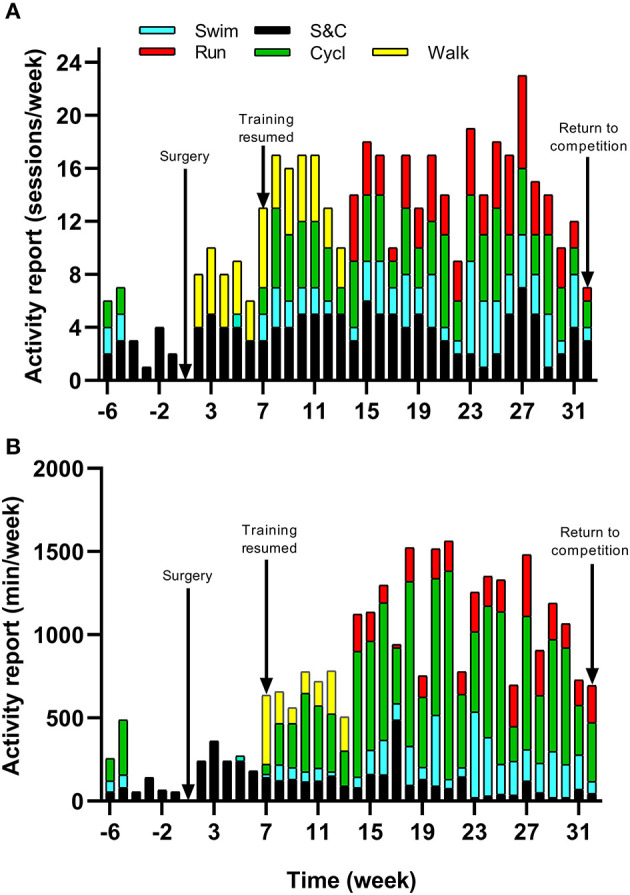
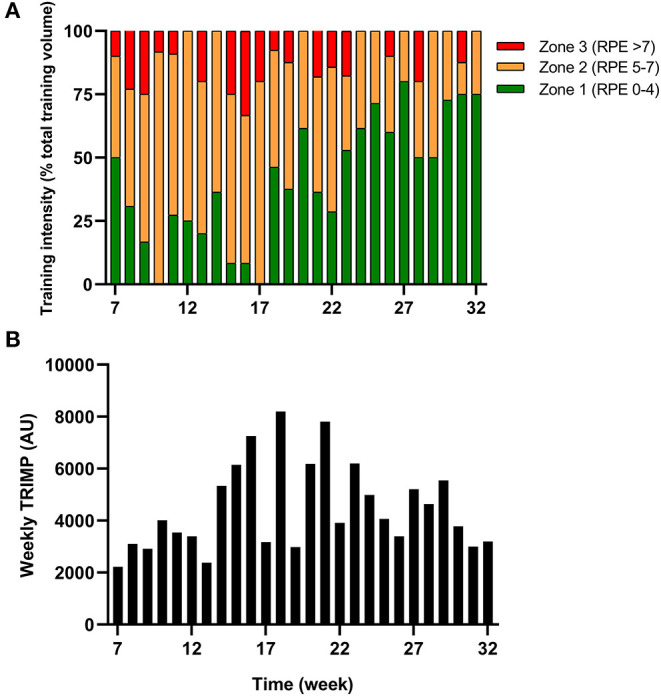
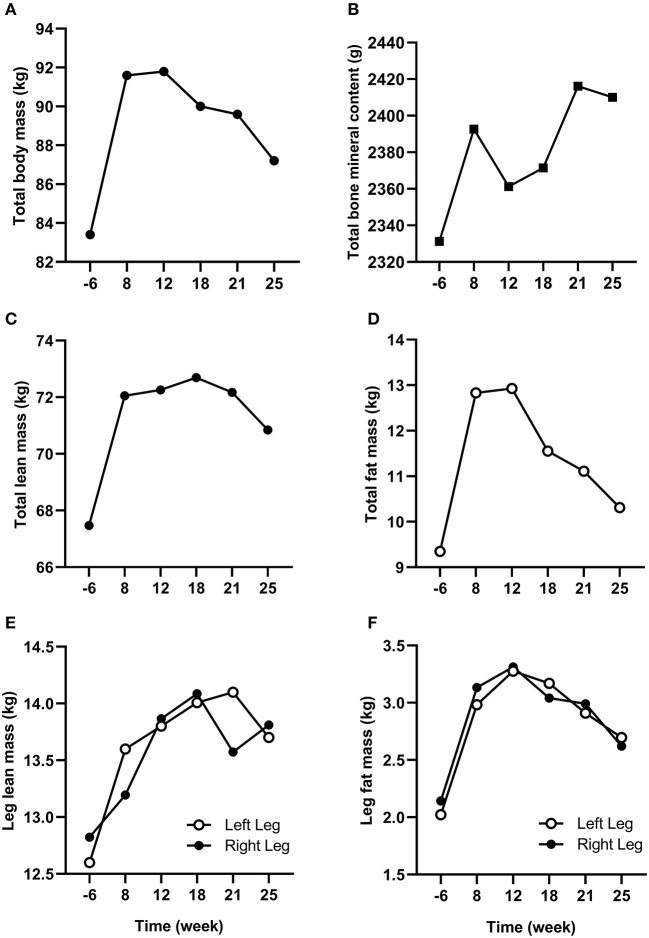
Retraining and resuming competition following surgery is challenging for athletes due to the prolonged period of reduced physical activity and subsequent alteration in body composition and physical performance. This is even more challenging for master athletes who endure the additional effect of aging. Within this context, the purpose of this study was to evaluate the feasibility and benefits that evidence-based nutritional and training recommendations could have on the time course of reconditioning and retraining following hip arthroplasty in an endurance master triathlete. During 38 weeks (from 6 weeks prior to surgery through to the return to competition in week 32), the athlete was provided with detailed training and nutritional recommendations. Dietary intake (via the remote food photographic method), body composition (via DXA), peak oxygen uptake (VO2peak), peak power output (PPO), cycling efficiency (GE) and energy availability (EA) were assessed 6 weeks pre- and 8, 12, 18, 21 and 25-weeks post-surgery. Training load was quantified (via TRIMP score and energy expenditure) daily during the retraining. Total body mass increased by 8.2 kg (attributable to a 3.5 and 4.6 kg increase in fat mass and lean mass, respectively) between week -6 and week 8 despite a reduction in carbohydrate (CHO) intake post-surgery (<3.0g/kg body mass/day). This was accompanied with a decrease in VO2peak, PPO, and GE due to a drop in training load. From week 7, the athlete resumed training and was advised to increase gradually CHO intake according to the demands of training. Eventually the athlete was able to return to competition in week 32 with a higher PPO, improved VO2peak and GE. Throughout retraining, EA was maintained around 30 kcal/kg Lean Body Mass/day, protein intake was high (~2g/kg/day) while CHO intake was periodized. Such dietary conditions allowed the athlete to maintain and even increase lean mass, which represents a major challenge with aging. Data reported in this study show, for the first time, the conditions required to recover and return to endurance competition following hip surgery.
Overview
CoChat Summary
TL;DR
This case study describes a 52-year-old male master triathlete who underwent hip resurfacing arthroplasty and followed individualized training and nutritional recommendations from 6 weeks pre-surgery through return to competition at week 32. The intervention was associated with maintained/increased lean mass and bone mineral content, improved cycling peak power output, and eventual return to Ironman 70.3 competition, though VO2peak remained below pre-surgery.
Key findings
- The athlete returned to competition 32 weeks after surgery; in a week-32 Ironman 70.3 he placed 1st in his age group in swimming and 3rd in cycling, but 123rd in running (82nd/155 overall, +25% of race winner time), and by week 45 another 70.3 he placed 9th/155 overall (+4% of winner time).
- Between week −6 and week 8, total body mass increased by 8.2 kg, attributable to a 3.5 kg increase in fat mass and a 4.6 kg increase in lean mass, despite carbohydrate intake <3.0 g/kg body mass/day post-surgery; total bone mineral content increased +3.4% from week −6 to 25.
- Energy availability was maintained around 30 kcal/kg lean body mass/day, protein intake was ~2 g/kg/day, and carbohydrate was periodized; the authors report this allowed maintenance and even increase in lean mass.
- VO2peak (ml/min/kg) was reduced by 31.4%, 14.3%, 9.5%, 7.7%, and 13.5% at weeks 8, 12, 18, 21, and 25, respectively; absolute VO2 (L/min) showed smaller reductions. PPO recovered by week 18 (405 W) and improved by 8.6% (440 W) at week 21 and 17.3% (475 W) at week 25.
Methods
- Single-case study of a 52-year-old male master triathlete (age 51 at surgery, body mass 83.4 kg, height 195 cm) who underwent hip resurfacing arthroplasty; the intervention ran 38 weeks, from 6 weeks pre-surgery through return to competition in week 32.
- Assessments occurred at week −6 and 8, 12, 18, 21, and 25 weeks post-surgery and included DXA for body composition and bone mineral content, submaximal and step cycling tests for VO2peak, peak power output, gross efficiency, substrate oxidation, heart rate, and blood lactate; dietary intake was recorded via the remote food photographic method for 7 consecutive days at weeks −6, 1, 4, 8, 12, 18, 21, and 25; training was recorded daily with TRIMP, energy expenditure, and energy availability estimated.
- The main analysis appears descriptive, tracking time-course changes; no formal statistical testing is stated.
Limitations
- Stated by the authors: only one master athlete was studied, so additional studies are necessary to verify whether the retraining pattern is consistent in other master athletes.
- Stated by the authors: due to logistical constraints, no body composition or physiological measurements were possible closer to training cessation, surgery time, and return to competition.
- Evident from the text: this is a single case with no control or comparison group and no formal inferential statistics; dietary and training data depend on self-report and compliance monitoring, and findings may not generalize to other athletes, surgeries, or rehabilitation contexts.
Model-written summary. Check it against the paper before relying on it.
Integrity signals
Registry
Cites
Statistics
Figures
Verification
Claims the paper makes
0 Valid · 0 Not valid · 22 Not checked · 59 Own results and interpretations
A result the paper reports from its own data — it cites no other source for it, so there is none to check. The quote shows it is in the paper.
In the paper
“In our study, as expected, fat mass increased between week −6 and 8 due to high EI compared to ExEE (EA = 46.5 ± 17.8 kcal/kg LBM/day in week −6) pre surgery.”
§ Retraining and Nutritional Strategy of an Endurance Master Athlete Following Hip Arthroplasty: A Case Study > Discussion
plainstates a causeSingle case- Asserted: passes — The authors put it forward as true.
- Checkable: passes — It can be checked against evidence.
- Load-bearing: unclear — It is unclear whether the paper’s conclusions depend on it.
- Based: passes — The paper gives a reason why it holds.
A result the paper states — it cites no source for it, so there is none to check. The quote shows it is in the paper.
In the paper
“The athlete recovered and even improved his cycling PPO, though VO2peak was still lower than pre-surgery.”
§ Retraining and Nutritional Strategy of an Endurance Master Athlete Following Hip Arthroplasty: A Case Study > Discussion
plainSingle case- Asserted: passes — The authors put it forward as true.
- Checkable: passes — It can be checked against evidence.
- Load-bearing: unclear — It is unclear whether the paper’s conclusions depend on it.
- Based: passes — The paper gives a reason why it holds.
A result the paper reports from its own data — it cites no other source for it, so there is none to check. The quote shows it is in the paper.
In the paper
“He placed 1st in his age group in swimming and 3rd in cycling, but could not maintain the pace in the running part of the triathlon (123th in running and 82th/155 overall, +25% of race winner time).”
§ Retraining and Nutritional Strategy of an Endurance Master Athlete Following Hip Arthroplasty: A Case Study > Discussion
plainSingle case- Asserted: passes — The authors put it forward as true.
- Checkable: passes — It can be checked against evidence.
- Load-bearing: unclear — It is unclear whether the paper’s conclusions depend on it.
- Based: passes — The paper gives a reason why it holds.
A result the paper reports from its own data — it cites no other source for it, so there is none to check. The quote shows it is in the paper.
In the paper
“Interestingly no decrease in lean mass was recorded in week 8 despite low EA (close to 30 kcal/kg LBM/day) post operation (Table 2).”
§ Retraining and Nutritional Strategy of an Endurance Master Athlete Following Hip Arthroplasty: A Case Study > Results
plainSingle case- Asserted: passes — The authors put it forward as true.
- Checkable: passes — It can be checked against evidence.
- Load-bearing: passes — The paper’s conclusions depend on it.
- Based: passes — The paper gives a reason why it holds.
None of the sources cited for this claim have been checked yet.
In the paper
“However, lean mass concomitantly increased thanks to the combination of increased daily PRO intake and regular S&C training as soon as in week 2 (Mettler et al., 2010).”
§ Retraining and Nutritional Strategy of an Endurance Master Athlete Following Hip Arthroplasty: A Case Study > Discussion
plainstates a causeSingle case- Asserted: passes — The authors put it forward as true.
- Checkable: passes — It can be checked against evidence.
- Load-bearing: passes — The paper’s conclusions depend on it.
- Based: passes — The paper gives a reason why it holds.
51 more claims
Create a free account to see all 81 claims and to verify the 14 references still open.
- It may state two separate claims as one. 14
- Probably not a substantial claim. 14
- The quote only partly states this claim. 1
Self-check
Percentages, sums and reported differences re-computed from the paper’s own numbers.
Each contradiction between two passages listed here was confirmed by an independent check.
Rated minor: it would not touch a result — a value no result rests on, a p-value that stays on the same side of the significance level, or a conflict that is clerical, resolved elsewhere in the paper, or outside its own findings.
In the paper
“| VO2 (% VO2peak) | 37 | 66 | 100 | 58 | 93 | 100 | 48 | 76 | 100 | 41 | 65 | 100 | 41 | 57 | 100 | 43 | 71 | 100 |”
§ Retraining and Nutritional Strategy of an Endurance Master Athlete Following Hip Arthroplasty: A Case Study > Results
Reported 57 · recomputed 63.513514
Rated minor: it would not touch a result — a value no result rests on, a p-value that stays on the same side of the significance level, or a conflict that is clerical, resolved elsewhere in the paper, or outside its own findings.
In the paper
“| VO2 (% VO2peak) | 37 | 66 | 100 | 58 | 93 | 100 | 48 | 76 | 100 | 41 | 65 | 100 | 41 | 57 | 100 | 43 | 71 | 100 |”
§ Retraining and Nutritional Strategy of an Endurance Master Athlete Following Hip Arthroplasty: A Case Study > Results
Reported 93 · recomputed 97.142857
Rated minor: it would not touch a result — a value no result rests on, a p-value that stays on the same side of the significance level, or a conflict that is clerical, resolved elsewhere in the paper, or outside its own findings.
In the paper
“| VO2 (% VO2peak) | 37 | 66 | 100 | 58 | 93 | 100 | 48 | 76 | 100 | 41 | 65 | 100 | 41 | 57 | 100 | 43 | 71 | 100 |”
§ Retraining and Nutritional Strategy of an Endurance Master Athlete Following Hip Arthroplasty: A Case Study > Results
Reported 58 · recomputed 60.779221
Rated minor: it would not touch a result — a value no result rests on, a p-value that stays on the same side of the significance level, or a conflict that is clerical, resolved elsewhere in the paper, or outside its own findings.
In the paper
§ Retraining and Nutritional Strategy of an Endurance Master Athlete Following Hip Arthroplasty: A Case Study > Discussion
“despite the comparatively low EA (25–27 kcal/kg LBM/day) between weeks 1 and 25”
§ Retraining and Nutritional Strategy of an Endurance Master Athlete Following Hip Arthroplasty: A Case Study > Materials and Methods > Procedures
“| EA (kcal/kg LBM) | 46.5 ± 17.8 | 36.6 ± 4.9 | 32.1 ± 9.1 | 32.1 ± 8.2 | 24.9 ± 21.6 | 26.6 ± 10.7 | 26.6 ± 12.6 | 29.9 ± 21.3 |”
Rated minor: it would not touch a result — a value no result rests on, a p-value that stays on the same side of the significance level, or a conflict that is clerical, resolved elsewhere in the paper, or outside its own findings.
In the paper
§ Retraining and Nutritional Strategy of an Endurance Master Athlete Following Hip Arthroplasty: A Case Study > Discussion
“The overall pattern of retraining from week 8 to 25 showed a steady improvement in VO2peak and PPO concomitant with an improvement in GE.”
§ Retraining and Nutritional Strategy of an Endurance Master Athlete Following Hip Arthroplasty: A Case Study > Results
“Compared to week −6, VO2peak (in ml/min/kg) was reduced by 31.4, 14.3, 9.5, 7.7, and 13.5% in week 8, 12, 18, 21, and 25, respectively.”
Citations
Cites
A New Approach to Monitoring Exercise Training
FOSTER, C., FLORHAUG, J. A., FRANKLIN, J., GOTTSCHALL, L., HROVATIN, L. A., PARKER, S., DOLESHAL, P., & DODGE, C. (2001) · Journal of Strength and Conditioning Research · doi:10.1519/00124278-200102000-00019 · Cited by 2,862
Sarcopenia: its assessment, etiology, pathogenesis, consequences and future perspectives
Rolland, Y., Czerwinski, S., van Kan, G. A., Morley, J. E., Cesari, M., Onder, G., Woo, J., Baumgartner, R., Pillard, F., Boirie, Y., et al. (2008) · The Journal of nutrition, health and aging · doi:10.1007/bf02982704 · Cited by 1,071
Measurement of substrate oxidation during exercise by means of gas exchange measurements
Jeukendrup, A. E., & Wallis, G. A. (2005) · International Journal of Sports Medicine · doi:10.1055/s-2004-830512 · Cited by 799
Areta, J. L., Burke, L. M., Ross, M. L., Camera, D. M., West, D. W. D., Broad, E. M., Jeacocke, N. A., Moore, D. R., Stellingwerff, T., Phillips, S. M., et al. (2013) · The Journal of Physiology · doi:10.1113/jphysiol.2012.244897 · Cited by 495
Self-citationSkeletal muscle atrophy during short-term disuse: Implications for age-related sarcopenia
Wall, B. T., Dirks, M. L., & van Loon, L. J. C. (2013) · Ageing Research Reviews · doi:10.1016/j.arr.2013.07.003 · Cited by 400
Effects of aging on human skeletal muscle after immobilization and retraining
Suetta, C., Hvid, L. G., Justesen, L., Christensen, U., Neergaard, K., Simonsen, L., Ortenblad, N., Magnusson, S. P., Kjaer, M., & Aagaard, P. (2009) · Journal of Applied Physiology · doi:10.1152/japplphysiol.00290.2009 · Cited by 400
Time course of loss of adaptations after stopping prolonged intense endurance training
Coyle, E. F., Martin, W. H., Sinacore, D. R., Joyner, M. J., Hagberg, J. M., & Holloszy, J. O. (1984) · Journal of Applied Physiology · doi:10.1152/jappl.1984.57.6.1857 · Cited by 364
Substantial skeletal muscle loss occurs during only 5 days of disuse
Wall, B. T., Dirks, M. L., Snijders, T., Senden, J. M. G., Dolmans, J., & van Loon, L. J. C. (2014) · Acta Physiologica · doi:10.1111/apha.12190 · Cited by 346
Mechanical determinants of osteoarthrosis
Radin, E. L., Burr, D. B., Caterson, B., Fyhrie, D., Brown, T. D., & Boyd, R. D. (1991) · Seminars in Arthritis and Rheumatism · doi:10.1016/0049-0172(91)90036-y · Cited by 331
Heikura, I. A., Uusitalo, A. L. T., Stellingwerff, T., Bergland, D., Mero, A. A., & Burke, L. M. (2018) · International Journal of Sport Nutrition and Exercise Metabolism · doi:10.1123/ijsnem.2017-0313 · Cited by 318
Osteoarthritis of weight bearing joints of lower limbs in former elite male athletes
Kujala, U. M., Kaprio, J., & Sarno, S. (1994) · BMJ · doi:10.1136/bmj.308.6923.231 · Cited by 299
Increased Protein Intake Reduces Lean Body Mass Loss during Weight Loss in Athletes
METTLER, S., MITCHELL, N., & TIPTON, K. D. (2010) · Medicine & Science in Sports & Exercise · doi:10.1249/mss.0b013e3181b2ef8e · Cited by 288
Accuracy of the Actiheart for the assessment of energy expenditure in adults
Crouter, S. E., Churilla, J. R., & Bassett, D. R. (2008) · European Journal of Clinical Nutrition · doi:10.1038/sj.ejcn.1602766 · Cited by 236
Areta, J. L., Burke, L. M., Camera, D. M., West, D. W. D., Crawshay, S., Moore, D. R., Stellingwerff, T., Phillips, S. M., Hawley, J. A., & Coffey, V. G. (2014) · American Journal of Physiology-Endocrinology and Metabolism · doi:10.1152/ajpendo.00590.2013 · Cited by 227 · cited 1×
“Such conditions, likely provided an increased anabolic stimulus for muscle protein synthesis despite the comparatively low EA (25–27 kcal/kg LBM/day) between weeks 1 and 25 (Areta et al., 2014).”
BackgroundSelf-citationHvid, L., Aagaard, P., Justesen, L., Bayer, M. L., Andersen, J. L., Ørtenblad, N., Kjaer, M., & Suetta, C. (2010) · Journal of Applied Physiology · doi:10.1152/japplphysiol.00637.2010 · Cited by 195
Master’s performance in the New York City Marathon 1983–1999
Jokl, P., Sethi, P. M., & Cooper, A. J. (2004) · British Journal of Sports Medicine · doi:10.1136/bjsm.2002.003566 · Cited by 182
Endurance performance in masters athletes
Reaburn, P. R. J., & Dascombe, B. J. (2008) · European Review of Aging and Physical Activity · doi:10.1007/s11556-008-0029-2 · Cited by 168
Nutrition and athlete bone health
Sale, C., & Elliott-Sale, K. J. (2019) · Sports Medicine · doi:10.1007/s40279-019-01161-2 · Cited by 127
Houston, M. E., Bentzen, H., & Larsen, H. (1979) · Acta Physiologica Scandinavica · doi:10.1111/j.1748-1716.1979.tb06328.x · Cited by 124
Case study: Nutrition and training periodization in three elite marathon runners
Stellingwerff, T. (2012) · International Journal of Sport Nutrition and Exercise Metabolism · doi:10.1123/ijsnem.22.5.392 · Cited by 119
Intragastric protein administration stimulates overnight muscle protein synthesis in elderly men
Groen, B. B. L., Res, P. T., Pennings, B., Hertle, E., Senden, J. M. G., Saris, W. H. M., & van Loon, L. J. C. (2012) · American Journal of Physiology-Endocrinology and Metabolism · doi:10.1152/ajpendo.00321.2011 · Cited by 117
Master Athletes Are Extending the Limits of Human Endurance
Lepers, R., & Stapley, P. J. (2016) · Frontiers in Physiology · doi:10.3389/fphys.2016.00613 · Cited by 112
Age-Related Decline in Olympic Triathlon Performance: Effect of Locomotion Mode
Bernard, T., Sultana, F., Lepers, R., Hausswirth, C., & Brisswalter, J. (2009) · Experimental Aging Research · doi:10.1080/03610730903418620 · Cited by 109
Self-citationRehabilitation After Hip Femoroacetabular Impingement Arthroscopy
Wahoff, M. S., & Ryan, M. (2011) · Clinics in Sports Medicine · doi:10.1016/j.csm.2011.01.001 · Cited by 106
Rehabilitation Following Hip Arthroscopy
Stalzer, S., Wahoff, M. S., & Scanlan, M. (2006) · Clinics in Sports Medicine · doi:10.1016/j.csm.2005.12.008 · Cited by 106
Lower-Limb Function among Former Elite Male Athletes
Kettunen, J. A., Kujala, U. M., Kaprio, J. A., Koskenvuo, M. J., & Sarna, S. J. (2001) · The American Journal of Sports Medicine · doi:10.1177/03635465010290010801 · Cited by 101
Trends in Triathlon Performance: Effects of Sex and Age
Lepers, R., Knechtle, B., & Stapley, P. J. (2013) · Sports Medicine · doi:10.1007/s40279-013-0067-4 · Cited by 98
Effects of Exercise Sessions on DXA Measurements of Body Composition in Active People
Nana, A., Slater, G., Hopkins, W. G., & Burke, L. M. (2013) · Medicine & Science in Sports & Exercise · doi:10.1249/mss.0b013e31826c9cfd · Cited by 97
The Impact of Physical Training on Locomotor Function in Older People
Mian, O. S., Baltzopoulos, V., Minetti, A. E., & Narici, M. V. (2007) · Sports Medicine · doi:10.2165/00007256-200737080-00003 · Cited by 89
Nana, A., Slater, G., Hopkins, W. G., & Burke, L. M. (2012) · International Journal of Sport Nutrition and Exercise Metabolism · doi:10.1123/ijsnem.22.5.313 · Cited by 69
Strength training improves cycling efficiency in master endurance athletes
Louis, J. B., Hausswirth, C., Easthope, C. A., & Brisswalter, J. (2011) · European Journal of Applied Physiology · doi:10.1007/s00421-011-2013-1 · Cited by 56
Self-citationIs physical activity, practiced as recommended for health benefit, a risk factor for osteoarthritis?
Lefèvre‐Colau, M., Nguyen, C., Haddad, R., Delamarche, P., Paris, G., Palazzo, C., Poiraudeau, S., Rannou, F., & Rören, A. (2016) · Annals of Physical and Rehabilitation Medicine · doi:10.1016/j.rehab.2016.02.007 · Cited by 47
High-impact sport after hip resurfacing: the ironman triathlon
Girard, J., Lons, A., Pommepuy, T., Isida, R., Benad, K., & Putman, S. (2017) · Orthopaedics & Traumatology: Surgery & Research · doi:10.1016/j.otsr.2017.04.004 · Cited by 45
Sports participation following total hip arthroplasty.
Meira, E. P., & Zeni, J. (2014) · Europe PMC (PubMed Central) · Cited by 44
Nichols, J. F., Phares, L., & Buono, M. J. (1997) · International Journal of Sports Medicine · doi:10.1055/s-2007-972664 · Cited by 40
Master triathletes have not reached limits in their Ironman triathlon performance
Stiefel, M., Knechtle, B., & Lepers, R. (2014) · Scandinavian Journal of Medicine & Science in Sports · doi:10.1111/j.1600-0838.2012.01473.x · Cited by 37
Joint pain and osteoarthritis in former recreational and elite cricketers
Cai, H., Bullock, G. S., Sanchez-Santos, M. T., Peirce, N. S., Arden, N., & Filbay, S. R. (2019) · BMC Musculoskeletal Disorders · doi:10.1186/s12891-019-2956-7 · Cited by 36
Bieuzen, F., Hausswirth, C., Louis, J. B., & Brisswalter, J. (2009) · Gerontology · doi:10.1159/000262286 · Cited by 27
Self-citationMuscle Strength and Metabolism in Master Athletes
Louis, J. B., Hausswirth, C., Bieuzen, F., & Brisswalter, J. (2009) · International Journal of Sports Medicine · doi:10.1055/s-0029-1231046 · Cited by 27
Self-citationOxblom, A., Hedlund, H., Nemes, S., Brismar, B., Felländer‐Tsai, L., & Rolfson, O. (2019) · Acta Orthopaedica · doi:10.1080/17453674.2019.1604343 · Cited by 22
Physiological Profile of a 59-Year-Old Male World Record Holder Marathoner
Lepers, R., Bontemps, B., & Louis, J. B. (2019) · Medicine & Science in Sports & Exercise · doi:10.1249/mss.0000000000002181 · Cited by 19
Self-citationNutrition for Master Athletes: Is There a Need for Specific Recommendations?
Louis, J., Vercruyssen, F., Dupuy, O., & Bernard, T. (2020) · Journal of Aging and Physical Activity · doi:10.1123/japa.2019-0190 · Cited by 15
Self-citationINCIDENCE OF INJURY AND DISEASE AMONG FORMER ATHLETES: A REVIEW
Linderman, J. K., Astorino, T. A., Baker, J., & Friery, K. B. (2008) · Cited by 14
Case study: bone mineral density of two elite senior female powerlifters
Walters, P. H., Jezequel, J. J., & Grove, M. B. (2012) · Journal of Strength and Conditioning Research · doi:10.1519/jsc.0b013e31822c71c0 · Cited by 9
Analysis of the world record time for combined father and son marathon
Louis, J. B., Bontemps, B., & Lepers, R. (2020) · Journal of Applied Physiology · doi:10.1152/japplphysiol.00819.2019 · Cited by 9
Self-citationNutrition for master athletes: from challenges to optimisation strategies
Louis, J. B., Vercruyssen, F., Dupuy, O., & Bernard, T. (2019) · Movement & Sport Sciences - Science & Motricité · doi:10.1051/sm/2019019 · Cited by 6
Self-citationMueller, S. M., Braendli, S., & Toigo, M. (2015) · SpringerPlus · doi:10.1186/s40064-015-0859-0 · Cited by 4
(2017) · Europe PMC (PubMed Central)
Cited by
Dietary Intake of Masters Athletes: A Systematic Review
Guo, S., Shaoni, G. L. L., Stuart-Smith, W. A., Davies, A. J., & Gifford, J. A. (2023) · Nutrients · doi:10.3390/nu15234973 · Cited by 21
Physical performance during energy deficiency in humans: An evolutionary perspective
Areta, J. L. (2023) · Comparative Biochemistry and Physiology Part A Molecular & Integrative Physiology · doi:10.1016/j.cbpa.2023.111473 · Cited by 18
Self-citationBontemps, B. (2022) · theses.fr (ABES) · doi:10.70675/ecc687ddzda3fz4c17z8da1zeb25164892b1
Self-citation
Metadata
- Authors
- Louis, J., Tiollier, E., Lamb, A., Bontemps, B., Areta, J., & Bernard, T.
- Affiliations
- Liverpool John Moores University (GB)
- Institut National du Sport, de l'Expertise et de la Performance (FR)
- Université de Toulon (FR)
- Université Côte d'Azur (FR)
- Corresponding author
- Louis, Julien
- Venue
- Frontiers in Sports and Active Living
- Publisher
- Frontiers Media SA
- Published
- 2020-02-13
- Volume
- 2
- Pages
- 9-9
- ISSN
- 2624-9367 (ISSN-L)
- PMC
- PMC7739816
- OpenAlex
- W2992255322
- Cited by
- 4
- References
- 49
- Citations by year
- 2023: 2 · 2022: 1 · 2020: 1
- FWCI
- 0.96
- Type
- journal article
- Language
- en
- Open access
- gold
- doi.org
- Licence
- Locations
- Frontiers in Sports and Active Living (publishedVersion, cc-by)
- PubMed (publishedVersion)
- PubMed Central (publishedVersion, cc-by)
- Liverpool John Moores University (acceptedVersion)
- HAL (submittedVersion, cc-by)
- DOAJ (DOAJ: Directory of Open Access Journals) (submittedVersion, cc-by-sa)
- Topics
- Health Sciences › Medicine › Orthopedics and Sports Medicine › Sports Performance and Training
- Health Sciences › Nursing › Nutrition and Dietetics › Muscle metabolism and nutrition
- Health Sciences › Medicine › Physiology (medical) › Cardiovascular and exercise physiology
- Keywords
- total hip arthroplasty, master athletes, return to competition, postoperative rehabilitation, nutritional strategies, carbohydrate intake, energy availability, protein intake, body composition, lean body mass, peak oxygen uptake, peak power, cycling efficiency, aging, training load
About these checks
Registry, retraction, Cites and statistics results are computed, not judged, with one exception: a printed reference that no index lists is read once by a model before it counts as a citation error. Claims are extracted by a model and kept only when their quote appears verbatim in the text; each cited source is then checked, with a model’s help, for whether it says what the claim relies on. Those verdicts can be wrong — read the claim’s quote and the cited source before relying on one.
A language model drew the claims from the paper on 2026-11-14, under version 3 of the claim definition (model deepseek-v4.1-flash, prompt extract-v3).
A second model labelled each claim on 2026-11-14 (model jev-1.13-20260917, definition revision gold-guideline-v0.2).
Statistics and arithmetic are recomputed, not judged.
Confidence bands are shown only for fields calibrated on our annotated test set. None is calibrated yet, so no band is shown.
What counts as a claim ›How we measure confidence ›How we check this ›
Are you an author, or do you see a problem with this page? Request a review
Data sources
Bibliographic data: Semantic Scholar, OpenAlex, Crossref.
Contains information from the Semantic Scholar Academic Graph Datasets, made available under the ODC Attribution License (ODC-BY 1.0).
Semantic Scholar’s data is described in: Kinney, R., et al. (2023). The Semantic Scholar Open Data Platform. arXiv:2301.10140.
