

The DOI matches its Crossref record; 3 of the 3 references it cites were found in a registry or an index.
Dietary High Sodium Fluoride Impairs Digestion and Absorption Ability, Mucosal Immunity, and Alters Cecum Microbial Community of Laying Hens
Abstract
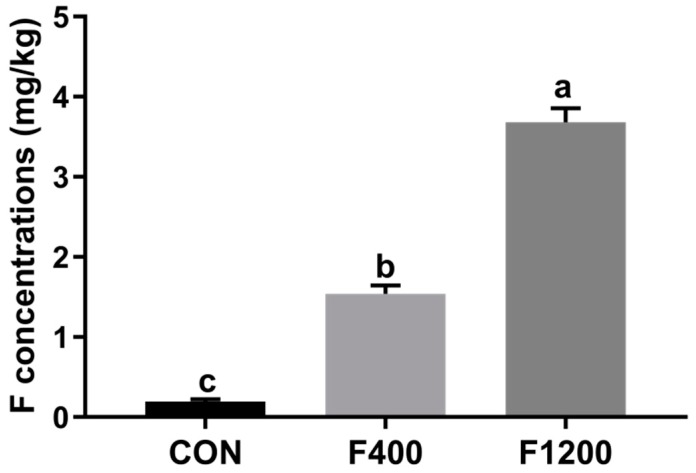
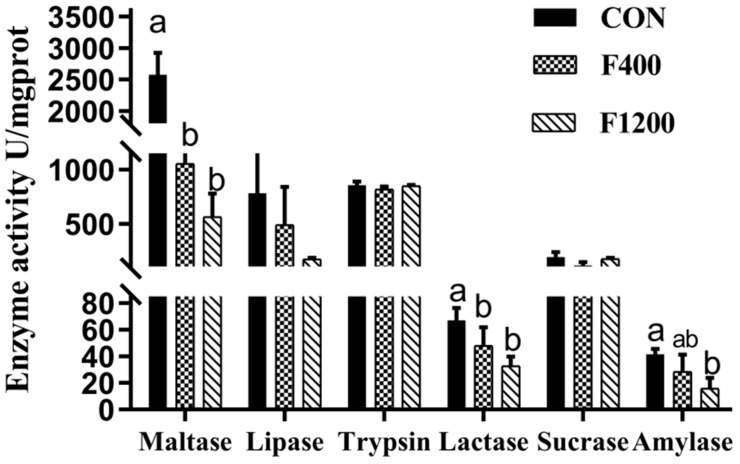
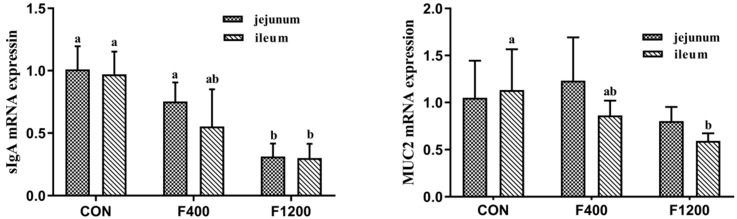
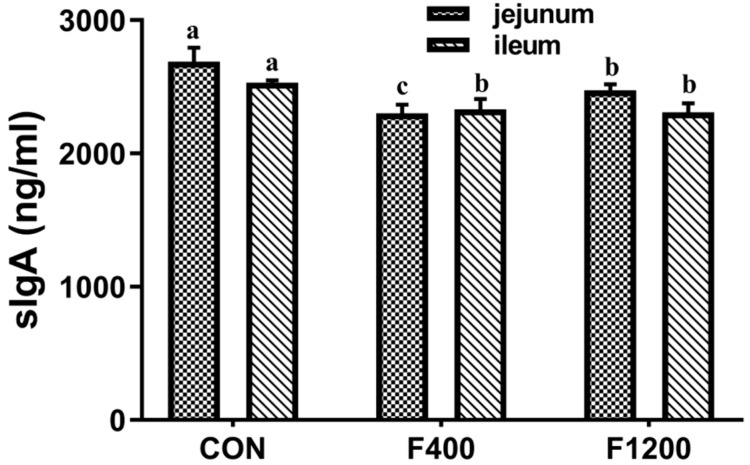
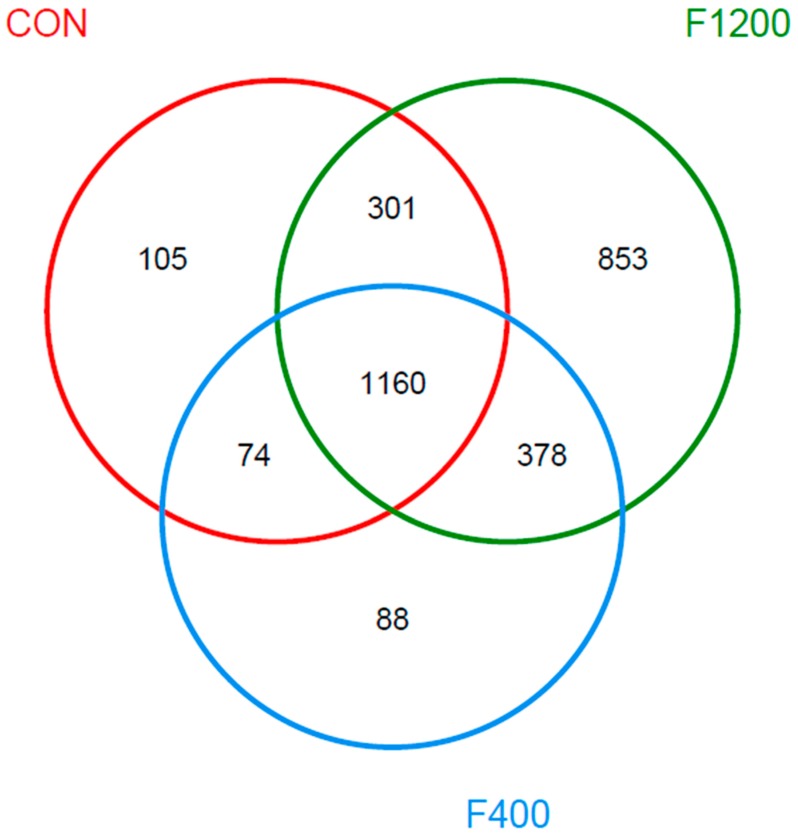
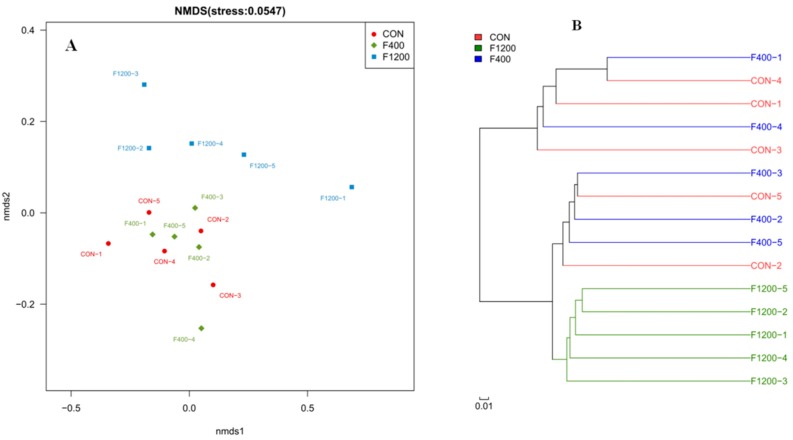
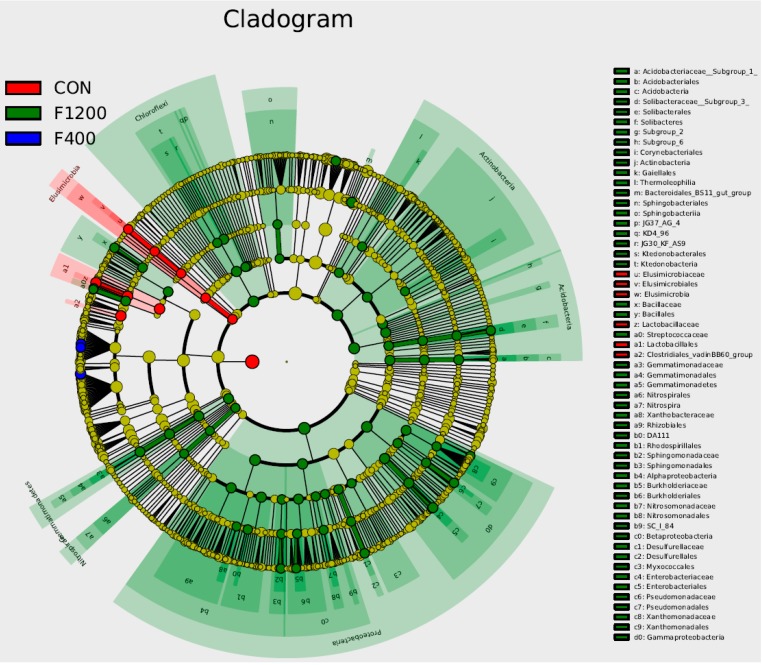
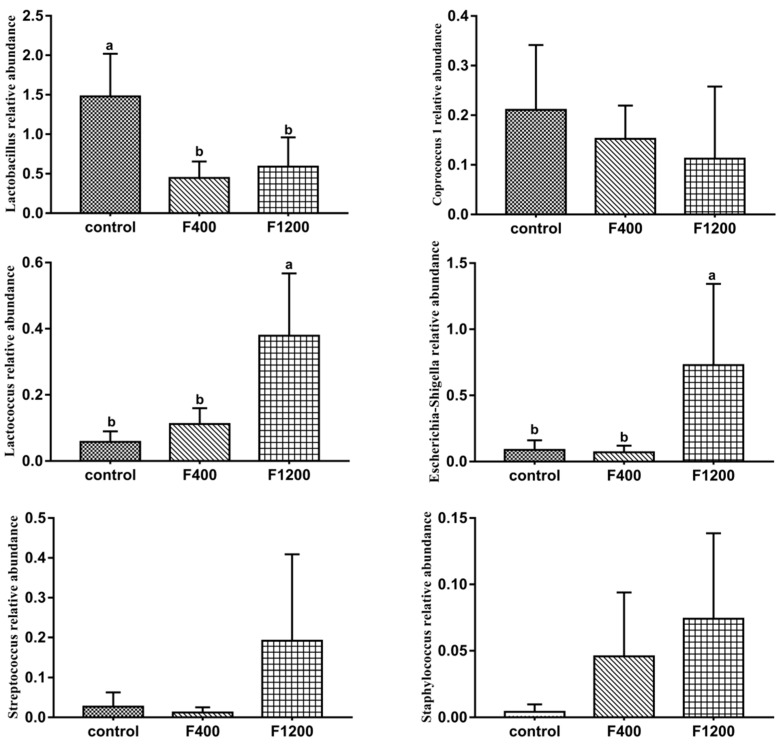
(1) Background: This study was conducted to investigate the effects of dietary fluoride (F) on tissue retention, digestive enzymes activities, mucosal immunity, and cecum microbial community of laying hens. (2) Methods: Total of 288 37-week-old Hy-Line Gray laying hens with similar laying rate (85.16% ± 3.87%) were adapted to the basal diets for ten days, and then allocated into three groups at random (n = 9, 6, 6 replicates/group). The concentrations of F in the diets were 31.19 (the control group, CON), 431.38 (F400, low-F group) and 1237.16 mg/kg (F1200, high-F group), respectively. The trial lasted for 59 days. (3) Results: Results suggested that F residuals in duodenum responded to dietary F concentrations positively. The activities of amylase, maltase and lactase were decreased in high-F group, compared with those in the control group. The mRNA expression levels of jejunum and ileum secretory immunoglobulin A (sIgA) and Mucin 2, and sIgA concentrations were decreased inhigh-F group, than those in the control group. The observed operational taxonomic units (OTUs) of laying hens in high-F group were higher than the CON and low-F groups, and the bacterial structure was different from the other two groups. The Lactobacillus was higher in the control group, while Gammaproteobacteria, Escherichia-Shigella, Streptococcaceae, and Enterobacteriaceae were higher in the high-F group. (4) Conclusions: The actual results confirmed that dietary high F intake increased the F residuals in duodenum, and reduced the digestion and absorption of nutrients and immunity via decreasing the activities of digestive enzymes, impairing intestine mucosal immunity, and disturbing the cecum microbial homeostasis of laying hens.
Overview
The claims and statistics of this paper haven’t been checked yet.
Run the check — free, no account needed. It reads the open-access text and checks the sources it cites.
Integrity signals
Registry
Cites
Statistics
Figures
Verification
Claims the paper makes
The claims and statistics of this paper haven’t been checked yet.
Run the check — free, no account needed. It reads the open-access text and checks the sources it cites.
Claims other papers make about this one
Each is checked against this paper’s own text: does it say what the citing paper says it does?
In the citing paper
“Silkworm39,68 and bird42,43 models also showed a similar effect with a reduction in energy metabolic enzymes and SCFAs, respectively, at higher fluoride doses (200, 750, and 1200 mg L–1 NaF)”
From Effect of Fluoride on Gut Microbiota: A Systematic Review (2025) · cites this paper as [43]
In the citing paper
“Birds exposed to 1200 and 400 mg L–1 NaF for 59 days had downregulated expression levels of SIgA, mucin 2 (MUC2), Zonula occludens-2, and claudin-4.42,43”
From Effect of Fluoride on Gut Microbiota: A Systematic Review (2025) · cites this paper as [43]
Self-check
Percentages, sums and reported differences re-computed from the paper’s own numbers.
The self-check needs the paper’s full text.
Citations
Cites
Mucin dynamics and enteric pathogens
McGuckin, M. A., Lindén, S. K., Sutton, P., & Florin, T. H. (2011) · Nature Reviews Microbiology · doi:10.1038/nrmicro2538 · Cited by 1,428
Diet, gut microbiota and immune responses
Maslowski, K. M., & Mackay, C. R. (2011) · Nature Immunology · doi:10.1038/ni0111-5 · Cited by 1,261 · cited 1×
“In another way, the gut microbiota can be taken as an extension of the self, regulates immune and inflammatory response, and diet can alter the composition of the microbiota [19,20].”
BackgroundHeazlewood, C. K., Cook, M. C., Eri, R., Price, G. R., Tauro, S. B., Taupin, D., Thornton, D. J., Png, C. W., Crockford, T. L., Cornall, R. J., et al. (2008) · PLoS Medicine · doi:10.1371/journal.pmed.0050054 · Cited by 701
Research works printed but not linked: 42
- Schroder, 2003, Ecotoxicological risks associated with land treatment of petrochemical wastes. I. Residual soil contamination and bioaccumulation by cotton rats (Sigmodon hispidus), J. Toxicol. Environ., 66, 305
- Vithanage, 2015, Fluoride in the environment: Sources, distribution and defluoridation, Environ. Chem. Lett., 13, 131, 10.1007/s10311-015-0496-4 · DOI
- Yan, 2009, Effects of sodium fluoride treatment in vitro on cell proliferation, apoptosis and caspase-3 and caspase-9 mrna expression by neonatal rat osteoblasts, Arch. Toxicol., 83, 451, 10.1007/s00204-008-0365-z · DOI
- Zhang, 2017, Do Environmental Fluoride Exposure and ESRα Genetic Variation Modulate Methylation Modification on Bone Changes in Chinese Farmers?, Chem. Res. Toxicol., 30, 1302, 10.1021/acs.chemrestox.7b00047 · DOI
- Sharma, 2017, Fluoride: A review of pre-clinical and clinical studies, Environ. Toxicol. Pharmacol., 56, 297, 10.1016/j.etap.2017.10.008 · DOI
- Suzuki, 2017, Sirt1 overexpression suppresses fluoride-induced p53 acetylation to alleviate fluoride toxicity in ameloblasts responsible for enamel formation, Arch. Toxicol., 92, 1283, 10.1007/s00204-017-2135-2 · DOI
- Zhao, 2018, Fluoride induces apoptosis and autophagy through the IL-17 signaling pathway in mice hepatocytes, Arch. Toxicol., 92, 3277, 10.1007/s00204-018-2305-x · DOI
- Antonio, 2017, The effect of fluoride on the structure, function, and proteome of a renal epithelial cell monolayer, Environ. Toxicol., 32, 1455, 10.1002/tox.22338 · DOI
- Deng, 2016, Sodium fluoride (NaF) induces the splenic apoptosis via endoplasmic reticulum (ER) stress pathway in vivo and in vitro, Aging, 8, 3552, 10.18632/aging.101150 · DOI
- Sun, 2018, Alterations in epididymal proteomics and antioxidant activity of mice exposed to fluoride, Arch. Toxicol., 92, 169, 10.1007/s00204-017-2054-2 · DOI
- Wang, 2017, The MMP-9/TIMP-1 system is involved in fluoride-induced reproductive dysfunctions in female mice, Biol. Trace Elem. Res., 178, 253, 10.1007/s12011-016-0929-3 · DOI
- Luo, 2016, Dietary high fluorine alters intestinal microbiota in broiler chickens, Biol. Trace Elem. Res., 173, 483, 10.1007/s12011-016-0672-9 · DOI · Paper page
- Wang, 2019, Effect of Fluoride on Small Intestine Morphology and Serum Cytokine Contents in Rats, Biol. Trace Elem. Res., 189, 511, 10.1007/s12011-018-1503-y · DOI
- Gharzouli, 1994, Senator A Fluoride absorption in vitro by the gastrointestinal tract of the rat, Fluoride, 27, 185
- Mowat, 2014, Regional specialization within the intestinal immune system, Nat. Rev. Immunol., 14, 667, 10.1038/nri3738 · DOI
- 2007, Nutrition of the developing embryo and hatchling, Poult. Sci., 86, 1043, 10.1093/ps/86.5.1043 · DOI
- Noy, 2001, The effect of early feeding on growth and small intestinal development in the posthatch poult, Poult. Sci., 80, 912, 10.1093/ps/80.7.912 · DOI
- Potturi, 2005, Effects of delayed placement on intestinal characteristics in turkey poults, Poult. Sci., 84, 816, 10.1093/ps/84.5.816 · DOI
- Kau, 2011, Human nutrition, the gut microbiome and the immune system, Nature, 474, 327, 10.1038/nature10213 · DOI · Paper page
- Miao, 2017, Effects of excess dietary fluoride on serum biochemical indices, egg quality, and concentrations of fluoride in soft organs, eggs, and serum of laying hens, Biol. Trace Elem. Res., 180, 146, 10.1007/s12011-017-0973-7 · DOI
- Dong, 2017, Effects of dietary threonine supplementation on intestinal barrier function and gut microbiota of laying hens, Poult. Sci., 96, 3654, 10.3382/ps/pex185 · DOI
- Miao, 2019, Excess dietary fluoride affects laying performance, egg quality, tissue retention, serum biochemical indices, and reproductive hormones of laying hens, Poult. Sci., 98, 6873, 10.3382/ps/pez443 · DOI
- Youle, 2012, Mitochondrial fission, fusion, and stress, Science, 337, 1062, 10.1126/science.1219855 · DOI · Paper page
- Petit, 1995, Alterations in mitochondrial structure and function are early events of dexamethasone–induced thymocyte apoptosis, J. Cell Biol., 130, 157, 10.1083/jcb.130.1.157 · DOI
- Tu, 2018, Fluoride induces apoptosis via inhibiting SIRT1 activity to activate mitochondrial p53 pathway in human neuroblastoma SH-SY5Y cells, Toxicol. Appl. Pharmacol., 347, 60, 10.1016/j.taap.2018.03.030 · DOI
- Zhao, 2019, Roles of mitochondrial fission inhibition in developmental fluoride neurotoxicity: Mechanisms of action in vitro and associations with cognition in rats and children, Arch. Toxicol., 93, 709, 10.1007/s00204-019-02390-0 · DOI
- Valkonen, 2008, Effects of dietary energy content on the performance of laying hens in furnished and conventional cages, Poult. Sci., 87, 844, 10.3382/ps.2007-00237 · DOI
- Nochi, 2006, Innate immunity in themucosal immune system, Curr. Pharm. Des., 12, 4203, 10.2174/138161206778743457 · DOI
- Kim, 2010, Intestinal goblet cells and mucins in health and disease: Recent insights and progress, Curr. Gastroenterol. Rep., 12, 319, 10.1007/s11894-010-0131-2 · DOI
- Andrianifahanana, 2006, Regulation of mucin expression: Mechanistic aspects and implications for cancer and inflammatory diseases, Biochim. Biophys. Acta-Rev. Cancer, 1765, 189, 10.1016/j.bbcan.2006.01.002 · DOI
- Lillehoj, 1996, Avian gut-associated lymphoid tissues and intestinal immune responses to Eimeria parasites, Clin. Microbiol. Rev., 9, 349, 10.1128/CMR.9.3.349 · DOI
- Hosono, 2003, Dietary fructooligosaccharides induce immunoregulation of intestinal IgA secretion by murine Peyer’s patch cells, Biosci. Biotechnol. Biochem., 67, 758, 10.1271/bbb.67.758 · DOI
- Macpherson, 2001, IgA responses in the intestinal mucosa against pathogenic and non-pathogenic microorganisms, Microbes Infect., 3, 1021, 10.1016/S1286-4579(01)01460-5 · DOI
- Mascaraque, 2014, Intestinal inflammation and mucosal barrier function, Inflamm. Bowel Dis., 20, 2394, 10.1097/MIB.0000000000000204 · DOI
- Yan, 2017, Gut metagenomic analysis reveals prominent roles of Lactobacillus and cecal microbiota in chicken feed efficiency, Sci Rep., 7, 45308, 10.1038/srep45308 · DOI
- Million, 2012, Comparative meta-analysis of the effect of Lactobacillus species on weight gain in humans and animals, Microb. Pathog., 53, 100, 10.1016/j.micpath.2012.05.007 · DOI
- Lowy, 1998, Staphylococcus aureus infections, N. Engl. J. Med., 339, 520, 10.1056/NEJM199808203390806 · DOI
- Collins, 2002, Streptococcus gallinaceus sp. nov., from chickens, Int. J. Syst. Evol. Microbiol., 52, 1161
- Feng, 2013, Near-infrared hyperspectral imaging and partial least squares regression for rapid and reagentless determination of Enterobacteriaceae on chicken fillets, Food Chem., 138, 1829, 10.1016/j.foodchem.2012.11.040 · DOI
- Athman, 2005, Shigella flexneri infection is dependent on villin in the mouse intestine and in primary cultures of intestinal epithelial cells, Cell Microbiol., 7, 1109, 10.1111/j.1462-5822.2005.00535.x · DOI
- Shi, R., Yang, X., Chen, L., Chang, H.T., Liu, H.Y., Zhao, J., Wang, X.W., and Wang, C.Q. (2014). Pathogenicity of Shigella in chickens. PLoS ONE, 9. · DOI
- Oakley, 2014, The chicken gastrointestinal microbiome, FEMS Microbiol. Lett., 360, 100, 10.1111/1574-6968.12608 · DOI
Cited by
Sorted by citations
Does fluoride exposure impact on the human microbiome?
Moran, G. P., Zgaga, L., Daly, B., Harding, M., & Montgomery, T. (2023) · Toxicology Letters · doi:10.1016/j.toxlet.2023.03.001 · Cited by 18
Effect of Fluoride on Gut Microbiota: A Systematic Review
Yasin, M., Zohoori, F. V., Kumah, E. A., Subramanian, M., Dean, P., & Orr, C. H. (2025) · Nutrition Reviews · doi:10.1093/nutrit/nuae202 · Cited by 8
Metadata
- Authors
- Miao, L., Zhu, M., Li, H., Xu, Q., Dong, X., & Zou, X.
- Affiliations
- Key Laboratory of Animal Feed and Nutrition of Zhejiang Province, Key Laboratory of Animal Nutrition and Feed Science in East China, Ministry of Agriculture, The Key Laboratory of Molecular Animal Nutrition, Ministry of Education, College of Animal Sciences, Zhejiang University, Hangzhou 310058, China
- Venue
- Animals
- Publisher
- MDPI AG
- Published
- 2020-01-21
- Volume
- 10
- Issue
- 2
- Pages
- 179
- ISSN
- 2076-2615
- PMC
- PMC7070338
- Cited by
- 11
- References
- 3
- Language
- en
- Funders
- the earmarked fund for Modern Argo-Industry Technology Research System of China (No. CARS-40-K10)
About these checks
Registry, retraction, Cites and statistics results are computed, not judged, with one exception: a printed reference that no index lists is read once by a model before it counts as a citation error. Claims are extracted by a model and kept only when their quote appears verbatim in the text; each cited source is then checked, with a model’s help, for whether it says what the claim relies on. Those verdicts can be wrong — read the claim’s quote and the cited source before relying on one.
Statistics and arithmetic are recomputed, not judged.
Confidence bands are shown only for fields calibrated on our annotated test set. None is calibrated yet, so no band is shown.
What counts as a claim ›How we measure confidence ›How we check this ›
Are you an author, or do you see a problem with this page? Request a review
How to cite
Cite CoChat for the checks on this page, and the paper for its own findings.
- This page
- CoChat. (2026). Citation check: Dietary High Sodium Fluoride Impairs Digestion and Absorption Ability, Mucosal Immunity, and Alters Cecum Microbial Community of Laying Hens. https://app.cochat.ai/papers/10.3390/ani10020179
- The paper
- Miao, L., Zhu, M., Li, H., Xu, Q., Dong, X., & Zou, X. (2020). Dietary High Sodium Fluoride Impairs Digestion and Absorption Ability, Mucosal Immunity, and Alters Cecum Microbial Community of Laying Hens. Animals. https://doi.org/10.3390/ani10020179
