

The DOI matches its Crossref record; 85 of the 86 references it cites were found in a registry or an index.
Potential of Molecular Weight and Structure of Tannins to Reduce Methane Emissions from Ruminants: A Review
Open accessAbstract
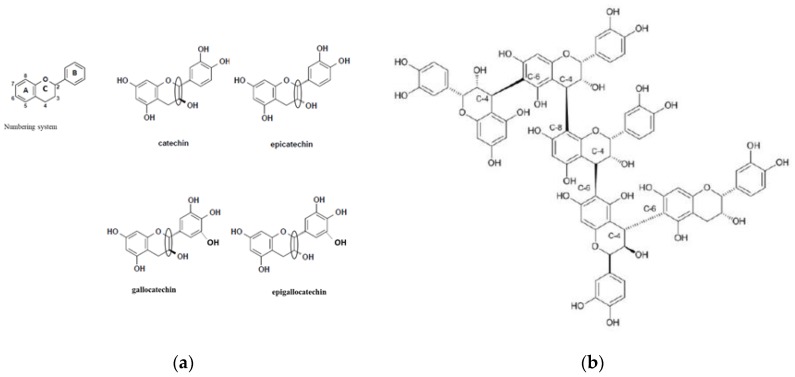
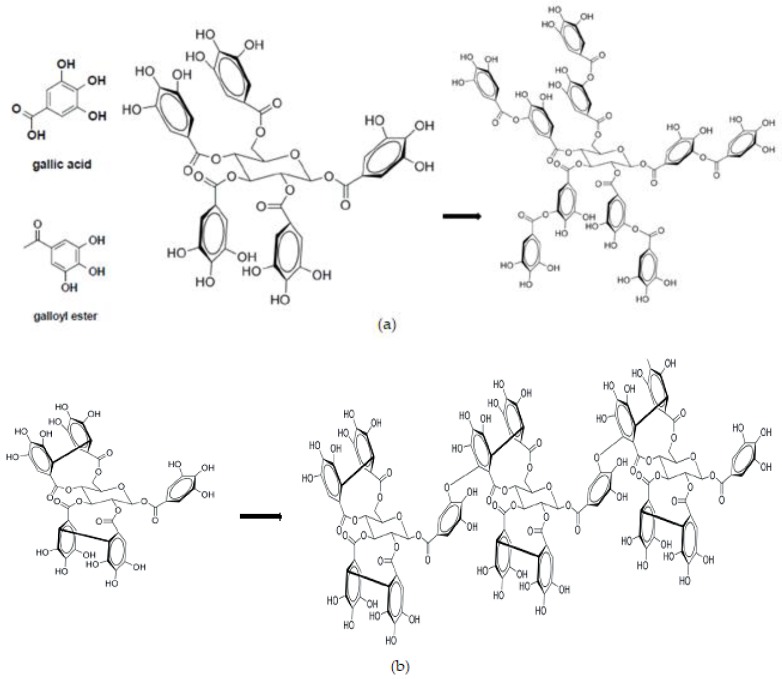
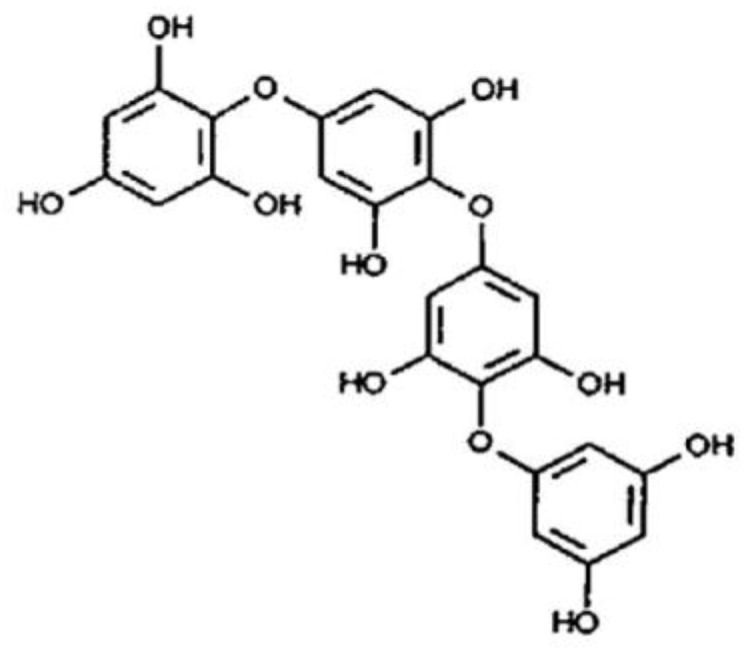
There is a need to reduce enteric methane (CH4) to ensure the environmental sustainability of ruminant production systems. Tannins are naturally found in both tropical and temperate plants, and have been shown to consistently decrease urinary nitrogen (N) excretion when consumed by ruminants. However, the limited number of in vivo studies conducted indicates that the effects of tannins on intake, digestibility, rumen fermentation, CH4 production and animal performance vary depending on source, type, dose, and molecular weight (MW). There are two main types of tannin in terrestrial plants: condensed tannin (CT; high MW) and hydrolysable tannin (HT; low MW). Consumption of CT and HT by ruminants can reduce N excretion without negatively affecting animal performance. High MW tannins bind to dietary protein, while low MW tannins affect rumen microbes, and thus, irrespective of type of tannin, N excretion is affected. The structure of high MW tannin is more diverse compared with that of low MW tannin, which may partly explain the inconsistent effects of CT on CH4 production reported in in vivo studies. In contrast, the limited number of in vivo studies with low MW HT potentially shows a consistent decrease in CH4 production, possibly attributed to the gallic acid subunit. Further in vivo studies are needed to determine the effects of tannins, characterized by MW and structural composition, on reducing CH4 emissions and improving animal performance in ruminants.
Overview
The claims and statistics of this paper haven’t been checked yet.
Run the check — free, no account needed. It reads the open-access text and checks the sources it cites.
Integrity signals
Registry
Cites
Statistics
Figures
Verification
Claims the paper makes
The claims and statistics of this paper haven’t been checked yet.
Run the check — free, no account needed. It reads the open-access text and checks the sources it cites.
Claims other papers make about this one
Each is checked against this paper’s own text: does it say what the citing paper says it does?
The source backs part of the claim, not all of it — or backs it for a different population, condition or comparison.
In the citing paper
“It may be attributed to the fact that HT (e.g., gallic acid subunits) directly inhibit methanogens, but the action of CT on rumen CH4 production is variable (172, 207).”
From Phytogenic Additives Can Modulate Rumen Microbiome to Mediate Fermentation Kinetics and Methanogenesis Through Exploiting Diet–Microbe Interaction (2020) · cites this paper as [172]
Experimental — accuracy not yet measured
Self-check
Percentages, sums and reported differences re-computed from the paper’s own numbers.
The self-check needs the paper’s full text.
Citations
Cites
Johnson, K. A., & Johnson, D. E. (1995) · Journal of Animal Science · doi:10.2527/1995.7382483x · Cited by 2,714 · cited 1×
“Methane emissions also account for 6% to 12% of energy intake in ruminants [3], representing a potential inefficiency.”
Background(2013) · Cited by 2,540
Makkar, H. P. S. (2003) · Small Ruminant Research · doi:10.1016/s0921-4488(03)00142-1 · Cited by 1,216
Thauer, R. K. (1998) · Microbiology · doi:10.1099/00221287-144-9-2377 · Cited by 1,142
Hristov, A. N., Oh, J., Firkins, J. L., Dijkstra, J., Kebreab, E., Waghorn, G. C., Makkar, H. P. S., Adesogan, A. T., Yang, W. Z., Lee, C., et al. (2013) · Journal of Animal Science · doi:10.2527/jas.2013-6583 · Cited by 1,086
Min, B. R., Barry, T. N., Attwood, G. T., & McNabb, W. C. (2003) · Animal Feed Science and Technology · doi:10.1016/s0377-8401(03)00041-5 · Cited by 1,062
Exploitation of dietary tannins to improve rumen metabolism and ruminant nutrition
Patra, A. K., & Saxena, J. (2010) · Journal of the Science of Food and Agriculture · doi:10.1002/jsfa.4152 · Cited by 878
Nutritional toxicology of tannins and related polyphenols in forage legumes
Reed, J. D. (1995) · Journal of Animal Science · doi:10.2527/1995.7351516x · Cited by 792
Waghorn, G. C. (2007) · Animal Feed Science and Technology · doi:10.1016/j.anifeedsci.2007.09.013 · Cited by 791
Terrill, T. H., Rowan, A., Douglas, G. B., & Barry, T. N. (1992) · Journal of the Science of Food and Agriculture · doi:10.1002/jsfa.2740580306 · Cited by 782
Research works printed but not linked: 1
- Waghorn, 2002, Methanogenesis from forages fed to New Zealand ruminants, Proc. N. Z. Grassl. Assoc., 64, 167
Cited by
Sorted by citations
Invited review: current enteric methane mitigation options
Beauchemin, K. A., Ungerfeld, E. M., Abdalla, A. L., Alvarez, C., Arndt, C., Becquet, P., Benchaar, C., Berndt, A., Mauricio, R. M., McAllister, T. A., et al. (2022) · Journal of Dairy Science · doi:10.3168/jds.2022-22091 · Cited by 324
Tannin in Ruminant Nutrition: Review
Besharati, M., Maggiolino, A., Palangı, V., Kaya, A., Jabbar, M., Eseceli, H., Palo, P. D., & Lorenzo, J. M. (2022) · Molecules · doi:10.3390/molecules27238273 · Cited by 268
Tannins medical / pharmacological and related applications: A critical review
Pizzi, A. (2021) · Sustainable Chemistry and Pharmacy · doi:10.1016/j.scp.2021.100481 · Cited by 196
Hassan, F.-U., Arshad, M. A., Ebeid, H. M., Rehman, M. S.-U., Khan, M. S., Shahid, S., & Yang, C. (2020) · Frontiers in Veterinary Science · doi:10.3389/fvets.2020.575801 · Cited by 186
Min, B. R., Solaiman, S., Waldrip, H. M., Parker, D., Todd, R. W., & Brauer, D. (2020) · Animal nutrition · doi:10.1016/j.aninu.2020.05.002 · Cited by 159
Metadata
- Authors
- Aboagye, I. A., & Beauchemin, K. A.
- Affiliations
- Agriculture and Agri-Food Canada (CA)
- Corresponding author
- Beauchemin, Karen A.
- Venue
- Animals
- Publisher
- MDPI AG
- Published
- 2019-10-23
- Volume
- 9
- Issue
- 11
- Pages
- 856
- ISSN
- 2076-2615 (ISSN-L)
- PMC
- PMC6912696
- OpenAlex
- W2981870312
- Cited by
- 186
- References
- 86
- Citations by year
- 2026: 33 · 2025: 35 · 2024: 31 · 2023: 35 · 2022: 25 · 2021: 19 · 2020: 7 · 2019: 1
- FWCI
- 1.63
- Type
- journal article
- Language
- en
- Open access
- gold
- dx.doi.org
- Licence
- Locations
- Animals (publishedVersion, cc-by)
- Europe PMC (PubMed Central) (publishedVersion, cc-by)
- PubMed Central (publishedVersion, cc-by)
- PubMed (publishedVersion)
- Federal Open Science Repository of Canada / Le Dépôt fédéral de science ouverte du Canada (submittedVersion, cc-by)
- DOAJ (DOAJ: Directory of Open Access Journals) (submittedVersion, cc-by-sa)
- Funders
- Agriculture and Agri-Food Canada (PSS2314)
- Topics
- Life Sciences › Agricultural and Biological Sciences › Animal Science and Zoology › Ruminant Nutrition and Digestive Physiology
- Life Sciences › Agricultural and Biological Sciences › Animal Science and Zoology › Animal Nutrition and Physiology
- Physical Sciences › Environmental Science › Ecology › Agriculture Sustainability and Environmental Impact
- Keywords
- tannins, enteric methane, ruminants, proanthocyanidins, hydrolysable tannins, molecular weight, tannin structure, urinary nitrogen excretion, rumen fermentation, gallic acid, animal performance, methane mitigation
About these checks
Registry, retraction, Cites and statistics results are computed, not judged, with one exception: a printed reference that no index lists is read once by a model before it counts as a citation error. Claims are extracted by a model and kept only when their quote appears verbatim in the text; each cited source is then checked, with a model’s help, for whether it says what the claim relies on. Those verdicts can be wrong — read the claim’s quote and the cited source before relying on one.
Statistics and arithmetic are recomputed, not judged.
Confidence bands are shown only for fields calibrated on our annotated test set. None is calibrated yet, so no band is shown.
What counts as a claim ›How we measure confidence ›How we check this ›
Are you an author, or do you see a problem with this page? Request a review
