

The DOI matches its Crossref record; 85 of the 86 references it cites were found in a registry or an index.
Potential of Molecular Weight and Structure of Tannins to Reduce Methane Emissions from Ruminants: A Review
Open accessAbstract
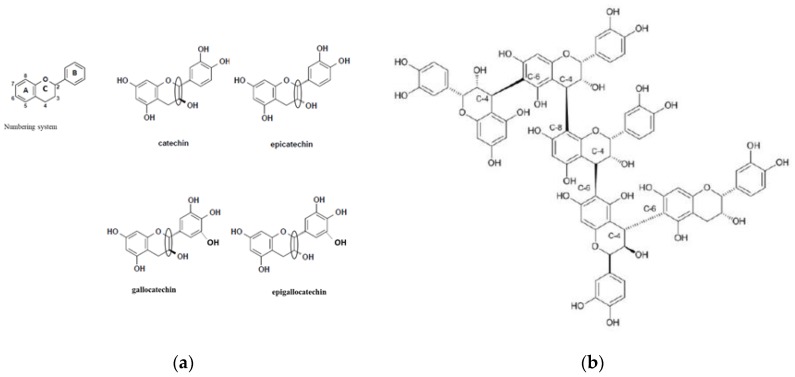
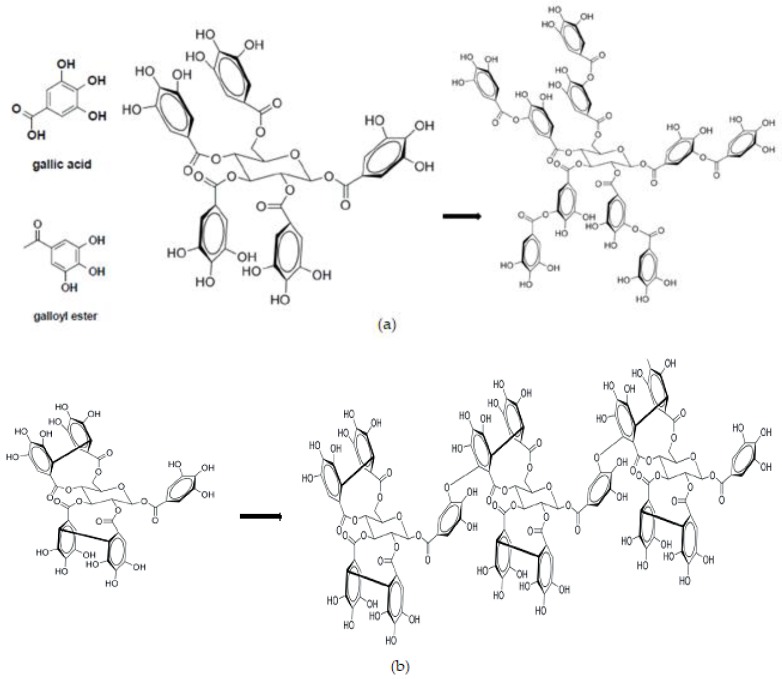
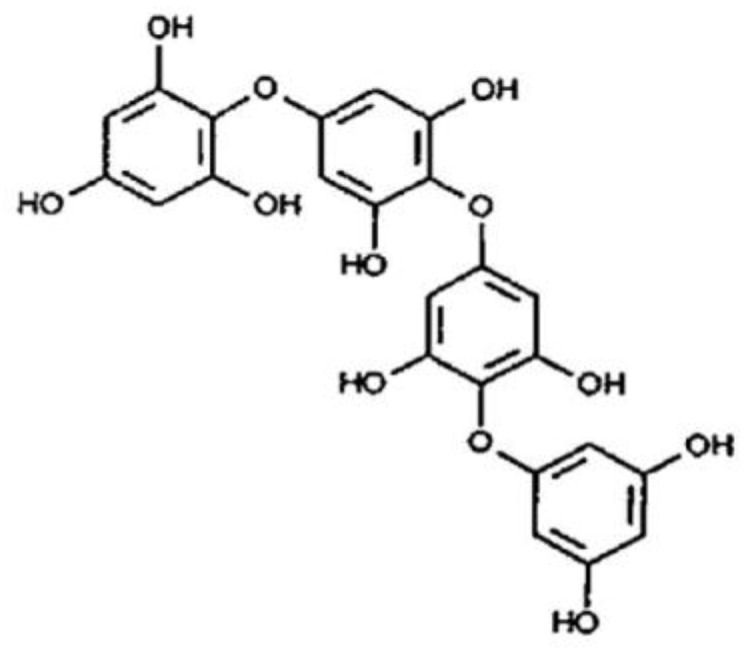
There is a need to reduce enteric methane (CH4) to ensure the environmental sustainability of ruminant production systems. Tannins are naturally found in both tropical and temperate plants, and have been shown to consistently decrease urinary nitrogen (N) excretion when consumed by ruminants. However, the limited number of in vivo studies conducted indicates that the effects of tannins on intake, digestibility, rumen fermentation, CH4 production and animal performance vary depending on source, type, dose, and molecular weight (MW). There are two main types of tannin in terrestrial plants: condensed tannin (CT; high MW) and hydrolysable tannin (HT; low MW). Consumption of CT and HT by ruminants can reduce N excretion without negatively affecting animal performance. High MW tannins bind to dietary protein, while low MW tannins affect rumen microbes, and thus, irrespective of type of tannin, N excretion is affected. The structure of high MW tannin is more diverse compared with that of low MW tannin, which may partly explain the inconsistent effects of CT on CH4 production reported in in vivo studies. In contrast, the limited number of in vivo studies with low MW HT potentially shows a consistent decrease in CH4 production, possibly attributed to the gallic acid subunit. Further in vivo studies are needed to determine the effects of tannins, characterized by MW and structural composition, on reducing CH4 emissions and improving animal performance in ruminants.
Overview
The claims and statistics of this paper haven’t been checked yet.
Run the check — free, no account needed. It reads the open-access text and checks the sources it cites.
Integrity signals
Registry
Cites
Statistics
Figures
Verification
Claims the paper makes
The claims and statistics of this paper haven’t been checked yet.
Run the check — free, no account needed. It reads the open-access text and checks the sources it cites.
Claims other papers make about this one
Each is checked against this paper’s own text: does it say what the citing paper says it does?
The source backs part of the claim, not all of it — or backs it for a different population, condition or comparison.
In the citing paper
“It may be attributed to the fact that HT (e.g., gallic acid subunits) directly inhibit methanogens, but the action of CT on rumen CH4 production is variable (172, 207).”
From Phytogenic Additives Can Modulate Rumen Microbiome to Mediate Fermentation Kinetics and Methanogenesis Through Exploiting Diet–Microbe Interaction (2020) · cites this paper as [172]
Experimental — accuracy not yet measured
Self-check
Percentages, sums and reported differences re-computed from the paper’s own numbers.
The self-check needs the paper’s full text.
Citations
Cites
Johnson, K. A., & Johnson, D. E. (1995) · Journal of Animal Science · doi:10.2527/1995.7382483x · Cited by 2,714 · cited 1×
“Methane emissions also account for 6% to 12% of energy intake in ruminants [3], representing a potential inefficiency.”
Background(2013) · Cited by 2,540
Makkar, H. P. S. (2003) · Small Ruminant Research · doi:10.1016/s0921-4488(03)00142-1 · Cited by 1,216
Thauer, R. K. (1998) · Microbiology · doi:10.1099/00221287-144-9-2377 · Cited by 1,142
Hristov, A. N., Oh, J., Firkins, J. L., Dijkstra, J., Kebreab, E., Waghorn, G. C., Makkar, H. P. S., Adesogan, A. T., Yang, W. Z., Lee, C., et al. (2013) · Journal of Animal Science · doi:10.2527/jas.2013-6583 · Cited by 1,086
Min, B. R., Barry, T. N., Attwood, G. T., & McNabb, W. C. (2003) · Animal Feed Science and Technology · doi:10.1016/s0377-8401(03)00041-5 · Cited by 1,062
Exploitation of dietary tannins to improve rumen metabolism and ruminant nutrition
Patra, A. K., & Saxena, J. (2010) · Journal of the Science of Food and Agriculture · doi:10.1002/jsfa.4152 · Cited by 878
Nutritional toxicology of tannins and related polyphenols in forage legumes
Reed, J. D. (1995) · Journal of Animal Science · doi:10.2527/1995.7351516x · Cited by 792
Waghorn, G. C. (2007) · Animal Feed Science and Technology · doi:10.1016/j.anifeedsci.2007.09.013 · Cited by 791
Terrill, T. H., Rowan, A., Douglas, G. B., & Barry, T. N. (1992) · Journal of the Science of Food and Agriculture · doi:10.1002/jsfa.2740580306 · Cited by 782
Microbial ecosystem and methanogenesis in ruminants
Morgavi, D. P., Forano, E., Martin, C., & Newbold, C. J. (2010) · animal · doi:10.1017/s1751731110000546 · Cited by 694
The physiological basis of adaptation in goats to harsh environments
Silanikove, N. (2000) · Small Ruminant Research · doi:10.1016/s0921-4488(99)00096-6 · Cited by 670
Lesschaeve, I., & Noble, A. C. (2005) · American Journal of Clinical Nutrition · doi:10.1093/ajcn/81.1.330s · Cited by 635
Options for the abatement of methane and nitrous oxide from ruminant production: A review
Eckard, R., Grainger, C. I., & de Klein, C. A. M. (2010) · Livestock Science · doi:10.1016/j.livsci.2010.02.010 · Cited by 625
Huang, Q., Liu, X., Zhao, G., Hu, T., & Wang, Y. (2018) · Animal nutrition · doi:10.1016/j.aninu.2017.09.004 · Cited by 555
Tavendale, M. H., Meagher, L. P., Pacheco, D., Walker, N. D., Attwood, G. T., & Sivakumaran, S. (2005) · Animal Feed Science and Technology · doi:10.1016/j.anifeedsci.2005.04.037 · Cited by 547
Tannins: their adverse role in ruminant nutrition
Kumar, R., & Singh, M. (1984) · Journal of Agricultural and Food Chemistry · doi:10.1021/jf00123a006 · Cited by 541
Microbial degradation of tannins – A current perspective
Bhat, T. K., Singh, B., & Sharma, O. P. (1998) · Biodegradation · doi:10.1023/a:1008397506963 · Cited by 495
Carulla, J. E., Kreuzer, M., Machmüller, A., & Hess, H. D. (2005) · Australian Journal of Agricultural Research · doi:10.1071/ar05022 · Cited by 452
Jayanegara, A., Leiber, F., & Kreuzer, M. (2011) · Journal of Animal Physiology and Animal Nutrition · doi:10.1111/j.1439-0396.2011.01172.x · Cited by 448
Use of condensed tannin extract from quebracho trees to reduce methane emissions from cattle1
Beauchemin, K. A., McGinn, S. M., Martínez, T. F., & McAllister, T. A. (2007) · Journal of Animal Science · doi:10.2527/jas.2006-686 · Cited by 418
Diet effects on urine composition of cattle and N2O emissions
Dijkstra, J., Oenema, O., van Groenigen, J. W., Spek, J. W., van Vuuren, A. M., & Bannink, A. (2013) · animal · doi:10.1017/s1751731113000578 · Cited by 410
Salivary Proteins as a Defense Against Dietary Tannins
Shimada, T. (2006) · Journal of Chemical Ecology · doi:10.1007/s10886-006-9077-0 · Cited by 387
Strategies for optimizing nitrogen use by ruminants
Calsamiglia, S., Ferret, A., Reynolds, C. K., Kristensen, N. B., & van Vuuren, A. M. (2010) · animal · doi:10.1017/s1751731110000911 · Cited by 369
Naumann, H. D., Tedeschi, L. O., Zeller, W. E., & Huntley, N. F. (2017) · Revista Brasileira de Zootecnia · doi:10.1590/s1806-92902017001200009 · Cited by 364
Methylotrophic methanogenic Thermoplasmata implicated in reduced methane emissions from bovine rumen
Poulsen, M., Schwab, C., Borg Jensen, B., Engberg, R. M., Spang, A., Canibe, N., Højberg, O., Milinovich, G., Fragner, L., Schleper, C., et al. (2013) · Nature Communications · doi:10.1038/ncomms2432 · Cited by 361
Bhatta, R., Uyeno, Y., Tajima, K., Takenaka, A., Yabumoto, Y., Nonaka, I., Enishi, O., & Kurihara, M. (2009) · Journal of Dairy Science · doi:10.3168/jds.2008-1441 · Cited by 359
Paul, K., Nonoh, J. O., Mikulski, L., & Brune, A. (2012) · Applied and Environmental Microbiology · doi:10.1128/aem.02193-12 · Cited by 346
Grainger, C., Clarke, T., Auldist, M. J., Beauchemin, K. A., McGinn, S. M., Waghorn, G. C., & Eckard, R. J. (2009) · Canadian Journal of Animal Science · doi:10.4141/cjas08110 · Cited by 293
Self-citationMueller-Harvey, I., Bee, G., Dohme‐Meier, F., Hoste, H., Karonen, M., Kölliker, R., LÜSCHER, A., Niderkorn, V., Pellikaan, W. F., Salminen, J., et al. (2018) · Crop Science · doi:10.2135/cropsci2017.06.0369 · Cited by 293
Jayanegara, A., Goel, G., Makkar, H. P. S., & Becker, K. (2015) · Animal Feed Science and Technology · doi:10.1016/j.anifeedsci.2015.08.002 · Cited by 280
Tan, H. Y., Sieo, C. C., Abdullah, N., Liang, J. B., Huang, X. D., & Ho, Y. W. (2011) · Animal Feed Science and Technology · doi:10.1016/j.anifeedsci.2011.07.004 · Cited by 243
Interlaboratory Trial on the Determination of the In Vitro Iron Dialysability from Food
Luten, J. B., Crews, H., Flynn, A., Dael, P. V., Kastenmayer, P., Hurrell, R. F., Deelstra, H. A., Shen, L., Fairweather-Tait, S., Hickson, K. A., et al. (1996) · Journal of the Science of Food and Agriculture · doi:10.1002/(sici)1097-0010(199612)72:4 · Cited by 224
Priolo, A., Waghorn, G. C., Lanza, M., Biondi, L., & Pennisi, P. (2000) · Journal of Animal Science · doi:10.2527/2000.784810x · Cited by 215
Dschaak, C. M., Williams, C. M., Holt, M. S., Eun, J.-S., Young, A. J., & Min, B. R. (2011) · Journal of Dairy Science · doi:10.3168/jds.2010-3818 · Cited by 199
Gladine, C., Rock, E., Morand, C., Bauchart, D., & Durand, D. (2007) · British Journal Of Nutrition · doi:10.1017/s0007114507742666 · Cited by 183
Krumholz, L. R., & Bryant, M. P. (1986) · Archives of Microbiology · doi:10.1007/bf00454948 · Cited by 175
Hassanat, F., & Benchaar, C. (2012) · Journal of the Science of Food and Agriculture · doi:10.1002/jsfa.5763 · Cited by 172
The Biosynthesis of Secondary Metabolites
Herbert, R. B. (1989) · Springer eBooks · doi:10.1007/978-94-010-9132-9 · Cited by 149
Condensed tannins in birdsfoot trefoil (Lotus corniculatus) reduce methane emissions from dairy cows
Sl, W., Gc, W., & Laboyrie, P. G. (2004) · Proceedings of the New Zealand Society of Animal Production · Cited by 136
Śliwiński, B., Kreuzer, M., Wettstein, H. ‐., & Machmüller, A. (2002) · Archiv für Tierernaehrung · doi:10.1080/00039420215633 · Cited by 122
Effect of sainfoin on in vitro digestion of fresh alfalfa and bloat in steers
McMahon, L. R., Majak, W., McAllister, T. A., Hall, J. W., Jones, G. A., Popp, J. D., & Cheng, K.-J. (1999) · Canadian Journal of Animal Science · doi:10.4141/a98-074 · Cited by 121
Impact of Chestnut and Quebracho Tannins on Rumen Microbiota of Bovines
Carrasco, J. M. D., Cabral, C., Redondo, L. M., Viso, N. P., Colombatto, D., Farber, M. D., & Fernández-Miyakawa, M. E. (2017) · BioMed Research International · doi:10.1155/2017/9610810 · Cited by 121
Vyas, D., Alemu, A. W., McGinn, S. M., Duval, S. M., Kindermann, M., & Beauchemin, K. A. (2018) · Journal of Animal Science · doi:10.1093/jas/sky174 · Cited by 120
Pellikaan, W. F., Stringano, E., Leenaars, J., Bongers, D. J. G. M., Schuppen, S. V. L.-V., Plant, J., & Mueller-Harvey, I. (2011) · Animal Feed Science and Technology · doi:10.1016/j.anifeedsci.2011.04.072 · Cited by 108
Aboagye, I. A., Oba, M., Castillo, A. R., Koenig, K. M., Iwaasa, A. D., & Beauchemin, K. A. (2018) · Journal of Animal Science · doi:10.1093/jas/sky352 · Cited by 108
Metabolism in sheep of gallic acid, tannic acid and hydrolysable tannin from Terminalia oblongata
Murdiati, T., McSweeney, C. S., & Lowry, J. B. (1992) · Australian Journal of Agricultural Research · doi:10.1071/ar9921307 · Cited by 107
Martínez-Ortiz-de-Montellano, C., Vargas-Magaña, J. J., Canul-Ku, H. L., Miranda-Soberanis, R., Capetillo-Leal, C. M., Sandoval-Castro, C. A., Hoste, H., & Torres-Acosta, J. F. J. (2010) · Veterinary Parasitology · doi:10.1016/j.vetpar.2010.04.040 · Cited by 105
The tannin theory of methanogenic toxicity
Field, J. A., Kortekaas, S., & Lettinga, G. (1989) · Biological Wastes · doi:10.1016/0269-7483(89)90016-5 · Cited by 101
Oak (Quercus incana) leaf poisoning in cattle.
Garg, S. K., Makkar, H. P. S., Nagal, K. B., Sharma, S., Wadhwa, D. R., & Singh, B. (1992) · PubMed · Cited by 101
Gemeda, B. S., & Hassen, A. (2014) · Asian-Australasian Journal of Animal Sciences · doi:10.5713/ajas.14.0325 · Cited by 99
Yang, K., Wei, C., Zhao, G. Y., Xu, Z. W., & Lin, S. X. (2017) · Journal of Animal Physiology and Animal Nutrition · doi:10.1111/jpn.12531 · Cited by 98
Soltan, Y. A., Morsy, A. S., Sallam, S. M. A., Louvandini, H., & Abdalla, A. L. (2012) · Journal of Animal and Feed Sciences · doi:10.22358/jafs/66148/2012 · Cited by 96
Rosales, R. B., Lascano, C. E., Cochran, R. C., Morrill, J. L., & Titgemeyer, E. C. (1997) · Journal of Animal Science · doi:10.2527/1997.7561633x · Cited by 95
Tannins in tropical tree fodders fed to small ruminants: A friendly foe?
Alonso-Díaz, M. Á., Torres-Acosta, J. F. J., Sandoval-Castro, C. A., & Hoste, H. (2010) · Small Ruminant Research · doi:10.1016/j.smallrumres.2009.12.040 · Cited by 94
Zeller, W. E. (2019) · Crop Science · doi:10.2135/cropsci2018.05.0323 · Cited by 94
Hydrogen production and transfer in the rumen
Hegarty, R., & Gerdes, R. (1999) · Cited by 93
Hove, L., Topps, J. H., Sibanda, S., & Ndlovu, L. R. (2001) · Animal Feed Science and Technology · doi:10.1016/s0377-8401(01)00233-4 · Cited by 87
Top, S. M., Preston, C. M., Dukes, J. S., & Tharayil, N. (2017) · Frontiers in Plant Science · doi:10.3389/fpls.2017.00423 · Cited by 84
Aboagye, I. A., Oba, M., Koenig, K. M., Zhao, G. Y., & Beauchemin, K. A. (2019) · Journal of Animal Science · doi:10.1093/jas/skz101 · Cited by 84
Stewart, E. K., Beauchemin, K. A., Dai, X., MacAdam, J. W., Christensen, R. G., & Villalba, J. J. (2019) · Journal of Animal Science · doi:10.1093/jas/skz206 · Cited by 78
Berard, N., Wang, Y., Wittenberg, K. M., Krause, D. O., Coulman, B. E., McAllister, T. A., & Ominski, K. (2011) · Canadian Journal of Plant Science · doi:10.4141/cjps10153 · Cited by 75
Aboagye, I. A., Oba, M., Castillo, A. R., Koenig, K. M., & Beauchemin, K. A. (2018) · Journal of Animal Science · doi:10.1093/jas/sky404.406 · Cited by 74
Kardel, M., Taube, F., Schulz, H., Schütze, W., & Gierus, M. (2013) · Angewandte Botanik · doi:10.5073/jabfq.2013.086.021 · Cited by 73
Becker, P. M., Wikselaar, P. G. V., Franssen, M. C. R., de Vos, R. C. H., Hall, R. D., & Beekwilder, J. (2013) · Metabolomics · doi:10.1007/s11306-013-0554-5 · Cited by 73
Lima, P. R., Apdini, T., Freire, A. S., de Sant’ana, A. S., Moura, L. M. L., Nascimento, J. C. S., Rodrigues, R. T. D. S., Dijkstra, J., Neto, A. F. G., Queiróz, M. A. Á., et al. (2019) · Animal Feed Science and Technology · doi:10.1016/j.anifeedsci.2019.01.017 · Cited by 65
Silanikove, N., Landau, S. Y., Or, D., Kababya, D., Bruckental, I., & Nitsan, Z. (2005) · Livestock Science · doi:10.1016/j.livprodsci.2005.05.018 · Cited by 63
Henke, A., Dickhoefer, U., Westreicher-Kristen, E., Knappstein, K., Molkentin, J., Hasler, M., & Susenbeth, A. (2017) · Archives of Animal Nutrition · doi:10.1080/1745039x.2016.1250541 · Cited by 62
Ebert, P. J., Bailey, E., Shreck, A. L., Jennings, J. S., & Cole, N. A. (2017) · Journal of Animal Science · doi:10.2527/jas.2016.0341 · Cited by 60
Effect of condensed tannin ingestion in sheep and goat parotid saliva proteome
Lamy, E., da Costa, G., Santos, R., Silva, F. C. E., Potes, J., Pereira, A. M. F., Coelho, A. V., & Sales-Baptista, E. (2010) · Journal of Animal Physiology and Animal Nutrition · doi:10.1111/j.1439-0396.2010.01055.x · Cited by 56
Naumann, H. D., Tedeschi, L. O., MUIR, J. P., Lambert, B. D., & Kothmann, M. M. (2013) · Biochemical Systematics and Ecology · doi:10.1016/j.bse.2013.03.050 · Cited by 55
Naumann, H. D., Sepela, R. J., Rezaire, A., Masih, S. E., Zeller, W. E., Reinhardt, L. A., Robe, J. T., Sullivan, M. L., & Hagerman, A. E. (2018) · Molecules · doi:10.3390/molecules23092123 · Cited by 53
Bacteria Degrading Tannic Acid and Related Compounds
Deschamps, A., Mahoudeau, G., Conti, M. L., & Lebeault, J. M. (1980) · 醗酵工學雑誌 · Cited by 52
Saminathan, M., Sieo, C. C., Gan, H. M., Abdullah, N., Wong, C., & Ho, Y. W. (2016) · Animal Feed Science and Technology · doi:10.1016/j.anifeedsci.2016.04.005 · Cited by 52
Enteric methane mitigation in sheep through leaves of selected tanniniferous tropical tree species
Malik, P. K., Kolte, A. P., Baruah, L., Saravanan, M., Bakshi, B. S., & Bhatta, R. (2017) · Livestock Science · doi:10.1016/j.livsci.2017.04.001 · Cited by 43
Saminathan, M., Sieo, C. C., Abdullah, N., Wong, C., & Ho, Y. W. (2014) · Journal of the Science of Food and Agriculture · doi:10.1002/jsfa.7016 · Cited by 39
Polyphenol investigation ofArgania spinosa (Sapotaceae)endemic tree from Morocco
Tahrouch, S., Andary, C., Rapior, S., Mondolot, L., Gargadennec, A., & Fruchier, A. (2000) · Acta Botanica Gallica · doi:10.1080/12538078.2000.10515843 · Cited by 35
The effects of Acacia aneura feeding on abomasal and intestinal structure and function in sheep
Robins, C., & Brooker, J. D. (2005) · Animal Feed Science and Technology · doi:10.1016/j.anifeedsci.2005.02.019 · Cited by 33
Methanogenic potential of tropical feeds rich in hydrolyzable tannins1,2
Rira, M., Morgavi, D. P., Genestoux, L., Djibiri, S., Sekhri, I., & Doreau, M. (2019) · Journal of Animal Science · doi:10.1093/jas/skz199 · Cited by 28
Evaluation of toxicity of Acacia angustissima in a rat bioassay
Smith, A. H., Odenyo, A. A., Osuji, P. O., Wallig, M. A., Kandil, F. E., Seigler, D. S., & Mackie, R. I. (2001) · Animal Feed Science and Technology · doi:10.1016/s0377-8401(01)00230-9 · Cited by 26
Supapong, C., Cherdthong, A., Seankamsorn, A., Khonkhaeng, B., Wanapat, M., Gunun, N., Gunun, P., Chanjula, P., & Polyorach, S. (2017) · Animal Feed Science and Technology · doi:10.1016/j.anifeedsci.2017.08.004 · Cited by 25
Min, B. R., Pinchak, W. E., Hernandez, K., Hernandez, C. E., Hume, M. E., Valencia, E., & Fulford, J. D. (2012) · The Professional Animal Scientist · doi:10.15232/s1080-7446(15)30386-7 · Cited by 24
Liu, H., Puchala, R., LeShure, S., Gipson, T. A., Flythe, M. D. D., & Goetsch, A. L. (2018) · Journal of Animal Science · doi:10.1093/jas/sky452 · Cited by 21
Schreurs, N. M., Tavendale, M. H., Lane, G. A., Barry, T. N., Lopez-Villalobos, N., & McNabb, W. C. (2007) · Journal of the Science of Food and Agriculture · doi:10.1002/jsfa.2814 · Cited by 16
Mengistu, G. F., Karonen, M., Salminen, J., Hendriks, W. H., & Pellikaan, W. F. (2017) · Animal Feed Science and Technology · doi:10.1016/j.anifeedsci.2017.05.021 · Cited by 11
Research works printed but not linked: 1
- Waghorn, 2002, Methanogenesis from forages fed to New Zealand ruminants, Proc. N. Z. Grassl. Assoc., 64, 167
Cited by
Sorted by citations
Invited review: current enteric methane mitigation options
Beauchemin, K. A., Ungerfeld, E. M., Abdalla, A. L., Alvarez, C., Arndt, C., Becquet, P., Benchaar, C., Berndt, A., Mauricio, R. M., McAllister, T. A., et al. (2022) · Journal of Dairy Science · doi:10.3168/jds.2022-22091 · Cited by 324
Tannin in Ruminant Nutrition: Review
Besharati, M., Maggiolino, A., Palangı, V., Kaya, A., Jabbar, M., Eseceli, H., Palo, P. D., & Lorenzo, J. M. (2022) · Molecules · doi:10.3390/molecules27238273 · Cited by 268
Tannins medical / pharmacological and related applications: A critical review
Pizzi, A. (2021) · Sustainable Chemistry and Pharmacy · doi:10.1016/j.scp.2021.100481 · Cited by 196
Hassan, F.-U., Arshad, M. A., Ebeid, H. M., Rehman, M. S.-U., Khan, M. S., Shahid, S., & Yang, C. (2020) · Frontiers in Veterinary Science · doi:10.3389/fvets.2020.575801 · Cited by 186
Min, B. R., Solaiman, S., Waldrip, H. M., Parker, D., Todd, R. W., & Brauer, D. (2020) · Animal nutrition · doi:10.1016/j.aninu.2020.05.002 · Cited by 159
Metadata
- Authors
- Aboagye, I. A., & Beauchemin, K. A.
- Affiliations
- Agriculture and Agri-Food Canada (CA)
- Corresponding author
- Beauchemin, Karen A.
- Venue
- Animals
- Publisher
- MDPI AG
- Published
- 2019-10-23
- Volume
- 9
- Issue
- 11
- Pages
- 856
- ISSN
- 2076-2615 (ISSN-L)
- PMC
- PMC6912696
- OpenAlex
- W2981870312
- Cited by
- 186
- References
- 86
- Citations by year
- 2026: 33 · 2025: 35 · 2024: 31 · 2023: 35 · 2022: 25 · 2021: 19 · 2020: 7 · 2019: 1
- FWCI
- 1.63
- Type
- journal article
- Language
- en
- Open access
- gold
- dx.doi.org
- Licence
- Locations
- Animals (publishedVersion, cc-by)
- Europe PMC (PubMed Central) (publishedVersion, cc-by)
- PubMed Central (publishedVersion, cc-by)
- PubMed (publishedVersion)
- Federal Open Science Repository of Canada / Le Dépôt fédéral de science ouverte du Canada (submittedVersion, cc-by)
- DOAJ (DOAJ: Directory of Open Access Journals) (submittedVersion, cc-by-sa)
- Funders
- Agriculture and Agri-Food Canada (PSS2314)
- Topics
- Life Sciences › Agricultural and Biological Sciences › Animal Science and Zoology › Ruminant Nutrition and Digestive Physiology
- Life Sciences › Agricultural and Biological Sciences › Animal Science and Zoology › Animal Nutrition and Physiology
- Physical Sciences › Environmental Science › Ecology › Agriculture Sustainability and Environmental Impact
- Keywords
- tannins, enteric methane, ruminants, proanthocyanidins, hydrolysable tannins, molecular weight, tannin structure, urinary nitrogen excretion, rumen fermentation, gallic acid, animal performance, methane mitigation
About these checks
Registry, retraction, Cites and statistics results are computed, not judged, with one exception: a printed reference that no index lists is read once by a model before it counts as a citation error. Claims are extracted by a model and kept only when their quote appears verbatim in the text; each cited source is then checked, with a model’s help, for whether it says what the claim relies on. Those verdicts can be wrong — read the claim’s quote and the cited source before relying on one.
Statistics and arithmetic are recomputed, not judged.
Confidence bands are shown only for fields calibrated on our annotated test set. None is calibrated yet, so no band is shown.
What counts as a claim ›How we measure confidence ›How we check this ›
Are you an author, or do you see a problem with this page? Request a review
