

Microbiota and Resistome Analysis of Colostrum and Milk from Dairy Cows Treated with and without Dry Cow Therapies
Open accessThe DOI matches its Crossref record; 68 of the 69 references it cites were found in a registry or an index, and 1 are not checked yet.
Abstract
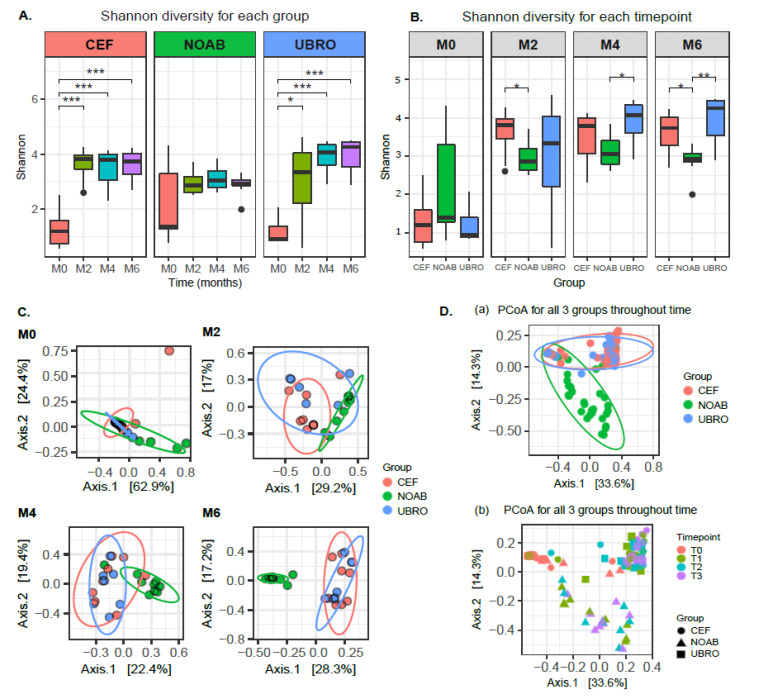
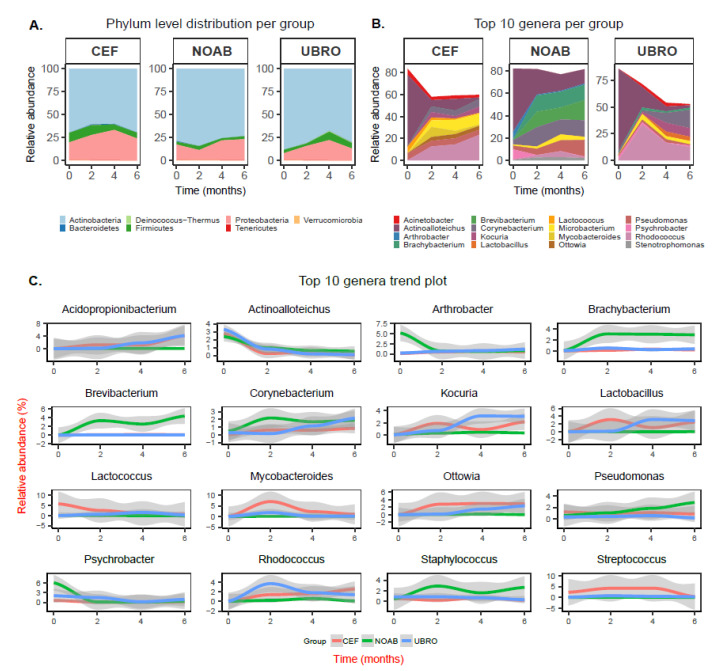
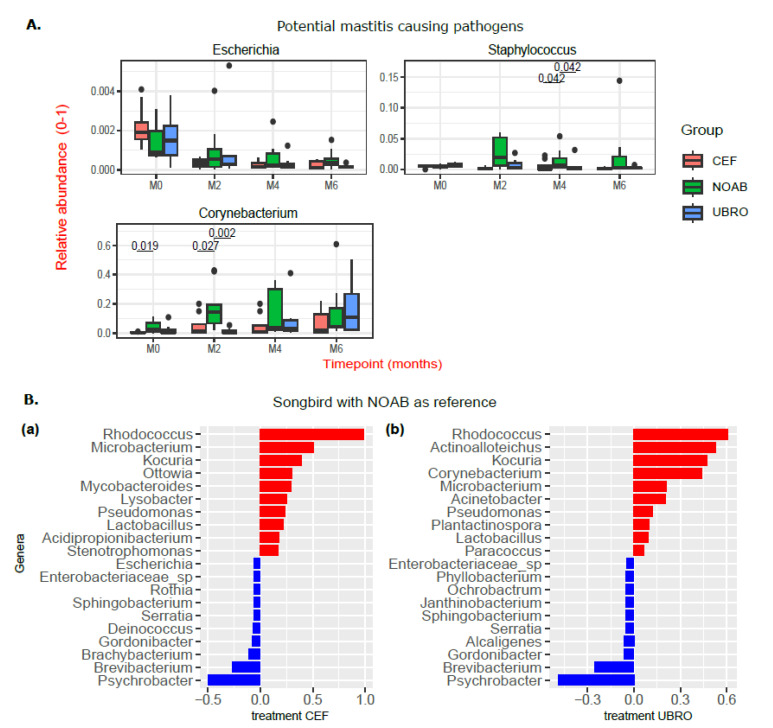
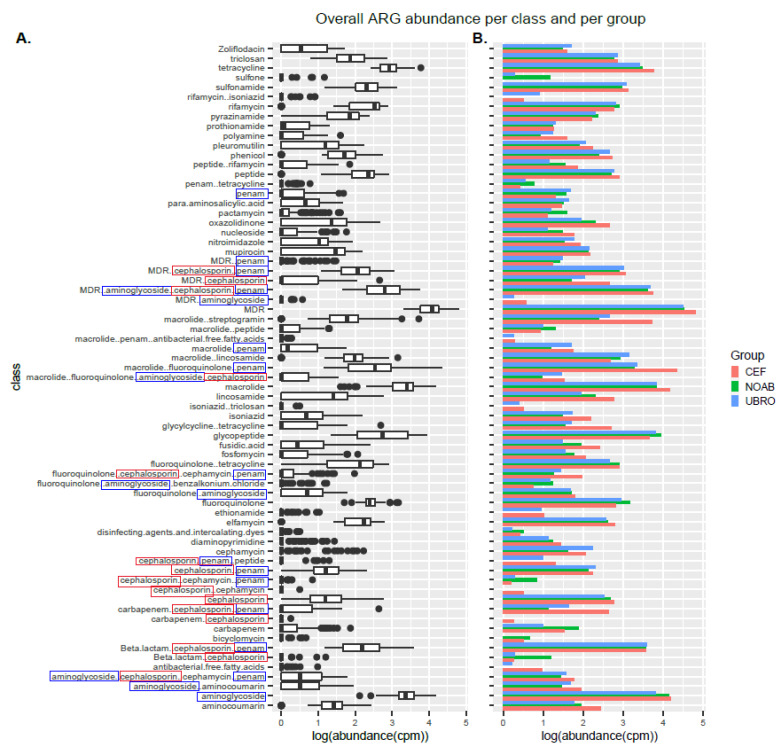
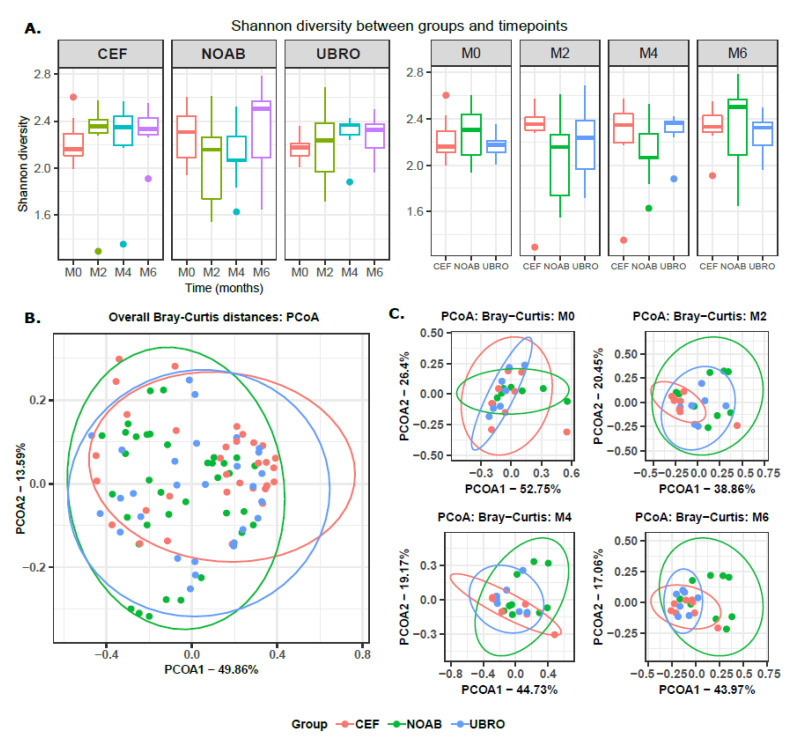
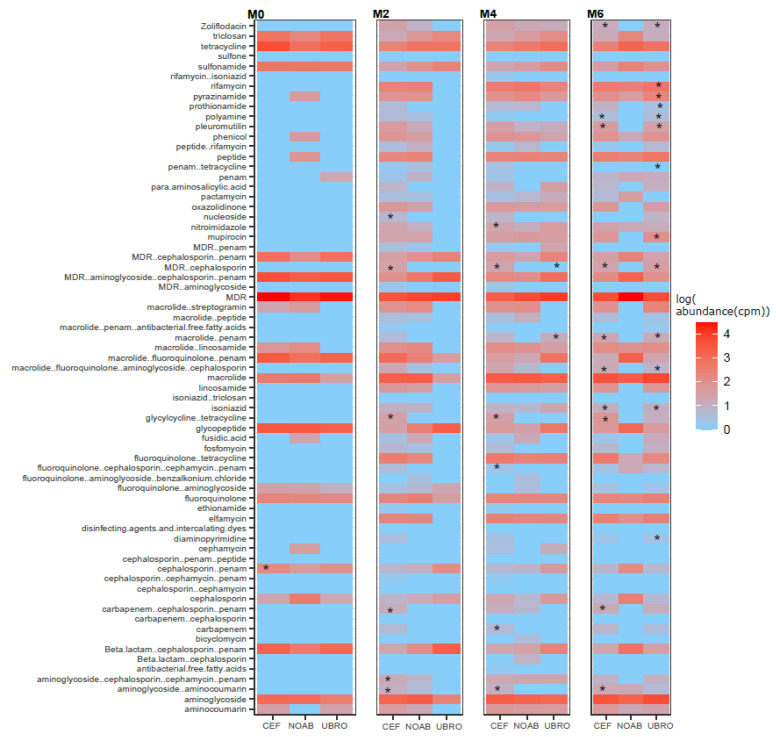
This study investigated the longitudinal impact of methods for the drying off of cows with and without dry cow therapy (DCT) on the microbiota and resistome profile in colostrum and milk samples from cows. Three groups of healthy dairy cows (n = 24) with different antibiotic treatments during DCT were studied. Colostrum and milk samples from Month 0 (M0), 2 (M2), 4 (M4) and 6 (M6) were analysed using whole-genome shotgun-sequencing. The microbial diversity from antibiotic-treated groups was different and higher than that of the non-antibiotic group. This difference was more evident in milk compared to colostrum, with increasing diversity seen only in antibiotic-treated groups. The microbiome of antibiotic-treated groups clustered separately from the non-antibiotic group at M2-, M4- and M6 milk samples, showing the effect of antibiotic treatment on between-group (beta) diversity. The non-antibiotic group did not show a high relative abundance of mastitis-causing pathogens during early lactation and was more associated with genera such as Psychrobacter, Serratia, Gordonibacter and Brevibacterium. A high relative abundance of antibiotic resistance genes (ARGs) was observed in the milk of antibiotic-treated groups with the Cephaguard group showing a significantly high abundance of genes conferring resistance to cephalosporin, aminoglycoside and penam classes. The data support the use of non-antibiotic alternatives for drying off in cows.
Overview
The claims and statistics of this paper haven’t been checked yet.
Free: it reads the open-access text and checks the first 5 claims that cite a source we can check. Create a free account to check every claim.
Integrity signals
Registry
Cites
Statistics
Figures
Verification
Claims the paper makes
The claims and statistics of this paper haven’t been checked yet.
Free: it reads the open-access text and checks the first 5 claims that cite a source we can check. Create a free account to check every claim.
Claims other papers make about this one
Each is checked against this paper’s own text: does it say what the citing paper says it does?
The source backs part of the claim, not all of it — or backs it for a different population, condition or comparison.
In the citing paper
“Antibiotic treatment of cows has been shown to result in a higher relative abundance of ARGs. Recent study using shotgun metagenomic sequencing has demonstrated an in crease in ARGs conferring resistance to cephalosporins, aminoglyco sides, and penams in cows treated with the antibiotic Cephaguard during drying (Patangia, Grimaud, Linehan, Ross, & Stanton, 2023).”
From Exploring the resistome of probiotics, starter cultures, and cheeses via metagenomic analysis (2025) · cites this paper as Patangia, Grimaud, Linehan, Ross, & Stanton, 2023
Experimental — accuracy not yet measured
Self-check
Percentages, sums and reported differences re-computed from the paper’s own numbers.
The self-check needs the paper’s full text.
Citations
Cites
phyloseq: An R Package for Reproducible Interactive Analysis and Graphics of Microbiome Census Data
McMurdie, P. J., & Holmes, S. (2013) · PLoS ONE · doi:10.1371/journal.pone.0061217 · Cited by 21,322 · cited 1×
“The phyloseq object [74] formed from Kraken2 output was normalised and filtered to keep reads with an abundance greater than 5 × 10⁻⁴ reads per taxa, and those belonging to viruses, Euryarchaeota and Archaea, and not classified at phylum level were removed.”
MethodOrigins and evolution of antibiotic resistance
Davies, J., & Davies, D. (2010) · Microbiology and Molecular Biology Reviews · doi:10.1128/mmbr.00016-10 · Cited by 5,784 · cited 1×
“Sub-MIC (minimum inhibitory concentration) levels of antibiotics can form resistant bacteria, which can be more problematic than those selected at higher doses [20,21].”
BackgroundThe Comprehensive Antibiotic Resistance Database
McArthur, A. G., Waglechner, N., Nizam, F., Yan, A., Azad, M. A., Baylay, A. J., Bhullar, K., Canova, M. J., De Pascale, G., Ejim, L., et al. (2013) · Antimicrobial Agents and Chemotherapy · doi:10.1128/aac.00419-13 · Cited by 2,226 · cited 2×
“1.4) and CARD (Comprehensive Antibiotic Resistance Database) [72].”
BackgroundInfluentialCharacterization of the gut microbiome using 16S or shotgun metagenomics
Jovel, J., Patterson, J., Wang, W., Hotte, N., O'Keefe, S., Mitchel, T., Perry, T., Kao, D., Mason, A. L., Madsen, K. L., et al. (2016) · Frontiers in Microbiology · doi:10.3389/fmicb.2016.00459 · Cited by 942 · cited 1×
“Shotgun metagenomics is rarely used to study the resistance pattern of the microbiota in dairy colostrum and milk; however, this approach provides high resolution and allows functional profiling [38].”
MethodEstablishing microbial composition measurement standards with reference frames
Morton, J. T., Marotz, C., Washburne, A., Silverman, J., Zaramela, L. S., Edlund, A., Zengler, K., & Knight, R. (2019) · Nature Communications · doi:10.1038/s41467-019-10656-5 · Cited by 613 · cited 6×
“P.adj values were calculated using Dunn test in R, and p.adj values below 0.05 were considered significant; Table S1: Table showing PERMANOVA results for tests based on farms, study groups and parity Table S2: Metadata showing details of all cows included in this study; Table S3: Table showing coefficients obtained fr…”
MethodInfluentialEvolution of antibiotic resistance at non-lethal drug concentrations
Andersson, D. I., & Hughes, D. (2012) · Drug Resistance Updates · doi:10.1016/j.drup.2012.03.005 · Cited by 339 · cited 1×
“Sub-MIC (minimum inhibitory concentration) levels of antibiotics can form resistant bacteria, which can be more problematic than those selected at higher doses [20,21].”
BackgroundAntibiotic residues in milk: Past, present, and future
Sachi, S., Ferdous, J., Sikder, M., & Hussani, S. (2019) · Journal of Advanced Veterinary and Animal Research · doi:10.5455/javar.2019.f350 · Cited by 296
Microbiota of Cow’s Milk; Distinguishing Healthy, Sub-Clinically and Clinically Diseased Quarters
Oikonomou, G., Bicalho, M. L., Meira, E., Rossi, R. E., Foditsch, C., Machado, V. S., Teixeira, A. G. V., Santisteban, C., Schukken, Y. H., & Bicalho, R. C. (2014) · PLoS ONE · doi:10.1371/journal.pone.0085904 · Cited by 244
The fecal resistome of dairy cattle is associated with diet during nursing
Liu, J., Taft, D. H., Maldonado-Gomez, M. X., Johnson, D., Treiber, M. L., Lemay, D. G., DePeters, E. J., & Mills, D. A. (2019) · Nature Communications · doi:10.1038/s41467-019-12111-x · Cited by 222 · cited 1×
“An indirect role of colostrum as the diet is suggested as a potential source of antibiotic resistance genes (ARGs) for calf gut microbiota even in the absence of antibiotic use in cows [22].”
BackgroundBreast Milk Microbiota Is Shaped by Mode of Delivery and Intrapartum Antibiotic Exposure
Hermansson, H., Kumar, H., Collado, M. C., Salminen, S., Isolauri, E., & Rautava, S. (2019) · Frontiers in Nutrition · doi:10.3389/fnut.2019.00004 · Cited by 203 · cited 1×
“, (2019) [41] in breast milk of mothers treated with antibiotics, though the reason for it was unknown.”
BackgroundAntimicrobial-Resistant Enteric Bacteria from Dairy Cattle
Sawant, A. A., Hegde, N. V., Straley, B. A., Donaldson, S. C., Love, B. C., Knabel, S. J., & Jayarao, B. M. (2007) · Applied and Environmental Microbiology · doi:10.1128/aem.01551-06 · Cited by 187 · cited 1×
“The presence of ARGs (those that confer resistance to the antibiotic in question) in the antibiotictreated groups can be justified due to the use of antibiotics, while many other resistance genes conferring resistance to drug classes like tetracycline, intercalating dye, disinfecting agents, triclosan and glycopeptide…”
BackgroundDoyle, C. J., Gleeson, D., O'Toole, P. W., & Cotter, P. D. (2017) · Applied and Environmental Microbiology · doi:10.1128/aem.02694-16 · Cited by 182 · cited 2×
“Similarly, parity of the cow [61] and seasonal housing (indoor or outdoor sampling and housing) [62] can impact the milk microbial composition.”
BackgroundMilk Microbiota: What Are We Exactly Talking About?
Oikonomou, G., Addis, M. F., Chassard, C., Nader-Macias, M. E. F., Grant, I., Delbès, C., Bogni, C. I., Le Loir, Y., & Even, S. (2020) · Frontiers in Microbiology · doi:10.3389/fmicb.2020.00060 · Cited by 181
The Effect of Selective Dry Cow Treatment on New Intramammary Infections
Berry, E. A., & Hillerton, J. E. (2002) · Journal of Dairy Science · doi:10.3168/jds.s0022-0302(02)74059-9 · Cited by 168 · cited 2×
“It helps to achieve the goal of attaining high quantities of good-quality milk [9,10]; however, prophylactic treatment of animals with antibiotics is increasingly being frowned upon due to problems associated with antibiotic resistance development.”
BackgroundHammon, H. M., Liermann, W., Frieten, D., & Koch, C. (2020) · animal · doi:10.1017/s1751731119003148 · Cited by 165 · cited 1×
“It helps in the education, maturation and development of the immune, organ system and intestinal function [2,3].”
BackgroundAntimicrobial resistance profiles of common mastitis pathogens on Canadian dairy farms
Saini, V., McClure, J. T., Léger, D., Keefe, G. P., Scholl, D. T., Morck, D. W., & Barkema, H. W. (2012) · Journal of Dairy Science · doi:10.3168/jds.2012-5373 · Cited by 162
Increased Outbreaks Associated with Nonpasteurized Milk, United States, 2007–2012
Mungai, E. A., Behravesh, C. B., & Gould, L. H. (2015) · Emerging Infectious Diseases · doi:10.3201/eid2101.140447 · Cited by 162
Invited review: The importance of colostrum in the newborn dairy calf
Lopez, A. J., & Heinrichs, A. J. (2022) · Journal of Dairy Science · doi:10.3168/jds.2020-20114 · Cited by 154 · cited 1×
“It helps in the education, maturation and development of the immune, organ system and intestinal function [2,3].”
BackgroundGanda, E., Bisinotto, R. S., Lima, S. F., Kronauer, K., Decter, D. H., Oikonomou, G., Schukken, Y. H., & Bicalho, R. C. (2016) · Scientific Reports · doi:10.1038/srep37565 · Cited by 150
The bovine colostrum microbiome and its association with clinical mastitis
Lima, S. F., Teixeira, A. G. V., de Lima, F. S., Ganda, E., Higgins, C. H., Oikonomou, G., & Bicalho, R. C. (2017) · Journal of Dairy Science · doi:10.3168/jds.2016-11604 · Cited by 143 · cited 1×
“Similarly, parity of the cow [61] and seasonal housing (indoor or outdoor sampling and housing) [62] can impact the milk microbial composition.”
BackgroundMasoud, W., Vogensen, F. K., Lillevang, S., Abu Al-Soud, W., Sørensen, S. J., & Jakobsen, M. (2012) · International Journal of Food Microbiology · doi:10.1016/j.ijfoodmicro.2011.11.014 · Cited by 142
Leaching behavior of veterinary antibiotics in animal manure-applied soils
Pan, M., & Chu, L. M. (2016) · The Science of The Total Environment · doi:10.1016/j.scitotenv.2016.11.072 · Cited by 140 · cited 1×
“The presence of ARGs (those that confer resistance to the antibiotic in question) in the antibiotictreated groups can be justified due to the use of antibiotics, while many other resistance genes conferring resistance to drug classes like tetracycline, intercalating dye, disinfecting agents, triclosan and glycopeptide…”
BackgroundDynamic progression of the calf’s microbiome and its influence on host health
Amin, N., & Seifert, J. (2021) · Computational and Structural Biotechnology Journal · doi:10.1016/j.csbj.2021.01.035 · Cited by 129 · cited 1×
“Colostrum and stable gut microbiota colonisation are important in early life for ruminant development from the monogastric stage at birth, and impact the overall health of the animal [4].”
BackgroundCalgaro, M., Romualdi, C., Waldron, L., Risso, D., & Vitulo, N. (2020) · Genome Biology · doi:10.1186/s13059-020-02104-1 · Cited by 126 · cited 1×
“Songbird provides a comparatively greater ability to detect associations in compositional data analysis methods [73].”
BackgroundBacterial community assembly from cow teat skin to ripened cheeses is influenced by grazing systems
Frétin, M., Martin, B., Rifa, E., Isabelle, V.-M., Pomiès, D., Ferlay, A., Montel, M.-C., & Delbès, C. (2018) · Scientific Reports · doi:10.1038/s41598-017-18447-y · Cited by 123
(BIOHAZ), E. P. O. B. H., Ricci, A., Allende, A., Bolton, D., Chemaly, M., Davies, R., Escámez, P. S. F., Gironés, R., Koutsoumanis, K., Lindqvist, R., et al. (2017) · EFSA Journal · doi:10.2903/j.efsa.2017.4665 · Cited by 112 · cited 1×
“Commonly used antibiotics include penicillin alone or in combination with aminoglycosides and cephalosporins, tetracyclines, fluoroquinolones, macrolides and sulfonamides [15,16].”
BackgroundAntimicrobial resistance in bacteria isolated from mastitis in dairy cattle in France, 2006–2016
Boireau, C., Cazeau, G., Jarrige, N., Calavas, D., Madec, J.-Y., Leblond, A., Haenni, M., & Gay, É. (2018) · Journal of Dairy Science · doi:10.3168/jds.2018-14835 · Cited by 106
Bonsaglia, É. C. R., Gomes, M. S., Canisso, I. F., Zhou, Z., Lima, S. F., Rall, V. L. M., Oikonomou, G., Bicalho, R. C., & de Lima, F. S. (2017) · Scientific Reports · doi:10.1038/s41598-017-08790-5 · Cited by 105
Derakhshani, H., Plaizier, J. C., Buck, J. D., Barkema, H. W., & Khafipour, E. (2018) · Microbiome · doi:10.1186/s40168-018-0586-1 · Cited by 102
Spread of tetracycline resistance genes at a conventional dairy farm
Kyselková, M., Jirout, J., Vrchotová, N., Schmitt, H., & Elhottová, D. (2015) · Frontiers in Microbiology · doi:10.3389/fmicb.2015.00536 · Cited by 98
Validation of picogram- and femtogram-input DNA libraries for microscale metagenomics
Rinke, C., Low, S., Woodcroft, B. J., Raina, J., Skarshewski, A., Le, X. H., Butler, M. K., Stocker, R., Seymour, J. R., Tyson, G. W., et al. (2016) · PeerJ · doi:10.7717/peerj.2486 · Cited by 97 · cited 1×
“library preparation as described previously [71].”
Zhang, R., Huo, W., Zhu, W., & Mao, S. (2014) · Journal of the Science of Food and Agriculture · doi:10.1002/jsfa.6800 · Cited by 95 · cited 1×
“hygiene, bedding material and feeding habits affect cow milk microbial composition and diversity [37,48,53,63].”
BackgroundDetection and determination of stability of the antibiotic residues in cow’s milk
Kurjogi, M. M., Mohammed, Y. H. I., Alghamdi, S. A., Abdelrahman, M., Satapute, P., & Jogaiah, S. (2019) · PLoS ONE · doi:10.1371/journal.pone.0223475 · Cited by 89
Tracking the Dairy Microbiota from Farm Bulk Tank to Skimmed Milk Powder
McHugh, A. J., Feehily, C., Fenelon, M. A., Gleeson, D. E., Hill, C., & Cotter, P. D. (2020) · mSystems · doi:10.1128/msystems.00226-20 · Cited by 89 · cited 1×
“However, Acinetobacter and Pseudomonas are also psychrotrophic and observed in stored bulk milk samples [47] and are common dairy environment contaminants; thus, further studies are needed to investigate their origin in raw quarter milk samples.”
BackgroundPorcellato, D., Meisal, R., Bombelli, A., & Narvhus, J. (2020) · Scientific Reports · doi:10.1038/s41598-020-77054-6 · Cited by 89 · cited 2×
“Studying the bovine ilk icrobio e is considered challenging as it is a lo -bio ass sa ple, difficult to collect ithout conta ination, along it the possibility of kit contaminants, with an i ter-individual variation in microbiota [6],”
BackgroundLi, X., Watanabe, N., Xiao, C., Harter, T., McCowan, B., Liu, Y., & Atwill, E. R. (2013) · Environmental Monitoring and Assessment · doi:10.1007/s10661-013-3454-2 · Cited by 88 · cited 1×
“The presence of ARGs (those that confer resistance to the antibiotic in question) in the antibiotictreated groups can be justified due to the use of antibiotics, while many other resistance genes conferring resistance to drug classes like tetracycline, intercalating dye, disinfecting agents, triclosan and glycopeptide…”
BackgroundMaynou, G., Bach, À., & Terré, M. (2017) · Journal of Dairy Science · doi:10.3168/jds.2016-11891 · Cited by 85
Identification of Corynebacterium bovis and other Coryneforms Isolated from Bovine Mammary Glands
Watts, J. L., Lowery, D. E., Teel, J. F., & Rossbach, S. (2000) · Journal of Dairy Science · doi:10.3168/jds.s0022-0302(00)75126-5 · Cited by 84 · cited 5×
“The authors observed an increased abundance of Streptococcus and Kocuria over the summer months.”
BackgroundInfluentialImproving bovine udder health: A national mastitis control program in the Netherlands
Lam, T. J. G. M., van den Borne, B. H. P., Jansen, J., Huijps, K., van Veersen, J. C. L., Schaik, G. V., & Hogeveen, H. (2012) · Journal of Dairy Science · doi:10.3168/jds.2012-5958 · Cited by 83
Influence of sampling technique and bedding type on the milk microbiota: Results of a pilot study
Metzger, S. A., Hernandez, L. L., Skarlupka, J. H., Suen, G., Walker, T. M., & Ruegg, P. L. (2018) · Journal of Dairy Science · doi:10.3168/jds.2017-14212 · Cited by 82 · cited 3×
“hygiene, bedding material and feeding habits affect cow milk microbial composition and diversity [37,48,53,63].”
BackgroundZaheer, R., Lakin, S. M., Polo, R. O., Cook, S. R., Larney, F. J., Morley, P. S., Booker, C. W., Hannon, S. J., Domselaar, G. V., Read, R., et al. (2019) · BMC Microbiology · doi:10.1186/s12866-019-1548-x · Cited by 79
Derakhshani, H., Plaizier, J. C., Buck, J. D., Barkema, H. W., & Khafipour, E. (2018) · Journal of Dairy Science · doi:10.3168/jds.2018-14858 · Cited by 77 · cited 1×
“This study demonstrated significant differences in the diversity of microbial genera within the antibiotic-treated groups over the time points (Shannon diversity) similar to [40].”
ResultColostrum feeding shapes the hindgut microbiota of dairy calves during the first 12 h of life
Song, Y., Malmuthuge, N., Li, F., & Guan, L. L. (2018) · FEMS Microbiology Ecology · doi:10.1093/femsec/fiy203 · Cited by 71 · cited 2×
“This is crucial for the calf as it is born agammaglobulinemic and depends on the colostrum for passive immunity and gut microbiota development [1].”
BackgroundVan Vleck Pereira, R., Lima, S., Siler, J. D., Foditsch, C., Warnick, L. D., & Bicalho, R. C. (2016) · PLOS ONE · doi:10.1371/journal.pone.0147525 · Cited by 64
Dairy Cows’ Udder Pathogens and Occurrence of Virulence Factors in Staphylococci
Zigo, F., Farkašová, Z., Výrostková, J., Regecová, I., Ondrašovičová, S., Vargová, M., Sasáková, N., Pecka‐Kiełb, E., Buršová, Š., & Kiss, D. S. (2022) · Animals · doi:10.3390/ani12040470 · Cited by 62
More, S. J., Clegg, T. A., & McCoy, F. (2017) · Journal of Dairy Science · doi:10.3168/jds.2016-12068 · Cited by 60
Parker, K. I., Compton, C., Anniss, F. M., Heuer, C., & McDougall, S. (2007) · Journal of Dairy Science · doi:10.3168/jds.2007-0212 · Cited by 53
Layada, S., Benouareth, D.-E., Coucke, W., & Andjelković, M. (2016) · International Journal of Food Contamination · doi:10.1186/s40550-016-0042-6 · Cited by 49
Pereira, R. V. V., Carroll, L. M., Lima, S. F., Foditsch, C., Siler, J. D., Bicalho, R. C., & Warnick, L. D. (2018) · Scientific Reports · doi:10.1038/s41598-017-19021-2 · Cited by 49
Dry cow therapy with a non-antibiotic intramammary teat seal - a review
Crispie, F., Flynn, J., Ross, R. P., Hill, C., & Meaney, W. J. (2004) · Irish Veterinary Journal · doi:10.1186/2046-0481-57-7-412 · Cited by 47 · cited 1×
“It helps to achieve the goal of attaining high quantities of good-quality milk [9,10]; however, prophylactic treatment of animals with antibiotics is increasingly being frowned upon due to problems associated with antibiotic resistance development.”
BackgroundSelf-citationRubiola, S., Chiesa, F., Dalmasso, A., Ciccio, P. A. D., & Civera, T. (2020) · Frontiers in Microbiology · doi:10.3389/fmicb.2020.01983 · Cited by 45 · cited 1×
“Actinoalloteichus was found in milk aliquots in a recent study [46], but not many other studies have reported its presence.”
Irrigation waters and pipe-based biofilms as sources for antibiotic-resistant bacteria
Blaustein, R. A., Shelton, D. R., Kessel, J. A. S. V., Karns, J. S., Stocker, M., & Pachepsky, Y. A. (2015) · Environmental Monitoring and Assessment · doi:10.1007/s10661-015-5067-4 · Cited by 42 · cited 1×
“The presence of ARGs (those that confer resistance to the antibiotic in question) in the antibiotictreated groups can be justified due to the use of antibiotics, while many other resistance genes conferring resistance to drug classes like tetracycline, intercalating dye, disinfecting agents, triclosan and glycopeptide…”
BackgroundAntimicrobial resistance in E. coli isolated from dairy calves and bedding material
Astorga, F., Navarrete-Talloni, M. J., Miró, M. P., Bravo, V., Toro, M., Blondel, C. J., & Hervé-Claude, L. P. (2019) · Heliyon · doi:10.1016/j.heliyon.2019.e02773 · Cited by 42
Antimicrobial resistance in dairy slurry tanks: A critical point for measurement and control
Baker, M., Williams, A. D., Hooton, S. P. T., Helliwell, R., King, E., Dodsworth, T., Baena-Nogueras, R. M., Warry, A., Ortori, C. A., Todman, H., et al. (2022) · Environment International · doi:10.1016/j.envint.2022.107516 · Cited by 41
Pitta, D., Indugu, N., Toth, J. D., Bender, J. S., Baker, L. D., Hennessy, M. L., Vecchiarelli, B., Aceto, H. W., & Dou, Z. (2020) · Environmental Microbiome · doi:10.1186/s40793-020-00368-5 · Cited by 39 · cited 1×
“The presence of ARGs (those that confer resistance to the antibiotic in question) in the antibiotic-treated groups can be justified due to the use of antibiotics, while many other resistance genes conferring resistance to drug classes like tetracycline, intercalating dye, disinfecting agents, triclosan and glycopeptid…”
BackgroundLongitudinal Study of the Bulk Tank Milk Microbiota Reveals Major Temporal Shifts in Composition
Porcellato, D., Smistad, M., Bombelli, A., Abdelghani, A., Jørgensen, H. J., & Skeie, S. B. (2021) · Frontiers in Microbiology · doi:10.3389/fmicb.2021.616429 · Cited by 36 · cited 1×
“For instance, [45] demonstrated changes in microbial diversity longitudinally.”
BackgroundZhang, H., Zheng, W. T., Huang, J., Luo, H., Jin, Y., Zhang, W. Y., Liu, Z., & Huang, Y. (2006) · INTERNATIONAL JOURNAL OF SYSTEMATIC AND EVOLUTIONARY MICROBIOLOGY · doi:10.1099/ijs.0.64217-0 · Cited by 29 · cited 1×
“Actinoalloteichus is reported to be isolated from marine sponges [57], seashores [58] and soil [59] and is considered to be a source of secondary metabolites due to the presence of several secondary metabolite biosynthetic gene clusters [60].”
BackgroundBiscarini, F., Cremonesi, P., Castiglioni, B., Stella, A., Bronzo, V., Locatelli, C., & Moroni, P. (2020) · Frontiers in Veterinary Science · doi:10.3389/fvets.2020.00581 · Cited by 29
Corynebacteria in Bovine Quarter Milk Samples—Species and Somatic Cell Counts
Lücken, A., Wente, N., Zhang, Y., Woudstra, S., & Krömker, V. (2021) · Pathogens · doi:10.3390/pathogens10070831 · Cited by 23 · cited 5×
“The authors observed an increased abundance of Streptococcus and Kocuria over the summer months.”
BackgroundInfluentialReservoirs of Corynebacterium spp. in the Environment of Dairy Cows
Woudstra, S., Lücken, A., Wente, N., Zhang, Y., Leimbach, S., Gussmann, M., Kirkeby, C., & Krömker, V. (2023) · Pathogens · doi:10.3390/pathogens12010139 · Cited by 20 · cited 1×
“Some studies suggest an association between Corynebacterium and intramammary infections, suggesting its role as a mastitis-causing pathogen, though this association is mainly with Corynebacterium bovis, while most other species are reported to be present in environmental niches [54].”
BackgroundActinoalloteichus hoggarensis sp. nov., an actinomycete isolated from Saharan soil
Boudjelal, F., Zitouni, A., Bouras, N., Schümann, P., Spröer, C., Sabaou, N., & Klenk, H. (2015) · INTERNATIONAL JOURNAL OF SYSTEMATIC AND EVOLUTIONARY MICROBIOLOGY · doi:10.1099/ijs.0.000216 · Cited by 17 · cited 1×
“Actinoalloteichus is reported to be isolated from marine sponges [57], seashores [58] and soil [59] and is considered to be a source of secondary metabolites due to the presence of several secondary metabolite biosynthetic gene clusters [60].”
BackgroundXie, Y., Chen, J., Wang, B., Chen, T., Chen, J., Zhang, Y., Liu, X., & Chen, Q. (2020) · Microbial Cell Factories · doi:10.1186/s12934-020-01418-w · Cited by 12 · cited 1×
“Actinoalloteichus is reported to be isolated from marine sponges [57], seashores [58] and soil [59] and is considered to be a source of secondary metabolites due to the presence of several secondary metabolite biosynthetic gene clusters [60].”
BackgroundMaynou, G., Migura‐García, L., Subirats, J., Chester-Jones, H., Ziegler, D., Bach, À., & Terré, M. (2016) · Journal of Animal Science · doi:10.2527/jam2016-1232 · Cited by 11
Schaffert, L., Albersmeier, A., Winkler, A., Kalinowski, J., Zotchev, S. B., & Rückert, C. (2016) · Standards in Genomic Sciences · doi:10.1186/s40793-016-0213-3 · Cited by 9 · cited 1×
“Actinoalloteichus is reported to be isolated from marine sponges [57], seashores [58] and soil [59] and is considered to be a source of secondary metabolites due to the presence of several secondary metabolite biosynthetic gene clusters [60].”
BackgroundMigration of Cefquinome Antibiotic Residues from Milk to Dairy Products
Rocco, M. D., Scollard, J., Sayers, R. G., Furey, A., Danaher, M., JORDAN, K. N., & Lourenço, A. (2021) · Dairy · doi:10.3390/dairy2040051 · Cited by 7
Pikhtirova, A., Pecka-Kiełb, E., ZACHWIEJA, A., Bujok, J., & Zigo, F. (2022) · Polish Journal of Veterinary Sciences · doi:10.24425/pjvs.2022.143540 · Cited by 4
Watts, J. L. (1990) · Elsevier eBooks · doi:10.1016/b978-0-12-161775-2.50038-4 · Cited by 4
Antimicrobial resistance in dairy slurry tanks: a critical point for measurement and controlPreprint
Baker, M., Williams, A. D., Hooton, S. P. T., Helliwell, R., King, E., Dodsworth, T., Baena-Nogueras, R. M., Warry, A., Ortori, C. A., Todman, H., et al. (2022) · bioRxiv (Cold Spring Harbor Laboratory) · doi:10.1101/2022.02.22.481441 · Cited by 1 · cited 1×
“The presence of ARGs (those that confer resistance to the antibiotic in question) in the antibiotic-treated groups can be justified due to the use of antibiotics, while many other resistance genes conferring resistance to drug classes like tetracycline, intercalating dye, disinfecting agents, triclosan and glycopeptid…”
BackgroundMASTITIS PATHOGENS | Contagious Pathogens
Nickerson, S. C. (2002) · Encyclopedia of Dairy Sciences · doi:10.1016/b0-12-227235-8/00285-6 · Cited by 1
Research works printed but not linked: 1
- Gulbe G. Valdovska A. Microbiological content of cow milk depending upon season and herd size in latvian organic farms Vet. Med. Res. Rural. Dev. 2014 1 161 168
Cited by
Silva, F. G., Silva, S. R., Pereira, A. M. F., Cerqueira, J. O. L., & Conceição, C. (2024) · Animals · doi:10.3390/ani14071130 · Cited by 105
“Of these 10 genera, Acinetobacter , Pseudomonas , and Staphylococcus are the most frequent in BC. Factors such as season, breed [410], parity [14], antibiotic administration [413], and mastitis [14] can affect the colostrum microbiota.”
BackgroundUrrutia‐Angulo, L., Ocejo, M., Yergaliyev, T., Oporto, B., Adúriz, G., Camarinha‐Silva, A., & Hurtado, A. (2025) · Scientific Reports · doi:10.1038/s41598-025-20111-9 · Cited by 14
“Nevertheless, antimicrobial treatments increase the risk of development and spread of antimicrobial resistance gene (ARG)-carrying bacteria and its impact on the resistome of milk and/or calves’ gut cannot be ruled out 12,53 .”
Exploring the resistome of probiotics, starter cultures, and cheeses via metagenomic analysis
Rozman, V., Stopnišek, N., Lorbeg, P. M., Obermajer, T., Kušar, D., & Matijašić, B. B. (2025) · Food Control · doi:10.1016/j.foodcont.2025.111173 · Cited by 12
“Recent study using shotgun metagenomic sequencing has demonstrated an increase in ARGs conferring resistance to cephalosporins, aminoglycosides, and penams in cows treated with the antibiotic Cephaguard during drying (Patangia, Grimaud, Linehan, Ross, & Stanton, 2023).”
Effects of dietary zinc on the gut microbiome and resistome of the gestating cow and neonatal calf
Drake, M. J., Daniel, S. G., Baker, L. D., Indugu, N., Bittinger, K. L., Dickens, C. M., Zackular, J. P., Pitta, D., & Redding, L. E. (2024) · Animal Microbiome · doi:10.1186/s42523-024-00326-3 · Cited by 9
“Some investigators found no effect on ARG abundance in milk [34] or feces [35], while others saw delayed effects in the milk 2–6 months after calving [36].”
BackgroundYALÇIN, S., Özgen, A., & Simsir, M. (2024) · Journal of Veterinary Science · doi:10.4142/jvs.24032 · Cited by 7
“Although these bacterial species were isolated from milk samples from different sources [13,37-39], they have not been reported as etiological agents of cow mastitis.”
Background
Metadata
- Authors
- Patangia, D. V., Grimaud, G., Linehan, K., Ross, R. P., & Stanton, C.
- Affiliations
- Teagasc - The Irish Agriculture and Food Development Authority (IE)
- University College Cork (IE)
- Corresponding author
- Stanton, Catherine
- Venue
- Antibiotics
- Publisher
- MDPI AG
- Published
- 2023-08-14
- Volume
- 12
- Issue
- 8
- Pages
- 1315
- ISSN
- 2079-6382 (ISSN-L)
- PMC
- PMC10451192
- OpenAlex
- W4385812637
- Semantic Scholar
- ab81efef798768c59a62b9bb3e7ffef3ba441503
- Cited by
- 14
- References
- 67
- Citations by year
- 2026: 3 · 2025: 8 · 2024: 3
- FWCI
- 4.55
- Type
- journal article
- Language
- en
- Open access
- gold
- doi.org
- Licence
- Locations
- Antibiotics (publishedVersion, cc-by)
- PubMed Central (publishedVersion, cc-by)
- PubMed (publishedVersion)
- DOAJ (DOAJ: Directory of Open Access Journals) (submittedVersion, cc-by-sa)
- Funders
- Science Foundation Ireland (12/RC/2273_P2, 101054719)
- European Research Council (12/RC/2273_P2, 101054719)
- Topics
- Life Sciences › Agricultural and Biological Sciences › Animal Science and Zoology › Milk Quality and Mastitis in Dairy Cows
- Health Sciences › Medicine › Infectious Diseases › Antibiotic Use and Resistance
- Health Sciences › Medicine › Microbiology (medical) › Antibiotic Resistance in Bacteria
- Keywords
- dry cow therapy, dairy cattle, milk microbiota, antibiotic resistance genes, dry-off, antibiotic alternatives, beta diversity, cephalosporin resistance, aminoglycoside resistance, Psychrobacter, Serratia, Brevibacterium, Gordonibacter
About these checks
Registry, retraction, Cites and statistics results are computed, not judged, with one exception: a printed reference that no index lists is read once by a model before it counts as a citation error. Claims are extracted by a model and kept only when their quote appears verbatim in the text; each cited source is then checked, with a model’s help, for whether it says what the claim relies on. Those verdicts can be wrong — read the claim’s quote and the cited source before relying on one.
Statistics and arithmetic are recomputed, not judged.
Confidence bands are shown only for fields calibrated on our annotated test set. None is calibrated yet, so no band is shown.
What counts as a claim ›How we measure confidence ›How we check this ›
Are you an author, or do you see a problem with this page? Request a review
Data sources
Bibliographic data: Semantic Scholar, OpenAlex, Crossref.
Contains information from the Semantic Scholar Academic Graph Datasets, made available under the ODC Attribution License (ODC-BY 1.0).
Semantic Scholar’s data is described in: Kinney, R., et al. (2023). The Semantic Scholar Open Data Platform. arXiv:2301.10140.
