

Probiotics for the Primary and Secondary Prevention of C. difficile Infections: A Meta-analysis and Systematic Review
Open accessThe DOI matches its Crossref record; 59 of the 60 references it cites were found in a registry or an index.
Abstract
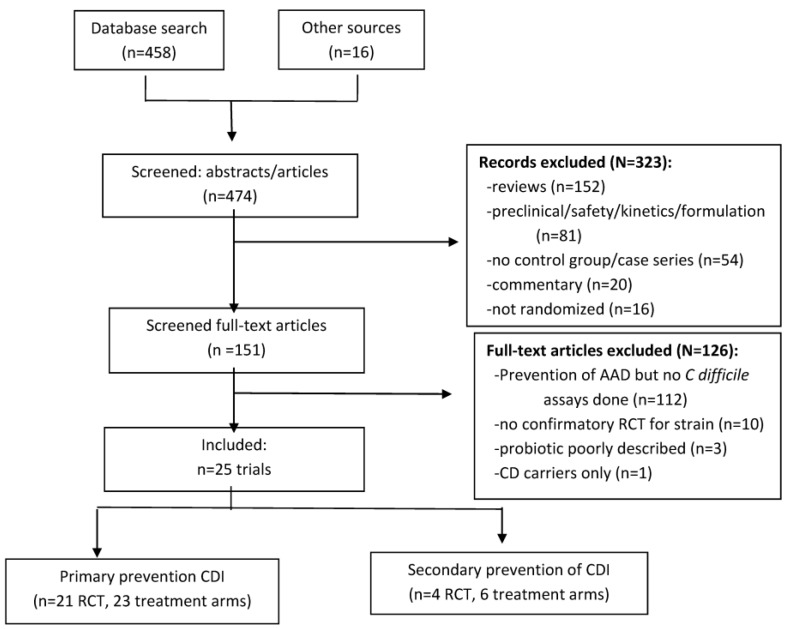
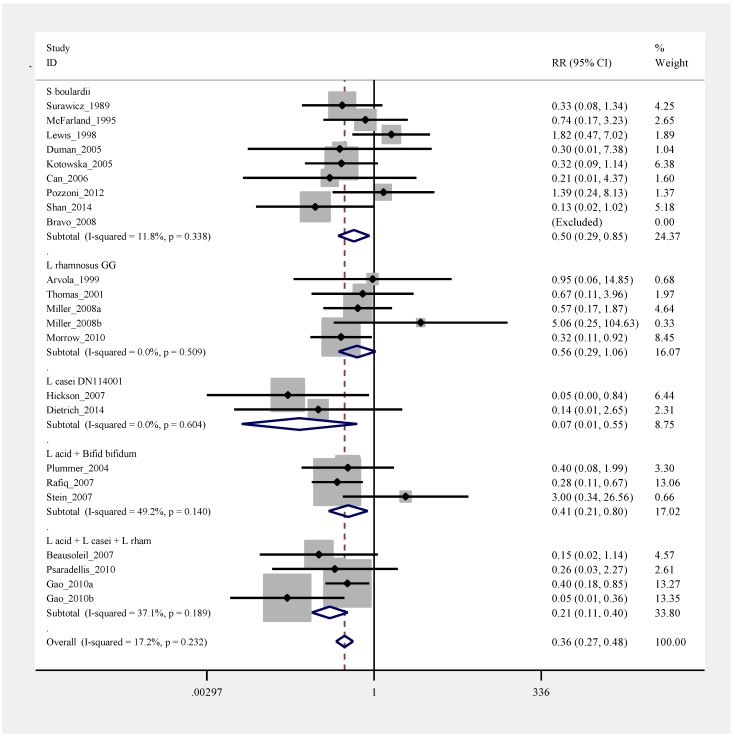
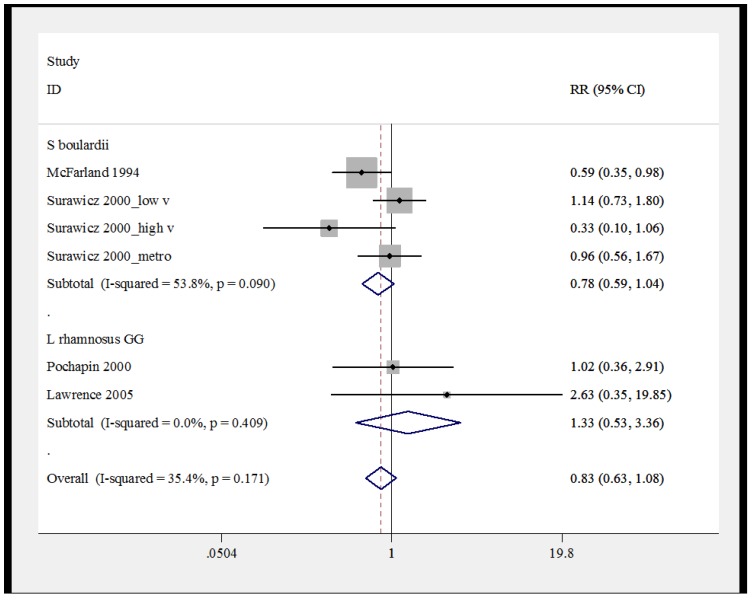
Clostridium difficile infections are a global clinical concern and are one of the leading causes of nosocomial outbreaks. Preventing these infections has benefited from multidisciplinary infection control strategies and new antibiotics, but the problem persists. Probiotics are effective in preventing antibiotic-associated diarrhea and may also be a beneficial strategy for C. difficile infections, but randomized controlled trials are scarce. This meta-analysis pools 21 randomized, controlled trials for primary prevention of C. difficile infections (CDI) and four trials for secondary prevention of C. difficile recurrences and assesses the efficacy of specific probiotic strains. Four probiotics significantly improved primary CDI prevention: (Saccharomyces boulardii, Lactobacillus casei DN114001, a mixture of L. acidophilus and Bifidobacterium bifidum, and a mixture of L. acidophilus, L. casei and L. rhamnosus). None of the tested probiotics significantly improved secondary prevention of CDI. More confirmatory randomized trials are needed to establish if probiotics are useful for preventing C. difficile infections. v
Overview
The claims and statistics of this paper haven’t been checked yet.
Free: it reads the open-access text and checks the first 5 claims that cite a source we can check. Create a free account to check every claim.
Integrity signals
Registry
Cites
Statistics
Figures
Verification
Claims the paper makes
The claims and statistics of this paper haven’t been checked yet.
Free: it reads the open-access text and checks the first 5 claims that cite a source we can check. Create a free account to check every claim.
Self-check
Percentages, sums and reported differences re-computed from the paper’s own numbers.
The self-check needs the paper’s full text.
Citations
Cites
Measuring inconsistency in meta-analyses
Higgins, J. P. T., Thompson, S. G., Deeks, J. J., & Altman, D. G. (2003) · BMJ · doi:10.1136/bmj.327.7414.557 · Cited by 63,139 · cited 1×
“Heterogeneity across trials was evaluated using Cochran Q test based on pooled relative risks by the Mantel-Haenazel method [54].”
MethodBias in meta-analysis detected by a simple, graphical test
Egger, M., Smith, G. D., Schneider, M., & Minder, C. (1997) · BMJ · doi:10.1136/bmj.315.7109.629 · Cited by 56,722 · cited 2×
“This meta-analysis followed PRISMA (Preferred Reporting Items for Systematic reviews and Meta-Analysis) statement guidelines [51] and guidelines using clearly delineated parameters, a priori inclusion and exclusion criteria and standardized data extraction tools [52,53] Systematic searches of PubMed (1960–2015), EMBAS…”
MethodLiberati, A., Altman, D. G., Tetzlaff, J., Mulrow, C., Gøtzsche, P. C., Ioannidis, J. P. A., Clarke, M., Devereaux, P. J., Kleijnen, J., & Moher, D. (2009) · PLoS Medicine · doi:10.1371/journal.pmed.1000100 · Cited by 28,164
Liberati, A., Altman, D. G., Tetzlaff, J., Mulrow, C., Gotzsche, P. C., Ioannidis, J. P. A., Clarke, M., Devereaux, P. J., Kleijnen, J., & Moher, D. (2009) · BMJ · doi:10.1136/bmj.b2700 · Cited by 17,648
Operating characteristics of a rank correlation test for publication bias
Begg, C. B., & Mazumdar, M. (1994) · Biometrics · doi:10.2307/2533446 · Cited by 16,955 · cited 1×
“To assess for publication bias, a funnel plot, as well as a weighted regression (Egger’s test) and a rank correlation test (Begg’s test for small study effects) were conducted [52,55].”
MethodMoher, D., Hopewell, S., Schulz, K. F., Montori, V., Gotzsche, P. C., Devereaux, P. J., Elbourne, D., Egger, M., & Altman, D. G. (2010) · BMJ · doi:10.1136/bmj.c869 · Cited by 8,883
Burden of Clostridium difficile Infection in the United States
Lessa, F. C., Mu, Y., Bamberg, W. M., Beldavs, Z. G., Dumyati, G. K., Dunn, J. R., Farley, M. M., Holzbauer, S. M., Meek, J. I., Phipps, E. C., et al. (2015) · New England Journal of Medicine · doi:10.1056/nejmoa1408913 · Cited by 2,641 · cited 1×
“[1].”
Comparison of two methods to detect publication bias in meta-analysis.
Peters, J. L. (2006) · JAMA · doi:10.1001/jama.295.6.676 · Cited by 2,278 · cited 1×
“Reporting bias (smaller studies showing no protective effect) often are not published, and are indicated by an asymmetrical appearance with a gap in the bottom left of a funnel plot [56].”
BackgroundMoher, D., Hopewell, S., Schulz, K. F., Montori, V., Gøtzsche, P. C., Devereaux, P. J., Elbourne, D., Egger, M., & Altman, D. G. (2010) · Journal of Clinical Epidemiology · doi:10.1016/j.jclinepi.2010.03.004 · Cited by 1,858
Guidelines for diagnosis, treatment, and prevention of Clostridium difficile infections
Surawicz, C. M., Brandt, L. J., Binion, D. G., Ananthakrishnan, A. N., Curry, S. R., Gilligan, P. H., McFarland, L. V., Mellow, M., & Zuckerbraun, B. S. (2013) · American Journal of Gastroenterology · doi:10.1038/ajg.2013.4 · Cited by 1,645
Self-citation
Research works printed but not linked: 1
- Rafiq R. Prevention of Clostridium difficile (C. difficile) diarrhea with probiotic in hospitalized patients treated with antibiotics Gastroenterology 2007 132 A187
Cited by
A review of dose-responses of probiotics in human studies
Ouwehand, A. C. (2017) · Beneficial Microbes · doi:10.3920/bm2016.0140 · Cited by 233
“McFarland, in a later meta-analysis of 21 primary CDAD studies with 14 probiotic formulations, noted that a similar moderate efficacy for studies with doses less than 10 10 cfu and those with larger doses (McFarland, 2015).”
Den, H., Dong, X., Chen, M., & Zou, Z. (2020) · Aging · doi:10.18632/aging.102810 · Cited by 230
Antimicrobial Activity of Lactobacillus Species Against Carbapenem-Resistant Enterobacteriaceae
Chen, C.-C., Lai, C.-C., Huang, H.-L., Huang, W.-Y., Toh, H.-S., Weng, T.-C., Chuang, Y.-C., Lu, Y.-C., & Tang, H.-J. (2019) · Frontiers in Microbiology · doi:10.3389/fmicb.2019.00789 · Cited by 200
Cross-Domain and Viral Interactions in the Microbiome
Rowan-Nash, A. D., Korry, B. J., Mylonakis, E., & Belenky, P. (2019) · Microbiology and Molecular Biology Reviews · doi:10.1128/mmbr.00044-18 · Cited by 163
McFarland, L. V., Ozen, M., Dinleyici, E. C., & Goh, S. (2016) · World Journal of Gastroenterology · doi:10.3748/wjg.v22.i11.3078 · Cited by 153
Self-citationA successful history: probiotics and their potential as antimicrobials
Santacroce, L., Charitos, I. A., & Bottalico, L. (2019) · Expert Review of Anti-infective Therapy · doi:10.1080/14787210.2019.1645597 · Cited by 143
“rhamnosus, administered at a high dose (10–50 billion CFUs per day) [154,155].”
BackgroundBazireh, H., Shariati, P., Jamalkandi, S. A., Ahmadi, A., & Boroumand, M. A. (2020) · Frontiers in Microbiology · doi:10.3389/fmicb.2020.597946 · Cited by 130
“…bacterial pathogens, such as MRSA (methicillin resistant Staphylococcus aureus), Streptococcus mutans, Escherichia coli, P. aeruginosa, Klebsiella pneumoniae, Shigella spp. and Clostridium difficile (McFarland, 2015; Kumar et al., 2016; Kang et al., 2017; Chen et al., 2019; Nami et al., 2019b).”
BackgroundActualización de probióticos, prebióticos y simbióticos en nutrición clínica
Olveira, G., & González-Molero, I. (2016) · Endocrinología y Nutrición · doi:10.1016/j.endonu.2016.07.006 · Cited by 162
Clostridium difficile infection in the elderly: an update on management
Asempa, T. E., & Nicolau, D. P. (2017) · Clinical Interventions in Aging · doi:10.2147/cia.s149089 · Cited by 123
“Evidence around the probiotic effect has been mixed.(75,76) For example, the largest placebo-controlled randomized trial conducted in 2,941 inpatients aged 65 years or older that received probiotics (multistrain preparation of Lactobacillus and Bifidobacterium) failed to demonstrate a reduction in antibiotic-associate…”
Kumar, M., Dhaka, P., Vijay, D., Vergis, J., Mohan, V., Kumar, A., Kurkure, N. V., Barbuddhe, S. B., Malik, S. V. S., & Rawool, D. B. (2016) · International Journal of Antimicrobial Agents · doi:10.1016/j.ijantimicag.2016.05.014 · Cited by 118
Agamennone, V., Krul, C. A. M., Rijkers, G. T., & Kort, R. (2018) · BMC Gastroenterology · doi:10.1186/s12876-018-0831-x · Cited by 116
Influence of Saccharomyces boulardii CNCM I-745 on the gut-associated immune system
Stier, H., & Bischoff, S. C. (2016) · Clinical and Experimental Gastroenterology · doi:10.2147/ceg.s111003 · Cited by 111
“79 Even though there is a large body of evidence showing the overall positive effect of S. boulardii in these types of diarrhea, there is a small number of investigations where S. boulardii failed to show effectiveness.”
Antibiotic Resistance in the Elderly: Mechanisms, Risk Factors, and Solutions
Theodorakis, N., Feretzakis, G., Hitas, C., Kreouzi, M., Kalantzi, S., Spyridaki, A., Boufeas, I. Z., Sakagianni, A., Paxinou, E., Verykios, V. S., et al. (2024) · Microorganisms · doi:10.3390/microorganisms12101978 · Cited by 101
“However, these probiotics did not demonstrate a notable effect in secondary prevention scenarios [81].”
Probiotic guidelines and physician practice: a cross-sectional survey and overview of the literature
Draper, K., Ley, C., & Parsonnet, J. (2017) · Beneficial Microbes · doi:10.3920/bm2016.0146 · Cited by 78
An update on probiotics, prebiotics and symbiotics in clinical nutrition
Olveira, G., & González-Molero, I. (2016) · Endocrinología y Nutrición (English Edition) · doi:10.1016/j.endoen.2016.10.011 · Cited by 106
Probiotics in the next-generation sequencing era
Suez, J., Zmora, N., & Elinav, E. (2020) · Gut Microbes · doi:10.1080/19490976.2019.1586039 · Cited by 81
McFarland, L. V., Ship, N., Auclair, J., & Millette, M. (2018) · Journal of Hospital Infection · doi:10.1016/j.jhin.2018.04.017 · Cited by 62
Self-citationAmrane, S., Hocquart, M., Afouda, P., Kuete, E., Pham, T.-P.-T., Dione, N., Ngom, I. I., Valles, C., Bachar, D., Raoult, D., et al. (2019) · Scientific Reports · doi:10.1038/s41598-019-49189-8 · Cited by 73
Chen, C., Lai, C., Huang, H.-L., Su, Y.-T., Chiu, Y.-H., Toh, H. S., Chiang, S., Chuang, Y.-C., Lu, Y.-C., & Tang, H.-J. (2020) · Journal of Microbiology Immunology and Infection · doi:10.1016/j.jmii.2020.01.005 · Cited by 57
Rao, K. K., & Higgins, P. (2016) · Inflammatory Bowel Diseases · doi:10.1097/mib.0000000000000793 · Cited by 60
Probiotic and synbiotic therapy in the critically ill: State of the art
Davison, J. M., & Wischmeyer, P. E. (2018) · Nutrition · doi:10.1016/j.nut.2018.07.017 · Cited by 60
Eosinophils, probiotics, and the microbiome
Rosenberg, H. F., Masterson, J. C., & Furuta, G. T. (2016) · Journal of Leukocyte Biology · doi:10.1189/jlb.3ri0416-202r · Cited by 54
Carter, G. M., Esmaeili, A., Shah, H., Indyk, D., Johnson, M., Andreae, M., & Sacks, H. S. (2016) · Open Forum Infectious Diseases · doi:10.1093/ofid/ofw164 · Cited by 47
“Evidence is fairly robust for the use of probiotics for primary prevention, with weaker evidence as secondary prophylaxis for Clostridium difficile infections [9].”
BackgroundProbiotics for Prevention and Treatment of Clostridium difficile Infection
Valdés-Varela, L., Gueimonde, M., & Ruas‐Madiedo, P. (2018) · Advances in experimental medicine and biology · doi:10.1007/978-3-319-72799-8_10 · Cited by 60
Lay, C., Fernandez, B., Hammami, R., Ouellette, M., & Fliss, I. (2015) · Frontiers in Microbiology · doi:10.3389/fmicb.2015.01020 · Cited by 53
Hospital Infection Control: Clostridioides difficile
Turner, N., & Anderson, D. J. (2020) · Clinics in Colon and Rectal Surgery · doi:10.1055/s-0040-1701234 · Cited by 47
Probiotic, Prebiotic and Synbiotic Products in Human Health
Maftei, N.-M. (2019) · IntechOpen eBooks · doi:10.5772/intechopen.81553 · Cited by 40
Factors that influence clinical efficacy of live biotherapeutic products
Pot, B., & Vandenplas, Y. (2021) · European journal of medical research · doi:10.1186/s40001-021-00509-7 · Cited by 43
Acid-Suppressive Therapy and Risk of Infections: Pros and Cons
Fisher, L., & Fisher, A. (2017) · Clinical Drug Investigation · doi:10.1007/s40261-017-0519-y · Cited by 43
Gonzales-Luna, A. J., Carlson, T. J., & Garey, K. W. (2023) · Clinical Infectious Diseases · doi:10.1093/cid/ciad642 · Cited by 39
Ghoshal, U. C., Gwee, K., Holtmann, G., Li, Y., Park, S. J., Simadibrata, M., Sugano, K., Wu, K., Quigley, E. M. M., & Cohen, H. (2017) · Journal of Gastroenterology and Hepatology · doi:10.1111/jgh.13840 · Cited by 39
Kullar, R., Johnson, S., McFarland, L. V., & Goldstein, E. J. C. (2021) · Antibiotics · doi:10.3390/antibiotics10040408 · Cited by 34
Self-citationBainum, T. B., Reveles, K. R., Hall, R. G., Cornell, K., & Álvarez, C. A. (2023) · Microorganisms · doi:10.3390/microorganisms11020387 · Cited by 33
Loo, V. G., Davis, I. R., Embil, J. M., Evans, G. A., Hota, S. S., Lee, C., Lee, T. C., Longtin, Y., Louie, T., Moayyedi, P., et al. (2018) · Journal of the Association of Medical Microbiology and Infectious Disease Canada · doi:10.3138/jammi.2018.02.13 · Cited by 48
Cosier, D., Lambert, K., Neale, E. P., Probst, Y., & Charlton, K. E. (2024) · Nutrition Reviews · doi:10.1093/nutrit/nuae002 · Cited by 37
Morrow, L. E., & Wischmeyer, P. E. (2016) · CHEST Journal · doi:10.1016/j.chest.2016.10.006 · Cited by 38
Cataldo, M. A., Granata, G., & Petrosillo, N. (2017) · Expert Review of Anti-infective Therapy · doi:10.1080/14787210.2017.1387535 · Cited by 28
“Patients in the treatment group 535 also received antibiotic additional treatment for CDI [107].”
BackgroundCarstensen, J. W., Chehri, M., Schønning, K., Rasmussen, S. C., Anhøj, J., Godtfredsen, N. S., Andersen, C. Ø., & Petersen, A. M. (2018) · European Journal of Clinical Microbiology & Infectious Diseases · doi:10.1007/s10096-018-3267-x · Cited by 29
Mahnič, A., Auchtung, J. M., Ulrih, N. P., Britton, R. A., & Rupnik, M. (2020) · Scientific Reports · doi:10.1038/s41598-020-65253-0 · Cited by 28
Ellatif, S. A. A., Bouqellah, N. A., Abu-Serie, M. M., Razik, E. S. A., AL-surhanee, A. A., Askary, A. E., Daigham, G. E., & Mahfouz, A. Y. (2022) · Environmental Science and Pollution Research · doi:10.1007/s11356-022-18537-z · Cited by 25
Wombwell, E., Bransteitter, B. A., & Gillen, L. R. (2021) · Mycoses · doi:10.1111/myc.13375 · Cited by 24
An Engineered Synthetic Biologic Protects Against Clostridium difficile Infection
Vedantam, G., Kochanowsky, J. A., Lindsey, J., Mallozzi, M., Roxas, J. L., Adamson, C. C., Anwar, F., Clark, A. E., Claus-Walker, R. A., Mansoor, A., et al. (2018) · Frontiers in Microbiology · doi:10.3389/fmicb.2018.02080 · Cited by 25
“Since single-species probiotics are thought to have limited ability to protect against CDI (Wullt et al., 2003; Vernaya et al., 2017), we used a combination of Syn-LAB 2.0 and Syn-LAB 2.1 in hamster protection studies.”
BackgroundInfluentialDo Probiotics Prevent Clostridium difficile-Associated Diarrhea?
Sharaby, A. A., Abugoukh, T. M., Ahmed, W., Ahmed, S., & Elshaikh, A. O. (2022) · Cureus · doi:10.7759/cureus.27624 · Cited by 26
“Only two varieties of probiotics (S. boulardii and L. rhamnosus GG) had enough trials to assess secondary prevention of CDI [15].”
BackgroundMethodInfluentialPoon, T., Juana, J., Noori, D., Jeansen, S., Pierucci-Lagha, A., & Musa-Veloso, K. (2020) · Nutrients · doi:10.3390/nu12113443 · Cited by 21
The Antimicrobial Stewardship Approach to Combating Clostridium Difficile
Wenzler, E., Mulugeta, S., & Danziger, L. H. (2015) · Antibiotics · doi:10.3390/antibiotics4020198 · Cited by 20
“rhamnosus GG [65] along with a meta-analysis and systematic review in this journal [66].”
BackgroundAnti-virulence strategies for Clostridioides difficile infection: advances and roadblocks
Stewart, D., Anwar, F., & Vedantam, G. (2020) · Gut Microbes · doi:10.1080/19490976.2020.1802865 · Cited by 24
“Lactic acid bacteria (LABs), in addition to being important members of the mammalian gut consortium, exhibit beneficial properties such as secretion of antimicrobial peptides and anti-CD activities.(56,58) Lactobacillus casei can suppress the inflammatory cytokines produced in response to CDI,(59) upregulate mucin gen…”
BackgroundThe mechanisms and safety of probiotics against toxigenic clostridium difficile
Liu, D., Zeng, L., Yan, Z., Jia, J., Gao, J. X., & Wei, Y. (2020) · Expert Review of Anti-infective Therapy · doi:10.1080/14787210.2020.1778464 · Cited by 18
Proteomic analysis of stachyose contribution to the growth of Lactobacillus acidophilus CICC22162
Zhong, X., Zhang, Y., Huang, G., Ouyang, Y.-Z., Liao, D., Peng, J.-W., & Huang, W.-Z. (2018) · Food & Function · doi:10.1039/c8fo00528a · Cited by 16
Evolving Strategies to Manage Clostridium difficile Colitis
Bowman, J. A., & Utter, G. H. (2019) · Journal of Gastrointestinal Surgery · doi:10.1007/s11605-019-04478-5 · Cited by 16
Tajdozian, H., Seo, H., Kim, S., Rahim, M. A., Lee, S., & Song, H. (2021) · Journal of Microbiology and Biotechnology · doi:10.4014/jmb.2103.03014 · Cited by 15
“, Streptococcus mutans, Pseudomonas aeruginosa, and Staphylococcus aureus [7-11].”
BackgroundJavid, H., Oryani, M. A., Akbari, S., Amiriani, T., Ravanbakhsh, S., Rezagholinejad, N., Afshari, A. R., & Karimi‐Shahri, M. (2023) · Future Microbiology · doi:10.2217/fmb-2023-0076 · Cited by 17
Manzanares, W., Langlois, P. L., & Wischmeyer, P. E. (2017) · Journal of Parenteral and Enteral Nutrition · doi:10.1177/0148607117700572 · Cited by 15
A Critical Review of Postbiotics as Promising Novel Therapeutic Agents for Clostridial Infections
Ozma, M. A., Fadaee, M., Hosseini, H. M., Ataee, M. H., & Mirhosseini, S. A. (2024) · Probiotics and Antimicrobial Proteins · doi:10.1007/s12602-024-10406-0 · Cited by 15
“They have the ability to produce postbiotics that inhibit the growth of C. difficile and help maintain a healthy gut flora [100].”
Foley, M. H., McMillan, A. S., O’Flaherty, S., Thanissery, R., Vanhoy, M. E., Fuller, M. G., Barrangou, R., & Theriot, C. M. (2025) · mBio · doi:10.1128/mbio.01468-25 · Cited by 15
“While several human trials support probiotic administration as a strategy to prevent or treat CDI (91–95), others suggest that they do not improve CDI outcomes (36, 96).”
Pavli, F., Gkana, E. N., Adebambo, O., Karatzas, K. A. G., Panagou, E. Ζ., & Nychas, G. E. (2019) · Foods · doi:10.3390/foods8120640 · Cited by 14
McFarland, L. V., Johnson, S., & Evans, C. T. (2020) · American Journal of Infection Control · doi:10.1016/j.ajic.2020.08.003 · Cited by 13
Self-citationOzma, M. A., Hosseini, H. M., Ataee, M. H., & Mirhosseini, S. A. (2024) · Iranian Journal of Microbiology · doi:10.18502/ijm.v16i4.16309 · Cited by 17
“Our data supports the findings of McFarland et al.'s investigation, which demonstrated the effectiveness of the probiotic strain Saccharomyces boulardi in preventing CDI by binding to C. difficile toxins A and B (55).”
ResultDuncan, P. I., Aitio, O., Heiskanen, A., Niemelä, R., Saarinen, J., Helin, J., Porta, N., Fiaux, M., Moënnoz, D., Golliard, M., et al. (2020) · Nutrients · doi:10.3390/nu12072007 · Cited by 12
Thirunavukkarasu, R., Pandi, P., Deivasigamani, B., Albalawi, F. S., Ahmad, N., Panagal, M., Rao, T. N., Subramanian, K., George, E. G. J., Rajan, M. A., et al. (2022) · Scientific Reports · doi:10.1038/s41598-022-05779-7 · Cited by 11
Primary prevention of Clostridium difficile infections – how difficult can it be?
McFarland, L. V. (2017) · Expert Review of Gastroenterology & Hepatology · doi:10.1080/17474124.2017.1312343 · Cited by 11
“Probiotics have a long history of use for the primary prevention of antibiotic-associated diarrhea (AAD) [25,104,105] and the secondary prevention of recurrent CDI [106].”
BackgroundSelf-citationSavitri, & Lata, P. (2020) · Microorganisms for sustainability · doi:10.1007/978-981-15-6795-7_8 · Cited by 12
A Review of Therapies for Clostridioides difficile Infection
Morado, F., & Nanda, N. (2024) · Antibiotics · doi:10.3390/antibiotics14010017 · Cited by 10
“In a meta-analysis, the use of probiotics for secondary prevention did not reach statistical significance to make a firm conclusion [86].”
Szota, M., Napiórkowska-Baran, K., Wojtkiewicz, A., Wydeheft, L., Wawrzeńczyk, A., Sławatycki, J., Treichel, P., Alska, E., Zyśk, B., & Pałgan, K. (2026) · International Journal of Molecular Sciences · doi:10.3390/ijms27104527 · Cited by 13
Tajdozian, H., Seo, H., Jeong, Y., Ghorbanian, F., Park, C.-E., Sarafraz, F., Rahim, M. A., Lee, Y., Kim, S., Lee, S., et al. (2024) · Annals of Microbiology · doi:10.1186/s13213-024-01773-8 · Cited by 9
“…Pseudomonas aeruginosa , and methicillin-resistant Staphylococcus aureus (MRSA), making the use of probiotics a potential alternative treatment for nearly all pathogens (Manley et al. 2007; Mirnejad et al. 2013; McFarland 2015; Kumar et al. 2016; Sidjabat et al. 2017; Moghadam et al. 2018).”
BackgroundProbiotics for Prevention and Treatment of Clostridium difficile Infection
Valdés-Varela, L., Gueimonde, M., & Ruas‐Madiedo, P. (2024) · Advances in experimental medicine and biology · doi:10.1007/978-3-031-42108-2_6 · Cited by 8
The Probiotic Properties of Saccharomycetes (Review)
Ryabtseva, S., Khramtsov, A. G., Sazanova, S. N., Budkevich, R. O., Fedortsov, N. M., & Veziryan, A. A. (2023) · Applied Biochemistry and Microbiology · doi:10.1134/s0003683823010088 · Cited by 8
Probiotics for Trauma Patients: Should We Be Taking a Precautionary Approach?
Vitko, H. A., Sekula, L. K., & Schreiber, M. A. (2016) · Journal of Trauma Nursing · doi:10.1097/jtn.0000000000000263 · Cited by 7
Disorders of intestinal microbiocenosis: expanding the application of probiotics
Трухан, Д. И. (2022) · Meditsinskiy sovet = Medical Council · doi:10.21518/2079-701x-2022-16-7-132-143 · Cited by 9
Kakar, Z., Essazai, A. B., Ahmed, S. M., Ullah, N., Jan, P., & Ullah, N. (2022) · Pakistan Journal of Medical and Health Sciences · doi:10.53350/pjmhs20221612253 · Cited by 6
Probiotics in pediatrics: Pros and cons in the context of evidence-based medicine
Mazankova, L. N., Rybalchenko, O. V., Корниенко, Е. А., & Perlovskaya, S. G. (2016) · Rossiyskiy Vestnik Perinatologii i Pediatrii (Russian Bulletin of Perinatology and Pediatrics) · doi:10.21508/1027-4065-2016-61-1-16-26 · Cited by 8
Kullar, R., Johnson, S., McFarland, L. V., Goff, D. A., & Goldstein, E. J. C. (2020) · Infectious Diseases in Clinical Practice · doi:10.1097/ipc.0000000000000853 · Cited by 6
Self-citationProbiotics as Curators of a Healthy Gut Microbiota
Murphy, A., Dinan, T. G., Cryan, J. F., Stanton, C., & Ross, R. P. (2016) · Elsevier eBooks · doi:10.1016/b978-0-12-802304-4.00005-0 · Cited by 6
Rao, K. K., & Young, V. B. (2017) · Gastroenterology · doi:10.1053/j.gastro.2017.04.027 · Cited by 6
Emerging alternatives against Clostridioides difficile infection
Romero-Rodríguez, A., de la Peña, C. M., Troncoso-Cotal, S., Guzmán, C., & Sánchez, S. (2022) · Anaerobe · doi:10.1016/j.anaerobe.2022.102638 · Cited by 5
Sarkar, P., Chourasia, R., Abedin, M. M., Singh, A. K., Padhi, S., Singh, S. P., & Kumar, A. (2024) · Biocatalysis and Agricultural Biotechnology · doi:10.1016/j.bcab.2024.103338 · Cited by 4
Quigley, E. M. M. (2017) · Elsevier eBooks · doi:10.1016/b978-0-12-804024-9.00014-8 · Cited by 5
Dawwam, G. E., Saber, I. I., Yassin, M. H., & Ibrahim, H. F. (2022) · Journal of Pure and Applied Microbiology · doi:10.22207/jpam.16.3.28 · Cited by 4
Resanovic, V. R., Resanovic, A., Krstić, S., & Djordjevic, M. (2017) · World Journal of Surgery · doi:10.1007/s00268-017-4155-8 · Cited by 4
“Furthermore, four different types of probiotic were found to be effective for primary prevention of Clostridium difficile infection [5].”
BackgroundChen, W., Pan, X., Ji, J., Wu, Z., & Lin, X. (2026) · Frontiers in Nutrition · doi:10.3389/fnut.2026.1699223 · Cited by 3
“Eleven of the 16 reviews were rated as having “critically low” overall confidence, primarily due to short-comings in protocol registration, risk of bias assessment, and reporting of excluded studies (17–19, 21–23, 25–28, 31).”
Soleimani, R. A., Milani, P. G., Khani, N., & Rad, A. H. (2025) · Letters in Applied Microbiology · doi:10.1093/lambio/ovaf083 · Cited by 4
Sarafraz, F., Seo, H., Tajdozian, H., Atashi, A., Yoon, Y., Kim, S., & Song, H. (2025) · Journal of Microbiology and Biotechnology · doi:10.4014/jmb.2508.08009 · Cited by 3
“…Listeria monocytogenes [18], Salmonella typhimurium [19, 20], Escherichia coli [21, 22], Streptococcus mutans, Aggregatibacter actinomycetemcomitans [10], Staphylococcus aureus [23], Shigella species [24], Clostridium difficile [25], Pseudomonas aeruginosa [26, 27], and Salmonella species [28].”
Probiotics in Human Health: Current Evidence, Mechanism of Action, and Future Perspectives
Mulaw, G., Kidanemariam, G., Bara, M., & Tesfay, T. (2026) · International Journal of Microbiology · doi:10.1155/ijm/1721210 · Cited by 4
“Probiotics have demonstrated significant benefits in gastrointestinal health, particularly in alleviating lactose intolerance and reducing antibiotic-associated diarrhea (AAD) [101, 102].”
Childhood functional gastrointestinal disorders: rational therapy
Ruzhentsova, T. A., Александровна, Х. Д., Плоскирева, А. А., & Meshkova, N. A. (2020) · Meditsinskiy sovet = Medical Council · doi:10.21518/2079-701x-2020-1-106-112 · Cited by 4
Fan, F.-H., Lin, Y.-J., Chen, J., & Fang, S. (2026) · Pediatrics & Neonatology · doi:10.1016/j.pedneo.2026.03.002 · Cited by 2
Probiotics and intestinal health
Guslandi, M. (2022) · Elsevier eBooks · doi:10.1016/b978-0-323-85170-1.00013-0 · Cited by 2
Mogmenga, I. (2019) · doi:10.21474/ijar01/8462 · Cited by 2
Antibiotic-associated diarrhea in clinical practice: preventive and therapeutic approaches
Livzan, M. A., & Fedorin, M. M. (2022) · Russian Medical Inquiry · doi:10.32364/2587-6821-2022-6-5-259-265 · Cited by 2
Rasool, S. A., Rasool, M. S., & Ajaz, M. (2021) · Microorganisms for sustainability · doi:10.1007/978-981-16-0223-8_12 · Cited by 1
Tajdozian, H., Seo, H., Kim, S., Rahim, M. A., Park, H. A., Sarafraz, F., Yoon, Y., Kim, H., Barman, I., Park, C.-E., et al. (2025) · Medical Microbiology and Immunology · doi:10.1007/s00430-025-00858-8 · Cited by 1
“…composition and the onset of various diseases, including non-infections [12, 13] and infections caused by carbapenem-resistant Enterobacteriaceae (CRE), Clostridium difficile , Escherichia coli , Shigella spp., Streptococcus mutans , Pseudomonas aeruginosa , and Staphylococcus aureus [14–20].”
Dowgiałło‐Gornowicz, N., Botulińska, A., Sosnowska-Turek, E., Garbowicz, M., Zarucka, E., & Siwik, P. (2026) · Polish Annals of Medicine · doi:10.31648/paom/213335 · Cited by 1
“12 However, their impact may be limited in cases of recurrent infections.”
Daza, W., Dadán, S., & Carrillo, M. M. H. (2016) · Revista Colombiana de Gastroenterología · doi:10.22516/25007440.75 · Cited by 1
Clostridium (Now Clostridioides) difficile-Associated Disease
Hays, R. A., & Surawicz, C. M. (2021) · Springer eBooks · doi:10.1007/978-3-030-30192-7_71 · Cited by 1
Probiotic Properties of Saccharomycetes (Review)
Ryabtseva, S., Khramtsov, A. G., Sazanova, S. N., Budkevich, R. O., Fedortsov, N. M., & Veziryan, A. A. (2023) · Прикладная биохимия и микробиология · doi:10.31857/s0555109923010087 · Cited by 1
Walsham, A. D. S. (2016) · UEA Digital Repository (University of East Anglia) · Cited by 1
C. difficile Microbiome Manipulation
Wick, J., Basein, T., & Doron, S. (2017) · Springer eBooks · doi:10.1007/978-3-319-60980-5_16
Clostridium difficile infection: Antibodies versus antibiotics
Naddafi, F. (2019) · Medical and Clinical Archives · doi:10.15761/mca.1000151
“Secondary prevention of CDI in cases who have recovered from at least one prior episode of CDI, without diarrhea at the time of the intervention and would not develop a recurrence of CDI within one or two months of follow-up [4].”
BackgroundClostridium (Now Clostridioides) difficile-Associated Disease
Hays, R. A., & Surawicz, C. M. (2019) · Springer eBooks · doi:10.1007/978-3-319-90761-1_71-1
McFarland, L. V. (2019) · American Journal of Infection Control · doi:10.1016/j.ajic.2019.10.027
Self-citationProbiotics and the Prevention of Clostridioides difficile: A Review of Existing Systematic Reviews
Onstad, A. L. (2020) · Cornerstone (Minnesota State University, Mankato)
C. difficile Microbiome Manipulation
Penney, J. A., Wick, J., Basein, T., & Doron, S. (2022) · Springer eBooks · doi:10.1007/978-3-030-98427-4_16
Metadata
- Authors
- McFarland, L.
- Affiliations
- University of Washington (US)
- Corresponding author
- McFarland, Lynne
- ORCID
- McFarland, Lynne
- Venue
- Antibiotics
- Publisher
- MDPI AG
- Published
- 2015-04-13
- Volume
- 4
- Issue
- 2
- Pages
- 160-178
- ISSN
- 2079-6382 (ISSN-L)
- PMC
- PMC4790329
- OpenAlex
- W2036627873
- Cited by
- 109
- References
- 60
- Citations by year
- 2026: 7 · 2025: 3 · 2024: 9 · 2023: 9 · 2022: 12 · 2021: 6 · 2020: 13 · 2019: 13 · 2018: 9 · 2017: 11 · 2016: 15 · 2015: 2
- FWCI
- 1.87
- Type
- journal article
- Language
- en
- Open access
- gold
- dx.doi.org
- Licence
- Locations
- Antibiotics (publishedVersion, cc-by)
- PubMed Central (publishedVersion, cc-by)
- PubMed (publishedVersion)
- DOAJ (DOAJ: Directory of Open Access Journals) (submittedVersion)
- Topics
- Health Sciences › Medicine › Infectious Diseases › Clostridium difficile and Clostridium perfringens research
- Life Sciences › Agricultural and Biological Sciences › Food Science › Probiotics and Fermented Foods
- Life Sciences › Biochemistry, Genetics and Molecular Biology › Molecular Biology › Gut microbiota and health
- Keywords
- probiotics, Clostridium difficile infection, primary prevention, secondary prevention, recurrence prevention, Saccharomyces boulardii, Lactobacillus casei, Lactobacillus acidophilus, Bifidobacterium bifidum, Lactobacillus rhamnosus, nosocomial infections, antibiotic-associated diarrhea
About these checks
Registry, retraction, Cites and statistics results are computed, not judged, with one exception: a printed reference that no index lists is read once by a model before it counts as a citation error. Claims are extracted by a model and kept only when their quote appears verbatim in the text; each cited source is then checked, with a model’s help, for whether it says what the claim relies on. Those verdicts can be wrong — read the claim’s quote and the cited source before relying on one.
Statistics and arithmetic are recomputed, not judged.
Confidence bands are shown only for fields calibrated on our annotated test set. None is calibrated yet, so no band is shown.
What counts as a claim ›How we measure confidence ›How we check this ›
Are you an author, or do you see a problem with this page? Request a review
Data sources
Bibliographic data: Semantic Scholar, OpenAlex, Crossref.
Contains information from the Semantic Scholar Academic Graph Datasets, made available under the ODC Attribution License (ODC-BY 1.0).
Semantic Scholar’s data is described in: Kinney, R., et al. (2023). The Semantic Scholar Open Data Platform. arXiv:2301.10140.
