

Cinnamon (Cinnamomum zeylanicum) Oil as a Potential Alternative to Antibiotics in Poultry
Open accessThe DOI matches its Crossref record; 72 of the 80 references it cites were found in a registry or an index; 3 of the 10 sources its claims cite were checked for support.
Abstract
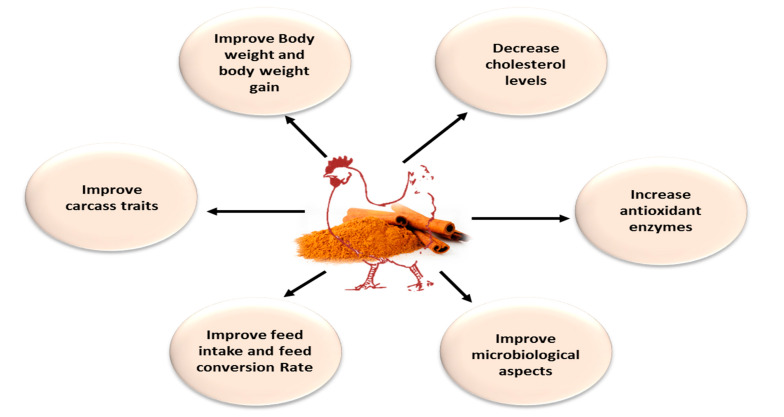
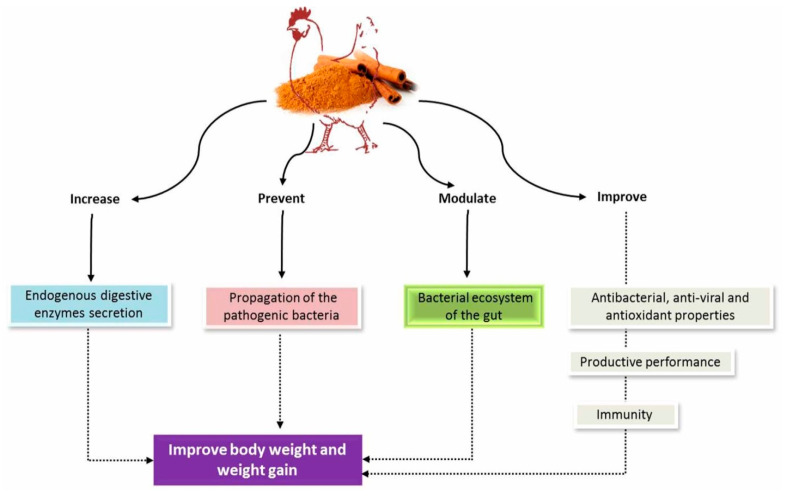
The removal of antibiotic growth promoters (AGPs) as feed additives in poultry nutrition from the market in many countries has compelled researchers to find unconventional and safe alternatives to AGPs. Probiotics, prebiotics, enzymes, organic acids, herbs, immune-stimulants and essential oils (EO) have been investigated as feed additives in poultry production. Cinnamon (Cinnamomum zeylanicum), one of the oldest medicinal plants and widely used around the world, can be used in poultry rations in the form of powder or essential oil. Essential oils produced from aromatic plants have become more interesting owing to their potential effects as hypocholesterolaemic agents, antioxidants, antimicrobials, antifungals and stimulants of digestive enzymes. The potential insecticidal and antimicrobial activities of EO against pathogens that cause spoilage in agriculture crops and human diseases might be attributed mainly to the high content of volatile components (mainly cinnamaldehyde, eugenol and carvacrol) in cinnamon oil. The present review focuses on the effects of cinnamon oil as a feed additive on poultry performance, carcass traits, meat quality, hypocholesterolaemic impact, antioxidant activity, immunity and microbiological aspects.
Overview
CoChat Summary
TL;DR
This paper is a narrative review of studies on cinnamon essential oil as a poultry feed additive, arguing it may help replace antibiotic growth promoters. Across the cited studies, cinnamon oil is reported to have mixed effects on growth but generally beneficial effects on lipid profile, antioxidant status, immunity, and gut microbiota.
Key findings
- The review concludes that cinnamon essential oil supplementation has beneficial effects on poultry performance, hypocholesterolaemic effects, antioxidant activity, immunity, and microbiological aspects.
- For growth performance, some studies reported improvements: broilers fed CEO had higher body weight gain than controls, and 500 ppm cinnamon oil gave the best feed conversion efficiency in one broiler study; however, several other studies found no significant effects on body weight, feed intake, or FCR.
- For blood parameters, CEO was reported to increase catalase activity, glutathione peroxidase, ω-6 fatty acids, total unsaturated fatty acid ratio, and phagocytic activity, while decreasing malondialdehyde, cholesterol, total saturated fatty acid ratio, and ALT activity.
- For intestinal microbiota, 100 mg/kg CEO reduced cecal *E. coli* and increased cecal *Lactobacillus* and *Bifidobacterium* in broilers; 200 mg/kg cinnamon oil in quails reduced ileal coliforms and increased ileal *Lactobacillus*.
Methods
- Narrative review of published studies on cinnamon oil/CEO in poultry, covering performance, carcass traits, blood parameters, intestinal microbiota, and chemical composition.
- The paper synthesizes findings from broiler and quail studies, including diet supplementation levels such as 100 mg/kg, 200 mg/kg, 250–500 mg/kg, and 0.5–1.0 mL/kg, as reported in the cited studies.
- Main analysis is qualitative comparison of reported outcomes across studies, not a new experiment or meta-analysis.
Limitations
- The paper does not report a systematic review protocol, search strategy, inclusion/exclusion criteria, or formal quality assessment of the cited studies. This is evident from the text.
- Findings are heterogeneous and sometimes contradictory across studies, especially for body weight, feed intake, and feed conversion rate; this is stated in the paper.
- No pooled effect sizes or statistical synthesis are provided. This is evident from the text.
Model-written summary. Check it against the paper before relying on it.
Integrity signals
Registry
Cites
Statistics
Figures
Verification
Claims the paper makes
3 Valid · 1 Not valid · 7 Not checked · 6 Own results and interpretations
The cited sources support only part of this claim — read each source’s verdict below.
In the paper
“By 8 h of incubation, the use of 10 mM concentrations of these constituents was effective in reducing the count of C. jejuni by at least 5-log CFUs/mL [71].”
§ Cinnamon (Cinnamomum zeylanicum) Oil as a Potential Alternative to Antibiotics in Poultry > 6. Intestinal Microbiota
What the sources say
- Partly supportedcites [71] Kollanoor-Johny A. Darre M.J. Donoghue A.M. Donoghue D.J. Venkitanarayanan K. Antibacterial effect of trans-cinnamaldehyde, eugenol, carvacrol, and thymol on Salmonella Enteritidis and Campylobacter jejuni in chicken cecal contents in vitro J. Appl. Poult. Res. 2010 19 237 244 10.3382/japr.2010-00181 sourceExperimental — accuracy not yet measured
Table 2 (C. jejuni inoculated at ~10^5 cfu/mL) and the Results and Discussion confirm the setup of the claim: at 8 h, 10 mM of each of the four molecules (TC, EUG, THY, CAR) reduced C. jejuni to '<1' log10 cfu/mL, i.e., below detection, whereas TC at 10 mM was still 5.4 log at 15 s. However, our copy nowhere states a '≥5-log' reduction for C. jejuni: from a ~5.0 log10 cfu/mL inoculum to <1.0 log10 cfu/mL the implied drop is ~4 log, and the paper phrases its result as reduction to undetectable/<1.0 log10 cfu/mL rather than as a log-fold magnitude. The only '>5.0 log10 cfu/mL' figure in the paper is for Salmonella Enteritidis at 50 and 75 mM (Results and Discussion), so the magnitude attributed here is not supported by this source. (LLM, conf=0.78)
plainstates a cause- Asserted: passes — The authors put it forward as true.
- Checkable: passes — It can be checked against evidence.
- Load-bearing: unclear — It is unclear whether the paper’s conclusions depend on it.
- Based: passes — The paper gives a reason why it holds.
- Partly supported
Every source the paper cites for this claim was checked and supports it.
In the paper
“The antimicrobial potent agent for cinnamon oil was higher than cinnamon extract potency.”
§ Cinnamon (Cinnamomum zeylanicum) Oil as a Potential Alternative to Antibiotics in Poultry > 6. Intestinal Microbiota
What the sources say
- Supportedcites [60] Gupta C. Garg A.P. Uniyal R.C. Kumari A. Comparative analysis of the antimicrobial activity of cinnamon oil and cinnamon extract on some food-borne microbes African J. Microbiol. Res. 2008 2 247 251 doi:10.5897/ajmr.9000180
The Abstract (p. 1) states directly that 'cinnamon oil is a more potent antimicrobial agent than cinnamon extract', and the CONCLUSION (p. 4) reiterates that cinnamon oil was 'a much better antagonistic agent, exhibiting broad range of antimicrobial activity against common bacteria and fungi than its extract'. Table 1 (p. 3) inhibition zones and the MIC data support this comparison. (LLM, conf=0.95)
plainstates a cause- Asserted: passes — The authors put it forward as true.
- Checkable: passes — It can be checked against evidence.
- Load-bearing: unclear — It is unclear whether the paper’s conclusions depend on it.
- Based: passes — The paper gives a reason why it holds.
- Supported
Every source the paper cites for this claim was checked and supports it.
In the paper
“An in vitro study on ceacal content by Kollanoor-Johny et al. [71] found that the use of 20 mM of cinnamaldehyde, eugenol, thymol or carvacrol was sufficient in significantly reducing the concentrations of Campylobacter after 15 s of incubation.”
§ Cinnamon (Cinnamomum zeylanicum) Oil as a Potential Alternative to Antibiotics in Poultry > 6. Intestinal Microbiota
What the sources say
- Supportedcites [71] Kollanoor-Johny A. Darre M.J. Donoghue A.M. Donoghue D.J. Venkitanarayanan K. Antibacterial effect of trans-cinnamaldehyde, eugenol, carvacrol, and thymol on Salmonella Enteritidis and Campylobacter jejuni in chicken cecal contents in vitro J. Appl. Poult. Res. 2010 19 237 244 10.3382/japr.2010-00181 source
Table 2 (Effect of plant molecules on C. jejuni inoculated at approximately 10^5 cfu/mL in chicken cecal contents) lists 15-s values for each molecule's 20 mM treatment against the control 4.5 ± 1.0 (superscript a): TC 20 mM = 1.9 ± 0.7 b, EUG 20 mM = <1 b, THY 20 mM = 1.1 ± 0.2 b, CAR 20 mM = <1 b — i.e. all four at 20 mM were significantly lower than the control (P ≤ 0.05) at 15 s. The Results and Discussion text corroborates this, stating that all concentrations of carvacrol, the two higher concentrations of eugenol (20 and 30 mM), and the highest concentration of thymol reduced C. jejuni to undetectable levels at 15 s after addition, and that all trans-cinnamaldehyde concentrations killed C. jejuni (to <1.0 log10 cfu/mL by 8 h). The only nuance is that the narrative emphasises 'undetectable' rather than 'significant reduction' and does not single out 20 mM for TC or THY, but the tabulated statistical lettering supports the claim as paraphrased. (LLM, conf=0.85)
plainstates a cause- Asserted: passes — The authors put it forward as true.
- Checkable: passes — It can be checked against evidence.
- Load-bearing: unclear — It is unclear whether the paper’s conclusions depend on it.
- Based: passes — The paper gives a reason why it holds.
- Supported
A conclusion the paper draws from its own results — it cites no other source for it, so there is none to check. The quote shows it is in the paper.
In the paper
“The major findings of this study indicate that the supplementation of cinnamon essential oil extracts as feed additives in poultry diets have beneficial effects on the performance, hypocholesterolaemic, antioxidant activity, immunity and microbiological aspects.”
- Also stated in: § 6. Intestinal Microbiota · hedged
“Finally, the use of CEO as feed additives in poultry diets had some beneficial effects on the growth performance and lipid profile, antioxidant status, immunity and antibacterial activity of poultry as shown in Table 2.”
§ Cinnamon (Cinnamomum zeylanicum) Oil as a Potential Alternative to Antibiotics in Poultry > 7. Conclusions
hedgedstates a cause- Asserted: passes — The authors put it forward as true.
- Checkable: passes — It can be checked against evidence.
- Load-bearing: passes — The paper’s conclusions depend on it.
- Based: passes — The paper gives a reason why it holds.
- Also stated in: § 6. Intestinal Microbiota · hedged
7 more claims
Create a free account to see all 17 claims and to verify the 3 references still open.
- Probably not a substantial claim. 2
- It may state two separate claims as one. 5
Citations
Cites
Regulation of the mevalonate pathway
Goldstein, J. L., & Brown, M. S. (1990) · Nature · doi:10.1038/343425a0 · Cited by 5,394
Antimicrobial activity of essential oils and other plant extracts
Hammer, K. A., Carson, C. F., & Riley, T. V. (1999) · Journal of Applied Microbiology · doi:10.1046/j.1365-2672.1999.00780.x · Cited by 2,560
Lambert, R. J. W., Skandamis, P. N., Coote, P. J., & Nychas, G.-J. E. (2001) · Journal of Applied Microbiology · doi:10.1046/j.1365-2672.2001.01428.x · Cited by 2,449 · cited 1×
“In addition, such volatile components as carvacrol manipulate the pH equilibrium of inorganic ions via their disruption of membrane integrity [62].”
BackgroundInfluence of two plant extracts on broilers performance, digestibility, and digestive organ size
Hernández, F., Madrid, J., García, V., Orengo, J., & Megías, M. D. (2004) · Poultry Science · doi:10.1093/ps/83.2.169 · Cited by 983 · cited 2×
“The antibacterial activity of cinnamaldehyde, eugenol and carvacrol was observed due to their preventive effects on pathogen microorganisms [49].”
BackgroundPsidium guajava: A review of its traditional uses, phytochemistry and pharmacology
Gutiérrez, R. M. P., Mitchell, S., & Solis, R. V. (2008) · Journal of Ethnopharmacology · doi:10.1016/j.jep.2008.01.025 · Cited by 937
Lee, K.-W., Everts, H., Kappert, H. J., Frehner, M., Losa, R., & Beynen, A. C. (2003) · British Poultry Science · doi:10.1080/00071660301985 · Cited by 620
Antibacterial activity of leaf essential oils and their constituents from Cinnamomum osmophloeum
Chang, S.-T., Chen, P.-F., & Chang, S.-C. (2001) · Journal of Ethnopharmacology · doi:10.1016/s0378-8741(01)00273-2 · Cited by 514 · cited 1×
“, Staphylococcus aureus and Escherichia coli [14].”
Use of active substances of plant origin in chicken diets based on maize and locally grown cereals
Jamroz, D., Wiliczkiewicz, A., Wertelecki, T., Orda, J., & Skorupińska, J. (2005) · British Poultry Science · doi:10.1080/00071660500191056 · Cited by 343
Jamroz, D., Wertelecki, T., Houszka, M., & Kamel, C. (2006) · Journal of Animal Physiology and Animal Nutrition · doi:10.1111/j.1439-0396.2005.00603.x · Cited by 330 · cited 1×
“In addition, it has been reported that essential oil improves the release of mucus into the gut, which lowers the adhesion of pathogenic bacteria to the epithelium [70].”
BackgroundInfluence of two plant extracts derived from thyme and cinnamon on broiler performance.
Al-Kassie, G. A. (2009) · Pakistan Veterinary Journal · Cited by 282
Research works printed but not linked: 1
- Wenk C. Why all the discussion about herbs? Lyons T.P. Alltech Tech. Publ., Nottingham University Press Nicholasville, KY, USA 2000 79 96
Cited by
Alagawany, M., Elnesr, S. S., Farag, M. R., Tiwari, R., Yatoo, M. I., Karthik, K., Michalak, I., & Dhama, K. (2021) · Veterinary Quarterly · doi:10.1080/01652176.2020.1857887 · Cited by 352
Self-citationAbdel-Moneim, A.-M. E., El-Saadony, M. T., Shehata, A. M., Saad, A. M., Aldhumri, S. A., Ouda, S. M., & Mesalam, N. M. (2022) · Saudi Journal of Biological Sciences · doi:10.1016/j.sjbs.2021.09.046 · Cited by 229
Self-citationNutritional manipulation to combat heat stress in poultry – A comprehensive review
Abdel-Moneim, A.-M. E., Shehata, A. M., Khidr, R. E., Paswan, V. K., Ibrahim, N. S., El-Ghoul, A. A., Aldhumri, S. A., Gabr, S. A., Mesalam, N. M., Elbaz, A. M., et al. (2021) · Journal of Thermal Biology · doi:10.1016/j.jtherbio.2021.102915 · Cited by 202
Self-citationThe role of polyphenols in poultry nutrition
Abdel‐Moneim, A. E., Shehata, A. M., Alzahrani, S. O., Shafi, M. E., Mesalam, N. M., Taha, A. E., Swelum, A. A., Arif, M., Fayyaz, M., & Abd El‐Hack, M. E. (2020) · Journal of Animal Physiology and Animal Nutrition · doi:10.1111/jpn.13455 · Cited by 172
Self-citationThe Potential Role of Cinnamon in Human Health
Błaszczyk, N., Rosiak, A., & Kałużna-Czaplińska, J. (2021) · Forests · doi:10.3390/f12050648 · Cited by 167
Alagawany, M., El-Saadony, M. T., Elnesr, S. S., Farahat, M., Attia, G., Madkour, M., & Reda, F. M. (2021) · Poultry Science · doi:10.1016/j.psj.2021.101172 · Cited by 159
Self-citationCurcumin and its different forms: A review on fish nutrition
Alagawany, M., Farag, M. R., Abdelnour, S. A., Dawood, M. A. O., Elnesr, S. S., & Dhama, K. (2021) · Aquaculture · doi:10.1016/j.aquaculture.2020.736030 · Cited by 158
Self-citationAbdel‐Moneim, A. E., Shehata, A. M., Mohamed, N. G., Elbaz, A. M., & Ibrahim, N. S. (2021) · Biological Trace Element Research · doi:10.1007/s12011-021-02662-w · Cited by 155
Self-citationPezantes-Orellana, C., Bermúdez, F. G., la Cruz, C. M. D., Montalvo, J. L., & Orellana‐Manzano, A. (2024) · Frontiers in Medicine · doi:10.3389/fmed.2024.1337785 · Cited by 181
Approaches to prevent and control Campylobacter spp. colonization in broiler chickens: a review
El-Hack, M. E. A., El‐Saadony, M. T., Shehata, A. M., Arif, M. A., Paswan, V. K., Batiha, G. E., Khafaga, A. F., & Elbestawy, A. R. (2020) · Environmental Science and Pollution Research · doi:10.1007/s11356-020-11747-3 · Cited by 131
Self-citationElbaz, A. M., Ibrahim, N. S., Shehata, A. M., Mohamed, N. G., & Abdel‐Moneim, A. E. (2021) · Tropical Animal Health and Production · doi:10.1007/s11250-021-02554-0 · Cited by 111
Self-citationReda, F. M., El‐Saadony, M. T., El-Rayes, T. K., Farahat, M. H., Attia, G., & Alagawany, M. M. (2021) · Poultry Science · doi:10.1016/j.psj.2021.101266 · Cited by 102
Self-citationAlzheimer's disease: Molecular aspects and treatment opportunities using herbal drugs
Thakral, S., Yadav, A., Singh, V., Kumar, M., Kumar, P., Narang, R., Sudhakar, K., Verma, A., Khalilullah, H., Jaremko, M., et al. (2023) · Ageing Research Reviews · doi:10.1016/j.arr.2023.101960 · Cited by 113
Phytogenic Products and Phytochemicals as a Candidate Strategy to Improve Tolerance to Coronavirus
Attia, Y. A., Alagawany, M. M., Farag, M. R., Alkhatib, F., Khafaga, A. F., Abdel‐Moneim, A. E., Asiry, K. A., Mesalam, N. M., Shafi, M. E., Al‐Harthi, M. A., et al. (2020) · Frontiers in Veterinary Science · doi:10.3389/fvets.2020.573159 · Cited by 97
Self-citationPolyphenols and Organic Acids as Alternatives to Antimicrobials in Poultry Rearing: A Review
Scicutella, F., Mannelli, F., Daghio, M., Viti, C., & Buccioni, A. (2021) · Antibiotics · doi:10.3390/antibiotics10081010 · Cited by 90
Prebiotics can restrict Salmonella populations in poultry: a review
El-Hack, M. E. A., El‐Saadony, M. T., Shafi, M. E., Alshahrani, O. A., Saghir, S. A. M., Al-wajeeh, A. S., Alshargi, O., Taha, A. E.-S., Mesalam, N. M., & Abdel‐Moneim, A. E. (2021) · Animal Biotechnology · doi:10.1080/10495398.2021.1883637 · Cited by 108
Self-citationPalatable functional cucumber juices supplemented with polyphenols-rich herbal extracts
Saad, A. M., Mohamed, A. S., El‐Saadony, M. T., & Sitohy, M. Z. (2021) · LWT · doi:10.1016/j.lwt.2021.111668 · Cited by 100
Ashour, E. A., El-Hack, M. E. A., Shafi, M. E., Alghamdi, W. Y., Taha, A. E.-S., Swelum, A. A., Tufarelli, V., Mulla, Z. S., El‐Ghareeb, W. R., & El‐Saadony, M. T. (2020) · Agriculture · doi:10.3390/agriculture10100457 · Cited by 89
Self-citationKrauze, M., Cendrowska‐Pinkosz, M., Matusevičius, P., Stępniowska, A., Jurczak, P., & Ognik, K. (2021) · Animals · doi:10.3390/ani11020399 · Cited by 90
Huang, Z., Pang, D., Liao, S., Zou, Y., Zhou, P., Li, E., & Wang, W. (2021) · Industrial Crops and Products · doi:10.1016/j.indcrop.2021.113296 · Cited by 66
Ebrahim, A. A., Elnesr, S. S., Abdel-Mageed, M. A. A., & Aly, M. (2020) · World s Poultry Science Journal · doi:10.1080/00439339.2020.1830010 · Cited by 68
Self-citationDanh, L. T., Giao, B. T., Duong, C. T., Ngà, N. T. T., Tiên, Đ. T. K., Tuân, N. T., Huong, B. T. C., Nhan, T. C., & Trang, Đ. T. X. (2021) · Membranes · doi:10.3390/membranes11090719 · Cited by 64
Abdel‐Moneim, A. E., Shehata, A. M., Selim, D. A.-F., El‐Saadony, M. T., Mesalam, N. M., & Saleh, A. A. (2022) · Journal of Thermal Biology · doi:10.1016/j.jtherbio.2022.103195 · Cited by 60
Self-citationRole of Yeast and Yeast-Derived Products as Feed Additives in Broiler Nutrition
Bilal, R. M., Hassan, F., Saeed, M., Rafeeq, M., Zahra, N., Fraz, A., Saeed, S., Khan, M. A., Mahgoub, H. A. M., Farag, M. R., et al. (2021) · Animal Biotechnology · doi:10.1080/10495398.2021.1942028 · Cited by 60
Self-citationJaber, H., Oubihi, A., Ouryemchi, I., Boulamtat, R., Oubayoucef, A., Bourkhiss, B., & Ouhssine, M. (2021) · Biochemistry Research International · doi:10.1155/2021/6685800 · Cited by 44
Elbaz, A. M., Ahmed, A. M. H., Abdel-Maqsoud, A., Badran, A. M., & Abdel‐Moneim, A. E. (2022) · Environmental Science and Pollution Research · doi:10.1007/s11356-022-19115-z · Cited by 55
Self-citationAlagawany, M. M., Nasr, M. A. F., Al-Abdullatif, A. A., Alhotan, R. A., Azzam, M. M., & Reda, F. M. (2020) · Italian Journal of Animal Science · doi:10.1080/1828051x.2020.1807420 · Cited by 41
Self-citationUrban, J., Kareem, K. Y., Matuszewski, A., Bień, D., Ciborowska, P., Lutostański, K., & Michalczuk, M. (2024) · Phytochemistry Reviews · doi:10.1007/s11101-024-09994-0 · Cited by 90
Habiba, M. M., Hussein, E. E., Ashry, A. M., El-Zayat, A. M., Hassan, A. M., El‐Shehawi, A. M., Sewilam, H., Doan, H. V., & Dawood, M. A. O. (2021) · Animals · doi:10.3390/ani11072128 · Cited by 49
Zhang, B., Wang, Z., Huang, C., Wang, D., Chang, D., Shi, X., Chen, Y., & Chen, H. (2022) · Frontiers in Veterinary Science · doi:10.3389/fvets.2022.1005643 · Cited by 45
Farag, M. A., Khaled, S. E., Gingeehy, Z. E., Shamma, S. N., & Zayed, A. (2022) · Metabolites · doi:10.3390/metabo12070614 · Cited by 45
Ravardshiri, M., Bahram, S., Javadian, S. R., & Bahrekazemi, M. (2021) · Turkish Journal of Fisheries and Aquatic Sciences · doi:10.4194/1303-2712-v21_7_01 · Cited by 42
Ibrahim, D., Moustafa, A., Metwally, A. S., NASSAN, M. A., Abdallah, K. M. E., Eldemery, F., Tufarelli, V., Laudadio, V., & Kishawy, A. T. Y. (2021) · Animals · doi:10.3390/ani11041038 · Cited by 41
Qaid, M. M., Al-Mufarrej, S. I., Azzam, M. M., Al-Garadi, M. A., Alqhtani, A. H., Al-Abdullatif, A. A., Hussein, E. O., & Suliman, G. M. (2022) · Animals · doi:10.3390/ani12020166 · Cited by 40
Mesalam, N. M., Al-Dhumri, S. A., Gabr, S. A., Ibrahim, M. A., Al‐Mokaddem, A. K., & Abdel‐Moneim, A. E. (2021) · Molecular Biology Reports · doi:10.1007/s11033-021-06544-1 · Cited by 37
Self-citationAlternative approaches to antimicrobial use in the turkey industry: Challenges and perspectives
Gernat, A. A., Santos, F. B. O., & Grimes, J. L. (2021) · German Journal of Veterinary Research · doi:10.51585/gjvr.2021.3.0018 · Cited by 41
Dosoky, W. M., Zeweil, H. S., Ahmed, M. H., Zahran, S. M., Shalan, M., Abdelsalam, N. R., Abdel‐Moneim, A. E., Taha, A. E.-S., El-Tarabily, K. A., & El-Hack, M. E. A. (2021) · Poultry Science · doi:10.1016/j.psj.2021.101482 · Cited by 44
Self-citationRafeeq, M., Bilal, R. M., Alagawany, M. M., Batool, F., Yameen, K., Farag, M. R., Ali, S., Elnesr, S. S., & El-Shall, N. A. (2022) · World s Poultry Science Journal · doi:10.1080/00439339.2022.2108362 · Cited by 45
Self-citationCampolina, J. P., Coelho, S. G., Belli, A. L., Machado, F. S., Pereira, L. G. R., Tomich, T. R., Carvalho, W. A., Silva, R. O. S., Voorsluys, A. L., Jacob, D. V., et al. (2021) · PLoS ONE · doi:10.1371/journal.pone.0231068 · Cited by 41
Singh, S., Kriti, M., Anamika, K. S., Sharma, P., Pal, N., Sarma, D. K., Tiwari, R. R., & Kumar, M. (2025) · The Microbe · doi:10.1016/j.microb.2025.100309 · Cited by 51
Chen, J., Li, S., Zheng, Q., Feng, X., Tan, W., Feng, K., Liu, Y., & Hu, W. (2022) · Nanomaterials · doi:10.3390/nano12244460 · Cited by 30
Yang, B., Li, X., Badran, A. M., & Abdel‐Moneim, A. E. (2023) · Poultry Science · doi:10.1016/j.psj.2023.103150 · Cited by 31
Self-citationReview of herbal medicine works in the avian species
Hartady, T., Syamsunarno, M. R. A. A., Priosoeryanto, B. P., Sabri, J., & Balia, R. L. (2021) · Veterinary World · doi:10.14202/vetworld.2021.2889-2906 · Cited by 48
Saied, A. M., Attia, A. I., El-Kholy, M. S., Reda, F. M., & Nagar, A. G. E. (2022) · Journal of Animal and Feed Sciences · doi:10.22358/jafs/146921/2022 · Cited by 43
Mariotti, M., Lombardini, G., Rizzo, S., Scarafile, D., Modesto, M., Truzzi, E., Benvenuti, S., Elmi, A., Bertocchi, M., Fiorentini, L., et al. (2022) · Microorganisms · doi:10.3390/microorganisms10040822 · Cited by 26
Liu, S., Zhao, C., Cao, Y., Li, Y., Zhang, Z., Nie, D., Tang, W., & Li, Y. (2023) · Molecules · doi:10.3390/molecules28135051 · Cited by 39
Badr, M. M., Badawy, M. E. I., & Taktak, N. E. M. (2022) · Journal of Essential Oil Research · doi:10.1080/10412905.2022.2107100 · Cited by 22
Antibacterial activity of Cinnamon and Clove oil against wound pathogens
Anandhi, P., Munusamy, T., Rajeshkumar, S., & Thangavelu, L. P. (2021) · Journal of Population Therapeutics and Clinical Pharmacology · doi:10.47750/jptcp.2022.871 · Cited by 29
Vân, N. T. B., Thuong, O., Yen, N. T. P., Nhung, N. T., Cương, N. V., Kiet, B. T., Hoàng, N. V. M., Hien, V. B., Thwaites, G. E., Campell, J., et al. (2021) · Journal of Applied Microbiology · doi:10.1111/jam.15302 · Cited by 27
Yang, B., Li, X., Mesalam, N. M., Elsadek, M. F., & Abdel‐Moneim, A. E. (2024) · Poultry Science · doi:10.1016/j.psj.2024.103675 · Cited by 32
Self-citationAntibiotic alternatives in livestock feeding
Liu, M., Luan, H., Qiu, W., Zhang, Y., Feng, W., Xu, W., Wang, F., Xuan, H., & Song, P. (2025) · The Science of The Total Environment · doi:10.1016/j.scitotenv.2025.179867 · Cited by 26
Dietary Lasia spinosa Thw. Improves Growth Performance in Broilers
Yongxing, H., Lang, Z., Tian, K., Sun, H., Liu, X., Yanfei, T., Hassanin Abdallah, A., Abdelnour Sameh, A., YuYing, L., Suthikrai, W., et al. (2022) · Frontiers in Nutrition · doi:10.3389/fnut.2021.775223 · Cited by 42
Phytobiotics, a Natural Growth Promoter for Poultry
Krauze, M. (2021) · Veterinary medicine and science · doi:10.5772/intechopen.99030 · Cited by 40
Rehman, A. U., Buzdar, J. A., Arain, M. A., Fazlani, S. A., Arslan, M. F., & Zhou, C. (2025) · World s Poultry Science Journal · doi:10.1080/00439339.2025.2468696 · Cited by 37
(2022) · doi:10.1016/j.psj.2022.102360 · Cited by 19
Self-citationHealth Benefits and Risks of Consuming Spices on the Example of Black Pepper and Cinnamon
Newerli-Guz, J., & Śmiechowska, M. (2022) · Foods · doi:10.3390/foods11182746 · Cited by 24
Al-Garadi, M. A., Qaid, M. M., Alqhtani, A. H., Alhajj, M., Al-Abdullatif, A. A., & Al-Mufarrej, S. I. (2023) · Brazilian Journal of Poultry Science · doi:10.1590/1806-9061-2022-1682 · Cited by 23
Alqhtani, A. H., Qaid, M. M., Al-Garadi, M. A., Al-Abdullatif, A. A., Alharthi, A. S., & Al-Mufarrej, S. I. (2022) · Italian Journal of Animal Science · doi:10.1080/1828051x.2022.2065941 · Cited by 17
Casalino, G., Dinardo, F. R., D’Amico, F., Bozzo, G., Bove, A., Camarda, A., Lombardi, R., Dimuccio, M. M., & Circella, E. (2023) · Animals · doi:10.3390/ani13162639 · Cited by 28
Jasim, S. A., Hafsan, H., Saleem, H. D., Kandeel, M. K., Khudhair, F., Yasin, G., Iswanto, A. H., Mohammed, H. T., Izzat, S. E., & Dadras, M. (2022) · Aquaculture Research · doi:10.1111/are.16064 · Cited by 19
RetractedKhamtawee, I., Singdamrong, K., Tatanan, P., Chongpaisarn, P., Dumniem, N., Pearodwong, P., Suwimonteerabutr, J., Nuntapaitoon, M., & Tummaruk, P. (2021) · Livestock Science · doi:10.1016/j.livsci.2021.104657 · Cited by 16
Gheorghe-Irimia, R. A., Tăpăloagă, D., Tăpăloagă, P.-R., Ghimpețeanu, O.-M., Tudor, L., & Militaru, M. (2024) · Foods · doi:10.3390/foods13162479 · Cited by 19
Feye, K. M., Swaggerty, C. L., Kogut, M. H., Ricke, S. C., Piva, A., & Grilli, E. (2020) · BMC Microbiology · doi:10.1186/s12866-020-02001-4 · Cited by 14
Wang, C.-H., Chung, K.-T., Su, L.-Y., Wu, W.-J., Wang, P.-H., Lee, M.-C., Shen, S., & Wu, C. (2024) · International Journal of Molecular Sciences · doi:10.3390/ijms252011034 · Cited by 14
Medicinal Plants and Natural Substances for Poultry Health: A Review
Pashaei, M., Zeroual, F., Kahrizi, D., & Erċışlı, S. (2024) · Journal of Poultry Sciences and Avian Diseases · doi:10.61838/kman.jpsad.2.2.5 · Cited by 16
Jiang, J.-Y., Wen, H., Jiang, M., Tian, J., Dong, L.-X., Shi, Z.-C., Zhou, T., Lü, X., & Liang, H. (2023) · Animals · doi:10.3390/ani13162626 · Cited by 11
Sancho, J. V., Amate, C. C., Pérez, M. D. M. C., Santana, O., & Julio, L. F. (2023) · Life · doi:10.3390/life13020499 · Cited by 11
Microalgae applications in poultry feed
El-Hack, M. E. A., Abdel-Moneim, A.-M. E., Shehata, A. M., Mesalam, N. M., Salem, H. M., El‐Saadony, M. T., & El-Tarabily, K. A. (2023) · Elsevier eBooks · doi:10.1016/b978-0-323-99196-4.00008-5 · Cited by 15
Self-citationSuperimposed effect of plant essential oil constituents and their biomedical application
Ma, J., Lai, Y., He, G., Chen, Y., Ding, S., Li, X., Yang, C., Li, M., Zhang, B., & Zhang, D. (2024) · Industrial Crops and Products · doi:10.1016/j.indcrop.2024.120362 · Cited by 12
Thirumeignanam, D., Chellapandian, M., Arulnathan, N., Parthiban, S., Kumar, V., Vijayakumar, M. P., & Chauhan, S. (2024) · Current Microbiology · doi:10.1007/s00284-023-03573-w · Cited by 19
Terrazas-Pineda, K. A., Alamilla‐Beltrán, L., Acero-Ortega, C. A., Damas-Espinoza, J. A., Calderón‐Domínguez, G., Mora‐Escobedo, R., Vega-Sánchez, V., & Gómez‐De‐Anda, F. (2025) · Molecules · doi:10.3390/molecules30132799 · Cited by 11
Chaiyaso, T., Yakul, K., Jirarat, W., Tapingkae, W., Srinual, O., Doan, H. V., & Rachtanapun, P. (2025) · Animals · doi:10.3390/ani15152311 · Cited by 10
Cinnamomum zeylanicum : Morphology, Antioxidant Properties and Bioactive Compounds
Weerasekera, A. C., Samarasinghe, K., Zoysa, H. K. S. D., Bamunuarachchige, T. C., & Waisundara, V. Y. (2021) · IntechOpen eBooks · doi:10.5772/intechopen.97492 · Cited by 22
Soliman, E. S., Hamad, R., & Abdallah, M. S. (2021) · Veterinary World · doi:10.14202/vetworld.2021.523-536 · Cited by 11
Gholamiveisi, M., Zinadini, S., & Zinatizadeh, A. A. (2023) · Journal of environmental chemical engineering · doi:10.1016/j.jece.2023.110906 · Cited by 9
Jiang, H., Shi, L., Deng, T., Hou, G., & Xun, W. (2024) · Poultry Science · doi:10.1016/j.psj.2024.104362 · Cited by 10
Effects of oleanolic acid on acute liver injury triggered by lipopolysaccharide in broiler chickens
Hong, W., Fu, W., Zhao, Q., Xue, C., Cai, W., Dong, N., & Shan, A. S. (2023) · British Poultry Science · doi:10.1080/00071668.2023.2251119 · Cited by 10
Ayush Kwath: A Major Contribution of Ayurveda in Preventing COVID- 19 Infection
Katoch, P., Raina, K., Sharma, R., Sharma, R., & Chaudhary, A. (2023) · Current Drug Therapy · doi:10.2174/1574885518666230601150338 · Cited by 8
Masoud-Moghaddam, S., Mehrzad, J., Alizadeh‐Ghamsari, A. H., Kashani, R. B., & Saeidi, J. (2021) · Tropical Animal Science Journal · doi:10.5398/tasj.2021.44.3.327 · Cited by 10
Doneria, R., Dubey, M., Gendley, M. K., Chourasia, D., Pathak, R., Ramteke, R., Prusty, S., & Parmar, M. S. (2022) · The Indian Journal of Animal Sciences · doi:10.56093/ijans.v92i8.121322 · Cited by 10
Jimoh, O. A., Nwachukwu, C. U., Abosede, O. O., & Samuel, T. O. (2023) · Translational Animal Science · doi:10.1093/tas/txad106 · Cited by 12
Ahmed, E., Attia, A. I., Ibrahem, Z. A., Alshehry, G. A., Algarni, E. H. A., Aldekhail, N. M., & El-Hack, M. E. A. (2024) · Poultry Science · doi:10.1016/j.psj.2024.103746 · Cited by 11
Self-citationEffects of Microencapsulated Essential Oils on Growth and Intestinal Health in Weaned Piglets
Chen, K., Dai, Z., Zhang, Y., Wu, S., Liu, L., Wang, K., Shen, D., & Li, C. (2024) · Animals · doi:10.3390/ani14182705 · Cited by 10
Banu, M. S., Yadav, N. K., Saha, H., & Patel, A. B. (2025) · Comparative Immunology Reports · doi:10.1016/j.cirep.2025.200256 · Cited by 13
The Effects of Feed Additives on the Immune System of Poultry
Seidavi, A., Hosseintabar‐Ghasemabad, B., & Rosa, A. R. D. (2023) · Springer eBooks · doi:10.1007/978-3-031-42855-5_17 · Cited by 15
Mahgoub, S. A., El-Hack, M. E. A., Mulla, Z. S., El‐Ghareeb, W. R., Taha, A. E.-S., Al‐Ghadi, M. Q., Alhimaidi, A. R., Amran, R. A., Almutairi, B. O., Tufarelli, V., et al. (2020) · Agriculture · doi:10.3390/agriculture10100463 · Cited by 7
Self-citationAlqhtani, A. H., Qaid, M. M., Al-Mufarrej, S. I., Al-Garadi, M. A., & Ali, A. (2023) · Journal of Applied Animal Research · doi:10.1080/09712119.2022.2150630 · Cited by 6
Zhang, R., Shen, C., Lei, Y., Song, Y., Li, L., Pang, H., Chen, C., Hu, Y., Fu, C., & Liu, F. (2025) · Food Reviews International · doi:10.1080/87559129.2025.2476170 · Cited by 13
Sangal, A., Rattan, S., Maurya, M. R., & Sadasivuni, K. K. (2023) · 3 Biotech · doi:10.1007/s13205-023-03480-8 · Cited by 5
Asl, R. M., Nobakht, A., Palangı, V., Maggiolino, A., & Centoducati, G. (2023) · Animals · doi:10.3390/ani13132166 · Cited by 5
Biggs, M. A., & Banerjee, I. A. (2025) · Macromol—A Journal of Macromolecular Research · doi:10.3390/macromol5010013 · Cited by 6
Metadata
- Authors
- Abd El-Hack, M. E., Alagawany, M., Abdel-Moneim, A.-M. E., Mohammed, N. G., Khafaga, A. F., Bin-Jumah, M., Othman, S. I., Allam, A. A., & Elnesr, S. S.
- Affiliations
- Department of Poultry, Faculty of Agriculture, Zagazig University, Zagazig 44511, Egypt
- Zagazig University (EG)
- Biological Application Department, Nuclear Research Center, Atomic Energy Authority, Abu-Zaabal 13759, Egypt
- Egyptian Atomic Energy Authority (EG)
- Alexandria University (EG)
- Princess Nourah bint Abdulrahman University (SA)
- Beni-Suef University (EG)
- Fayoum University (EG)
- Corresponding author
- Alagawany, Mahmoud
- ORCID
- Venue
- Antibiotics
- Publisher
- MDPI AG
- Published
- 2020-04-26
- Volume
- 9
- Issue
- 5
- Pages
- 210
- ISSN
- 2079-6382 (ISSN-L)
- PMC
- PMC7277619
- OpenAlex
- W3020127044
- Cited by
- 146
- References
- 80
- Citations by year
- 2026: 9 · 2025: 16 · 2024: 20 · 2023: 26 · 2022: 22 · 2021: 42 · 2020: 11
- FWCI
- 2.59
- Type
- journal article
- Language
- en
- Open access
- gold
- dx.doi.org
- Licence
- Locations
- Antibiotics (publishedVersion, cc-by)
- PubMed Central (publishedVersion, cc-by)
- PubMed (publishedVersion)
- DOAJ (DOAJ: Directory of Open Access Journals) (submittedVersion, cc-by-sa)
- Funders
- Princess Nourah Bint Abdulrahman University
- Deanship of Scientific Research, Princess Nourah Bint Abdulrahman University
- Topics
- Life Sciences › Agricultural and Biological Sciences › Animal Science and Zoology › Animal Nutrition and Physiology
- Life Sciences › Agricultural and Biological Sciences › Food Science › Essential Oils and Antimicrobial Activity
- Life Sciences › Agricultural and Biological Sciences › Animal Science and Zoology › Meat and Animal Product Quality
- Keywords
- cinnamon essential oil, Cinnamomum zeylanicum, essential oils, antibiotic alternatives, antibiotic growth promoters, poultry feed additives, poultry performance, carcass characteristics, meat quality, hypocholesterolaemic effect, antioxidant activity, immunostimulation, antimicrobial activity, cinnamaldehyde, eugenol, carvacrol
About these checks
Registry, retraction, Cites and statistics results are computed, not judged, with one exception: a printed reference that no index lists is read once by a model before it counts as a citation error. Claims are extracted by a model and kept only when their quote appears verbatim in the text; each cited source is then checked, with a model’s help, for whether it says what the claim relies on. Those verdicts can be wrong — read the claim’s quote and the cited source before relying on one.
The claim verdicts this report counts are experimental: their accuracy is not yet measured.
A language model drew the claims from the paper on 2026-10-10, under version 3 of the claim definition (model deepseek-v4.1-flash, prompt extract-v3).
A second model labelled each claim on 2026-10-10 (model jev-1.13-20260917, definition revision gold-guideline-v0.2).
Cited sources are checked with a language model’s help (qwen3.8-omni-flash).
Statistics and arithmetic are recomputed, not judged.
Confidence bands are shown only for fields calibrated on our annotated test set. None is calibrated yet, so no band is shown.
What counts as a claim ›How we measure confidence ›How we check this ›
Are you an author, or do you see a problem with this page? Request a review
Data sources
Bibliographic data: Semantic Scholar, OpenAlex, Crossref.
Contains information from the Semantic Scholar Academic Graph Datasets, made available under the ODC Attribution License (ODC-BY 1.0).
Semantic Scholar’s data is described in: Kinney, R., et al. (2023). The Semantic Scholar Open Data Platform. arXiv:2301.10140.
