

Next-Generation Sequencing Technology: Current Trends and Advancements
Open accessThe DOI matches its Crossref record; 205 of the 205 references it cites were found in a registry or an index.
Abstract
The advent of next-generation sequencing (NGS) has brought about a paradigm shift in genomics research, offering unparalleled capabilities for analyzing DNA and RNA molecules in a high-throughput and cost-effective manner. This transformative technology has swiftly propelled genomics advancements across diverse domains. NGS allows for the rapid sequencing of millions of DNA fragments simultaneously, providing comprehensive insights into genome structure, genetic variations, gene expression profiles, and epigenetic modifications. The versatility of NGS platforms has expanded the scope of genomics research, facilitating studies on rare genetic diseases, cancer genomics, microbiome analysis, infectious diseases, and population genetics. Moreover, NGS has enabled the development of targeted therapies, precision medicine approaches, and improved diagnostic methods. This review provides an insightful overview of the current trends and recent advancements in NGS technology, highlighting its potential impact on diverse areas of genomic research. Moreover, the review delves into the challenges encountered and future directions of NGS technology, including endeavors to enhance the accuracy and sensitivity of sequencing data, the development of novel algorithms for data analysis, and the pursuit of more efficient, scalable, and cost-effective solutions that lie ahead.
Overview
The claims and statistics of this paper haven’t been checked yet.
Free: it reads the open-access text and checks the first 5 claims that cite a source we can check. Create a free account to check every claim.
Integrity signals
Registry
Cites
Statistics
Figures
Verification
Claims the paper makes
The claims and statistics of this paper haven’t been checked yet.
Free: it reads the open-access text and checks the first 5 claims that cite a source we can check. Create a free account to check every claim.
Self-check
Percentages, sums and reported differences re-computed from the paper’s own numbers.
The self-check needs the paper’s full text.
Citations
Cites
1 retracted
[Retracted] A Comprehensive Review of Performance of Next‐Generation Sequencing Platforms
Pervez, M. T., Hasnain, M. J. U., Abbas, S. H., Moustafa, M. F., Aslam, N., & Shah, S. S. M. (2022) · BioMed Research International · doi:10.1155/2022/3457806 · Cited by 141 · cited 1×
“The commentator highlighted the point in the original article regarding the higher error rate of long-read sequencing compared to short-read sequencing.”
BackgroundRetractedModerated estimation of fold change and dispersion for RNA-seq data with DESeq2
Love, M. I., Huber, W., & Anders, S. (2014) · Genome Biology · doi:10.1186/s13059-014-0550-8 · Cited by 95,106 · cited 1×
“…Greengenes [155], Silva [156], RDP [157] Shotgun Metagenomics Taxonomic classification MetaPhlAn4 [158], Kaiju [159], Kraken [160] Assembly of metagenomic reads metaSPAdes [86], metaIDBA [87] Protein databases for taxonomic classification NCBI non-redundant protein database [83] Gene annotation…”
DNA sequencing with chain-terminating inhibitors
Sanger, F., Nicklen, S., & Coulson, A. R. (1977) · Proceedings of the National Academy of Sciences · doi:10.1073/pnas.74.12.5463 · Cited by 68,572 · cited 1×
“However, the real breakthrough came with the introduction of the chain termination-based sequencing method by Fredrick Sanger [13].”
MethodTrimmomatic: a flexible trimmer for Illumina sequence data
Bolger, A. M., Lohse, M., & Usadel, B. (2014) · Bioinformatics · doi:10.1093/bioinformatics/btu170 · Cited by 65,548 · cited 2×
“Quality check of sequences FastQC [90], FASTX-toolkit [91], MultiQC [92] Trimming of adaptors and low-quality bases Trimmomatic [93], Cutadapt [94], fastp [95] Alignment of sequence reads to reference genome BWA [96], Bowtie [97], dragMAP [98]”
MethodFast gapped-read alignment with Bowtie 2
Langmead, B., & Salzberg, S. L. (2012) · Nature Methods · doi:10.1038/nmeth.1923 · Cited by 56,400 · cited 1×
“MethylDackel * Differential methylation Metilene [138], BSsmooth [139], methylKit [140] Epigenomics-ChIP [147], MAnorm [148], MMDiff [149]”
MethodSTAR: ultrafast universal RNA-seq aligner
Dobin, A., Davis, C. A., Schlesinger, F., Drenkow, J., Zaleski, C., Jha, S., Batut, P., Chaisson, M., & Gingeras, T. R. (2013) · Bioinformatics · doi:10.1093/bioinformatics/bts635 · Cited by 51,709 · cited 1×
“Commonly Used Tools 16s rRNA seq 16S rRNAseq analysis pipelines QIIME2 [82], mothur [153], USEARCH [154] Ribosomal RNA databases Greengenes [155], Silva [156], RDP [157] Shotgun Metagenomics Taxonomic classification MetaPhlAn4 [158], Kaiju [159], Kraken [160] Assembly of metagenomic reads metaSPAdes…”
MethodRobinson, M. D., McCarthy, D. J., & Smyth, G. K. (2010) · Bioinformatics · doi:10.1093/bioinformatics/btp616 · Cited by 41,364 · cited 1×
“…[155], Silva [156], RDP [157] Shotgun Metagenomics Taxonomic classification MetaPhlAn4 [158], Kaiju [159], Kraken [160] Assembly of metagenomic reads metaSPAdes [86], metaIDBA [87] Protein databases for taxonomic classification NCBI non-redundant protein database [83] Gene annotation Prokka [88],…”
BackgroundKEGG: Kyoto Encyclopedia of Genes and Genomes
Kanehisa, M. (2000) · Nucleic Acids Research · doi:10.1093/nar/28.1.27 · Cited by 37,077 · cited 2×
“Shotgun Metagenomics Taxonomic classification MetaPhlAn4 [158], Kaiju [159], Kraken [160] Assembly of metagenomic reads metaSPAdes [86], metaIDBA [87] Protein databases for taxonomic classification NCBI non-redundant protein database [83] Gene annotation Prokka [88], MetaGeneMark [89] Databases for functional annotati…”
QIIME allows analysis of high-throughput community sequencing data
Caporaso, J. G., Kuczynski, J., Stombaugh, J., Bittinger, K., Bushman, F. D., Costello, E. K., Fierer, N., Peña, A. G., Goodrich, J. K., Gordon, J. I., et al. (2010) · Nature Methods · doi:10.1038/nmeth.f.303 · Cited by 34,887 · cited 2×
“Quality check of sequences FastQC [90], FASTX-toolkit [91], MultiQC [92] Trimming of adaptors and low-quality bases Trimmomatic [93], Cutadapt [94], fastp [95] Alignment of sequence reads to reference genome BWA [96], Bowtie [97], dragMAP [98]”
BackgroundMethodCutadapt removes adapter sequences from high-throughput sequencing reads
Martin, M. (2011) · EMBnet.journal · doi:10.14806/ej.17.1.200 · Cited by 33,889 · cited 1×
“MethylDackel * Differential methylation Metilene [138], BSsmooth [139], methylKit [140] Epigenomics-ChIP [147], MAnorm [148], MMDiff [149]”
Method
Research works printed but not linked: 1
- Li H. Aligning sequence reads, clone sequences and assembly contigs with BWA-MEM arXiv 2013 1303.3997
Cited by
Items 401–500 of 1,001
Detection of parasites in food and water matrices by shotgun metagenomics: A narrative review
Vatta, P., & Cacciò, S. M. (2025) · Food and Waterborne Parasitology · doi:10.1016/j.fawpar.2025.e00265 · Cited by 6
“The introduction of the Next Generation Sequencing (NGS) technologies has had an enormous impact in many areas of research, including infectious diseases, cancer, and the study of the microbiome (Satam et al., 2023).”
Kardam, R., Jangra, A., Kumar, D., Kumar, V., & Sharma, V. (2025) · ChemistrySelect · doi:10.1002/slct.202405253 · Cited by 7
Personalized Medicine in Treating Rare Genetic Disorders: A Review
Ansari, Z. J., Kareem, A. M., Aher, A. A., & Thitame, S. N. (2025) · Journal of Pharmacy And Bioallied Sciences · doi:10.4103/jpbs.jpbs_583_25 · Cited by 8
“[3] According to the precise medical treatments specifically engineered for gene mutations proved beneficial in treating spinal muscular atrophy (SMA) and cystic fibrosis (CF) through medications such as gene therapies and biologics and small‑molecule drugs.”
Application of Bioinformatics and Machine Learning Tools in Food Safety
Soroushianfar, M., Asgari, G., Afzali, F., Falahat, A., Baghahi, M. S. M., Haratizadeh, M. J., Khalili‐Tanha, G., & Nazari, E. (2025) · Current Nutrition Reports · doi:10.1007/s13668-025-00657-w · Cited by 7
“In the past decade, the application of massively parallel sequencing technologies called next-generation sequencing (NGS) and whole-genome sequencing (WGS) has significantly transformed the identification methods of bacteria found in clinical, environmental, and dietary samples [100, 118, 119].”
Guerini‐Rocco, E., Buglioni, S., Pagni, F., Fusco, N., Pruneri, G., Malapelle, U., Venetis, K., Bessi, S., Chiappetta, C., de Biase, D., et al. (2025) · Pathologica · doi:10.32074/1591-951x-1216 · Cited by 7
Phage-Microbiota Crosstalk: Implications for Central Nervous System Disorders
Salari, V., Parrella, E., Mengoni, F., Cintra, L., Bertini, G., & Fabene, P. F. (2025) · International Journal of Molecular Sciences · doi:10.3390/ijms26136183 · Cited by 6
“However, recent advances in high-throughput sequencing technologies enabled the investigation of the profile of bacteria, fungi, viruses, and many other types of microorganisms simultaneously [7].”
Advances in molecular diagnostics of Neisseria gonorrhoeae
Yu, C. Y., Lim, X. R., Phan, T. V., Isa, N. M., Yean, C. Y., Chan, K., & Ang, G. Y. (2025) · Journal of Microbiological Methods · doi:10.1016/j.mimet.2025.107197 · Cited by 6
Measuring kcat/KM values for over 200,000 enzymatic substrates with mRNA display
Vinogradov, A. A., & Suga, H. (2025) · Chem · doi:10.1016/j.chempr.2025.102737 · Cited by 6
Transcriptome-based meta-analysis of drought stress regulatory genes in tomato
Murtaza, M., Aqeel, M., Waheeb, S. A., Rehman, N., Irum, S., Almahasheer, H., Zahed, R., Hassan, R. N., Fiaz, S., Uzair, M., et al. (2025) · BMC Plant Biology · doi:10.1186/s12870-025-07348-2 · Cited by 6
Nagoba, B., Dhotre, S. V., Sonar, M. N., Mumbre, S. S., Gavkare, A. M., & Dhotre, P. S. (2025) · World Journal of Clinical Pediatrics · doi:10.5409/wjcp.v14.i4.107974 · Cited by 6
Integrated Analysis of DNA Methylation and Gene Expression Profiles in a Rat Model of Osteoarthritis
Chun, J. M., Kim, J., & Kim, C. (2024) · International Journal of Molecular Sciences · doi:10.3390/ijms25010594 · Cited by 7
Genetic interrogation for sequence and copy number variants in systemic lupus erythematosus
Yeo, N. K., Lim, C. K., Yaung, K. N., Khoo, N. K. H., Arkachaisri, T., Albani, S., & Yeo, J. G. (2024) · Frontiers in Genetics · doi:10.3389/fgene.2024.1341272 · Cited by 6
Kim, H.-K., Cho, I.-H., Hwang, E.-A., Han, B., & Kim, B. (2024) · Water · doi:10.3390/w16060853 · Cited by 6
Li, Q., Wang, Y., Chen, J., Zeng, K., Wang, C., Guo, X., Hu, Z., Hu, J., Liu, B., Xiao, J., et al. (2024) · Heliyon · doi:10.1016/j.heliyon.2024.e37256 · Cited by 7
“Recent advances in next-generation sequencing have enabled the development of various predictive gene expression signatures for PCa [29,30].”
Vello, F., Filippini, F., & Righetto, I. (2024) · Viruses · doi:10.3390/v16091425 · Cited by 9
“Using NGS, millions of DNA fragments are sequenced simultaneously, providing insights into genome structure, genetic variations, gene expression profiles, and epigenetic modifications [4].”
BackgroundCulmination of molecular genomic techniques in forensic crime investigation
Bhattacherjee, S., Mukherjee, S., Podder, A., & Paul, S. (2024) · Forensic Science International · doi:10.1016/j.forsciint.2024.112302 · Cited by 8
Tejedor, J. R., Soriano‐Sexto, A., Beccari, L. L., Castejón‐Fernández, N., Medina, P. C., Sainz‐Ledo, L., Alba‐Linares, J. J., Urdinguio, R. G., Ugarte, M., Fernández, A. F., et al. (2024) · Journal of Inherited Metabolic Disease · doi:10.1002/jimd.12829 · Cited by 6
DNA-Based Technology for Herpesvirus Detection
Maini, G., Cianci, G., Ferraresi, M., Gentili, V., & Bortolotti, D. (2024) · DNA · doi:10.3390/dna4040037 · Cited by 7
“Metagenomic NGS (mNGS) has proven particularly useful in diagnosing respiratory infections, central nervous system infections, and other complex cases [34,35].”
From non-coding to coding: The importance of long non-coding RNA translation in de novo gene birth
Shiraishi, T., & Matsumoto, A. (2024) · Biochimica et Biophysica Acta (BBA) - General Subjects · doi:10.1016/j.bbagen.2024.130747 · Cited by 6
Torresi, C., Biccheri, R., Cammà, C., Gallardo, C., Marcacci, M., Zoppi, S., Secondini, B., Riverso, C., Soler, A., Casciari, C., et al. (2025) · Pathogens · doi:10.3390/pathogens14010051 · Cited by 6
He, P., Li, H., Yang, Z., Zhang, R., Ye, Q., Ta, D., Li, W., He, S., Dong, G., Zhou, Y., et al. (2025) · European Journal of Medicinal Chemistry · doi:10.1016/j.ejmech.2025.117323 · Cited by 6
Leithy, A. A. E., Youssef, A. S. E.-D., Nassar, A. A.-M., Aziz, R. K., Khaled, N. M., Mahrous, M. T., Farahat, G. N., Mohamed, A. H., & Bakr, Y. M. (2025) · Gut Pathogens · doi:10.1186/s13099-025-00681-9 · Cited by 7
“Recent advancements in high-throughput sequencing technologies, such as shotgun metagenomics and 16S rRNA amplicon sequencing, have notably improved the understanding of the role of microbiome in CRC progression [5].”
Diagnostic and Therapeutic Implications of the SUMOylation Pathway in Acute Myeloid Leukemia
Chatzikalil, E., Arvanitakis, K., Filippatos, F., Diamantopoulos, P. T., Koufakis, T., & Solomou, E. E. (2025) · Cancers · doi:10.3390/cancers17040631 · Cited by 6
“Epigenetic modifications concern both types of nucleic acids and belong to the most expanding fields of human biology, attracting increased research interest, especially after the introduction of nucleic acid deep-sequencing technologies [2].”
Vetrivel, A., Ilango, S., Ariyamuthu, R., Devarajan, G., & Nithya, T. G. (2025) · Environmental science and engineering · doi:10.1007/978-3-031-78483-5_19 · Cited by 10
Perez-Mon, C., Hauk, C., Roncone, A., Bontempo, L., Kelly, S. D., Caillet, C., Deats, M., Ogden, R., & Newton, P. N. (2025) · Forensic Science International · doi:10.1016/j.forsciint.2025.112474 · Cited by 6
“…r i p t s E u r op e P M C F und e r s A u t ho r M a nu s c r i p t s provided by Illumina (miSeq, HiSeq, NextSeq, NovaSeq), Oxford Nanopore (MinIon, GridIon, PromethIon) and PacBio (Onso and Revio systems) (see Satam et al. [86] for detailed explanations of NGS platforms and their applications).”
The State of Forest Genetic Diversity: Anthropogenic Impacts and Conservation Initiatives
Konrad, H., George, J., & Szukala, A. (2025) · Springer eBooks · doi:10.1007/978-3-031-82206-3_4 · Cited by 7
Fan, Y., Xiao, B., & Zhang, M. (2024) · Vaccines · doi:10.3390/vaccines12030251 · Cited by 7
“Among these significant technological advancements, next-generation sequencing (NGS) stands out for its transformative impact, especially in the realms of biology and medicine [6].”
BackgroundRački, V., Hero, M., Papić, E., Rožmarić, G., Čizmarević, N. S., Chudy, D., Peterlin, B., & Vuletić, V. (2023) · Frontiers in Neuroscience · doi:10.3389/fnins.2023.1282267 · Cited by 5
“However, it is important to note that the price for next generation sequencing has been decreasing with each new innovation in the field (Satam et al., 2023), and in some cases constituted a lesser cost compared to aggregated cost of various diagnostic procedures (Córdoba et al., 2018).”
ResultChetta, M., Tarsitano, M., Rivieccio, M., Oro, M., Cammarota, A. L., Marco, M. D., Marzullo, L., Rosati, A., & Bukvić, N. (2024) · Computational and Structural Biotechnology Journal · doi:10.1016/j.csbj.2024.06.011 · Cited by 5
“This extends our understanding of the genetic contributions to various medical conditions [22].”
BackgroundScott, A., & Kovach, A. I. (2024) · Scientific Reports · doi:10.1038/s41598-024-67764-6 · Cited by 5
Harnessing Artificial Intelligence for the Detection and Management of Colorectal Cancer Treatment
Jacob, M., Reddy, R. P., Garcia, R. I., Reddy, A. P., Khemka, S., Roghani, A. K., Pattoor, V., Sehar, U., & Reddy, P. H. (2024) · Cancer Prevention Research · doi:10.1158/1940-6207.capr-24-0178 · Cited by 6
Single-cell multiomics: a new frontier in drug research and development
Ma, J., Dong, C. F., He, A., & Xiong, H. (2024) · Frontiers in Drug Discovery · doi:10.3389/fddsv.2024.1474331 · Cited by 5
GTasm: a genome assembly method using graph transformers and HiFi reads
Luo, J., Zhang, Z., Ma, X., Yan, C., & Luo, H. (2024) · Frontiers in Genetics · doi:10.3389/fgene.2024.1495657 · Cited by 6
Tai, J., Hu, H., Liu, J., Lu, W., & Tong, D. (2025) · Current Research in Food Science · doi:10.1016/j.crfs.2025.101017 · Cited by 5
Landini, N., Chiericati, C., Boni, M., Simone, L., Trombini, M., Zanforlin, C., & Palmonari, C. (2025) · Scientific Reports · doi:10.1038/s41598-025-92654-w · Cited by 5
“In case of undetermined result or very low level of viremia, the genotype was defined by Next-Generation Sequencing Technologies (NGS) 29 at Microbiology Unit, AUSL Romagna (UO Microbiologia, Laboratorio Unico Pievesestina, Forlì-Cesena).”
Patel, P., Patel, F., Joshi, C. G., & Joshi, M. N. (2025) · Journal of Genetic Engineering and Biotechnology · doi:10.1016/j.jgeb.2025.100486 · Cited by 5
Harnessing advances in mechanisms, detection, and strategies to combat antimicrobial resistance
Thakur, R., Aggarwal, K., Sood, N., Kumar, A., Joshi, S., Jindal, P., Maurya, R., Patel, P., & Kurmi, B. D. (2025) · The Science of The Total Environment · doi:10.1016/j.scitotenv.2025.179641 · Cited by 5
Upadhaya, A., Wang, M., Xiang, C., Fatima, N., Rynearson, S., Ruff, T. M., See, D. R., Pumphrey, M., & Chen, X. (2025) · International Journal of Molecular Sciences · doi:10.3390/ijms26115072 · Cited by 5
“The advancements in sequencing technologies have enabled the identification of genome-wide variants at substantially lower costs than a decade ago [29].”
Hakami, M. A. (2025) · Schizophrenia Research · doi:10.1016/j.schres.2025.05.026 · Cited by 6
Ivanova, M., Aarestrup, F. M., & Otani, S. (2025) · Frontiers in Microbiology · doi:10.3389/fmicb.2025.1597804 · Cited by 5
Genome Mining of Terpene Synthases from Fourteen Streptomyces Strains
Li, Y., Xiang, X., Ren, Z., Wang, R., Xie, M., Li, G. L., Yan, X., Zhao, Z., Deng, Z., Xu, M., et al. (2025) · Microorganisms · doi:10.3390/microorganisms13071479 · Cited by 5
“The advent of high-throughput sequencing technologies has revolutionized the field of genomics, making genome sequencing more accessible and cost-effective [18].”
Epitranscriptomic Control of Drought Tolerance in Rice: The Role of RNA Methylation
Fan, X., Zhang, Y., Gu, P., & Naz, M. (2025) · Plants · doi:10.3390/plants14132002 · Cited by 5
“Commonly used methods like methylated RNA immunoprecipitation sequencing (MeRIP-seq) and m 6 A-seq allow researchers to profile methylation across the transcriptome, though they lack precise single-nucleotide resolution [41].”
Ge, Y., Zheng, W.-C., Hou, Z. L., Zhang, Y., Du, B., Wei, S., Liu, X., Chen, Z., & Zhang, H. (2025) · Reports on Progress in Physics · doi:10.1088/1361-6633/adee44 · Cited by 5
“NGS provides comprehensive mutation profiling but often suffers from high cost, complex data analysis, and long turnaround time, making it less suitable for rapid clinical diagnostics [11].”
Karimi-Fard, A., Saidi, A., Tohidfar, M., & Emami, S. N. (2025) · Genetica · doi:10.1007/s10709-025-00243-6 · Cited by 5
“High-throughput technologies such as next-generation sequencing (NGS) and microarrays are widely employed to investigate gene expression at the genome-wide level (Satam et al. 2023).”
Song, B., Raza, A., He, F., Wang, S., Huang, X., Mo, A., Jiang, K., Guo, J., Srivastava, A. K., Riaz, A., et al. (2025) · International Journal of Biological Macromolecules · doi:10.1016/j.ijbiomac.2025.147195 · Cited by 5
Susanto, I., Jayanegara, A., Ridwan, R., Wiryawan, K. G., & Laconi, E. B. (2025) · Biodiversitas Journal of Biological Diversity · doi:10.13057/biodiv/d260613 · Cited by 5
Stawarz, K., Gorzelnik, A., Klos, W., Korzon, J., Kissin, F., Bieńkowska‐Pluta, K., Galazka, A., Stawarz, G., & Zwoliński, J. (2025) · Cancer Control · doi:10.1177/10732748251372683 · Cited by 5
“95 These distinctions are especially relevant in TSCC, where biomarker concentrations may vary due to subsite-speci fi c shedding patterns.”
Gallardo-Gómez, Ú., Juárez-Jiménez, B., Galeote, D. C., & Zafra‐Gómez, A. (2025) · Journal of environmental chemical engineering · doi:10.1016/j.jece.2025.119246 · Cited by 5
Harnessing the plant microbiome: a genomic and metagenomic perspective for sustainable agriculture
Patra, D., Mishra, S., Mohanty, J., Subhadarsani, S., & Sahoo, J. P. (2025) · Academia molecular biology and genomics. · doi:10.20935/acadmolbiogen7892 · Cited by 5
Deep learning application for genomic data analysis
Jeong, C. B., Cho, H., & Park, D. (2025) · BMB Reports · doi:10.5483/bmbrep.2025-0020 · Cited by 6
“…and task-specific sequencing methods such as Whole Genome Sequencing (WGS), Chromatin Immunoprecipitation Sequencing (ChIP-seq), assays for transposase-accessible chromatin with sequencing (ATAC-seq), and high-throughput chromosome conformation capture (Hi-C) has transformed genomic research (1).”
Zhu, L.-Y., Han, Y. K., Zhang, Y., Li, H., Li, D., Zhang, C., Zhang, Y., Zhang, Y., & Dong, Z. (2025) · JACS Au · doi:10.1021/jacsau.5c00791 · Cited by 7
Inducible CRISPR–Cas9 screening platform to interrogate non-proliferative cellular states
Raffi, G. C., Kuiken, H. J., Lieftink, C., Bernards, R., Beijersbergen, R. L., & Wang, L. (2025) · Nature Protocols · doi:10.1038/s41596-025-01251-8 · Cited by 6
“▲ CRITICAL STEP Although the extracted genomic DNA can be used directly as a template to amplify the gRNA sequences for subsequent NGS, the maximum input per 50-µl PCR is ~1 µg.”
InfluentialUsing the postmortem epinecrotic microbiome as a tool for time since death estimations
Marshall, D., Ueland, M., Nadort, A., & Söderström, B. (2025) · Journal of Applied Microbiology · doi:10.1093/jambio/lxaf274 · Cited by 6
Sedeek, A. M., Hassan, M., Elsayed, T. R., & Ramadan, M. A. (2025) · Archives of Microbiology · doi:10.1007/s00203-025-04570-2 · Cited by 7
“Next-generation sequencing (NGS) technologies have significantly reduced the cost and time required for genome sequencing, facilitating large-scale genomic studies (Satam et al. 2023 ).”
Valenzuela, T., Acuña, J. J., Haroldo Salvo, G., Bol, R., Sessitsch, A., & Jorquera, M. A. (2025) · Rhizosphere · doi:10.1016/j.rhisph.2025.101190 · Cited by 7
Gelaye, Y., Li, J., Yang, P., & Luo, H. (2025) · Discover Food · doi:10.1007/s44187-025-00697-9 · Cited by 5
“The rapid evolution of next-generation sequencing (NGS) has revolutionized genomic research, offering cost-effective and high-throughput tools to generate vast amounts of sequence data [1, 115].”
Papini, V., Benigno, A., Rizzo, D., & Moricca, S. (2026) · BioTech · doi:10.3390/biotech15010017 · Cited by 5
Chen, H., Xiao, J., Diao, B., Zheng, S., Shao, H., & Liu, L. (2026) · Journal of Pharmaceutical Analysis · doi:10.1016/j.jpha.2026.101584 · Cited by 5
“technologies have transformed microbial diagnostics by enabling high-throughput, untargeted sequencing of all genetic material within clinical or environmental samples [35].”
Anandam, T., Peters, S., Lauretta, M. L., Morgan, A. T., & Best, S. (2026) · European Journal of Human Genetics · doi:10.1038/s41431-026-02038-5 · Cited by 5
Genetics and Genomics in Sickle Cell Disease in Africa
Nkya, S. W., Makani, J., & Flanagan, J. M. (2026) · American Journal of Hematology · doi:10.1002/ajh.70220 · Cited by 6
“The emergence of advanced technologies, such as whole genome sequencing, whole exome sequencing, and single cell sequencing, has further accelerated the pace of genetic research [3, 4].”
Microbial contamination and microbiome composition of fresh edible mushrooms: a critical review
Banerjee, A., Gupta, N., Koley, A., Kumar, M. S., Saha, S., & Balachandran, S. (2026) · Frontiers in Microbiology · doi:10.3389/fmicb.2026.1757755 · Cited by 5
“High-throughput data generation is primarily achieved through parallel sequencing of nucleic acid libraries (Satam et al., 2023).”
Jusko, N. M., Karekar, N., Cao, A., & Sun, D. (2026) · Acta Pharmaceutica Sinica B · doi:10.1016/j.apsb.2026.05.028 · Cited by 7
Zhang, Y., Ali, A., & Xie, J. (2023) · PubMed Central · Cited by 5
Pan, L., Rong, P., Liu, D., Qin, P., Zeng, X., & Peng, S. (2023) · IEEE International Conference on Bioinformatics and Biomedicine (BIBM) · doi:10.1109/bibm58861.2023.10386066 · Cited by 8
“With the development of third-generation high-throughput sequencing technologies, it has become efficient and fast to sequence and analyze the genomes, transcriptomes, and DNA/RNA samples of organisms, thereby generating a large amount of multi-omics data [1], [2].”
BackgroundBlack, A. N., Mularo, A. J., Jeon, J. Y., Haukos, D. A., Bondo, K. J., Fricke, K. A., Gregory, A. J., Grisham, B. A., Lowe, Z. E., & DeWoody, J. A. (2024) · PNAS Nexus · doi:10.1093/pnasnexus/pgae298 · Cited by 5
Chai, Y., Jin, L., & Zhang, W. (2024) · Applied and Computational Engineering · doi:10.54254/2755-2721/87/20241515 · Cited by 5
The relevance of genomics in food mycology with a focus on food safety
Gil-Serna, J., Vázquez, C., & Patiño, B. (2024) · Current Opinion in Food Science · doi:10.1016/j.cofs.2024.101213 · Cited by 6
Proteomic Investigation of Immune Checkpoints and Some of Their Inhibitors
Agostini, M., Traldi, P., & Hamdan, M. H. (2024) · International Journal of Molecular Sciences · doi:10.3390/ijms25179276 · Cited by 5
“Among the technologies applied in the analyses of these biopsies are next-generation sequencing (NGS), also known as massively parallel sequencing [15] and MS-based proteomics [16].”
MethodOyovwi, M. O., Ejiro, O. P., Rotu, R. A., & Olowe, G. T. (2024) · JMIR Bioinformatics and Biotechnology · doi:10.2196/58439 · Cited by 7
“Next-generation sequencing (NGS) has revolutionized biological research, enabling the rapid and cost-effective sequencing of entire genomes, exomes, and transcriptomes [39].”
BackgroundLiu, L., Mu, B., Ya, Z., Wu, Q.-L., Li, B., Wang, D., & Lu, M. (2025) · Molecular Biotechnology · doi:10.1007/s12033-024-01356-7 · Cited by 5
“In contrast, NGS offers significant advantages in multi-biomarker detection and high-throughput genomic analysis, especially for complex diseases with multi-gene involvement [64].”
The TB27 Transcriptomic Model for Predicting Mycobacterium tuberculosis Culture Conversion
Reimann, M., Avsar, K., DiNardo, A. R., Goldmann, T., Günther, G., Höelscher, M., Ibraim, E., Kalsdorf, B., Kaufmann, S. H. E., Köhler, N., et al. (2025) · Pathogens and Immunity · doi:10.20411/pai.v10i1.770 · Cited by 5
Cell-free DNA: plays an essential role in early diagnosis and immunotherapy of pancreatic cancer
Wen, Y., Zhao, G., & Dai, C. (2025) · Frontiers in Immunology · doi:10.3389/fimmu.2025.1546332 · Cited by 5
Next-Generation Whole-Exome Pattern: Advanced Methods and Clinical Significance
Ashique, S., Islam, A., Sandhu, N. K., Sharma, B., Pathak, R., & Sharma, H. (2025) · Current Gene Therapy · doi:10.2174/0115665232356780250331181436 · Cited by 5
DNA-sequencing method maps subsurface fluid flow paths for enhanced monitoring
Yang, H., Yu, C., Wang, S., Scheirer, A. H., Kong, X., Zhao, H., Yang, X., Wang, S., & Jiang, L. (2025) · Communications Earth & Environment · doi:10.1038/s43247-025-02271-8 · Cited by 5
Exosomal long non-coding RNAs in human malignancies: biological functions and clinical applications
Almouh, M. (2025) · Medical Oncology · doi:10.1007/s12032-025-02845-8 · Cited by 5
“In recent years, the emergence of novel and high-throughput genome sequencing tools (next-generation sequencing, NGS) has revealed that up to 90% of genomic DNA is transcribed in eukaryotic organisms [2].”
Dukda, S., Kumar, M., Calcino, A., Schmitz, U., & Field, M. A. (2025) · Human Genomics · doi:10.1186/s40246-025-00811-z · Cited by 6
“Third generation single molecule long-read sequencing overcomes many of the limitations of short-read technologies [51].”
Position Paper: Unlocking the Potential of AI Researchers in Scientific Discovery—What Is Missing?
Yu, H., Liu, S., Yang, H., Yan, Y., Qu, M., & Jin, Y. (2026) · International Joint Conference on Neural Networks (IJCNN) · doi:10.1109/ijcnn69854.2026.11729527 · Cited by 5
“The 1990s brought high-throughput experimental techniques like next-generation sequencing [17] and mass spectrometry [18], shifting biological science toward data-driven exploration.”
Genomic characterisation of bioaerosols within livestock facilities: A systematic review
Farrell, C., Hunter, E., Wilson, P., & White, S. (2024) · The Science of The Total Environment · doi:10.1016/j.scitotenv.2024.170722 · Cited by 6
Kumari, R., Kaur, P., Verma, S. K., Ratre, P., & Mishra, P. K. (2024) · Journal of Reproductive Healthcare and Medicine · doi:10.25259/jrhm_25_2023 · Cited by 9
Detection of novel HLA alleles by Next‐Generation Sequencing in the Croatian population
Jukic, L., Maskalan, M., Grubić, Z., Janković, K. Š., Kamenarić, M. B., & Žunec, R. (2024) · HLA · doi:10.1111/tan.15523 · Cited by 5
Stokes, K., Piaggio, D., Micco, F. D., Zarro, M., Benedictis, A. D., Tambone, V., Moon, M., Maccaro, A., & Pecchia, L. (2024) · Infectious Disease Reports · doi:10.3390/idr16030039 · Cited by 6
“Genome sequencing enables the analysis of the entire DNA of an organism, providing a comprehensive view of the genetics of infectious diseases [53].”
BackgroundRosali, M. I. B., Musa, S. M., Kiram, S. K. B., Yi, J. T. W., Wei, S. S., & Ahmad, H. F. (2025) · The Microbe · doi:10.1016/j.microb.2025.100354 · Cited by 4
Oncolytic Virus as a New Treatment Technology in Cancer
Asiri, M., Al‐Hetty, H. R. A. K., Al-Dhelaan, R. A., Zakaria, S. S., Bishoyi, A. K., Vashishth, R., Uthirapathy, S., Naidu, K. S., Arya, R., & Ali‐Hussein, Z. (2025) · Journal of Biochemical and Molecular Toxicology · doi:10.1002/jbt.70352 · Cited by 4
Wang, N., Zhang, L., Xu, Z., Qin, X., Lu, Y., Niu, P., Yan, L., Wang, L., Cao, H., & Shao, F. (2025) · Journal of Inflammation Research · doi:10.2147/jir.s525222 · Cited by 4
Serapide, F., Rotundo, S., Gallelli, L., Palleria, C., Colosimo, M., Gullì, S. P., Marcianò, G., & Russo, A. (2025) · Antibiotics · doi:10.3390/antibiotics14070727 · Cited by 4
“The emergence of rapid molecular diagnostics and next-generation sequencing has generated a vast amount of data on pathogen identification and resistance mechanisms [128].”
Amin, A., & Park, S. (2025) · Plants · doi:10.3390/plants14152364 · Cited by 4
“Advancements in NGS technologies, such as genome skimming and target capture, have allowed the acquisition of large datasets even from herbarium specimens, facilitating phylogenetic reconstruction at unprecedented scales [235].”
Survey of Sequence Reconstruction Problems and Their Applications in DNA-Based Storage
Yang, Y. (2025) · IEEE Journal on Selected Areas in Information Theory · doi:10.1109/jsait.2025.3595457 · Cited by 4
“While we try to retain informative reads in CR, it is a common practice to eliminate low-quality reads and small clusters [172].”
Fargher, H. A., Lim, J., Shuluk, J. R., Wight, C. D., Asche, S., Devireddy, P., Zhou, Y., Vera, M. S., Dahlhauser, S. D., Bhadra, S., et al. (2025) · Journal of the American Chemical Society · doi:10.1021/jacs.5c10754 · Cited by 4
The Cathepsin Family in Disease: From Molecular Mechanisms to Therapeutic Applications
Alzoubi, L., Hamzat, Y., Alqudah, A. M. M., & Aljabali, A. A. A. (2025) · Current Neuropharmacology · doi:10.2174/011570159x382799250721072924 · Cited by 4
“New methods and therapeutic approaches are opening promising pathways toward improvements in diagnostic precision and therapeutic efficacy [137, 138].”
Central infection with Rickettsia felis complicated with stroke: A case series and review
Jin, J., Dong, F., Xu, E.-W., & Wu, D. (2025) · IDCases · doi:10.1016/j.idcr.2025.e02341 · Cited by 4
“Next-generation sequencing (NGS) has profoundly transformed fields such as clinical diagnostics, providing unprecedented insights into the genetic basis of diseases and advancing personalized medicine [7].”
Process, V., Ambavaram, M. M. R., Vasantgadkar, S., Khanal, S., Werner, M., Berkeley, M., Herbert, Z. T., Endress, G., Thomann, U., & Daviso, E. (2025) · Diagnostics · doi:10.3390/diagnostics15182294 · Cited by 5
“Rapid advancements in sequencing technologies over the past decade have significantly reduced costs and turnaround times, expanding the use of WGS from research laboratories into clinical settings [2].”
BEYOND HIV-ASSOCIATED ANEMIA: EXPLORING THE CONSEQUENCES OF REPEATED BLOOD TRANSFUSIONS IN HIV CARE
Obeagu, E. I. (2025) · Universal Journal of Pharmaceutical Research · doi:10.22270/ujpr.v10i4.1399 · Cited by 4
Past, present, and future of genomic technologies in cerebellar ataxias
Lucain, M., Duffourd, Y., Malbos, M., Vitobello, A., Thauvin‐Robinet, C., & Thomas, Q. (2025) · Journal of Neurology · doi:10.1007/s00415-025-13478-2 · Cited by 5
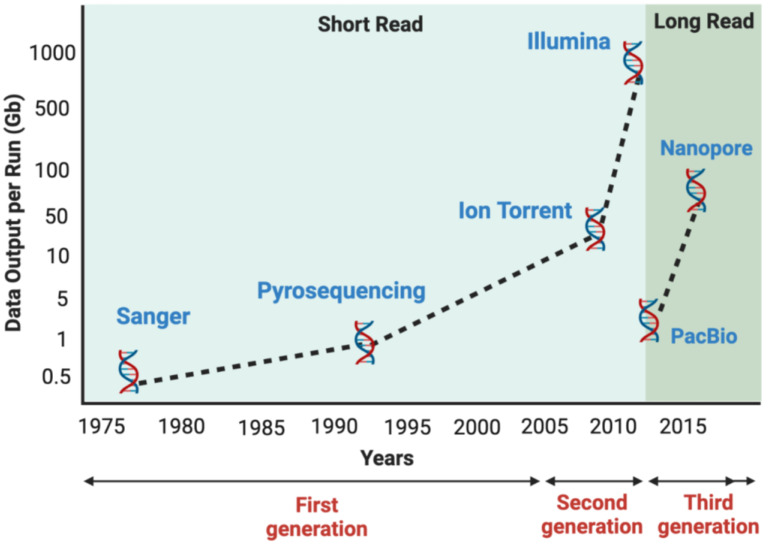
“The first generation is represented by Sanger sequencing, the second by short-read sequencing, and the third by long-read sequencing [18].”
Brown, J. A., & Ricke, S. C. (2025) · Journal of Applied Microbiology · doi:10.1093/jambio/lxaf276 · Cited by 4
Beyond the Gut: Integrating Oral Microbiota into the Microbiota–Brain Axis in Depression
Rafique, Q. T., Gogoi, V., & Barah, P. (2025) · Molecular Neurobiology · doi:10.1007/s12035-025-05518-9 · Cited by 4
From microbes to medicine: How microbiota profiling is shaping the future of cancer therapy
Abdolshahi, A., Naderian, R., Tahmasebi, H., Paraandavaji, E., Hemmati, M. A., Kashanipoor, S., & Eslami, M. (2025) · Gene Reports · doi:10.1016/j.genrep.2025.102402 · Cited by 6
Evolving Landscape of Precision Medicine in Bladder Cancer: From Challenges to Clinical Impact
Ye, T., Qadir, J., Peng, G., Liu, L., & Cheng, L. (2025) · iLABMED · doi:10.1002/ila2.70045 · Cited by 4
Sex chromosome aneuploidy impacts on human gene expression and regulation: a systematic review
Legüe, M., Staszewski, M., Mastronardo, M. K., Butera, G., Dakic, A., & Raznahan, A. (2025) · Molecular Medicine · doi:10.1186/s10020-025-01404-1 · Cited by 5
“…Lau et al. 1982); the growing recognition that many individuals with SCAs still go undiagnosed (Sán-chez et al. 2023; Davis et al. 2024; Viuff et al. 2015); and the rapid expansion in our technological capacity for analysis of genome structure and function (Brittain et al. 2017; Satam et al. 2023).”
Atsawawaranunt, K., Stuart, K. C., Whibley, A. C., Ewart, K. M., Rollins, L. A., Johnson, R. N., & Santure, A. W. (2026) · Molecular Ecology · doi:10.1111/mec.70211 · Cited by 4
“Mynas from New Zealand, Australia, India, Fiji and South Africa (82 individuals from 11 populations) were sequenced using 150 bp paired-end reads on the Illumina NovaSeq platform, targeting 20× coverage (Atsawawaranunt et al. 2025).”
Turbocharging crop breeding with integrated biotechnology for a climate‐resilient future
Wang, Z., Yang, D., & Cao, X. U. (2026) · Journal of Integrative Plant Biology · doi:10.1111/jipb.70261 · Cited by 5
Metadata
- Authors
- Satam, H., Joshi, K., Mangrolia, U., Waghoo, S., Zaidi, G., Rawool, S., Thakare, R. P., Banday, S., Mishra, A. K., Das, G., & Malonia, S. K.
- Affiliations
- miBiome Therapeutics, Mumbai 400102, India
- University of Massachusetts Chan Medical School (US)
- Corresponding author
- Das, Gautam
- Malonia, Sunil K.
- ORCID
- Venue
- Biology
- Publisher
- MDPI AG
- Published
- 2023-07-13
- Volume
- 12
- Issue
- 7
- Pages
- 997
- ISSN
- 2079-7737 (ISSN-L)
- PMC
- PMC10376292
- OpenAlex
- W4384341779
- Semantic Scholar
- 101927542010533ce22bfbb49531026112406b8f
- Cited by
- 1,299
- References
- 205
- Citations by year
- 2026: 352 · 2025: 580 · 2024: 342 · 2023: 25
- FWCI
- 34.24
- Type
- journal article
- Language
- en
- Update notices
- correction (2023-07-13)
- Open access
- gold
- doi.org
- Licence
- Locations
- Biology (publishedVersion, cc-by)
- PubMed Central (publishedVersion, cc-by)
- PubMed (publishedVersion)
- DOAJ (DOAJ: Directory of Open Access Journals) (submittedVersion, cc-by-sa)
- Topics
- Life Sciences › Biochemistry, Genetics and Molecular Biology › Molecular Biology › Genomics and Phylogenetic Studies
- Life Sciences › Biochemistry, Genetics and Molecular Biology › Genetics › Genomics and Rare Diseases
- Life Sciences › Biochemistry, Genetics and Molecular Biology › Molecular Biology › Genetics, Bioinformatics, and Biomedical Research
- Keywords
- next-generation sequencing, RNA sequencing, genetic variation, gene expression profiling, epigenetic modifications, rare genetic disorders, cancer genomics, microbiome analysis, infectious disease diagnostics, population genetics, precision medicine, sequencing accuracy, bioinformatics algorithms
About these checks
Registry, retraction, Cites and statistics results are computed, not judged, with one exception: a printed reference that no index lists is read once by a model before it counts as a citation error. Claims are extracted by a model and kept only when their quote appears verbatim in the text; each cited source is then checked, with a model’s help, for whether it says what the claim relies on. Those verdicts can be wrong — read the claim’s quote and the cited source before relying on one.
Statistics and arithmetic are recomputed, not judged.
Confidence bands are shown only for fields calibrated on our annotated test set. None is calibrated yet, so no band is shown.
What counts as a claim ›How we measure confidence ›How we check this ›
Are you an author, or do you see a problem with this page? Request a review
Data sources
Bibliographic data: Semantic Scholar, OpenAlex, Crossref.
Contains information from the Semantic Scholar Academic Graph Datasets, made available under the ODC Attribution License (ODC-BY 1.0).
Semantic Scholar’s data is described in: Kinney, R., et al. (2023). The Semantic Scholar Open Data Platform. arXiv:2301.10140.
