

Next-Generation Sequencing Technology: Current Trends and Advancements
Open accessThe DOI matches its Crossref record; 206 of the 206 references it cites were found in a registry or an index.
Abstract
The advent of next-generation sequencing (NGS) has brought about a paradigm shift in genomics research, offering unparalleled capabilities for analyzing DNA and RNA molecules in a high-throughput and cost-effective manner. This transformative technology has swiftly propelled genomics advancements across diverse domains. NGS allows for the rapid sequencing of millions of DNA fragments simultaneously, providing comprehensive insights into genome structure, genetic variations, gene expression profiles, and epigenetic modifications. The versatility of NGS platforms has expanded the scope of genomics research, facilitating studies on rare genetic diseases, cancer genomics, microbiome analysis, infectious diseases, and population genetics. Moreover, NGS has enabled the development of targeted therapies, precision medicine approaches, and improved diagnostic methods. This review provides an insightful overview of the current trends and recent advancements in NGS technology, highlighting its potential impact on diverse areas of genomic research. Moreover, the review delves into the challenges encountered and future directions of NGS technology, including endeavors to enhance the accuracy and sensitivity of sequencing data, the development of novel algorithms for data analysis, and the pursuit of more efficient, scalable, and cost-effective solutions that lie ahead.
Overview
The claims and statistics of this paper haven’t been checked yet.
Free: it reads the open-access text and checks the first 5 claims that cite a source we can check. Create a free account to check every claim.
Integrity signals
Registry
Cites
Statistics
Figures
Verification
Claims the paper makes
The claims and statistics of this paper haven’t been checked yet.
Free: it reads the open-access text and checks the first 5 claims that cite a source we can check. Create a free account to check every claim.
Self-check
Percentages, sums and reported differences re-computed from the paper’s own numbers.
The self-check needs the paper’s full text.
Citations
Cites
1 retracted
[Retracted] A Comprehensive Review of Performance of Next‐Generation Sequencing Platforms
Pervez, M. T., Hasnain, M. J. U., Abbas, S. H., Moustafa, M. F., Aslam, N., & Shah, S. S. M. (2022) · BioMed Research International · doi:10.1155/2022/3457806 · Cited by 141 · cited 1×
“The commentator highlighted the point in the original article regarding the higher error rate of long-read sequencing compared to short-read sequencing.”
BackgroundRetractedModerated estimation of fold change and dispersion for RNA-seq data with DESeq2
Love, M. I., Huber, W., & Anders, S. (2014) · Genome Biology · doi:10.1186/s13059-014-0550-8 · Cited by 95,106 · cited 1×
“…Greengenes [155], Silva [156], RDP [157] Shotgun Metagenomics Taxonomic classification MetaPhlAn4 [158], Kaiju [159], Kraken [160] Assembly of metagenomic reads metaSPAdes [86], metaIDBA [87] Protein databases for taxonomic classification NCBI non-redundant protein database [83] Gene annotation…”
DNA sequencing with chain-terminating inhibitors
Sanger, F., Nicklen, S., & Coulson, A. R. (1977) · Proceedings of the National Academy of Sciences · doi:10.1073/pnas.74.12.5463 · Cited by 68,572 · cited 1×
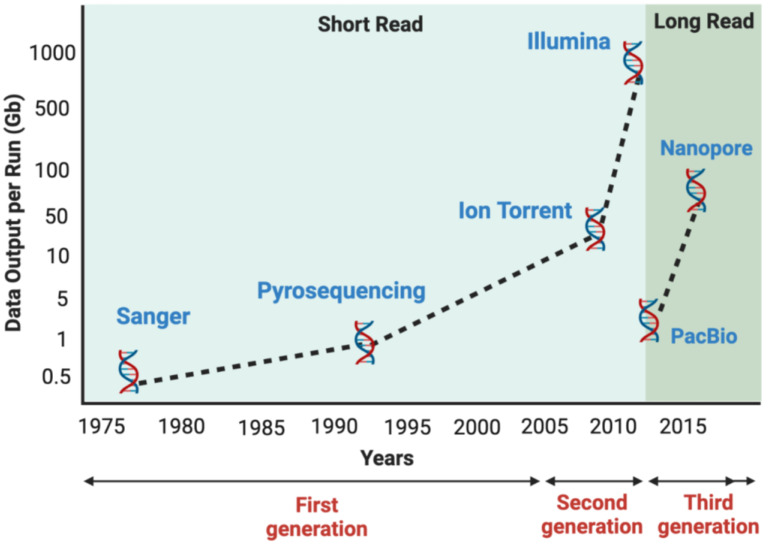
“However, the real breakthrough came with the introduction of the chain termination-based sequencing method by Fredrick Sanger [13].”
MethodTrimmomatic: a flexible trimmer for Illumina sequence data
Bolger, A. M., Lohse, M., & Usadel, B. (2014) · Bioinformatics · doi:10.1093/bioinformatics/btu170 · Cited by 65,548 · cited 2×
“Quality check of sequences FastQC [90], FASTX-toolkit [91], MultiQC [92] Trimming of adaptors and low-quality bases Trimmomatic [93], Cutadapt [94], fastp [95] Alignment of sequence reads to reference genome BWA [96], Bowtie [97], dragMAP [98]”
MethodFast gapped-read alignment with Bowtie 2
Langmead, B., & Salzberg, S. L. (2012) · Nature Methods · doi:10.1038/nmeth.1923 · Cited by 56,400 · cited 1×
“MethylDackel * Differential methylation Metilene [138], BSsmooth [139], methylKit [140] Epigenomics-ChIP [147], MAnorm [148], MMDiff [149]”
MethodSTAR: ultrafast universal RNA-seq aligner
Dobin, A., Davis, C. A., Schlesinger, F., Drenkow, J., Zaleski, C., Jha, S., Batut, P., Chaisson, M., & Gingeras, T. R. (2013) · Bioinformatics · doi:10.1093/bioinformatics/bts635 · Cited by 51,709 · cited 1×
“Commonly Used Tools 16s rRNA seq 16S rRNAseq analysis pipelines QIIME2 [82], mothur [153], USEARCH [154] Ribosomal RNA databases Greengenes [155], Silva [156], RDP [157] Shotgun Metagenomics Taxonomic classification MetaPhlAn4 [158], Kaiju [159], Kraken [160] Assembly of metagenomic reads metaSPAdes…”
MethodRobinson, M. D., McCarthy, D. J., & Smyth, G. K. (2010) · Bioinformatics · doi:10.1093/bioinformatics/btp616 · Cited by 41,364 · cited 1×
“…[155], Silva [156], RDP [157] Shotgun Metagenomics Taxonomic classification MetaPhlAn4 [158], Kaiju [159], Kraken [160] Assembly of metagenomic reads metaSPAdes [86], metaIDBA [87] Protein databases for taxonomic classification NCBI non-redundant protein database [83] Gene annotation Prokka [88],…”
BackgroundKEGG: Kyoto Encyclopedia of Genes and Genomes
Kanehisa, M. (2000) · Nucleic Acids Research · doi:10.1093/nar/28.1.27 · Cited by 37,077 · cited 2×
“Shotgun Metagenomics Taxonomic classification MetaPhlAn4 [158], Kaiju [159], Kraken [160] Assembly of metagenomic reads metaSPAdes [86], metaIDBA [87] Protein databases for taxonomic classification NCBI non-redundant protein database [83] Gene annotation Prokka [88], MetaGeneMark [89] Databases for functional annotati…”
QIIME allows analysis of high-throughput community sequencing data
Caporaso, J. G., Kuczynski, J., Stombaugh, J., Bittinger, K., Bushman, F. D., Costello, E. K., Fierer, N., Peña, A. G., Goodrich, J. K., Gordon, J. I., et al. (2010) · Nature Methods · doi:10.1038/nmeth.f.303 · Cited by 34,887 · cited 2×
“Quality check of sequences FastQC [90], FASTX-toolkit [91], MultiQC [92] Trimming of adaptors and low-quality bases Trimmomatic [93], Cutadapt [94], fastp [95] Alignment of sequence reads to reference genome BWA [96], Bowtie [97], dragMAP [98]”
BackgroundMethodCutadapt removes adapter sequences from high-throughput sequencing reads
Martin, M. (2011) · EMBnet.journal · doi:10.14806/ej.17.1.200 · Cited by 33,889 · cited 1×
“MethylDackel * Differential methylation Metilene [138], BSsmooth [139], methylKit [140] Epigenomics-ChIP [147], MAnorm [148], MMDiff [149]”
Method
Research works printed but not linked: 1
- Li H. Aligning sequence reads, clone sequences and assembly contigs with BWA-MEM arXiv 2013 1303.3997
Cited by
Items 801–900 of 1,002
Nanopore-based Single-molecule DNA Sequencing★
Bai, H., Tan, H., & Feng, J. (2025) · 化学学报 · doi:10.6023/a25050179 · Cited by 1
Edible microbiome and dietary microbiota: bridging two interrelated concepts
Kostić, T., Berg, G., Cotter, P. D., & Wicaksono, W. A. (2025) · Current Opinion in Food Science · doi:10.1016/j.cofs.2025.101356 · Cited by 3
Lorenzin, G., Carlin, M., Scarparo, C., Cardellini, M. C., Tota, F., & Naselli, A. (2025) · Antibiotics · doi:10.3390/antibiotics14101017 · Cited by 2
“Next-generation sequencing (NGS) has emerged as a valuable tool in clinical microbiology, enabling simultaneous identification of bacterial strains, detection of virulence factors such as toxin ETA and ETB, and assessment of antimicrobial resistance genes [12].”
Katase, N., Sakamoto, Y., Suda, H., Miyahara, R., & Fujita, S. (2025) · Cureus · doi:10.7759/cureus.94537 · Cited by 1
Zhang, C., Chen, Y., Hou, F., Li, Y., Wang, W., Guo, L., Zhang, C., Li, L., & Lu, C. (2025) · World Journal of Psychiatry · doi:10.5498/wjp.v15.i10.108776 · Cited by 1
Li, H., Lin, C., & Kuang, J. (2025) · Frontiers in Immunology · doi:10.3389/fimmu.2025.1654673 · Cited by 1
“The advent of advanced genomic technologies, especially next-generation sequencing, has offered a profound insight into the genetic underpinnings of various diseases (14).”
Zobje kot vir DNA za genetske preiskave forenzičnih in starodavnih skeletnih ostankov
Brezar, H., Pečar, B. M., & Pajnič, I. Z. (2025) · Slovenian Medical Journal · doi:10.6016/zdravvestn.3647 · Cited by 1
“Z večletnim razvojem novih tehnik, od reakcije PCR in sekvenciranja prve generacije vse do proteomike, li-podomike, izotopske analize in sekvenciranja tretje ge-neracije, je možna tudi analiza zelo kratkih fragmentov starodavne DNA (75).”
Integrating Morphological, Molecular and Whole Genome (Mitogenomic) Approaches in Indian Lepidoptera
Majeed, A., Ali, T., Hussian, Z., & Parey, S. H. (2025) · IntechOpen eBooks · doi:10.5772/intechopen.1011817 · Cited by 1
African Sheep Genetic Resources, Diversity and Unique Features
Bemji, M. N., Gaouar, S. B. S., Ameur, A. A., Belharfi, F. Z., Houaga, I., & Muigai, A. W. T. (2025) · Sustainable development goals series · doi:10.1007/978-3-031-92076-9_6 · Cited by 2
Emerging threats of monkeypox virus in 2024: current insights and future directions
Dhivya, L. S., Divya, R., Monisha, A., Harikrishnan, N., Begum, R. F., Nirenjen, S., Manisha, M., & Ankul Singh, S. (2025) · Future Science OA · doi:10.1080/20565623.2025.2577069 · Cited by 5
“…d. Next-Generation Sequencing (NGS) : Provides high-resolution genomic data for clade identification, mutation tracking, and evolutionary analysis [62]. while critical for surveillance, it is costly, requires specialist expertise, and is generally confined to reference laboratories [63]. e.…”
Genome-based approaches for disease diagnosis
Tiwari, P., Katiyar, H., Singh, R., & Shukla, A. K. (2025) · Elsevier eBooks · doi:10.1016/b978-0-443-21980-1.00002-4 · Cited by 2
Genetic Manipulation Tools in Leishmania: From CRISPR/Cas9 to Vaccine Strategies for Disease Control
GÜNDOĞDU, M., & İşlek, Z. (2025) · Acta Parasitologica · doi:10.1007/s11686-025-01161-5 · Cited by 1
“…which contributes to the comprehension of disease-causing pathways and the identification of novel therapeutic targets for con - trolling leishmaniasis [140 ] Altogether, new generation sequencing methods were also developed [ 142] and shed light on the mechanism of Leishmania parasites.”
Liu, Z., Wu, R., Li, H., Cong, B., & Sun, H. (2025) · International Journal of Legal Medicine · doi:10.1007/s00414-025-03656-2 · Cited by 4
Zhu, H., Li, X., Xu, Y., Zhang, X., Long, R., Wang, D., Li, R., Yan, Z., Wang, X., & Li, M. (2025) · Agriculture · doi:10.3390/agriculture15222392 · Cited by 1
Role of next generation sequencing in neonatal diagnosis and screening
Ali, S., & Agrawal, P. B. (2025) · Journal of Neuromuscular Diseases · doi:10.1177/22143602251394481 · Cited by 1
Genomic approaches for biofilm analysis and control
Dada, N. Y., Mukherjee, A., Chheda, B., Chikhale, R., Bhogale, O., Kizhakethil, R. V., Sarmah, A., Ravichandran, V., Guldhe, A., & Kamble, S. S. (2025) · Elsevier eBooks · doi:10.1016/b978-0-443-21851-4.00014-5 · Cited by 2
Chen, J. J., Gong, G., Huang, S., Chen, Y., Yang, S., Shen, Q., Wang, X., Wu, P., Liu, Y., Ji, L., et al. (2025) · Transboundary and Emerging Diseases · doi:10.1155/tbed/5191656 · Cited by 2
“The rise of next-generation sequencing (NGS) has provided a novel technical approach for viromics research [22, 23].”
Stefano, M. D., van Olden, R. W., Arjmand, E., Nam, J., Jensen, L. D. F., Schäfer, B., Kirschner, J., Ferlini, A., Blankart, C. R., & Cassidy, R. (2025) · Genetics in Medicine · doi:10.1016/j.gim.2025.101655 · Cited by 1
Harnessing genomic technologies for modern soybean breeding
Yoon, C. W., Kang, Y., Chung, J., Bulos, M., Tae-Young, H., & Yu, J. (2025) · Journal of Crop Science and Biotechnology · doi:10.1007/s12892-025-00328-w · Cited by 3
“Second-generation sequencing platforms such as Illumina were subsequently widely adopted, enabling high-density SNP array construction, genome-wide association studies (GWAS), and fine mapping of loci controlling key traits such as yield, disease resistance, and seed composition (Satam et al. 2023).”
Dzhashiashvili, Y., McBride, J. L., Fabyanic, E. B., Huang, X., Kelly, B. M., Walton-Gibbs, G. D., Vemireddi, V., Wicks, J. R., Nayal, M., Hippen, A. A., et al. (2025) · Molecular Therapy · doi:10.1016/j.ymthe.2025.12.009 · Cited by 1
Tao, S., Zi, S., Yan, L., Yang, M., Zhao, T., & Li, H. (2025) · Frontiers in Veterinary Science · doi:10.3389/fvets.2025.1700996 · Cited by 1
“Rikenellaceae_RC9_gut_group is involved in structural carbohydrate degradation (53) and has been positively correlated with meat fat content in Tan sheep (54, 55).”
Nano-Oligo Sensor for RNA Detection via a Two-Fold Amplification Process
Ghosh, M., Dasgupta, U., Doong, R., Vidić, J., Sadhukhan, P. C., Park, E. Y., & Chowdhury, A. D. (2025) · ACS Sensors · doi:10.1021/acssensors.5c02956 · Cited by 1
RNA Sequencing Platforms and Bioinformatics Tools
de Lena, P. G., Morales, D. V., Escandón, M., Meijón, M., Valledor, L., Cañal, M. J., & Pascual, J. (2026) · Concepts and strategies in plant sciences · doi:10.1007/978-981-95-5183-5_2 · Cited by 4
Future Directions in Cyanobacterial Bloom Research and Management Strategies
Khattak, W. A., Anas, M., Hakki, E. E., Mehmet Ali, A. V. C. I., Iqbal, J., Abbasi, B. A., Rehman, S., & Fahad, S. (2026) · Springer eBooks · doi:10.1007/978-3-032-06042-6_16 · Cited by 2
Next-Generation Sequencing of Human Genomes: Ethico-Legal Challenges with Regard to Data Security
Basu, A., & Mukhopadhyay, K. D. (2026) · Lecture notes in networks and systems · doi:10.1007/978-981-96-8632-2_9 · Cited by 1
Extreme Environment Streptomyces: Potential Sources for Novel Metabolites
Mayimele, N. N., & Gurusamy, M. (2026) · Springer eBooks · doi:10.1007/978-981-95-5803-2_14 · Cited by 1
Role of Genetic Engineering in Streptomycetes
Sharma, D., Saini, R., & Dhiman, N. (2026) · Springer eBooks · doi:10.1007/978-981-95-5803-2_16 · Cited by 1
MicroRNA-CRISPR biosensors for cancer diagnostics
Habib, A. H., Sain, Z. M., Rafeeq, M. M., Karami, M. M., Alsufyani, H. A., Iqbal, J., Chaieb, K., Altayb, H. N., Nadeem, M. S., Al-Abbasi, F. A., et al. (2026) · Clinica Chimica Acta · doi:10.1016/j.cca.2026.120837 · Cited by 1
Han, X., Luo, R., Liu, Q., Yuan, Z., & He, W. (2026) · Animals · doi:10.3390/ani16020246 · Cited by 1
“By delivering rapid and highly cost-effective approaches to generating large-scale DNA sequence data, NGS provides unprecedented insights into genome architecture and organization, overcoming many traditional barriers in fish genomics [7,8].”
Almutiri, A. S. (2026) · Journal of Biological Insights · doi:10.4197/jbi.1-1.2 · Cited by 1
Sharma, B., & Tewari, L. (2026) · Journal of Hazardous Materials · doi:10.1016/j.jhazmat.2026.141193 · Cited by 1
Zeng, W., Luo, W., Zhou, J., Wang, B., Qin, H., He, Y., Gablech, I., Korabečná, M., & Neužil, P. (2026) · TrAC Trends in Analytical Chemistry · doi:10.1016/j.trac.2026.118695 · Cited by 2
Zol, N. M. C., Hasain, Z., Shakrin, N. N. S. M., Jati, A. K. K., Chong, C. W., Loganathan, A. L., Lim, S. Y., Ling, F. Y., Mahmud, A. A., Bon, R. S., et al. (2025) · Malaysian Journal of Medicine and Health Sciences · doi:10.47836/mjmhs.v21.i6.1359 · Cited by 1
“Notably, NGS has significantly contributed to advancements in genomic research and clinical diagnostics, including the study of psychiatric and psychological disorders, as it enables beneficial multi-omics approaches (90).”
Oluwamakinde, E. P., Akpofure, O. D., Adeniran, S. O., & Fagbenro, O. S. (2026) · Discover Toxicology · doi:10.1007/s44339-026-00048-y · Cited by 1
“3 Visual representation of qPCR procedure diseases with unique genetic profiles within African populations such as malaria, sickle cell disease, HIV etc [54, 55].”
India-specific cardiogenetic aspects: Focus on cardiomyopathies and inherited arrhythmia syndromes
Chockalingam, P. S., & Anantharaman, R. (2026) · Indian Pacing and Electrophysiology Journal · doi:10.1016/j.ipej.2026.02.001 · Cited by 1
“NGS which refers to an advanced gene sequencing technology allows for the rapid sequencing of millions of DNA fragments simultaneously, providing comprehensive insights into genome structure, genetic variations, gene expression profiles and epigenetic modifications [53].”
Nutrigenomics for Sustainable Aquaculture
Chuphal, N., & Singha, K. P. (2026) · Springer eBooks · doi:10.1007/978-3-032-14971-8_2 · Cited by 1
Zhang, J., Cui, T., Liu, J., Liu, J., Xia, W., Ou, M., Luo, Q., Fei, S., Xinping, Z., KunCi, C. H. E. N., et al. (2026) · Aquaculture · doi:10.1016/j.aquaculture.2026.743737 · Cited by 1
Environmentally Driven Precision Neurology: A Neurogenomic Perspective
Ang, M. Y., Feisal, N. A. S., Ramli, M. D. C., & Hein, Z. M. (2026) · Biology · doi:10.3390/biology15030283 · Cited by 1
“Table 1 summarizes key environmental exposures and their neurological implications. https://doi.org/10.3390/biology15030283 [69] Decoding the complexity of gene-environment interactions requires a powerful suite of bioinformatics tools and technologies [78].”
InfluentialCasalone, E., Rosselli, M., Birolo, G., Debernardi, C., Catalano, C., Aneli, S., Allione, A., Primio, C. D., Peters, A., Gieger, C., et al. (2026) · Scientific Reports · doi:10.1038/s41598-026-38355-4 · Cited by 1
“The advent of high-throughput technologies in recent decades has significantly advanced our understanding of noncoding genomes 21 .”
Trait Discovery in the Post-NGS Era
Rathore, M., Jan, F., Aggarwal, N., Bashir, M., Prasad, S. H., Khan, M. A., Sofi, P. A., Chitikineni, A., Saini, D. K., & Mir, R. R. (2026) · Sustainability Sciences in Asia and Africa · doi:10.1007/978-981-95-5109-5_12 · Cited by 1
Kim, E., Roh, G. S., & Kwon, S. G. (2026) · Frontiers in Oncology · doi:10.3389/fonc.2026.1772616 · Cited by 1
“Enhanced NGS technologies are advantageous in oncology, where tumor heterogeneity and mosaicism pose challenges for diagnosis and treatment (62, 69).”
Climatic resilient agriculture: harnessing cutting-edge technologies for innovation
Kumari, P., Kumari, B., Mehta, A., Khan, N. S., Ojha, K. K., & Dixit, A. K. (2026) · Elsevier eBooks · doi:10.1016/b978-0-443-40316-3.00014-x · Cited by 2
Towards standardization in pig microbiome research based on a comprehensive twenty-year review
Enokela, S. O., Yergaliyev, T., Flisikowski, K., Hornburg, S. C., Reyer, H., Tetens, J., Wimmers, K., Zentek, J., & Camarinha-Silva, A. (2026) · Animal Microbiome · doi:10.1186/s42523-026-00541-0 · Cited by 2
“The most recent, third-generation platforms, such as PacBio and Oxford Nanopore, have introduced innovative strategies to overcome the limitations of earlier systems, particularly by enabling the sequencing of much longer DNA fragments [93].”
InfluentialAdvances in molecular tools for elucidating nucleic acid biology in fungal pathogens
Schrettenbrunner, L., Mavani, N., Janevska, S., & Blango, M. G. (2026) · microLife · doi:10.1093/femsml/uqag008 · Cited by 1
Alberti, C., Berardinelli, A. L., Comi, G. P., Ottoboni, L., & Corti, S. P. (2026) · Cellular and Molecular Life Sciences · doi:10.1007/s00018-026-06164-7 · Cited by 1
Yu, L., Sun, J., Wang, Y., Tang, X., Tan, H., Zhou, H., Cheng, H., & Chen, Z. (2026) · Frontiers in Microbiology · doi:10.3389/fmicb.2026.1783610 · Cited by 1
Scoping Review of Global Kidney Genetics Clinic Models and Outcomes
Lim, R. S., Harris, T., Jefferis, J., Jahan, S., Lim, R. S., D’Arrietta, L. M., Ng, K. H., Chin, H.-L. L., Goh, L. L., Acharyya, S., et al. (2026) · Kidney International Reports · doi:10.1016/j.ekir.2026.104683 · Cited by 1
A Survey on the Coding for DNA Storage: Challenges, Algorithms, and Future Directions
Mu, L., Лиу, Л., Ding, L., & Zhu, Z. (2026) · IEEE Open Journal of the Communications Society · doi:10.1109/ojcoms.2026.3677114 · Cited by 1
“…for accuracy, its low throughput and high cost limit its suitability for large-scale DNA storage applications. b: Second-generation sequencing (Next-Generation Sequencing, NGS) NGS has emerged as a key technology for DNA storage retrieval, combining high throughput with cost efficiency [69].”
Advances in Avian Diagnostic Pathology: Current Trends, Challenges and Future Directions: A Review
Getnet, G. M., Getnet, M. A., & Shibabaw, A. (2026) · Veterinary Medicine and Science · doi:10.1002/vms3.70905 · Cited by 1
Agbarya, A., Shalata, W., Sabo, E., Saiegh, L., Shaham, Y., Nasrallah, H., Mhameed, K., Mazareb, S., Sheikh‐Ahmad, M., & Faber, D. L. (2026) · Diagnostics · doi:10.3390/diagnostics16071106 · Cited by 1
“Advanced next-generation sequencing (NGS) allows for the high-quality detection of a broad spectrum of mutations [7].”
Saeidnia, M., Shokri, M., Nourmohammadi, H., Radmehr, S., Babashahi, M., Moradi, M., Karimian, M., Panji, M., & Motevaseli, E. (2026) · Health Science Reports · doi:10.1002/hsr2.71873 · Cited by 1
“This integrated process has transformed genomic research [33, 34] and has enabled the expansion of NGS applications into various omics fields [35].”
Cancer detection: Screening tools and biomarker discoveries
Anas, M. (2026) · Elsevier eBooks · doi:10.1016/b978-0-443-33263-0.00007-3 · Cited by 1
Potential Breakthroughs and Future Research Directions
Das, N., Kumar, S., & Basu, M. (2026) · Springer eBooks · doi:10.1007/978-981-95-6845-1_24 · Cited by 1
A cost‐effective DNA extraction protocol for long‐read sequencing in non‐model plants
Gaischuk, S., Marchetti, C. F., Petrillo, E., Rabanal, F. A., Weigel, D., Bellora, N., & Arana, M. V. (2026) · Applications in Plant Sciences · doi:10.1002/aps3.70055 · Cited by 1
Basheeruddin, M., Qausain, S., Anjankar, A., & Khan, F. I. (2026) · Oncology Reviews · doi:10.3389/or.2026.1809836 · Cited by 2
“Learning about both genetic and epigenetic causes contributes to better diagnosis and prognosis which helps select targeted therapy methods (7).”
Artificial intelligence, omics, and biomarkers: Redefining lung cancer early detection
Nizam, A., Shireen, N., Hasan, M. R., Singh, S., Farooqui, M. R., Naithani, D., & Farooqi, H. (2026) · Current Problems in Cancer · doi:10.1016/j.currproblcancer.2026.101312 · Cited by 1
Expectations and Realities of Adaptive Sampling in Nanopore Sequencing
Savari, A., & Magierowski, S. (2026) · DNA · doi:10.3390/dna6020023 · Cited by 1
“Despite major advances in library preparation and bioinformatic automation, most next-generation sequencing (NGS) workflows still depend on batch processing and multi-step turnaround, creating a persistent gap between raw data generation and biologically interpretable output [6,7].”
Vitale, D., Colarossi, L., Russo, G., Scimone, C., Cozzolino, D., Luca, C. D., Prjibelski, A. D., Mikheenko, A., Colarossi, C., Muti, F. D., et al. (2026) · Pathologica · doi:10.32074/1591-951x-1936 · Cited by 1
The role of liquid biopsy in the molecular characterization of HPV-related cancers
Zebardast, A., & Javadi, K. (2026) · Folia Microbiologica · doi:10.1007/s12223-026-01503-4 · Cited by 1
MXenes surface functionalization in electrochemical aptasensors: Advances and future perspectives
Jayakumar, K., Ramasundaram, S., Oh, T. H., & Park, J. P. (2026) · Materials Today Nano · doi:10.1016/j.mtnano.2026.100849 · Cited by 1
The Role of Next-Generation Sequencing in Cardiovascular Disease: A New Era of Precision Cardiology
Αγιαννιτόπουλος, Κ., Papageorgiou, A., Kouvidi, E., Kalampoka, E., Papadopoulou, A., Philippou, Α., Papadodima, S. A., Traikov, L. L., & Angouras, D. C. (2026) · Life · doi:10.3390/life16050796 · Cited by 1
“Next-generation sequencing (NGS) has been instrumental in this paradigm shift, allowing for the simultaneous interrogation of numerous genes and illuminating the molecular etiology of diseases once categorized solely by clinical phenotype [11].”
Xu, H., Han, S., Niu, Y., Han, Y., Yu, J., Zheng, Q., Zhang, G., Chen, S., Chi, X., & Zhang, F. (2026) · BMC Genomics · doi:10.1186/s12864-026-13034-w · Cited by 1
“These innovations have greatly streamlined the process of obtaining plant organelle genomes [81], facilitating robust investigations into species phylogeny, adaptive evolution, and speciation processes by providing high-resolution organ-ellar markers.”
Reverse Genetics of Orthoflaviviruses: Strategies for Constructing Functional or Infectious cDNA
Lee, Y.-M. (2026) · Journal of Medical Virology · doi:10.1002/jmv.71007 · Cited by 1
“Integrating RG with high‐throughput sequencing [109, 110] and single‐cell and spatial transcriptomics [111–113] will deepen our understanding of genome replication, gene expression, genetic diversity, viral evolution, virus–cell interactions, and host responses.”
From genomes to interventions: computational strategies transforming parasitology
Mohammed, K., El-Kady, A. M., Elshabrawy, H. A., & Khodary, M. (2026) · Frontiers in Veterinary Science · doi:10.3389/fvets.2026.1823640 · Cited by 1
“…transcriptomic, and proteomic data from diverse parasite species, propelled by next-generation sequencing technologies, has established a data-rich landscape where computational analysis is not just an auxiliary component but a critical necessity for deriving biological insights (9, 11, 12).”
Pandey, S., Parmar, B., Gupta, A., Singh, A. K., Chauhan, A., Huang, K., & Karan, R. (2026) · BMC Microbiology · doi:10.1186/s12866-026-05253-8 · Cited by 1
“These technologies allow the detection and analysis of rare and low-abundance community members that are often overlooked by conventional approaches [26, 30, 31].”
Molecular diagnostics in pancreas transplantation: past, present, and future
Swaab, T. D. A., Franken, C., Pol, R. A., Ramírez-Bajo, M. J., & Ventura‐Aguiar, P. (2026) · Frontiers in Molecular Biosciences · doi:10.3389/fmolb.2026.1825364 · Cited by 1
“The invention of polymerase chain reaction (PCR) in 1983 enabled next-generation sequencing (NGS) and made high-throughput RNA sequencing increasingly accessible and cost-effective (Satam et al., 2023).”
Challenging traditional classifications: Gene penetrance in genetically transitional disease
Gorevic, P. D., Niewold, T. B., Aksentijevich, I. A., Pfeffer, G., Guitart, J., Schulert, G. S., Hegde, M., Bowler, R. P., Gibson, G. C., & Yao, Q. (2026) · Genes & Diseases · doi:10.1016/j.gendis.2026.102334 · Cited by 1
He, Y., Song, H., Lo, Y.-T., Fan, Z., Zhang, Y., & Lu, J. (2026) · Analytical Chemistry · doi:10.1021/acs.analchem.6c01185 · Cited by 2
Li, J., Luo, J., Dou, Z., & Hou, M. (2026) · Scientific Reports · doi:10.1038/s41598-026-59570-z · Cited by 1
Shevchuk, V. M., Борисенко, І. В., Kostenko, M., Musiienko, O. L., & Vyltsan, A. O. (2026) · Journal of Forensic Science and Medicine · doi:10.4103/jfsm.jfsm_87_25 · Cited by 1
Yousafzai, I. K., Mehreen, A., Fatima, N., Ahmad, H., Noreen, N., & Tariq, K. (2026) · Perspectives in Oncology Management and Research · doi:10.64229/6xvf1387 · Cited by 2
Genomic innovations in cancer prevention, diagnosis, prognosis and precision therapeutics
Ananda, H., Sahana, S. R., Murthy, S. R., Kunnath, A. N., Prashant, A., Kaifi, J. T., Kiran, P. K., & Suvilesh, K. N. (2026) · Frontiers in Genetics · doi:10.3389/fgene.2026.1828450 · Cited by 2
Kothavade, R. (2026) · Applied and Environmental Microbiology · doi:10.1128/aem.00950-26 · Cited by 1
“…amplicon sequencing provides efficiency when specific pathogens are known, whereas untargeted approaches—including metagenomic sequencing and hybrid-capture methods—enable broader detection of known and unknown agents at the expense of increased complex ity and resource requirements (136–138).”
Pagliaro, R., Perrotta, F., Zamparelli, S. S., Carrozzo, V. M., Cipriano, A., Mondoni, M., Stella, G. M., Bianco, A., & Scialò, F. (2026) · Current Issues in Molecular Biology · doi:10.3390/cimb48070721 · Cited by 1
Artificial intelligence derived virtual oncology
Lyu, C., Yao, D., Yin, F., Liu, Z., Liu, B., Ma, H., & Sun, T. (2026) · The Innovation Oncology · doi:10.59717/j.xinn-oncol.2026.100028 · Cited by 1
Sherigar, P., Herga, S. K., Pai, A. G., Mailankody, S., & Udupa, K. (2026) · Cancer Medicine · doi:10.1002/cam4.71497 · Cited by 1
Καπέλιος, Κ., Manousaki, H., Kotsira, V., Sinnis, C., Xiropotamos, P., Dalamagas, T., & Georgakilas, G. K. (2026) · NAR Genomics and Bioinformatics · doi:10.1093/nargab/lqag081 · Cited by 1
Kumari, P., Sudheesh, N., Kumar, B. K., Afrough, B., & Jagadesh, A. (2026) · Virology Journal · doi:10.1186/s12985-026-03269-0 · Cited by 1
Integrative Bioinformatics Approaches in Environmental Biotechnology: A Review
Teklay, Y. T. (2026) · The Scientific World JOURNAL · doi:10.1155/tswj/3495506 · Cited by 1
“Moreover, high-throughput sequencing technologies, such as Illumina sequencing and nanopore sequencing, provide unprecedented scalability and accuracy, allowing researchers to generate vast amounts of genomic data quickly and cost-effectively [47].”
Sugarcane in the age of omics and artificial intelligence
Sforça, D. A., Moraes, A. D. C. L., Pinheiro, R. R., Dias, D. T., de Deus, I. G., Begnami, I. D. S., da Silva, M. F., Francisco, F. R., & de Souza, A. P. (2026) · Advances in botanical research · doi:10.1016/bs.abr.2026.07.009 · Cited by 1
Li, L., Soriano, L. D., Kedir, W. M., Hoch, F. L., & Loke, D. K. (2026) · Molecular Biomedicine · doi:10.1186/s43556-026-00498-1 · Cited by 1
Jones, A., Pritha, A. N., Aguilar, A. M., Pasmay, A. A., Carter, J. R., Mellios, N., & Noor, S. (2026) · Alcoholism Clinical and Experimental Research · doi:10.1111/acer.70406 · Cited by 1
“RNA samples were sent to CD Genomics, where additional RNA quality assessments were performed, and RNA-sequencing data were generated through next- generation-sequencing technologies (NGS)- based long-read bulk RNA sequencing (Satam et al. 2023).”
Das, J. K., & Maheshwari, A. (2026) · Newborn · doi:10.5005/jp-journals-11002-0171 · Cited by 1
Fraiture, M., Gobbo, A., Papazova, N., & Roosens, N. H. C. (2023) · Fermentation · doi:10.3390/fermentation9110926 · Cited by 1
Yee, Y. S., Tahir, N. D. M., Shariff, M., & Izzati, U. Z. (2023) · F1000Research · doi:10.12688/f1000research.141307.1 · Cited by 1
Siblos, S. K. V., & Tabugo, S. R. M. (2024) · Biodiversitas Journal of Biological Diversity · doi:10.13057/biodiv/d250107 · Cited by 2
“NGS has various applications, spanning whole genome sequencing, RNA-seq, metagenomics, and epigenomics, advancing our understanding of genetics and molecular biology (Satam et al. 2023).”
Current State of Research on Potential Biomarkers for Trisomy18 and 21 in Pregnancy Screening
balawi, A. N. A., Ameen, F., & Elmetwalli, A. (2024) · Journal of Disability Research · doi:10.57197/jdr-2024-0046 · Cited by 2
“By comparing the sequence of the fetus’s DNA to the reference genome, NGS can identify copy number variations, including trisomy (Satam et al., 2023).”
BackgroundCharacterization of the Common Genetic Variation in the Spanish Population of Navarre
Maillo, A., Huergo, E., Apellániz-Ruiz, M., Lafuente, E. U., Miranda, M., Salgado, J., Pasalodos-Sánchez, S., Delgado-Mora, L., Teijido, Ó., Goicoechea, I., et al. (2024) · Genes · doi:10.3390/genes15050585 · Cited by 1
“In recent years, the use of NGS in patient healthcare has increased due to technological advances, cost reduction, and enhanced e ffi ciency [1].”
BackgroundBioinformatics Databases and Tools for Analysis of Multi-omics
Pham, C. A., Ngo, A. D., Bui, N. L., & Chu, D. (2024) · Springer eBooks · doi:10.1007/978-981-97-1844-3_4 · Cited by 1
Precision Medicine in Hepatobiliary Diseases: A Clinical Review.
Bansal, N. K., Kumar, A., Sharma, P., Anikhandi, S., Khare, S., & Arora, A. (2024) · Journal of Internal Medicine Science & Art · doi:10.36013/jimsa.v5i.142 · Cited by 2
“This high-throughput approach has drastically reduced the cost and time required for sequencing, making genomic information more accessible [31].”
BackgroundMahmoud, S. H., & Khalil, A. A. (2024) · Elsevier eBooks · doi:10.1016/b978-0-443-18866-4.00002-x · Cited by 2
Sola, F., Ayala, D., Pulido, M. R., Ayala, R., López‐Cerero, L., Hernández, I., & Ruiz, D. (2024) · Bioinformatics Advances · doi:10.1093/bioadv/vbae129 · Cited by 1
“Developments in large-scale molecular biology techniques such as next-generation sequencing (Goodwin et al. 2016, Satam et al. 2023), microarrays, and other omics techniques (Zhang et al. 2019) have led to an explosion in the amount of available biological sequences.”
BackgroundTechniques for Studying the Microbiome
Zain, M., Saba, S., Hussain, A., Khalid, J., Janiad, S., Mahmood, S., & Cheema, M. T. (2024) · Springer eBooks · doi:10.1007/978-981-97-3790-1_3 · Cited by 1
Practicing Model of Relationship Between Caring Leadership and Attitude Towards Teaching Profession
Azmi, A. N. (2024) · Advances in educational marketing, administration, and leadership book series · doi:10.4018/979-8-3693-9215-7.ch009 · Cited by 2
Christinat, Y., Hamelin, B., Alborelli, I., Angelino, P., Barbié, V., Bisig, B., Dawson, H., Frattini, M., Grob, T. J., Jochum, W., et al. (2024) · Archiv für Pathologische Anatomie und Physiologie und für Klinische Medicin · doi:10.1007/s00428-024-03951-0 · Cited by 2
Exploring the Future of Biostatistics in Genomic Research: Opportunities and Challenges
Li, M. (2024) · Genomics and Applied Biology · doi:10.5376/gab.2024.15.0019 · Cited by 3
Exploring the Horizon of Cancer Research: Pioneering Breakthroughs in Diagnostics and Theranostics
Bhattacharya, S., & Bhirud, D. (2025) · BENTHAM SCIENCE PUBLISHERS eBooks · doi:10.2174/9789815305906125010005 · Cited by 1
Ayeni, R. A., Amisu, B. O., Ayantunji, A. R., Ahmed, M. M., Okesanya, O. J., Kab, T., & Ukoaka, B. M. (2025) · Exploration of Medicine · doi:10.37349/emed.2025.1001292 · Cited by 1
Perspective Chapter: Technological Advances in Population Genetics
Ullah, A. (2025) · Genetics. · doi:10.5772/intechopen.1009271 · Cited by 1
Zhang, W., Zhou, L., & Zhang, D. (2024) · Genetics and Molecular Research · doi:10.4238/gmr2371 · Cited by 1
Metadata
- Authors
- Satam, H., Joshi, K., Mangrolia, U., Waghoo, S., Zaidi, G., Rawool, S., Thakare, R. P., Banday, S., Mishra, A. K., Das, G., & Malonia, S. K.
- Affiliations
- miBiome Therapeutics, Mumbai 400102, India
- University of Massachusetts Chan Medical School (US)
- Corresponding author
- Das, Gautam
- Malonia, Sunil K.
- ORCID
- Venue
- Biology
- Publisher
- MDPI AG
- Published
- 2023-07-13
- Volume
- 12
- Issue
- 7
- Pages
- 997
- ISSN
- 2079-7737 (ISSN-L)
- PMC
- PMC10376292
- OpenAlex
- W4384341779
- Semantic Scholar
- 101927542010533ce22bfbb49531026112406b8f
- Cited by
- 1,299
- References
- 205
- Citations by year
- 2026: 352 · 2025: 580 · 2024: 342 · 2023: 25
- FWCI
- 34.24
- Type
- journal article
- Language
- en
- Update notices
- correction (2023-07-13)
- Open access
- gold
- doi.org
- Licence
- Locations
- Biology (publishedVersion, cc-by)
- PubMed Central (publishedVersion, cc-by)
- PubMed (publishedVersion)
- DOAJ (DOAJ: Directory of Open Access Journals) (submittedVersion, cc-by-sa)
- Topics
- Life Sciences › Biochemistry, Genetics and Molecular Biology › Molecular Biology › Genomics and Phylogenetic Studies
- Life Sciences › Biochemistry, Genetics and Molecular Biology › Genetics › Genomics and Rare Diseases
- Life Sciences › Biochemistry, Genetics and Molecular Biology › Molecular Biology › Genetics, Bioinformatics, and Biomedical Research
- Keywords
- next-generation sequencing, RNA sequencing, genetic variation, gene expression profiling, epigenetic modifications, rare genetic disorders, cancer genomics, microbiome analysis, infectious disease diagnostics, population genetics, precision medicine, sequencing accuracy, bioinformatics algorithms
About these checks
Registry, retraction, Cites and statistics results are computed, not judged, with one exception: a printed reference that no index lists is read once by a model before it counts as a citation error. Claims are extracted by a model and kept only when their quote appears verbatim in the text; each cited source is then checked, with a model’s help, for whether it says what the claim relies on. Those verdicts can be wrong — read the claim’s quote and the cited source before relying on one.
Statistics and arithmetic are recomputed, not judged.
Confidence bands are shown only for fields calibrated on our annotated test set. None is calibrated yet, so no band is shown.
What counts as a claim ›How we measure confidence ›How we check this ›
Are you an author, or do you see a problem with this page? Request a review
Data sources
Bibliographic data: Semantic Scholar, OpenAlex, Crossref.
Contains information from the Semantic Scholar Academic Graph Datasets, made available under the ODC Attribution License (ODC-BY 1.0).
Semantic Scholar’s data is described in: Kinney, R., et al. (2023). The Semantic Scholar Open Data Platform. arXiv:2301.10140.
