

Biofilm Resilience: Molecular Mechanisms Driving Antibiotic Resistance in Clinical Contexts
Open accessThe DOI matches its Crossref record; 386 of the 386 references it cites were found in a registry or an index; none of the 595 sources its claims cite is checked for support yet.
Abstract
Healthcare-associated infections pose a significant global health challenge, negatively impacting patient outcomes and burdening healthcare systems. A major contributing factor to healthcare-associated infections is the formation of biofilms, structured microbial communities encased in a self-produced extracellular polymeric substance matrix. Biofilms are critical in disease etiology and antibiotic resistance, complicating treatment and infection control efforts. Their inherent resistance mechanisms enable them to withstand antibiotic therapies, leading to recurrent infections and increased morbidity. This review explores the development of biofilms and their dual roles in health and disease. It highlights the structural and protective functions of the EPS matrix, which shields microbial populations from immune responses and antimicrobial agents. Key molecular mechanisms of biofilm resistance, including restricted antibiotic penetration, persister cell dormancy, and genetic adaptations, are identified as significant barriers to effective management. Biofilms are implicated in various clinical contexts, including chronic wounds, medical device-associated infections, oral health complications, and surgical site infections. Their prevalence in hospital environments exacerbates infection control challenges and underscores the urgent need for innovative preventive and therapeutic strategies. This review evaluates cutting-edge approaches such as DNase-mediated biofilm disruption, RNAIII-inhibiting peptides, DNABII proteins, bacteriophage therapies, antimicrobial peptides, nanoparticle-based solutions, antimicrobial coatings, and antimicrobial lock therapies. It also examines critical challenges associated with biofilm-related healthcare-associated infections, including diagnostic difficulties, disinfectant resistance, and economic implications. This review emphasizes the need for a multidisciplinary approach and underscores the importance of understanding biofilm dynamics, their role in disease pathogenesis, and the advancements in therapeutic strategies to combat biofilm-associated infections effectively in clinical settings. These insights aim to enhance treatment outcomes and reduce the burden of biofilm-related diseases.
Overview
CoChat Summary
TL;DR
This review synthesizes molecular mechanisms of biofilm antibiotic resistance and the clinical burden of biofilm-associated healthcare infections, medical-device infections, chronic wounds, dental disease, and surgical site infections. It highlights emerging anti-biofilm strategies including DNase, RIP, DNABII antibodies, bacteriophages, antimicrobial peptides, nanoparticles, antimicrobial coatings, and lock solutions, while emphasizing diagnostic and economic challenges.
Key findings
- Biofilm resistance mechanisms include the EPS physical barrier, diminished growth/metabolic activity, horizontal gene transfer, stress responses, quorum-sensing-regulated efflux pumps, and persister cells; biofilm bacteria can be as much as 1000 times more resistant to antibiotics than planktonic counterparts.
- WHO predicts 7% of acute-care patients in high-income countries and 15% in low- and middle-income countries acquire at least one HAI; 1 in 10 HAI-affected patients do not survive; US HAIs cause over 88,000 deaths annually and an estimated USD 4.5 billion economic burden; the UK annual HAI financial burden is estimated at GBP 774 million.
- Approximately 95% of sampled hospital surfaces contain dry surface biofilms; biofilms are found in around 60% of chronic wounds; surgical site infections affect roughly 0.5% to 3% of surgical patients, and more than 80% are associated with biofilm-forming bacteria; SSIs constituted up to 18.4% of HAIs in Europe (2016–2017) and 20% of all HAIs in the United States.
- Economic costs include central venous catheter-related infections estimated at USD 11.5 billion globally, catheter-associated urinary tract infections affecting approximately 150 million individuals annually and adding USD 1 billion, and prosthetic joint infection revision surgeries contributing USD 7849 million annually.
Methods
- Design: a thorough literature review using Google Scholar, PubMed, and Scopus, focused on articles published from 1 January 2018 to 31 December 2024, with keywords including biofilms, HAIs, bacterial adhesion, and microbial drug resistance.
- Inclusion criteria: experimental research, randomized controlled trials, reviews, and epidemiological studies; exclusion criteria: editorials, theses, case reports, and abstracts not in English.
- No primary data collection, systematic review protocol, meta-analysis, or quality appraisal is described in the text.
Limitations
- The paper does not state a dedicated limitations section; it states only exclusion criteria: editorials, theses, case reports, and non-English abstracts were excluded.
- Evident from the text: as a narrative literature review, it does not report systematic search counts, risk-of-bias/quality assessment, or meta-analysis, and it synthesizes heterogeneous study types.
- Evident from the text: the 2018–2024 publication window and English-language restriction may limit coverage of older foundational or non-English evidence.
Model-written summary. Check it against the paper before relying on it.
Integrity signals
Registry
Cites
Statistics
Figures
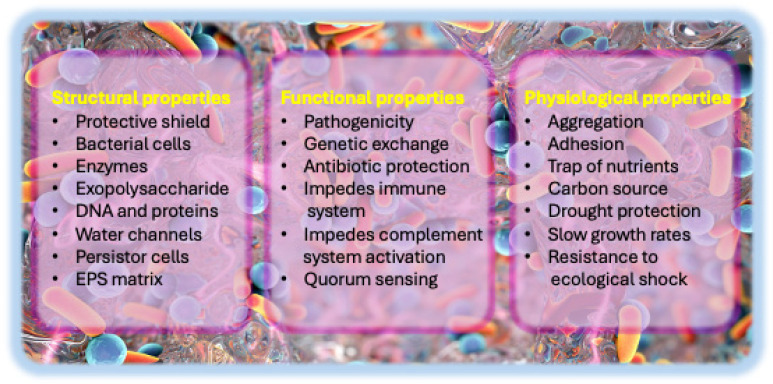
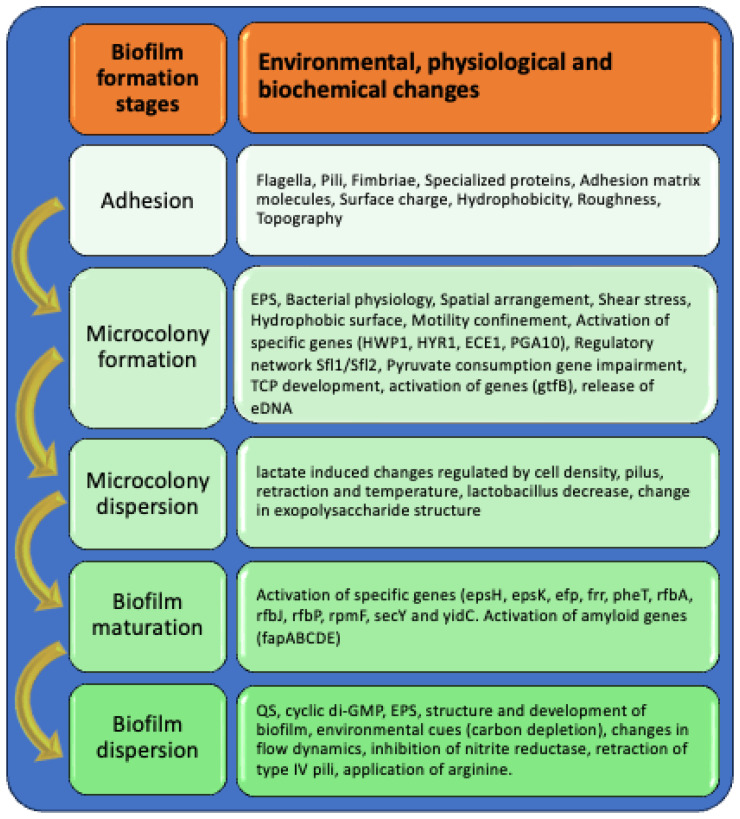
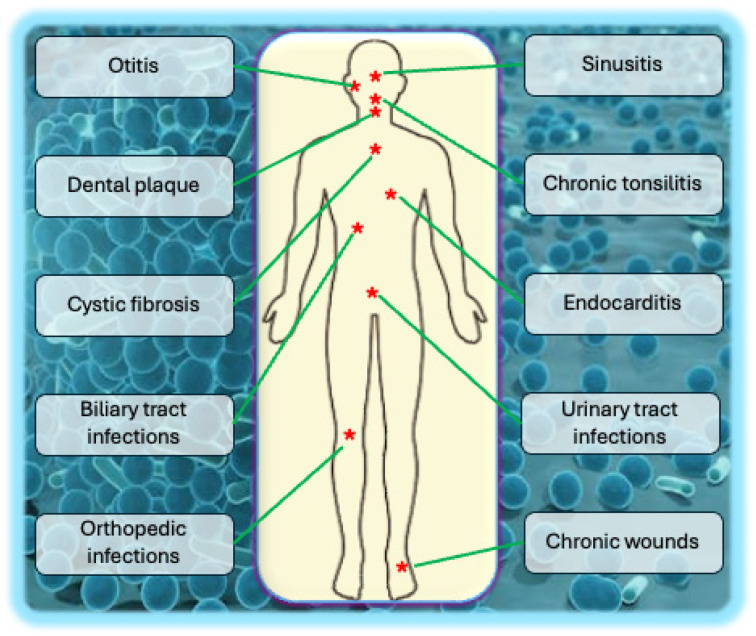
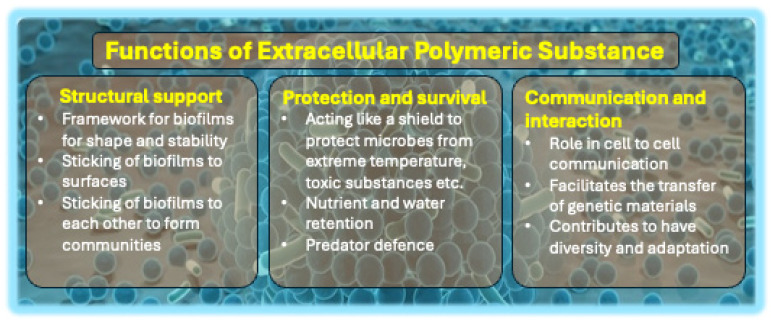
Verification
Claims the paper makes
0 Valid · 0 Not valid · 391 Not checked · 54 Own results and interpretations
None of the sources cited for this claim have been checked yet.
In the paper
“Biofilms, organized microbial communities enveloped in a self-synthesized extracellular polymeric substance (EPS) matrix, significantly contribute to healthcare-associated infections (HAIs) and other microbial illnesses.”
§ Biofilm Resilience: Molecular Mechanisms Driving Antibiotic Resistance in Clinical Contexts > 1. Introduction
What the sources say
- Not checked yetcites [1] Fleming D. Rumbaugh K.P. The Consequences of Biofilm Dispersal on the Host Sci. Rep. 2018 8 10738 10.1038/s41598-018-29121-2 30013112 PMC6048044 source
- Not checked yetcites [2] Nguyen P.-T. Nguyen T.H. Bui D.-C. Hong P.-T. Hoang Q.-K. Nguyen H.-V. Exopolysaccharide Production by Lactic Acid Bacteria: The Manipulation of Environmental Stresses for Industrial Applications AIMS Microbiol. 2020 6 451 469 10.3934/microbiol.2020027 33364538 PMC7755584 source
- Not checked yetcites [3] Dong H. Yang K. Li Q. Xiu W. Ding M. Shan J. Mou Y. Photocatalytic Cu2WS4 Nanocrystals for Efficient Bacterial Killing and Biofilm Disruption Int. J. Nanomed. 2022 17 2735 2750 10.2147/IJN.S360246 35769516 PMC9234186 source
plainstates a cause- Asserted: passes — The authors put it forward as true.
- Checkable: passes — It can be checked against evidence.
- Load-bearing: passes — The paper’s conclusions depend on it.
- Based: passes — The paper gives a reason why it holds.
None of the sources cited for this claim have been checked yet.
In the paper
“EPS, consisting of polysaccharides, proteins, extracellular DNA (eDNA), and lipids, improves adhesion, sequesters nutrients, and protects bacteria from external pressures, such as antibiotics and immunological reactions.”
§ Biofilm Resilience: Molecular Mechanisms Driving Antibiotic Resistance in Clinical Contexts > 1. Introduction
What the sources say
- Not checked yetcites [1] Fleming D. Rumbaugh K.P. The Consequences of Biofilm Dispersal on the Host Sci. Rep. 2018 8 10738 10.1038/s41598-018-29121-2 30013112 PMC6048044 source
- Not checked yetcites [2] Nguyen P.-T. Nguyen T.H. Bui D.-C. Hong P.-T. Hoang Q.-K. Nguyen H.-V. Exopolysaccharide Production by Lactic Acid Bacteria: The Manipulation of Environmental Stresses for Industrial Applications AIMS Microbiol. 2020 6 451 469 10.3934/microbiol.2020027 33364538 PMC7755584 source
- Not checked yetcites [3] Dong H. Yang K. Li Q. Xiu W. Ding M. Shan J. Mou Y. Photocatalytic Cu2WS4 Nanocrystals for Efficient Bacterial Killing and Biofilm Disruption Int. J. Nanomed. 2022 17 2735 2750 10.2147/IJN.S360246 35769516 PMC9234186 source
plain- Asserted: passes — The authors put it forward as true.
- Checkable: passes — It can be checked against evidence.
- Load-bearing: passes — The paper’s conclusions depend on it.
- Based: passes — The paper gives a reason why it holds.
None of the sources cited for this claim have been checked yet.
In the paper
“Its involvement in antibiotic resistance makes it a critical target for methods designed to break biofilms and address related illnesses [1,2,3].”
§ Biofilm Resilience: Molecular Mechanisms Driving Antibiotic Resistance in Clinical Contexts > 1. Introduction
What the sources say
- Not checked yetcites [1] Fleming D. Rumbaugh K.P. The Consequences of Biofilm Dispersal on the Host Sci. Rep. 2018 8 10738 10.1038/s41598-018-29121-2 30013112 PMC6048044 source
- Not checked yetcites [2] Nguyen P.-T. Nguyen T.H. Bui D.-C. Hong P.-T. Hoang Q.-K. Nguyen H.-V. Exopolysaccharide Production by Lactic Acid Bacteria: The Manipulation of Environmental Stresses for Industrial Applications AIMS Microbiol. 2020 6 451 469 10.3934/microbiol.2020027 33364538 PMC7755584 source
- Not checked yetcites [3] Dong H. Yang K. Li Q. Xiu W. Ding M. Shan J. Mou Y. Photocatalytic Cu2WS4 Nanocrystals for Efficient Bacterial Killing and Biofilm Disruption Int. J. Nanomed. 2022 17 2735 2750 10.2147/IJN.S360246 35769516 PMC9234186 source
plainstates a cause- Asserted: passes — The authors put it forward as true.
- Checkable: passes — It can be checked against evidence.
- Load-bearing: passes — The paper’s conclusions depend on it.
- Based: passes — The paper gives a reason why it holds.
None of the sources cited for this claim have been checked yet.
In the paper
“Biofilm-forming bacteria, including Staphylococcus aureus, Coagulase-negative staphylococci (CoNS), Pseudomonas aeruginosa, and Acinetobacter baumannii, exhibit resistance to antibiotics that can be as much as 1000 times greater than that of their planktonic counterparts [11,12,13].”
§ Biofilm Resilience: Molecular Mechanisms Driving Antibiotic Resistance in Clinical Contexts > 1. Introduction
What the sources say
- Not checked yetcites [11] Abdelraheem W.M. Refaie M.M.M. Yousef R.K.M. Fatah A.S.A.E. Mousa Y.M. Rashwan R. Assessment of Antibacterial and Anti-Biofilm Effects of Vitamin C Against Pseudomonas Aeruginosa Clinical Isolates Front. Microbiol. 2022 13 847449 10.3389/fmicb.2022.847449 35668756 PMC9163820 source
- Not checked yetcites [12] Shenkutie A.M. Yao M. Siu G.K.H. Wong B. Leung P.H. Biofilm-Induced Antibiotic Resistance in Clinical Acinetobacter Baumannii Isolates Antibiotics 2020 9 817 10.3390/antibiotics9110817 33212840 PMC7698371 source
- Not checked yetcites [13] Silva V. Correia E. Pereira J.E.L. González-Machado C. Capita R. Alonso-Calleja C. Igrejas G. Poeta P. Exploring the Biofilm Formation Capacity in S. Pseudintermedius and Coagulase-Negative Staphylococci Species Pathogens 2022 11 689 10.3390/pathogens11060689 35745543 PMC9229561 source
plainstates an association- Asserted: passes — The authors put it forward as true.
- Checkable: passes — It can be checked against evidence.
- Load-bearing: passes — The paper’s conclusions depend on it.
- Based: passes — The paper gives a reason why it holds.
None of the sources cited for this claim have been checked yet.
In the paper
“Bacterial biofilms in the lungs of individuals with cystic fibrosis include clusters of microorganisms encased in EPS, all immersed in the dense sputum typical of the condition.”
§ Biofilm Resilience: Molecular Mechanisms Driving Antibiotic Resistance in Clinical Contexts > 3. Understanding Biofilms > 3.2. Role of Biofilm Formation in Disease Pathogenesis
What the sources say
- Not checked yetcites [39] Martin I. Waters V. Grasemann H. Approaches to Targeting Bacterial Biofilms in Cystic Fibrosis Airways Int. J. Mol. Sci. 2021 22 2155 10.3390/ijms22042155 33671516 PMC7926955 source
- Not checked yetcites [40] Morris A.J. Jackson L. CW Yau Y. Reichhardt C. Beaudoin T. Uwumarenogie S. Guttman K.M. Lynne Howell P. Parsek M.R. Hoffman L.R. The Role of Psl in the Failure to Eradicate Pseudomonas Aeruginosa Biofilms in Children with Cystic Fibrosis NPJ Biofilms Microbiomes 2021 7 63 10.1038/s41522-021-00234-3 34349133 PMC8338932 source
plain- Asserted: passes — The authors put it forward as true.
- Checkable: passes — It can be checked against evidence.
- Load-bearing: unclear — It is unclear whether the paper’s conclusions depend on it.
- Based: passes — The paper gives a reason why it holds.
247 more claims
Create a free account to see all 445 claims and to verify the 595 references still open.
- It may state two separate claims as one. 148
- Probably not a substantial claim. 60
Citations
Cites
Bacterial biofilm and associated infections
Jamal, M., Ahmad, W., Andleeb, S., Jalil, F., Imran, M., Nawaz, M. A., Hussain, T., Ali, M., Rafiq, M., & Kamil, M. A. (2018) · Journal of the Chinese Medical Association · doi:10.1016/j.jcma.2017.07.012 · Cited by 1,642
Antibiotics versus biofilm: an emerging battleground in microbial communities
Sharma, D., Misba, L., & Khan, A. U. (2019) · Antimicrobial Resistance & Infection Control · doi:10.1186/s13756-019-0533-3 · Cited by 1,553 · cited 1×
“The specialized cells found within biofilms have been recognized as a key factor in biofilm resistance and play a significant role in the recurrence of bacterial biofilms in medical and industrial settings [155].”
Roy, R., Tiwari, M., Donelli, G., & Tiwari, V. (2018) · Virulence · doi:10.1080/21505594.2017.1313372 · Cited by 1,523 · cited 1×
“This capability complicates surface sterilizing and heightens the risk of HAIs linked to this fungus [191].”
Biofilm Matrixome: Extracellular Components in Structured Microbial Communities
Karygianni, L., Ren, Z., Koo, H., & Thurnheer, T. (2020) · Trends in Microbiology · doi:10.1016/j.tim.2020.03.016 · Cited by 1,487 · cited 1×
“The mechanical properties could improve the biofilm’s resilience, allowing bacterial populations to withstand external stresses, such as antimicrobial treatments, more effectively [64].”
The value of antimicrobial peptides in the age of resistance
Magana, M., Pushpanathan, M., Santos, A. L., Leanse, L., Fernandez, M., Ioannidis, A., Giulianotti, M. A., Apidianakis, Y., Bradfute, S., Ferguson, A. L., et al. (2020) · The Lancet Infectious Diseases · doi:10.1016/s1473-3099(20)30327-3 · Cited by 1,150 · cited 1×
“An overview of strategies to prevent and manage biofilm-related infections is shown in [Table 3].”
Oral Biofilms: Pathogens, Matrix, and Polymicrobial Interactions in Microenvironments
Bowen, W. H., Burne, R. A., Wu, H., & Koo, H. (2018) · Trends in Microbiology · doi:10.1016/j.tim.2017.09.008 · Cited by 1,059 · cited 2×
“The biofilm They play a crucial role in developing some diseases [18]. matrix consists of eDNA, proteins, and polysaccharides, The creation of bio fi lms involves a series of stages, starting with reversible and irreversible a tt achment, proceeding to the production of EPS, and fi nally culminating…”
Immunology of Acute and Chronic Wound Healing
Raziyeva, K., Kim, Y., Zharkinbekov, Z., Kassymbek, K., Jimi, S., & Saparov, A. (2021) · Biomolecules · doi:10.3390/biom11050700 · Cited by 1,049
Biofilms: The Microbial “Protective Clothing” in Extreme Environments
Yin, W., Wang, Y., Liu, L., & He, J. (2019) · International Journal of Molecular Sciences · doi:10.3390/ijms20143423 · Cited by 1,004 · cited 1×
“This adaptive response enhances the biofilm structure and promotes the rapid evolution of resistance mechanisms within the bacterial community [122].”
Rumbaugh, K. P., & Sauer, K. (2020) · Nature Reviews Microbiology · doi:10.1038/s41579-020-0385-0 · Cited by 907 · cited 1×
“Increased or decreased temperatures may induce stress in microbial cells, promoting biofilm formation as a defensive mechanism against thermal stressors.”
Beyond Risk: Bacterial Biofilms and Their Regulating Approaches
Muhammad, M. H., Idris, A. L., Fan, X., Guo, Y., Yu, Y., Jin, X., Qiu, J., Guan, X., & Huang, T. (2020) · Frontiers in Microbiology · doi:10.3389/fmicb.2020.00928 · Cited by 860 · cited 1×
“Bio fi lms are complex and organized microbial communities surrounded by an EPS. production of EPS, and finally culminating in maturation [19] [Figure 2].”
Cited by
Items 301–303 of 303
Vandu, C. D., Okon, M. B., Fasogbon, I. V., Musyoka, A. M., Makena, W., Maduabuchi, P. A., Terkimbi, S. D., Agwu, E., & Aja, P. M. (2026) · MicrobiologyOpen · doi:10.1002/mbo3.70455
Gopi, A., Rao, S., Madhu, K., Joy, A. K., Kuttassery, F., Tachibana, H., Inoue, H., & Remello, S. N. (2026) · Research Square · doi:10.21203/rs.3.rs-11458221/v1
Zhang, Y., Zhao, J., Li, L., Wang, H., Zhang, Y., Yao, L., Rui, T., Wang, Q., Hu, X., Li, X., et al. (2026) · Materials Today Bio · doi:10.1016/j.mtbio.2026.103857
Metadata
- Authors
- Almatroudi, A.
- Affiliations
- Qassim University (SA)
- Corresponding author
- Almatroudi, Ahmad
- ORCID
- Almatroudi, Ahmad
- Venue
- Biology
- Publisher
- MDPI AG
- Published
- 2025-02-06
- Volume
- 14
- Issue
- 2
- Pages
- 165
- ISSN
- 2079-7737 (ISSN-L)
- PMC
- PMC11852148
- OpenAlex
- W4407193798
- Cited by
- 303
- References
- 379
- Citations by year
- 2026: 232 · 2025: 69
- FWCI
- 19.40
- Type
- journal article
- Language
- en
- Open access
- gold
- doi.org
- Licence
- Locations
- Biology (publishedVersion, cc-by)
- PubMed Central (publishedVersion, cc-by)
- PubMed (publishedVersion)
- DOAJ (DOAJ: Directory of Open Access Journals) (submittedVersion)
- Funders
- Qassim University ((QU-APC-2025))
- Topics
- Life Sciences › Biochemistry, Genetics and Molecular Biology › Molecular Biology › Bacterial biofilms and quorum sensing
- Health Sciences › Medicine › Infectious Diseases › Antifungal resistance and susceptibility
- Health Sciences › Medicine › Infectious Diseases › Antimicrobial Resistance in Staphylococcus
- Keywords
- biofilm, antibiotic resistance, persister cells, nosocomial infections, device-related infection, surgical site infection, chronic wounds, oral complications, phage therapy, antimicrobial peptides, antimicrobial coatings, disinfectant resistance, infection control
About these checks
Registry, retraction, Cites and statistics results are computed, not judged, with one exception: a printed reference that no index lists is read once by a model before it counts as a citation error. Claims are extracted by a model and kept only when their quote appears verbatim in the text; each cited source is then checked, with a model’s help, for whether it says what the claim relies on. Those verdicts can be wrong — read the claim’s quote and the cited source before relying on one.
A language model drew the claims from the paper on 2026-11-22, under version 3 of the claim definition (model deepseek-v4.1-flash, prompt extract-v3).
A second model labelled each claim on 2026-11-22 (model jev-1.13-20260917, definition revision gold-guideline-v0.2).
Statistics and arithmetic are recomputed, not judged.
Confidence bands are shown only for fields calibrated on our annotated test set. None is calibrated yet, so no band is shown.
What counts as a claim ›How we measure confidence ›How we check this ›
Are you an author, or do you see a problem with this page? Request a review
Data sources
Bibliographic data: Semantic Scholar, OpenAlex, Crossref.
Contains information from the Semantic Scholar Academic Graph Datasets, made available under the ODC Attribution License (ODC-BY 1.0).
Semantic Scholar’s data is described in: Kinney, R., et al. (2023). The Semantic Scholar Open Data Platform. arXiv:2301.10140.
