

The DOI matches its Crossref record; 82 of the 82 references it cites were found in a registry or an index.
Lactate as a Signaling Molecule That Regulates Exercise-Induced Adaptations
Open accessAbstract
Lactate (or its protonated form: lactic acid) has been studied by many exercise scientists. The lactate paradigm has been in constant change since lactate was first discovered in 1780. For many years, it was unfairly seen as primarily responsible for muscular fatigue during exercise and a waste product of glycolysis. The status of lactate has slowly changed to an energy source, and in the last two decades new evidence suggests that lactate may play a much bigger role than was previously believed: many adaptations to exercise may be mediated in some way by lactate. The mechanisms behind these adaptations are yet to be understood. The aim of this review is to present the state of lactate science, focusing on how this molecule may mediate exercise-induced adaptations.
Overview
The claims and statistics of this paper haven’t been checked yet.
Run the check — free, no account needed. It reads the open-access text and checks the sources it cites.
Integrity signals
Registry
Cites
Statistics
Figures
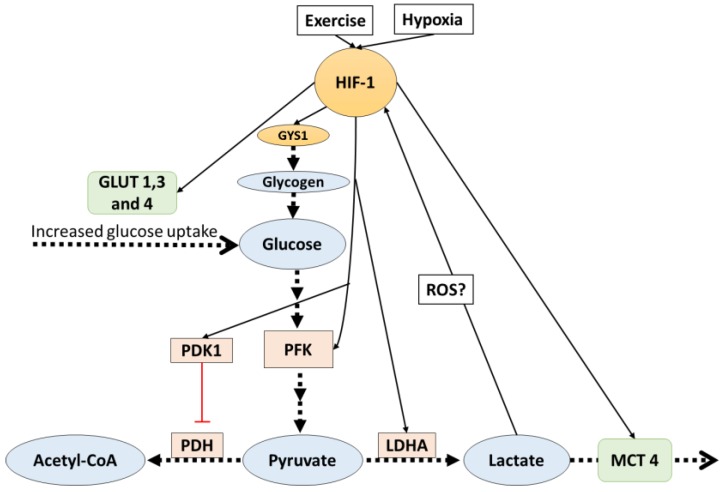
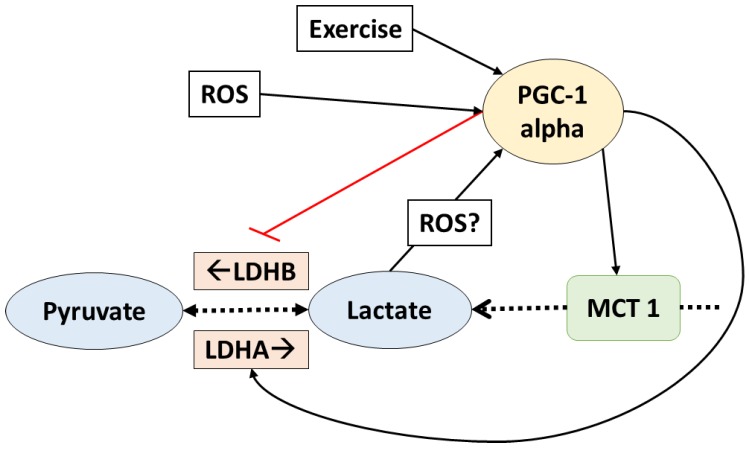
Verification
Claims the paper makes
The claims and statistics of this paper haven’t been checked yet.
Run the check — free, no account needed. It reads the open-access text and checks the sources it cites.
Claims other papers make about this one
Each is checked against this paper’s own text: does it say what the citing paper says it does?
In the citing paper
“in skeletal muscle, myocytes secrete factors such as lactate41, musclin43 and myostatin44 that couple exercise to changes in mitochondrial biogenesis and myocyte substrate utilization.”
From Exerkines in health, resilience and disease (2022) · cites this paper as [41]
In the citing paper
“Exerkines are not merely cytokines, however, as hormones, neurotransmitters or metabolites associated with exercise, such as catecholamines40, lactate41 or FFAs29, can also serve as exerkines with endocrine signalling potential42.”
From Exerkines in health, resilience and disease (2022) · cites this paper as [41]
Self-check
Percentages, sums and reported differences re-computed from the paper’s own numbers.
The self-check needs the paper’s full text.
Citations
Cites
Upstream and downstream of mTOR
Hay, N., & Sonenberg, N. (2004) · Genes & Development · doi:10.1101/gad.1212704 · Cited by 4,181
Kim, J.-W., Tchernyshyov, I., Semenza, G. L., & Dang, C. V. (2006) · Cell Metabolism · doi:10.1016/j.cmet.2006.02.002 · Cited by 3,905
SATELLITE CELL OF SKELETAL MUSCLE FIBERS
Mauro, A. (1961) · The Journal of Cell Biology · doi:10.1083/jcb.9.2.493 · Cited by 3,683
FGF-21 as a novel metabolic regulator
Kharitonenkov, A., Shiyanova, T. L., Koester, A., Ford, A. M., Micanovic, R., Galbreath, E. J., Sandusky, G. E., Hammond, L. J., Moyers, J. S., Owens, R. A., et al. (2005) · Journal of Clinical Investigation · doi:10.1172/jci23606 · Cited by 2,125
Semenza, G. L., Jiang, B.-H., Leung, S. W., Passantino, R., Concordet, J.-P., Maire, P., & Giallongo, A. (1996) · Journal of Biological Chemistry · doi:10.1074/jbc.271.51.32529 · Cited by 1,752
Astrocyte-Neuron Lactate Transport Is Required for Long-Term Memory Formation
Suzuki, A., Stern, S. A., Bozdagi, O., Huntley, G. W., Walker, R. H., Magistretti, P. J., & Alberini, C. M. (2011) · Cell · doi:10.1016/j.cell.2011.02.018 · Cited by 1,711
Improved Docking of Polypeptides with Glide
Tubert-Brohman, I., Sherman, W., Repasky, M., & Beuming, T. (2013) · Journal of Chemical Information and Modeling · doi:10.1021/ci400128m · Cited by 1,308
Biochemistry of exercise-induced metabolic acidosis
Robergs, R. A., Ghiasvand, F., & Parker, D. (2004) · American Journal of Physiology-Regulatory, Integrative and Comparative Physiology · doi:10.1152/ajpregu.00114.2004 · Cited by 1,304
Hydroxylation of HIF-1: Oxygen Sensing at the Molecular Level
Semenza, G. L. (2004) · Physiology · doi:10.1152/physiol.00001.2004 · Cited by 926
Ullah, M. S., Davies, A. J., & Halestrap, A. P. (2006) · Journal of Biological Chemistry · doi:10.1074/jbc.m511397200 · Cited by 894
Cited by
Sorted by citations
Items 101–173 of 173
Zhou, Y., Liu, X., Qi, Z., Huang, C., Yang, L., & Lin, D. (2024) · Journal of Cellular Physiology · doi:10.1002/jcp.31290 · Cited by 6
Exerkines: Benign adaptation for exercise and benefits for non-alcoholic fatty liver disease
Chen, Y., Zhang, Y., Jin, X., Hong, S., & Tian, H. (2024) · Biochemical and Biophysical Research Communications · doi:10.1016/j.bbrc.2024.150305 · Cited by 5
Nikitakis, I. S., Bogdanis, G. C., Paradisis, G. P., & Toubekis, A. G. (2025) · Journal of Sports Sciences · doi:10.1080/02640414.2025.2493021 · Cited by 5
Valério, D. F., Castro, A., Gáspari, A. F., & Barroso, R. (2023) · Metabolites · doi:10.3390/metabo13030335 · Cited by 5
Polenova, N., Varaeva, Y. R., Pogonchenkova, I. V., Николаевна, Л. Е., Shchikota, A. M., Shaposhnikova, N. N., Kiknadze, T. D., & Starodubova, A. V. (2023) · Problems of Balneology Physiotherapy and Exercise Therapy · doi:10.17116/kurort202310002152 · Cited by 5
Avandi, R. I., Rochmania, A., Nirwansyah, W. T., Mustar, Y. S., Arisanti, R. R. S., Pramono, B. A., & Pranoto, A. (2024) · Retos · doi:10.47197/retos.v57.103963 · Cited by 5
Baumgartner, N. W., Belbis, M. D., Kargl, C. K., Holmes, M. J., Gavin, T. P., Hirai, D. M., & Kao, S. (2024) · The Journal of Strength and Conditioning Research · doi:10.1519/jsc.0000000000004851 · Cited by 7
Arnold, M., Segiser, A., Graf, S., Méndez‐Carmona, N., Sanz, M. N., Wyss, R. K., Kalbermatter, N., Keller, N., Carrel, T. P., & Longnus, S. (2021) · Frontiers in Cardiovascular Medicine · doi:10.3389/fcvm.2021.669205 · Cited by 5
Gallstones: Bad Company for the Steatotic Liver
Alvaro, D. (2017) · Gastroenterology · doi:10.1053/j.gastro.2017.03.020 · Cited by 5
The Role of Biomarkers in Elite Sports
Anghel, L., Gurau, T. V., Gurău, G., Mușat, C. L., Voinescu, D. C., Onu, I., Cordun, M., Codreanu, C. M., & Iordan, D. A. (2023) · Balneo and PRM Research Journal · doi:10.12680/balneo.2023.581 · Cited by 6
Ahn, J. J., Lee, J. W., Nam, S. M., Kim, D. K., Cho, S. K., & Choi, H. (2024) · Chemico-Biological Interactions · doi:10.1016/j.cbi.2024.111089 · Cited by 4
Park, H., Kim, S., & Lee, K.-A. (2025) · PLoS ONE · doi:10.1371/journal.pone.0317197 · Cited by 4
Yap, J. L. Y., Wu, K. Y., Tai, Y. K., Fong, C. H. H., Manazir, N., Paul, A., Yeo, O., & Franco‐Obregón, A. (2025) · International Journal of Molecular Sciences · doi:10.3390/ijms26115423 · Cited by 4
Effects of inter-set stretching on acute hormonal and metabolic response: a pilot study
Marin, D. P., Urtado, C. B., Marques, C. G., Serafim, A. I. S., Polito, L. F. T., de Almeida, F. N., Prestes, J., & Otton, R. (2019) · Human Movement · doi:10.5114/hm.2019.79218 · Cited by 4
Kim, C., Kim, J., Kim, H., Kim, J., Min, S., & Park, D. (2017) · Exercise Science · doi:10.15857/ksep.2017.26.4.239 · Cited by 4
Grupo de Investigación Ciencias Aplicadas al Ejercicio, D. Y. S. G., Rojas, I. A. S., Colombia, Romero, D. M., Argüello-Gutiérrez, Y. P., Jiménez, L. E. C., Triana-Reina, H. R., Perez-Cebreros, E. A., Petro, J. L., & Bonilla, D. A. (2021) · RICYDE Revista Internacional de Ciencias del Deporte · doi:10.5232/ricyde2021.06502 · Cited by 4
Rondeau, N. C., Raup-Collado, J., Kogan, H. V., Cho, R. M., Lovinger, N. L., Wague, F., Lopatkin, A. J., Texeira, N. G., Flores, M. E., Rovnyak, D., et al. (2025) · Insects · doi:10.3390/insects16030300 · Cited by 6
Baumgartner, N. W., Belbis, M. D., Noh, K., Hirai, D. M., Amireault, S., & Kao, S. (2025) · Psychophysiology · doi:10.1111/psyp.70171 · Cited by 3
Chrimatopoulos, C., Chrimatopoulos, G., & Sakkas, V. A. (2023) · Chemometrics and Intelligent Laboratory Systems · doi:10.1016/j.chemolab.2023.104990 · Cited by 3
Tanjung, H., Tata, H. L., & Triadiati, T. (2023) · IOP Conference Series Earth and Environmental Science · doi:10.1088/1755-1315/1271/1/012023 · Cited by 3
Kyun, S., Kim, J., Hwang, D., Jang, I., Park, H., & Lim, K. (2024) · Physiological Reports · doi:10.14814/phy2.15952 · Cited by 3
Graf, S., Biemmi, V., Arnold, M., Segiser, A., Müller, A., Méndez‐Carmona, N., Egle, M., Siepe, M., Barile, L., & Longnus, S. (2024) · Journal of Cellular and Molecular Medicine · doi:10.1111/jcmm.18281 · Cited by 3
The Impact of Exercise Serum on Selected Parameters of CD4+ T Cell Metabolism
Palmowski, J., Gebhardt, K., Reichel, T., Frech, T., Ringseis, R., Eder, K., Renner-Sattler, K., & Krüger, K. (2021) · Immuno · doi:10.3390/immuno1030008 · Cited by 3
Influence of the Glycemic Index of Pre-exercise Meals in Sports Performance: A Systematic Review
Ferrugem, L., Martini, G., & de Souza, C. (2018) · International Journal of Medical Reviews · doi:10.29252/ijmr-050405 · Cited by 2
Stragier, S., Duchateau, J., COTTON, F. J., Smet, J., Wolff, F., Tresnie, J., & Carpentier, A. (2025) · Sports · doi:10.3390/sports13040111 · Cited by 3
Metabolic and immune links between sarcopenia and liver disease
Kotlyarov, S. N. (2025) · World Journal of Hepatology · doi:10.4254/wjh.v17.i8.109444 · Cited by 2
Glioma neuron symbiosis: a hypothesis
Schurr, A. (2025) · Frontiers in Neuroscience · doi:10.3389/fnins.2025.1646148 · Cited by 3
Nikitakis, I. S., & Toubekis, A. G. (2025) · European Journal of Applied Physiology · doi:10.1007/s00421-025-06090-9 · Cited by 4
The lactate shuttle in ageing: a metabolic bridge between muscle fatigue and brain resilience
Zhang, Y., Yang, W., & Tian, C. (2026) · Frontiers in Physiology · doi:10.3389/fphys.2026.1823430 · Cited by 2
Jang, I., Kyun, S., Hwang, D., Kim, T., Lim, K., Park, H., Kim, S.-W., & Kim, J. (2024) · Metabolites · doi:10.3390/metabo14040220 · Cited by 3
dos Santos, G. B. (2019) · Revista Brasileira de Nutrição Funcional · doi:10.32809/2176-4522.42.77.04 · Cited by 2
EMG-Based Detection of Minimum Effective Load With Robotic-Resistance Leg Extensor Training
Miyake, T., Ito, H., Okamura, N., Kobayashi, Y., Fujie, M. G., & Sugano, S. (2024) · IEEE Transactions on Human-Machine Systems · doi:10.1109/thms.2023.3347404 · Cited by 2
A Prospective Study of Lactate Levels in Uncomplicated Spontaneous and Induced Labor
Kleinmann, W. N., Zofkie, A. C., McIntire, D. D., & Adhikari, E. H. (2024) · American Journal of Perinatology · doi:10.1055/a-2302-8828 · Cited by 1
O’Brien, B. J., Evans, S., Worn, R. L., Lavender, A. P., Bell, L. R., & Cover, T. (2025) · Medical Hypotheses · doi:10.1016/j.mehy.2025.111725 · Cited by 1
Jiang, T., Li, A., Zhou, Q., Liu, T., Sun, B., Liu, K., & Yao, J. (2025) · IEEE Sensors Journal · doi:10.1109/jsen.2025.3610607 · Cited by 1
de Mello, A. P. D. F. A. C., Andrade‐Souza, V. A., LEARSI, S. K., Tomazini, F., Ataide‐Silva, T., Kuang, J., Bertuzzi, R., Leandro, C. G., Bishop, D. J., Lima‐Silva, A. E., et al. (2025) · Brazilian Journal of Medical and Biological Research · doi:10.1590/1414-431x2025e14500 · Cited by 1
Bırıncı, Y. Z., Pancar, S., Şimşek, H., Soylu, Y., Konuk, K., & ŞAHİN, Ş. (2026) · Scientific Reports · doi:10.1038/s41598-026-37728-z · Cited by 5
Gillet, A., Forton, K., Lamotte, M., Macera, F., Roussoulieres, A. L. S., Louis, P., Ibrahim, M., Dewachter, C., van de Borne, P., & Deboeck, G. (2023) · Journal of Clinical Medicine · doi:10.3390/jcm12247743 · Cited by 1
Bonet, J., Barbieri, E., Santoro, N., & Man, C. D. (2024) · Journal of Diabetes Science and Technology · doi:10.1177/19322968241266825 · Cited by 1
Kim, T., Hwang, D., Kyun, S., Jang, I., Kim, S.-W., Park, H., Hwang, H., Lim, K., & Kim, J. (2024) · Nutrients · doi:10.3390/nu16172831 · Cited by 1
Hepato‐splanchnic fluxes during exercise in patients with cirrhosis—a pilot study
Volianitis, S., Secher, N. H., Clemmesen, O., Ott, P., & Nielsen, H. B. (2024) · Physiological Reports · doi:10.14814/phy2.16162 · Cited by 1
Lactic Acidosis, Metformin Use, and Dose-Response Association
Gulli, G. (2018) · JAMA Internal Medicine · doi:10.1001/jamainternmed.2018.4433 · Cited by 1
Batista, P. B., Neto, S. G., de Quadros, D. G., de Araújo, G. G. L., de Souza, C. G., & Sabedot, M. A. (2019) · Animal Production Science · doi:10.1071/an18475 · Cited by 1
Corrigendum: Lactate Metabolism and Satellite Cell Fate
Nalbandian, M., Radak, Z. O., & Takeda, M. (2022) · Frontiers in Physiology · doi:10.3389/fphys.2021.817264 · Cited by 1
Self-citationHoene, M., Zhao, X., Hu, C., Birkenfeld, A. L., Peter, A., Niess, A. M., Moller, A., Li, Q., Lehmann, R., Plomgaard, P., et al. (2024) · medRxiv · doi:10.1101/2024.03.29.24305064 · Cited by 1
The effect of whole-body cryotherapy intervention after an exercise on MVIC and ROM of EIMD
Shin, S. P., Son, G. H., & Jeon, J. G. (2020) · The Journal of Korean Academy of Physical Therapy Science · doi:10.26862/jkpts.2020.12.27.3.45
Metabolic reprogramming and redox perturbations
Aboushousha, R. (2021) · Research Publications (Maastricht University) · doi:10.26481/dis.20211208ra
An Acute Bout of Exercise Enhances Hypothalamic Leptin Signaling via Central Lactate MetabolismPreprint
Chen, Y., Zhang, S., Ye, L., Chen, H., Yu, L., & Wu, D. (2022) · SSRN Electronic Journal · doi:10.2139/ssrn.4143299
Local Metabolic Factors and Vasoactivity
Gao, Y. (2022) · Springer eBooks · doi:10.1007/978-981-19-7122-8_9
Pascoalini, B., Dias, I. B. F., Dias, M. R., Miranda, F., de Souza, A. C. S., Novaes, J. D. S., Vieira, J. G., Junior, R. F. S., & de Salles, B. F. (2022) · Revista Brasileira de Ciência e Movimento · doi:10.31501/rbcm.v29i2.12114
Влияние содержания молочной кислоты в мышцах на выносливость спортсменов
Богачева, Е. В., & Коровенкова, С. В. (2023) · ТЕНДЕНЦИИ РАЗВИТИЯ НАУКИ И ОБРАЗОВАНИЯ · doi:10.18411/trnio-07-2023-321
Aveseh, M., Jahromi, M. K., Nemati, J., & Esmaeili‐Mahani, S. (2023) · Research in Sport Medicine and Technology · doi:10.61186/jsmt.21.25.1
Golikova, M. V., Yapryntsev, A. D., Jia, C., Fatyushina, E. V., Baranchikov, A. E., & Ivanov, V. K. (2023) · Журнал неорганической химии · doi:10.31857/s0044457x23601050
Effects of Extreme Physical and Mental Load on Circulating Exerkines in Professional Athletes
Ligetvári, R. (2024) · Pesci Egyetemi Archivum (University of Pécs) · doi:10.15170/pte.2024.013
LACTATE EFFECTS ON MUSCLE REGENERATION IN VIVO AND IN VITRO MODELS: A SYSTEMATIC REVIEW
Matos, T. F., Carli, M. E. C., de Moraes-Junior, F. B., de Lima, V. A., Mota, J. A. P. S., & Leite, N. (2024) · Revista Brasileira de Medicina do Esporte · doi:10.47870/1517-8692202531012021_0325i
EFEITO DO LACTATO NA REGENERAÇÃO MUSCULAR EM MODELOS IN VIVO E IN VITRO: UMA REVISÃO SISTEMÁTICA
Matos, T. F., Carli, M. E. C., de Moraes-Junior, F. B., de Lima, V. A., Mota, J. A. P. S., & Leite, N. (2024) · Revista Brasileira de Medicina do Esporte · doi:10.47870/1517-8692202531012021_0325p
Miyake, T., & Sugano, S. (2025) · IEEE/SICE International Symposium on System Integration (SII) · doi:10.1109/sii59315.2025.10870907
Lactate in Anaphylaxis: 100 Years On
Borzova, E. Y., & Gibbs, B. F. (2025) · Sports Medicine · doi:10.1007/s40279-025-02273-8
Yusifov, G. D., Khalilli, M. H., Hacımammadova, S. I., & Agayeva, S. R. (2025) · Scientific News of Academy of Physical Education and Sport · doi:10.28942/ssj.v7i2.879
Akbari, Z., Fatemikia, H., Karimi, Z., Tanha, K., Assadi, M., & Pourkhalili, K. (2025) · Research Square · doi:10.21203/rs.3.rs-7856193/v1
Robbins, J., Katz, D. H., Many, G. M., Rao, P., Smith, G. R., Tiwari, G., Jin, C. A., Spielmann, G., Montalvo, S., Iyer, G. R., et al. (2026) · bioRxiv (Cold Spring Harbor Laboratory) · doi:10.64898/2026.03.02.704798 · Cited by 2
Alves, T. H. O., Silva, J. R., Limeira, I. M., Rhein, S. O., & Souza, A. O. (2026) · Biology · doi:10.3390/biology15080607
Advances in near-infrared fluorescent probes for the tumor microenvironment
Hu, H., Zhang, C., Kong, X., Chen, Y., & Chen, R. (2026) · Journal of Translational Medicine · doi:10.1186/s12967-026-08240-9
Eidiyan-Kakhki, M. M., Nikolaidis, P. Τ., Willems, M. E. T., Clemente, F. M., رجبی, ح., Amani-Shalamzari, S., Motamedi, P., Salehpour, M., & Samadi, H. (2026) · Sport Sciences for Health · doi:10.1007/s11332-026-01813-7
Zhang, Z.-W., Zhou, Y., Dong, H.-M., Kong, J., Chen, B.-A., Chen, H.-B., & Wang, R.-C. (2026) · Psycho-Oncologie · doi:10.18282/po5898
Luan, C., Lei, C., & Liu, M. (2026) · Frontiers in Psychiatry · doi:10.3389/fpsyt.2026.1871773
Prawira, Y., Malik, S. G., Munasir, Z., Widyahening, I. S., Dewi, R., Alam, A., & Pudjiadi, A. H. (2026) · Immunological Medicine · doi:10.1080/25785826.2026.2715167
Wang, C., & Yang, H. (2026) · Frontiers in Physiology · doi:10.3389/fphys.2026.1912080
Architects of Aggression: The Molecular Blueprint of Glioma Progression
Aebisher, D., Tylutki, J., Myśliwiec, A., Kozak, N., & Bartusik‐Aebisher, D. (2026) · Genes · doi:10.3390/genes17091120
Qipo, O., Bautmans, I., Vints, W. A. J., Njemini, R., Mickevičienė, L., Česnaitienė, V. J., Levin, O., & Masiulis, N. (2026) · GeroScience · doi:10.1007/s11357-026-02601-4
Metadata
- Authors
- Nalbandian, M., & Takeda, M.
- Affiliations
- Doshisha University (JP)
- Corresponding author
- Nalbandian, Minas
- Venue
- Biology
- Publisher
- MDPI AG
- Published
- 2016-10-08
- Volume
- 5
- Issue
- 4
- Pages
- 38
- ISSN
- 2079-7737 (ISSN-L)
- PMC
- PMC5192418
- OpenAlex
- W2528335443
- Cited by
- 174
- References
- 82
- Citations by year
- 2026: 12 · 2025: 24 · 2024: 30 · 2023: 25 · 2022: 19 · 2021: 15 · 2020: 20 · 2019: 15 · 2018: 10 · 2017: 4
- FWCI
- 2.14
- Type
- journal article
- Language
- en
- Open access
- gold
- doi.org
- Licence
- Locations
- Biology (publishedVersion, cc-by)
- PubMed Central (publishedVersion, cc-by)
- PubMed (publishedVersion)
- DOAJ (DOAJ: Directory of Open Access Journals) (submittedVersion)
- Topics
- Health Sciences › Medicine › Physiology (medical) › Cardiovascular and exercise physiology
- Health Sciences › Medicine › Physiology (medical) › Exercise and Physiological Responses
- Health Sciences › Medicine › Orthopedics and Sports Medicine › Sports Performance and Training
- Keywords
- lactate, lactic acid, exercise-induced adaptations, signaling molecules, muscle fatigue, glycolysis, energy metabolism, exercise physiology
About these checks
Registry, retraction, Cites and statistics results are computed, not judged, with one exception: a printed reference that no index lists is read once by a model before it counts as a citation error. Claims are extracted by a model and kept only when their quote appears verbatim in the text; each cited source is then checked, with a model’s help, for whether it says what the claim relies on. Those verdicts can be wrong — read the claim’s quote and the cited source before relying on one.
Statistics and arithmetic are recomputed, not judged.
Confidence bands are shown only for fields calibrated on our annotated test set. None is calibrated yet, so no band is shown.
What counts as a claim ›How we measure confidence ›How we check this ›
Are you an author, or do you see a problem with this page? Request a review
