

The DOI matches its Crossref record; 82 of the 82 references it cites were found in a registry or an index.
Lactate as a Signaling Molecule That Regulates Exercise-Induced Adaptations
Open accessAbstract
Lactate (or its protonated form: lactic acid) has been studied by many exercise scientists. The lactate paradigm has been in constant change since lactate was first discovered in 1780. For many years, it was unfairly seen as primarily responsible for muscular fatigue during exercise and a waste product of glycolysis. The status of lactate has slowly changed to an energy source, and in the last two decades new evidence suggests that lactate may play a much bigger role than was previously believed: many adaptations to exercise may be mediated in some way by lactate. The mechanisms behind these adaptations are yet to be understood. The aim of this review is to present the state of lactate science, focusing on how this molecule may mediate exercise-induced adaptations.
Overview
The claims and statistics of this paper haven’t been checked yet.
Run the check — free, no account needed. It reads the open-access text and checks the sources it cites.
Integrity signals
Registry
Cites
Statistics
Figures
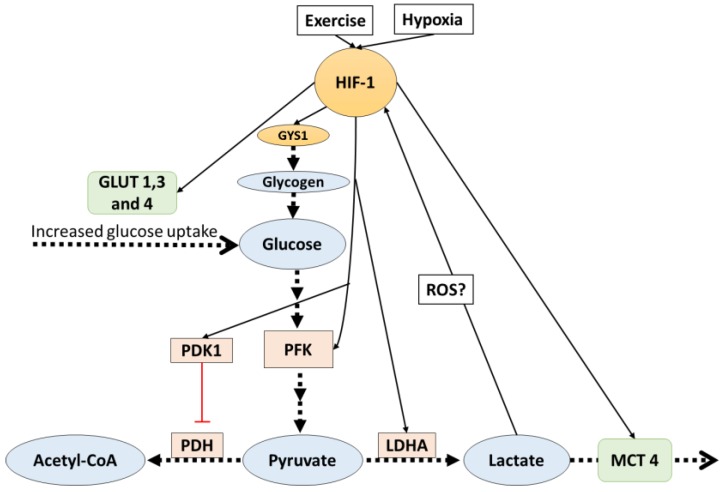
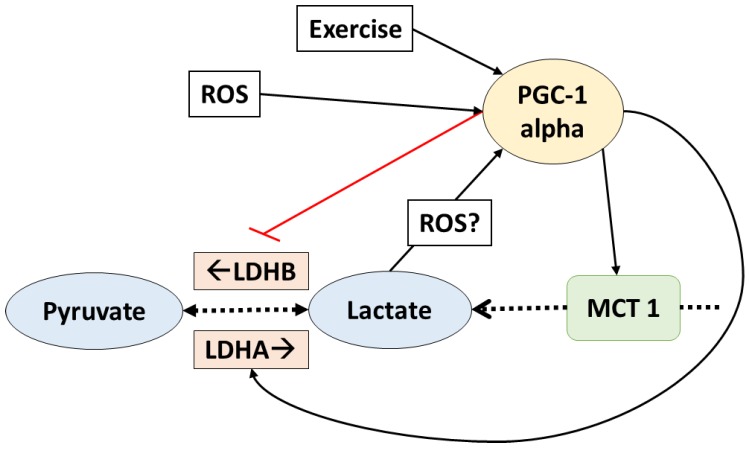
Verification
Claims the paper makes
The claims and statistics of this paper haven’t been checked yet.
Run the check — free, no account needed. It reads the open-access text and checks the sources it cites.
Claims other papers make about this one
Each is checked against this paper’s own text: does it say what the citing paper says it does?
In the citing paper
“in skeletal muscle, myocytes secrete factors such as lactate41, musclin43 and myostatin44 that couple exercise to changes in mitochondrial biogenesis and myocyte substrate utilization.”
From Exerkines in health, resilience and disease (2022) · cites this paper as [41]
In the citing paper
“Exerkines are not merely cytokines, however, as hormones, neurotransmitters or metabolites associated with exercise, such as catecholamines40, lactate41 or FFAs29, can also serve as exerkines with endocrine signalling potential42.”
From Exerkines in health, resilience and disease (2022) · cites this paper as [41]
Self-check
Percentages, sums and reported differences re-computed from the paper’s own numbers.
The self-check needs the paper’s full text.
Citations
Cites
Upstream and downstream of mTOR
Hay, N., & Sonenberg, N. (2004) · Genes & Development · doi:10.1101/gad.1212704 · Cited by 4,181
Kim, J.-W., Tchernyshyov, I., Semenza, G. L., & Dang, C. V. (2006) · Cell Metabolism · doi:10.1016/j.cmet.2006.02.002 · Cited by 3,905
SATELLITE CELL OF SKELETAL MUSCLE FIBERS
Mauro, A. (1961) · The Journal of Cell Biology · doi:10.1083/jcb.9.2.493 · Cited by 3,683
FGF-21 as a novel metabolic regulator
Kharitonenkov, A., Shiyanova, T. L., Koester, A., Ford, A. M., Micanovic, R., Galbreath, E. J., Sandusky, G. E., Hammond, L. J., Moyers, J. S., Owens, R. A., et al. (2005) · Journal of Clinical Investigation · doi:10.1172/jci23606 · Cited by 2,125
Semenza, G. L., Jiang, B.-H., Leung, S. W., Passantino, R., Concordet, J.-P., Maire, P., & Giallongo, A. (1996) · Journal of Biological Chemistry · doi:10.1074/jbc.271.51.32529 · Cited by 1,752
Astrocyte-Neuron Lactate Transport Is Required for Long-Term Memory Formation
Suzuki, A., Stern, S. A., Bozdagi, O., Huntley, G. W., Walker, R. H., Magistretti, P. J., & Alberini, C. M. (2011) · Cell · doi:10.1016/j.cell.2011.02.018 · Cited by 1,711
Improved Docking of Polypeptides with Glide
Tubert-Brohman, I., Sherman, W., Repasky, M., & Beuming, T. (2013) · Journal of Chemical Information and Modeling · doi:10.1021/ci400128m · Cited by 1,308
Biochemistry of exercise-induced metabolic acidosis
Robergs, R. A., Ghiasvand, F., & Parker, D. (2004) · American Journal of Physiology-Regulatory, Integrative and Comparative Physiology · doi:10.1152/ajpregu.00114.2004 · Cited by 1,304
Hydroxylation of HIF-1: Oxygen Sensing at the Molecular Level
Semenza, G. L. (2004) · Physiology · doi:10.1152/physiol.00001.2004 · Cited by 926
Ullah, M. S., Davies, A. J., & Halestrap, A. P. (2006) · Journal of Biological Chemistry · doi:10.1074/jbc.m511397200 · Cited by 894
Gomez-Cabrera, M.-C., Domenech, E., Romagnoli, M., Arduini, A., Borras, C., Pallardo, F. V., Sastre, J., & Viña, J. (2008) · The American Journal of Clinical Nutrition · doi:10.1093/ajcn/87.1.142 · Cited by 844
Cell–cell and intracellular lactate shuttles
Brooks, G. A. (2009) · The Journal of Physiology · doi:10.1113/jphysiol.2009.178350 · Cited by 833
Regulation of glut1 mRNA by Hypoxia-inducible Factor-1
Chen, C., Pore, N., Behrooz, A., Ismail‐Beigi, F., & Maity, A. M. (2001) · Journal of Biological Chemistry · doi:10.1074/jbc.m010144200 · Cited by 769
The monocarboxylate transporter family—Role and regulation
Halestrap, A. P., & Wilson, M. C. (2011) · IUBMB Life · doi:10.1002/iub.572 · Cited by 747
Liu, C., Wu, J., Zhu, J., Kuei, C., Yu, J., Shelton, J., Sutton, S. W., Li, X., Yun, S. J., Mirzadegan, T., et al. (2009) · Journal of Biological Chemistry · doi:10.1074/jbc.m806409200 · Cited by 606
Hypoxic Regulation of Lactate Dehydrogenase A
Firth, J. D., Ebert, B. L., & Ratcliffe, P. J. (1995) · Journal of Biological Chemistry · doi:10.1074/jbc.270.36.21021 · Cited by 576
Sonveaux, P., Copetti, T., De Saedeleer, C. J., Végran, F., Verrax, J., Kennedy, K. M., Moon, E. J., Dhup, S., Danhier, P., Frérart, F., et al. (2012) · PLoS ONE · doi:10.1371/journal.pone.0033418 · Cited by 536
HIF-Dependent Antitumorigenic Effect of Antioxidants In Vivo
Gao, P., Zhang, H., Dinavahi, R., Li, F., Xiang, Y., Raman, V., Bhujwalla, Z. M., Felsher, D. W., Cheng, L., Pevsner, J., et al. (2007) · Cancer Cell · doi:10.1016/j.ccr.2007.08.004 · Cited by 523
Lactate promotes plasticity gene expression by potentiating NMDA signaling in neurons
Yang, J., Ruchti, E., Petit, J.-M., Jourdain, P., Grenningloh, G., Allaman, I., & Magistretti, P. J. (2014) · Proceedings of the National Academy of Sciences · doi:10.1073/pnas.1322912111 · Cited by 504
Brain lactate metabolism: the discoveries and the controversies
Dienel, G. A. (2012) · Journal of Cerebral Blood Flow & Metabolism · doi:10.1038/jcbfm.2011.175 · Cited by 479
The lactate shuttle during exercise and recovery.
Brooks, G. A. (1986) · Medicine & Science in Sports & Exercise · doi:10.1249/00005768-198606000-00019 · Cited by 464
Lactate transport in skeletal muscle — role and regulation of the monocarboxylate transporter
Juel, C., & Halestrap, A. P. (1999) · The Journal of Physiology · doi:10.1111/j.1469-7793.1999.0633s.x · Cited by 448
Hashimoto, T., Hussien, R., Oommen, S., Gohil, K., & Brooks, G. A. (2007) · The FASEB Journal · doi:10.1096/fj.07-8174com · Cited by 442
Reactive Oxygen Species Are Signalling Molecules for Skeletal Muscle Adaptation
Powers, S. K., Duarte, J., Kavazis, A. N., & Talbert, E. E. (2010) · Experimental Physiology · doi:10.1113/expphysiol.2009.050526 · Cited by 440
Glycogen Synthetase Activity in Skeletal Muscle
Danforth, W. H. (1965) · Journal of Biological Chemistry · doi:10.1016/s0021-9258(17)45214-8 · Cited by 435
D-Lactate in Human and Ruminant Metabolism
Ewaschuk, J. B., Naylor, J. Μ., & Zello, G. A. (2005) · Journal of Nutrition · doi:10.1093/jn/135.7.1619 · Cited by 422
Hypoxia-induced reactive oxygen species formation in skeletal muscle
Clanton, T. L. (2007) · Journal of Applied Physiology · doi:10.1152/japplphysiol.01298.2006 · Cited by 401
Lactate Receptor Sites Link Neurotransmission, Neurovascular Coupling, and Brain Energy Metabolism
Lauritzen, K. H., Morland, C., Puchades, M. A., Holm‐Hansen, S., Hagelin, E. M. V., Lauritzen, F., Attramadal, H., Storm‐Mathisen, J., GJEDDE, A. H., & Bergersen, L. H. (2013) · Cerebral Cortex · doi:10.1093/cercor/bht136 · Cited by 367
Lactate-mediated glia-neuronal signalling in the mammalian brain
Tang, F., Lane, S., KORSAK, A. S., Paton, J. F. R., Gourine, A. V., Kasparov, S., & Teschemacher, A. G. (2014) · Nature Communications · doi:10.1038/ncomms4284 · Cited by 356
Irrcher, I., Ljubicic, V., & Hood, D. A. (2009) · American Journal of Physiology-Cell Physiology · doi:10.1152/ajpcell.00267.2007 · Cited by 356
(2003) · PubMed · Cited by 350
Lactate – a signal coordinating cell and systemic function
Philp, A., Macdonald, A. L., & Watt, P. (2005) · Journal of Experimental Biology · doi:10.1242/jeb.01961 · Cited by 328
New Insights Into the Role and Mechanism of Glycogen Synthase Activation by Insulin
Lawrence, J. C., & Roach, P. J. (1997) · Diabetes · doi:10.2337/diab.46.4.541 · Cited by 311 · cited 2×
“It should be noted that the primary limiting factors for glycogen synthesis (apart from substrates availability) is the activity level of glycogen synthase [35], which is upregulated by insulin [36] and glucose 6 phosphate [37], and inhibited by glycogen levels [38].”
BackgroundRole of GPR81 in lactate-mediated reduction of adipose lipolysis
Cai, T., Ren, N., Jin, L., Cheng, K., Kash, S. F., Chen, R., Wright, S. D., Taggart, A. K. P., & Waters, M. G. (2008) · Biochemical and Biophysical Research Communications · doi:10.1016/j.bbrc.2008.10.088 · Cited by 305
Effect of PH on muscle glycolysis during exercise.
Sutton, J., Jones, N., & Toews, C. (1981) · Clinical science · doi:10.1042/cs0610331 · Cited by 285
Lactate Activates HIF-1 in Oxidative but Not in Warburg-Phenotype Human Tumor Cells
Saedeleer, C. J. D., Copetti, T., Porporato, P. E., Verrax, J., Féron, O., & Sonveaux, P. (2012) · PLoS ONE · doi:10.1371/journal.pone.0046571 · Cited by 283
Pescador, N., Villar, D., Cifuentes, D., García-Rocha, M., Ortiz-Barahona, A., Vázquez, S., Ordóñez, Á., Cuevas, Y., Saez-Morales, D., García‐Bermejo, L., et al. (2010) · PLoS ONE · doi:10.1371/journal.pone.0009644 · Cited by 277
Donaldson, S. K. B., Hermansen, L., & Bolles, L. L. (1978) · Pflügers Archiv - European Journal of Physiology · doi:10.1007/bf00585248 · Cited by 275
Testosterone regulation of Akt/mTORC1/FoxO3a signaling in skeletal muscle
White, J. P., Gao, S., Puppa, M., Sato, S., Welle, S. L., & Carson, J. A. (2012) · Molecular and Cellular Endocrinology · doi:10.1016/j.mce.2012.10.019 · Cited by 267
Aerobically Derived Lactate Stimulates Revascularization and Tissue Repair via Redox Mechanisms
Hunt, T. K., Aslam, R. S., Beckert, S., Wagner, S., Ghani, Q. P., Hussain, M., Roy, S., & Sen, C. K. (2007) · Antioxidants and Redox Signaling · doi:10.1089/ars.2007.1674 · Cited by 263
Lactate fuels the human brain during exercise.
Quistorff, B., Secher, N. H., & Van Lieshout, J. J. (2008) · The FASEB Journal · doi:10.1096/fj.08-106104 · Cited by 262 · cited 1×
“Additionally, it was suggested that, during exercise, muscle-derived lactate may supply energy to the brain [74].”
BackgroundEffect of induced metabolic alkalosis on human skeletal muscle metabolism during exercise
Hollidge-Horvat, M. G., Parolin, M. L., Wong, D., Jones, N. L., & Heigenhauser, G. J. F. (2000) · American Journal of Physiology-Endocrinology and Metabolism · doi:10.1152/ajpendo.2000.278.2.e316 · Cited by 208
The role of glucose 6‐phosphate in the control of glycogen synthase
Viijlar‐Palasí, C., & Guinovart, J. J. (1997) · The FASEB Journal · doi:10.1096/fasebj.11.7.9212078 · Cited by 196
Wood, S. M., Wiesener, M. S., Yeates, K. M., Okada, N., Pugh, C. W., Maxwell, P. H., & Ratcliffe, P. J. (1998) · Journal of Biological Chemistry · doi:10.1074/jbc.273.14.8360 · Cited by 189
Is L-Lactate a Novel Signaling Molecule in the Brain?
Mosienko, V., Teschemacher, A. G., & Kasparov, S. (2015) · Journal of Cerebral Blood Flow & Metabolism · doi:10.1038/jcbfm.2015.77 · Cited by 179
Leite, T. C., Coelho, R. G., SILVA, D. N. N. D., Coelho, W. S., Marinho-Carvalho, M. M., & Sola‐Penna, M. (2010) · FEBS Letters · doi:10.1016/j.febslet.2010.11.009 · Cited by 166
Messonnier, L., Kristensen, M., Juel, C., & Denis, C. (2007) · Journal of applied physiology · doi:10.1152/japplphysiol.00691.2006 · Cited by 164
Leite, T. C., SILVA, D. N. N. D., Coelho, R. G., Zancan, P., & Sola‐Penna, M. (2007) · Biochemical Journal · doi:10.1042/bj20070687 · Cited by 156
Mobasheri, A., Richardson, S. M., Mobasheri, R., Shakibaei, M., & Hoyland, J. A. (2005) · PubMed · doi:10.14670/hh-20.1327 · Cited by 150
Defining the transcriptional signature of skeletal muscle stem cells1,2
Yablonka‐Reuveni, Z., Day, K. R., Vine, A. L., & Shefer, G. (2007) · Journal of Animal Science · doi:10.2527/jas.2007-0473 · Cited by 141
Summermatter, S., Santos, G., Pérez‐Schindler, J., & Handschin, C. (2013) · Proceedings of the National Academy of Sciences · doi:10.1073/pnas.1212976110 · Cited by 137
Increased [lactate] in working dog muscle reduces tension development independent of pH
Hogan, M. C., Gladden, L. B., Kurdak, S. S., & Poole, D. C. (1995) · Medicine & Science in Sports & Exercise · doi:10.1249/00005768-199503000-00013 · Cited by 131
Silveira, L. R., Pilegaard, H., Kusuhara, K., Curi, R., & Hellsten, Y. (2006) · Biochimica et Biophysica Acta (BBA) - Molecular Cell Research · doi:10.1016/j.bbamcr.2006.06.010 · Cited by 131
Lactate inhibition of lipolysis in exercising man
BOYD, A. E., Giamber, S. R., Mager, M., & Lebovitz, H. E. (1974) · Metabolism · doi:10.1016/0026-0495(74)90081-x · Cited by 124
Lactate administration reproduces specific brain and liver exercise‐related changes
Lezi, E., Lu, J., Selfridge, J. E., Burns, J. M., & Swerdlow, R. H. (2013) · Journal of Neurochemistry · doi:10.1111/jnc.12394 · Cited by 115
Lu, S.-S., LAU, C.-P., Tung, Y.-F., Huang, S.-W., Chen, Y., Shih, H., Tsai, S.-C., LU, C.-C., Wang, S., Chen, J.-J., et al. (1997) · Medicine & Science in Sports & Exercise · doi:10.1097/00005768-199708000-00010 · Cited by 103
Neuronal activity in vitro and the in vivo reality: the role of energy homeostasis
Zilberter, Y., Zilberter, T., & Bregestovski, P. D. (2010) · Trends in Pharmacological Sciences · doi:10.1016/j.tips.2010.06.005 · Cited by 98
Benton, C. R., Yoshida, Y., Lally, J., Han, X.-X., Hatta, H., & Bonen, A. (2008) · Physiological Genomics · doi:10.1152/physiolgenomics.90217.2008 · Cited by 98
Influence of muscle glycogen depletion on the rate of resynthesis
ZACHWIEJA, J. J., COSTILL, D. L., PASCOE, D. D., ROBERGS, R. A., & FINK, W. J. (1991) · Medicine & Science in Sports & Exercise · doi:10.1249/00005768-199101000-00008 · Cited by 92
Skeletal Muscle HIF-1α Expression Is Dependent on Muscle Fiber Type
Pisani, D. F., & Dechesne, C. A. (2005) · The Journal of General Physiology · doi:10.1085/jgp.200509265 · Cited by 90
Oishi, Y., Tsukamoto, H., Yokokawa, T., Hirotsu, K., Shimazu, M., Uchida, K., Tomi, H., Higashida, K., Iwanaka, N., & Hashimoto, T. (2015) · Journal of Applied Physiology · doi:10.1152/japplphysiol.00054.2014 · Cited by 90
Lactate administration increases mRNA expression of PGC-1α and UCP3 in mouse skeletal muscle
Kitaoka, Y., Takeda, K., Tamura, Y., & Hatta, H. (2016) · Applied Physiology, Nutrition, and Metabolism · doi:10.1139/apnm-2016-0016 · Cited by 85
Stimulatory effect of lactate on testosterone production by rat Leydig cells
Lin, H., Wang, S., Wang, R., & Wang, P. S. (2001) · Journal of Cellular Biochemistry · doi:10.1002/jcb.1213 · Cited by 84
Lactate regulates myogenesis in C2C12 myoblasts in vitro
Willkomm, L., Schubert, S., Jung, R., Elsen, M., Borde, J., Gehlert, S., Suhr, F., & Bloch, W. (2014) · Stem Cell Research · doi:10.1016/j.scr.2014.03.004 · Cited by 78
Catecholamine effects on lipolysis and blood flow in human abdominal and femoral adipose tissue
Millet, L., Barbe, P., Lafontan, M., Berlan, M., & Galitzky, J. (1998) · Journal of Applied Physiology · doi:10.1152/jappl.1998.85.1.181 · Cited by 75
ABE, T. K., Kitaoka, Y., Kikuchi, D. M., Takeda, K., Numata, O., & Takemasa, T. (2015) · Journal of Applied Physiology · doi:10.1152/japplphysiol.00499.2015 · Cited by 68
Loss of HIF-1α impairs GLUT4 translocation and glucose uptake by the skeletal muscle cells
Sakagami, H., Makino, Y., Mizumoto, K., Isoe, T., Takeda, Y., Watanabe, J., Fujita, Y., Takiyama, Y., Abiko, A., & Haneda, M. (2014) · American Journal of Physiology-Endocrinology and Metabolism · doi:10.1152/ajpendo.00597.2012 · Cited by 65
Lactate induces FGF21 expression in adipocytes through a p38-MAPK pathway
Jeanson, Y., Ribas‐Aulinas, F., Galinier, A., Arnaud, E., Ducos, M., André, M., Chenouard, V., Villarroya, F., Casteilla, L., & Carrière, A. (2016) · Biochemical Journal · doi:10.1042/bj20150808 · Cited by 59
Effect of exercise on HIF-1 and VEGF signaling
Ohno, H., Shirato, K., Sakurai, T., Ogasawara, J., Sumitani, Y., Sato, S., Imaizumi, K., Ishida, H., & Kizaki, T. (2012) · The Journal of Physical Fitness and Sports Medicine · doi:10.7600/jpfsm.1.5 · Cited by 52
Hoshino, D., Tamura, Y., Masuda, H., Matsunaga, Y., & Hatta, H. (2015) · Physiological Reports · doi:10.14814/phy2.12555 · Cited by 41
Fattor, J. A., Miller, B. F., Jacobs, K. A., & Brooks, G. A. (2004) · American Journal of Physiology-Endocrinology and Metabolism · doi:10.1152/ajpendo.00117.2004 · Cited by 40
Gluconeogenic pathway in liver and muscle glycogen synthesis after exercise
Johnson, J. L., & Bagby, G. J. (1988) · Journal of Applied Physiology · doi:10.1152/jappl.1988.64.4.1591 · Cited by 39
Lactate as substrate for glycogen resynthesis after exercise
Stevenson, R. W., Mitchell, D., Hendrick, G. K., Rainey, R., Cherrington, A. D., & Frizzell, R. T. (1987) · Journal of Applied Physiology · doi:10.1152/jappl.1987.62.6.2237 · Cited by 37
Hoshino, D., Kitaoka, Y., & Hatta, H. (2016) · The Journal of Physical Fitness and Sports Medicine · doi:10.7600/jpfsm.5.13 · Cited by 31
Morris, D. M., Shafer, R., Fairbrother, K. R., & Woodall, M. W. (2011) · International Journal of Sport Nutrition and Exercise Metabolism · doi:10.1123/ijsnem.21.4.311 · Cited by 29
Effect of exercise and lactic acid infusion on individual free fatty acids of plasma
Gold, M., Miller, H. I., Issekutz, B., Jr., & Spitzer, J. J. (1963) · American Journal of Physiology-Legacy Content · doi:10.1152/ajplegacy.1963.205.5.902 · Cited by 29
Monocarboxylate transporter and lactate metabolism
Kitaoka, Y., Hoshino, D., & Hatta, H. (2012) · The Journal of Physical Fitness and Sports Medicine · doi:10.7600/jpfsm.1.247 · Cited by 23
Hoshino, D., Hanawa, T., Takahashi, Y., Masuda, H., Kato, M., & Hatta, H. (2014) · Journal of Nutritional Science and Vitaminology · doi:10.3177/jnsv.60.413 · Cited by 22
Muscle glycogen breakdown and lactate metabolism during intensive exercise in Thoroughbred horses
Kitaoka, Y., Endo, Y., Mukai, K., Aida, H., Hiraga, A., & Hatta, H. (2014) · The Journal of Physical Fitness and Sports Medicine · doi:10.7600/jpfsm.3.451 · Cited by 17
Effects of Oral Lactate Consumption on Metabolism and Exercise Performance
Morris, D. (2012) · Current Sports Medicine Reports · doi:10.1249/jsr.0b013e31825da992 · Cited by 14
Eto, D., Hada, T., Kusano, K., Kai, M., & KUSUNOSE, R. (2004) · Journal of Equine Science · doi:10.1294/jes.15.61 · Cited by 12
Pyruvate carboxylase is expressed in human skeletal muscle
Minet, A. D., & Gaster, M. (2010) · Biochemical and Biophysical Research Communications · doi:10.1016/j.bbrc.2010.08.102 · Cited by 12
Cited by
Sorted by citations
Lactate in the Regulation of Tumor Microenvironment and Therapeutic Approaches
de la Cruz-López, K. G., Castro-Muñoz, L. J., Reyes-Hernández, D. O., García-Carrancá, A., & Manzo-Merino, J. (2019) · Frontiers in Oncology · doi:10.3389/fonc.2019.01143 · Cited by 940
Exerkines in health, resilience and disease
Chow, L. S., Gerszten, R. E., Taylor, J. M., Pedersen, B. K., van Praag, H., Trappe, S., Febbraio, M. A., Galis, Z. S., Gao, Y., Haus, J. M., et al. (2022) · Nature Reviews Endocrinology · doi:10.1038/s41574-022-00641-2 · Cited by 927
Lactate metabolism: historical context, prior misinterpretations, and current understanding
Ferguson, B. S., Rogatzki, M. J., Goodwin, M. L., Kane, D. A., Rightmire, Z. B., & Gladden, L. B. (2018) · European Journal of Applied Physiology · doi:10.1007/s00421-017-3795-6 · Cited by 485
Stimuli and sensors that initiate skeletal muscle hypertrophy following resistance exercise
Wackerhage, H., Schoenfeld, B. J., Hamilton, D. L., Lehti, M., & Hulmi, J. J. (2019) · Journal of Applied Physiology · doi:10.1152/japplphysiol.00685.2018 · Cited by 357
Tuning fatty acid oxidation in skeletal muscle with dietary fat and exercise
Fritzen, A. M., Lundsgaard, A.-M., & Kiens, B. (2020) · Nature Reviews Endocrinology · doi:10.1038/s41574-020-0405-1 · Cited by 180
Metadata
- Authors
- Nalbandian, M., & Takeda, M.
- Affiliations
- Doshisha University (JP)
- Corresponding author
- Nalbandian, Minas
- Venue
- Biology
- Publisher
- MDPI AG
- Published
- 2016-10-08
- Volume
- 5
- Issue
- 4
- Pages
- 38
- ISSN
- 2079-7737 (ISSN-L)
- PMC
- PMC5192418
- OpenAlex
- W2528335443
- Cited by
- 174
- References
- 82
- Citations by year
- 2026: 12 · 2025: 24 · 2024: 30 · 2023: 25 · 2022: 19 · 2021: 15 · 2020: 20 · 2019: 15 · 2018: 10 · 2017: 4
- FWCI
- 2.14
- Type
- journal article
- Language
- en
- Open access
- gold
- doi.org
- Licence
- Locations
- Biology (publishedVersion, cc-by)
- PubMed Central (publishedVersion, cc-by)
- PubMed (publishedVersion)
- DOAJ (DOAJ: Directory of Open Access Journals) (submittedVersion)
- Topics
- Health Sciences › Medicine › Physiology (medical) › Cardiovascular and exercise physiology
- Health Sciences › Medicine › Physiology (medical) › Exercise and Physiological Responses
- Health Sciences › Medicine › Orthopedics and Sports Medicine › Sports Performance and Training
- Keywords
- lactate, lactic acid, exercise-induced adaptations, signaling molecules, muscle fatigue, glycolysis, energy metabolism, exercise physiology
About these checks
Registry, retraction, Cites and statistics results are computed, not judged, with one exception: a printed reference that no index lists is read once by a model before it counts as a citation error. Claims are extracted by a model and kept only when their quote appears verbatim in the text; each cited source is then checked, with a model’s help, for whether it says what the claim relies on. Those verdicts can be wrong — read the claim’s quote and the cited source before relying on one.
Statistics and arithmetic are recomputed, not judged.
Confidence bands are shown only for fields calibrated on our annotated test set. None is calibrated yet, so no band is shown.
What counts as a claim ›How we measure confidence ›How we check this ›
Are you an author, or do you see a problem with this page? Request a review
