

Anti-Inflammatory and Barrier-Stabilising Effects of Myrrh, Coffee Charcoal and Chamomile Flower Extract in a Co-Culture Cell Model of the Intestinal Mucosa
Open accessThe DOI matches its Crossref record; 30 of the 30 references it cites were found in a registry or an index.
Abstract
Recent clinical evidence suggests the efficacy of a traditional herbal medicinal product containing myrrh (Commiphora molmol Engl.), coffee charcoal (Coffea arabica L.) and chamomile flower dry extract (Matricaria chamomilla L.) in the therapy of inflammatory bowel diseases (IBD). However, the mechanisms of action in this context have not been entirely elucidated. The present study aimed to evaluate the effects of myrrh, coffee charcoal and chamomile flower extract on the inflammatory cross talk between immune and intestinal epithelial cells together with the resulting intestinal barrier disorders. A complex co-culture cell model consisting of intestinal epithelial cell (IEC) monolayers (Caco-2, HT29-MTX-E12) and macrophages (THP-1) was established for the simultaneous investigation of these two IBD characteristics. The lipopolysaccharide (LPS) activation of the macrophages led to a pro-inflammatory mediator release and thereby an inflammatory stimulation of IECs with chemokine release and reduced barrier function. The effects of the individual plant extracts and a ternary combination on inflammatory mediator release (IL-6, TNF, IL-8, MCP-1, PGE2) was quantified by ELISA. The transepithelial electrical resistance (TEER) of IEC monolayers was measured to evaluate the effects on the barrier function. Budesonide served as a positive control. All three plant extracts exhibited anti-inflammatory properties via the inhibition of the inflammatory mediator release to a varying extent. An intestinal barrier stabilising effect was observed for myrrh and coffee charcoal. Myrrh exerted the most distinct pharmacological activity. Dose reducing and synergistic interactions emerged within the threefold combination. Thus, our results provide a mechanistic basis for the use of the herbal combination of myrrh, coffee charcoal and chamomile flower extract in IBD treatment and underline the potential benefits of the phytotherapeutic multi-component/multi-target approach in this complex pathogenesis.
Overview
The claims and statistics of this paper haven’t been checked yet.
Free: it reads the open-access text and checks the first 5 claims that cite a source we can check. Create a free account to check every claim.
Integrity signals
Registry
Cites
Statistics
Figures
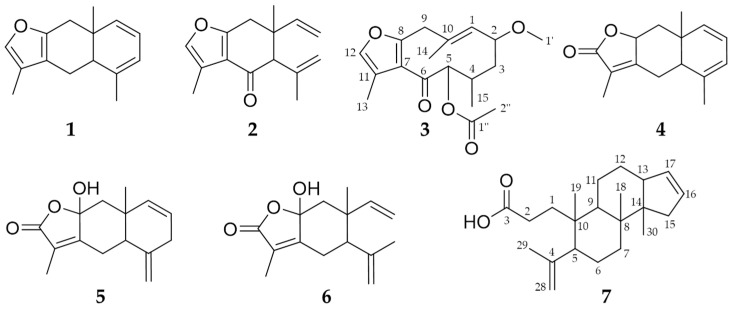
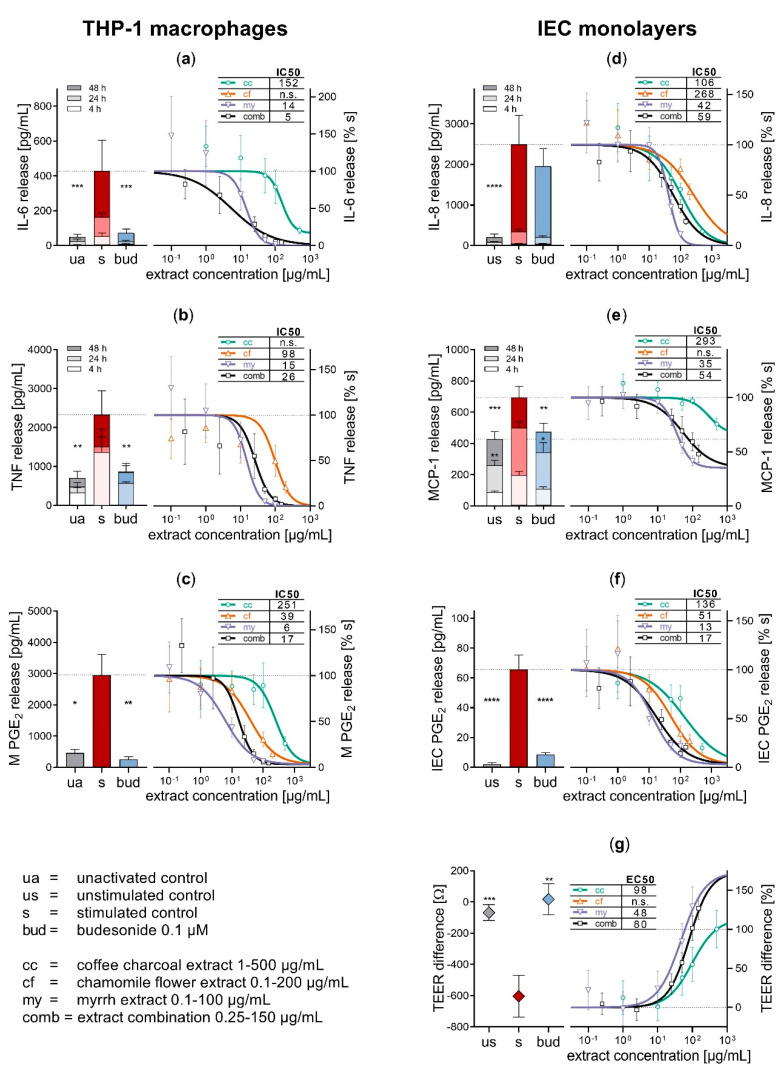
Verification
Claims the paper makes
The claims and statistics of this paper haven’t been checked yet.
Free: it reads the open-access text and checks the first 5 claims that cite a source we can check. Create a free account to check every claim.
Claims other papers make about this one
Each is checked against this paper’s own text: does it say what the citing paper says it does?
The source backs part of the claim, not all of it — or backs it for a different population, condition or comparison.
In the citing paper
“In this case, the intestinal cells increased their barrier function, and inflammatory mediators such as interleukin (IL) IL-6, IL-8, tumor necrosis factor (TNF), methyl-accepting chemotaxis protein-1 (MCP-1), and prostaglandin (PG) E2 were inhibited [76].”
From Effects of Coffee and Its Components on the Gastrointestinal Tract and the Brain–Gut Axis (2020) · cites this paper as [76]
Experimental — accuracy not yet measured
Self-check
Percentages, sums and reported differences re-computed from the paper’s own numbers.
The self-check needs the paper’s full text.
Citations
Cites
Chou, T.-C. (2006) · Pharmacological Reviews · doi:10.1124/pr.58.3.10 · Cited by 5,163 · cited 5×
“Based on the categorisation of Chou [16], an CI between 0.9 and 1.10 (0) indicates nearly additive effects.”
MethodInfluentialUnravelling the pathogenesis of inflammatory bowel disease
Xavier, R. J., & Podolsky, D. K. (2007) · Nature · doi:10.1038/nature06005 · Cited by 4,364
Gomollón, F., Dignass, A., Annese, V., Tilg, H., Van Assche, G., Lindsay, J. O., Peyrin-Biroulet, L., Cullen, G. J., Daperno, M., Kucharzik, T., et al. (2017) · Journal of Crohn's and Colitis · doi:10.1093/ecco-jcc/jjw168 · Cited by 2,057 · cited 2×
“in the treatment of inflammatory diseases like mildly to moderately active Crohn’s disease and asthma [24,25].”
BackgroundInflammatory bowel disease: Pathogenesis
Zhang, Y.-Z. (2014) · World Journal of Gastroenterology · doi:10.3748/wjg.v20.i1.91 · Cited by 1,507
Leaky gut: mechanisms, measurement and clinical implications in humans
Camilleri, M. (2019) · Gut · doi:10.1136/gutjnl-2019-318427 · Cited by 1,081
Martini, E., Krug, S. M., Siegmund, B., Neurath, M. F., & Becker, C. (2017) · Cellular and Molecular Gastroenterology and Hepatology · doi:10.1016/j.jcmgh.2017.03.007 · Cited by 668 · cited 1×
“However, inflammatory crosstalk between immune cells and intestinal epithelial cells (IECs) as well as inflammation-driven mucosal barrier dysfunction are pivotal to the complex IBD pathogenesis [13,14].”
BackgroundImportance of disrupted intestinal barrier in inflammatory bowel diseases
Salim, S. Y., & Söderholm, J. D. (2011) · Inflammatory Bowel Diseases · doi:10.1002/ibd.21403 · Cited by 602 · cited 1×
“However, inflammatory crosstalk between immune cells and intestinal epithelial cells (IECs) as well as inflammation-driven mucosal barrier dysfunction are pivotal to the complex IBD pathogenesis [13,14].”
BackgroundAn Update on Inflammatory Bowel Disease
Sairenji, T., Collins, K. L., & Evans, D. V. (2017) · Primary Care: Clinics in Office Practice · doi:10.1016/j.pop.2017.07.010 · Cited by 499 · cited 1×
“Therapeutic approaches aim to control the symptoms, increase the quality of life and prevent disease progression and complications [2].”
BackgroundWindsor, J. W., & Kaplan, G. G. (2019) · Current Gastroenterology Reports · doi:10.1007/s11894-019-0705-6 · Cited by 320
Lozoya-Agullo, I., Araújo, F., González-Álvarez, I., Merino-Sanjuán, M., González-Álvarez, M., Bermejo, M., & Sarmento, B. (2017) · Molecular Pharmaceutics · doi:10.1021/acs.molpharmaceut.6b01165 · Cited by 214 · cited 1×
“This co-culture model unites features of Caco-2/HT29-MTX-mucosa models that focus on intestinal epithelial cell function [27] with an experimental approach for inflammatory stimulation by involving THP-1 macrophages [28].”
Background
Cited by
A Comprehensive Study of Therapeutic Applications of Chamomile
Sah, A., Naseef, P. P., Kuruniyan, M. S., Jain, G. K., Zakir, F., & Aggarwal, G. (2022) · Pharmaceuticals · doi:10.3390/ph15101284 · Cited by 132
“The results suggest that chamomile flower extracts can be used for the alleviation of inflammation associated with IBS.”
BackgroundInfluentialEffects of Coffee and Its Components on the Gastrointestinal Tract and the Brain–Gut Axis
Iriondo-DeHond, A., Uranga, J. A., del Castillo, M. D., & Abalo, R. (2020) · Nutrients · doi:10.3390/nu13010088 · Cited by 126
“In this case, the intestinal cells increased their barrier function, and inflammatory mediators such as interleukin (IL) IL-6, IL-8, tumor necrosis factor (TNF), methyl-accepting chemotaxis protein-1 (MCP-1), and prostaglandin (PG) E2 were inhibited [76].”
BackgroundIn vitro models and ex vivo systems used in inflammatory bowel disease
Joshi, A., Soni, A., & Acharya, S. R. (2022) · In vitro models · doi:10.1007/s44164-022-00017-w · Cited by 87
Joumaa, M. M. E., & Borjac, J. (2022) · Phytochemistry Reviews · doi:10.1007/s11101-022-09817-0 · Cited by 90
“In addition, Weber et al. (2020) investigated the anti-inflammatory effect of ethanolic chamomile extract (0.1–200 lg/mL) against inflammatory bowel diseases (IBD), particularly on the inflammatory cross talk between immune and intestinal epithelial cells that leads to intestinal barrier disorders.”
BackgroundInfluentialJang, J. Y., Im, E., & Kim, N. D. (2023) · International Journal of Molecular Sciences · doi:10.3390/ijms24031954 · Cited by 68
Bao, B., Zhu, C., Shi, J., & Lu, C. (2023) · Frontiers in Immunology · doi:10.3389/fimmu.2023.1071616 · Cited by 44
Optimizing THP-1 Macrophage Culture for an Immune-Responsive Human Intestinal Model
Phuangbubpha, P., Thara, S., Sriboonaied, P., Saetan, P., Tumnoi, W., & Charoenpanich, A. (2023) · Cells · doi:10.3390/cells12101427 · Cited by 44
“In monocultures of THP-1m or RajiB cells treated with LPS, the secretion levels of TNF-α and IL-6 were 200–2200 pg/mL and 100–900 pg/mL, respectively [14,29,49,50].”
BackgroundTopical Collection “Pharmacology of Medicinal Plants”
Romano, B., Lucariello, G., & Capasso, R. (2021) · Biomolecules · doi:10.3390/biom11010101 · Cited by 41
“The results provide a mechanistic basis for the use of the herbal combination of myrrh, coffee charcoal and chamomile flower extract in inflammatory bowel disease treatment and underline the potential benefits of the phytotherapeutic multi-component/multi-target approach in this complex pathogenesis [16].”
BackgroundJamtsho, T., Yeshi, K., Perry, M. J., Loukas, A. C., & Wangchuk, P. (2024) · Pharmaceuticals · doi:10.3390/ph17030283 · Cited by 45
Chen, G., Lv, C., Qing, N., Li, X., Lv, Y., Liao, G., Liu, S., Ge, W., Chen, J., & Du, Y. (2024) · Clinical Cosmetic and Investigational Dermatology · doi:10.2147/ccid.s445008 · Cited by 28
“11,12,16 Essential oils are a complex natural mixture of volatile secondary metabolites isolated from plants.”
BackgroundLuzardo‐Ocampo, I., Loarca-Piña, G. F., & de Mejía, E. G. (2020) · Food and Chemical Toxicology · doi:10.1016/j.fct.2020.111835 · Cited by 29
Wu, Y., Zhou, T., Qian, D., Liu, X., Xu, Y., Hong, W., Meng, X., & Tang, H. (2023) · ACS Omega · doi:10.1021/acsomega.2c07480 · Cited by 27
Elmoslemany, A. M., Elzallat, M., Abd-Elfatah, M. H., Mohammed, D. M., & Elhady, E. E. A. (2023) · Phytomedicine Plus · doi:10.1016/j.phyplu.2023.100517 · Cited by 23
Duan, X., Li, J., Cui, J.-X., Li, H., Hasan, B., & Xin, X. (2022) · Journal of Ethnopharmacology · doi:10.1016/j.jep.2022.115471 · Cited by 23
Terpenoids from Myrrh and Their Cytotoxic Activity against HeLa Cells
Kuck, K., Unterholzner, A., Lipowicz, B., Schwindl, S., Jürgenliemk, G., Schmidt, T. J., & Heilmann, J. (2023) · Molecules · doi:10.3390/molecules28041637 · Cited by 15
“The isolation of compounds 15 and 27 from a myrrh extract was recently published [41].”
BackgroundSelf-citationValmy, J., Greenfield, S., Shindo, S., Kawai, T., Cervantes, J., & Hong, B. (2025) · Pharmaceutical Biology · doi:10.1080/13880209.2025.2530995 · Cited by 18
“Previously, a reduced level of inflammation was observed upon chamomile treatment (Weber et al. 2020).”
The in vitro intestinal cell model: different co-cultured cells create different applications
Zou, X., Liu, Y., Cui, M., Wan, Q., & Chu, X. (2024) · Journal of drug targeting · doi:10.1080/1061186x.2024.2333877 · Cited by 17
“The HT29 cells, HT29-MTX cells and HT29-MTX-E12 cells are often used to simulate goblet cells [34,35].”
BackgroundSesquiterpenes from Myrrh and Their ICAM-1 Inhibitory Activity In Vitro
Kuck, K., Jürgenliemk, G., Lipowicz, B., & Heilmann, J. (2020) · Molecules · doi:10.3390/molecules26010042 · Cited by 12
“Further, ethanolic extracts were able to reduce CXCL13 and TNFα levels in activated human macrophages [5] or IL-6, IL-8, PGE2, MCP-1 and TNFα in a co-culture cell model of the intestinal mucosa [6], whereas an aqueous extract inhibited LPS-induced production of NO in peritoneal macrophages [7].”
BackgroundSelf-citationZahid, T. M., & Khan, N. S. (2022) · Annals of dental specialty · doi:10.51847/ajwgutvunv · Cited by 9
Potential Anti-Inflammatory Properties Effect of Myrrh
(2020) · Letters in Applied NanoBioScience · doi:10.33263/lianbs94.16871694 · Cited by 9
Vu, L., Xu, F., Li, T., Hua, Q., Kuang, X., Jiang, Y., Liang, Y., Niu, X., Chen, Y., Huang, C., et al. (2024) · European journal of medical research · doi:10.1186/s40001-024-02179-7 · Cited by 9
Immunocompetent Human Intestinal Models in Preclinical Drug Development
Weindl, G. (2020) · Handbook of experimental pharmacology · doi:10.1007/164_2020_429 · Cited by 6
Smeriglio, A., Marcoccia, D., Denaro, M., & Trombetta, D. (2022) · Current Medicinal Chemistry · doi:10.2174/0929867329666220428110427 · Cited by 6
Myrrh protects against IL-13-induced epithelial barrier breakdown in HT-29/B6 cells
Hader, H., Hering, N. A., Schulzke, J., Bücker, R., & Rosenthal, R. (2023) · Frontiers in Pharmacology · doi:10.3389/fphar.2023.1301800 · Cited by 6
Zang, L., Zhang, Y., Zhao, J., Yuan, Y., Wen, Y., Lian, J., Chen, S., Chen, Y., Liu, W., Niu, Z., et al. (2021) · Analytical Biochemistry · doi:10.1016/j.ab.2021.114258 · Cited by 4
Altenbernd, F., Schwarz, L., Lipowicz, B., & Vissiennon, C. (2022) · Plants · doi:10.3390/plants11243422 · Cited by 7
“The herbal extracts also exhibit anti-inflammatory and barrier-stabilizing effects on epithelial cells [21,40].”
BackgroundMethodInfluentialSelf-citationIhsan, M. F., Sunyoto, A., & Arief, M. R. (2022) · International Conference on Information and Communications Technology (ICOIACT) · doi:10.1109/icoiact55506.2022.9972087 · Cited by 3
“The results of testing coffee leaf extracts containing myrrh and chamomile flowers show that coffee leaves and chamomile flowers can treat inflammatory bowel disease [4].”
BackgroundMourão, B., Guimarães, S. D. S. C., Gonçalves, F. M. A., Marchiori, P. E. R., Ferreira, A. A., Fernandes, J. V., Pereira, O. L., & Cardoso, P. G. (2025) · Journal of soil science and plant nutrition · doi:10.1007/s42729-025-02343-w · Cited by 3
“…of economic and phytotherapeutic interest due to its beverage biological properties such as anti-inflammatory, an antioxidant, a neuroprotective, an antidepressant, and anxiolytic (Amaghnouje et al. 2020; Jung et al. 2017; Sachs et al. 2019; Souza et al. 2020; Szopa et al. 2016; Weber et al. 2020).”
Wang, J., Yu, Z., Yu, J., Feng, Y., Ye, C., Tong, X., Huang, Y., Wang, T., Li, Z., Li, Y., et al. (2025) · Biomaterials Advances · doi:10.1016/j.bioadv.2025.214538 · Cited by 2
Acceleration of Ulcer Healing by Local Application of Myrrh Oil: An Experimental Study
Abed, A., & Al-Ghaban, N. M. H. (2023) · Al- Anbar Medical Journal · doi:10.33091/amj.2023.140046.1131 · Cited by 3
“This result is in agreement with other studies [23, 24].”
ResultRachmawati, D., Ermawati, T., Rahmatillah, N. I., Meylina, N., Safitri, N. Y., Sutjiati, R., & Jansen, I. D. C. (2024) · Phytomedicine Plus · doi:10.1016/j.phyplu.2024.100535 · Cited by 2
Wallner, M., Stadlbauer, V., Blank‐Landeshammer, B., Heckmann, M., Sadova, N., Iken, M., Pitari, G. M., & Weghuber, J. (2025) · Pharmacological Research - Natural Products · doi:10.1016/j.prenap.2025.100226 · Cited by 3
A Comprehensive Review on Promising Phytopharmacological Applications of Chamomile Flower
Bhukta, P., Rath, D., Pattnaik, G., Kar, B., & Ranajit, S. K. (2021) · Asian Journal of Chemistry · doi:10.14233/ajchem.2021.23390 · Cited by 2
(2021) · Biointerface Research in Applied Chemistry · doi:10.33263/briac124.55105522 · Cited by 2
“Thus, Commiphora molmol is used in the treatment of an inflammatory bowel disease [50].”
BackgroundA Comprehensive Pharmacological Review of Natural Products Active Ingredients in Ulcerative Colitis
Hong, R., Zhang, Z., Sun, X., Chen, Y., Wei, H., Chen, Q., Zhou, L., Zhou, X., Chen, W., & Wan, J. (2025) · The Natural Products Journal · doi:10.2174/0122103155348415241119073736 · Cited by 1
Momtaz, S., Bahramsoltani, R., Abdolghaffari, A. H., & Rahimi, R. (2023) · CABI eBooks · doi:10.1079/9781800621671.0005 · Cited by 1
Commiphora Myrrh in Management of Periodontal Diseases: Review Article
Attia, A. M., & Alqhtani, M. (2023) · Acta Scientific Dental Scienecs · doi:10.31080/asds.2023.07.1748 · Cited by 1
Myrrhe – Arzneipflanze des Jahres 2021 hilft bei Magen-Darm-Störungen
(2021) · Ernährung & Medizin · doi:10.1055/a-1393-1744
Lykov, A. P., Rachkovskaya, L. N., Rachkovsky, E. E., & Повещенко, О. В. (2022) · IEEE Ural-Siberian Conference on Computational Technologies in Cognitive Science, Genomics and Biomedicine (CSGB) · doi:10.1109/csgb56354.2022.9865503
Phytotherapie bei chronisch entzündlichen Darmerkrankungen*
Huber, R. (2023) · Zeitschrift für Phytotherapie · doi:10.1055/a-2131-2427
Myrrh Attenuates Gonadal Toxicity and DNA Fragmentation Induced by Ethanol in Male Rats
Alahmari, A. (2023) · Indian Journal of Animal Research · doi:10.18805/ijar.bf-1691
Leaky Gut, eine Permeabilitätsstörung des Darmes – Diagnostik und Therapie
Storr, M. (2025) · Zeitschrift für Komplementärmedizin · doi:10.1055/a-2593-3543
Zahid, T. M., & Khan, N. S. (2022) · Turkish journal of Dental Hygiene · doi:10.51847/pud5xj5mim · Cited by 2
Santos, L. S. H., da Silva, L. B., Camargo, M. O., da Silva, M. J. C., Ferraz, R. A. R., & Godoy, J. S. R. (2025) · Revista de Gestão Social e Ambiental · doi:10.24857/rgsa.v19n7-107
BIOLOGICAL ACTIVITY AND THERAPEUTIC PROPERTIES OF MATRICARIA CHAMOMILLA L
Бiловол, О. М., Knyazkova, І. І., Bilovol, A. M., Kondrusyk, N. Y., Kuzmіnova, N. V., Молодан, Д. В., & Abramova, L. P. (2025) · World of Medicine and Biology · doi:10.26724/2079-8334-2025-3-93-210-219
Wonnemann, M., Lipowicz, B., Duysburgh, C., Rotsaert, C., Verstrepen, L., Marzorati, M., & Langhorst, J. (2026) · PLoS ONE · doi:10.1371/journal.pone.0348791
“This aligns with previous studies showing that two individual components of the herbal test product, myrrh and coffee charcoal, have a stabilizing effect on the intestinal barrier in vitro [8,11].”
Self-citationİlisulu, S. C., Birant, S., Kılıç, S. S., Tunca, Z., Özcan, H., Akkoç, T., & Seymen, F. (2026) · Head & Face Medicine · doi:10.1186/s13005-026-00630-0
“At lower concentrations, these components may help preserve epithelial barrier function by reducing inflammatory responses and supporting cellular homeostasis [35].”
Werner, J., Schiller, L., Müller, C., Lehmann, J. O. R., Przybilla, J., Schlosser, T., Hoffmeister, A., Kallendrusch, S., & Vissiennon, C. (2026) · Clinical and Experimental Medicine · doi:10.1007/s10238-026-02209-0
“…response were chosen as primary readouts, as these param - eters allow assessment of tolerability and provide a pharma - cologically interpretable signal in the context of previously published concentration-dependent cytotoxic effects of myrrh extract in intestinal epithelial cell models [13–15].”
InfluentialSelf-citationWerner, J., Schiller, L., Lehmann, J., Przybilla, J., Schlosser, T., Hoffmeister, A., Kallendrusch, S., & Vissiennon, C. (2026) · Zeitschrift für Gastroenterologie · doi:10.1055/s-0046-1826479
Self-citationFujikura, C., Nagai, H., Okumura, N., Yamaki, A., SHIGEMATSU, N., Ohkuma, A., & 沼野香世子 (2026) · Cosmetics · doi:10.3390/cosmetics13050246
Metadata
- Authors
- Weber, L., Kuck, K., Jürgenliemk, G., Heilmann, J., Lipowicz, B., & Vissiennon, C.
- Affiliations
- Repha (Germany) (DE)
- University of Regensburg (DE)
- Corresponding author
- Weber, Laura
- Vissiennon, Cica
- Venue
- Biomolecules
- Publisher
- MDPI AG
- Published
- 2020-07-11
- Volume
- 10
- Issue
- 7
- Pages
- 1033
- ISSN
- 2218-273X (ISSN-L)
- PMC
- PMC7407830
- OpenAlex
- W3041837931
- Cited by
- 51
- References
- 30
- Citations by year
- 2026: 5 · 2025: 8 · 2024: 5 · 2023: 12 · 2022: 10 · 2021: 6 · 2020: 5
- FWCI
- 4.84
- Type
- journal article
- Language
- en
- Open access
- gold
- dx.doi.org
- Licence
- Locations
- Biomolecules (publishedVersion, cc-by)
- PubMed Central (publishedVersion, cc-by)
- PubMed (publishedVersion)
- DOAJ (DOAJ: Directory of Open Access Journals) (submittedVersion, cc-by-sa)
- University of Regensburg Publication Server (University of Regensburg) (submittedVersion)
- Funders
- Repha GmbH Biologische Arzneimittel (not applicable)
- Topics
- Health Sciences › Medicine › Gastroenterology › Inflammatory Bowel Disease
- Life Sciences › Agricultural and Biological Sciences › Plant Science › Phytochemistry and biological activity of medicinal plants
- Health Sciences › Medicine › Pharmacology (medical) › Pharmacological Effects of Medicinal Plants
- Keywords
- myrrh, inflammatory bowel disease, intestinal barrier function, intestinal epithelial cells, macrophages, lipopolysaccharide, anti-inflammatory activity, herbal medicine, herbal combination, synergistic interaction, transepithelial electrical resistance, chemokine secretion, inflammatory cytokines
- MeSH terms
- THP-1 Cells, Anti-Inflammatory Agents, Cell Line, Humans, Intestinal Mucosa, Lipopolysaccharides, Models, Biological, Plant Extracts, Coculture Techniques, Chemokines, Caco-2 Cells, HT29 Cells, Chamomile, Commiphora, Flowers, Coffea
About these checks
Registry, retraction, Cites and statistics results are computed, not judged, with one exception: a printed reference that no index lists is read once by a model before it counts as a citation error. Claims are extracted by a model and kept only when their quote appears verbatim in the text; each cited source is then checked, with a model’s help, for whether it says what the claim relies on. Those verdicts can be wrong — read the claim’s quote and the cited source before relying on one.
Statistics and arithmetic are recomputed, not judged.
Confidence bands are shown only for fields calibrated on our annotated test set. None is calibrated yet, so no band is shown.
What counts as a claim ›How we measure confidence ›How we check this ›
Are you an author, or do you see a problem with this page? Request a review
Data sources
Bibliographic data: Semantic Scholar, OpenAlex, Crossref.
Contains information from the Semantic Scholar Academic Graph Datasets, made available under the ODC Attribution License (ODC-BY 1.0).
Semantic Scholar’s data is described in: Kinney, R., et al. (2023). The Semantic Scholar Open Data Platform. arXiv:2301.10140.
