

Essential Oils: Chemistry and Pharmacological Activities
Open accessThe DOI matches its Crossref record; 221 of the 222 references it cites were found in a registry or an index.
Abstract
In this review, we provide an overview of the current understanding of the main mechanisms of pharmacological action of essential oils and their components in various biological systems. A brief introduction on essential oil chemistry is presented to better understand the relationship of chemical aspects with the bioactivity of these products. Next, the antioxidant, anti-inflammatory, antitumor, and antimicrobial activities are discussed. The mechanisms of action against various types of viruses are also addressed. The data show that the multiplicity of pharmacological properties of essential oils occurs due to the chemical diversity in their composition and their ability to interfere with biological processes at cellular and multicellular levels via interaction with various biological targets. Therefore, these natural products can be a promising source for the development of new drugs.
Overview
The claims and statistics of this paper haven’t been checked yet.
Free: it reads the open-access text and checks the first 5 claims that cite a source we can check. Create a free account to check every claim.
Integrity signals
Registry
Cites
Statistics
Figures
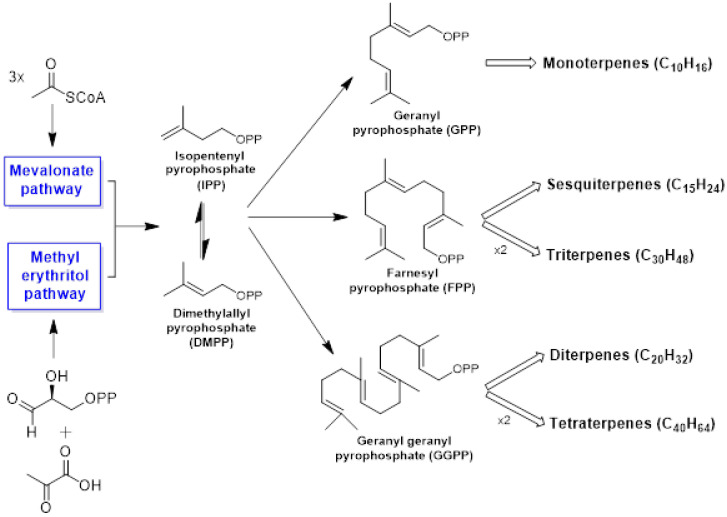
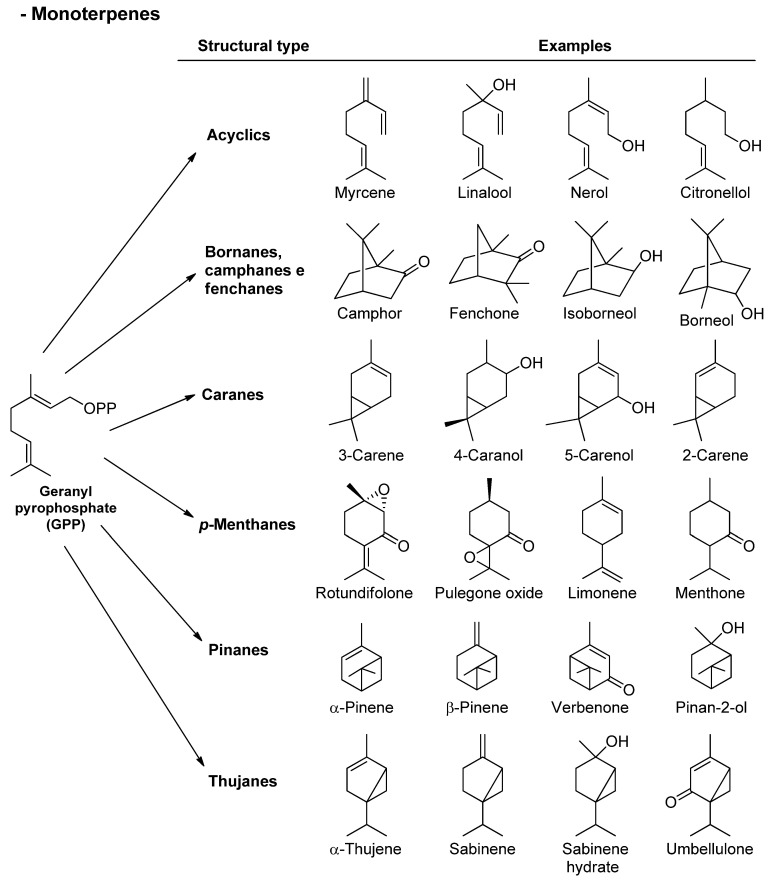
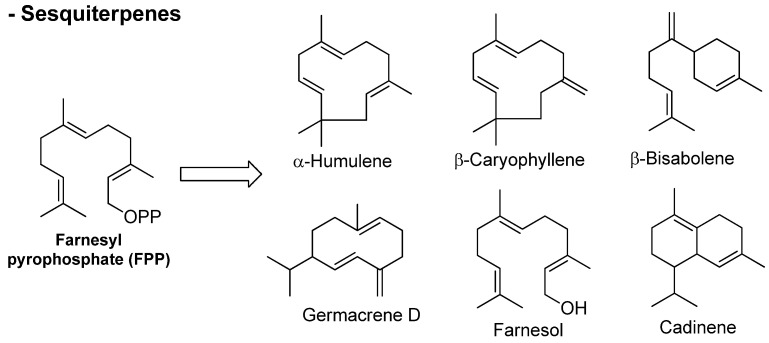
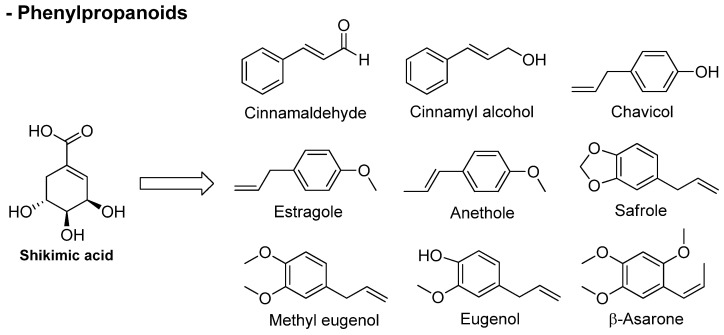
Verification
Claims the paper makes
The claims and statistics of this paper haven’t been checked yet.
Free: it reads the open-access text and checks the first 5 claims that cite a source we can check. Create a free account to check every claim.
Claims other papers make about this one
Each is checked against this paper’s own text: does it say what the citing paper says it does?
The source backs part of the claim, not all of it — or backs it for a different population, condition or comparison.
In the citing paper
“The most abundant compounds (> 10% composition (De Sousa et al. 2023)) varied widely across oils.”
From Linking chemical-composition to antimicrobial efficacy: development of an essential oil-based topical gel prototype (2025) · cites this paper as De Sousa et al. 2023
Experimental — accuracy not yet measuredIn the citing paper
“TD-GCMS data for minor components (< 10% composition) revealed a varied chemical composition for all ten oils (Table 6); compounds present at below 0.1% were regarded as negligible (De Sousa et al 2023).”
From Linking chemical-composition to antimicrobial efficacy: development of an essential oil-based topical gel prototype (2025) · cites this paper as De Sousa et al 2023
In the citing paper
“The different clustering despite similarities in the major compound profiles (abundance > 10%) might be the result of minor compounds (abundance between 0.1 and 9.9%) (De Sousa et al. 2023).”
From Linking chemical-composition to antimicrobial efficacy: development of an essential oil-based topical gel prototype (2025) · cites this paper as De Sousa et al. 2023
In the citing paper
“A concentration of greater than 10% was taken to indicate compounds with the highest abundance, based on the recommendation of de Sousa et al. (De Sousa et al. 2023) (Table 5).”
From Linking chemical-composition to antimicrobial efficacy: development of an essential oil-based topical gel prototype (2025) · cites this paper as De Sousa et al. 2023
Self-check
Percentages, sums and reported differences re-computed from the paper’s own numbers.
The self-check needs the paper’s full text.
Citations
Cites
2 retracted
Bilia, A. R., Guccione, C., Isacchi, B., Righeschi, C., Firenzuoli, F., & Bergonzi, M. C. (2014) · Evidence-Based Complementary and Alternative Medicine · doi:10.1155/2014/651593 · Cited by 514
RetractedPoma, P., Labbozzetta, M., Ramarosandratana, A. V., Rosselli, S., Tutone, M., Sajeva, M., & Notarbartolo, M. (2021) · Pharmaceuticals · doi:10.3390/ph14020111 · Cited by 20
RetractedNF-κB signaling in inflammation
Liu, T., Zhang, L., Joo, D., & Sun, S.-C. (2017) · Signal Transduction and Targeted Therapy · doi:10.1038/sigtrans.2017.23 · Cited by 8,791
Biological effects of essential oils—A review
Bakkali, F., Averbeck, S., Averbeck, D., & Idaomar, M. (2008) · Food and Chemical Toxicology · doi:10.1016/j.fct.2007.09.106 · Cited by 7,929 · cited 3×
“The variety of possibilities in which these basic skeletons can be rearranged results in amazing structural diversity observed in nature, in which p-menthane-type monoterpenes are the largest group of naturally occurring monoterpenes [21,32].”
Mizgerd, J. P., Kubo, H., Kutkoski, G. J., Bhagwan, S. D., Scharffetter-Kochanek, K., Beaudet, A. L., & Doerschuk, C. M. (1997) · The Journal of Experimental Medicine · doi:10.1084/jem.186.8.1357 · Cited by 7,306
Inflammatory responses and inflammation-associated diseases in organs
Chen, L., Deng, H., Cui, H., Fang, J., Zuo, Z., Deng, J., Li, Y., Wang, X., & Zhao, L. (2018) · Oncotarget · doi:10.18632/oncotarget.23208 · Cited by 5,143
Getting to the site of inflammation: the leukocyte adhesion cascade updated
Ley, K., Laudanna, C., Cybulsky, M. I., & Nourshargh, S. (2007) · Nature Reviews Immunology · doi:10.1038/nri2156 · Cited by 4,354
Vogt, T. (2010) · Molecular Plant · doi:10.1093/mp/ssp106 · Cited by 3,072
Cytokines in inflammatory bowel disease
Neurath, M. F. (2014) · Nature Reviews Immunology · doi:10.1038/nri3661 · Cited by 2,706
Mechanisms of membrane toxicity of hydrocarbons
Sikkema, J., de Bont, J. A., & Poolman, B. (1995) · Microbiological Reviews · doi:10.1128/mr.59.2.201-222.1995 · Cited by 2,685
Research works printed but not linked: 2
- Croteau R. Kutchan T.M. Lewis N.G. Natural products Biochemistry and Molecular Biology of Plants Buchanan B. Gruissem W. Jones R. American Society of Plant Physiology Rockville, MD, USA 2000 Volume 24 1250 1318
- Saranraj P. Devi V.D. Essential oils and its antibacterial properties—A review Life Sci. Arch. 2017 3 994 1011
Cited by
Methods for Determination of Antimicrobial Activity of Essential Oils In Vitro—A Review
Hulánková, R. (2024) · Plants · doi:10.3390/plants13192784 · Cited by 184
Ali, T., & Mishra, G. P. (2026) · Comparative Clinical Pathology · doi:10.1007/s00580-026-03763-5 · Cited by 180
Mohammed, H. A., Sulaiman, G. M., Khan, R. A., Al‐Saffar, A. Z., Mohsin, M. H., Albukhaty, S., & Ismail, A. (2024) · Process Biochemistry · doi:10.1016/j.procbio.2024.05.021 · Cited by 94
Iskandar, K., Ahmed, N., Paudyal, N., Alvarez, M. J. R., Balasubramani, S. P., Saadeh, D., Baig, S. U., Sami, H., Halat, D. H., Pavlović, N., et al. (2025) · Antibiotics · doi:10.3390/antibiotics14121250 · Cited by 68
Biopolymer-based hydrogels for biomedical applications: Bioactivity and wound healing properties
Mehvari, F., Ramezanzade, V., An, J., Kim, J., Dinari, M., & Kim, J. S. (2024) · Coordination Chemistry Reviews · doi:10.1016/j.ccr.2024.216093 · Cited by 67
Metadata
- Authors
- de Sousa, D. P., Damasceno, R. O. S., Amorati, R., Elshabrawy, H. A., de Castro, R. D., Bezerra, D. P., Nunes, V. R. V., Gomes, R. C., & Lima, T. C.
- Venue
- Biomolecules
- Publisher
- MDPI AG
- Published
- 2023-07-18
- Volume
- 13
- Issue
- 7
- Pages
- 1144
- ISSN
- 2218-273X (ISSN-L)
- PMC
- PMC10377445
- OpenAlex
- W4384826655
- Cited by
- 459
- References
- 222
- FWCI
- 58.54
- Type
- journal article
- Language
- en
- Open access
- gold
- Funders
- Federal University of Paraíba (CHAMADA INTERNA PROPESQ/UFPB No 01/2023)
About these checks
Registry, retraction, Cites and statistics results are computed, not judged, with one exception: a printed reference that no index lists is read once by a model before it counts as a citation error. Claims are extracted by a model and kept only when their quote appears verbatim in the text; each cited source is then checked, with a model’s help, for whether it says what the claim relies on. Those verdicts can be wrong — read the claim’s quote and the cited source before relying on one.
Statistics and arithmetic are recomputed, not judged.
Confidence bands are shown only for fields calibrated on our annotated test set. None is calibrated yet, so no band is shown.
What counts as a claim ›How we measure confidence ›How we check this ›
Are you an author, or do you see a problem with this page? Request a review
Data sources
Bibliographic data: Semantic Scholar, OpenAlex, Crossref.
Contains information from the Semantic Scholar Academic Graph Datasets, made available under the ODC Attribution License (ODC-BY 1.0).
Semantic Scholar’s data is described in: Kinney, R., et al. (2023). The Semantic Scholar Open Data Platform. arXiv:2301.10140.
