

Oxidative Stress Responses in the Human Fungal Pathogen, Candida albicans
Open accessThe DOI matches its Crossref record; 127 of the 128 references it cites were found in a registry or an index.
Abstract
Candida albicans is a major fungal pathogen of humans, causing approximately 400,000 life-threatening systemic infections world-wide each year in severely immunocompromised patients. An important fungicidal mechanism employed by innate immune cells involves the generation of toxic reactive oxygen species (ROS), such as superoxide and hydrogen peroxide. Consequently, there is much interest in the strategies employed by C. albicans to evade the oxidative killing by macrophages and neutrophils. Our understanding of how C. albicans senses and responds to ROS has significantly increased in recent years. Key findings include the observations that hydrogen peroxide triggers the filamentation of this polymorphic fungus and that a superoxide dismutase enzyme with a novel mode of action is expressed at the cell surface of C. albicans. Furthermore, recent studies have indicated that combinations of the chemical stresses generated by phagocytes can actively prevent C. albicans oxidative stress responses through a mechanism termed the stress pathway interference. In this review, we present an up-date of our current understanding of the role and regulation of oxidative stress responses in this important human fungal pathogen.
Overview
The claims and statistics of this paper haven’t been checked yet.
Free: it reads the open-access text and checks the first 5 claims that cite a source we can check. Create a free account to check every claim.
Integrity signals
Registry
Cites
Statistics
Figures
Verification
Claims the paper makes
The claims and statistics of this paper haven’t been checked yet.
Free: it reads the open-access text and checks the first 5 claims that cite a source we can check. Create a free account to check every claim.
Claims other papers make about this one
Each is checked against this paper’s own text: does it say what the citing paper says it does?
The cited source says what the claim attributes to it.
In the citing paper
“Consistent with the notion of LNP-mediated oxidative damage, the SODs are antioxidant enzymes that detoxify ROS [48], and metal ion homeostasis is crucial in minimizing ROS formation [49].”
From Lansoprazole interferes with fungal respiration and acts synergistically with amphotericin B against multidrug-resistant Candida auris (2024) · cites this paper as [48]
The cited source says what the claim attributes to it.
In the citing paper
“Nevertheless, C. albicans employed strategies to evade the oxidative killing by innate immune cells [4].”
From Effect of Nitric Oxide on the Antifungal Activity of Oxidative Stress and Azoles Against Candida albicans (2016) · cites this paper as [4]
Self-check
Percentages, sums and reported differences re-computed from the paper’s own numbers.
The self-check needs the paper’s full text.
Citations
Cites
The NOX Family of ROS-Generating NADPH Oxidases: Physiology and Pathophysiology
Bedard, K., & Krause, K.-H. (2007) · Physiological Reviews · doi:10.1152/physrev.00044.2005 · Cited by 6,989 · cited 1×
“Activation of Nox2 is dependent on the interaction with the cytosolic components, in particular p67phox, which translocate to the membrane following phagocytosis [13].”
BackgroundHidden Killers: Human Fungal Infections
Brown, G. D., Denning, D. W., Gow, N. A. R., Levitz, S. M., Netea, M. G., & White, T. C. (2012) · Science Translational Medicine · doi:10.1126/scitranslmed.3004404 · Cited by 4,284 · cited 1×
“infections and the consequential delays in treatment [9].”
BackgroundMammalian thioredoxin is a direct inhibitor of apoptosis signal‐regulating kinase (ASK) 1
Saitoh, M., Nishitoh, H., Fujii, M., Takeda, K., Tobiume, K., Sawada, Y., Kawabata, M., Miyazono, K., & Ichijo, H. (1998) · The EMBO Journal · doi:10.1093/emboj/17.9.2596 · Cited by 2,377 · cited 1×
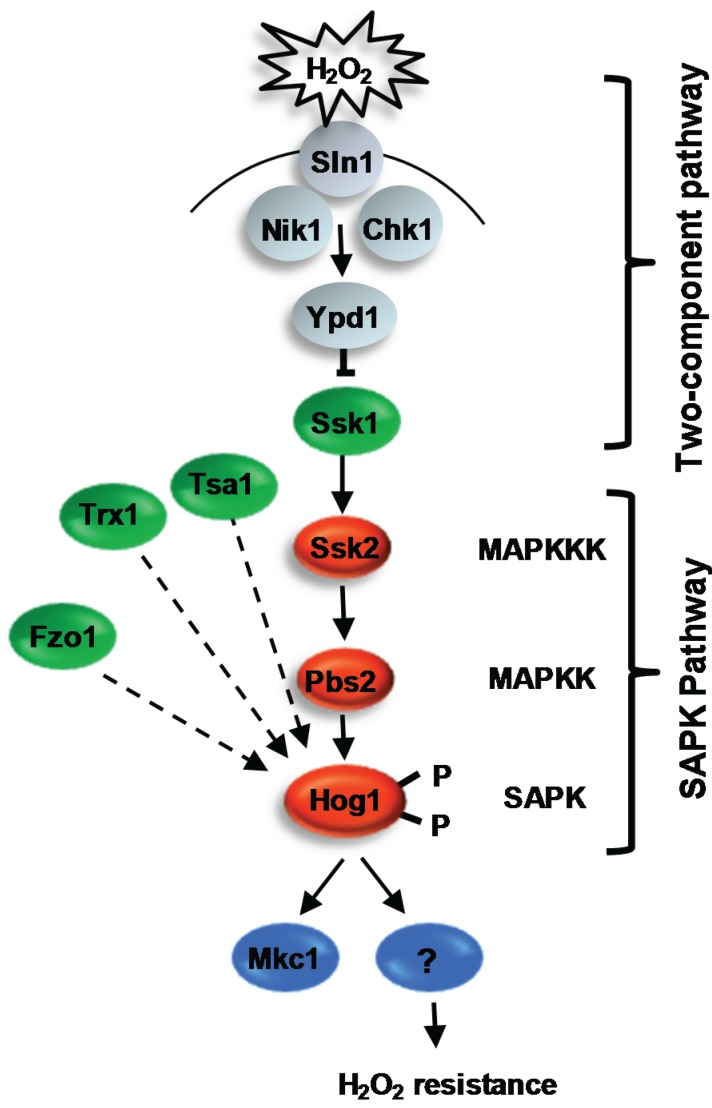
“In mammalian systems, thioredoxin functions as a repressor of the Hog1-related JNK and p38 SAPK signalling cascades [110].”
BackgroundAntimicrobial reactive oxygen and nitrogen species: concepts and controversies
Fang, F. C. (2004) · Nature Reviews Microbiology · doi:10.1038/nrmicro1004 · Cited by 1,676 · cited 1×
“albicans to cationic fluxes (K+) and acidification, as well as to superoxide anions [16,21,48].”
BackgroundHydrogen peroxide sensing and signaling
Veal, E. A., Day, A. M., & Morgan, B. A. (2007) · Molecular Cell · doi:10.1016/j.molcel.2007.03.016 · Cited by 1,604
Self-citationOxidative stress and cancer: Have we moved forward?
Halliwell, B. (2007) · Biochemical Journal · doi:10.1042/bj20061131 · Cited by 1,302 · cited 1×
“ROS interact with proteins, lipids and nucleic acids [29], causing irreversible damage to the pathogen.”
BackgroundSobel, J. D. (2007) · The Lancet · doi:10.1016/s0140-6736(07)60917-9 · Cited by 1,270
Killing activity of neutrophils is mediated through activation of proteases by K+ flux
Reeves, E. P., Lu, H., Jacobs, H. L., Messina, C. G. M., Bolsover, S., Gabella, G., Potma, E. O., Warley, A., Roes, J., & Segal, A. W. (2002) · Nature · doi:10.1038/416291a · Cited by 1,153
ATM Activation by Oxidative Stress
Guo, Z., Kozlov, S., Lavin, M. F., Person, M. D., & Paull, T. T. (2010) · Science · doi:10.1126/science.1192912 · Cited by 1,079 · cited 1×
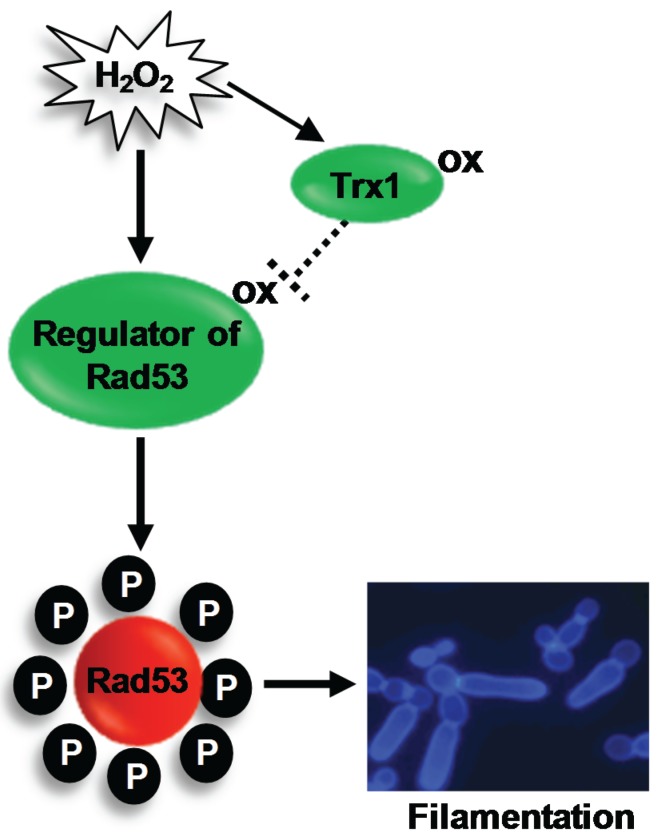
“In this regard, it is interesting that the human homologue (ATM) of the fungal Tel1 DNA-damage sensing kinase, which regulates Rad53, has recently been shown to be activated by oxidation [122].”
BackgroundA Thiol Peroxidase Is an H2O2 Receptor and Redox-Transducer in Gene Activation
Delaunay, A., Pflieger, D., Barrault, M.-B., Vinh, J., & Toledano, M. B. (2002) · Cell · doi:10.1016/s0092-8674(02)01048-6 · Cited by 901 · cited 20×
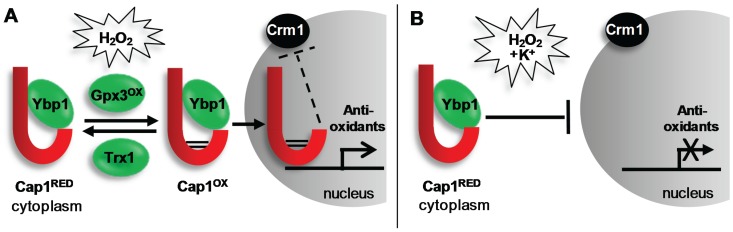
“Veal, E.A.; Ross, S.J.; Malakasi, P.; Peacock, E.; Morgan, B.A. Ybp1 is required for the hydrogen peroxide-induced oxidation of the Yap1 transcription factor.”
BackgroundInfluential
Cited by
Items 201–281 of 281
Fun30 and Rtt109 Mediate Epigenetic Regulation of the DNA Damage Response Pathway in C. albicans
Maurya, P. K., Garai, P., Goel, K., Bhatt, H., Dutta, A., Goyal, A., Dewasthale, S., Gupta, M., Haokip, D. T., Barik, S., et al. (2022) · Journal of Fungi · doi:10.3390/jof8060559 · Cited by 4
Rocha, O. B., Silva, K. S. F. E., Santos, T. G., Moraes, D., Assunção, L. D. P., Bailão, A. M., Soares, C. M. D. A., & Pereira, M. (2023) · Journal of Fungi · doi:10.3390/jof9010108 · Cited by 4
“albicans during the host colonization process [33].”
(2020) · Journal of Critical Reviews · doi:10.31838/jcr.07.11.04 · Cited by 4
Karpov, D. S., Lysov, Y. P., & Карпов, В. Л. (2019) · Molecular Biology · doi:10.1134/s0026893319060086 · Cited by 3
Krishnan, C. S., Milne, T. J., Tompkins, G. R., Cannon, R. D., & Lamping, E. (2025) · Journal of Fungi · doi:10.3390/jof11110761 · Cited by 4
Zhou, X., Hilk, A. L., Solis, N. V., Scott, N. E., Zajac, C., Filler, S. G., & Selmecki, A. M. (2026) · PLoS Biology · doi:10.1371/journal.pbio.3003631 · Cited by 2
Candida -mediated vertical transmission of Helicobacter pylori in C57BL/6J mice
Xu, X.-L., Luo, T.-T., Liu, Q., Cui, G., Wu, D., Wu, X.-J., Yang, T., Sun, J.-C., Jian, H.-F., Zhuo, S.-W., et al. (2026) · World Journal of Gastroenterology · doi:10.3748/wjg.v32.i7.115143 · Cited by 2
Ndt80 Orchestrates Copper Stress Responses and Mitochondrial Homeostasis in Candida albicans
Chen, H.-Y., Lo, H., Lin, C.-J., & Lan, C. (2026) · Journal of Fungi · doi:10.3390/jof12040294 · Cited by 2
“The transcription factor Cap1 is a major regulator of antioxidant gene expression, including SODs [70–72].”
Das, S., Baradarbarjastehbaf, F., Szokolics, A. S., Campos, G. K. D., Gazdag, Z., Széchenyi, A., Miseta, A., Kovács, G. L., & Kőszegi, T. (2026) · Pharmaceutics · doi:10.3390/pharmaceutics18040508 · Cited by 2
“Second, Candida species differ in susceptibility thresholds and phase plasticity, and these baseline differences contribute to species-enriched tolerance-like response patterns under specific EO or RAMEB–EO exposures [4–6, 8,24].”
Sierra‐Campos, E., Valdez-Solana, M. A., Ruiz‐Baca, E., Ventura-García, E. K., Avitia-Domínguez, C. I., Aguilera-Ortíz, M., & Téllez‐Valencia, A. (2022) · Scientia Pharmaceutica · doi:10.3390/scipharm90040070 · Cited by 2
Difference in immune responses to Candida albicans in two inbred strains of male rats
Papic, M. V., Ljujić, B., Živanović, S., Papić, M., Vuletic, M., Petrović, I., Gazdic, M., Virijević, K. D., Popovic, M., & Kovačević, M. M. (2023) · Archives of Oral Biology · doi:10.1016/j.archoralbio.2023.105808 · Cited by 2
Central Carbon Metabolism in Candida albicans Biofilms Is Altered by Dimethyl Sulfoxide
Arruda, M. F. C., Ramos, R. C. P. D. S., de Oliveira, N. S., Rosa, R. T., Campelo, P. M. S., Bianchini, L. F., Villas-Bôas, S. G., & Rosa, E. A. R. (2024) · Journal of Fungi · doi:10.3390/jof10050337 · Cited by 2
“In C. albicans , three signalling pathways are activated in response to ROS: Cap1 transcription factor, Hog1 stress-activated protein kinase, and Rad53 DNA damage control kinase [79].”
BackgroundBasrani, S. T., Kadam, N. S., Yadav, D. V., Patil, S. B., Karuppayil, S. M., & Jadhav, A. K. (2024) · Current Microbiology · doi:10.1007/s00284-024-03739-0 · Cited by 2
“Failure to counteract this damage is associated with cell death, highlighting ROS as a significant player in C. albicans biology [28].”
Movahedi, R., Razmjoue, D., Movahedpour, A., Varma, R. S., & Bahmani, M. (2024) · Current Nanoscience · doi:10.2174/0115734137328566240821090454 · Cited by 2
Naseem, S., Zahumenský, J., Lanze, C. E., Douglas, L. M., Malínský, J., & Konopka, J. B. (2024) · mSphere · doi:10.1128/msphere.00391-24 · Cited by 3
Amin, B. H., Elsilk, S. E., Nasr, S., Yosri, M., Yahya, G., & Mahmoud, Y. A. ‐. (2025) · International Immunopharmacology · doi:10.1016/j.intimp.2025.114163 · Cited by 2
Antifungal Mechanism of Vip3Aa, a Vegetative Insecticidal Protein, against Pathogenic Fungal Strains
Park, S., Kim, J., Lee, J., Lim, H. S., Son, H., Yoo, S., Mun, S.-E., Jang, M.-K., & Lee, J. R. (2021) · Antibiotics · doi:10.3390/antibiotics10121558 · Cited by 2
“Although fungal cells repeat the cycle of generating and eliminating intracellular ROS during metabolic pathways, the high levels of ROS damage intracellular lipids, proteins, DNA, organelles, and cell walls [35,36].”
BackgroundCharacterization of aCandida albicansisolate from a recurrent cervical lymphadenitis patient
Zhang, C., Wang, W., Kong, Q., Liu, F., Chen, J., & Sang, H. (2019) · Mycologia · doi:10.1080/00275514.2019.1666598 · Cited by 2
Thomas, D. A., Joshua, V. K. L., Choo, S., Rao, H., & Chong, P. P. (2022) · Life Sciences Medicine and Biomedicine · doi:10.28916/lsmb.6.1.2022.89 · Cited by 1
Transcriptomics Uncovers Key Genes for Photodynamic Killing on Trichosporon asahii Biofilms
Luo, W., Wang, G., Chang, H., Liu, G., Zhu, H., & Li, H. (2025) · Mycopathologia · doi:10.1007/s11046-025-00949-3 · Cited by 1
Xu, J., Li, P., Zhu, X., Wang, J., Cheng, M., & Song, B. (2025) · Colloids and Surfaces B Biointerfaces · doi:10.1016/j.colsurfb.2025.114988 · Cited by 1
Pinto, N. V., Viana, M. C., Fernandes, F. A. S., Fletes-Vargas, G., Rodríguez‐Rodríguez, R., Borges, G. S. M., & Carneiro, G. (2025) · Ozone Science and Engineering · doi:10.1080/01919512.2025.2552726 · Cited by 3
“Similarly, some fungal species exhibit resistance to oxidative stress through the activation of antioxidant systems, such as catalase and superoxide dismutase to repair ROS-damaged proteins (Dantas et al. 2015).”
Ferreira, R. L. P. S., de Macedo, A. T., de Azevedo, C. D. M. P. E. S., Marques, S. G., da Costa, M. C., de Oliveira, J. C. M. D., do Carmo, P. H. F., Diniz, Y. C. M., Cutrim, H. F., Monteiro, C. D. A., et al. (2025) · Journal of Fungi · doi:10.3390/jof11090665 · Cited by 1
Kraus, K., Mikziński, P., Widelski, J., & Paluch, E. (2025) · Molecules · doi:10.3390/molecules30234500 · Cited by 3
“Ultimately, the accumulation of oxidative DNA and RNA damage triggers apoptotic and necrotic cell death pathways, contributing to cell inactivation and biofilm eradication of Candida spp. [82 –84].”
Impact of Metal-Functionalized Fullerenes on the Proliferation of Pathogenic Fungi
Ibrahim, A. A., Khan, T., LaJeunesse, D., Obare, S. O., & Dellinger, A. L. (2026) · ACS Omega · doi:10.1021/acsomega.5c07052 · Cited by 1
Song, L., Jiang, D., Zhou, X., Yi, X., Jia, S., Li, Y., Zhang, L., Li, J., & Song, J. (2026) · mBio · doi:10.1128/mbio.00094-26 · Cited by 1
Optimizing and tailoring cold atmospheric plasma parameters for C. albicans biofilms eradication
Lunder, M., Dahle, S., & Fink, R. (2026) · Frontiers in Microbiology · doi:10.3389/fmicb.2026.1786008 · Cited by 1
“Upon treatment, intracellular reactive oxygen species (iROS) rapidly accumulate within microbial cells (Dantas Ada et al., 2015).”
Fungal Phagocytosis in the Absence of Oxidative Stress Response Proteins
Nájera-Martínez, M., & Vega, A. V. L. A. I. L. (2026) · Biochemistry · doi:10.5772/intechopen.1013647 · Cited by 1
Ulfika, T., Basuliman, M. M., Maulana, I., & Hussin, M. H. (2026) · Journal of the Indian Chemical Society · doi:10.1016/j.jics.2026.102661 · Cited by 1
Antifungal effects of dibenzofuran derivatives against multi-azole resistant Candida albicans
Faleye, O. O., Mukhles, M. B., Boya, B. R., Kim, Y., Lee, J., & Lee, J. (2026) · Bioorganic Chemistry · doi:10.1016/j.bioorg.2026.109971 · Cited by 1
Aina, A. M., & Hashim, N. (2026) · Food Control · doi:10.1016/j.foodcont.2026.112449 · Cited by 1
George, R., Pradeep, H. G., Mana, N. A., Raj, N., Praveen, P., Harish, R. P., Mahesh, N., Renuka, D., Nair, B. G., Kumar, G. B., et al. (2026) · Journal of Fungi · doi:10.3390/jof12080620 · Cited by 2
“Candida albicans employ a two-component signal transduction system (TCS) to detect and respond to diverse environmental stimuli, including osmotic stress, oxidative stress, and the quorum-sensing molecule farnesol [113,114].”
Evaluation of Susceptibility and Innate Immune Response to Candida albicans in Mice with Sub-health
Ma, X., Jin, Y., & Guan, H. (2018) · International Journal of Pharmacology · doi:10.3923/ijp.2018.689.697 · Cited by 1
Kareem, A. I., Malan, S. F., & Joubert, J. (2021) · Mini-Reviews in Medicinal Chemistry · doi:10.2174/1389557521666210219161045 · Cited by 1
Antioxidative mechanism of Quercus infectoria gall aqueous extract against Candida albicans
Kasiram, M. Z., Nurul, A. A., & Wan-Nor-Amilah, W. A. W. (2021) · Malaysian Journal of Microbiology · doi:10.21161/mjm.201008 · Cited by 1
Infection-Associated Gene Expression—The Pathogen Perspective
Fanning, S., & Mitchell, A. P. (2017) · Springer eBooks · doi:10.1007/978-3-319-50409-4_13 · Cited by 1
A Small Green Red-Ox Carries a Bright Medical Future for Sub-Saharan Africa
Aloke, C., Ezeigbo, I. I., Ohanenye, I. C., Udenigwe, C. C., Jacob, C., & Ejike, C. E. C. C. (2019) · Current Pharmacology Reports · doi:10.1007/s40495-019-00182-9 · Cited by 1
Эволюция системы координированной регуляции экспрессии протеасомных генов у дрожжей-сахаромицетов
Karpov, D. S., Lysov, Y. P., & Карпов, В. Л. (2019) · Molecular Biology · doi:10.1134/s0026898419060089 · Cited by 1
Thieme, K. G. (2018) · eDiss (Georg-August-Universität Göttingen) · doi:10.53846/goediss-6917 · Cited by 1
Iwanicki, N. S. (2020) · Digital Library of Theses and Dissertations (Universidade de São Paulo) · doi:10.11606/t.11.2020.tde-03062020-152622 · Cited by 2
Qi, W., Roy, U., Cai, C., Acosta‐Zaldívar, M., Mascio, J., Asara, J. M., Fierro, J. F., Andrés, M. T. A., Sun, L., & Köhler, J. R. (2025) · bioRxiv (Cold Spring Harbor Laboratory) · doi:10.64898/2025.12.02.691982 · Cited by 1
The evolution of genomic stability to a mechanism in reproduction and psychiatry
Regidor, P., Volko, C. D., Schindler, A. E., & Rohr, U. D. (2016) · Hormone Molecular Biology and Clinical Investigation · doi:10.1515/hmbci-2016-0013
Characterization of the ATO Gene Family in Alternative Carbon Metabolism
Danhof, H. A. (2016) · Digital Commons-TMC (Texas Medical Center)
de Oliveira, D. G. (2017) · Digital Library of Theses and Dissertations (Universidade de São Paulo) · doi:10.11606/t.25.2017.tde-03052017-195722
Investigation into the functions of sumoylation in yeast
Lewis, C. M. (2017)
Tag, H. M., Attia, E. A., & Badawi, I. (2020) · Oriental Pharmacy and Experimental Medicine · doi:10.1007/s13596-020-00440-y · Cited by 1
Garai, P., Maurya, P. K., Bhatt, H., Goyal, A., Dewasthale, S., Gupta, M., Haokip, D. T., & Muthuswami, R. (2021) · bioRxiv (Cold Spring Harbor Laboratory) · doi:10.1101/2021.07.22.453354
“albicans has evolved robust mechanisms to repair the damaged DNA thereby ensuring genomic stability (17).”
BackgroundTrentin, G. (2022) · Digital Library of Theses and Dissertations (Universidade de São Paulo) · doi:10.11606/d.17.2022.tde-20062022-161952
CRISPR systems tackling fungal infections
Leitão, M. D. C., Vieira, H. L. D. A., Fernandes, L., Silva-Pereira, I., & Coelho, C. M. (2024) · Elsevier eBooks · doi:10.1016/b978-0-323-91808-4.00009-2
Reactive oxygen species suppress phagocyte surveillance by oxidizing cytoskeletal regulatorsPreprint
Grinstein, S., Ferling, I., Pfalzgraf, S., Moutounet, L., Qiu, L., Li, I., Zhou, Y., & Freeman, S. A. (2024) · Research Square · doi:10.21203/rs.3.rs-3921603/v1
Карасева, Е. А., Мартынов, В. А., Abalenikhina, Y. V., & Muravlyannikov, N. S. (2024) · Journal Infectology · doi:10.22625/2072-6732-2024-16-2-17-27
Guedes, A. C. (2024) · Digital Library of Theses and Dissertations (Universidade de São Paulo) · doi:10.11606/d.17.2024.tde-11042024-100527
Description of environmental stress mediators in Candida species
Enoktaeva, O. V. (2024) · Russian Journal of Infection and Immunity · doi:10.15789/2220-7619-doe-17691
Hameed, B. K., Hameed, M. A., & Oubeid, W. S. (2024) · Journal of Asian Multicultural Research for Medical and Health Science Study · doi:10.47616/jamrmhss.v5i4.566
“%) suffer from at least four recurrent VVC per year (da Silva Dantas et al., 2015).”
Cho, K. R., Lee, J. H., Lee, M. Y., & Park, S. (2025) · Applied Sciences · doi:10.3390/app15031307
Pawlik, A., Rudawska, A., Swatek, A., Janusz, G., Frąc, M., Grąz, M., Matuła, P., & Jaszek, M. (2025) · International Journal of Molecular Sciences · doi:10.3390/ijms26125482
“Hog1 activation has also been demonstrated to be a critical component of the ROS-generated stress response in C. albicans [46].”
David, H., Nithya, K., Salian, L. S., Dandela, R., Suresh, D., Amali, A. J., & Solomon, A. P. (2025) · ACS Applied Bio Materials · doi:10.1021/acsabm.5c00559
Sukted, J., Junsuntonpass, A., Homchan, A., Mongkolsuk, S., Pakotiprapha, D., & Matangkasombut, O. (2025) · Scientific Reports · doi:10.1038/s41598-025-12238-6
“First, we examined whether oxidative stress can induce DPCs in S. cerevisiae and C. albicans by directly measuring DPCs using a SDS/KCl precipitation assay upon exposure to various ROS-inducing agents in comparison to a known DPC inducer, formaldehyde (FA) 9 .”
InfluentialCherdantsev, A. I., Kulagin, K. A., Polyakova, A. N., Карпов, В. Л., Sosnovtseva, A. O., & Karpov, D. S. (2025) · Molecular Biology · doi:10.1134/s0026893325700207
“Pathogenic yeasts also belong to the CTG clade of Candida albicans , which causes can-didasis, and is known for its super-resistance to oxidative stress, which allows it to resist macrophages successfully and thus overcome immune defenses [5].”
Zhang, F., Hu, Y., Liu, M., Liu, B., & Meng, X. (2025) · Postharvest Biology and Technology · doi:10.1016/j.postharvbio.2025.114056
Arachidonic acid modulates fluconazole-induced responses in Candida albicans biofilmsPreprint
Fourie, R., Kuloyo, O. O., Ibe, C., Kemp, G., Naicker, P., Govender, I. S., Kruger, M., Sebolai, O. M., Albertyn, J., & Pohl, C. H. (2025) · bioRxiv (Cold Spring Harbor Laboratory) · doi:10.1101/2025.11.25.690624
Balla, N., Jakab, Á., Kovács, F., Ragyák, Á., Tóth, Z., Balázsi, D., Forgács, L., Bozó, A., Refai, F. A., Borman, A. M., et al. (2024) · Figshare · doi:10.6084/m9.figshare.26608155
Proteome remodelling in Candida auris during early host adaptation in-vitro and in-vivoPreprint
Mazumdar, R., & Bjelanović, A. (2026) · bioRxiv (Cold Spring Harbor Laboratory) · doi:10.64898/2026.03.09.710370
Fonctions et biosynthèse des β-1,6-glucanes de la paroi cellulaire chez Candida albicans
Bekirian, C. (2024) · theses.fr (ABES) · doi:10.70675/b1028289z0c26z4acaz8f96z18e5c0c94464
Xin, Y., Qin, A., Yang, J., Shen, Y., Li, J., Guo, L., Liang, B., & Su, J. (2026) · Frontiers in Microbiology · doi:10.3389/fmicb.2026.1762938
“Oxidative stress is a primary factor contributing to apoptosis (da Silva Dantas et al., 2015).”
Xie, Y., Sun, Y., Li, X., Zheng, L., Wang, Y., Xu, C., Zhang, L., Yu, B., & Zhu, L. (2026) · Journal of Photochemistry and Photobiology B Biology · doi:10.1016/j.jphotobiol.2026.113449
A Novel Role of Ume6 in Candida albicans in Regulation of Oxidative Stress Tolerance
Wang, Y., Zhu, M., Shi, Z., Liu, L., Gu, Y., Zhou, X., Zhu, H., Zhao, J., Yu, Q., & Li, M. (2026) · Journal of Fungi · doi:10.3390/jof12050308
“…important role in the detoxification process, including genes encoding catalase ( CAT1 ), glutathione peroxidase ( GPX ), and superoxide dismutase ( SOD ), as well as genes encoding components of the glutathione/glutaredoxin ( GSH1 , TTR1 ) and thioredoxin systems ( TSA1 , TRX1 , TRR1 ), etc. [8].”
Mendoza, S. R., Noval, C. R. D. L., Ferreira, M. D. S., Honorato, L., Bonilla, J. J. A., Ramos, L. F. C., Domont, G. B., Peralta, J. M., Nimrichter, L., & Guimaraes, A. J. (2026) · Microbiology Spectrum · doi:10.1128/spectrum.03645-25
“Consistent with these observations, C. albicans responds to oxidative stress by inducing chaperones involved in protein folding, proteasome activity, and ribosomal proteins to maintain protein homeostasis (63, 64).”
Nüße, O. (2026) · Springer eBooks · doi:10.1007/978-3-032-21135-4_16
Huang, Z. C., Shan, M., Sun, S., Wang, D., Wang, F., Sun, K., Li, Z., & Feng, J. (2026) · Microorganisms · doi:10.3390/microorganisms14071478
“For instance, when facing host immune cell oxidative stress, Candida albicans upregulates PPP genes to sustain intracellular NADPH [51].”
Wani, M. Y., El-Said, W. A., Al‐Bogami, A. S., Khan, Z. A., Ahmad, A., & Xu, Q. (2026) · RSC Advances · doi:10.1039/d6ra04008j
Jan, A., Zhang, S., He, S., Miao, Y., Liu, C. P., & Ji, Y. (2026) · Antonie van Leeuwenhoek · doi:10.1007/s10482-026-02396-6
Zhang, X., Yaqing, F. A. N., Zhao, Y., & Zhu, X. (2026) · Foods · doi:10.3390/foods15152702
Haroun, M., Addala, S., BOUHDJER, M. L., Bouhdjer, A., Abdelouahed, K., Selmi, N., Sahnoune, D., & Bouhdjer, L. (2026) · Ceramics International · doi:10.1016/j.ceramint.2026.07.559
Cascading damage to Candida albicans cells through thioredoxin reductase loss
Qi, W., Roy, U., Cai, C., Acosta‐Zaldívar, M., Mascio, J., Asara, J. M., Fierro, J. F., Andrés, M. T. A., Sun, L., & Köhler, J. R. (2026) · Proceedings of the National Academy of Sciences · doi:10.1073/pnas.2615451123 · Cited by 1
Li, J., & Zhou, L. (2026) · Photobiomodulation Photomedicine and Laser Surgery · doi:10.1177/25785478261481597
“19,20 Hamblin and colleagues have previously demonstrated that the susceptibility of microorganisms to aPDT is strongly in fl uenced by cell envelope structure, with Gram-negative bacteria requiring either higher photosensitizer concentrations or the addition of membrane-permeabilizing agents for…”
Proteome Remodelling in Candida auris During Early Host Adaptation In Vitro and In Vivo
Mazumdar, R., & Bjelanović, A. (2026) · Journal of Fungi · doi:10.3390/jof12090649
“The proteins Hsp12 and Hsp104 have been reported to chaperone virulence and survival in C. albicans during host interactions, particularly to mitigate osmotic and thermal stress [39], while Sod2 mitigates ROS toxicity [38].”
From confrontation to co-adaptation: the dynamic dialogue of Candida albicans and macrophages
Miramón, P., Wilson, H. B., & Lorenz, M. C. (2026) · Microbiology and Molecular Biology Reviews · doi:10.1128/mmbr.00191-22
Wang, Y., Li, Z., Wang, X., Xiong, B., Zhang, C., Zhao, X., Wang, S., & CHEN, L.-W. (2026) · PLoS Pathogens · doi:10.1371/journal.ppat.1014577
Cellular stress tolerance governs genetic transformability in recalcitrant Candida species
Cotter, C. J., Chowdhury, R., Carper, D. L., Giannone, R. J., & Trinh, C. T. (2026) · npj Fungal Science · doi:10.1038/s44512-026-00008-x · Cited by 2
“Inducing oxidative stress-adapted states enhances transformability Sublethal H 2 O 2 can transiently establish an oxidative stress ‑ adapted physiological state in yeast 47 – 52 .”
Influential
Metadata
- Authors
- Dantas, A., Day, A., Ikeh, M., Kos, I., Achan, B., & Quinn, J.
- Affiliations
- Universidade do Estado do Rio de Janeiro (BR)
- Newcastle University (GB)
- Corresponding author
- Quinn, Janet
- Venue
- Biomolecules
- Publisher
- MDPI AG
- Published
- 2015-02-25
- Volume
- 5
- Issue
- 1
- Pages
- 142-165
- ISSN
- 2218-273X (ISSN-L)
- PMC
- PMC4384116
- OpenAlex
- W2072268979
- Cited by
- 281
- References
- 128
- Citations by year
- 2026: 30 · 2025: 28 · 2024: 32 · 2023: 20 · 2022: 21 · 2021: 36 · 2020: 25 · 2019: 19 · 2018: 16 · 2017: 28 · 2016: 19 · 2015: 7
- FWCI
- 2.26
- Type
- journal article
- Language
- en
- Open access
- gold
- dx.doi.org
- Licence
- Locations
- Biomolecules (publishedVersion, cc-by)
- Europe PMC (PubMed Central) (publishedVersion, cc-by)
- PubMed Central (publishedVersion, cc-by)
- PubMed (publishedVersion)
- DOAJ (DOAJ: Directory of Open Access Journals) (submittedVersion, cc-by-sa)
- Funders
- BBSRC (BB/K016393/1)
- Wellcome Trust (097377/Z/11/Z)
- Topics
- Life Sciences › Biochemistry, Genetics and Molecular Biology › Molecular Biology › Fungal and yeast genetics research
- Health Sciences › Medicine › Infectious Diseases › Antifungal resistance and susceptibility
- Life Sciences › Biochemistry, Genetics and Molecular Biology › Molecular Biology › Redox biology and oxidative stress
- Keywords
- Candida albicans, oxidative stress response, reactive oxygen species, hydrogen peroxide, superoxide, superoxide dismutase, filamentation, innate immune evasion, macrophages, neutrophils, fungal pathogenesis, cell surface enzymes
- MeSH terms
- Candida albicans, Humans, Immunity, Innate, Signal Transduction, Reactive Oxygen Species, Oxidative Stress, Host-Pathogen Interactions
About these checks
Registry, retraction, Cites and statistics results are computed, not judged, with one exception: a printed reference that no index lists is read once by a model before it counts as a citation error. Claims are extracted by a model and kept only when their quote appears verbatim in the text; each cited source is then checked, with a model’s help, for whether it says what the claim relies on. Those verdicts can be wrong — read the claim’s quote and the cited source before relying on one.
Statistics and arithmetic are recomputed, not judged.
Confidence bands are shown only for fields calibrated on our annotated test set. None is calibrated yet, so no band is shown.
What counts as a claim ›How we measure confidence ›How we check this ›
Are you an author, or do you see a problem with this page? Request a review
Data sources
Bibliographic data: Semantic Scholar, OpenAlex, Crossref.
Contains information from the Semantic Scholar Academic Graph Datasets, made available under the ODC Attribution License (ODC-BY 1.0).
Semantic Scholar’s data is described in: Kinney, R., et al. (2023). The Semantic Scholar Open Data Platform. arXiv:2301.10140.
