

Oxidative Stress Responses in the Human Fungal Pathogen, Candida albicans
Open accessThe DOI matches its Crossref record; 127 of the 128 references it cites were found in a registry or an index.
Abstract
Candida albicans is a major fungal pathogen of humans, causing approximately 400,000 life-threatening systemic infections world-wide each year in severely immunocompromised patients. An important fungicidal mechanism employed by innate immune cells involves the generation of toxic reactive oxygen species (ROS), such as superoxide and hydrogen peroxide. Consequently, there is much interest in the strategies employed by C. albicans to evade the oxidative killing by macrophages and neutrophils. Our understanding of how C. albicans senses and responds to ROS has significantly increased in recent years. Key findings include the observations that hydrogen peroxide triggers the filamentation of this polymorphic fungus and that a superoxide dismutase enzyme with a novel mode of action is expressed at the cell surface of C. albicans. Furthermore, recent studies have indicated that combinations of the chemical stresses generated by phagocytes can actively prevent C. albicans oxidative stress responses through a mechanism termed the stress pathway interference. In this review, we present an up-date of our current understanding of the role and regulation of oxidative stress responses in this important human fungal pathogen.
Overview
The claims and statistics of this paper haven’t been checked yet.
Free: it reads the open-access text and checks the first 5 claims that cite a source we can check. Create a free account to check every claim.
Integrity signals
Registry
Cites
Statistics
Figures
Verification
Claims the paper makes
The claims and statistics of this paper haven’t been checked yet.
Free: it reads the open-access text and checks the first 5 claims that cite a source we can check. Create a free account to check every claim.
Claims other papers make about this one
Each is checked against this paper’s own text: does it say what the citing paper says it does?
The cited source says what the claim attributes to it.
In the citing paper
“Consistent with the notion of LNP-mediated oxidative damage, the SODs are antioxidant enzymes that detoxify ROS [48], and metal ion homeostasis is crucial in minimizing ROS formation [49].”
From Lansoprazole interferes with fungal respiration and acts synergistically with amphotericin B against multidrug-resistant Candida auris (2024) · cites this paper as [48]
The cited source says what the claim attributes to it.
In the citing paper
“Nevertheless, C. albicans employed strategies to evade the oxidative killing by innate immune cells [4].”
From Effect of Nitric Oxide on the Antifungal Activity of Oxidative Stress and Azoles Against Candida albicans (2016) · cites this paper as [4]
Self-check
Percentages, sums and reported differences re-computed from the paper’s own numbers.
The self-check needs the paper’s full text.
Citations
Cites
The NOX Family of ROS-Generating NADPH Oxidases: Physiology and Pathophysiology
Bedard, K., & Krause, K.-H. (2007) · Physiological Reviews · doi:10.1152/physrev.00044.2005 · Cited by 6,989 · cited 1×
“Activation of Nox2 is dependent on the interaction with the cytosolic components, in particular p67phox, which translocate to the membrane following phagocytosis [13].”
BackgroundHidden Killers: Human Fungal Infections
Brown, G. D., Denning, D. W., Gow, N. A. R., Levitz, S. M., Netea, M. G., & White, T. C. (2012) · Science Translational Medicine · doi:10.1126/scitranslmed.3004404 · Cited by 4,284 · cited 1×
“infections and the consequential delays in treatment [9].”
BackgroundMammalian thioredoxin is a direct inhibitor of apoptosis signal‐regulating kinase (ASK) 1
Saitoh, M., Nishitoh, H., Fujii, M., Takeda, K., Tobiume, K., Sawada, Y., Kawabata, M., Miyazono, K., & Ichijo, H. (1998) · The EMBO Journal · doi:10.1093/emboj/17.9.2596 · Cited by 2,377 · cited 1×
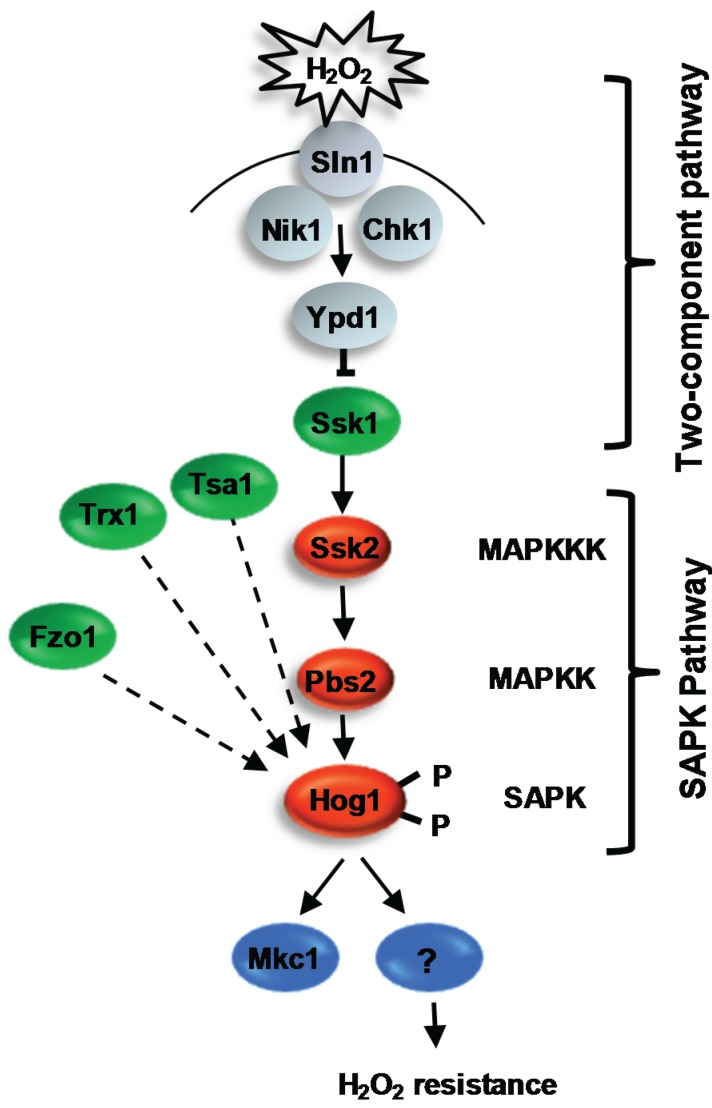
“In mammalian systems, thioredoxin functions as a repressor of the Hog1-related JNK and p38 SAPK signalling cascades [110].”
BackgroundAntimicrobial reactive oxygen and nitrogen species: concepts and controversies
Fang, F. C. (2004) · Nature Reviews Microbiology · doi:10.1038/nrmicro1004 · Cited by 1,676 · cited 1×
“albicans to cationic fluxes (K+) and acidification, as well as to superoxide anions [16,21,48].”
BackgroundHydrogen peroxide sensing and signaling
Veal, E. A., Day, A. M., & Morgan, B. A. (2007) · Molecular Cell · doi:10.1016/j.molcel.2007.03.016 · Cited by 1,604
Self-citationOxidative stress and cancer: Have we moved forward?
Halliwell, B. (2007) · Biochemical Journal · doi:10.1042/bj20061131 · Cited by 1,302 · cited 1×
“ROS interact with proteins, lipids and nucleic acids [29], causing irreversible damage to the pathogen.”
BackgroundSobel, J. D. (2007) · The Lancet · doi:10.1016/s0140-6736(07)60917-9 · Cited by 1,270
Killing activity of neutrophils is mediated through activation of proteases by K+ flux
Reeves, E. P., Lu, H., Jacobs, H. L., Messina, C. G. M., Bolsover, S., Gabella, G., Potma, E. O., Warley, A., Roes, J., & Segal, A. W. (2002) · Nature · doi:10.1038/416291a · Cited by 1,153
ATM Activation by Oxidative Stress
Guo, Z., Kozlov, S., Lavin, M. F., Person, M. D., & Paull, T. T. (2010) · Science · doi:10.1126/science.1192912 · Cited by 1,079 · cited 1×
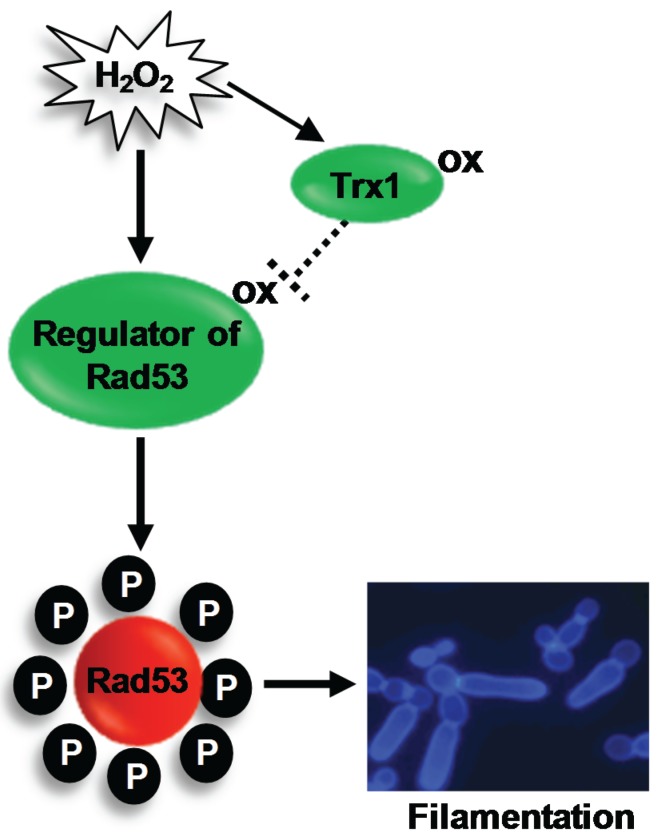
“In this regard, it is interesting that the human homologue (ATM) of the fungal Tel1 DNA-damage sensing kinase, which regulates Rad53, has recently been shown to be activated by oxidation [122].”
BackgroundA Thiol Peroxidase Is an H2O2 Receptor and Redox-Transducer in Gene Activation
Delaunay, A., Pflieger, D., Barrault, M.-B., Vinh, J., & Toledano, M. B. (2002) · Cell · doi:10.1016/s0092-8674(02)01048-6 · Cited by 901 · cited 20×
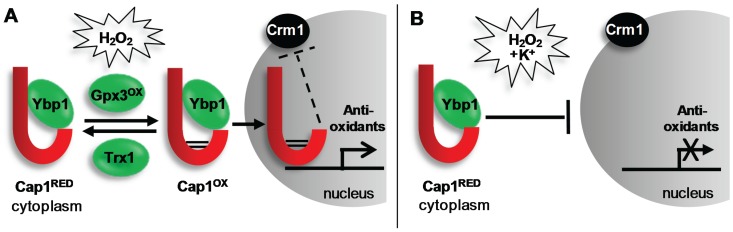
“Veal, E.A.; Ross, S.J.; Malakasi, P.; Peacock, E.; Morgan, B.A. Ybp1 is required for the hydrogen peroxide-induced oxidation of the Yap1 transcription factor.”
BackgroundInfluential
Cited by
d'Enfert, C., Kaune, A.-K., Alaban, L.-R., Chakraborty, S., Cole, N., Delavy, M., Kosmala, D., Marsaux, B., Fróis-Martins, R., Morelli, M., et al. (2021) · FEMS Microbiology Reviews · doi:10.1093/femsre/fuaa060 · Cited by 347
Microbial antioxidant defense enzymes
Staerck, C., Gastebois, A., Vandeputte, P., Calenda, A., Larcher, G., Gillmann, L., Papon, N., Bouchara, J.-P., & Fleury, M. J. J. (2017) · Microbial Pathogenesis · doi:10.1016/j.micpath.2017.06.015 · Cited by 288
Role of Oxidative Stress in the Pathology and Management of Human Tuberculosis
Shastri, M. D., Shukla, S. D., Chong, W. C., Dua, K., Peterson, G. M., Patel, R. P., Hansbro, P. M., Eri, R., & O’Toole, R. F. (2018) · Oxidative Medicine and Cellular Longevity · doi:10.1155/2018/7695364 · Cited by 170
“For example, innate immune cells, such as neutrophils, employ an immune process known as respiratory burst as an antimicrobial defense against Candidiasis by rapid production and release of ROS onto the invading Candida albicans [33].”
BackgroundCell biology of Candida albicans–host interactions
da Silva Dantas, A., Lee, K. K., Raziunaite, I., Schaefer, K., Wagener, J., Yadav, B., & Gow, N. A. (2016) · Current Opinion in Microbiology · doi:10.1016/j.mib.2016.08.006 · Cited by 169
“Cell surface localized superoxide dismutase detoxifies reactive oxygen species (ROS) produced when tissue is damaged and is also expressed on the surface of invading hyphae [46,47].”
InfluentialSelf-citationCrawford, A., & Wilson, D. (2015) · FEMS Yeast Research · doi:10.1093/femsyr/fov071 · Cited by 122
Oxidative responses and fungal infection biology
Warris, A., & Ballou, E. R. (2018) · Seminars in Cell and Developmental Biology · doi:10.1016/j.semcdb.2018.03.004 · Cited by 122
Sun, L., Liao, K., Hang, C., & Wang, D. (2017) · PLOS ONE · doi:10.1371/journal.pone.0172228 · Cited by 105
Antioxidative and anticancer properties of Licochalcone A from licorice
Chen, X., Liu, Z., Meng, R., Shi, C., & Guo, N. (2017) · Journal of Ethnopharmacology · doi:10.1016/j.jep.2017.01.028 · Cited by 95
Lobo, C. I. V., Rinaldi, T. B., Christiano, C. M. S., De Sales Leite, L., Barbugli, P. A., & Klein, M. I. (2019) · Journal of Oral Microbiology · doi:10.1080/20002297.2019.1581520 · Cited by 85
Shen, T., Duan, C., Chen, B., Li, M., Ruan, Y., Xu, D., Shi, D., Yu, D., Li, J., & Wang, C. (2017) · Molecular Medicine Reports · doi:10.3892/mmr.2017.6754 · Cited by 87
“Thus, our data confirm that hydrogen peroxide can induce skin fibroblast injury (20-22).”
Rather, I. A., Sabir, J. S. M., Asseri, A. H., & Ali, S. (2022) · Journal of Fungi · doi:10.3390/jof8020204 · Cited by 71
“result of oxidative stress, DNA is disorganized, lipids are oxidized, and cellular structures are changed [52].”
BackgroundMa, H., Wang, M., Gai, Y., Fu, H., Zhang, B., Ruan, R., Chung, K.-R., & Li, H. (2018) · Applied and Environmental Microbiology · doi:10.1128/aem.00086-18 · Cited by 67
Mendoza-Martínez, A. E., Cano-Domínguez, N., & Aguirre, J. (2019) · Fungal Biology · doi:10.1016/j.funbio.2019.04.001 · Cited by 71
Ali, E. M., & Abdallah, B. M. (2020) · Nanomaterials · doi:10.3390/nano10030422 · Cited by 73
“albicans [54], to increase the production of reactive oxygen species (ROS), and to decrease the activity of metal-based antioxidant enzymes [55].”
BackgroundHu, Z., Lu, C., Zhang, Y., Tong, W., Du, L., & Liu, F. (2021) · LWT · doi:10.1016/j.lwt.2021.112660 · Cited by 66
Allert, S., Schulz, D., Kämmer, P., Großmann, P., Wolf, T., Schäuble, S., Panagiotou, G., Brunke, S., & Hube, B. (2022) · Virulence · doi:10.1080/21505594.2022.2026037 · Cited by 66
“Accordingly, the neutrophils’ ROS production can be detoxified by C. auris as well as the other four Candida species (Figure 8).”
BackgroundInfluentialFungal sensing of host environment
Braunsdorf, C., Mailänder‐Sánchez, D., & Schaller, M. (2016) · Cellular Microbiology · doi:10.1111/cmi.12610 · Cited by 77
“C.albicans senses H2O2 and via Hog1 SAPK pathway induces expression of detoxifying enzymes at the surface of the cell wall, and concomitantly, via activation of Rad35, induces hyphal formation (Dantas Ada et al., 2015).”
BackgroundRossi, D. C. P., Gleason, J. E., Sánchez, H., Schatzman, S. S., Culbertson, E. M., Johnson, C. J., McNees, C. A., Coelho, C., Nett, J. E., Andes, D. R., et al. (2017) · PLoS Pathogens · doi:10.1371/journal.ppat.1006763 · Cited by 69
Song, L., Zhang, F., Yu, J., Wei, C., Han, Q., & Meng, X. (2020) · Postharvest Biology and Technology · doi:10.1016/j.postharvbio.2020.111234 · Cited by 69
Enhanced antifungal activity of Ni-doped ZnO nanostructures under dark conditions
Kumar, R., Dananjaya, S. H. S., Zoysa, M. D., & Yang, M. (2016) · RSC Advances · doi:10.1039/c6ra18442a · Cited by 63
Sardi, J. D. C. O., Silva, D. R., Aníbal, P. C., Baldin, J. J. C. M. D. C., Ramalho, S. R., Rosalen, P. L., Macedo, M. L. R., & Höfling, J. F. (2021) · Current Fungal Infection Reports · doi:10.1007/s12281-021-00415-9 · Cited by 81
Flavodoxin-Like Proteins Protect Candida albicans from Oxidative Stress and Promote Virulence
Li, L., Naseem, S., Sharma, S., & Konopka, J. B. (2015) · PLOS Pathogens · doi:10.1371/journal.ppat.1005147 · Cited by 60
“Cells utilize a variety of pathways to protect against oxidation [1, 3, 5, 6].”
BackgroundCandidalysin Is a Potent Trigger of Alarmin and Antimicrobial Peptide Release in Epithelial Cells
Ho, J., Wickramasinghe, D. N., Nikou, S.-A., Hube, B., Richardson, J. P., & Naglik, J. R. (2020) · Cells · doi:10.3390/cells9030699 · Cited by 56
“These include recruitment of host protective neutrophils (S100 proteins [29,30] and defensins [31]), pathogen membrane permeabilisation (defensins [35] and LL37 [47]), attachment to cell wall proteins to inhibit host binding (LL37 [48]), as well as killing via induction of ionic destabilisation (histatins [49]) and ge…”
BackgroundAustermeier, S., Kasper, L., Westman, J., & Gresnigt, M. S. (2020) · Current Opinion in Microbiology · doi:10.1016/j.mib.2020.05.007 · Cited by 55
Różalska, B., Sadowska, B., Budzyńska, A., Bernat, P., & Różalska, S. (2018) · PLoS ONE · doi:10.1371/journal.pone.0194254 · Cited by 55
The Hap Complex in Yeasts: Structure, Assembly Mode, and Gene Regulation
Mao, Y., & Chen, C. (2019) · Frontiers in Microbiology · doi:10.3389/fmicb.2019.01645 · Cited by 58
“…growth phases of S. cerevisiae, they found a dramatic increase of expression in genes encoding the enzymes involving TCA cycle and pathways (DeRisi et al., 1997), and intriguingly, expression of these genes was dependent on the Hap complex (De Winde and Grivell, 1993; Dang et al., 1994).”
BackgroundAbdallah, B. M., & Ali, E. M. (2021) · ACS Omega · doi:10.1021/acsomega.0c06009 · Cited by 66
Thiazolidinedione-8 Alters Symbiotic Relationship in C. albicans-S. mutans Dual Species Biofilm
Feldman, M., Ginsburg, I., Al-Quntar, A., & Steinberg, D. (2016) · Frontiers in Microbiology · doi:10.3389/fmicb.2016.00140 · Cited by 54
“Several commensal bacteria of the oral cavity as Enterococcus faecalis and Lactobacillus species, secrete ROS into their surroundings, and this has an inhibitory effect on the growth of C. albicans in host niches (Dantas Ada et al., 2015).”
BackgroundHuang, D., Qi, M., Hu, Y., Yu, M., & Liang, Z. (2019) · American Journal of Infection Control · doi:10.1016/j.ajic.2019.11.002 · Cited by 55
Ene, I. V., Lohse, M. B., Vladu, A., Morschhäuser, J., Johnson, A. D., & Bennett, R. J. (2016) · mBio · doi:10.1128/mbio.01269-16 · Cited by 59
Transcriptional Responses of Candida albicans to Antimicrobial Peptide MAF-1A
Wang, T., Xiu, J., Zhang, Y., Wu, J., Ma, X., Wang, Y., Guo, G., & Shang, X. (2017) · Frontiers in Microbiology · doi:10.3389/fmicb.2017.00894 · Cited by 56
Plasma membrane architecture protects Candida albicans from killing by copper
Douglas, L. M., & Konopka, J. B. (2019) · PLOS Genetics · doi:10.1371/journal.pgen.1007911 · Cited by 50
König, A., Hube, B., & Kasper, L. (2020) · Toxins · doi:10.3390/toxins12080469 · Cited by 49
Dutton, L. C., Paszkiewicz, K. H., Silverman, R. J., Splatt, P. R., Shaw, S., Nobbs, A. H., Lamont, R. J., Jenkinson, H. F., & Ramsdale, M. (2016) · Molecular Oral Microbiology · doi:10.1111/omi.12111 · Cited by 47
“[PubMed: 25723552] de Carvalho FG, Silva DS, Hebling J, Spolidorio LC, Spolidorio DM. Presence of mutans streptococci and Candida spp. Indental plaque/dentine of carious teeth and early childhood caries.”
BackgroundInfluentialAmino Acid Permeases and Virulence in Cryptococcus neoformans
Martho, K. F., de Melo, A. T., Takahashi, J. P. F., Guerra, J. M., Santos, D. C. D. S., Purisco, S. U., Melhem, M. D. S. C., Fazioli, R. D. A., Phanord, C., Sartorelli, P., et al. (2016) · PLoS ONE · doi:10.1371/journal.pone.0163919 · Cited by 58
Rooij, P. V., Pasmans, F., Coen, Y., & Martel, A. (2017) · PLoS ONE · doi:10.1371/journal.pone.0186269 · Cited by 54
“Enzymatic degradation of antimicrobial agents by means of catalases or peroxidases is a common strategy in pathogenic bacteria [34,35] and fungi [36,37].”
BackgroundTruong, T., Zeng, G., Qingsong, L., Kwang, L. T., Tong, C., Chan, F. Y., Wang, Y., & Seneviratne, C. J. (2016) · Molecular & Cellular Proteomics · doi:10.1074/mcp.m116.061523 · Cited by 45
Kos, I., Patterson, M. J., Znaidi, S., Kaloriti, D., da Silva Dantas, A., Herrero-de-Dios, C. M., d’Enfert, C., Brown, A. J. P., & Quinn, J. (2016) · mBio · doi:10.1128/mbio.00331-16 · Cited by 43
“albicans to detoxify the stress and repair the oxidative damage to cellular components (9).”
BackgroundSelf-citationAntimicrobial photodynamic therapy reduces gene expression of Candida albicans in biofilms
Jordão, C. C., de Sousa, T. V., Klein, M. I., Dias, L. M., Pavarina, A. C., & Carmello, J. C. (2020) · Photodiagnosis and Photodynamic Therapy · doi:10.1016/j.pdpdt.2020.101825 · Cited by 47
Emerging Mechanisms of Drug Resistance in Candida albicans
Prasad, R., Nair, R., & Banerjee, A. (2019) · Progress in molecular and subcellular biology · doi:10.1007/978-3-030-13035-0_6 · Cited by 45
Binder, J., Shadkchan, Y., Osherov, N., & Krappmann, S. (2020) · Frontiers in Microbiology · doi:10.3389/fmicb.2020.01383 · Cited by 43
“Accordingly, resistance against oxidative stress has to be considered as a paramount feature of fungal pathogens, which is supported by numerous studies demonstrating that corresponding detoxification systems contribute to the virulence potential of a given fungal pathogen (Brown et al., 2007; Leal et al., 2012; Danta…”
BackgroundChen, Y.-C., Yang, Y., Zhang, C., Chen, H., Chen, F., & Wang, K. (2021) · Frontiers in Microbiology · doi:10.3389/fmicb.2021.746006 · Cited by 43
Abdallah, B. M., & Ali, E. M. (2022) · Molecules · doi:10.3390/molecules27134221 · Cited by 44
“albicans [50], which lead to an increase in the production of reactive oxygen species (ROS), and reduced the activity of metal-based antioxidant enzymes [51].”
BackgroundTrehalose promotes biological fitness of fungi
Ribeiro, G. D., Paranhos, L. H., & Eleuthério, E. C. A. (2024) · Fungal Biology · doi:10.1016/j.funbio.2024.03.004 · Cited by 46
Dananjaya, S. H. S., Udayangani, R. M. C., Oh, C., Nikapitiya, C., Lee, J., & Zoysa, M. D. (2017) · RSC Advances · doi:10.1039/c6ra26915j · Cited by 38
Influence of ylHog1 MAPK kinase on Yarrowia lipolytica stress response and erythritol production
Rzechonek, D. A., Day, A. M., Quinn, J., & Mirończuk, A. M. (2018) · Scientific Reports · doi:10.1038/s41598-018-33168-6 · Cited by 43
Self-citationMechanisms of Action of the Antimicrobial Peptide Cecropin in the Killing of Candida albicans
Cui, P., Liu, Y., Shui, L., Zhao, Z., Mao, X., & Liu, Z. (2022) · Life · doi:10.3390/life12101581 · Cited by 43
“However, when it cannot eliminate the produced reactive oxygen, excessive reactive oxygen will cause cytotoxicity, leading to damage to DNA, protein, lipids, and other biological macromolecules, and leading to apoptosis or necrosis [32,33].”
BackgroundTamura, M., Cueno, M. E., Abe, K., Kamio, N., Ochiai, K., & Imai, K. (2018) · Cell Stress and Chaperones · doi:10.1007/s12192-018-0922-1 · Cited by 37
“Experiments on C. albicans oxidative stress have been reported since oxidative stress shows various adverse effects on living organisms (Dantas et al. 2015).”
BackgroundMCC/Eisosomes Regulate Cell Wall Synthesis and Stress Responses in Fungi
Foderaro, J. E., Douglas, L. M., & Konopka, J. B. (2017) · Journal of Fungi · doi:10.3390/jof3040061 · Cited by 44
Transcriptional Profiling of the Candida auris Response to Exogenous Farnesol Exposure
Jakab, Á., Balla, N., Ragyák, Á., Nagy, F., Kovács, F., Sajtos, Z., Tóth, Z., Borman, A. M., Pócsi, I., Baranyai, E., et al. (2021) · mSphere · doi:10.1128/msphere.00710-21 · Cited by 37
dos Santos, L. M. C., da Silva, E. S., Oliveira, F. O., Rodrigues, L. D. A. P., Neves, P. R. F., Meira, C. S., Moreira, G. A. F., Lobato, G. M., Nascimento, C., Gerhardt, M., et al. (2021) · Biology · doi:10.3390/biology10060525 · Cited by 49
“83 volts) over O3 and both act in the inactivation of several microorganisms [38,42,46,54,55].”
BackgroundHiengrach, P., Panpetch, W., Chindamporn, A., & Leelahavanichkul, A. (2022) · International Journal of Molecular Sciences · doi:10.3390/ijms23158568 · Cited by 35
Jiang, C., Li, Z., Zhang, L., Tian, Y., Dong, D., & Peng, Y. (2016) · Microbiological Research · doi:10.1016/j.micres.2016.06.003 · Cited by 41
Zhang, Z., Qin, J., Wang, Z., Chen, F., Liao, X., Hu, X., & Dong, L. (2022) · Food Research International · doi:10.1016/j.foodres.2022.111472 · Cited by 36
Mohamed, H. A. E. N., Radwan, R. R., Raafat, A. I., & Ali, A. E. (2017) · Drug Delivery and Translational Research · doi:10.1007/s13346-017-0452-x · Cited by 34
“Several reports documented that NO-mediated oxidative stress is of critical importance to fungicidal activity of macrophages [46].”
BackgroundPhysiological and Transcriptional Responses of Candida parapsilosis to Exogenous Tyrosol
Jakab, Á., Tóth, Z., Nagy, F., Nemes, D., Bácskay, I., Kardos, G., Emri, T., Pócsi, I., Majoros, L., & Kovács, R. (2019) · Applied and Environmental Microbiology · doi:10.1128/aem.01388-19 · Cited by 34
Chitosan silver nanocomposite (CAgNC) as an antifungal agent againstCandida albicans
Kulatunga, D. C. M., Dananjaya, S. H. S., Godahewa, G. I., Lee, J., & Zoysa, M. D. (2016) · Medical Mycology · doi:10.1093/mmy/myw053 · Cited by 35
ERG11 couples oxidative stress adaptation, hyphal elongation and virulence in Candida albicans
Wu, Y., Wu, M., Wang, Y., Chen, Y., Gao, J. Q., & Ying, C. (2018) · FEMS Yeast Research · doi:10.1093/femsyr/foy057 · Cited by 36
Iwanicki, N. S., Delalibera, Í., Eilenberg, J., & Licht, H. H. D. F. (2020) · G3 Genes Genomes Genetics · doi:10.1534/g3.120.401040 · Cited by 36
Identification of factors involved in dimorphism and pathogenicity of Zymoseptoria tritici
Yemelin, A., Brauchler, A., Jacob, S., Laufer, J., Heck, L., Foster, A. J., Antelo, L., Andresen, K., & Thines, E. (2017) · PLoS ONE · doi:10.1371/journal.pone.0183065 · Cited by 31
Gu, K., Feng, S., Zhang, X., Peng, Y., Sun, P., Liu, W., Wu, Y., Yu, Y., Liu, X., Liu, X., et al. (2023) · Journal of Ethnopharmacology · doi:10.1016/j.jep.2023.117156 · Cited by 32
Inhibition of Candida albicans biofilm development by unencapsulated Enterococcus faecalis cps2
Bachtiar, E. W., Dewiyani, S., Akbar, S. M. S., & Bachtiar, B. M. (2016) · Journal of Dental Sciences · doi:10.1016/j.jds.2016.03.012 · Cited by 33
Oxidative and nitrosative stress responses during macrophage–Candida albicansbiofilm interaction
Miranda, J. E. A., Baronetti, J. L., Sotomayor, C. E., & Paraje, M. G. (2017) · Medical Mycology · doi:10.1093/mmy/myx143 · Cited by 33
Oxidative stress induced by piperine leads to apoptosis in Candida albicans
Thakre, A. D., JADHAV, V., Kazi, R. S., Shelar, A. V., Patil, R., Kharat, K. R., Zore, G. B., & Karuppayil, S. M. (2020) · Medical Mycology · doi:10.1093/mmy/myaa058 · Cited by 32
Yao, S., Feng, Y., Zhang, Y., & Feng, J. (2021) · Computational and Structural Biotechnology Journal · doi:10.1016/j.csbj.2021.11.033 · Cited by 32
Carvacrol modulates the expression and activity of antioxidant enzymes in Candida auris
Ismail, M., Srivastava, V., Marimani, M. D., & Ahmad, A. (2021) · Research in Microbiology · doi:10.1016/j.resmic.2021.103916 · Cited by 30
Xiong, K., Zhu, H., Li, Y., Ji, M., Yan, Y., Chen, X., Chi, Y., Yang, X., Deng, L., Zhou, X., et al. (2022) · Microbiology Spectrum · doi:10.1128/spectrum.00782-22 · Cited by 32
Anti-Candida albicans Effects and Mechanisms of Theasaponin E1 and Assamsaponin A
Chen, Y., Gao, Y., Yuan, M., Zheng, Z., & Yin, J. (2023) · International Journal of Molecular Sciences · doi:10.3390/ijms24119350 · Cited by 36
Usnic Acid Activity on Oxidative and Nitrosative Stress of Azole-Resistant Candida albicans Biofilm
Peralta, M. A., Silva, M. D. C. C., Ortega, M. G., Cabrera, J. L., & Paraje, M. G. (2016) · Planta Medica · doi:10.1055/s-0042-116442 · Cited by 33
“On the other hand, DNA damage caused by ROS can result in chemical base changes, structural alterations, single- and double-strand breaks and cross-linkage, allowing to alter mRNA [20].”
BackgroundThe Transcription Factor Sfp1 Regulates the Oxidative Stress Response in Candida albicans
Lee, S.-Y., Chen, H., Yeh, Y.-C., Xue, Y.-P., & Lan, C. (2019) · Microorganisms · doi:10.3390/microorganisms7050131 · Cited by 31
“albicans copes with reactive oxygen species (ROS) generation during the respiratory burst in phagocytic cells such as macrophages and neutrophils [3,5].”
BackgroundPeralta, M. A., Ortega, M. G., Cabrera, J. L., & Paraje, M. G. (2018) · Food and Chemical Toxicology · doi:10.1016/j.fct.2018.02.042 · Cited by 29
Liu, Z., Rossi, J. M., & Myers, L. C. (2018) · Antimicrobial Agents and Chemotherapy · doi:10.1128/aac.00968-18 · Cited by 28
Gigaspora margarita with and without its endobacterium shows adaptive responses to oxidative stress
Venice, F., de Pinto, M. C., Novero, M., Ghignone, S., Salvioli, A., & Bonfante, P. (2017) · Mycorrhiza · doi:10.1007/s00572-017-0790-z · Cited by 27
Francés‐Monerris, A., Merchán, M., & Roca‐Sanjuán, D. (2016) · The Journal of Organic Chemistry · doi:10.1021/acs.joc.6b02393 · Cited by 27
Yun, B., King, M. T., Draz, M. S., Kline, T. R., & Rodriguez‐Palacios, A. (2021) · Free Radical Biology and Medicine · doi:10.1016/j.freeradbiomed.2021.11.009 · Cited by 29
Chakravarti, A., Camp, K., McNabb, D. S., & Pinto, I. (2017) · PLOS ONE · doi:10.1371/journal.pone.0170649 · Cited by 24
Lv, Q., Ni, T., Li, L., Li, T., Zhang, D., & Jiang, Y. (2020) · Frontiers in Cellular and Infection Microbiology · doi:10.3389/fcimb.2020.578956 · Cited by 26
“Recent studies have found that high levels of endogenous ROS in pathogenic fungi could cause apoptosis and irreversible cell damage, such as destroyed proteins, lipids, and nucleic acids (Ribeiro et al., 2006; Dantas Ada et al., 2015).”
BackgroundChang, W., Zhang, M., Jin, X., Zhang, H., Zheng, H., Zheng, S., Qiao, Y., Yu, H., Sun, B., Hou, X., et al. (2022) · Science Advances · doi:10.1126/sciadv.add5366 · Cited by 23
“albicans can induce ROS-responsive transcription factors and stress-activated MAPK pathways to evade toxic ROS generated by the host immune system (27).”
BackgroundAbdallah, B. M., Rajendran, P., & Ali, E. M. (2023) · Molecules · doi:10.3390/molecules28041536 · Cited by 29
Candida spp. and phagocytosis: multiple evasion mechanisms
Oliver, J. C., Ferreira, C. B. R. J., Silva, N. C., & Dias, A. L. T. (2019) · Antonie van Leeuwenhoek · doi:10.1007/s10482-019-01271-x · Cited by 29
Enzyme activity and expression of catalases in response to oxidative stress in Sporothrix schenckii
Román-Casiano, K. M., Martínez-Rocha, A. L., Romo-Lozano, Y., López-Rodríguez, A., Cervantes‐García, D., Sierra‐Campos, E., Cuéllar‐Cruz, M., & Ruiz‐Baca, E. (2021) · Microbial Pathogenesis · doi:10.1016/j.micpath.2021.105270 · Cited by 24
Rąpała‐Kozik, M., Surowiec, M., Juszczak, M., Wronowska, E., Kulig, K., Bednarek, A., Gonzalez‐Gonzalez, M., Karkowska‐Kuleta, J., Zawrotniak, M., Satała, D., et al. (2023) · Yeast · doi:10.1002/yea.3855 · Cited by 32
“C. albicans, by modifying fungal responses to oxidative and nitrosative stress, protects fungal cells against toxic reactive oxygen species (ROS) and reactive nitrogen species (RNS) produced by innate immune cells (Dantas et al., 2015; Miramón et al., 2012).”
BackgroundRole of Catalase Overproduction in Drug Resistance and Virulence in Candida Albicans
Román, E., Prieto, D., Martín, R. J., Correia, I., Arango, A. C. M., Alonso‐Monge, R., Zaragoza, Ó., & Plá, J. (2016) · Future Microbiology · doi:10.2217/fmb-2016-0067 · Cited by 28
Orosz, E., Antal, K., Gazdag, Z., Szabó, Z., Han, K., Yu, J., Pócsi, I., & Emri, T. (2017) · International Journal of Genomics · doi:10.1155/2017/6923849 · Cited by 24
Shin, Y., Lee, S., Ku, M., Kwak, M., & Kang, S. (2017) · The International Journal of Biochemistry & Cell Biology · doi:10.1016/j.biocel.2017.10.004 · Cited by 22
Feng, Y., Zhang, Y., Li, J., Omran, R. P., Whiteway, M. S., & Feng, J. (2022) · International Journal of Molecular Sciences · doi:10.3390/ijms23147555 · Cited by 22
Zhai, P., Shi, L., Zhong, G., Jiang, J., Zhou, J., Chen, X., Dong, G., Zhang, L., Li, R., & Song, J. (2021) · Applied and Environmental Microbiology · doi:10.1128/aem.01120-21 · Cited by 25
Kerlikowski, A., Matthes, R., Pink, C., Steffen, H., Schlüter, R., Holtfreter, B., Weltmann, K., von Woedtke, T., Kocher, T., & Jablonowski, L. (2020) · Journal of Biophotonics · doi:10.1002/jbio.202000221 · Cited by 20
Reactive oxygen mediated apoptosis as a therapeutic approach against opportunistic Candida albicans
Atriwal, T., Chawla, M., Hussain, A., Alajmi, M. F., & Abid, M. (2021) · Advances in protein chemistry and structural biology · doi:10.1016/bs.apcsb.2020.12.004 · Cited by 19
Katrak, C., Garcia, B. A., Bezerra, L. M. D., Nguyen, M., Williams, R. B., Lorenz, M. C., & Abranches, J. (2023) · mSphere · doi:10.1128/msphere.00295-23 · Cited by 22
“Since C. albicans possesses six superoxide dismutases(SODs - three extracellu lar), we speculate that these enzymes could aid in ROS detoxification and provide partial ROS protection to S. mutans when co-cultivated with SC5314 ∆cat1 and challenged with H 2 O 2 (53).”
BackgroundUrrialde, V., Prieto, D., Plá, J., & Alonso‐Monge, R. (2016) · Frontiers in Microbiology · doi:10.3389/fmicb.2016.01062 · Cited by 21
Baptista, A., Sabino, C. P., Núñez, S. C., Miyakawa, W., Martin, A. A., & Ribeiro, M. S. (2017) · Journal of Photochemistry and Photobiology B Biology · doi:10.1016/j.jphotobiol.2017.10.013 · Cited by 21
The MAPK Hog1 mediates the response to amphotericin B in Candida albicans
Guirao-Abad, J. P., Sánchez-Fresneda, R., Román, E., Pla, J., Argüelles, J. C., & Alonso-Monge, R. (2020) · Fungal Genetics and Biology · doi:10.1016/j.fgb.2019.103302 · Cited by 19
Feng, J., Yao, S., Dong, Y., Hu, J. R., Whiteway, M. S., & Feng, J. (2020) · mSphere · doi:10.1128/msphere.00062-20 · Cited by 22
Chien, C.-T., Chen, Y., Liu, Y.-C., Liang, S.-H., Lin, H.-H., & Lin, C. (2018) · Medical Mycology · doi:10.1093/mmy/myy079 · Cited by 21
Jordão, C. C., Klein, M. I., Carmello, J. C., Dias, L. M., & Pavarina, A. C. (2021) · Photodiagnosis and Photodynamic Therapy · doi:10.1016/j.pdpdt.2020.102155 · Cited by 20
Trentin, G., Bitencourt, T. A., Guedes, A. C., Pessoni, A. M., Brauer, V. S., Pereira, A. K., Costa, J. H., Fill, T. P., & Almeida, F. B. D. R. (2023) · Microorganisms · doi:10.3390/microorganisms11071669 · Cited by 19
“The production of Reactive Oxygen Species (ROS) by phagocytes results in oxidative stress, stimulating a respiratory burst [8,9].”
BackgroundInfluentialGiuraniuc, C., Parkin, C., Almeida, M. C., Fricker, M. D., Shadmani, P., NYe, S., Wehmeier, S., Chawla, S., Bedekovic, T., Lehtovirta‐Morley, L. E., et al. (2023) · mBio · doi:10.1128/mbio.01157-23 · Cited by 20
Staerck, C., Yaakoub, H., Vandeputte, P., Tabiasco, J., Godon, C., Gastebois, A., Giraud, S., Guillemette, T., Calenda, A., Delneste, Y., et al. (2021) · Journal of Fungi · doi:10.3390/jof7070575 · Cited by 25
“albicans [45], and one of them, Sod5p, was shown to be involved in the protection of blastoconidia against oxidative stress and in virulence [43,45,47,49,61].”
BackgroundAmador-García, A., Zapico, I., Borrajo, A., Malmström, J. A., Monteoliva, L., & Gil, C. (2021) · mSystems · doi:10.1128/msystems.00946-21 · Cited by 19
Metadata
- Authors
- Dantas, A., Day, A., Ikeh, M., Kos, I., Achan, B., & Quinn, J.
- Affiliations
- Universidade do Estado do Rio de Janeiro (BR)
- Newcastle University (GB)
- Corresponding author
- Quinn, Janet
- Venue
- Biomolecules
- Publisher
- MDPI AG
- Published
- 2015-02-25
- Volume
- 5
- Issue
- 1
- Pages
- 142-165
- ISSN
- 2218-273X (ISSN-L)
- PMC
- PMC4384116
- OpenAlex
- W2072268979
- Cited by
- 281
- References
- 128
- Citations by year
- 2026: 30 · 2025: 28 · 2024: 32 · 2023: 20 · 2022: 21 · 2021: 36 · 2020: 25 · 2019: 19 · 2018: 16 · 2017: 28 · 2016: 19 · 2015: 7
- FWCI
- 2.26
- Type
- journal article
- Language
- en
- Open access
- gold
- dx.doi.org
- Licence
- Locations
- Biomolecules (publishedVersion, cc-by)
- Europe PMC (PubMed Central) (publishedVersion, cc-by)
- PubMed Central (publishedVersion, cc-by)
- PubMed (publishedVersion)
- DOAJ (DOAJ: Directory of Open Access Journals) (submittedVersion, cc-by-sa)
- Funders
- BBSRC (BB/K016393/1)
- Wellcome Trust (097377/Z/11/Z)
- Topics
- Life Sciences › Biochemistry, Genetics and Molecular Biology › Molecular Biology › Fungal and yeast genetics research
- Health Sciences › Medicine › Infectious Diseases › Antifungal resistance and susceptibility
- Life Sciences › Biochemistry, Genetics and Molecular Biology › Molecular Biology › Redox biology and oxidative stress
- Keywords
- Candida albicans, oxidative stress response, reactive oxygen species, hydrogen peroxide, superoxide, superoxide dismutase, filamentation, innate immune evasion, macrophages, neutrophils, fungal pathogenesis, cell surface enzymes
- MeSH terms
- Candida albicans, Humans, Immunity, Innate, Signal Transduction, Reactive Oxygen Species, Oxidative Stress, Host-Pathogen Interactions
About these checks
Registry, retraction, Cites and statistics results are computed, not judged, with one exception: a printed reference that no index lists is read once by a model before it counts as a citation error. Claims are extracted by a model and kept only when their quote appears verbatim in the text; each cited source is then checked, with a model’s help, for whether it says what the claim relies on. Those verdicts can be wrong — read the claim’s quote and the cited source before relying on one.
Statistics and arithmetic are recomputed, not judged.
Confidence bands are shown only for fields calibrated on our annotated test set. None is calibrated yet, so no band is shown.
What counts as a claim ›How we measure confidence ›How we check this ›
Are you an author, or do you see a problem with this page? Request a review
Data sources
Bibliographic data: Semantic Scholar, OpenAlex, Crossref.
Contains information from the Semantic Scholar Academic Graph Datasets, made available under the ODC Attribution License (ODC-BY 1.0).
Semantic Scholar’s data is described in: Kinney, R., et al. (2023). The Semantic Scholar Open Data Platform. arXiv:2301.10140.
