

MASLD: Prevalence, Mechanisms, and Sex-Based Therapies in Postmenopausal Women
Open accessThe DOI matches its Crossref record; 366 of the 366 references it cites were found in a registry or an index.
Abstract
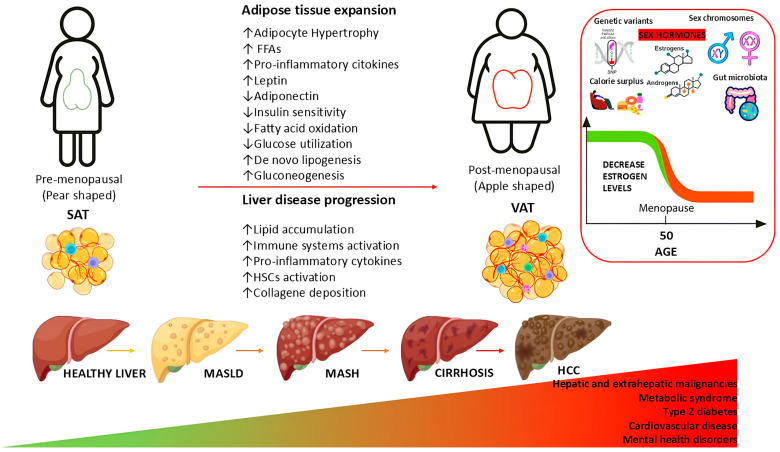
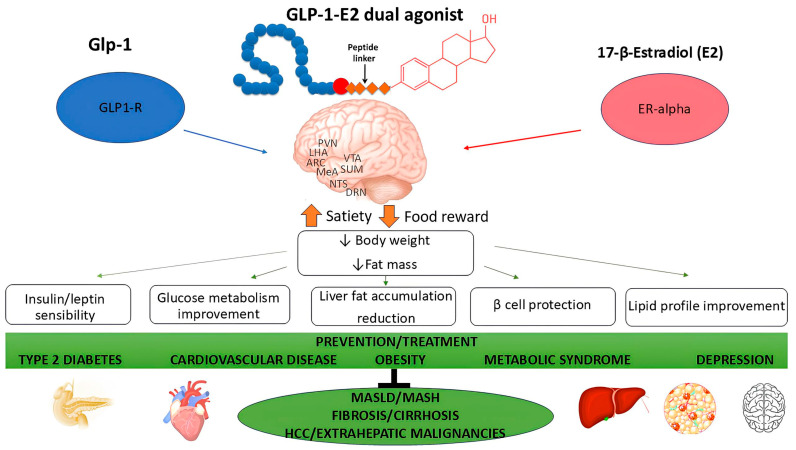
Metabolic dysfunction-associated steatotic liver disease (MASLD) is the most common chronic liver disease influenced by genetic, lifestyle, and environmental factors. While MASLD is more prevalent in men, women are at increased risk after menopause, highlighting the critical pathogenetic role of sex hormones. The complex interplay between estrogen deficiency, visceral fat accumulation, metabolic syndrome (MetS), and inflammation accelerates disease progression, increases cardiovascular (CV) risk, and triggers a cycle of worsening adiposity, metabolic dysfunction, and psychological problems, including eating disorders. Weight loss in postmenopausal women can significantly improve both metabolic and psychological outcomes, helping to prevent MASLD and related conditions. This review examines the prevalence of MASLD, its comorbidities (type 2 diabetes T2D, CV, mental disorders), pathogenetic mechanisms, and pharmacological treatment with GLP-1 receptor agonists (GLP1-RAs), with a focus on postmenopausal women. Given the use of GLP1-RAs in the treatment of obesity and T2D in MASLD patients, and the increase in MetS and MASLD after menopause, this review analyzes the potential of a stable GLP-1–estrogen conjugate as a therapeutic approach in this subgroup. By combining the synergistic effects of both hormones, this dual agonist has been shown to increase food intake and food reward suppression, resulting in greater weight loss and improved insulin sensitivity, glucose, and lipid metabolism. Therefore, we hypothesize that this pharmacotherapy may provide more targeted therapeutic benefits than either hormone alone by protecting the liver, β-cells, and overall metabolic health. As these effects are only supported by preclinical data, this review highlights the critical need for future research to evaluate and confirm the mechanisms and efficacy in clinical settings, particularly in postmenopausal women.
Overview
The claims and statistics of this paper haven’t been checked yet.
Free: it reads the open-access text and checks the first 5 claims that cite a source we can check. Create a free account to check every claim.
Integrity signals
Registry
Cites
Statistics
Figures
Verification
Claims the paper makes
The claims and statistics of this paper haven’t been checked yet.
Free: it reads the open-access text and checks the first 5 claims that cite a source we can check. Create a free account to check every claim.
Claims other papers make about this one
Each is checked against this paper’s own text: does it say what the citing paper says it does?
The check wasn’t confident either way, so it gives no verdict — never disputed.
In the citing paper
“While the reduction in lean body mass and functional capacity in younger individuals may appear marginal compared with the metabolic benefits associated with weight loss [75], in older adults this reduction may be crucial, potentially leading to loss of independence and the development of clinical frailty, with all the associated adverse consequences [76].”
From A Narrative Review on GLP-1 Receptor Agonists for Obesity in Older Women: Maximizing Weight Loss While Preserving Lean Mass (2026) · cites this paper as [76]
Experimental — accuracy not yet measured
Self-check
Percentages, sums and reported differences re-computed from the paper’s own numbers.
The self-check needs the paper’s full text.
Citations
Cites
Items 201–366 of 366
Tiano, J. P., Tate, C. R., Yang, B. S., DiMarchi, R., & Mauvais-Jarvis, F. (2015) · Scientific Reports · doi:10.1038/srep10211 · Cited by 48 · cited 1×
“It has also shown transcriptional activity in the mouse pancreatic beta cell line and an improvement in glucose-stimulated insulin secretion (GSIS) in static incubation in cultured human islets [356].”
Jaroenlapnopparat, A., Charoenngam, N., Ponvilawan, B., Mariano, M., Thongpiya, J., & Yingchoncharoen, P. (2023) · Menopause · doi:10.1097/gme.0000000000002133 · Cited by 48 · cited 1×
“By 2040, MASLD is expected to affect more than half of the adult population, with the greatest increase in women [32], who are 2.4 times more likely to develop MASLD after menopause [2,33], particularly between the ages of 50 and 60 years [34].”
InfluentialTargher, G., Mantovani, A., Byrne, C. D., & Tilg, H. (2025) · Gut · doi:10.1136/gutjnl-2024-334023 · Cited by 48 · cited 10×
“The immunoregulatory effects of GLP1-RAs are associated with the suppression of pro-inflammatory pathways such as JNK and NF-kB, the reduction of inflammatory mediators such as CRP, TNF-alpha, IL-1 β , and IL-6, and the induction of anti-inflammatory cytokines [301,307].”
InfluentialKovačević, S., Brkljačić, J. M., Milutinović, D. V., Gligorovska, L., Bursać, B. N., Elaković, I., & Djordjevic, A. D. (2021) · Frontiers in Nutrition · doi:10.3389/fnut.2021.749328 · Cited by 47
Roles of estrogens, estrogen-like compounds, and endocrine disruptors in adipocytes
Lizcano, F. (2022) · Frontiers in Endocrinology · doi:10.3389/fendo.2022.921504 · Cited by 47 · cited 1×
“It has also been suggested that E2 may centrally regulate thermogenic adipose tissue by activating hypothalamic AMP-activated protein kinase (AMPK), a pathway that acts as an energetic sensor of nutritional status and cellular metabolism [202,203].”
Schwenk, R. W., Baumeier, C., Finan, B., Kluth, O., Brauer, C., Joost, H.-G., DiMarchi, R. D., Tschöp, M. H., & Schürmann, A. (2015) · Diabetologia · doi:10.1007/s00125-014-3478-3 · Cited by 46 · cited 3×
“By inducing severe caloric restriction, weight loss, and improving insulin sensitivity, it positively influences the overall metabolism of the body [355].”
Zsido, R. G., Heinrich, M., Slavich, G. M., Beyer, F., Masouleh, S. K., Kratzsch, J., Raschpichler, M., Mueller, K., Scharrer, U., Löffler, M., et al. (2019) · JAMA Network Open · doi:10.1001/jamanetworkopen.2019.6126 · Cited by 46 · cited 2×
“By regulating metabolism, improving insulin sensitivity, and preventing inflammation [141], estrogens offer neuroprotection against cognitive decline in middle-aged women [140], explaining the association between cognitive impairment and MASLD is stronger in postmenopausal women [141–146].”
Influence of donor and recipient gender on liver transplantation outcomes in Europe
Germani, G., Zeni, N., Zanetto, A., Adam, R. A., Karam, V. H., Belli, L. S., O’Grady, J., Mirza, D. F., Klempnauer, J. L., Cherqui, D., et al. (2020) · Liver International · doi:10.1111/liv.14510 · Cited by 46 · cited 1×
“Older women are more likely to experience cerebrovascular events, which helps explain the increase in the number of female liver donors over the past 20 years, while the number of male donors has decreased [58].”
Wang, W., Ren, J., Zhou, W., Huang, J., Wu, G., Yang, F., Yuan, S., Fang, J., Liu, J., Jin, Y., et al. (2022) · Scientific Reports · doi:10.1038/s41598-022-14701-0 · Cited by 46 · cited 1×
“Given the higher average number of women in the lean MASLD group, the study suggests that menopausal or postmenopausal status may play a significant role in the development of MetS-related factors, making lean MASLD a more harmful phenotype [100] in post-menopausal women [101].”
A life-course approach to tackling noncommunicable diseases in women
Carcel, C., Haupt, S., Arnott, C. G., Yap, M. L., Henry, A., Hirst, J. E., Woodward, M., & Norton, R. (2024) · Nature Medicine · doi:10.1038/s41591-023-02738-1 · Cited by 46 · cited 1×
“While CV disease has traditionally been thought of as more common in men and older adults [105–107], it follows a similar pattern to MASLD, with higher risks in men under 50 and increasing rates in postmenopausal women [5,60,108–110].”
Phipps, M. M., Livanos, A. E., Guo, A., Pomenti, S. F., Yeh, J., Dakhoul, L., Burney, H. N., Kettler, C. D., Liu, H., Miller, E., et al. (2020) · The American Journal of Gastroenterology · doi:10.14309/ajg.0000000000000643 · Cited by 45 · cited 1×
“However, a large meta-analysis found no significant differences in HCC incidence between men and women [46], although women are more likely to develop non-cirrhotic HCC [12,47].”
Park, J., Lee, E. Y., Li, J., Jun, M. J., Yoon, E. L., Ahn, S. B., Liu, C., Yang, H., Rui, F., Zou, B., et al. (2021) · Digestive Diseases · doi:10.1159/000514953 · Cited by 44 · cited 1×
“A meta-analysis [75] found that 80% of people with MetS and obesity had MASLD, compared with only 18% of those without these conditions.”
Tsai, W.-H., Sung, F.-C., Chiu, L.-T., Shih, Y.-H., Tsai, M.-C., & Wu, S.-I. (2022) · Frontiers in Pharmacology · doi:10.3389/fphar.2022.765446 · Cited by 44 · cited 1×
“This suggests an interaction between GLP-1R, the central and peripheral nervous systems, and estrogen in anorexigenic actions [343].”
Association between Metabolic Dysfunction-associated Fatty Liver Disease and Cognitive Impairment
Yu, Q., He, R., Jiang, H., Wu, J., Xi, Z., He, K., Liu, Y., Zhou, T., Feng, M., Wan, P., et al. (2022) · Journal of Clinical and Translational Hepatology · doi:10.14218/jcth.2021.00490 · Cited by 43 · cited 1×
“This effect is particularly evident when liver disease is accompanied by glucose metabolism abnormalities [136], and advanced progression (fibrosis and MASH) [132,136].”
Yang, C., Yao, W., Yang, C., Peng, Z., Ou, H., & Kuo, S. (2024) · Journal of Internal Medicine · doi:10.1111/joim.13751 · Cited by 42 · cited 1×
“Although not specifically indicated for MASH [2], GLP1-RAs have also reduced the risk of composite liver disease (including cirrhosis or HCC) in patients with diabetes [322–324], even in those with compensated cirrhosis from MASLD [325].”
Mayén, A., Sabra, M., Aglago, E. K., Perlemuter, G., Voican, C. S., Ramos, I., Debras, C., Blanco, J., Viallon, V., Ferrari, P., et al. (2024) · BMC Medicine · doi:10.1186/s12916-024-03366-3 · Cited by 42 · cited 2×
“The strong association between MASLD and metabolic disorders places people at a significantly higher risk of mortality [2,68,92], with a 1.17-fold increased likelihood of CV disease compared to those without [104].”
InfluentialThe good and the BAT of metabolic sex differences in thermogenic human adipose tissue
Keuper, M., & Jastroch, M. (2021) · Molecular and Cellular Endocrinology · doi:10.1016/j.mce.2021.111337 · Cited by 41 · cited 1×
“This also supports the role of sex hormones in influencing the higher levels and activity of BAT in women compared to men, attributed to higher thermogenic proteins such as UCP1 and PGC1 α [204,205].”
Gender Differences in Eating Habits of Polish Young Adults Aged 20–26
Gil, M., Rudy, M., Stanisławczyk, R., Duma‐Kocan, P., & Żurek, J. (2022) · International Journal of Environmental Research and Public Health · doi:10.3390/ijerph192215280 · Cited by 41 · cited 1×
“Adopting these healthy eating habits from an early age [252] may partly explain their lower risk of premenopausal MASLD.”
Gaber, M. K., Wilson, A. S., Millen, A. E., Hovey, K. M., LaMonte, M. J., Wactawski‐Wende, J., Ochs‐Balcom, H. M., & Cook, K. L. (2024) · Microbiome · doi:10.1186/s40168-024-01901-1 · Cited by 41 · cited 1×
“In contrast, lower VAT is associated with SCFA-producing microbes [235].”
Metabolic Dysfunction-associated Steatotic Liver Disease and Type 2 Diabetes: A Deadly Synergy
Leith, D., Lin, Y. Y., & Brennan, P. (2024) · touchREVIEWS in Endocrinology · doi:10.17925/ee.2024.20.2.2 · Cited by 41 · cited 3×
“In these cases, factors such as abnormal fat distribution (especially increased visceral fat), sarcopenia, and early-stage β -cell insufficiency are significant contributors [86].”
InfluentialMetabolic and cardiovascular risk factors in Klinefelter syndrome
Spaziani, M., & Radicioni, A. F. (2020) · American Journal of Medical Genetics Part C Seminars in Medical Genetics · doi:10.1002/ajmg.c.31792 · Cited by 40 · cited 1×
“Similar patterns are observed in syndromes with an extra X chromosome, such as Klinefelter syndrome (XXY), where affected males have higher liver function markers, increased body fat, abdominal fat, TG, cholesterol, and insulin resistance, suggesting the involvement of MetS components [22,172,173].”
Nonalcoholic fatty liver disease shows significant sex dimorphism
Chen, X., Wang, C., Huang, Y., & Zhang, L. (2022) · World Journal of Clinical Cases · doi:10.12998/wjcc.v10.i5.1457 · Cited by 40 · cited 4×
“As the predominant hepatic immune cell type, KCs are essential for activating the inflammatory response, recruiting immune cells, and promoting insulin resistance, free fatty acid (FFA) accumulation, and inflammation, all of which contribute to fibrosis development [179].”
InfluentialThe dynamic network associations of food craving, restrained eating, hunger and negative emotions
Dicker‐Oren, S. D., Gelkopf, M., & Greene, T. (2022) · Appetite · doi:10.1016/j.appet.2022.106019 · Cited by 40
Mediterranean Diet: What Are the Consequences for Menopause?
Vetrani, C., Barrea, L., Rispoli, R., Verde, L., de Alteriis, G., Docimo, A., Auriemma, R. S., Colao, A., Savastano, S., & Muscogiuri, G. (2022) · Frontiers in Endocrinology · doi:10.3389/fendo.2022.886824 · Cited by 39 · cited 2×
“Notably, these symptoms are often associated with lower adherence to the Mediterranean diet [260], and increased consumption of highly processed foods, saturated fats, and sugars [275,276].”
Jiménez-Morcillo, J., & Clemente‐Suárez, V. J. (2023) · Nutrients · doi:10.3390/nu16010104 · Cited by 39 · cited 1×
“This concern about physical appearance often triggers negative thoughts and anxiety, which can lead to the development of unhealthy eating behaviors [283].”
Sex differences in chronic liver disease and benign liver lesions
Cooper, K. M., Delk, M., Devuni, D., & Sarkar, M. (2023) · JHEP Reports · doi:10.1016/j.jhepr.2023.100870 · Cited by 38 · cited 3×
“…of ER α in female LERKO mice results in increased DNL, elevated circulating lipids, and ectopic fat accumulation [177,189], further supporting the idea that the loss of estrogen protection after menopause increases the prevalence and severity of MASLD, including advanced fibrosis and MASH [26,180].”
Valenzuela‐Vallejo, L., Chrysafi, P., Kouvari, M., Guatibonza-García, V., Mylonakis, S. C., Katsarou, A., Verrastro, O., Markakis, G., Eslam, M., Papatheodoridis, G., et al. (2023) · Metabolism · doi:10.1016/j.metabol.2023.155694 · Cited by 38
The emerging role of glucagon-like peptide 1 in binge eating
Balantekin, K. N., Kretz, M. J., & Mietlicki-Baase, E. G. (2024) · Journal of Endocrinology · doi:10.1530/joe-23-0405 · Cited by 38 · cited 4×
“Therefore, targeting both GLP-1 and E2 signaling may represent a novel strategy to improve the treatment of obesity and food reward regulation [264,303] in these women.”
InfluentialAn estrogen receptor α-derived peptide improves glucose homeostasis during obesity
Yang, W., Jiang, W., Liao, W., Yan, H., Ai, W., Pan, Q., Brashear, W. A., Xu, Y., He, L., & Guo, S. (2024) · Nature Communications · doi:10.1038/s41467-024-47687-6 · Cited by 38 · cited 5×
“In the latter group, estrogen deficiency leads to dysglycemia and reduced hepatic insulin clearance [177,194].”
InfluentialRinaldi, R., Nucci, S. D., Donghia, R., Donvito, R., Cerabino, N., Chito, M. D., Penza, A., Mongelli, F. P., Shahini, E., Zappimbulso, M., et al. (2024) · Nutrients · doi:10.3390/nu16101408 · Cited by 38 · cited 1×
“Men also show higher levels of liver steatosis compared to premenopausal women [28,29].”
Phase 3 ESSENCE Trial: Semaglutide in Metabolic Dysfunction-Associated Steatohepatitis.
(2024) · PubMed Central · Cited by 38
Zhang, L., Yuan, Q., Li, M., Chai, D., Deng, W., & Wang, W. (2020) · BMC Cancer · doi:10.1186/s12885-020-07651-1 · Cited by 37 · cited 1×
“The abnormal expression of these adipokines has also been associated with the development and prognosis of HCC, suggesting them as potential biomarkers for the early diagnosis and progression of liver cancer [219].”
Song, T., Jia, Y., Li, Z., Wang, F., Ren, L., & Chen, S. (2021) · Diabetes Therapy · doi:10.1007/s13300-021-01072-4 · Cited by 37
Implications of innate immune sexual dimorphism for MASLD pathogenesis and treatment
Booijink, R. S., Ramachandran, P., & Bansal, R. (2024) · Trends in Pharmacological Sciences · doi:10.1016/j.tips.2024.05.004 · Cited by 37 · cited 8×
“High testosterone levels in men may help explain their lower risk of developing T2D and insulin resistance [102].”
InfluentialGender‐related issues in the pharmacology of new anti‐obesity drugs
Cataldi, M., Muscogiuri, G., Savastano, S., Barrea, L., Guida, B., Taglialatela, M., & Colao, A. (2019) · Obesity Reviews · doi:10.1111/obr.12805 · Cited by 36 · cited 1×
“This may provide a neuroanatomical basis for the interaction between the GLP-1R and sex [337].”
Sealock, J., Ziogas, I. A., Zhao, Z., Ye, F., Alexopoulos, S. P., Matsuoka, L. K., Chen, G., & Davis, L. K. (2021) · JAMA Surgery · doi:10.1001/jamasurg.2022.1548 · Cited by 36 · cited 1×
“In addition, current stratification scores, such as the Model for End-Stage Liver Disease score, tend to underestimate mortality in women [60,61], leading to the proposal of sex-adjusted scores to address these gender differences in access to liver transplantation [61].”
Semaglutide in Obesity: Unmet Needs in Men
Jensterle, M., Rizzo, M., & Janež, A. (2023) · Diabetes Therapy · doi:10.1007/s13300-022-01360-7 · Cited by 36 · cited 1×
“This supports the likely role of sex hormones in the regulation of eating behavior mediated by GLP1-RAs [341].”
Kim, D., Dennis, B. B., Cholankeril, G. T., & Ahmed, A. (2023) · Journal of Affective Disorders · doi:10.1016/j.jad.2023.02.101 · Cited by 36
Estradiol modulates the anorexic response to central glucagon-like peptide 1
Maske, C. B., Jackson, C. M., Terrill, S. J., Eckel, L. A., & Williams, D. L. (2017) · Hormones and Behavior · doi:10.1016/j.yhbeh.2017.05.012 · Cited by 35 · cited 1×
“In addition, the presence of estrogens appears to be essential for mediating the effect of GLP-1 on food intake in the PVN nucleus [364].”
Association Between Fatty Liver Index and Risk of Breast Cancer: A Nationwide Population-Based Study
Park, J. H., Choi, I. S., Han, K.-D., Park, H., Kim, K. H., & Kim, J.-S. (2020) · Clinical Breast Cancer · doi:10.1016/j.clbc.2020.02.004 · Cited by 35 · cited 1×
“For extrahepatic cancers, associations have been observed between Fatty Liver Index (FLI) scores (30–60 and ≥ 60) and the presence of colorectal adenomas or early colon cancer in men [3,62–64], and breast cancer in postmenopausal women [3,63–65].”
Li, Y.-F., Chen, Y., Tian, X., Zhang, S., & Jiao, J. (2021) · Diabetes Metabolic Syndrome and Obesity · doi:10.2147/dmso.s304634 · Cited by 35 · cited 1×
“In addition, less than 10% of women without obesity had abnormal glucose levels, highlighting the need for greater attention to MASLD in women with normal glucose levels compared to men [103].”
Differences in the association of diet quality with body fat distribution between men and women
Maskarinec, G., Namatame, L. A., Kang, M., Buchthal, S. D., Ernst, T., Monroe, K. R., Shepherd, J. A., Wilkens, L. R., Boushey, C. J., Marchand, L. L., et al. (2020) · European Journal of Clinical Nutrition · doi:10.1038/s41430-020-0563-1 · Cited by 34 · cited 1×
“Diet quality appears to have a greater effect on VAT in women than in men [247], emphasizing the need to consider gender differences in dietary patterns and their impact on diet quality and MASLD risk.”
Analysis of Gender-Based Inequality in Cardiovascular Health: An Umbrella Review
Bosomworth, J., & Khan, Z. U. (2023) · Cureus · doi:10.7759/cureus.43482 · Cited by 34 · cited 2×
“In addition, the protective effects of estrogens may delay the onset of CV disease [112], leading to the misconception that they are less common in women and therefore do not require as intensive preventive therapy as in men [113].”
The Role of Estrogen across Multiple Disease Mechanisms
Xiang, X., Palasuberniam, P., & Pare, R. B. (2024) · Current Issues in Molecular Biology · doi:10.3390/cimb46080483 · Cited by 34 · cited 3×
“Although regulation of HGP plays a more important role in reducing insulin resistance than muscle glucose uptake [194,196], enhancing muscle glucose utilization also helps improve insulin sensitivity [193].”
Adipokines regulate the development and progression of MASLD through organellar oxidative stress
Zhao, K., Zhang, H., Ding, W., Yu, X., Hou, Y., Liu, X., Li, X., & Wang, X. (2025) · Hepatology Communications · doi:10.1097/hc9.0000000000000639 · Cited by 34 · cited 1×
“Obesity, particularly central obesity, is a key driver of MASLD, with insulin resistance, adipocyte dysfunction, and inflammatory markers playing a critical role in the development of MASLD and related conditions [17,18].”
Yokomori, H., & Ando, W. (2020) · BMJ Open Gastroenterology · doi:10.1136/bmjgast-2019-000370 · Cited by 33 · cited 1×
“…[126,300,301], it has also been reported that their effects on lipid metabolism [299] may be influenced by GLP-1 receptors (GLP-1R) in the liver [307–310], particularly in liver endothelial cells and T cells, as shown in preclinical models [309] and liver biopsies from MASH patients [310].”
Sirt1 coordinates with ERα to regulate autophagy and adiposity
Tao, Z., Shi, L., Parke, J., Zheng, L., Gu, W. J., Dong, X. C., Liu, D., Wang, Z., Olumi, A. F., & Cheng, Z. (2021) · Cell Death Discovery · doi:10.1038/s41420-021-00438-8 · Cited by 33
Menopausal hormone therapy in women with dyslipidemia and nonalcoholic fatty liver disease
Pοlyzos, S. A., Lambrinoudaki, I. V., & Goulis, D. G. (2022) · HORMONES · doi:10.1007/s42000-022-00369-8 · Cited by 33 · cited 4×
“However, the relationship between MASLD and MetS is bidirectional, as MASLD itself contributes to the development of obesity, T2D, and dyslipidemia by affecting carbohydrate and lipid metabolism [5,15].”
InfluentialVitale, M., Costabile, G., Bergia, R. E., Hjorth, T., Campbell, W. W., Landberg, R., Riccardi, G., & Giacco, R. (2023) · Clinical Nutrition · doi:10.1016/j.clnu.2023.08.016 · Cited by 33 · cited 1×
“Given the high prevalence of MetS and MASLD after menopause, the negative impact of this life stage on women’s body composition and glucose homeostasis contributes significantly to the higher incidence of metabolic disorders [287].”
Sex differences in metabolic dysfunction-associated steatotic liver disease: a narrative review
Joo, S. K., & Kim, W. K. (2024) · Ewha Medical Journal · doi:10.12771/emj.2024.e17 · Cited by 33 · cited 4×
“The lack of anti-lipolytic action of insulin makes VAT more susceptible to lipolysis, leading to an increase in circulating FFAs that are redistributed to organs, including the liver, exacerbating insulin resistance, inflammation, and metabolic stress in hepatocytes [25,176].”
InfluentialSex- and age-associated factors drive the pathophysiology of MASLD
Yadav, A. K., MacNeill, J. J., Krylov, A., Ashrafi, N., Mimi, R. A., Saxena, R., Liu, S., Graham, S. F., Wan, J., & Morral, N. (2024) · Hepatology Communications · doi:10.1097/hc9.0000000000000523 · Cited by 33 · cited 2×
“In fact, although male mice develop obesity and metabolic dysfunction more rapidly than females when exposed to a HFD, females experience age-related changes in liver function, including altered fatty acid oxidation during perimenopause, leading to increased hepatic fat accumulation [40].”
Okamura, T., Hashimoto, Y., Hamaguchi, M., Obora, A., Kojima, T., & Fukui, M. (2020) · Clinics and Research in Hepatology and Gastroenterology · doi:10.1016/j.clinre.2019.04.002 · Cited by 32 · cited 1×
“The hazard ratio for MASLD incidence in the highest VAI quartile was found to be 3.69 in men and 4.93 in women [81].”
InfluentialSexes on the brain: Sex as multiple biological variables in the neuronal control of feeding
Massa, M. G., & Correa, S. M. (2020) · Biochimica et Biophysica Acta (BBA) - Molecular Basis of Disease · doi:10.1016/j.bbadis.2020.165840 · Cited by 32 · cited 1×
“E2 also interacts with other hormones [171,266], such as ghrelin (an orexigenic gastric hormone), leptin, cholecystokinin, and GLP-1 to promote the cessation of food intake [264,267,268].”
Succurro, E., Marini, M. A., Fiorentino, T. V., Perticone, M., Sciacqua, A., Andreozzi, F., & Sesti, G. (2022) · Diabetes Research and Clinical Practice · doi:10.1016/j.diabres.2022.110027 · Cited by 32 · cited 1×
“The worsening of anthropometric and metabolic risk factors (such as homeostasis model assessment of insulin resistance (HOMA-IR), C-reactive protein (CRP), and lipid profile) may help explain how impaired glucose homeostasis contributes to the development of MASLD [98].”
Impact of nonalcoholic fatty liver disease-related metabolic state on depression
Ntona, S., Papaefthymiou, A., Kountouras, J., Gialamprinou, D., Kotronis, G., Boziki, M. K., Pοlyzos, S. A., Tzitiridou‐Chatzopoulou, M., Chatzopoulos, D., Thavayogarajah, T., et al. (2023) · Neurochemistry International · doi:10.1016/j.neuint.2023.105484 · Cited by 32 · cited 2×
“Poor diet can also disrupt the gut microbiota, contributing to fat deposition in the liver [134,158] and cognitive decline in MASLD [133].”
Gonadal Hormone Influences on Sex Differences in Binge Eating Across Development
Mikhail, M. E., Anaya, C., Culbert, K. M., Sisk, C. L., Johnson, A. W., & Klump, K. L. (2021) · Current Psychiatry Reports · doi:10.1007/s11920-021-01287-z · Cited by 31 · cited 2×
“A reduction in E2 levels may worsen uncontrolled eating disorders, such as BED [255,259,263,264,269], as evidenced by the increased risk of compulsive overeating in adult female rats following ovariectomy [270], and in postmenopausal women [268].”
Secondary Prevention of Cardiovascular Disease in Women: Closing the Gap
Thakkar, A., Agarwala, A., & Michos, E. D. (2021) · European Cardiology Review · doi:10.15420/ecr.2021.24 · Cited by 31 · cited 2×
“Notably, women were also less likely to undergo cardiac investigations [111,116] and received secondary pharmacotherapy less frequently [111], probably due to a higher likelihood of experiencing medication side effects [111,116], contributing to the lack of diagnosis and treatment.”
Velázquez, A. M., Bentanachs, R., Sala‐Vila, A., Lázaro, I., Rodríguez-Morató, J., Sánchez, R. M., Alegret, M., Roglans, N., & Laguna, J. C. (2022) · Molecular Nutrition & Food Research · doi:10.1002/mnfr.202101115 · Cited by 31
Golubeva, J. A., Sheptulina, A. F., Yafarova, A. A., Mamutova, E. M., Kiselev, A. R., & Drapkina, O. M. (2022) · Healthcare · doi:10.3390/healthcare10091699 · Cited by 31 · cited 3×
“…health conditions are associated with higher levels of binge eating disorders (BED) and emotional eating [155,156], especially in postmenopausal women [157], that negatively affect diet, weight [156], and quality of life (QoL), creating barriers to weight loss and effective MASLD treatment [154].”
The Risk of Colorectal Adenoma in Nonalcoholic or Metabolic-Associated Fatty Liver Disease
Seo, J.-Y., Bae, J.-H., Kwak, M., Yang, J. I., Chung, S.-J., Yim, J.-Y., Lim, S.-H., & Chung, G. E. (2021) · Biomedicines · doi:10.3390/biomedicines9101401 · Cited by 30 · cited 1×
“However, higher fibrosis scores have been linked to the development of all cancers [64], and especially in women, MASLD has been found to be a risk factor for colorectal adenomas, particularly when associated with liver fibrosis [63,66].”
Llop, E., Iruzubieta, P., Perelló, C., Fernández‐Carrillo, C., Cabezas, J., Escudero, M. D., González, M., Conde, M. H., Puchades, L. G., Arias, M., et al. (2021) · United European Gastroenterology Journal · doi:10.1002/ueg2.12109 · Cited by 30 · cited 1×
“Particularly, TE has identified a high prevalence of significant fibrosis associated with metabolic risk factors typical of MetS in a large cohort of middle-aged individuals, nearly 60% of whom were women [243].”
Tian, Y., Hong, X., Xie, Y., Guo, Z., & Yu, Q. (2023) · Antioxidants · doi:10.3390/antiox12122100 · Cited by 30
Ntikoudi, A., Spyrou, A., Evangelou, E., Dokoutsidou, E., & Mastorakos, G. P. (2024) · Healthcare · doi:10.3390/healthcare12111081 · Cited by 30 · cited 4×
“The interaction between the female sex and the PNPLA3 p.I148M variant [50,51], and the increasing prevalence of T2D and central obesity in postmenopausal women [31], may explain why the incidence and mortality rates of HCC in women are rapidly approaching those of men [52,53].”
InfluentialMacrophages in the pathophysiology of NAFLD: The role of sex differences
Ministrini, S., Montecucco, F., Sahebkar, A., & Carbone, F. (2020) · European Journal of Clinical Investigation · doi:10.1111/eci.13236 · Cited by 29 · cited 1×
“Overall, the protective effects of estrogen against liver injury and fibrosis help explain the increased risk of advanced fibrosis in postmenopausal women [180,188].”
Kim, Y., Chang, Y., Ryu, S., Wild, S. H., & Byrne, C. D. (2022) · Hepatology · doi:10.1002/hep.32560 · Cited by 29
Heller, B., Reiter, F. P., Leicht, H. B., Fießler, C., Bergheim, I., Heuschmann, P. U., Geier, A., & Rau, M. (2023) · Nutrients · doi:10.3390/nu15183942 · Cited by 29 · cited 1×
“Men also show higher levels of liver steatosis compared to premenopausal women [28,29].”
Allen, A. M., Charlton, M., Cusi, K. J., Harrison, S. A., Kowdley, K. V., Noureddin, M., & Shubrook, J. H. (2024) · Postgraduate Medicine · doi:10.1080/00325481.2024.2325332 · Cited by 29
Elsabaawy, M., Naguib, M., Abuamer, A., & Shaban, A. (2025) · Clinical and Experimental Medicine · doi:10.1007/s10238-024-01553-3 · Cited by 29 · cited 1×
“Furthermore, understanding the interaction between sex/gender and traditional risk factors can improve patient outcomes [20,21], especially within the evolving field of precision medicine, which is increasingly focused on sex/gender differences.”
Wei, L., Cheng, X., Luo, Y., Yang, R., Lei, Z., Jiang, H., & Chen, L. (2020) · Diabetes & Metabolism · doi:10.1016/j.diabet.2020.08.008 · Cited by 28 · cited 1×
“Given the higher average number of women in the lean MASLD group, the study suggests that menopausal or postmenopausal status may play a significant role in the development of MetS-related factors, making lean MASLD a more harmful phenotype [100] in post-menopausal women [101].”
Zhou, H., Chen, H., Lu, H., Wu, B., Zhang, S., Gu, Y., Zhou, G., Xiang, J., & Yang, J. (2024) · Liver International · doi:10.1111/liv.15910 · Cited by 28 · cited 1×
“A meta-analysis of 557,614 patients found that women with MASLD have higher rates of all-cause mortality, CV mortality, and cancer than those without MASLD, and a 44% higher risk of cancer than men with MASLD [57].”
Coccia, F., Testa, M., Guarisco, G., Cristofano, C. D., Silecchia, G., Leonetti, F., Gastaldelli, A., & Capoccia, D. (2019) · Nutrition Metabolism and Cardiovascular Diseases · doi:10.1016/j.numecd.2019.08.001 · Cited by 27 · cited 1×
“In morbid obesity, indexes of insulin resistance have been recognized as markers of histological severity of liver disease [19].”
Self-citationEstrogenic hormones receptors in Alzheimer’s disease
Tecalco-Cruz, Á. C., Zepeda–Cervantes, J., & Ortega-Domínguez, B. (2021) · Molecular Biology Reports · doi:10.1007/s11033-021-06792-1 · Cited by 27
Fuselier, T. T., de Sa, P. M., Qadir, M. M. F., Xu, B., Allard, C., Meyers, M. M., Tiano, J. P., Yang, B. S., Gelfanov, V. M., Lindsey, S. H., et al. (2022) · Cell Reports Medicine · doi:10.1016/j.xcrm.2022.100598 · Cited by 27 · cited 1×
“Another study showed that the conjugate ameliorated insulin-deficient diabetes in male mice to a greater extent than a single GLP-1 agonist, without causing feminizing effects, and upregulated anti-apoptotic pathways in cultured human islets produced by the monoagonists [357].”
Zuo, Q., Park, N. H., Lee, J. K., Casiano, A. S., & Madak‐Erdogan, Z. (2023) · Steroids · doi:10.1016/j.steroids.2023.109330 · Cited by 27 · cited 4×
“At the mechanistic level, estrogens regulate liver lipid metabolism through their receptors, primarily ER α , which is expressed in hepatocytes and KCs, while ER β is expressed in HSCs [5,6,102].”
InfluentialWeinstein, G., Schonmann, Y., Yeshua, H., & Zelber‐Sagi, S. (2024) · Alzheimer s & Dementia · doi:10.1002/alz.14033 · Cited by 26 · cited 1×
“As a result, MASLD (as assessed by the hepatic steatosis index (HSI) and FIB-4 scores) was associated with greater beta-amyloid deposition in postmenopausal women, but not in men [141], and a higher risk of dementia, particularly in people aged 45–54 years and those with T2D [152].”
Protein Biomarkers of Early Menopause and Incident Cardiovascular Disease
Ramirez, M. F., Honigberg, M. C., Wang, D., Parekh, J. K., Bielawski, K., Courchesne, P. L., Larson, M. G., Levy, D. A., Murabito, J. M., Ho, J. E., et al. (2023) · Journal of the American Heart Association · doi:10.1161/jaha.122.028849 · Cited by 25 · cited 1×
“These sex differences may be influenced by the combined effect of MASLD and menopausal hormonal changes that increase CV risk [127,128].”
Estrogen and gut satiety hormones in vagus-hindbrain axis
Huang, K.-P., & Raybould, H. E. (2020) · Peptides · doi:10.1016/j.peptides.2020.170389 · Cited by 24 · cited 4×
“E2 also interacts with other hormones [171,266], such as ghrelin (an orexigenic gastric hormone), leptin, cholecystokinin, and GLP-1 to promote the cessation of food intake [264,267,268].”
InfluentialSystemic and adipose tissue inflammation in NASH: correlations with histopathological aspects
Micu, E. S., Amzolini, A. M., Abu-Alhija, A. B., Forțofoiu, M.-C., Vladu, I. M., Clenciu, D., Mitrea, A., Mogoantă, S. Ş., Crişan, A. E., Predescu, O. I., et al. (2022) · Romanian Journal of Morphology and Embryology · doi:10.47162/rjme.62.2.17 · Cited by 24 · cited 1×
“The adiponectin/leptin (A/L) ratio has been suggested as a marker of adipose tissue dysfunction, also known as secretory adiposopathy, characterized by altered lipid metabolism [217], and a more accurate index for steatosis lesions and their progression to MASH [218].”
Meda, C., Benedusi, V., Cherubini, A., Valenti, L. V. C., Maggi, A. C., & Torre, S. D. (2024) · JHEP Reports · doi:10.1016/j.jhepr.2024.101143 · Cited by 24 · cited 1×
“This suggests that estrogen deprivation reprograms the liver to a male-like profile, contributing to MASLD in postmenopausal women [191].”
Durden, E., Lenhart, G., Lopez-Gonzalez, L., Hammer, M., & Langer, J. (2016) · Journal of Medical Economics · doi:10.3111/13696998.2015.1131703 · Cited by 23 · cited 2×
“Consistent with this, early initiation of liraglutide therapy was associated with better glycemic control, as was female sex [336].”
Increased cardiovascular events and mortality in females with NAFLD: a meta-analysis.
Khalid, Y., Dasu, N. R., Suga, H. S., Dasu, K., Reja, D., Shah, A., McMahon, D., & Levine, A. (2020) · PubMed Central · Cited by 23
Pierce-Messick, Z. J., & Pratt, W. E. (2020) · Neuroreport · doi:10.1097/wnr.0000000000001545 · Cited by 23
Liver Fibrosis is Associated with Ischemic Stroke Risk in Women but not Men: The REGARDS Study
Parikh, N. S., Koh, I., VanWagner, L. B., Elkind, M. S. V., Zakai, N. A., & Cushman, M. (2021) · Journal of Stroke and Cerebrovascular Diseases · doi:10.1016/j.jstrokecerebrovasdis.2021.105788 · Cited by 23 · cited 2×
“Even after adjustment for several risk factors, the Fibrosis-4 Index (FIB-4) score [125], which has been demonstrated to have superior performance in detecting advanced stages of fibrosis among non-invasive liver disease assessments (NILDAs) [126], was associated with a higher risk of ischemic…”
Cardeillac, M., Lefèbvre, F., Baicry, F., Borgne, P. L., Gil‐Jardine, C., Cipolat, L., Peschanski, N., & Vuillaume, L. A. (2022) · Journal of Clinical Medicine · doi:10.3390/jcm11051319 · Cited by 23 · cited 3×
“In addition, the protective effects of estrogens may delay the onset of CV disease [112], leading to the misconception that they are less common in women and therefore do not require as intensive preventive therapy as in men [113].”
Non-Alcoholic Fatty Liver Disease and Extrahepatic Cancers: A Wolf in Sheep’s Clothing?
Mitsala, A., Tsalikidis, C., Romanidis, Κ., & Pitiakoudis, M. S. (2022) · Current Oncology · doi:10.3390/curroncol29070356 · Cited by 23 · cited 3×
“MASLD is also an independent risk factor for advanced metachronous colorectal neoplasia in women, but not in men [63,67], suggesting a stronger effect on colorectal carcinogenesis in women [67].”
Disordered eating behaviours during the menopausal transition: a systematic review
Vincent, C., Bodnaruc, A. M., Prud’homme, D., Guenette, J., & Giroux, I. (2024) · Applied Physiology, Nutrition, and Metabolism · doi:10.1139/apnm-2023-0623 · Cited by 23 · cited 1×
“This explains the higher prevalence of BED in women, with the female-to-male ratio ranging from 2:1 to 10:1 [255,256], especially during menopause [255,257].”
Setroame, A. M., Affrim, P. K., Abaka‐Yawson, A., Kwadzokpui, P. K., Adrah, F. E., Bless, H., Mohammed, L., Bawah, A. T., & Alidu, H. W. (2020) · BioMed Research International · doi:10.1155/2020/2168381 · Cited by 22 · cited 1×
“Notably, abdominal obesity was identified as the most common component of MetS in this population, significantly increasing the risk of MASLD [77].”
Sex differences in the association between nonalcoholic fatty liver disease and Parkinson's disease
Jeong, S., Lee, H. R., Jang, W., Kim, D., Yoo, J. E., Jeon, K. H., Jin, S., Han, K., & Shin, D. W. (2021) · Parkinsonism & Related Disorders · doi:10.1016/j.parkreldis.2021.10.030 · Cited by 22 · cited 2×
“By regulating metabolism, improving insulin sensitivity, and preventing inflammation [141], estrogens offer neuroprotection against cognitive decline in middle-aged women [140], explaining the association between cognitive impairment and MASLD is stronger in postmenopausal women [141–146].”
Brown adipose tissue metabolism in women is dependent on ovarian status
Blondin, D. P., Haman, F., Swibas, T., Hogan‐Lamarre, S., Dumont, L., Guertin, J., Richard, G. M., Weissenburger, Q., Hildreth, K. L., Schauer, I. E., et al. (2024) · American Journal of Physiology-Endocrinology and Metabolism · doi:10.1152/ajpendo.00077.2024 · Cited by 22 · cited 1×
“A decrease in oxidative metabolism and glucose uptake in BAT has been observed in postmenopausal women compared to premenopausal women, suggesting a loss of thermogenic function associated with reduced E2 levels [206].”
la Cruz-Color, L. D., Domínguez-Rosales, J. A., Maldonado‐González, M., Ruiz‐Madrigal, B., Sánchez-Muñoz, M. P., Zaragoza-Guerra, V. A., Espinoza-Padilla, V. H., Ruelas-Cinco, E. D. C., Ramírez-Meza, S. M., Torres-Baranda, J. R., et al. (2024) · International Journal of Molecular Sciences · doi:10.3390/ijms25126420 · Cited by 22 · cited 2×
“By improving insulin sensitivity and promoting lipid mobilization, leptin helps reduce fat accumulation in the liver, thereby protecting against MASLD [214,215].”
Sun, J., Yan, C., Wen, J., Wang, F., Wu, H., & Xu, F. (2024) · BMC Gastroenterology · doi:10.1186/s12876-024-03303-x · Cited by 22 · cited 1×
“A cross-sectional study further supported this by showing a significant association between abdominal obesity and MASLD as assessed by TE in middle-aged women [242].”
Xiao, L., Li, Y., Chang, H., Ma, P., Zhu, H., Cui, H., Zou, X., Wang, J., Li, R., He, J., et al. (2024) · Journal of Translational Medicine · doi:10.1186/s12967-024-05478-z · Cited by 22
Sex‐specific effects of PNPLA3 I148M
Cherubini, A., Rosso, C., & Torre, S. D. (2024) · Liver International · doi:10.1111/liv.16088 · Cited by 22 · cited 1×
“The interaction between the female sex and the PNPLA3 p.I148M variant [50,51], and the increasing prevalence of T2D and central obesity in postmenopausal women [31], may explain why the incidence and mortality rates of HCC in women are rapidly approaching those of men [52,53].”
Interactions between glucagon like peptide 1 (GLP-1) and estrogens regulates lipid metabolism
Model, J. F. A., Normann, R. S., Vogt, É. L., Dentz, M. C. V., de Amaral, M., Xu, R., Bachvaroff, T. R., Spritzer, P. M., Chung, J. S., & Vinagre, A. S. (2024) · Biochemical Pharmacology · doi:10.1016/j.bcp.2024.116623 · Cited by 22 · cited 3×
“However, these changes have been reversed with GLP1-RAs, such as liraglutide [352].”
InfluentialBaek, S., & Yoon, J. (2024) · Biomolecules · doi:10.3390/biom14111468 · Cited by 22 · cited 1×
“The anti-inflammatory effects of estrogens may help explain why premenopausal women, who have a lower prevalence of MASLD, tend to have lower CRP levels than postmenopausal women, who have a higher inflammatory status [187].”
Halaoui, A. F., Ali, A. H., Habib, S. G., Kanso, M., Daniel, F. E., Mukherji, D., Khalife, M. J., Jaafar, R. F., & Faraj, W. G. (2020) · Clinics and Research in Hepatology and Gastroenterology · doi:10.1016/j.clinre.2020.01.001 · Cited by 21 · cited 1×
“Under age 50, factors such as triglycerides (TG), LDL cholesterol, and platelet count are associated with liver health in men but not in women, and non-invasive fibrosis scores tend to be more reliable for assessing liver status in men [27].”
Liebmann, M., Pfeifer, M. A., Grupe, K., & Scherneck, S. (2022) · International Journal of Molecular Sciences · doi:10.3390/ijms23126693 · Cited by 21 · cited 3×
“Although regulation of HGP plays a more important role in reducing insulin resistance than muscle glucose uptake [194,196], enhancing muscle glucose utilization also helps improve insulin sensitivity [193].”
Mondal, S. A., Sathiaseelan, R., Mann, S. N., Kamal, M., Luo, W., Saccon, T. D., Isola, J. V. V., Peelor, F. F., Li, T., Freeman, W. M., et al. (2022) · American Journal of Physiology-Endocrinology and Metabolism · doi:10.1152/ajpendo.00256.2022 · Cited by 21
Warren, A. (2024) · Frontiers in Aging Neuroscience · doi:10.3389/fnagi.2024.1395825 · Cited by 21 · cited 2×
“Middle-aged women are more likely than men to consume healthier foods, such as fruits and vegetables [248,249], and are more likely to follow the Mediterranean diet [250,251].”
Hepatic Estrogen Receptor Alpha Overexpression Protects Against Hepatic Insulin Resistance and MASLD
Alves, E. S., dos SANTOS, J. D. M., da Cruz, A. G., de Camargo, F. N., Talarico, C. H. Z., Santos, A. R. M., Silva, C. A. A., Morgan, H. J. N., Matos, S. L., Araujo, L. C. C., et al. (2025) · Pathophysiology · doi:10.3390/pathophysiology32010001 · Cited by 21 · cited 1×
“Furthermore, overexpression of ER α has been shown to improve mitochondrial function in hepatocytes, reduce hepatic lipid accumulation, and protect against hepatic insulin resistance and steatosis in mice [199].”
Cannavale, C. N., Bailey, M. A., Edwards, C., Thompson, S. V., Walk, A. M., Burd, N. A., Holscher, H. D., & Khan, N. A. (2021) · International Journal of Psychophysiology · doi:10.1016/j.ijpsycho.2021.03.010 · Cited by 20 · cited 1×
“These factors also contribute to cognitive decline, particularly in the aging population [132–135].”
Shi, Y. Q., Lin, W., Lin, X., Wu, S., Yue, F., Xia, K., & Zhang, D. (2022) · Current Microbiology · doi:10.1007/s00284-022-03025-x · Cited by 20 · cited 1×
“These findings suggest that female rats may experience less severe liver inflammation and steatosis than males [226].”
Sex Drives Functional Changes in the Progression and Regression of Liver Fibrosis
Sayaf, K., Zanotto, I., Gabbia, D., Alberti, D., Pasqual, G., Zaramella, A., Fantin, A., Martin, S. D., & Russo, F. P. (2023) · International Journal of Molecular Sciences · doi:10.3390/ijms242216452 · Cited by 20 · cited 1×
“Animal models of induced fibrosis show that while males are more prone to severe fibrosis in the early stages, prolonged liver injury in females leads to more active hepatic stellate cells (HSCs), accelerating fibrosis progression [39].”
Sex differences in murine MASH induced by a fructose-palmitate-cholesterol-enriched diet
Arivazhagan, L., Delbare, S., Wilson, R. A., Manigrasso, M. B., Zhou, B., Ruiz, H. H., Mangar, K., Higa, R., Brown, E., Li, H., et al. (2024) · JHEP Reports · doi:10.1016/j.jhepr.2024.101222 · Cited by 20 · cited 1×
“In a mouse model of fructose supplementation with a HFD, females had significantly higher MASH (steatosis, inflammation, and fibrosis) scores compared to males [290], along with a marked increase in hepatic TG [291].”
Shu, Z., Zhang, G., Zhu, X., & Xiong, W. (2022) · Biochemical and Biophysical Research Communications · doi:10.1016/j.bbrc.2022.01.085 · Cited by 19 · cited 1×
“Finally, ER α has been shown to accelerate hepatic steatosis, M1 macrophage infiltration, and fibrogenesis in obese female mice [192].”
Dietary Assessment Tools and Metabolic Syndrome: Is It Time to Change the Focus?
Chauhan, H., Belski, R., Bryant, E. J., & Cooke, M. B. (2022) · Nutrients · doi:10.3390/nu14081557 · Cited by 19 · cited 1×
“Chronic disruption of circadian rhythms, along with increased nocturnal snacking, is a known risk factor for metabolic disease, as evening or nighttime caloric consumption is associated with a higher risk of hepatic steatosis [273].”
Comorbidities and Outcomes among Females with Non-Alcoholic Fatty Liver Disease Compared to Males
Abu‐Freha, N., Cohen, B., Weissmann, S., Hizkiya, R., Abu-Hammad, R., Taha, G., & Gordon, M. M. (2022) · Biomedicines · doi:10.3390/biomedicines10112908 · Cited by 19 · cited 2×
“Understanding the differences in MASLD-related comorbidities between women and men is essential for effective prevention, early diagnosis, treatment, and addressing the healthcare burden of liver disease [70].”
Cao, Y.-T., Zhang, W., Lou, Y., Yan, Q., Zhang, Y., Qi, F., Xiang, L.-L., Lv, T.-S., Fang, Z.-Y., Yu, J., et al. (2023) · BMC Gastroenterology · doi:10.1186/s12876-023-02997-9 · Cited by 19 · cited 1×
“The shift of fat to the visceral area after menopause makes visceral obesity more susceptible to fatty liver compared to premenopausal women and men, confirming the impact of menopause on liver histology in addition to sex [241].”
Sex Differences in Adverse Liver and Nonliver Outcomes in Steatotic Liver Disease
Yan, T., Zhang, X., Wong, T., Cheung, R. C., & Nguyen, M. H. (2024) · JAMA Network Open · doi:10.1001/jamanetworkopen.2024.48946 · Cited by 19 · cited 1×
“However, this analysis was limited to patients with private health insurance in the United states [43].”
Kim, N. H., Jung, Y. S., Park, J. H., Park, D. I., & Sohn, C. I. (2020) · The Korean Journal of Internal Medicine · doi:10.3904/kjim.2019.360 · Cited by 18 · cited 1×
“MASLD is also an independent risk factor for advanced metachronous colorectal neoplasia in women, but not in men [63,67], suggesting a stronger effect on colorectal carcinogenesis in women [67].”
Wilfred, S. A., Becker, C. B., Kanzler, K. E., Musi, N., Espinoza, S. E., & Kilpela, L. S. (2021) · Journal of Eating Disorders · doi:10.1186/s40337-021-00484-8 · Cited by 18 · cited 1×
“Hormonal changes, combined with midlife lifestyle factors, can lead to body changes and dissatisfaction [281], as women move away from the ideal of female beauty [282].”
Huang, Y., Zhang, S., Zhang, M., Wang, Y., Wang, W.-H., Li, J., Li, C., & Lin, J. (2021) · BMJ Open · doi:10.1136/bmjopen-2021-056260 · Cited by 18 · cited 3×
“Specifically, there is a strong positive correlation between MASLD and body mass index (BMI), emphasizing that both overweight and obesity increase the risk of MASLD in both men and women [34,76].”
InfluentialAnaya, C., Culbert, K. M., & Klump, K. L. (2022) · Current Psychiatry Reports · doi:10.1007/s11920-022-01405-5 · Cited by 18 · cited 5×
“Sleep and mood disorders, such as depression, anxiety, and emotional distress [255,259], combined with somato-vegetative symptoms (hot flashes, palpitations, insomnia), which are common during menopause, contribute to weight gain and an increase in visceral fat mass [260].”
InfluentialWitaszek, T., Babicki, M., Brytek‐Matera, A., Mastalerz–Migas, A., Kujawa, K., & Kłoda, K. (2023) · Nutrients · doi:10.3390/nu16010080 · Cited by 18 · cited 2×
“Overall, the interaction of hormonal and social factors is a significant risk factor for the development of unhealthy eating habits after menopause, which are closely linked to obesity and depression [157,258], and the presence of typical MetS criteria [258].”
The Disruptive Effects of Estrogen Removal Before Puberty on Risk for Binge Eating in Female Rats
Klump, K. L., Sinclair, E. B., Hildebrandt, B. A., Kashy, D. A., O’Connor, S. M., Mikhail, M. E., Culbert, K. M., Johnson, A. W., & Sisk, C. L. (2020) · Clinical Psychological Science · doi:10.1177/2167702620921343 · Cited by 17 · cited 1×
“A reduction in E2 levels may worsen uncontrolled eating disorders, such as BED [255,259,263,264,269], as evidenced by the increased risk of compulsive overeating in adult female rats following ovariectomy [270], and in postmenopausal women [268].”
Li, Q., Wang, L., Wu, J., Wang, J., Wang, Y., & Zeng, X. (2022) · BMJ Open · doi:10.1136/bmjopen-2021-058517 · Cited by 17 · cited 2×
“In addition, a positive correlation has been found between the FLI and MASLD, especially in women aged 40–64 years [82].”
Association between nonalcoholic fatty liver disease and colorectal cancer: A population-based study
Wu, P.-H., Chung, C., Wang, Y.-H., Hu, J., Chien, W., & Cheng, Y. (2023) · Medicine · doi:10.1097/md.0000000000033867 · Cited by 17 · cited 1×
“For extrahepatic cancers, associations have been observed between Fatty Liver Index (FLI) scores (30–60 and ≥ 60) and the presence of colorectal adenomas or early colon cancer in men [3,62–64], and breast cancer in postmenopausal women [3,63–65].”
Poly-Agonist Pharmacotherapies for Metabolic Diseases: Hopes and New Challenges
Allard, C., Cota, D., & Quarta, C. (2023) · Drugs · doi:10.1007/s40265-023-01982-6 · Cited by 17 · cited 3×
“Estrogen replacement has been shown to be effective in preventing the development and progression of liver disease [5,12,26], and the conjugation of GLP-1 with 17-β -estradiol was one of the first peptide fusion experiments [351].”
Brodosi, L., Stecchi, M., Musio, A., Bazzocchi, M., Risi, E., Marchignoli, F., Marchesini, G., & Petroni, M. L. (2024) · Acta Diabetologica · doi:10.1007/s00592-024-02287-0 · Cited by 17 · cited 1×
“In fact, these mental health conditions are associated with higher levels of binge eating disorders (BED) and emotional eating [155,156], especially in postmenopausal women [157], that negatively affect diet, weight [156], and quality of life (QoL), creating barriers to weight loss and effective…”
Pirola, C. J., Landa, M. S., Schuman, M. L., García, S. I., Salatino, A., & Sookoian, S. C. (2024) · Clinical and Molecular Hepatology · doi:10.3350/cmh.2024.0359 · Cited by 17 · cited 1×
“In addition, male rats showed differential expres-Biomedicines sion of Toll-like receptor 4 in the liver, which correlated with their different microbiome profiles compared to females [227].”
Taylor, L. C., Arthur, G., Cruz, M. D. C., Stec, D. E., & Badmus, O. O. (2024) · International Journal of Translational Medicine · doi:10.3390/ijtm4040052 · Cited by 17
Ni, L., Yu, D. S., Wu, T., & Jin, F. (2021) · Medicine · doi:10.1097/md.0000000000024743 · Cited by 16 · cited 1×
“A study of middle-aged and elderly Chinese individuals found a stronger association between MASLD and T2D in men, likely due to higher levels of adiposity (BMI, WC, WHR) in men compared to women [87].”
Kocas‐Kilicarslan, Z. N., Cetin, Z., Faccioli, L. A. P., Motomura, T., Amirneni, S., Díaz‐Aragon, R., Florentino, R. M., Sun, Y., Plá-Palacín, I., Xia, M., et al. (2023) · Gastro Hep Advances · doi:10.1016/j.gastha.2023.09.011 · Cited by 15
Lee, N., Jeong, S.-J., Wang, J., Choi, Y., Oh, H.-M., Cho, J.-H., Ahn, Y., & Son, C. (2023) · Journal of Clinical Medicine · doi:10.3390/jcm12247634 · Cited by 15 · cited 1×
“These findings support that while men are susceptible to visceral fat deposition throughout life, women become more susceptible after menopause, likely due to the loss of the protective role of SAT and estrogen [12,22,83,84].”
Wang, X., You, J., Tang, J., Li, X., Wang, R., Li, Y., Bai, Y., Wang, M., & Zheng, S. (2024) · Scientific Reports · doi:10.1038/s41598-024-74841-3 · Cited by 15 · cited 2×
“The strong association between MASLD and metabolic disorders places people at a significantly higher risk of mortality [2,68,92], with a 1.17-fold increased likelihood of CV disease compared to those without [104].”
InfluentialOvariectomy Interferes with Proteomes of Brown Adipose Tissue in Rats
Chou, T.-J., Lu, C., Liao, C., Chiang, C., Huang, C., & Huang, K. (2022) · International Journal of Medical Sciences · doi:10.7150/ijms.66996 · Cited by 14 · cited 1×
“Furthermore, ovariectomy has been shown to affect several proteins involved in the metabolic pathways of BAT [207].”
Bentanachs, R., Blanco, L., Montesinos, M., Sala‐Vila, A., Lázaro, I., Rodríguez-Morató, J., Sánchez, R. M., Laguna, J. C., Roglans, N., & Alegret, M. (2023) · Nutrients · doi:10.3390/nu15183909 · Cited by 14 · cited 3×
“In contrast, males showed only a modest increase in hepatic TG levels and no evidence of hepatic steatosis [292].”
InfluentialRaverdy, V., Chatelain, E., Lassailly, G., Caiazzo, R. J., Vandel, J., Verkindt, H., Marciniak, C., Legendre, B. L., Bauvin, P., Daoud, N. O., et al. (2023) · Obesity · doi:10.1002/oby.23904 · Cited by 14 · cited 1×
“In addition, among people with T2D, postmenopausal women show a twofold increase in significant fibrosis compared to premenopausal women, while fibrosis rates in men remain similar regardless of age [38].”
Kim, E.-Y., Lee, Y.-J., Kwon, Y., & Lee, J. (2024) · Digestive and Liver Disease · doi:10.1016/j.dld.2024.05.003 · Cited by 14 · cited 1×
“In addition, estrogens influence the maintenance of hepatic cholesterol balance by stimulating lipoprotein synthesis and very low-density lipoprotein (VLDL) particle release, increasing HDL production, and removing oxidized low density lipoprotein [109].”
Mogna-Peláez, P., Riezu‐Boj, J. I., Milagro, F. I., Clemente‐Larramendi, I., Echeverría, S. E., Herrero, J. I., Elorz, M., Benito, A., Tobaruela-Resola, A. L., González‐Muniesa, P., et al. (2024) · Nutrients · doi:10.3390/nu16234198 · Cited by 14 · cited 1×
“This suggests that the disease affects the composition of the microbiota in a sex-specific manner [236].”
Hong, S., Hwang, S. Y., Kim, J. A., Lee, Y., Roh, E., Kim, N. H., Seo, J. A., Kim, S. G., Kim, N. H., Choi, K. M., et al. (2019) · Menopause The Journal of The North American Menopause Society · doi:10.1097/gme.0000000000001419 · Cited by 13 · cited 1×
“However, in postmenopausal women, the combination of these indices significantly improved the ability to predict MASLD, with WHR emerging as the most useful discriminator [80].”
Network Analysis of Eating Disorder Symptoms in Women in Perimenopause and Early Postmenopause
Finch, J. E., Xu, Z.-Q., Girdler, S., & Baker, J. (2023) · Menopause · doi:10.1097/gme.0000000000002141 · Cited by 13 · cited 1×
“Higher rates of eating disorders in women, coupled with their greater likelihood of experiencing anxiety and mood disorders [255,262], are linked to increased concerns about body shape and weight, particularly in perimenopausal women compared to premenopausal women [255,280].”
Øzdemir, C. M., Ridder, L. O. R., Chang, S., Fedder, J., Just, J., Gravholt, C. H., & Skakkebaek, A. H. (2024) · Journal of Endocrinological Investigation · doi:10.1007/s40618-024-02394-3 · Cited by 13
Koullias, E., Papavdi, M., Koskinas, J. S., Deutsch, M. J., & Thanopoulou, A. C. (2025) · Cureus · doi:10.7759/cureus.76716 · Cited by 13 · cited 1×
“As reported in the literature [299,301,312], a growing number of randomized clinical trials (RCTs) have investigated the hepatoprotective effects of incretin-based therapies in the treatment of MASLD or MASH.”
Dietary patterns are associated with likelihood of hepatic steatosis among US adults
Mazidi, M., Ofori‐Asenso, R., & Kengne, A. P. (2020) · Journal of Gastroenterology and Hepatology · doi:10.1111/jgh.15076 · Cited by 12 · cited 1×
“…Mediterranean diet, rich in olive oil, vegetables, fruits, legumes, fish, and whole grains, has been associated with a reduced risk of MASLD [2,244,245], while a Western diet high in red meat, sugar, and saturated fat increases the risk of MASLD [2,244,246], also affecting the microbiome,…”
Earle, N. J., Doughty, R. N., Devlin, G., White, H. D., Riddell, C., Choi, Y. C., Kerr, A., & Poppe, K. (2023) · European Heart Journal Acute Cardiovascular Care · doi:10.1093/ehjacc/zuad151 · Cited by 12 · cited 1×
“Moreover, in a sample of 63.245 people hospitalized for ACS, women were on average about 7 years older than men (73 vs. 66 years) and had a higher comorbidity burden [117].”
InfluentialKlump, K. L., Kashy, D. A., Culbert, K. M., Sinclair, E. B., Hildebrandt, B. A., Huysse, J. L. V., O’Connor, S. M., Fowler, N., Johnson, A. W., & Sisk, C. L. (2021) · Physiology & Behavior · doi:10.1016/j.physbeh.2021.113394 · Cited by 11
Han, X., Zhang, X., Liu, Z., Fan, H., Guo, C., Wang, H., Gu, Y., & Zhang, T. (2024) · Journal of Diabetes · doi:10.1111/1753-0407.13564 · Cited by 11 · cited 2×
“Specifically, there is a strong positive correlation between MASLD and body mass index (BMI), emphasizing that both overweight and obesity increase the risk of MASLD in both men and women [34,76].”
Gender-Difference in Response to Treatment with Liraglutide 3.0 mg
Milani, I., Guarisco, G., Chinucci, M., Gaita, C., Leonetti, F., & Capoccia, D. (2024) · doi:10.20944/preprints202405.0568.v1 · Cited by 11
Self-citationTemple, S., Hogervorst, E., & Witcomb, G. L. (2024) · Brain and Behavior · doi:10.1002/brb3.3609 · Cited by 11 · cited 1×
“This helps explain why middle-aged women often experience BED despite adopting healthier eating habits [248,285].”
Metabolic dysfunction‐associated steatohepatitis exhibits sex differences in people with HIV
Kablawi, D., Milić, J., Thomas, T. W., Tadjo, T. F., Cinque, F., Elgretli, W., Gioè, C., Lebouché, B., Tsochatzis, E. A., Finkel, J., et al. (2024) · HIV Medicine · doi:10.1111/hiv.13697 · Cited by 11
Sex-Differences in Response to Treatment with Liraglutide 3.0 mg
(2024) · doi:10.3390/jcm13123369 · Cited by 11 · cited 2×
“These findings, observed in a sample with an average age of 50, have been linked to changes in body composition and cardiometabolic risk factors during the perimenopausal period [333,334].”
Self-citationPemmasani, G., Yandrapalli, S., & Aronow, W. S. (2020) · PubMed Central · Cited by 10
Stehli, J., Dinh, D., Dagan, M., Dick, R., Oxley, S., Brennan, A., Lefkovits, J., Duffy, S. J., & Zaman, S. J. (2022) · Clinical Cardiology · doi:10.1002/clc.23797 · Cited by 10 · cited 1×
“The atypical symptoms of CV disease in women, which require early diagnosis for appropriate management, may also contribute to delayed diagnosis and treatment [112,118], as well as their underestimation in this population [105].”
Ismaiel, A., Spînu, M., Leucuta, D., Popa, S., Chiş, B. A., Stănculete, M. F., Olinic, D.-M., & Dumitrascu, D. L. (2022) · Journal of Clinical Medicine · doi:10.3390/jcm11092488 · Cited by 10 · cited 3×
“Overall, anxiety and depression may increase the risk of future metabolic disorders, suggesting a bidirectional relationship [153] that warrants further attention, especially after menopause.”
Saigo, Y., Sasase, T., Uno, K., Shinozaki, Y., Maekawa, T., Sano, R., Toriniwa, Y., Miyajima, K., & Ohta, T. (2022) · Journal of Pharmacological and Toxicological Methods · doi:10.1016/j.vascn.2022.107190 · Cited by 10 · cited 1×
“These changes further exacerbate hepatic fibrosis and may drive the progression of MASH [178].”
The Clinical Phenotype of Binge Eating Disorder among Postmenopausal Women: A Pilot Study
Hooper, S. C., Espinoza, S. E., Marshall, V. B., & Kilpela, L. S. (2023) · Nutrients · doi:10.3390/nu15092087 · Cited by 10 · cited 2×
“Overall, the interaction of hormonal and social factors is a significant risk factor for the development of unhealthy eating habits after menopause, which are closely linked to obesity and depression [157,258], and the presence of typical MetS criteria [258].”
Noll, P. R. E. S., Nascimento, M. E. M. U. V. T., Bayer, L. H. C. M., Zangirolami-Raimundo, J., Turri, J. A. O., Noll, M. A., Baracat, E. C., Soares, J. M., & Sorpreso, I. C. E. (2023) · Nutrients · doi:10.3390/nu15153494 · Cited by 10 · cited 1×
“Notably, these symptoms are often associated with lower adherence to the Mediterranean diet [260], and increased consumption of highly processed foods, saturated fats, and sugars [275,276].”
Yang, C., Chen, S., Feng, B., Lu, Y., Wang, Y., Liao, W., Wu, S., & Wang, L. (2024) · Maturitas · doi:10.1016/j.maturitas.2024.108148 · Cited by 10 · cited 2×
“A significant increase in VAI, a marker of dysfunctional abdominal fat, has been observed in postmenopausal women and its association with MASLD reflects the metabolic shift associated with reduced estrogen levels [108].”
Duan, H., Gong, M., Yuan, G., & Wang, Z. (2024) · Journal of Clinical and Experimental Hepatology · doi:10.1016/j.jceh.2024.102459 · Cited by 9 · cited 1×
“The improvement in mitochondrial quality and biogenesis regulated by peroxisome proliferator-activated receptor γ coactivator 1 alpha (PGC-1 α ) is also estrogen-dependent [183].”
Network Modeling Sex Differences in Brain Integrity and Metabolic Health
Foret, J. T., Dekhtyar, M., Cole, J. H., Gourley, D., Caillaud, M. L., Tanaka, H., & Haley, A. P. (2021) · Frontiers in Aging Neuroscience · doi:10.3389/fnagi.2021.691691 · Cited by 8
GLP-1RAs for the treatment of obesity in women after menopause
Paschou, S. Α., Kotsa, K., Peppa, Μ., Hatziagelaki, E. E., & Ψαλτοπούλου, Θ. (2021) · Maturitas · doi:10.1016/j.maturitas.2021.12.003 · Cited by 8 · cited 1×
“Hormonal fluctuations increase the risk of obesity, especially central obesity, which in turn contributes to inflammation and cardiometabolic diseases such as MASLD [254].”
Tremblay, È.-J., Tchernof, A., Pelletier, M., Joanisse, D. R., & Mauriège, P. (2024) · BMC Endocrine Disorders · doi:10.1186/s12902-024-01567-8 · Cited by 8 · cited 2×
“These women have higher rates of lipolysis and reduced expression of GLUT-4 in adipose tissue, a marker of insulin resistance [217].”
Sex differences in the relationship between body composition and cardiac structure and function
Hartman, H. S., Kim, E., Carbone, S., Miles, C. H., & Reilly, M. P. (2024) · European Heart Journal - Cardiovascular Imaging · doi:10.1093/ehjci/jeae264 · Cited by 8 · cited 1×
“…VAT, measured by computed tomography (CT) scan, has been found to be independently associated with heart failure with preserved ejection fraction, hemodynamic abnormalities [130], and increases in left ventricular mass (LVM) and mean myocardial wall thickness (MMWT) in women, but not in men [131].”
Dysglycemia in young women attenuates the protective effect against fatty liver disease
de, A. P.-M., Julián, M. T., Pera, G., Caballería, L., Morillas, R. M., Torán‐Monserrat, P., Expósito, C., Franch‐Nadal, J., Mauricio, D., & Alonso, N. (2022) · Frontiers in Endocrinology · doi:10.3389/fendo.2022.971864 · Cited by 6 · cited 2×
“Specifically, an association between dysglycemia, female sex, and age ≥ 50 years was found in patients with MASLD, suggesting that active screening for hepatic steatosis would be recommended in younger women with any degree of dysglycemia [96].”
Kang, S. H., Yoo, H., Cheon, B. K., Kim, J. P., Jang, H., Kim, H. J., Kang, M., Oh, K., Koh, S., Na, D. L., et al. (2023) · Frontiers in Aging Neuroscience · doi:10.3389/fnagi.2023.1277392 · Cited by 6 · cited 3×
“By regulating metabolism, improving insulin sensitivity, and preventing inflammation [141], estrogens offer neuroprotection against cognitive decline in middle-aged women [140], explaining the association between cognitive impairment and MASLD is stronger in postmenopausal women [141–146].”
Reflections on The Lancet menopause Series
Sharp, G., Randhawa, A., & Fernando, A. N. (2024) · The Lancet · doi:10.1016/s0140-6736(24)01710-0 · Cited by 6 · cited 1×
“Hormonal changes, combined with midlife lifestyle factors, can lead to body changes and dissatisfaction [281], as women move away from the ideal of female beauty [282].”
Donghia, R., di Cola, R. S., Cesaro, F., Vitale, A., Lippolis, G., Lisco, T., Isernia, R. M., Pergola, G. D., Nucci, S. D., Rinaldi, R., et al. (2023) · Nutrients · doi:10.3390/nu15102381 · Cited by 5 · cited 1×
“Furthermore, postmenopausal women with obesity and steatosis tend to have worse clinical outcomes [35], especially with more severe MASH fibrosis compared to premenopausal women [36], a key prognostic factor in severe MASLD that is difficult to reverse [5].”
Giorgakis, E., Estrada, M. M., Wells, A., Sicilia, M. G. S. D., Deneke, M. G., Patel, R., Barone, G. W., Burdine, L. J., & Rude, M. K. (2023) · Transplant International · doi:10.3389/ti.2023.11667 · Cited by 5 · cited 1×
“The greater health vulnerability of older women, coupled with the higher prevalence of MASH, have been identified as factors that reduce the likelihood that women will receive a liver transplant due to increased surgical risks and a higher chance of dying while on the waiting list [59,60].”
Aldhaleei, W. A., Kapoor, E., SHUFELT, C. L., Wallace, M. B., Kling, J. M., Cole, K., Winham, S. J., Hedges, M. S., & Faubion, S. S. (2024) · Menopause The Journal of The North American Menopause Society · doi:10.1097/gme.0000000000002460 · Cited by 5 · cited 1×
“In fact, a positive association has been found between severe vasomotor symptoms in postmenopausal women and the presence of MASLD [274].”
Menopause and metabolic syndrome: anthropometric, lipid, and dietary profiles
Gonçalves, V. B. S., & Lima, S. M. R. R. (2024) · Revista da Associação Médica Brasileira · doi:10.1590/1806-9282.20231571 · Cited by 4
Non-invasive liver disease assessments: can they replace liver biopsy?
Milani, I., Leonetti, F., & Capoccia, D. (2025) · HepatoBiliary Surgery and Nutrition · doi:10.21037/hbsn-2024-658 · Cited by 4 · cited 5×
“…risk factors, the Fibrosis-4 Index (FIB-4) score [125], which has been demonstrated to have superior performance in detecting advanced stages of fibrosis among non-invasive liver disease assessments (NILDAs) [126], was associated with a higher risk of ischemic stroke in women but not in men [125].”
InfluentialSelf-citationShea, S., Lionis, C., Kite, C., Atkinson, L., Chaggar, S. S., Randeva, H. S., & Kyrou, I. (2021) · Biomedicines · doi:10.3390/biomedicines9111697 · Cited by 4 · cited 1×
“There is also increasing evidence of a link between MetS, MASLD, and mental health problems, with possible gender differences [69].”
The organizational role of ovarian hormones during puberty on risk for binge-like eating in rats
Hildebrandt, B. A., Lee, J. R., Culbert, K. M., Sisk, C. L., Johnson, A. W., & Klump, K. L. (2023) · Physiology & Behavior · doi:10.1016/j.physbeh.2023.114177 · Cited by 3 · cited 1×
“Changes in endogenous GLP-1 levels have been observed during BED episodes [303], and the increased consumption of palatable foods after ovariectomy was reversed by estrogen replacement [259,338–340].”
New frontiers in the hunger management involving GLP‐1, taste and oestrogen
Baretić, M. (2022) · Diabetic Medicine · doi:10.1111/dme.14846 · Cited by 2
Demir, C. K., Bayram, S., Köse, B., Köseler, E., & Yeşil, E. (2024) · Life · doi:10.3390/life14060775 · Cited by 2
Cited by
From steatosis to cirrhosis: the role of obesity in the progression of liver disease
Nowak, K., Paluch, M., Cudzik, M., Syska, K., Gawlikowska, W., & Janczura, J. (2025) · Journal of Diabetes & Metabolic Disorders · doi:10.1007/s40200-025-01754-x · Cited by 22
Jamalinia, M., Saeian, S., Nikkhoo, N., Nazerian, A., & Lankarani, K. B. (2025) · Metabolism and Target Organ Damage · doi:10.20517/mtod.2025.131 · Cited by 20
Sex Differences in MASLD After Age 50: Presentation, Diagnosis, and Clinical Implications
Milani, I., Parrotta, M. E., Colangeli, L., Chinucci, M., Palleschi, S., Rossi, B., Sbraccia, P., Mantovani, A., Leonetti, F., Guglielmi, V., et al. (2025) · Biomedicines · doi:10.3390/biomedicines13092292 · Cited by 15
“This may explain the observed “sex paradox”, characterized by a non-linear trajectory of MASLD prevalence and progression across different ages and metabolic risk factors [19,25].”
InfluentialSelf-citationMoscucci, F., Baratta, F., Pastori, D., Menichelli, D., Mattioli, A. V., Gallina, S., Lospinuso, I., Sciomer, S., Piccirillo, G., & Desideri, G. (2026) · Nutrients · doi:10.3390/nu18040632 · Cited by 11
Al-Mughalles, A. S., Ma, J., Ma, H., Zhang, C., Xiao, H., Ma, X., Zhang, Q., Jia, C., Han, H., Ding, B., et al. (2026) · Cell Communication and Signaling · doi:10.1186/s12964-026-02997-8 · Cited by 5
Metadata
- Authors
- Milani, I., Chinucci, M., Leonetti, F., & Capoccia, D.
- Affiliations
- Sapienza University of Rome (IT)
- Corresponding author
- Milani, Ilaria
- Venue
- Biomedicines
- Publisher
- MDPI AG
- Published
- 2025-04-02
- Volume
- 13
- Issue
- 4
- Pages
- 855
- ISSN
- 2227-9059 (ISSN-L)
- PMC
- PMC12024897
- OpenAlex
- W4409101902
- Semantic Scholar
- 1e073aa57e6ce558960135f0d322afff72f6a9d9
- Cited by
- 38
- References
- 366
- Citations by year
- 2026: 28 · 2025: 10
- FWCI
- 5.84
- Type
- journal article
- Language
- en
- Open access
- gold
- doi.org
- Licence
- Locations
- Biomedicines (publishedVersion, cc-by)
- PubMed Central (publishedVersion, cc-by)
- PubMed (publishedVersion)
- DOAJ (DOAJ: Directory of Open Access Journals) (submittedVersion, cc-by-sa)
- IRIS Research product catalog (Sapienza University of Rome) (submittedVersion, cc-by)
- Topics
- Health Sciences › Medicine › Hepatology › Liver Disease Diagnosis and Treatment
- Health Sciences › Medicine › Endocrinology, Diabetes and Metabolism › Diabetes, Cardiovascular Risks, and Lipoproteins
- Health Sciences › Medicine › Pathology and Forensic Medicine › Alcohol Consumption and Health Effects
- Keywords
- non-alcoholic fatty liver disease, postmenopausal women, sex hormones, estrogen deficiency, GLP-1 receptor agonists, weight loss, metabolic syndrome, visceral fat, type 2 diabetes, cardiovascular risk, insulin sensitivity, eating disorders, liver disease comorbidity
About these checks
Registry, retraction, Cites and statistics results are computed, not judged, with one exception: a printed reference that no index lists is read once by a model before it counts as a citation error. Claims are extracted by a model and kept only when their quote appears verbatim in the text; each cited source is then checked, with a model’s help, for whether it says what the claim relies on. Those verdicts can be wrong — read the claim’s quote and the cited source before relying on one.
Statistics and arithmetic are recomputed, not judged.
Confidence bands are shown only for fields calibrated on our annotated test set. None is calibrated yet, so no band is shown.
What counts as a claim ›How we measure confidence ›How we check this ›
Are you an author, or do you see a problem with this page? Request a review
Data sources
Bibliographic data: Semantic Scholar, OpenAlex, Crossref.
Contains information from the Semantic Scholar Academic Graph Datasets, made available under the ODC Attribution License (ODC-BY 1.0).
Semantic Scholar’s data is described in: Kinney, R., et al. (2023). The Semantic Scholar Open Data Platform. arXiv:2301.10140.
