

Neuroinflammation in Alzheimer’s Disease
Open accessThe DOI matches its Crossref record; 521 of the 525 references it cites were found in a registry or an index.
Abstract
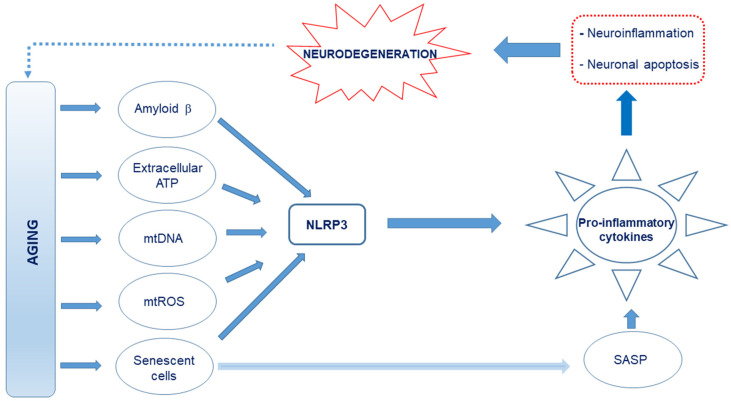
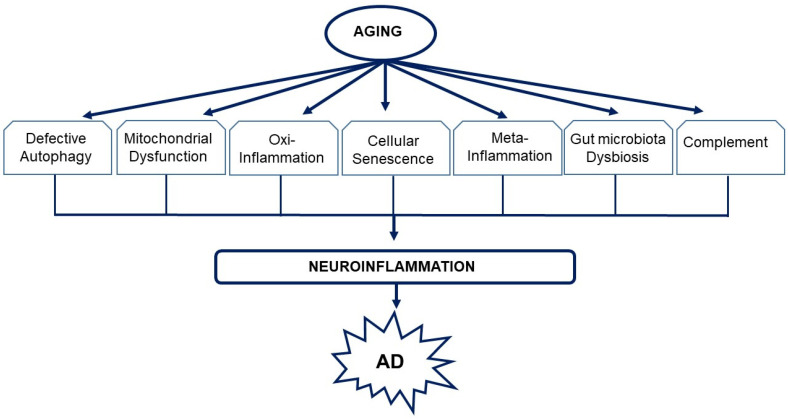
Alzheimer’s disease (AD) is a neurodegenerative disease associated with human aging. Ten percent of individuals over 65 years have AD and its prevalence continues to rise with increasing age. There are currently no effective disease modifying treatments for AD, resulting in increasingly large socioeconomic and personal costs. Increasing age is associated with an increase in low-grade chronic inflammation (inflammaging) that may contribute to the neurodegenerative process in AD. Although the exact mechanisms remain unclear, aberrant elevation of reactive oxygen and nitrogen species (RONS) levels from several endogenous and exogenous processes in the brain may not only affect cell signaling, but also trigger cellular senescence, inflammation, and pyroptosis. Moreover, a compromised immune privilege of the brain that allows the infiltration of peripheral immune cells and infectious agents may play a role. Additionally, meta-inflammation as well as gut microbiota dysbiosis may drive the neuroinflammatory process. Considering that inflammatory/immune pathways are dysregulated in parallel with cognitive dysfunction in AD, elucidating the relationship between the central nervous system and the immune system may facilitate the development of a safe and effective therapy for AD. We discuss some current ideas on processes in inflammaging that appear to drive the neurodegenerative process in AD and summarize details on a few immunomodulatory strategies being developed to selectively target the detrimental aspects of neuroinflammation without affecting defense mechanisms against pathogens and tissue damage.
Overview
The claims and statistics of this paper haven’t been checked yet.
Free: it reads the open-access text and checks the first 5 claims that cite a source we can check. Create a free account to check every claim.
Integrity signals
Registry
Cites
Statistics
Figures
Verification
Claims the paper makes
The claims and statistics of this paper haven’t been checked yet.
Free: it reads the open-access text and checks the first 5 claims that cite a source we can check. Create a free account to check every claim.
Claims other papers make about this one
Each is checked against this paper’s own text: does it say what the citing paper says it does?
The source backs part of the claim, not all of it — or backs it for a different population, condition or comparison.
In the citing paper
“Activated microglia and astrocytes can phagocytize Aβ through multiple receptors to protect neurons,33,34 but failure to clear the aggregates leads to persistent chronic inflammation and the release of a variety of proinflammatory and toxic products, including cytokines, chemokines, reactive oxygen species (ROS) and nitric oxide (NO), which amplify immune responses and lead to neurotoxicity.35”
From Role of neuroinflammation in neurodegeneration development (2023) · cites this paper as [34]
Experimental — accuracy not yet measuredThe cited source says what the claim attributes to it.
In the citing paper
“Astrocyte and microglial activation and inflammatory factor production are associated with chronic inflammatory responses within the AD brain, hampering the environment around neurons and leading to neuronal damage (Onyango et al., 2021).”
From Picroside II Alleviates the Progression of Alzheimer’s Disease via the NLRP3/Caspase-1/GSDMD Pathway (2025) · cites this paper as Onyango et al., 2021
Self-check
Percentages, sums and reported differences re-computed from the paper’s own numbers.
The self-check needs the paper’s full text.
Citations
Cites
Items 401–521 of 521
Glucose Metabolism: A Sweet Relief of Alzheimer’s Disease
Duran-Aniotz, C. A., & Hetz, C. A. (2016) · Current Biology · doi:10.1016/j.cub.2016.07.060 · Cited by 95
Immunomodulatory effects of CD38-targeting antibodies
van de Donk, N. W. C. J. (2018) · Immunology Letters · doi:10.1016/j.imlet.2018.04.005 · Cited by 94
Lifelong aerobic exercise protects against inflammaging and cancer
Nilsson, M. I., Bourgeois, J. M., Nederveen, J. P., Leite, M. R., Hettinga, B. P., Bujak, A. L., May, L., Lin, E., Crozier, M., Rusiecki, D. R., et al. (2019) · PLOS ONE · doi:10.1371/journal.pone.0210863 · Cited by 94 · cited 1×
“EE also activates anti-inflammatory pathways [449,450].”
TREM2 in Alzheimer’s Disease: Microglial Survival and Energy Metabolism
Zheng, H., Cheng, B., Li, Y., Li, X., Chen, X., & Zhang, Y.-W. (2018) · Frontiers in Aging Neuroscience · doi:10.3389/fnagi.2018.00395 · Cited by 94 · cited 2×
“TREM2 modulates microglial functions in response to Aβ plaques and tau tangles [69,70].”
BackgroundGabbita, S. P., Srivastava, M. K., Eslami, P., Johnson, M. F., Kobritz, N. K., Tweedie, D., Greig, N. H., Zemlan, F. P., Sharma, S. P., & Harris-White, M. E. (2012) · Journal of Neuroinflammation · doi:10.1186/1742-2094-9-99 · Cited by 93
Calfio, C., Gonzalez, A., Singh, S. K., Rojo, L. E., & Maccioni, R. B. (2020) · Journal of Alzheimer's Disease · doi:10.3233/jad-200443 · Cited by 92
A β Internalization by Neurons and Glia
Mohamed, A., & Posse de Chaves, E. (2011) · International Journal of Alzheimer’s Disease · doi:10.4061/2011/127984 · Cited by 90 · cited 1×
“The CNS-resident macrophages express scavenger receptors (SR) and TLRs that facilitate phagocytosis and degradation of Aβ [180,181].”
BackgroundAlam, J. J. (2015) · Journal of Alzheimer’s Disease · doi:10.3233/jad-150277 · Cited by 88 · cited 1×
“It is able to reduce IL-1β levels (NCT02423200) [428] and improve patients’ attention and executive function.”
BackgroundMOTS-c peptide increases survival and decreases bacterial load in mice infected with MRSA
Zhai, D., Ye, Z., Jiang, Y., Xu, C., Ruan, B., Yang, Y. H., Lei, X., An, X., Lu, H., Zhu, Z. G., et al. (2017) · Molecular Immunology · doi:10.1016/j.molimm.2017.10.017 · Cited by 88 · cited 1×
“MOTS-c stimulates IL-10 as well as signal transducer and activators of transcription 3 (STAT3) and aryl hydrocarbon receptor (Ahr), which inhibit NFκB expression and proinflammatory cytokine production [206].”
BackgroundIs inflammageing influenced by the microbiota in the aged gut? A systematic review
Shintouo, C. M., Mets, T. F., Beckwée, D., Bautmans, I., Ghogomu, S. M., Souopgui, J., Leemans, L., Meriki, H. D., & Njemini, R. (2020) · Experimental Gerontology · doi:10.1016/j.exger.2020.111079 · Cited by 88
Microglia in Alzheimer's Disease: The Good, the Bad and the Ugly
Tejera, D., & T. Heneka, M. (2016) · Current Alzheimer Research · doi:10.2174/1567205013666151116125012 · Cited by 88
L-Norvaline Reverses Cognitive Decline and Synaptic Loss in a Murine Model of Alzheimer's Disease
Polis, B., Srikanth, K. D., Elliott, E., Gil-Henn, H., & Samson, A. O. (2018) · Neurotherapeutics · doi:10.1007/s13311-018-0669-5 · Cited by 87
Lee, R. K. K., Knapp, S., & Wurtman, R. J. (1999) · The Journal of Neuroscience · doi:10.1523/jneurosci.19-03-00940.1999 · Cited by 85 · cited 1×
“They have been shown to downregulate APP mRNA and protein expression protein in primary cultures of neonatal rat astrocytes [423].”
BackgroundReduced Th1 and enhanced Th2 immunity after immunization with Alzheimer's β-amyloid1–42
Town, T., Vendrame, M., Patel, A., Poetter, D., DelleDonne, A., Mori, T., Smeed, R., Crawford, F., Klein, T., Tan, J., et al. (2002) · Journal of Neuroimmunology · doi:10.1016/s0165-5728(02)00307-7 · Cited by 84
Evans, R., Wyllie, F. S., Wynford‐Thomas, D., Kipling, D., & Jones, C. J. (2003) · PubMed · Cited by 84
Mansour, H., Chamberlain, C. G., Weible II, M. W., Hughes, S., Chu, Y., & Chan‐Ling, T. (2008) · Aging Cell · doi:10.1111/j.1474-9726.2008.00402.x · Cited by 84 · cited 1×
“This compromises their ability to maintain neurons and adversely affects the aging brain [264,265].”
BackgroundRegulatory Mechanisms of Inhibitory Immune Checkpoint Receptors Expression
Curdy, N., Lanvin, O., Laurent, C., Fournié, J.-J., & Franchini, D.-M. (2019) · Trends in Cell Biology · doi:10.1016/j.tcb.2019.07.002 · Cited by 83
Nieman, D. C., Lila, M. A., & Gillitt, N. D. (2019) · Annual Review of Food Science and Technology · doi:10.1146/annurev-food-032818-121316 · Cited by 81
Gut Microbiota: Implications in Alzheimer’s Disease
He, Y., Li, B., Sun, D., & Chen, S. (2020) · Journal of Clinical Medicine · doi:10.3390/jcm9072042 · Cited by 81 · cited 1×
“Altered gut microbiota with disrupted intestinal homeostasis and induced inflammation may lead to neurodegenerative diseases like AD [476] via the gut–brain axis pathway”
BackgroundCavanagh, C., Tse, Y. C., Nguyen, H.-B., Krantic, S., Breitner, J. C. S., Quirion, R., & Wong, T. P. (2016) · Neurobiology of Aging · doi:10.1016/j.neurobiolaging.2016.07.009 · Cited by 79
Bartzokis, G., Lu, P. H., & Mintz, J. (2005) · Journal of Alzheimer's Disease · doi:10.3233/jad-2004-6s604 · Cited by 78
Does Obesity Increase the Risk of Dementia: A Literature Review
Anjum, I., Fayyaz, M., Wajid, A., Sohail, W., & Ali, A. (2018) · Cureus · doi:10.7759/cureus.2660 · Cited by 78 · cited 1×
“Individuals with advanced age, obesity, T2DM, or hypercholesterolemia are more likely to be affected by AD [298,299].”
BackgroundSmall Molecule Binding to Alzheimer Risk Factor CD33 Promotes Aβ Phagocytosis
Miles, L. A., Hermans, S. J., Crespi, G. A. N., Gooi, J. H., Doughty, L., Nero, T. L., Markulić, J., Ebneth, A., Wroblowski, B., Oehlrich, D., et al. (2019) · iScience · doi:10.1016/j.isci.2019.07.023 · Cited by 78 · cited 1×
“Indeed, subtype-selective sialic acid mimetic called P22 binds to CD33 and increases uptake of the toxic Aβ into microglial cells [408], making the sialic acid-binding site on CD33 an attractive pharmacophore for developing therapeutics that promote clearance of the Aβ.”
BackgroundShen, Z., Bao, X., & Wang, R. (2018) · Frontiers in Aging Neuroscience · doi:10.3389/fnagi.2018.00314 · Cited by 77
Anwar, S., & Rivest, S. (2020) · Expert Opinion on Therapeutic Targets · doi:10.1080/14728222.2020.1738391 · Cited by 77
Paouri, E., Tzara, O., Kartalou, G.-I., Zenelak, S., & Georgopoulos, S. (2017) · The Journal of Neuroscience · doi:10.1523/jneurosci.2484-16.2017 · Cited by 76 · cited 1×
“Systemic treatment with infliximab, an anti-huTNF-α antibody that does not cross the BBB, protects neurons, reduces gliosis, and prevents infiltration of peripheral immune cells without altering brain huTNF-α levels [346,347].”
BackgroundTREM2 regulates innate immunity in Alzheimer’s disease
Li, J.-T., & Zhang, Y. (2018) · Journal of Neuroinflammation · doi:10.1186/s12974-018-1148-y · Cited by 76 · cited 1×
“TREM2 enhances the rate of phagocytosis in microglia and macrophages; modulates inflammatory signaling; and controls myeloid cell number, proliferation, and survival [67], and it has been revealed that triggering TREM2 receptor in microglial cells is closely associated with the pathogenesis of AD [68].”
BackgroundThe strategies of targeting the NLRP3 inflammasome to treat inflammatory diseases
Jiang, H., Gong, T., & Zhou, R. (2019) · Advances in immunology · doi:10.1016/bs.ai.2019.11.003 · Cited by 75 · cited 1×
“Targeting the NLRP3 inflammasome is gaining traction as a therapeutic strategy in inflammatory diseases [378,379].”
BackgroundChausse, B., Lewen, A., Poschet, G., & Kann, O. (2020) · Brain, Behavior, and Immunity · doi:10.1016/j.bbi.2020.05.052 · Cited by 75 · cited 1×
“While cells of innate immunity produce copious amounts ROS within the central nervous system (CNS), it is not clear whether neuroinflammation induces oxidative stress or if it is the elevated levels of ROS that cause neuroinflammation [230,231], especially in a situation where there is already excess oxidant productio…”
BackgroundTissue-resident macrophages originate from yolk sac-derived erythro-myeloid progenitors
Perdiguero, E. G., Klapproth, K., Schulz, C., Busch, K., Azzoni, E., Crozet, L., Garner, H., Trouillet, C., Bruijn, M. F. T. R. D., Geissmann, F., et al. (2015) · Experimental Hematology · doi:10.1016/j.exphem.2015.06.130 · Cited by 74
Cell senescence in neuropathology: A focus on neurodegeneration and tumours
Carreno, G., Guiho, R., & Martinez‐Barbera, J. P. (2021) · Neuropathology and Applied Neurobiology · doi:10.1111/nan.12689 · Cited by 74
He, P., Cheng, X., Staufenbiel, M., Li, R., & Shen, Y. (2013) · PLoS ONE · doi:10.1371/journal.pone.0055091 · Cited by 73 · cited 2×
“Moreover, in the bilateral common carotid arteries occlusion (BCCAO) rat model of AD, which manifests as neuronal morphological damage along with Aβ deposition in the hippocampus and cognitive deficits of Aβ in rat hippocampus, oral administration of icariin reduces hippocampal expression of APP and BACE1, and induces…”
BackgroundThe Role of Inflammatory Mediators in the Pathogenesis of Alzheimer’s Disease
Azizi, G., Navabi, S. S., Al-Shukaili, A., Seyedzadeh, M. H., Yazdani, R., & Mirshafiey, A. (2015) · Sultan Qaboos University Medical Journal · doi:10.18295/squmj.2015.15.03.002 · Cited by 73
Acklin, S., Zhang, M., Du, W., Zhao, X., Plotkin, M., Chang, J., Campisi, J., Zhou, D., & Xia, F. (2020) · Scientific Reports · doi:10.1038/s41598-020-71042-6 · Cited by 73 · cited 1×
“Senescent neurons have been described in old rodent and human brains [244,244,245], suggesting a proliferation-independent senescence-like mechanism in post-mitotic cells including neurons [246].”
BackgroundBahniwal, M., Little, J. P., & Klegeris, A. (2017) · Current Alzheimer Research · doi:10.2174/1567205014666170117104053 · Cited by 72
Innate immune activation in Alzheimer’s disease
Wang, M.-M., Miao, D., Cao, X.-P., Tan, L., & Tan, L. (2018) · Annals of Translational Medicine · doi:10.21037/atm.2018.04.20 · Cited by 72
Khanna, A. K. (2000) · Transplantation · doi:10.1097/00007890-200008270-00027 · Cited by 72 · cited 1×
“Cyclosporine and Tacrolimus are inhibitors of calcineurin and are used as immunosuppressive agents to prevent post-transplant organ rejection and for the treat autoimmune diseases and tuberous sclerosis tumors [422].”
BackgroundAttenuation of microglial activation in a mouse model of Alzheimer’s disease via NFAT inhibition
Rojanathammanee, L., Floden, A. M., Manocha, G. D., & Combs, C. K. (2015) · Journal of Neuroinflammation · doi:10.1186/s12974-015-0255-2 · Cited by 71 · cited 2×
“It also reduces spleen cytokine levels, microgliosis, and Aβ plaque burden in APP/PS1 mice [424] and ameliorates dendritic spine density deficits in plaque-bearing AD model mice [425].”
BackgroundMethodSantarpía, M., González‐Cao, M., Viteri, S., Karachaliou, N., Altavilla, G., & Rosell, R. (2015) · PubMed Central · doi:10.3978/j.issn.2218-6751.2015.12.04 · Cited by 71
Modulation of Inflammation as a Way of Delaying Alzheimer's Disease Progression: The Diet's Role
Businaro, R., Corsi, M., Asprino, R., Di Lorenzo, C., Laskin, D., Corbo, R. M., Ricci, S., & Pinto, A. (2018) · Current Alzheimer Research · doi:10.2174/1567205014666170829100100 · Cited by 71 · cited 1×
“These collectively play an integral role in the onset and progression of the disease [88,90,91].”
BackgroundNutraceuticals: An emerging therapeutic approach against the pathogenesis of Alzheimer’s disease
Sadhukhan, P., Saha, S., Dutta, S., Mahalanobish, S., & Sil, P. C. (2017) · Pharmacological Research · doi:10.1016/j.phrs.2017.11.028 · Cited by 71
Herradon, G., Ramos-Alvarez, M. P., & Gramage, E. (2019) · Frontiers in Pharmacology · doi:10.3389/fphar.2019.00377 · Cited by 71
Disruption of astroglial interlaminar processes in Alzheimer’s disease.
Colombo, J. A., Quinn, B., & Puissant, V (2002) · Brain Research Bulletin · doi:10.1016/s0361-9230(02)00785-2 · Cited by 71
DNA Damage: From Chronic Inflammation to Age-Related Deterioration
Ιωαννίδου, Ά., Goulielmaki, E., & Garinis, G. A. (2016) · Frontiers in Genetics · doi:10.3389/fgene.2016.00187 · Cited by 71 · cited 1×
“Aging is characterized by dysregulated immune [1] and metabolic homeostasis [2,3] where there is chronic sterile low-grade inflammation or inflammaging [4] that involves cellular senescence [5,6], immunosenescence [7–10], mitochondrial dysfunction [11,12], defective autophagy [13,14] and mitophagy [15,16], dysregulati…”
BackgroundThe effect of aging on brain barriers and the consequences for Alzheimer’s disease development
Gorlé, N., Cauwenberghe, C. V., Libert, C., & Vandenbroucke, R. E. (2016) · Mammalian Genome · doi:10.1007/s00335-016-9637-8 · Cited by 69
The Jekyll and Hyde of Cellular Senescence in Cancer
Demirci, D., Dayanc, B., Mazi, F. A., & Şentürk, Ş. (2021) · Cells · doi:10.3390/cells10020208 · Cited by 69
The force awakens: insights into the origin and formation of microglia
Tay, T. L., Hagemeyer, N., & Prinz, M. (2016) · Current Opinion in Neurobiology · doi:10.1016/j.conb.2016.04.003 · Cited by 68
Zheng, J., Hu, S., Wang, J., Zhang, X., Yuan, D., Zhang, C., Liu, C., Wang, T., & Zhou, Z. (2021) · Pharmaceutical Biology · doi:10.1080/13880209.2021.1878238 · Cited by 66 · cited 1×
“Icariin acts via the AMPK/mTOR/ULK1 pathway to increase neuronal autophagy and enhance brain function in aged Sprague–Dawley (SD) rats [514].”
BackgroundRusso, I., Caracciolo, L., Tweedie, D., Choi, S., Greig, N. H., Barlati, S., & Bosetti, F. (2012) · Journal of Neurochemistry · doi:10.1111/j.1471-4159.2012.07846.x · Cited by 65 · cited 2×
“Chronic 3,6′- DT administration ameliorates Aβ-induced neuroinflammation and microglial activation, preventing neurodegeneration and improving memory in an AD mouse model of stereotaxic intracerebroventricular Aβ1-42 [365] and reduces multiple hallmark features of AD, including glia activation, phosphorylated tau prot…”
BackgroundMicroglia gone awry: linking immunometabolism to neurodegeneration
Afridi, R., Lee, W.-H., & Suk, K. (2020) · Frontiers in Cellular Neuroscience · doi:10.3389/fncel.2020.00246 · Cited by 64 · cited 1×
“Increased microglial glycolysis is often coupled with the increased secretion of proinflammatory cytokines, exacerbating neurotoxicity, and escalating ongoing neurodegeneration [219,220].”
BackgroundTchalla, A. E., Wellenius, G. A., Travison, T. G., Gagnon, M. M., Iloputaife, I., DANTOINE, T. F., Sorond, F. A., & Lipsitz, L. A. (2015) · Hypertension · doi:10.1161/hypertensionaha.115.05180 · Cited by 64 · cited 1×
“mor necrosis factor receptor II (TNFR-II)) [28], vascular cell adhesion molecule I (VCAMI) [29], d-dimer [30], and sirtuin signaling [31][32].”
BackgroundLatta‐Mahieu, M., Elmer, B., Bretteville, A., Wang, Y., Lopez‐Grancha, M., Goniot, P., Moindrot, N., Ferrari, P., Blanc, V., Schussler, N., et al. (2018) · Glia · doi:10.1002/glia.23260 · Cited by 64 · cited 1×
“In fact, it is important to note that several PD-1 antibody inhibitors developed for other indications activate the peripheral immune system, but fail to modulate monocyte-derived macrophage infiltration and progression of brain Aβ pathology in three different models of AD [399,400].”
BackgroundPerturbations of Ubiquitin-Proteasome-Mediated Proteolysis in Aging and Alzheimer’s Disease
Hegde, A. N., Smith, S. G., Duke, L. M., Pourquoi, A., & Vaz, S. (2019) · Frontiers in Aging Neuroscience · doi:10.3389/fnagi.2019.00324 · Cited by 63 · cited 1×
“Aging is characterized by dysregulated immune [1] and metabolic homeostasis [2,3] where there is chronic sterile low-grade inflammation or inflammaging [4] that involves cellular senescence [5,6], immunosenescence [7–10], mitochondrial dysfunction [11,12], defective autophagy [13,14] and mitophagy [15,16], dysregulati…”
BackgroundPro-inflammatory cytokines in Alzheimer’s disease
1st Department of Psychiatry, N. &. K. U. O. A. M. S., Stamouli, E. C., & Politis, A. M. (2016) · Psychiatriki · doi:10.22365/jpsych.2016.274.264 · Cited by 63 · cited 1×
“The levels of pro-inflammatory cytokines in AD patient serum and post mortem brain are elevated [81,82], and Aβ can activate the brains’ innate immune cells [83,84].”
BackgroundLi, W., Deng, Y., Li, F., Liu, B., Liu, H.-Y., Shi, J., & Gong, Q. (2015) · Pharmacology Biochemistry and Behavior · doi:10.1016/j.pbb.2015.09.001 · Cited by 62 · cited 1×
“This is accompanied by a decrease in TGF-β1 signaling via inhibition of Smad2/3 phosphorylation [515].”
BackgroundThe meningeal and choroidal infiltration routes for leukocytes in stroke
Benakis, C., Llovera, G., & Liesz, A. (2018) · Therapeutic Advances in Neurological Disorders · doi:10.1177/1756286418783708 · Cited by 62
Senescence as an Amyloid Cascade: The Amyloid Senescence Hypothesis
Walton, C. C., Begelman, D., Nguyen, W., & Andersen, J. K. (2020) · Frontiers in Cellular Neuroscience · doi:10.3389/fncel.2020.00129 · Cited by 62 · cited 1×
“Although microglia are the CNS resident macrophages, there is no evidence that they selectively kill senescent cells [261].”
BackgroundPark, J., Lee, S., Shon, J., Kim, K., Lee, H. J., Kim, K., Lee, B.-Y., Oh, S., KIM, N. K., & Kim, O. J. (2019) · Cytotherapy · doi:10.1016/j.jcyt.2019.04.054 · Cited by 61 · cited 1×
“40-injected mice [351,352], suggesting possible clinically meaningful outcomes in patients with AD.”
BackgroundPorrini, V., Lanzillotta, A., Branca, C., Benarese, M., Parrella, E., Lorenzini, L., Calzà, L., Flaibani, R., Spano, P., Imbimbo, B. P., et al. (2014) · Neuroscience · doi:10.1016/j.neuroscience.2014.10.029 · Cited by 60 · cited 1×
“It is a microglia modulator that has the potential to inhibit Aβ plaque deposition, reduce tau pathology, restore normal microglial function by increasing phagocytosis, and decrease production of pro-inflammatory cytokines [433].”
BackgroundPaouri, E., Tzara, O., Zenelak, S., & Georgopoulos, S. (2017) · Journal of Alzheimer's Disease · doi:10.3233/jad-170065 · Cited by 60 · cited 1×
“Systemic treatment with infliximab, an anti-huTNF-α antibody that does not cross the BBB, protects neurons, reduces gliosis, and prevents infiltration of peripheral immune cells without altering brain huTNF-α levels [346,347].”
BackgroundAlam, J. J., Blackburn, K., & Patrick, D. (2017) · PubMed · doi:10.14283/jpad.2017.41 · Cited by 57 · cited 1×
“Another novel therapeutic agent in the pipeline includes the orally active p38 MAPKα inhibitor Neflamapimod [VX-745] that is being developed as a disease modifying drug for AD [427], with phase 3 trials slated for late 2021.”
BackgroundNeuroinflammation in pathogenesis of Alzheimer’s disease: Phytochemicals as potential therapeutics
Vaiserman, A., Koliada, A., & Lushchak, O. (2020) · Mechanisms of Ageing and Development · doi:10.1016/j.mad.2020.111259 · Cited by 57
Target Dysbiosis of Gut Microbes as a Future Therapeutic Manipulation in Alzheimer’s Disease
Zhu, F., Li, C., Chu, F., Tian, X., & Zhu, J. (2020) · Frontiers in Aging Neuroscience · doi:10.3389/fnagi.2020.544235 · Cited by 57 · cited 1×
“Thus, remodeling the gut microbiota may be a novel therapeutic strategy for AD [473,474,478,479].”
BackgroundProbiotic bacteria as modulators of cellular senescence: emerging concepts and opportunities
Sharma, R., & Padwad, Y. S. (2019) · Gut Microbes · doi:10.1080/19490976.2019.1697148 · Cited by 56
Sama, D. M., Mohmmad Abdul, H., Furman, J. L., Artiushin, I. A., Szymkowski, D. E., Scheff, S. W., & Norris, C. M. (2012) · PLoS ONE · doi:10.1371/journal.pone.0038170 · Cited by 55 · cited 1×
“Locally administered, XPro1595 reduced pre-plaque Aβ pathology in 3×TgAD mice [357] with concomitant reduction in microglia activation and improvement of synaptic and cognitive functions in aging rats [358].”
BackgroundDecourt, B., Drumm-Gurnee, D., Wilson, J., Jacobson, S., Belden, C., Sirrel, S., Ahmadi, M., Shill, H., Powell, J., Walker, A., et al. (2017) · Current Alzheimer Research · doi:10.2174/1567205014666170117141330 · Cited by 55
T Cells—Protective or Pathogenic in Alzheimer’s Disease?
McManus, R. M., Mills, K. H. G., & Lynch, M. A. (2015) · Journal of Neuroimmune Pharmacology · doi:10.1007/s11481-015-9612-2 · Cited by 55
DNA damage responses in ageing
da Silva, P. F. L., & Schumacher, B. (2019) · Open Biology · doi:10.1098/rsob.190168 · Cited by 55
Glia in Neurodegeneration: The Housekeeper, the Defender and the Perpetrator
Sheeler, C., Rosa, J.-G., Ferro, A., McAdams, B., Borgenheimer, E., & Cvetanovic, M. (2020) · International Journal of Molecular Sciences · doi:10.3390/ijms21239188 · Cited by 54 · cited 1×
“moting inflammation that may result in neurodegeneration) [149,150].”
BackgroundRole of Trisomy 21 Mosaicism in Sporadic and Familial Alzheimer's Disease
Potter, H., Granic, A., & Caneus, J. (2015) · Current Alzheimer Research · doi:10.2174/156720501301151207100616 · Cited by 53 · cited 1×
“Other early-onset processes involved in the etiology of the disease include mitochondrial dysfunction resulting in altered glucose metabolism [92] and oxidative stress [93]; chronic hypoperfusion [94]; and neuronal cell cycle re-entry that leads to neuronal tetraploidization (NT) [94], trisomy 21 mosaicism [95], and s…”
BackgroundLi, S., Hayden, E. Y., Garcia, V. J., Fuchs, D.-T., Sheyn, J., Daley, D. A., Rentsendorj, A., Torbati, T., Black, K. L., Rutishauser, U., et al. (2020) · Frontiers in Immunology · doi:10.3389/fimmu.2020.00049 · Cited by 51 · cited 2×
“A different study using the same PD-1 checkpoint blockade [396,398] reported only a modest improvement of locomotor activity without any effect on cognition or tau pathology in a transgenic AD model [401].”
BackgroundJiang, M., Li, R., Lyu, J., Li, X., Wang, W., Wang, Z., Sheng, H., Zhang, W., Karhausen, J., & Yang, W. (2020) · Journal of Neuroinflammation · doi:10.1186/s12974-020-01933-y · Cited by 51
Tambini, M. D., Norris, K. A., & D'Adamio, L. (2020) · eLife · doi:10.7554/elife.52612 · Cited by 50 · cited 1×
“Three causative genes, including presenilin 1 (PSEN1) [46], presenilin 2 (PSEN2) [47], and amyloid precursor protein (APP) [48], are involved in the pathogenesis of EOAD in an autosomal-dominant trait [49,50].”
BackgroundBaeeri, M., Bahadar, H., Rahimifard, M., Nigjeh, M. N., Khorasani, R., Rezvanfar, M. A., Gholami, M., & Abdollahi, M. R. (2019) · Pharmacological Research · doi:10.1016/j.phrs.2019.01.003 · Cited by 49
Plasma Markers of Inflammation Linked to Clinical Progression and Decline During Preclinical AD
Gross, A. L., Walker, K. A., Moghekar, A. R., Pettigrew, C., Soldan, A., Albert, M. S., & Walston, J. D. (2019) · Frontiers in Aging Neuroscience · doi:10.3389/fnagi.2019.00229 · Cited by 49
Tanaka, M., Muto, N., Gohda, E., & Yamamoto, I. (1994) · Japanese Journal of Pharmacology · doi:10.1254/jjp.66.451 · Cited by 47
Calcineurin inhibitors improve memory loss and neuropathological changes in mouse model of dementia
Kumar, A., & Singh, N. (2017) · Pharmacology Biochemistry and Behavior · doi:10.1016/j.pbb.2016.12.018 · Cited by 47
Autophagy in Mitochondrial Quality Control
Wang, R., & Wang, G. (2019) · Advances in experimental medicine and biology · doi:10.1007/978-981-15-0602-4_19 · Cited by 46
Nutrients, immune system, and exercise: Where will it take us?
Batatinha, H. A. P., Biondo, L. A., Lira, F. S., Castell, L. M., & Rosa-Neto, J. C. (2019) · Nutrition · doi:10.1016/j.nut.2018.09.019 · Cited by 45
Prochaska, J. H., Frank, B., Nagler, M., Lamparter, H., Weißer, G., Schulz, A., Eggebrecht, L., Göbel, S., Arnold, N., Panova‐Noeva, M., et al. (2017) · Scientific Reports · doi:10.1038/s41598-017-04843-x · Cited by 45 · cited 1×
“These are reflected by changes in circulating immune markers including C-reactive protein (CRP) [26], interleukin-6 (IL-6) [27], tumor necrosis factor alpha (TNF-α) [28] and its soluble receptors (tumor necrosis factor receptor I (TNFR-I) and tumor necrosis factor receptor II (TNFR-II)) [28], vascular cell adhesion mo…”
BackgroundBhatia, K., Ahmad, S., Kindelin, A., & Ducruet, A. F. (2021) · Journal of Clinical Investigation · doi:10.1172/jci144348 · Cited by 44 · cited 1×
“Microglial reactivity can be inhibited by inactivation of C3aR1, and this restores hippocampal and cortical volumes in aged brains, suggesting an association between impaired BBB, inflammation, and neurodegeneration [334,335].”
BackgroundScott, L. J. (2013) · CNS Drugs · doi:10.1007/s40263-013-0117-3 · Cited by 44 · cited 1×
“Glatiramer acetate (GA) (Copaxone), a synthetic analog of myelin basic protein [413], the first disease-modifying drug approved for treatment of multiple sclerosis (MS) [414] can be used to safely boost T-cell responses without the risk of autoimmune disease, as it weakly cross-reacts with myelin-derived autoantigens…”
BackgroundBakalash, S., Pham, M., Koronyo, Y., Salumbides, B. C., Kramerov, A., Seidenberg, H., Berel, D., Black, K. L., & Koronyo-Hamaoui, M. (2011) · Investigative Opthalmology & Visual Science · doi:10.1167/iovs.11-7498 · Cited by 44 · cited 1×
“GA immunization enhances the expression of hippocampal early growth response protein 1 (Egr1), a protein negatively correlated with hippocampal Aβ plaque burden [421].”
BackgroundMitophagy Modulation, a New Player in the Race against ALS
Madruga, E., Maestro, I., & Martínez, A. (2021) · International Journal of Molecular Sciences · doi:10.3390/ijms22020740 · Cited by 44
Decourt, B., Wilson, J., Ritter, A., Dardis, C., DiFilippo, F., Zhuang, X., Cordes, D., Lee, G., Fulkerson, N., St Rose, T., et al. (2020) · Open Access Journal of Clinical Trials · doi:10.2147/oajct.s221914 · Cited by 43
Hommet, C., Mondon, K., Camus, V., Ribeiro, M. J., Beaufils, É., Arlicot, N., Corcia, P., Paccalin, M., Minier, F., Gosselin, T., et al. (2013) · Dementia and Geriatric Cognitive Disorders · doi:10.1159/000354363 · Cited by 39
Inflammation in the Alzheimer's disease cascade: culprit or innocent bystander?
Tan, Z. S., & Seshadri, S. (2010) · Alzheimer's Research & Therapy · doi:10.1186/alzrt29 · Cited by 39 · cited 1×
“Initially, microglial activation may serve to eliminate Aβ [126,133–135], but their chronic activation may amplify the amyloid cascade [133,136] and lead to neurotoxicity [137,138].”
BackgroundLin, C.-T., Lecca, D., Yang, L.-Y., Luo, W., Scerba, M. T., Tweedie, D., Huang, P.-S., Jung, Y.-J., Kim, D. S., Yang, C.-H., et al. (2020) · eLife · doi:10.7554/elife.54726 · Cited by 38 · cited 1×
“It also significantly reduces central and systemic TNF-α production and neuroinflammatory markers and restores hippocampal neuronal plasticity in LPS-challenged rats [363,364].”
BackgroundFranceschi, C., Santoro, A., & Capri, M. (2020) · Seminars in Immunopathology · doi:10.1007/s00281-020-00823-y · Cited by 37
Fang, Y., Hu, X., Jia, Z., Xu, M., Guo, Z., & Gao, F. (2012) · Australasian Journal of Dermatology · doi:10.1111/j.1440-0960.2012.00912.x · Cited by 35 · cited 1×
“Other such antioxidants include the following: 4,5-dihydroxybenzene-1,3disulfonate (Tiron), which accumulate within the mitochondria by permeabilizing the mitochondrial membrane [467] and astaxanthin, a mitochondrion-permeable antioxidant, that can penetrate the blood–brain barrier and is effective in preventing and t…”
BackgroundNew genetic players in late-onset Alzheimer's disease: Findings of genome-wide association studies
Misra, A., Chakrabarti, S. S., & Gambhir, I. S. (2018) · Indian Journal of Medical Research · doi:10.4103/ijmr.ijmr_473_17 · Cited by 34 · cited 1×
“Epigenomic analysis shows that AD GWAS loci are preferentially enriched in enhancer sequences involved in innate immune processes [63,64] as well as endocytosis, cholesterol/sterol metabolism, and synaptic function [55,65,66].”
BackgroundIdentification of rare variants in Alzheimer’s disease
Lord, J., Lu, A. J., & Cruchaga, C. (2014) · Frontiers in Genetics · doi:10.3389/fgene.2014.00369 · Cited by 33
Regulation of mitophagy by the ubiquitin pathway in neurodegenerative diseases
Desai, S. D., Juncker, M. A., & Kim, C. (2018) · Experimental Biology and Medicine · doi:10.1177/1535370217752351 · Cited by 33
Aging-associated dysregulation of homeostatic immune response termination (and not initiation)
Pattabiraman, G., Palasiewicz, K., Galvin, J. P., & Ucker, D. S. (2017) · Aging Cell · doi:10.1111/acel.12589 · Cited by 31 · cited 1×
“Aging is characterized by dysregulated immune [1] and metabolic homeostasis [2,3] where there is chronic sterile low-grade inflammation or inflammaging [4] that involves cellular senescence [5,6], immunosenescence [7–10], mitochondrial dysfunction [11,12], defective autophagy [13,14] and mitophagy [15,16], dysregulati…”
BackgroundRepositioning of Immunomodulators: A Ray of Hope for Alzheimer’s Disease?
Munafò, A., Burgaletto, C., Benedetto, G. D., Mauro, M. D., Mauro, R. D., Bernardini, R., & Cantarella, G. (2020) · Frontiers in Neuroscience · doi:10.3389/fnins.2020.614643 · Cited by 31 · cited 1×
“Indeed, immunoneutralization of tumor necrosis factor-related apoptosis inducing ligand (TRAIL), a modulator of Treg cell functions, reduces neuroinflammation in a mouse model of AD [395].”
BackgroundPotential immunotherapy for Alzheimer disease and age-related dementia
Schwartz, M., Arad, M., & Ben-Yehuda, H. (2019) · Phlebolymphology · doi:10.31887/dcns.2019.21.1/mschwartz · Cited by 30
NT-020 treatment reduces inflammation and augments Nrf-2 and Wnt signaling in aged rats
Flowers, A., Lee, J.-Y., Acosta, S., Hudson, C., Small, B. J., Sanberg, C. D., Bickford, P. C., & Grimmig, B. A. (2015) · Journal of Neuroinflammation · doi:10.1186/s12974-015-0395-4 · Cited by 29
Ni, Y., Wen, D.-S., Zhao, Y.-R., & Xu, S. (2018) · BMC Complementary and Alternative Medicine · doi:10.1186/s12906-018-2363-x · Cited by 29 · cited 1×
“Icariin also inhibits LPS induced IL-s and TNFa production while increasing expression of NFκB p-p65 and (TLR)4–myeloid differentiation factor 2 (TLR4/MD-2) complex [516].”
BackgroundRogers, N. K., Romero, C., SanMartín, C. D., Ponce, D. P., Salech, F., López, M. N., Gleisner, M. A., Tempio, F., & Behrens, M. I. (2019) · Journal of Alzheimer s Disease · doi:10.3233/jad-190839 · Cited by 26 · cited 1×
“This results in cerebral clearance of A and improved cognition [396,397].”
BackgroundUnknown fates of (brain) oxidation or UFO: Close encounters with neuronal senescence
Walton, C. C., & Andersen, J. K. (2019) · Free Radical Biology and Medicine · doi:10.1016/j.freeradbiomed.2019.01.012 · Cited by 26
Obst, J., Mancuso, R., Simon, E., & Gomez-Nicola, D. (2018) · Brain, Behavior, and Immunity · doi:10.1016/j.bbi.2018.08.006 · Cited by 26 · cited 1×
“In fact, it is important to note that several PD-1 antibody inhibitors developed for other indications activate the peripheral immune system, but fail to modulate monocyte-derived macrophage infiltration and progression of brain Aβ pathology in three different models of AD [399,400].”
BackgroundMeta‐inflammaging at the crossroad of geroscience
Chen, G., & Yung, R. L. (2019) · Aging Medicine · doi:10.1002/agm2.12078 · Cited by 25 · cited 1×
“Aging is characterized by dysregulated immune [1] and metabolic homeostasis [2,3] where there is chronic sterile low-grade inflammation or inflammaging [4] that involves cellular senescence [5,6], immunosenescence [7–10], mitochondrial dysfunction [11,12], defective autophagy [13,14] and mitophagy [15,16], dysregulati…”
BackgroundJiang, C., Zou, X., Zhu, R., Shi, Y.-M., Wu, Z., Zhao, F., & Chen, L. (2018) · Journal of neurosurgery · doi:10.3171/2018.1.jns172938 · Cited by 24
Calvani, R., Picca, A., Marini, F., et al. (2018) · Preprints.org · doi:10.20944/preprints201809.0224.v1 · Cited by 24
Chen, L., Yao, Y., Wei, C., Sun, Y., Ma, X., Zhang, R., Xu, X., & Hao, J. (2015) · Scientific Reports · doi:10.1038/srep14308 · Cited by 21 · cited 1×
“Glatiramer acetate (GA) (Copaxone), a synthetic analog of myelin basic protein [413], the first disease-modifying drug approved for treatment of multiple sclerosis (MS) [414] can be used to safely boost T-cell responses without the risk of autoimmune disease, as it weakly cross-reacts with myelin-derived autoantigens…”
BackgroundAmitosenescence and Pseudomitosenescence: Putative New Players in the Aging Process
Wengerodt, D., Schmeer, C., Witte, O. W., & Kretz, A. (2019) · Cells · doi:10.3390/cells8121546 · Cited by 21
Vidal, C., & Li, Z. (2021) · Cells · doi:10.3390/cells10030546 · Cited by 21 · cited 1×
“Three causative genes, including presenilin 1 (PSEN1) [46], presenilin 2 (PSEN2) [47], and amyloid precursor protein (APP) [48], are involved in the pathogenesis of EOAD in an autosomal-dominant trait [49,50].”
BackgroundMicronutrients that Affect Immunosenescence
Abiri, B., & Vafa, M. (2020) · Advances in experimental medicine and biology · doi:10.1007/978-3-030-42667-5_2 · Cited by 19
Roda, A. R., Montoliu‐Gaya, L., Serra-Mir, G., & Villegas, S. (2020) · International Journal of Molecular Sciences · doi:10.3390/ijms21186630 · Cited by 19
Systemic Immune Dyshomeostasis Model and Pathways in Alzheimer’s Disease
Talwar, P., Kushwaha, S. S., Gupta, R., & Agarwal, R. (2019) · Frontiers in Aging Neuroscience · doi:10.3389/fnagi.2019.00290 · Cited by 18
How Microglia Manages Non-cell Autonomous Vicious Cycling of Aβ Toxicity in the Pathogenesis of AD
Seol, Y., Ki, S., Ryu, H. L., Chung, S., Lee, J.-H., & Ryu, H. (2020) · Frontiers in Molecular Neuroscience · doi:10.3389/fnmol.2020.593724 · Cited by 15
Endurance Exercise Mitigates Immunometabolic Adipose Tissue Disturbances in Cancer and Obesity
Neto, J. C. R., & Silveira, L. S. (2020) · International Journal of Molecular Sciences · doi:10.3390/ijms21249745 · Cited by 14
Steeland, S., & Vandenbroucke, R. E. (2019) · Neural Regeneration Research · doi:10.4103/1673-5374.247443 · Cited by 13
Benefits and Challenges of Rare Genetic Variation in Alzheimer’s Disease
Grozeva, D., Saad, S., Menzies, G. E., & Sims, R. (2019) · Current Genetic Medicine Reports · doi:10.1007/s40142-019-0161-5 · Cited by 13
Arnon, R., & Aharoni, R. (2016) · Elsevier eBooks · doi:10.1016/b978-0-12-801914-6.00017-9 · Cited by 11
Park, J.-S., Cheon, W.-K., & Kim, K. (2020) · International Journal of Environmental Research and Public Health · doi:10.3390/ijerph17093317 · Cited by 10 · cited 1×
“Endurance exercise (EE) is neuroprotective against AD [444,445].”
BackgroundGarbarino, V. R., Tran, S., Glassman, J. E., Kirkland, J. L., Musi, N., Seshadri, S. S., & Orr, M. E. (2020) · Alzheimer s & Dementia · doi:10.1002/alz.047607 · Cited by 9 · cited 1×
“Treating these mice with senolytics selectively eliminates senescent cells, ameliorates inflammation and cognitive decline, and reduces Aβ accumulation [252,377].”
BackgroundZhao, J., & Ji, R. (2019) · bioRxiv · doi:10.1101/870600 · Cited by 6
Effects of nutraceutical intervention on serum proteins in aged rats
Portis, S. M., Chaput, D., Burroughs, B., Hudson, C., Sanberg, P. R., & Bickford, P. C. (2020) · GeroScience · doi:10.1007/s11357-020-00174-4 · Cited by 6
Study on the mechanism and intervention of inflamm-aging in rats
Shi, X. (2009) · Zhongguo laonianxue zazhi · Cited by 2
Research works printed but not linked: 2
- Xia S. Shen Y. Yu W. Inflamm-aging related genes expression in aged rat hippocampus and Icariin intervention outcome Geriatr. Health Care 2008 14 340 344
- Han G. Zhang C. Qian C. Na M. Ding Y. Zhao H. Total Flavonoids of Epimedium Reduce Inflammatory Reaction via AMPK/SIRT1/NFκB Signaling Pathway in Testes of Natural Aging Rats Nat. Prod. Res. Dev. 2018 30 1489 1493
Cited by
Role of neuroinflammation in neurodegeneration development
Zhang, W., Xiao, D., Mao, Q., & Xia, H. (2023) · Signal Transduction and Targeted Therapy · doi:10.1038/s41392-023-01486-5 · Cited by 1,668
Malnutrition in Older Adults—Recent Advances and Remaining Challenges
Norman, K., Haß, U., & Pirlich, M. (2021) · Nutrients · doi:10.3390/nu13082764 · Cited by 768
Adamu, A., Li, S., Gao, F., & Xue, G. (2024) · Frontiers in Aging Neuroscience · doi:10.3389/fnagi.2024.1347987 · Cited by 564
Inflammatory Processes in Alzheimer’s Disease—Pathomechanism, Diagnosis and Treatment: A Review
Twarowski, B., & Herbet, M. (2023) · International Journal of Molecular Sciences · doi:10.3390/ijms24076518 · Cited by 412
Facchin, S., Bertin, L., Bonazzi, E., Lorenzon, G., De Barba, C., Barberio, B., Zingone, F., Maniero, D., Scarpa, M., Ruffolo, C., et al. (2024) · Life · doi:10.3390/life14050559 · Cited by 380
Metadata
- Authors
- Onyango, I. G., Jauregui, G. V., Čarná, M., Bennett, J. P., & Stokin, G. B.
- Affiliations
- University Hospital Brno (CZ)
- Centre for Translational Medicine International Clinical Research Centre, St. Anne’s University Hospital, CZ-65691 Brno, Czech Republic
- Neurodegeneration Therapeutics, 3050A Berkmar Drive, Charlottesville, VA 22901, USA
- Mayo Clinic (US)
- Corresponding author
- Onyango, Isaac G.
- Stokin, Gorazd B.
- Venue
- Biomedicines
- Publisher
- MDPI AG
- Published
- 2021-05-07
- Volume
- 9
- Issue
- 5
- Pages
- 524
- ISSN
- 2227-9059 (ISSN-L)
- PMC
- PMC8150909
- OpenAlex
- W3159907306
- Semantic Scholar
- ec1964c7f178295bd9a6264537a2067d46eaf19c
- Cited by
- 330
- References
- 525
- Citations by year
- 2026: 54 · 2025: 83 · 2024: 66 · 2023: 70 · 2022: 43 · 2021: 13
- FWCI
- 5.61
- Type
- journal article
- Language
- en
- Open access
- gold
- doi.org
- Licence
- Locations
- Biomedicines (publishedVersion, cc-by)
- PubMed Central (publishedVersion, cc-by)
- PubMed (publishedVersion)
- DOAJ (DOAJ: Directory of Open Access Journals) (submittedVersion, cc-by-sa)
- Funders
- European Regional Development Fund- Project ENOCH 750 (CZ.02.1.01/0.0/0.0/16_019/0000868)
- Topics
- Life Sciences › Neuroscience › Neurology › Neuroinflammation and Neurodegeneration Mechanisms
- Life Sciences › Neuroscience › Cellular and Molecular Neuroscience › Alzheimer's disease research and treatments
- Life Sciences › Neuroscience › Neurology › Neurological Disease Mechanisms and Treatments
- Keywords
- Alzheimer's disease, neuroinflammation, inflammaging, reactive oxygen and nitrogen species, cellular senescence, pyroptosis, blood-brain barrier, immune privilege, peripheral immune cell infiltration, meta-inflammation, gut dysbiosis, immunomodulatory therapy, cognitive impairment
About these checks
Registry, retraction, Cites and statistics results are computed, not judged, with one exception: a printed reference that no index lists is read once by a model before it counts as a citation error. Claims are extracted by a model and kept only when their quote appears verbatim in the text; each cited source is then checked, with a model’s help, for whether it says what the claim relies on. Those verdicts can be wrong — read the claim’s quote and the cited source before relying on one.
Statistics and arithmetic are recomputed, not judged.
Confidence bands are shown only for fields calibrated on our annotated test set. None is calibrated yet, so no band is shown.
What counts as a claim ›How we measure confidence ›How we check this ›
Are you an author, or do you see a problem with this page? Request a review
Data sources
Bibliographic data: Semantic Scholar, OpenAlex, Crossref.
Contains information from the Semantic Scholar Academic Graph Datasets, made available under the ODC Attribution License (ODC-BY 1.0).
Semantic Scholar’s data is described in: Kinney, R., et al. (2023). The Semantic Scholar Open Data Platform. arXiv:2301.10140.
