

DNA Data Storage.
Open accessThe DOI matches its Crossref record; 79 of the 80 references it cites were found in a registry or an index; 27 of the 49 sources its claims cite were checked for support.
Abstract
The demand for data storage is growing at an unprecedented rate, and current methods are not sufficient to accommodate such rapid growth due to their cost, space requirements, and energy consumption. Therefore, there is a need for a new, long-lasting data storage medium with high capacity, high data density, and high durability against extreme conditions. DNA is one of the most promising next-generation data carriers, with a storage density of 10¹⁹ bits of data per cubic centimeter, and its three-dimensional structure makes it about eight orders of magnitude denser than other storage media.
Overview
CoChat Summary
TL;DR
This paper is a brief review of DNA data storage, arguing that DNA is a promising next-generation medium because of its very high density, durability, and low-copying cost. It also surveys the main bottlenecks—encoding, synthesis, preservation, sequencing, and error correction—and notes that these challenges still prevent practical large-scale deployment.
Key findings
- The paper states that DNA storage can reach a density of 10¹⁹ bits per cubic centimeter, and that 1.7 × 10¹⁹ bits can be stored in 1 g of DNA.
- It reports that current conventional storage media are limited by cost, space, energy use, and durability, with maximum durability of about 50 years in optimal conditions.
- For preservation, it states that ordinary solution storage can keep DNA for only about a year, while dehydration and other approaches can extend durability; one cited method achieved stability for 35 days at 65 °C (equivalent to two years at room temperature), and another micro-disc approach reached up to 10¹² bit/mm³ with durability of dehydrated DNA over 100 years.
- In vivo storage examples include 455 KB of digital files encoded into 2304 kbp synthetic oligonucleotides in *E. coli*, and a 255 kbp yeast artificial chromosome encoding 38 KB of digital data with no mutation after the 100th generation.
Methods
- The article is a narrative overview/review, not an original experimental study.
- It synthesizes previously published work on DNA encoding, synthesis, preservation, sequencing, and error correction, citing examples such as Huffman coding, fountain codes, Reed–Solomon codes, Illumina sequencing, and Nanopore sequencing.
- Its main analysis is descriptive: it compares reported approaches and performance figures from the literature, including storage density, error rates, and preservation durability.
Limitations
- The paper explicitly states that there is still a need to refine methods for the fast and error-free synthesis of oligonucleotides and, longer term, long DNA chains, and that nucleotide-sequence reading must evolve toward greater credibility.
- It also notes that current DNA storage methods remain limited by errors during synthesis, storage, and sequencing, and by reduced storage density from protective additives and indexing.
- Evident from the text: this is a review article rather than a new empirical study, so it does not present a single unified dataset or original experimental results.
Model-written summary. Check it against the paper before relying on it.
Integrity signals
Registry
Cites
Statistics
Figures
Verification
Claims the paper makes
25 Valid · 1 Not valid · 22 Not checked · 6 Own results and interpretations
Every source the paper cites for this claim was checked and supports it.
In the paper
“Escherichia coli has a storage density of 1019 bits of data per cubic centimeter [5].”
§ DNA Data Storage > 1. Introduction
What the sources say
- Supportedcites [5] Zhirnov V. Zadegan R.M. Sandhu G.S. Church G.M. Hughes W.L. Nucleic Acid Memory Nat. Mater. 2016 15 366 370 10.1038/nmat4594 27005909 PMC6361517 source
The ‘Nucleic acid memory as a material’ section states that the storage density of Escherichia coli is approximately 10^19 bits per cubic centimeter. The citing sentence preserves that magnitude, though it omits the source’s approximation. (LLM, conf=0.95)
plain- Asserted: passes — The authors put it forward as true.
- Checkable: passes — It can be checked against evidence.
- Load-bearing: unclear — It is unclear whether the paper’s conclusions depend on it.
- Based: passes — The paper gives a reason why it holds.
- Supported
Every source the paper cites for this claim was checked and supports it.
In the paper
“The MAFFT algorithm was chosen for the analysis, which has been shown to be able to correct more than 95% of errors at a sequencing depth reaching 100× when the error rate is lower than 15%.”
§ DNA Data Storage > 4. New Storage Medium, Old Problems, and Solutions
What the sources say
- Supportedcites [34] Xie R. Zan X. Chu L. Su Y. Xu P. Liu W. Study of the Error Correction Capability of Multiple Sequence Alignment Algorithm(MAFFT) in DNA Storage BMC Bioinform. 2023 24 111 10.1186/s12859-023-05237-9 PMC10037887 36959531 source
The Results section, under “The error correction capability,” states that MAFFT could correct more than 95% of errors at sequencing depth 100 when the error rate is below 15%. This directly matches the attributed claim. (LLM, conf=0.95)
plainstates a cause- Asserted: passes — The authors put it forward as true.
- Checkable: passes — It can be checked against evidence.
- Load-bearing: passes — The paper’s conclusions depend on it.
- Based: passes — The paper gives a reason why it holds.
- Supported
The cited sources that could be checked couldn’t confirm or dispute this claim.
In the paper
“On the contrary, solid-state DNA appears to be more stable due to its reduced molecular mobility and lack of water, which causes hydrolytic damage [35].”
§ DNA Data Storage > 5. DNA Preservation > 5.1. In Vitro Preservation
What the sources say
- Could not verifycites [35] Erlich Y. Zielinski D. DNA Fountain Enables a Robust and Efficient Storage Architecture Science 2017 355 950 954 10.1126/science.aaj2038 28254941 sourceExperimental — accuracy not yet measured
The Text section calls DNA a durable storage medium and mentions degradation over time, but does not compare solid-state DNA with other forms. Searches for solid-state storage, molecular mobility, water, and hydrolytic damage found no passage addressing the claimed explanation for greater stability; page numbers are unavailable in our copy. (LLM, conf=0.72)
hedgedstates a possible cause- Asserted: passes — The authors put it forward as true.
- Checkable: passes — It can be checked against evidence.
- Load-bearing: passes — The paper’s conclusions depend on it.
- Based: passes — The paper gives a reason why it holds.
- Could not verify
The cited sources support only part of this claim — read each source’s verdict below.
In the paper
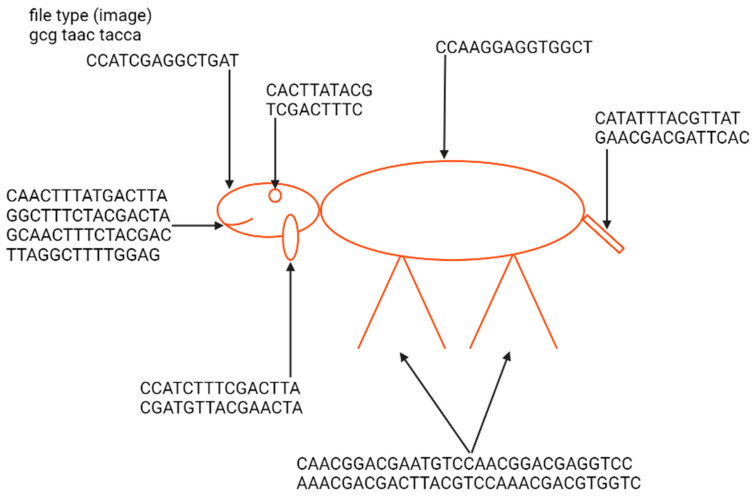
“In 2017, Shipman et al. encoded five frames of a galloping mare from Eadweard Muybridge’s “The Human and Animal Locomotion Photographs” [19]. In their experiment, CRISPR-Cas was used to integrate an encoded short movie into the genomes of a population of living bacteria.”
§ DNA Data Storage > 2. Coding Files in DNA
What the sources say
- Partly supportedcites [19] Shipman S.L. Nivala J. Macklis J.D. Church G.M. CRISPR-Cas Encoding of a Digital Movie into the Genomes of a Population of Living Bacteria Nature 2017 547 345 349 10.1038/nature23017 28700573 PMC5842791 sourceExperimental — accuracy not yet measured
The paper’s Abstract says the authors encoded five frames of Eadweard Muybridge’s Horse in Motion as a short movie in a population of bacteria. It also explains that the CRISPR-Cas system acquired the encoded sequences into genomic arrays. Our copy does not identify the frames as coming from “The Human and Animal Locomotion Photographs”; it calls the work Horse in Motion. (LLM, conf=0.87)
plainstates a cause- Asserted: passes — The authors put it forward as true.
- Checkable: passes — It can be checked against evidence.
- Load-bearing: unclear — It is unclear whether the paper’s conclusions depend on it.
- Based: passes — The paper gives a reason why it holds.
- Partly supported
Every source the paper cites for this claim was checked and supports it.
In the paper
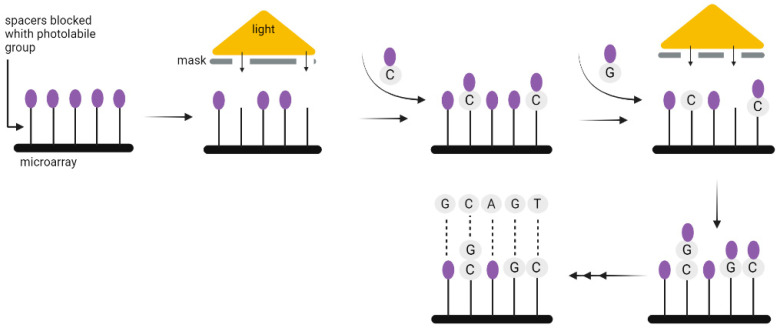
“Microarrays have enabled the high-fidelity synthesis of oligo pools of about 300 nucleotides in length [30].”
§ DNA Data Storage > 3. Synthesis of DNA Strings
What the sources say
- Supportedcites [30] Song L.-F. Deng Z.-H. Gong Z.-Y. Li L.-L. Li B.-Z. Large-Scale de Novo Oligonucleotide Synthesis for Whole-Genome Synthesis and Data Storage: Challenges and Opportunities Front. Bioeng. Biotechnol. 2021 9 689797 10.3389/fbioe.2021.689797 34239862 PMC8258115 source
The Microchip-Based Oligo Synthesis section identifies microchip-based synthesis as microarray-based and states that, after procedure optimization, it has enabled high-fidelity synthesis of oligo pools approximately 300 nucleotides long. The cited claim matches that statement. (LLM, conf=0.94)
plainstates a cause- Asserted: passes — The authors put it forward as true.
- Checkable: passes — It can be checked against evidence.
- Load-bearing: unclear — It is unclear whether the paper’s conclusions depend on it.
- Based: passes — The paper gives a reason why it holds.
- Supported
26 more claims · 10 with their cited sources checked
Create a free account to see all 54 claims and to verify the 1 reference still open.
- Probably not a substantial claim. 9
- It may state two separate claims as one. 18
Self-check
Percentages, sums and reported differences re-computed from the paper’s own numbers.
Rated minor: it would not touch a result — a value no result rests on, a p-value that stays on the same side of the significance level, or a conflict that is clerical, resolved elsewhere in the paper, or outside its own findings.
In the paper
“Escherichia coli has a storage density of 1019 bits of data per cubic centimeter [5]. This means that 1.7 × 1019 bits can be stored in just 1 g of DNA.”
§ DNA Data Storage > 1. Introduction
Reported 17000000000000000000 · recomputed 10000000000000000000
Citations
Cites
Next-Generation Digital Information Storage in DNA
Church, G. M., Gao, Y., & Kosuri, S. (2012) · Science · doi:10.1126/science.1226355 · Cited by 1,441 · cited 2×
“…their modifications, and other algorithms of a similar kind generate proper DNA strings [13,14], which are capable of long data storage. first [15]. time, encoded a draft of a book, eleven and one JavaScript program in DNA For this purpose, they used a simple encoding method involving the…”
BackgroundMethodTowards Practical, High-Capacity, Low-Maintenance Information Storage in Synthesized DNA
Goldman, N., Bertone, P., Chen, S., Dessimoz, C., LeProust, E. M., Sipos, B., & Birney, E. (2013) · Nature · doi:10.1038/nature11875 · Cited by 1,220 · cited 2×
“The authors encoded all 154 of Shakespeare’s One year later, Goldman et al. (2013) tried to overcome the sequencing errors occurring by encoding data with redundancy [16]. speech using the Huffman algorithm to covert numeric data into a nucleotide sequence [16].”
BackgroundMethodUltraviolet radiation-mediated damage to cellular DNA
Cadet, J., Sage, E., & Douki, T. (2005) · Mutation Research - Fundamental and Molecular Mechanisms of Mutagenesis · doi:10.1016/j.mrfmmm.2004.09.012 · Cited by 932 · cited 1×
“In vegetative cells, this UV irradiance leads to DNA mutations, such as cyclobutane pyrimidine dimers and pyrimidine–pyrimidone photo products [9].”
BackgroundDNA Fountain enables a robust and efficient storage architecture
Erlich, Y., & Zielinski, D. (2017) · Science · doi:10.1126/science.aaj2038 · Cited by 898 · cited 2×
“Erlich and Zielinski (2017) used the fountain algorithm to encode 2.14 × 10 6 bytes of data [35].”
BackgroundMethodInfluentialRandom access in large-scale DNA data storage
Organick, L., Ang, S. D., Chen, Y.-J., Lopez, R., Yekhanin, S., Makarychev, K., Racz, M. Z., Kamath, G., Gopalan, P., Nguyen, B., et al. (2018) · Nature Biotechnology · doi:10.1038/nbt.4079 · Cited by 775 · cited 1×
“200 MB ~150 Base-4 Reed–Solomon – [22] Choi et al.”
Robust Chemical Preservation of Digital Information on DNA in Silica with Error-Correcting Codes
Grass, R. N., Heckel, R., Puddu, M., Paunescu, D., & Stark, W. J. (2015) · Angewandte Chemie International Edition · doi:10.1002/anie.201411378 · Cited by 754 · cited 2×
“Moreover, their durability reaches a maximum of 50 years in perfectly optimal conditions [4].”
BackgroundLee, H., Popodi, E., Tang, H., & Foster, P. L. (2012) · Proceedings of the National Academy of Sciences · doi:10.1073/pnas.1210309109 · Cited by 681 · cited 1×
“However, during bacterial replication, the spontaneous mutation rate is 2.2 × 10 − 10 mutations per nucleotide per generation, or 1.0 × 10 − 3 mutations per genome per generation [68].”
BackgroundInfluentialThe half-life of DNA in bone: measuring decay kinetics in 158 dated fossils
Allentoft, M. E., Collins, M., Harker, D., Haile, J., Oskam, C. L., Hale, M. L., Campos, P. F., Samaniego, J. A., Gilbert, M. T. P., Willerslev, E., et al. (2012) · Proceedings of the Royal Society B: Biological Sciences · doi:10.1098/rspb.2012.1745 · Cited by 633 · cited 1×
“Dehydratation Ancient bone 521 years 13 ◦C x [52] Filter Paper 4 years RT 82.”
BackgroundHorneck, G., Klaus, D. M., & Mancinelli, R. L. (2010) · Microbiology and Molecular Biology Reviews · doi:10.1128/mmbr.00016-09 · Cited by 619 · cited 1×
“Due to solar UV radiance, the space vacuum, and extreme temperature conditions, space is considered one of the most hostile environments [7].”
BackgroundMolecular Digital Data Storage Using DNA
Ceze, L., Nivala, J., & Strauss, K. (2019) · Nature Reviews Genetics · doi:10.1038/s41576-019-0125-3 · Cited by 551 · cited 3×
“It is also necessary to add indexes to each fragment, or sequence overlapping in successive DNA fragments [3], unless—as discussed above—the CRISPR method is used to record information in the bacterial genome.”
BackgroundMethodInfluential
Cited by
A Deniable Encryption Method for Modulation-Based DNA Storage
Chu, L., Su, Y., Zan, X., Lin, W., Yao, X., Xu, P., & Liu, W. (2024) · Interdisciplinary Sciences Computational Life Sciences · doi:10.1007/s12539-024-00648-5 · Cited by 49
Efficient data reconstruction: The bottleneck of large-scale application of DNA storage
Cao, B., Zheng, Y., Shao, Q., Liu, Z., Xie, L., Zhao, Y., Wang, B., Zhang, Q., & Wei, X. (2024) · Cell Reports · doi:10.1016/j.celrep.2024.113699 · Cited by 38
Polymerase Elongation onto Patterned DNA for Random Accessed DNA Data Storage
Kang, T., Lim, D., Lee, W. J., & Song, Y. (2025) · BioChip Journal · doi:10.1007/s13206-025-00214-1 · Cited by 7
“The payload of QR pixel data with parity bits of ECC was assigned to six 51 base pairs, with 3 bp for ECC level M, which has 33% redundancy for a 15% correction, using Reed Solomon code and mask pattern which recognizes the stable QR image to reduce homopolymer [54–56].”
Advances and challenges in non-canonical nucleic acids data storage
Wang, Y., Pei, Y., Tang, L., Sun, X., Zhou, S., & Song, J. (2026) · Nature Communications · doi:10.1038/s41467-026-68708-6 · Cited by 9
“3b, left) 5 .”
InfluentialSequencing and Optical Genome Mapping for the Adventurous Chemist
Ruppeka‐Rupeika, E., D’Huys, L., Leen, V., & Hofkens, J. (2024) · Chemical & Biomedical Imaging · doi:10.1021/cbmi.4c00060 · Cited by 3
Investigating enhanced stability in CTAB(C)-compacted DNA under aging conditions for data storage
Tandon, A., Nam, Y., Seo, S., & Park, S. H. (2025) · Journal of Physics Condensed Matter · doi:10.1088/1361-648x/addbb7 · Cited by 1
Öztürk, B., İgit, A., Arıcı, S., Kaya, A., Çamlıca, Z. T., & Şahin, M. F. (2026) · Archives of Computational Methods in Engineering · doi:10.1007/s11831-026-10651-2 · Cited by 4
Rebimbas, R., Glória, I., Chegão, J., Al-Rawi, M., Mousakhani Ganjeh, A., & Saraiva, J. A. (2026) · Journal of Biotechnology · doi:10.1016/j.jbiotec.2026.03.003
Zapatismus und Neuer Internationalismus in Mexiko und Deutschland
Trzeciak, M. F., & Ziai, A. (2024) · PERIPHERIE – Politik • Ökonomie • Kultur · doi:10.3224/peripherie.v44i1.02
Ge, C., Dong, X. N., & Xue, Z. (2025) · Journal of Membrane Computing · doi:10.1007/s41965-025-00202-2 · Cited by 2
Design of Memristive DNA-Biosensors for in-Memory Sensing or in-Sensors Computing
Chen, J., & Carrara, S. (2025) · IEEE BioSensors Conference (BioSensors) · doi:10.1109/biosensors65002.2025.11239161
“DNA data storage is an emerging technology that leverages the natural encoding capacity of DNA molecules to store information, offering ultra-high density, durability, and energy efficiency [8]–[11].”
Advancements in DNA storage: innovations, challenges, and the road ahead
Shukla, S., Borah, N. K., Sinha, A., & Shukla, S. K. (2026) · Elsevier eBooks · doi:10.1016/b978-0-443-40316-3.00007-2
Taştan, C., & Aydin, B. (2026) · Research Square · doi:10.21203/rs.3.rs-9083123/v1
The Archival Paradox: DNA-Based Data Storage and the Data Hoarding Crisis
Hogan, M., Verhoeven, D., & Brown, T. J. (2026) · Emerald Group Publishing Limited eBooks · doi:10.1108/978-1-83662-172-020261006 · Cited by 1
Introduction to DNA Storage Technology
Gupta, M. K., Ping, Z., Rasool, A., Cao, B., & Burgi, P. (2026) · Springer eBooks · doi:10.1007/978-981-95-9450-4_1
Teleportation: Die Wissenschaft des Unmöglichen
Grasnick, A. (2026) · Springer eBooks · doi:10.1007/978-3-658-48558-0_2
Biomolecular Data Storage: Principles, Mathematical Models and Application Features
Adonin, L., & Волчик, О. В. (2026) · Proceedings of Telecommunication Universities · doi:10.31854/1813-324x-2026-12-4-9-24
Compact Modeling of DNA-Based High-Density Memories for CMOS Integration
Gorthy, A., Keremane, K. S., Wu, H., Priya, S., Yennawar, N., Poudel, B., & Jha, R. (2026) · IEEE International Midwest Symposium on Circuits and Systems (MWSCAS) · doi:10.1109/mwscas67364.2026.11680874
“Furthermore, the absence of EDA frameworks for co-simulating these hybrid memories with standard CMOS process design kits (PDKs) leaves a critical gap between device-level demonstrations and memory system integration [9], [10].”
A Variational Autoencoder-Based Encoding Algorithm for DNA Encoding
Chen, S., & Sun, Q. (2026) · International Conference on Biomedicine and Bioinformatics Engineering (ICBBE) · doi:10.1145/3822183.3822286
Metadata
- Authors
- Buko, T., Tuczko, N., & Ishikawa, T.
- Affiliations
- University of Warsaw (PL)
- Corresponding author
- Ishikawa, Takao
- ORCID
- Ishikawa, Takao
- Venue
- BioTech
- Publisher
- MDPI AG
- Published
- 2023-06-01
- Volume
- 12
- Issue
- 2
- Pages
- 44
- ISSN
- 2673-6284 (ISSN-L)
- PMC
- PMC10296570
- OpenAlex
- W4379232032
- Cited by
- 21
- References
- 80
- Citations by year
- 2026: 11 · 2025: 6 · 2024: 4
- FWCI
- 0.55
- Type
- journal article
- Language
- en
- Open access
- gold
- doi.org
- Licence
- Locations
- BioTech (publishedVersion, cc-by)
- PubMed Central (publishedVersion, cc-by)
- PubMed (publishedVersion)
- DOAJ (DOAJ: Directory of Open Access Journals) (submittedVersion, cc-by-sa)
- Topics
- Physical Sciences › Mathematics › Theoretical Computer Science › DNA and Biological Computing
- Physical Sciences › Computer Science › Computer Networks and Communications › Advanced Data Storage Technologies
- Physical Sciences › Mathematics › Theoretical Computer Science › Algorithms and Data Compression
- Keywords
- DNA data storage, data density, storage durability, PCR amplification, oligonucleotide synthesis, long-term data preservation
About these checks
Registry, retraction, Cites and statistics results are computed, not judged, with one exception: a printed reference that no index lists is read once by a model before it counts as a citation error. Claims are extracted by a model and kept only when their quote appears verbatim in the text; each cited source is then checked, with a model’s help, for whether it says what the claim relies on. Those verdicts can be wrong — read the claim’s quote and the cited source before relying on one.
The claim verdicts this report counts are experimental: their accuracy is not yet measured.
A language model drew the claims from the paper on 2026-10-09, under version 3 of the claim definition (model deepseek-v4.1-flash, prompt extract-v3).
A second model labelled each claim on 2026-10-09 (model jev-1.13-20260917, definition revision gold-guideline-v0.2).
Cited sources are checked with a language model’s help (gpt-6-sol).
Statistics and arithmetic are recomputed, not judged.
Confidence bands are shown only for fields calibrated on our annotated test set. None is calibrated yet, so no band is shown.
What counts as a claim ›How we measure confidence ›How we check this ›
Are you an author, or do you see a problem with this page? Request a review
Data sources
Bibliographic data: Semantic Scholar, OpenAlex, Crossref.
Contains information from the Semantic Scholar Academic Graph Datasets, made available under the ODC Attribution License (ODC-BY 1.0).
Semantic Scholar’s data is described in: Kinney, R., et al. (2023). The Semantic Scholar Open Data Platform. arXiv:2301.10140.
