

Risk Calculators in Bipolar Disorder: A Systematic Review
Open accessThe DOI matches its Crossref record; 40 of the 40 references it cites were found in a registry or an index.
Abstract
Introduction: Early recognition of bipolar disorder improves the prognosis and decreases the burden of the disease. However, there is a significant delay in diagnosis. Multiple risk factors for bipolar disorder have been identified and a population at high-risk for the disorder has been more precisely defined. These advances have allowed the development of risk calculators to predict individual risk of conversion to bipolar disorder. This review aims to identify the risk calculators for bipolar disorder and assess their clinical applicability. Methods: A systematic review of original studies on the development of risk calculators in bipolar disorder was performed. The studies’ quality was evaluated with the Newcastle-Ottawa Quality Assessment Form for Cohort Studies and according to recommendations of the Transparent Reporting of a multivariable prediction model for Individual Prognosis or Diagnosis Initiative. Results: Three studies met the inclusion criteria; one developed a risk calculator of conversion from major depressive episode to bipolar disorder; one of conversion to new-onset bipolar spectrum disorders in offspring of parents with bipolar disorder; and the last one of conversion in youths with bipolar disorder not-otherwise-specified. Conclusions: The calculators reviewed in this article present good discrimination power for bipolar disorder, although future replication and validation of the models is needed.
Overview
The claims and statistics of this paper haven’t been checked yet.
Free: it reads the open-access text and checks the first 5 claims that cite a source we can check. Create a free account to check every claim.
Integrity signals
Registry
Cites
Statistics
Figures
Verification
Claims the paper makes
The claims and statistics of this paper haven’t been checked yet.
Free: it reads the open-access text and checks the first 5 claims that cite a source we can check. Create a free account to check every claim.
Self-check
Percentages, sums and reported differences re-computed from the paper’s own numbers.
The self-check needs the paper’s full text.
Citations
Cites
Preferred Reporting Items for Systematic Reviews and Meta-Analyses: the PRISMA statement
Moher, D., Liberati, A., Tetzlaff, J., Altman, D. G., & for the PRISMA Group (2009) · BMJ · doi:10.1136/bmj.b2535 · Cited by 83,823
Preferred Reporting Items for Systematic Reviews and Meta-Analyses: The PRISMA Statement
Moher, D., Liberati, A., Tetzlaff, J., Altman, D. G., & The PRISMA Group (2009) · PLoS Medicine · doi:10.1371/journal.pmed.1000097 · Cited by 64,042 · cited 1×
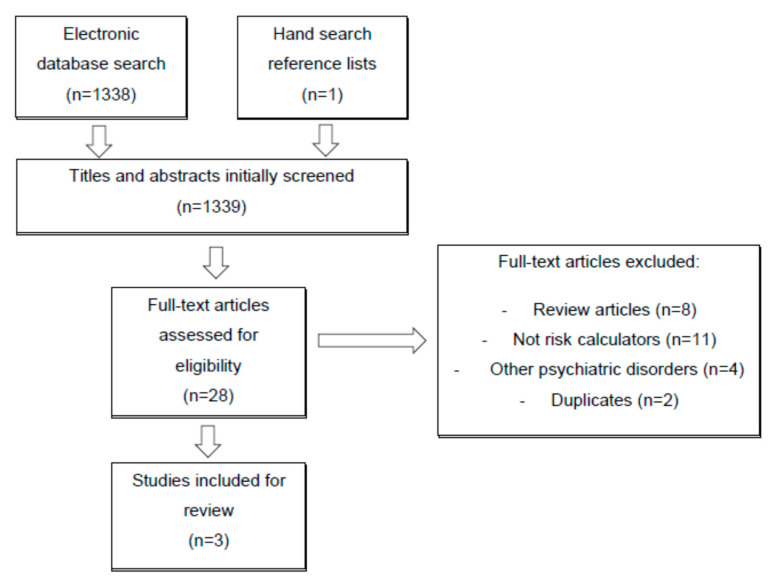
“We performed a systematic review according to Preferred Reporting Items for Systematic Review and Meta-Analysis (PRISMA) guidelines [24].”
Wang, G., Ma, R., Qiao, G., Wada, K., Aizawa, Y., & Satoh, T. (2015) · Integrative Medicine International · doi:10.1159/000368408 · Cited by 18,657
Moons, K. G. M., Altman, D. G., Reitsma, J. B., Ioannidis, J. P. A., Macaskill, P., Steyerberg, E. W., Vickers, A. J., Ransohoff, D. F., & Collins, G. S. (2015) · Annals of Internal Medicine · doi:10.7326/m14-0698 · Cited by 5,147 · cited 1×
“The quality of the risk models’ development and validation was assessed in accordance with the recommendations of the Transparent Reporting of a multivariable prediction model for Individual Prognosis Or Diagnosis (TRIPOD) Initiative [26].”
MethodYatham, L., & Malhi, G. (2011) · Oxford University Press eBooks · doi:10.1093/med/9780199562305.001.0001 · Cited by 3,506
Estimating the true global burden of mental illness
Vigo, D., Thornicroft, G., & Atun, R. (2016) · The Lancet Psychiatry · doi:10.1016/s2215-0366(15)00505-2 · Cited by 2,494
Grande, I., Berk, M., Birmaher, B., & Vieta, E. (2016) · The Lancet · doi:10.1016/s0140-6736(15)00241-x · Cited by 1,710
Self-citationRisk prediction models: II. External validation, model updating, and impact assessment
Moons, K. G. M., Kengne, A. P., Grobbee, D. E., Royston, P., Vergouwe, Y., Altman, D. G., & Woodward, M. (2012) · Heart · doi:10.1136/heartjnl-2011-301247 · Cited by 1,195 · cited 2×
“the risk to develop a certain medical condition and its individual management [29].”
BackgroundMethodVieta, E., Berk, M., Schulze, T. G., Carvalho, A. F., Suppes, T., Calabrese, J. R., Gao, K., Miskowiak, K. W., & Grande, I. (2018) · Nature Reviews Disease Primers · doi:10.1038/nrdp.2018.8 · Cited by 891
Self-citationMoons, K. G. M., Kengne, A. P., Woodward, M., Royston, P., Vergouwe, Y., Altman, D. G., & Grobbee, D. E. (2012) · Heart · doi:10.1136/heartjnl-2011-301246 · Cited by 889 · cited 1×
“Risk calculators estimate the probability of an individual to develop a particular outcome based on different predictors, such as demographic variables, clinical evaluation, and complementary diagnostic exam results [30].”
Background
Cited by
Meehan, A. J., Lewis, S. J., Fazel, S., Fusar-Poli, P., Steyerberg, E. W., Stahl, D., & Danese, A. (2022) · Molecular Psychiatry · doi:10.1038/s41380-022-01528-4 · Cited by 219
Fusar-Poli, L., Natale, A., Amerio, A., Cimpoesu, P., Grimaldi Filioli, P., Aguglia, E., Amore, M., Serafini, G., & Aguglia, A. (2021) · Brain Sciences · doi:10.3390/brainsci11010058 · Cited by 93
“BD affects 2–3% of the general population worldwide and its onset typically occurs during adolescence or early adulthood [1].”
BackgroundDadouli, K., Janho, M. B., Hatziefthimiou, A., Voulgaridi, I., Piaha, K., Anagnostopoulos, L., Ntellas, P., Mouchtouri, V. A., Bonotis, K., Christodoulou, N., et al. (2022) · Brain Sciences · doi:10.3390/brainsci12081034 · Cited by 57
Bipolar disorder cohort studies: Crucial, but underfunded
Vieta, E., & Angst, J. (2021) · European Neuropsychopharmacology · doi:10.1016/j.euroneuro.2021.03.008 · Cited by 30
Self-citationGhafori, S. S., Yousefi, Z., Bakhtiari, E., hasani, M. H. M. M., & Hassanzadeh, G. (2024) · Brain Behavior & Immunity - Health · doi:10.1016/j.bbih.2024.100734 · Cited by 28
“Around the world, BD affects 2 – 3% of the general population, and its beginning usually happens in adolescence or early adulthood (Silva Ribeiro et al., 2020).”
BackgroundMacNeill, L. A., Allen, N. B., Poleon, R. B., Vargas, T., Osborne, K. J., Damme, K. S. F., Barch, D. M., Krogh‐Jespersen, S., Nielsen, A. N., Norton, E. S., et al. (2021) · Development and Psychopathology · doi:10.1017/s0954579421000651 · Cited by 25
Salagre, E., Grande, I., Solé, B., Mezquida, G., Cuesta, M. J., Díaz‐Caneja, C. M., Amoretti, S., Lobo, A., González-Pinto, A. M., Moreno, C., et al. (2020) · Journal of Clinical Medicine · doi:10.3390/jcm10010073 · Cited by 25
Self-citationBipolar Disorder and Polysubstance Use Disorder: Sociodemographic and Clinical Correlates
Aguglia, A., Natale, A., Fusar‐Poli, L., Amerio, A., Bruno, E., Placenti, V., Vai, E., Costanza, A., Serafini, G., Aguglia, E., et al. (2022) · Frontiers in Psychiatry · doi:10.3389/fpsyt.2022.913965 · Cited by 18
Wakschlag, L. S., MacNeill, L. A., Pool, L. R., Smith, J. D., Adam, H., Barch, D. M., Norton, E. S., Rogers, C. E., Ahuvia, I. L., Smyser, C. D., et al. (2023) · Journal of Clinical Child & Adolescent Psychology · doi:10.1080/15374416.2023.2188553 · Cited by 17
“Risk calculators often pool multiple prospective cohorts to capture disease occurrence and achieve power (Pencina & D’Agostino, 2012; Silva Ribeiro et al., 2020).”
BackgroundLyu, H., Huang, H., He, J., Zhu, S., Hong, W., Lai, J., Gao, T., Shao, J., Zhu, J., Li, Y., et al. (2024) · Translational Psychiatry · doi:10.1038/s41398-024-02828-9 · Cited by 16
“Similarly, BD often presents as a depressive episode, leading to misdiagnosis in 25% of BD patients, with a substantial delay of 5-10 years before receiving the correct diagnosis [2, 4].”
BackgroundKeown‐Stoneman, C. D. G., Goodday, S., Preisig, M., Vandeleur, C. L., Castelao, E., Grof, P., Horrocks, J., King, N., & Duffy, A. C. (2021) · EClinicalMedicine · doi:10.1016/j.eclinm.2021.101083 · Cited by 12
“As in cardiovascular medicine and oncology, individualized risk prediction in psychiatry could be used to identify those suitable for more intensive self and clinical monitoring, prevention, and low-intensity early interventions; for example, those targeting improving sleep quality, healthy coping strategies and posit…”
BackgroundPrediction of early‐onset bipolar using electronic health records
Wang, B., Sheu, Y.-H., Lee, H., Mealer, R. G., Castro, V. M., & Smoller, J. W. (2025) · Journal of Child Psychology and Psychiatry · doi:10.1111/jcpp.14131 · Cited by 10
Xu, H., Li, R., Wang, L., Wang, T., Luo, Y., Wei, Y., & Chen, J. (2023) · Journal of Affective Disorders · doi:10.1016/j.jad.2022.11.017 · Cited by 9
Rabelo‐da‐Ponte, F. D., Marchionatti, L. E., Watts, D., Roza, T. H., Amoretti, S., Barros, F. C., Wehrmeister, F. C., Gonçalves, H., Menezes, A. M. B., Kunz, M., et al. (2023) · Journal of Psychiatric Research · doi:10.1016/j.jpsychires.2023.11.018 · Cited by 6
Commentary on Kohne and van OS view on precision psychiatry
Salagre, E., & Vieta, E. (2021) · Psychological Medicine · doi:10.1017/s0033291720005309 · Cited by 6
“Machine learning methods will be key to build such predictive models, which can be incorporated in clinical practice, for instance, through web-based risk calculators (Silva Ribeiro et al., 2020).”
MethodSelf-citationGui, L., Yu, H., Wei, Y., Huang, Q., Liu, Y., & Fu, Y. (2025) · The European Journal of Psychiatry · doi:10.1016/j.ejpsy.2025.100308 · Cited by 4
Zakaria, W. N. A., Wijaya, A., Al-Rahbi, B., Ahmad, A. H., Zakaria, R., & Othman, Z. (2023) · Psychiatric Genetics · doi:10.1097/ypg.0000000000000338 · Cited by 4
Karaffa, K. M., Meyer, A. T., & Sanford‐Martens, T. C. (2024) · Journal of Veterinary Medical Education · doi:10.3138/jvme-2024-0088 · Cited by 3
Montezano, B. B., Gnielka, V., Shintani, A. O., de Aguiar, K. R., Roza, T. H., Cardoso, T. D. A., Souza, L. D. D. M., Moreira, F. P., da Silva, R. A., Mondin, T. C., et al. (2023) · medRxiv · doi:10.1101/2023.03.31.22282507 · Cited by 3
“The average period between the initial interview and the follow-up was an average of five years, higher than in other studies in this field (Ribeiro et al., 2020).”
ResultAyhan, M. G., INANLI, I., & Erdal, H. (2026) · Journal of Investigative Medicine · doi:10.1177/10815589261448844 · Cited by 2
Focus on Peripheral Biomarkers of Mental Disorders
Bartoli, F., & Carrà, G. (2022) · Brain Sciences · doi:10.3390/brainsci12060756 · Cited by 1
Köhne, A. C. J. (2022) · Utrecht University Repository (Utrecht University) · doi:10.33540/1591 · Cited by 2
SINDROME DE BURNOUT EN PERSONAL DE ENFERMERIA DE UN HOSPITAL RECONVERTIDO A COVID-19
Juárez, C. L., González, S. H., & Chávez, S. M. (2021) · doi:10.22533/at.ed.70321221124
Comorbidity in bipolar disorder, volume II
(2023) · Frontiers research topics · doi:10.3389/978-2-83251-906-6
Clinical Risk Score for Predicting Bipolar Depressive Disorder in Adults with Depressive Disorder
(2025) · Journal of the Medical Association of Thailand · doi:10.35755/jmedassocthai.2025.3.205-213-02088
“They include a younger age of illness onset, atypical depressive characteristics, treatment-resistant depression, and a more frequent history of self-harm or suicide, all supported by data indicating their association with bipolar disorder (3,6,7,13-15, 18, 26, 27) .”
Diagnostic Modelling for Bipolar Disorder Using Kinetic Activity logs using Machine Learning
Yashaswini, K. A., Kokila, S., Madhura, K., Manasa, C. M., Sapna, R., & Rajathi, I. (2025) · IEEE International Conference on Automatic Control and Intelligent Systems (I2CACIS) · doi:10.1109/i2cacis65476.2025.11101186
Suicidality and Latent Bipolar Disorder
Souza, L. D. D. M., Veleda, G. W., & Jansen, K. (2025) · Springer eBooks · doi:10.1007/978-3-032-01297-5_13
Diagnostic Conversion from Major Depressive Disorder to Bipolar Disorder
Montezano, B. B., Ritter, A. C., & Jansen, K. (2025) · Springer eBooks · doi:10.1007/978-3-032-01297-5_4
Metadata
- Authors
- Silva Ribeiro, J., Pereira, D., Salagre, E., Coroa, M., Santos Oliveira, P., Santos, V., Madeira, N., Grande, I., & Vieta, E.
- Affiliations
- Psychiatry Department, Centro Hospitalar Vila Nova de Gaia/Espinho, 4434-502 Vila Nova de Gaia, Portugal
- University of Coimbra (PT)
- Centro de Investigación Biomédica en Red de Salud Mental (ES)
- Faculty of Medicine, Institute of Psychological Medicine, University of Coimbra, 3004-504 Coimbra, Portugal
- Bipolar and Depressive Disorders Unit, Institute of Neurosciences, Hospital Clinic, University of Barcelona, IDIBAPS, CIBERSAM, Barcelona, 08035 Catalonia, Spain
- ORCID
- Venue
- Brain Sciences
- Publisher
- MDPI AG
- Published
- 2020-08-06
- Volume
- 10
- Issue
- 8
- Pages
- 525
- ISSN
- 2076-3425 (ISSN-L)
- PMC
- PMC7465101
- OpenAlex
- W3047291208
- Cited by
- 26
- References
- 40
- Citations by year
- 2026: 1 · 2025: 5 · 2024: 3 · 2023: 4 · 2022: 6 · 2021: 6 · 2020: 1
- FWCI
- 0.70
- Type
- journal article
- Language
- en
- Open access
- gold
- doi.org
- Licence
- Locations
- Brain Sciences (publishedVersion, cc-by)
- PubMed Central (publishedVersion, cc-by)
- PubMed (publishedVersion)
- Portuguese National Funding Agency for Science, Research and Technology (RCAAP Project by FCT) (submittedVersion, cc-by)
- Portuguese National Funding Agency for Science, Research and Technology (RCAAP Project by FCT) (submittedVersion, other-oa)
- Dipòsit Digital de la Universitat de Barcelona (Universitat de Barcelona) (submittedVersion, cc-by)
- DOAJ (DOAJ: Directory of Open Access Journals) (submittedVersion, cc-by-sa)
- Estudo Geral (Universidad de Coimbra) (submittedVersion, cc-by)
- Funders
- Centres de Recerca de Catalunya
- Generalitat de Catalunya (2017 SGR 1365, SLT006/17/00357, 2017-SGR)
- Ministerio de Economía y Competitividad (PI15/00283, PI16/, PI16/00187)
- Ministerio de Ciencia e Innovación (PI15/00283, PI18/00805, PI19/00954, PI15/)
- Centro de Investigación Biomédica en Red de Salud Mental (SLT006/17/00357, 2017 SGR 1365)
- Fundação para a Ciência e a Tecnologia (01-0145, POCI-01-0145, PTDC/MEC-PSQ/30943/2017, CENTRO-01-0145-FEDER-028214, CENTRO-01-0145-FEDER, POCI-01-0145-FEDER-, POCI-01-, /2017, POCI-01-0145-FEDER-30943)
- Instituto de Salud Carlos III (PI16/, PI15/00283, PI18/00805, PI19/00954, PI16/00187)
- European Regional Development Fund (POCI-01, POCI-01-0145- FEDER)
- European Social Fund
- Topics
- Health Sciences › Medicine › Psychiatry and Mental health › Bipolar Disorder and Treatment
- Health Sciences › Medicine › Psychiatry and Mental health › Schizophrenia research and treatment
- Health Sciences › Medicine › Public Health, Environmental and Occupational Health › Maternal Mental Health During Pregnancy and Postpartum
- Keywords
- bipolar disorder, risk calculator, prediction model, conversion to bipolar disorder, major depressive episode, offspring of bipolar parents, bipolar spectrum disorders, delayed diagnosis, risk factors
About these checks
Registry, retraction, Cites and statistics results are computed, not judged, with one exception: a printed reference that no index lists is read once by a model before it counts as a citation error. Claims are extracted by a model and kept only when their quote appears verbatim in the text; each cited source is then checked, with a model’s help, for whether it says what the claim relies on. Those verdicts can be wrong — read the claim’s quote and the cited source before relying on one.
Statistics and arithmetic are recomputed, not judged.
Confidence bands are shown only for fields calibrated on our annotated test set. None is calibrated yet, so no band is shown.
What counts as a claim ›How we measure confidence ›How we check this ›
Are you an author, or do you see a problem with this page? Request a review
Data sources
Bibliographic data: Semantic Scholar, OpenAlex, Crossref.
Contains information from the Semantic Scholar Academic Graph Datasets, made available under the ODC Attribution License (ODC-BY 1.0).
Semantic Scholar’s data is described in: Kinney, R., et al. (2023). The Semantic Scholar Open Data Platform. arXiv:2301.10140.
