

The Role of Isolated Nasal Surgery in Obstructive Sleep Apnea Therapy—A Systematic Review
Open accessThe DOI matches its Crossref record; 35 of the 36 references it cites were found in a registry or an index; 15 of the 81 sources its claims cite were checked for support.
Abstract
Purpose: Nasal obstruction is believed to play a significant role in the pathophysiology and management of obstructive sleep apnea (OSA). However, controversy remains about the ability of isolated nasal surgery to improve OSA. The objective of this systematic review is to give an updated overview of the literature on whether isolated nasal surgery can improve OSA subjectively (Epworth Sleepiness Scale (ESS)) and/or objectively (polysomnography (PSG)). Methods: A systematic review was performed searching the electronic databases PubMed, Embase.com (accessed on 20 June 2022) Cochrane Database of Systematic Reviews and Cochrane Central Register of Controlled Trials (CENTRAL) up to 20 June 2022. Eligible studies were reviewed for methodological quality using the NIH Quality Assessment Tool for Observational Cohort and Cross-Sectional Studies. Results: Twenty-one studies met the inclusion criteria. The majority of the included studies reported no significant reduction in the apnea–hypopnea index (AHI) after isolated nasal surgery in patients with OSA. The meta-analysis suggests that the AHI slightly decreases after nasal surgery. The ESS was significantly lower after nasal surgery in eighteen studies. Conclusion: Based on the present analysis of objective outcomes, isolated nasal surgery did not improve the AHI significantly in the majority of the studies. The meta-analysis suggests a slight decrease in AHI after nasal surgery, but this reduction is not clinically relevant in terms of treatment success. Isolated nasal surgery should therefore not be recommended as a first-line treatment for OSA. Because of high study heterogeneity, these results should be interpreted with caution. Isolated nasal surgery can possibly improve OSA subjectively. Perhaps only OSA patients with complaints of nasal obstruction or OSA patients experiencing difficulty with continuous positive airway pressure (CPAP) compliance would benefit from isolated nasal surgery.
Overview
CoChat Summary
TL;DR
This systematic review of 21 studies found that isolated nasal surgery generally does not significantly improve the apnea–hypopnea index (AHI) in obstructive sleep apnea (OSA), although meta-analysis showed a slight AHI decrease of 4.08. Subjective daytime sleepiness improved significantly on the Epworth Sleepiness Scale (ESS) in most studies, but high heterogeneity limits interpretation.
Key findings
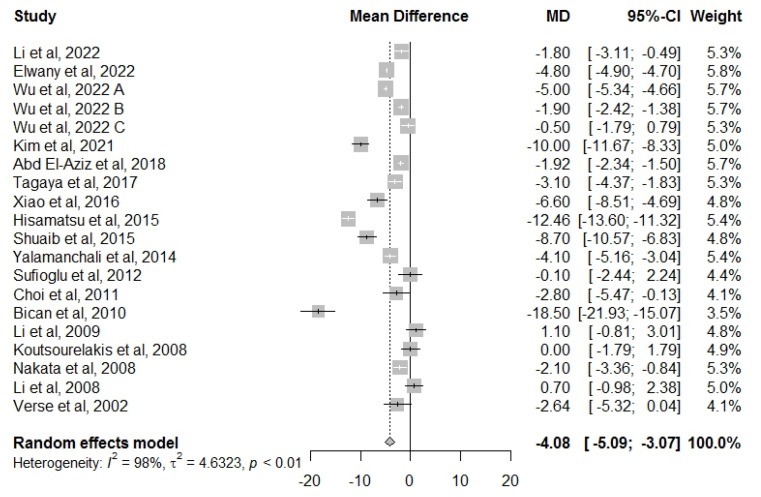
- Among 21 included studies, 12 reported no significant overall AHI change after isolated nasal surgery; 1 found AHI improvement only in mild OSA (AHI 5–15 events/h), and 8 reported significant overall AHI decreases.
- Meta-analysis of 18 studies found an overall mean AHI decrease of 4.08 after nasal surgery, with considerable heterogeneity (I² = 98%); the authors judged this reduction not clinically relevant for treatment success.
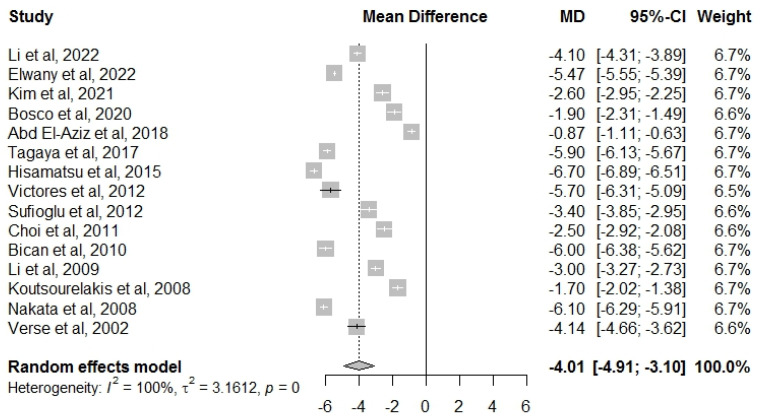
- ESS was significantly lower after nasal surgery in 18 studies; meta-analysis of available data found an overall mean ESS decrease of 4.01, with considerable heterogeneity (I² = 100%).
- CPAP use during study periods was not reported in 13 studies; 3 studies specifically evaluated nasal surgery in CPAP-intolerant patients, and almost all such patients tolerated CPAP postoperatively.
Methods
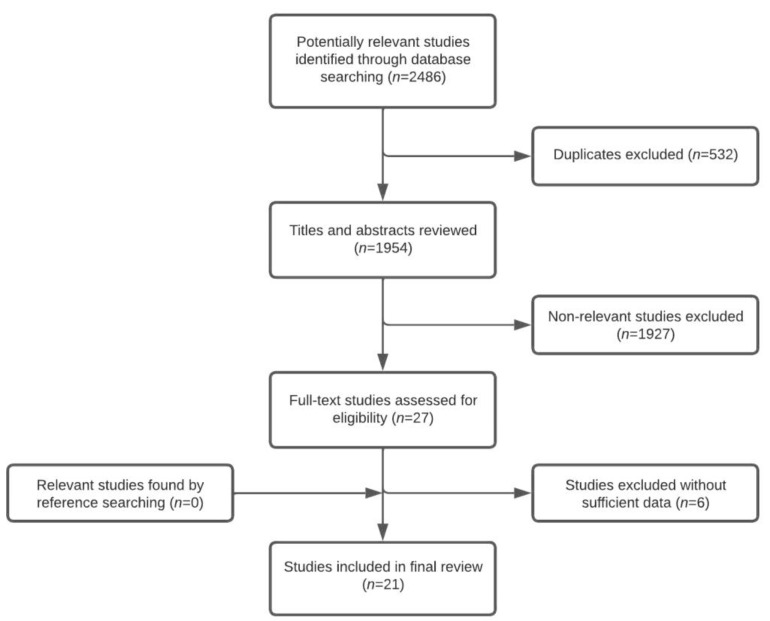
- Systematic review following PRISMA, searching PubMed, Embase.com, Cochrane Database of Systematic Reviews, and CENTRAL from inception to 20 June 2022; 2486 records were identified, 1954 after duplicate removal, 27 full texts assessed, and 21 studies included.
- Inclusion required OSA (AHI ≥ 5 events/h), pre- and postoperative AHI from level 1 or 2 polysomnography or ESS, and isolated nasal surgery without other level surgery; exclusions included age < 18 years, multilevel surgery, type 3/4 home sleep testing, reviews, case reports, conference abstracts, and non-English articles.
- Meta-analysis used R version 4.2.0 with a random-effects model (DerSimonian and Laird) for mean differences; heterogeneity was assessed with I². Study quality was assessed with the NIH Quality Assessment Tool for Observational Cohort and Cross-Sectional Studies.
Limitations
- Stated by the authors: considerable clinical heterogeneity prevented a proper significant meta-analysis with subgroup analysis; the clinical relevance of the AHI decrease is questionable, and different follow-up times contributed to inter-study differences.
- Evident from the text: only 1 randomized controlled trial was included, while the rest were prospective or retrospective cohort studies more susceptible to selection bias; one study included only 56 of 156 eligible patients because postoperative PSG was unavailable.
- Evident from the text: patient selection, causes of nasal obstruction, and types of nasal surgery varied across studies, and CPAP use was often unreported or unclear, which may confound subjective ESS improvements.
Model-written summary. Check it against the paper before relying on it.
Integrity signals
Registry
Cites
Statistics
Figures
Verification
Claims the paper makes
13 Valid · 1 Not valid · 24 Not checked · 50 Own results and interpretations
The cited sources support only part of this claim — read each source’s verdict below.
In the paper
“Additionally, mouth breathing as a result of nasal obstruction leads to increased airway resistance [6].”
§ The Role of Isolated Nasal Surgery in Obstructive Sleep Apnea Therapy—A Systematic Review > 1. Introduction
What the sources say
- Partly supportedcites [6] Fitzpatrick M.F. McLean H. Urton A.M. Tan A. O’Donnell D. Driver H.S. Effect of nasal or oral breathing route on upper airway resistance during sleep Eur. Respir. J. 2003 22 827 832 10.1183/09031936.03.00047903 14621092 sourceExperimental — accuracy not yet measured
The paper’s summary reports significantly higher upper-airway resistance during oral than nasal breathing in sleep. But the Control of the oral/nasal breathing route section says no measurements established that nasal obstruction causes a switch to mouth breathing during sleep; the study tested the breathing routes rather than that causal sequence. Page numbers are unavailable in our copy. (LLM, conf=0.86)
plainstates a cause- Asserted: passes — The authors put it forward as true.
- Checkable: passes — It can be checked against evidence.
- Load-bearing: passes — The paper’s conclusions depend on it.
- Based: passes — The paper gives a reason why it holds.
- Partly supported
Every source the paper cites for this claim was checked and supports it.
In the paper
“This review found similar results to the most recent published meta-analysis.”
§ The Role of Isolated Nasal Surgery in Obstructive Sleep Apnea Therapy—A Systematic Review > 4. Discussion
What the sources say
- Supportedcites [7] Wu J. Zhao G. Li Y. Zang H. Wang T. Wang D. Han D. Apnea-hypopnea index decreased significantly after nasal surgery for obstructive sleep apnea: A meta-analysis Medicine 2017 96 e6008 10.1097/MD.0000000000006008 28151900 PMC5293463 source
Wu’s paper is a meta-analysis, and its Results report a significant improvement in apnea–hypopnea index after nasal surgery. Its Conclusion also reports improvement in the Epworth sleepiness score, supporting its use as a comparison for the citing review’s results. The claim that the citing review found similar results is the citing authors’ own comparison, not a finding attributed to Wu. (LLM, conf=0.86)
plain- Asserted: passes — The authors put it forward as true.
- Checkable: passes — It can be checked against evidence.
- Load-bearing: unclear — It is unclear whether the paper’s conclusions depend on it.
- Based: passes — The paper gives a reason why it holds.
- Supported
Every source the paper cites for this claim was checked and supports it.
In the paper
“The most recent meta-analysis by Wu et al. (2017) described a significant reduction in the AHI after isolated nasal surgery [7].”
§ The Role of Isolated Nasal Surgery in Obstructive Sleep Apnea Therapy—A Systematic Review > 1. Introduction
What the sources say
- Supportedcites [7] Wu J. Zhao G. Li Y. Zang H. Wang T. Wang D. Han D. Apnea-hypopnea index decreased significantly after nasal surgery for obstructive sleep apnea: A meta-analysis Medicine 2017 96 e6008 10.1097/MD.0000000000006008 28151900 PMC5293463 source
The Discussion states that this meta-analysis found a significant postoperative improvement in AHI after isolated nasal surgery. The Conclusion likewise reports significant AHI improvement, while noting that its significance was slight. (LLM, conf=0.93)
plainstates a cause- Asserted: passes — The authors put it forward as true.
- Checkable: passes — It can be checked against evidence.
- Load-bearing: unclear — It is unclear whether the paper’s conclusions depend on it.
- Based: passes — The paper gives a reason why it holds.
- Supported
The sources with a verdict support this claim; the rest weren’t checked yet, have no full text we could read, or their verdicts aren’t rated yet.
In the paper
“However, controversy remains about the ability of isolated nasal surgery to improve OSA.”
§ The Role of Isolated Nasal Surgery in Obstructive Sleep Apnea Therapy—A Systematic Review > Abstract
What the sources say
- Supportedcites [7] Wu J. Zhao G. Li Y. Zang H. Wang T. Wang D. Han D. Apnea-hypopnea index decreased significantly after nasal surgery for obstructive sleep apnea: A meta-analysis Medicine 2017 96 e6008 10.1097/MD.0000000000006008 28151900 PMC5293463 source
The Introduction states that the effectiveness of nasal surgery in improving OSA remains controversial. The Discussion explains that reported effects have been inconsistent, even though this meta-analysis found improvement after isolated nasal surgery. (LLM, conf=0.94)
- Not checked — no full text of the sourcecites [8] Ishii L. Roxbury C. Godoy A. Ishman S. Ishii M. Does Nasal Surgery Improve OSA in Patients with Nasal Obstruction and OSA? A Meta-analysis Otolaryngol. Head Neck Surg. 2015 153 326 333 10.1177/0194599815594374 26183522 source
- Not checked — no full text of the sourcecites [9] Li H.Y. Wang P.C. Chen Y.P. Lee L.A. Fang T.J. Lin H.C. Critical appraisal and meta-analysis of nasal surgery for obstructive sleep apnea Am. J. Rhinol. Allergy 2011 25 45 49 10.2500/ajra.2011.25.3558 21711978 source
plain- Asserted: passes — The authors put it forward as true.
- Checkable: passes — It can be checked against evidence.
- Load-bearing: passes — The paper’s conclusions depend on it.
- Based: passes — The paper gives a reason why it holds.
- Supported
The sources with a verdict support this claim; the rest weren’t checked yet, have no full text we could read, or their verdicts aren’t rated yet.
In the paper
“The overall AHI was not significantly different after nasal surgery in twelve studies [15,16,17,18,21,22,23,24,25,28,29,30].”
§ The Role of Isolated Nasal Surgery in Obstructive Sleep Apnea Therapy—A Systematic Review > 3. Results > 3.3. Apnea–Hypopnea Index/Epworth Sleepiness Scale
What the sources say
- Not checked — no full text of the sourcecites [15] Victores A.J. Takashima M. Effects of nasal surgery on the upper airway: A drug-induced sleep endoscopy study Laryngoscope 2012 122 2606 2610 10.1002/lary.23584 22886986 source
- Not checked — no full text of the sourcecites [16] Verse T. Maurer J.T. Pirsig W. Effect of nasal surgery on sleep-related breathing disorders Laryngoscope 2002 112 64 68 10.1097/00005537-200201000-00012 11802040 source
- Supportedcites [17] Tagaya M. Otake H. Suzuki K. Yasuma F. Yamamoto H. Noda A. Nishimura Y. Sone M. Nakashima T. Nakata S. The comparison of nasal surgery and CPAP on daytime sleepiness in patients with OSAS Rhinology 2017 55 269 273 10.4193/Rhin17.026 28865140 source
The Results report that AHI did not improve after nasal surgery, and Table 2 shows a pre-to-post difference that was not statistically significant (p = 0.11). This paper supports the sentence as one of the twelve cited studies; it need not itself report results from all twelve. (LLM, conf=0.92)
- Not checked — no full text of the sourcecites [18] Sufioğlu M. Ozmen O.A. Kasapoglu F. Demir U.L. Ursavas A. Erişen L. Onart S. The efficacy of nasal surgery in obstructive sleep apnea syndrome: A prospective clinical study Eur. Arch. Otorhinolaryngol. 2012 269 487 494 10.1007/s00405-011-1682-z 21761192 source
- Not checked — no full text of the sourcecites [21] Nakata S. Noda A. Yasuma F. Morinaga M. Sugiura M. Katayama N. Sawaki M. Teranishi M. Nakashima T. Effects of nasal surgery on sleep quality in obstructive sleep apnea syndrome with nasal obstruction Am. J. Rhinol. 2008 22 59 63 10.2500/ajr.2008.22.3120 18284861 source
- Not checked — no full text of the sourcecites [22] Li L. Han D. Zang H. London N.R. Aerodynamics Analysis of the Impact of Nasal Surgery on Patients with Obstructive Sleep Apnea and Nasal Obstruction ORL J. Otorhinolaryngol. Relat Spec. 2022 84 62 69 10.1159/000516243 34058743 source
- Not checked — no full text of the sourcecites [23] Li H.Y. Lin Y. Chen N.H. Lee L.A. Fang T.J. Wang P.C. Improvement in quality of life after nasal surgery alone for patients with obstructive sleep apnea and nasal obstruction Arch. Otolaryngol. Head Neck Surg. 2008 134 429 433 10.1001/archotol.134.4.429 18427011 source
- Not checked — no full text of the sourcecites [24] Li H.Y. Lee L.A. Wang P.C. Fang T.J. Chen N.H. Can nasal surgery improve obstructive sleep apnea: Subjective or objective? Am. J. Rhinol. Allergy 2009 23 e51 e55 10.2500/ajra.2009.23.3358 19793414 source
- Supportedcites [25] Koutsourelakis I. Georgoulopoulos G. Perraki E. Vagiakis E. Roussos C. Zakynthinos S.G. Randomised trial of nasal surgery for fixed nasal obstruction in obstructive sleep apnoea Eur. Respir. J. 2008 31 110 117 10.1183/09031936.00087607 17898015 source
The Results section states that AHI remained unchanged after surgery or sham surgery. This paper supports the cited sentence as one of the twelve studies, not as evidence that it analyzed all twelve. (LLM, conf=0.92)
- Not checked — no full text of the sourcecites [28] Elwany S. Bahgat A.Y. Ibrahim M. Bazak R. Surgical correction of nasal obstruction in obstructive sleep apnea improves CPAP outcomes and compliance Ir. J. Med. Sci. 2022 10.1007/s11845-021-02896-6 35083644 source
plain- Asserted: passes — The authors put it forward as true.
- Checkable: passes — It can be checked against evidence.
- Load-bearing: passes — The paper’s conclusions depend on it.
- Based: passes — The paper gives a reason why it holds.
49 more claims · 7 with their cited sources checked
Create a free account to see all 88 claims and to verify the 3 references still open.
- It may state two separate claims as one. 21
- Probably not a substantial claim. 16
Citations
Cites
Preferred reporting items for systematic reviews and meta-analyses: The PRISMA statement
Moher, D., Liberati, A., Tetzlaff, J., & Altman, D. G. (2010) · International Journal of Surgery · doi:10.1016/j.ijsu.2010.02.007 · Cited by 12,156
Sher, A. E., Schechtman, K. B., & Piccirillo, J. F. (1996) · Sleep · doi:10.1093/sleep/19.2.156 · Cited by 1,335
Nasal obstruction as a risk factor for sleep-disordered breathing
Young, T., Finn, L., & Kim, H. (1997) · Journal of Allergy and Clinical Immunology · doi:10.1016/s0091-6749(97)70124-6 · Cited by 505
Upper airway pressure-flow relationships in obstructive sleep apnea
Smith, P. L., Wise, R. A., Gold, A. R., Schwartz, A. R., & Permutt, S. (1988) · Journal of Applied Physiology · doi:10.1152/jappl.1988.64.2.789 · Cited by 446 · cited 1×
“Pathophysiologically, nasal obstruction causes increased airway resistance, which contributes to oropharyngeal collapse as seen in OSA patients, according to the Starling resistor model [5].”
BackgroundEffect of nasal or oral breathing route on upper airway resistance during sleep
Fitzpatrick, M. F., McLean, H., Urton, A. M., Tan, A., O'Donnell, D., & Driver, H. S. (2003) · European Respiratory Journal · doi:10.1183/09031936.03.00047903 · Cited by 277 · cited 1×
“Additionally, mouth breathing as a result of nasal obstruction leads to increased airway resistance [6].”
BackgroundEffect of Nasal Surgery on Sleep‐Related Breathing Disorders
Verse, T., Maurer, J. T., & Pirsig, W. (2002) · The Laryngoscope · doi:10.1097/00005537-200201000-00012 · Cited by 173 · cited 1×
“, 2002 [16] Prospective (n = 26) Septorhinoplasty, septoplasty, septoplasty with bilateral paranasal sinus surgery, nasal tip/nasal valve surgery AHI, nasal resistance”
BackgroundEffect of Intranasal Obstruction on Breathing during Sleep
Suratt, P. M., Turner, B. L., & Wilhoit, S. C. (1986) · Chest · doi:10.1378/chest.90.3.324 · Cited by 172 · cited 1×
“Nasal obstruction caused by nasal packing can also induce apnea in healthy people and also worsen OSA [2,3].”
BackgroundCamacho, M., Riaz, M., Capasso, R., Ruoff, C. M., Guilleminault, C., Kushida, C. A., & Certal, V. (2015) · Sleep · doi:10.5665/sleep.4414 · Cited by 164 · cited 1×
“A meta-analysis also described that isolated nasal surgery reduces therapeutic CPAP pressure in patients with OSA and nasal obstruction [36].”
BackgroundCritical Appraisal and Meta-Analysis of Nasal Surgery for Obstructive Sleep Apnea
Li, H.-Y., Wang, P.-C., Chen, Y.-P., Lee, L.-A., Fang, T.-J., & Lin, H.-C. (2011) · American Journal of Rhinology & Allergy · doi:10.2500/ajra.2011.25.3558 · Cited by 134 · cited 2×
“reported no significant reduction in the AHI after nasal surgery [8,9].”
BackgroundResultRandomised trial of nasal surgery for fixed nasal obstruction in obstructive sleep apnoea
Koutsourelakis, I., Georgoulopoulos, G., Perraki, E., Vagiakis, E., Roussos, C., & Zakynthinos, S. G. (2008) · European Respiratory Journal · doi:10.1183/09031936.00087607 · Cited by 131 · cited 4×
“The randomized trial is not shown in the table because the quality assessment questions were not applicable to this study [25].”
BackgroundInfluential
Cited by
Johnsen, S. G. (2024) · Bioengineering · doi:10.3390/bioengineering11030239 · Cited by 27
Role of Nasal Surgery in Adult Obstructive Sleep Apnea: A Systematic Review
Correa, E. J., Conti, D. M., Moreno-Luna, R., Sánchez-Gómez, S., & O'Connor Reina, C. (2024) · Sleep Science · doi:10.1055/s-0044-1782527 · Cited by 15
State of the art: Alternative overlap syndrome—asthma and obstructive sleep apnea
Ioachimescu, O. C. (2024) · Journal of Investigative Medicine · doi:10.1177/10815589241249993 · Cited by 12
Ioachimescu, O. C. (2024) · Sleep Medicine Clinics · doi:10.1016/j.jsmc.2024.02.006 · Cited by 6
Treatment of the Nose for Patients with Sleep Apnea
Callander, J. K., & Chang, J. L. (2023) · Otolaryngologic Clinics of North America · doi:10.1016/j.otc.2023.11.002 · Cited by 6
Modern view on the effectiveness of surgical methods for treating obstructive sleep apnea syndrome
Tardov, M. V., Стуров, Н. В., Ивановна, Р. Е., & Boldin, A. V. (2024) · S S Korsakov Journal of Neurology and Psychiatry · doi:10.17116/jnevro202412405253 · Cited by 4
Obstructive sleep apnea for the rhinologist
Nogues, J. C., Jain, N., Chou, C. T., & Lin, F. Y. (2023) · Current Opinion in Otolaryngology & Head & Neck Surgery · doi:10.1097/moo.0000000000000941 · Cited by 4
Huang, W., & Lai, H. (2024) · CRANIO® · doi:10.1080/08869634.2024.2401643 · Cited by 3
“The individuals with more severe daytime sleepiness were characterized by higher ESS scores [30].”
Schaaff, C., Patel, T., Alazawi, D., Thomas, E. A., Kress, M. H., Lenze, N. R., Stanley, J. J., & Hoff, P. T. (2025) · Sleep And Breathing · doi:10.1007/s11325-025-03370-8 · Cited by 2
Treatment Patterns in Obstructive Sleep Apnea With Complete Concentric Collapse on Sleep Endoscopy
Cole, J. T., Ryan, E., Song, T.-Y., & Karelsky, S. (2025) · The Laryngoscope · doi:10.1002/lary.32078 · Cited by 4
“This is consistent with a recent systematic review which found that nasal surgery increased PAP tolerance [20].”
Knížek, Z., Kotulek, M., Brothánková, P., Pecháčková, E., Klail, P., Kostlivý, T., & Vodička, J. (2023) · Life · doi:10.3390/life13010219 · Cited by 3
“The guidelines of the surgical division of the Czech Sleep Research and Sleep Medicine Society [38] were complied with based on the premise that nasal surgery does not significantly affect obstructive respiratory events [39,40].”
BackgroundPendolino, A. L., Unadkat, S. N., Cheong, R. C. T., Patel, A., Ferreira, J., Scarpa, B., & Andrews, P. J. (2024) · Diagnostics · doi:10.3390/diagnostics14161820 · Cited by 3
“Moreover, the addition of a control group (no treatment) to compare our results against could have helped in distinguishing the specific effects of RFIT treatment.”
ResultTsou, Y.-A., Hang, L., Finnsson, E., Ágústsson, J. S., Sands, S. A., & Cheng, W. (2024) · Clinical and Experimental Otorhinolaryngology · doi:10.21053/ceo.2024.00246 · Cited by 1
“Although isolated nasal surgery can increase nasal airflow and reduce mouth breathing, it has not been shown to significantly decrease AHI in review studies [24,25].”
Septoplasty‐mediated improvements in nasal patency and pulmonary function: A prospective study
de Sousa, F. A., Correia, J. T., Almeida, J. C., Azevedo, S. R., Ferreira, M. G., Ferreira‐Magalhães, M., & Santos, M. (2025) · Laryngoscope Investigative Otolaryngology · doi:10.1002/lio2.70065 · Cited by 3
Nasal airway in obstructive sleep apnea: a supine magnetic resonance imaging study
Kong, F.-B., Mi, S., Deng, G., Chen, H., & Jiang, T. (2025) · European Journal of Orthodontics · doi:10.1093/ejo/cjag002 · Cited by 1
Singh, A. P., Singh, S., Kumar, D., et al. (2026) · Cureus · doi:10.7759/cureus.107315 · Cited by 1
Psychological Impact of Rhinology Disorders
Soltani, Z. E., & Elahi, M. M. (2024) · IntechOpen eBooks · doi:10.5772/intechopen.1006041 · Cited by 1
Patel, P. A., Munhall, C. C., Smith, C. D., Kassir, M. F., Brennan, E. A., Ibrahim, B., Nguyen, S. A., & Abdelwahab, M. (2025) · Otolaryngology · doi:10.1002/ohn.70028 · Cited by 2
“39,43,44 Since nasal air fl ow is proximal to levels of obstruction visualized during a DISE (VOTE), it may not directly result in changes in the distal airway phenotype.”
InfluentialThe Role of Inverted Papilloma Surgical Removal for Sleep Apnea Treatment Success—A Case Report
Vlad, A. M., Stefanescu, C. D., Voiosu, C., & Hainăroșie, R. (2023) · Medicina · doi:10.3390/medicina59030444 · Cited by 1
“The most recently published systematic review (Schoustra et al. 2022) concluded that the apnea-hypopnea index (AHI) did not improve substantially after isolated nasal surgery in most studies.”
BackgroundInfluentialImpact of Nasal Surgery on Sleep Apnea Severity and Quality of Life: A Systematic Review
Sheikah, M. A. A., Bafaraj, A. G., Alsadah, O. A., Alhamrani, M. S., Alghamdi, A. S., Yamani, M. B., Alamri, H. M., & Taher, A. A. (2025) · Saudi Journal of Otorhinolaryngology Head and Neck Surgery · doi:10.4103/sjoh.sjoh_43_25
Zasadzińska-Stempniak, K., Zajączkiewicz, H., & Kukwa, A. (2024) · Journal of Clinical Medicine · doi:10.3390/jcm13092506 · Cited by 1
“Further, isolated nasal surgery can possibly improve OSA subjectively, especially in patients with NAO, or improve treatment effectiveness with continuous positive airway pressure (CPAP) [8–10].”
BackgroundCurrent Views on the Efficacy of Surgical Methods for Treating Obstructive Sleep Apnea Syndrome
Tardov, M. V., Стуров, Н. В., Ивановна, Р. Е., & Boldin, A. V. (2024) · Neuroscience and Behavioral Physiology · doi:10.1007/s11055-024-01698-4
Bentan, M. A., Mastoloni, E. M., Lee, L., & Nord, R. (2025) · PLoS ONE · doi:10.1371/journal.pone.0317381
“While nasal airway surgery alone has rarely been shown to significantly improve the apnea-hypopnea index (AHI) in patients [33], literature has demonstrated nasal airway surgery’s success in improving CPAP tolerance and adherence [33–35].”
Balla, J. C. L., Bailón, D. A. R., Arias, C. P., et al. (2025) · Arandu-UTIC. · doi:10.69639/arandu.v12i1.776
IMPACT OF NASAL OBSTRUCTION ON SLEEP QUALITY AND OBSTRUCTIVE SLEEP APNEA: A NARRATIVE REVIEW
Błoniecka, J., Piekarska, M., Daniel, A., Kraciuk, N., Bury, A., Bartecki, K., Krupa, K., Kamiński, J., Dolinkiewicz, J., & Szczerbińska, A. (2025) · International Journal of Innovative Technologies in Social Science · doi:10.31435/ijitss.3(47).2025.3640
“In two reviews, each including over 20 studies, findings were consistent — showing no clinically significant change in AHI or other polysomnographic measures, with more noticeable benefits only in mild OSA or selected subgroups [32; 33].”
Huang, C., Chang, C., Hwang, Y.-L., Hsu, Y., Ko, J., & Wu, S. (2025) · Journal of Otolaryngology - Head and Neck Surgery · doi:10.1177/19160216251390319 · Cited by 1
“20,29 Our study contributes to this body of knowledge by examining the safety and efficacy of nasal surgery in CR patients with and without OSA.”
Passive Myofunctional Therapy and Obstructive Sleep Apnea
Amat, P., Correa, E. J., Cruz, M. M. E., Auboiron, M. H., & Cohen-Lévy, J. (2026) · Springer eBooks · doi:10.1007/978-3-032-10057-3_20
Carrichon, H., Favier, V., Cammaroto, G., Santos, H. D., Vito, A. D., Zancanella, E., Cahali, M. B., Bidarian-Moniri, A., Carrasco-Llatas, M., Ravesloot, M., et al. (2026) · European Annals of Otorhinolaryngology Head and Neck Diseases · doi:10.1016/j.anorl.2026.04.001 · Cited by 2
Self-citationDeyeva, J. V., Krynychko, L. R., & Motailo, O. V. (2026) · Clinical and Preventive Medicine · doi:10.31612/2616-4868.3.2026.20
Ang, L. F., Chua, N. Y. M., Loh, B. J. S., Pierro, F. D., & Ng, C. L. (2026) · Facial Plastic Surgery · doi:10.1055/a-2891-4516
Overview of Obstructive Sleep Apnea
Goh, L. C., Shariff, M. A. M., Din, A. R. B. M., Wong, L. K., Ismail, A. S. M., Laavanya, R., Sebastin, E. R., Ismail, N. A. E., Wong, C. K., Ismail, A. I., et al. (2026) · Springer eBooks · doi:10.1007/978-981-95-9749-9_1
The Impact of Breathing Pattern (Nasal vs. Oral) on the Severity of Obstructive Sleep Apnea
Čerkez, M. G., Birtić, D., Šestak, A., Jurić, J. Š., Jurić, S., Vinković, M. P., Čubra, M., & Kovačević, J. (2026) · Journal of Respiration · doi:10.3390/jor6030016
“In their meta-analysis of 21 studies, Schoustra et al. concluded that, in most cases, isolated nasal surgery does not significantly affect AHI values and therefore should not be considered a first-line treatment [3].”
InfluentialCarrichon, H., Favier, V., Cammaroto, G., Santos, H. D., Vito, A. D., Zancanella, E., Cahali, M. B., Bidarian-Moniri, A., Carrasco-Llatas, M., Ravesloot, M., et al. (2026) · Annales françaises d Oto-rhino-laryngologie et de Pathologie Cervico-faciale · doi:10.1016/j.aforl.2026.07.005
Self-citationCould Dupilumab Improve Sleep Quality in CRSwNP Patients: Myth or Reality? A Systematic Review
Moffa, A., Corso, E. D., Nardelli, D., et al. (2026) · Journal of Clinical Medicine · doi:10.3390/jcm15156010
“However, nasal treatment alone is rarely curative for OSA as it primarily targets nasal resistance and may not address multilevel airway collapse, underscoring the importance of a comprehensive, patient-specific treatment approach [37].”
Obstructive sleep apnea pharmacology
Sunwoo, B. Y., Schmickl, C. N., & Malhotra, A. (2026) · Canadian Journal of Respiratory Critical Care and Sleep Medicine · doi:10.1080/24745332.2026.2695024
“60,61 Nonetheless additional data are required regarding optimal management of nasal pathologies both for daytime and night time symptoms in OSA patients.”
Kim, J., Cho, S.-W., & Kim, H. J. (2026) · Medicina · doi:10.3390/medicina62091798
“Surgical correction of nasal obstruction improves continuous positive airway pressure (CPAP) adherence and subjective sleep quality [6–10]; however, its direct impact on pharyngeal airway dimensions is controversial [11].”
Metadata
- Authors
- Schoustra, E., van Maanen, P., den Haan, C., Ravesloot, M. J. L., & de Vries, N.
- Affiliations
- OLVG (NL)
- Department of Otorhinolaryngology—Head and Neck Surgery, OLVG, 1061 AE Amsterdam, The Netherlands
- Department of Research and Epidemiology, Medical Library, OLVG, 1061 AE Amsterdam, The Netherlands
- Venue
- Brain Sciences
- Publisher
- MDPI AG
- Published
- 2022-10-26
- Volume
- 12
- Issue
- 11
- Pages
- 1446
- ISSN
- 2076-3425 (ISSN-L)
- PMC
- PMC9688553
- OpenAlex
- W4307552010
- Semantic Scholar
- ba84ad882db12bca6a6d10da2ef94061fa38cb68
- Cited by
- 39
- References
- 36
- Citations by year
- 2026: 14 · 2025: 10 · 2024: 11 · 2023: 4
- FWCI
- 0.86
- Type
- journal article
- Language
- en
- Open access
- gold
- doi.org
- Licence
- Locations
- Brain Sciences (publishedVersion, cc-by)
- PubMed Central (publishedVersion, cc-by)
- PubMed (publishedVersion)
- VU Research Portal (publishedVersion, other-oa)
- DOAJ (DOAJ: Directory of Open Access Journals) (submittedVersion, cc-by-sa)
- Data Archiving and Networked Services (DANS) (submittedVersion, other-oa)
- Topics
- Health Sciences › Medicine › Physiology (medical) › Obstructive Sleep Apnea Research
- Health Sciences › Medicine › Surgery › Nasal Surgery and Airway Studies
- Social Sciences › Psychology › Experimental and Cognitive Psychology › Sleep and related disorders
- Keywords
- obstructive sleep apnea, nasal obstruction, apnea-hypopnea index, Epworth Sleepiness Scale, CPAP adherence, first-line therapy
About these checks
Registry, retraction, Cites and statistics results are computed, not judged, with one exception: a printed reference that no index lists is read once by a model before it counts as a citation error. Claims are extracted by a model and kept only when their quote appears verbatim in the text; each cited source is then checked, with a model’s help, for whether it says what the claim relies on. Those verdicts can be wrong — read the claim’s quote and the cited source before relying on one.
The claim verdicts this report counts are experimental: their accuracy is not yet measured.
A language model drew the claims from the paper on 2026-10-10, under version 3 of the claim definition (model deepseek-v4.1-flash, prompt extract-v3).
A second model labelled each claim on 2026-10-10 (model jev-1.13-20260917, definition revision gold-guideline-v0.2).
Cited sources are checked with a language model’s help (gpt-6-sol).
Statistics and arithmetic are recomputed, not judged.
Confidence bands are shown only for fields calibrated on our annotated test set. None is calibrated yet, so no band is shown.
What counts as a claim ›How we measure confidence ›How we check this ›
Are you an author, or do you see a problem with this page? Request a review
Data sources
Bibliographic data: Semantic Scholar, OpenAlex, Crossref.
Contains information from the Semantic Scholar Academic Graph Datasets, made available under the ODC Attribution License (ODC-BY 1.0).
Semantic Scholar’s data is described in: Kinney, R., et al. (2023). The Semantic Scholar Open Data Platform. arXiv:2301.10140.
