

Bipolar Disorder and Immune Dysfunction: Epidemiological Findings, Proposed Pathophysiology and Clinical Implications
Open accessThe DOI matches its Crossref record; 143 of the 144 references it cites were found in a registry or an index.
Abstract
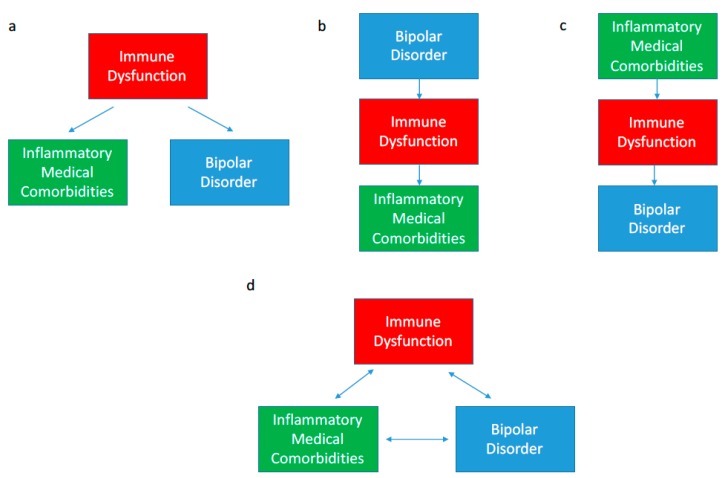
Bipolar disorder (BD) is strongly associated with immune dysfunction. Replicated epidemiological studies have demonstrated that BD has high rates of inflammatory medical comorbidities, including autoimmune disorders, chronic infections, cardiovascular disease and metabolic disorders. Cytokine studies have demonstrated that BD is associated with chronic low-grade inflammation with further increases in pro-inflammatory cytokine levels during mood episodes. Several mechanisms have been identified to explain the bidirectional relationship between BD and immune dysfunction. Key mechanisms include cytokine-induced monoamine changes, increased oxidative stress, pathological microglial over-activation, hypothalamic-pituitary-adrenal (HPA) axis over-activation, alterations of the microbiome-gut-brain axis and sleep-related immune changes. The inflammatory-mood pathway presents several potential novel targets in the treatment of BD. Several proof-of-concept clinical trials have shown a positive effect of anti-inflammatory agents in the treatment of BD; however, further research is needed to determine the clinical utility of these treatments. Immune dysfunction is likely to only play a role in a subset of BD patients and as such, future clinical trials should also strive to identify which specific group(s) of BD patients may benefit from anti-inflammatory treatments.
Overview
The claims and statistics of this paper haven’t been checked yet.
Free: it reads the open-access text and checks the first 5 claims that cite a source we can check. Create a free account to check every claim.
Integrity signals
Registry
Cites
Statistics
Figures
Verification
Claims the paper makes
The claims and statistics of this paper haven’t been checked yet.
Free: it reads the open-access text and checks the first 5 claims that cite a source we can check. Create a free account to check every claim.
Claims other papers make about this one
Each is checked against this paper’s own text: does it say what the citing paper says it does?
The source backs part of the claim, not all of it — or backs it for a different population, condition or comparison.
In the citing paper
“Evidence of altered inflammation-related markers across psychiatric conditions [6–8], along with reports of anti-inflammatory effects from psychotropic medications [9, 10] and the ameliorative impact of anti-inflammatory drugs on psychiatric symptoms [11–14], suggests a strong link between abnormal inflammatory responses and major psychiatric disorders.”
From Inflammatory ratios as predictors of length of hospitalization in psychiatric patients: A multicenter study (2025) · doi:10.1007/s00406-025-02033-9 · cites this paper as [14]
Experimental — accuracy not yet measuredThe cited source says what the claim attributes to it.
In the citing paper
“growing and converging evidence has demonstrated that immune dysfunction is involved in the pathophysiology of BD (1).”
From Are serum levels of inflammatory markers associated with the severity of symptoms of bipolar disorder? (2023) · cites this paper as [1]
The cited source says what the claim attributes to it.
In the citing paper
“On one hand, drugs that target IRFs have been proposed for treating psychiatric disorders, including major depression (MDD)10–12, schizophrenia (SCZ)13 and bipolar disorder (BD)14, particularly in a subset of patients with chronic inflammation10”
From Inflammation-related biomarkers in major psychiatric disorders: a cross-disorder assessment of reproducibility and specificity in 43 meta-analyses (2019) · cites this paper as [14]
Self-check
Percentages, sums and reported differences re-computed from the paper’s own numbers.
The self-check needs the paper’s full text.
Citations
Cites
Inflammation and Atherosclerosis
Libby, P., Ridker, P. M., & Maseri, A. (2002) · Circulation · doi:10.1161/hc0902.104353 · Cited by 7,724
From inflammation to sickness and depression: when the immune system subjugates the brain
Dantzer, R., O'Connor, J. C., Freund, G. G., Johnson, R. W., & Kelley, K. W. (2008) · Nature Reviews Neuroscience · doi:10.1038/nrn2297 · Cited by 7,395
Origin and physiological roles of inflammation
Medzhitov, R. (2008) · Nature · doi:10.1038/nature07201 · Cited by 6,618 · cited 1×
“The inflammatory response to infections is an essential physiological response that has been evolutionarily conserved amongst all mammal species [11]; however, in the case of chronic infections, the prolonged inflammatory response may also have deleterious effects, as the immune response is best suited for clearing an…”
BackgroundMind-altering microorganisms: the impact of the gut microbiota on brain and behaviour
Cryan, J. F., & Dinan, T. G. (2012) · Nature Reviews Neuroscience · doi:10.1038/nrn3346 · Cited by 4,572 · cited 1×
“The gut and brain may communicate in a bidirectional fashion through numerous pathways including via the parasympathetic nervous system (primarily the vagus nerve), the gut neuroendocrine system, the circulatory system (delivering neuroactive metabolites and neuro-transmitters directly produced in the gut), and most n…”
BackgroundStructural and functional features of central nervous system lymphatic vessels
Louveau, A., Smirnov, I., Keyes, T. J., Eccles, J. D., Rouhani, S. J., Peske, J. D., Derecki, N. C., Castle, D., Mandell, J. W., Lee, K. S., et al. (2015) · Nature · doi:10.1038/nature14432 · Cited by 4,413
Inflammation and Its Discontents: The Role of Cytokines in the Pathophysiology of Major Depression
Miller, A. H., Maletic, V., & Raison, C. L. (2009) · Biological Psychiatry · doi:10.1016/j.biopsych.2008.11.029 · Cited by 3,848 · cited 1×
“, the brain) has been increasingly recognized as important [8,9].”
BackgroundThe Neuroendocrinology of Stress: A Never Ending Story
Lightman, S. L. (2008) · Journal of Neuroendocrinology · doi:10.1111/j.1365-2826.2008.01711.x · Cited by 3,566
Dynamics of fat cell turnover in humans
Spalding, K. L., Arner, E., Westermark, P. O., Bernard, S., Buchholz, B. A., Bergmann, O., Blomqvist, L., Hoffstedt, J., Näslund, E., Britton, T., et al. (2008) · Nature · doi:10.1038/nature06902 · Cited by 2,357 · cited 1×
“The lypolytic rate is therefore increased leading to increased production of leptin (pro-inflammatory) and decreased production of adiponectin (anti-inflammatory), thereby signaling the release of pro-inflammatory cytokines [40].”
BackgroundIrwin, M. R., Olmstead, R., & Carroll, J. E. (2016) · Biological Psychiatry · doi:10.1016/j.biopsych.2015.05.014 · Cited by 2,085 · cited 1×
“Replicated evidence has demonstrated sleep dysfunction to be associated with increased levels of pro-inflammatory cytokines with a bidirectional causal association identified [106,107].”
BackgroundGoldsmith, D. R., Rapaport, M. H., & Miller, B. J. (2016) · Molecular Psychiatry · doi:10.1038/mp.2016.3 · Cited by 1,683 · cited 1×
“The most robust evidence exists for an association between pro-inflammatory cytokines and depressive episodes, in both bipolar and unipolar depression [50].”
Background
Research works printed but not linked: 2
- Abbas A.K. Lichtman A.H. Pillai S. Cellular and Molecular Immunology 7th ed. Elsevier Saunders Philadelphia, PA, USA 2012
- Boutzios G. Kaltsas G. Immune System Effects on the Endocrine System Available online: https://www.ncbi.nlm.nih.gov/books/NBK279139/ (accessed on 29 October 2017)
Cited by
Items 101–200 of 265
Cirulli, F., Simone, R. D., Musillo, C., Ajmone‐Cat, M. A., & Berry, A. (2022) · Nutrients · doi:10.3390/nu14153150 · Cited by 18
Afrisham, R., Jadidi, Y., Davoudi, M., Moayedi, K., Soliemanifar, O., Xirouchaki, C. E., Ashtary‐Larky, D., Seyyedebrahimi, S., & Alizadeh, S. (2022) · Mini-Reviews in Medicinal Chemistry · doi:10.2174/1389557523666221116154907 · Cited by 19
The role of base excision repair in major depressive disorder and bipolar disorder
Küçüker, M. U., Özerdem, A., Ceylan, D., Cabello-Arreola, A., Ho, A. M., Joseph, B., Webb, L. M., Croarkin, P. E., Frye, M. A., & Veldić, M. (2022) · Journal of Affective Disorders · doi:10.1016/j.jad.2022.03.033 · Cited by 20
Spanoudaki, M., Papadopoulou, S. Κ., Antasouras, G., Papadopoulos, K., Psara, E., Vorvolakos, T., Solovos, E., Chrysafi, M., Psallas, M., Mentzelou, M., et al. (2024) · Life · doi:10.3390/life14040479 · Cited by 20
“The most important mechanisms involve cytokine-induced monoamine alterations, augmented oxidative stress, pathological microglial hyperactivation, HPA axis hyperactivation, modifications in the microbiome-gut-brain axis, and sleep-related immune system alterations [69].”
BackgroundThe Renin Angiotensin System and Bipolar Disorder: A Systematic Review
Barbosa, I. G., Ferreira, G. C., Andrade-Junior, D., Januário, C. R., Belisário, A. R., Bauer, M. E., & Silva, A. C. S. E. (2020) · Protein and Peptide Letters · doi:10.2174/0929866527666200127115059 · Cited by 17
Llach, C.-D., Badulescu, S., Tabassum, A., Shah, H., Gill, H., Le, G. H., Vieta, E., McIntyre, R. S., Rosenblat, J. D., & Mansur, R. B. (2025) · Molecular Psychiatry · doi:10.1038/s41380-025-03261-0 · Cited by 21
Self-citationThe influence of chronic inflammation on the illnesscourse of bipolar disorder: A longitudinal study
Queissner, R., Fellendorf, F. T., Dalkner, N., Bengesser, S., Maget, A., Birner, A., Platzer, M., Reininghaus, B., Häussl, A., Schönthaler, E. M. D., et al. (2024) · Journal of Psychiatric Research · doi:10.1016/j.jpsychires.2024.04.024 · Cited by 15
Macoveanu, J., Kjærstad, H. L., Vinberg, M., Harmer, C. J., Fisher, P. M., Knudsen, G. M., Kessing, L. V., & Miskowiak, K. W. (2021) · Journal of Affective Disorders · doi:10.1016/j.jad.2021.08.110 · Cited by 16
Eghtedarian, R., Ghafouri‐Fard, S., Bouraghi, H., Hussen, B. M., Arsang‐Jang, S., & Taheri, M. N. (2022) · BMC Psychiatry · doi:10.1186/s12888-022-03811-8 · Cited by 17
Astrocytes in the Neuropathology of Bipolar Disorder: Review of Current Evidence
Dai, N., Jones, B. D. M., & Husain, M. I. (2022) · Brain Sciences · doi:10.3390/brainsci12111513 · Cited by 15
Orsolini, L., Ricci, L., Pompili, S., Cicolini, A., & Volpe, U. (2023) · Journal of Affective Disorders · doi:10.1016/j.jad.2023.04.004 · Cited by 14
Gene expression pattern of CCL2, CCL3, and CXCL8 in patients with bipolar disorder
Ghoryani, M., Farıdhosseını, F., Talaeı, A., Faridhosseini, R., Tavakkol‐Afshari, J., Moghaddam, M. D., Azim, P., Salimi, Z., Marzouni, H. Z., & Mohammadi, M. (2019) · Journal of Research in Medical Sciences · doi:10.4103/jrms.jrms_763_18 · Cited by 17
“There is evidence suggesting the role of inflammatory mediators such as chemokines in the etiology of BD.”
BackgroundInfluentialZhang, L., An, L.-T., Qiu, Y., Shan, X., Zhao, W.-L., Zhao, J., Li, L., Lang, B., & Wu, R. (2019) · Frontiers in Psychiatry · doi:10.3389/fpsyt.2019.00497 · Cited by 15
Dellink, A., Hebbrecht, K., Zeeuws, D., Baeken, C., Fré, G. D., Bervoets, C., Witte, S. D., Sabbe, B., Morrens, M., & Coppens, V. (2024) · Journal of Affective Disorders · doi:10.1016/j.jad.2024.06.078 · Cited by 14
Jia, N., Zhu, Z., Liu, Y., Yin, X., Man, L., Hou, W., Zhang, H., Yu, Q., & Hui, L. (2024) · SLEEP · doi:10.1093/sleep/zsae209 · Cited by 14
The Role of the Gut-Brain Axis in Diseases
Chen, J. W., Xu, Y., & Cao, P. (2025) · Physiology · doi:10.1152/physiol.00016.2025 · Cited by 18
Marinescu, I. P., Marinescu, D., Mogoantă, L., Efrem, I. C., & Stovicek, P. O. (2021) · Romanian Journal of Morphology and Embryology · doi:10.47162/rjme.61.4.03 · Cited by 13
“Depression from bipolar type 2 disease causes significant changes in cytokines, while high levels of cytokines especially brain-derived neurotrophic factor (BDNF), IL-2, IL-6, and TNF-α induce or amplify depression [143, 144].”
BackgroundCaldirola, D., Daccò, S., Cuniberti, F., Grassi, M., Lorusso, S., Diaferia, G., & Perna, G. (2021) · Journal of Psychosomatic Research · doi:10.1016/j.jpsychores.2021.110604 · Cited by 14
Herpes simplex virus 1 infection on grey matter and general intelligence in severe mental illness
Andreou, D., Jørgensen, K. N., Nerland, S., Ueland, T., Vaskinn, A., Haukvik, U. K., Yolken, R. H., Andreassen, O. A., & Agartz, I. (2022) · Translational Psychiatry · doi:10.1038/s41398-022-02044-3 · Cited by 14
Song, I., Park, H. Y., & Oh, T. K. (2022) · Journal of Psychosomatic Research · doi:10.1016/j.jpsychores.2022.111002 · Cited by 13
Neuropsychiatric disorders: An immunological perspective
Aw, E., Zhang, Y., Yalçın, E., Herrmann, U., & Carroll, M. C. (2021) · Advances in immunology · doi:10.1016/bs.ai.2021.09.002 · Cited by 13
The Immunoseasonal Theory of Psychiatric Disorders
Waszkiewicz, N. (2023) · Journal of Clinical Medicine · doi:10.3390/jcm12144615 · Cited by 14
Toxoplasma gondii associated with psychotic symptom load and cortisol in severe mental illness
Andreou, D., Steen, N. E., Jørgensen, K. N., Nerland, S., Ueland, T., Wortinger, L. A., Drabløs, I., Calkova, T., Ormerod, M. B. E. G., Sæther, L. S., et al. (2025) · Schizophrenia · doi:10.1038/s41537-025-00630-0 · Cited by 16
Bristot, G., Bastiani, M. A. D., Pfaffenseller, B., Kapczinski, F. P., & Kauer‐Sant’Anna, M. (2019) · Molecular Neurobiology · doi:10.1007/s12035-019-01815-2 · Cited by 12
“Proinflammatory molecules may impact signalling pathways and lead to reduction in the levels of neurotransmitters as well as changes in the structure and function of key brain regions, such as DLPFC, influencing mood and cognition in BD [67].”
BackgroundPostolache, T. T., Medoff, D. R., Brown, C. H., Fang, L., Upadhyaya, S. K., Lowry, C. A., Miller, M. J., & Kreyenbuhl, J. A. (2021) · Pteridines · doi:10.1515/pteridines-2020-0028 · Cited by 12
Cuomo, A., Koukouna, D., Spiti, A., Barillà, G., Goracci, A., Bolognesi, S., & Fagiolini, A. M. (2021) · Frontiers in Psychiatry · doi:10.3389/fpsyt.2021.803034 · Cited by 12
Xu, H., Du, Y., Wang, Q., Chen, L., Huang, J., Liu, Y., Zhou, C., & Biao, D. (2022) · Asian Journal of Psychiatry · doi:10.1016/j.ajp.2022.103394 · Cited by 13
Qi, L., Qiu, Y., Li, S., Ning, Y., Li, C., Teng, Z., Li, S., Xu, X., Lang, B., Chen, J., et al. (2023) · iScience · doi:10.1016/j.isci.2023.107057 · Cited by 15
“The MHC-I pathway participates in immune regulation by activating CD8 T cells,30 and excessive and continuous antigen stimulation on T cells can lead to T cell exhaustion and immune dysfunction.31 Therefore, we suggested that the MHC-I pathway is one of the most important targets to alleviate severe inflammation in pa…”
BackgroundInfluentialFan, Y., Gao, Y., Ma, Q., Zhao, B., He, X., Zhu, F., Wang, W., Ma, X., & Li, Y. (2022) · Brain Imaging and Behavior · doi:10.1007/s11682-022-00717-7 · Cited by 12
“…of neurotransmitters, promoting the activity of dopamine and 5-hydroxytryptamine in the hippocampus and prefrontal cortex, and actively influencing the alternative activation of microglial cells in the central nervous system (Jeon et al., 2016; Ponomarev et al., 2007; Rosenblat & McIntyre, 2017).”
BackgroundIncreased prolidase activity and high blood monocyte counts in pediatric bipolar disorder
Ceylan, M. F., Hesapçıoğlu, S. T., Kaşak, M., Şenat, A., & Erel, Ö. (2018) · Psychiatry Research · doi:10.1016/j.psychres.2018.11.066 · Cited by 12
Linking hearts and minds: understanding the cardiovascular impact of bipolar disorder
Shah, D., Singh, B. P., Varnika, F., Fredrick, F. C., Meda, A. K. R., Aggarwal, K., & Jain, R. (2024) · Future Cardiology · doi:10.1080/14796678.2024.2408944 · Cited by 11
The anti-inflammation pharmacodynamics of lithium: Therapy of bipolar disorder
Zhou, Y., Zheng, W., Guo, F., Wu, S., & Zhong, C. (2025) · Journal of Psychopharmacology · doi:10.1177/02698811251326942 · Cited by 11
C-reactive protein and affective inhibition in bipolar disorder
Peters, A. T., Millett, C. E., Harder, J., Potter, J., Fichorova, R. N., Nierenberg, A. A., & Burdick, K. E. (2022) · Journal of Affective Disorders · doi:10.1016/j.jad.2022.02.073 · Cited by 13
Vares, E. A., Lehmann, S., Sauer, C., Pariante, C. M., Wieland, F., Soltmann, B., Bauer, M., & Ritter, P. S. (2020) · Journal of Affective Disorders · doi:10.1016/j.jad.2020.07.125 · Cited by 13
Cytomegalovirus infection and IQ in patients with severe mental illness and healthy individuals
Andreou, D., Jørgensen, K. N., Wortinger, L. A., Engen, K., Vaskinn, A., Ueland, T., Yolken, R. H., Andreassen, O. A., & Agartz, I. (2021) · Psychiatry Research · doi:10.1016/j.psychres.2021.113929 · Cited by 11
“A series of recent studies have suggested immune system abnormalities in schizophrenia and bipolar disorder (Muller and Schwarz, 2010; Rosenblat and McIntyre, 2017; van Kesteren et al., 2017).”
Keshavarzi, A., Eftekharian, M. M., Komaki, A., Omrani, M. D., Oskooei, V. K., Taheri, M. N., & Ghafouri‐Fard, S. (2019) · BMC Psychiatry · doi:10.1186/s12888-019-2396-9 · Cited by 12
Immunomodulatory effect of lithium treatment on in vitro model of neuroinflammation
Sakrajda, K., Langwiński, W., Stachowiak, Z., Ziarniak, K., Narożna, B., & Szczepankiewicz, A. (2024) · Neuropharmacology · doi:10.1016/j.neuropharm.2024.110238 · Cited by 12
Bipolar spectrum disorders in neurologic disorders
Digiovanni, A., Ajdinaj, P., Russo, M., Sensi, S. L., ONOFRJ, M. C., & Thomas, A. (2022) · Frontiers in Psychiatry · doi:10.3389/fpsyt.2022.1046471 · Cited by 15
“Moreover, a certain degree of association between BSD and autoimmune diseases is known (107) and a prior hospitalization due to an autoimmune disease or infection has been recognized as a risk factor for developing a major mood disorder (111).”
BackgroundMacoveanu, J., Damgaard, V., Ysbæk-Nielsen, A. T., Frangou, S., Yatham, L. N., Chakrabarty, T., Stougaard, M. E., Knudsen, G. M., Vinberg, M., Kessing, L. V., et al. (2023) · Journal of Affective Disorders · doi:10.1016/j.jad.2023.07.026 · Cited by 11
Aggio, V., Fabbella, L., Poletti, S., Lorenzi, C., Finardi, A., Colombo, C., Zanardi, R., Furlan, R., & Benedetti, F. (2023) · Scientific Reports · doi:10.1038/s41598-023-49146-6 · Cited by 11
Werner, M. C. F., Wirgenes, K. V., Shadrin, A. A., Lunding, S. H., Rødevand, L. N., Hjell, G., Ormerod, M. B. E. G., Haram, M., Agartz, I., Djurovic, S., et al. (2022) · Progress in Neuro-Psychopharmacology and Biological Psychiatry · doi:10.1016/j.pnpbp.2022.110511 · Cited by 10
Johnson, E. T., Eraly, S. G., Subramaniyam, B. A., Muliyala, K. P., Moirangthem, S., Reddi, V. S. K., & Jain, S. (2022) · Brain Behavior & Immunity - Health · doi:10.1016/j.bbih.2022.100440 · Cited by 12
Elevated C-reactive protein among symptomatic youth with bipolar disorder
Zou, Y. Z., Grigorian, A., Karthikeyan, S., & Goldstein, B. I. (2022) · Journal of Psychopharmacology · doi:10.1177/02698811221093796 · Cited by 11
“There are a number of putative mechanisms through which inflammation may impact mood symptoms, and these have been elaborated in several reviews on this topic (Goldstein and Young, 2013; Jones et al., 2020; Leonard, 2010; Lima Giacobbo et al., 2019; Rosenblat and McIntyre, 2017).”
BackgroundBeyond monoamines: II. Novel applications for PET imaging in psychiatric disorders
Royse, S. K., Lopresti, B. J., Mathis, C. A., Tollefson, S., & Narendran, R. (2022) · Journal of Neurochemistry · doi:10.1111/jnc.15657 · Cited by 26
“Evidence for a central inflammatory response involving microglia in BD is considerable (Hope et al., 2011; PetraschParwez et al., 2020; Rosenblat & McIntyre, 2017), although debated (Sneeboer et al., 2019).”
BackgroundAnti-Inflammatory Therapy as a Promising Target in Neuropsychiatric Disorders
Ballaz, S., & Bourin, M. (2023) · Advances in experimental medicine and biology · doi:10.1007/978-981-19-7376-5_20 · Cited by 17
Machado, D. T., Brustolini, O. J. B., Martins, Y., Maia, M. A. G. M., & de Vasconcelos, A. T. R. (2023) · PeerJ · doi:10.7717/peerj.15145 · Cited by 11
de Assis, D. R., Szabó, A., Osete, J. R., Puppo, F., O’Connell, K. S., Akkouh, I. A., Hughes, T., Frei, E., Andreassen, O. A., & Djurovic, S. (2021) · Cells · doi:10.3390/cells10020209 · Cited by 12
İmre, O., & Güldeste Yılmaz, İ. V. (2023) · European Journal of Therapeutics · doi:10.58600/eurjther.20232902-1574.y · Cited by 9
“The effect of anti-inflammatory therapy on treating manic episodes is still unclear [28].”
BackgroundPsychoneuroimmunology of Mood Disorders
Teixeira, A. L., Scholl, J. N., & Bauer, M. E. (2024) · Methods in molecular biology · doi:10.1007/978-1-0716-4200-9_4 · Cited by 10
Baek, G. H., Kim, D., Son, G., Do, H., Yeon, G., Lee, M. J., Ji, M., Son, J.-H., Ju, M., Ahn, I., et al. (2025) · Molecular Psychiatry · doi:10.1038/s41380-025-03176-w · Cited by 13
Serum neurofilament light as a potential marker of illness duration in bipolar disorder
Queissner, R., Buchmann, A., Demjaha, R., Tafrali, C., Benkert, P., Kühle, J., Jerkovic, A., Dalkner, N., Fellendorf, F. T., Birner, A., et al. (2024) · Journal of Affective Disorders · doi:10.1016/j.jad.2024.01.088 · Cited by 9
Wu, S., & Zhou, Y. (2024) · Therapeutic Advances in Psychopharmacology · doi:10.1177/20451253241227772 · Cited by 9
Bipolar disorder and the gut microbiota: a bibliometric analysis
Lin, X., Huang, J., Wang, S., & Zhang, K. (2024) · Frontiers in Neuroscience · doi:10.3389/fnins.2024.1290826 · Cited by 10
Neuromodulation Strategies in Lifelong Bipolar Disorder: A Narrative Review
Bernabei, L., Leone, B., Hirsch, D., Mentuccia, V., Panzera, A., Riggio, F., Sangiovanni, L., Piserchia, V., Nicolò, G., & Pompili, E. (2024) · Behavioral Sciences · doi:10.3390/bs14121176 · Cited by 13
“The practice of ECT involves administering anesthesia, inducing muscle relaxation and monitoring various vital parameters such as blood pressure, heart rate, oxygen saturation, etc. Electrodes are placed on the scalp, either unilaterally or bilaterally, to briefly deliver an electrical charge,…”
Underlying biological mechanisms of emotion dysregulation in bipolar disorder
Durdurak, B. B., Morales‐Muñoz, I., de Cates, A. N., Wiseman, C. E., Broome, M. R., & Marwaha, S. (2025) · Frontiers in Psychiatry · doi:10.3389/fpsyt.2025.1552992 · Cited by 11
Kaşak, M., Ceylan, M. F., Hesapçıoğlu, S. T., Şenat, A., & Erel, Ö. (2022) · Journal of Molecular Neuroscience · doi:10.1007/s12031-022-02000-2 · Cited by 9
“The frequent accompaniment of BD with inflammatory medical diseases suggests a potential role of immune dysregulation in the occurrence of the disease (Rosenblat and McIntyre 2017).”
BackgroundNorman, S. J., Carney, A. C., Algarin, F., Witt, B., Witzel, I., Rodriguez, P. M., & Mohyeldin, M. (2024) · Cureus · doi:10.7759/cureus.69182 · Cited by 11
“However, the effects of non-steroidal anti-inflammatory drugs (NSAIDs) during manic and hypomanic episodes have yielded mixed results and thus, it is unclear if NSAIDs help decrease these mood symptoms [34].”
BackgroundMethodInfluentialInflammatory and metabolic markers in patients with mood disorders
Mucci, F., Marazziti, D., Vecchia, A. D., Baroni, S., Massimetti, G., Morana, P., Mangiapane, P., Morana, F., Carpita, B., Morana, B., et al. (2020) · The World Journal of Biological Psychiatry · doi:10.1080/15622975.2020.1775891 · Cited by 8
“…that monoaminergic and neurotrophic hypothesis may share common pathophysiological pathways leading to mood disorders, in particular alterations of stress-related HPA-neuroendocrine responses (Maes 2008; Catena-Dell’Osso, Rotella, et al. 2013b; Leuchter et al. 2014; Rosenblat and McIntyre 2017).”
BackgroundMuramyldipeptide - based compounds in current medicine: focus on glucosaminylmuramyl dipeptide
Ушкалова, Е. А., Zyryanov, S. K., & Затолочина, К. Э. (2019) · Terapevticheskii arkhiv · doi:10.26442/00403660.2019.12.000471 · Cited by 10
Gao, W., Xu, Y., Liang, J., Sun, Y., Zhang, Y., Shan, F., Ge, J., & Xia, Q. (2022) · Frontiers in Endocrinology · doi:10.3389/fendo.2022.1048337 · Cited by 7
Cavaleri, D., Cucchi, G., Citton, M., Monti, M., Crocamo, C., Bartoli, F., & Carrà, G. (2026) · European Psychiatry · doi:10.1192/j.eurpsy.2026.10174 · Cited by 7
“A growing body of evidence indicates that BD is associated with abnormal levels of pro-inflammatory cytokines, chemokines, and acute-phase proteins, increased oxidative and nitrosative stress, and activation of the kynurenine pathway [4–7].”
Andreou, D., Steen, N. E., Jørgensen, K. N., Ueland, T., Wortinger, L. A., Mørch-Johnsen, L. E., Drabløs, I., Calkova, T., Yolken, R. H., Andreassen, O. A., et al. (2024) · Translational Psychiatry · doi:10.1038/s41398-024-03198-y · Cited by 7
Özkaya, A. L., Gürbüzer, N., Tozoğlu, E. Ö., Akyıldırım, S., & Mercantepe, F. (2025) · Journal of Clinical Medicine · doi:10.3390/jcm14030803 · Cited by 8
Unexpected links between cancer and telomere state
Lanna, A. (2025) · Seminars in Cancer Biology · doi:10.1016/j.semcancer.2025.01.006 · Cited by 8
DNA damage and repair mechanisms in bipolar disorder
Özerdem, A., & Ceylan, D. (2022) · Elsevier eBooks · doi:10.1016/b978-0-12-821398-8.00005-9 · Cited by 9
Pereira, A. C., Marques, A., Resende, R., Serrano‐cuñarro, L., Caldeira, M., Fernandes, T., Batista, M., Macedo, A., Melo, J. B., Madeira, N. G. G. F., et al. (2025) · International Journal of Molecular Medicine · doi:10.3892/ijmm.2025.5654 · Cited by 6
Sehmawy, A. A. E., Elaziz, S. A., Diab, F. E. A., Anany, M. G. E. D. A., Elamir, R. Y., Ibrahim, H., Seliem, N., & Agiba, N. F. (2023) · Egyptian journal of Immunology · doi:10.55133/eji.300302 · Cited by 6
“Most major psychiatric diseases, including bipolar disorder and depression, have been related to the immune system in some way 18 .”
Machine learning-enhanced mapping of suicide risk in Bipolar Disorder: A multi-modal analysis
Saeed, S., Wang, H., Kong, L., Geng, Y., Zhang, J., Pan, Y., Xu, L., Zhang, X., Liu, T., & Hu, S. (2025) · Journal of Affective Disorders · doi:10.1016/j.jad.2025.120183 · Cited by 6
Dmitrzak‐Węglarz, M., Tyszkiewicz‐Nwafor, M., Rybakowski, F., & Permoda-Pachuta, A. (2022) · The World Journal of Biological Psychiatry · doi:10.1080/15622975.2022.2097739 · Cited by 6
“A higher concentration of inflammatory cytokines can stimulate the HPA axis and elicit a physiological stress response (Rosenblat and McIntyre 2017).”
BackgroundUse of gene regulatory network analysis to repurpose drugs to treat bipolar disorder
Truong, T. T. T., Liu, Z. S.-J., Panizzutti, B., Dean, O. M., Berk, M., Kim, J. H., & Walder, K. R. (2024) · Journal of Affective Disorders · doi:10.1016/j.jad.2024.01.034 · Cited by 6
Differentiating Stages of Bipolar and Unipolar Depression—The Possible Role of sICAM-1 and sVCAM-1
Pantović-Stefanović, M., Petronijević, N., Dunjić-Kostić, B., Velimirović, M., Jurišić, V., Nikolić, T., Dodić, S., & Ivković, M. (2024) · Cells · doi:10.3390/cells13141213 · Cited by 7
“Likewise, mounting evidence from previous reports on overlapping immune dysfunction between MDD and BD point to a pronounced immune dysregulation in more advanced stages of mood disorders [46,54–57].”
BackgroundMaternal Mental Disorders and Pediatric Infectious Diseases: A Retrospective Cohort Study
Auger, N., Monnier, M., Low, N. C. P., Lee, G. E., Bilodeau‐Bertrand, M., & Luu, T. M. (2021) · The Pediatric Infectious Disease Journal · doi:10.1097/inf.0000000000003108 · Cited by 6
Kari, D., Mijiti, P., Zou, S., & Zhang, P. (2023) · Heliyon · doi:10.1016/j.heliyon.2023.e23680 · Cited by 5
“Other studies highlighted the potential involvement of immune inflammatory processes in the aetiology and development of bipolar disorder and demonstrated an increased risk of suicide in patients with CMD associated with comorbid immune-mediated inflammatory diseases [44,45].”
BackgroundRaj, R., Wani, Z. A., Dar, S. A., Dilawar, T., Altaf, S., Beigh, A., & Haq, I. (2024) · Journal of Neurosciences in Rural Practice · doi:10.25259/jnrp_143_2024 · Cited by 6
“[8] Since then, various studies have been done to find the role of inflammation and immune imbalance in the development of BD. [9-11] A study review has indicated an increased level of proinflammatory cytokines and chemokines along with a reduction in anti-inflammatory cytokines during manic and depressive episodes, l…”
BackgroundYi, P., Qin, Y.-H., Zheng, C., Ren, K., Huang, L. F., & Chen, W. (2022) · Frontiers in Neuroscience · doi:10.3389/fnins.2022.953842 · Cited by 6
“Sleep-wake cycle disorders are prevalent in patients with depression and BD, who have difficulties falling asleep and easily wake up at night (Rosenblat and Mcintyre, 2017).”
BackgroundAlemany-Navarro, M., Almeida, S. D., Cruz, R., Riancho, J. A., Rojas‐Martínez, A., Lapunzina, P. D., Flores, C., Scourge Cohort Group, & Carracedo, A. (2023) · Translational Psychiatry · doi:10.1038/s41398-023-02482-7 · Cited by 6
Interrelation of auto-immune process, endocrine disorders and depression
Mayorova, M. A., Петрова, Н. Н., Stroev, U. I., Churilov, L. P., & Shoenfeld, Y. (2020) · V M BEKHTEREV REVIEW OF PSYCHIATRY AND MEDICAL PSYCHOLOGY · doi:10.31363/2313-7053-2020-1-8-19 · Cited by 9
“Эти изменения затрагивают баланс моноаминов, а также приводят к усилению оксидативного повреждения клеток за счет высвобождения свободных кислородных радикалов, что может приводить к структурным нарушениям в головном мозге, особенно в зонах, ответственных за настроение и когнитивное функционирование [64].”
Aneja, J., Kuppili, P. P., Paul, K., Panda, S., & Purohit, A. H. L. (2020) · Journal of Neuroimmunology · doi:10.1016/j.jneuroim.2020.577238 · Cited by 6
Al‐Alawi, M., Sinawi, H. A., & Rashid, R. (2018) · Complex Psychiatry · doi:10.1159/000494700 · Cited by 5
Markiewicz, M. G., Madetko‐Alster, N., Otto‐Ślusarczyk, D., Duszyńska-Wąs, K., Migda, B., Chunowski, P., Struga, M., & Alster, P. (2025) · Diseases · doi:10.3390/diseases13040119 · Cited by 4
“…the multi-systemic and entangled pathophysiology pathway of affective disorders includes neurotransmission alterations in monoamines and glutaminate, neurotrophin imbalance, or hypothalamic–pituitary–adrenal axis dysregulation, followed by immune system dysfunctions and local inflammation [23].”
Peripheral inflammation is associated with impaired sadness recognition in euthymic bipolar patients
Chang, C.-Y., Chang, H. H., Wu, C. Y., Tsai, Y. T., Lu, T., Chang, W. H., Hsu, C., Chen, P. S., & Tseng, H. (2024) · Journal of Psychiatric Research · doi:10.1016/j.jpsychires.2024.03.049 · Cited by 4
Escelsior, A., Cilia, E., Favilla, L., Sterlini, B., Parisi, B., Guglielmo, R., Inuggi, A., da Silva, B. P., Filaci, G., Fenoglio, D., et al. (2025) · The World Journal of Biological Psychiatry · doi:10.1080/15622975.2025.2570169 · Cited by 5
“The interaction between the immune system and the central nervous system (CNS) may be mediated by low-grade inflammation, a chronic state that can promote neurotoxicity and neurodegeneration (Rosenblat and McIntyre 2017).”
Malueg, M. D., Quiceno, E., Soliman, M. A. R., Elbayomy, A., Aguirre, A. O., Levy, H. W., Khan, A., Ghannam, M. M., Pollina, J., & Mullin, J. P. (2024) · World Neurosurgery · doi:10.1016/j.wneu.2024.09.010 · Cited by 4
Cao, D., Liu, Y., Mei, J., Yu, S., Zeng, C., Zhang, J., & Li, Y. (2024) · BMC Medical Genomics · doi:10.1186/s12920-024-02003-5 · Cited by 4
“As evidenced by pathogenic microglial over-activation and elevated levels of pro-inflammatory cytokines, manic and depressive episodes are associated with the activation of neuroinflammation mechanisms [51–53].”
BackgroundNeuroprogression in bipolar disorder
Tusconi, M., & Fries, G. R. (2022) · Elsevier eBooks · doi:10.1016/b978-0-12-821398-8.00009-6 · Cited by 6
Anti-inflammatory dietary patterns to treat bipolar disorder?
Grandjean, E. L., van Zonneveld, S. M., Sommer, I. E., & Haarman, B. C. M. (2022) · Journal of Affective Disorders · doi:10.1016/j.jad.2022.05.073 · Cited by 4
“Third, inflammation is associated with oxidative stress and overstimulation of the hypothalamic-pituitary-adrenal axis, both being identified in mood disorders (Rosenblat and McIntyre, 2017).”
BackgroundInfluentialO'Donovan, S. M., Ali, S., Deng, W., Patti, G., Wang, J., Eladawi, M. A., & Imami, A. S. (2024) · Translation The University of Toledo Journal of Medical Sciences · doi:10.46570/utjms.vol11-2023-822 · Cited by 4
“Others report that immune dysfunction may play a role in a subset of BPD patients (30), so our findings may reflect heterogeneity in the BPD population being studied here.”
BackgroundWang, X., Yu, S., Gao, Z., Xu, F., Wang, Y., Zhang, T., Xie, T., & Jia, X. (2025) · Frontiers in Psychiatry · doi:10.3389/fpsyt.2025.1539038 · Cited by 6
Cerebrospinal Fluid Genetics Enhance Risk Stratification in Bipolar Disorder
Feng, Y., Guo, X., Huang, P., Ji, X., Jia, N., Yang, S., & Hu, S. (2026) · MedComm · doi:10.1002/mco2.70629 · Cited by 3
“In contrast, the extreme polarization of MICB and SIRT5 in the HLA-immune cluster suggested that a BD subtype characterized by immune checkpoint dysregulation and mitochondrial stress may explain the 14% increased risk of emotional instability observed in this BD subgroup [ 42–44 ].”
Bipolar I Disorder Exacerbation Following COVID-19 Vaccination.
Guina, J., Barlow, S., & Gutierrez, D. (2022) · PubMed Central · Cited by 4
Adolescent-Onset Depressive Disorders and Inflammation
Hickie, I. B., Carpenter, J. S., & Scott, E. M. (2018) · Elsevier eBooks · doi:10.1016/b978-0-12-811073-7.00024-6 · Cited by 3
Neurooxidative and neuronitrosative mechanisms in bipolar disorder: Evidence and implications
Özerdem, A., & Ceylan, D. (2020) · Elsevier eBooks · doi:10.1016/b978-0-12-819182-8.00006-5 · Cited by 5
Han, Y., Zhang, H., Huang, T., Wang, F., & Zhu, Y. (2021) · Medicine · doi:10.1097/md.0000000000024645 · Cited by 4
“BD is strongly associated with immune dysfunction([11]) that may impact the function of the anterior pituitary, however, the reference range of the anterior pituitary hormone levels which are related to recurrent BD’s have yet to be defined.”
BackgroundPeripheral control of psychiatric disorders: Focus on OCD. Are we there yet?
D’Acquisto, F., D’Addario, C., Cooper, D., Pallanti, S., & Blacksell, I. A. (2023) · Comprehensive Psychiatry · doi:10.1016/j.comppsych.2023.152388 · Cited by 3
Putative Risk Biomarkers of Bipolar Disorder in At-risk Youth
Meng, X., Zhang, S., Zhou, S., Ma, Y., Yu, X., & Guan, L. (2024) · Neuroscience Bulletin · doi:10.1007/s12264-024-01219-w · Cited by 4
Psychosocial risks in metabolic dysfunction-associated steatotic liver disease
Åström, H., Lageborn, C. T., & Hagström, H. (2025) · Expert Review of Gastroenterology & Hepatology · doi:10.1080/17474124.2025.2468297 · Cited by 4
“It has also been proposed that a shared vulnerability may account for an increased risk of both metabolic dysregulation and bipolar disorder [53].”
Treatment of Childhood Trauma: Pharmacological Approach
Panaccione, I., Cesare, G. D., Sani, G., & Ducci, G. (2020) · Springer eBooks · doi:10.1007/978-3-030-49414-8_20 · Cited by 4
Cavaleri, D., Crocamo, C., Riboldi, I., Guzzi, P., Bartoli, F., & Carrà, G. (2026) · European Archives of Psychiatry and Clinical Neuroscience · doi:10.1007/s00406-025-02129-2 · Cited by 2
Bipolar disorder and inflammation: a clinical study of NLR and dNLR across mood states and subtypes
Carbone, M. G., & Marazziti, D. (2025) · The World Journal of Biological Psychiatry · doi:10.1080/15622975.2025.2586514 · Cited by 2
High Mobility Group Box 1 Levels as an Inflammatory Mediator in Bipolar Mania
Kara, A., Balaban, Ö. D., Çınar, B., Oluğ, S. T., Kılıç, C., & Karamustafalıoğlu, N. (2023) · Nöro Psikiyatri Arşivi · doi:10.29399/npa.28599 · Cited by 4
Metadata
- Authors
- Rosenblat, J., & McIntyre, R.
- Affiliations
- University Health Network (CA)
- Corresponding author
- Rosenblat, Joshua
- Venue
- Brain Sciences
- Publisher
- MDPI AG
- Published
- 2017-10-30
- Volume
- 7
- Issue
- 11
- Pages
- 144
- ISSN
- 2076-3425 (ISSN-L)
- PMC
- PMC5704151
- OpenAlex
- W2766540017
- Cited by
- 258
- References
- 144
- Citations by year
- 2026: 17 · 2025: 25 · 2024: 34 · 2023: 35 · 2022: 42 · 2021: 38 · 2020: 31 · 2019: 26 · 2018: 10
- FWCI
- 2.79
- Type
- journal article
- Language
- en
- Open access
- gold
- doi.org
- Licence
- Locations
- Brain Sciences (publishedVersion, cc-by)
- Europe PMC (PubMed Central) (publishedVersion, cc-by)
- PubMed Central (publishedVersion, cc-by)
- PubMed (publishedVersion)
- TSpace (University of Toronto) (submittedVersion, cc-by)
- DOAJ (DOAJ: Directory of Open Access Journals) (submittedVersion)
- Topics
- Health Sciences › Medicine › Psychiatry and Mental health › Bipolar Disorder and Treatment
- Life Sciences › Neuroscience › Biological Psychiatry › Tryptophan and brain disorders
- Health Sciences › Medicine › Pharmacology (medical) › Treatment of Major Depression
- Keywords
- bipolar disorder, immune dysfunction, inflammation, autoimmune disease comorbidity, low-grade inflammation, inflammatory cytokines, oxidative stress, microglial activation, hypothalamic-pituitary-adrenal axis, microbiome-gut-brain axis, sleep and immunity, anti-inflammatory therapy, mood episodes
About these checks
Registry, retraction, Cites and statistics results are computed, not judged, with one exception: a printed reference that no index lists is read once by a model before it counts as a citation error. Claims are extracted by a model and kept only when their quote appears verbatim in the text; each cited source is then checked, with a model’s help, for whether it says what the claim relies on. Those verdicts can be wrong — read the claim’s quote and the cited source before relying on one.
Statistics and arithmetic are recomputed, not judged.
Confidence bands are shown only for fields calibrated on our annotated test set. None is calibrated yet, so no band is shown.
What counts as a claim ›How we measure confidence ›How we check this ›
Are you an author, or do you see a problem with this page? Request a review
Data sources
Bibliographic data: Semantic Scholar, OpenAlex, Crossref.
Contains information from the Semantic Scholar Academic Graph Datasets, made available under the ODC Attribution License (ODC-BY 1.0).
Semantic Scholar’s data is described in: Kinney, R., et al. (2023). The Semantic Scholar Open Data Platform. arXiv:2301.10140.
