

Bipolar Disorder and Immune Dysfunction: Epidemiological Findings, Proposed Pathophysiology and Clinical Implications
Open accessThe DOI matches its Crossref record; 143 of the 144 references it cites were found in a registry or an index.
Abstract
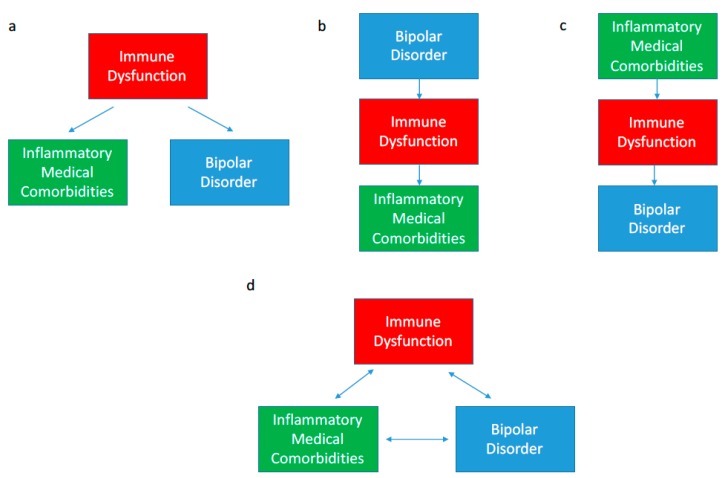
Bipolar disorder (BD) is strongly associated with immune dysfunction. Replicated epidemiological studies have demonstrated that BD has high rates of inflammatory medical comorbidities, including autoimmune disorders, chronic infections, cardiovascular disease and metabolic disorders. Cytokine studies have demonstrated that BD is associated with chronic low-grade inflammation with further increases in pro-inflammatory cytokine levels during mood episodes. Several mechanisms have been identified to explain the bidirectional relationship between BD and immune dysfunction. Key mechanisms include cytokine-induced monoamine changes, increased oxidative stress, pathological microglial over-activation, hypothalamic-pituitary-adrenal (HPA) axis over-activation, alterations of the microbiome-gut-brain axis and sleep-related immune changes. The inflammatory-mood pathway presents several potential novel targets in the treatment of BD. Several proof-of-concept clinical trials have shown a positive effect of anti-inflammatory agents in the treatment of BD; however, further research is needed to determine the clinical utility of these treatments. Immune dysfunction is likely to only play a role in a subset of BD patients and as such, future clinical trials should also strive to identify which specific group(s) of BD patients may benefit from anti-inflammatory treatments.
Overview
The claims and statistics of this paper haven’t been checked yet.
Free: it reads the open-access text and checks the first 5 claims that cite a source we can check. Create a free account to check every claim.
Integrity signals
Registry
Cites
Statistics
Figures
Verification
Claims the paper makes
The claims and statistics of this paper haven’t been checked yet.
Free: it reads the open-access text and checks the first 5 claims that cite a source we can check. Create a free account to check every claim.
Claims other papers make about this one
Each is checked against this paper’s own text: does it say what the citing paper says it does?
The source backs part of the claim, not all of it — or backs it for a different population, condition or comparison.
In the citing paper
“Evidence of altered inflammation-related markers across psychiatric conditions [6–8], along with reports of anti-inflammatory effects from psychotropic medications [9, 10] and the ameliorative impact of anti-inflammatory drugs on psychiatric symptoms [11–14], suggests a strong link between abnormal inflammatory responses and major psychiatric disorders.”
From Inflammatory ratios as predictors of length of hospitalization in psychiatric patients: A multicenter study (2025) · doi:10.1007/s00406-025-02033-9 · cites this paper as [14]
Experimental — accuracy not yet measuredThe cited source says what the claim attributes to it.
In the citing paper
“growing and converging evidence has demonstrated that immune dysfunction is involved in the pathophysiology of BD (1).”
From Are serum levels of inflammatory markers associated with the severity of symptoms of bipolar disorder? (2023) · cites this paper as [1]
The cited source says what the claim attributes to it.
In the citing paper
“On one hand, drugs that target IRFs have been proposed for treating psychiatric disorders, including major depression (MDD)10–12, schizophrenia (SCZ)13 and bipolar disorder (BD)14, particularly in a subset of patients with chronic inflammation10”
From Inflammation-related biomarkers in major psychiatric disorders: a cross-disorder assessment of reproducibility and specificity in 43 meta-analyses (2019) · cites this paper as [14]
Self-check
Percentages, sums and reported differences re-computed from the paper’s own numbers.
The self-check needs the paper’s full text.
Citations
Cites
Inflammation and Atherosclerosis
Libby, P., Ridker, P. M., & Maseri, A. (2002) · Circulation · doi:10.1161/hc0902.104353 · Cited by 7,724
From inflammation to sickness and depression: when the immune system subjugates the brain
Dantzer, R., O'Connor, J. C., Freund, G. G., Johnson, R. W., & Kelley, K. W. (2008) · Nature Reviews Neuroscience · doi:10.1038/nrn2297 · Cited by 7,395
Origin and physiological roles of inflammation
Medzhitov, R. (2008) · Nature · doi:10.1038/nature07201 · Cited by 6,618 · cited 1×
“The inflammatory response to infections is an essential physiological response that has been evolutionarily conserved amongst all mammal species [11]; however, in the case of chronic infections, the prolonged inflammatory response may also have deleterious effects, as the immune response is best suited for clearing an…”
BackgroundMind-altering microorganisms: the impact of the gut microbiota on brain and behaviour
Cryan, J. F., & Dinan, T. G. (2012) · Nature Reviews Neuroscience · doi:10.1038/nrn3346 · Cited by 4,572 · cited 1×
“The gut and brain may communicate in a bidirectional fashion through numerous pathways including via the parasympathetic nervous system (primarily the vagus nerve), the gut neuroendocrine system, the circulatory system (delivering neuroactive metabolites and neuro-transmitters directly produced in the gut), and most n…”
BackgroundStructural and functional features of central nervous system lymphatic vessels
Louveau, A., Smirnov, I., Keyes, T. J., Eccles, J. D., Rouhani, S. J., Peske, J. D., Derecki, N. C., Castle, D., Mandell, J. W., Lee, K. S., et al. (2015) · Nature · doi:10.1038/nature14432 · Cited by 4,413
Inflammation and Its Discontents: The Role of Cytokines in the Pathophysiology of Major Depression
Miller, A. H., Maletic, V., & Raison, C. L. (2009) · Biological Psychiatry · doi:10.1016/j.biopsych.2008.11.029 · Cited by 3,848 · cited 1×
“, the brain) has been increasingly recognized as important [8,9].”
BackgroundThe Neuroendocrinology of Stress: A Never Ending Story
Lightman, S. L. (2008) · Journal of Neuroendocrinology · doi:10.1111/j.1365-2826.2008.01711.x · Cited by 3,566
Dynamics of fat cell turnover in humans
Spalding, K. L., Arner, E., Westermark, P. O., Bernard, S., Buchholz, B. A., Bergmann, O., Blomqvist, L., Hoffstedt, J., Näslund, E., Britton, T., et al. (2008) · Nature · doi:10.1038/nature06902 · Cited by 2,357 · cited 1×
“The lypolytic rate is therefore increased leading to increased production of leptin (pro-inflammatory) and decreased production of adiponectin (anti-inflammatory), thereby signaling the release of pro-inflammatory cytokines [40].”
BackgroundIrwin, M. R., Olmstead, R., & Carroll, J. E. (2016) · Biological Psychiatry · doi:10.1016/j.biopsych.2015.05.014 · Cited by 2,085 · cited 1×
“Replicated evidence has demonstrated sleep dysfunction to be associated with increased levels of pro-inflammatory cytokines with a bidirectional causal association identified [106,107].”
BackgroundGoldsmith, D. R., Rapaport, M. H., & Miller, B. J. (2016) · Molecular Psychiatry · doi:10.1038/mp.2016.3 · Cited by 1,683 · cited 1×
“The most robust evidence exists for an association between pro-inflammatory cytokines and depressive episodes, in both bipolar and unipolar depression [50].”
Background
Research works printed but not linked: 2
- Abbas A.K. Lichtman A.H. Pillai S. Cellular and Molecular Immunology 7th ed. Elsevier Saunders Philadelphia, PA, USA 2012
- Boutzios G. Kaltsas G. Immune System Effects on the Endocrine System Available online: https://www.ncbi.nlm.nih.gov/books/NBK279139/ (accessed on 29 October 2017)
Cited by
Yuan, N., Chen, Y., Xia, Y., Dai, J., & Liu, C. (2019) · Translational Psychiatry · doi:10.1038/s41398-019-0570-y · Cited by 428
The HPA axis dysregulation in severe mental illness: Can we shift the blame to gut microbiota?
Misiak, B., Łoniewski, I., Marlicz, W., Frydecka, D., Szulc, A., Rudzki, L., & Samochowiec, J. (2020) · Progress in Neuro-Psychopharmacology and Biological Psychiatry · doi:10.1016/j.pnpbp.2020.109951 · Cited by 343
Neuroinflammation in Bipolar Depression
Benedetti, F., Aggio, V., Pratesi, M. L., Greco, G., & Furlan, R. (2020) · Frontiers in Psychiatry · doi:10.3389/fpsyt.2020.00071 · Cited by 274
Revisiting inflammation in bipolar disorder
Fries, G. R., Walss-Bass, C., Bauer, M. E., & Teixeira, A. L. (2019) · Pharmacology Biochemistry and Behavior · doi:10.1016/j.pbb.2018.12.006 · Cited by 147
“The most recent proposals suggest that this interaction is bidirectional, with BD and inflammation-related conditions reinforcing each other (Rosenblat and McIntyre, 2017), with specific genetic and environmental factors increasing the risk for each of them.”
BackgroundOrtega, M. A., Álvarez-Mon, M. Á., Montero, C. G., Fraile‐Μartinez, O., Monserrat, J., Martinez-Rozas, L., Rodríguez–Jiménez, R., Álvarez‐Mon, M., & Lahera, G. (2023) · Molecular Psychiatry · doi:10.1038/s41380-023-01964-w · Cited by 152
Anxiety in asthma: a systematic review and meta-analysis
Ye, G., Baldwin, D. S., & Hou, R. H. (2021) · Psychological Medicine · doi:10.1017/s0033291720005097 · Cited by 135
Soto-Angona, Ó., Anmella, G., Valdés-Florido, M. J., De Uribe-Viloria, N., Carvalho, A. F., Penninx, B. W. J. H., & Berk, M. (2020) · BMC Medicine · doi:10.1186/s12916-020-01713-8 · Cited by 122
Scaini, G., Valvassori, S. S., Díaz, A. P., Lima, C. N. D. C., Benevenuto, D., Fries, G. R., & Quevedo, J. (2020) · Brazilian Journal of Psychiatry · doi:10.1590/1516-4446-2019-0732 · Cited by 137
Circadian depression: A mood disorder phenotype
Carpenter, J. S., Crouse, J. J., Scott, E. M., Naismith, S. L., Wilson, C., Scott, J., Merikangas, K. R., & Hickie, I. B. (2021) · Neuroscience & Biobehavioral Reviews · doi:10.1016/j.neubiorev.2021.02.045 · Cited by 114
Saccaro, L. F., Schilliger, Z., Dayer, A. G., Perroud, N. A., & Piguet, C. (2021) · Neuroscience & Biobehavioral Reviews · doi:10.1016/j.neubiorev.2021.04.017 · Cited by 118
Inflammation as a treatment target in mood disorders: review
Jones, B. D. M., Daskalakis, Z. J., Carvalho, A. F., Strawbridge, R., Young, A. H., Mulsant, B. H., & Husain, M. I. (2020) · BJPsych Open · doi:10.1192/bjo.2020.43 · Cited by 106
Toward Precision Psychiatry in Bipolar Disorder: Staging 2.0
Salagre, E., Dodd, S., Aedo, A., Rosa, A., Amoretti, S., Pinzon, J., Reinares, M., Berk, M., Kapczinski, F. P., Vieta, E., et al. (2018) · Frontiers in Psychiatry · doi:10.3389/fpsyt.2018.00641 · Cited by 106
Ketamine’s effect on inflammation and kynurenine pathway in depression: A systematic review
Kopra, E., Mondelli, V., Pariante, C., & Nikkheslat, N. (2021) · Journal of Psychopharmacology · doi:10.1177/02698811211026426 · Cited by 97
“…levels (Khandaker et al., 2014; Valkanova et al., 2013) and presence of inflammationrelated diseases (Benros et al., 2013; Sforzini et al., 2019; Wang et al., 2018) increasing not only the risk of developing MDD and BD, but also vice versa (Andersson et al., 2015; Rosenblat and McIntyre, 2017).”
BackgroundInflammation in Bipolar Disorder (BD): Identification of new therapeutic targets
Pereira, A. C., Oliveira, J. M., Silva, S., Madeira, N. G. G. F., Pereira, C., & Cruz, M. T. (2020) · Pharmacological Research · doi:10.1016/j.phrs.2020.105325 · Cited by 109
A unified model of the pathophysiology of bipolar disorder
Magioncalda, P., & Martino, M. (2021) · Molecular Psychiatry · doi:10.1038/s41380-021-01091-4 · Cited by 112
Man and the Microbiome: A New Theory of Everything?
Butler, M. I., Cryan, J. F., & Dinan, T. G. (2019) · Annual Review of Clinical Psychology · doi:10.1146/annurev-clinpsy-050718-095432 · Cited by 90
Mazza, M. G., Tringali, A. G. M., Rossetti, A., Botti, R. E., & Clerici, M. (2019) · General Hospital Psychiatry · doi:10.1016/j.genhosppsych.2019.02.003 · Cited by 89
Emerging Roles of Complement in Psychiatric Disorders
Druart, M., & Le Magueresse, C. (2019) · Frontiers in Psychiatry · doi:10.3389/fpsyt.2019.00573 · Cited by 84
Tzeng, N., Chang, H., Chung, C., Kao, Y., Chang, C.-C., Yeh, H., Chiang, W.-S., Chou, Y., Chang, S., & Chien, W. (2018) · Frontiers in Psychiatry · doi:10.3389/fpsyt.2018.00133 · Cited by 91
“Reports have shown that cytokines such as interleukin (IL)6, tumor necrosis factor-alpha (TNF-α), IL-10, and monocyte chemoattractant protein-1/CCL2 might be well associated with depressive, bipolar, or anxiety disorders (74, 75).”
BackgroundDionisie, V., Filip, G. A., Manea, M. C., Movileanu, R. C., Moisa, E., Manea, M., Riga, S., & Ciobanu, A. M. (2021) · Journal of Clinical Medicine · doi:10.3390/jcm10091924 · Cited by 82
Sleep Disturbance in Bipolar Disorder: Neuroglia and Circadian Rhythms
Steardo, L., de Filippis, R., Carbone, E. A., Segura‐Garcìa, C., Verkhratsky, A., & Fazio, P. D. (2019) · Frontiers in Psychiatry · doi:10.3389/fpsyt.2019.00501 · Cited by 87
Madireddy, S., & Madireddy, S. (2022) · International Journal of Molecular Sciences · doi:10.3390/ijms23031844 · Cited by 90
High concentrations of serum interleukin-6 and interleukin-8 in patients with bipolar disorder
Lu, Y.-R., Rao, Y., Mou, Y.-J., Chen, Y., Lou, H., Zhang, Y., Zhang, D.-X., Xie, H., Hu, L., & Fang, P. (2019) · Medicine · doi:10.1097/md.0000000000014419 · Cited by 77
Mao, R., Zhang, C., Chen, J., Zhao, G., Zhou, R., Wang, F., Xu, J., Yang, T., Su, Y., Huang, J., et al. (2018) · Journal of Affective Disorders · doi:10.1016/j.jad.2018.04.115 · Cited by 68
Targeting the immune system in the treatment of bipolar disorder
Rosenblat, J. D. (2019) · Psychopharmacology · doi:10.1007/s00213-019-5175-x · Cited by 83
“These mechanisms, along with their supporting evidence, have been extensively reviewed elsewhere (Stertz et al. 2013; Raison and Miller 2013; Rosenblat et al. 2014; Rosenblat and McIntyre 2017).”
BackgroundSelf-citationTzeng, N.-S., Chung, C.-H., Chang, C.-C., Chang, H.-A., Kao, Y.-C., Chang, S.-Y., & Chien, W.-C. (2020) · Translational Psychiatry · doi:10.1038/s41398-020-01021-y · Cited by 63
Bulut, N. S., Yorguner, N., & Çarkaxhiu Bulut, G. (2021) · Nordic Journal of Psychiatry · doi:10.1080/08039488.2021.1919201 · Cited by 63
“Highly inconsistent results have been reported across a myriad of studies, regarding the serum levels of proinflammatory biomarkers in BD [52,54]; nevertheless, considerable evidence points to an increase in the serum levels of IL-6, tumor necrosis factor-a (TNF-a), soluble TNF receptor 1 (sTNFR1), IL-1 receptor antag…”
ResultNeutrophil/Lymphocyte, Platelet/Lymphocyte, and Monocyte/Lymphocyte Ratios in Mood Disorders
Marazziti, D., Torrigiani, S., Carbone, M. G., Mucci, F., Flamini, W., Ivaldi, T., & Dell'Osso, L. (2022) · Current Medicinal Chemistry · doi:10.2174/0929867328666210922160116 · Cited by 61
Microglia in post-mortem brain tissue of patients with bipolar disorder are not immune activated
Sneeboer, M. A. M., Snijders, G. J. L., Berdowski, W. M., Fernández-Andreu, A., (NBB-Psy), P. D. P. O. T. N. B. B., van Mierlo, H. C., van Berlekom, A. B., Litjens, M., Kahn, R. S., Hol, E. M., et al. (2019) · Translational Psychiatry · doi:10.1038/s41398-019-0490-x · Cited by 65
Béopoulos, A., Géa, M., Fasano, A., & Iris, F. (2022) · Frontiers in Neuroscience · doi:10.3389/fnins.2022.988735 · Cited by 66
“It is important to note that while schizophrenia and bipolar disorder are linked to low-grade systemic inflammation, there is no conclusive evidence for systemic inflammation in ASD (Dipasquale et al., 2017; Rosenblat and McIntyre, 2017; Osimo et al., 2018).”
BackgroundHalaris, A., Cantos, A., Johnson, K., Hakimi, M., & Sinacore, J. (2020) · Journal of Affective Disorders · doi:10.1016/j.jad.2019.10.021 · Cited by 56
Aronica, R., Enrico, P., Squarcina, L., Brambilla, P., & Delvecchio, G. (2022) · Neuroscience & Biobehavioral Reviews · doi:10.1016/j.neubiorev.2022.104922 · Cited by 58
Role of estrogen in sex differences in memory, emotion and neuropsychiatric disorders
Iqbal, J., Huang, G.-D., Xue, Y.-X., Yang, M., & Jia, X. (2024) · Molecular Biology Reports · doi:10.1007/s11033-024-09374-z · Cited by 59
Barbosa, I. G., Ferreira, R. D. A., Rocha, N. P., Mol, G. C., Leite, F. D. M. C., Bauer, I. E., & Teixeira, A. L. (2018) · Journal of Psychiatric Research · doi:10.1016/j.jpsychires.2018.09.003 · Cited by 57
Aberrant Complement System Activation in Neurological Disorders
Ziąbska, K., Ziemka‐Nałęcz, M., Pawelec, P., Sypecka, J., & Zalewska, T. (2021) · International Journal of Molecular Sciences · doi:10.3390/ijms22094675 · Cited by 56
Lynall, M.-E., Soskic, B., Hayhurst, J. D., Schwartzentruber, J., Levey, D. F., Pathak, G. A., Polimanti, R. A., Gelernter, J. E., Stein, M. B., Trynka, G., et al. (2022) · Nature Communications · doi:10.1038/s41467-022-33885-7 · Cited by 61
Petruso, F., Giff, A., Milano, B. A., Rossi, M. M. D., & Saccaro, L. F. (2023) · Neuronal Signaling · doi:10.1042/ns20220077 · Cited by 60
“In the context of dysfunctional sleep, dysregulated cortisol production, inflammation, and alterations in brain neurotransmitter metabolism may have an adverse effect on BD symptoms, as confirmed by various studies [210,234–236].”
ResultNeuroendocrine Stress System in Bipolar Disorder
Juruena, M. F., Cleare, A. J., & Young, A. H. (2020) · Current topics in behavioral neurosciences · doi:10.1007/7854_2020_184 · Cited by 54
Gangopadhyay, A., Ibrahim, R., Theberge, K., May, M. A., & Houseknecht, K. L. (2022) · Frontiers in Neuroscience · doi:10.3389/fnins.2022.1042442 · Cited by 58
Sex Differences in Brain Disorders
Ziemka‐Nałęcz, M., Pawelec, P., Ziąbska, K., & Zalewska, T. (2023) · International Journal of Molecular Sciences · doi:10.3390/ijms241914571 · Cited by 54
Whole blood transcriptome analysis in bipolar disorder reveals strong lithium effect
Krebs, C. E., Ori, A. P. S., Vreeker, A., Wu, T., Cantor, R. M., Boks, M. P., Kahn, R. S., Loohuis, L. M. O., & Ophoff, R. A. (2019) · Psychological Medicine · doi:10.1017/s0033291719002745 · Cited by 50
Insulin Resistance and Blood-Brain Barrier Dysfunction Underlie Neuroprogression in Bipolar Disorder
Calkin, C., McClelland, C., Cairns, K., Kamintsky, L., & Friedman, A. (2021) · Frontiers in Psychiatry · doi:10.3389/fpsyt.2021.636174 · Cited by 61
Evaluating endophenotypes for bipolar disorder
Guglielmo, R., Miskowiak, K. W., & Hasler, G. (2021) · International Journal of Bipolar Disorders · doi:10.1186/s40345-021-00220-w · Cited by 47
“Moreover, patients with mood disorders show comorbidities with autoimmune pathologies and subjects suffering of autoimmune diseases present an increased risk of developing BD (Rosenblat and McIntyre 2017; Cremaschi et al.”
BackgroundMetabolic Syndrome Impairs Executive Function in Bipolar Disorder
Dalkner, N., Bengesser, S., Birner, A., Fellendorf, F. T., Fleischmann, E., Großschädl, K., Lenger, M., Maget, A., Platzer, M., Queissner, R., et al. (2021) · Frontiers in Neuroscience · doi:10.3389/fnins.2021.717824 · Cited by 48
“Furthermore, inflammatory cytokines may trigger the hypothalamic–pituitary–adrenal axis, contributing to a heightened stress reaction (Rosenblat and McIntyre, 2017).”
BackgroundMelo, M. C. A., Garcia, R. F., de Araújo, C. F. C., Abreu, R. L. C., de Bruin, P. F. C., & de Bruin, V. M. S. (2019) · Psychiatry Research · doi:10.1016/j.psychres.2018.10.077 · Cited by 45
Béopoulos, A., Géa, M., Fasano, A., & Iris, F. (2021) · Nutrients · doi:10.3390/nu14010065 · Cited by 45
Vuong, E., Nöthling, J., Lombard, C. J., Jewkes, R. K., Peer, N., Abrahams, N., & Seedat, S. (2019) · Journal of Affective Disorders · doi:10.1016/j.jad.2019.09.050 · Cited by 45
Resende, R., Fernandes, T., Pereira, A. C., Pascale, J. D., Marques, A. P., Oliveira, P., Morais, S., Santos, V. L. C. D. G., Madeira, N. G. G. F., Pereira, C., et al. (2020) · Biochimica et Biophysica Acta (BBA) - Molecular Basis of Disease · doi:10.1016/j.bbadis.2020.165752 · Cited by 42
Angrand, L., Boukouaci, W., Lajnef, M., Richard, J., Andreazza, A. C., Wu, C.-L., Bouassida, J., Rafik, I., Foiselle, M., Mezouad, E., et al. (2021) · Brain Behavior and Immunity · doi:10.1016/j.bbi.2021.09.003 · Cited by 41
“Since BD are also underpinned by immune dysfunctions affecting both innate and adaptive arms of immune responses (Rosenblat and McIntyre, 2017), it is worthy to mention that mitochondrial dysfunction-related overproduction of ROS/RNS species may result in inflammasome recruitment (Kim et al.”
BackgroundBiological Pathways Associated with Neuroprogression in Bipolar Disorder
Wollenhaupt-Aguiar, B., Kapczinski, F. P., & Pfaffenseller, B. (2021) · Brain Sciences · doi:10.3390/brainsci11020228 · Cited by 41
Exploring lithium’s transcriptional mechanisms of action in bipolar disorder: a multi-step study
Akkouh, I. A., Skrede, S., Holmgren, A., Ersland, K. M., Hansson, L. J., Bahrami, S., Andreassen, O. A., Steen, V. M., Djurovic, S., & Hughes, T. (2019) · Neuropsychopharmacology · doi:10.1038/s41386-019-0556-8 · Cited by 43
The prevalence of bipolar disorder in autoimmune disease: a systematic review and meta-analysis
Chen, M., Jiang, Q., & Zhang, L. (2021) · Annals of Palliative Medicine · doi:10.21037/apm-20-2293 · Cited by 42
“Finally, through investigation of the pathogenesis of autoimmune diseases, researchers have further speculated about the pathogenesis of bipolar disorder and proposed various mechanisms including cytokine-induced change of monoamine, increased oxidative stress, pathological excessive activation of microglia, excessive…”
BackgroundInflammatory bowel disease and bipolar disorder: A population-based cross-sectional study
Kao, L.-T., Lin, H.-C., & Lee, H.-C. (2019) · Journal of Affective Disorders · doi:10.1016/j.jad.2019.01.014 · Cited by 36
Hidese, S., Hattori, K., Sasayama, D., Tsumagari, T., Miyakawa, T., Matsumura, R., Yokota, Y., Ishida, I., Matsuo, J., Yoshida, S., et al. (2021) · Frontiers in Pharmacology · doi:10.3389/fphar.2020.594394 · Cited by 38
“Peripheral metabolic and microbiome alternations (Aizawa et al., 2016; Rosenblat and McIntyre, 2017; Hidese et al., 2018; Horne and Foster, 2018; Kraeuter et al., 2020) may rather be more sensitive than central immunological disturbances to elucidate inflammatory changes in the pathogenesis of psychiatric disorders.”
BackgroundFilho, A. J. M. C., Eyres, C., Blöbaum, L., Landwehr, A., & Tremblay, M. (2024) · Journal of Neurochemistry · doi:10.1111/jnc.16098 · Cited by 35
“Autoimmune diseases, especially virus-triggered autoimmune diseases, were also linked to the emergence of BD in some cohorts, suggesting that a subsequent maladaptive autoimmune response to previous infection can act as a risk factor for BD (Oliveira et al., 2017; Rosenblat & McIntyre, 2017 ).”
What is bipolar disorder? A disease model of dysregulated energy expenditure
Mansur, R. B., Lee, Y. L., McIntyre, R. S., & Brietzke, E. M. (2020) · Neuroscience & Biobehavioral Reviews · doi:10.1016/j.neubiorev.2020.04.006 · Cited by 37
Self-citationPrevalence of bipolar disorder in multiple sclerosis: a systematic review and meta-analysis
Joseph, B., Nandakumar, A. L., Ahmed, A. T., Gopal, N., Murad, M. H., Frye, M. A., Tobin, W. O., & Singh, B. (2020) · Evidence-Based Mental Health · doi:10.1136/ebmental-2020-300207 · Cited by 37
The Relationship Between Neuroimmunity and Bipolar Disorder: Mechanism and Translational Application
Niu, Z., Yang, L., Wu, X., Zhu, Y., Chen, J., & Fang, Y. (2019) · Neuroscience Bulletin · doi:10.1007/s12264-019-00403-7 · Cited by 32
Zazula, R., Dodd, S., Dean, O. M., Berk, M., Bortolasci, C. C., Verri, W. A., Jr., Vargas, H. O., & Nunes, S. O. V. (2021) · The World Journal of Biological Psychiatry · doi:10.1080/15622975.2021.1925152 · Cited by 35
A comparison of inflammatory markers in manic and euthymic states of bipolar disorder
Özdin, S., & Usta, M. B. (2021) · Nordic Journal of Psychiatry · doi:10.1080/08039488.2020.1807048 · Cited by 30
Moni, M. A., Lin, P., Quinn, J. M. W., & Eapen, V. (2021) · Translational Psychiatry · doi:10.1038/s41398-020-01151-3 · Cited by 32
Hill, S. L., Shao, L., & Beasley, C. L. (2020) · The World Journal of Biological Psychiatry · doi:10.1080/15622975.2020.1755451 · Cited by 30
“However, accumulating evidence from genetic and epidemiological studies, peripheral blood, post-mortem tissue and animal models, has provided support for an immune component in both disorders (Rosenblat and McIntyre 2017; M€uller 2018).”
BackgroundState-of-the-Art: Inflammatory and Metabolic Markers in Mood Disorders
Mucci, F., Marazziti, D., Vecchia, A. D., Baroni, S., Morana, P., Carpita, B., Mangiapane, P., Morana, F., Morana, B., & Dell’Osso, L. (2020) · Life · doi:10.3390/life10060082 · Cited by 35
Dantas, R. L., Freff, J., Ambrée, O., Beins, E. C., Forstner, A. J., Dannlowski, U., Baune, B. T., Scheu, S., & Alferink, J. (2021) · Cells · doi:10.3390/cells10040941 · Cited by 33
The role of inflammation in anxiety and depression in the European U-BIOPRED asthma cohorts
Hou, R. H., Ye, G., Cheng, X., Shaw, D. E., Bakke, P. S., Caruso, M., Dahlén, B., Dahlén, S., Fowler, S. J., Horváth, I., et al. (2023) · Brain Behavior and Immunity · doi:10.1016/j.bbi.2023.04.011 · Cited by 33
“On the other hand, reports have shown that cytokines such as IL-6, tumor necrosis factor-alpha (TNF-α ), IL-10, and monocyte chemoattractant protein-1/CCL2 are associated with anxiety and depression (K ¨ ohler et al., 2018; Rosenblat and McIntyre, 2017).”
Ioannou, M., Foiselle, M., Mallet, J., Stam, E. L., Godin, O., Dubertret, C., Terro, E., Sommer, I. E., Haarman, B. C. M., Leboyer, M., et al. (2020) · European Neuropsychopharmacology · doi:10.1016/j.euroneuro.2020.11.001 · Cited by 28
Fusar‐Poli, L., Amerio, A., Cimpoesu, P., Filioli, P. G., Natale, A., Zappa, G., Aguglia, E., Amore, M., Serafini, G., & Aguglia, A. (2021) · Brain Sciences · doi:10.3390/brainsci11030363 · Cited by 28
Engh, J. A., Ueland, T., Agartz, I., Andreou, D., Aukrust, P., Boye, B., Bøen, E., Drange, O. K., Elvsåshagen, T., Hope, S., et al. (2021) · Schizophrenia Bulletin · doi:10.1093/schbul/sbab106 · Cited by 33
Werner, M. C. F., Wirgenes, K. V., Shadrin, A. A., Lunding, S. H., Rødevand, L. N., Hjell, G., Ormerod, M. B. E. G., Haram, M., Agartz, I., Djurovic, S., et al. (2022) · Translational Psychiatry · doi:10.1038/s41398-022-01811-6 · Cited by 29
“Involvement of the immune system in SMD is supported by several lines of evidence [7, 8].”
BackgroundCao, Y., Lizano, P. L., Deng, G., Sun, H., Zhou, X., Xie, H., Zhan, Y., Mu, J., Long, X., Xiao, H., et al. (2023) · Psychiatry and Clinical Neurosciences · doi:10.1111/pcn.13585 · Cited by 30
Ghafori, S. S., Yousefi, Z., Bakhtiari, E., hasani, M. H. M. M., & Hassanzadeh, G. (2024) · Brain Behavior & Immunity - Health · doi:10.1016/j.bbih.2024.100734 · Cited by 28
“…axis dysregulation, imbalances in monoamine and glutaminergic neurotransmission, inflammation, and immunological dysfunctions have all been suggested as potential underlying mechanisms in mood disorders, including MDD and BD (Dean and Keshavan, 2017; Rosenblat and McIntyre, 2017).”
BackgroundD’Urso, G., Toscano, E., Barone, A., Palermo, M., Dell’Osso, B. M., Lorenzo, G. D., Mantovani, A., Martinotti, G., Fornaro, M., Iasevoli, F., et al. (2022) · Progress in Neuro-Psychopharmacology and Biological Psychiatry · doi:10.1016/j.pnpbp.2022.110672 · Cited by 29
Non-canonical pathways in the pathophysiology and therapeutics of bipolar disorder
Machado‐Vieira, R., Courtes, A. C., Zarate, C. A., Henter, I. D., & Manji, H. K. (2023) · Frontiers in Neuroscience · doi:10.3389/fnins.2023.1228455 · Cited by 28
“, 2022); one review study noted that this increased signaling, in turn, can contribute to disturbances in central serotonin neurotransmission and HPA axis reactivity and damage to white and gray matter (Rosenblat and McIntyre, 2017).”
BackgroundHou, L.-W., Fang, J., Zhang, J., Wang, L., Wu, D., Wang, J., Wu, M., & Rong, P. (2022) · Digestive Diseases and Sciences · doi:10.1007/s10620-021-07332-4 · Cited by 27
“Cytokines can directly change monoamine levels, cause excessive activation of microglia, increase oxidative stress in the brain, and reduce neuroplasticity in essential brain areas [45].”
BackgroundGenetic evidence for causal effects of immune dysfunction in psychiatric disorders: where are we?
Iakunchykova, O. P., Leonardsen, E. H., & Wang, Y. (2024) · Translational Psychiatry · doi:10.1038/s41398-024-02778-2 · Cited by 25
Wu, X., Chen, Z., Liao, Y., Yang, Z., Liang, X., Guan, N., & Gan, Z. (2023) · Frontiers in Psychiatry · doi:10.3389/fpsyt.2022.1063479 · Cited by 23
C-reactive protein concentration in bipolar disorder: association with genetic variants
Evers, A.-K., Veeh, J., McNeill, R. V., Reif, A., & Kittel‐Schneider, S. (2019) · International Journal of Bipolar Disorders · doi:10.1186/s40345-019-0162-z · Cited by 24
Abedini, T., Hosseyni, R., Ghannadi, F., Moghaddam, H. S., Ardakani, M. R. K., Talaeı, A., & Akhondzadeh, S. (2022) · Psychiatry and Clinical Neurosciences · doi:10.1111/pcn.13441 · Cited by 25
“Anti-inflammatory drugs have been shown to have a favorable effect on BD in numerous proof-of-concept clinical trials, with generally good tolerability.(25) In accordance, a systematic review was published in 2017(26) in which inflammatory biomarkers were suggested to have a role in BP.”
BackgroundBinici, N. C., Güney, S. A., & Emiroglu, F. N. I. (2018) · Psychiatry Research · doi:10.1016/j.psychres.2018.08.065 · Cited by 25
Teixeira, A. L., Martins, L. B., Berk, M., & Bauer, M. E. (2022) · Clinical Science · doi:10.1042/cs20211106 · Cited by 22
Lee, E., Ramsey, M., Malhotra, A., Ancoli‐Israel, S., Kaufmann, C. N., Soontornniyomkij, B., Graham, S. A., Depp, C. A., & Eyler, L. T. (2020) · Journal of Psychiatric Research · doi:10.1016/j.jpsychires.2020.12.019 · Cited by 22
Can COVID-19 Vaccines Induce Premature Non-Communicable Diseases: Where Are We Heading to?
Hromić‐Jahjefendić, A., Barh, D., Uversky, V. N., Aljabali, A. A. A., Tambuwala, M. M., Alzahrani, K. J., Alzahrani, F. M., Alshammeri, S., & Lundstrom, K. H. (2023) · Vaccines · doi:10.3390/vaccines11020208 · Cited by 23
Ortega, M. A., Fraile‐Μartinez, O., Montero, C. G., Díaz, R., López-González, L., Monserrat, J., Barrena-Blázquez, S., Álvarez-Mon, M. Á., Lahera, G., & Álvarez‐Mon, M. (2024) · Military Medical Research · doi:10.1186/s40779-024-00577-w · Cited by 39
Charoenngam, N., Ponvilawan, B., & Ungprasert, P. (2019) · Psychiatry Research · doi:10.1016/j.psychres.2019.112484 · Cited by 22
Cytomegalovirus infection associated with smaller dentate gyrus in men with severe mental illness
Andreou, D., Jørgensen, K. N., Nerland, S., Engen, K., Yolken, R. H., Andreassen, O. A., & Agartz, I. (2021) · Brain Behavior and Immunity · doi:10.1016/j.bbi.2021.05.009 · Cited by 21
“Further, immune-system abnormalities (Muller and Schwarz, 2010; Rosenblat and McIntyre, 2017; van Kesteren et al., 2017) and the immature DG (iDG) endophenotype (Walton et al.”
InfluentialRodrigues, J. E., Martinho, A., Santos, V., Santa, C., Madeira, N. G. G. F., Martins, M. J., Pato, C. N., Macedo, A., & Manadas, B. J. (2022) · International Journal of Molecular Sciences · doi:10.3390/ijms23105460 · Cited by 25
Elevated Familial Cardiovascular Burden Among Adolescents With Familial Bipolar Disorder
Toma, S., Fıksenbaum, L., Omrin, D. S., & Goldstein, B. I. (2019) · Frontiers in Psychiatry · doi:10.3389/fpsyt.2019.00008 · Cited by 21
Lengvenytė, A., Strumila, R., Belzeaux-R, R., Aouizerate, B., Dubertret, C., Haffen, É., Llorca, P., Roux, P., Polosan, M., Schwan, R., et al. (2022) · Brain Behavior and Immunity · doi:10.1016/j.bbi.2022.12.002 · Cited by 21
Reponen, E. J., Dieset, I., Tesli, M., Mørch, R. H., Aas, M., Vedal, T. S. J., Haug, E., Drange, O. K., Steen, N. E., Hope, S., et al. (2020) · Frontiers in Psychiatry · doi:10.3389/fpsyt.2020.00672 · Cited by 20
C-Reactive Protein (CRP): A Potent Inflammation Biomarker in Psychiatric Disorders
Orsolini, L., Pompili, S., & Volpe, U. (2023) · Advances in experimental medicine and biology · doi:10.1007/978-981-19-7376-5_7 · Cited by 22
The Wicked Relationship between Depression and Metabolic Syndrome.
Marazziti, D., Arone, A., Palermo, S., Annuzzi, E., Cappellato, G., Chiarantini, I., Prete, L. D., & Dell’Osso, L. (2023) · PubMed Central · doi:10.36131/cnfioritieditore20230202 · Cited by 25
“Pro-inflammatory cytokines were found to activate the enzyme indoleamine 2,3 dioxygenase (IDO) that breaks down tryptophan (TRY) into its catabolites (TRYCATs), including kynurenine (KYN) along the IDO route (Catena-Dell'Osso et al., 2012; 2013; Dell'Osso et al., 2016; Rosenblat & McIntyre, 2017).”
BackgroundInfluentialBudhraja, S., Doborjeh, M., Singh, B., Tan, S. C. W., Doborjeh, Z., Lai, E. M.-K., Merkin, A., Lee, J., Goh, W. W. B., & Kasabov, N. K. (2023) · Briefings in Bioinformatics · doi:10.1093/bib/bbad382 · Cited by 24
Immunogenetics of lithium response and psychiatric phenotypes in patients with bipolar disorder
Herrera-Rivero, M., Gutiérrez-Fragoso, K., Thalamuthu, A., Amare, A. T., Adli, M., Akiyama, K., Akula, N., Ardau, R., Arias, B., Aubry, J., et al. (2024) · Translational Psychiatry · doi:10.1038/s41398-024-02865-4 · Cited by 23
The P2X7 receptor in mood disorders: Emerging target in immunopsychiatry, from bench to bedside
von Mücke-Heim, I.-A., & Deussing, J. M. (2022) · Neuropharmacology · doi:10.1016/j.neuropharm.2022.109366 · Cited by 20
Kulacaoglu, F., Yıldırım, Y. E., Aslan, M., & İzci, F. (2023) · Nordic Journal of Psychiatry · doi:10.1080/08039488.2022.2116106 · Cited by 18
“of mood disorders has gained growing interest [4].”
BackgroundSecondary Mania induced by TNF ‐α inhibitors: A systematic review
Miola, A., Porto, V. D., Meda, N., Perini, G., Solmi, M., & Sambataro, F. (2021) · Psychiatry and Clinical Neurosciences · doi:10.1111/pcn.13302 · Cited by 20
“Similarly to manic episodes, serum levels of many inflammatory markers (CRP, TNF-α, IL-6, IL-1β, sTNFR1, and CXCL10) are elevated during depressive episodes,(29) and this alteration correlates with increased depression severity.(30) Euthymia is generally associated with normal cytokine levels, except for sTNFR1, which…”
BackgroundMizrahi, L., Choudhary, A., Ofer, P., Goldberg, G., Milanesi, E., Kelsoe, J. R., Gurwitz, D., Alda, M., Gage, F. H., & Stern, S. (2023) · Molecular Psychiatry · doi:10.1038/s41380-023-02183-z · Cited by 21
Agmatine as a potential therapeutic intervention in bipolar depression: the preclinical landscape
Watts, D., Pfaffenseller, B., Wollenhaupt-Aguiar, B., Géa, L. P., Cardoso, T. D. A., & Kapczinski, F. P. (2019) · Expert Opinion on Therapeutic Targets · doi:10.1080/14728222.2019.1581764 · Cited by 20
“mus-adrenal pituitary (HPA) axis [10], and glutamatergic excitotoxicity [11], are implicated in the clinical features of”
BackgroundSnijders, G. J. L., van Mierlo, H. C., Boks, M. P., Begemann, M., Sutterland, A. L., Litjens, M., Ophoff, R. A., Kahn, R. S., & de Witte, L. D. (2019) · Translational Psychiatry · doi:10.1038/s41398-019-0636-x · Cited by 20
Zhang, R., Song, J., Isgren, A., Jakobsson, J., Blennow, K., Sellgren, C. M., Zetterberg, H., Bergen, S. E., & Landén, M. (2020) · Translational Psychiatry · doi:10.1038/s41398-020-0737-6 · Cited by 19
Metadata
- Authors
- Rosenblat, J., & McIntyre, R.
- Affiliations
- University Health Network (CA)
- Corresponding author
- Rosenblat, Joshua
- Venue
- Brain Sciences
- Publisher
- MDPI AG
- Published
- 2017-10-30
- Volume
- 7
- Issue
- 11
- Pages
- 144
- ISSN
- 2076-3425 (ISSN-L)
- PMC
- PMC5704151
- OpenAlex
- W2766540017
- Cited by
- 258
- References
- 144
- Citations by year
- 2026: 17 · 2025: 25 · 2024: 34 · 2023: 35 · 2022: 42 · 2021: 38 · 2020: 31 · 2019: 26 · 2018: 10
- FWCI
- 2.79
- Type
- journal article
- Language
- en
- Open access
- gold
- doi.org
- Licence
- Locations
- Brain Sciences (publishedVersion, cc-by)
- Europe PMC (PubMed Central) (publishedVersion, cc-by)
- PubMed Central (publishedVersion, cc-by)
- PubMed (publishedVersion)
- TSpace (University of Toronto) (submittedVersion, cc-by)
- DOAJ (DOAJ: Directory of Open Access Journals) (submittedVersion)
- Topics
- Health Sciences › Medicine › Psychiatry and Mental health › Bipolar Disorder and Treatment
- Life Sciences › Neuroscience › Biological Psychiatry › Tryptophan and brain disorders
- Health Sciences › Medicine › Pharmacology (medical) › Treatment of Major Depression
- Keywords
- bipolar disorder, immune dysfunction, inflammation, autoimmune disease comorbidity, low-grade inflammation, inflammatory cytokines, oxidative stress, microglial activation, hypothalamic-pituitary-adrenal axis, microbiome-gut-brain axis, sleep and immunity, anti-inflammatory therapy, mood episodes
About these checks
Registry, retraction, Cites and statistics results are computed, not judged, with one exception: a printed reference that no index lists is read once by a model before it counts as a citation error. Claims are extracted by a model and kept only when their quote appears verbatim in the text; each cited source is then checked, with a model’s help, for whether it says what the claim relies on. Those verdicts can be wrong — read the claim’s quote and the cited source before relying on one.
Statistics and arithmetic are recomputed, not judged.
Confidence bands are shown only for fields calibrated on our annotated test set. None is calibrated yet, so no band is shown.
What counts as a claim ›How we measure confidence ›How we check this ›
Are you an author, or do you see a problem with this page? Request a review
Data sources
Bibliographic data: Semantic Scholar, OpenAlex, Crossref.
Contains information from the Semantic Scholar Academic Graph Datasets, made available under the ODC Attribution License (ODC-BY 1.0).
Semantic Scholar’s data is described in: Kinney, R., et al. (2023). The Semantic Scholar Open Data Platform. arXiv:2301.10140.
