

Co-morbid insomnia and sleep apnea (COMISA): Prevalence, consequences, methodological considerations, and recent randomized controlled trials
Open accessThe DOI matches its Crossref record; 111 of the 120 references it cites were found in a registry or an index; 42 of the 153 sources its claims cite were checked for support.
Abstract
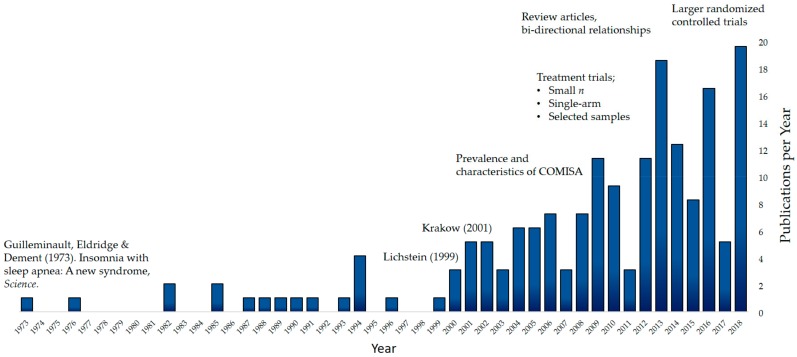
Co-morbid insomnia and sleep apnea (COMISA) is a highly prevalent and debilitating disorder, which results in additive impairments to patients’ sleep, daytime functioning, and quality of life, and complex diagnostic and treatment decisions for clinicians. Although the presence of COMISA was first recognized by Christian Guilleminault and colleagues in 1973, it received very little research attention for almost three decades, until the publication of two articles in 1999 and 2001 which collectively reported a 30%–50% co-morbid prevalence rate, and re-ignited research interest in the field. Since 1999, there has been an exponential increase in research documenting the high prevalence, common characteristics, treatment complexities, and bi-directional relationships of COMISA. Recent trials indicate that co-morbid insomnia symptoms may be treated with cognitive and behavioral therapy for insomnia, to increase acceptance and use of continuous positive airway pressure therapy. Hence, the treatment of COMISA appears to require nuanced diagnostic considerations, and multi-faceted treatment approaches provided by multi-disciplinary teams of psychologists and physicians. In this narrative review, we present a brief overview of the history of COMISA research, describe the importance of measuring and managing insomnia symptoms in the presence of sleep apnea, discuss important methodological and diagnostic considerations for COMISA, and review several recent randomized controlled trials investigating the combination of CBTi and CPAP therapy. We aim to provide clinicians with pragmatic suggestions and tools to identify, and manage this prevalent COMISA disorder in clinical settings, and discuss future avenues of research to progress the field. © 2019 by the authors. Licensee MDPI, Basel, Switzerland.
Overview
CoChat Summary
TL;DR
COMISA is a common co-morbidity of insomnia and obstructive sleep apnea, associated with worse sleep, daytime functioning, and quality of life than either disorder alone. This narrative review argues that COMISA should be actively screened for and treated with combined CBTi and CPAP, while noting that the best sequencing and measurement approaches still need refinement.
Key findings
- The paper states COMISA prevalence is commonly in the range of 30%–50%; earlier studies reported 43% of 80 insomnia patients had AHI ≥ 5 and 29% had AHI ≥ 15, while 50% of 231 OSA patients reported clinically significant insomnia symptoms.
- A 2010 review cited in the paper concluded 39%–58% of OSA patients report insomnia symptoms, and 29%–67% of insomnia patients meet minimal OSA criteria; a later meta-analysis of 37 studies reported 35% of insomnia patients had AHI ≥ 5, 29% had AHI ≥ 15, and 38% of OSA patients met insomnia criteria.
- The review says COMISA patients have greater impairment in sleep, daytime functioning, depressive/psychiatric symptoms, and quality of life than patients with insomnia or OSA alone, and are also more likely to have reduced CPAP acceptance and use.
- Recent randomized controlled trials reported that CBTi improved insomnia outcomes in COMISA and, in some studies, increased CPAP use by 78 min at 3 months and 48 min at 6 months, or by 61 min at 6 months; another study reported 57 min and 64 min greater CPAP use at 3 and 6 months, respectively.
Methods
- Narrative review of COMISA research, covering prevalence, consequences, measurement issues, treatment approaches, bidirectional mechanisms, and recent randomized controlled trials.
- Synthesizes prior studies and recent RCTs; the text specifically discusses studies of 56, 80, 231, 134, 121, 125, 145, and 630 participants, depending on the cited study.
- Main analytic approach is qualitative synthesis of published evidence rather than a new empirical analysis.
Limitations
- Stated in the paper: there has been a lack of research attention to COMISA for long periods, and there is still a need to validate and refine insomnia measures in the presence of OSA.
- Stated in the paper: the available RCTs give only tentative support for CBTi/CPAP sequencing, and the paper notes that more data are needed to confirm which treatment sequence is best.
- Evident from the text: this is a narrative review, so conclusions depend on heterogeneous prior studies with varying definitions of insomnia, OSA, populations, and outcomes; the paper itself notes that prevalence estimates vary considerably by criteria and sample.
Model-written summary. Check it against the paper before relying on it.
Integrity signals
Registry
Cites
Statistics
Figures
Verification
Claims the paper makes
31 Valid · 2 Not valid · 46 Not checked · 25 Own results and interpretations
Some cited sources support this claim and some don’t — read each source’s verdict below.
In the paper
“Since this time, a large number of case studies [69], pilot studies [70,71], chart-reviews [65,72], treatment trials [44,49,50], and cluster analyses [41,42] have examined the effect of co-morbid insomnia symptoms on reduced CPAP outcomes in OSA patients.”
§ Co-Morbid Insomnia and Sleep Apnea (COMISA): Prevalence, Consequences, Methodological Considerations, and Recent Randomized Controlled Trials > 2. Treatment of COMISA > 2.1. Traditional Treatment Approaches
What the sources say
- Partly supportedcites [69] An H. Chung S. A case of obstructive sleep apnea syndrome presenting as paradoxical insomnia Psychiatry Investig. 2010 7 75 78 10.4306/pi.2010.7.1.75 PMC2848777 20396438 sourceExperimental — accuracy not yet measured
The Abstract identifies this as a case report about insomnia symptoms in a patient with obstructive sleep apnea, supporting its citation as a case study. But the Case section says the patient refused CPAP, so the report does not examine whether insomnia reduced CPAP outcomes. (LLM, conf=0.88)
- Not matchedcites [70] Smith S.S. Dunn N. Douglas J. Jorgensen G. Sleep onset insomnia is associated with reduced adherence to CPAP therapy Sleep Biol. Rhythm. 2009 7 74
We searched by its title and found no matching paper.
- Not checked — no full text of the sourcecites [71] Suraiya S. Lavie P. Sleep onset insomnia in sleep apnea patients: Influence on acceptance of nCPAP treatment Sleep Med. 2006 7 S85 10.1016/j.sleep.2006.07.203 source
- Disputedcites [65] Philip P. Bioulac S. Altena E. Morin C.M. Ghorayeb I. Coste O. Monteyrol P.J. Micoulaud-Franchi JA. Specific insomnia symptoms and self-efficacy explain CPAP compliance in a sample of OSAS patients PLoS ONE 2018 13 e0195343 10.1371/journal.pone.0195343 29617414 PMC5884569 sourceExperimental — accuracy not yet measured
The citation identifies this paper as a treatment trial, but Methods and materials > Participants describes its design as retrospective and cross-sectional. The Discussion also says that no causal inference can be made. Although the paper examines insomnia symptoms and CPAP compliance, it is not a treatment trial. (LLM, conf=0.88)
Checked by a reasoning model — may be wrong.
- Not checked — no full text of the sourcecites [72] Wickwire E.M. Smith M.T. Birnbaum S. Collop N.A. Sleep maintenance insomnia complaints predict poor CPAP adherence: A clinical case series Sleep Med. 2010 11 772 776 10.1016/j.sleep.2010.03.012 20673741 source
plainstates a cause- Asserted: passes — The authors put it forward as true.
- Checkable: passes — It can be checked against evidence.
- Load-bearing: unclear — It is unclear whether the paper’s conclusions depend on it.
- Based: passes — The paper gives a reason why it holds.
- Partly supported
The cited sources support only part of this claim — read each source’s verdict below.
In the paper
“a lack of access to CBTi has resulted in the majority of insomnia sufferers receiving prescriptions for sedative-hypnotic medications as the initial and ongoing treatment [12,13].”
§ Co-Morbid Insomnia and Sleep Apnea (COMISA): Prevalence, Consequences, Methodological Considerations, and Recent Randomized Controlled Trials > 1. Introduction > 1.1. Insomnia and Obstructive Sleep Apnea
What the sources say
- Partly supportedcites [12] Miller C.B. Valenti L. Harrison C.M. Bartlett D.J. Glozier N. Cross N.E. Grunstein R.R. Britt H.C. Marshall N.S. Time trends in the family physician management of insomnia: The Australian experience (2000–2015) J. Clin. Sleep Med. 2017 13 785 790 10.5664/jcsm.6616 28454597 PMC5443739 sourceExperimental — accuracy not yet measured
The Results (Changes in Management Approaches; page unavailable) report medication use at approximately 90% of Australian family-physician insomnia management occasions. The Introduction describes limited CBT access, but the Discussion says only that unchanged management practices were possibly due to limited health-system capacity. The paper does not establish that lack of CBT access caused most insomnia sufferers to receive sedative-hypnotic prescriptions as both initial and ongoing treatment. (LLM, conf=0.87)
- Partly supportedcites [13] Kaufmann C.N. Spira A.P. Depp C.A. Mojtabai R. Long-term use of benzodiazepines and nonbenzodiazepine hypnotics, 1999–2014 Psychiatr. Serv. 2017 69 235 238 10.1176/appi.ps.201700095 29089011 PMC5794624 sourceExperimental — accuracy not yet measured
The Discussion (page not available) says behavioral treatments for insomnia are much less common than CBT for anxiety, while the Results report that most recorded hypnotic use for sleep problems was medium- or long-term. The paper does not establish that lack of CBT-I access caused prescribing, that most people with insomnia received these medications, or that they received them as initial treatment; it says the reasons for prescribing trends are unclear. (LLM, conf=0.88)
plainstates a cause- Asserted: passes — The authors put it forward as true.
- Checkable: passes — It can be checked against evidence.
- Load-bearing: unclear — It is unclear whether the paper’s conclusions depend on it.
- Based: passes — The paper gives a reason why it holds.
- Partly supported
Every source the paper cites for this claim was checked and supports it.
In the paper
“Although epidemiological studies provide statistical support for these ‘risk factors’ (e.g., OSA is associated with male gender, increased age, overweight and obesity, snoring, and daytime sleepiness [14])”
§ Co-Morbid Insomnia and Sleep Apnea (COMISA): Prevalence, Consequences, Methodological Considerations, and Recent Randomized Controlled Trials > 1. Introduction > 1.2. The Beginning of COMISA Research
What the sources say
- Supportedcites [14] Punjabi N.M. The epidemiology of adult obstructive sleep apnea Proc. Am. Thor. Soc. 2008 5 136 143 10.1513/pats.200709-155MG PMC2645248 18250205 source
The Abstract identifies age, male sex, and obesity as factors that increase vulnerability to OSA. It also identifies loud snoring and daytime sleepiness as signs or symptoms that help identify people needing evaluation, supporting the citing sentence’s stated associations. (LLM, conf=0.90)
plainstates an association- Asserted: passes — The authors put it forward as true.
- Checkable: passes — It can be checked against evidence.
- Load-bearing: unclear — It is unclear whether the paper’s conclusions depend on it.
- Based: passes — The paper gives a reason why it holds.
- Supported
The sources with a verdict support this claim; the rest weren’t checked yet, have no full text we could read, or their verdicts aren’t rated yet.
In the paper
“For example, questionnaire measures of insomnia commonly include both nocturnal and daytime symptoms [54,55,61].”
§ Co-Morbid Insomnia and Sleep Apnea (COMISA): Prevalence, Consequences, Methodological Considerations, and Recent Randomized Controlled Trials > 1. Introduction > 1.5. Refining the Measurement of COMISA
What the sources say
- Not checked — no full text of the sourcecites [54] Bastien C.H. Vallières A. Morin C.M. Validation of the insomnia severity index as an outcome measure for insomnia research Sleep Med. 2001 2 297 307 10.1016/S1389-9457(00)00065-4 11438246 source
- Not checked — no full text of the sourcecites [55] Soldatos C.R. Dikeos D.G. Paparrigopoulos T.J. Athens Insomnia Scale: Validation of an instrument based on ICD-10 criteria J. Psychosom. Res. 2000 48 555 560 10.1016/S0022-3999(00)00095-7 11033374 source
- Supportedcites [61] Espie C.A. Kyle S.D. Hames P. Gardani M. Fleming L. Cape J. The Sleep Condition Indicator: A clinical screening tool to evaluate insomnia disorder BMJ Open 2014 4 e004183 10.1136/bmjopen-2013-004183 PMC3964344 24643168 source
In Results > Development of the SCI (page not supplied), the paper describes an insomnia questionnaire with items on getting to and remaining asleep and items on daytime functioning and performance. The Discussion (page not supplied) likewise describes sleep pattern and the impact of poor sleep as two components of insomnia assessment. This supports the cited paper as an example of a questionnaire covering both. (LLM, conf=0.88)
plain- Asserted: passes — The authors put it forward as true.
- Checkable: passes — It can be checked against evidence.
- Load-bearing: passes — The paper’s conclusions depend on it.
- Based: passes — The paper gives a reason why it holds.
Every source the paper cites for this claim was checked and supports it.
In the paper
“However, there has previously been a lack of research attention directed toward the validity of existing insomnia measures in the presence of OSA [58].”
§ Co-Morbid Insomnia and Sleep Apnea (COMISA): Prevalence, Consequences, Methodological Considerations, and Recent Randomized Controlled Trials > 1. Introduction > 1.5. Refining the Measurement of COMISA
What the sources say
- Supportedcites [58] Sweetman A. Lack L.C. McEvoy D. Refining the Measurement of Insomnia in Patients with Obstructive Sleep Apnea: Commentary on Wallace and Wohlgemuth. Predictors of Insomnia Severity Index Profiles in US veterans with Obstructive Sleep Apnea J. Clin. Sleep Med. 2019 in press PMC7099194 31855156 source
In the commentary’s opening discussion, the authors explicitly describe a “surprising lack of research investigating the validity of current measures of insomnia” when OSA co-occurs. The following discussion also identifies a prior lack of validity data for the Insomnia Severity Index specifically. (LLM, conf=0.95)
plain- Asserted: passes — The authors put it forward as true.
- Checkable: passes — It can be checked against evidence.
- Load-bearing: passes — The paper’s conclusions depend on it.
- Based: passes — The paper gives a reason why it holds.
- Supported
51 more claims · 9 with their cited sources checked
Create a free account to see all 104 claims and to verify the 6 references still open.
- Probably not a substantial claim. 14
- It may state two separate claims as one. 41
- The quote only partly states this claim. 1
Claims other papers make about this one
Each is checked against this paper’s own text: does it say what the citing paper says it does?
The source backs part of the claim, not all of it — or backs it for a different population, condition or comparison.
In the citing paper
“The SR concluded that these trials demonstrate the beneficial effects of therapist-administered cognitive behavioral therapy for insomnia (CBTi) on improving insomnia symptoms and increasing CPAP therapy usage.1189”
From International Consensus Statement on Obstructive Sleep Apnea (2023) · cites this paper as [1189]
Experimental — accuracy not yet measured
Citations
Cites
Diagnostic and Statistical Manual of Mental Disorders
American Psychiatric Association (2013) · doi:10.1176/appi.books.9780890425596 · Cited by 116,369
Validation of the Insomnia Severity Index as an outcome measure for insomnia research
Bastien, C. (2001) · Sleep Medicine · doi:10.1016/s1389-9457(00)00065-4 · Cited by 8,067 · cited 3×
“For example, questionnaire measures of insomnia commonly include both nocturnal and daytime symptoms [54,55,61].”
BackgroundMethodSelf-citationIncreased Prevalence of Sleep-Disordered Breathing in Adults
Peppard, P. E., Young, T., Barnet, J. H., Palta, M., Hagen, E. W., & Hla, K. M. (2013) · American Journal of Epidemiology · doi:10.1093/aje/kws342 · Cited by 4,618 · cited 1×
“The prevalence of OSA varies by diagnostic criteria and the sample population, however it is estimated that approximately 10% of the general population fulfil diagnostic criteria for OSA [20].”
BackgroundEpidemiology of insomnia: what we know and what we still need to learn
Ohayon, M. M. (2002) · Sleep Medicine Reviews · doi:10.1053/smrv.2002.0186 · Cited by 3,743 · cited 2×
“The estimated prevalence of insomnia varies widely according to diagnostic criteria and specific populations of interest, however it is thought that 6%–10% of the general population suffer from chronic insomnia disorder, which includes clinically significant and frequent nocturnal sleep disturbances and impaired dayti…”
BackgroundResultAdult Obstructive Sleep Apnea Task Force of the American Academy of Sleep Medicine, Epstein, L. J., Kristo, D., Strollo, P. J., Friedman, N., Malhotra, A., Patil, S. P., Ramar, K., Rogers, R., Schwab, R. J., et al. (2009) · Journal of Clinical Sleep Medicine · doi:10.5664/jcsm.27497 · Cited by 3,360 · cited 5×
“Furthermore, as sleep clinics are encouraged to offer educational support for OSA patients commencing CPAP therapy [15], it may be possible to include CBTi interventions within these existing education platforms, to simultaneously target both insomnia symptoms and improved CPAP use [79].”
BackgroundInfluentialThe epidemiology of adult obstructive sleep apnea
Punjabi, N. M. (2008) · Proceedings of the American Thoracic Society · doi:10.1513/pats.200709-155mg · Cited by 2,361 · cited 2×
“, OSA is associated with male gender, increased age, overweight and obesity, snoring, and daytime sleepiness [14]), reliance on this single profile clearly does not represent all OSA sufferers [26–28].”
BackgroundCPAP for Prevention of Cardiovascular Events in Obstructive Sleep Apnea
McEvoy, R. D., Antic, N. A., Heeley, E., Luo, Y., Ou, Q., Zhang, X., Mediano, O., Chen, R., Drager, L. F., Liu, Z., et al. (2016) · New England Journal of Medicine · doi:10.1056/nejmoa1606599 · Cited by 2,101 · cited 1×
“The most effective treatment for moderate and severe OSA is continuous positive airway pressure (CPAP) therapy, which stabilizes breathing throughout the night, improves daytime sleepiness and quality of life, and reduces risk of motor-vehicle accidents [15,19,21,22].”
BackgroundQaseem, A., Kansagara, D., Forciea, M. A., Cooke, M., Denberg, T. D., & for the Clinical Guidelines Committee of the American College of Physicians* (2016) · Annals of Internal Medicine · doi:10.7326/m15-2175 · Cited by 1,965 · cited 1×
“CBTi is the recommended ‘first line’ treatment for insomnia, and appears to be effective in the presence of co-morbid OSA [8,9,52].”
BackgroundClinical Guideline for the Evaluation and Management of Chronic Insomnia in Adults
Schutte-Rodin, S., Broch, L., Buysse, D., Dorsey, C., & Sateia, M. (2008) · Journal of Clinical Sleep Medicine · doi:10.5664/jcsm.27286 · Cited by 1,943 · cited 1×
“CBTi is the recommended ‘first line’ treatment for insomnia, and appears to be effective in the presence of co-morbid OSA [8,9,52].”
BackgroundAthens Insomnia Scale: Validation of an instrument based on ICD-10 criteria
Soldatos, C. R., Dikeos, D. G., & Paparrigopoulos, T. J. (2000) · Journal of Psychosomatic Research · doi:10.1016/s0022-3999(00)00095-7 · Cited by 1,754 · cited 1×
“For example, questionnaire measures of insomnia commonly include both nocturnal and daytime symptoms [54,55,61].”
Background
Research works printed but not linked: 3
- Lichstein K. McCrae C. Wilson N. Secondary insomnia: Diagnostic issues, cognitive-behavioral treatment, and future directions. Treating Sleep Disorders: Principles and Practice of Behavioral Sleep Medicine Wiley Hoboken, NJ, USA 2003 286 304
- Smith S.S. Dunn N. Douglas J. Jorgensen G. Sleep onset insomnia is associated with reduced adherence to CPAP therapy Sleep Biol. Rhythm. 2009 7 74
- Parikh S. White D. Jordan A. Merchia P. Malhotra A. Eckert D. 36 Hours of Sleep Deprivation Reduces Genioglossus Muscle Activity during Hypercapnia and Inspiratory Resistive Loads during Wakefulness Sleep 2011 34 A153
Cited by
Items 101–200 of 251
Andersen, M. L., Gozal, D., & Tufik, S. (2024) · Sexual Medicine Reviews · doi:10.1093/sxmrev/qeae068 · Cited by 8
Yeh, W., Li, Y., Chang, Y., & Hsu, C. (2024) · Journal of Sleep Research · doi:10.1111/jsr.14399 · Cited by 10
“Insomnia is a common comorbidity among patients with OSA, with a prevalence of 30% – 50% (Sweetman et al., 2019).”
Gaffey, A. E., Burg, M. M., Yaggi, H. K., Wang, K., Brandt, C., Haskell, S. G., Bastian, L. A., Chang, T. E., Levine, A., Skanderson, M., et al. (2025) · Journal of the American Heart Association · doi:10.1161/jaha.125.045382 · Cited by 16
“1,11,36,37 On one hand, OSA can predispose patients to insomnia if respiratory events and postapneic waking periods are interpreted as difficulty staying asleep, 11,36 which can increase patients’ alertness and anxiety about their sleep quality.”
Duarte, R. L. M., Magalhães-da-Silveira, F. J., & Gozal, D. (2021) · Obesity Surgery · doi:10.1007/s11695-021-05748-5 · Cited by 7
“Notwithstanding, the coexistence of these comorbidities is quite relevant to clinical practice, and the presence of insomnia comorbid with OSA (COMISA) cannot only potentiate the morbidities of each disorder [9] but also affect the results of OSA treatment, possibly reducing continuous positive airway pressure (CPAP)…”
BackgroundFrom guidelines to bedside - insomnia treatment practices in South Korea: a nationwide cohort study
Moon, D. U., Piao, Z., Lee, D. H., & Han, E. (2024) · Frontiers in Psychiatry · doi:10.3389/fpsyt.2024.1453550 · Cited by 11
Diagnosis of obstructive sleep apnoea in primary care
Chai‐Coetzer, C. L., & Hancock, K. (2024) · Australian Journal of General Practice · doi:10.31128/ajgp-03-23-6740 · Cited by 9
Comorbid Insomnia and Sleep Apnea
Cruz, M. G. M. E. (2024) · Dental Clinics of North America · doi:10.1016/j.cden.2024.03.002 · Cited by 8
Shi, Y., Nie, Y., Hao, F., Feng, X., Zhang, Y., Sanford, L. D., Ren, R., & Tang, X. (2025) · Respiratory Research · doi:10.1186/s12931-025-03193-x · Cited by 10
Tseng, C., Morris, E. J., Sekhon, V. K., Albrecht, J. S., Wickwire, E. M., Spira, A. P., Gross, A. L., Malhotra, A., Blinka, M. D., & Kaufmann, C. N. (2025) · Sleep And Breathing · doi:10.1007/s11325-025-03323-1 · Cited by 7
Cawiding, O. R., Bae, H., Kim, J. H., Joo, E. Y., & Kim, J. K. (2025) · SLEEP · doi:10.1093/sleep/zsaf312 · Cited by 8
Wang, C., Wang, B., Liu, D., Zhang, Y. P., Zheng, Y., Guo, L., Li, S., & Zuo, H. (2022) · Blood Pressure Monitoring · doi:10.1097/mbp.0000000000000609 · Cited by 6
Cerina, L., Overeem, S., Papini, G. B., van Dijk, J. P., Vullings, R., van Meulen, F., Ross, M., Cerny, A., Anderer, P., & Fonseca, P. M. (2023) · Journal of Sleep Research · doi:10.1111/jsr.14015 · Cited by 10
“This underestimation is relevant in OSA populations due to the high prevalence of comorbid insomnia (30% – 38%, Sweetman et al., 2019).”
BackgroundPositive Airway Pressure Therapy in Sleep-Disordered Breathing
Raphelson, J. R., Kreitinger, K. Y., & Malhotra, A. (2020) · Neurotherapeutics · doi:10.1007/s13311-020-00971-x · Cited by 7
Circadian factors in comorbid insomnia and sleep apnea
Sweetman, A., Reynolds, A. C., & Lack, L. C. (2021) · Journal of Clinical Sleep Medicine · doi:10.5664/jcsm.9408 · Cited by 7
Self-citationLes troubles du sommeil chez les patients atteints d’un trouble neurocognitif
Moderie, C., Carrier, J., & Dang‐Vu, T. T. (2021) · L Encéphale · doi:10.1016/j.encep.2021.08.014 · Cited by 11
Mouchati, C., Grigg-Damberger, M. M., Ahdab, J. E., Mora-Muñoz, L., Katzan, I. L., Thompson, N. R., Pascoe, M., Walia, H. K., & Foldvary‐Schaefer, N. (2025) · Sleep Medicine · doi:10.1016/j.sleep.2025.106600 · Cited by 9
Sleep habits in the pathogenesis and management of diabesity
Rasmussen, C. H., Chun Kwan, O., Chan, W. S., Magkos, F., & Kong, A. P. S. (2025) · Journal of Diabetes Investigation · doi:10.1111/jdi.70075 · Cited by 9
Association of weekend catch-up sleep ratio with depressive risk: insights from NHANES 2021–2023
Sun, S., Liu, M., Liu, H., Li, R., Liang, Q., & Quan, W. (2025) · BMC Psychiatry · doi:10.1186/s12888-025-07083-w · Cited by 6
“Severe sleep problems, such as Co-Morbid Insomnia and Sleep Apnea (COMISA), can extend beyond depression and significantly impact suicidality [18–20].”
Dreem headband performance in Insomnia Disorder: An in-lab comparison to polysomnography
Beau, Q. A. L., Boardman, J. M., Mellor, A., Ogeil, R. P., & Drummond, S. P. A. (2025) · Sleep Medicine · doi:10.1016/j.sleep.2025.106698 · Cited by 7
Sleep disordered breathing after menopause
Raphelson, J. R., Norby, B., Parra, G., DeYoung, P. N., Macaulay, K., Stuenkel, C. A., & Malhotra, A. (2026) · The Lancet Obstetrics Gynaecology & Women s Health · doi:10.1016/s3050-5038(25)00112-8 · Cited by 7
Duarte, R. L. M., Magalhães-da-Silveira, F. J., & Gozal, D. (2021) · Journal of Clinical Sleep Medicine · doi:10.5664/jcsm.9842 · Cited by 5
Links between Sleep Apnoea and Insomnia in a British Cohort
Yu, Y. (2023) · Clocks & Sleep · doi:10.3390/clockssleep5030036 · Cited by 6
Urinary metabolite signatures reflect the altered host metabolism in severe obstructive sleep apnea
Mohit, M., Tomar, M. S., Araniti, F., Sahai, P., Singh, B. P., Shrivastava, A., & Chand, P. (2023) · Journal of Chromatography B · doi:10.1016/j.jchromb.2023.123938 · Cited by 5
Does Insomnia Exist without Hyperarousal? What Else Can There Be?
Bastien, C. (2020) · Brain Sciences · doi:10.3390/brainsci10040225 · Cited by 5
“According to authors [3], insomnia was long considered secondary to apnea, and it is only recently that clinicians have begun to study how these two sleep disorders can be dealt differently treatment wise and explain why response rate was often so low in both previous sleep disorders in treatment studies.”
BackgroundSelf-citationWallace, D. M., & Sweetman, A. (2020) · Sleep And Breathing · doi:10.1007/s11325-020-02107-z · Cited by 7
“Although several research groups have discussed theoretical relationships by which insomnia and OSA may be bi-directionally related through low ArTH/hyperarousal mechanisms, very little research has empirically examined this association [6].”
BackgroundInfluentialSelf-citationComorbid insomnia and sleep apnea is associated with worse verbal episodic memory in older females
Holloway, B. M., Harding, C. D., DeYoung, P. N., Kwan, C., Avetisyan, L., Lui, K. K., Ancoli‐Israel, S., Banks, S. J., Djonlagic, I. E., & Malhotra, A. (2025) · Journal of Clinical Sleep Medicine · doi:10.5664/jcsm.11902 · Cited by 8
Athanasiou, N., Pejovic, S., Vgontzas, A. N., Fernández‐Mendoza, J., Li, Y., Karataraki, M., & Bixler, E. O. (2026) · Journal of Clinical Sleep Medicine · doi:10.1007/s44470-025-00027-x · Cited by 5
“Conversely, OSA activates the sympathetic nervous system and the HPA axis, thereby promoting a state of hyperarousal that could contribute to the development of insomnia symptoms [10, 36].”
InfluentialYanagimori, M., Fernandes, M. D. S., Grad, G. F., Monare, A. B., Garcia, B. M. S. P., Rosanelli, I., Mariano, P. M. M. S., Drummond, S. P. A., O’Driscoll, D. M., Edwards, B. A., et al. (2024) · Sleep Medicine · doi:10.1016/j.sleep.2024.11.035 · Cited by 4
Kuhn, J., Schiphorst, L., Wulterkens, B. M., Asin, J., Duis, N., Overeem, S., van Gilst, M. M., & Fonseca, P. M. (2024) · Clocks & Sleep · doi:10.3390/clockssleep6040050 · Cited by 5
The use of the odds ratio product and self-reported data to detect comorbid insomnia and sleep apnea
Hanif, U., Guadagni, V., Lambing, K. A., Gimenez, U., Jennum, P., Sweetman, A., & Mysliwiec, V. (2025) · SLEEP · doi:10.1093/sleep/zsaf198 · Cited by 8
Self-citationThorshov, T. C., Øverby, C. T., Hansen, D. D., Bong, W. K., Skifjeld, K., Hurlen, P., Dammen, T., Moen, A., & Hrubos‐Strøm, H. (2023) · Sleep Medicine X · doi:10.1016/j.sleepx.2023.100093 · Cited by 7
“The most effective treatment of OSA is continuous positive airway pressure (CPAP), where patients are required to wear nasal or oro-nasal masks throughout the night [6].”
BackgroundResultCerina, L., Papini, G. B., Fonseca, P. M., Overeem, S., van Dijk, J. P., van Meulen, F., & Vullings, R. (2024) · Physiological Measurement · doi:10.1088/1361-6579/ad4c35 · Cited by 4
“The percentage was lower than general prevalence of insomnia symptoms in literature (30%–50%; Sweetman et al 2019).”
BackgroundPrevalence of co-morbid insomnia and obstructive sleep apnoea
Thorve, S. M., Yadav, M., Kamath, A., & Nair, J. (2024) · Lung India · doi:10.4103/lungindia.lungindia_555_23 · Cited by 5
“[3] Limitations 1.”
BackgroundPalombini, L., Assis, M., Drager, L. F., Mello, L. I. L., Pires, G. N., Zancanella, E., & Santos‐Silva, R. (2024) · Sleep Science · doi:10.1055/s-0044-1800887 · Cited by 8
“20,21 20 – 22 The split-night exam is more appropriate if the following requirements are met: 1 1) the patient has an apnea-hypopnea index (AHI) > 40 events per hour in the initial part of the split-night preparation, without the CPAP device (which shall be at least 2 hours long and include rapid…”
Mekky, J. F., Yousof, S. M., Elsayed, I., Elsemelawy, R., Mahmoud, H., & Elweshahi, H. M. T. (2021) · Journal of Clinical Sleep Medicine · doi:10.5664/jcsm.9704 · Cited by 7
Henríquez‐Beltrán, M., Benitez, I. D., Belmonte, T., Jorge Jorquera, A., Jorquera-Díaz, J., Cigarroa, I., Burgos, M., Sanhueza, R., Jeria, C., Fernandez-Bussy, I., et al. (2023) · Journal of Clinical Medicine · doi:10.3390/jcm12206639 · Cited by 4
“Indeed, 30–50% of patients with obstructive sleep apnea (OSA) report insomnia symptoms, whereas 30–40% of patients with insomnia have comorbid OSA [43], consequently triggering excessive daytime sleepiness, as observed in our results.”
BackgroundPharmacological management of co-morbid obstructive sleep apnoea and insomnia
Thomas, E. E., Micic, G., Adams, R., & Eckert, D. J. (2023) · Expert Opinion on Pharmacotherapy · doi:10.1080/14656566.2023.2292186 · Cited by 4
“Knowledge and awareness of COMISA and its impacts have recently increased yet the optimal treatment approach remains unclear [14].”
BackgroundWinter, S., Crocker, S., Rolls, T., Curtin, D., Haratsis, J. M., & Szollosi, I. (2024) · Journal of Health Psychology · doi:10.1177/13591053241267272 · Cited by 3
“Their 2019 RCT investigated the effect of cognitive behavioural therapy for insomnia (CBTi) on OSA severity and found that a four-session CBTi intervention improved sleep consolidation and promoted a 15% decrease in OSA severity in COMISA patients (Sweetman et al., 2019, 2023).”
Salles, C., Freitas, M. C., & Cruz, M. G. M. E. (2021) · Sleep Medicine · doi:10.1016/j.sleep.2021.04.018 · Cited by 5
“For example, 30e40% of insomnia patients meet the diagnostic criteria for OSA when evaluated with overnight polysomnography and 30e50% of OSA patients inform clinically relevant symptoms of insomnia [5].”
Khachatryan, S. G., Isayan, M., & Hovakimyan, H. (2021) · Armenian Journal of Health & Medical Sciences · doi:10.54235/27382737-2021.1.1-28 · Cited by 5
The State of Art on Co-Morbid Insomnia and Sleep Apnea (COMISA)
Gennaro, L. D. (2021) · Brain Sciences · doi:10.3390/brainsci11081079 · Cited by 4
“Furthermore, there is some evidence to suggest that OSA contributes to the exacerbation of insomnia [4] Based upon recent randomized controlled trials, some issues that should be considered in the future research agenda include [1]: (1) Refine the diagnosis and measurement of COMISA to assess both the independent and…”
BackgroundInfluentialCole, K. V., Malik, A., Cistulli, P. A., Sterling, K. L., Malhotra, A., Alpert, N., & Pépin, J. (2025) · CHEST Journal · doi:10.1016/j.chest.2025.08.044 · Cited by 4
Wallace, D. M., Sweetman, A., Crawford, M., Buenaver, L. F., & Wohlgemuth, W. K. (2025) · Sleep Medicine · doi:10.1016/j.sleep.2025.106854 · Cited by 5
Self-citationSaeed, S., Lundetræ, R. S., Romarheim, A., Saxvig, I. W., Lehmann, S., & Bjorvatn, B. (2026) · Journal of Clinical Sleep Medicine · doi:10.1007/s44470-026-00068-w · Cited by 3
“OSA and insomnia appear to share a bidirectional association and to even exacerbate each other [9, 10].”
Brooker, E. J., Landry, S. A., Mann, D., Prguda, E., McLeay, S. C., Drummond, S. P. A., & Edwards, B. A. (2024) · Sleep Medicine · doi:10.1016/j.sleep.2024.02.006 · Cited by 4
Hilmisson, H., THOMAS, R. J., & Magnúsdóttir, S. (2024) · Frontiers in Sleep · doi:10.3389/frsle.2024.1230958 · Cited by 4
Treatment preferences and help seeking experiences of Australian adults with insomnia
Haycock, J., Lack, L. C., Hoon, E. A., Sweetman, A., Appleton, S., Loffler, K. A., Scott, H., & Lovato, N. (2025) · Australian Psychologist · doi:10.1080/00050067.2025.2534388 · Cited by 4
“…such as anxiety and depression, chronic illnesses and other sleep disorders, such as obstructive sleep apnoea, and may exacerbate the severity of these co-morbid conditions (Lovato & Gradisar, 2014; Riemann et al., 2020; Skarpsno et al., 2020; Sweetman et al., 2019, 2021; Zheng et al., 2019).”
Self-citationOverview of Medication Treatment for Co-Morbid Insomnia and Sleep Apnea (COMISA)
Lowe, A. D., & Lowe, M. S. (2022) · Springer eBooks · doi:10.1007/978-3-030-93146-9_18 · Cited by 4
Screening for Comorbidity of Sleep Disorders in Career Firefighters
Hamilton, N. A., Russell, J. A., Hamadah, K., Youngren, W. A., Toon, A., Nguyen, T. A., & Joles, K. (2023) · Journal of Occupational and Environmental Medicine · doi:10.1097/jom.0000000000002993 · Cited by 5
Spoormaker, V. I., & Blaskovich, B. (2025) · Journal of Sleep Research · doi:10.1111/jsr.70028 · Cited by 3
“%) in insomnia (Sweetman et al. 2019).”
The "anatomizing" of criminals.
Dobson, J. F. (1951) · PubMed Central · Cited by 6
Li, X., & Redline, S. S. (2021) · American Journal of Respiratory and Critical Care Medicine · doi:10.1164/rccm.202103-0558le · Cited by 3
Obstructive sleep apnea syndrome, orexin, and sleep–wake cycle: The link with the neurodegeneration
FERNANDES, M. R., & Liguori, C. (2025) · Handbook of clinical neurology · doi:10.1016/b978-0-323-90918-1.00014-9 · Cited by 4
Comorbid Insomnia and Sleep Apnea Across the Pediatric Age: A Polysomnographic Study
Brunel, L., Comajuan, M., Plancoulaine, S., Putois, B., Lioret, J., Thieux, M., Coutier, L., Franco, P., & Guyon, A. (2025) · Children · doi:10.3390/children12091250 · Cited by 7
“In adults, COMISA is also linked to greater emotional distress, cognitive complaints, and reduced quality of life compared to isolated OSA [37].”
Sleep and obesity—known interactions and open questions
Schmickl, C. N., Gomez, R., Sunwoo, B. Y., Mesarwi, O. A., Kumar, A., & Malhotra, A. (2026) · Journal of Clinical Sleep Medicine · doi:10.1007/s44470-026-00130-7 · Cited by 3
“An important related entity is comorbid insomnia and sleep apnea (COMISA), which is associated with greater symptom burden, worse CPAP adherence, and poorer cardiometabolic outcomes than either condition alone [49, 50].”
Hein, M., Wacquier, B., Conenna, M., Lanquart, J., & Point, C. (2024) · Journal of Clinical Medicine · doi:10.3390/jcm13195907 · Cited by 2
“Firstly, in apneic individuals, the development of dysfunctional sleep behaviors involved in the pathophysiology of insomnia disorder may be favored by the occurrence of psychophysiological conditioning induced by repeated nocturnal awakenings related to obstructive respiratory events [53,54].”
BackgroundGhafoor, A. A., Hicks, J. B., Allen, A. J. H., Beaudin, A. E., Sériès, F., Singh, A., Hanly, P. J., Azarbarzin, A., Ayas, N., & Hajipour, M. (2025) · European Respiratory Journal · doi:10.1183/13993003.02087-2024 · Cited by 2
Sweetman, A., Reynolds, C. M., Spiegelhalder, K., Rajagopalan, P., & Richardson, C. E. (2025) · Current Pulmonology Reports · doi:10.1007/s13665-025-00387-y · Cited by 2
“Individuals with COMISA report worse sleep, daytime functioning (e.g., daytime sleepiness/fatigue), cognitive impairment and quality of life, as well as increased risk for psychiatric symptoms, including irritability, depression and anxiety [ 1, 7, 8].”
Self-citationSex Differences in Etiologies of Sleep Disorders
Choi, S. J., Kim, D., Hwang, Y., Jo, H., & Joo, E. Y. (2020) · Journal of Sleep Medicine · doi:10.13078/jsm.200023 · Cited by 2
“진정(sedation)으로 구분되기도 하나, 불면증 과 OSA가 동시에 있는 COMISA군의 경우 이러한 특성을 동 시에 가지기 때문에 직관적으로 판단하는데 어려움이 있다.(19) 본 연구에서도 불면증을 호소하는 환자 중 OSA로 진단된 COMISA 환자들은 OSA만 있는 OSA군에 비해 입면장애,”
ATS Core Curriculum 2021. Adult Sleep Medicine: Sleep Apnea
Jamil, S. M., Shafazand, S., Dudley, K. A., Lipford, M. C., Gu, C., Jun, J. C., Budnick, I. M., Davis, E. M., Kent, D. T., Stanley, J. J., et al. (2021) · ATS Scholar · doi:10.34197/ats-scholar.2021-0027re · Cited by 3
“Patients with OSA exhibited a greater prevalence and incident risk of type 2 diabetes mellitus and worse glycemic control than OSA-free populations (3).”
BackgroundSigurdardottir, F. D., Bertisch, S. M., Reid, M., Filippi, C., Lima, J. A., Redline, S. S., & Omland, T. (2022) · Sleep Medicine · doi:10.1016/j.sleep.2022.05.305 · Cited by 4
Jensen, S. M., Abeler, K., Friborg, O., Rösner, A., Olsborg, C., Mellgren, S. I., Müller, K. I., Rosenberger, A. D., Vold, M. L., & Arntzen, K. A. (2023) · Journal of Neurology · doi:10.1007/s00415-023-11978-7 · Cited by 3
“Previously, we identified 153 individuals (135 adults, ≥ 16 years) with a genetically confirmed LGMDR9 in Norway [3].”
BackgroundInfluential(2000) · Time to knit · doi:10.1016/s0246-1072(21)44548-7 · Cited by 2
Insomnia, sleep apnea, and incidence of hypertension and cardiovascular diseasePreprint
Gaffey, A. E., Burg, M. M., Yaggi, H. K., Wang, K., Brandt, C., Haskell, S. G., Bastian, L. A., Chang, T. E., Levine, A., Skanderson, M., et al. (2025) · medRxiv · doi:10.1101/2025.06.02.25328832 · Cited by 2
“46-for 46-for use under a CC0 license.”
Hsu, Y.-C., Zhu, Y.-H., Hsu, C.-Y., Chen, Y.-R., & Tsai, Y.-T. (2024) · Journal of Herbal Medicine · doi:10.1016/j.hermed.2024.100893 · Cited by 1
Updated Insomnia Guidelines and Latest Real-World Evidence Data on Daridorexant
Coates, S. (2024) · EMJ Neurology · doi:10.33590/emjneurol/zhih1778 · Cited by 1
Thomas, C. L., Capaldi, V. F., Collen, J. F., Zhao, Z., Williams, S. G., Assefa, S. Z., Chen, S., Albrecht, J. S., & Wickwire, E. M. (2025) · Military Medicine · doi:10.1093/milmed/usaf108 · Cited by 1
Ko, H., Cho, S., Lee, D., Choi, J., Kim, M., & Kang, M. (2025) · Journal of Sleep Research · doi:10.1111/jsr.70096 · Cited by 1
“OSA and insomnia present contrasting characteristics: OSA is more prevalent among men and is characterised by excessive daytime sleepiness, whereas insomnia is more common among women and involves difficulty initiating or maintaining sleep due to heightened arousal (Sweetman et al. 2019).”
Khullar, A., Boulos, M. I., Mak, M. S. B., Moline, M. L., Cheng, J. Y., & Hall, N. (2025) · Sleep Medicine · doi:10.1016/j.sleep.2025.106757 · Cited by 1
Comorbid insomnia and sleep apnea (COMISA)
Sweetman, A. (2025) · Elsevier eBooks · doi:10.1016/b978-0-443-13954-3.00039-5 · Cited by 1
Self-citationPoletti, V., Battaglia, E. G., Anelli, L. E., Banfi, P. I., & Volpato, E. (2025) · Scientific Reports · doi:10.1038/s41598-025-30682-2 · Cited by 2
Shi, Y., Feng, X., Hao, F., Nie, Y., Zhang, Y., Chen, Z., Guan, S., Sanford, L. D., Vitiello, M. V., & Tang, X. (2026) · Respiratory Research · doi:10.1186/s12931-026-03577-7 · Cited by 3
“Insomnia and obstructive sleep apnea (OSA) are the two most common sleep disorders and commonly co-occur [1, 2].”
Sleep apnea phenotypes based on multi-night assessment of sleep perception
Kuhn, J., Schiphorst, L., Wulterkens, B. M., Asin, J., Overeem, S., van Gilst, M. M., & Fonseca, P. (2026) · Behavioral Sleep Medicine · doi:10.1080/15402002.2026.2630936 · Cited by 1
“However, insomnia symptoms are experienced by a large proportion of individuals with OSA, and comorbid sleep apnea and insomnia (COMISA) is a clinically relevant entity (Sweetman et al., 2019).”
Co-morbid insomnia and obstructive sleep apnea (COMISA) and cardiovascular risk: A scoping review
Hoog, A., Gagnadoux, F., & Trzépizur, W. (2026) · Respiratory Medicine and Research · doi:10.1016/j.resmer.2026.101255 · Cited by 2
Babiloni, A. H., Monteiro, P., Guimaraes, A. S., & Cruz, M. G. M. E. (2026) · Journal of Oral Rehabilitation · doi:10.1111/joor.70185 · Cited by 1
“In particular, a substantial proportion of individuals with insomnia symptoms also exhibit sleep-disordered breathing, giving rise to another condition known as comorbid insomnia and sleep apnea (COMISA) [10].”
Kim, J. R., Park, H. R., Song, P., & Joo, E. Y. (2026) · Sleep Medicine · doi:10.1016/j.sleep.2026.109134 · Cited by 1
Amicucci, G., Tondo, P., Mogavero, M. P., Vacca, M., Ferri, R., Ferini‐Strambi, L., & Liguori, C. (2026) · Sleep Medicine Reviews · doi:10.1016/j.smrv.2026.102346 · Cited by 2
Antonaglia, C., Fabozzi, A., Steffanina, A., Soave, S., Confalonieri, P., Nicolai, A., Olmati, F., Sanna, A., Pena, N., Ruaro, B., et al. (2026) · Healthcare · doi:10.3390/healthcare14152328 · Cited by 1
“…machine with a dedicated algorithm or a combined approach, such as CPAP + CBT for young adults with insomnia—may be the right way to address the adherence issue through greater personalization of the therapy itself, rather than simply dividing patients into adherent and non-adherent groups [13,14].”
Shukir, S., Khandoker, A. H., Moussa, M. M., Chowdhury, N., & Struzik, Z. R. (2026) · The European Physical Journal Special Topics · doi:10.1140/epjs/s11734-026-02555-w · Cited by 2
Insomnia and Hypoglossal Nerve Stimulation
Dabboussi, T., Manchanda, S., Parker, N. P., Chernyak, Y., & Stahl, S. M. (2023) · Current Sleep Medicine Reports · doi:10.1007/s40675-023-00255-8 · Cited by 2
Applying CBT for Insomnia With Comorbidity
Dawson, S. C. (2023) · Journal of Health Service Psychology · doi:10.1007/s42843-023-00087-8 · Cited by 1
“Second, he should be referred for evaluation and treatment of OSA with consideration of timing, since completion of CBT-I is likely to result in increased ability to adhere to CPAP treatment should it be prescribed.”
BackgroundInfluentialComorbid Insomnia and Sleep Apnea
Sarber, K. M., & Patil, R. D. (2024) · Otolaryngologic Clinics of North America · doi:10.1016/j.otc.2024.02.019 · Cited by 2
RetractedNikolopoulos, A., Tatsis, K., Tselepi, C., Sioutkou, A., Kostoulas, A., Siopis, G., Κostikas, Κ., & Konstantinidis, A. K. (2025) · Journal of Clinical Sleep Medicine · doi:10.5664/jcsm.11632 · Cited by 1
“30 This high co-occurrence suggests a plausible relationship where the 2 conditions exacerbate each other.”
Yu, Y., Jackson, S. L., Björnsdóttir, E., & Oulton, C. (2020) · medRxiv · doi:10.1101/2020.05.15.20096404 · Cited by 2
CBT‐I Strategies for General Practitioners (GPs)
Bjorvatn, B. (2022) · Wiley eBooks · doi:10.1002/9781119891192.ch20 · Cited by 1
MyCardio, D., Magnúsdóttir, S., Sveinsdóttir, E. G., & Heilsugerðin, S. (2020) · Læknablaðið · doi:10.17992/lbl.2020.11.607
Personalized care of obstructive sleep apnea with hypoglossal nerve stimulation
Strollo, P. J., & Soose, R. J. (2021) · SLEEP · doi:10.1093/sleep/zsab055
Progress in Study of Chronic Insomnia Comorbid Obstructive Sleep Apnea-Hypopnea Syndrome
吕, 梦. (2021) · International Journal of Psychiatry and Neurology · doi:10.12677/ijpn.2021.102004
Impact of Intrinsic Sleep Disorders on Sleep Disordered Breathing
Verbraecken, J. A. (2021) · Elsevier eBooks · doi:10.1016/b978-0-08-102723-3.00133-5
Other Sleep Disorders of Importance
Bailey, F. D. R., & Attanasio, M. R. (2022) · Wiley eBooks · doi:10.1002/9781119080336.ch10
Positive Pressure Therapy in OSA
Grote, L., & Palm, A. (2021) · Elsevier eBooks · doi:10.1016/b978-0-08-102723-3.00163-3
A mouse model of insomnia with sleep apneaPreprint
Masubuchi, S., Yano, T., Komatsu, K., Ikegami, K., Nakamura, W., Ota, A., Karnan, S., Takeuchi, K., Hosokawa, Y., Todo, T., et al. (2022) · bioRxiv (Cold Spring Harbor Laboratory) · doi:10.1101/2022.08.16.503987
“Strangely, the comorbidity between insomnia and OSA is highly prevalent [12-16].”
BackgroundRole of the Behavioral Sleep Specialist Psychologist in Promoting CPAP Adherence
Zalai, D. (2022) · Springer eBooks · doi:10.1007/978-3-030-93146-9_6
CADTH (2023) · Canadian Journal of Health Technologies · doi:10.51731/cjht.2023.624 · Cited by 1
Non-respiratory sleep disorders
(2023) · European Respiratory Society eBooks · doi:10.1183/9781849841641.chapter14
Ferini‐Strambi, L., Sforza, M., & Galbiati, A. (2023) · European Respiratory Society eBooks · doi:10.1183/9781849841641.012022
A First Look at Childhood Abuse in Women with Obstructive Sleep ApneaPreprint
Pal, A., Martínez, F., Wagman, J. A., et al. (2023) · Research Square · doi:10.21203/rs.3.rs-2842895/v1
Ryczkowski, A. J., Rudnicka-Drożak, E., & Karakuła, K. H. (2023) · Current Problems of Psychiatry · doi:10.12923/2353-8627/2023-0008
Bastien, C., Ellis, J. G., & Perlis, M. L. (2023) · SLEEP · doi:10.1093/sleep/zsad164
Self-citationHertenstein, E., Schneider, C. L., & Nissen, C. (2023) · DNP – Die Neurologie & Psychiatrie · doi:10.1007/s15202-023-5755-9
Metadata
- Authors
- Sweetman, A., Lack, L., & Bastien, C.
- Affiliations
- Flinders University (AU)
- Université Laval (CA)
- Corresponding author
- Sweetman, Alexander
- Venue
- Brain Sciences
- Publisher
- MDPI AG
- Published
- 2019-12-12
- Volume
- 9
- Issue
- 12
- Pages
- 371
- ISSN
- 2076-3425 (ISSN-L)
- PMC
- PMC6956217
- OpenAlex
- W2995714602
- Cited by
- 253
- References
- 120
- Citations by year
- 2026: 46 · 2025: 47 · 2024: 38 · 2023: 47 · 2022: 26 · 2021: 34 · 2020: 13
- FWCI
- 2.69
- Type
- journal article
- Language
- en
- Open access
- gold
- dx.doi.org
- Licence
- Locations
- Brain Sciences (publishedVersion, cc-by)
- Europe PMC (PubMed Central) (publishedVersion, cc-by)
- PubMed Central (publishedVersion, cc-by)
- PubMed (publishedVersion)
- Topics
- Social Sciences › Psychology › Experimental and Cognitive Psychology › Sleep and related disorders
- Health Sciences › Medicine › Physiology (medical) › Obstructive Sleep Apnea Research
- Health Sciences › Dentistry › Oral Surgery › Temporomandibular Joint Disorders
- Keywords
- insomnia, sleep apnea, comorbidities, prevalence, cognitive behavioral therapy for insomnia, continuous positive airway pressure, CPAP acceptance, sleep quality, daytime functioning, quality of life, diagnosis, interdisciplinary treatment
About these checks
Registry, retraction, Cites and statistics results are computed, not judged, with one exception: a printed reference that no index lists is read once by a model before it counts as a citation error. Claims are extracted by a model and kept only when their quote appears verbatim in the text; each cited source is then checked, with a model’s help, for whether it says what the claim relies on. Those verdicts can be wrong — read the claim’s quote and the cited source before relying on one.
The claim verdicts this report counts are experimental: their accuracy is not yet measured.
A language model drew the claims from the paper on 2026-10-11, under version 3 of the claim definition (model deepseek-v4.1-flash, prompt extract-v3).
A second model labelled each claim on 2026-10-11 (model jev-1.13-20260917, definition revision gold-guideline-v0.2).
Cited sources are checked with a language model’s help (gpt-6-sol).
Statistics and arithmetic are recomputed, not judged.
Confidence bands are shown only for fields calibrated on our annotated test set. None is calibrated yet, so no band is shown.
What counts as a claim ›How we measure confidence ›How we check this ›
Are you an author, or do you see a problem with this page? Request a review
Data sources
Bibliographic data: Semantic Scholar, OpenAlex, Crossref.
Contains information from the Semantic Scholar Academic Graph Datasets, made available under the ODC Attribution License (ODC-BY 1.0).
Semantic Scholar’s data is described in: Kinney, R., et al. (2023). The Semantic Scholar Open Data Platform. arXiv:2301.10140.
