

The DOI matches its Crossref record; 202 of the 202 references it cites were found in a registry or an index.
Regulation of TNF-Induced Osteoclast Differentiation
Open accessAbstract
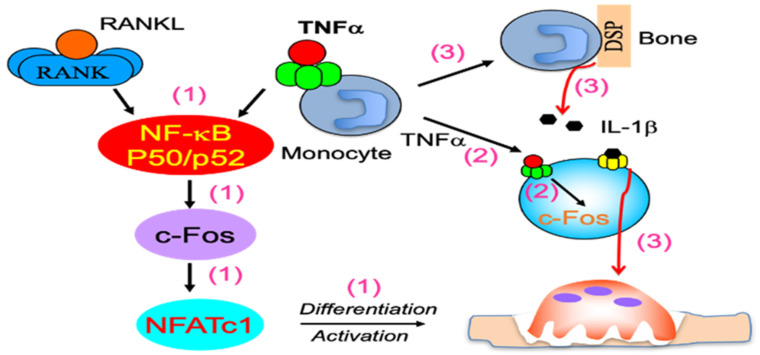
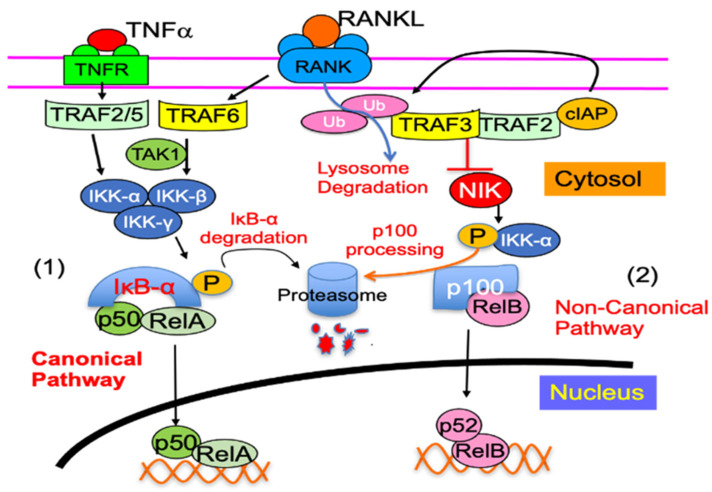
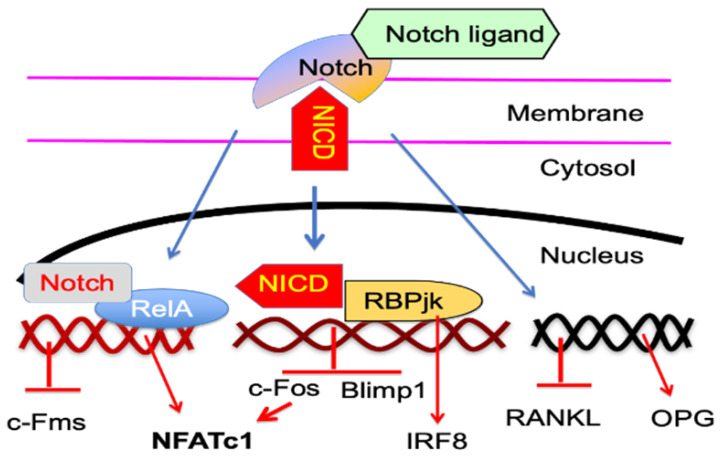
Increased osteoclast (OC) differentiation and activity is the critical event that results in bone loss and joint destruction in common pathological bone conditions, such as osteoporosis and rheumatoid arthritis (RA). RANKL and its decoy receptor, osteoprotegerin (OPG), control OC differentiation and activity. However, there is a specific concern of a rebound effect of denosumab discontinuation in treating osteoporosis. TNFα can induce OC differentiation that is independent of the RANKL/RANK system. In this review, we discuss the factors that negatively and positively regulate TNFα induction of OC formation, and the mechanisms involved to inform the design of new anti-resorptive agents for the treatment of bone conditions with enhanced OC formation. Similar to, and being independent of, RANKL, TNFα recruits TNF receptor-associated factors (TRAFs) to sequentially activate transcriptional factors NF-κB p50 and p52, followed by c-Fos, and then NFATc1 to induce OC differentiation. However, induction of OC formation by TNFα alone is very limited, since it also induces many inhibitory proteins, such as TRAF3, p100, IRF8, and RBP-j. TNFα induction of OC differentiation is, however, versatile, and Interleukin-1 or TGFβ1 can enhance TNFα-induced OC formation through a mechanism which is independent of RANKL, TRAF6, and/or NF-κB. However, TNFα polarized macrophages also produce anabolic factors, including insulin such as 6 peptide and Jagged1, to slow down bone loss in the pathological conditions. Thus, the development of novel approaches targeting TNFα signaling should focus on its downstream molecules that do not affect its anabolic effect.
Overview
The claims and statistics of this paper haven’t been checked yet.
Run the check — free, no account needed. It reads the open-access text and checks the sources it cites.
Integrity signals
Registry
Cites
Statistics
Figures
Verification
Claims the paper makes
The claims and statistics of this paper haven’t been checked yet.
Run the check — free, no account needed. It reads the open-access text and checks the sources it cites.
Claims other papers make about this one
Each is checked against this paper’s own text: does it say what the citing paper says it does?
The cited source says what the claim attributes to it.
In the citing paper
“Different concentrations of TGF-β have different effects on the RANKL/OPG ratio and ultimately on osteoclast differentiation (low concentrations of TGF-β increase the stimulation of osteoclast differentiation, while high concentrations of TGF-β have the opposite effect) [98, 99].”
From Modulation of fracture healing by senescence-associated secretory phenotype (SASP): a narrative review of the current literature (2024) · cites this paper as [99]
Self-check
Percentages, sums and reported differences re-computed from the paper’s own numbers.
The self-check needs the paper’s full text.
Citations
Cites
Exploring the full spectrum of macrophage activation
Mosser, D. M., & Edwards, J. P. (2008) · Nature Reviews Immunology · doi:10.1038/nri2448 · Cited by 9,144
Osteoprotegerin ligand is a cytokine that regulates osteoclast differentiation and activation.
Lacey, D. L., Timms, E., Tan, H.-L., Kelley, M. J., Dunstan, C. R., Burgess, T., Elliott, R., Colombero, A., Elliott, G., Scully, S., et al. (1998) · Cell · doi:10.1016/s0092-8674(00)81569-x · Cited by 5,439 · cited 2×
“In the late 1990s, two independent groups discovered that the receptor activator of nuclear factor-kappa B (NF-κB) ligand (RANKL), also named osteoprotegerin (OPG) ligand or osteoclast differentiation factor (ODF), is the additional factor that drives the terminal OC differentiation [67,68].”
BackgroundMonocyte and macrophage heterogeneity
Gordon, S., & Taylor, P. R. (2005) · Nature Reviews Immunology · doi:10.1038/nri1733 · Cited by 5,190
Osteoprotegerin: a novel secreted protein involved in the regulation of bone density.
Simonet, W. S., Lacey, D. L., Dunstan, C. R., Kelley, M., Chang, M.-S., Lüthy, R., Nguyen, H. Q., Wooden, S., Bennett, L., Boone, T., et al. (1997) · Cell · doi:10.1016/s0092-8674(00)80209-3 · Cited by 5,130 · cited 1×
“Thus, genetic deletion of OPG leads to osteoporosis in mice [77,78], and homozygous deletion of 100 kilobases of OPG gene in human results in juvenile Paget’s disease, characterized by osteopenia and fractures [79].”
BackgroundShared Principles in NF-κB Signaling
Hayden, M. S., & Ghosh, S. (2008) · Cell · doi:10.1016/j.cell.2008.01.020 · Cited by 4,945
The M1 and M2 paradigm of macrophage activation: Time for reassessment
Martinez, F. O., & Gordon, S. (2014) · F1000Prime Reports · doi:10.12703/p6-13 · Cited by 4,689
Macrophage biology in development, homeostasis and disease
Wynn, T. A., Chawla, A., & Pollard, J. W. (2013) · Nature · doi:10.1038/nature12034 · Cited by 4,684 · cited 3×
“Macrophages are classified as classically activated (inflammatory, M1) macrophages or alternatively activated (resident, M2) macrophages [57,136], which are linked to T helper 1 (Th1)- and Th2-type immune responses, respectively [137].”
BackgroundInfluentialYasuda, H., Shima, N., Nakagawa, N., Yamaguchi, K., Kinosaki, M., Mochizuki, S.-I., Tomoyasu, A., Yano, K., Goto, M., Murakami, A., et al. (1998) · Proceedings of the National Academy of Sciences · doi:10.1073/pnas.95.7.3597 · Cited by 4,224 · cited 1×
“In the late 1990s, two independent groups discovered that the receptor activator of nuclear factor-kappa B (NF-κB) ligand (RANKL), also named osteoprotegerin (OPG) ligand or osteoclast differentiation factor (ODF), is the additional factor that drives the terminal OC differentiation [67,68].”
BackgroundDevelopment of Monocytes, Macrophages, and Dendritic Cells
Geissmann, F., Manz, M. G., Jung, S., Sieweke, M. H., Merad, M., & Ley, K. (2010) · Science · doi:10.1126/science.1178331 · Cited by 3,049 · cited 1×
“It has long been known that OCs originate from mononuclear phagocytes [52–55], which comprise monocytes/macrophages and dendritic cells (DC) originated from the common macrophage/DC progenitors (MDPs) [56].”
BackgroundTakayanagi, H., Kim, S., Koga, T., Nishina, H., Isshiki, M., Yoshida, H., Saiura, A., Isobe, M., Yokochi, T., Inoue, J.-I., et al. (2002) · Developmental Cell · doi:10.1016/s1534-5807(02)00369-6 · Cited by 2,701 · cited 1×
“NFATc1 is the master transcription factor regulating OC differentiation [73,74], and thus, over-expression of NFATc1 results in the terminal differentiation and fusion of OCPs without adding RANKL [73,74], and can rescue the defect of RANKL- and TNF-induced OC formation caused by the deletion of NF-κB p50/p52 or c-Fos…”
Background
Cited by
Sorted by citations
Systemic complications of rheumatoid arthritis: Focus on pathogenesis and treatment
Wu, D., Luo, Y., Li, T., Zhao, X., Lv, T., Fang, G., Ou, P., Li, H., Luo, X., Huang, A., et al. (2022) · Frontiers in Immunology · doi:10.3389/fimmu.2022.1051082 · Cited by 295
“Inflammatory cytokines induce osteoclast maturation and inhibit osteoblast activation to perturb bone homeostasis, thus, anti-TNF therapy can improve bone homeostasis in RA patients (143, 144).”
BackgroundInsights and implications of sexual dimorphism in osteoporosis
Zhang, Y., Xie, N., Sun, X., Nice, E. C., Liou, Y., Huang, C., Zhu, H., & Shen, Z. (2024) · Bone Research · doi:10.1038/s41413-023-00306-4 · Cited by 164
“166,167 Estradiol also reduces in fl ammation by downregulating the nuclear factor-κ B (NF-κ B) pathway, Fig.”
BackgroundImpact of the host response and osteoblast lineage cells on periodontal disease
Zhou, M., & Graves, D. T. (2022) · Frontiers in Immunology · doi:10.3389/fimmu.2022.998244 · Cited by 122
The RANK/RANKL/OPG system and tumor bone metastasis: Potential mechanisms and therapeutic strategies
Zhang, Y., Liang, J., Liu, P., Wang, Q., Liu, L., & Zhao, H. (2022) · Frontiers in Endocrinology · doi:10.3389/fendo.2022.1063815 · Cited by 111
Obesity and lipid metabolism in the development of osteoporosis (Review)
Wang, X., Zhang, C., Zhao, G.-T., Yang, K., & Tao, L. (2024) · International Journal of Molecular Medicine · doi:10.3892/ijmm.2024.5385 · Cited by 70
“TNF‑ α slows the differen‑ tiation of osteoblasts and enhances the activity of osteoclasts by recruiting TRAF and activating the NF‑ κ B/c‑Fos/nuclear factor of activated T‑cells cytoplasmic 1 (NFATc1) pathway, which is independent of the RANKL/RANK system (53,54).”
BackgroundEffect of Bifidobacterium on osteoclasts: TNF-α/NF-κB inflammatory signal pathway-mediated mechanism
Wu, Y., Yang, Y., Wang, L., Chen, Y., Han, X., Sun, L., Chen, H., & Chen, Q. (2023) · Frontiers in Endocrinology · doi:10.3389/fendo.2023.1109296 · Cited by 85
“explained the regulation of TNF-a-induced osteoclast formation (88).”
BackgroundMechanistic advances in osteoporosis and anti‐osteoporosis therapies
Wang, H., Luo, Y., Wang, H., Li, F., Yu, F., & Ye, L. (2023) · MedComm · doi:10.1002/mco2.244 · Cited by 78
Plumbagin, a Natural Compound with Several Biological Effects and Anti-Inflammatory Properties
Petrocelli, G., Marrazzo, P., Bonsi, L., Facchin, F., Alviano, F., & Canaider, S. (2023) · Life · doi:10.3390/life13061303 · Cited by 75
de Molon, R. S., Vernal, R., Oliveira, G. E., Steffens, J. P., Ervolino, E., Theodoro, L. H., van den Beucken, J. J. J. P., & Tetradis, S. (2026) · Bone Research · doi:10.1038/s41413-025-00478-1 · Cited by 85
IRF8: Mechanism of Action and Health Implications
Moorman, H. R., Reategui-Almonacid, Y., Poschel, D. B., & Liu, K. (2022) · Cells · doi:10.3390/cells11172630 · Cited by 63
Role and Regulation of Transcription Factors in Osteoclastogenesis
Jiang, T., Xia, T., Qiao, F., Wang, N., Jiang, Y., & Xin, H. (2023) · International Journal of Molecular Sciences · doi:10.3390/ijms242216175 · Cited by 60
“The differentiation of osteoclasts is primarily dependent on a tumor necrosis factor (TNF) family, RANK, RANKL, osteoprotegerin (OPG), and M-CSF [53,54].”
BackgroundZhu, S., Yan, M.-Q., Masson, A., Chen, W. "., & Li, Y. (2026) · Cell Discovery · doi:10.1038/s41421-025-00853-6 · Cited by 66
“Recent evidence identi fi es RBP-J as a critical negative regulator that restrains osteoclast differentiation and limits excessive bone resorption in TNF-driven in fl ammatory settings 82 .”
InfluentialOsteoclasts and osteoarthritis: Novel intervention targets and therapeutic potentials during aging
Wang, H., Yuan, T., Wang, Y., Liu, C., Li, D., Li, Z., & Sun, S. (2024) · Aging Cell · doi:10.1111/acel.14092 · Cited by 61
“The inflammatory microenvironment and the SASP that secreted, such as IL-1, IL-6, IL-17, and tumor necrosis factor-α (TNF-α ) exhibit a positive regulatory effect on osteo-clast differentiation and function (Son et al., 2020; Yao et al., 2021; Yokota et al., 2021; Zhang et al., 2019).”
BackgroundThe role of TNF-α in osteoporosis, bone repair and inflammatory bone diseases: A review
yao, Q., He, L., Bao, C., yan, X., & Jun, A. (2024) · Tissue and Cell · doi:10.1016/j.tice.2024.102422 · Cited by 57
Lu, J., Shi, X., Fu, Q., Han, Y., Zhu, L., Zhou, Z., Li, Y., & Lu, N. (2024) · Cellular & Molecular Biology Letters · doi:10.1186/s11658-024-00614-5 · Cited by 61
“Osteoclasts play a critical role in the development of OP, and their differentiation and activity are crucial for the regulation of bone resorption [15, 16].”
BackgroundDeng, Z., Lin, B., Liu, F., & Zhao, W. (2023) · Journal of Oral Microbiology · doi:10.1080/20002297.2023.2184924 · Cited by 57
“Osteoclast activation and differentiation are regulated by three members of the TNF ligand and receptor superfamily: osteoprotegerin (OPG), receptor activator of nuclear factor-κB ligand (RANKL), and RANK [97].”
BackgroundInfluentialResearch progress of targeted therapy regulating Th17/Treg balance in bone immune diseases
Wang, X., Sun, B. T., Wang, Y., Gao, P., Song, J., Chang, W., Xiao, Z., Xi, Y., Li, Z., An, F., et al. (2024) · Frontiers in Immunology · doi:10.3389/fimmu.2024.1333993 · Cited by 56
“…107), TNF-a can improve OC production by coordinating with RANKL and increasing RANK expression of OC precursor (33), and also indirectly stimulate OC development and function by reducing OPG release from OBs (108), indicating that Th17 cells also indirectly increase OC by reducing OPG/RANKL ratio.”
BackgroundInfluentialPharmacological and mechanistic aspects of quercetin in osteoporosis
Deng, T., Ding, W., Lu, X.-X., Zhang, Q., Du, J.-X., Wang, L., Yang, M., Yin, Y., & Liu, F.-J. (2024) · Frontiers in Pharmacology · doi:10.3389/fphar.2024.1338951 · Cited by 51
“…et al., 2018; Lee et al., 2018; Luo et al., 2018; Noguchi et al., 2018; Ha and Choung, 2020; Kurotaki et al., 2020; Yang et al., 2020; Udagawa et al., 2021; Velletri et al., 2021; Yao et al., 2021). other bioactive ingredients has shown synergistic anti-osteoporotic effects (Rayalam et al., 2011).”
BackgroundMa, H., Cai, X., Hu, J., Song, S., Zhu, Q., Zhang, Y., Ma, R., Shen, D., Yang, W., Zhou, P., et al. (2024) · Postgraduate Medicine · doi:10.1080/00325481.2024.2354158 · Cited by 47
“Furthermore, it inhibits the release of osteoprotegerin, thereby attenuating the inhibition of osteoclast activity [72].”
BackgroundGao, P., Li, G., Wang, Z., Zhang, H., Shan, Y., Yuan, X., Shi, Q., Dou, X., Zhou, Q., & Xu, Q. (2023) · ACS Applied Materials & Interfaces · doi:10.1021/acsami.3c04534 · Cited by 45
Targeting transcription factors for therapeutic benefit in rheumatoid arthritis
Balendran, T., Lim, K. K. T., Hamilton, J. A., & Achuthan, A. A. (2023) · Frontiers in Immunology · doi:10.3389/fimmu.2023.1196931 · Cited by 47
“NFATC1 is a major TF that regulates osteoclast differentiation (25).”
BackgroundZhao, J., Lei, H., Wang, T., & Xiong, X. (2023) · Frontiers in Endocrinology · doi:10.3389/fendo.2023.1161402 · Cited by 42
“In addition, TNF-a suppresses recruitment of osteoblasts from progenitor cells and inhibits osteoblast differentiation (82, 83).”
BackgroundHairi, H. A., Jayusman, P. A., & Shuid, A. N. (2023) · Biomedicines · doi:10.3390/biomedicines11051453 · Cited by 41
Cellular interactions in maintaining an inflammatory microenvironment in rheumatoid arthritis
Ganeshalingam, S., Wilson, N. J., Ciciriello, S., Antonipillai, J., & Achuthan, A. A. (2025) · Molecular Immunology · doi:10.1016/j.molimm.2025.06.008 · Cited by 38
Targeting STING: From antiviral immunity to treat osteoporosis
Gao, Z., Gao, Z., Zhang, H., Hou, S., Zhou, Y., & Liu, X. (2023) · Frontiers in Immunology · doi:10.3389/fimmu.2022.1095577 · Cited by 38
Osteoporosis: interferon-gamma-mediated bone remodeling in osteoimmunology
Li, S., Liu, G., & Hu, S. (2024) · Frontiers in Immunology · doi:10.3389/fimmu.2024.1396122 · Cited by 42
“…and transmits RANK stimulation to NF-k B (85), which activates and translocates NF-k B into the nucleus, increasing the expression of c-Fos. c-Fos activates the expression of NFATc1, initiates osteoclastogenic gene transcription, ultimately inducing the formation of mature osteoclasts (94, 95).”
Chai, H., Sang, S., Luo, Y., He, R., Yuan, X., & Zhang, X. (2022) · Journal of Materials Chemistry B · doi:10.1039/d1tb02802b · Cited by 36
Zhao, S., Qiao, Z., Pfeifer, R., Pape, H.-C., Mao, K., Tang, H., Meng, B., Chen, S., & Liu, H. (2024) · European Journal of Medical Research · doi:10.1186/s40001-023-01604-7 · Cited by 35
McCarty, M. F., Luján, L. M. L., & Assanga, S. B. I. (2022) · International Journal of Molecular Sciences · doi:10.3390/ijms23094776 · Cited by 36
Subchondral osteoclasts and osteoarthritis: new insights and potential therapeutic avenues
Chen, W., Wang, Q., Tao, H., Lu, L., Zhou, J., Wang, Q., Huang, W., & Yang, X. H. (2024) · Acta Biochimica et Biophysica Sinica · doi:10.3724/abbs.2024017 · Cited by 35
“The role of OCs in OA formation, and several inhibitory proteins, including TRAF3, IRF8, and RBP-j, regulate this process [135].”
BackgroundTang, M., Wang, G., Li, J., Wang, Y., Peng, C., Chang, X., Guo, J. X., & Gui, S. (2023) · Journal of Ethnopharmacology · doi:10.1016/j.jep.2023.117324 · Cited by 31
Beyond the Brain: Exploring the multi-organ axes in Parkinson’s disease pathogenesis
Liu, T., Wu, H., & Wei, J. (2025) · Journal of Advanced Research · doi:10.1016/j.jare.2025.05.034 · Cited by 31
“OPG, a TNF receptor superfamily member, maintains bone homeostasis through osteoclast regulation [178].”
Mechanistic and therapeutic links between rheumatoid arthritis and diabetes mellitus
Li, J., Chen, Y., Liu, Q., Tian, Z., & Zhang, Y. (2022) · Clinical and Experimental Medicine · doi:10.1007/s10238-022-00816-1 · Cited by 29
“TNF-α stimulates the synthesis of prostaglandin E2 (PGE2) from synovial cells and chondrocytes, leading to blood vessels extravasation and osteoclast-mediated osteolysis and joint damage [24, 25].”
BackgroundRole of histone modification in the occurrence and development of osteoporosis
Sun, P., Huang, T., Huang, C., Wang, Y., & Tang, D. (2022) · Frontiers in Endocrinology · doi:10.3389/fendo.2022.964103 · Cited by 27
From death to birth: how osteocyte death promotes osteoclast formation
Zhao, W., Qian, J., Li, J., Su, T., Deng, X., Fu, Y., Liang, X., & Cui, H. (2025) · Frontiers in Immunology · doi:10.3389/fimmu.2025.1551542 · Cited by 27
“These mononuclear cells with potential to form osteoclasts are called osteoclast precursors (OCPs) and located in multiple tissue, including bone marrow, spleen, thymus, or peripheral blood (18).”
CCL2 is a key regulator and therapeutic target for periodontitis
Jiang, W., Xu, T., Song, Z., Wang, X., Yuan, S., Li, Q., Wei, Y., Wang, C., Yang, G., Cao, J., et al. (2023) · Journal Of Clinical Periodontology · doi:10.1111/jcpe.13872 · Cited by 26
Macrophages in the process of osseointegration around the implant and their regulatory strategies
Fang, X., Sun, D., Li, Y., Han, X., Gan, Y.-L., Jiao, J., Jiang, M., Gong, H., Qi, Y., & Zhao, J.-H. (2024) · Connective Tissue Research · doi:10.1080/03008207.2023.2300455 · Cited by 21
“In contrast to the mechanism of RANK-induced osteoclast survival, the ability of TNF-α to induce OC differentiation can be enhanced by TGF-β1 or IL-1β independently of RANKL, tumor necrosis factor-associated protein 6 (TRAF6)/NF-κB 47 .”
BackgroundXu, Y., Song, D., Lin, X., Peng, H., Su, Y., Liang, J., Hai, N., Zhao, J., & Liu, Q. (2023) · Free Radical Biology and Medicine · doi:10.1016/j.freeradbiomed.2023.01.017 · Cited by 25
Atsttrin regulates osteoblastogenesis and osteoclastogenesis through the TNFR pathway
Liu, K., Wang, Z., Liu, J., Zhao, W. H., Qiao, F., He, Q., Shi, J., Meng, Q., Wei, J., & Cheng, L. (2023) · Communications Biology · doi:10.1038/s42003-023-05635-y · Cited by 24
“TNF-α is reported to play a predominant role in osteoclastogenesis 14,24,25 .”
BackgroundOsteoclasts in Osteosarcoma: Mechanisms, Interactions, and Therapeutic Prospects
Gao, Y.-M., Pei, Y., Zhao, F.-F., & Wang, L. (2023) · Cancer Management and Research · doi:10.2147/cmar.s431213 · Cited by 23
Du, J., Wang, Y., Wu, C., Zhang, X., Zhang, X., & Xu, X. (2024) · Frontiers in Pharmacology · doi:10.3389/fphar.2024.1361864 · Cited by 23
Enterococcal-host interactions in the gastrointestinal tract and beyond
Madani, W. A. M., Ramos, Y., Cubillos‐Ruiz, J. R., & Morales, D. K. (2024) · FEMS Microbes · doi:10.1093/femsmc/xtae027 · Cited by 21
The Role of Cytokines in Orthodontic Tooth Movement
Kitaura, H., Ohori, F., Marahleh, A., Ma, J., Lin, A., Fan, Z., Narita, K., Murakami, K., & Kanetaka, H. (2025) · International Journal of Molecular Sciences · doi:10.3390/ijms26146688 · Cited by 21
“TNF-α mediates osteoclast formation in vitro and in vivo [193].”
The role of the cGAS-STING pathway in metabolic diseases
Xu, Q., Xing, J., Wang, S., Peng, H., & Liu, Y. (2024) · Heliyon · doi:10.1016/j.heliyon.2024.e33093 · Cited by 21
“Notably, IFN-β is also a downstream target of STING and can negatively regulate osteoclast activation through a feedback mechanism [63].”
BackgroundKalinkovich, A., & Livshits, G. (2024) · Ageing Research Reviews · doi:10.1016/j.arr.2024.102602 · Cited by 23
The association between sex hormones and bone mineral density in US females
Tian, X., & Zhang, B. (2025) · Scientific Reports · doi:10.1038/s41598-025-89985-z · Cited by 19
Research progress on osteoclast regulation by biodegradable magnesium and its mechanism
Zhu, W., Wang, W., Yang, X. H., Ran, C., Zhang, T., Shibo, H., Yang, J., Wang, F., Wang, H., Wan, P., et al. (2025) · Regenerative Biomaterials · doi:10.1093/rb/rbaf026 · Cited by 22
Mezban, S. G., & Fox, S. W. (2023) · Archives of Biochemistry and Biophysics · doi:10.1016/j.abb.2023.109583 · Cited by 18
Sun, R., Hai, N., Yang, B., Chen, J., Li, J., Li, Q., Zhao, J., Xu, J., Liu, Q., & Zhou, B. (2023) · Biomedicine & Pharmacotherapy · doi:10.1016/j.biopha.2023.114898 · Cited by 18
Tyagi, A. M. (2023) · Endocrinology Diabetes & Metabolism · doi:10.1002/edm2.440 · Cited by 18
Li, J., Wu, J., Xie, Y., & Yu, X. (2024) · Frontiers in Oncology · doi:10.3389/fonc.2024.1360471 · Cited by 18
“OPG, a competitive receptor for RANKL, inhibits the RANKL-RANK interaction, thereby reducing OC formation and activity (63).”
BackgroundSignal pathways in the treatment of Rheumatoid Arthritis with traditional Chinese medicine
Wang, S., Zhang, J., Liu, W., Zhang, L., Li, R., Wang, Y., Li, S., Li, L., Li, J., Zhou, M., et al. (2025) · Journal of Ethnopharmacology · doi:10.1016/j.jep.2025.120387 · Cited by 19
Wang, X., Zhang, X., Han, Y., Duan, X., Wang, J., Yan, H., Wang, S.-S., Xu, Y., Zhu, Z., Wang, L., et al. (2022) · Frontiers in Endocrinology · doi:10.3389/fendo.2022.876067 · Cited by 17
Liu, B., Wu, Y., Liang, T., Zhou, Y., Chen, G., He, J., Ji, C., Liu, P., Zhang, C., Lin, J., et al. (2023) · Mediators of Inflammation · doi:10.1155/2023/3706421 · Cited by 17
Disulfidptosis-related Protein RPN1 may be a Novel Anti-osteoporosis Target of Kaempferol
Pan, C., Zhang, C., Lin, Z., Liang, Z., Cui, Y., Shang, Z., Wei, Y., & Chen, F. (2024) · Combinatorial Chemistry & High Throughput Screening · doi:10.2174/0113862073273655231213070619 · Cited by 17
Deng, W., Huang, Y., Li, H., Chen, C., Lin, Y., Wang, M., Huang, H., Liu, T., Qin, Q., Shao, Y., et al. (2022) · Frontiers in Pharmacology · doi:10.3389/fphar.2022.1015693 · Cited by 17
“However, after RANKL stimulation, NF-κB is degraded and released into the cytoplasm, inducing the generation of mature osteoclasts (Lawrence, 2009; Yao et al., 2021).”
BackgroundShen, G., Liu, X., Lei, W., Duan, R., & Yao, Z. (2022) · Journal of Biological Chemistry · doi:10.1016/j.jbc.2022.101767 · Cited by 19
“This is an open access article under the CC NF-κB family of transcriptional factors plays a central role in OC differentiation by sequentially activating c-Fos followed by NFATc1 (19, 20), the two other transcriptional factors critical for OC differentiation; (2) NIK, the key kinase that activates noncanonical NF-κB s…”
BackgroundSelf-citationJin, F., Zhu, Y., Liu, M., Wang, R., Cui, Y., Wu, Y., Liu, G., Wang, Y., Wang, X., & Ren, Z. (2022) · International Journal of Biological Sciences · doi:10.7150/ijbs.72487 · Cited by 16
“As TNF family mediated signaling is implicated in regulating bone resorption [31, 32], it promotes us to explore the role of Babam2 modulation in osteoclast formation.”
BackgroundTumor necrosis factor α and its role in pathologies
Терещенко, И. В., & Каюшев, П. Е. (2022) · Russian Medical Inquiry · doi:10.32364/2587-6821-2022-6-9-523-527 · Cited by 16
Huang, X., Li, Y., Liao, H., Luo, X., Zhao, Y., Huang, Y., Zhou, Z., & Xiang, Q. (2023) · Journal of Functional Biomaterials · doi:10.3390/jfb14040193 · Cited by 15
Deng, L.-M., Feng, Z., Zheng, H., Li, X., Wu, X., Quan, W., Zhu, Y., Liao, J., Wu, K., & Luo, H. (2023) · Industrial Crops and Products · doi:10.1016/j.indcrop.2023.117749 · Cited by 15
The Potential of Natural Compounds Regulating Autophagy in the Treatment of Osteoporosis
Zhao, Y., Qu, Z., Zhao, S., Zhang, Y., Gong, Y., Zhang, B., Gao, X., Wang, D., & Yan, L. W. (2023) · Journal of Inflammation Research · doi:10.2147/jir.s437067 · Cited by 15
“48, 81 According to reports in the literature, OPG inhibits OCs differentiation and bone resorption by enhancing autophagy in vitro, and the mechanism is that OPG activates AMPK protein, which regulates OCs autophagy through the AMPK/ mTOR/p70S6K pathway.”
BackgroundYang, G., Gou, D., Bu, L.-K., Wei, X., Hu, H., Huo, W., Sultan, M., & Pei, D. (2024) · Toxics · doi:10.3390/toxics12020150 · Cited by 15
Paola, A. D., Marrapodi, M. M., Martino, M. D., Giliberti, G., Feo, G. D., Rana, D., Ahmed, S., Argenziano, M., Rossi, F., & Roberti, D. (2024) · International Journal of Molecular Sciences · doi:10.3390/ijms25052902 · Cited by 15
“OCs are terminally differentiated multinucleated cells localized on the trabecular surface [53,54].”
BackgroundSynergistic roles of tristetraprolin family members in myeloid cells in the control of inflammation
Snyder, B. L., Huang, R., Burkholder, A., Donahue, D., Mahler, B. W., Bortner, C. D., Lai, W. S., & Blackshear, P. J. (2023) · Life Science Alliance · doi:10.26508/lsa.202302222 · Cited by 14
“…of the severe M-triple KO syndrome, and their involvement in in-fl ammatory diseases and disease models has been documented in many previous studies (Deshmane et al, 2009; Lee et al, 2017; Karin & Razon, 2018; Steinkamp et al, 2018; Tokunaga et al, 2018; House et al, 2020; Yao et al, 2021).”
BackgroundHuang, S., Wu, Y., Zhao, H., Song, K., Liu, Y., Mao, J., & Li, Q. (2025) · Journal of Advanced Research · doi:10.1016/j.jare.2025.06.011 · Cited by 18
“Several factors influence the differentiation of OCs, and macrophage colony-stimulating factor (M − CSF) secreted by OBs and MSCs, and receptor activator of nuclear factor-j B ligand (RANKL) secreted by OBs and OCs, are the two key cytokines that regulate their differentiation [32].”
A review: the mechanism of plant-derived polysaccharides on osteoblasts and osteoclasts
Ren, M., Ahmed, A. F., Li, M., Li, M., Yan, Z., & Wang, J. (2023) · Journal of Future Foods · doi:10.1016/j.jfutfo.2023.07.001 · Cited by 14
Liu, J., Li, B., Zhou, X., Liu, G., Li, C., Hu, Z., & Peng, R. (2024) · Journal of Ethnopharmacology · doi:10.1016/j.jep.2024.118736 · Cited by 16
Self‐Replenishable Metabolically Augmented Synbiotic Microspheres Remodel Gut‐Bone Homeostasis
Chen, Z., Liu, H., Chen, Y., Tang, Y., Tang, Y., Sarmento, B. F. C. C., He, C., Cai, Z., & Cui, W. (2025) · Advanced Materials · doi:10.1002/adma.202500746 · Cited by 15
Lee, Y., Huang, J., Bing, Z., Yuan, K., Yang, J., Cai, M., Zhou, S., Yang, B., Teng, W., Li, W., et al. (2022) · Journal of Materials Science Materials in Medicine · doi:10.1007/s10856-022-06683-2 · Cited by 14
“TNF-α and NF-κβ are considered as key factor for activation of osteoclastic differentiation [52].”
BackgroundXiu, C., Luo, H., Huang, W., Fan, S., Yuan, C., Chen, J., Xu, C., Yao, C., Hong, D., & Zhang, L. (2025) · Drug Design Development and Therapy · doi:10.2147/dddt.s515930 · Cited by 13
Bavachinin selectively modulates PPAR γ and maintains bone homeostasis in Type 2 Diabetes
Liu, J., Li, X., Wang, H., Ren, Y., Li, Y., & Guo, F. (2023) · Phytotherapy Research · doi:10.1002/ptr.7912 · Cited by 13
“RANKL signaling would recruit and form RANKL and TNF receptor-associated factor 6 (TRAF6) interaction, further activating the mitogen-activated protein kinase signaling pathway (Armstrong et al., 2002; Yao et al., 2021).”
BackgroundEffect of pilose antler polypeptide on the mechanism of bone homeostasis in osteoporosis
Wang, G., Meng, Y., Ouyang, W., Zhao, C., & Zhao, W. (2023) · Frontiers in Medicine · doi:10.3389/fmed.2023.1289843 · Cited by 13
“Not only does negatively impacts bone formation by osteoblasts but can also independently induce osteoclast differentiation with the involvement of p50, p52, and NF-κ B (72, 73).”
BackgroundTRAF6 triggers Mycobacterium-infected host autophagy through Rab7 ubiquitination
Ma, Q., Yu, J., Liu, L., Ma, X., Zhang, J., Zhang, J., Wang, X., Deng, G., & Wu, X. (2023) · Cell Death Discovery · doi:10.1038/s41420-023-01731-4 · Cited by 13
“Meanwhile, it was found that TRAF6 is involved in the regulation of diverse cellular processes such as development and differentiation, cell cycle progression, and most notably autophagy [24, 25].”
BackgroundYoshida, S., Ikedo, A., Yanagihara, Y., Sakaue, T., Saeki, N., & Imai, Y. (2024) · Journal of Bone and Mineral Research · doi:10.1093/jbmr/zjae015 · Cited by 13
“17-19 Meanwhile, endogenous negative regulators for osteoclastogenesis such as IRF8, 20 BCL6, and BLIMP1 21 have been identified and are important to further understand the inhibitory mechanisms of osteoclastogenesis especially during inflammatory conditions for the treatment of RA– mediated bone…”
Regulation of osteoclast-mediated bone resorption by lipids
Luo, F., Chen, T., Chen, S., Bai, D., & Li, X. (2025) · Bone · doi:10.1016/j.bone.2025.117423 · Cited by 13
Wang, Q., Peng, X., Xu, H., Zhao, Y., Lu, X., Lu, C., Wang, Q., Lü, W., Sheng, Q., Lu, X., et al. (2025) · Journal of Orthopaedic Translation · doi:10.1016/j.jot.2025.07.008 · Cited by 12
“While the RANKL-mediated classical signaling pathway in osteoclastogenesis has been extensively studied, elevated inflammatory cytokine levels can exacerbate osteoclast hyperactivation via non-classical pathways [17, 18], contributing to systemic osteoporosis.”
Gür, B., Afacan, B., Çevik, Ö. D., Köse, T., & Emingil, G. (2023) · Journal of Periodontology · doi:10.1002/jper.22-0750 · Cited by 12
Effects of a calcium/vitamin D/Zinc combination on anti-osteoporosis in ovariectomized rats
Wang, S., Luo, Z., Luo, H.-J., Li, Z., Yuan, Z., Tang, J., Lin, L., Du, Z., & Zhou, J. (2023) · Journal of Trace Elements in Medicine and Biology · doi:10.1016/j.jtemb.2023.127138 · Cited by 11
The multiple regulatory effects of white adipose tissue on bone homeostasis
Liu, X., Du, Y., Zhao, Z., Zou, J., Zhang, X., & Zhang, L. (2023) · Journal of Cellular Physiology · doi:10.1002/jcp.31025 · Cited by 12
“osteoporosis by regulating osteoblasts and osteoclasts (Yao et al., 2021).”
Xu, G., Zhang, W., Yang, J., Sun, N., & Qu, X. (2023) · Scientific Reports · doi:10.1038/s41598-023-50488-4 · Cited by 11
Research on the role and mechanism of IL-17 in intervertebral disc degeneration
Peng, B., Qian, L., Chen, J., & Wang, Z. (2024) · International Immunopharmacology · doi:10.1016/j.intimp.2024.111992 · Cited by 13
A review of bacterial and osteoclast differentiation in bone infection
Dong, Q., Zhou, J., Feng, M., Kong, L., Fang, B., & Zhang, Z. (2024) · Microbial Pathogenesis · doi:10.1016/j.micpath.2024.107102 · Cited by 11
The potential link between the development of Alzheimer’s disease and osteoporosis
Nasme, F., Behera, J., Tyagi, P., Debnath, N., Falcone, J. C., & Tyagi, N. (2025) · Biogerontology · doi:10.1007/s10522-024-10181-z · Cited by 12
“…signalling pathway also contributes in the differentiation of osteoclasts by inducing TNF-α to stimulate osteoblasts to produce granulocyte macrophage colony-stimulating factor (GM-CSF) and IL-6 (Kitaura et al. 2020; Zhou et al. 2022; Ruef et al. 2017; Kitaura et al. 2013; Yao et al. 2022).”
Zhong, C., Zeng, X., Yi, X., Yang, Y., Hu, J., Yin, R., & Chen, X. (2025) · Current Issues in Molecular Biology · doi:10.3390/cimb47030158 · Cited by 11
JAK inhibition and axial spondyloarthritis: new steps on the path to understanding pathophysiology
Ciccia, F., McGonagle, D., Thomas, R., Marzo-Ortega, H., Martin, D. A., Yndestad, A., & Volkov, M. (2025) · Frontiers in Immunology · doi:10.3389/fimmu.2025.1488357 · Cited by 11
“The erosive stage of the disease can largely be attributed to the capacity of TNF to stimulate osteoclastogenesis (40, 41).”
Lai, Y., Li, H., Zhou, T., Chen, H., Yang, J., Mo, G., Li, Y., Li, Q., Deng, X., Fan, S., et al. (2025) · Free Radical Biology and Medicine · doi:10.1016/j.freeradbiomed.2025.08.033 · Cited by 11
Tailoring Biomaterials Ameliorate Inflammatory Bone Loss
Cheng, S., Wang, K., Zhou, L., Sun, Z., & Zhang, L. (2024) · Advanced Healthcare Materials · doi:10.1002/adhm.202304021 · Cited by 11
Interaction between immuno-stem dual lineages in jaw bone formation and injury repair
Liu, Z., Luo, X., & Xu, R. (2024) · Frontiers in Cell and Developmental Biology · doi:10.3389/fcell.2024.1359295 · Cited by 11
“The damaged macrophages produced numerous pro-in fl ammatory factors, including IL-1 β , TNF-α , and IL-6, which act on MSCs through paracrine, resulting in the inhibition of osteogenic differentiation of MSCs (MUCCI and ROZENFELD, 2015; YAO et al., 2021).”
BackgroundOsteoMac: A new player on the bone biology scene
Iglesias‐Velázquez, Ó., Tresguerres, F. G. F., Tresguerres, I. F., Berrocal, M. I. L., López‐Pintor, R. M., Baca, L., & Torres, J. (2024) · Annals of Anatomy - Anatomischer Anzeiger · doi:10.1016/j.aanat.2024.152244 · Cited by 13
Yang, W., Wang, M., Hu, J., Mo, K., & Xie, X. (2024) · International Immunopharmacology · doi:10.1016/j.intimp.2024.112611 · Cited by 10
SIRT1 and exercise-induced bone metabolism: a regulatory nexus
Liu, L., Zhang, J., Cui, R., Wang, N., Zhang, Y., Liu, L., Zhang, X., & Liu, Q. (2025) · Frontiers in Cell and Developmental Biology · doi:10.3389/fcell.2025.1522821 · Cited by 10
“However, under conditions of estrogen deficiency or aging, the failure of M1 to M2 polarization leads to the activation of RANKL and NF-κB-mediated osteoclast differentiation and bone resorption (Yao et al., 2021).”
Ma, W., Chen, H., Zhang, Z., & Xiong, Y. H. (2024) · PLoS ONE · doi:10.1371/journal.pone.0293960 · Cited by 9
“The inflammatory response in OA leads to the overexpression of pro-inflammatory factors like IL-1 β , IL-8, and TNF-α in synovial membranes, contributing to angiogenesis [40].”
Backgroundde Oliveira, I. C., Zanco, M., Lopes, J., Sambo, M. P., de Andrade, T. A. M., dos Santos, G. M. T., Felonato, M., & Santamaria, M. (2024) · Journal of Periodontal Research · doi:10.1111/jre.13248 · Cited by 9
Liu, Z., Gao, Y., Feng, X., Su, Y., Lian, H., Zhao, J., Xu, J., Liu, Q., & Song, F. (2024) · Biomedicine & Pharmacotherapy · doi:10.1016/j.biopha.2024.116933 · Cited by 9
Dong, Y., Wu, X., Hao, Y., Liu, W., Hu, X., Zhou, J., Li, X., & Wang, B. (2025) · Journal of Bone and Mineral Research · doi:10.1093/jbmr/zjaf017 · Cited by 9
Chen, K., Chen, L., Ma, Y., Chen, S., Liu, J., Zhou, H., Chen, Y., & Liu, G. (2025) · Frontiers in Pharmacology · doi:10.3389/fphar.2025.1614542 · Cited by 9
“…and IL-6 affects the expression of NGF and its receptor on osteoclasts, as well as signalling, and TNF-α upregulates the expression of the NGF receptor on osteoclast precursor cells, which enhances the promotion of osteoclast differentiation, thereby exacerbating bone resorption (Yao et al., 2022).”
Mo, L., Xue, Y., Zheng, X., Wang, G., Zou, J., Zhao, Z., Ma, M., Zhang, Y., Lu, H., Fan, Y., et al. (2025) · Phytomedicine · doi:10.1016/j.phymed.2025.157472 · Cited by 9
Association between gut microbiota and bone metabolism: Insights from bibliometric analysis
Zhang, Z., Zhang, Z., Shu, H., Meng, Y., Lin, T., Ma, J., Zhao, J., & Zhou, X. (2023) · Frontiers in Physiology · doi:10.3389/fphys.2023.1156279 · Cited by 9
“TNF-α also suppresses the release of osteoprotegerin, which alleviates the inhibition of osteoclast activity (Yao et al., 2021).”
BackgroundWang, C., Zhu, X., Chen, R., Zhang, X., & Lian, N. (2023) · Molecular and Cellular Endocrinology · doi:10.1016/j.mce.2023.112014 · Cited by 9
Metadata
- Authors
- Yao, Z., Getting, S. J., & Locke, I. C.
- Affiliations
- University of Rochester Medicine (US)
- University of Westminster (GB)
- Corresponding author
- Yao, Zhenqiang
- Venue
- Cells
- Publisher
- MDPI AG
- Published
- 2021-12-31
- Volume
- 11
- Issue
- 1
- Pages
- 132
- ISSN
- 2073-4409 (ISSN-L)
- PMC
- PMC8750957
- OpenAlex
- W4205952184
- Cited by
- 280
- References
- 201
- Citations by year
- 2026: 45 · 2025: 87 · 2024: 69 · 2023: 54 · 2022: 25
- FWCI
- 3.88
- Type
- journal article
- Language
- en
- Open access
- gold
- doi.org
- Licence
- Locations
- Cells (publishedVersion, cc-by)
- PubMed Central (publishedVersion, cc-by)
- PubMed (publishedVersion)
- WestminsterResearch (University of Westminster) (acceptedVersion, cc-by)
- DOAJ (DOAJ: Directory of Open Access Journals) (submittedVersion, cc-by-sa)
- Funders
- National Institute on Aging (AG049994)
- Topics
- Life Sciences › Biochemistry, Genetics and Molecular Biology › Molecular Biology › Bone Metabolism and Diseases
- Health Sciences › Medicine › Rheumatology › Rheumatoid Arthritis Research and Therapies
- Health Sciences › Medicine › Rheumatology › Osteomyelitis and Bone Disorders Research
- Keywords
- TNF-α, osteoclastogenesis, TNF receptor-associated factors, NF-κB signaling, NFATc1, TRAF3, interleukin-1, TGF-β1, osteoporosis, rheumatoid arthritis, bone loss, antiresorptive agents, Jagged1, macrophages
- MeSH terms
- Animals, Arthritis, Rheumatoid, Cell Differentiation, Humans, Osteoclasts, Osteoporosis, Tumor Necrosis Factor-alpha, Signal Transduction
About these checks
Registry, retraction, Cites and statistics results are computed, not judged, with one exception: a printed reference that no index lists is read once by a model before it counts as a citation error. Claims are extracted by a model and kept only when their quote appears verbatim in the text; each cited source is then checked, with a model’s help, for whether it says what the claim relies on. Those verdicts can be wrong — read the claim’s quote and the cited source before relying on one.
Statistics and arithmetic are recomputed, not judged.
Confidence bands are shown only for fields calibrated on our annotated test set. None is calibrated yet, so no band is shown.
What counts as a claim ›How we measure confidence ›How we check this ›
Are you an author, or do you see a problem with this page? Request a review
