

The DOI matches its Crossref record; 140 of the 140 references it cites were found in a registry or an index.
The Vav GEF Family: An Evolutionary and Functional Perspective
Abstract
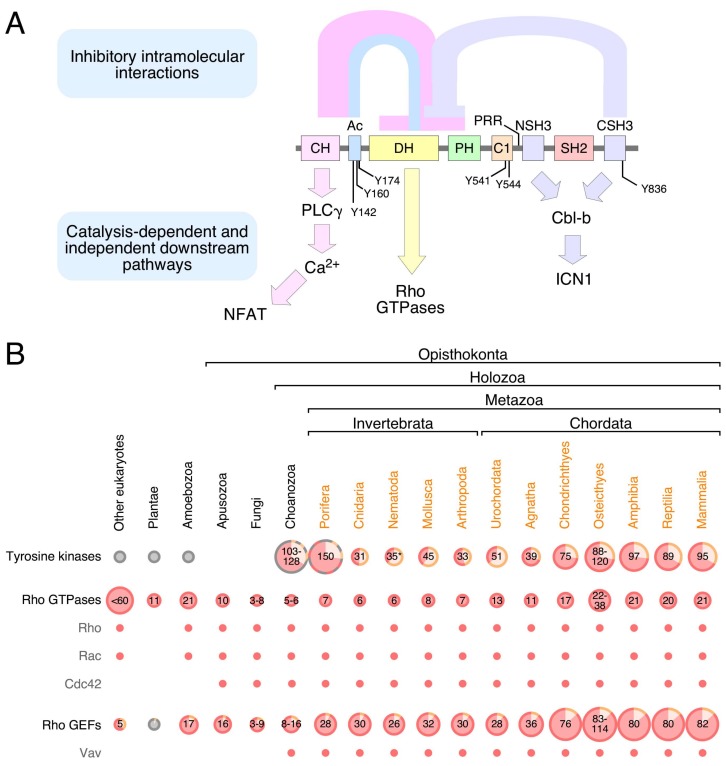
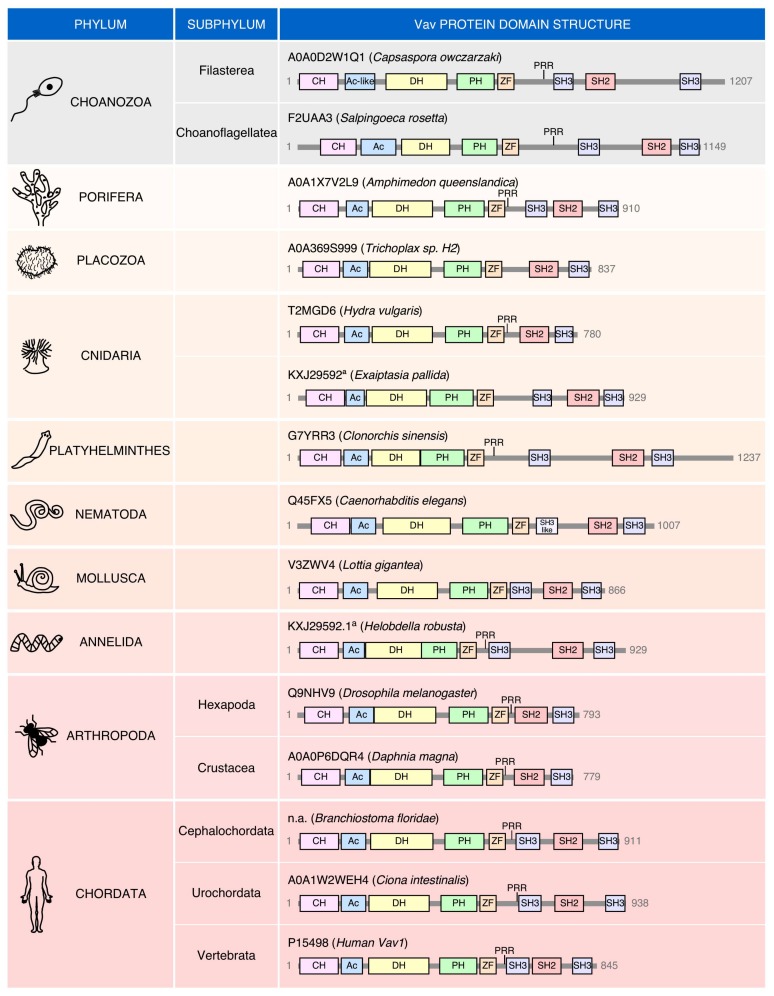
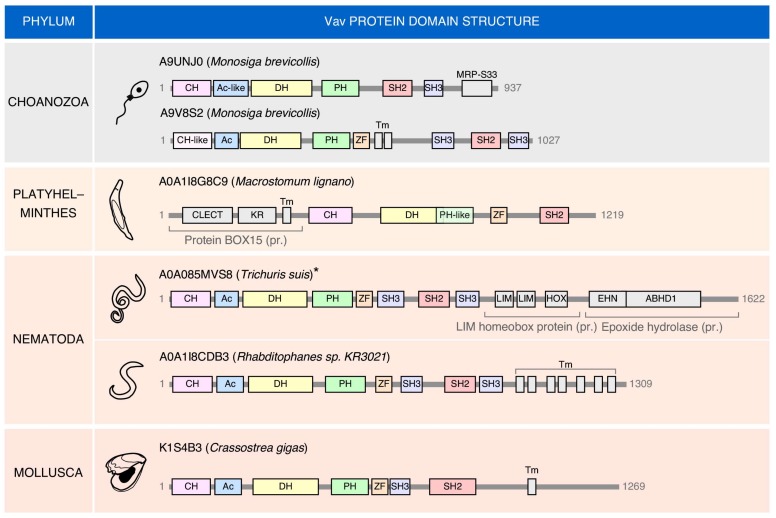
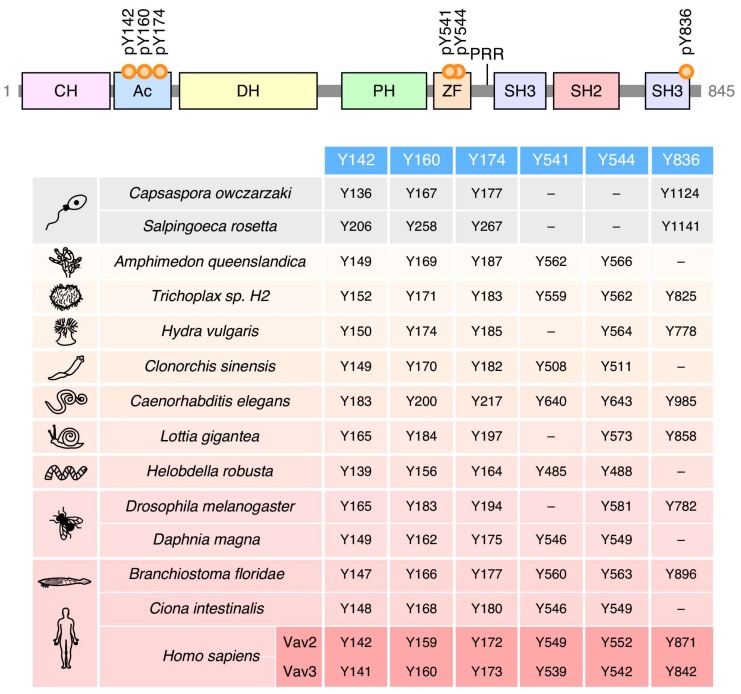
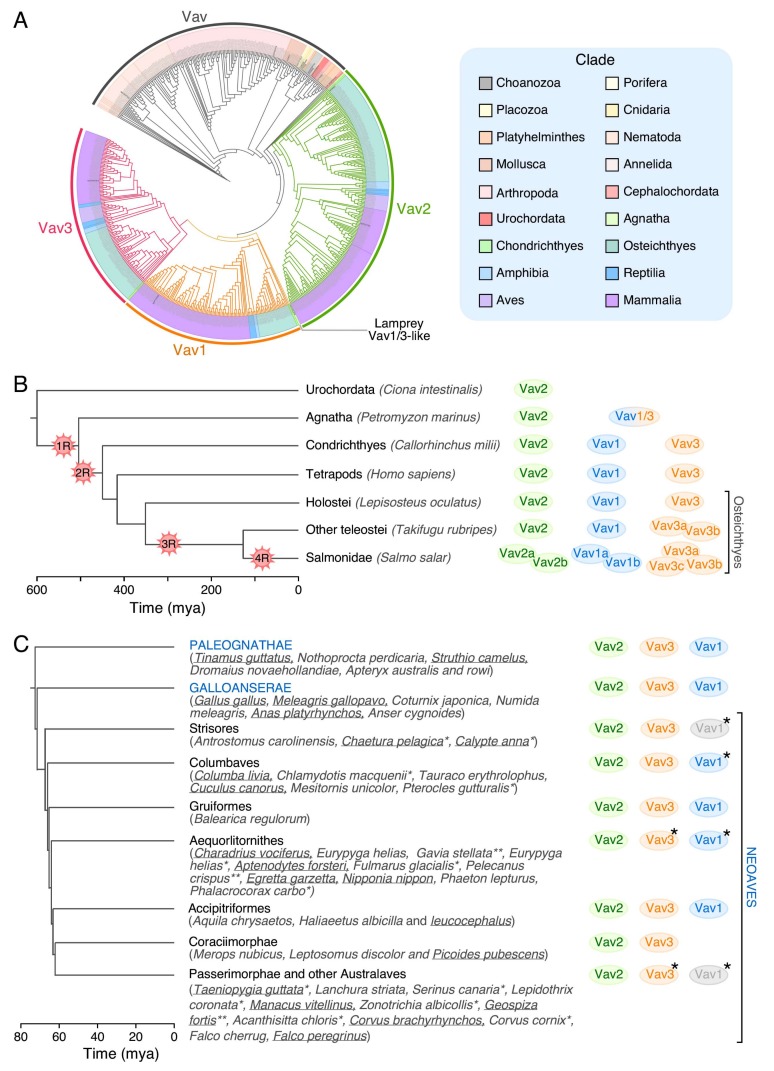
Vav proteins play roles as guanosine nucleotide exchange factors for Rho GTPases and signaling adaptors downstream of protein tyrosine kinases. The recent sequencing of the genomes of many species has revealed that this protein family originated in choanozoans, a group of unicellular organisms from which animal metazoans are believed to have originated from. Since then, the Vav family underwent expansions and reductions in its members during the evolutionary transitions that originated the agnates, chondrichthyes, some teleost fish, and some neoaves. Exotic members of the family harboring atypical structural domains can be also found in some invertebrate species. In this review, we will provide a phylogenetic perspective of the evolution of the Vav family. We will also pay attention to the structure, signaling properties, regulatory layers, and functions of Vav proteins in both invertebrate and vertebrate species.
Overview
The claims and statistics of this paper haven’t been checked yet.
Run the check — free, no account needed. It reads the open-access text and checks the sources it cites.
Integrity signals
Registry
Cites
Statistics
Figures
Verification
Claims the paper makes
The claims and statistics of this paper haven’t been checked yet.
Run the check — free, no account needed. It reads the open-access text and checks the sources it cites.
Claims other papers make about this one
Each is checked against this paper’s own text: does it say what the citing paper says it does?
In the citing paper
“Additionally, Lck regulates another RhoGEF known as Vav1, wherein this regulation may influence RhoA activation [53].”
From The Role of RhoH in TCR Signalling and Its Involvement in Diseases (2021) · cites this paper as [53]
Self-check
Percentages, sums and reported differences re-computed from the paper’s own numbers.
The self-check needs the paper’s full text.
Citations
Cites
Lysine acetylation targets protein complexes and co-regulates major cellular functions
Choudhary, C., Kumar, C., Gnad, F., Nielsen, M. L., Rehman, M., Walther, T. C., Olsen, J. V., & Mann, M. (2009) · Science · doi:10.1126/science.1175371 · Cited by 4,040
The sympathetic control of blood pressure
Guyenet, P. G. (2006) · Nature Reviews Neuroscience · doi:10.1038/nrn1902 · Cited by 1,863
GEF means go: turning on RHO GTPases with guanine nucleotide-exchange factors
Rossman, K. L., Der, C. J., & Sondek, J. (2005) · Nature Reviews Molecular Cell Biology · doi:10.1038/nrm1587 · Cited by 1,697
A comprehensive phylogeny of birds (Aves) using targeted next-generation DNA sequencing
Prum, R. O., Berv, J. S., Dornburg, A., Field, D. J., Townsend, J. P., Lemmon, E. M., & Lemmon, A. R. (2015) · Nature · doi:10.1038/nature15697 · Cited by 1,668
Distinct patterns of somatic genome alterations in lung adenocarcinomas and squamous cell carcinomas
Cancer Genome Atlas Research Network, Campbell, J. D., Alexandrov, A., Kim, J., Wala, J., Berger, A. H., Pedamallu, C. S., Shukla, S. A., Guo, G., Brooks, A. N., et al. (2016) · Nature Genetics · doi:10.1038/ng.3564 · Cited by 1,200
Comparative genomics reveals insights into avian genome evolution and adaptation
Zhang, G., Li, C., Li, Q., Li, B., Larkin, D. M., Lee, C., Storz, J. F., Antunes, A., Greenwold, M. J., Meredith, R. W., et al. (2014) · Science · doi:10.1126/science.1251385 · Cited by 1,055
Origin and evolution of the adaptive immune system: genetic events and selective pressures
Flajnik, M. F., & Kasahara, M. (2010) · Nature Reviews Genetics · doi:10.1038/nrg2703 · Cited by 931
A comprehensive phylogeny of birds (Aves) using targeted next-generation DNA sequencing
Prum, R. O., Berv, J. S., Dornburg, A., Field, D. J., Townsend, J. P., Lemmon, E. M., & Lemmon, A. R. (2016) · Nature · doi:10.1038/nature19417 · Cited by 928
Integrated molecular analysis of adult T cell leukemia/lymphoma
Kataoka, K., Nagata, Y., Kitanaka, A., Shiraishi, Y., Shimamura, T., Yasunaga, J.-I., Totoki, Y., Chiba, K., Sato-Otsubo, A., Nagae, G., et al. (2015) · Nature Genetics · doi:10.1038/ng.3415 · Cited by 794
Phosphotyrosine-dependent activation of Rac-1 GDP/GTP exchange by the vav proto-oncogene product
Crespo, P., Schuebel, K. E., Ostrom, A. A., Gutkind, J. S., & Bustelo, X. R. (1997) · Nature · doi:10.1038/385169a0 · Cited by 755
Self-citationGTP‐binding proteins of the Rho/Rac family: regulation, effectors and functions in vivo
Bustelo, X. R., Sauzeau, V., & Berenjeno, I. M. (2007) · BioEssays · doi:10.1002/bies.20558 · Cited by 656
Self-citationHypoxia-Inducible mir-210 Regulates Normoxic Gene Expression Involved in Tumor Initiation
Huang, X., Ding, L., Bennewith, K. L., Tong, R. T., Welford, S. M., Ang, K. K., Story, M. D., Le, Q., & Giaccia, A. J. (2009) · Molecular Cell · doi:10.1016/j.molcel.2009.09.006 · Cited by 637
Kiryluk, K., Li, Y., Scolari, F., Sanna-Cherchi, S., Choi, M., Verbitsky, M., Fasel, D., Lata, S., Prakash, S., Shapiro, S., et al. (2014) · Nature Genetics · doi:10.1038/ng.3118 · Cited by 628
Evolution of the Rho Family of Ras-Like GTPases in Eukaryotes
Boureux, A., Vignal, E., Faure, S., & Fort, P. (2007) · Molecular Biology and Evolution · doi:10.1093/molbev/msl145 · Cited by 447
The Origin of Animal Multicellularity and Cell Differentiation
(2017) · doi:10.1016/j.devcel.2017.09.016 · Cited by 419
vav, a novel human oncogene derived from a locus ubiquitously expressed in hematopoietic cells.
Katzav, S., Martin‐Zanca, D., & Barbacid, M. (1989) · The EMBO Journal · doi:10.1002/j.1460-2075.1989.tb08354.x · Cited by 410
The Ras protein superfamily: Evolutionary tree and role of conserved amino acids
Rojas, A. M., Fuentes, G., Rausell, A., & Valencia, A. (2012) · The Journal of Cell Biology · doi:10.1083/jcb.201103008 · Cited by 407
Aghazadeh, B., Lowry, W. E., Huang, X.-Y., & Rosen, M. K. (2000) · Cell · doi:10.1016/s0092-8674(00)00085-4 · Cited by 383
Margolis, B. L., Hu, P. J., Katzav, S., Li, W., Oliver, J. M., Ullrich, A., Weiss, A., & Schlessinger, J. (1992) · Nature · doi:10.1038/356071a0 · Cited by 349
Vav-family proteins in T-cell signalling
Tybulewicz, V. L. J. (2005) · Current Opinion in Immunology · doi:10.1016/j.coi.2005.04.003 · Cited by 342
Vav and SLP-76 Interact and Functionally Cooperate in IL-2 Gene Activation
Wu, J., Motto, D. G., Koretzky, G. A., & Weiss, A. (1996) · Immunity · doi:10.1016/s1074-7613(00)80485-9 · Cited by 333
VAV proteins as signal integrators for multi-subunit immune-recognition receptors
Turner, M., & Billadeau, D. D. (2002) · Nature reviews. Immunology · doi:10.1038/nri840 · Cited by 320
Vav3 regulates osteoclast function and bone mass
Faccio, R., Teitelbaum, S., Fujikawa, K., Chappel, J., Zallone, A., Tybulewicz, V., Ross, F., & Swat, W. (2005) · Nature Medicine · doi:10.1038/nm1194 · Cited by 304
Product of vav proto-oncogene defines a new class of tyrosine protein kinase substrates
Bustelo, X. R., Ledbetter, J. A., & Barbacid, M. (1992) · Nature · doi:10.1038/356068a0 · Cited by 296
Self-citationBiological and Regulatory Properties of Vav-3, a New Member of the Vav Family of Oncoproteins
Movilla, N., & Bustelo, X. R. (1999) · Molecular and Cellular Biology · doi:10.1128/mcb.19.11.7870 · Cited by 271
Self-citationVav2 Is an Activator of Cdc42, Rac1, and RhoA
Abe, K., Rossman, K. L., Liu, B., Ritola, K. D., Chiang, D., Campbell, S. L., Burridge, K., & Der, C. J. (2000) · Journal of Biological Chemistry · doi:10.1074/jbc.275.14.10141 · Cited by 262
Schuebel, K. E., Movilla, N., Rosa, J. L., & Bustelo, X. R. (1998) · The EMBO Journal · doi:10.1093/emboj/17.22.6608 · Cited by 261
Self-citationVav family GEFs link activated ephs to endocytosis and axon guidance
Cowan, C. W., Shao, Y. R., Sahin, M., Shamah, S. M., Lin, M. Z., Greer, P. L., Gao, S., Griffith, E. C., Brugge, J. S., & Greenberg, M. E. (2005) · Neuron · doi:10.1016/j.neuron.2005.03.019 · Cited by 246
Costello, P. S., Walters, A. E., Mee, P. J., Turner, M., Reynolds, L. F., Prisco, A., Sarner, N., Zamoyska, R., & Tybulewicz, V. L. J. (1999) · Proceedings of the National Academy of Sciences · doi:10.1073/pnas.96.6.3035 · Cited by 245
Ectopic expression of VAV1 reveals an unexpected role in pancreatic cancer tumorigenesis
Fernández-Zapico, M. E., Gonzalez-Paz, N. C., Weiss, E. A., Savoy, D. N., Molina, J. R., Fonseca, R., Smyrk, T. C., Chari, S. T., Urrutia, R. A., & Billadeau, D. D. (2005) · Cancer Cell · doi:10.1016/j.ccr.2004.11.024 · Cited by 221
Reynolds, L. F., Smyth, L. A., Norton, T., Freshney, N. W., Downward, J., Kioussis, D., & Tybulewicz, V. L. J. (2002) · The Journal of Experimental Medicine · doi:10.1084/jem.20011663 · Cited by 217
Manning, G., Young, S. L., Miller, W. T., & Zhai, Y. (2008) · Proceedings of the National Academy of Sciences · doi:10.1073/pnas.0801314105 · Cited by 216
Wang, R., Zhao, N., Li, S., Fang, J., Chen, M.-X., Yang, J., Jia, W.-H., Yuan, Y., & Zhuang, S. (2013) · Hepatology · doi:10.1002/hep.26373 · Cited by 214
p95vav associates with tyrosine-phosphorylated SLP-76 in antigen-stimulated T cells.
Tuosto, L., Michel, F., & Acuto, O. (1996) · The Journal of Experimental Medicine · doi:10.1084/jem.184.3.1161 · Cited by 191
Signal transduction through Vav-2 participates in humoral immune responses and B cell maturation
Doody, G. M., Bell, S. E., Vigorito, E., Clayton, E., McAdam, S., Tooze, R. M., Fernandez, C., Lee, I. J., & Turner, M. (2001) · Nature Immunology · doi:10.1038/88748 · Cited by 180
Park, J., Yang, J., Wenzel, A. T., Ramachandran, A., Lee, W. J., Daniels, J., Kim, J., Martínez-Escala, E., Amankulor, N. A., Pro, B., et al. (2017) · Blood · doi:10.1182/blood-2017-02-768234 · Cited by 177
O'Rourke, L. M., Tooze, R. M., Turner, M., Sandoval, D. M., Carter, R. H., Tybulewicz, V. L. J., & Fearon, D. T. (1998) · Immunity · doi:10.1016/s1074-7613(00)80568-3 · Cited by 175
A Functional T-Cell Receptor Signaling Pathway Is Required for p95vav Activity
Wu, J., Katzav, S., & Weiss, A. (1995) · Molecular and Cellular Biology · doi:10.1128/mcb.15.8.4337 · Cited by 173
López-Lago, M. A., Lee, H., Cruz, C., Movilla, N., & Bustelo, X. R. (2000) · Molecular and Cellular Biology · doi:10.1128/mcb.20.5.1678-1691.2000 · Cited by 172
Self-citationLIN-12/Notch Activation Leads to MicroRNA-Mediated Down-Regulation of Vav in C. elegans
Yoo, A. S., & Greenwald, I. (2005) · Science · doi:10.1126/science.1119481 · Cited by 167
Evolution of the phospho-tyrosine signaling machinery in premetazoan lineages
Pincus, D., Letunić, I., Peer Bork, B., & Lim, W. A. (2008) · Proceedings of the National Academy of Sciences · doi:10.1073/pnas.0803161105 · Cited by 165
Structural and Energetic Mechanisms of Cooperative Autoinhibition and Activation of Vav1
Yu, B., Martins, I. R. S., Li, P., Amarasinghe, G. K., Umetani, J., Fernandez-Zapico, M. E., Billadeau, D. D., Machius, M., Tomchick, D. R., & Rosen, M. K. (2010) · Cell · doi:10.1016/j.cell.2009.12.033 · Cited by 156
Gomez, T. S., Hamann, M. J., McCarney, S., Savoy, D. N., Lubking, C. M., Heldebrant, M. P., Labno, C. M., McKEAN, D. J., McNiven, M. A., Burkhardt, J. K., et al. (2005) · Nature Immunology · doi:10.1038/ni1168 · Cited by 154
Vav family exchange factors: an integrated regulatory and functional view
Bustelo, X. R. (2014) · Small GTPases · doi:10.4161/21541248.2014.973757 · Cited by 153
Self-citationWeng, W., Jarvis, L. J., & LeBien, T. W. (1994) · Journal of Biological Chemistry · doi:10.1016/s0021-9258(18)31664-8 · Cited by 145
Cavalier‐Smith, T. (2016) · Philosophical Transactions of the Royal Society B Biological Sciences · doi:10.1098/rstb.2015.0476 · Cited by 145
Hunter, S., Zhuang, G., Brantley‐Sieders, D. M., Swat, W., Cowan, C. W., & Chen, J. (2006) · Molecular and Cellular Biology · doi:10.1128/mcb.02215-05 · Cited by 144
Isolation and characterization of murine vav2, a member of the vav family of proto-oncogenes.
Schuebel, K. E., Bustelo, X. R., Nielsen, D. A., Song, B. J., Barbacid, M., Goldman, D. A., & Lee, I. J. (1996) · PubMed · Cited by 143
Self-citationAntagonistic Roles of Rac and Rho in Organizing the Germ Cell Microenvironment
Sarkar, A., Parikh, N., Hearn, S., Fuller, M. T., Tazuke, S. I., & Schulz, C. (2007) · Current Biology · doi:10.1016/j.cub.2007.06.048 · Cited by 134
Structural Determinants for the Biological Activity of Vav Proteins
Zugaza, J. L., López-Lago, M. A., Caloca, M. J., Dosil, M., Movilla, N., & Bustelo, X. R. (2002) · Journal of Biological Chemistry · doi:10.1074/jbc.m208039200 · Cited by 127
Self-citationVav3 proto-oncogene deficiency leads to sympathetic hyperactivity and cardiovascular dysfunction
Sauzeau, V., Sevilla, M. A., Rivas‐Elena, J. V., de Álava, E., Montero, M. J., López-Novoa, J. M., & Bustelo, X. R. (2006) · Nature Medicine · doi:10.1038/nm1426 · Cited by 125
Self-citationAbate, F., da Silva-Almeida, A. C., Zairis, S., Robles‐Valero, J., Couronné, L., Khiabanian, H., Quinn, S. A., Kim, M., Laginestra, M. A., Kim, C. G., et al. (2017) · Proceedings of the National Academy of Sciences · doi:10.1073/pnas.1608839114 · Cited by 123
Self-citationNovel recognition mode between Vav and Grb2 SH3 domains
Nishida, M., Nagata, K., Hachimori, Y., Horiuchi, M., Ogura, K., Mandiyan, V., Schlessinger, J., & Inagaki, F. (2001) · The EMBO Journal · doi:10.1093/emboj/20.12.2995 · Cited by 120
Boddicker, R. L., Razidlo, G. L., Dasari, S., Zeng, Y., Hu, G., Knudson, R. A., Greipp, P. T., Davila, J. I., Johnson, S. H., Porcher, J. C., et al. (2016) · Blood · doi:10.1182/blood-2016-03-707141 · Cited by 120
Govindan, J. A., Cheng, H., Harris, J. E., & Greenstein, D. (2006) · Current Biology · doi:10.1016/j.cub.2006.05.020 · Cited by 118
Cooperative interactions at the SLP‐76 complex are critical for actin polymerization
Barda‐Saad, M., Shirasu, N., Pauker, M. H., Hassan, N., Perl, O., Balbo, A., Yamaguchi, H., Houtman, J. C. D., Appella, E., Schuck, P., et al. (2010) · The EMBO Journal · doi:10.1038/emboj.2010.133 · Cited by 111
Citterio, C., Menacho-Márquez, M., García‐Escudero, R., Larive, R. M., Barreiro, O., Sánchez‐Madrid, F., Paramio, J. M., & Bustelo, X. R. (2012) · Science Signaling · doi:10.1126/scisignal.2002962 · Cited by 110
Self-citationReynolds, L. F., de Bettignies, C., Norton, T., Beeser, A. E., Chernoff, J., & Tybulewicz, V. L. J. (2004) · Journal of Biological Chemistry · doi:10.1074/jbc.m400257200 · Cited by 106
A Guanine Nucleotide Exchange Factor-independent Function of Vav1 in Transcriptional Activation
Kuhné, M. R., Ku, G., & Weiss, A. (2000) · Journal of Biological Chemistry · doi:10.1074/jbc.275.3.2185 · Cited by 103
CD28 costimulatory signal induces protein arginine methylation in T cells
Blanchet, F. P., Cardona, A., Letimier, F. A., Hershfield, M. S., & Acuto, O. (2005) · The Journal of Experimental Medicine · doi:10.1084/jem.20050176 · Cited by 103
Evolution of SH2 domains and phosphotyrosine signalling networks
Liu, B. A., & Nash, P. (2012) · Philosophical Transactions of the Royal Society B Biological Sciences · doi:10.1098/rstb.2012.0107 · Cited by 90
RHO GTPases in cancer: known facts, open questions, and therapeutic challenges
Bustelo, X. R. (2018) · Biochemical Society Transactions · doi:10.1042/bst20170531 · Cited by 89
Self-citationSon, H., Hwangbo, Y., Yoo, S., Im, S.-W., Yang, S., Kwak, S.-J., Park, M. S., Kwak, S. H., Cho, S. W., Ryu, J., et al. (2017) · Nature Communications · doi:10.1038/ncomms15966 · Cited by 87
Dong, Z., Liu, Y., Lu, S., Wang, A. Y., Lee, K., Wang, L., Revelo, M. P., & Lu, S. (2006) · Molecular Endocrinology · doi:10.1210/me.2006-0048 · Cited by 85
Insights into the Origin of Metazoan Filopodia and Microvilli
Sebé-Pedrós, A., Burkhardt, P., Sánchez-Pons, N., Fairclough, S. R., Lang, B. F., King, N., & Ruiz-Trillo, I. (2013) · Molecular Biology and Evolution · doi:10.1093/molbev/mst110 · Cited by 84
Crucial structural role for the PH and C1 domains of the Vav1 exchange factor
Rapley, J., Tybulewicz, V. L. J., & Rittinger, K. (2008) · EMBO Reports · doi:10.1038/embor.2008.80 · Cited by 83
Function of the Nucleotide Exchange Activity of Vav1 in T Cell Development and Activation
Saveliev, A., Vanes, L., Ksionda, O., Rapley, J., Smerdon, S. J., Rittinger, K., & Tybulewicz, V. L. J. (2009) · Science Signaling · doi:10.1126/scisignal.2000420 · Cited by 81
Vav1 Is a Component of Transcriptionally Active Complexes
Houlard, M., Arudchandran, R., Régnier, F., Germani, A., Gisselbrecht, S., Blank, U., Rivera, J., & Varin‐Blank, N. (2002) · The Journal of Experimental Medicine · doi:10.1084/jem.20011701 · Cited by 80
Identification of VAV2 on 9q34 and its exclusion as the tuberous sclerosis gene TSC1
Henske, E. P., Short, M. P., Jóźwiak, S., BOVEY, C. M., Ramlakhan, S. K., Haines, J. L., & Kwiatkowski, D. J. (1995) · Annals of Human Genetics · doi:10.1111/j.1469-1809.1995.tb01603.x · Cited by 80
Razidlo, G. L., Wang, Y., Chen, J., Krueger, E. W., Billadeau, D. D., & McNiven, M. A. (2013) · Developmental Cell · doi:10.1016/j.devcel.2013.02.010 · Cited by 79
Vav‐2 controls NFAT‐dependent transcription inB‐ but not T‐lymphocytes
Doody, G. M., Billadeau, D. D., Clayton, E., Hutchings, A., Berland, R., McAdam, S., Leibson, P. J., & Turner, M. (2000) · The EMBO Journal · doi:10.1093/emboj/19.22.6173 · Cited by 79
Vav Proteins Are Key Regulators of Card9 Signaling for Innate Antifungal Immunity
Roth, S., Bergmann, H., Jaeger, M., Yeroslaviz, A., Neumann, K., Koenig, P.-A., da Costa, C. P., Vanes, L., Kumar, V., Johnson, M. D., et al. (2016) · Cell Reports · doi:10.1016/j.celrep.2016.11.018 · Cited by 78
Self-citationCarvajal-González, J. M., Mulero‐Navarro, S., Román, Á., Sauzeau, V., Merino, J. M., Bustelo, X. R., & Fernández‐Salguero, P. M. (2009) · Molecular Biology of the Cell · doi:10.1091/mbc.e08-05-0451 · Cited by 77
Self-citationVav mediates Ras stimulation by direct activation of the GDP/GTP exchange factor Ras GRP1
Caloca, M. J., Zugaza, J. L., Matallanas, D., Crespo, P., & Bustelo, X. R. (2003) · The EMBO Journal · doi:10.1093/emboj/cdg316 · Cited by 75
Self-citationLyons, L. S., & Burnstein, K. L. (2005) · Molecular Endocrinology · doi:10.1210/me.2005-0346 · Cited by 75
Encyclopedia of Signaling Molecules
Darribère, T., Bigard, X. A., & Beaudry, M. (2016) · Springer eBooks · doi:10.1007/978-1-4614-6438-9 · Cited by 70
How Vav proteins discriminate the GTPases Rac1 and RhoA from Cdc42
Movilla, N., Dosil, M., Zheng, Y., & Bustelo, X. R. (2001) · Oncogene · doi:10.1038/sj.onc.1205000 · Cited by 69
Self-citationFort, P., & Blangy, A. (2017) · Genome Biology and Evolution · doi:10.1093/gbe/evx100 · Cited by 68
Loss ofVav2Proto-Oncogene Causes Tachycardia and Cardiovascular Disease in Mice
Sauzeau, V., Jerkić, M., López-Novoa, J. M., & Bustelo, X. R. (2007) · Molecular Biology of the Cell · doi:10.1091/mbc.e06-09-0877 · Cited by 67
Self-citationSauzeau, V., Carvajal-González, J. M., Riolobos, A. S., Sevilla, M. A., Menacho-Márquez, M., Román, Á., Abad, A., Montero, M. J., Fernández‐Salguero, P. M., & Bustelo, X. R. (2010) · Journal of Biological Chemistry · doi:10.1074/jbc.m110.187534 · Cited by 66
Self-citationNorman, K. R., Fazzio, R. T., Mellem, J. E., Espelt, M. V., Strange, K. B., Beckerle, M. C., & Maricq, A. V. (2005) · Cell · doi:10.1016/j.cell.2005.08.001 · Cited by 66
A Role for VAV1 in Experimental Autoimmune Encephalomyelitis and Multiple Sclerosis
Jagodic, M., Colacios, C., Nohra, R. G., Dejean, A. S., Beyeen, A. D., Khademi, M., Casemayou, A., Lamouroux, L., Duthoit, C. T., Papapietro, O., et al. (2009) · Science Translational Medicine · doi:10.1126/scitranslmed.3000278 · Cited by 66
Regulation of Vav Localization in Membrane Rafts by Adaptor Molecules Grb2 and BLNK
Johmura, S., Oh‐hora, M., Inabe, K., Nishikawa, Y., Hayashi, K., Vigorito, E., Kitamura, D., Turner, M., Shingu, K., Hikida, M., et al. (2003) · Immunity · doi:10.1016/s1074-7613(03)00139-0 · Cited by 65
Sauzeau, V., Sevilla, M. A., Montero, M. J., & Bustelo, X. R. (2009) · Journal of Clinical Investigation · doi:10.1172/jci38356 · Cited by 64
Self-citationPuga, I., Rao, A., & Macián, F. (2008) · Immunity · doi:10.1016/j.immuni.2008.06.010 · Cited by 64
Structural Basis of Guanine Nucleotide Exchange Mediated by the T-Cell Essential Vav1
Chrencik, J., Brooun, A., Zhang, H., Mathews, I. I., Hura, G. L., Foster, S. A., Perry, J. J. P., Streiff, M. B., Ramage, P., Widmer, H., et al. (2008) · Journal of Molecular Biology · doi:10.1016/j.jmb.2008.05.024 · Cited by 61
Hale, C. F., Dietz, K. C., Varela, J. A., Wood, C. B., Zirlin, B. C., Leverich, L. S., Greene, R. W., & Cowan, C. W. (2011) · Journal of Neuroscience · doi:10.1523/jneurosci.0685-11.2011 · Cited by 58
Rao, S., Lyons, L. S., Fahrenholtz, C. D., Wu, F., Farooq, A., Balkan, W., & Burnstein, K. L. (2011) · Oncogene · doi:10.1038/onc.2011.273 · Cited by 55
Gaud, G., Roncagalli, R., Chaoui, K., Bernard, I., Familiades, J., Colacios, C., Kassem, S., Monsarrat, B., Burlet‐Schiltz, O., de Peredo, A. G., et al. (2018) · Science Signaling · doi:10.1126/scisignal.aar3083 · Cited by 54
Identification of a Vav2-dependent mechanism for GDNF/Ret control of mesolimbic DAT trafficking
Zhu, S., Zhao, C., Wu, Y., Yang, Q., Shao, A., Wang, T., Wu, J., Yin, Y., Li, Y., Hou, J., et al. (2015) · Nature Neuroscience · doi:10.1038/nn.4060 · Cited by 52
Self-citationThe C-Terminal SH3 Domain Contributes to the Intramolecular Inhibition of Vav Family Proteins
Barreira, M., Fabbiano, S., Couceiro, J. R., Torreira, E., Martinez-Torrecuadrada, J. L., Montoya, G., Llorca, Ó., & Bustelo, X. R. (2014) · Science Signaling · doi:10.1126/scisignal.2004993 · Cited by 52
Self-citationDuan, L., Raja, S. M., Chen, G., Virmani, S., Williams, S. H., Clubb, R. J., Mukhopadhyay, C., Rainey, M. A., Ying, G., Dimri, M., et al. (2011) · Journal of Biological Chemistry · doi:10.1074/jbc.m110.188086 · Cited by 49
Fernández-Espartero, C. H., Ramel, D., Farago, M., Malartre, M., Luque, C. M., Limanovich, S., Katzav, S., Emery, G., & Martin-Bermudo, M. D. (2013) · Journal of Cell Science · doi:10.1242/jcs.124438 · Cited by 48
Charvet, C., Canonigo-Balancio, A. J., Billadeau, D. D., & Altman, A. (2005) · Journal of Biological Chemistry · doi:10.1074/jbc.m500275200 · Cited by 46
Vav3-deficient Mice Exhibit a Transient Delay in Cerebellar Development
Quevedo, C., Sauzeau, V., Menacho-Márquez, M., Castro-Castro, A., & Bustelo, X. R. (2010) · Molecular Biology of the Cell · doi:10.1091/mbc.e09-04-0292 · Cited by 46
Self-citationPauker, M. H., Hassan, N., Noy, E., Reicher, B., & Barda‐Saad, M. (2012) · Science Signaling · doi:10.1126/scisignal.2002423 · Cited by 44
Sylvain, N. R., Nguyen, K. C., & Bunnell, S. C. (2011) · Science Signaling · doi:10.1126/scisignal.2001178 · Cited by 43
Robles‐Valero, J., Lorenzo‐Martín, L. F., Menacho-Márquez, M., Fernández‐Pisonero, I., Abad, A., Camós, M., Toribio, M. L., Espinosa, L., Bigas, A., & Bustelo, X. R. (2017) · Cancer Cell · doi:10.1016/j.ccell.2017.10.004 · Cited by 43
Self-citationMechanism and function of Vav1 localization in TCR signaling
Ksionda, O., Saveliev, A., Köchl, R., Rapley, J., Faroudi, M., Smith‐Garvin, J. E., Wülfing, C., Rittinger, K., Carter, T. D., & Tybulewicz, V. L. J. (2012) · Journal of Cell Science · doi:10.1242/jcs.105148 · Cited by 42
Inverted signaling hierarchy between RAS and RAC in T-lymphocytes
Zugaza, J. L., Caloca, M. J., & Bustelo, X. R. (2004) · Oncogene · doi:10.1038/sj.onc.1207768 · Cited by 42
Self-citationVav3-induced cytoskeletal dynamics contribute to heterotypic properties of endothelial barriers
Hilfenhaus, G., Nguyen, D. P., Freshman, J., Prajapati, D. P., Ma, F., Song, D., Ziyad, S., Cuadrado, M., Pellegrini, M. A., Bustelo, X. R., et al. (2018) · The Journal of Cell Biology · doi:10.1083/jcb.201706041 · Cited by 41
Self-citationRho GTPases: Deciphering the Evolutionary History of a Complex Protein Family
Eliáš, M., & Klimeš, V. (2011) · Methods in molecular biology · doi:10.1007/978-1-61779-442-1_2 · Cited by 40
Fabbiano, S., Menacho-Márquez, M., Robles‐Valero, J., Pericacho, M., Matesanz-Marín, A., García-Macías, C., Sevilla, M. A., Montero, M. J., Alarcón, B., López-Novoa, J. M., et al. (2015) · Molecular and Cellular Biology · doi:10.1128/mcb.00518-15 · Cited by 38
Self-citationMenacho-Márquez, M., Nogueiras, R., Fabbiano, S., Sauzeau, V., Al–Massadi, O., Diéguez, C., & Bustelo, X. R. (2013) · Cell Metabolism · doi:10.1016/j.cmet.2013.07.001 · Cited by 36
Self-citationSauzeau, V., Horta‐Júnior, J. D. A. C., Riolobos, A. S., Fernández, G., Sevilla, M. A., López, D. E., Montero, M. J., Rico, B., & Bustelo, X. R. (2010) · Molecular Biology of the Cell · doi:10.1091/mbc.e10-07-0639 · Cited by 36
Self-citationWhole Genome Duplications Shaped the Receptor Tyrosine Kinase Repertoire of Jawed Vertebrates
Brunet, F., Volff, J., & Schartl, M. (2016) · Genome Biology and Evolution · doi:10.1093/gbe/evw103 · Cited by 35
VAV-1 acts in a single interneuron to inhibit motor circuit activity in Caenorhabditis elegans
Fry, A. L., Laboy, J. T., & Norman, K. R. (2014) · Nature Communications · doi:10.1038/ncomms6579 · Cited by 34
Hofmann, T. G., Hehner, S. P., Dröge, W., & Schmitz, M. L. (2000) · Oncogene · doi:10.1038/sj.onc.1203406 · Cited by 33
The Guanine Exchange FactorvavControls Axon Growth and Guidance duringDrosophilaDevelopment
Malartre, M., Ayaz, D., Amador, F. F., & Martin-Bermudo, M. D. (2010) · Journal of Neuroscience · doi:10.1523/jneurosci.1820-09.2010 · Cited by 32
Zhou, Z. L., Yin, J., Dou, Z., Tang, J., Zhang, C., & Cao, Y. (2007) · Journal of Biological Chemistry · doi:10.1074/jbc.m702975200 · Cited by 31
EZH2 promotes neoplastic transformation through VAV interaction-dependent extranuclear mechanisms
Venkatesan, N., Wong, J. F., Tan, K. P., Chung, H. H., Yau, Y. H., Cukuroglu, E., Allahverdi, A., Nordenskiöld, L., Göke, J., Shochat, S. G., et al. (2017) · Oncogene · doi:10.1038/onc.2017.309 · Cited by 30
Ulc, A., Zeug, A., Bauch, J., van Leeuwen, S., Kuhlmann, T., ffrench‐Constant, C., Ponimaskin, E. G., & Faissner, A. (2018) · Glia · doi:10.1002/glia.23548 · Cited by 29
Vav proteins are necessary for correct differentiation of mouse cecal and colonic enterocytes
Liu, J. Y., Seno, H., Miletic, A. V., Mills, J. C., Swat, W., & Stappenbeck, T. S. (2009) · Journal of Cell Science · doi:10.1242/jcs.033720 · Cited by 25
Shb links SLP‐76 and Vav with the CD3 complex in Jurkat T cells
Lindholm, C. K., Henriksson, M. L., Hallberg, B., & Welsh, M. (2002) · European Journal of Biochemistry · doi:10.1046/j.1432-1033.2002.03008.x · Cited by 24
Phylogenetic conservation of the regulatory and functional properties of the Vav oncoprotein family
Couceiro, J. R., Martin-Bermudo, M. D., & Bustelo, X. R. (2005) · Experimental Cell Research · doi:10.1016/j.yexcr.2005.04.035 · Cited by 24
Self-citationThe p.Arg63Trp polymorphism controls Vav1 functions and Foxp3 regulatory T cell development
Colacios, C., Casemayou, A., Dejean, A. S., Gaits‐Iacovoni, F., Pedros, C., Bernard, I., Lagrange, D., Deckert, M., Lamouroux, L., Jagodic, M., et al. (2011) · The Journal of Experimental Medicine · doi:10.1084/jem.20102191 · Cited by 24
Caloca, M. J., Zugaza, J. L., & Bustelo, X. R. (2008) · Journal of Biological Chemistry · doi:10.1074/jbc.m803814200 · Cited by 23
Self-citationAssociation of VAV2 and VAV3 polymorphisms with cardiovascular risk factors
Perretta‐Tejedor, N., Fernández-Mateos, J., García‐Ortiz, L., Gómez-Marcos, M. Á., Recio-Rodriguez, J. I., Agudo‐Conde, C., Rodríguez‐Sánchez, E., Morales, A. I., López-Hernández, F. J., López-Novoa, J. M., et al. (2017) · Scientific Reports · doi:10.1038/srep41875 · Cited by 23
Ilan, L., & Katzav, S. (2012) · PLoS ONE · doi:10.1371/journal.pone.0029939 · Cited by 22
Ogura, K., Nagata, K., Horiuchi, M., Ebisui, E., Hasuda, T., Yuzawa, S., Nishida, M., Hatanaka, H., & Inagaki, F. (2002) · Journal of Biomolecular NMR · doi:10.1023/a:1013868731495 · Cited by 20
Fry, A. L., Laboy, J. T., Huang, H., Hart, A. C., & Norman, K. R. (2016) · Genetics · doi:10.1534/genetics.115.183038 · Cited by 20
Cavalier‐Smith, T. (2017) · Philosophical Transactions of the Royal Society B Biological Sciences · doi:10.1098/rstb.2017.0001 · Cited by 20
New insights into the Vav1 activation cycle in lymphocytes
Barreira, M., Rodríguez‐Fdez, S., & Bustelo, X. R. (2018) · Cellular Signalling · doi:10.1016/j.cellsig.2018.01.026 · Cited by 19
Self-citationLorenzo‐Martín, L. F., Citterio, C., Menacho-Márquez, M., Conde, J., Larive, R. M., Rodríguez‐Fdez, S., García‐Escudero, R., Robles‐Valero, J., Cuadrado, M., Fernández‐Pisonero, I., et al. (2018) · Oncogene · doi:10.1038/s41388-018-0433-7 · Cited by 18
Self-citationEiger-induced cell death relies on Rac1-dependent endocytosis
Ruan, W., Srinivasan, A., Lin, S., Kara, K.-I., & Barker, P. A. (2016) · Cell Death and Disease · doi:10.1038/cddis.2016.80 · Cited by 16
Guerreiro‐Cacais, A. O., Norin, U., Gyllenberg, A., Berglund, R., Beyeen, A. D., Petit, É., Cornélis, F., Saoudi, A., Fournié, G. J., Holmdahl, R., et al. (2017) · Genes and Immunity · doi:10.1038/gene.2016.49 · Cited by 16
Vagal afferents contribute to sympathoexcitation-driven metabolic dysfunctions
Lorenzo‐Martín, L. F., Menacho-Márquez, M., Fabbiano, S., Al–Massadi, O., Abad, A., Rodríguez‐Fdez, S., Sevilla, M. A., Montero, M. J., Diéguez, C., Nogueiras, R., et al. (2019) · Journal of Endocrinology · doi:10.1530/joe-18-0623 · Cited by 16
Self-citationMartin-Bermudo, M. D., Bardet, P., Bellaïche, Y., & Malartre, M. (2015) · Development · doi:10.1242/dev.110585 · Cited by 15
Luft, V., Reinhard, J., Shibuya, M., Fischer, K., & Faissner, A. (2014) · Cell and Tissue Research · doi:10.1007/s00441-014-2050-2 · Cited by 15
Kassem, S., Gaud, G., Bernard, I., Benamar, M., Dejean, A. S., Liblau, R., Fournié, G. J., Colacios, C., MALISSEN, B., & Saoudi, A. (2016) · PLoS Genetics · doi:10.1371/journal.pgen.1006185 · Cited by 15
Rho guanosine nucleotide exchange factors are not such bad guys after all in cancera
Robles‐Valero, J., Lorenzo‐Martín, L. F., Fernández‐Pisonero, I., & Bustelo, X. R. (2018) · Small GTPases · doi:10.1080/21541248.2018.1423851 · Cited by 14
Self-citationWhat Have We Learned from SH2 Domains?
Mayer, B. J. (2017) · Methods in molecular biology · doi:10.1007/978-1-4939-6762-9_2 · Cited by 10
Bernard, I., Sacquin, A., Kassem, S., Benamar, M., Colacios, C., Gador, M., Pérals, C., Fazilleau, N., & Saoudi, A. (2018) · Frontiers in Immunology · doi:10.3389/fimmu.2018.02399 · Cited by 9
LIME Mediates Immunological Synapse Formation through Activation of VAV
Son, M., Park, I., Lee, O., Rhee, I., Park, C., & Yun, Y. (2012) · Molecules and Cells · doi:10.1007/s10059-012-0011-8 · Cited by 8
Wang, R., Wang, J., Zhang, N., Wan, Y., Liu, Y., Zhang, L., Pan, S., Zhang, C., Zhang, H., & Cao, Y. (2019) · Biochemical and Biophysical Research Communications · doi:10.1016/j.bbrc.2019.02.108 · Cited by 8
The interaction effect of rs4077515 and rs17019602 increases the susceptibility to IgA nephropathy
Wu, C. W., Li, G., & Wang, L. (2017) · Oncotarget · doi:10.18632/oncotarget.20401 · Cited by 7
Liu, A., He, F., & Gu, X. (2017) · Molecular Genetics and Genomics · doi:10.1007/s00438-017-1356-7 · Cited by 6
Stage-specific control of niche positioning and integrity in the Drosophila testis
Schardt, L., Ander, J.-J., Lohmann, I., & Papagiannouli, F. (2015) · Mechanisms of Development · doi:10.1016/j.mod.2015.07.009 · Cited by 5
Guerreiro‐Cacais, A. O., Norin, U., Gyllenberg, A., Berglund, R., Beyeen, A. D., Petit, É., Cornélis, F., Saoudi, A., Fournié, G. J., Holmdahl, R., et al. (2017) · Genes and Immunity · doi:10.1038/gene.2017.7 · Cited by 4
An unexpected tumor suppressor role for VAV1a
Bustelo, X. R., Lorenzo‐Martín, L. F., Cuadrado, M., Fernández‐Pisonero, I., & Robles‐Valero, J. (2018) · Molecular & Cellular Oncology · doi:10.1080/23723556.2018.1432257 · Cited by 3
Self-citation
Research works printed but not linked: 1
- Ksionda, 2012, Mechanism and function of Vav1 localisation in TCR signalling, J. Cell Sci., 125, 5302
Cited by
The Role of RhoH in TCR Signalling and Its Involvement in Diseases
Ahmad Mokhtar, A. M., Hashim, I. F., Mohd Zaini Makhtar, M., Salikin, N. H., & Amin-Nordin, S. (2021) · Cells · doi:10.3390/cells10040950 · Cited by 25
Metadata
- Authors
- Rodríguez-Fdez, S., & Bustelo, X. R.
- Affiliations
- Centro de Investigación del Cáncer, Consejo Superior de Investigaciones Científicas (CSIC) and University of Salamanca, Campus Unamuno, E37007 Salamanca, Spain
- Venue
- Cells
- Publisher
- MDPI AG
- Published
- 2019-05-16
- Volume
- 8
- Issue
- 5
- Pages
- 465
- ISSN
- 2073-4409
- PMC
- PMC6562523
- Cited by
- 63
- References
- 140
- Language
- en
- Funders
- Consejería de Educación, Junta de Castilla y León (CSI049U16, CLC–2017–01)
- Ministerio de Ciencia e Innovación (SAF2015–64556–R, BES–2013–063573)
- Fundación Ramón Areces (N/A)
- Fundación Científica Asociación Española Contra el Cáncer (GC16173472GARC)
About these checks
Registry, retraction, Cites and statistics results are computed, not judged, with one exception: a printed reference that no index lists is read once by a model before it counts as a citation error. Claims are extracted by a model and kept only when their quote appears verbatim in the text; each cited source is then checked, with a model’s help, for whether it says what the claim relies on. Those verdicts can be wrong — read the claim’s quote and the cited source before relying on one.
Statistics and arithmetic are recomputed, not judged.
Confidence bands are shown only for fields calibrated on our annotated test set. None is calibrated yet, so no band is shown.
What counts as a claim ›How we measure confidence ›How we check this ›
Are you an author, or do you see a problem with this page? Request a review
Data sources
Bibliographic data: Semantic Scholar, OpenAlex, Crossref.
Contains information from the Semantic Scholar Academic Graph Datasets, made available under the ODC Attribution License (ODC-BY 1.0).
Semantic Scholar’s data is described in: Kinney, R., et al. (2023). The Semantic Scholar Open Data Platform. arXiv:2301.10140.
