

The DOI matches its Crossref record; 17 of the 17 references it cites were found in a registry or an index.
MPN: The Molecular Drivers of Disease Initiation, Progression and Transformation and their Effect on Treatment
Abstract
Myeloproliferative neoplasms (MPNs) constitute a group of disorders identified by an overproduction of cells derived from myeloid lineage. The majority of MPNs have an identifiable driver mutation responsible for cytokine-independent proliferative signalling. The acquisition of coexisting mutations in chromatin modifiers, spliceosome complex components, DNA methylation modifiers, tumour suppressors and transcriptional regulators have been identified as major pathways for disease progression and leukemic transformation. They also confer different sensitivities to therapeutic options. This review will explore the molecular basis of MPN pathogenesis and specifically examine the impact of coexisting mutations on disease biology and therapeutic options.
Overview
The claims and statistics of this paper haven’t been checked yet.
Run the check — free, no account needed. It reads the open-access text and checks the sources it cites.
Integrity signals
Registry
Cites
Statistics
Figures
Verification
Claims the paper makes
The claims and statistics of this paper haven’t been checked yet.
Run the check — free, no account needed. It reads the open-access text and checks the sources it cites.
Claims other papers make about this one
Each is checked against this paper’s own text: does it say what the citing paper says it does?
In the citing paper
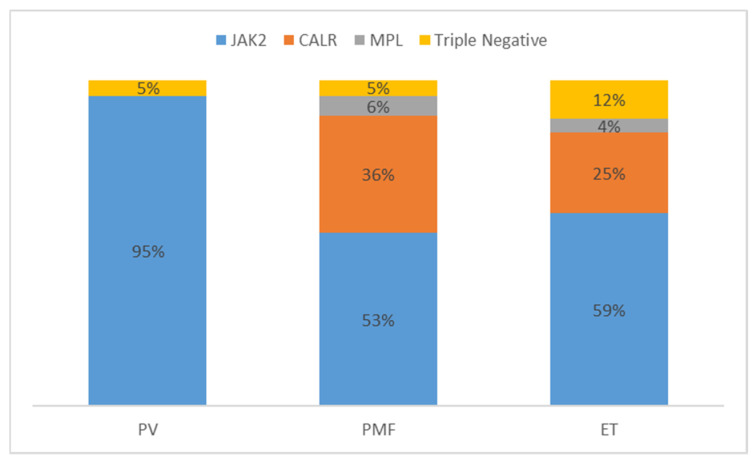
“We treated primary BMMNCs from patients with PV, 95% of which harbor the JAK2V617F mutation3, with JAK2 inhibitor (ruxolitinib) or vehicle.”
From Gadd45g insufficiency drives the pathogenesis of myeloproliferative neoplasms (2024) · cites this paper as [3]
In the citing paper
“Somatic mutations are closely associated with MPNs3.”
From Gadd45g insufficiency drives the pathogenesis of myeloproliferative neoplasms (2024) · cites this paper as [3]
In the citing paper
“JAK2V617F mutation is reported to induce the activation of NF-κB and STAT33,39, as well as constitutive expression of c-Myc40 in MPNs.”
From Gadd45g insufficiency drives the pathogenesis of myeloproliferative neoplasms (2024) · cites this paper as [3]
Self-check
Percentages, sums and reported differences re-computed from the paper’s own numbers.
The self-check needs the paper’s full text.
Citations
Cites
Arber, D. A., Orazi, A., Hasserjian, R., Thiele, J., Borowitz, M. J., Le Beau, M. M., Bloomfield, C. D., Cazzola, M., & Vardiman, J. W. (2016) · Blood · doi:10.1182/blood-2016-03-643544 · Cited by 10,119
Clonal hematopoiesis and blood-cancer risk inferred from blood DNA sequence
Genovese, G., Kähler, A. K., Handsaker, R. E., Lindberg, J., Rose, S. A., Bakhoum, S. F., Chambert, K., Mick, E., Neale, B. M., Fromer, M., et al. (2014) · New England Journal of Medicine · doi:10.1056/nejmoa1409405 · Cited by 3,531
A double-blind, placebo-controlled trial of ruxolitinib for myelofibrosis
Verstovsek, S., Mesa, R. A., Gotlib, J., Levy, R. S., Gupta, V., DiPersio, J. F., Catalano, J. V., Deininger, M., Miller, C., Silver, R. T., et al. (2012) · New England Journal of Medicine · doi:10.1056/nejmoa1110557 · Cited by 2,103
Somatic Mutations of Calreticulin in Myeloproliferative Neoplasms
Klampfl, T., Gisslinger, H., Harutyunyan, A. S., Nivarthi, H., Rumi, E., Milosevic, J. D., Them, N. C. C., Berg, T., Gisslinger, B., Pietra, D., et al. (2013) · New England Journal of Medicine · doi:10.1056/nejmoa1311347 · Cited by 2,003
IDH mutation impairs histone demethylation and results in a block to cell differentiation
Lu, C., Ward, P. S., Kapoor, G. S., Rohle, D., Turcan, S., Abdel-Wahab, O., Edwards, C. R., Khanin, R., Figueroa, M. E., Melnick, A., et al. (2012) · Nature · doi:10.1038/nature10860 · Cited by 1,985
Spliceosome Structure and Function
Will, C. L., & Luhrmann, R. (2011) · Cold Spring Harbor Perspectives in Biology · doi:10.1101/cshperspect.a003707 · Cited by 1,829
Mutation in TET2 in Myeloid Cancers
Delhommeau, F., Dupont, S., Valle, V. D., James, C., Trannoy, S., Massé, A., Kosmider, O., Le Couedic, J.-P., Robert, F., Alberdi, A., et al. (2009) · New England Journal of Medicine · doi:10.1056/nejmoa0810069 · Cited by 1,776
Somatic CALR Mutations in Myeloproliferative Neoplasms with Nonmutated JAK2
Nangalia, J., Massie, C. E., Baxter, E. J., Nice, F. L., Gundem, G., Wedge, D. C., Avezov, E., Li, J., Kollmann, K., Kent, D. G., et al. (2013) · New England Journal of Medicine · doi:10.1056/nejmoa1312542 · Cited by 1,756
IFNα activates dormant haematopoietic stem cells in vivo
Essers, M. A. G., Offner, S., Blanco-Bose, W. E., Waibler, Z., Kalinke, U., Duchosal, M. A., & Trumpp, A. (2009) · Nature · doi:10.1038/nature07815 · Cited by 1,368
Somatic SF3B1 Mutation in Myelodysplasia with Ring Sideroblasts
Papaemmanuil, E., Cazzola, M., Boultwood, J., Malcovati, L., Vyas, P., Bowen, D., Pellagatti, A., Wainscoat, J. S., Hellstrom-Lindberg, E., Gambacorti-Passerini, C., et al. (2011) · New England Journal of Medicine · doi:10.1056/nejmoa1103283 · Cited by 1,222
Inactivating mutations of the histone methyltransferase gene EZH2 in myeloid disorders
Ernst, T., Chase, A. J., Score, J., Hidalgo-Curtis, C. E., Bryant, C., Jones, A. V., Waghorn, K., Zoi, K., Ross, F. M., Reiter, A., et al. (2010) · Nature Genetics · doi:10.1038/ng.621 · Cited by 1,139
The multiple mechanisms that regulate p53 activity and cell fate
Hafner, A., Bulyk, M. L., Jambhekar, A., & Lahav, G. (2019) · Nature Reviews Molecular Cell Biology · doi:10.1038/s41580-019-0110-x · Cited by 1,129
SRSF2 Mutations Contribute to Myelodysplasia by Mutant-Specific Effects on Exon Recognition
Kim, E., Ilagan, J. O., Liang, Y., Daubner, G. M., Lee, S. C.-W., Ramakrishnan, A., Li, Y., Chung, Y. R., Micol, J.-B., Murphy, M. E., et al. (2015) · Cancer Cell · doi:10.1016/j.ccell.2015.04.006 · Cited by 575
Obeng, E. A., Chappell, R. J., Seiler, M., Chen, M. C., Campagna, D. R., Schmidt, P. J., Schneider, R. K., Lord, A. M., Wang, L., Gambe, R. G., et al. (2016) · Cancer Cell · doi:10.1016/j.ccell.2016.08.006 · Cited by 380
Somatic mutations and cell identity linked by Genotyping of Transcriptomes
Nam, A. S., Kim, K.-T., Chaligne, R., Izzo, F., Ang, C., Taylor, J., Myers, R. M., Abu-Zeinah, G., Brand, R., Omans, N. D., et al. (2019) · Nature · doi:10.1038/s41586-019-1367-0 · Cited by 333 · cited 4×
“In comparison, MF shows no difference in gene enrichment between MkPs and HSCs. Additionally, mutant MkPs show upregulated TGFβ with the degree of upregulation correlating with the degree of fibrosis seen in MF and ET [60].”
BackgroundInfluentialEnnishi, D., Takata, K., Béguelin, W., Duns, G., Mottok, A., Farinha, P., Bashashati, A., Saberi, S., Boyle, M., Meissner, B., et al. (2019) · Cancer Discovery · doi:10.1158/2159-8290.cd-18-1090 · Cited by 318 · cited 1×
“Commitment of HSCs or MPPs to specific lineages requires the removal of the H3K27me3 mark at the loci of master transcription factor regulators of lineage [95,96].”
BackgroundDNA methylation disruption reshapes the hematopoietic differentiation landscape
Izzo, F., Lee, S. C., Poran, A., Chaligne, R., Gaiti, F., Gross, B., Murali, R. R., Deochand, S. D., Ang, C., Jones, P. W., et al. (2020) · Nature Genetics · doi:10.1038/s41588-020-0595-4 · Cited by 236
Research works printed but not linked: 195
- Heppner, J., Nguyen, L.T., Guo, M., Naugler, C., and Rashid-Kolvear, F. (2019). Incidence of myeloproliferative neoplasms in Calgary, Alberta, Canada. BMC Res. Notes, 12. · DOI
- Cerquozzi, 2015, Blast transformation and fibrotic progression in polycythemia vera and essential thrombocythemia: A literature review of incidence and risk factors, Blood Cancer J., 5, e366, 10.1038/bcj.2015.95 · DOI
- Tefferi, 2013, Survival and prognosis among 1545 patients with contemporary polycythemia vera: An international study, Leukemia, 27, 1874, 10.1038/leu.2013.163 · DOI
- Vannucchi, 2007, Prospective identification of high-risk polycythemia vera patients based on JAK2V617F allele burden, Leukemia, 21, 1952, 10.1038/sj.leu.2404854 · DOI
- Barbui, 2016, The effect of arterial hypertension on thrombosis in low-risk polycythemia vera, Am. J. Hematol., 92, E5
- Tefferi, 2016, Targeted deep sequencing in polycythemia vera and essential thrombocythemia, Blood Adv., 1, 21, 10.1182/bloodadvances.2016000216 · DOI
- Vannucchi, 2018, Polycythemia vera and essential thrombocythemia, Curr. Opin. Hematol., 25, 112, 10.1097/MOH.0000000000000402 · DOI
- Tefferi, 2020, Mutation-enhanced international prognostic systems for essential thrombocythaemia and polycythaemia vera, Br. J. Haematol., 189, 291, 10.1111/bjh.16380 · DOI
- Barbui, 2012, Development and validation of an International Prognostic Score of thrombosis in World Health Organization–essential thrombocythemia (IPSET-thrombosis), Blood, 120, 5128, 10.1182/blood-2012-07-444067 · DOI
- Passamonti, 2010, A dynamic prognostic model to predict survival in primary myelofibrosis: A study by the IWG-MRT (International Working Group for Myeloproliferative Neoplasms Research and Treatment), Blood, 115, 1703, 10.1182/blood-2009-09-245837 · DOI
- Gangat, N., and Tefferi, A. (2020). Myelofibrosis biology and contemporary management. Br. J. Haematol. · DOI
- Ciboddo, 2018, JAK2 (and other genes) be nimble with MPN diagnosis, prognosis, and therapy, Hematol., 2018, 110, 10.1182/asheducation-2018.1.110 · DOI
- Gowin, 2016, Discrepancies of applying primary myelofibrosis prognostic scores for patients with post polycythemia vera/essential thrombocytosis myelofibrosis, Haematol., 101, e405, 10.3324/haematol.2016.149013 · DOI
- Passamonti, 2017, A clinical-molecular prognostic model to predict survival in patients with post polycythemia vera and post essential thrombocythemia myelofibrosis, Leukemia, 31, 2726, 10.1038/leu.2017.169 · DOI
- Grinfeld, 2018, Classification and Personalized Prognosis in Myeloproliferative Neoplasms, N. Engl. J. Med., 379, 1416, 10.1056/NEJMoa1716614 · DOI
- Prins, 2020, Mutant Calreticulin in the Myeloproliferative Neoplasms, HemaSphere, 4, e333, 10.1097/HS9.0000000000000333 · DOI
- Gnanasambandan, 2011, A structure-function perspective of Jak2 mutations and implications for alternate drug design strategies: The road not taken, Curr. Med. Chem., 18, 4659, 10.2174/092986711797379267 · DOI
- Saharinen, 2000, Regulation of the Jak2 tyrosine kinase by its pseudokinase domain, Mol. Cell. Biol., 20, 3387, 10.1128/MCB.20.10.3387-3395.2000 · DOI
- Levine, 2005, Activating mutation in the tyrosine kinase JAK2 in polycythemia vera, essential thrombocythemia, and myeloid metaplasia with myelofibrosis, Cancer Cell, 7, 387, 10.1016/j.ccr.2005.03.023 · DOI · Paper page
- Baxter, 2005, Acquired mutation of the tyrosine kinase JAK2 in human myeloproliferative disorders, Lancet Lond. Engl. J., 365, 1054, 10.1016/S0140-6736(05)71142-9 · DOI · Paper page
- James, 2005, A unique clonal JAK2 mutation leading to constitutive signalling causes polycythaemia vera, Nature, 434, 1144, 10.1038/nature03546 · DOI
- Kralovics, 2005, A Gain-of-Function Mutation ofJAK2in Myeloproliferative Disorders, N. Engl. J. Med., 352, 1779, 10.1056/NEJMoa051113 · DOI · Paper page
- Levine, 2007, Role of JAK2 in the pathogenesis and therapy of myeloproliferative disorders, Nat. Rev. Cancer, 7, 673, 10.1038/nrc2210 · DOI
- Lu, 2005, Expression of a homodimeric type I cytokine receptor is required for JAK2V617F-mediated transformation, Proc. Natl. Acad. Sci. USA, 102, 18962, 10.1073/pnas.0509714102 · DOI
- Rivat, 2006, Constitutive activation of STAT5 and Bcl-xL overexpression can induce endogenous erythroid colony formation in human primary cells, Blood, 108, 1551, 10.1182/blood-2005-10-009514 · DOI
- Steensma, 2015, Clonal hematopoiesis of indeterminate potential and its distinction from myelodysplastic syndromes, Blood, 126, 9, 10.1182/blood-2015-03-631747 · DOI · Paper page
- Cordua, 2019, Prevalence and phenotypes of JAK2 V617F and calreticulin mutations in a Danish general population, Blood, 134, 469, 10.1182/blood.2019001113 · DOI
- Mansier, 2019, Description of a knock-in mouse model of JAK2V617F MPN emerging from a minority of mutated hematopoietic stem cells, Blood, 134, 2383, 10.1182/blood.2019001163 · DOI
- Rumi, 2014, JAK2 or CALR mutation status defines subtypes of essential thrombocythemia with substantially different clinical course and outcomes, Blood, 123, 1544, 10.1182/blood-2013-11-539098 · DOI
- Kralovics, 2002, Acquired uniparental disomy of chromosome 9p is a frequent stem cell defect in polycythemia vera, Exp. Hematol., 30, 229, 10.1016/S0301-472X(01)00789-5 · DOI
- Xing, 2008, Transgenic expression of JAK2V617F causes myeloproliferative disorders in mice, Blood, 111, 5109, 10.1182/blood-2007-05-091579 · DOI
- Saliba, J., Hamidi, S., Lenglet, G., Langlois, T., Yin, J., Cabagnols, X., Secardin, L., Legrand, C., Galy, A., and Opolon, P. (2013). Heterozygous and Homozygous JAK2V617F States Modeled by Induced Pluripotent Stem Cells from Myeloproliferative Neoplasm Patients. PLoS ONE, 8. · DOI
- Vannucchi, 2007, Clinical profile of homozygous JAK2 617V>F mutation in patients with polycythemia vera or essential thrombocythemia, Blood, 110, 840, 10.1182/blood-2006-12-064287 · DOI
- Godfrey, 2012, JAK2V617F homozygosity arises commonly and recurrently in PV and ET, but PV is characterized by expansion of a dominant homozygous subclone, Blood, 120, 2704, 10.1182/blood-2012-05-431791 · DOI
- Chen, 2010, Distinct Clinical Phenotypes Associated with JAK2V617F Reflect Differential STAT1 Signaling, Cancer Cell, 18, 524, 10.1016/j.ccr.2010.10.013 · DOI
- Duek, 2014, Loss of Stat1 decreases megakaryopoiesis and favors erythropoiesis in a JAK2-V617F–driven mouse model of MPNs, Blood, 123, 3943, 10.1182/blood-2013-07-514208 · DOI
- Skoda, 2015, Pathogenesis of myeloproliferative neoplasms, Exp. Hematol., 43, 599, 10.1016/j.exphem.2015.06.007 · DOI
- Grisouard, 2015, Deletion of Stat3 in hematopoietic cells enhances thrombocytosis and shortens survival in a JAK2-V617F mouse model of MPN, Blood, 125, 2131, 10.1182/blood-2014-08-594572 · DOI
- Yan, 2012, Critical requirement for Stat5 in a mouse model of polycythemia vera, Blood, 119, 3539, 10.1182/blood-2011-03-345215 · DOI
- Kleppe, 2015, JAK-STAT pathway activation in malignant and nonmalignant cells contributes to MPN pathogenesis and therapeutic response, Cancer Discov., 5, 316, 10.1158/2159-8290.CD-14-0736 · DOI
- Panteli, 2005, Serum interleukin (IL)-1, IL-2, sIL-2Ra, IL-6 and thrombopoietin levels in patients with chronic myeloproliferative diseases, Br. J. Haematol., 130, 709, 10.1111/j.1365-2141.2005.05674.x · DOI
- Gilles, 2017, Downregulation of GATA1 drives impaired hematopoiesis in primary myelofibrosis, J. Clin. Investig., 127, 1316, 10.1172/JCI82905 · DOI
- Abbonante, 2016, Thrombopoietin/TGF-β1 Loop Regulates Megakaryocyte Extracellular Matrix Component Synthesis, Stem Cells, 34, 1123, 10.1002/stem.2285 · DOI
- Malara, 2014, Megakaryocytes contribute to the bone marrow-matrix environment by expressing fibronectin, type IV collagen, and laminin, Stem Cells, 32, 926, 10.1002/stem.1626 · DOI
- Scott, 2007, JAK2Exon 12 Mutations in Polycythemia Vera and Idiopathic Erythrocytosis, N. Engl. J. Med., 356, 459, 10.1056/NEJMoa065202 · DOI
- Gold, 2009, Calreticulin: Non-endoplasmic reticulum functions in physiology and disease, FASEB J., 24, 665, 10.1096/fj.09-145482 · DOI
- Gardai, 2005, Cell-Surface Calreticulin Initiates Clearance of Viable or Apoptotic Cells through trans-Activation of LRP on the Phagocyte, Cell, 123, 321, 10.1016/j.cell.2005.08.032 · DOI · Paper page
- Elf, 2016, Mutant Calreticulin Requires Both Its Mutant C-terminus and the Thrombopoietin Receptor for Oncogenic Transformation, Cancer Discov., 6, 368, 10.1158/2159-8290.CD-15-1434 · DOI · Paper page
- Pecquet, 2019, Calreticulin mutants as oncogenic rogue chaperones for TpoR and traffic-defective pathogenic TpoR mutants, Blood, 133, 2669, 10.1182/blood-2018-09-874578 · DOI
- Masubuchi, 2019, Mutant calreticulin interacts with MPL in the secretion pathway for activation on the cell surface, Leukemia, 34, 499, 10.1038/s41375-019-0564-z · DOI
- Araki, 2018, Homomultimerization of mutant calreticulin is a prerequisite for MPL binding and activation, Leukemia, 33, 122, 10.1038/s41375-018-0181-2 · DOI
- Chachoua, 2016, Thrombopoietin receptor activation by myeloproliferative neoplasm associated calreticulin mutants, Blood, 127, 1325, 10.1182/blood-2015-11-681932 · DOI
- How, 2019, Mutant calreticulin in myeloproliferative neoplasms, Blood, 134, 2242, 10.1182/blood.2019000622 · DOI
- Pietra, 2016, Faculty Opinions recommendation of Differential clinical effects of different mutation subtypes in CALR-mutant myeloproliferative neoplasms, Fac. Opin. Post-Publ. Peer Rev. Biomed. Lit., 30, 431
- Angona, 2016, Characterization of CD34+ hematopoietic progenitor cells in JAK2 V617F and CALR -mutated myeloproliferative neoplasms, Leuk. Res., 48, 11, 10.1016/j.leukres.2016.06.009 · DOI
- Lasho, 2018, Targeted next-generation sequencing in blast phase myeloproliferative neoplasms, Blood Adv., 2, 370, 10.1182/bloodadvances.2018015875 · DOI
- McNamara, 2018, The mutational landscape of accelerated- and blast-phase myeloproliferative neoplasms impacts patient outcomes, Blood Adv., 2, 2658, 10.1182/bloodadvances.2018021469 · DOI
- Venton, 2017, Impact of gene mutations on treatment response and prognosis of acute myeloid leukemia secondary to myeloproliferative neoplasms, Am. J. Hematol., 93, 330, 10.1002/ajh.24973 · DOI
- Courtier, 2019, Targeted molecular characterization shows differences between primary and secondary myelofibrosis, Geneschromosom. Cancer, 59, 30, 10.1002/gcc.22789 · DOI
- Pardanani, 2006, MPL515 mutations in myeloproliferative and other myeloid disorders: A study of 1182 patients, Blood, 108, 3472, 10.1182/blood-2006-04-018879 · DOI
- Mead, 2017, Myeloproliferative neoplasm stem cells, Blood, 129, 1607, 10.1182/blood-2016-10-696005 · DOI · Paper page
- Vainchenker, 2017, Genetic basis and molecular pathophysiology of classical myeloproliferative neoplasms, Blood, 129, 667, 10.1182/blood-2016-10-695940 · DOI · Paper page
- Pawlikowska, 2013, Thrombopoietin-Increased DNA-PK-Dependent DNA Repair Limits Hematopoietic Stem and Progenitor Cell Mutagenesis in Response to DNA Damage, Cell Stem Cell, 12, 37, 10.1016/j.stem.2012.10.012 · DOI
- Guenther, 2019, Eltrombopag promotes DNA repair in human hematopoietic stem and progenitor cells, Exp. Hematol., 73, 1, 10.1016/j.exphem.2019.03.002 · DOI
- Barbieri, 2018, Thrombopoietin protects hematopoietic stem cells from retrotransposon-mediated damage by promoting an antiviral response, J. Exp. Med., 215, 1463, 10.1084/jem.20170997 · DOI
- Pikman, Y., Lee, B.H., Mercher, T., McDowell, E., Ebert, B.L., Gozo, M., Cuker, A., Wernig, G., Moore, S., and Galinsky, I. (2006). MPLW515L Is a Novel Somatic Activating Mutation in Myelofibrosis with Myeloid Metaplasia. PLoS Med., 3. · DOI
- Defour, 2015, Oncogenic activation of MPL/thrombopoietin receptor by 17 mutations at W515: Implications for myeloproliferative neoplasms, Leukemia, 30, 1214, 10.1038/leu.2015.271 · DOI
- Rumi, 2013, Acquired copy-neutral loss of heterozygosity of chromosome 1p as a molecular event associated with marrow fibrosis in MPL-mutated myeloproliferative neoplasms, Blood, 121, 4388, 10.1182/blood-2013-02-486050 · DOI
- Pecquet, 2012, Thrombopoietin receptor down-modulation by JAK2 V617F: Restoration of receptor levels by inhibitors of pathologic JAK2 signaling and of proteasomes, Blood, 119, 4625, 10.1182/blood-2011-08-372524 · DOI
- Maifrede, 2017, Ruxolitinib-induced defects in DNA repair cause sensitivity to PARP inhibitors in myeloproliferative neoplasms, Blood, 130, 2848, 10.1182/blood-2017-05-784942 · DOI
- Alexander, 1996, Deficiencies in progenitor cells of multiple hematopoietic lineages and defective megakaryocytopoiesis in mice lacking the thrombopoietic receptor c-Mpl, Blood, 87, 2162, 10.1182/blood.V87.6.2162.bloodjournal8762162 · DOI
- Alexander, 1996, Studies of the c‐Mpl Thrombopoietin Receptor through Gene Disruption and Activation, Stem Cells, 14, 124, 10.1002/stem.5530140716 · DOI
- Tiedt, 2009, Pronounced thrombocytosis in transgenic mice expressing reduced levels of Mpl in platelets and terminally differentiated megakaryocytes, Blood, 113, 1768, 10.1182/blood-2008-03-146084 · DOI
- Lannutti, 2009, Incomplete restoration of Mpl expression in the mpl-/- mouse produces partial correction of the stem cell-repopulating defect and paradoxical thrombocytosis, Blood, 113, 1778, 10.1182/blood-2007-11-124859 · DOI
- Feenstra, 2016, Whole-exome sequencing identifies novel MPL and JAK2 mutations in triple-negative myeloproliferative neoplasms, Blood, 127, 325, 10.1182/blood-2015-07-661835 · DOI
- Cabagnols, 2016, Presence of atypical thrombopoietin receptor (MPL) mutations in triple-negative essential thrombocythemia patients, Blood, 127, 333, 10.1182/blood-2015-07-661983 · DOI
- Tefferi, 2018, Myelofibrosis Treatment Algorithm 2018, Blood Cancer J., 8, 72, 10.1038/s41408-018-0109-0 · DOI
- Yang, 2018, Gain of function of ASXL1 truncating protein in the pathogenesis of myeloid malignancies, Blood, 131, 328, 10.1182/blood-2017-06-789669 · DOI
- Trouplin, 2009, Mutations of polycomb-associated geneASXL1in myelodysplastic syndromes and chronic myelomonocytic leukaemia, Br. J. Haematol., 145, 788, 10.1111/j.1365-2141.2009.07697.x · DOI
- Adli, 2012, ASXL1 mutations promote myeloid transformation through loss of PRC2-mediated gene repression, Cancer Cell, 22, 180, 10.1016/j.ccr.2012.06.032 · DOI
- Scheuermann, 2010, Histone H2A deubiquitinase activity of the Polycomb repressive complex PR-DUB, Nature, 465, 243, 10.1038/nature08966 · DOI · Paper page
- Balasubramani, 2015, Cancer-associated ASXL1 mutations may act as gain-of-function mutations of the ASXL1–BAP1 complex, Nat. Commun., 6, 7307, 10.1038/ncomms8307 · DOI · Paper page
- Asada, 2018, Mutant ASXL1 cooperates with BAP1 to promote myeloid leukaemogenesis, Nat. Commun., 9, 2733, 10.1038/s41467-018-05085-9 · DOI
- Kitamura, 2018, ASXL1 mutations gain a function, Blood, 131, 274, 10.1182/blood-2017-12-816595 · DOI
- Score, 2012, Inactivation of polycomb repressive complex 2 components in myeloproliferative and myelodysplastic/myeloproliferative neoplasms, Blood, 119, 1208, 10.1182/blood-2011-07-367243 · DOI · Paper page
- Li, 2019, EZH2 abnormalities in lymphoid malignancies: Underlying mechanisms and therapeutic implications, J. Hematol. Oncol., 12, 118, 10.1186/s13045-019-0814-6 · DOI
- Popovic, 2013, EZH2 is required for germinal center formation and somatic EZH2 mutations promote lymphoid transformation, Cancer Cell, 23, 677, 10.1016/j.ccr.2013.04.011 · DOI
- Saunthararajah, 2012, Polycomb segment myeloid malignancies, Blood, 119, 1097, 10.1182/blood-2011-12-391268 · DOI · Paper page
- Velcheti, 2019, EZH2 Inhibitors: Take It EZy, It Is All About Context, Cancer Discov., 9, 472, 10.1158/2159-8290.CD-19-0090 · DOI
- Yang, 2016, Loss of Ezh2 cooperates with Jak2V617F in the development of myelofibrosis in a mouse model of myeloproliferative neoplasm, Blood, 127, 3410, 10.1182/blood-2015-11-679431 · DOI
- Shimizu, 2016, Loss of Ezh2 synergizes with JAK2-V617F in initiating myeloproliferative neoplasms and promoting myelofibrosis, J. Exp. Med., 213, 1479, 10.1084/jem.20151136 · DOI
- Guglielmelli, 2011, EZH2 mutational status predicts poor survival in myelofibrosis, Blood, 118, 5227, 10.1182/blood-2011-06-363424 · DOI
- Komeno, 2015, SRSF2 Is Essential for Hematopoiesis, and Its Myelodysplastic Syndrome-Related Mutations Dysregulate Alternative Pre-mRNA Splicing, Mol. Cell. Boil., 35, 3071, 10.1128/MCB.00202-15 · DOI
- Smeets, 2018, Srsf2 P95H initiates myeloid bias and myelodysplastic/myeloproliferative syndrome from hemopoietic stem cells, Blood, 132, 608, 10.1182/blood-2018-04-845602 · DOI
- Liu, Y.-C., Illar, G.M., and Bailey, N.G. (2020). Clinicopathologic characterisation of myeloid neoplasms with concurrent spliceosome mutations and myeloproliferative-neoplasm-associated mutations. J. Clin. Pathol., 1–9. · DOI
- Soares, 2006, Intron removal requires proofreading of U2AF/3′ splice site recognition by DEK, Science, 312, 1961, 10.1126/science.1128659 · DOI
- Graubert, 2011, Recurrent mutations in the U2AF1 splicing factor in myelodysplastic syndromes, Nat. Genet., 44, 53, 10.1038/ng.1031 · DOI
- Isono, 2005, Mammalian Polycomb-mediated repression of Hox genes requires the essential spliceosomal protein Sf3b1, Genes Dev., 19, 536, 10.1101/gad.1284605 · DOI
- Cazzola, 2013, Biologic and clinical significance of somatic mutations of SF3B1 in myeloid and lymphoid neoplasms, Blood, 121, 260, 10.1182/blood-2012-09-399725 · DOI
- Lasho, 2011, SF3B1 mutations in primary myelofibrosis: Clinical, histopathology and genetic correlates among 155 patients, Leukemia, 26, 1135, 10.1038/leu.2011.320 · DOI
- Schischlik, 2019, Mutational landscape of the transcriptome offers putative targets for immunotherapy of myeloproliferative neoplasms, Blood, 134, 199, 10.1182/blood.2019000519 · DOI
- Shih, 2012, The role of mutations in epigenetic regulators in myeloid malignancies, Nat. Rev. Cancer, 12, 599, 10.1038/nrc3343 · DOI · Paper page
- Jaiswal, 2014, Age-related clonal hematopoiesis associated with adverse outcomes, N. Engl. J. Med., 371, 2488, 10.1056/NEJMoa1408617 · DOI · Paper page
- Anteneh, 2020, Structural basis for impairment of DNA methylation by the DNMT3A R882H mutation, Nat. Commun., 11, 2294, 10.1038/s41467-020-16213-9 · DOI
- Jacquelin, 2018, Jak2V617F and Dnmt3a loss cooperate to induce myelofibrosis through activated enhancer-driven inflammation, Blood, 132, 2707, 10.1182/blood-2018-04-846220 · DOI · Paper page
- Mullally, 2009, Genetic characterization of TET1, TET2, and TET3 alterations in myeloid malignancies, Blood, 114, 144, 10.1182/blood-2009-03-210039 · DOI · Paper page
- Ostrander, 2020, Divergent Effects of Dnmt3a and Tet2 Mutations on Hematopoietic Progenitor Cell Fitness, Stem Cell Rep., 14, 551, 10.1016/j.stemcr.2020.02.011 · DOI · Paper page
- Lundberg, 2014, Clonal evolution and clinical correlates of somatic mutations in myeloproliferative neoplasms, Blood, 123, 2220, 10.1182/blood-2013-11-537167 · DOI
- Ortmann, 2015, Effect of mutation order on myeloproliferative neoplasms, N. Engl. J. Med., 372, 601, 10.1056/NEJMoa1412098 · DOI · Paper page
- Nekrutenko, 1998, Cytosolic isocitrate dehydrogenase in humans, mice, and voles and phylogenetic analysis of the enzyme family, Mol. Boil. Evol., 15, 1674, 10.1093/oxfordjournals.molbev.a025894 · DOI
- Park, 2008, Inactivation of mitochondrial NADP+-dependent isocitrate dehydrogenase by hypochlorous acid, Free. Radic. Res., 42, 467, 10.1080/10715760802098834 · DOI
- Tefferi, 2010, IDH1 and IDH2 mutation studies in 1473 patients with chronic-, fibrotic- or blast-phase essential thrombocythemia, polycythemia vera or myelofibrosis, Leukemia, 24, 1302, 10.1038/leu.2010.113 · DOI
- Pardanani, 2010, IDH1 and IDH2 mutation analysis in chronic- and blast-phase myeloproliferative neoplasms, Leukemia, 24, 1146, 10.1038/leu.2010.77 · DOI
- Delic, 2016, Application of an NGS-based 28-gene panel in myeloproliferative neoplasms reveals distinct mutation patterns in essential thrombocythaemia, primary myelofibrosis and polycythaemia vera, Br. J. Haematol., 175, 419, 10.1111/bjh.14269 · DOI
- McKenney, 2018, JAK2/IDH-mutant-driven myeloproliferative neoplasm is sensitive to combined targeted inhibition, J. Clin. Investig., 128, 789, 10.1172/JCI94516 · DOI
- Yoshimi, 2019, Coordinated alterations in RNA splicing and epigenetic regulation drive leukaemogenesis, Nature, 574, 273, 10.1038/s41586-019-1618-0 · DOI
- Kubesova, 2017, Low-burden TP53 mutations in chronic phase of myeloproliferative neoplasms: Association with age, hydroxyurea administration, disease type and JAK2 mutational status, Leukemia, 32, 450, 10.1038/leu.2017.230 · DOI · Paper page
- Zhang, 2012, Genetic analysis of patients with leukemic transformation of myeloproliferative neoplasms shows recurrent SRSF2 mutations that are associated with adverse outcome, Blood, 119, 4480, 10.1182/blood-2011-11-390252 · DOI
- Marcellino, 2018, Advanced forms of MPNs are accompanied by chromosomal abnormalities that lead to dysregulation of TP53, Blood Adv., 2, 3581, 10.1182/bloodadvances.2018024018 · DOI
- Harutyunyan, 2011, p53 Lesions in Leukemic Transformation, N. Engl. J. Med., 364, 488, 10.1056/NEJMc1012718 · DOI
- Koya, 2017, Loss of p53 induces leukemic transformation in a murine model of Jak2 V617F-driven polycythemia vera, Oncogene, 36, 3300, 10.1038/onc.2016.478 · DOI · Paper page
- Rampal, 2014, Genomic and functional analysis of leukemic transformation of myeloproliferative neoplasms, Proc. Natl. Acad. Sci. USA, 111, E5401, 10.1073/pnas.1407792111 · DOI · Paper page
- Sood, 2017, Role of RUNX1 in hematological malignancies, Blood, 129, 2070, 10.1182/blood-2016-10-687830 · DOI
- Guglielmelli, 2019, Involvement of RUNX1 Pathway Is a Common Event in the Leukemic Transformation of Chronic Myeloproliferative Neoplasms (MPNs), Blood, 134, 2968, 10.1182/blood-2019-129094 · DOI
- Bujak, 2009, Hydroxyurea and hydroxamic acid derivatives as antitumor drugs, Cancer Chemother. Pharmacol., 64, 213, 10.1007/s00280-009-0991-z · DOI
- Fruchtman, 1997, From efficacy to safety: A Polycythemia Vera Study group report on hydroxyurea in patients with polycythemia vera, Semin. Hematol., 34, 17
- Cortelazzo, 1995, Hydroxyurea for Patients with Essential Thrombocythemia and a High Risk of Thrombosis, N. Engl. J. Med., 332, 1132, 10.1056/NEJM199504273321704 · DOI
- Gaya, 2010, Efficacy and tolerability of hydroxyurea in the treatment of the hyperproliferative manifestations of myelofibrosis: Results in 40 patients, Ann. Hematol., 89, 1233, 10.1007/s00277-010-1019-9 · DOI
- Yacoub, 2019, Final Results of Prospective Treatment with Pegylated Interferon Alfa-2a for Patients with Polycythemia Vera and Essential Thrombocythemia in First and Second-Line Settings, Blood, 134, 2943, 10.1182/blood-2019-124865 · DOI
- Finazzi, 2005, Acute leukemia in polycythemia vera: An analysis of 1638 patients enrolled in a prospective observational study, Blood, 105, 2664, 10.1182/blood-2004-09-3426 · DOI
- Nand, 1996, Leukemogenic risk of hydroxyurea therapy in polycythemia vera, essential thrombocythemia, and myeloid metaplasia with myelofibrosis, Am. J. Hematol., 52, 42, 10.1002/(SICI)1096-8652(199605)52:1<42::AID-AJH7>3.0.CO;2-6 · DOI
- Gisslinger, 2020, Ropeginterferon alfa-2b versus standard therapy for polycythaemia vera (PROUD-PV and CONTINUATION-PV): A randomised, non-inferiority, phase 3 trial and its extension study, Lancet Haematol., 7, e196, 10.1016/S2352-3026(19)30236-4 · DOI
- Antelo, 2014, Busulfan in patients with polycythemia vera or essential thrombocythemia refractory or intolerant to hydroxyurea, Ann. Hematol., 93, 2037, 10.1007/s00277-014-2152-7 · DOI
- Shvidel, 2007, Busulphan is safe and efficient treatment in elderly patients with essential thrombocythemia, Leukemia, 21, 2071, 10.1038/sj.leu.2404743 · DOI
- Fang, 2019, p53 mediates hydroxyurea resistance in aneuploid cells of colon cancer, Exp. Cell Res., 376, 39, 10.1016/j.yexcr.2019.01.013 · DOI
- Harrison, 2012, JAK Inhibition with Ruxolitinib versus Best Available Therapy for Myelofibrosis, N. Engl. J. Med., 366, 787, 10.1056/NEJMoa1110556 · DOI · Paper page
- Verstovsek, 2010, Safety and Efficacy of INCB018424, a JAK1 and JAK2 Inhibitor, in Myelofibrosis, N. Engl. J. Med., 363, 1117, 10.1056/NEJMoa1002028 · DOI
- Andraos, 2012, Modulation of activation-loop phosphorylation by JAK inhibitors is binding mode dependent, Cancer Discov., 2, 512, 10.1158/2159-8290.CD-11-0324 · DOI
- Tvorogov, 2018, Accumulation of JAK activation loop phosphorylation is linked to type I JAK inhibitor withdrawal syndrome in myelofibrosis, Sci. Adv., 4, eaat3834, 10.1126/sciadv.aat3834 · DOI
- Koppikar, 2012, Heterodimeric JAK–STAT activation as a mechanism of persistence to JAK2 inhibitor therapy, Nature, 489, 155, 10.1038/nature11303 · DOI
- Meyer, 2014, Molecular pathways: Molecular basis for sensitivity and resistance to JAK kinase inhibitors, Clin. Cancer Res., 20, 2051, 10.1158/1078-0432.CCR-13-0279 · DOI
- Singer, J.W., Al-Fayoumi, S., Taylor, J., Velichko, S., and O’Mahony, A. (2019). Comparative phenotypic profiling of the JAK2 inhibitors ruxolitinib, fedratinib, momelotinib, and pacritinib reveals distinct mechanistic signatures. PLoS ONE, 14. · DOI
- Zhang, 2018, Inhibition of mTORC1/C2 signaling improves anti-leukemia efficacy of JAK/STAT blockade in CRLF2 rearranged and/or JAK driven Philadelphia chromosome-like acute B-cell lymphoblastic leukemia, Oncotarget, 9, 8027, 10.18632/oncotarget.24261 · DOI
- Kong, 2017, How Does the L884P Mutation Confer Resistance to Type-II Inhibitors of JAK2 Kinase: A Comprehensive Molecular Modeling Study, Sci. Rep., 7, 1, 10.1038/s41598-017-09586-3 · DOI
- Verstovsek, 2017, Long-term survival in patients treated with ruxolitinib for myelofibrosis: COMFORT-I and -II pooled analyses, J. Hematol. Oncol., 10, 156, 10.1186/s13045-017-0527-7 · DOI · Paper page
- Vannucchi, 2015, Ruxolitinib versus standard therapy for the treatment of polycythemia vera, N. Engl. J. Med., 372, 426, 10.1056/NEJMoa1409002 · DOI · Paper page
- Verstovsek, 2016, Ruxolitinib versus best available therapy in patients with polycythemia vera: 80-week follow-up from the RESPONSE trial, Haematologica, 101, 821, 10.3324/haematol.2016.143644 · DOI
- Passamonti, 2017, Ruxolitinib for the treatment of inadequately controlled polycythaemia vera without splenomegaly (RESPONSE-2): A randomised, open-label, phase 3b study, Lancet Oncol., 18, 88, 10.1016/S1470-2045(16)30558-7 · DOI
- Griesshammer, 2018, Ruxolitinib for the treatment of inadequately controlled polycythemia vera without splenomegaly: 80-week follow-up from the RESPONSE-2 trial, Ann. Hematol., 97, 1591, 10.1007/s00277-018-3365-y · DOI
- Harrison, 2017, Ruxolitinib vs best available therapy for ET intolerant or resistant to hydroxycarbamide, Blood, 130, 1889, 10.1182/blood-2017-05-785790 · DOI
- Verstovsek, 2017, Ruxolitinib for essential thrombocythemia refractory to or intolerant of hydroxyurea: Long-term phase 2 study results, Blood, 130, 1768, 10.1182/blood-2017-02-765032 · DOI
- Deininger, 2015, The effect of long-term ruxolitinib treatment on JAK2p.V617F allele burden in patients with myelofibrosis, Blood, 126, 1551, 10.1182/blood-2015-03-635235 · DOI · Paper page
- Guglielmelli, 2015, Ruxolitinib is an effective treatment forCALR-positive patients with myelofibrosis, Br. J. Haematol., 173, 938, 10.1111/bjh.13644 · DOI
- Vannucchi, 2017, Ruxolitinib reduces JAK2 p.V617F allele burden in patients with polycythemia vera enrolled in the RESPONSE study, Ann. Hematol., 96, 1113, 10.1007/s00277-017-2994-x · DOI
- Austin, 2019, Distinct effects of ruxolitinib and interferon-alpha on murine JAK2V617F myeloproliferative neoplasm hematopoietic stem cell populations, Leukemia, 34, 1075, 10.1038/s41375-019-0638-y · DOI · Paper page
- Mullally, 2010, Physiological Jak2V617F Expression Causes a Lethal Myeloproliferative Neoplasm with Differential Effects on Hematopoietic Stem and Progenitor Cells, Cancer Cell, 17, 584, 10.1016/j.ccr.2010.05.015 · DOI
- Spiegel, 2017, Impact of genomic alterations on outcomes in myelofibrosis patients undergoing JAK1/2 inhibitor therapy, Blood Adv., 1, 1729, 10.1182/bloodadvances.2017009530 · DOI
- Cervantes, 2013, Three-year efficacy, safety, and survival findings from COMFORT-II, a phase 3 study comparing ruxolitinib with best available therapy for myelofibrosis, Blood, 122, 4047, 10.1182/blood-2013-02-485888 · DOI
- (2019). Fedratinib Becomes New Option in Myelofibrosis. Cancer Discov., 9, 1332. · DOI
- Mullally, 2020, Fedratinib in myelofibrosis, Blood Adv., 4, 1792, 10.1182/bloodadvances.2019000954 · DOI
- Pardanani, 2015, Safety and Efficacy of Fedratinib in Patients With Primary or Secondary Myelofibrosis, JAMA Oncol., 1, 643, 10.1001/jamaoncol.2015.1590 · DOI
- Harrison, 2017, Janus kinase-2 inhibitor fedratinib in patients with myelofibrosis previously treated with ruxolitinib (JAKARTA-2): A single-arm, open-label, non-randomised, phase 2, multicentre study, Lancet Haematol., 4, e317, 10.1016/S2352-3026(17)30088-1 · DOI
- Harrison, 2020, Fedratinib in patients with myelofibrosis previously treated with ruxolitinib: An updated analysis of the JAKARTA2 study using stringent criteria for ruxolitinib failure, Am. J. Hematol., 95, 594, 10.1002/ajh.25777 · DOI
- Mesa, 2017, SIMPLIFY-1: A Phase III Randomized Trial of Momelotinib Versus Ruxolitinib in Janus Kinase Inhibitor–Naïve Patients With Myelofibrosis, J. Clin. Oncol., 35, 3844, 10.1200/JCO.2017.73.4418 · DOI
- Harrison, 2018, Momelotinib versus best available therapy in patients with myelofibrosis previously treated with ruxolitinib (SIMPLIFY 2): A randomised, open-label, phase 3 trial, Lancet Haematol., 5, e73, 10.1016/S2352-3026(17)30237-5 · DOI
- Asshoff, 2017, Momelotinib inhibits ACVR1/ALK2, decreases hepcidin production, and ameliorates anemia of chronic disease in rodents, Blood, 129, 1823, 10.1182/blood-2016-09-740092 · DOI
- Tefferi, 2018, Momelotinib therapy for myelofibrosis: A 7-year follow-up, Blood Cancer J., 8, 1, 10.1038/s41408-018-0067-6 · DOI
- Singer, 2016, Comprehensive kinase profile of pacritinib, a nonmyelosuppressive Janus kinase 2 inhibitor, J. Exp. Pharmacol., 8, 11, 10.2147/JEP.S110702 · DOI
- Mesa, 2017, Pacritinib versus best available therapy for the treatment of myelofibrosis irrespective of baseline cytopenias (PERSIST-1): An international, randomised, phase 3 trial, Lancet Haematol., 4, e225, 10.1016/S2352-3026(17)30027-3 · DOI
- Mascarenhas, 2018, Pacritinib vs Best Available Therapy, Including Ruxolitinib, in Patients With Myelofibrosis, JAMA Oncol., 4, 652, 10.1001/jamaoncol.2017.5818 · DOI
- Diaz, 2018, Pacritinib and its use in the treatment of patients with myelofibrosis who have thrombocytopenia, Future Oncol., 14, 797, 10.2217/fon-2017-0494 · DOI
- Bellucci, 1988, Treatment of essential thrombocythaemia by alpha 2a interferon, Lancet, 332, 960, 10.1016/S0140-6736(88)92625-6 · DOI
- Green, 2018, Interferon-stimulated genes: New platforms and computational approaches, Mamm. Genome, 29, 593, 10.1007/s00335-018-9755-6 · DOI
- Raftery, 2017, Advances in anti-viral immune defence: Revealing the importance of the IFN JAK/STAT pathway, Cell. Mol. Life Sci., 74, 2525, 10.1007/s00018-017-2520-2 · DOI
- Walter, 2015, Exit from dormancy provokes DNA-damage-induced attrition in haematopoietic stem cells, Nature, 520, 549, 10.1038/nature14131 · DOI · Paper page
- Sato, 2009, Interferon regulatory factor-2 protects quiescent hematopoietic stem cells from type I interferon–dependent exhaustion, Nat. Med., 15, 696, 10.1038/nm.1973 · DOI
- Mullally, 2013, Depletion of Jak2V617F myeloproliferative neoplasm-propagating stem cells by interferon-α in a murine model of polycythemia vera, Blood, 121, 3692, 10.1182/blood-2012-05-432989 · DOI
- Hasan, 2013, JAK2V617F expression in mice amplifies early hematopoietic cells and gives them a competitive advantage that is hampered by IFNα, Blood, 122, 1464, 10.1182/blood-2013-04-498956 · DOI
- Kiladjian, 2008, Pegylated interferon-alfa-2a induces complete hematologic and molecular responses with low toxicity in polycythemia vera, Blood, 112, 3065, 10.1182/blood-2008-03-143537 · DOI
- Kantarjian, 2009, Pegylated Interferon Alfa-2a Yields High Rates of Hematologic and Molecular Response in Patients With Advanced Essential Thrombocythemia and Polycythemia Vera, J. Clin. Oncol., 27, 5418, 10.1200/JCO.2009.23.6075 · DOI
- Ianotto, 2017, Benefits and pitfalls of pegylated interferon-α2a therapy in patients with myeloproliferative neoplasm-associated myelofibrosis: A French Intergroup of Myeloproliferative neoplasms (FIM) study, Haematologica, 103, 438, 10.3324/haematol.2017.181297 · DOI
- Manshouri, 2013, Molecular analysis of patients with polycythemia vera or essential thrombocythemia receiving pegylated interferon α-2a, Blood, 122, 893, 10.1182/blood-2012-07-442012 · DOI
- Verger, 2015, Clinical and molecular response to interferon-α therapy in essential thrombocythemia patients with CALR mutations, Blood, 126, 2585, 10.1182/blood-2015-07-659060 · DOI
- Mikkelsen, 2018, Safety and efficacy of combination therapy of interferon-α2 and ruxolitinib in polycythemia vera and myelofibrosis, Cancer Med., 7, 3571, 10.1002/cam4.1619 · DOI
- Carreras, E., Dufour, C., Mohty, M., and Kröger, N. (2019). The EBMT Handbook: Hematopoietic Stem Cell Transplantation and Cellular Therapies, Springer. · DOI
- Deeg, 2015, Indication and management of allogeneic stem cell transplantation in primary myelofibrosis: A consensus process by an EBMT/ELN international working group, Leukemia, 29, 2126, 10.1038/leu.2015.233 · DOI
- Robin, 2019, Long-term outcome after allogeneic hematopoietic cell transplantation for myelofibrosis, Haematologica, 104, 1782, 10.3324/haematol.2018.205211 · DOI
- Gowin, 2020, Survival following allogeneic transplant in patients with myelofibrosis, Blood Adv., 4, 1965, 10.1182/bloodadvances.2019001084 · DOI
- Tamari, 2019, Impact of High-Molecular-Risk Mutations on Transplantation Outcomes in Patients with Myelofibrosis, Boil. Blood Marrow Transplant., 25, 1142, 10.1016/j.bbmt.2019.01.002 · DOI
- Devlin, 2016, Myelofibrosis: To transplant or not to transplant?, Hematology, 2016, 543, 10.1182/asheducation-2016.1.543 · DOI
- Prestipino, 2018, Oncogenic JAK2V617Fcauses PD-L1 expression, mediating immune escape in myeloproliferative neoplasms, Sci. Transl. Med., 10, eaam7729, 10.1126/scitranslmed.aam7729 · DOI
- Ahmad, 2016, The JAK2V617F mutation is a target for specific T cells in the JAK2V617F-positive myeloproliferative neoplasms, Leukemia, 31, 495
- Martinenaite, 2017, The calreticulin (CALR) exon 9 mutations are promising targets for cancer immune therapy, Leukemia, 32, 429
- Schieber, 2019, Myelofibrosis in 2019: Moving beyond JAK2 inhibition, Blood Cancerj., 9, 74, 10.1038/s41408-019-0236-2 · DOI
- Vannucchi, 2017, Emerging treatments for classical myeloproliferative neoplasms, Blood, 129, 693, 10.1182/blood-2016-10-695965 · DOI
Cited by
Gadd45g insufficiency drives the pathogenesis of myeloproliferative neoplasms
Zhang, P., You, N., Ding, Y., Zhu, W., Wang, N., Xie, Y., Huang, W., Ren, Q., Qin, T., Fu, R., et al. (2024) · Nature Communications · doi:10.1038/s41467-024-47297-2 · Cited by 11
Metadata
- Authors
- Grabek, J., Straube, J., Bywater, M., & Lane, S. W.
- Venue
- Cells
- Publisher
- MDPI AG
- Published
- 2020-08-14
- Volume
- 9
- Issue
- 8
- Pages
- 1901
- ISSN
- 2073-4409
- PMC
- PMC7465511
- Cited by
- 53
- References
- 17
- Language
- en
About these checks
Registry, retraction, Cites and statistics results are computed, not judged, with one exception: a printed reference that no index lists is read once by a model before it counts as a citation error. Claims are extracted by a model and kept only when their quote appears verbatim in the text; each cited source is then checked, with a model’s help, for whether it says what the claim relies on. Those verdicts can be wrong — read the claim’s quote and the cited source before relying on one.
Statistics and arithmetic are recomputed, not judged.
Confidence bands are shown only for fields calibrated on our annotated test set. None is calibrated yet, so no band is shown.
What counts as a claim ›How we measure confidence ›How we check this ›
Are you an author, or do you see a problem with this page? Request a review
