

Sensory Profile of Children and Adolescents with Autism Spectrum Disorder and Tip-Toe Behavior: Results of an Observational Pilot Study
Open accessThe DOI matches its Crossref record; 61 of the 63 references it cites were found in a registry or an index; 18 of the 31 sources its claims cite were checked for support.
Abstract
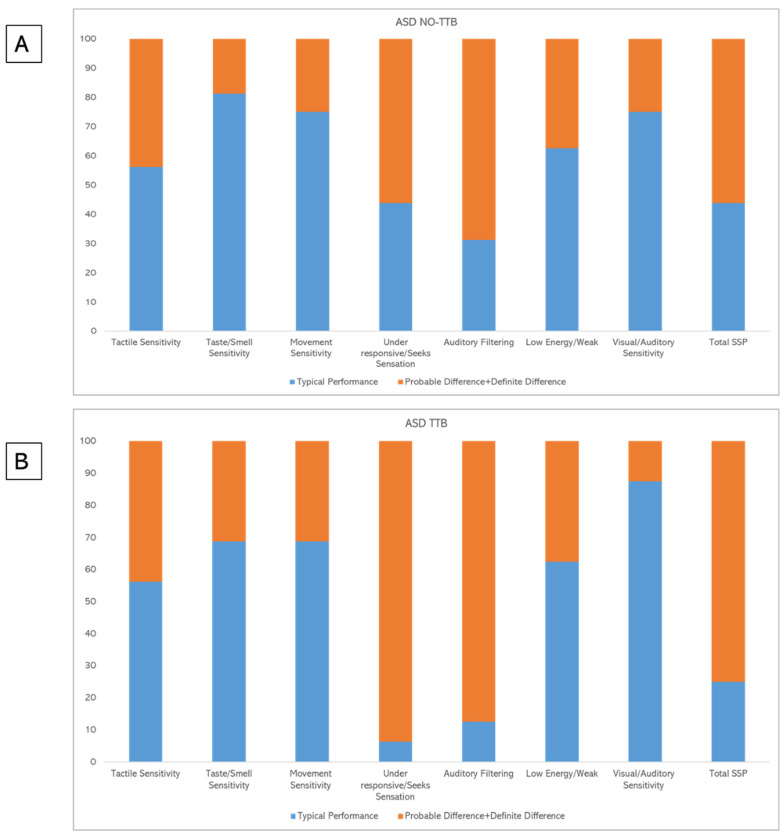
Atypical sensory processing is frequently reported in persons with autism spectrum disorders (ASD), and it is one of the described diagnostic criteria for ASD. There is also mounting literature supporting the presence of motor impairments in individuals with ASD. Among these motor signs, tip-toe behavior (TTB) is a possible clinical finding, but its etiology is not clearly understood. It is suggested that TTB in ASD could be a sign of a sensory modulation impairment, but evidence is lacking and controversial. The main aim of this pilot study is to explore sensory features in a sample (4 females; 28 males) of children and adolescents with ASD (age range: 7–18). All participants also presented Intellectual Disability. Participants were divided in two groups, matched for age and gender, on the basis of the presence or absence of TTB (16 ASD TTB group vs. 16 ASD NO-TTB group) and then evaluated by using the Short Sensory Profile. We found that both ASD groups tend to significantly present sensory-related behavioral symptoms, but ASD TTB individuals more frequently showed the specific pattern of “under responsive/seeks sensation” than ASD NO-TTB individuals. These preliminary findings support that sensory-motor features might be taken into consideration when rehabilitation for TTB in children and adolescents with ASD is necessary.
Overview
CoChat Summary
TL;DR
In this retrospective observational pilot, children and adolescents with ASD and tip-toe behavior (TTB) more often showed the Short Sensory Profile pattern “under-responsive/seeks sensation” than ASD peers without TTB. Both ASD groups had frequent sensory-related behavioral symptoms, but the TTB group had a higher proportion with “definite difference” on the SSP total score.
Key findings
- Sensory impairment (“probable difference” or “definite difference” on SSP total score) was present in 65.6% of the 32 ASD participants.
- “Definite difference” on SSP total score was found in 50% (n = 8) of the ASD TTB group versus 25% (n = 4) of the ASD NO-TTB group.
- In the ASD TTB group, the most frequent “definite difference” SSP sections were “under-responsive/seeks sensation” (81.3%; n = 13) and “auditory filtering” (56.3%; n = 9).
- Fisher’s exact test showed a statistically significant association between TTB presence/absence and the “under-responsive/seek sensation” section (two-tailed p = 0.037); no significant age or ID-severity association was found between groups.
Methods
- Retrospective observational pilot conducted at the Autism Research Unit of “Villa S. Maria Institute,” Tavernerio, Italy; records of 32 Italian ASD subjects (4 females; 28 males; age range 7–18; all with Intellectual Disability) were analyzed.
- Participants were divided into two groups matched for age and gender: 16 ASD with TTB and 16 ASD without TTB. TTB was assessed qualitatively as presence/absence during standing, walking, and/or running by therapist observation and caregiver report, with a standardized assessment if they disagreed.
- Sensory pattern was measured with the Italian cross-cultural validation of the Short Sensory Profile 1 (SSP1), filled out by special education teachers. Analyses included Mann–Whitney U, Fisher’s exact test, and t-test when normality/homogeneity assumptions were met; no sample size calculation was performed per CONSORT pilot guidelines.
Limitations
- The authors state two main limitations: the retrospective study design and the limited sample size, making results preliminary.
- The paper also states that the design does not allow determination of whether sensory issues contribute to TTB or whether sensory impairment results from persistent TTB.
- Evident from the text: SSP1 was administered to school-aged subjects up to 18 years despite validation reported for children up to 10 years, because of their ID level; TTB was treated only as a categorical presence/absence factor, and the study was a small pilot without sample size calculation.
Model-written summary. Check it against the paper before relying on it.
Integrity signals
Registry
Cites
Statistics
Figures
Verification
Claims the paper makes
12 Valid · 1 Not valid · 7 Not checked · 20 Own results and interpretations
The sources with a verdict support this claim; the rest weren’t checked yet, have no full text we could read, or their verdicts aren’t rated yet.
In the paper
“The sensory-related behavioral symptoms of our ASD sample are similar to the results of previous studies [31,48,49].”
§ Sensory Profile of Children and Adolescents with Autism Spectrum Disorder and Tip-Toe Behavior: Results of an Observational Pilot Study > 4. Discussion
What the sources say
- Not checked — no full text of the sourcecites [31] Liu T. Sensory processing and motor skill performance in elementary school children with autism spectrum disorder Percept. Mot. Skills 2013 116 197 209 10.2466/10.25.PMS.116.1.197-209 23829146 source
- Not checked — no full text of the sourcecites [48] Tomchek S.D. Dunn W. Sensory processing in children with and without autism: A comparative study using the short sensory profile Am. J. Occup. Ther. 2007 61 190 200 10.5014/ajot.61.2.190 17436841 source
- Supportedcites [49] Wuang Y.P. Huang C.L. Tsai H.Y. Sensory Integration and Perceptual-Motor Profiles in School-Aged Children with Autistic Spectrum Disorder Neuropsychiatr. Dis. Treat. 2020 16 1661 1673 10.2147/NDT.S253337 32753871 PMC7351620 source
The Results section (page not provided) reports impairments in sensory modulation and behavioral and emotional responses among children with ASD. The Discussion > Body Functions section (page not provided) also describes sensory-seeking behaviors and difficulties with emotional and behavioral regulation. These findings support citing the paper as a previous study reporting similar types of symptoms; the citing authors’ comparison with their own sample is their conclusion. (LLM, conf=0.88)
plain- Asserted: passes — The authors put it forward as true.
- Checkable: passes — It can be checked against evidence.
- Load-bearing: unclear — It is unclear whether the paper’s conclusions depend on it.
- Based: passes — The paper gives a reason why it holds.
The sources with a verdict support this claim; the rest weren’t checked yet, have no full text we could read, or their verdicts aren’t rated yet.
In the paper
“the proposed treatments for TTB tend to be symptom-based rather than etiology-based”
§ Sensory Profile of Children and Adolescents with Autism Spectrum Disorder and Tip-Toe Behavior: Results of an Observational Pilot Study > 4. Discussion
What the sources say
- Supportedcites [61] Valagussa G. Piscitelli D. Baruffini S. Panzeri V. Perin C. Mazzucchelli M. Cornaggia C.M. Pellicciari L. Grossi E. Little Evidence for Conservative Toe Walking Interventions in Autism Spectrum Disorders: A Systematic Review Rev. J. Autism Dev. Disord. 2022 1 14 10.1007/s40489-022-00329-3 source
The Research Implications section states that, because the etiology of toe walking is not well understood, developed treatments tend to be symptom-based rather than etiology-based. This directly supports the attributed claim. (LLM, conf=0.95)
- Not checked — no full text of the sourcecites [63] Bhat A. Kaznica S. Commentary on The Effectiveness of Serial Casting and Ankle Foot Orthoses in Treating Toe Walking in Children With Autism Spectrum Disorder Pediatr. Phys. Ther. 2021 33 91 10.1097/PEP.0000000000000791 33770796 source
plain- Asserted: passes — The authors put it forward as true.
- Checkable: passes — It can be checked against evidence.
- Load-bearing: passes — The paper’s conclusions depend on it.
- Based: passes — The paper gives a reason why it holds.
- Supported
Every source the paper cites for this claim was checked and supports it.
In the paper
“no studies that assess effectiveness of pharmacological and surgical interventions were found [61].”
§ Sensory Profile of Children and Adolescents with Autism Spectrum Disorder and Tip-Toe Behavior: Results of an Observational Pilot Study > 4. Discussion
What the sources say
- Supportedcites [61] Valagussa G. Piscitelli D. Baruffini S. Panzeri V. Perin C. Mazzucchelli M. Cornaggia C.M. Pellicciari L. Grossi E. Little Evidence for Conservative Toe Walking Interventions in Autism Spectrum Disorders: A Systematic Review Rev. J. Autism Dev. Disord. 2022 1 14 10.1007/s40489-022-00329-3 source
The Toe Walking Interventions section says that all retrieved studies considered only conservative interventions and that no studies of pharmacological or surgical effectiveness were found. The Conclusion likewise identifies an absence of studies on those interventions for toe walking in individuals with ASD. (LLM, conf=0.95)
plain- Asserted: passes — The authors put it forward as true.
- Checkable: passes — It can be checked against evidence.
- Load-bearing: passes — The paper’s conclusions depend on it.
- Based: passes — The paper gives a reason why it holds.
- Supported
Every source the paper cites for this claim was checked and supports it.
In the paper
“A lower tactile threshold was found in children with ASD when compared with age-matched controls [53].”
§ Sensory Profile of Children and Adolescents with Autism Spectrum Disorder and Tip-Toe Behavior: Results of an Observational Pilot Study > 4. Discussion
What the sources say
- Supportedcites [53] Riquelme I. Hatem S.M. Montoya P. Abnormal Pressure Pain, Touch Sensitivity, Proprioception, and Manual Dexterity in Children with Autism Spectrum Disorders Neural Plast. 2016 2016 1 9 10.1155/2016/1723401 PMC4736331 26881091 source
The Results (§3.2; page not provided) report significantly lower tactile thresholds in children with ASD at the left face and right hand dorsum. The Participants section (§2.1; page not provided) identifies the typically developing comparison group as age-matched. (LLM, conf=0.91)
plainstates an association- Asserted: passes — The authors put it forward as true.
- Checkable: passes — It can be checked against evidence.
- Load-bearing: unclear — It is unclear whether the paper’s conclusions depend on it.
- Based: passes — The paper gives a reason why it holds.
- Supported
The cited sources support only part of this claim — read each source’s verdict below.
In the paper
“Serial casting +/− orthoses and behavioral interventions (i.e., using acoustic feedback associated with positive reinforcement, or a wristband as a discriminative stimulus) were the most studied interventions.”
§ Sensory Profile of Children and Adolescents with Autism Spectrum Disorder and Tip-Toe Behavior: Results of an Observational Pilot Study > 4. Discussion
What the sources say
- Partly supportedcites [61] Valagussa G. Piscitelli D. Baruffini S. Panzeri V. Perin C. Mazzucchelli M. Cornaggia C.M. Pellicciari L. Grossi E. Little Evidence for Conservative Toe Walking Interventions in Autism Spectrum Disorders: A Systematic Review Rev. J. Autism Dev. Disord. 2022 1 14 10.1007/s40489-022-00329-3 sourceExperimental — accuracy not yet measured
The Type of Interventions section reports five studies of behavioral treatments and two of serial casting followed by ankle-foot orthoses, versus one study each of the other approaches. It also describes acoustic feedback with positive reinforcement and a wristband used as a discriminative stimulus. The review does not report an ASD toe-walking study of serial casting without subsequent orthoses, so the “+/− orthoses” qualification is not fully supported. (LLM, conf=0.86)
plain- Asserted: passes — The authors put it forward as true.
- Checkable: passes — It can be checked against evidence.
- Load-bearing: unclear — It is unclear whether the paper’s conclusions depend on it.
- Based: passes — The paper gives a reason why it holds.
- Partly supported
19 more claims
Create a free account to see all 40 claims and every source verdict.
- Probably not a substantial claim. 10
- It may state two separate claims as one. 9
Claims other papers make about this one
Each is checked against this paper’s own text: does it say what the citing paper says it does?
The source backs part of the claim, not all of it — or backs it for a different population, condition or comparison.
In the citing paper
“In numerous studies involving children with the autism spectrum, displacements of the center of gravity have been observed on stabilimeter platforms [1,5,6,7,9,10,13,15].”
From Postural Differences in Speaking Versus Non-Speaking Children with Autism Spectrum Disorder (2025) · cites this paper as [5]
Experimental — accuracy not yet measuredThe source backs part of the claim, not all of it — or backs it for a different population, condition or comparison.
In the citing paper
“It explains the heel-lifting mechanism as a defense against unwanted stimuli, which, when focused on an action, the child’s brain does not register as unbearable and irritating [3,4,5,19].”
From Postural Differences in Speaking Versus Non-Speaking Children with Autism Spectrum Disorder (2025) · cites this paper as [5]
Experimental — accuracy not yet measuredThe cited source says what the claim attributes to it.
In the citing paper
“Sensory processing disorders, which frequently occur in children on the autism spectrum, affect everyday functioning [1,3,4,5,7,19].”
From Postural Differences in Speaking Versus Non-Speaking Children with Autism Spectrum Disorder (2025) · cites this paper as [5]
Citations
Cites
Diagnostic and Statistical Manual of Mental Disorders
American Psychiatric Association (2013) · doi:10.1176/appi.books.9780890425596 · Cited by 116,369
Polit, D. F., & Beck, C. T. (2006) · Research in Nursing & Health · doi:10.1002/nur.20147 · Cited by 7,510
Determination and Quantification Of Content Validity
LYNN, M. R. (1986) · Nursing Research · doi:10.1097/00006199-198611000-00017 · Cited by 6,775
CONSORT 2010 statement: extension to randomised pilot and feasibility trials
on behalf of the PAFS consensus group, Eldridge, S. M., Chan, C. L., Campbell, M. J., Bond, C. M., Hopewell, S., Thabane, L., & Lancaster, G. A. (2016) · Pilot and Feasibility Studies · doi:10.1186/s40814-016-0105-8 · Cited by 2,843
Instrument review: Getting the most from a panel of experts
Davis, L. L. (1992) · Applied Nursing Research · doi:10.1016/s0897-1897(05)80008-4 · Cited by 2,364
Maenner, M. J., Shaw, K. A., Bakian, A. V., Bilder, D. A., Durkin, M. S., Esler, A., Furnier, S. M., Hallas, L., Hall-Lande, J., Hudson, A., et al. (2021) · MMWR. Surveillance Summaries · doi:10.15585/mmwr.ss7011a1 · Cited by 1,818 · cited 1×
“Autism spectrum disorder (ASD) is a complex neurodevelopmental disorder affecting 1 in 44 children [1] and resulting in an impairment of socio-communicative interaction, restricted interests, and repetitive behavior [2].”
BackgroundTomchek, S. D., & Dunn, W. (2007) · American Journal of Occupational Therapy · doi:10.5014/ajot.61.2.190 · Cited by 1,534 · cited 1×
“The sensory-related behavioral symptoms of our ASD sample are similar to the results of previous studies [31,48,49].”
ResultThe sensorimotor system, part I: the physiologic basis of functional joint stability.
Riemann, B. L., & Lephart, S. M. (2002) · Europe PMC (PubMed Central) · Cited by 1,397
Concept Evolution in Sensory Integration: A Proposed Nosology for Diagnosis
Miller, L. J., Anzalone, M. E., Lane, S. J., Cermak, S. A., & Osten, E. T. (2007) · American Journal of Occupational Therapy · doi:10.5014/ajot.61.2.135 · Cited by 953 · cited 1×
“, intensified interest for sensory stimulation) [5].”
Baum, S. H., Stevenson, R. A., & Wallace, M. T. (2015) · Progress in Neurobiology · doi:10.1016/j.pneurobio.2015.09.007 · Cited by 370 · cited 2×
“Although the heterogeneity of sensory dysfunctions in individuals with ASD is well known, there is still no strong consensus on both the neural mechanisms underlying the alteration of sensory processing and the ways in which these alterations affect the cognitive functioning of these individuals [12].”
BackgroundUpdate of a Meta-analysis of Sensory Symptoms in ASD: A New Decade of Research
Ben-Sasson, A., Gal, E., Fluss, R., Katz-Zetler, N., & Cermak, S. A. (2019) · Journal of Autism and Developmental Disorders · doi:10.1007/s10803-019-04180-0 · Cited by 263 · cited 1×
“Atypical sensory processing is frequently demonstrated in individuals with ASD [3,4], and it is now listed as one possible manifestation of stereotypic and repetitive behaviors in the diagnostic criteria for ASD according to the Diagnostic and Statistical Manual of Mental Disorders 5th ed.”
MethodEnsuring Content Validity: An Illustration of the Process
Beck, C. T., & Gable, R. K. (2001) · Journal of Nursing Measurement · doi:10.1891/1061-3749.9.2.201 · Cited by 202
(2014) · doi:10.1007/978-1-4614-4788-7 · Cited by 201
Lane, A. E., Molloy, C. A., & Bishop, S. L. (2014) · Autism Research · doi:10.1002/aur.1368 · Cited by 188 · cited 1×
“stated that sensory subtypes in children with ASD are not well explained by other variables such as age, gender, IQ, and autism symptom severity, and appear to provide one means of classifying individuals with ASD [8].”
BackgroundDecreased static and dynamic postural control in children with autism spectrum disorders
Fournier, K. A., Kimberg, C. I., Radonovich, K. J., Tillman, M. D., Chow, J. W., Lewis, M. H., Bodfish, J. W., & Hass, C. J. (2010) · Gait & Posture · doi:10.1016/j.gaitpost.2010.02.007 · Cited by 182
Dunn, W. (2012) · PsycTESTS Dataset · doi:10.1037/t15155-000 · Cited by 175
Ausderau, K., Sideris, J., Furlong, M., Little, L. M., Bulluck, J., & Baranek, G. T. (2014) · Journal of Autism and Developmental Disorders · doi:10.1007/s10803-013-1945-1 · Cited by 166 · cited 1×
“Atypical sensory processing is frequently demonstrated in individuals with ASD [3,4], and it is now listed as one possible manifestation of stereotypic and repetitive behaviors in the diagnostic criteria for ASD according to the Diagnostic and Statistical Manual of Mental Disorders 5th ed.”
MethodRiquelme, I., Hatem, S. M., & Montoya, P. (2016) · Neural Plasticity · doi:10.1155/2016/1723401 · Cited by 166 · cited 1×
“A lower tactile threshold was found in children with ASD when compared with age-matched controls [53].”
ResultThe development of autism spectrum disorders: variability and causal complexity
Wozniak, R. H., Leezenbaum, N. B., Northrup, J. B., West, K. L., & Iverson, J. M. (2017) · WIREs Cognitive Science · doi:10.1002/wcs.1426 · Cited by 161 · cited 1×
“This can fit with the complexity that ASD represents [57], as also with the complexity of the sensorimotor system [58].”
BackgroundAbnormalities of joint mobility and gait in children with autism spectrum disorders
Shetreat-Klein, M., Shinnar, S., & Rapin, I. (2014) · Brain and Development · doi:10.1016/j.braindev.2012.02.005 · Cited by 153 · cited 1×
“, 3–7 years) [17], and manifests this tendency for more than 6 months [18].”
BackgroundThree Estimates of Interrater Reliability for Nominal Data
Topf, M. (1986) · Nursing Research · doi:10.1097/00006199-198607000-00020 · Cited by 140
Analysis of unsupported gait in toddlers with autism.
Esposito, G., Venuti, P., Apicella, F., & Muratori, F. (2011) · Brain & development (Tokyo. 1979) · doi:10.1016/j.braindev.2010.07.006 · Cited by 137 · cited 1×
“suggested that atypical gait patterns could be considered as early symptoms of brain abnormalities in these children since toddlers with ASD show higher asymmetry during walking when compared to children with a neurotypical development [16].”
BackgroundGait patterns in children with autism
Calhoun, M., Longworth, M., & Chester, V. L. (2011) · Clinical Biomechanics · doi:10.1016/j.clinbiomech.2010.09.013 · Cited by 129 · cited 2×
“Moreover, although TTB could be the expression of individual differences in sensory activation thresholds, because TTB can express itself with different severity trajectories, the prolonged use of TTB in childhood might have consequences with a negative impact on the quality of life of these patients [26,27].”
BackgroundSimpson, K., Adams, D., Alston‐Knox, C., Heussler, H., & Keen, D. (2019) · Journal of Autism and Developmental Disorders · doi:10.1007/s10803-019-03889-2 · Cited by 120 · cited 1×
“2016) [6], and they are expressed among individuals with ASD with a large heterogeneity, suggesting a key role in the functioning of this population [7].”
BackgroundDunn, W., Little, L., Dean, E., Robertson, S., & Evans, B. (2016) · OTJR: Occupational Therapy Journal of Research · doi:10.1177/1539449215617923 · Cited by 119 · cited 2×
“2016) [6], and they are expressed among individuals with ASD with a large heterogeneity, suggesting a key role in the functioning of this population [7].”
BackgroundAltered tactile processing in children with autism spectrum disorder
Tavassoli, T., Bellesheim, K., Tommerdahl, M., Holden, J. M., Kolevzon, A., & Buxbaum, J. D. (2016) · Autism Research · doi:10.1002/aur.1563 · Cited by 88 · cited 1×
“Also, a lower vibrotactile detection threshold was found in ASD children at the hand [54].”
BackgroundA Systematic Review of Assessments for Sensory Processing Abnormalities in Autism Spectrum Disorder
Burns, C. O., Dixon, D. R., Novack, M. N., & Granpeesheh, D. (2017) · Review Journal of Autism and Developmental Disorders · doi:10.1007/s40489-017-0109-1 · Cited by 77 · cited 1×
“For these reasons, given the importance of these aspects in the clinical setting of children with neurodevelopmental disorders, a systematic review aimed to identify the trends in sensory processing assessments [10] and”
BackgroundMeta‐Analysis Reveals Gait Anomalies in Autism
Lum, J. A. G., Shandley, K. A., Albein‐Urios, N., Kirkovski, M., Papadopoulos, N. V., Wilson, R. B., Enticott, P. G., & Rinehart, N. (2020) · Autism Research · doi:10.1002/aur.2443 · Cited by 77
Idiopathic toe walking and sensory processing dysfunction
Williams, C. M., Tinley, P., & Curtin, M. (2010) · Journal of Foot and Ankle Research · doi:10.1186/1757-1146-3-16 · Cited by 67
Oetgen, M. E., & Peden, S. (2012) · Journal of the American Academy of Orthopaedic Surgeons · doi:10.5435/00124635-201205000-00005 · Cited by 67
Liu, T. (2013) · Perceptual and Motor Skills · doi:10.2466/10.25.pms.116.1.197-209 · Cited by 65 · cited 2×
“Liu (2013) explored the relationship between sensory processing (assessed using the Short Sensory Profile) and motor performance (evaluated with the Movement ABC-2), evidencing a relationship between delayed sensory processing and fine and gross motor difficulties of children with ASD [31].”
MethodResultExploring sensory phenotypes in autism spectrum disorder
Scheerer, N. E., Curcin, K., Stojanoski, B., Anagnostou, E., Nicolson, R., Kelley, E., Georgiades, S., Liu, X., & Stevenson, R. A. (2021) · Molecular Autism · doi:10.1186/s13229-021-00471-5 · Cited by 65
Williams, C. M., Tinley, P., Curtin, M., Wakefield, S., & Nielsen, S. (2014) · Journal of Child Neurology · doi:10.1177/0883073812470001 · Cited by 63 · cited 9×
“The SSP is an abbreviated form of Dunn’s Sensory Profile caregiver questionnaire (SP), created as a screening tool to identify sensory processing difficulties in children [11].”
MethodResultInfluentialHabitual toe-walking: Evaluation and approach to treatment
Caselli, M. A., Rzonca, E. C., & Lue, B. Y. (1988) · Clinics in Podiatric Medicine and Surgery · doi:10.1016/s0891-8422(23)00302-6 · Cited by 59 · cited 2×
“Moreover, although TTB could be the expression of individual differences in sensory activation thresholds, because TTB can express itself with different severity trajectories, the prolonged use of TTB in childhood might have consequences with a negative impact on the quality of life of these patients [26,27].”
BackgroundAutism and toe-walking: Are they related? Trends and treatment patterns between 2005 and 2016
Leyden, J., Fung, L., & Frick, S. (2019) · Journal of Children's Orthopaedics · doi:10.1302/1863-2548.13.180160 · Cited by 56 · cited 1×
“Moreover, despite pharmacological and surgical interventions being used to treat TTB in persons with autism in clinical practice [62], no studies that assess effectiveness of pharmacological and surgical interventions were found [61].”
BackgroundToe Walking in Autism: Further Observations
Accardo, P. J., & Barrow, W. (2015) · Journal of Child Neurology · doi:10.1177/0883073814521298 · Cited by 44 · cited 4×
“To date, the etiology of TTB is not clearly understood [18], and several hypotheses are suggested.”
BackgroundInfluentialUljarević, M., Hedley, D., Alvares, G. A., Varcin, K. J., & Whitehouse, A. J. O. (2017) · Autism Research · doi:10.1002/aur.1763 · Cited by 42 · cited 1×
“for example toe walking, on social responsiveness abilities and on the severity of ASD symptoms [50].”
BackgroundCardillo, R., Erbì, C., & Mammarella, I. C. (2020) · Frontiers in Human Neuroscience · doi:10.3389/fnhum.2020.00208 · Cited by 42 · cited 1×
“From this perspective, as suggested from different authors [59,60], the ASD could be considered as a form of human neurodiversity that manifests in a set of strengths and difficulties in sensory-motor processing that may differ to the typical population.”
Vibration perception thresholds in children with idiopathic toe walking gait
Williams, C. M., Tinley, P., Curtin, M., & Nielsen, S. (2012) · Journal of Child Neurology · doi:10.1177/0883073811432748 · Cited by 41 · cited 1×
“[55] when they assessed vibrotactile detection thresholds of the hallux in 30 typical children with ITW compared to 30 age-matched controls (4–8 years).”
MethodMikami, M., Hirota, T., Takahashi, M., Adachi, M., Saito, M., Koeda, S., Yoshida, K., Sakamoto, Y., Kato, S., Nakamura, K., et al. (2021) · Child Psychiatry & Human Development · doi:10.1007/s10578-020-01013-5 · Cited by 37
Oetgen, M. E., & Peden, S. (2012) · Journal of the American Academy of Orthopaedic Surgeons · doi:10.5435/jaaos-20-05-292 · Cited by 34
Wuang, Y.-P., Huang, C.-L., & Tsai, H.-Y. (2020) · Neuropsychiatric Disease and Treatment · doi:10.2147/ndt.s253337 · Cited by 34 · cited 1×
“The sensory-related behavioral symptoms of our ASD sample are similar to the results of previous studies [31,48,49].”
ResultMulder, P. A., van Balkom, I. D. C., Landlust, A. M., Priolo, M., Menke, L. A., Acero, I. H., Alkuraya, F. S., Arias, P., Bernardini, L., Bijlsma, E. K., et al. (2020) · Journal of Intellectual Disability Research · doi:10.1111/jir.12787 · Cited by 33
Perin, C., Valagussa, G., Mazzucchelli, M., Gariboldi, V., Cerri, C., Meroni, R., Grossi, E., Cornaggia, C., Menant, J. C., & Piscitelli, D. (2020) · Brain Sciences · doi:10.3390/brainsci10100681 · Cited by 32
Self-citationPurpura, G., Cerroni, F., Carotenuto, M., Nacinovich, R., & Tagliabue, L. (2022) · Children · doi:10.3390/children9030408 · Cited by 31
Self-citationLyons-Warren, A. M., McCormack, M. C., & Holder, J. L. (2022) · Brain Sciences · doi:10.3390/brainsci12020137 · Cited by 29
The Effects of Walking Surface on the Gait Pattern of Children With Idiopathic Toe Walking
Fanchiang, H. D., Geil, M. D., Wu, J., Ajisafe, T., & Chen, Y. (2016) · Journal of Child Neurology · doi:10.1177/0883073815624760 · Cited by 28
The Psychometric Properties of a New Measure of Sensory Behaviors in Autistic Children
Neil, L., Green, D., & Pellicano, E. (2017) · Journal of Autism and Developmental Disorders · doi:10.1007/s10803-016-3018-8 · Cited by 28 · cited 1×
“psychometric analyses of SP questionnaires completed by the caregivers of 117 children aged 3–17 years [42].”
BackgroundGeorge Frankl: an undervalued voice in the history of autism
Muratori, F., Calderoni, S., & Bizzari, V. (2020) · European Child & Adolescent Psychiatry · doi:10.1007/s00787-020-01622-4 · Cited by 28 · cited 1×
“From this perspective, as suggested from different authors [59,60], the ASD could be considered as a form of human neurodiversity that manifests in a set of strengths and difficulties in sensory-motor processing that may differ to the typical population.”
Toe Walking Assessment in Autism Spectrum Disorder Subjects: A Systematic Review
Valagussa, G., Trentin, L., Signori, A., & Grossi, E. (2018) · Autism Research · doi:10.1002/aur.2009 · Cited by 27 · cited 1×
“Thus, a standardized tool to quantitatively assess TTB in subjects with ASD would be useful to monitor TTB trend [64]; this would permit planning a timely treatment before muscle length shortening develops.”
MethodSelf-citationPatterns of sensory modulation by age and sex in young people on the autism spectrum
Lane, A. E., Simpson, K., Masi, A., Grove, R., Moni, M. A., Montgomery, A. K., Roberts, J., Silove, N., Whalen, O. M., Whitehouse, A., et al. (2022) · Autism Research · doi:10.1002/aur.2762 · Cited by 27 · cited 1×
“Sensory modulation symptom severity is a reliable means of classifying variance within children with ASD [9].”
Background"Toe-walking" in children with early childhood autism.
Weber, D. (1978) · PubMed · Cited by 25
Valagussa, G., Balatti, V., Trentin, L., Piscitelli, D., Yamagata, M., & Grossi, E. (2020) · Journal of Orthopaedics · doi:10.1016/j.jor.2020.08.013 · Cited by 10 · cited 1×
“, TTB presence during standing, walking, and running) and both Gastrocnemius and Soleus muscle shortening was found [25].”
BackgroundSelf-citationShaw, T., & Garcia, M. S. (2021) · Journal of Bodywork and Movement Therapies · doi:10.1016/j.jbmt.2021.03.014 · Cited by 10 · cited 1×
“, asymmetrical tonic neck reflex) [28].”
Valagussa, G., Trentin, L., Balatti, V., & Grossi, E. (2017) · Autism Research · doi:10.1002/aur.1796 · Cited by 9 · cited 4×
“For this aim, an ecological, non-invasive, and standardized assessment previously utilized with people with ASD and ID and already described by Valagussa and collaborators [21] was utilized for making the diagnosis of TTB.”
BackgroundMethodResultInfluentialSelf-citationEvaluation of shoe inserts to reduce toe walking in young children with autism
Wilder, D. A., Ingram, G., & Hodges, A. C. (2021) · Behavioral Interventions · doi:10.1002/bin.1860 · Cited by 9 · cited 1×
“Later, Wilder and colleagues found a decrease of TW when two persons with ASD walked on different surfaces [29], replicating the Fanchiang et al.”
BackgroundAssessing sensory processing differences in children with idiopathic toe walking: A pilot study
Chu, V. W., Girolami, G. L., & Grant-Beuttler, M. (2022) · Physiotherapy Theory and Practice · doi:10.1080/09593985.2022.2073929 · Cited by 9 · cited 2×
“Recently, Chu, Girolami & Grant-Beuttler assessed sensory differences in 10 individuals with ITW versus an age-matched control group [52] using a battery of measurements: motor assessment (i.”
MethodDistal Vibration Perception Threshold in Children Who Toe Walk
Ganley, K. J., & Behnke, C. (2016) · Pediatric Physical Therapy · doi:10.1097/pep.0000000000000241 · Cited by 7
Fetta, A., Soliani, L., Trevisan, A., Pugliano, R., Ricci, E., Di Pisa, V., Pignataro, V., Angotti, M., Rocca, A., Salce, B., et al. (2022) · Genes · doi:10.3390/genes13020356 · Cited by 5
Bhat, A., & Kaznica, S. (2021) · Pediatric Physical Therapy · doi:10.1097/pep.0000000000000791 · Cited by 3 · cited 1×
“The systematic review results also highlighted that, at this moment, the proposed treatments for TTB tend to be symptom-based rather than etiology-based, as also previously recognized in a commentary by Bhat and Kaznica [63].”
BackgroundValagussa, G., Piscitelli, D., Baruffini, S., Panzeri, V., Perin, C., Mazzucchelli, M., Cornaggia, C. M., Pellicciari, L., & Grossi, E. (2024) · Review Journal of Autism and Developmental Disorders · doi:10.1007/s40489-022-00329-3 · Cited by 3
Self-citation
Research works printed but not linked: 4
- Robert M. Toe walking in childhood. Prospective study of 130 toe walking children among which 19 affected of disorders of the autism spectrum [La démarche en équin chez l’enfant. Étude prospective de 130 enfants marchant en équin dont 19 atteints de troubles du spectre autistique] Rev. Chir. Orthop. Traumatol. 2011 97S S62 S66
- McIntosh D.N. Miller L.J. Shyu V. Development and validation of the short sensory profile Sensory Profile: User’s Manual Dunn W. The Pscyhological Corporation San Antonio, TX, USA 1999 59 73 · DOI · Paper page
- NCS Pearson Inc. Research Translation License Agreement IP Licensing Clinical Assessment North America San Antonio, TX, USA 2017
- Waltz C.F. Strickland O.L. Lenz E.R. Measurement in Nursing and Health Research Springer Publishing Company New York, NY, USA 2005
Cited by
Consoli, C., Turriziani, L., Antoci, M., Monaco, M. L., Ceraolo, G., Spoto, G., Nicotera, A. G., & Rosa, G. D. (2025) · Brain Sciences · doi:10.3390/brainsci16010053 · Cited by 22
“In this context, sensory profile refers to patterns of observable behavioral responses to sensory input across modalities, typically assessed through standardized caregiver-report questionnaires such as the Sensory Profile or Short Sensory Profile (see Table 1) [8]. individuals with ASD.”
Clinical gait analysis in older children with autism spectrum disorder
Wu, X., Dickin, D. C., Bassette, L., Ashton, C., & Wang, H. (2023) · Sports Medicine and Health Science · doi:10.1016/j.smhs.2023.10.007 · Cited by 14
Camia, M., Sacco, R., Boncoddo, M., Bellomo, F., Cucinotta, F., Ricciardello, A., Turriziani, L., Tomaiuolo, P., Costantini, R. C., D'Amico, R., et al. (2024) · Research in Autism Spectrum Disorders · doi:10.1016/j.rasd.2024.102457 · Cited by 9
Anindya, I., Sekartini, R., Ariyanto, I. A., Wiguna, T., Sari, N. P., Rahayu, Y. S., & Soebandrio, A. (2025) · Biomedicines · doi:10.3390/biomedicines13020338 · Cited by 6
Semino, M., Riccio, E., Giannatiempo, S., Cavallini, F., & Vascelli, L. (2025) · Behavior Analysis in Practice · doi:10.1007/s40617-024-01035-8 · Cited by 4
“The outcomes resulting from TW not only have medical consequences but also outcomes at a social level, with phenomena such as bullying, and affect the individuals’ motor and sports activities (Valagussa et al., 2022a, 2022b).”
Metadata
- Authors
- Valagussa, G., Purpura, G., Nale, A., Pirovano, R., Mazzucchelli, M., Grossi, E., & Perin, C.
- Affiliations
- University of Milano-Bicocca (IT)
- Autism Research Unit, Villa S. Maria Foundation, Tavernerio, 22100 Como, Italy
- Corresponding author
- Perin, Cecilia
- Venue
- Children
- Publisher
- MDPI AG
- Published
- 2022-09-01
- Volume
- 9
- Issue
- 9
- Pages
- 1336
- ISSN
- 2227-9067 (ISSN-L)
- PMC
- PMC9497722
- OpenAlex
- W4294151376
- Cited by
- 20
- References
- 63
- Citations by year
- 2026: 5 · 2025: 8 · 2024: 3 · 2023: 4
- FWCI
- 1.67
- Type
- journal article
- Language
- en
- Open access
- gold
- doi.org
- Licence
- Locations
- Children (publishedVersion, cc-by)
- PubMed Central (publishedVersion, cc-by)
- PubMed (publishedVersion)
- BOA (University of Milano-Bicocca) (submittedVersion, cc-by)
- DOAJ (DOAJ: Directory of Open Access Journals) (submittedVersion, cc-by-sa)
- Funders
- Università degli Studi di Milano - Bicocca within the CRUI-CARE Agreement
- Topics
- Life Sciences › Neuroscience › Cognitive Neuroscience › Autism Spectrum Disorder Research
- Health Sciences › Medicine › Psychiatry and Mental health › Child Nutrition and Feeding Issues
- Social Sciences › Psychology › Developmental and Educational Psychology › Children's Physical and Motor Development
- Keywords
- autism spectrum disorder, sensory processing, sensory modulation, motor impairment, intellectual disability, children and adolescents, rehabilitation
About these checks
Registry, retraction, Cites and statistics results are computed, not judged, with one exception: a printed reference that no index lists is read once by a model before it counts as a citation error. Claims are extracted by a model and kept only when their quote appears verbatim in the text; each cited source is then checked, with a model’s help, for whether it says what the claim relies on. Those verdicts can be wrong — read the claim’s quote and the cited source before relying on one.
The claim verdicts this report counts are experimental: their accuracy is not yet measured.
A language model drew the claims from the paper on 2026-10-04, under version 3 of the claim definition (model deepseek-v4.1-flash, prompt extract-v3).
A second model labelled each claim on 2026-10-04 (model jev-1.13-20260917, definition revision gold-guideline-v0.2).
Cited sources are checked with a language model’s help (gpt-6-sol).
Statistics and arithmetic are recomputed, not judged.
Confidence bands are shown only for fields calibrated on our annotated test set. None is calibrated yet, so no band is shown.
What counts as a claim ›How we measure confidence ›How we check this ›
Are you an author, or do you see a problem with this page? Request a review
Data sources
Bibliographic data: Semantic Scholar, OpenAlex, Crossref.
Contains information from the Semantic Scholar Academic Graph Datasets, made available under the ODC Attribution License (ODC-BY 1.0).
Semantic Scholar’s data is described in: Kinney, R., et al. (2023). The Semantic Scholar Open Data Platform. arXiv:2301.10140.
